
A commercial building's floor plan isn't just a technical drawing; it’s the strategic business plan for the physical space. This blueprint is the foundation for everything that follows, dictating customer flow, employee workflow, operational efficiency, and even long-term profitability. Getting this right from the start is arguably the single most critical step in any commercial project.
Your Blueprint for Success
Think of a commercial floor plan as the building's operational DNA. It’s far more than just deciding where to put walls and doors. It's about choreographing movement, inspiring productivity, and crafting an experience. A clumsy layout creates bottlenecks, frustrates staff, and can even turn customers away—all of which hit your bottom line. On the flip side, a thoughtfully designed plan turns raw square footage into a high-performing asset that actively supports your business goals.
Every single line on that plan has a real-world consequence. A corridor's width dictates the ease of foot traffic. An office's placement can either encourage or stifle collaboration. The location of a stockroom impacts how quickly your team can operate. It's a complex puzzle where every piece must fit perfectly to create a property that's functional, compliant, and ultimately, valuable.
Connecting Layout to Business Goals
A truly great floor plan is a physical extension of the business model it serves. A retail store, for example, will be all about guiding the customer journey and maximizing product visibility. An industrial warehouse, however, will prioritize logistics, workflow efficiency, and safety above all else. The layout has to be a direct reflection of the business's core purpose.
"Keeping up with accurate floor plans can be challenging… Manual updates contribute to the difficulty. Updating changes in floor plans, such as modifications or area information, can be time-consuming and error-prone when done manually." – Miguel Flores Ugarte, Building Engines
This infographic breaks down how a strategic floor plan weaves together three core pillars of a successful operation.
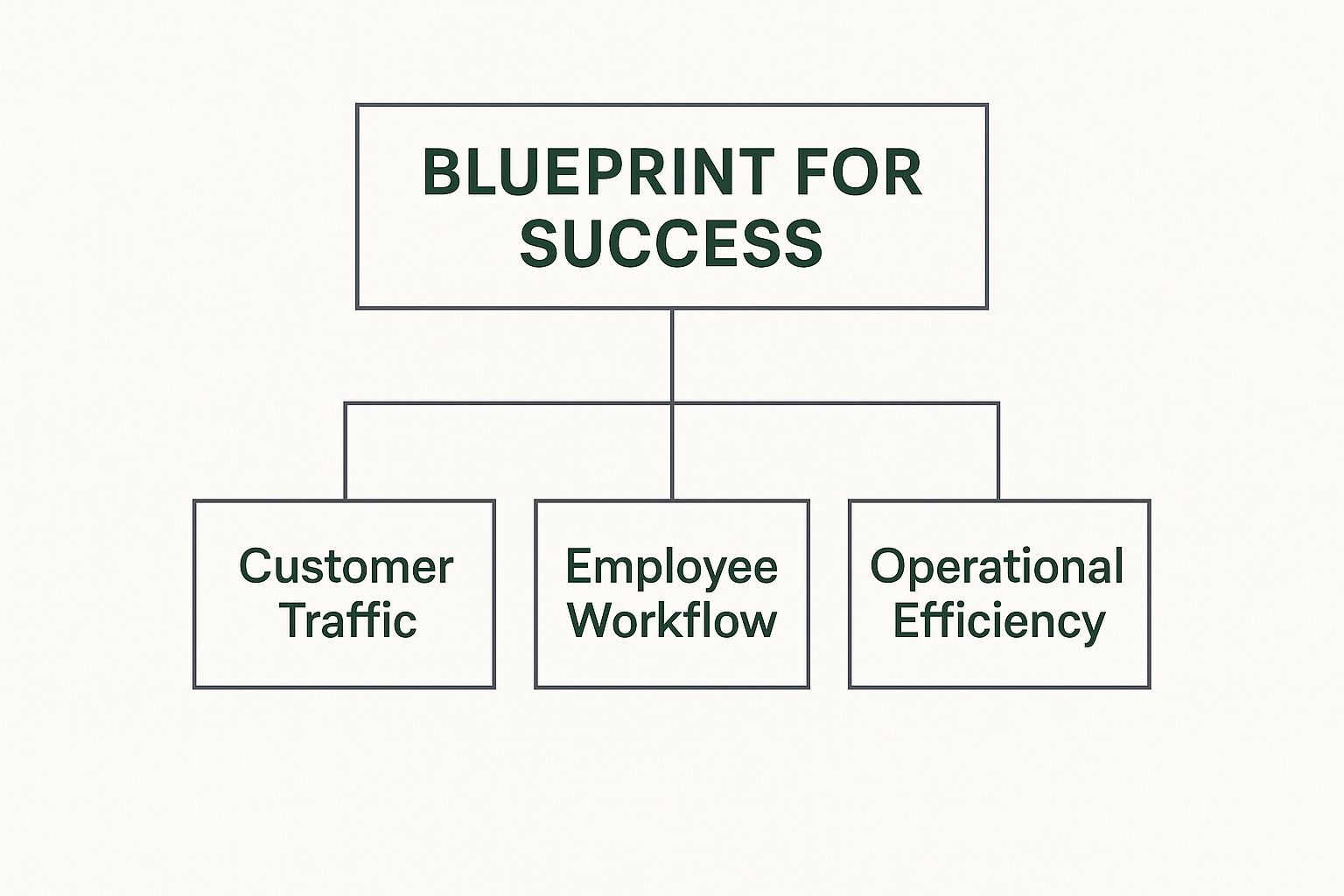
As you can see, optimizing customer traffic, employee workflow, and operational efficiency aren't siloed objectives. They are deeply interconnected results that all stem from a solid foundational layout.
The Cost of Poor Planning
Underestimating the strategic importance of a floor plan is a recipe for expensive mistakes. These problems can be as subtle as minor daily inefficiencies that bleed money over time or as catastrophic as major code violations that bring a project to a screeching halt.
Some of the most common consequences of poor planning include:
- Wasted Space: Awkward, inefficient layouts create dead zones and underused areas. This directly cuts into your rentable square footage and lowers the property's revenue potential.
- Operational Bottlenecks: A design that ignores how people actually work will inevitably cause friction, slow down processes, and kill productivity.
- Compliance Issues: Failing to account for ADA standards, fire codes, or local zoning ordinances can trigger hefty fines, force expensive redesigns, and cause crippling project delays.
Ultimately, investing the necessary time and expertise into developing a thoughtful floor plan of a commercial building is the surest way to guarantee the space works as intended, meets every legal requirement, and delivers a strong return on investment for years to come.
A Look Inside a Commercial Floor Plan
Think of a commercial floor plan as more than just a blueprint of walls and doors. It's the building's DNA, a detailed guide to every system that brings the structure to life and makes it a functional, livable space. A great way to understand it is to compare a building to the human body—a complex network where every system has to work in perfect harmony.
Just like our bodies rely on a skeleton, a circulatory system, and a nervous system, a commercial building has its own anatomy. This includes the structural core and shell, the pathways for movement, and the vital mechanical, electrical, and plumbing (MEP) systems. If any one of these is off, the health of the entire building is at risk.
The Core and Shell: A Building’s Skeleton
The core and shell are the absolute fundamentals of the building's structure. The "shell" is what you see from the outside—the roof, exterior walls, and foundations that form a protective envelope. The "core" is the shared infrastructure that serves everyone inside.
You can think of the core as the building's spine. It's where you'll typically find:
- Vertical Circulation: Stairwells and elevator shafts that connect the floors.
- Restrooms: Centralized facilities for tenants and visitors.
- Mechanical Risers: The vertical shafts hiding the plumbing, electrical conduits, and HVAC ductwork.
The design of the core and shell is one of the first and most critical decisions in creating a floor plan of a commercial building. Its placement directly impacts how much usable—and leasable—space is available to tenants, which in turn affects the property's bottom line. A clunky, poorly placed core can leave tenants with awkward layouts that are tough to rent out.
Circulation Pathways: The Arteries of Movement
If the core is the spine, then circulation pathways are the arteries and veins. These are the routes people follow to move into, out of, and all around the space. This covers everything from grand lobbies and primary corridors to smaller hallways and, crucially, emergency exits.
Good circulation is about so much more than just getting from A to B. It’s about creating a flow that feels intuitive and natural. In a store, circulation guides shoppers past key products. In an office, it allows people to move seamlessly between their desks, meeting rooms, and break areas without causing traffic jams.
A well-designed circulation plan just works. You don't even notice it. It anticipates how people will move, manages busy times, and ensures everyone can get to an exit quickly and safely in an emergency. It's a huge part of both the user experience and basic life safety.
MEP Systems: The Building's Nervous System
Finally, we get to the Mechanical, Electrical, and Plumbing (MEP) systems. These are the intricate networks running behind the walls, above the ceilings, and below the floors—the building's central nervous system. They manage the climate, power everything up, and handle the water supply and waste.
These systems are absolutely essential. Without them, you just have a shell.
- Mechanical: This is your Heating, Ventilation, and Air Conditioning (HVAC). It’s all about keeping people comfortable and ensuring good air quality.
- Electrical: This covers everything from the main power feed to the last light switch and outlet.
- Plumbing: This system brings in clean water and takes away wastewater and sewage.
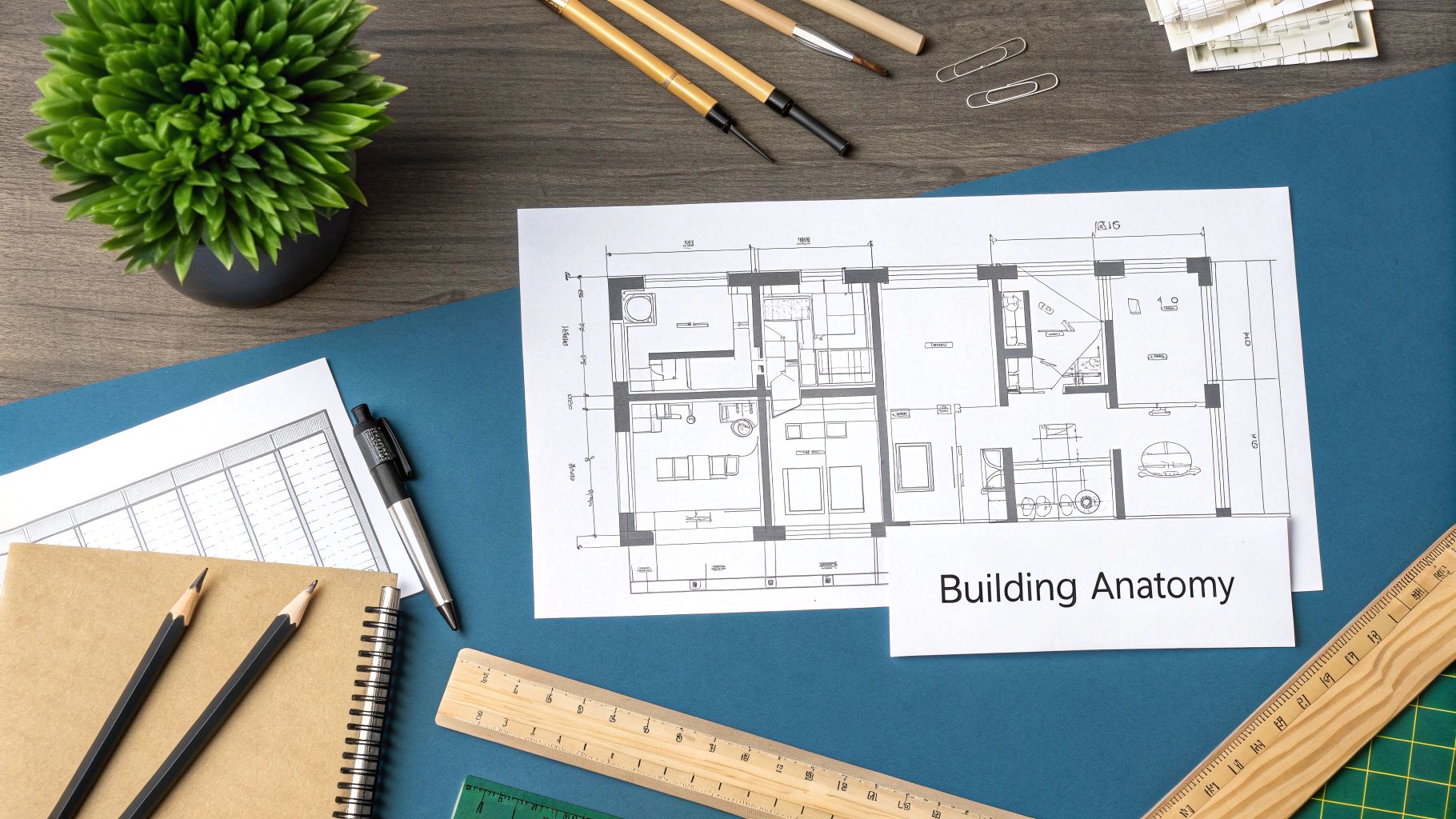
Fitting these systems into the floor plan is like solving a massive 3D puzzle. Architects and engineers have to work hand-in-hand to find space for bulky ductwork, pipes, and wiring without dropping ceiling heights or eating into valuable floor space. Getting this coordination right is the key to a comfortable, safe, and efficient building.
To better visualize these interconnected components, we've summarized the key elements of a commercial floor plan in the table below.
Key Elements in a Commercial Floor Plan
| Component | Purpose | Key Considerations |
|---|---|---|
| Core & Shell | Provides the basic structural integrity and envelope of the building. | Location of the core, window placement, structural grid, and material selection. |
| Circulation | Facilitates movement into, out of, and through the building for occupants. | Aisle widths, corridor layout, lobby design, and accessibility for all users. |
| Zoning | Divides the space into functional areas (e.g., public, private, service). | Proximity of related functions, noise control, and security requirements. |
| Egress | Ensures a safe and rapid exit for all occupants during an emergency. | Number of exits, travel distance to exits, and clear, unobstructed paths. |
| ADA Compliance | Guarantees accessibility for individuals with disabilities. | Ramp slopes, door widths, restroom layouts, and accessible routes. |
| MEP Systems | Delivers essential services like power, climate control, and water. | Space for equipment, coordination with structure, and energy efficiency. |
Each of these elements plays a vital role in creating a cohesive and successful commercial space.
As building designs grow more complex, being able to clearly visualize the final product is a game-changer. This is why 3D floor plan services are becoming standard practice in commercial design. In fact, forecasts show the market for these services will expand significantly through 2031, because they help developers, tenants, and builders get on the same page long before construction begins. To see the data behind this trend, you can read the full research about the 3D floor plan service market.
Navigating Codes and Compliance Without Costly Mistakes
Crafting a brilliant, functional floor plan is only half the job. The other half is a minefield of non-negotiable rules and legal standards that can halt a project in its tracks if you're not careful. Think of it like this: building codes are the guardrails on a mountain road, zoning ordinances are the traffic laws, and ADA standards are the minimum vehicle height for overpasses. Trying to ignore them won't end well.
These rules aren't just suggestions. They’re legally binding requirements put in place to ensure public safety, universal access, and a cohesive community. Missing a single detail—from the width of a hallway to the placement of an exit sign—can set off a chain reaction of problems. We're talking steep fines, failed inspections, and the dreaded order to tear it all down and start over. These are expensive, frustrating mistakes, but they are entirely avoidable with a bit of foresight.
Understanding Building Codes and Zoning
At the top of the hierarchy, you have building codes. These are the baseline standards for safe construction, covering everything from the building's structural bones and fire resistance to its electrical and plumbing systems. A deep understanding of current building regulations isn't just helpful; it's fundamental to preventing costly errors and ensuring the building is safe for occupancy.
Running alongside these are local zoning ordinances. While building codes dictate how you build, zoning laws control what you can build and where. Every town or city carves up its land into different districts—commercial, residential, industrial—and sets specific rules for each one.
Common zoning rules you'll run into include:
- Setbacks: The minimum distance your building must be from the property lines.
- Building Height: The absolute maximum height your structure can reach in that zone.
- Parking Requirements: The specific number of parking spaces you need based on your building's size and purpose.
- Permitted Use: A list of business types allowed to operate in that location.
Ignoring zoning is a fast pass to failure. Imagine designing the perfect three-story retail space, only to find out the local ordinance caps all buildings at two stories. That’s not just a minor hiccup; it’s a complete do-over.
The Critical Role of ADA and Egress
Beyond the big-picture rules, two areas demand absolute precision in every floor plan of a commercial building: accessibility and emergency egress. One is about ensuring dignity and equal access for everyone; the other is about saving lives.
The Americans with Disabilities Act (ADA) is a federal civil rights law, and in the world of architecture, it sets strict standards to make commercial spaces accessible to people with disabilities.
ADA compliance isn't a final checklist you run through before opening. It's a core design principle that must be woven into the floor plan from the very first line you draw.
Key ADA elements you can't ignore:
- Accessible Routes: A clear, unobstructed path must connect all public areas.
- Doorway Clearances: Doors must be wide enough for easy wheelchair access.
- Restroom Design: Layouts must meet rigid specs for turning space, grab bars, and fixture heights.
- Ramp Slopes: Any ramps must adhere to specific slope ratios to be safely navigable.
Just as critical is egress—the plan for getting everyone out of the building safely during an emergency like a fire. Fire codes are notoriously strict, and for good reason. Your floor plan has to show clear, unobstructed escape routes, properly sized exit doors, and calculated travel distances to make sure every single person can get out fast. A common mistake is creating a beautiful layout with long, winding hallways that accidentally violate the maximum travel distance rules, forcing a costly and disruptive redesign late in the game.
Your Strategy for Proactive Compliance
The best way to sidestep these issues is to treat compliance as a design partner, not a final hurdle. The old "ask for forgiveness, not permission" mindset is a recipe for financial disaster in construction.
Build your strategy around early and frequent communication. The smartest money you'll ever spend is on bringing an experienced architect and even local code officials into the loop during the conceptual stage. They can spot red flags in a preliminary floor plan of a commercial building long before they become poured concrete and a massive headache. This proactive approach turns the tangled web of regulations from a barrier into a clear roadmap for success.
Turning Space Into a Strategic Asset
Once you’ve navigated the maze of codes, zoning laws, and accessibility rules, the real work begins. This is the point where a floor plan of a commercial building stops being a mere document for compliance and starts becoming a powerful business tool. The focus shifts from what's legally required to what's truly possible, transforming a collection of rooms into a high-performance environment that actively fuels the business inside.
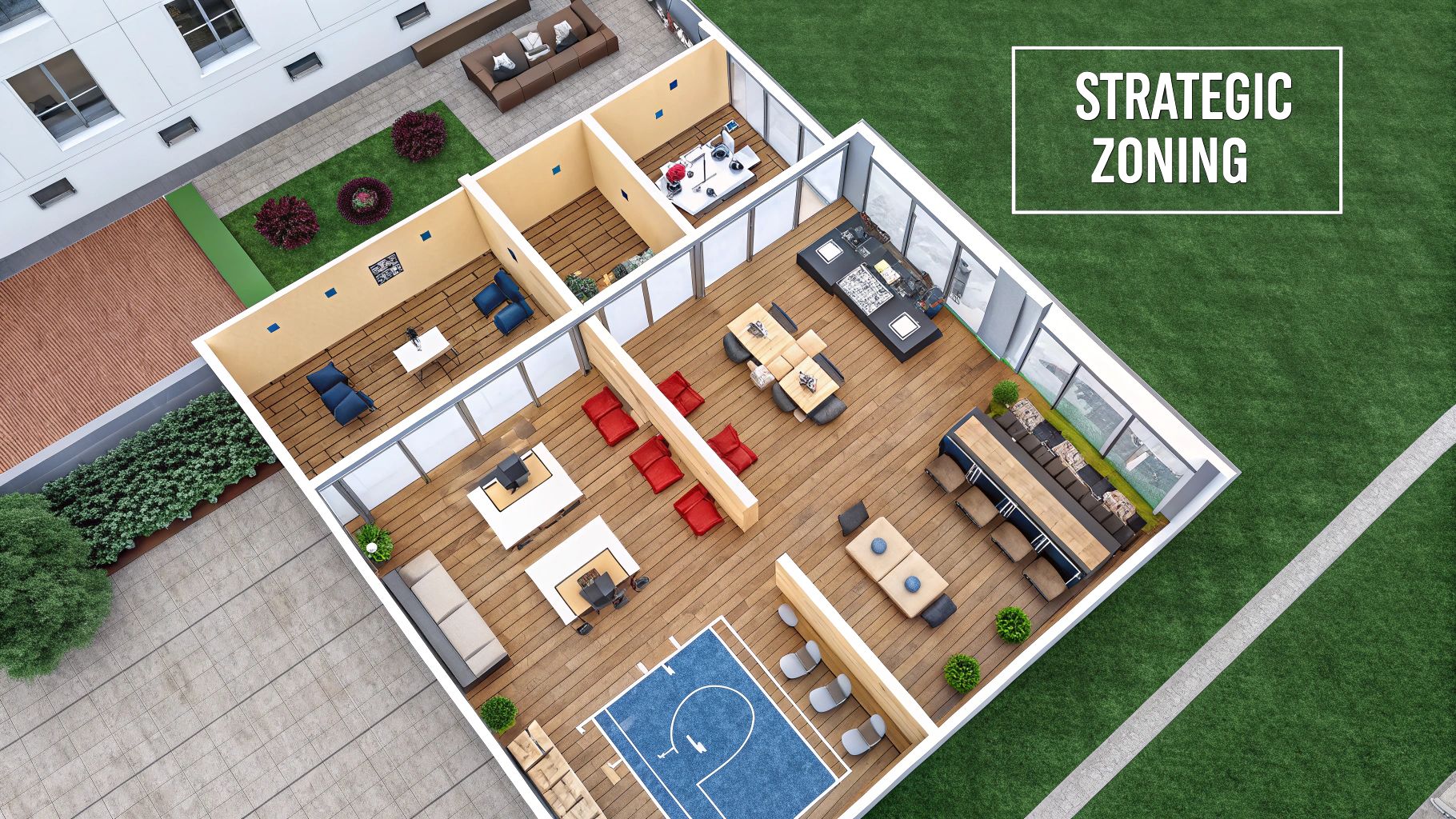
The key to this transformation is a concept called functional zoning. Think of it as giving every single square foot a specific job to do. It’s a deliberate process of carving up your building into distinct zones based on activity, noise levels, and workflow. When done right, the layout feels less like a random assortment of spaces and more like a cohesive, productive ecosystem.
The Logic of Functional Zoning
At its heart, functional zoning is just common sense—organizing space to prevent operational chaos. We’ve all seen what happens when it’s ignored. Imagine a fancy restaurant where the clatter of the kitchen spills directly into the quiet dining area, or a corporate office where clients have to parade through a loud sales floor to reach a private meeting room. These are classic zoning failures, and they create friction that wears down employees and customers alike.
An effective plan typically breaks a space down into a few logical areas:
- Public Zones: The first impression. These are your lobbies, reception desks, and showrooms. They need to be welcoming, easy to navigate, and set the right tone.
- Private Zones: The "heads-down" spaces. Think individual offices, confidential meeting rooms, and other areas where focus or privacy is essential.
- Collaborative Zones: Where the magic happens. These are the dynamic hubs like open-plan work areas, breakout lounges, and project rooms designed to spark interaction.
- Service Zones: The engine room. This is the "back-of-house" stuff—storage, loading docks, IT closets, and mechanical rooms. They’re absolutely vital but should be kept out of sight and out of the way.
By thoughtfully separating these functions, you create a layout that just works. The flow of people, information, and even inventory becomes smoother because the physical space is finally in sync with how the business actually operates.
Tailoring Layouts to Industry Needs
While the principles of zoning are universal, how you apply them changes dramatically from one industry to another. A great floor plan of a commercial building is never a one-size-fits-all template; it has to be meticulously tailored to the business it serves.
Take a retail store. Its floor plan is a carefully choreographed journey designed to guide shoppers from a wide, inviting entrance past high-margin impulse buys, toward the main departments in the back, and finally to a seamless checkout. Every aisle width and fixture placement is a strategic decision aimed at maximizing sales per square foot.
Now, contrast that with an industrial warehouse. Here, the layout is a masterclass in logistics. The plan prioritizes a logical flow from receiving and inventory to picking, packing, and shipping. Safety is king, with wide, clear pathways for forklifts, designated zones for hazardous materials, and unobstructed access to loading docks. Every second shaved off the workflow goes straight to the bottom line.
How Space Planning Drives Business Outcomes
When you get it right, smart space planning turns your building from a line-item expense into an asset that delivers real business results. For an office, that might mean designing a space that boosts both productivity and well-being. In fact, studies show that a well-designed workplace can improve employee retention by 14%, simply because the layout has a direct impact on job satisfaction and the ability to focus.
The broader commercial real estate market also plays a huge role in these decisions. Leasing and construction trends are pushing floor plans to be more adaptable than ever. For example, the explosive demand for data centers means their layouts must prioritize cooling and power infrastructure above all else, with 100% of new builds in some major markets being pre-leased before they’re even finished.
At the same time, the return-to-office movement is driving designs that support hybrid work and employee wellness, reflecting a major shift in what tenants are looking for. These market dynamics are constantly reshaping design, and you can get a better sense of them by exploring the latest insights on commercial real estate trends from Deloitte.
Designing for People and Planet
Beyond the hard lines of building codes and the practicalities of business operations, a truly great floor plan of a commercial building serves a higher purpose. It acknowledges that buildings are fundamentally for people. How a space is designed has a massive impact on not just the well-being of its occupants, but on the environment as well.
This is the point where a floor plan shifts from a simple diagram to a blueprint for a healthier, more sustainable, and genuinely engaging commercial space.
This kind of forward-thinking design isn’t about flashy, expensive features. It’s about being smart. When you make conscious decisions about how a building interacts with its natural surroundings, you create spaces that are cheaper to run, more pleasant to be in, and ultimately, more valuable long-term assets. Simple choices—where to place windows, what materials to use, how people move through the interior—can make all the difference.

Working with Natural Light
One of the most powerful tools in sustainable design is daylighting. This is the art of orienting a building and shaping its floor plan to make the most of natural sunlight. It’s much more than just putting in big windows; it involves a whole strategy of placing glazing, light shelves, and even interior partitions to draw sunlight deep into the building’s core.
The payoff comes in two forms. First, it drastically cuts the need for artificial lighting, which can eat up 25% to 40% of a commercial building's electricity. Second, studies have consistently shown that exposure to natural light boosts employee mood, focus, and productivity. A well-lit space just feels better and helps people do their best work.
Bringing the Outdoors In with Biophilic Design
Working hand-in-hand with daylighting is the concept of biophilic design—the practice of weaving natural elements into the built environment. This is about more than sticking a few potted plants in the lobby. It's a comprehensive approach that uses natural materials, patterns, and living features to forge a real connection to the outdoors.
A floor plan rooted in biophilic principles taps into our innate human need to connect with nature. When we design spaces with abundant natural light, living green walls, indoor gardens, and clear views of the outdoors, we create environments that lower stress, improve cognitive function, and spark creativity.
This philosophy can show up in a floor plan in a few key ways:
- Central Atriums: These multi-story open spaces act as light wells and are perfect spots for indoor gardens.
- Green Walls: Vertical gardens built into interior walls not only look incredible but also improve air quality.
- Natural Materials: Choosing wood, stone, and other natural finishes over synthetic ones creates a warmer, more grounded feel.
- Views to Nature: Purposely orienting workstations and common areas to give people clear lines of sight to outdoor green spaces.
Creating Energy-Efficient and Healthy Layouts
Finally, the floor plan itself is a critical tool for energy efficiency. A smart layout can improve natural ventilation, minimize heat gain in the summer, and hold onto warmth in the winter. For example, placing heat-generating areas like server rooms or kitchens along an exterior wall makes them easier to cool, while clustering workstations in zones with the best natural light cuts down on the electrical load.
A healthy building plan also puts a huge emphasis on indoor air quality. This means choosing low-VOC (volatile organic compound) materials for paints, flooring, and furniture, and designing an HVAC system that constantly circulates fresh air. These details create a healthier indoor environment, which often translates to fewer sick days and a more focused workforce.
In the end, designing for people and the planet isn't a compromise—it's a synergy. The result is a more resilient, desirable, and profitable commercial building.
The Future of Commercial Building Design
https://www.youtube.com/embed/wqjJU4V6bGM
The days of static, paper-based floor plans are numbered. We're in the middle of a massive shift in how commercial spaces are conceived, designed, and built, driven by powerful new technologies. This isn't just about drawing plans faster; it's about creating buildings that are smarter, more efficient, and truly built around the people who use them.
From 2D Drawings to Digital Twins
The real game-changer here is Building Information Modeling (BIM). Think of it as far more than just a 3D model. BIM creates a living digital twin of the entire building, where every single component—from a massive steel beam down to a single light switch—is packed with data. This allows architects and engineers to run simulations, spot potential clashes between plumbing and electrical systems, and make critical decisions long before a shovel ever hits the ground.
Virtual reality (VR) takes this a step further. Now, clients and stakeholders can put on a headset and literally walk through a building that doesn't exist yet. This immersive experience is invaluable for catching subtle flaws in a layout's flow or feel that are nearly impossible to spot on a flat, 2D drawing.
Smarter, More Adaptable Spaces
The tools aren't the only thing evolving; the very idea of what a commercial space is is also changing. Rigid, single-purpose layouts are giving way to dynamic, flexible environments. We're seeing more movable walls, modular furniture, and integrated tech hubs that allow a space to be reconfigured at a moment's notice.
This push for intelligent design extends into the building's daily operations. The future of commercial design is tied directly to smart systems, like Internet of Things building automation, which can manage everything from lighting and climate to security with incredible precision.
The next generation of commercial floor plans won't just be blueprints; they'll be dynamic operating systems for the building itself. They are being designed not just for a single purpose, but for their ability to adapt to future needs we can't even predict yet.
This technological wave is also creating a huge market. The global demand for floor plan software is surging across architecture, real estate, and interior design. North America currently holds the largest slice of this market at 35%, but the Asia Pacific region is catching up fast. With a projected annual growth rate of around 13.5%, its rapid urbanization and new construction projects are fueling incredible innovation.
Got Questions? We’ve Got Answers.
Even after walking through all the details, you probably still have a few practical questions kicking around. That's completely normal. Let's tackle some of the most common ones we hear from clients about commercial floor plans.
What Does the Design Process Actually Look Like?
Think of it as starting with a wide-angle lens and slowly zooming in. We begin with the big picture—what are your goals, what are the constraints? That’s called programming and feasibility.
From there, we move into schematic design, which is basically sketching out the foundational layout and flow. Once we have a solid direction, we enter design development, where we start layering in the specifics like materials and building systems. The final step is creating the construction documents—the highly detailed blueprints that contractors and city officials need to get the job done right.
How Much Should I Budget for a Commercial Floor Plan?
This is the big question, and the honest answer is: it depends. The cost can swing dramatically based on the project's size, how complex it is, and where it's located.
A few key things drive the final price tag:
- Architectural Fees: These are usually a percentage of the total construction cost, often falling somewhere between 5% and 15%.
- Engineering Consultants: You'll need experts for the structure, mechanical, electrical, and plumbing (MEP) systems, and they have their own professional fees.
- Permitting Fees: The local authorities will charge for reviewing and approving the plans.
Outfitting an existing retail space is a whole different ballgame than designing a brand-new, multi-story office building from the ground up.
Is a 2D or 3D Floor Plan Better?
This is a classic "apples and oranges" situation. They don't compete; they complement each other.
2D floor plans are the non-negotiable, technical workhorses. They are the official language of construction, filled with the precise measurements and specs that builders and code officials rely on.
On the other hand, 3D floor plans are all about vision. They're invaluable for helping clients, investors, or future tenants truly feel the space—its volume, its flow, its potential—in a way a flat drawing just can't convey. In modern practice, you really need both.
What’s the Real Difference Between Commercial and Residential Plans?
The core difference comes down to three things: scale, codes, and intent. A commercial plan is designed for the public. It has to solve for complex challenges like fire egress for hundreds of people, full ADA accessibility, and heavy-duty mechanical systems.
Residential plans are built for private life. The code requirements are simpler, and the design is centered on personal comfort and family function, not public safety and operational efficiency.
At Sherer Architects, LLC, our job is to translate complex needs into spaces that are clear, functional, and inspiring. If you’re ready to develop a floor plan that works as a strategic asset for your business, contact us to see how our expertise can bring your vision to life. Learn more at https://shererarch.com.