
When we talk about designing an assisted living facility, we're not just talking about architecture. We're talking about crafting a community from the ground up—a place where seniors can live with dignity and support for their daily lives.
This specialized field is all about creating environments that are safe, easy to navigate, and genuinely engaging. The real magic happens when we move beyond the old, sterile models and create settings that feel like home, with a touch of hospitality. The ultimate goal is to build a place that fosters wellness, community, and a true sense of belonging.
From Institution to Home: The New Philosophy in Senior Living
The blueprint for senior living has been completely redrawn. Gone are the days of sterile, hospital-like facilities with long, impersonal hallways and a cold, clinical feel. Today’s best designs are built on a simple yet powerful idea: we're creating a vibrant neighborhood, not just a building that provides care.
This philosophy puts the resident first, prioritizing their independence, well-being, and ability to connect with others.
This change didn't happen in a vacuum. The whole concept of assisted living design has transformed dramatically since the late 20th century. Back in the 1980s and 1990s, pioneers in the field started introducing private apartments and communal dining rooms—a huge departure from the old dormitory-style nursing homes.
This shift was driven by a growing understanding that seniors thrive when they feel at home. It sparked a new wave of designs featuring residential-style kitchens, cozy lounges, and beautiful courtyards that encouraged people to gather. You can learn more about this market evolution on imarcgroup.com.
The Shift from Clinical to Communal
Think about the old institutional model. It saw residents primarily through the lens of their medical needs, and the design reflected that. The result was often a cold, efficient building that felt stripped of any personal choice. Hallways were just for getting from point A to point B, rooms were just for sleeping, and common areas often sat empty. It was an approach that often led to isolation and a diminished sense of self.
Now, contrast that with the modern philosophy, which is all about hospitality. Picture a boutique hotel or a thoughtfully planned residential community.
The core idea is that the physical environment should actively support a high quality of life. It’s not just about providing shelter and care; it's about creating a place where residents feel empowered, engaged, and genuinely at home.
Why This Design Philosophy Matters
Getting the design philosophy right isn't just about aesthetics—it's a critical business decision that directly impacts your facility's success. A community designed to feel like a real home has a tangible effect on everything.
- Marketability: Today’s seniors and their families are savvy. They're looking for a place that feels warm, inviting, and modern. A facility with that appeal will always have a leg up on the competition.
- Resident Satisfaction and Retention: It's simple, really. When residents feel comfortable and connected, they're happier and healthier. This leads directly to higher satisfaction and longer stays.
- Operational Efficiency: A smart layout isn't just for residents; it makes life better for your staff, too. It can improve workflows, reduce on-the-job stress, and create a more positive work environment, which is a huge factor in staff retention.
Your Blueprint for a Profitable and Purposeful Facility
Before the first shovel ever hits the dirt, the most important work in assisted living design happens on paper. This initial phase, what we in the industry call programming, is where your business goals and architectural vision finally meet. It's so much more than just deciding on the number of rooms; it's about crafting the very DNA of your future community.
Think of programming as the detailed business plan for the building itself. Every single choice made here—from the specific mix of care levels you'll offer to the style of the dining hall—directly shapes your facility's market position, day-to-day operational efficiency, and long-term financial health. A poorly programmed building might look fantastic on the outside but completely miss the mark on meeting resident needs or your own financial projections.
The whole process kicks off with a deep dive into the local market. Who are your potential residents? What do they truly need, what are they looking for, and what can they afford? A rock-solid analysis of local demographics isn't just a good idea; it's non-negotiable.
Defining Your Market Position
Knowing your competition is every bit as crucial as understanding your future residents. What are the other facilities in the area doing? Where are the gaps? You might find the market is saturated with high-end memory care but has a real shortage of options for more independent, active seniors.
This kind of analysis helps you carve out a unique position. Maybe you'll decide to specialize in a certain acuity level, or perhaps you'll build a community centered around a specific lifestyle, like wellness or the arts.
A successful assisted living facility doesn't try to be everything to everyone. It identifies a specific need within the community and designs an environment that masterfully meets that need, creating a clear and compelling choice for prospective residents and their families.
Once you have a clear vision for your market position, you can start making those foundational programming decisions. This is where you translate that high-level strategy into a concrete plan for the building and its operations.
These choices are all tangled together. A focus on memory care, for instance, is going to demand a very different site plan with secure outdoor spaces. A model built for active seniors, on the other hand, will need far more extensive fitness and social amenities.
The chart below shows the bigger philosophical shift that’s happened in senior care, moving away from sterile, institutional models toward environments that feel like a real home.
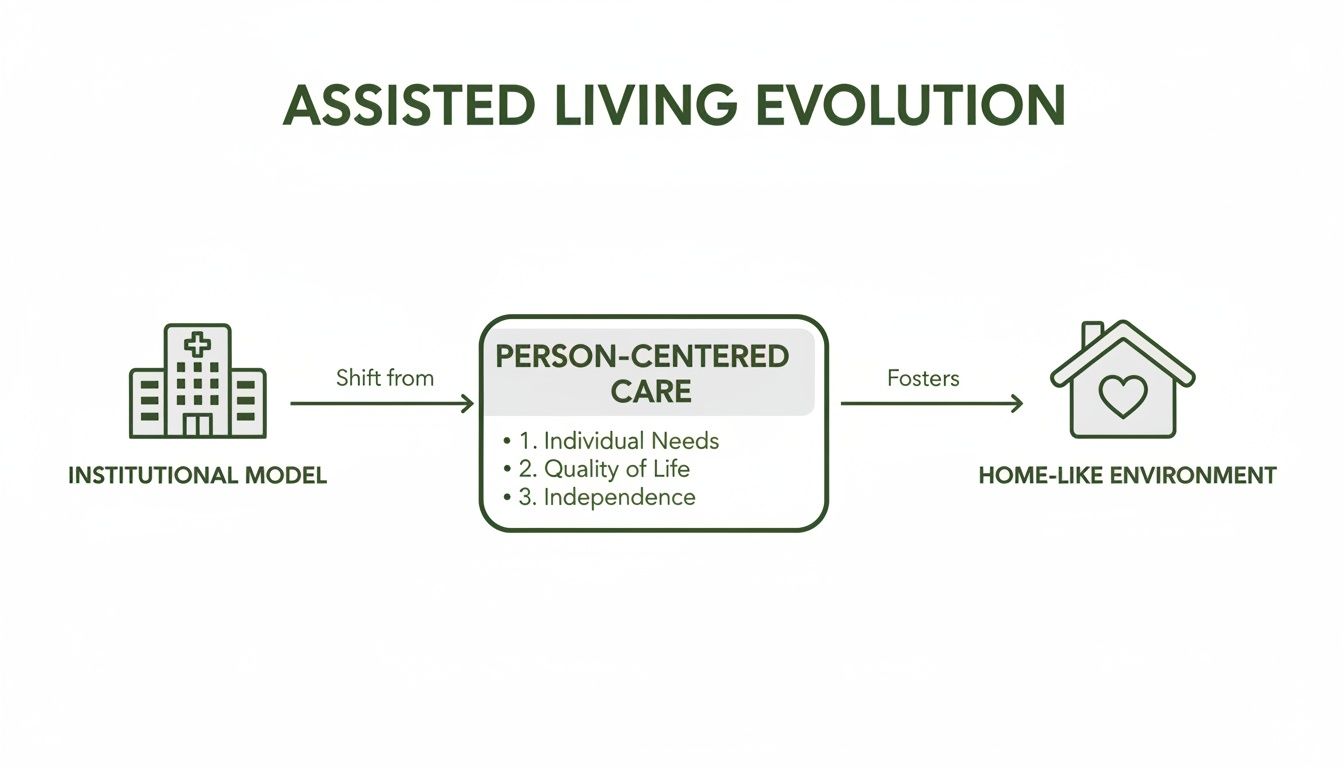
This evolution underscores how modern design puts dignity and community first, which directly influences the kind and quality of amenities you'll need to build into your plan.
Key Programming Decisions and Their Impact
Every choice you make during programming creates a ripple effect. A seemingly small decision about unit size impacts construction costs, while your dining style dictates staffing models for years to come. The table below outlines some of these critical decisions and their direct consequences.
Key Programming Decisions and Their Impact
| Programming Decision | Design Implication | Operational Impact | Financial Consideration |
|---|---|---|---|
| Mix of Care Levels | Requires varied unit types and specialized common areas (e.g., secure memory care wings). | Necessitates different staffing ratios and training for each care level. | Impacts revenue streams, construction costs, and licensing fees. |
| Unit Type and Size | Dictates overall building footprint, corridor lengths, and MEP system complexity. | Affects housekeeping workload and resident independence. | Directly drives rental rates and overall project budget. |
| Amenity Package | Determines the size and location of spaces like gyms, theaters, and dining venues. | Requires dedicated staff for activities, wellness, and food service. | Major factor in marketability and can generate ancillary revenue. |
| Operational Workflow | Influences the layout of back-of-house areas like kitchens, laundry, and staff offices. | Streamlines or complicates daily tasks for staff, affecting efficiency. | Smart workflow design can reduce labor costs over the long term. |
Ultimately, the programming phase is all about alignment. It's about ensuring the physical building is perfectly tuned to support your operational goals and financial model. By meticulously nailing down these details upfront, you lay the groundwork for a facility that is not only profitable but also a genuinely purposeful and desirable place to live. Getting this blueprint right is the first, and most important, step.
Navigating Codes and Regulations with Confidence
If you're diving into assisted living design, you're also diving headfirst into a dense thicket of codes and regulations. It’s easy to see them as a bureaucratic checklist, but that’s a dangerous mistake. These rules are the very foundation of resident safety, dignity, and quality of life. Pushing compliance to the back burner is just asking for costly delays, frustrating redesigns, and a whole lot of legal trouble down the road.
A better way to look at it? Think of these codes as a partner in your design process. When you get the "why" behind each rule—like how a specific corridor width helps with a swift fire evacuation or why a certain grab bar placement prevents falls—compliance stops being a hurdle. It becomes a strategic tool for creating a genuinely safer, better community. The secret to a smooth project is weaving these standards into the design from the very first sketch.
Understanding the Key Players in Compliance
The rulebook for assisted living is a layered cake, with regulations coming from national, state, and even local levels. While the specifics will change depending on where you're building, a few key players always have a seat at the table. Getting to know them is non-negotiable for any developer or owner.
These aren't just abstract documents; they're practical blueprints for creating spaces that actually work. For example, the International Building Code lays down the law on fundamental structural safety and fire protection, while the ADA ensures every single resident, no matter their mobility, can live with independence.
Regulations give you the minimum standard for safety, but great design uses them as a springboard for excellence. Meeting code is just the starting line. The real goal is to create an environment that goes far beyond compliance to actively make residents' lives better.
Integrating the Americans with Disabilities Act
The Americans with Disabilities Act (ADA) is a landmark civil rights law, and its standards are absolutely critical in assisted living design. It's all about ensuring equal access for everyone, everywhere—from private apartments to the dining hall.
This is about so much more than just adding a ramp at the entrance. It means thinking through the details, like providing the proper turning radius in a bathroom for someone using a wheelchair. It means making sure countertops and light switches are at reachable heights and choosing lever-style door handles that don't require a firm grip. When these details are woven into the design from the start, they create a space that’s truly empowering for every resident.
The Role of FGI Guidelines
The Facility Guidelines Institute (FGI) publishes evidence-based guidelines that many states bake directly into their licensing requirements. While the building code and ADA cover broad safety and accessibility, the FGI guidelines get very specific about healthcare and residential care settings.
- Resident Safety: FGI offers detailed advice on everything from handrail dimensions and placement to the best slip-resistant flooring finishes to prevent falls.
- Infection Control: You'll find best practices for designing HVAC systems to filter air properly, choosing surface materials that are a breeze to sanitize, and laying out spaces to stop pathogens in their tracks.
- Operational Efficiency: The guidelines also think about the staff, offering smart recommendations for laying out nurse stations, medication rooms, and other support areas to make their jobs easier and more efficient.
A Proactive Approach to Code Compliance
Waiting for a building inspector to show up and flag a problem is the most expensive and stressful way to handle compliance. The smart move is to be proactive, embedding code compliance into the design process from day one with the help of an experienced architect.
- Early Code Analysis: The very first step is a deep dive into all applicable federal, state, and local codes for your specific site. This gives the design team a clear roadmap and prevents surprises.
- Integrated Design Meetings: Your architect should make code compliance a regular agenda item in every design meeting. This ensures that every decision, from corridor width to window selection, is checked against the rules.
- Regular Agency Consultations: Don't be a stranger to your local building and fire officials. Engaging with them early and often builds goodwill and helps clarify any fuzzy interpretations of the code long before you break ground.
This proactive mindset doesn’t just keep you out of trouble; it helps you build a better facility. By thoughtfully integrating these essential safety and accessibility standards, you’re not only protecting your schedule and budget—you’re delivering a truly safe, dignified, and welcoming home for the people who will live there.
Designing for Dignity and Independence
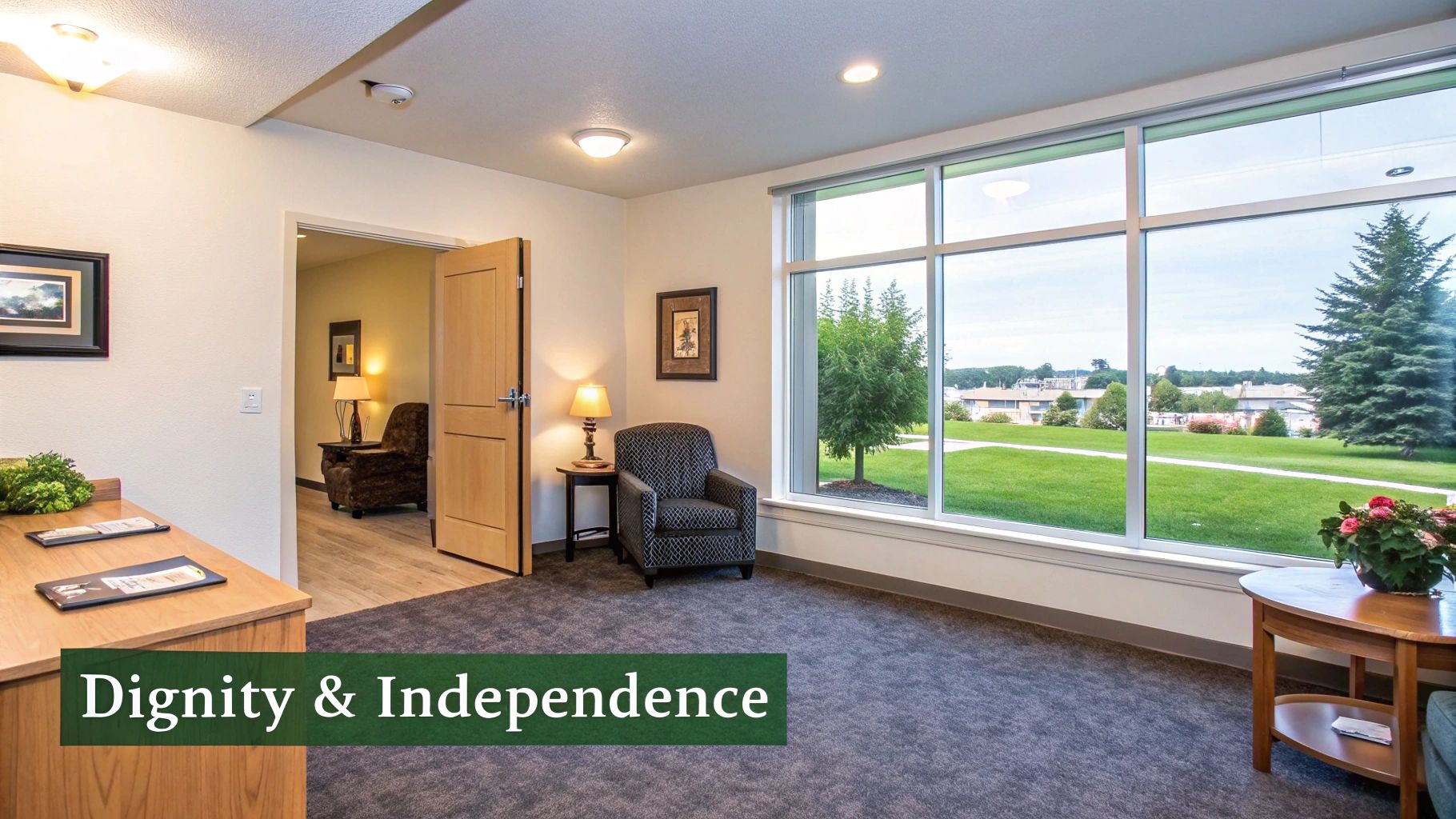
The real heart of an assisted living facility isn’t the grand lobby or the perfectly manicured lawn. It’s found in the private apartments and shared spaces where people actually live. This is where a facility's philosophy of care stops being a mission statement and becomes a tangible reality for its residents.
Good design has a profound impact. It can boost a resident's sense of self, foster confidence, and give them a feeling of genuine control over their own life. It's all about understanding the psychology of creating a home for seniors, balancing critical safety features with a warm, residential feel so that accessibility feels empowering, not clinical.
Crafting Empowering Private Spaces
The design of a resident's apartment is the absolute cornerstone of their independence. These spaces have to be intuitive, safe, and ready to adapt as needs change over time. It’s the small, thoughtful details that make all the difference.
Think about the path from the bed to the bathroom. Is it a straight shot? Is it well-lit for a 2 a.m. trip? Are there subtle supports along the way—like sturdy furniture or walls reinforced for future grab bars—that offer stability without making the room feel like a hospital?
Great assisted living facility design is often invisible. It seamlessly integrates safety and accessibility into a comfortable, homelike environment, allowing residents to live with confidence and dignity without constant reminders of their physical limitations.
Here are a few key elements that make private units work:
- Maximizing Natural Light: Large windows are a must. They don't just improve mood and help regulate sleep cycles; they make a space feel bigger and more inviting.
- Clear Sightlines: From the bed, a resident should be able to see the door to their apartment and the door to their bathroom. This simple layout choice can dramatically reduce anxiety and disorientation.
- Accessible Bathrooms: Zero-threshold showers, toilets set at a comfortable height, and easy-to-use lever-style faucets shouldn't be special requests. They should be the standard.
- Ample and Accessible Storage: Closets with lower rods and shelves within easy reach are empowering. They allow residents to manage their own belongings and maintain a sense of autonomy.
Transforming Corridors into Community Connectors
One of the most common design mistakes is the long, monotonous hallway. These institutional-feeling corridors can be confusing, intimidating, and frankly, isolating for residents, especially those with cognitive or mobility challenges.
The trick is to stop thinking of them as hallways and start seeing them as neighborhood streets.
Imagine you're designing a small town. The streets wouldn't be endless, sterile tunnels. They'd have landmarks, benches, and little points of interest that make the journey engaging and easy to follow. Applying that same logic can completely transform a facility’s circulation paths.
This means intentionally breaking up long corridors. A small seating nook by a window becomes a spot for a quiet chat. A curated art display acts as a visual landmark, helping residents find their way. The goal is to make the trip from a private apartment to a common area a pleasant, socially encouraging experience. It’s also vital to ensure these spaces are safe, which requires a firm grasp on building codes like stair handrail height regulations.
The Growing Need for Thoughtful Design
This resident-first approach is more critical now than ever before. A massive demographic shift is reshaping senior living. With projections showing that by 2030, one in six people on the planet will be 60 or older, the demand for new communities is exploding.
This boom is fueling a market expected to reach USD 177.97 billion by 2025, with major growth continuing through 2032. As developers and designers, this rapid expansion gives us a huge responsibility. By focusing on creating places that foster dignity and independence, we can build communities that don't just meet market demand, but genuinely enrich the lives of the people who call them home.
Amenities and Systems That Elevate the Resident Experience
A truly exceptional assisted living facility is more than just a place to live; it's a place to thrive. The design needs to go far beyond the basics of shelter and care to create a vibrant, engaging community. This comes from a smart blend of highly visible amenities that encourage an active life and the critical, often invisible, systems that keep everyone safe and healthy.
Think of the visible amenities as the "front of house." These are the spaces that draw people in, build a sense of community, and make your facility feel like home. The goal is to ditch the old-school, single multi-purpose room and instead offer a diverse range of venues that cater to different interests and social styles.
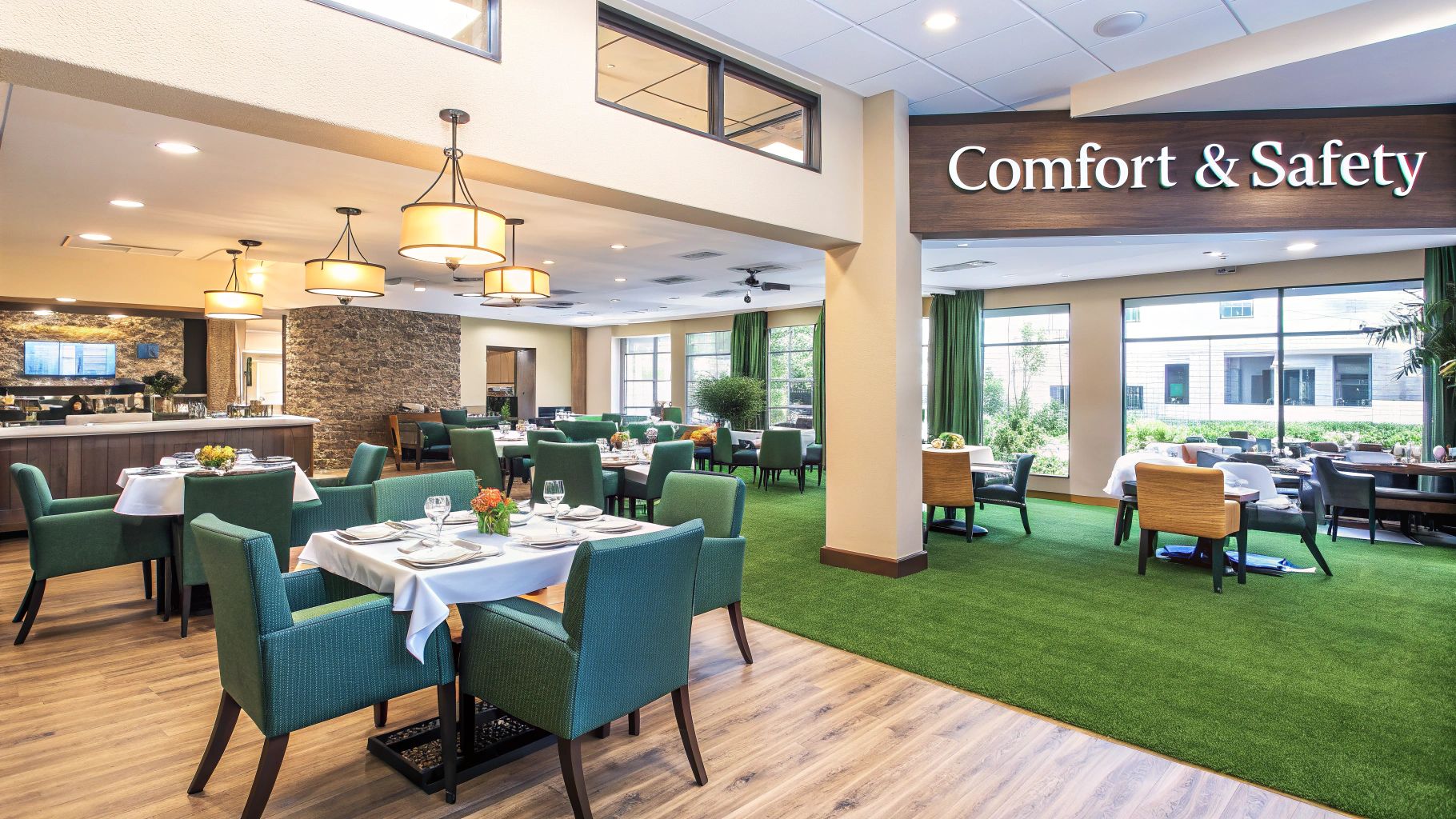
When you adopt this hospitality-focused approach, it directly boosts your marketability and keeps residents happy, turning your facility into a place people genuinely want to be.
Designing Amenities for a Vibrant Lifestyle
Modern assisted living communities are taking cues from luxury resorts and boutique hotels, offering a rich variety of experiences right on-site. The secret sauce is providing choice and quality.
- Restaurant-Style Dining: Move away from the single-cafeteria model. Offer multiple dining venues, like a formal dining room, a casual bistro for a quick coffee and sandwich, and a private dining space families can reserve for celebrations.
- Comprehensive Wellness Centers: A small room with a treadmill just doesn't cut it anymore. A true wellness center needs equipment adapted for seniors, dedicated space for group classes like yoga or tai chi, and maybe even a heated therapy pool.
- Dedicated Social and Creative Spaces: Residents need places to pursue hobbies and connect with others. Consider a small movie theater, a cozy library with great lighting, a dedicated arts and crafts studio, or a game room.
The best amenities are the ones that build community naturally. A well-designed pub, a sunny patio with raised gardening beds, or a bustling coffee bar can easily become the social heart of the facility, sparking spontaneous conversations and friendships.
These spaces aren't just bullet points on a brochure. They are the engines of community life. They give residents a reason to leave their apartments and engage with their neighbors, which is absolutely crucial for fighting the loneliness that can affect so many older adults.
Critical Infrastructure Powering Modern Care
While the amenities shape the daily experience, it's the unseen infrastructure that guarantees residents' health and safety. These complex systems are the backbone of a high-functioning facility, and investing in them properly is non-negotiable.
Take the HVAC system, for example. Modern Heating, Ventilation, and Air Conditioning (HVAC) systems in senior living do more than just maintain a comfortable temperature. They are a first line of defense against illness, using advanced filtration and ventilation strategies to improve air quality and cut down on the spread of airborne germs.
Robust emergency power is another must-have. Your facility has to maintain life-safety systems, keep medications refrigerated, and power essential lighting during an outage. A reliable generator isn't a luxury; it's a fundamental requirement, especially when you consider that a fire can be devastating for a vulnerable population.
Integrating Invisible Technology for Safety
The best technology is often the kind you don’t even notice. In assisted living design, the aim is to integrate smart systems that enhance safety without making the environment feel cold or clinical.
Discreet, modern nurse call systems have replaced old-fashioned pull cords with wearable pendants or even voice-activated devices. In the same way, motion sensors can monitor for falls or unusual inactivity, alerting staff to potential problems without invasive cameras. Smart-home features, like automated lighting that illuminates a path to the restroom at night, can also dramatically reduce fall risks. Knowing which bathroom safety equipment for the elderly to install is a core part of creating these secure living spaces.
By thoughtfully layering these visible amenities and invisible systems, you create a facility that is not only beautiful and engaging but also safe, resilient, and ready to provide exceptional care for years to come.
9. Leveraging Site Planning and Adaptive Reuse
An assisted living facility doesn't exist in a vacuum. Its success is deeply intertwined with its physical location and the building itself, whether it's built from the ground up or is a thoughtfully restored piece of local history. Two powerful strategies—smart site planning and adaptive reuse—offer distinct paths to creating a remarkable and profitable community.
For any new build, site planning is about so much more than just making a building fit on a piece of land. It’s the art of choreographing the relationship between the structure, its residents, and the surrounding environment. The real goal is to create a setting that feels both secure and seamlessly woven into the local community.
Optimizing the Site for New Construction
Thoughtful site planning for a new assisted living facility can transform a property from a simple location into a therapeutic asset. It all starts by carefully orienting the building to maximize views of nature and access to sunlight, both of which have proven benefits for mood and well-being.
Creating secure and engaging outdoor spaces is another non-negotiable piece of the puzzle. These areas aren't just afterthoughts; they are vital extensions of the living environment.
- Therapeutic Gardens: Think of spaces that offer gentle sensory stimulation with fragrant plants, varied textures, and the soothing sound of a water feature. They need to provide safe, accessible pathways for residents to walk and simply connect with nature.
- Secure Courtyards: For memory care units, enclosed courtyards are absolutely essential. They have to be designed to allow freedom of movement without the risk of wandering, giving residents a safe way to enjoy fresh air on their own terms.
- Community Integration: The site plan also needs to look beyond the property line. Walking paths that link to local parks or sidewalks that lead to nearby shops can help residents feel less isolated and more a part of their community.
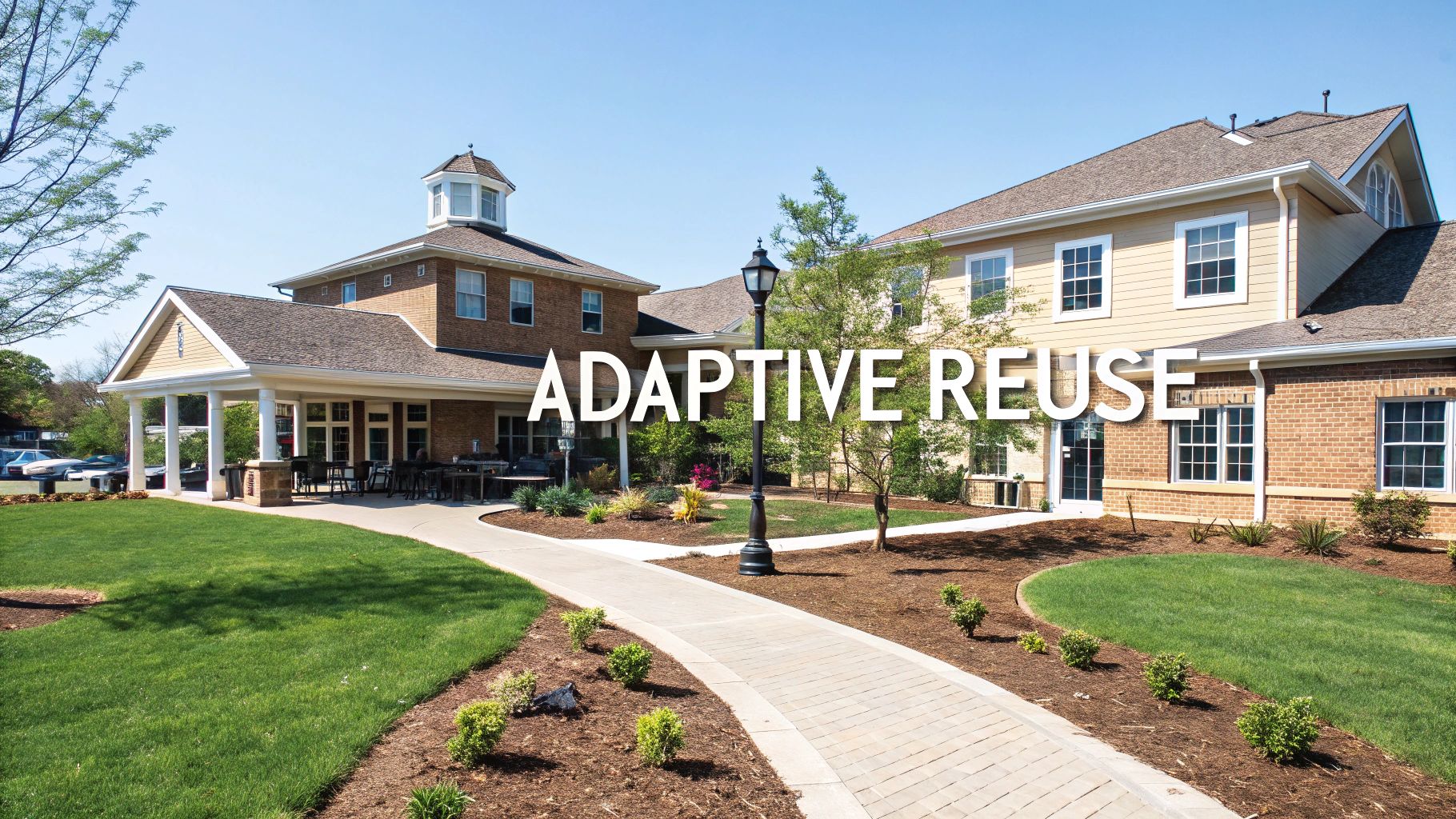
The Unique Advantages of Adaptive Reuse
While new construction offers a blank slate, adaptive reuse is an opportunity to create a facility with a character and story that simply can't be manufactured. This approach means transforming an existing structure—maybe a historic hotel, an old school, or even a converted mill—into a modern senior living community.
This strategy is often far more sustainable than demolishing and rebuilding. It preserves the embodied carbon of the original structure and can significantly shorten the project timeline. For developers, this often means a faster path to market and a quicker return on investment.
Adaptive reuse breathes new life into forgotten buildings, weaving the story of a community's past into its future. It delivers a project with a built-in sense of place and authenticity that is impossible to replicate with new construction.
Navigating the Challenges of Conversion
Of course, converting an old building for a completely new purpose comes with its own set of hurdles. A thorough feasibility study is the first, and arguably most important, step to see what you're up against.
You'll need to dig into a few key areas:
- Structural Integrity: Is the existing frame sound? Can it actually support the new layout and loads required for a residential healthcare setting?
- MEP Systems: How can you integrate modern mechanical, electrical, and plumbing systems without completely compromising the building's historic character? It's a delicate balance.
- Accessibility and Code Compliance: How do you meet modern accessibility standards, like ADA requirements, within the constraints of a structure built in a different era?
Successfully navigating these complexities demands an architectural partner with deep experience in both historic preservation and modern building codes. By getting all the pieces aligned, developers can transform a historic asset into a one-of-a-kind senior living destination that truly stands out. This approach doesn't just offer potential cost savings; it delivers a product rich with character and genuine community connection.
Answering Your Top Questions on Assisted Living Design
When you're diving into the world of assisted living development, a lot of questions come up. Let's tackle some of the most common ones I hear from developers and operators, focusing on the practical side of creating a community that truly works.
What’s the Single Biggest Design Mistake People Make?
Hands down, the biggest mistake is designing long, institutional-style corridors. You know the ones I mean—double-loaded hallways that feel more like a sterile hospital or an old-school hotel than a home. They can be incredibly disorienting and frankly, a little intimidating for residents.
This kind of layout can lead to social isolation and anxiety, especially for anyone with cognitive decline. The fix? Break up those long sightlines. We do this by introducing natural light, creating cozy seating nooks, and using distinct visual cues to create smaller, more navigable "neighborhoods" within the larger building. It makes the entire space feel more intimate and manageable.
How Can the Building’s Design Actually Help with Staffing?
It’s no secret that staffing is one of the biggest challenges in this industry. Smart design can't solve it entirely, but it can make a huge difference in staff efficiency and burnout. It starts with simple logistics.
Think about centralizing nurse stations, supply closets, and other key support areas. This cuts down on the miles your team has to walk every day.
Good design is a silent partner for your staff. When you give them clear sightlines across common areas, they can keep a subtle, respectful eye on residents. And don't forget their spaces—a well-designed break room sends a powerful message that you value your team, which does wonders for morale and retention.
Is It a Good Idea to Repurpose an Old Building?
Absolutely, and it can be a brilliant move. Adaptive reuse of buildings like old hotels, schools, or even vacant commercial properties can be a fantastic strategy. You often gain benefits in cost, get to market faster, and create a building with genuine character that new construction can't always replicate.
The trick is doing your homework with a thorough feasibility study. You need to know what you're getting into with the building's structure, accessibility hurdles, and the cost to bring all the mechanical, electrical, and plumbing systems up to modern code. With the right architecture partner, you can turn an old gem into a unique, high-performing community that adds real value to the neighborhood.
At Sherer Architects, LLC, we're experts at solving these complex design puzzles and creating assisted living communities that are functional, beautiful, and profitable. Whether you’re starting from scratch or have an adaptive reuse project in mind, our team has the experience to make it a success. Visit shererarch.com to see how we bring structure to life.