Starting a building project can feel like staring at a blank map with no directions. That’s where the architect process of design comes in. It’s not a mysterious, complicated affair; it's a clear, well-trodden path that we, as your architects, guide you through. Think of it as our shared roadmap, turning your vision from an idea into a tangible, physical reality. Knowing this process is the key to a great partnership and a successful project.
Decoding The Architect Process Of Design
The journey from a simple idea to a finished building isn’t one giant leap. Instead, it’s a series of deliberate, interconnected stages. For you, the client, understanding this flow is vital because it shows you exactly when your input is most needed and most effective. This isn’t just about creative inspiration; it’s a logical sequence designed to manage your budget, minimize risks, and ensure the final building is exactly what you dreamed of.
Each phase builds directly on the decisions of the last one—you have to pour the foundation before you can frame the walls. This step-by-step approach prevents expensive backtracking and gives us clear checkpoints for approvals along the way. The core of the architect process of design typically breaks down into five key phases:
- Schematic Design: This is where we explore the big ideas and hash out the overall concept.
- Design Development: Here, we refine the approved design, selecting specific materials and systems.
- Construction Documents: We create the highly detailed, technical drawings that the builders will use.
- Bidding & Negotiation: We help you find and select the right contractor for your project.
- Construction Administration: We stay on as your advocate, overseeing the build to ensure it matches the plan.
To give you a clearer picture of how these stages fit together, here’s a quick summary.
The 5 Key Phases of Architectural Design at a Glance
This table breaks down the entire process into its core components, showing what we aim to achieve at each step and what you can expect as the result.
| Phase | Primary Goal | Key Outcome |
|---|---|---|
| 1. Schematic Design | Translate the client's vision and program into broad design concepts. | Basic floor plans, sketches, and site plans. |
| 2. Design Development | Refine the chosen schematic design with specific details and materials. | Detailed drawings, material selections, and system specifications. |
| 3. Construction Documents | Create a complete set of technical drawings and specifications for construction. | A full set of "blueprints" ready for permitting and bidding. |
| 4. Bidding & Negotiation | Help the client select a qualified contractor at a fair price. | A signed construction contract with the chosen builder. |
| 5. Construction Administration | Act as the client's representative during construction to ensure compliance. | A successfully completed building that aligns with the design intent. |
Seeing the journey laid out like this helps demystify the process and sets clear expectations from day one.
From Vision To Reality A Simplified View
This visual flow chart breaks down the entire journey into three fundamental movements: vision, design, and construction.
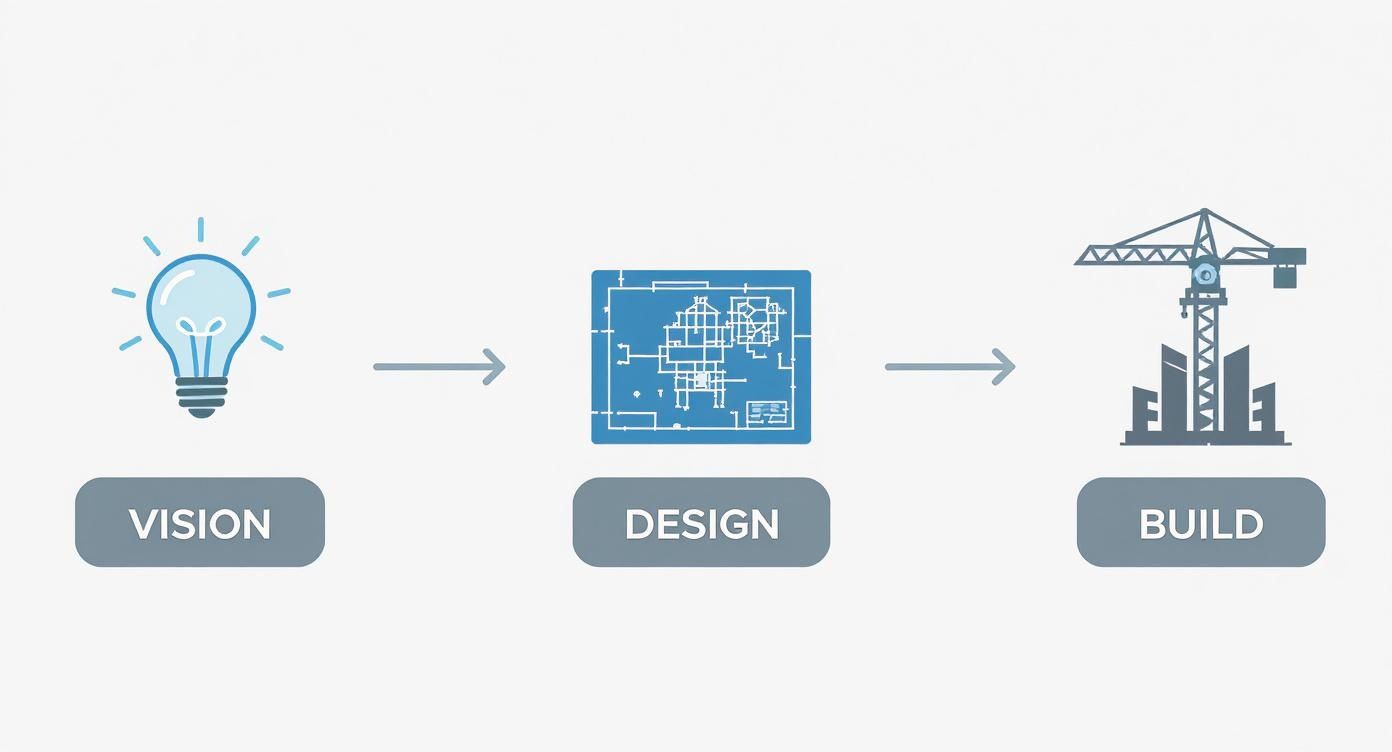
As the infographic shows, every successful project starts with a crystal-clear vision before we ever get into the technical nitty-gritty of design and the practical realities of building.
At Sherer Architects, we guide you through every stage, ensuring each step logically informs the next. This methodical progression is what transforms an abstract concept into a beautiful, functional, and enduring structure.
Ultimately, this process is all about partnership. Your insights and our expertise come together to ensure the final product isn’t just a building, but a true reflection of your vision—finished on time and on budget. We’ve found that an informed client is an empowered one, ready to make confident decisions every step of the way.
Starting with Your Vision in Schematic Design
Every great building starts not with a blueprint, but with a conversation. This first step, what we call Pre-Design, is all about discovery. It's where your vision meets the real-world possibilities of a project. Think of us at Sherer Architects as your project detectives; we're here to ask the right questions and truly understand your goals, your needs, and what you hope this new space will become.
During this phase, we dig into the practicalities—your budget, the opportunities and challenges of the site, and the overall scope of what we’re building together. This deep listening and research is vital. It creates the strategic brief, a shared roadmap that ensures every decision we make from here on out is pulling in the same direction.
Translating Ideas into Form
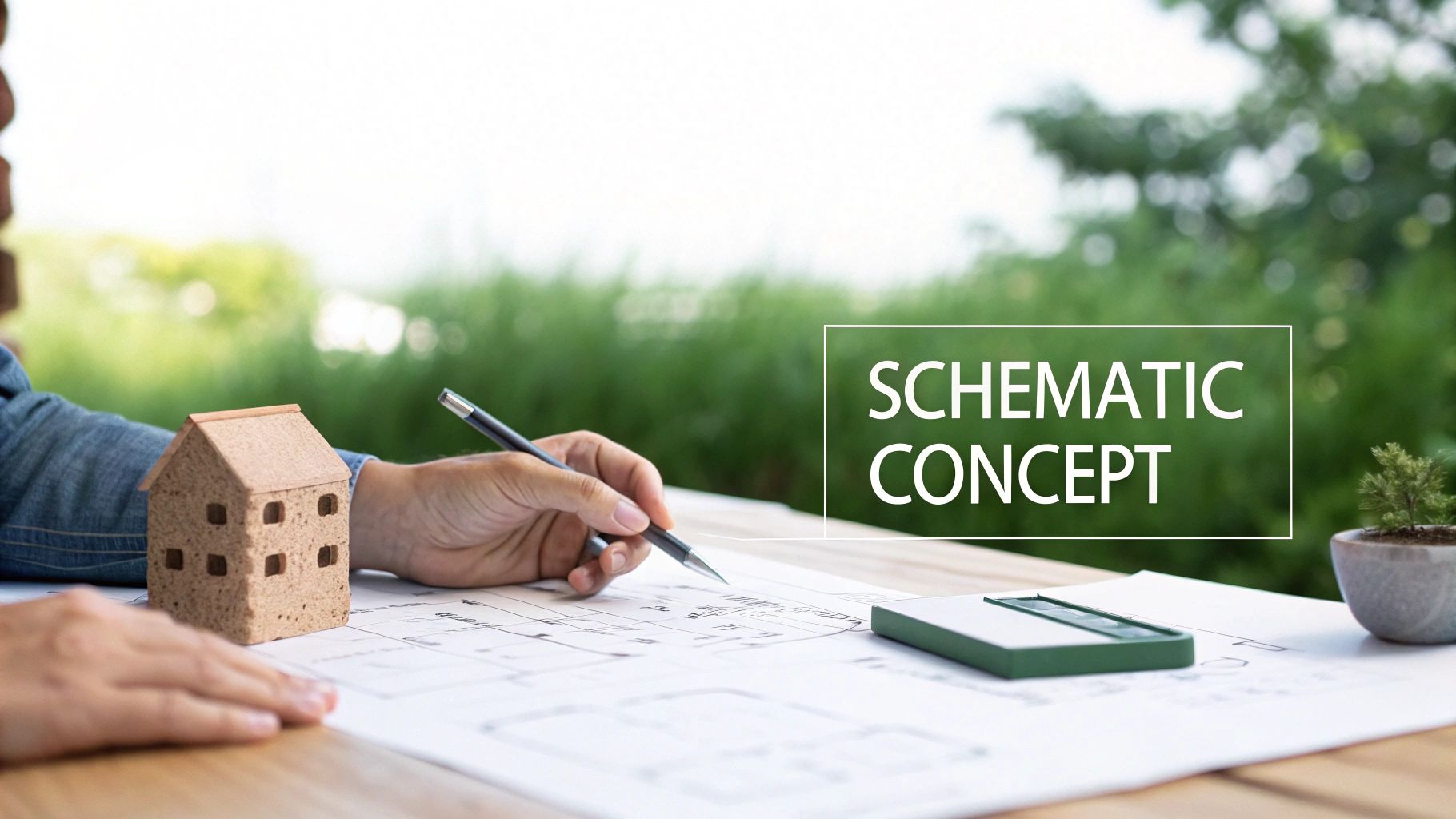
With a clear strategy in place, we move into Schematic Design. If Pre-Design is the conversation, this is the first sketch on a napkin. We're not worried about the fine details yet. Instead, we're shaping the big, bold ideas. We use rough drawings, simple diagrams, and even block models to explore the fundamental feel and flow of the project.
This is where we tackle the big-picture questions:
- Spatial Relationships: How will people move through the space? How do rooms connect?
- Site Integration: How does the building relate to the land and its surroundings?
- Overall Scale and Form: What will the building’s general shape and presence be?
Your feedback here is absolutely crucial. It's easy to reshape a rough clay model, but it’s much harder to re-carve a finished statue. Making major adjustments now is simple and inexpensive, which is why we work so closely with you to set a strong, confident direction for the rest of the journey.
The Business of Building Begins
These early steps are more than just creative brainstorming; they're the entry point into a major economic endeavor. The global architectural services market was valued at around USD 421.78 billion in a recent year, with forecasts expecting it to grow to USD 643.19 billion within a decade. That number represents everything from the initial feasibility studies we’re doing now to the final project management, all starting from this foundational work. You can dig deeper into this market's growth in this detailed industry report.
The Schematic Design phase is where we test the most important ideas. It's about establishing a powerful core concept that is functional, inspiring, and achievable within your budget. Getting this right is the single most important step in the entire process.
By the time we wrap up this stage, you won't have a final set of construction drawings. You'll have something far more valuable: a clear, mutually agreed-upon design concept. This collection of simple drawings and a solid narrative is our north star, confirming we’re all heading in the right direction as we move into the more detailed phases of the project.
Adding Detail During Design Development
With your approved concept in hand from the schematic phase, we move into a stage of refinement and precision. Welcome to Design Development. If Schematic Design was the initial clay model, this is where we start carving the definitive features, adding texture, and turning that rough shape into a recognizable sculpture. The big ideas are locked in; now it's time to breathe life and technical detail into them.
This is the phase where your project starts to feel truly tangible. We transition from broad strokes to specific, critical decisions that will define the character of your building from the inside out. This means moving beyond simple floor plans to selecting the actual materials, systems, and finishes that shape the final experience of the space.
From Concept to Concrete Plan
During Design Development, we zoom in on every single aspect of the project. Our team begins coordinating closely with specialized engineers and consultants—the experts who make a building function seamlessly. This collaborative effort ensures every component works in perfect harmony.
Here’s a look at what happens during this crucial stage:
- Material Selection: We'll guide you through choosing the specific interior and exterior finishes, like brick, siding, roofing, flooring, and even paint colors.
- Structural System Design: We work hand-in-hand with structural engineers to finalize the building's frame, whether it's steel, concrete, or wood.
- MEP Integration: We coordinate with mechanical, electrical, and plumbing (MEP) engineers to lay out the HVAC, power, and water systems.
- Fixture and Fitting Specification: This is where we select the windows, doors, lighting fixtures, and cabinetry that align with both the design aesthetic and your budget.
This is the critical bridge between the creative concept and the technical blueprint. Every decision made here directly impacts the project's quality, cost, and long-term performance, making your input essential.
Your Role in Refining the Details
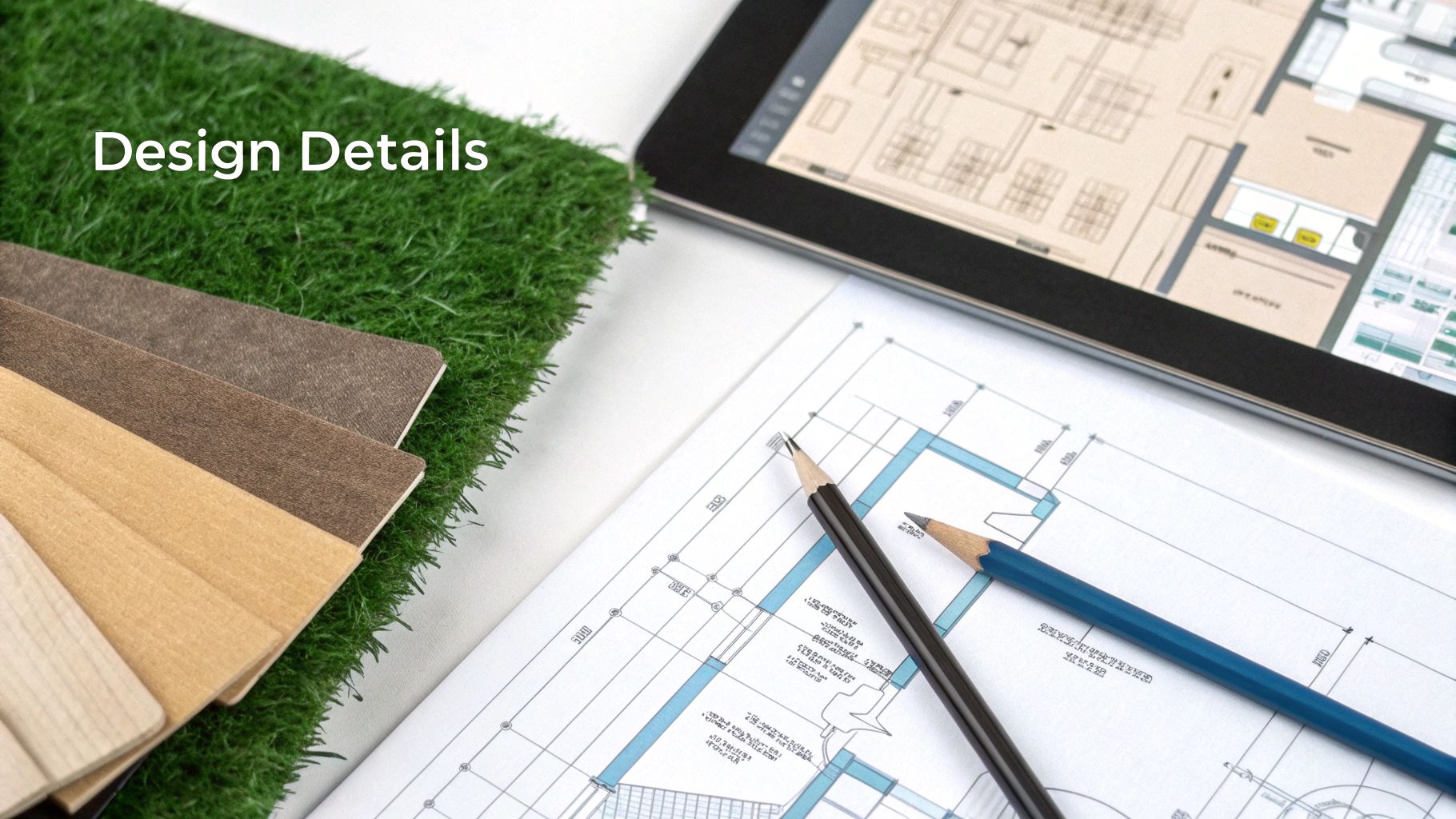
Your involvement in Design Development is all about making the key decisions that define the building's look and feel. We don’t just give you a catalog; we present curated options, real material samples, and 3D visualizations to help you make informed choices that are true to your vision. This is where you’ll decide on everything from the style of your windows to the type of tile in the restrooms.
While you're making these aesthetic choices, we're busy in the background ensuring every detail adheres to building codes and regulations. For instance, architects meticulously integrate safety features and ensure compliance with things like emergency exit signage requirements. These technical requirements are carefully woven into the design to guarantee the building isn't just beautiful and functional, but also safe and legally sound.
By the end of this phase, the project has evolved from a conceptual idea into a highly detailed and resolved design. This comprehensive package gives us a crystal-clear basis for the next stage: creating the final construction documents that builders will use to bring your vision to life.
Creating the Builder's Instruction Manual
This is where the rubber really meets the road in the architect process of design. Welcome to the Construction Documents phase—the most technical and detail-oriented stage of the entire journey. Think of it this way: everything we’ve done up to this point has been about deciding what to build. Now, we create the definitive instruction manual that explains how to build it.
Every decision we refined during Design Development gets translated into a precise, legally binding set of plans and specifications. We're talking about a comprehensive package that leaves absolutely nothing to chance. From the exact mix of concrete in the foundation to the specific model number on the doorknobs, every single component is detailed.
Why all the fuss? It serves two critical purposes. First, it allows contractors to give you a truly accurate and competitive price, since they know exactly what they're bidding on. Second, it hands the construction team a clear, unambiguous guide, which is the best way to prevent costly mistakes and frustrating delays once work begins.
The Blueprint for Success
The quality of these construction documents is, without a doubt, the most important factor in keeping your project on track, on budget, and free of errors. These aren't just pretty drawings; they are the contractually enforceable instructions that guarantee the building you get is the one we designed together. A core part of this is knowing how to create floor plans that serve as the foundation for the entire construction set.
Pulling this off is a massive team effort. We bring in and coordinate a whole team of specialized professionals to produce the highly detailed documents modern projects demand. It's a huge undertaking, reflected in an industry that employs roughly 1,743,702 people worldwide. Around 69% of those professionals work in architectural or engineering firms that live and breathe this kind of detailed coordination.
These documents are the final word on the design. They represent the culmination of all prior phases—schematic concepts and development decisions—distilled into an actionable plan that protects your investment and your vision.
What the Manual Includes
So, what’s actually in this "instruction manual"? The final package is a robust set of documents, each with a specific job to guide the build.
- Architectural Drawings: These are the detailed floor plans, exterior elevations, cross-sections, and specific drawings that show exactly how complex parts of the building fit together.
- Structural Drawings: Our structural engineers create these plans, which detail the foundation, framing, beams, and everything else that holds the building up.
- MEP Drawings: This stands for Mechanical, Electrical, and Plumbing. These plans show the complete layout for heating and cooling (HVAC) systems, all the wiring and power, plus the water supply and drainage networks.
- Specifications: Often called the "spec book," this is a detailed written document. It spells out the required quality standards, specific materials to be used, and the correct installation methods for just about everything on the project.
Once this complete set is finalized, it’s ready to go. We send it out to contractors for bidding, which is the last major step before we can finally break ground and start turning all this planning into a physical reality.
Bringing Your Project to Life During Construction
With a full set of construction documents in hand, the design process pivots from planning to pure action. This is the moment we've all been waiting for—when your vision finally starts taking shape, rising from the ground up. This stage really breaks down into two key parts: first, finding the right builder for the job, and second, making sure the build itself stays true to the plan.
The first step is what we call Bidding and Negotiation. You can think of it as a formal interview process for builders. We tap into our trusted network to help you get proposals from a handpicked group of qualified, reputable contractors. Because they're all bidding on the exact same detailed blueprint—our construction documents—you get to compare their proposals on a true apples-to-apples basis.
Our job here is to help you dig into these bids and look past just the final number. We'll assess each contractor's track record, their proposed schedule, and how well they seem to grasp the unique demands of your project. This careful vetting helps ensure you end up with a builder who is not only a good fit for your budget but also for our shared commitment to quality.
Your Advocate on the Job Site
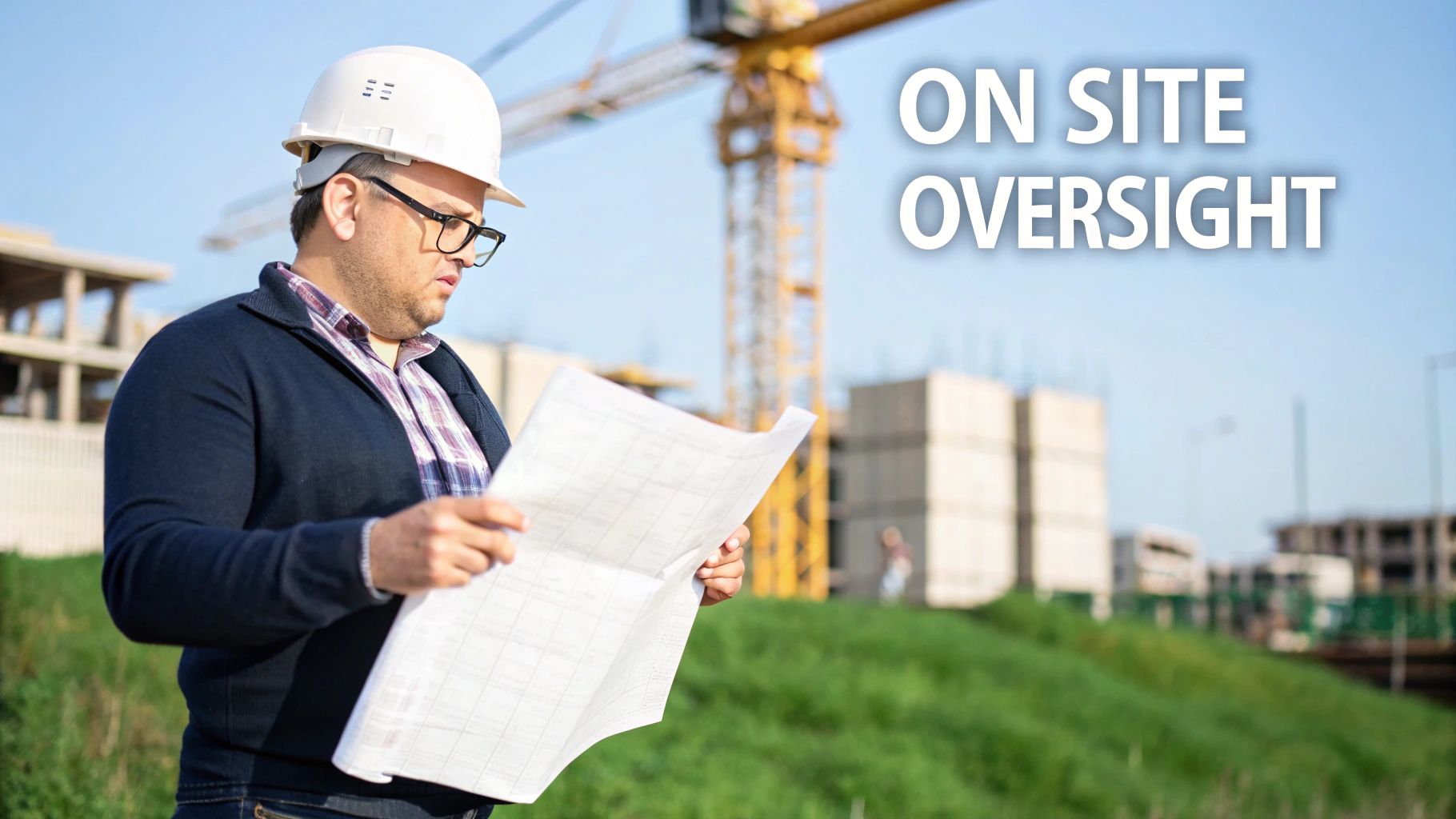
Once you’ve chosen a contractor and the contracts are signed, we step into the final phase: Construction Administration. Our role shifts from being the designer to being your personal advocate and quality expert on the active job site. We don't swing the hammers, but we make sure the people who do are following the instruction manual to the letter.
During this critical time, we become the central point of contact between you and the construction crew. This keeps communication clean and simple, heading off the kind of misunderstandings that can lead to expensive mistakes. A clear, organized flow of information is absolutely essential for keeping a complex project on time and on budget.
Construction is where the integrity of the design is truly put to the test. Having your architect on-site is like having an expert inspector who knows every inch of the plan, safeguarding your investment and ensuring the final result is exactly what you signed off on.
Ensuring Quality and Accountability
Throughout the build, we're actively involved in protecting your interests and the integrity of the design. We don't just sit back and wait for problems to happen; our goal is to anticipate challenges and solve them before they can derail the project.
This hands-on oversight involves several key responsibilities:
- Regular Site Visits: We are on-site regularly to check on the progress and, more importantly, the quality of the work. This is how we confirm everything is being built according to the construction documents.
- Reviewing Contractor Payments: Before you cut a check, we review the contractor’s payment requests to make sure the work they’re billing for has actually been completed to the required standard.
- Answering Questions: We provide quick and clear answers to the contractor's questions (often called Requests for Information, or RFIs) to keep the project moving smoothly.
- Problem Solving: When the unexpected happens—and it sometimes does—we work directly with the builder to find smart solutions that don't compromise the original design intent.
This constant oversight during construction is what closes the gap between the detailed drawings on paper and the final building you get to experience. It’s the last, crucial step in our design process, guaranteeing that the home you walk into at the end is the very same one we so carefully planned together from the start.
How Technology Shapes Modern Architectural Design
The classic image of an architect hunched over a drafting table with pencils and T-squares is, for the most part, a thing of the past. Today, technology is woven into every part of the architect process of design, making the entire journey more precise, collaborative, and insightful. This isn't just about speed; it's about designing smarter, better buildings from the ground up.
Leading this charge is Building Information Modeling (BIM). It's easy to mistake BIM for just a 3D model, but it’s so much more. Think of it as a complete digital rehearsal for your building. Every single component—from the steel beams in the structure to the plumbing lines and electrical wiring—exists as a smart object packed with data.
This digital twin allows us to run simulations and catch clashes long before anyone sets foot on the construction site. For instance, we can instantly see if a massive HVAC duct is on a collision course with a structural beam. Finding that kind of problem on-site means costly delays and rework. With BIM, we solve it with a few clicks in the design phase.
From Digital Blueprints to Creative Partners
The evolution didn't stop at digital blueprints. We've moved beyond basic computer-aided design (CAD) into a world of parametric and generative design. In many ways, sophisticated software now acts as a creative partner. We can feed it complex criteria, and AI-driven algorithms will explore thousands of design possibilities, letting us focus on the big picture. This shift is so significant that many now see AI as a co-creator in design.
These tools give our creativity a massive boost. We can set very specific goals for a project, such as:
- Maximizing natural light in every office.
- Drastically reducing the building’s energy footprint.
- Streamlining the flow of people through a busy commercial space.
The system then generates countless design variations that meet these specific demands. It lets us explore a universe of options that would be physically impossible to sketch out by hand, ensuring we find the absolute best solution.
Technology doesn't replace the architect’s creative vision—it amplifies it. These powerful tools give us the ability to test ideas, optimize for performance, and ultimately deliver a building that is more efficient, sustainable, and better aligned with your goals.
Common Questions About Our Design Process
Taking on a building project is a huge step, and it's only natural to have a lot of questions. We find that getting a handle on the architectural design process right from the start helps everyone feel more confident and keeps expectations aligned.
Here are a few of the most common questions we hear from clients just starting out.
How Long Does the Design Take?
This is probably the number one question we get, and the honest answer is: it depends. Every project has its own unique timeline shaped by its size and complexity.
A simple commercial renovation might move through the design phases in just a few months. On the other hand, designing a large, complex new building from the ground up could easily take a year or more before we even think about breaking ground.
One of the biggest variables is the local permitting process, which can sometimes add unexpected delays. We'll always provide a detailed project schedule during our initial pre-design discussions to give you a clear roadmap.
How Are Architectural Fees Structured?
We’re flexible and can structure our fees in a way that makes the most sense for your specific project. Typically, we use one of three common methods:
- Percentage of Construction Cost: Our fee is a set percentage of the final construction budget.
- Fixed Fee: We agree on a single, fixed price for the entire design scope upfront.
- Hourly Rate: For smaller projects or consultation, we bill for our time at an hourly rate.
No matter which structure we use, payments are broken down into installments. We’ll bill you as we complete each major phase of the project, from schematic design all the way through construction.
Your involvement is most critical during the early creative phases to define goals and preferences. As we move into technical development, your role shifts to making key decisions and providing timely approvals at specific milestones.
Ready to start a conversation about your next project? The team at Sherer Architects, LLC is here to guide you through every stage, ensuring your vision is realized with clarity and expertise. Contact us today to schedule a consultation.