At its core, commercial architecture is the art and science behind designing the buildings where business gets done. We're talking about everything from the high-rise office tower that defines a city's skyline to the cozy local coffee shop on the corner. Unlike a private home, these spaces are built from the ground up to support commerce, welcome the public, and drive economic activity.
Designing the Spaces Where Business Thrives
To really get what commercial architecture is all about, you have to think beyond just the building materials. It's about crafting a strategic environment. A good commercial architect isn't just drawing up a floor plan; they’re creating a functional ecosystem designed to solve a business problem. That might mean designing a retail store layout that naturally guides customers toward key products to boost sales, or it could be an office that encourages spontaneous collaboration.
These buildings are active participants in our economy. They're purpose-built for specific business functions, but they also have a huge responsibility to the public. This dual focus—serving both the business and the people—adds a whole layer of complexity you don't see in other types of architecture. A commercial architect's checklist is long and varied, covering critical points like:
- Public Safety and Accessibility: This is non-negotiable. It means rigorously following building codes, fire regulations, and accessibility laws like the Americans with Disabilities Act (ADA).
- Brand Expression: The building itself becomes a physical extension of a company's identity and what it stands for.
- Economic Viability: It's a constant balancing act between the client's upfront budget, the building's long-term running costs, and the potential for a solid return on investment.
A Tale of Three Architectures
Putting commercial architecture into context helps clarify what makes it so unique. It’s useful to see how it stands apart from its two main counterparts: residential and industrial architecture. While all three involve designing structures, their end goals and the problems they solve are worlds apart. Residential architecture is all about creating personal, private living spaces. Industrial architecture, on the other hand, is driven by process, heavy machinery, and the demands of large-scale production.
Commercial architecture sits squarely in the middle, blending the human-centric focus of residential design with the functional efficiency required by industrial operations. It's a unique discipline that must serve both the business operating within its walls and the public interacting with it.
For a deeper dive into the field, including various applications and considerations, you can explore further resources on commercial design.
The table below breaks down these key differences, showing exactly what makes each field tick.
Commercial vs Residential vs Industrial Architecture At a Glance
Here’s a quick comparison of the three main branches of architecture, looking at their primary purpose, key design considerations, and typical scale.
| Attribute | Commercial Architecture | Residential Architecture | Industrial Architecture |
|---|---|---|---|
| Primary Purpose | To facilitate commerce, public services, and business operations. | To provide private living spaces for individuals and families. | To support manufacturing, storage, and industrial processes. |
| Key Considerations | Public accessibility, brand identity, customer flow, building codes, and ROI. | Comfort, privacy, aesthetics, personal lifestyle, and family needs. | Workflow efficiency, equipment layout, logistics, and durability. |
| Typical Scale | Varies widely, from small storefronts to large mixed-use developments. | Typically smaller-scale projects like single-family homes or apartments. | Often involves large-scale facilities like warehouses or factories. |
As you can see, each discipline operates in its own world, solving for very different human and operational needs.
The Four Pillars of Commercial Design
Every great commercial building, from a massive corporate headquarters to your favorite corner coffee shop, stands on four fundamental principles. I like to think of them as the legs of a table—if one is shaky or missing, the whole thing comes crashing down. These pillars are what architects use to navigate the complex world of balancing a client's dream with the hard realities of construction, public use, and ultimately, the bottom line.
These principles ensure a building is more than just a pretty face. It has to work. It has to do its job, represent the brand behind it, keep everyone inside safe, and make good business sense. Let's break down these four essential pillars that every thoughtful commercial design is built upon.
Functionality and Flow
At its absolute core, a commercial building is a tool for business. Its main purpose is to function flawlessly for the people who use it, whether they're employees, customers, or patients. This is the pillar of functionality and flow, and it's all about how people move and operate within the space.
An architect obsesses over the path people will take through a building. In a retail store, for instance, the layout isn't accidental; it’s carefully crafted to guide you past key products and encourage you to buy. In a modern office, the flow might be designed to spark collaboration, with pathways that naturally lead to common areas and impromptu meeting spots. The goal is to create an experience so intuitive that it feels effortless.
A well-designed space is almost invisible because everything is just where you expect it to be. You know a functional design is a success when people can move through it and get things done without ever feeling lost, confused, or held back by the building itself.
Brand Identity and Aesthetics
A commercial building is one of the most visible, permanent statements a company can make. This second pillar, brand identity and aesthetics, is what turns a generic box into a physical extension of a company’s personality and values. It’s storytelling through architecture.
This is so much more than just slapping a logo on the door. The materials, the colors, the way light fills a room, and the architectural style all work together to send a message. A young tech company might choose an open, industrial look with raw concrete and exposed steel to project a feeling of innovation and transparency. A luxury hotel, on the other hand, will use rich materials and classic forms to communicate elegance and comfort. The building itself becomes a powerful marketing tool, reinforcing the brand for everyone who walks inside.
Safety and Compliance
This third pillar is the one you can't compromise on. It's the absolute foundation of public trust: safety and compliance. Commercial buildings are for the public, and architects have a serious responsibility to protect the health and well-being of every single person who steps inside. This means sticking to a whole host of complex rules and regulations.
This pillar is less about creative flair and more about technical mastery. Key elements include:
- Building Codes: These are the local and national rulebooks that govern everything from how strong the structure must be to fire safety, proper ventilation, and electrical systems.
- The Americans with Disabilities Act (ADA): This is a federal law ensuring that public spaces are accessible to everyone. It dictates the design of ramps, doorways, bathrooms, and much more.
- Public Safety Measures: This covers things like clearly marked fire exits, emergency lighting, and setting limits on how many people can be in a space at one time.
Getting this right requires a deep well of technical knowledge. The architect is the client’s guide through this maze of regulations, making sure the finished building is not only beautiful and functional but, most importantly, legal and safe.
Economic Viability
At the end of the day, commercial architecture has to make financial sense. The pillar of economic viability is what keeps a project grounded, ensuring the design fits the budget, delivers a solid return on investment (ROI), and accounts for long-term running costs. A stunning design that bankrupts the owner is, quite simply, a failure.
Architects work hand-in-hand with clients to find the sweet spot between their vision and their budget. This means making smart choices about materials, construction techniques, and building systems to manage those initial costs. But a good design also has an eye on the future. It incorporates energy-efficient systems and durable materials that will cut down on utility bills and maintenance for years to come. By focusing on economic viability, the architect ensures the project isn’t just a creative achievement but a profitable, long-lasting asset.
Exploring the Diverse World of Commercial Buildings
Commercial architecture isn't one-size-fits-all. It's a collection of specialties, much like how a doctor might focus on cardiology or pediatrics. Architects, too, often develop a deep expertise in specific types of commercial buildings.
Think about it: the design challenges for a bustling shopping mall are worlds apart from those of a sterile hospital. Yet, both are commercial architecture. This variety is what keeps the field so interesting. Let’s dive into a few of the major categories you see every day.
Office Buildings: From Corporate Campuses to Coworking Hubs
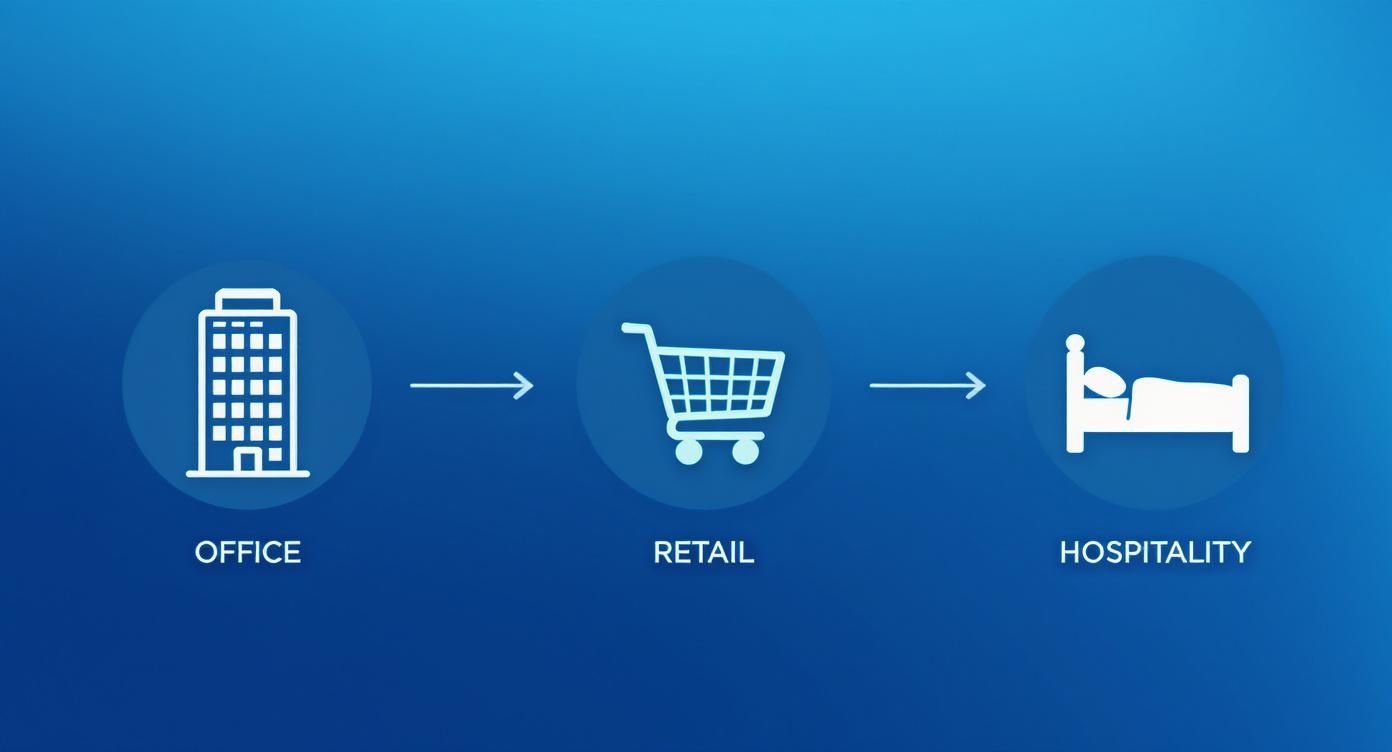
Offices are probably the first thing that comes to mind when you hear "commercial building." But the modern office has come a long way from the sea of cubicles we all picture. Today, architects are designing everything from sprawling corporate headquarters for tech giants to flexible coworking spaces for freelancers and startups.
The real puzzle is creating a space that actually supports how a company works. An open floor plan can be great for collaboration, but you also need quiet zones for focused tasks. Things like great natural light, good air quality, and access to amenities aren't just perks anymore—they're essential for attracting and keeping great people.
Retail Spaces: Crafting the Customer Journey
Retail architecture is all about the experience. The goal? To encourage people to buy. Whether it's a massive mall, a tiny boutique, or a big-box store, the design is meant to guide a customer on a carefully planned journey.
Architects who specialize in retail are part psychologist, part merchandiser. They use layout, lighting, and materials to highlight products and build a powerful brand atmosphere.
- Boutiques: These aim for an immersive, brand-focused vibe that feels exclusive and special.
- Shopping Malls: They're designed like mini-communities, with traffic flows that ensure shoppers see as many storefronts as possible.
- Big-Box Stores: Here, it’s all about efficiency. Think wide aisles and clear sightlines to make finding things—and restocking shelves—as easy as possible.
Ultimately, the architecture is there to turn a visitor into a customer by making their shopping trip smooth and enjoyable.
Hospitality and Healthcare: Designing for People
At first glance, hotels and hospitals seem completely different. But they share one critical mission: they are designed entirely around the human experience, often during very important moments in people's lives.
In a hotel or restaurant, the building itself is part of the product. The architecture creates a sense of welcome, comfort, or even luxury. From the grand lobby entrance to the mood of the dining room, every detail is considered to make a guest's stay memorable.
In healthcare, the design priorities shift to patient well-being, safety, and efficiency for the medical staff. A well-designed hospital might use clear signage to reduce stress, place nursing stations for the best patient visibility, and use materials that are both tough and easy to keep sterile. Good architecture can genuinely contribute to healing.
The Rise of Mixed-Use Developments
One of the most powerful trends in commercial architecture right now is the mixed-use development. These projects are like self-contained mini-neighborhoods, blending retail, housing, offices, and entertainment into one seamless complex.
They create vibrant, walkable communities where you can live, work, and play without ever getting in your car. For an architect, this is a fascinating challenge: how do you make these different functions flow into one another to create a lively, energetic urban space?
This growing demand for specialized and diverse commercial spaces is driving a lot of activity. The architectural services market was valued at around $184.1 billion in 2025 and is expected to jump to nearly $330.1 billion by 2033. This boom shows just how vital architects are in shaping how we live and work together. You can read more about the trends driving this architectural services market growth.
The Journey from Concept to Concrete
Turning a great idea for a commercial space into a real, standing building is a marathon, not a sprint. It's a journey with a clear roadmap, moving step-by-step from a rough concept to a fully-realized structure. Think of it less like a single flash of inspiration and more like a carefully orchestrated expedition.
Every stage builds directly on the one before it, ensuring that from the moment you pick a site to the day the final coat of paint dries, every decision serves the project's ultimate purpose. This process is a massive collaborative effort, bringing together clients, architects, engineers, and builders. The architect is like the conductor of an orchestra, making sure everyone is playing in harmony to create a building that works, meets all the rules, and actually delivers on that initial vision.
Let's walk through the five key phases of how it all comes together.
Pre-Design and Feasibility
This is where it all begins—the "is this even possible?" stage. Before a single line is drawn, the architect sits down with the client to hash out the absolute fundamentals: the project's goals, its size and scope, and, of course, the budget. It’s all about asking the tough questions right from the start.
Key activities here are all about due diligence:
- Goal Setting: Nailing down precisely what this building needs to do for the business. Is it about attracting customers, boosting employee productivity, or streamlining logistics?
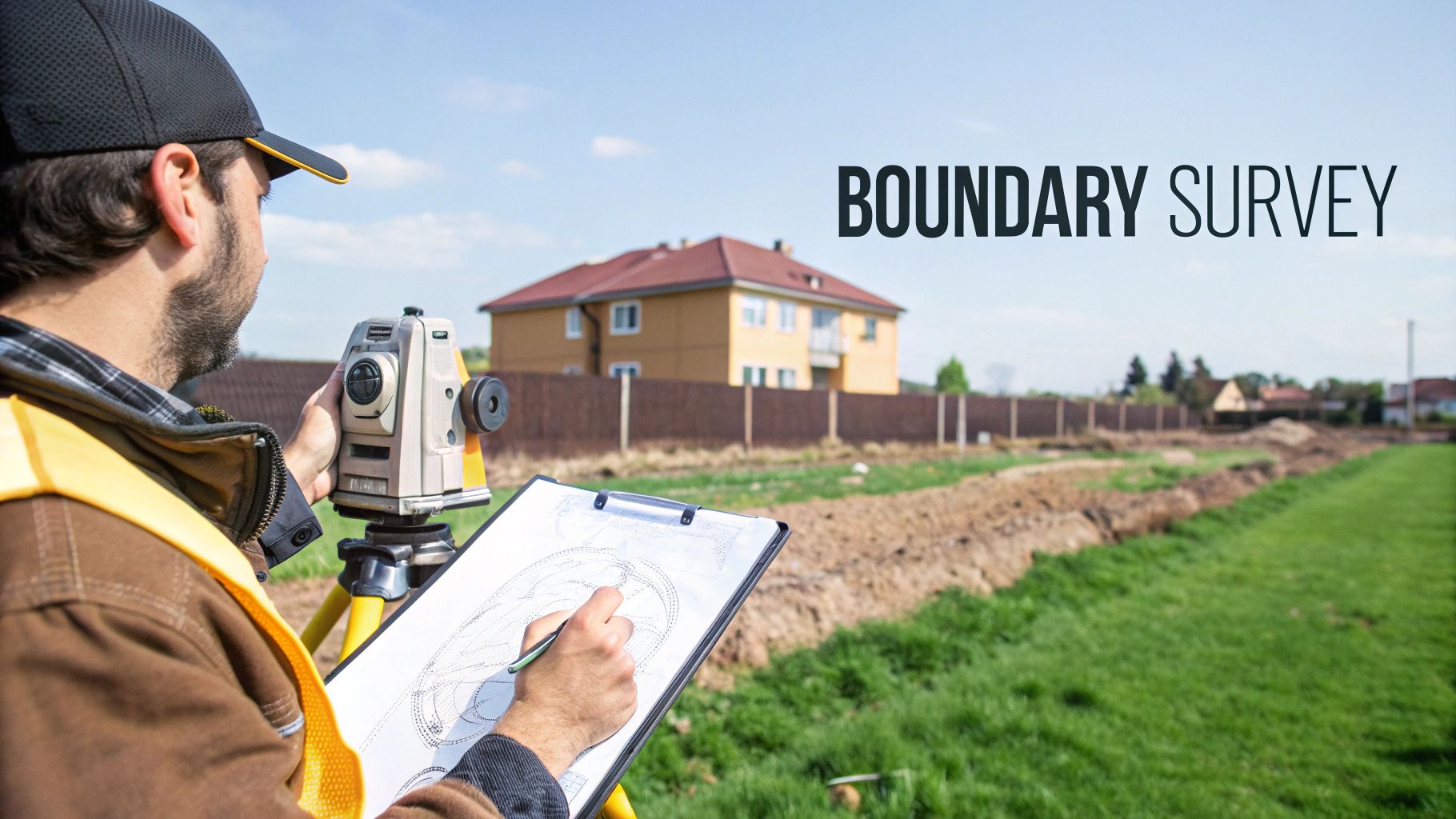
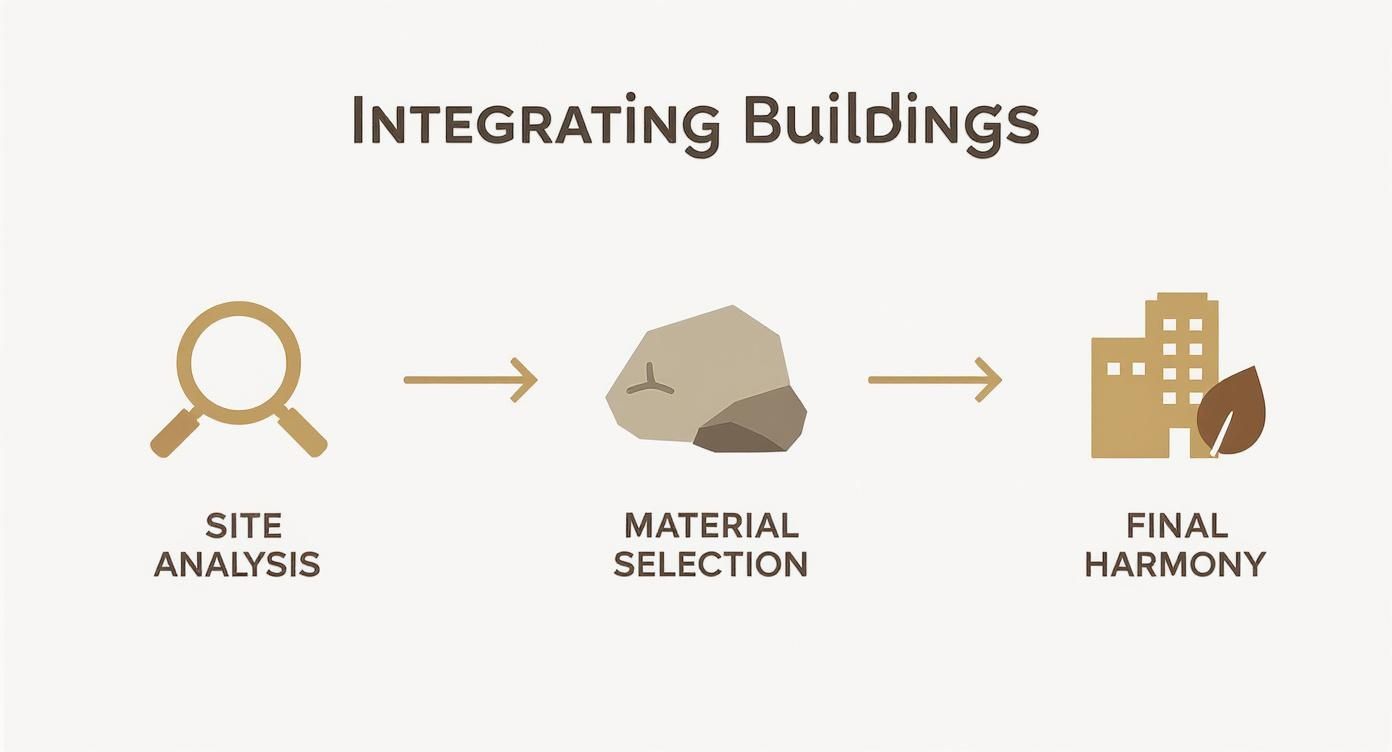
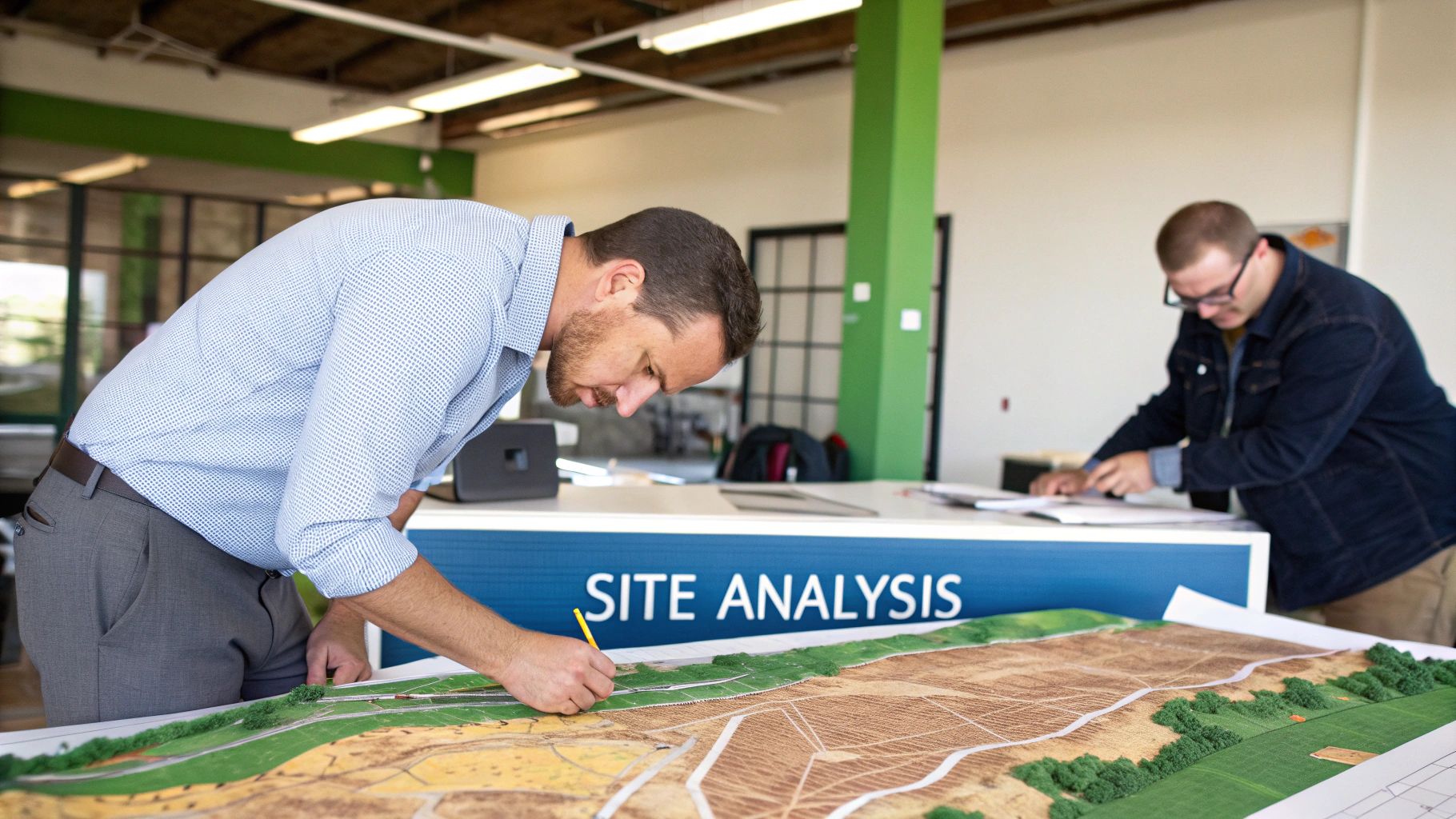
- Site Analysis: Scrutinizing potential locations. This means digging into zoning laws, checking for environmental issues, and making sure there's proper access to utilities and roads.
- Budgeting: Creating a realistic financial plan that will guide the entire project.
This deep dive ensures the project is built on solid ground—both figuratively and literally. This is also when you start thinking about the physical groundwork, which often means bringing in experienced commercial excavation contractors to prepare the site for construction.
Schematic Design
With the groundwork laid, the creative part really kicks into gear. In Schematic Design, the architect starts translating all those goals and requirements into actual drawings. These aren’t hyper-detailed blueprints yet; they’re more like conceptual sketches, rough floor plans, and basic 3D models that explore the overall look, feel, and flow of the building.
This is the big-picture phase. The architect will often present a few different approaches to see what resonates most. Client feedback is everything here, as the initial sketches are tweaked and refined until they perfectly capture the project’s spirit.
Design Development
Once everyone agrees on the schematic design, it’s time to add the meat to the bones. During Design Development, the architect fleshes out the approved concept with a much deeper layer of detail. This is when decisions are made on major materials, the structural system is locked in, and all the mechanical, electrical, and plumbing (MEP) systems are mapped out.
Think of it like this: Schematic Design is the pencil sketch of a portrait. Design Development is when the artist starts laying down the base colors, defining the shadows, and bringing the subject to life with texture and depth. The basic form is there, but now it’s getting the character and substance that will define it.
Construction Documents
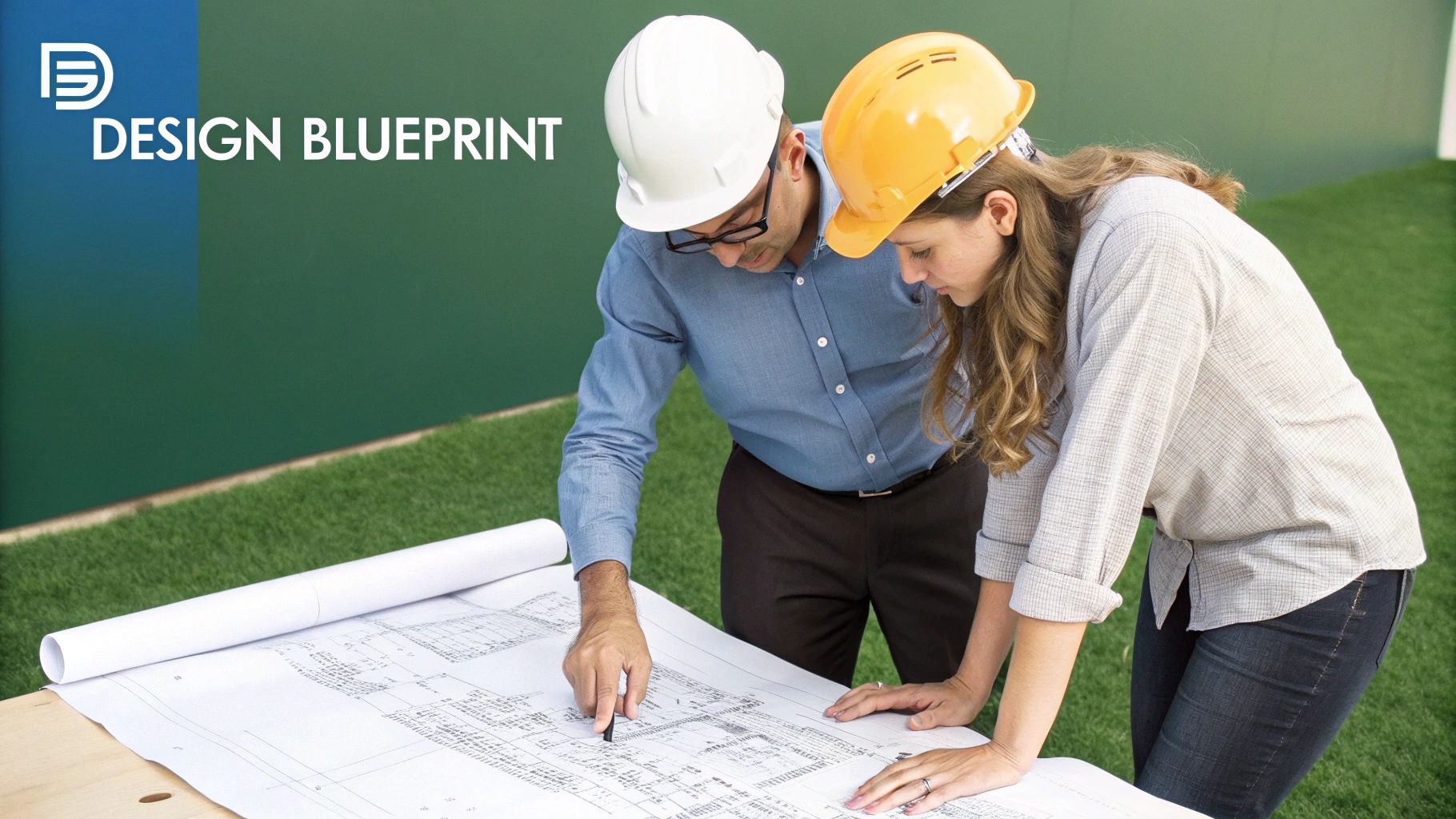
Here's where things get incredibly technical. The architect and the team of engineers produce a massive, highly detailed set of drawings and specifications known as construction documents. These are the official, legally binding instructions for the construction crew. Nothing is left to chance.
These documents spell out everything—from the precise thickness of a wall and the type of bolts to use in the steel frame, to the model number of the light fixtures in the lobby. These blueprints are what the builder will use to price the job, pull permits, and actually build the structure.
Construction Administration
With the plans finalized, the dirt starts to move. But the architect's job is far from over. Their role now pivots from designer to quality control manager. During Construction Administration, the architect is on-site regularly, making sure the builder is following the plans to the letter.
They act as the client’s eyes and ears, answering contractors' questions, reviewing the quality of the work, and signing off on payments. This final, hands-on phase is what guarantees the integrity of the design is carried all the way to the finish line, turning a well-laid plan into a concrete reality.
Future-Proofing Commercial Spaces
Commercial architecture isn’t about building for today; it’s about designing for the next several decades. A great building has to anticipate the twists and turns of technology, culture, and the economy to stay relevant and valuable. This is what we call future-proofing—creating spaces that are resilient and flexible enough to meet tomorrow's needs.
The most successful commercial projects are designed with change baked right into their DNA. They can evolve without needing a gut renovation every few years. This foresight really comes down to mastering three key areas: sustainability, technology integration, and adapting to how people actually live and work. When an architect gets these right, the result isn't just a structure, but a dynamic asset ready for whatever comes next.
Embracing Sustainability and Green Building
Sustainability has moved from a "nice-to-have" feature to a core requirement in modern commercial design. It's what clients and tenants expect. They want spaces that are good for the planet and, just as importantly, healthier for the people inside them. This shift means architects are weaving green building principles into the fabric of a project from the very first sketch.
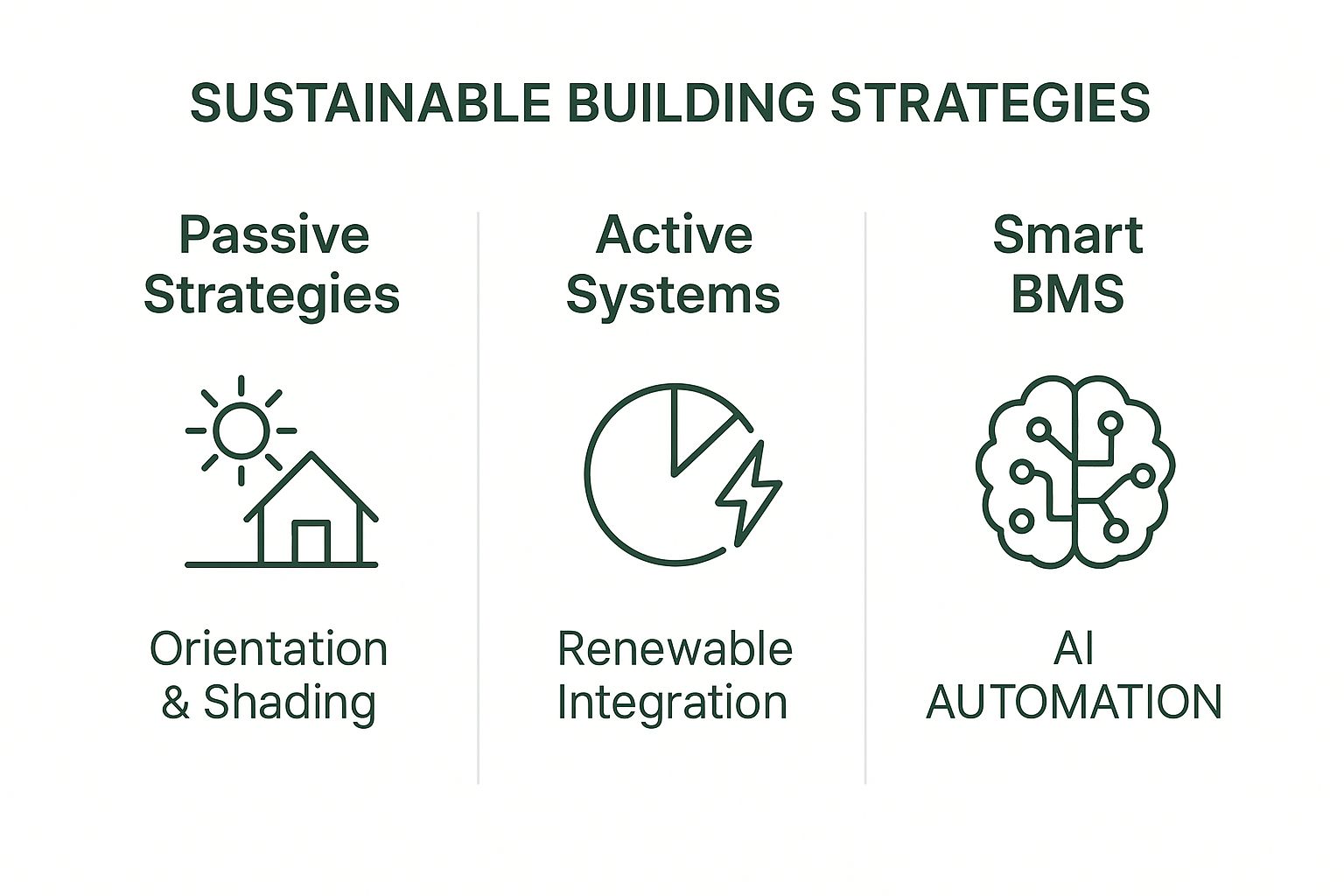
This isn't just about sticking solar panels on the roof. It’s a comprehensive approach that considers a building’s entire lifecycle, from where the materials come from to how much energy it uses every day. Some of the key strategies include:
- LEED Certification: Leadership in Energy and Environmental Design (LEED) provides a proven framework for creating buildings that are healthy, efficient, and save money on operations.
- Net-Zero Energy Goals: The ambition to design buildings that generate as much renewable energy as they consume is no longer a distant dream. It's a tangible goal for many projects.
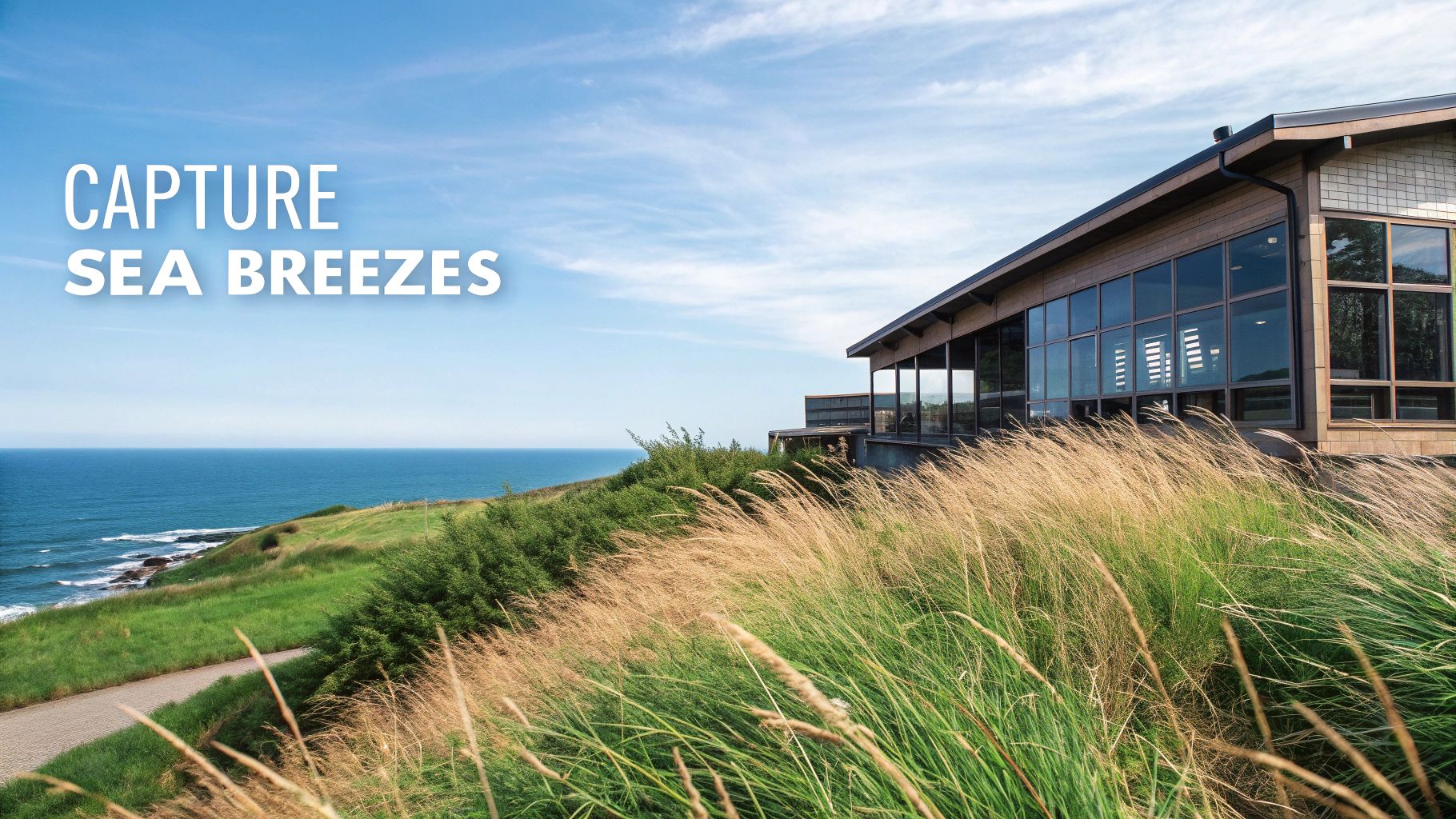
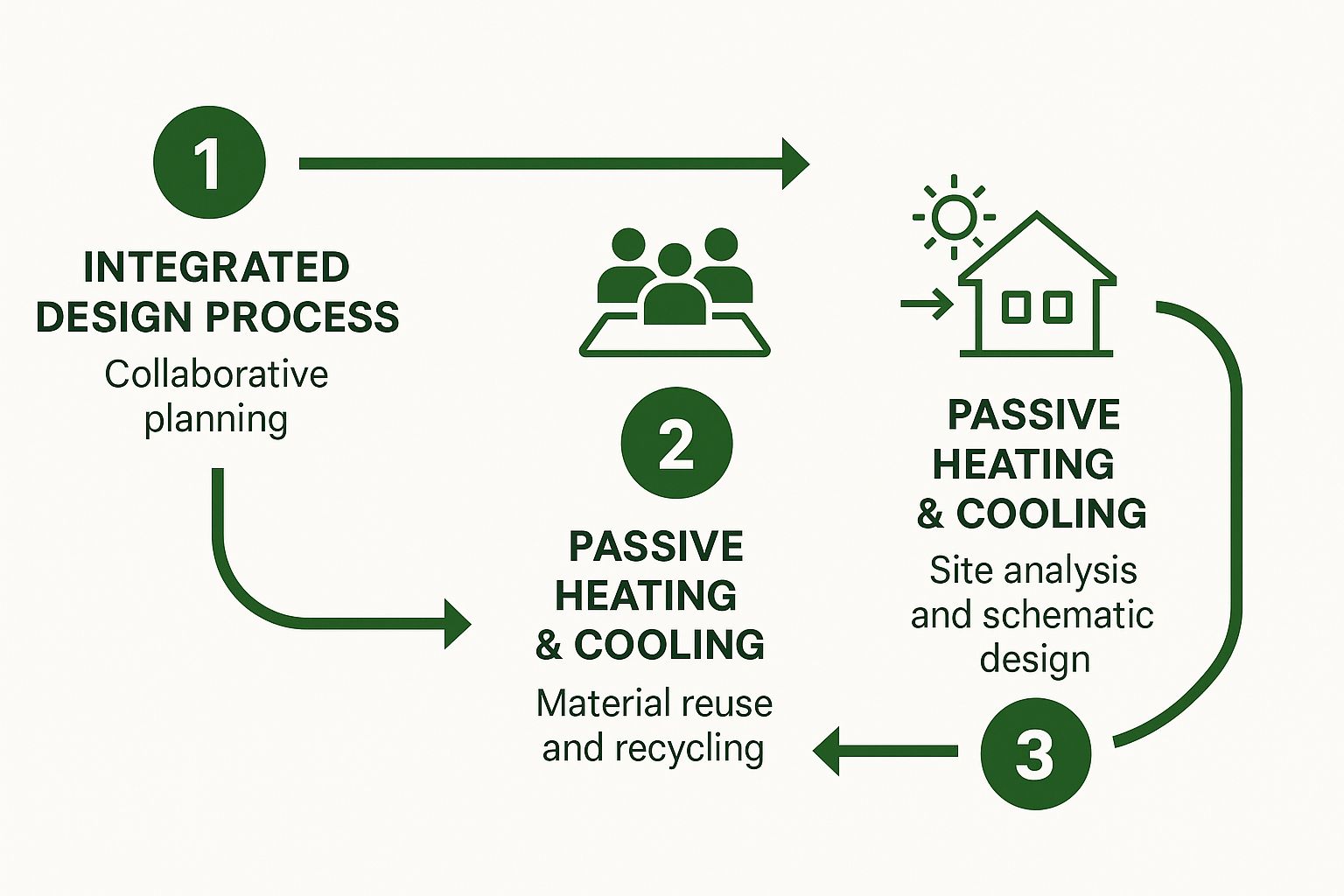
- Passive Design: This is just smart design. It means orienting the building to capture natural light and airflow, which drastically cuts down on the need for artificial lighting and HVAC systems.
Integrating Smart Building Technology
Technology is completely rewiring how commercial buildings function. Smart buildings use an interconnected network of sensors and systems—the Internet of Things (IoT)—to gather data and automate everything from lighting to security. The payoff is a massive boost in efficiency and a much better experience for everyone inside.
An architect's job now involves planning the digital backbone that makes this all work. We have to design spaces with integrated sensors that can automatically dim the lights or adjust the temperature when a room is empty, saving a ton of energy. These systems can also monitor air quality, tighten up security, and ensure flawless connectivity for tenants. The end game is to create an environment that’s not just smart, but truly responsive to its occupants.
Adapting to New Lifestyles and Market Realities
The way we work, shop, and live is always changing, and architecture has to keep up. Just look at the rise of hybrid work. It has completely upended traditional office design. Architects are now creating flexible workspaces that blend private offices for focused work with open collaborative zones and comfortable social areas, all to support a workforce that isn't chained to one desk.
This need for flexibility isn't limited to new builds. Adaptive reuse—the art of repurposing old, often historic, buildings for new uses—is a powerful tool for sustainable urban growth. It breathes new life into existing structures, preserving a city's character while serving modern needs.
Market pressures also steer the architectural ship. Global trends in supply and demand are causing huge shifts in what's being built. For example, soaring costs are projected to trigger a 73% decrease in new office completions in the U.S. in 2025. This forces the industry to pivot, with architects focusing more on renovating existing buildings and creating mixed-use developments instead of building new offices from the ground up. It’s a perfect example of how the field evolves with the economic landscape. You can explore more about these global construction trends on HospitalityNet.org.
Choosing the Right Architect for Your Vision
Picking an architect might be the single most important decision you make for your entire commercial project. This isn't just about hiring someone to draw up plans; it's about finding a partner who can take your business goals and turn them into a real, functional, and profitable building. The right firm will be your guide, your advocate, and your creative problem-solver from that first sketch on a napkin all the way to the final punch list.
A flashy portfolio is a nice starting point, but it's just that—a start. You need to dig deeper. You’re looking for a team that gets the nitty-gritty of commercial work, from wrestling with dense zoning codes to keeping a sharp eye on your return on investment.
Evaluating Potential Partners
First things first, look for a portfolio that actually matches what you're trying to do. If you're building a new restaurant, you want a firm that has hospitality design in its DNA. Their past projects are proof they understand the unique headaches of that world, like optimizing kitchen workflow, creating a great customer experience, and satisfying the health inspector.
When you're looking at their past work, try to see beyond the pretty pictures. Ask yourself how their designs solved a business problem. Is there a clear sense of branding? Does the layout make sense for customers and staff? This is where a great commercial architect really earns their fee.
Next up: check their references. This is non-negotiable. Talking to past clients gives you the unvarnished truth about what it’s really like to work with the firm day-to-day.
An architect's talent for design is only half the equation. Their ability to stick to a budget, meet deadlines, and communicate clearly is just as critical. Ask former clients how the architect handled unexpected problems and whether they truly felt heard throughout the project.
Asking the Right Questions
Once you've narrowed it down to a shortlist, it's time for interviews. This is your chance to see if you click and if your visions are truly in sync. Come prepared with questions that get to the heart of how they operate as a business, not just as designers.
Here are a few essential questions to get the conversation started:
- Budget Management: How do you put together a project budget? More importantly, what's your game plan for keeping us on track financially when surprises pop up?
- Local Regulations: What's your track record with the local zoning boards, building codes, and permitting offices in this specific area?
- Collaborative Process: What happens when we disagree on a design choice? Walk me through how you typically communicate with clients and contractors.
- Fee Structure: Can you break down your fees for me? I want to know exactly what's included and what might end up costing extra down the line.
Finding the right architect is about finding a shared vision. When you connect with a partner who not only gets your goals but also has the street-smart expertise to make them happen, you’re not just building a building—you’re setting your business up for long-term success.
Got Questions About Commercial Architecture? We've Got Answers.
Diving into a commercial building project can feel like you're learning a whole new language, filled with unfamiliar terms and processes. It’s completely normal to have questions. To clear up some of the initial confusion, I've put together some straightforward answers to the questions we hear most often.
Architect vs. Commercial Interior Designer: What's the Difference?
This one comes up all the time. While an architect and a commercial interior designer often work hand-in-hand, their roles are fundamentally different.
Think of the architect as the creator of the building's "bones" and "skin." They're responsible for the core structure, the exterior look, the overall layout, and all the essential systems—plumbing, electrical, HVAC. Their job is to make sure the building is safe, functional, and up to code. They create the foundational canvas.
The commercial interior designer then brings the experience within those walls to life. They focus on everything you touch and see inside: the finishes, furniture, lighting, and how the space flows. Their goal is to support the business's operations, reflect the brand's identity, and create a specific mood for everyone who walks through the door.
In a nutshell: The architect builds the sturdy, functional shell. The interior designer transforms that shell into a living, breathing, branded environment.
How Long Does a Commercial Project Usually Take?
Ah, the million-dollar question. The honest, expert answer is: it really depends on the scale and complexity of your project. There's no single timeline that fits all.
A simple interior renovation for a small coffee shop might be wrapped up in a few months. But if you're talking about designing and building a new multi-story office building from the ground up, you could easily be looking at a timeline that spans several years.
Here are the big factors that always influence the schedule:
- The Permitting Maze: Getting the green light from local authorities can take anywhere from a few weeks to many, many months.
- Design Intricacy: A highly custom design with unique technical challenges will naturally take longer than a standard, straightforward one.
- Surprises on Site: You never truly know what's underground until you start digging. Unexpected soil conditions or other site issues can cause delays.
- Decision Speed: The project moves at the speed of decisions. Quick, clear feedback from you, the client, is crucial for keeping things on track.
How Are Architectural Design Fees Calculated?
The cost of architectural design isn't a simple, off-the-shelf price. Fees are usually structured in one of two ways: either as a percentage of the total construction cost or as a fixed, flat fee that's agreed upon before work begins.
For percentage-based fees, the rate typically falls somewhere between 5% and 15% of the final construction budget. What determines that percentage? It comes down to a few key things: the project's overall size, the difficulty of the design, and exactly how many services the architect is providing. A large, complex hospital with tons of regulations will, of course, have a higher design fee than a simple, open-plan warehouse.
At Sherer Architects, LLC, our job is to be your guide through every phase, making sure you have total clarity on timelines, costs, and design choices. If you're ready to turn your vision into a real, tangible space, stop by https://shererarch.com to see how our team can help you build something lasting and successful.