SHERER ARCHITECTS

Categories
news

Sustainable Buildings in the Landscape

When we talk about integrating a building into its landscape, we're really talking about starting a conversation between the structure and its surroundings. This goes way beyond simple aesthetics. It’s about forging a deep, respectful connection with the environment. The real secret to success is taking it step-by-step, from first learning to read the land's unique story to finally choosing materials that echo the natural world around you.

Harmonizing Structures with Their Environment

The best architecture never feels forced. It settles into its context, looking as if it has always been there. This sense of harmony isn’t some happy accident; it’s the result of a very deliberate process that puts the relationship between the built and natural worlds first. The whole point is to design buildings that complement the landscape, not dominate it.

Getting this balance right is more critical now than ever. The global construction market was valued at roughly $15.78 trillion and is only expected to grow. That number highlights the massive footprint new structures have on our planet, making thoughtful, environmentally-aware design an absolute necessity.

The Core Phases of Integration

Successfully integrating a building into its environment starts long before anyone breaks ground. It's a sequence of careful observation, thoughtful planning, and precise execution, with each phase building on the one before it. This ensures the final structure truly feels like it belongs.

This process can be broken down into a few key stages, each with a clear purpose.

Here’s a quick overview of how these phases work together to achieve a seamless integration.

Key Phases of Landscape Integration

Phase Purpose Key Actions
Site Analysis To understand the unique character of the land. Study topography, climate, local ecology, and existing views.
Orientation & Siting To position the building for optimal performance and minimal impact. Align with sun paths, wind patterns, and natural contours.
Material Selection To choose materials that reflect the local environment. Source local stone, wood, and other regional materials.
Sustainable Design To create a structure that works with nature, not against it. Implement green roofs, rainwater harvesting, and passive heating/cooling.

Following these steps ensures that every decision, from the big picture down to the small details, contributes to the final harmony.

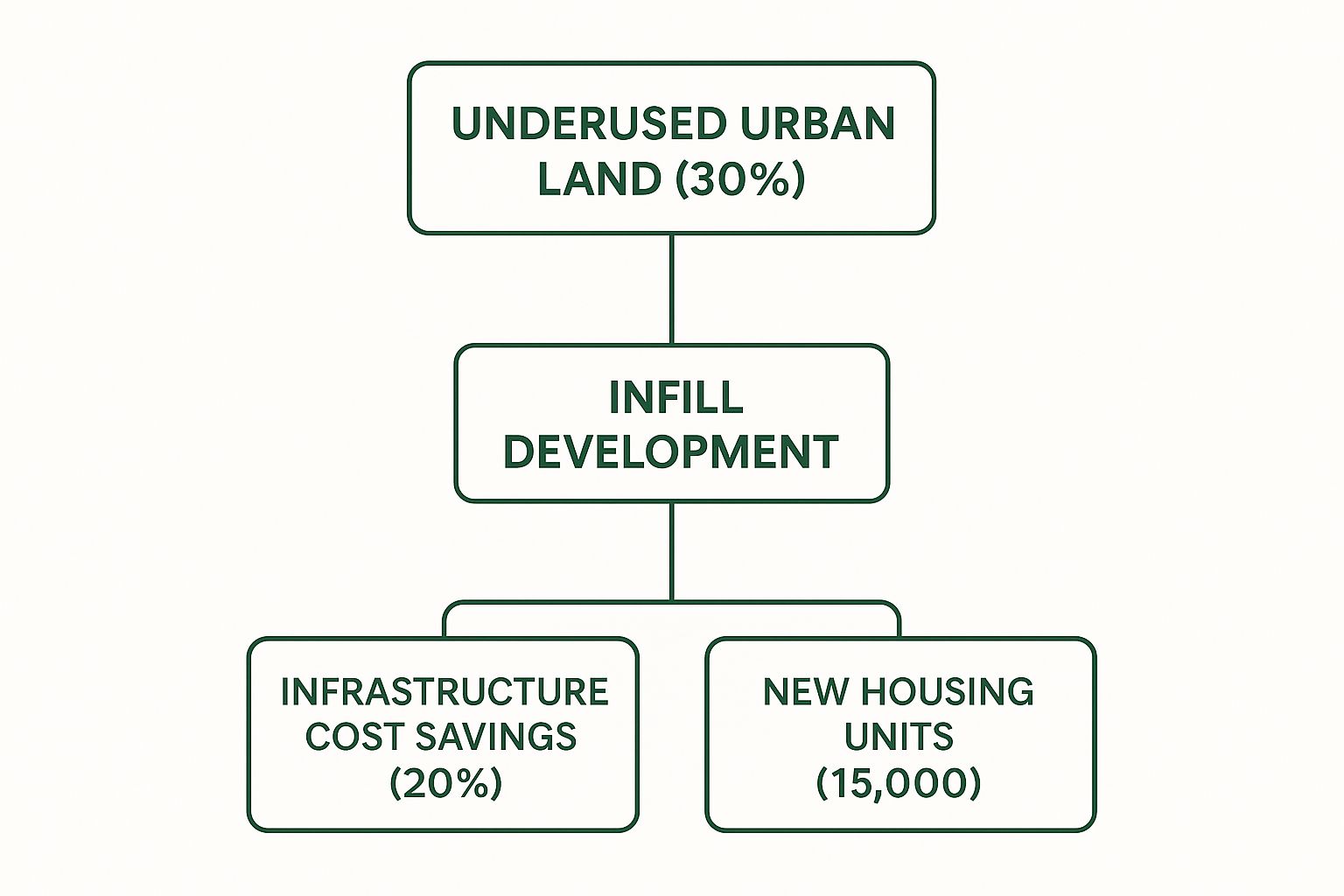
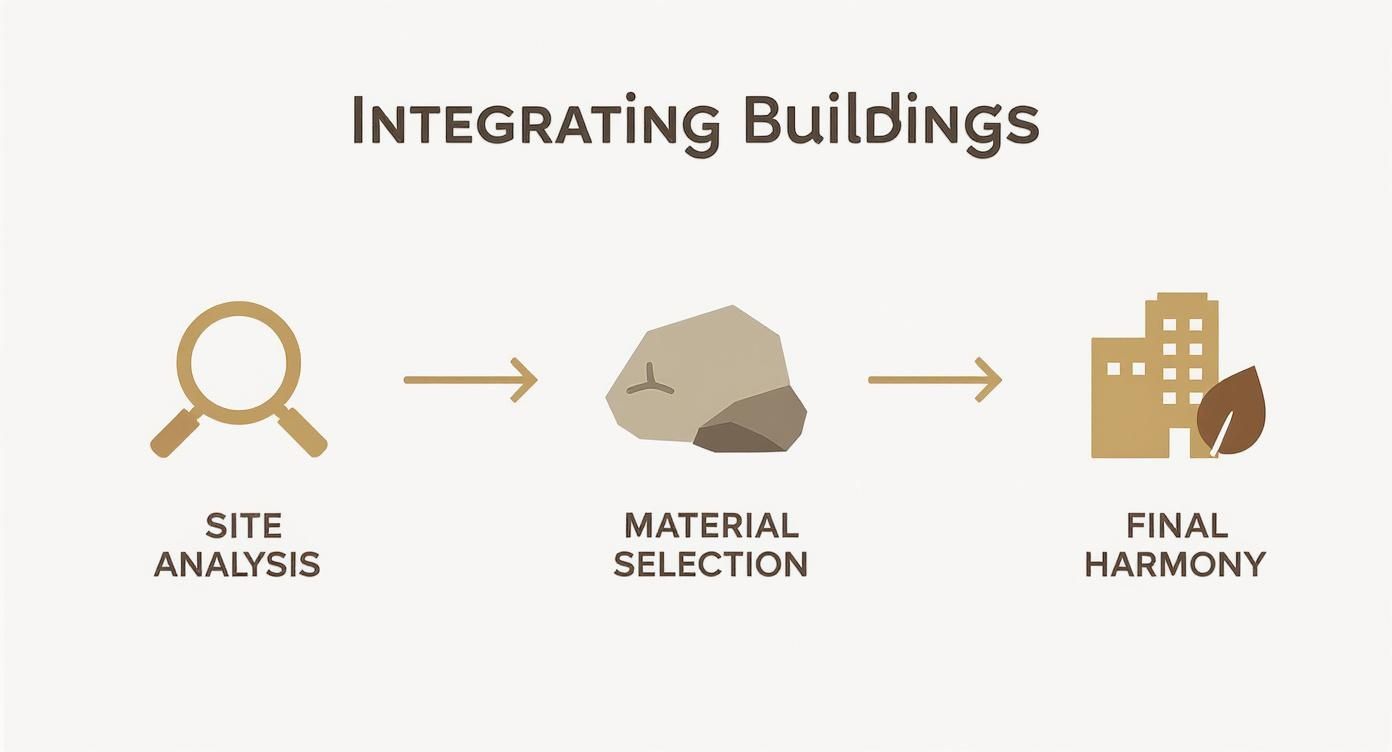
The chart below visualizes how these stages flow from initial analysis to the finished design, creating a building that truly belongs.
Infographic about buildings in the landscape

As you can see, a thorough site analysis is the foundation. It directly informs how you orient the building and which materials you choose, leading to a design that feels completely at home in its setting.

Beyond Aesthetics to Connection

Forging a genuine connection means doing more than just matching colors or using local stone. You have to go deeper by understanding the site's ecology, its specific climate, and even its history. Think about a mountain retreat designed to follow the natural contours of a slope. It doesn't just look good—it minimizes excavation and preserves the land's original form.

To really blend structures with their surroundings, we can get creative. Exploring stone design trends in biophilic design, for example, is a great way to bring natural elements indoors and blur the lines between inside and out.

A building should appear to grow easily from its site and be shaped to harmonize with its surroundings if Nature is manifest there.
– Frank Lloyd Wright

This philosophy is what turns a building from a static object into an active participant in the landscape. It’s how you create spaces that feel both protected and completely connected to the world outside.

Reading the Land Before You Build

Before a single shovel hits the dirt, the land itself tells a story. The best architecture listens. It doesn't just sit on a piece of property; it has a conversation with it. This first, crucial phase is all about "reading the land"—getting to know its quirks, its strengths, and the natural systems already at play.

This isn't just a nice idea; it's a critical responsibility. In just over a decade, global building floorspace ballooned from about 200 billion to over 260 billion square meters. That’s a staggering amount of construction, and it highlights just how important it is to build with intention. When we get it right, we treat the site as a partner in the design process, not just a platform.

Decoding the Topography

Every site has its own unique fingerprint, etched by its slopes, ridges, and valleys. The first step is to really understand this shape—to work with the land, not against it.

A steep hill isn't a problem to be bulldozed flat; it's an opportunity. Think of it as a natural prompt for a multi-level design that could open up incredible views while dramatically cutting down on expensive and destructive excavation.

Imagine a home on a sloped lot. Instead of carving out a massive, flat pad and building a huge retaining wall, we can study the contours. By stepping the foundation along the natural grade, we reduce our impact, prevent the kind of unnatural water runoff that causes erosion, and save a small fortune in earthmoving costs. To get a handle on what this involves, it’s worth checking out this expert guide to site preparation excavation to see how the pros approach it.

Image

Following the Sun and Wind

The sun and wind are invisible forces, but they should have a very visible impact on your design. Think of them as free, renewable sources of energy and comfort, just waiting for you to tap into them.

  • Solar Paths: Spend time on the site. Watch how the sun moves across it not just from morning to evening, but also from season to season. This knowledge dictates everything—where to place windows for passive solar heating in winter, and where to use overhangs or trees for shade in the summer.
  • Prevailing Winds: Figure out where the dominant breezes come from. This simple observation can help you orient the building for fantastic natural ventilation. Placing windows on opposite sides of a room creates a cross-breeze, providing passive cooling that can slash your reliance on air conditioning.

When you start by observing these natural patterns, you're doing more than just designing a structure. You're creating an environment that feels better, costs less to run, and is truly connected to the world around it.

Understanding Water Flow

Water is the lifeblood of a landscape, and it's also one of its most powerful sculptors. You absolutely have to understand how water moves across, through, and under your site if you want a lasting design.

Look for the subtle clues: natural drainage channels, low spots where water might collect, and signs of the broader watershed.

Even on a lot that looks perfectly flat, a slight dip or swale could be the primary path for stormwater after a heavy rain. If you build right on top of that, you're asking for a damp basement or, worse, foundation issues. A smarter approach is to see that swale not as a problem, but as an asset. You can turn it into a rain garden or a landscaped bio-swale, creating a beautiful feature that manages water sustainably. That's how you build things that last.

Orienting Your Building for Performance and Views

How you place a building on its site is one of the most powerful—and cheapest—design decisions you'll ever make. It's a choice that costs nothing extra upfront but can pay you back for decades in energy savings and pure, simple enjoyment. Getting the orientation right is all about striking a balance between performance, like thermal efficiency, and the simple pleasure of a perfectly framed view.

This isn't some niche concept for custom homes; it's fundamental to every project. The top 100 global construction firms recently pulled in revenues of around $1.978 trillion, and every single one of those projects started with a decision about where to point the building. If you're curious about the scale of the global construction market, Deloitte's detailed report offers some fantastic insights.

Balancing the Sun and the Scenery

Here’s the classic architect's dilemma: a site with a stunning westward view over the ocean or a mountain range. Your first instinct is to install a massive wall of glass to capture it all. But you know that the intense afternoon sun will turn the inside of that building into an oven, sending your cooling costs through the roof.

This is where smart orientation becomes a puzzle worth solving.

Instead of facing the view head-on, think about angling the structure just slightly. A small shift, a subtle pivot, can keep the primary view while deflecting the harshest solar heat. This simple move can make a world of difference in both comfort and energy bills.

I remember a coastal research center project that nailed this. The design team angled the main laboratory wing to frame panoramic ocean vistas and catch the prevailing sea breezes. That orientation allowed for natural ventilation, which dramatically cut down the need for air conditioning in a hot, humid climate.

Tools for Predicting Light and Shadow

Thankfully, you don't have to guess how the sun will move across your property. Modern tools give us the power to predict its path with incredible accuracy, so your design can work with nature all year long.

  • Sun-Path Simulators: Digital software is a game-changer here. We can create a 3D model of your building on its site and simulate the sun's movement for any day of the year. You see exactly where shadows will fall and where sunlight will stream in, helping you place windows, overhangs, and even patios for the best effect.

  • Simple On-Site Models: Never underestimate the power of a physical model. Seriously. A basic cardboard or foam-core model placed on the actual site can be incredibly revealing. Watching it at different times of the day gives you a real-world feel for light and shadow that no computer screen can ever fully replicate.

Smart orientation is about making the sun your ally, not your enemy. When you understand its path, you can use it to warm your home in the winter, keep it cool in the summer, and fill your rooms with beautiful, natural light.

Thinking Beyond the Building Itself

Great orientation work also considers everything around the building. Existing trees, a neighbor’s house, even small hills can all be used to your advantage.

That huge old oak on the west side of a property? It’s a natural asset. It provides a dense canopy of shade in the summer but lets warming sunlight pass through its bare branches in the winter.

By mapping these features during your initial site analysis, you can position the building to work with them. Thoughtful placement transforms the landscape from a pretty backdrop into an active part of your building’s performance system. That's how you get a truly integrated and sustainable design.

Choosing Materials That Belong To The Landscape

Materials are the skin and bones of any building, yet they do more than hold up walls. They anchor a design in its surroundings—geology, ecology and local history all come into play. When you really study the earth beneath your feet, you begin to see a palette waiting to be built into.

Selecting resources nearby does more than cut down on transport emissions. It taps you into the unique character of a place. A farmhouse built from quarried stone just a few miles away will feel like it’s always belonged there.

Connecting With Local And Sustainable Sources

Nothing beats materials pulled directly from your region. By using what’s available—be it stone, native timber or even earth—you create a building that’s of the land, not merely on it. Plus, local tradespeople gain work and transport energy falls dramatically.

Here are a few options I often recommend on site visits:

  • Local Stone: Granites, limestones or sandstones harvested close by bring unmatched durability and a timeless link to the terrain.
  • Sustainable Timber: Wood from responsibly managed forests, especially native species, adds warmth and renewability.
  • Rammed Earth: An age-old method of compacting soil, sand and clay delivers solid walls that feel sculpted from the site itself.

In one desert project, we rammed earth directly from the build site. The walls matched the dunes’ ochre tone perfectly—and their thermal mass kept the interior cool by day, warm by night.

By choosing materials on-site, the building becomes not just part of the landscape but a living extension of it.

Evaluating A Material’s Full Lifecycle

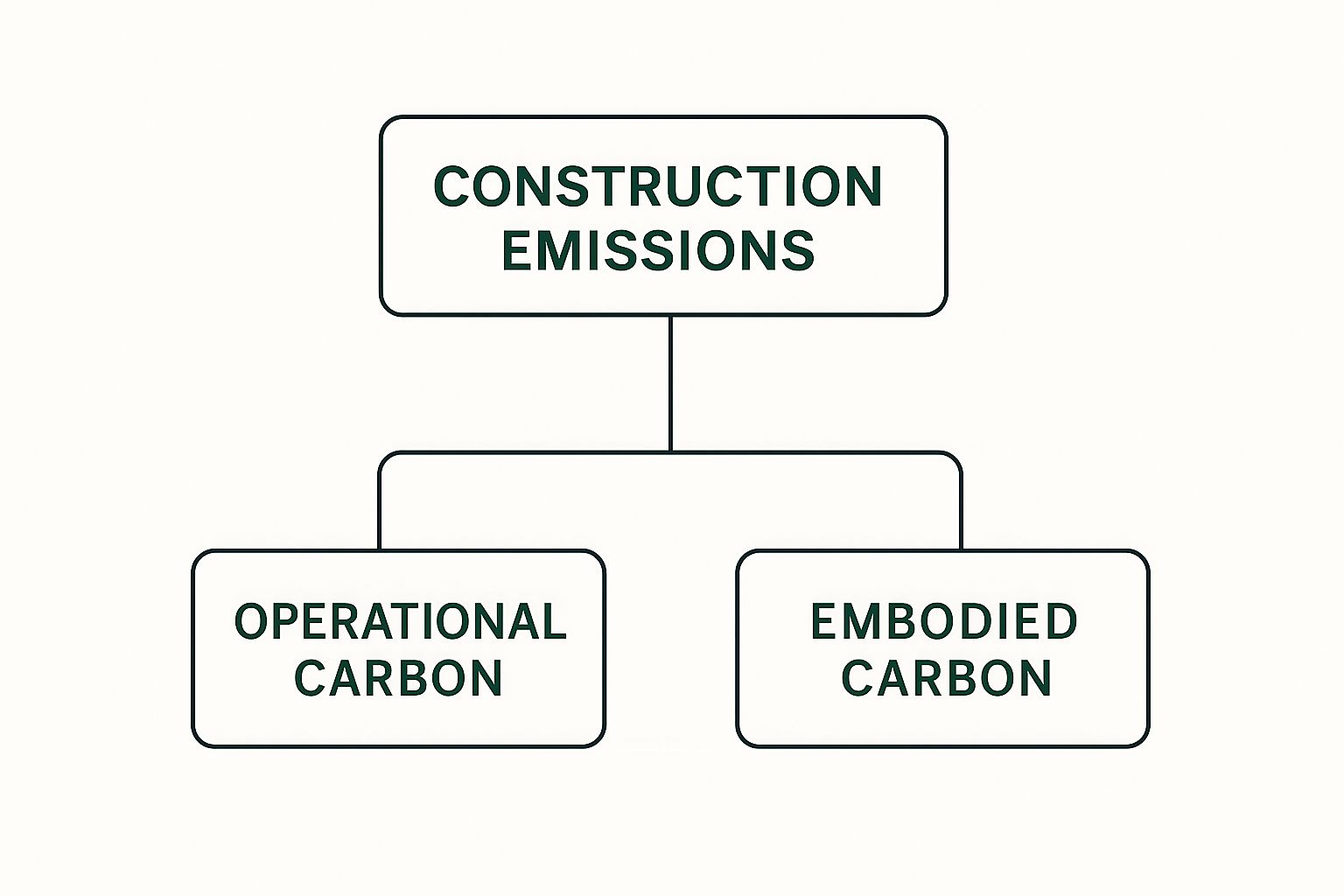
A smart material choice means thinking beyond the purchase price. Every step—from quarrying or harvesting through manufacturing, shipping, installation and eventual disposal—carries an environmental cost. That embodied carbon can add up.

Consider this lifecycle illustration:

Screenshot from https://en.wikipedia.org/wiki/Sustainable_building

It’s a reminder to weigh maintenance needs, long-term emissions and end-of-life options alongside upfront expenses. Materials like concrete and steel aren’t off-limits, but they demand efficient use and thoughtful detailing.

When you vet a material, ask:

  • Where does it come from? Prioritize nearby quarries, forests or reclaimed sources.
  • How is it manufactured? Seek low-energy processes with minimal waste.
  • What’s its lifespan? Durability in your specific climate beats trendy finishes.
  • How does it retire? Can it be reused, recycled or safely returned to the earth?

A true lifecycle approach means you’re investing in both the building’s health and the planet’s.

Comparing Sustainable Building Materials

Before you make a final call, it helps to see how different options stack up at a glance:

Here’s a quick overview to help you weigh material options:

Material Sustainability Rating Average Cost Thermal Performance
Local Stone 8/10 $$$ High
Sustainable Timber 9/10 $$ Medium
Rammed Earth 9/10 $$ Very High
Straw Bale 10/10 $ Extremely High

This snapshot highlights the trade-offs between environmental impact, budget and thermal properties. Use it as a starting point when narrowing down your material list.


By digging into local geology, scrutinizing each product’s lifecycle and comparing real performance data, you’ll choose materials that feel rooted and perform beautifully for years to come.

Sustainable Strategies for a Living Design

True integration goes beyond just looks. It’s about creating a living, breathing system where your building becomes an active participant in the landscape's ecological cycles. Instead of designing a static object dropped into nature, we can create structures that are dynamic contributors, supporting the very environment they inhabit. We're aiming for buildings in the landscape, not just on it.

Think of the building not as a sealed-off box, but as a porous, interactive membrane. When we weave living systems into our designs, we end up with buildings that are more resilient, more efficient, and deeply connected to their place. These strategies aren't just for show; they often solve multiple practical problems while adding incredible ecological value.
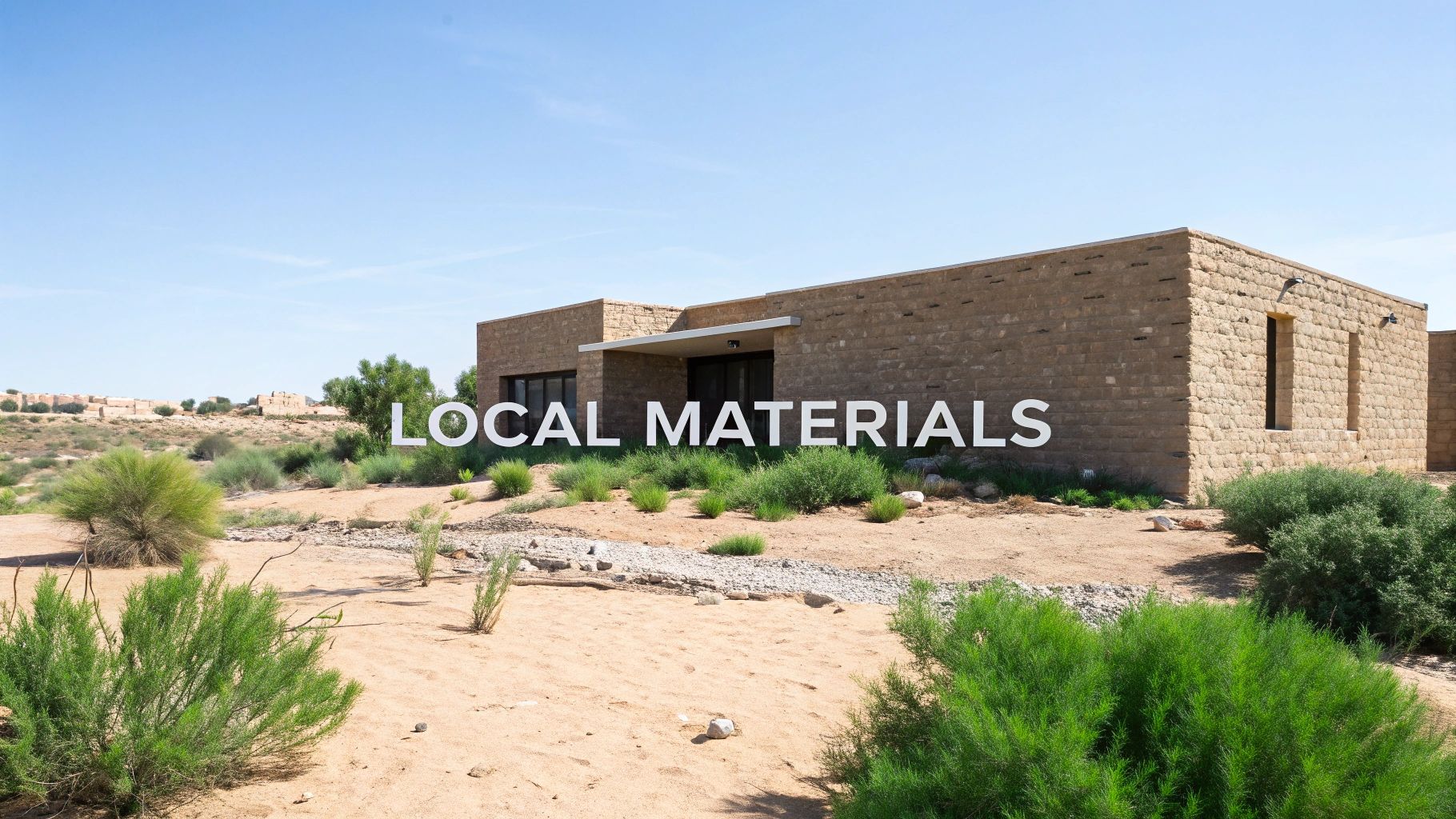
Green roof on a modern building in a landscape

Embracing Living Roofs and Walls

One of the most powerful ways to physically merge a structure with its environment is to quite literally cover it in plant life. Green roofs and living walls are far more than just a pretty facade; they are hardworking systems that deliver a surprising number of environmental and financial perks.

Take a green roof, for example. It acts as a thick blanket of insulation, which can slash a building's heating and cooling energy needs by up to 25%. It also acts like a giant sponge, absorbing stormwater that would otherwise overwhelm municipal drains. In dense urban areas, it even creates a brand-new habitat for pollinators and birds where green space is almost nonexistent.

Managing Water Naturally on Site

Conventional development typically treats rainwater as a nuisance—something to be piped away as fast as possible. A more thoughtful approach sees it for what it is: a valuable resource to be captured and put to work right where it falls. This is the core idea behind low-impact development (LID) techniques.

  • Permeable Paving: Forget impermeable asphalt or concrete. Using permeable surfaces for driveways, paths, and parking lots lets rainwater soak directly into the ground. This simple switch recharges groundwater, filters out pollutants, and prevents the erosive runoff that plagues so many developed areas.
  • Rainwater Harvesting: Funneling roof runoff into cisterns or rain barrels provides a free, ready-to-use water source for irrigating the landscape. Even a basic setup can make a huge dent in your reliance on treated municipal water, which saves both money and a critical natural resource.

Picture a downtown office building that, instead of sending its runoff to the sewer, directs it all into a large underground cistern. That collected water is then used to irrigate the native plant gardens and street trees surrounding the property. The result is a self-sustaining urban oasis that needs zero city water for its landscape.

A Practical Implementation Checklist

Putting these strategies into practice isn't something you do on a whim; it requires some upfront planning. Before you even think about breaking ground, you need to weigh the costs and benefits and get a handle on any local regulations. Here’s a quick rundown of what to consider:

  • Assess Your Site: What’s your local climate like? How much rain do you get, and when? What kind of soil are you working with? The answers will point you toward the strategies that will give you the most bang for your buck.
  • Run the Numbers: It's not just about the installation cost. Factor in the long-term savings from lower energy and water bills, potential tax incentives, and the boost to your property value.
  • Find the Right People: Team up with landscape architects or engineers who have real-world experience with green infrastructure. Their expertise is crucial for getting the design and installation right the first time.
  • Navigate the Red Tape: Check in with your local planning and building departments. They’ll tell you about any specific permits or requirements for things like green roofs or large-scale rainwater harvesting systems.

When you adopt these living design strategies, you’re creating more than just a place to live or work. You’re building something that actively contributes to the health and vitality of the landscape around it.

Answering Your Top Site Design Questions

When you move from the drawing board to the actual building site, theory quickly gives way to practical questions. I've seen it time and again—navigating the complexities of site surveys, trying to balance a budget with sustainable goals, it can be a lot. Getting these questions answered early on is the key to a project that feels like it belongs, rather than one that's fighting its surroundings.

Let's walk through some of the most common hurdles that pop up. Clearing these up from the start will save you a world of headaches (and money) down the line.

What Site Surveys Do I Really Need?

Every piece of land has its own story, but a few surveys are absolutely non-negotiable. Don't look at these as just ticking boxes; they're the bedrock of your entire project, the data that stops small issues from becoming catastrophic, expensive fixes.

You can't really get started without these three:

  • Topographical Survey: This is your 3D map of the land, showing every slope, dip, and contour. Without it, you’re just guessing on how to place the building, manage water runoff, or even design the driveway. It’s fundamental.
  • Geotechnical Report: This is where we learn what’s happening under the ground. A geotechnical engineer will test the soil to understand how stable it is and how much weight it can support. This report directly dictates your foundation design—it's a matter of safety and long-term stability.
  • Boundary Survey: This is the legal map. It clearly marks your property lines, identifies any easements (like a utility company's right of way), and defines your setbacks. Getting this done first ensures your design is compliant from day one.

How Do I Get a Great View Without Roasting in the Sun?

Ah, the classic design dilemma. You have that perfect west-facing view, but a wall of glass pointed that way means your AC will be running non-stop every afternoon. The trick isn't to pick one over the other; it's about being clever with the design.

My favorite strategy is to orient the building just slightly off-axis from that perfect view. A small rotation of even 15 or 20 degrees can keep the visual connection strong while deflecting the most intense solar heat gain.

Then, you layer in other solutions. Think deep roof overhangs that cast long shadows in the summer, exterior louvers or screens, or high-performance windows with a low solar heat gain coefficient (SHGC). These elements work together to frame that million-dollar view without the thousand-dollar energy bill.

Is Sustainable Design Only for Big Budgets?

Not at all. It's a common misconception that "green" always means expensive. While some features like a geothermal system have a higher upfront cost, many of the most impactful sustainable strategies are about smart, thoughtful design—not pricey technology.

This is where passive design shines. Orienting a building to capture winter sun and block summer heat costs nothing extra at the planning stage, but it pays you back in lower utility bills for the life of the building.

Here’s where you can find some real savings:

  • Use local materials: Sourcing stone, timber, or other materials from nearby suppliers dramatically cuts down on transportation costs and carbon emissions.
  • Phase your approach: You don't have to install every green feature on day one. A great start is a super-insulated, airtight building shell. You can always plan to add solar panels or a rainwater catchment system a few years down the road.
  • Look for grants and incentives: There are often local, state, and even federal programs that offer tax credits or rebates for building an energy-efficient home. These can seriously offset your initial investment.

Bringing all the pieces of site design together is what we do best. At Sherer Architects, LLC, we've spent decades helping clients navigate these decisions, from the first walk of the property to the final touches. We focus on creating buildings that are not only beautiful but also truly sustainable and built to last. Learn more about our architectural services and let’s talk about how to bring your vision to life.

Categories
news

A Guide to Historic Tax Credit Consultants

A historic tax credit consultant is the expert you bring on board to navigate the incredibly complex world of Historic Tax Credits (HTCs). Think of them as part-historian, part-financial wizard, and part-project shepherd, all rolled into one. Their job is to take the confusing maze of government regulations and turn it into a clear, step-by-step plan for bringing a historic building back to life.

What Does a Historic Tax Credit Consultant Do

An architect reviewing blueprints for a historic building restoration

Imagine trying to assemble a high-stakes jigsaw puzzle where the pieces are a mix of federal, state, and local rules. One wrong move, and the whole picture falls apart, potentially costing you millions in funding. This is the reality of historic rehabilitation, and a good consultant is the person who knows exactly how every single piece is supposed to fit.

Their involvement starts long before the first hammer swings. They begin with a crucial feasibility assessment, digging into whether the building itself and the proposed renovation plans can realistically meet the strict standards set by the National Park Service. This upfront analysis is invaluable—it saves developers from pouring money and time into a project that was never going to qualify for the credits.

From Strategy to Execution

Once a project gets the green light, the consultant’s role shifts. They become the architect of the entire application package, and it’s about so much more than just filling out forms. They build a powerful case that checks every regulatory box.

To get a clearer picture, let's look at the key tasks a consultant manages throughout the process.

Core Functions of a Historic Tax Credit Consultant

Project Phase Consultant's Core Responsibility
Initial Assessment Conducts due diligence to confirm the property and project plans are eligible for federal and state HTCs.
Application Strategy Develops a comprehensive application narrative, detailing the building’s historical importance and outlining the rehab scope.
Regulatory Liaison Acts as the primary point of contact with the State Historic Preservation Office (SHPO) and the National Park Service (NPS).
Compliance Oversight Works with the project architect and construction team to ensure all work adheres to the Secretary of the Interior’s Standards.
Financial Structuring Helps structure the deal to attract tax credit investors and secure the necessary project financing.

As you can see, their responsibilities are woven into every stage of the project. A consultant’s guidance is what ensures the developer’s vision aligns perfectly with what the government programs require.

Part of their strategic role often involves helping developers find the right capital stack to get the project off the ground, which can include exploring alternative business financing to work alongside the tax credit equity.

The real value of a consultant isn’t just in managing paperwork. It’s in unlocking the full financial potential of a project. They are the bridge between a great idea and the funding needed to make it happen, turning old, neglected buildings into vibrant, profitable parts of a community.

Why Consultants Are the Key to Unlocking HTC Investment

Historic Tax Credits aren't just a simple tax deduction; they're a powerful tool for attracting serious institutional capital. But here’s the thing: major investors don't just write checks for any project that comes across their desk. This is where an experienced historic tax credit consultant becomes the essential bridge connecting a developer's vision to the funding that makes it real.

Think of it like an investment banker prepping a company for its big IPO. They don't just dump raw data on potential investors. They meticulously package the company, highlighting its strengths, addressing potential risks, and crafting a compelling story that convinces Wall Street to get on board. An HTC consultant does almost the exact same thing for a historic rehabilitation project.

They take a complex construction plan and translate it into a financially sound, compliant, and—most importantly—an attractive investment. This professional packaging is exactly what national banks and Fortune 500 companies need to see before they’ll commit millions of dollars.

De-Risking the Deal for Big-League Investors

Sophisticated investors are all about due diligence and risk management. They need rock-solid certainty that a project will successfully navigate the maze of HTC program requirements from day one to the finish line. Even a single misstep can put the entire tax credit allocation in jeopardy, which could make their investment worthless.

A consultant's most vital role is to de-risk the entire venture for these investors. They achieve this by:

  • Ensuring Flawless Compliance: They manage every single interaction with the State Historic Preservation Office (SHPO) and the National Park Service (NPS). This ensures every blueprint and construction choice adheres to the strict Secretary of the Interior’s Standards.
  • Building Financial Credibility: Consultants develop the detailed financial models and proformas that prove the project is viable, giving investors the confidence they crave.
  • Managing the Five-Year Compliance Period: Their job isn't over when the construction crews pack up. They provide oversight for the entire five-year recapture period, safeguarding the investment long after the building is complete.

This kind of meticulous management is why institutional investors often prefer—and sometimes flat-out require—that an experienced HTC consultant is part of the team. It’s a clear signal that the project is being handled professionally and is set up for success.

A consultant essentially provides a seal of approval. Their involvement tells large-scale investors that the project has been thoroughly vetted, the compliance risks have been professionally managed, and the financial structure is sound.

The stability that comes with this expert guidance is well-proven. The HTC marketplace is anchored by large institutional investors, many of whom have been in this game for decades. Their deep experience and reliance on expert-led compliance have resulted in an incredibly low recapture rate of less than 0.75% over a 10-year period. This track record speaks volumes about the reliability that consultants bring to the table. For a deeper dive into investor trends and recapture data, check out this detailed survey from Novogradac & Company LLP.

Navigating the Complex HTC Application Process

Applying for Historic Tax Credits isn't like filling out a single form. It's more like a marathon, a multi-stage journey that requires constant, careful coordination between federal and state agencies. I often think of it as a three-act play, and for the final curtain to close successfully, every single act has to be perfect.

Your historic tax credit consultant is the director of this play. They're the ones who know the script—written by the National Park Service (NPS)—inside and out, making sure every detail aligns with the strict requirements. Their job is to turn a daunting bureaucratic maze into a clear, predictable path for your project.

The Three-Part Application Structure

The whole application is built to verify your project's integrity from day one to completion. You start by proving the building's historical importance and finish by certifying that the work you did respected that history.

  • Part 1: Evaluation of Significance: This is where it all begins. Your consultant digs in, pulling together old photos, historical records, and architectural analysis to prove your building is a “certified historic structure.” They’re essentially building a case to convince the State Historic Preservation Office (SHPO) and the NPS that your property is worth preserving and deserves the tax credit investment.

  • Part 2: Description of Rehabilitation: Now, the consultant gets deep in the weeds with your architect. They meticulously detail every planned aspect of the renovation, from window repairs to new HVAC systems. This part of the application needs to show exactly how the proposed work will follow the Secretary of the Interior's Standards for Rehabilitation. It’s all about getting the plan approved before a single hammer swings, saving you from incredibly expensive do-overs later.

  • Part 3: Request for Certification of Completed Work: Once the last coat of paint is dry, it’s time for the finale. This is the "after" to Part 2's "before." The consultant assembles a package of photos and documentation showing the project was completed just as planned and approved. This final certification is the green light that officially unlocks the tax credits for your investors.

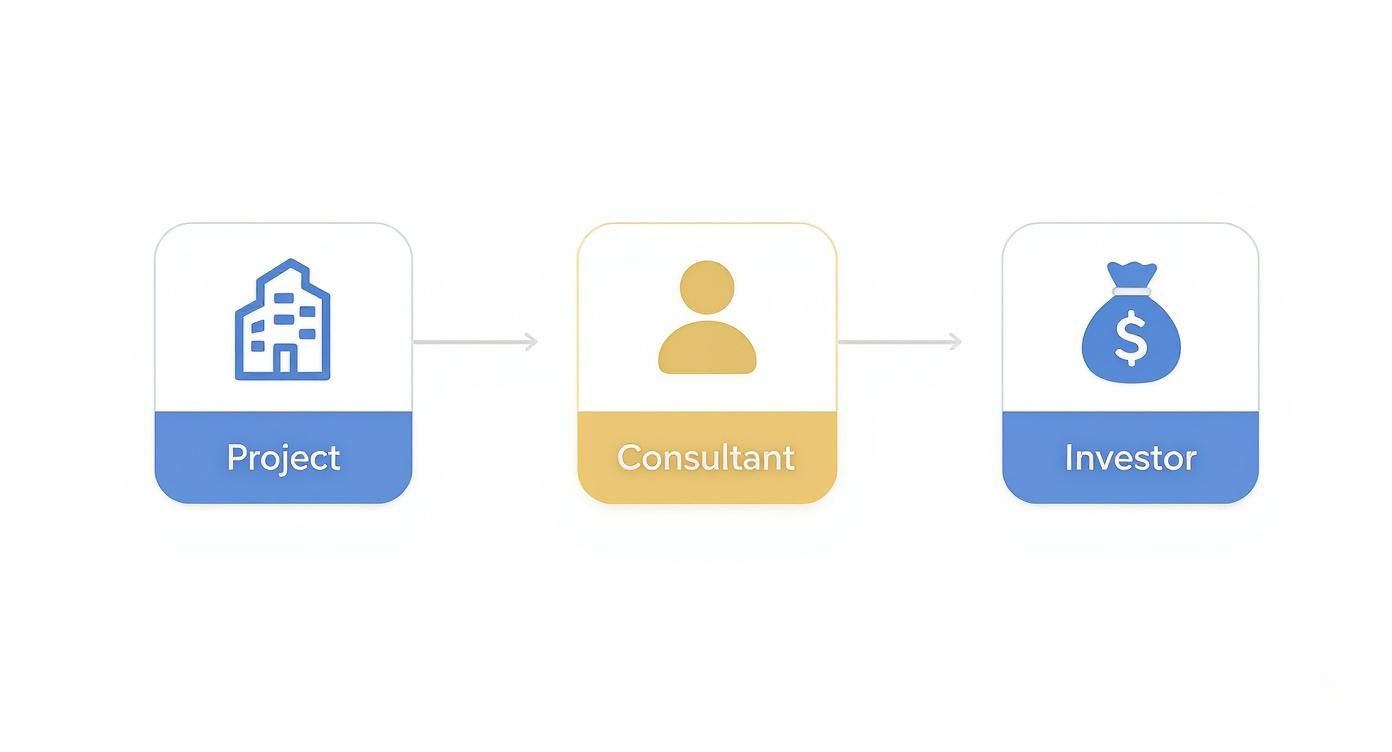
This process really highlights the consultant's role as the crucial link between your physical project and the capital that makes it possible.

Infographic about historic tax credit consultants

As you can see, without a consultant's expert hand guiding the process, the connection between the project and the investor just doesn't happen.

When it comes down to it, a consultant's job during the application is all about proactive problem-solving. They know what questions the regulators will ask before they ask them. They spot design conflicts that could turn into costly change orders and keep the lines of communication open with the review agencies. That foresight is what prevents the delays and denials that can completely derail a project.

The Financial Powerhouse Behind the Federal HTC Program

Think of the federal Historic Tax Credit (HTC) program as more than just a government perk. It’s an economic engine that can single-handedly transform a historic preservation project from a financial headache into a smart, profitable investment.

At its heart, the program offers a 20% tax credit on all the eligible costs of restoring a building—what the industry calls Qualified Rehabilitation Expenditures (QREs). But this isn't just some minor adjustment to your tax return; it's a game-changer.

To really get why this is so powerful, you need to understand the difference between tax deductions vs. tax credits. A deduction just chips away at your taxable income. A credit, on the other hand, is a dollar-for-dollar knockout punch to what you actually owe in taxes. This is what makes the HTC so incredibly valuable.

A historic tax credit consultant’s real magic is showing developers how to monetize this credit—turning a future tax benefit into cash in hand right now to get the project off the ground. They engineer deals where large investors, often banks or major corporations, buy the rights to the future credits. In return, they provide an immediate equity injection that can get construction started.

Fueling Revitalization Across the Country

This financial mechanism has sparked a quiet revolution in communities nationwide. Since it began, the HTC program has become the go-to tool for breathing new life into forgotten downtowns and rural main streets, turning crumbling old buildings into vibrant, modern assets.

The sheer scale of its impact is staggering. Since 1976, the federal HTC has driven over $235 billion in private investment into restoring historic properties. It’s also been a massive job creator, generating an average of 70,000 jobs every year and adding hundreds of billions to the national GDP. You can dive deeper into these figures in this detailed report from the National Park Service.

This massive economic footprint is precisely why historic tax credit consultants are indispensable. They’re the expert guides who navigate this complex financial world and connect your individual project to its vast resources.

By mastering the program's financial intricacies, a consultant does more than secure a tax benefit. They unlock the capital needed to close the financing gap, turning projects that would otherwise be impossible into profitable, community-enhancing landmarks. Their role is to ensure your project fully leverages the program's immense financial power.

How Consultants Close the Project Financing Gap

A modern architectural model next to a historic building's facade, symbolizing financial structuring.

Plenty of historic rehabilitation projects hit the same wall: the dreaded "financing gap." This is what happens when the astronomical cost of a proper restoration far outweighs what the building will be worth when it's finished. On paper, the numbers just don't add up, which makes getting a traditional loan next to impossible.

This is where a historic tax credit consultant really earns their keep, shifting from a compliance expert to a financial strategist. Their most critical job is to bridge that gap, turning a project that looks like a money pit into a sound—and often profitable—investment. They become the architects of the deal itself.

Weaving Together a Viable Financial Structure

A consultant rarely relies on a single source of money. Instead, they build a sophisticated financial package by layering multiple streams of capital together. It’s less like getting a simple mortgage and more like assembling a complex machine where every gear has a specific purpose.

This "capital stack" often includes:

  • HTC Equity: The consultant finds an investor to buy the tax credits, bringing in a crucial injection of cash right at the beginning.
  • Traditional Debt: With the tax credit equity secured, it becomes much easier to approach banks for a standard construction loan.
  • Grants and Incentives: A good consultant knows how to hunt down and secure local, state, or federal grants designed to spark community renewal.

By skillfully combining these pieces, the consultant creates a solid financial foundation that finally makes the project pencil out. They build detailed financial models that map out the long-term profitability, giving lenders and investors the confidence they need to sign on. This structuring is what turns a financial problem into a fully funded project, greenlit for construction.

The market for these credits is massive, with big players actively participating. JPMorgan Chase, for example, invested over $1 billion in Historic Tax Credit equity in more than 70 projects between 2014 and 2023. These weren't just random buildings; the investments often targeted properties in neighborhoods ripe for a comeback, proving how smart financing directly fuels revitalization. You can discover more about these community development insights from JPMorgan to see how it works on a large scale.

A skilled consultant doesn’t just find money; they create a compelling financial narrative. They demonstrate how the sum of the parts—credits, loans, and grants—generates a return that makes the whole project an attractive proposition, turning forgotten landmarks into thriving assets.

Choosing the Right Historic Tax Credit Consultant

https://www.youtube.com/embed/W1QYc9HR0LM

Picking a partner for your historic rehabilitation project is one of the most important decisions you'll make. The right firm is a strategic ally, guiding you through the maze of regulations and financial structuring. The wrong one? That can lead to expensive delays, lost tax credits, and a world of frustration.

It's not like hiring a simple vendor. Think of it more like choosing a co-pilot for a long and complicated flight. You need someone who doesn't just know the official rulebook, but also understands how things really get done. The best historic tax credit consultants bring deep technical knowledge, but just as importantly, they have established relationships and a track record you can trust.

Key Evaluation Criteria for Your Consultant

When you start looking, don't just look for a consultant—look for your consultant. You want a firm that can point to specific, relevant experience that mirrors your own project. A team that's great with small, local restorations might not be the right fit for a massive, multi-phase urban redevelopment. Be thorough and ask the tough questions.

To narrow down the field and find the perfect match, focus on these critical areas:

  • Project Portfolio: This is your proof. Ask to see a portfolio of projects that are similar in scale, budget, and complexity to what you're planning. It’s the single best way to gauge if they can handle the unique challenges your development will throw at them.

  • Agency Relationships: How well do they know the people at the State Historic Preservation Office (SHPO) and the National Park Service (NPS)? A consultant with a solid, respected reputation can often smooth out bumps in the road and resolve issues far more quickly.

  • Financial Structuring Expertise: Can they talk the talk? These projects often involve complicated, multi-layered financial deals. Your consultant needs to be completely fluent in structuring these deals to attract equity investors and navigate the various financing streams.

The goal is to find a partner who is genuinely invested in your project's success for the long haul, not just someone checking boxes on an application. Their job doesn't end when the paperwork is filed; they should be your guide through the entire five-year compliance period to protect your investment.

At the end of the day, the best historic tax credit consultants are true partners. They see problems before they happen, keep all the stakeholders on the same page, and stay relentlessly focused on getting you the best possible financial return while bringing a piece of history back to life. Choose carefully—their expertise will be a massive factor in whether your project succeeds or fails.

Common Questions About Historic Tax Credit Consultants

Even after getting the big picture, most developers still have a few practical questions about bringing a historic tax credit consultant onto their team. Let's tackle some of the most common ones we hear from clients.

When Is the Best Time to Hire an HTC Consultant?

The short answer? Yesterday.

Ideally, you should have a consultant on board during the earliest feasibility stages of a project—sometimes even before you’ve officially acquired the property. Getting their eyes on the building and your initial concepts can flag potential compliance headaches right out of the gate.

This early involvement is all about structuring the deal for the biggest financial win from day one. Bringing a consultant in later in the game often means they spend their time putting out fires and trying to reverse costly missteps that could have been easily avoided.

How Are Historic Tax Credit Consultants Paid?

You'll find a few different fee structures out there, but most are designed to tie the consultant's success directly to yours. It’s usually a mix of two components:

  • Fixed Fees: These typically cover the nuts and bolts of the work, like preparing and filing the detailed, multi-part application with state and federal agencies.
  • Success Fees: This is the real motivator. It's almost always a percentage of the total tax credit equity they help you raise for the project.

This blended model gives your consultant serious skin in the game. They’re not just pushing paper; they’re invested in getting you the maximum funding possible and seeing your project all the way to the finish line.

The key thing to remember is that a good consultant’s guidance almost always delivers a return on investment that blows their fees out of the water. They don’t just find you money—they prevent expensive mistakes and help you negotiate better terms with investors.

Can I Manage the HTC Application Myself?

Technically, yes. Realistically, it’s a bad idea unless you have years of specialized experience doing exactly this. Think of it like trying to represent yourself in a complex court case. You can, but the odds are stacked against you.

The application process is a minefield of hyper-specific architectural standards, tricky financial structuring, and rigid government regulations. One wrong move and the whole thing can fall apart.

A seasoned consultant doesn't just fill out forms correctly; they dramatically boost your chances of a smooth approval. They also bring something you can't get on your own: established relationships with agency reviewers and the investment community. Those connections are often the secret sauce to getting a project funded and built.


At Sherer Architects, LLC, we have decades of experience guiding clients through historic preservation, securing tax credits, and maximizing project value. Learn how our expertise can bring your historic building back to life.

Categories
news

Mastering the Design for Buildings Process

Bringing a building from a rough idea to a physical reality is a complex dance of creativity, engineering, and meticulous planning. It's about a lot more than just drawing up some floor plans. This guide breaks down that entire process, giving you a clear, step-by-step look at what it really takes to design a modern building.

We'll cover everything from the very first spark of an idea all the way to the final construction documents that a builder can actually use.

Your Roadmap to a Successful Building Design

Kicking off a new construction project is a huge undertaking. The road from a concept sketched on a napkin to a fully-realized structure is filled with potential pitfalls. True success comes from a design process that’s structured to balance creative vision with the hard realities of technical specs, budgets, and regulations.

Think of it this way: the design process is the foundation you build before you even break ground. Each decision you make early on has a ripple effect on everything that follows. This guide is built to follow that same logical flow, helping you understand not just what to do, but why each stage is so critical to the final building.

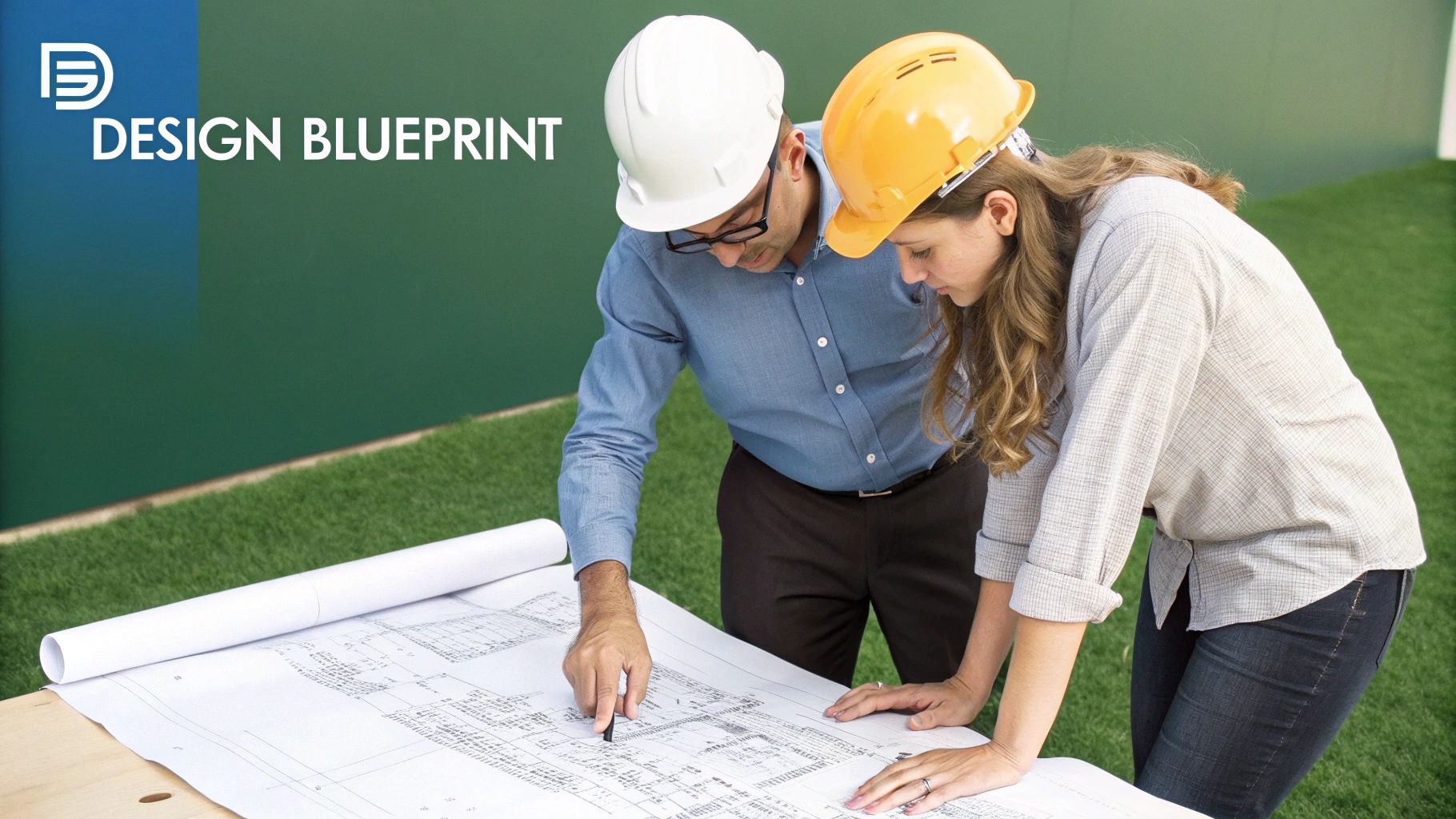
Blueprints and architectural tools laid out on a table, illustrating the building design process.

What We'll Cover

Whether you’re a developer eyeing a new commercial project or a business owner looking to build your own space, this walkthrough will give you the practical knowledge you need. We're going to dive into how to:

  • Properly evaluate a site to understand its potential and its constraints.
  • Flesh out a strong concept that truly aligns with your project goals.
  • Navigate the maze of building codes and zoning laws without getting stuck.
  • Incorporate sustainable design for better long-term performance and value.
  • Prepare the construction documents that turn your vision into a buildable plan.

A great building design doesn't just produce a structure that works. It creates a space that genuinely enhances its surroundings, serves the people inside it, and holds its value for years to come.

The Tools of the Trade

These days, bringing a design to life is about more than just pen and paper. Architects and designers rely on sophisticated software to model, test, and perfect their ideas in a digital space long before any dirt is moved. This approach leads to incredible precision and makes it far easier for everyone—from engineers to clients—to stay on the same page.

To really sell a vision and get buy-in, you need the right tools. We're talking 3D models, virtual walk-throughs, and photorealistic images that make the project feel real. Checking out the Top Programs for Architectural Rendering is a great way to see how the pros create the stunning visuals that guide a project from a simple concept to a finished building.

With that, let's start by laying the groundwork for your project.

Starting with the Site and Concept

Every great building starts not with a floor plan, but with the piece of earth it will call home. You can always tell when a structure was designed in a vacuum, without any real connection to its surroundings. The best architecture, however, feels like it grew right out of the land.

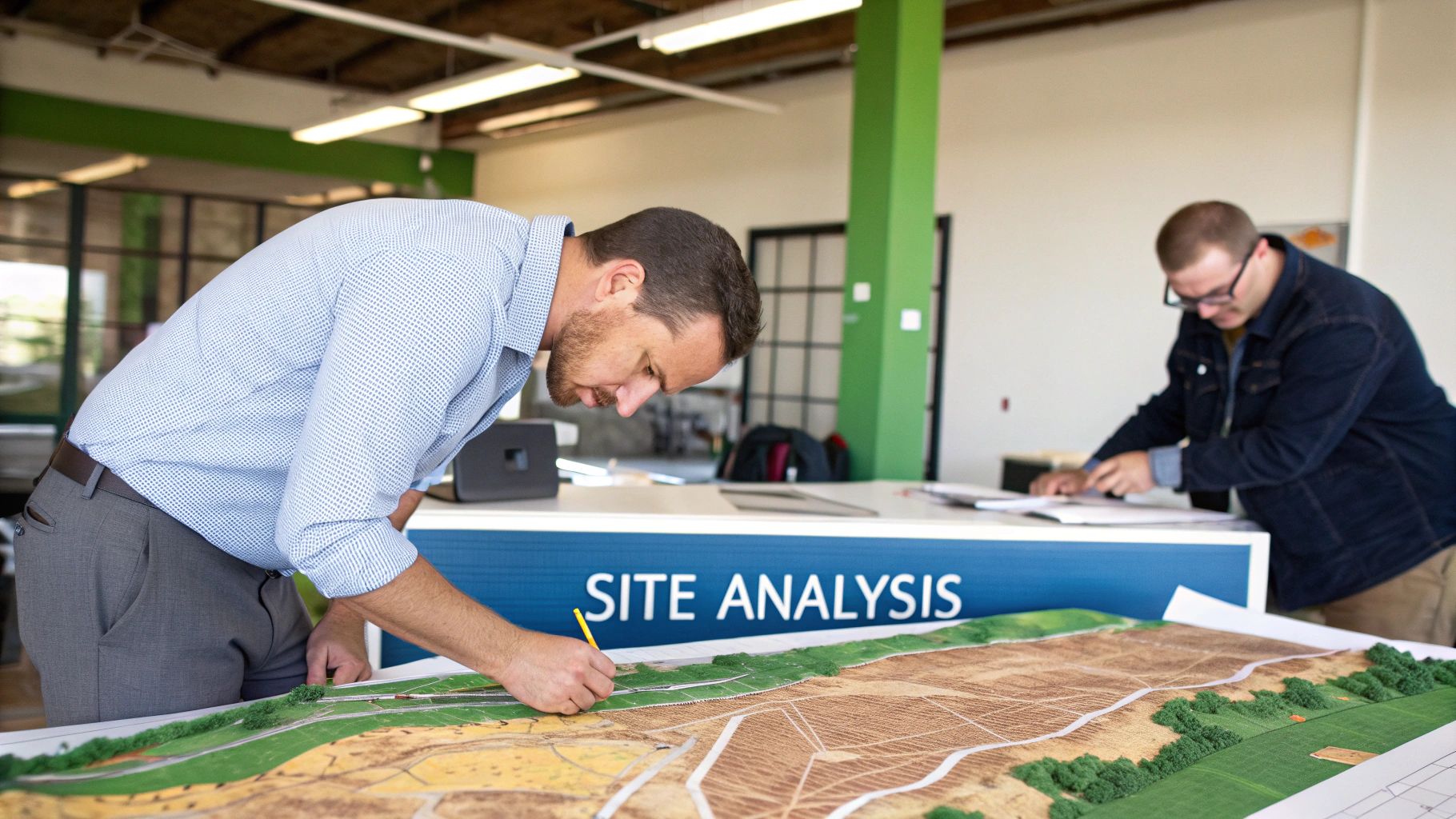
This is why a deep-dive site analysis is the non-negotiable first step. It’s far more than just verifying property lines; it’s about getting to know the land’s personality. We're looking for its quirks—the gentle slope you can use to your advantage, the path the sun takes across the sky, and even how the wind behaves on a blustery afternoon.

An architect reviewing site plans and a 3D model, illustrating the conceptual design phase.

Uncovering the Story of the Site

Every site has a story, and our job is to listen. This means blending hard data with simple, careful observation. We’re searching for clues that will directly shape the building’s form, its placement, and its overall feel.

Here’s what a proper site analysis really digs into:

  • Topography and Slope: Is the site pancake-flat or does it have a dramatic grade? A slope isn’t a hurdle; it’s an opportunity. I’ve seen hillside lots become the perfect setting for stunning multi-level homes with walk-out basements that capture incredible views.
  • Solar Orientation: We literally track the sun's path across the property through the seasons. This isn't just for fun—it tells us exactly where to place windows to flood rooms with natural light in the winter and where to use overhangs to block the harsh summer sun, which has a huge impact on energy costs down the line.
  • Prevailing Winds and Climate: Knowing which way the wind blows helps us place windows for cross-ventilation or create sheltered outdoor spaces. Local climate data dictates everything from insulation requirements to the type of exterior cladding that can withstand the elements.
  • Surrounding Context: What’s the neighborhood vibe? A good design respects the scale and materials of the buildings next door without being a carbon copy. We also map out views to capture, noise sources to mitigate, and how people will approach the building.

This isn't just a checklist. It's the raw material for genuine, creative problem-solving.

Translating Site Data into a Strong Concept

With a solid understanding of the site, we can finally start talking about the big idea. This is the conceptual design phase, where raw data gets an architectural soul. The goal here is to land on a core concept that brilliantly marries what the client wants with what the site offers.

Think of the concept as the project's north star—the single idea that guides every decision that follows. We're not drawing walls yet; we're establishing the "why" behind the design.

For example, on a tight urban lot, the concept might be "a column of light," using a central staircase and skylights to pull daylight down through multiple floors. For a retail store on a bustling corner, the concept could be "the community front porch," with massive windows and a welcoming entrance that engages everyone walking by.

The conceptual design is the crucial bridge between raw information and a compelling architectural vision. It ensures the final building isn't just placed on the site, but is truly of the site.

Developing Initial Massing and Layouts

Once the big idea is in place, we start exploring how the building will physically take up space. This is done through massing studies, which are basically simple 3D block models. These aren't fancy renderings; they're quick, iterative tools to figure out the building’s general shape, scale, and position.

These studies help us answer some fundamental questions:

  1. How does our building's size and shape feel next to its neighbors?
  2. Where are the absolute best spots for windows to frame a view or catch the morning sun?
  3. Can we shape the building to carve out a private courtyard or a sunny patio?

At the same time, we begin sketching out preliminary layouts, often as "bubble diagrams." These aren't detailed floor plans, but simple diagrams showing how different spaces relate to each other. In an office, for instance, it helps us map the journey from the public reception area to collaborative zones and quiet, private offices.

This part of the process is all about rapid exploration. We might create dozens of sketches and digital models, testing ideas and refining the approach until something just clicks. Getting this right early on is critical, because it sets the entire strategic direction, ensuring the final design is smart, responsive, and truly connected to its place in the world.

Navigating Building Codes and Zoning Rules

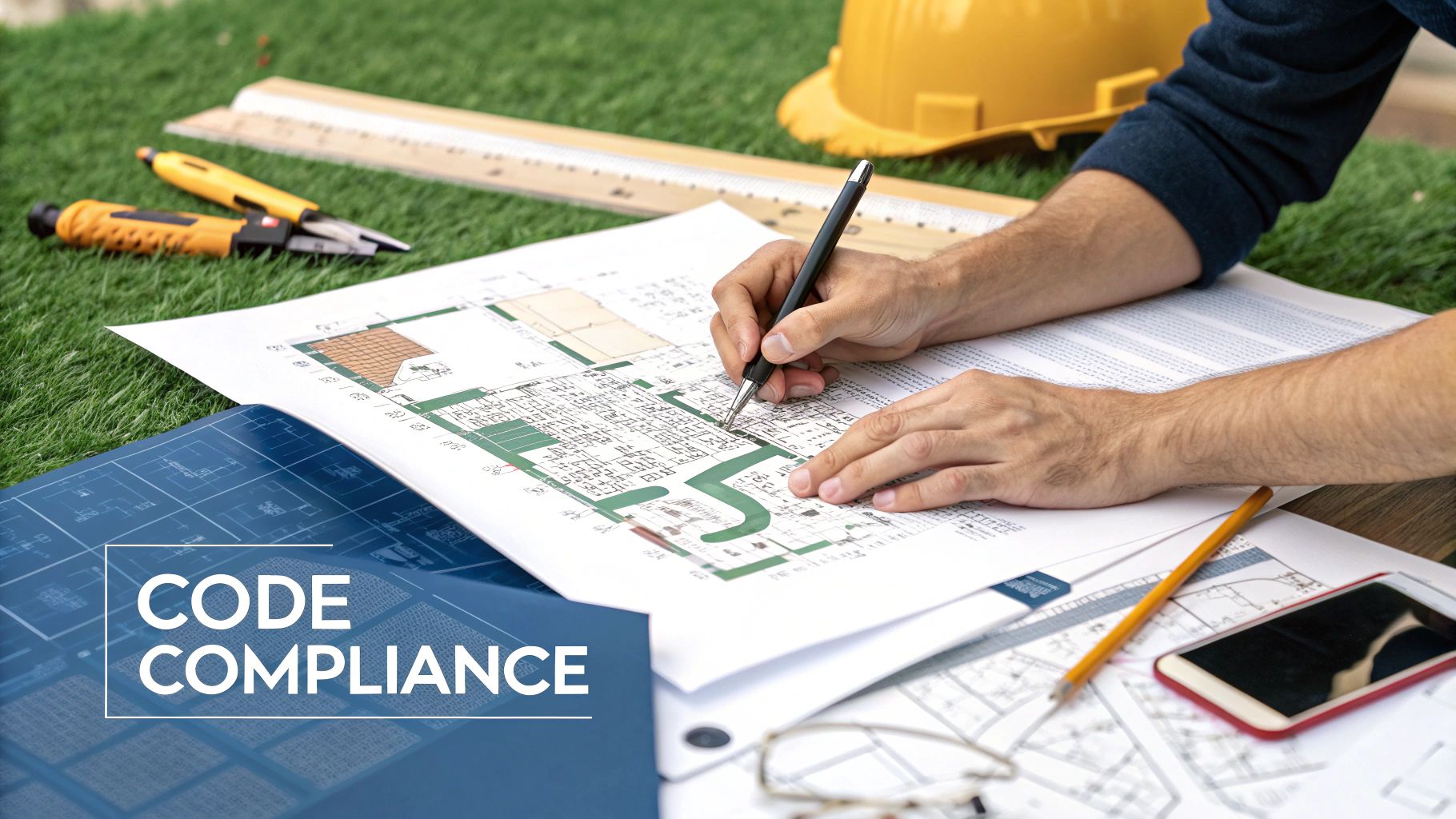
To an outsider, zoning laws and building codes can feel like an impossible web of red tape. But for those of us in the industry, we know they're the bedrock of safe, functional communities. They aren't there to kill your design creativity; they’re a framework to make sure every new building is a good neighbor and, most importantly, a safe place to be.

Getting a handle on this framework isn't just about checking a box for compliance—it's about designing smarter from day one.

Think of it this way: zoning ordinances tell you what you can build and where. They dictate things like land use (is it for homes or shops?), building height, how far you have to set back from the property line, and even how much parking you need. On the other hand, building codes are all about how you build it. They cover the nuts and bolts of construction—structural integrity, fire safety, accessibility, and mechanical systems.

An architect pointing to specific details on a large city zoning map spread across a table.

Weaving these rules into your project from the very start is what separates a smooth permitting process from one that ends in costly, soul-crushing redesigns.

Decoding Local Zoning Ordinances

Before a single line gets sketched, your first move should be to dig into the local planning or zoning department's website. You'll usually find the zoning maps and ordinances right there online, and these documents are your roadmap for what's even possible on a property.

Let’s say you’re designing a small shop in a historic downtown. The zoning code will give you the hard facts:

  • Use Restrictions: Can you even put a retail store here? Sometimes it has to be a "mixed-use" zone.
  • Setbacks: How far back from the sidewalk does the building need to be? In many historic districts, the answer is zero to maintain that classic, continuous streetscape.
  • Height Limits: You might be capped at two or three stories to keep the new structure in scale with its older neighbors.
  • Parking Requirements: The code will have a formula for how many parking spots you need based on your square footage, which can dramatically impact your site layout.

Ignoring these details early on is a classic mistake. I once saw a great project get completely derailed because the initial design didn't account for a required 20-foot rear setback. The entire building footprint had to be redrawn, wasting weeks of work and a lot of money.

Interpreting Major Building Codes

While zoning is intensely local, building codes often stem from standardized models like the International Building Code (IBC). These provide a baseline for safety and performance that local governments adopt, sometimes with their own tweaks.

A huge part of an architect's job is translating these dense, technical manuals into real-world design features. The code influences almost everything, from the minimum width of a hallway to the specific type of fire-rated drywall required between apartments.

The real goal isn't just to meet the bare minimum. It's to understand the "why" behind the rule. That knowledge is what lets you find creative solutions that keep people safe without compromising your design vision.

Energy codes are a perfect example. The push for efficiency is global, but the follow-through can be inconsistent. Between 2022 and 2023, global floorspace grew by about five billion square meters. The problem? In emerging economies where most of that growth happened, over half of the new buildings went up without any energy codes at all. You can get a deeper look at these trends in the full 2024 report on the global status of buildings. It's a stark reminder of how critical robust local codes are for pushing energy performance forward.

A Practical Approach to Compliance

So, how do you actually make this work without getting buried in regulations? It all comes down to being proactive.

  1. Start with a Code Analysis. Early in the schematic design phase, your architect should put together a document that outlines every code that applies to your project. This flags key parameters like building type, occupancy classification, and required fire-resistance ratings right from the start.
  2. Talk to Officials Early. Don't be a stranger. A preliminary meeting with someone from the planning department to walk them through your concept can uncover red flags you might have missed. It also starts building a good working relationship with the very people who will review your final plans.
  3. Document Everything. As you make design decisions to meet code, note them directly on your drawings. This shows the plan reviewer you’ve done your homework and makes their job—and your approval—a whole lot easier.

If you treat codes and zoning as design partners instead of obstacles, you end up with buildings that aren't just beautiful, but are also safe, legal, and a true part of their community.

Integrating Smart and Sustainable Strategies

Great building design today is about more than just a striking look and a functional layout. It's about creating structures that are intelligent, highly efficient, and have a light touch on our planet. Thinking about sustainability isn't an afterthought or a "nice-to-have" anymore; it's a foundational principle that informs every decision, right from the first sketch.

The best approach blends timeless, low-tech wisdom with the sharpest new technology. The result? Buildings that cost less to run, are healthier for the people inside, and are ready for the future.

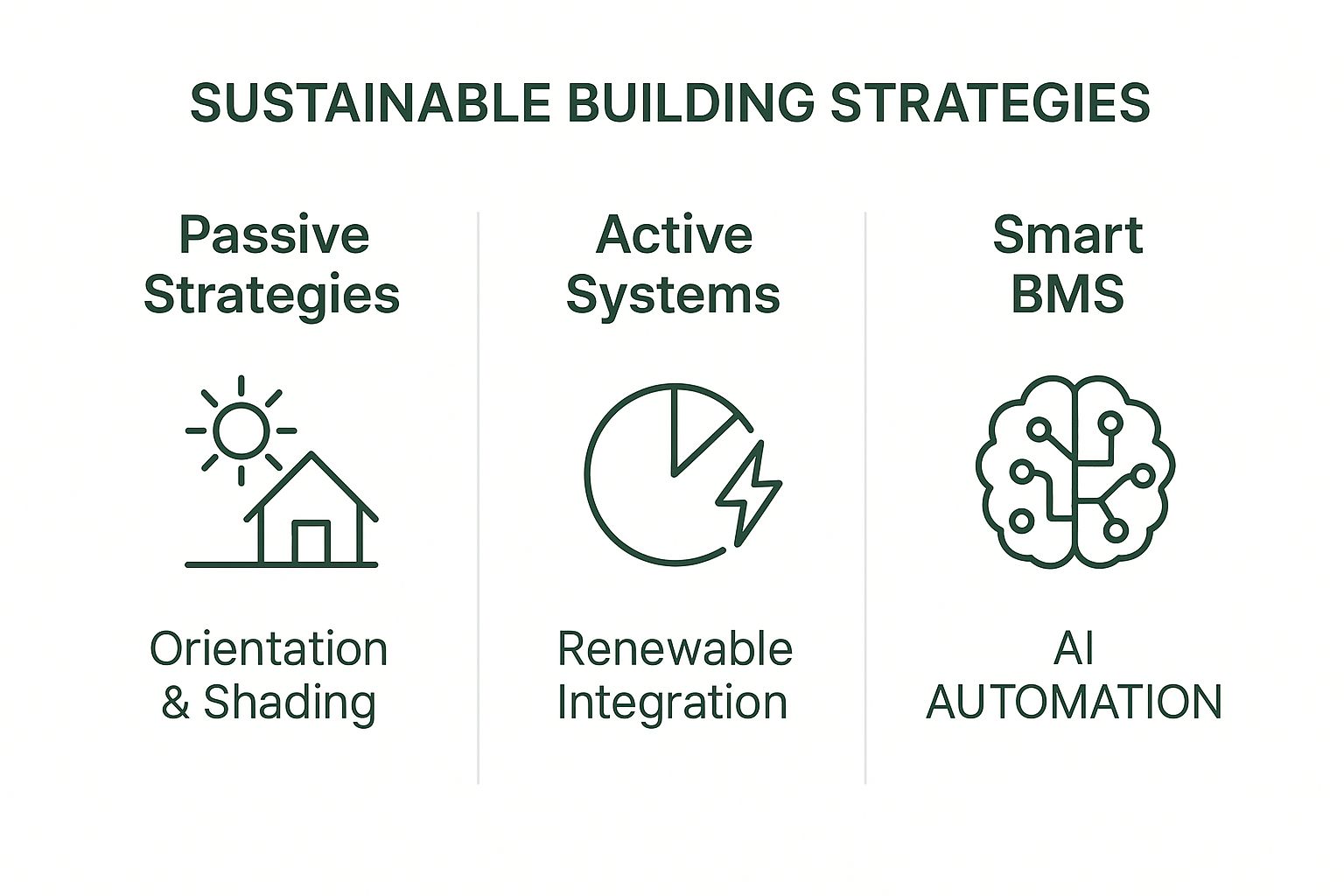
We always start with passive design strategies. This is about cleverly using the building's orientation, shape, and materials to work with the surrounding environment, not against it. Think of it as giving the building a huge head start on efficiency before a single switch is even flipped.

Once that foundation is solid, we layer in the active systems—the tech that generates and manages energy, like solar panels or high-efficiency HVAC. The final piece is smart building technology, which acts as the building's brain, using data and automation to fine-tune everything in real-time.

This infographic neatly breaks down these three pillars of modern, sustainable design.

Infographic comparing Passive Strategies like Orientation & Shading, Active Systems like Renewable Integration, and Smart BMS with AI Automation.

As you can see, a truly effective design layers these approaches, starting with simple, low-cost passive techniques and building up to sophisticated, data-driven automation.

Laying the Groundwork with Passive Design

Before we even think about specifying a solar panel, the most significant and cost-effective sustainable moves are made by thoughtfully shaping the building itself. These passive strategies are baked directly into the architectural DNA of a project, slashing the building's long-term energy needs from day one.

A perfect example is solar orientation. Here in South Carolina, we can orient a building to maximize sun exposure on its south-facing walls during the winter, giving us free passive heat. Then, we use carefully calculated roof overhangs or external shades to block the high-angle summer sun, which can dramatically cut cooling costs. It's a simple, elegant solution.

Other crucial passive strategies we always consider include:

  • Natural Ventilation: We design floor plans and window placements to encourage cross-breezes. This simple trick can eliminate the need for air conditioning during the milder months.
  • A High-Performance Envelope: This is the building's "skin"—its walls, roof, windows, and foundation. Using superior insulation and high-performance windows creates an airtight seal that prevents heat from escaping in the winter and seeping in during the summer.
  • Thermal Mass: We strategically use materials like concrete or stone that absorb the sun's heat during the day and slowly release it at night. This helps to naturally stabilize indoor temperatures year-round.

"The smartest building is the one that needs the least amount of energy in the first place. Passive design is the art of achieving that by working with nature, not fighting it."

Powering Up with Active Systems

Once our passive strategies have trimmed the building's energy appetite down to a minimum, we bring in active systems to meet the remaining demand as efficiently as possible. This is where modern technology really shines, generating clean energy on-site and using it with incredible precision.

To help you understand the two core philosophies, here’s a quick comparison of passive and active design approaches.

Comparing Passive vs Active Sustainable Design Strategies

This table outlines the key differences, benefits, and examples of passive and active strategies in sustainable building design to help readers understand their distinct roles.

Strategy Type Core Principle Examples Primary Benefit
Passive Uses natural elements and building form to manage energy. Building orientation, natural ventilation, shading, thermal mass. Reduces energy demand from the start with low ongoing costs.
Active Uses technology and mechanical systems to generate or conserve energy. Solar panels, geothermal heat pumps, high-efficiency HVAC. Meets remaining energy needs efficiently with clean sources.

By combining these two, we create a powerful, resilient, and low-impact building.

Sustainability is a global force in design now, influencing everything from regulations to material choices. A major trend is integrating multiple renewable sources—like solar, wind, and geothermal—with better energy storage to get buildings closer to self-sufficiency. You can learn more about how these sustainable building trends are shaping the future on blog.zeroconsulting.com.

Key active systems include:

  • Renewable Energy Generation: Photovoltaic (solar) panels are the most common choice, turning unused rooftops into mini power plants. Geothermal systems are another fantastic option, tapping into the earth's stable underground temperature for super-efficient heating and cooling.
  • High-Efficiency HVAC: Today's heating, ventilation, and air conditioning systems are miles ahead of older models. Technologies like Variable Refrigerant Flow (VRF) systems can deliver heating and cooling to different zones at the same time, using a fraction of the energy.
  • Water Conservation: While low-flow fixtures are a given, active systems take it further. We can design rainwater harvesting systems for landscape irrigation or even greywater recycling systems for non-potable uses, easing the burden on local water supplies.

Optimizing Performance with Smart Building Management

The final, powerful layer is intelligence. A Building Management System (BMS) is the central nervous system that monitors and controls all of a building's mechanical and electrical equipment. Today’s smart BMS platforms, powered by AI and the Internet of Things (IoT), are completely changing how buildings operate.

Instead of just running on a fixed schedule, a smart BMS uses a network of sensors to pull in real-time data on everything from room occupancy to outdoor air quality. For example, sensors can detect when a meeting room is empty and automatically dim the lights and dial back the thermostat.

This AI-driven automation doesn't just cut energy bills; it also creates a healthier, more comfortable environment for occupants. The system can monitor CO2 levels and automatically boost fresh air ventilation when the room gets stuffy. Over time, it learns occupant behavior, anticipates needs, and continually fine-tunes operations for peak efficiency. This constant, quiet optimization is what makes a building truly responsive and sustainable for the long haul.

How AI Is Reshaping Architectural Design

Artificial intelligence isn't some far-off concept anymore; it's a real tool in the modern architect's belt, and it's fundamentally changing how we design buildings. This isn't about AI replacing designers. It’s about arming them with incredible new capabilities to explore, optimize, and create in ways we couldn't just a few years ago.

This shift is helping firms solve incredibly complex problems with remarkable speed and creativity, truly pushing the envelope of what a building can be.

Exploring Possibilities with Generative Design

One of the most powerful applications of AI we're seeing is generative design. Instead of an architect sketching out one idea at a time, we now feed a set of goals and constraints directly into an algorithm. These parameters can be anything—from tight budget limits and material choices to specific structural loads and energy performance targets.

The AI then gets to work, generating thousands of viable design options, each one a distinct solution to the puzzle. This process lets architects stumble upon brilliant, highly optimized solutions they might never have landed on otherwise. Imagine designing a hospital and finding a layout that shaves minutes off nurses' walking times while giving every patient a view of natural light—that's the kind of problem generative design excels at solving.

AI-driven generative design doesn't just make us faster; it blows the doors wide open on creativity. The architect’s role evolves from being the sole creator to a curator, sifting through thousands of possibilities to find the most elegant and effective solution.

This approach gives design teams a huge head start. They can spend their valuable time and expertise refining the best computer-generated options instead of starting every project from scratch.

Making Building Information Modeling Smarter

Building Information Modeling (BIM) has long been the standard for creating detailed, data-rich 3D models. AI is now making those models exponentially more intelligent. By running machine learning algorithms on BIM data, systems can now automatically spot potential conflicts—or "clashes"—with an impressive degree of accuracy.

For example, an AI can flag a design where a new HVAC duct is routed straight through a primary structural beam. Catching that kind of mistake in the digital phase saves a massive amount of time, money, and headaches during construction.

AI also elevates project management within BIM. By analyzing data from past projects, it can generate much more precise construction schedules and cost estimates. It can even identify potential bottlenecks before they bring work to a standstill, leading to a much smoother, more predictable project from start to finish. We're seeing this play out across building systems, with new insights into how AI is transforming HVAC systems for unparalleled efficiency.

Revolutionizing Construction and Fabrication

The influence of AI doesn't stop at the digital model; it extends right onto the job site. AI-guided robotics and 3D printing are paving the way for new construction methods that are faster, safer, and generate significantly less waste.

We're in the middle of a major shift, with firms like Zaha Hadid Architects using AI not just for stunning aesthetics but to fine-tune a building's thermal performance. On the fabrication side, 3D printing guided by AI is completely changing how we use materials. We can now print complex components designed for maximum strength with an absolute minimum of waste.

These technologies make it possible to build complex, organic shapes that would be ridiculously expensive—if not impossible—with traditional methods. A huge win here is material optimization. An AI algorithm can design a structural element using the precise minimum amount of material required to meet all strength and safety codes.

This marriage of AI and fabrication isn't science fiction—it's happening right now, creating a more efficient and sustainable construction industry. As these tools become more common, they’ll continue to unlock new creative paths for designing the buildings of tomorrow.

Answering Your Questions About the Building Design Process

Even with a solid plan, you’re bound to have questions. Designing a building is a complex dance between timelines, professional roles, finances, and technology. Getting clear on these common points of confusion from the start helps demystify everything and gets the whole team—from you to the designers—on the same page.

Let’s tackle some of the most frequent questions that pop up during a project. Think of these as direct, practical insights into what you can really expect.

How Long Does the Building Design Process Typically Take?

This is probably the number one question we get, and honestly, it’s one of the toughest to answer with a single number. The real timeline comes down to a few key things: the project’s size, how complicated it is, and how quickly your local permitting office moves. No two jobs are ever the same.

A custom home, for instance, might sail through design and permitting in 6 to 12 months. But a big commercial project, like a new office building or a multi-family apartment complex, could easily take a few years of planning and approvals before anyone even thinks about breaking ground.

It helps to remember the process is broken into distinct phases, each with its own rhythm:

  • Schematic Design: Getting the big ideas on paper. This usually takes 1-2 months.
  • Design Development: This is where we flesh out the details and systems. Expect another 2-4 months.
  • Construction Documents: Creating the highly detailed blueprints for the builders is a heavy lift, often taking 3-6 months.

The real wild card here is permitting. Depending on your local jurisdiction and how complex the project is, getting all the necessary stamps of approval can take anywhere from a few months to over a year. The best thing you can do is sit down with your architect at the very beginning and map out a realistic schedule to manage everyone’s expectations.

What Is the Difference Between an Architect and a Building Designer?

People often use these terms interchangeably, but there's a major distinction, and it’s legally defined. The main differences boil down to licensing, education, and who is legally on the hook for the final product.

An architect is a licensed professional. You don't just get to call yourself one. The title is earned after completing a demanding, accredited degree, followed by a multi-year internship under other licensed architects, and finally, passing a grueling series of exams. This license legally empowers them to design any type of building, from a small house to a towering skyscraper.

A building designer, on the other hand, usually isn't a licensed architect. While many are very talented and have a ton of experience, their scope is often legally limited to certain projects, like single-family homes or small-scale commercial buildings, depending on state and local laws. An architect’s license is a seal of proven professional competence, and it holds them legally accountable for the health, safety, and welfare of the public.

How Can I Keep My Building Design on Budget?

Keeping a project on budget isn't magic—it's a team effort that starts on day one and doesn't stop until the keys are handed over. The whole game is about proactive communication and making disciplined decisions along the way.

First things first: set a realistic budget and be completely transparent about it with your design team. Your architect should be giving you detailed cost estimates at key milestones, like after the initial concept is done and again after the design is more developed. This gives you a chance to make smart adjustments before you’re too far down a path that’s getting expensive. It's also a good time to make a "must-have" vs. "nice-to-have" list.

The single biggest budget-killer? Late-stage design changes. Deciding to move a wall when the construction documents are nearly finished can create a ripple effect of costly revisions to the structural, mechanical, and electrical plans.

To protect yourself from surprises, always build a contingency fund of 10-15% of the total construction cost right into your budget. Another pro tip: bring a contractor into the loop early on for pre-construction feedback. Their real-world cost insights can be incredibly valuable.

What Is Building Information Modeling and Why Is It Important?

Building Information Modeling, or BIM, is a 3D model-based process that has become an absolute cornerstone of modern design. It’s so much more than just a digital drawing. A BIM model is an intelligent, data-rich digital version of the building itself.

Unlike a simple 3D model that just shows shapes, a BIM model has layers upon layers of information embedded within it. Every single element—from a wall to a window to a light fixture—carries data about its material, manufacturer, and even its cost. It effectively creates a "digital twin" of the physical building.

BIM is a game-changer for a few huge reasons:

  1. It boosts collaboration. Architects, engineers, and contractors can all work from a single, coordinated model, which cuts down on miscommunication and mistakes.
  2. It finds problems before they happen. The software can automatically run a "clash detection" to see where building systems conflict—like a pipe scheduled to run right through a structural beam. Catching this stuff on a screen saves a fortune compared to finding it on the construction site.
  3. It helps manage the building for life. After the project is built, the owner can use the BIM model for ongoing facility management, tracking maintenance, and planning future renovations.

Navigating the world of building design, from the first sketch to the final walkthrough, requires a partner with deep expertise and a genuine commitment to your vision. The team at Sherer Architects, LLC brings decades of experience to every project, ensuring your commercial, adaptive reuse, or historic preservation goals are met with precision and creativity.

Learn how Sherer Architects, LLC can bring structure to your vision and guide you through every stage of the design process.

Categories
news

Sustainable Design Architects: Eco-Friendly Building Experts

Sustainable design architects are a different breed of professional. They create buildings designed from the ground up to have the smallest possible environmental footprint while being fantastic places for people to live and work. It's a holistic approach that blends energy efficiency, smart material choices, and a deep respect for the natural world. The result? Buildings that are better for the planet, cheaper to run, and healthier for everyone inside.

What a Sustainable Architect Really Does

A modern, sustainable building with large windows and greenery integrated into its design.

Think of a sustainable architect as a master integrator. A traditional architect might focus on aesthetics, space, and structure, but a sustainable architect brings another crucial perspective to the table: the long-term health of both the building's occupants and the environment itself. This job goes way beyond just drawing up plans.

From the very first conversation, these experts are thinking about a project’s total impact. They'll study the building site, local climate, and existing ecosystems to guide every single decision, from where a window should go to what the walls are made of. It’s all about being proactive to ensure the final building is efficient, resilient, and feels like it truly belongs in its environment.

More Than Just Solar Panels

A common myth is that sustainable architecture just means slapping some solar panels on the roof. While renewable energy is certainly part of the picture, the real philosophy is much more fundamental. True sustainability is baked into the design from day one.

Sustainable architects prioritize passive design strategies. This is the art of making the building do the work for you. Simple, brilliant things like orienting the structure to maximize sunlight and warmth in the winter, or designing for natural cross-ventilation to keep things cool in the summer without cranking the AC. It’s about building with nature, not fighting against it.

"The architectural sector plays a substantial role in global carbon emissions, accounting for approximately 37% of total emissions worldwide. Sustainable architecture is a direct response to this, aiming to create structures that give back more than they take."

This mindset completely changes the design process. Instead of just relying on brute-force mechanical systems to control temperature and light, the building’s own shape and materials are the first tools used to create a comfortable, hyper-efficient space.

Key Responsibilities and Focus Areas

The work of a sustainable architect spans the entire life of a building, from the initial sketch to long after the ribbon-cutting ceremony.

You'll find them focused on a few core areas:

  • Energy Optimization: This is about designing buildings that sip, rather than gulp, energy. Every choice is geared toward radically reducing the power needed for heating, cooling, and lighting.
  • Responsible Material Sourcing: They obsess over materials, choosing options that are non-toxic, made from recycled content, or sourced locally to minimize their environmental cost.
  • Water Conservation: They design clever systems like rainwater harvesting and install high-efficiency fixtures to ensure every drop of water is used wisely.
  • Indoor Environmental Quality: This is all about people. They work to create spaces with incredible air quality, abundant natural light, and a strong connection to the outdoors, which has been proven to boost health and productivity.

Ultimately, the goal is to create buildings that aren't just less bad, but are actually good—regenerative, beautiful, and built to last. A sustainable architect’s job is to prove that you don’t have to choose between world-class design and environmental stewardship; you can have both.

The Core Principles of Sustainable Design

A blueprint for a sustainable building, with notes on energy efficiency and eco-friendly materials.

Sustainable design isn't about ticking boxes or adding a few solar panels to a roof. It’s a philosophy. It sees a building not as an isolated box dropped onto a piece of land, but as an integral part of a much larger ecosystem. The principles that guide it are all interconnected, creating a framework that helps architects make smarter, more responsible choices from day one.

To really get what sustainable architects do, you have to understand the "why" behind their methods. These aren't just trendy ideas; they're the foundational pillars that separate a truly high-performing green building from one that just has a few eco-friendly gadgets. It's a completely different way of thinking about how we build and live in our spaces.

H3: Tread Lightly: Minimizing Site Impact

The first rule of sustainable design is simple: respect the land. This thinking starts long before a single shovel hits the dirt. A good sustainable architect walks the site and really studies its natural rhythms—the slope of the land, the existing trees and plants, how water flows, and where the sun travels across the sky.

The goal is to work with the site, not against it. Instead of bulldozing a flat patch and forcing a generic building onto it, the design is carefully shaped to fit the land's unique character. This might mean nestling the structure among mature trees to take advantage of natural shade or designing foundations that barely disturb the soil. You want the building to feel like it belongs there.

H3: A Smarter Approach to Energy Use

This is the principle most people think of, but it’s about so much more than just slapping on some solar panels. The real goal is to slash the building's energy needs from the get-go. This is done through passive design, a clever strategy that uses the building’s own shape and materials to keep people comfortable.

Here’s how it works:

  • Strategic Orientation: The building is positioned to catch the winter sun for free warmth and to shield itself from the hot summer sun, cutting down on air conditioning.
  • Natural Ventilation: Windows and vents are placed to create natural cross-breezes, letting the building breathe and cool itself down without a machine.
  • A High-Performance Envelope: This is like giving the building a high-tech coat. It involves using top-notch insulation, airtight construction, and energy-efficient windows to create a strong thermal barrier that keeps the indoor temperature steady.

Only after these passive strategies have done most of the heavy lifting do we look at active systems like high-efficiency HVAC or renewable energy. It ensures the building is fundamentally efficient, not just propped up by technology. While green solutions are key, it's also helpful to have a grasp of the fundamental architectural design concepts that underpin all great buildings.

H3: Protecting Our Water Resources

Water is precious, and sustainable architecture treats it that way. The approach is twofold: use less and reuse what you can.

Of course, it starts with the basics, like installing low-flow toilets, faucets, and showerheads. But a truly sustainable design goes further. Architects can design systems for harvesting rainwater from the roof to water the landscape. They can also set up graywater recycling, where water from sinks and showers is filtered and used again for things like flushing toilets. It all adds up to a huge reduction in the building’s thirst for city water.

H3: Building with Responsible Materials

Every single material that goes into a building—from the concrete foundation to the paint on the walls—has an environmental footprint. A sustainable architect carefully considers the entire lifecycle of each material: where it came from, how it was made, how far it had to travel, and what happens to it at the end of its life.

The building sector is a major player in global carbon emissions, responsible for about 37% of the world's total. A big part of this problem is our existing building stock, much of which is old and inefficient.

To combat this, architects look for materials with recycled content, source things locally to cut down on transportation fuel, and choose rapidly renewable resources like bamboo or cork. Just as important is avoiding materials that contain toxic chemicals that can harm both people and the planet.

H3: Creating Healthy Indoor Spaces

This final principle is all about the people inside. A building can save energy and be made from recycled steel, but if it makes people feel sick or uninspired, it’s a failure.

This focus on Indoor Environmental Quality (IEQ) is critical. It involves:

  • Flooding spaces with natural light, which has been proven to boost mood, focus, and productivity.
  • Ensuring the air is clean by using low-VOC (volatile organic compound) paints, glues, and furniture that don't release harmful chemicals into the air.
  • Connecting people with nature through views of the outdoors, indoor plants, and natural materials—a concept called biophilic design.

When you bring all five of these principles together, they create a building that is so much more than the sum of its parts. You get a structure that is not only better for the Earth, but also cheaper to run and a healthier, more enjoyable place for people to be.

The Tangible Benefits of Sustainable Architecture

While the ideals of sustainable design are easy to admire, its real power is in the results you can see and measure. For commercial clients, choosing to work with sustainable design architects isn't just about doing the right thing—it's a smart business decision with a clear return on investment.

These benefits aren't theoretical. They show up on your balance sheet, in your employees' well-being, and in the long-term market value of your property. By looking beyond the initial construction costs to the building's entire lifecycle, this approach reveals advantages that traditional building methods just can't offer.

Let's break down these benefits into three core areas: environmental, economic, and social. Each one builds on the others, creating a powerful argument for building green.

Environmental Gains for a Healthier Planet

The most obvious win is the positive impact on the natural world. Sustainable buildings are designed to be good neighbors in their ecosystem, minimizing their footprint and, in some cases, even helping to restore local environmental health.

This commitment to stewardship isn't just good for the planet; it tells a powerful brand story.

  • A Smaller Carbon Footprint: By leaning on passive design strategies, energy efficiency, and renewable power, sustainable buildings slash their greenhouse gas emissions. This is a crucial step, given the building sector's massive contribution to global emissions.
  • Smarter Resource Management: Thoughtful material selection, like using recycled steel or reclaimed wood, means we don't have to pull as many new resources from the earth. Water-saving systems like rainwater harvesting also go a long way in protecting precious local water supplies.
  • Protecting Local Ecosystems: A key goal is to disturb the site as little as possible. That means preserving mature trees, native plants, and natural drainage patterns, which helps protect local wildlife habitats and prevent soil erosion.

Economic Advantages and Long-Term Savings

This is where sustainable architecture really gets the attention of property owners and developers. While green projects can sometimes have a slightly higher upfront cost, they are engineered to save money month after month, year after year, delivering a strong and lasting return.

Sustainable design isn't an expense; it's an investment in future operational efficiency and asset value. The long-term financial rewards often far outweigh any initial premium, creating a more profitable and resilient property.

Lower utility bills are just the start. The complete financial picture is even more compelling:

  • Lower Utility Bills: Seriously lower. High-performance insulation, smart window placement, and efficient HVAC systems can cut energy use by 25% to 50%. On the water side, efficient fixtures and reuse systems can reduce consumption by 40% or more.
  • Higher Property Value: Green-certified buildings consistently fetch higher sale prices and rental rates. In fact, studies show that LEED-certified commercial buildings can see their asset value jump by over 10%.
  • Incentives and Rebates: Governments at all levels often offer tax credits, grants, and other financial perks for projects that meet specific green standards, which can significantly improve the project's bottom line.
  • Reduced Maintenance: When you build with durable, high-quality materials and well-designed systems, things last longer. This means less money spent on maintenance and replacement over the building's life.

When you look at the whole picture, the economic argument becomes clear. The table below breaks down how these financial and environmental benefits accumulate over the building's entire life.

Comparing Conventional vs Sustainable Building Lifecycles

This table illustrates the long-term economic and environmental differences between traditional construction and sustainable design, highlighting operational savings and value appreciation.

Lifecycle Stage Conventional Building Sustainable Building
Design & Construction Focuses on minimizing initial cost. Often uses standard, resource-intensive materials. Higher initial investment in design, high-performance systems, and certified materials.
Operation & Maintenance High, unpredictable energy and water costs. Frequent system maintenance and replacements. Significantly lower utility bills (25-50% savings). Durable materials reduce maintenance needs.
Occupancy Standard indoor air quality. Can lead to lower productivity and higher absenteeism. Enhanced indoor environmental quality, boosting occupant health, productivity, and satisfaction.
End of Life Demolition results in significant landfill waste. Materials are rarely repurposed. Designed for deconstruction. Materials are recycled, reused, or repurposed, minimizing waste.
Overall Value Value depreciates based on age and condition. Vulnerable to rising energy prices. Higher asset value and rental rates. Resilient to market shifts and regulatory changes.

As you can see, the initial investment in sustainability pays dividends at every stage, creating a more valuable and future-proof asset.

Social Benefits and Human Well-Being

The impact on the people inside the building is one of the most powerful, yet often overlooked, benefits. A space designed by skilled sustainable architects is simply a healthier, more pleasant place to be. That has a direct impact on business performance.

Focusing on Indoor Environmental Quality (IEQ) creates real, people-focused advantages:

  • Healthier Occupants: Using non-toxic materials and ensuring a constant flow of fresh air drastically reduces indoor pollutants. The result? Fewer allergies, fewer respiratory issues, and fewer sick days.
  • Better Focus and Productivity: It's been proven time and again: abundant natural light, views of nature, and comfortable indoor temperatures help people concentrate. This can boost employee productivity by as much as 18%.
  • A Magnet for Talent: A healthy, beautiful, and sustainable workplace is a powerful tool for attracting and keeping the best employees. It sends a clear signal that a company cares about its people and the planet.

How Sustainable Projects Get Built

Think about a typical construction project. It often feels like a relay race, where the client hands off plans to an architect, who passes them to an engineer, who finally gives them to a builder. Each person works in their own lane, which almost always leads to missed opportunities and expensive rework down the line.

Sustainable projects throw that entire model out the window. From the very beginning, the process is built on collaboration. It’s more like a well-choreographed team performance than a race. This approach, led by an experienced sustainable design architect, makes sure the final structure isn't just a building with a few "green" features tacked on. It's a high-performing system where every single piece works in harmony.

The Integrated Design Process

The secret sauce for a truly successful sustainable project is what we call the Integrated Design Process (IDP). Picture it as a master planning session that happens before anyone even thinks about drawing a blueprint. The architect, engineers, builders, and—most importantly—the client all gather around the same table from day one.

Getting everyone together early is critical. It aligns the entire team on the project’s core goals. Are we aiming for a specific energy target? A certain percentage of recycled materials? A LEED certification? By talking through the challenges and ideas at the start, the team can find smart solutions that would be impossible to add in later.

A project’s greatest potential for cost-effective sustainability improvements is in its earliest stages. Decisions made during the initial design phase have a far greater impact on long-term performance and operational savings than any changes made during construction.

For example, the structural engineer can work directly with the architect to design a frame that uses less steel. At the same time, the mechanical engineer can explain how turning the building just a few degrees will dramatically shrink the size of the HVAC system needed. This upfront teamwork prevents the siloed decisions that create big problems later.

Site Analysis and Passive Design

With the team’s goals set, the next step is to get to know the land itself. A sustainable architect doesn't just glance at the property lines; they study the site’s unique personality. This means doing a deep-dive site analysis to map out the key environmental factors:

  • Solar Path: We track the sun's journey across the site through every season. This tells us the perfect orientation to capture winter warmth and block summer heat.
  • Prevailing Winds: By identifying wind patterns, we can design for natural cross-ventilation, which cuts down the need for air conditioning.
  • Topography and Hydrology: We look at the natural slope and water flow to manage stormwater and prevent erosion.
  • Existing Ecology: We take an inventory of mature trees and native plants that can be saved to provide natural shade and habitat.

All this data feeds directly into the schematic design, where passive strategies become the star of the show. The building’s shape, the placement of windows, and the choice of materials are all carefully orchestrated to work with the local climate, not against it. The idea is to let nature do most of the heavy lifting before we have to flip a switch.

Sourcing Materials and Managing Waste

Once the design begins to solidify, our attention turns to the stuff the building is actually made of. A sustainable architect carefully researches and specifies materials based on strict environmental and health standards. This means we look way beyond the price tag to consider the product's entire lifecycle, from how it was sourced to what happens to it at the end of its life.

Transparency is non-negotiable here. We often ask for Environmental Product Declarations (EPDs), which are basically nutrition labels for building materials that detail their environmental footprint. We look for materials that are locally sourced, made with recycled content, rapidly renewable, and free of toxic chemicals. This process ensures the building itself helps create a healthier indoor environment for the people inside.

This infographic breaks down how these key phases—integrated design, passive strategies, and responsible construction—all connect to create a successful project.

Infographic about sustainable design architects

As you can see, that initial collaboration is what enables smarter design, which in turn leads to much more responsible construction practices.

That same commitment continues right through the construction phase with a sharp focus on waste management. Instead of just sending all the scraps to a landfill, we create a waste diversion plan. Wood, metal, drywall, and cardboard are all sorted on-site for recycling. Sometimes, we can even salvage materials for reuse in another part of the project, turning would-be trash into a valuable asset.

Incorporating Technology and Renewable Energy

Smart technology is becoming a huge part of modern sustainable architecture. The demand for architects with these skills is booming—the U.S. alone expects an 8% increase in architectural design jobs by 2032, largely driven by the push for net-zero buildings. Tools like Building Information Modeling (BIM) let teams create a detailed digital twin of a building, allowing us to simulate its energy performance and spot problems long before the first shovel hits the ground.

Renewable energy is often the final piece of the puzzle. After we've used passive design to drastically lower the building's energy demands, we can bring in systems like solar panels to cover the rest. For anyone curious about what that looks like on a smaller scale, a practical solar panel installation guide offers great insight. By taking this step-by-step approach, we make sure renewable energy systems are sized correctly, making them far more effective and maximizing their return on investment.

How to Choose the Right Architect for Your Project

A team of architects reviewing sustainable building blueprints in a modern office.

Finding the right architect is probably the single most important decision you'll make for your sustainable building. It's not just about finding someone who can sketch a beautiful facade; it's about partnering with a team that truly understands how to create buildings that perform—efficiently, healthily, and for the long haul.

Your investment's success depends on this choice. True sustainable design architects have a specific mindset and a proven track record. The key is to look past the "green" buzzwords and dig into their actual qualifications, portfolio, and design philosophy. Think of it as hiring a guide who knows the terrain of sustainable construction inside and out.

Look for Specialized Credentials

Certifications are your first objective checkpoint. They're a clear signal that an architect has put in the work to master the technical standards of sustainable design. They act as a third-party seal of approval, telling you this person or firm speaks the language of high-performance buildings fluently.

As you're vetting potential partners, keep an eye out for these key credentials:

  • LEED AP (Leadership in Energy and Environmental Design Accredited Professional): This is one of the most recognized certifications in the world. A LEED AP has a deep understanding of the entire LEED rating system, from energy modeling to indoor air quality.
  • BREEAM AP (Building Research Establishment Environmental Assessment Method Accredited Professional): A powerhouse in Europe and gaining ground globally, BREEAM signifies expertise in a science-backed approach to sustainability.
  • Passive House Certified Consultant (CPHC): This one is for the serious energy nerds. CPHC certification is incredibly rigorous and focuses on creating buildings so efficient they barely need any active heating or cooling. It's a masterclass in building science.

Spotting these on a firm's website shows they’ve invested heavily in their craft.

Scrutinize Their Portfolio

A slick website is nice, but a portfolio of finished, high-performing projects is everything. This is where you separate theory from reality. Don’t just scroll through the pretty pictures—look for the story behind each building.

Ask for case studies that are similar in scope and use to your own project. A team that excels at sustainable homes might not be the right fit for a sprawling commercial complex. And remember, the field is evolving fast. The 2025 Sustainable Construction Barometer noted that 67% of global stakeholders now grasp the concept, with 95% agreeing it's important. You need an architect who's a leader, not a follower. You can learn more about the survey and its insights into sustainable construction.

A portfolio should be more than a gallery of finished buildings. It should be a library of success stories, complete with performance data, client testimonials, and clear explanations of the sustainable strategies that were implemented.

When you're looking through their work, search for specifics. Are they orienting buildings to take advantage of the sun? Are they proudly pointing out their use of reclaimed wood or innovative water-saving tech? This is your chance to see their philosophy in action.

Ask the Right Questions During Interviews

The interview is where you get a feel for their passion and practical know-how. This is your chance to move beyond the resume and understand how they think and work. Come prepared with a handful of targeted questions.

Here are a few essential questions to get the conversation started with potential sustainable design architects:

  1. Can you show me how you've used climate-responsive design in past projects? This tests their grasp of passive design and their ability to create a building that works with its environment, not against it.
  2. How do you measure a building's performance after it's built? The best architects stick around. Look for firms that conduct post-occupancy evaluations to prove the building is actually delivering the promised energy savings and keeping occupants happy.
  3. Walk me through your approach to the Integrated Design Process. Their answer here is crucial. It tells you how they get engineers, builders, and other experts talking from day one to avoid costly mistakes down the line.
  4. How do you stay on top of new sustainable materials and technologies? This field changes in the blink of an eye. A great partner will be genuinely excited to talk about the latest innovations and how they could benefit your project.

Choosing your architect is a long-term investment. By taking the time to carefully vet their credentials, their work, and their way of thinking, you’ll find a partner who delivers not just a building, but a resilient and valuable environment for years to come.

Your Top Questions About Sustainable Architecture, Answered

Even when the principles and perks of sustainable architecture are clear, clients naturally have practical questions. It often comes down to the real-world stuff: cost, return on investment, and just trying to make sense of all the terminology. These are exactly the conversations we should be having.

An experienced architect’s job is to cut through the noise and address these concerns head-on. By providing clear, data-backed answers, they help clients feel confident in their decisions, making sure everyone is on the same page about the project's true value and long-term vision.

Let's dive into some of the questions we hear most often.

Does Sustainable Architecture Really Cost More Upfront?

This is the big one, and the answer isn't a simple yes or no. Sometimes it can, but the "green premium" you might have heard about is largely a thing of the past. The cost gap is shrinking fast, and a smart architect knows how to make the numbers work.

Think about it this way: investing more in a high-performance building envelope—better insulation, airtight sealing, and high-efficiency windows—might raise the initial budget for materials. But that investment means you can install a much smaller, less expensive heating and cooling system. The costs often end up balancing each other out. An integrated design process is all about finding these smart trade-offs from day one.

A lot of powerful sustainable features don't cost a penny. Things like orienting a building to capture natural light or take advantage of passive heating are purely the result of intelligent design, not expensive gadgets.

Besides, the data shows the cost difference is often negligible. On average, a project aiming for a certification like LEED might see an upfront cost bump of just 0% to 4%. When you start factoring in operational savings and tax incentives that kick in right away, that small initial difference is often recovered in no time. It's a sound financial decision from the get-go.

What's the Difference Between Green Building and Sustainable Design?

People tend to use these terms interchangeably, but there's a subtle and important difference in the way of thinking. Getting this distinction helps clarify the philosophy behind the work of the best architects in this field.

Here’s a simple way to look at it:

  • Green Building is often about the product. It focuses on adding specific eco-friendly components to a building, like recycled materials, low-flow toilets, or solar panels. It's a feature-driven approach aimed at doing less harm.
  • Sustainable Design is all about the process. It’s a holistic mindset that looks at the building’s entire relationship with its site, its occupants, and the wider environment, starting from the very first sketch. It’s about using smart, passive strategies first, before ever picking out a "green" product.

A green building might have a solar array on the roof. A sustainably designed building is first shaped and positioned so it needs less electricity in the first place. The best sustainable design architects use the philosophy of sustainable design to create truly effective green buildings. One is the mindset; the other is the result.

How Do I Calculate the Payback Period?

For any commercial client, the return on investment (ROI) is everything. The question isn't just if a sustainable building pays for itself, but when. This payback period is a critical number, and it's often much shorter than you'd think.

The fastest ROI comes from slashing your operating costs. It’s not uncommon for energy-efficient buildings to see utility savings between 25% and 50%. For a large commercial building, that’s thousands—or even hundreds of thousands—of dollars back in your pocket every year. Likewise, simple water conservation strategies can cut water and sewer bills by 40% or more.

Let's run a quick example:

  • A business invests an extra $100,000 in a high-efficiency HVAC system, LED lighting, and better insulation.
  • These upgrades save the company $25,000 a year in energy costs.
  • The simple payback period is just four years ($100,000 ÷ $25,000/year).

And that simple math doesn't even account for other financial upsides like tax credits, higher rental income, or proven boosts in employee productivity, all of which can make the payback period even shorter. A good architect will run a detailed lifecycle cost analysis for you, proving that sustainability isn't an expense—it's one of the smartest investments you can make.


At Sherer Architects, LLC, we believe that beautiful, enduring design and sustainable performance go hand in hand. Our team specializes in creating commercial spaces that are not only environmentally responsible but also economically sound, guiding clients through every stage to deliver results that stand the test of time. To discuss how we can bring structure and sustainability to your next project, visit us at https://shererarch.com.

Categories
news

Hiring an Eco Friendly Architect for Your Project

An eco-friendly architect designs buildings and spaces with a clear mission: to leave the smallest possible footprint on the environment. They weave sustainability into every decision, focusing on everything from energy efficiency and responsible materials to the health of the people who will eventually live or work inside. It's about being environmentally conscious from the first sketch to the final nail.

What an Eco-Friendly Architect Actually Does

A modern, sustainable building design with large windows and natural wood elements, surrounded by lush greenery.

Calling an eco-friendly architect just a "designer" is a bit like calling a chef a "cook." Sure, it's true, but it misses the depth of their work. A sustainable architect is really a systems thinker, looking at a building's entire life—from its conception on paper to its deconstruction many decades down the road. Their job goes way beyond pretty pictures and functional floor plans.

Think of them as part artist, part scientist, and part environmental guardian. Their main goal is to create structures that feel like they belong in their environment, working with it instead of against it. This requires a deep knowledge of how a building will use resources, respond to the local climate, and affect the well-being of its occupants.

A Lifecycle Approach to Design

Traditional architecture often zeroes in on upfront construction costs and curb appeal. An eco-friendly architect, on the other hand, takes a much wider view. They consider the entire lifecycle of a building.

This means asking questions like:

  • Sourcing and Materials: Where are our materials coming from? They'll always look for local, recycled, and renewable options first to slash the carbon footprint tied to manufacturing and shipping.
  • Energy Consumption: How will we heat, cool, and light this place? They use clever passive design strategies—like positioning windows to catch winter sun—to minimize the need for power-hungry HVAC systems.
  • Water Usage: How can we be smart about water? Rainwater harvesting systems and low-flow fixtures aren't afterthoughts; they're baked right into the design from day one.
  • End of Life: What happens when the building's purpose is served? They design for deconstruction, making sure materials can be salvaged and reused instead of being hauled off to a landfill.

An eco-friendly architect doesn't just design a building; they design an ecosystem. Their work is about creating a symbiotic relationship between a structure, its occupants, and the planet, ensuring one doesn't thrive at the expense of the others.

Beyond Blueprints and Beams

At its core, the work of an eco-friendly architect is all about intelligent problem-solving. They play a huge role in tackling the massive environmental impact of our buildings, which account for nearly 40% of U.S. carbon emissions.

By making smarter choices at the very beginning of a project, they create spaces that are not only better for the planet but are also healthier and cheaper to run over time. Their influence sets the tone for a building’s entire environmental story.

Why Sustainable Architecture Is More Urgent Than Ever

To really get why eco-friendly architecture matters so much, we have to look at the massive footprint our buildings leave on the planet. The way we construct and run our homes, offices, and community spaces plays a huge role in the climate crisis—driving energy consumption, draining resources, and pumping out carbon emissions.

The problem is the sheer scale of it all. Buildings are responsible for nearly 40% of global CO2 emissions. That's not a small piece of the pie; it's one of the biggest slices. This puts architects and designers in a powerful position where every single choice they make has a real environmental impact.

Breaking Down a Building's Carbon Footprint

A building’s carbon footprint isn't just one big number. It's actually made of two different parts, and a good sustainable architect knows how to tackle both. Thinking about them separately makes it easier to see where the biggest problems are and how to fix them.

This is a simple way to visualize how a building's total emissions are split into two key categories.

Infographic showing 'Construction Emissions' branching into two child nodes labeled 'Operational Carbon' and 'Embodied Carbon'.

To create a genuinely green building, you have to get a handle on both operational and embodied carbon.

Let's dig into what these really mean:

  1. Operational Carbon: This is all the carbon a building produces while people are actually using it. Think of it as the building's daily energy habit—the power it needs for heating, cooling, lighting, and running everything inside. A poorly designed building is like a car with a leaky fuel tank, constantly wasting energy and spewing emissions for decades.

  2. Embodied Carbon: This is the carbon footprint created before anyone even steps inside. It’s the sum of all emissions from making materials like concrete and steel, shipping them to the site, and the energy used to put it all together. It's the building's upfront carbon cost.

An eco-friendly architect looks at the whole picture by focusing on both operational and embodied carbon. They design buildings that sip energy day-to-day and are also built with materials and methods that cause less harm from the very beginning.

How the Industry Is Responding

Faced with this massive impact, the world of architecture is finally starting to shift. The industry is realizing its carbon footprint isn't just about the lights left on in the office; it's about the decades of emissions from the buildings they design. This has sparked major initiatives to push for change. A great example is the AIA's 2030 Commitment, which has signed up over 1,350 firms dedicated to making their projects net-zero by the year 2030.

This isn't just talk; it represents a major change in mindset. The push for green design is also about embracing renewable energy sources, like harnessing solar energy, to dramatically cut down on that operational carbon.

At the end of the day, hiring a sustainable architect isn't just a "nice-to-have" anymore—it's a direct response to a global crisis. Their skills are essential for creating buildings that are not only beautiful and practical but also act as responsible guardians of our planet, helping us build a healthier and more resilient future.

Core Principles of Green Building Design

A modern home with large windows, a green roof, and solar panels, set in a natural, wooded landscape.

Behind every truly sustainable building, there's a set of intelligent, common-sense strategies. These principles are the playbook an eco-friendly architect uses to create spaces that are healthier for us and gentler on the planet.

This isn't about overly complex tech; it's about thoughtful design that works with nature, not against it. Think of these as the key ingredients in a recipe for a better building. Grasping them gives you the vocabulary to discuss your own project and spot the genius behind great sustainable architecture.

Harnessing Nature With Passive Design

The most elegant principle is passive design—the art of making a building heat, cool, and light itself naturally. It’s like designing a sailboat to perfectly catch the wind, rather than just strapping a giant motor to it. This approach dramatically cuts the need for power-hungry mechanical systems.

An eco-friendly architect starts by studying the site's unique conditions: the sun's path, prevailing winds, and seasonal shifts. That knowledge shapes every design decision.

Key passive strategies include:

  • Building Orientation: Positioning the building to soak up the sun's warmth in winter and avoid its heat in summer is the first, most critical step.
  • Strategic Window Placement: Large, south-facing windows act like natural heaters in cold months. Smaller, shaded windows on the east and west prevent overheating when the sun is low.
  • Natural Ventilation: Smart design allows cool breezes to flow through the building, reducing or even eliminating the need for air conditioning.
  • Thermal Mass: Using materials like concrete, brick, or stone to absorb heat during the day and slowly release it at night helps keep indoor temperatures stable.

By mastering these techniques, an architect creates a building that’s inherently comfortable and needs far less energy to run.

Achieving Superior Energy Efficiency

While passive design minimizes energy needs, active energy efficiency makes sure the energy that is used isn't wasted. It’s like the difference between a cheap thermos that goes cold in an hour and a high-performance one that keeps your coffee hot all day.

This is achieved through a "whole-building" approach, where every component works together to create a sealed, well-insulated envelope.

The mantra is to build tight and ventilate right. An airtight building prevents conditioned air from leaking out, while a high-tech ventilation system brings in fresh air without wasting energy. This one-two punch is the secret to both efficiency and great indoor air quality.

For example, LEED-certified buildings can generate 50% less greenhouse gas emissions than conventional buildings, largely thanks to this intense focus on efficiency. When planning new projects, integrating renewables from day one is a core principle, a topic often explored in guides on Solar Panels for New Construction.

Thoughtful Material Selection

The materials used to construct a building carry a huge environmental footprint. An eco-friendly architect scrutinizes the entire lifecycle of every material, from its origin to its eventual disposal.

They prioritize materials that are:

  • Locally sourced to reduce transportation emissions
  • Made from recycled content
  • Rapidly renewable (like bamboo or cork)
  • Non-toxic and healthy for occupants

This careful selection lowers the building’s embodied carbon—the hidden carbon footprint from manufacturing and transport. Choosing reclaimed wood over virgin timber or using low-carbon concrete makes a massive difference before anyone even moves in.

Smart Water Conservation

Water is a precious resource, and sustainable architecture treats it that way. An eco-friendly architect designs systems that reduce consumption, recycle water, and manage stormwater responsibly. This goes way beyond just installing low-flow toilets.

Effective strategies often include:

  • Rainwater Harvesting: Collecting rainwater from roofs and storing it in cisterns for things like garden irrigation or flushing toilets.
  • Greywater Recycling: Capturing used water from showers and sinks, filtering it, and reusing it for landscaping.
  • Permeable Surfaces: Using driveways and walkways that let rainwater soak into the ground, which recharges groundwater instead of overwhelming storm drains.

To tie these concepts together, here’s a quick overview of how these principles translate into practice.

Key Principles of Sustainable Architectural Design

Design Principle Objective Example Application
Passive Design To work with natural systems to heat, cool, and light the building. Orienting the main living spaces to face south for winter sun; using overhangs to block high summer sun.
Energy Efficiency To minimize energy consumption through superior building performance. Installing triple-pane windows and high-R-value insulation to create a super-sealed building envelope.
Material Selection To reduce the environmental impact of construction materials. Sourcing reclaimed wood from a local demolition site; using insulation made from recycled denim.
Water Conservation To reduce water use and manage stormwater effectively on-site. Installing a green roof to absorb rainwater and a greywater system to irrigate the landscape.

By weaving these four principles into the fabric of a design, an architect doesn't just create a building. They create a high-performance, healthy, and responsible environment.

Innovative Materials for Sustainable Buildings

A striking building facade made of cross-laminated timber, showcasing the natural wood grain and modern construction.

While smart design is the blueprint, the actual materials are what bring a sustainable building to life. Think of an eco friendly architect as a master chef who insists on fresh, local ingredients instead of processed ones. It’s all about moving away from materials with a huge environmental price tag, like traditional concrete and steel.

This means embracing a new generation of building materials—ones that are renewable, recycled, and healthier for us and the planet. By being selective about what goes into a building, architects can slash its embodied carbon, which is the total environmental cost tallied up before the lights are even turned on.

The Rise of Renewable and Recycled Materials

There's a quiet but powerful shift happening in construction, centered on materials that can be regrown or given a second chance. Instead of just pulling finite resources out of the ground, an eco friendly architect looks for alternatives that work with nature’s cycles. This approach favors resources that are either quickly renewable or rescued from the landfill.

Here are a few of the most exciting options making waves:

  • Cross-Laminated Timber (CLT): Imagine plywood on steroids. CLT is made by gluing layers of wood together at right angles, creating panels strong enough to replace steel and concrete in many buildings. Because it’s a wood product, it also sequesters carbon, locking it away for the building's entire lifespan.

  • Rammed Earth: This is an ancient technique with a modern appeal. Damp earth is compacted in layers inside a frame, creating incredibly thick and durable walls. Thanks to their high thermal mass, these structures are naturally energy-efficient, staying cool in the summer and warm in the winter.

  • Cork: Harvested from the bark of cork oak trees—without harming the tree itself—cork is a truly remarkable renewable material. It’s a fantastic choice for insulation and flooring, with natural resistance to both fire and moisture.

  • Recycled Insulation: You can now find high-performance insulation made from things like shredded blue jeans (denim) or old newspapers (cellulose). These products give waste a new purpose and often outperform traditional fiberglass without the potential health risks.

An eco friendly architect doesn't just ask, "What material is best for the job?" They ask, "What material is best for the job, the community, and the planet?" This holistic view is what separates sustainable design from conventional construction.

Understanding a Material's Lifecycle

Picking the right material isn't just about where it comes from. A true expert conducts a lifecycle assessment (LCA), which is like a complete background check on a material. It’s a deep dive into the environmental impact of a product from its cradle to its grave.

This assessment examines every single stage:

  1. Extraction: How were the raw materials gathered?
  2. Manufacturing: How much energy and water went into making it?
  3. Transportation: How far did it have to travel to get to the job site?
  4. Use: How durable is it? What kind of maintenance will it need?
  5. Disposal: Can it be recycled or reused, or is it destined for a landfill?

An LCA gives architects the hard data they need to make genuinely informed choices, ensuring that a material that looks green on the surface doesn’t hide a dirty secret.

Materials in Action: Inspiring a Greener Future

Seeing these materials in action proves that sustainability and stunning design can, and should, go hand-in-hand. With buildings responsible for around 37% of global carbon emissions, switching to eco-friendly materials isn't just a trend—it's an absolute necessity.

This shift is beautifully illustrated in projects like Wittywood in Barcelona, a gorgeous office building constructed entirely from wood that shows off the potential of plant-based materials. You can explore more on the latest trends in sustainable architecture that are already shaping our cities for the better.

These kinds of projects demonstrate how innovative material choices create buildings that are not only efficient and long-lasting but also inspiring to look at. By focusing on materials with a smaller environmental footprint, an eco friendly architect helps design buildings that are part of the climate solution, not the problem.

The Future of Eco-Friendly Architecture

The move toward sustainable building is more than just a passing trend. It's a deep-seated change in how we think about and create the spaces we live and work in, fueled by smarter technology and a growing public conscience. Choosing to hire an eco-friendly architect isn't just about doing the right thing anymore; it’s a sharp, forward-thinking investment in a future that's arriving faster than we think.

As clients grow more environmentally savvy and building codes get stricter, the core ideas of green design are shifting from a niche interest to a fundamental expectation. We can see this change in the numbers. By 2023, a solid 20% of new commercial buildings in OECD countries had earned green building certifications, a noticeable climb from just 15% in 2020. This isn't a slow crawl—the market for sustainable architecture is on track to grow by about 16% each year through 2027, pushed along by big ideas like net-zero energy and circular construction. For a deeper dive into these numbers, the 2024 Global Status Report lays it all out.

The Push for Net-Zero Buildings

One of the biggest goals on the horizon is making net-zero energy buildings the new normal. So, what is a net-zero building? Imagine a home or office that creates as much clean energy as it uses over a year. It's like having a perfectly balanced energy budget.

An eco-friendly architect gets there with a one-two punch of smart strategies:

  • First, they design the building to be incredibly efficient, using high-performance insulation, an airtight shell, and clever passive design to slash energy needs from the get-go.
  • Then, they cover that small remaining energy footprint with on-site renewables like rooftop solar panels or geothermal systems.

The result is a building that pretty much powers itself. This shields owners from unpredictable energy costs and dramatically shrinks its carbon footprint.

Embracing Circular Construction

Another game-changing concept gaining traction is circular construction. For hundreds of years, our approach to building has been linear: take resources from the earth, make something, and toss it in a landfill when its time is up. Circular construction throws that entire model out the window.

The central idea is to design for deconstruction. Instead of seeing a wrecking ball as the end of a building's life, an eco-friendly architect plans for it to be carefully disassembled. This allows valuable materials—steel beams, windows, timber—to be salvaged and given a second life in new projects.

This way of thinking treats buildings less like disposable products and more like material banks for the future. It's a powerful shift that cuts down on waste, preserves precious resources, and avoids the massive carbon emissions that come from manufacturing new materials.

Biophilic Design and Human Wellbeing

Finally, the future of architecture is tapping into a simple truth: we feel better when we're connected to nature. Biophilic design is all about weaving natural elements, light, and patterns into our buildings to boost our health and happiness.

This is much more than just sticking a few plants in the corner. An eco-friendly architect applying biophilic principles will:

  • Flood spaces with natural light and frame views of the outdoors.
  • Use natural materials you can see and touch, like wood and stone.
  • Incorporate forms and patterns that echo the natural world.
  • Create direct connections to nature with features like living walls or rooftop gardens.

The benefits are real and measurable. Studies have shown that buildings designed this way can make people more productive, lower stress levels, and even help them recover from illness faster. It’s a beautiful reminder that what's good for the planet is almost always what's best for us, too.

How to Choose the Right Eco-Friendly Architect

Finding the right architect is probably the single most important decision you'll make for your sustainable project. This isn't just about hiring someone to draw up blueprints; it's about finding a true partner who gets your vision, shares your environmental values, and has the technical chops to make it all happen. A great eco-friendly architect doesn't just bolt on a few green features—they weave sustainability into the very DNA of the design from day one.

So, how do you find that person? It means looking past the slick photos and digging into their actual expertise in green building. Your goal is to find an architect whose work, qualifications, and design philosophy all click with your dream of a healthier, more efficient, and responsible building.

https://www.youtube.com/embed/KTEVHQBAU_Y

Start With Their Portfolio and Credentials

The first thing to do is a deep dive into their past work. A portfolio is much more than a collection of pretty pictures; it’s the architect's resume written in brick, glass, and steel. Look for projects that actually use the sustainable strategies you care about, whether that's clever passive solar design, integrated rainwater harvesting, or experience with innovative materials like cross-laminated timber.

Beyond the visuals, you need to verify their qualifications. An architect who truly specializes in this field will have credentials to back up their claims. Look for specific certifications that prove they've mastered sustainable design standards.

  • LEED Accreditation: Holding a LEED (Leadership in Energy and Environmental Design) credential means they're fluent in the world's most recognized green building rating system.
  • Certified Passive House Consultant (CPHC): This one is a big deal. It signals a high level of skill in designing buildings that are so efficient they barely need any heating or cooling at all.
  • Other Relevant Credentials: Familiarity with other major standards, like BREEAM or the ultra-rigorous Living Building Challenge, shows a serious and ongoing commitment to the field.

These aren't just acronyms for a business card; they prove the architect has invested the time and effort to gain specialized knowledge that goes far beyond the latest green buzzwords.

Know What to Ask in the Interview

Once you have a shortlist, the interview is where you find out if they're the right fit. This is your chance to get a feel for their process, their problem-solving skills, and their passion for the work. You need to come prepared with questions that test the depth of their knowledge.

Here are a few sharp questions to get you started:

  1. "Can you walk me through your experience with green building certifications like LEED or BREEAM on a past project?"
    This question will quickly reveal if they’ve actually been through the trenches of a certified project, with all its detailed documentation and strict design requirements.

  2. "What energy modeling software do you use to test a building's performance?"
    Their answer tells you if they make decisions based on hard data. The best architects use sophisticated tools to optimize energy efficiency before a single shovel hits the ground, not after.

  3. "What are some of your go-to sustainable materials, and why do you choose them?"
    Listen for the "why." This question gets at their practical, hands-on knowledge of materials, their supply chains, and how they perform in the real world.

A truly experienced eco-friendly architect won't just have generic answers. They’ll respond with confidence, citing specific examples from past projects and explaining why a certain strategy was the perfect solution for a particular climate, budget, or client.

Their responses should leave you feeling confident that they can be the guide your project needs. You're looking for someone who can translate your sustainable vision into a building that is not only beautiful but also truly high-performing.

Answering Your Questions About Eco-Friendly Architecture

When people first start exploring sustainable design, a few questions almost always come up. Let's clear the air on some of the most common ones to separate the myths from the reality of what an eco-friendly architect can do for you.

You're probably wondering about the bottom line. It’s the number one question we get.

So, Does an Eco-Friendly Architect Cost More?

It's a common misconception that building green automatically means spending more. While some high-performance materials might have a higher upfront cost, a good eco-friendly architect is obsessed with the bigger picture: long-term value.

Their real skill lies in smart, passive design strategies that drastically cut down your building's need for expensive heating and cooling systems. That initial investment quickly pays for itself through dramatically lower energy bills and reduced maintenance year after year.

Many green projects actually end up costing the same as conventional ones, especially when sustainability is baked into the plan from day one, not tacked on as an afterthought.

A truly sustainable design isn't just about saving the planet; it's about being financially savvy. A seasoned architect designs a building that’s a smart investment over its entire life, not just on the day you get the keys.

What’s the Difference Between "Green" and "Sustainable" Buildings?

This is another area where things can get a little fuzzy. People often use "green" and "sustainable" as if they mean the same thing, but in the world of architecture, they represent two different levels of thinking.

  • Green: Think of this as adding eco-friendly features. It’s about the individual parts—installing solar panels, choosing recycled steel, or putting in water-saving fixtures. These are all great things.
  • Sustainable: This is the holistic, all-encompassing philosophy. A truly sustainable building considers its entire lifecycle. It looks at everything from where the materials are sourced to the health of the people inside and how the building will perform economically for the next 50 years.

An eco-friendly architect doesn't just bolt on a few green gadgets. They strive for genuine sustainability, designing a complete, high-performance system where every part works in harmony.


Ready to bring structure to life with a focus on enduring, sustainable results? The team at Sherer Architects, LLC combines decades of experience with a commitment to client collaboration, guiding you through every stage of your project. Learn more about our approach at https://shererarch.com.

Categories
news

Unlocking Commercial Building Energy Efficiency

Making your commercial building energy-efficient is more than just a trend or a way to be "green." It's a core business strategy, plain and simple. When you get it right, it directly pads your bottom line.

Think of your property less like a static structure and more like a living system. When every part—from the windows to the HVAC—works together, you slash waste, your operating costs plummet, and the building's value actually increases. This isn't about one magic bullet; it's a complete rethink of design, equipment, and day-to-day operations.

The Hidden Costs of Inefficient Buildings

A modern, energy-efficient commercial building with large windows and a green roof, reflecting the principles of sustainable design.

It’s easy for building owners to just accept high utility bills as a fixed cost of doing business. But those bills are often hiding a bigger problem—they’re symptoms of deep-seated inefficiencies that are quietly draining your bank account every single month.

An inefficient building is like driving a car with a hole in the gas tank. You're constantly paying for fuel that you never even get to use.

This squandered energy is a massive missed opportunity on a global scale. Commercial buildings are energy hogs, responsible for around 32% of all energy consumption worldwide and pumping out 34% of global carbon dioxide emissions. You can explore the full scope of these findings on global building performance to see just how big the problem—and the opportunity—really is. It’s clear that making commercial buildings more efficient isn’t just about saving a few bucks; it’s a vital part of a sustainable future.

Beyond the Utility Bill

The real price tag of an inefficient building goes way beyond that monthly power bill. It creates a domino effect that impacts your entire operation, from how productive your team is to the long-term value of your property. If you ignore these hidden costs, you're just leaving money on the table.

Think about the real-world consequences:

  • Reduced Occupant Comfort and Productivity: When temperatures are all over the place and the lighting is poor, people can't do their best work. It's that simple.
  • Increased Maintenance Demands: Old, clunky systems don't just use more energy; they break down more often. This leads to bigger, more frequent repair bills and a maintenance budget you can never quite predict.
  • Lower Property Value: The market has changed. Tenants and buyers now actively look for sustainable, efficient properties. An outdated building is simply less attractive, which hurts its marketability and how much you can sell it for.

An energy-efficient building is not just a structure; it's an active asset that works for you. By optimizing its performance, you transform a passive expense into a dynamic tool for financial growth and resilience.

The Pillars of a High-Performance Building

Getting to that peak performance level really comes down to three key areas. They all work together, and when you nail all three, you create a powerful system that maximizes savings and makes the entire building better.

  1. Intelligent Design: This is your foundation. It all starts here. We're talking about smart site orientation to take advantage of natural sunlight and smart design to reduce unwanted heat. A high-performance building envelope—the roof, walls, and windows—is also critical, acting like a thermal shell.
  2. Optimized Systems: These are the guts of your building, mainly the HVAC and lighting. Modern systems are incredibly efficient. They provide heating, cooling, and light exactly where and when it's needed, cutting out the waste of "always-on" legacy equipment.
  3. Smart Operations: This is the brain. Using modern energy management systems and data analytics, you can see what's happening in real-time. This allows you to constantly monitor, control, and tweak performance, turning your property into an asset that practically optimizes itself.

Building Your Foundation for Peak Efficiency

An architectural blueprint showing the detailed design of a modern, energy-efficient building.

You can't just bolt on long-term energy efficiency after the fact. It's not a fresh coat of paint or a minor upgrade; it has to be baked into the building's DNA from the very first blueprint. These early design decisions will dictate how that property performs—and what it costs to run—for its entire life.

It all starts with something called passive design, which is really just a smart way of using nature to do the heavy lifting for you. Think about how a plant instinctively turns its leaves toward the sun. Architects do the same thing with buildings, orienting them to either harness the sun’s warmth or deflect its heat, depending on the local climate.

Get the orientation right, and you can slash the building's reliance on its mechanical systems. In a colder climate, for example, maximizing the sun hitting south-facing windows provides a huge amount of free heat in the winter. Down in hotter regions, you’d do the exact opposite, minimizing direct sun to keep cooling costs from skyrocketing.

The Building Envelope as Your First Defense

After orientation, the single most important factor is the building envelope—the physical shell separating the inside from the outside world. This includes the roof, walls, windows, and foundation. The best way to think of it is as a high-performance jacket that keeps the building comfortable no matter what’s happening outside.

A leaky, poorly insulated envelope means your HVAC system is constantly fighting a losing battle, trying to heat or cool air that's just escaping. A well-built, airtight envelope, on the other hand, is your first and best line of defense against energy waste. It locks in the conditioned air and keeps the outdoor temperatures where they belong: outdoors.

A high-performance building envelope is the single most important passive design feature. It can reduce heating and cooling costs by up to 40%, creating a stable internal environment before any mechanical systems are even turned on.

So, what makes a great envelope? It really comes down to three key components working in harmony:

  • Continuous Insulation: This isn't just stuffing insulation between studs; it’s about creating an unbroken thermal blanket around the entire building. This gets rid of “thermal bridges”—spots like framing studs where heat can easily sneak through—which are huge culprits for energy loss.
  • High-Performance Glazing: Modern windows are nothing short of amazing. With features like double or even triple panes, low-emissivity (Low-E) coatings that reflect heat, and inert gas fills, they do a fantastic job of blocking unwanted heat in the summer while keeping precious warmth inside during the winter.
  • Airtight Construction: You'd be shocked how much energy is lost through tiny, unseen cracks and gaps. Achieving true airtightness requires a meticulous approach to sealing every joint, seam, and opening in the building envelope, effectively stopping expensive conditioned air from leaking out.

Integrating Active Systems with a Solid Foundation

Here's where it all comes together. Once you have a smart passive design and a tight building envelope, your active systems—like your HVAC—don't have to work nearly as hard. This is where the savings really start to multiply, because you can often install a smaller, more efficient HVAC unit right from the start, saving big on the initial purchase price.

When it's time for major upgrades, investing in professional commercial HVAC installation services is a critical move. An expert can make sure the new system is perfectly sized for your building’s now-reduced energy load, avoiding the waste that comes from oversized equipment that cycles on and off constantly.

Ultimately, building a foundation for peak efficiency is about making smarter choices from day one. By prioritizing passive design and a rock-solid envelope, you create a building that is efficient by its very nature. This approach doesn't just cut operating costs for decades to come; it results in a more comfortable, durable, and valuable property. The mechanical systems become the supporting cast instead of the main characters, leading to a truly optimized building.

Optimizing Your Building's Hardest-Working Systems

Once you've locked in a high-performance building envelope, it's time to turn your attention to the active systems whirring away inside. These are the real workhorses of your building, and two of them—HVAC and lighting—are responsible for the lion's share of your energy bill. Getting these right is a massive step toward real commercial building energy efficiency.

Think of your HVAC system as the building's respiratory system. It breathes air in, conditions it, and circulates it to keep everyone inside comfortable. But an outdated HVAC system is like a gas-guzzling engine, burning through cash and energy without ever hitting its stride.

A Smarter Approach to Climate Control

For decades, most HVAC systems ran on a simple on-or-off principle. They’d blast cold or hot air everywhere, whether a room was full of people or completely empty. It's the equivalent of leaving every light on in your house around the clock. Thankfully, modern tech offers a much more nuanced approach.

Two game-changing innovations have really led the charge:

  • Variable Refrigerant Flow (VRF) Systems: Imagine a system smart enough to cool down a sunny conference room while gently warming a chilly office on the other side of the building—all at the same time. That's VRF. It sends just the right amount of refrigerant exactly where it's needed, cutting out the massive waste of old-school, single-zone systems.
  • Energy Recovery Ventilators (ERVs): Fresh air is non-negotiable for a healthy building, but it makes your HVAC system work overtime. ERVs are the brilliant solution. In the winter, they cleverly capture heat from the stale air you're pushing out and use it to pre-warm the fresh air coming in. In the summer, they do the reverse. This simple exchange can recover up to 80% of the energy that would otherwise just be lost to the outdoors.

Optimizing these mechanical systems is where the biggest savings are found. Implementing smart HVAC energy savings strategies can slash your operational costs dramatically. You're no longer relying on brute force; you're using a sophisticated, responsive system that works for you and your tenants.

The chart below shows the kind of energy savings you can realistically expect from upgrading these core components.

Infographic about commercial building energy efficiency

As you can see, the returns are significant across the board, with VRF systems often leading to the most substantial energy reductions.

Intelligent Lighting That Thinks for Itself

Lighting is the other energy hog in most commercial buildings, easily accounting for 20-25% of the total electricity consumption. Sure, swapping old fluorescent bulbs for LEDs is a great start, but the real magic happens when you make the lighting grid intelligent.

This is about creating a system that adapts in real time to its surroundings and the people within it. We've moved beyond just the lightbulb and into the world of smart controls.

An intelligent lighting system doesn't just provide light; it manages it. By responding to natural conditions and human activity, it can reduce lighting-related energy consumption by over 50%, transforming a fixed cost into a variable one.

The technologies making this happen are more accessible than you might think:

  1. Occupancy and Vacancy Sensors: This is the most straightforward form of lighting automation. Occupancy sensors turn lights on when you walk in and off after you leave. Vacancy sensors are even better for some spaces—you turn them on manually, but they'll automatically shut off, guaranteeing lights aren't left blazing in an empty room.
  2. Daylight Harvesting: Why pay for electricity when the sun is providing perfect light for free? Daylight harvesting systems use small sensors to measure the amount of natural light coming through the windows. They then automatically dim the overhead lights to maintain the perfect brightness level, saving a huge amount of energy in perimeter zones.
  3. Networked Lighting Controls: This is the brain of the operation. It connects every fixture and control into one programmable network. From a central dashboard, a facility manager can set schedules for entire floors, fine-tune light levels, and monitor energy data to spot even more opportunities for savings.

By tackling both your HVAC and lighting with these modern upgrades, you're targeting the two biggest energy drains in your building head-on. It's a one-two punch that not only delivers deep, immediate savings but also results in a more comfortable, responsive, and valuable property.

Putting Your Building to Work with Smart Technology

A facility manager reviewing data on a tablet inside a modern building's control room, with server racks in the background.

A well-designed envelope and efficient mechanical systems give a building incredible potential. But to really tap into that potential, you need a brain—a central nervous system that monitors, analyzes, and directs every component in real time. This is where an Energy Management System (EMS) comes in, transforming your property from a collection of static parts into a dynamic, intelligent asset.

Think of an EMS as your building’s digital command center. It uses a web of Internet of Things (IoT) sensors to pull in thousands of data points every second, covering everything from room temperature and occupancy to equipment performance. This constant flow of information gives you a level of insight and control that was impossible just a decade ago.

Instead of just getting a high utility bill and guessing at the cause, you can pinpoint exactly what’s happening and why. This data-first approach is the key to unlocking the next level of commercial building energy efficiency.

From Reactive Fixes to Predictive Power

For years, facility management has been a reactive game. A chiller fails on the hottest day of the year, leading to an expensive emergency repair. An EMS completely flips this model on its head by making predictive maintenance a reality.

By analyzing performance data over time, the system learns what "normal" looks like. It can then spot the subtle signs of trouble long before a catastrophic failure, like a fan motor drawing a bit too much power or a pump vibrating just outside its usual range. These are the early warnings that let you schedule maintenance on your own terms, avoiding costly downtime and getting more life out of your equipment.

This proactive strategy is at the heart of a booming industry. The global market for these technologies is set to grow at a Compound Annual Growth Rate of around 7% through 2033, and smart management systems are a huge part of that. You can discover more insights about commercial energy efficiency trends to see just how quickly this field is moving.

Automating Efficiency with Real-Time Analytics

A good EMS does more than just predict failures; it actively hunts for waste. Using automated fault detection and diagnostics (AFDD), the system constantly compares how your building is actually performing against how it should be performing. When it finds a mismatch—like an HVAC damper stuck open or lights blazing in an empty wing—it can alert your team or even correct the problem automatically.

An Energy Management System transforms building data into actionable intelligence. It's the difference between flying blind and having a full instrument panel, allowing you to make precise adjustments that maximize comfort while minimizing cost.

Here are just a few of the most powerful things this technology can do:

  • Real-Time Energy Dashboards: See exactly where and when energy is being used. This makes it easy to spot underperforming buildings or systems that need attention.
  • Occupancy-Based Control: Smart sensors can tell how many people are in a space and adjust lighting and temperature accordingly. No more paying to heat and cool empty rooms.
  • Demand Response Automation: The EMS can talk directly to the utility grid. When electricity is most expensive during peak demand, it can automatically scale back non-essential loads, saving you a bundle or even earning you payments from the utility.

By putting smart technology to work, you're essentially giving your building the ability to think for itself. It becomes a responsive partner, always looking for new ways to cut costs, improve comfort, and boost your bottom line. This is about more than just new hardware; it's about changing your relationship with your property and turning it into an active contributor to your financial success.

Below is a quick look at some of the most effective technologies and what they can deliver.

Key Energy Efficiency Technologies and Their Impact

Technology Primary Function Typical Energy Savings
LED Lighting & Controls Replaces inefficient lighting and uses sensors to dim or turn off lights when not needed. 15% – 40%
High-Efficiency HVAC Modernizes heating, ventilation, and air conditioning with more efficient units and variable-speed drives. 20% – 50%
Energy Management Systems (EMS) Centralizes control and automates building systems using real-time data and analytics. 10% – 30%
Building Envelope Upgrades Improves insulation, air sealing, and windows to reduce heat loss or gain. 10% – 25%
Smart Thermostats Automates temperature settings based on occupancy, schedule, and even weather forecasts. 5% – 15%

These technologies often work best in tandem, creating a compounding effect that drives even deeper savings and makes your building smarter from the ground up.

How to Fund Your Efficiency Upgrades

Let's be honest: the biggest hurdle to making a commercial building more energy-efficient usually isn't the lack of good ideas. It's the sticker shock. But here’s the thing—treating these upgrades as a simple expense is the wrong way to look at it. They're actually high-return investments, and with the right financing strategy, you can make them happen without blowing your capital budget.

Think of it this way: a new high-efficiency HVAC system isn't just a cost. It's an asset that starts generating guaranteed savings from the moment it's switched on. Shifting your perspective is the first step, and luckily, you don't have to go it alone.

Smart Financing and Performance Contracts

One of the smartest ways to fund a major retrofit is with an Energy Performance Contract (EPC). This is a game-changer. You partner with an Energy Service Company (ESCO) to design and install the upgrades, and the project is paid for over time by the energy savings it creates. The best part? The ESCO guarantees those savings.

This model basically takes the financial risk off your plate. ESCOs have pioneered this approach all over the world, creating a proven path for building owners to upgrade with little to no upfront cash. You can learn more about the global ESCO market to see just how established this model is.

But EPCs aren't the only tool in the shed. You can also explore:

  • Green Loans: More and more banks are offering special loans with better terms for projects that boost sustainability and efficiency.
  • PACE Financing: In some areas, Property Assessed Clean Energy (PACE) financing lets you pay for upgrades through an assessment on your property tax bill, spreading the cost out over many years.

The right financing strategy turns a capital expense into a positive cash flow. When your monthly energy savings exceed the financing payment, the project pays for itself from day one.

Unlocking Government Incentives and Rebates

Don't leave free money on the table. Governments at all levels—federal, state, and local—along with your utility company, offer a ton of programs designed to get you to invest in efficiency. Tapping into these can seriously slash your initial project costs.

These incentives generally fall into a few categories:

  1. Tax Credits and Deductions: Federal programs, like the Section 48E and 45Y credits, offer major tax breaks for investing in renewables and energy-efficient tech. They can cover a huge chunk of your project cost.
  2. Utility Rebates: Check with your local electric or gas company. They almost certainly have rebates for installing specific equipment, like new chillers, LED lighting, or variable-speed drives.
  3. Grants: For projects that push the envelope with innovative tech or massive energy savings, competitive grants are often available.

It can feel like a lot to navigate, but the payoff is absolutely worth it. A quick call to your local utility and state energy office is the best place to start.

Calculating the True Value with LCCA

To get the green light from the decision-makers, you have to show them the full picture, not just the initial price tag. That’s where a Life Cycle Cost Analysis (LCCA) comes in. This method calculates the total cost of owning a piece of equipment over its entire life—from purchase and installation to energy, maintenance, and eventual disposal.

An LCCA might reveal that the "cheaper" rooftop unit will actually cost you a fortune over 15 years in sky-high energy bills and constant repair calls. This kind of data-driven analysis provides the hard numbers you need to justify investing in better, more efficient systems by proving their long-term value.

Seeing High-Performance Buildings in Action

All the talk about systems and specs is great, but nothing beats seeing the results in the real world. That’s where the power of commercial building energy efficiency really hits home. Let's move past the theory and look at a couple of real-world examples where buildings completely turned their performance around, offering a clear blueprint for others to follow.

These case studies aren't just about big, impressive numbers. They're stories about solving tough problems, making smart investments, and getting a real, tangible return. They prove that high-performance design isn't some far-off dream—it's a practical business strategy that works today.

Retrofit Success in an Urban Core

Picture a typical 1980s office tower in a busy downtown. The owners were getting hammered by high utility bills from its old, worn-out systems. A full demolition was out of the question, so they opted for a deep energy retrofit, focusing on upgrades that would give them the biggest bang for their buck.

They took a multi-pronged approach to the problem:

  • Envelope Upgrade: The first thing to go were the original single-pane windows. They were replaced with high-performance, low-E coated glazing, which immediately cut down on solar heat gain and beefed up the insulation.
  • System Overhaul: Next, they tore out the ancient, constant-volume HVAC system. In its place, they installed a modern Variable Refrigerant Flow (VRF) system that allows for precise temperature control in different zones.
  • Intelligent Lighting: Finally, the entire building was switched over to LED lighting. But they didn't stop there—they integrated it with occupancy sensors and daylight harvesting controls, which slashed electricity use for lighting.

The results were stunning. The tower saw a 45% reduction in its annual energy use, saving the owners hundreds of thousands of dollars every year. Not only did the project pay for itself in less than a decade, but it also made the tenants happier and boosted the property's value on the market.

A well-executed retrofit proves that even older buildings can become models of efficiency. The key is to view the property not as a liability but as an opportunity for strategic, high-return investment.

Designing for Ultra-Low Energy Use from Scratch

Now, let's shift gears and look at a new retail building that was designed for peak efficiency right from the drawing board. The mission was simple: create a comfortable shopping space with the smallest possible energy footprint, letting smart, passive design do most of the heavy lifting.

The architects oriented the building to pull in as much natural daylight as possible while using carefully placed overhangs to block the intense summer sun. They built it with highly insulated walls and a super-tight building envelope, creating an indoor climate that was so stable it barely needed any mechanical heating or cooling.

This solid foundation meant they could get away with much smaller, more efficient HVAC systems. The project also topped it off with a rooftop solar array, which offset a big chunk of the building's already minimal energy needs. Yes, the upfront investment in a better envelope and passive design cost a bit more, but the long-term payoff was huge. The store now operates with energy costs that are 70% lower than a similar building constructed just to meet code, giving the business a permanent leg up on the competition.

Common Questions About Building Energy Efficiency

Even with the best intentions, diving into a major energy efficiency project can feel a bit overwhelming. It's natural to have questions. Over the years, I've heard similar concerns from building owners and facility managers time and again. Let's tackle some of the big ones right now.

Is an Energy Audit Really Necessary?

In a word, yes. Skipping an energy audit is like trying to navigate a new city without a map. You might eventually get where you're going, but you'll waste a lot of time and money along the way.

An audit gives you the data you need to stop guessing and start making strategic decisions. It pinpoints exactly where your building is bleeding energy, whether it's through drafty window frames, an ancient HVAC unit, or poor insulation. This information is a roadmap, showing you precisely where to invest your capital for the biggest and fastest returns. Without it, you’re just throwing money at problems and hoping something sticks.

Will Efficiency Upgrades Disrupt My Tenants?

This is probably one of the most common worries I hear, but it's one that can be managed with smart planning. The goal is always to minimize the impact on the people who work in your building.

Most of the heavy lifting can be scheduled to avoid interrupting the workday. For instance:

  • Lighting upgrades are often done floor by floor or section by section, usually after hours or on weekends.
  • Work on the building envelope, like sealing leaks or adding exterior insulation, happens on the outside and barely causes a ripple indoors.
  • Major HVAC replacements can be timed for the milder spring or fall months when you don't have a critical need for heating or cooling.

Open communication is everything. When you keep tenants in the loop about the schedule and explain the benefits—like better air quality and more comfortable temperatures—they're usually very understanding. It helps them see the short-term inconvenience as a step toward a much better workplace.

Are the Upfront Costs Too High to Justify?

It’s easy to get sticker shock when you see the initial cost of a major upgrade. But you have to look at the full picture, not just the upfront expense. Many efficiency projects deliver a surprisingly quick payback, sometimes in just a few years, thanks to the immediate and dramatic drop in utility costs.

Plus, you rarely have to foot the entire bill yourself. There's a whole ecosystem of financial support out there, from federal tax credits and local utility rebates to specialized financing options. These incentives can significantly lower your initial cash outlay. When you add the long-term operational savings to the very real increase in your property's value, the decision becomes a financial no-brainer. An energy-efficient building isn't a cost center; it's a high-performing, profitable asset.


Ready to transform your building's performance with a design that's as smart as it is sustainable? Sherer Architects, LLC specializes in creating energy-efficient commercial spaces through thoughtful architecture and decades of expertise. Let's build a more profitable future for your property together.

Categories
news

Complete Guide: Floor Plan of a Commercial Building Explained

A commercial building's floor plan isn't just a technical drawing; it’s the strategic business plan for the physical space. This blueprint is the foundation for everything that follows, dictating customer flow, employee workflow, operational efficiency, and even long-term profitability. Getting this right from the start is arguably the single most critical step in any commercial project.

Your Blueprint for Success

Think of a commercial floor plan as the building's operational DNA. It’s far more than just deciding where to put walls and doors. It's about choreographing movement, inspiring productivity, and crafting an experience. A clumsy layout creates bottlenecks, frustrates staff, and can even turn customers away—all of which hit your bottom line. On the flip side, a thoughtfully designed plan turns raw square footage into a high-performing asset that actively supports your business goals.

Every single line on that plan has a real-world consequence. A corridor's width dictates the ease of foot traffic. An office's placement can either encourage or stifle collaboration. The location of a stockroom impacts how quickly your team can operate. It's a complex puzzle where every piece must fit perfectly to create a property that's functional, compliant, and ultimately, valuable.

Connecting Layout to Business Goals

A truly great floor plan is a physical extension of the business model it serves. A retail store, for example, will be all about guiding the customer journey and maximizing product visibility. An industrial warehouse, however, will prioritize logistics, workflow efficiency, and safety above all else. The layout has to be a direct reflection of the business's core purpose.

"Keeping up with accurate floor plans can be challenging… Manual updates contribute to the difficulty. Updating changes in floor plans, such as modifications or area information, can be time-consuming and error-prone when done manually." – Miguel Flores Ugarte, Building Engines

This infographic breaks down how a strategic floor plan weaves together three core pillars of a successful operation.

Infographic about floor plan of a commercial building

As you can see, optimizing customer traffic, employee workflow, and operational efficiency aren't siloed objectives. They are deeply interconnected results that all stem from a solid foundational layout.

The Cost of Poor Planning

Underestimating the strategic importance of a floor plan is a recipe for expensive mistakes. These problems can be as subtle as minor daily inefficiencies that bleed money over time or as catastrophic as major code violations that bring a project to a screeching halt.

Some of the most common consequences of poor planning include:

  • Wasted Space: Awkward, inefficient layouts create dead zones and underused areas. This directly cuts into your rentable square footage and lowers the property's revenue potential.
  • Operational Bottlenecks: A design that ignores how people actually work will inevitably cause friction, slow down processes, and kill productivity.
  • Compliance Issues: Failing to account for ADA standards, fire codes, or local zoning ordinances can trigger hefty fines, force expensive redesigns, and cause crippling project delays.

Ultimately, investing the necessary time and expertise into developing a thoughtful floor plan of a commercial building is the surest way to guarantee the space works as intended, meets every legal requirement, and delivers a strong return on investment for years to come.

A Look Inside a Commercial Floor Plan

Think of a commercial floor plan as more than just a blueprint of walls and doors. It's the building's DNA, a detailed guide to every system that brings the structure to life and makes it a functional, livable space. A great way to understand it is to compare a building to the human body—a complex network where every system has to work in perfect harmony.

Just like our bodies rely on a skeleton, a circulatory system, and a nervous system, a commercial building has its own anatomy. This includes the structural core and shell, the pathways for movement, and the vital mechanical, electrical, and plumbing (MEP) systems. If any one of these is off, the health of the entire building is at risk.

The Core and Shell: A Building’s Skeleton

The core and shell are the absolute fundamentals of the building's structure. The "shell" is what you see from the outside—the roof, exterior walls, and foundations that form a protective envelope. The "core" is the shared infrastructure that serves everyone inside.

You can think of the core as the building's spine. It's where you'll typically find:

  • Vertical Circulation: Stairwells and elevator shafts that connect the floors.
  • Restrooms: Centralized facilities for tenants and visitors.
  • Mechanical Risers: The vertical shafts hiding the plumbing, electrical conduits, and HVAC ductwork.

The design of the core and shell is one of the first and most critical decisions in creating a floor plan of a commercial building. Its placement directly impacts how much usable—and leasable—space is available to tenants, which in turn affects the property's bottom line. A clunky, poorly placed core can leave tenants with awkward layouts that are tough to rent out.

Circulation Pathways: The Arteries of Movement

If the core is the spine, then circulation pathways are the arteries and veins. These are the routes people follow to move into, out of, and all around the space. This covers everything from grand lobbies and primary corridors to smaller hallways and, crucially, emergency exits.

Good circulation is about so much more than just getting from A to B. It’s about creating a flow that feels intuitive and natural. In a store, circulation guides shoppers past key products. In an office, it allows people to move seamlessly between their desks, meeting rooms, and break areas without causing traffic jams.

A well-designed circulation plan just works. You don't even notice it. It anticipates how people will move, manages busy times, and ensures everyone can get to an exit quickly and safely in an emergency. It's a huge part of both the user experience and basic life safety.

MEP Systems: The Building's Nervous System

Finally, we get to the Mechanical, Electrical, and Plumbing (MEP) systems. These are the intricate networks running behind the walls, above the ceilings, and below the floors—the building's central nervous system. They manage the climate, power everything up, and handle the water supply and waste.

These systems are absolutely essential. Without them, you just have a shell.

  • Mechanical: This is your Heating, Ventilation, and Air Conditioning (HVAC). It’s all about keeping people comfortable and ensuring good air quality.
  • Electrical: This covers everything from the main power feed to the last light switch and outlet.
  • Plumbing: This system brings in clean water and takes away wastewater and sewage.

Image

Fitting these systems into the floor plan is like solving a massive 3D puzzle. Architects and engineers have to work hand-in-hand to find space for bulky ductwork, pipes, and wiring without dropping ceiling heights or eating into valuable floor space. Getting this coordination right is the key to a comfortable, safe, and efficient building.

To better visualize these interconnected components, we've summarized the key elements of a commercial floor plan in the table below.

Key Elements in a Commercial Floor Plan

Component Purpose Key Considerations
Core & Shell Provides the basic structural integrity and envelope of the building. Location of the core, window placement, structural grid, and material selection.
Circulation Facilitates movement into, out of, and through the building for occupants. Aisle widths, corridor layout, lobby design, and accessibility for all users.
Zoning Divides the space into functional areas (e.g., public, private, service). Proximity of related functions, noise control, and security requirements.
Egress Ensures a safe and rapid exit for all occupants during an emergency. Number of exits, travel distance to exits, and clear, unobstructed paths.
ADA Compliance Guarantees accessibility for individuals with disabilities. Ramp slopes, door widths, restroom layouts, and accessible routes.
MEP Systems Delivers essential services like power, climate control, and water. Space for equipment, coordination with structure, and energy efficiency.

Each of these elements plays a vital role in creating a cohesive and successful commercial space.

As building designs grow more complex, being able to clearly visualize the final product is a game-changer. This is why 3D floor plan services are becoming standard practice in commercial design. In fact, forecasts show the market for these services will expand significantly through 2031, because they help developers, tenants, and builders get on the same page long before construction begins. To see the data behind this trend, you can read the full research about the 3D floor plan service market.

Navigating Codes and Compliance Without Costly Mistakes

Crafting a brilliant, functional floor plan is only half the job. The other half is a minefield of non-negotiable rules and legal standards that can halt a project in its tracks if you're not careful. Think of it like this: building codes are the guardrails on a mountain road, zoning ordinances are the traffic laws, and ADA standards are the minimum vehicle height for overpasses. Trying to ignore them won't end well.

These rules aren't just suggestions. They’re legally binding requirements put in place to ensure public safety, universal access, and a cohesive community. Missing a single detail—from the width of a hallway to the placement of an exit sign—can set off a chain reaction of problems. We're talking steep fines, failed inspections, and the dreaded order to tear it all down and start over. These are expensive, frustrating mistakes, but they are entirely avoidable with a bit of foresight.

Understanding Building Codes and Zoning

At the top of the hierarchy, you have building codes. These are the baseline standards for safe construction, covering everything from the building's structural bones and fire resistance to its electrical and plumbing systems. A deep understanding of current building regulations isn't just helpful; it's fundamental to preventing costly errors and ensuring the building is safe for occupancy.

Running alongside these are local zoning ordinances. While building codes dictate how you build, zoning laws control what you can build and where. Every town or city carves up its land into different districts—commercial, residential, industrial—and sets specific rules for each one.

Common zoning rules you'll run into include:

  • Setbacks: The minimum distance your building must be from the property lines.
  • Building Height: The absolute maximum height your structure can reach in that zone.
  • Parking Requirements: The specific number of parking spaces you need based on your building's size and purpose.
  • Permitted Use: A list of business types allowed to operate in that location.

Ignoring zoning is a fast pass to failure. Imagine designing the perfect three-story retail space, only to find out the local ordinance caps all buildings at two stories. That’s not just a minor hiccup; it’s a complete do-over.

The Critical Role of ADA and Egress

Beyond the big-picture rules, two areas demand absolute precision in every floor plan of a commercial building: accessibility and emergency egress. One is about ensuring dignity and equal access for everyone; the other is about saving lives.

The Americans with Disabilities Act (ADA) is a federal civil rights law, and in the world of architecture, it sets strict standards to make commercial spaces accessible to people with disabilities.

ADA compliance isn't a final checklist you run through before opening. It's a core design principle that must be woven into the floor plan from the very first line you draw.

Key ADA elements you can't ignore:

  • Accessible Routes: A clear, unobstructed path must connect all public areas.
  • Doorway Clearances: Doors must be wide enough for easy wheelchair access.
  • Restroom Design: Layouts must meet rigid specs for turning space, grab bars, and fixture heights.
  • Ramp Slopes: Any ramps must adhere to specific slope ratios to be safely navigable.

Just as critical is egress—the plan for getting everyone out of the building safely during an emergency like a fire. Fire codes are notoriously strict, and for good reason. Your floor plan has to show clear, unobstructed escape routes, properly sized exit doors, and calculated travel distances to make sure every single person can get out fast. A common mistake is creating a beautiful layout with long, winding hallways that accidentally violate the maximum travel distance rules, forcing a costly and disruptive redesign late in the game.

Your Strategy for Proactive Compliance

The best way to sidestep these issues is to treat compliance as a design partner, not a final hurdle. The old "ask for forgiveness, not permission" mindset is a recipe for financial disaster in construction.

Build your strategy around early and frequent communication. The smartest money you'll ever spend is on bringing an experienced architect and even local code officials into the loop during the conceptual stage. They can spot red flags in a preliminary floor plan of a commercial building long before they become poured concrete and a massive headache. This proactive approach turns the tangled web of regulations from a barrier into a clear roadmap for success.

Turning Space Into a Strategic Asset

Once you’ve navigated the maze of codes, zoning laws, and accessibility rules, the real work begins. This is the point where a floor plan of a commercial building stops being a mere document for compliance and starts becoming a powerful business tool. The focus shifts from what's legally required to what's truly possible, transforming a collection of rooms into a high-performance environment that actively fuels the business inside.

The key to this transformation is a concept called functional zoning. Think of it as giving every single square foot a specific job to do. It’s a deliberate process of carving up your building into distinct zones based on activity, noise levels, and workflow. When done right, the layout feels less like a random assortment of spaces and more like a cohesive, productive ecosystem.

People collaborating in a modern office space with a well-designed floor plan

The Logic of Functional Zoning

At its heart, functional zoning is just common sense—organizing space to prevent operational chaos. We’ve all seen what happens when it’s ignored. Imagine a fancy restaurant where the clatter of the kitchen spills directly into the quiet dining area, or a corporate office where clients have to parade through a loud sales floor to reach a private meeting room. These are classic zoning failures, and they create friction that wears down employees and customers alike.

An effective plan typically breaks a space down into a few logical areas:

  • Public Zones: The first impression. These are your lobbies, reception desks, and showrooms. They need to be welcoming, easy to navigate, and set the right tone.
  • Private Zones: The "heads-down" spaces. Think individual offices, confidential meeting rooms, and other areas where focus or privacy is essential.
  • Collaborative Zones: Where the magic happens. These are the dynamic hubs like open-plan work areas, breakout lounges, and project rooms designed to spark interaction.
  • Service Zones: The engine room. This is the "back-of-house" stuff—storage, loading docks, IT closets, and mechanical rooms. They’re absolutely vital but should be kept out of sight and out of the way.

By thoughtfully separating these functions, you create a layout that just works. The flow of people, information, and even inventory becomes smoother because the physical space is finally in sync with how the business actually operates.

Tailoring Layouts to Industry Needs

While the principles of zoning are universal, how you apply them changes dramatically from one industry to another. A great floor plan of a commercial building is never a one-size-fits-all template; it has to be meticulously tailored to the business it serves.

Take a retail store. Its floor plan is a carefully choreographed journey designed to guide shoppers from a wide, inviting entrance past high-margin impulse buys, toward the main departments in the back, and finally to a seamless checkout. Every aisle width and fixture placement is a strategic decision aimed at maximizing sales per square foot.

Now, contrast that with an industrial warehouse. Here, the layout is a masterclass in logistics. The plan prioritizes a logical flow from receiving and inventory to picking, packing, and shipping. Safety is king, with wide, clear pathways for forklifts, designated zones for hazardous materials, and unobstructed access to loading docks. Every second shaved off the workflow goes straight to the bottom line.

How Space Planning Drives Business Outcomes

When you get it right, smart space planning turns your building from a line-item expense into an asset that delivers real business results. For an office, that might mean designing a space that boosts both productivity and well-being. In fact, studies show that a well-designed workplace can improve employee retention by 14%, simply because the layout has a direct impact on job satisfaction and the ability to focus.

The broader commercial real estate market also plays a huge role in these decisions. Leasing and construction trends are pushing floor plans to be more adaptable than ever. For example, the explosive demand for data centers means their layouts must prioritize cooling and power infrastructure above all else, with 100% of new builds in some major markets being pre-leased before they’re even finished.

At the same time, the return-to-office movement is driving designs that support hybrid work and employee wellness, reflecting a major shift in what tenants are looking for. These market dynamics are constantly reshaping design, and you can get a better sense of them by exploring the latest insights on commercial real estate trends from Deloitte.

Designing for People and Planet

Beyond the hard lines of building codes and the practicalities of business operations, a truly great floor plan of a commercial building serves a higher purpose. It acknowledges that buildings are fundamentally for people. How a space is designed has a massive impact on not just the well-being of its occupants, but on the environment as well.

This is the point where a floor plan shifts from a simple diagram to a blueprint for a healthier, more sustainable, and genuinely engaging commercial space.

This kind of forward-thinking design isn’t about flashy, expensive features. It’s about being smart. When you make conscious decisions about how a building interacts with its natural surroundings, you create spaces that are cheaper to run, more pleasant to be in, and ultimately, more valuable long-term assets. Simple choices—where to place windows, what materials to use, how people move through the interior—can make all the difference.

A bright, modern office interior with large windows and plants, demonstrating daylighting and biophilic design.

Working with Natural Light

One of the most powerful tools in sustainable design is daylighting. This is the art of orienting a building and shaping its floor plan to make the most of natural sunlight. It’s much more than just putting in big windows; it involves a whole strategy of placing glazing, light shelves, and even interior partitions to draw sunlight deep into the building’s core.

The payoff comes in two forms. First, it drastically cuts the need for artificial lighting, which can eat up 25% to 40% of a commercial building's electricity. Second, studies have consistently shown that exposure to natural light boosts employee mood, focus, and productivity. A well-lit space just feels better and helps people do their best work.

Bringing the Outdoors In with Biophilic Design

Working hand-in-hand with daylighting is the concept of biophilic design—the practice of weaving natural elements into the built environment. This is about more than sticking a few potted plants in the lobby. It's a comprehensive approach that uses natural materials, patterns, and living features to forge a real connection to the outdoors.

A floor plan rooted in biophilic principles taps into our innate human need to connect with nature. When we design spaces with abundant natural light, living green walls, indoor gardens, and clear views of the outdoors, we create environments that lower stress, improve cognitive function, and spark creativity.

This philosophy can show up in a floor plan in a few key ways:

  • Central Atriums: These multi-story open spaces act as light wells and are perfect spots for indoor gardens.
  • Green Walls: Vertical gardens built into interior walls not only look incredible but also improve air quality.
  • Natural Materials: Choosing wood, stone, and other natural finishes over synthetic ones creates a warmer, more grounded feel.
  • Views to Nature: Purposely orienting workstations and common areas to give people clear lines of sight to outdoor green spaces.

Creating Energy-Efficient and Healthy Layouts

Finally, the floor plan itself is a critical tool for energy efficiency. A smart layout can improve natural ventilation, minimize heat gain in the summer, and hold onto warmth in the winter. For example, placing heat-generating areas like server rooms or kitchens along an exterior wall makes them easier to cool, while clustering workstations in zones with the best natural light cuts down on the electrical load.

A healthy building plan also puts a huge emphasis on indoor air quality. This means choosing low-VOC (volatile organic compound) materials for paints, flooring, and furniture, and designing an HVAC system that constantly circulates fresh air. These details create a healthier indoor environment, which often translates to fewer sick days and a more focused workforce.

In the end, designing for people and the planet isn't a compromise—it's a synergy. The result is a more resilient, desirable, and profitable commercial building.

The Future of Commercial Building Design

https://www.youtube.com/embed/wqjJU4V6bGM

The days of static, paper-based floor plans are numbered. We're in the middle of a massive shift in how commercial spaces are conceived, designed, and built, driven by powerful new technologies. This isn't just about drawing plans faster; it's about creating buildings that are smarter, more efficient, and truly built around the people who use them.

From 2D Drawings to Digital Twins

The real game-changer here is Building Information Modeling (BIM). Think of it as far more than just a 3D model. BIM creates a living digital twin of the entire building, where every single component—from a massive steel beam down to a single light switch—is packed with data. This allows architects and engineers to run simulations, spot potential clashes between plumbing and electrical systems, and make critical decisions long before a shovel ever hits the ground.

Virtual reality (VR) takes this a step further. Now, clients and stakeholders can put on a headset and literally walk through a building that doesn't exist yet. This immersive experience is invaluable for catching subtle flaws in a layout's flow or feel that are nearly impossible to spot on a flat, 2D drawing.

Smarter, More Adaptable Spaces

The tools aren't the only thing evolving; the very idea of what a commercial space is is also changing. Rigid, single-purpose layouts are giving way to dynamic, flexible environments. We're seeing more movable walls, modular furniture, and integrated tech hubs that allow a space to be reconfigured at a moment's notice.

This push for intelligent design extends into the building's daily operations. The future of commercial design is tied directly to smart systems, like Internet of Things building automation, which can manage everything from lighting and climate to security with incredible precision.

The next generation of commercial floor plans won't just be blueprints; they'll be dynamic operating systems for the building itself. They are being designed not just for a single purpose, but for their ability to adapt to future needs we can't even predict yet.

This technological wave is also creating a huge market. The global demand for floor plan software is surging across architecture, real estate, and interior design. North America currently holds the largest slice of this market at 35%, but the Asia Pacific region is catching up fast. With a projected annual growth rate of around 13.5%, its rapid urbanization and new construction projects are fueling incredible innovation.

Got Questions? We’ve Got Answers.

Even after walking through all the details, you probably still have a few practical questions kicking around. That's completely normal. Let's tackle some of the most common ones we hear from clients about commercial floor plans.

What Does the Design Process Actually Look Like?

Think of it as starting with a wide-angle lens and slowly zooming in. We begin with the big picture—what are your goals, what are the constraints? That’s called programming and feasibility.

From there, we move into schematic design, which is basically sketching out the foundational layout and flow. Once we have a solid direction, we enter design development, where we start layering in the specifics like materials and building systems. The final step is creating the construction documents—the highly detailed blueprints that contractors and city officials need to get the job done right.

How Much Should I Budget for a Commercial Floor Plan?

This is the big question, and the honest answer is: it depends. The cost can swing dramatically based on the project's size, how complex it is, and where it's located.

A few key things drive the final price tag:

  • Architectural Fees: These are usually a percentage of the total construction cost, often falling somewhere between 5% and 15%.
  • Engineering Consultants: You'll need experts for the structure, mechanical, electrical, and plumbing (MEP) systems, and they have their own professional fees.
  • Permitting Fees: The local authorities will charge for reviewing and approving the plans.

Outfitting an existing retail space is a whole different ballgame than designing a brand-new, multi-story office building from the ground up.

Is a 2D or 3D Floor Plan Better?

This is a classic "apples and oranges" situation. They don't compete; they complement each other.

2D floor plans are the non-negotiable, technical workhorses. They are the official language of construction, filled with the precise measurements and specs that builders and code officials rely on.

On the other hand, 3D floor plans are all about vision. They're invaluable for helping clients, investors, or future tenants truly feel the space—its volume, its flow, its potential—in a way a flat drawing just can't convey. In modern practice, you really need both.

What’s the Real Difference Between Commercial and Residential Plans?

The core difference comes down to three things: scale, codes, and intent. A commercial plan is designed for the public. It has to solve for complex challenges like fire egress for hundreds of people, full ADA accessibility, and heavy-duty mechanical systems.

Residential plans are built for private life. The code requirements are simpler, and the design is centered on personal comfort and family function, not public safety and operational efficiency.


At Sherer Architects, LLC, our job is to translate complex needs into spaces that are clear, functional, and inspiring. If you’re ready to develop a floor plan that works as a strategic asset for your business, contact us to see how our expertise can bring your vision to life. Learn more at https://shererarch.com.
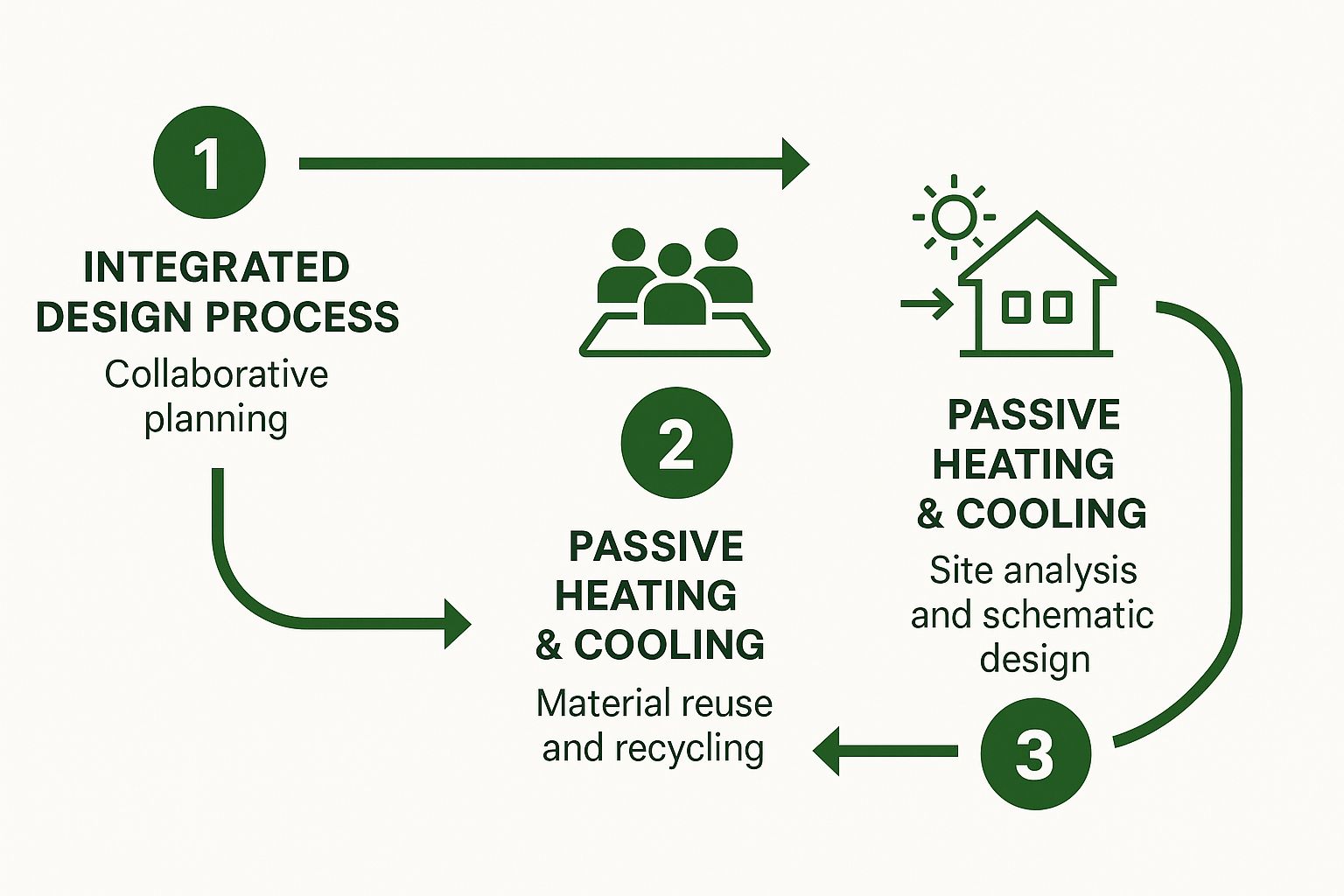
Categories
news

What Is Infill Development A Guide to Smarter Cities

Ever drive through an established neighborhood and spot a brand-new house on a lot that used to be empty or had a run-down building? That's infill development in a nutshell.

It's the practice of building on vacant or underutilized land within existing urban areas rather than pushing city boundaries further out. Think of it as filling in the missing teeth in a city's smile—revitalizing forgotten corners to create new homes, businesses, and community spaces.

Understanding What Infill Development Really Means

At its heart, infill development is just a smarter, more sustainable way for cities to grow. Instead of contributing to urban sprawl by paving over farmland on the outskirts of town, developers focus on recycling land that’s already woven into the community fabric.

This approach didn't just appear out of nowhere; it became a go-to strategy for urban planners trying to solve the problems that unchecked expansion created. With more people wanting to live closer to city centers, the demand for housing in established neighborhoods has shot through the roof, making infill a really practical solution.

The beauty of it is that it's not just about erecting new buildings. It's about strengthening communities from the inside out. Since these projects tap into existing infrastructure—think roads, sewer lines, and public transit—they are often more cost-effective and much friendlier to the environment. When the housing market gets tight, exploring new construction options on these infill lots can be a game-changer for homebuyers.

This infographic does a great job of showing how these underused pockets of land can be completely transformed.

Infographic about what is in an infill development

As you can see, the impact is huge. It’s not just about creating new homes; it’s also about saving a massive amount on infrastructure costs that would otherwise be spent on new developments.

Infill Development vs Urban Sprawl At a Glance

To really get a feel for why infill is so different, it helps to see it side-by-side with the more traditional model of suburban growth, often called "urban sprawl" or "greenfield development."

Characteristic Infill Development Urban Sprawl (Greenfield)
Location Within existing developed areas On undeveloped land at the urban fringe
Land Use Reuses vacant or underused parcels Converts natural or agricultural land
Infrastructure Leverages existing roads, utilities, and services Requires brand new infrastructure installation
Density Generally higher density (e.g., townhomes, apartments) Typically lower density (e.g., single-family homes on large lots)
Transportation Promotes walking, biking, and public transit Car-dependent with longer commute times
Community Impact Revitalizes neighborhoods, supports local businesses Creates new communities, often disconnected from the urban core

This table highlights the fundamental divide: infill works with the existing city, while sprawl creates something entirely new, often at a significant environmental and financial cost.

The Three Pillars of Infill Strategy

A modern infill housing project situated between older, established homes, showing smart land use.

To really get a feel for infill development, you have to look at the core strategies that drive it. These aren't just high-level planning theories; they're the practical foundations for building smarter, more resilient cities. When you boil it down, the entire approach is about building inward instead of sprawling outward.

Everything rests on three key ideas that work in tandem to breathe new life into communities from the inside out.

Make the Most of the Land We Already Have

The first pillar is all about efficiency: maximize the use of existing land. Instead of bulldozing another field or forest on the outskirts of town, infill looks for the gaps inside the city limits. We’re talking about those overlooked parcels—an empty lot, a shuttered storefront, or an old industrial site that’s been sitting unused for years.

This is essentially a form of urban recycling. By building on these forgotten spaces, cities can grow their population without expanding their physical footprint, which helps protect our natural landscapes and greenbelts. It's a pragmatic way to add value right where people already live.

Plug Into Existing Infrastructure

Next, infill development smartly taps into the infrastructure that's already there. Just think for a moment about the massive cost of laying down new roads, sewer lines, water mains, and power grids for a brand-new subdivision on the edge of town. It’s a huge public expense.

Infill projects sidestep a lot of that cost by connecting to the existing grid. This makes new development more affordable for everyone—developers and taxpayers alike. New homes and businesses can be woven directly into the fabric of a neighborhood, gaining immediate access to the schools, fire stations, and bus routes that are already up and running.

This strategic approach dramatically cuts the public cost of new development. In fact, studies have shown it’s significantly cheaper to provide infrastructure for infill projects than for sprawling developments on previously untouched land.

Create Denser, More Walkable Communities

The final piece of the puzzle is about fostering connected neighborhoods where people can live, work, and play. When you build homes, shops, and offices closer together, you fundamentally change how people move around and interact with their city.

Suddenly, you can walk to grab a coffee, bike to the park, or hop on a quick bus to get to work. This naturally reduces our reliance on cars, which means less traffic, cleaner air, and lower carbon emissions. But more than that, it creates vibrant, active streets where small businesses can flourish and neighbors actually get to know each other. This is the human side of infill—it’s all about building for people, not just for cars.

Why Building Inward Is a Win for Everyone

A revitalized urban street with new infill buildings, bustling with people and local businesses.

When we shift our focus from sprawling outward to building inward, the benefits echo through the entire community. This isn't just about slotting new buildings into empty spaces; it’s a practical, forward-thinking solution to some of the biggest hurdles modern cities face, from environmental pressures to economic health.

Thinking about development this way creates a kind of positive feedback loop. It's a strategy that makes our cities not just bigger, but fundamentally better places to live, work, and connect.

Economic Advantages for Communities

The most immediate impact you'll see is a jolt to the local economy. Imagine a vacant lot being replaced by a new mixed-use project. Suddenly, you have new residents and businesses that shop at the corner store, eat at the local cafe, and use nearby services. This fresh activity creates a more resilient local economy and, of course, more jobs.

It's also a much smarter way to use our tax dollars. Infill projects tap into the infrastructure we already have—the roads, sewers, and power lines. This avoids the staggering cost of building new systems from the ground up, freeing up public money for other priorities like parks or schools.

Environmental and Social Gains

From an environmental standpoint, the benefits are crystal clear. By building within our existing footprint, we protect the green spaces, farmland, and natural habitats that would otherwise be bulldozed for another subdivision. It also naturally encourages a more sustainable way of life.
By creating denser, more walkable neighborhoods, infill development inherently reduces car dependency. This leads to less traffic congestion, lower carbon emissions, and cleaner air for everyone.
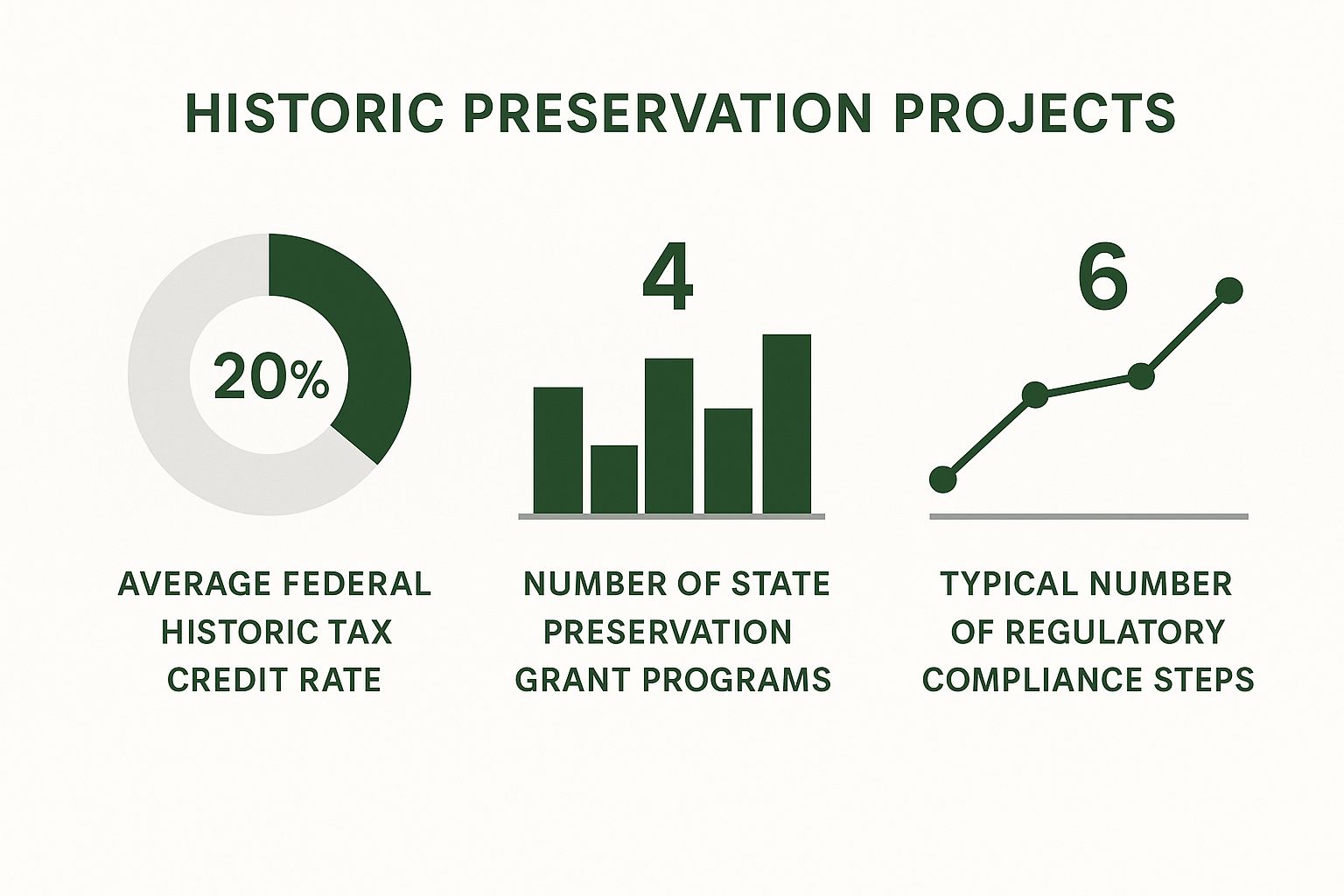
On a social level, this approach helps knit together stronger, more vibrant communities. It often introduces a wider variety of housing options, from townhomes to smaller apartment buildings, which can welcome people from different backgrounds and at different life stages. That diversity is what gives a neighborhood its unique character and energy.
This isn't just a local trend; it's a global strategy for sensible urban growth. With 54% of the world’s population already living in cities—a figure expected to reach 66% by 2050—we have to be smarter about how we expand. Since cities consume the vast majority of our resources, growing efficiently is no longer an option, but a necessity. To dig deeper, check out the United Nations' findings on urban growth and its worldwide impact.

Seeing Infill Development in the Real World

A revitalized historic building transformed into modern loft apartments, an example of adaptive reuse infill.

The idea of "building inward" really clicks when you see it up close. Infill development isn’t some one-size-fits-all strategy; it shows up in countless forms, each perfectly suited to the unique gaps and opportunities within a neighborhood. You’ve probably walked or driven past these projects every day without even realizing it.

The classic example is a new house popping up on a vacant lot squeezed between two older homes. But that's just scratching the surface. The real creativity comes from a much wider range of approaches.

Common Types of Infill Projects

At their core, these projects are all about maximizing the potential of what a community already has, whether that's an empty patch of dirt or a building that’s seen better days. Each type of project looks different, but they all share the same goal: smart, strategic growth.

Here are a few of the most common forms you'll see:

  • Brownfield Redevelopment: This is where we take former industrial or commercial sites—think old factories or abandoned gas stations—clean them up, and give them a new purpose. That rusty old warehouse on the edge of town could become modern loft apartments or a bustling retail center.

  • Adaptive Reuse: This is all about giving historic buildings a second act. It’s a beautiful way to preserve character while meeting modern needs, like converting a beautiful old school into senior housing or turning a decommissioned church into a community arts hub.

  • Accessory Dwelling Units (ADUs): You might know them as granny flats, casitas, or in-law suites. These are small, secondary homes built on the same lot as an existing house, gently adding more housing options to single-family neighborhoods without drastically changing their look and feel.

By their very nature, infill projects capitalize on existing public infrastructure like roads and utilities. This saves significant public money and directs investment back into established urban areas that may need it most.

For a powerful real-world example, look at The Fitzgerald, a $77 million project in Baltimore. This public-private partnership didn't just add top-notch academic space; it acted as a catalyst, sparking a wave of new investment in a neighborhood that desperately needed it. You can dig deeper into how these projects come together in this report on developer-led infill strategies.

Navigating the Hurdles of Building Inward

While infill development sounds like a great idea on paper, the path to building inward is rarely a straight line. Turning a vacant lot or an underused property into a vibrant part of the community comes with a unique set of obstacles that can easily slow down projects and stir up local friction.

One of the biggest headaches is dealing with complicated and often antiquated zoning laws. Many city codes were written decades ago and are designed to protect the status quo—which usually means single-family homes. This can make it incredibly difficult to get approval for something as simple as a duplex or a small apartment building, even in a neighborhood that desperately needs more housing options. The permitting process alone can feel like wading through a maze of red tape.

Then there's the sticker shock. Land in established, desirable neighborhoods is almost always more expensive than a patch of dirt on the outskirts of town. These high land costs can make it tough for developers to build anything that regular people can actually afford.

Community and Social Challenges

Beyond the purely logistical and financial hurdles, the social dynamics can be the trickiest part to navigate. It’s common for developers to face pushback from long-time residents who worry that new construction will clog their streets with traffic, strain local schools and parks, or change the familiar character of their neighborhood. You'll often hear this referred to as NIMBYism—an acronym for "Not In My Back Yard."

But the most significant social issue we have to confront is gentrification. If new projects only bring in high-end condos and luxury apartments, it can send property values and rents soaring, pushing out the very residents who have called the neighborhood home for years. This risk directly undermines the goal of building more inclusive and equitable communities.

The good news is that these challenges aren't insurmountable. Cities are getting smarter about this, using tools like inclusionary zoning, which mandates that a certain percentage of new units must be affordable. Others use community benefit agreements to ensure that development projects give back to the neighborhood in meaningful ways.

By thoughtfully balancing growth with preservation and equity, communities can work through these hurdles and build a better, more sustainable future from the inside out.

How Infill Is Shaping the Future of Our Cities

When we talk about infill development, we're talking about a fundamental shift in how we envision the future of our communities. It's more than just a building trend. Instead of constantly pushing city limits outward into undeveloped land, this strategy looks inward, finding clever ways to grow within the footprint we already have.

The ripple effect of this approach is powerful. Economically, it breathes new life into established neighborhoods and makes better use of taxpayer dollars by tapping into existing roads, sewers, and power grids.

From an environmental standpoint, it’s a huge win. Building "in" instead of "out" protects precious green spaces and farmland from being paved over. It also helps shrink our collective carbon footprint by creating denser, walkable communities where driving isn't always a necessity. Socially, it helps cultivate the kind of diverse, connected, and equitable neighborhoods where people want to live.

This is a vital tool for tackling some of our biggest challenges, from the housing crisis to climate change.

Infill development is about unlocking the hidden potential within our cities. It proves that the greatest opportunities for creating more resilient, engaging, and sustainable communities are often already right in front of us, waiting to be rediscovered.

To see how these projects come to life from concept to completion, it's worth understanding the full commercial real estate development process. By focusing on smart, sustainable growth, we're not just building structures; we're ensuring our cities can thrive for generations to come.

Common Questions About Infill Development

Even when you've got the basics down, a few practical questions always seem to pop up. Let's dig into some of the most common ones I hear from clients and community members to clear up any lingering confusion.

Does Infill Always Mean Big, Towering Buildings?

Absolutely not. That’s one of the biggest misconceptions out there. While some infill projects are indeed larger multi-family buildings, many are on a much smaller, more personal scale.

Think about it this way: infill can be as simple as building a single new home on a vacant lot tucked away in a city neighborhood. It could also mean converting a large, underused house into a duplex.

One of the most popular forms we're seeing right now is the accessory dwelling unit (ADU)—often called a granny flat or carriage house. These are small, standalone homes added to an existing property. The whole point is to gently increase housing density in a way that respects the neighborhood's existing look and feel.

What Will an Infill Project Do to My Property Value?

This is a question I get all the time. Generally speaking, a well-designed and thoughtfully executed infill project is great news for nearby property values. When you replace a vacant, overgrown lot or a run-down building with an attractive new home or a vibrant local shop, you're lifting the entire neighborhood.

This kind of renewal tends to create a positive ripple effect, drawing in new residents and businesses that further strengthen the local market. Of course, the devil is in the details—the project's quality and how well it fits into the community are key to seeing that positive impact.

It's important to distinguish between two often-confused terms. Infill development is a building strategy. Gentrification is a complex socioeconomic shift that can sometimes displace long-time, lower-income residents.

Is Infill Just Another Word for Gentrification?

This is a critical and completely valid concern. Let's be direct: infill can contribute to gentrification, especially if the only thing being built is high-end, luxury housing that prices out existing residents.

However, it doesn't have to be that way. When city planners and developers use smart policies like inclusionary zoning or set aside a percentage of new units for affordable housing, infill becomes a powerful tool for creating healthy, mixed-income communities. The key is managing that growth proactively to make sure it benefits everyone, not just the wealthiest newcomers.


At Sherer Architects, LLC, we've spent years untangling the complexities of infill and adaptive reuse projects to bring new life to communities. If you're thinking about starting an infill project, let our decades of hands-on experience guide you toward a beautiful and sustainable outcome. See how we approach our work at https://shererarch.com.

Categories
news

Finding Expert Historic Preservation Architects

When you’re dealing with a historic building, you're not just renovating—you're becoming a steward of its legacy. This is where a historic preservation architect comes in. They're a unique breed of professional, blending the roles of designer, historian, and materials scientist to breathe new life into old structures.

Their job is to research a building's unique story, navigate the maze of preservation laws, and apply traditional construction methods to honor its past. It's a far cry from just a standard remodel.

What a Preservation Architect Really Does

Architect reviewing blueprints inside a historic building

It’s a common misconception that any good architect can tackle a historic project. While any licensed architect can certainly design a building, a preservation specialist brings a completely different toolkit to the table. Their role is so much more than aesthetics; think of them as part historian, part detective, and part materials expert, all rolled into one.

This isn't just a niche field anymore. The global market for building preservation services was valued at around $45.22 billion this year and is expected to climb to $48.47 billion next year. That growth signals a real shift in valuing our architectural heritage, and with it, a demand for people who know how to do this work right. You can explore the full market report on building preservation services to see the trend for yourself.

To truly understand what sets them apart, it's helpful to see a direct comparison.

Key Differences Between a General Architect and a Preservation Architect

Area of Focus General Architect Preservation Architect
Primary Goal Create new, functional, and aesthetically pleasing spaces. Conserve and restore existing historic fabric while adapting for modern use.
Materials Focuses on modern, efficient, and readily available materials. Specializes in historic materials (old-growth wood, lime mortar, etc.) and their repair.
Design Process Starts with a "blank slate" or major demolition and redesign. Begins with in-depth research and analysis of the existing structure.
Regulations Navigates standard building codes and zoning laws. Must also navigate complex preservation guidelines like the Secretary of the Interior's Standards.
Problem-Solving Often solves problems by replacing old components with new systems. Prioritizes repairing and retaining original features whenever possible.

This table just scratches the surface, but it highlights the fundamental difference in mindset. One is about creating something new; the other is about carefully curating the old.

Beyond Standard Design Principles

A preservation architect’s main objective is a delicate balancing act: keep the building’s historic integrity intact while making it work for today. To do this, they have to understand not just how a building was put together, but why it was built that way, right down to the specific materials and techniques of its time.

Their work is incredibly hands-on and detailed. You can expect them to be responsible for:

  • Digging into the Past: They’ll spend hours in archives, poring over old photos and blueprints to uncover the building’s original design, materials, and any changes made over the decades. This isn't just for fun—this research drives every decision.
  • Analyzing Materials and Conditions: They assess the health of everything from the foundation masonry to the window glazing, determining what can be saved versus what truly needs to be replaced.
  • Navigating a Labyrinth of Rules: These architects are fluent in local, state, and federal preservation standards. They know how to get a project approved without compromising its historic status.
  • Integrating Modern Systems Sensitively: Their real magic is in figuring out how to thread modern HVAC, plumbing, and electrical systems through a historic structure without tearing its soul out.

A preservation architect doesn’t just see a building; they see a timeline. Their job is to read that timeline, respect its layers, and thoughtfully add the next chapter without erasing the ones that came before.

Here's a real-world example: Imagine you're restoring a 19th-century storefront. A general architect might suggest fiber cement siding—it's durable and low-maintenance. A preservation architect, on the other hand, would research the original wood clapboard, track down a historically accurate match, and specify an installation method that mirrors the original. That's the difference between a simple renovation and authentic preservation.

How to Vet Credentials and Real-World Experience

https://www.youtube.com/embed/UzawyIfI7gc

Finding a true historic preservation architect means digging deeper than a standard resume or a slick website. You're not just hiring a designer; you're bringing on a custodian for a piece of history. The trick is to verify the qualifications that genuinely matter in this niche field.

Start with their formal training. A standard architecture degree is the baseline, of course, but you should really look for advanced degrees or specialized certificates in historic preservation. These programs dive into the nitty-gritty of architectural history, materials conservation, and the specific standards that govern this kind of work.

Professional affiliations are another great sign of a dedicated expert. Being a member of organizations like the AIA Historic Resources Committee or local preservation societies shows an architect is invested and active in their community.

Look Beyond the Paper Trail

While credentials lay the groundwork, it's the real-world, hands-on experience that separates a passionate specialist from someone just dipping their toes in. An architect's project history is your best window into their capabilities, but you have to know what to look for.

When vetting credentials, it's also smart to look beyond the basics by understanding their engagement with professional bodies like the Royal Institution of Chartered Surveyors (RICS). Involvement like this shows a commitment to professional growth and staying on top of industry-wide practices.

A strong portfolio for a preservation architect should do more than just show off glossy "after" photos—it needs to tell a story. Keep an eye out for projects with these specific details:

  • Similar Building Eras: Have they worked on buildings from the same period as yours? An architect who's a master of Victorian-era homes might not be the right person for a mid-century modern commercial space.
  • Local Regulatory Success: Look for projects in your city or county. This is a huge plus because it means they likely know the local historic commission, the zoning quirks, and even the personalities you'll be dealing with.
  • Material-Specific Expertise: Does your building have unique elements like a cast-iron facade or original terrazzo floors? Find an architect who has a proven track record with those exact materials.

Don't underestimate the complexity here. The global market for restoring historic buildings is valued at a massive USD 316 billion, but it’s a field with serious challenges. Roughly 25% of these projects get bogged down by high costs and a real shortage of craftspeople skilled in traditional techniques. An architect with proven, relevant experience is your best defense against these very common problems.

The best historic preservation architects have a portfolio that reads like a collection of solved puzzles. Each project should demonstrate not just a successful design, but a thoughtful solution to a unique historical challenge.

Ultimately, your goal is to find someone whose past work gives you total confidence. You need an architect who can delicately balance sensitive restoration with the practical needs of today, honoring your property’s past while securing its future.

Reading a Portfolio Like an Expert

A historic preservation architect presenting a portfolio of building restoration projects.

An architect's portfolio is so much more than a gallery of finished projects. Think of it as a roadmap of their problem-solving skills, their design philosophy, and their respect for a building's past. When you're flipping through the work of a historic preservation architect, you're not just looking at pretty pictures—you're uncovering the story of how they tackle unique challenges.

The best portfolios tell the whole story, not just the happy ending. Your goal is to see their process and understand their approach to the complex, often messy, issues that are part of any real preservation project.

Look for the Story Behind the Images

A truly strong preservation portfolio offers a clear narrative for each building. You should be able to instantly grasp the "before" state and understand the architect's specific interventions. The most revealing portfolios go way beyond simple glamour shots of a finished facade.

As you look through their work, keep an eye out for these crucial elements:

  • Detailed 'Before and After' Photos: This is non-negotiable. I'm not talking about a wide shot of a crumbling building next to a shiny new one. Look for images that really document the state of disrepair and the meticulous work that followed.
  • Examples of Material Conservation: Does the portfolio include close-ups of repaired masonry, restored original windows, or expertly patched plaster? This shows a genuine, hands-on commitment to preserving historic fabric, not just ripping it out and replacing it.
  • Clever Integration of Modern Systems: Let's be honest, this is one of the biggest hurdles. We need modern HVAC, electrical, and plumbing, but you can't just tear through historic walls to install it. Look for projects that showcase how they creatively concealed ductwork or sensitively integrated new technology.

A great portfolio doesn't just show you what an architect can do; it teaches you how they think. It should reveal a deep respect for the original structure paired with creative solutions for modern living.

For instance, a project might detail the restoration of a historic cast-iron facade. A good portfolio won't just show you the gleaming final product. It will explain the research into original paint colors, detail the methods used to repair cracks, and show how they protected that delicate material during the entire process. That’s the kind of depth you’re looking for.

Asking Questions That Reveal True Expertise

Once you've done your homework and reviewed their work, the portfolio becomes the perfect springboard for a deeper conversation. The questions you ask should probe their technical skills, how they work with others, and their problem-solving mindset. Remember, vague questions get vague answers.

Come to the interview ready with questions tied directly to their projects. It immediately shows you’ve paid attention and helps you gauge if their approach is the right fit for your own property.

Smart Questions to Ask About Their Portfolio

  • "What was the biggest surprise you uncovered during this restoration?" This question is great because it reveals their adaptability. Historic projects are full of surprises, and you want to know how they think on their feet.
  • "How did you collaborate with the local historic commission on this specific project?" Their answer here is gold. It will show you how much experience they have navigating the regulatory maze and whether they see the commission as an adversary or a partner.
  • "Can you walk me through your decision to repair versus replace the original windows in this building?" This gets right to the heart of their conservation philosophy and their ability to balance preservation ideals with practical things like budget and energy performance.

Asking pointed questions like these transforms a simple portfolio review into a powerful vetting tool. It helps you see past the polished images to understand the real-world expertise of the historic preservation architects you're considering.

Making Sense of Regulations and Financial Incentives

Working on a historic property is so much more than just picking out period-appropriate materials and drawing up plans. It’s about successfully navigating a complex web of regulations that protect these treasures. But here's the upside: that same web of rules often comes with financial programs designed to make these projects possible. An experienced historic preservation architect is the person who can guide you through it all, turning what look like bureaucratic roadblocks into real financial opportunities.

This dual expertise is what makes a great preservation architect invaluable. They aren't just designing a building; they’re crafting a strategy that meets strict preservation standards while unlocking significant savings for you. It’s a specialized skill that has a direct, positive impact on your project's budget.

The infographic below puts some numbers to the financial and regulatory side of preservation projects.

Infographic about historic preservation architects

As you can see, the chance to get a 20% federal tax credit or secure various state grants can make a huge difference. But getting that money is entirely dependent on clearing every regulatory hurdle along the way.

Cracking the Regulatory Code

Every historic project has multiple layers of oversight. The big one at the federal level is the Secretary of the Interior's Standards for Rehabilitation. Think of these ten standards as the guiding principles for any work you do, ensuring you maintain the property's historic character even while making necessary updates.

Then you have the local rules. These come from your city's historic district commission or landmarks board, and they can be just as demanding. A huge part of a preservation architect's job involves navigating conservation area planning permission and securing heritage approvals for any work in these protected zones. An architect with a solid local reputation will already have relationships with these boards. They know what the reviewers are looking for and how to present your project to get a green light.

The right architect knows that regulations aren't just obstacles. They're the playbook. When you follow the plays correctly, you unlock the financial incentives. They see the direct line from compliance to credit.

This kind of expertise is becoming more critical. The market for building preservation services is currently valued at $62 million and is expected to grow at a 5.8% CAGR over the next ten years. With cities growing and heritage laws getting stricter, having a skilled architect on your team is no longer a luxury—it's a necessity.

Unlocking the Financial Benefits

This is where a preservation architect truly pays for themselves. They speak the language of financial incentives and know how to design a project from the very beginning to meet the qualifications.

Here are a few of the key programs they can help you tap into:

  • Federal Historic Preservation Tax Incentives: This is the big one. It offers a 20% tax credit on qualified rehabilitation costs for income-producing properties. Your architect will make sure the entire project, from design to the final nail, follows the Secretary's Standards to the letter so you can claim this credit.
  • State Historic Tax Credits: Many states have their own tax credit programs. The best part? You can often stack these on top of the federal credit, which means even bigger savings.
  • Preservation Grants and Easements: Your architect will be on the lookout for grant money from groups like the National Trust for Historic Preservation or local heritage foundations. They can also walk you through preservation easements, which can offer tax deductions if you agree to legally protect your property's historic character forever.

With the right expert in your corner, what seems like a costly and over-regulated headache becomes a smart, sustainable investment in preserving a piece of history.

Asking the Right Questions in Your Interview

You’ve checked their credentials and poured over their portfolio. Now comes the real test: the interview. This is where you find out if the architect who looks great on paper is actually the right partner for your project. Think of it less like a formal Q&A and more like a conversation to see if you truly click.

This is your chance to get past the polished portfolio photos and understand their real-world process. How do they handle surprises? What’s their communication style really like? You're looking for someone who has both the technical chops and the right temperament for the unique journey of a historic renovation.

Digging Into Their Process and Philosophy

First, you need to get a feel for how they think. A historic project is a delicate balancing act between preservation ideals and the practical realities of modern life—budgets, building codes, and your own needs.

Try asking a few questions that get to the heart of their approach:

  • Walk me through how you handle unforeseen conditions—like finding structural damage behind a wall. Can you give me a specific example from a past project?
  • How would you describe your working relationship with contractors, engineers, and the local historic commission?
  • What’s your philosophy on integrating modern systems (like HVAC or updated electrical) into a historic building while respecting its character?

What you're listening for is a sense of collaboration and flexibility. You want an architect who sees contractors as partners in problem-solving, not adversaries. If they talk about open communication and creative solutions, that’s a fantastic sign.

A great preservation architect won’t just have all the answers; they’ll ask you thoughtful questions. It shows they're already engaging with your project and thinking about its unique challenges.

Putting Their Problem-Solving Skills to the Test

This is where you can separate the good architects from the great ones. Anyone can talk a good game, but you want to see how they think on their feet. The best way to do that is with a real-world scenario.

Historic projects are full of these little conflicts. For example, a modern code requirement often clashes with a significant historic feature. Don't just ask if they've handled it; ask them how.

Try this one: "Tell me about a time a modern accessibility or fire code requirement conflicted with a key historic element. How did you navigate that with the building officials and the client?"

A boilerplate answer is a red flag. What you want to hear is the story—the research they did into alternative compliance paths, the conversations they had with code officials, and the clever design workarounds they developed. This is what a true historic preservation architect does: they find a way to meet modern standards without sacrificing the building's soul.

Before we get to checking references, it's crucial to have a solid list of questions ready for your interview. I've put together a table with some essential questions to help guide your conversation and ensure you cover all the important bases.

| Essential Questions to Ask a Preservation Architect |
| :— | :— | :— |
| Category | Sample Question | What to Listen For |
| Experience & Philosophy | "Can you walk me through a project similar to mine, from initial concept to completion?" | Details about their process, how they handled challenges, and their role in managing the project. |
| Technical Skills | "How do you approach documenting existing conditions before design work begins?" | Mention of specific techniques like HABS/HAER documentation, laser scanning, or material analysis. |
| Problem-Solving | "Describe a time you discovered a major unforeseen issue during construction. How did you resolve it?" | A calm, methodical approach. Evidence of clear communication with the client and contractor. |
| Regulatory Navigation | "What's your experience with the local historic district commission and securing approvals?" | Familiarity with local officials and processes. Stories of successful negotiations. |
| Collaboration & Communication | "How do you prefer to communicate with clients and the project team during the construction phase?" | A clear plan for regular updates (e.g., weekly meetings, site reports). A collaborative tone. |
| Budget & Schedule | "How do you develop a project budget and what's your track record for staying on track?" | Honesty about the unpredictability of historic projects, but a solid process for estimating and tracking costs. |

Having these questions in your back pocket will help you steer the conversation and get the specific, detailed answers you need to make a confident decision.

Checking References the Right Way

Finally, don’t treat reference checks as a box-ticking exercise. This is your opportunity for a candid conversation with people who have already been through this process with the architect you're considering.

Get beyond the generic "Were you happy with them?" and ask pointed questions that will give you real insight.

  • Budget and Timeline: "How did the final project cost and timeline compare to the initial estimates? How did the architect communicate and manage any changes?"
  • Communication: "On a scale of 1-10, how would you rate their responsiveness? Were you kept in the loop on key decisions and potential issues?"
  • Advocacy: "Can you give me an example of a time the architect went to bat for you, whether it was with the city or a contractor?"

Hearing directly from past clients is invaluable. It helps you confirm that the person you met in the interview is the same person who will show up on the job site, ready to be a dedicated partner in preserving your building's legacy.

Common Questions About Hiring a Preservation Architect

Architect discussing plans with a client inside a historic home

Stepping into a historic renovation for the first time is bound to bring up a lot of questions. It's totally normal to wonder about everything from budgets and timelines to what, exactly, the architect will be doing day-to-day. Getting these common concerns out on the table early on helps clear the air and lets you move forward with a solid plan.

One of the first things on every property owner's mind is cost. How are the fees for a historic project structured, and should you expect to pay more than for a standard renovation?

The short answer is, typically, yes. The fees for historic preservation architects often reflect the added layers of complexity. These projects demand intensive research, detailed documentation, and specialized consulting that you just don't see in new construction. While the fee structure might be familiar—a percentage of construction cost, an hourly rate, or a fixed fee—the total will account for navigating preservation standards and the inevitable surprises that old buildings hold.

What Is the Typical Timeline for a Historic Project?

Another big question mark is the timeline. I tell all my clients upfront: historic projects almost always take longer than new construction or a standard remodel. This isn't about being inefficient; it's about being deliberate and respectful of the building's story.

Several things unique to preservation work stretch out the schedule:

  • The Deep Dive: Before a single line is drawn, your architect has to become a historian, digging into the building's past. This research phase can easily take weeks or even months.
  • The Approval Gauntlet: Getting the green light from local historic commissions or state preservation offices is a major time factor. It's not uncommon to go through multiple review meetings before breaking ground.
  • The Materials Hunt: Sourcing authentic materials or finding craftspeople to custom-fabricate them is a specialized—and often slow—process.
  • The Unexpected: You never really know what’s behind a 100-year-old wall until you open it up. Hidden structural problems or decay can add significant time to the construction phase.

A good preservation architect doesn't just hope for the best; they plan for these realities. They’ll build contingencies into the project schedule from the get-go, so you have a realistic picture of the commitment you're making.

The most successful historic preservation projects are built on a foundation of patience and meticulous planning. Rushing the process compromises the very integrity you're trying to save.

How Involved Is the Architect During Construction?

So, the plans are approved and the crew is on site. What happens next? In a historic project, your architect's job is far from over. In fact, it's just getting started. Their role during the build is much more hands-on than simply handing over a set of drawings.

This phase is often called construction administration, and it's where your architect becomes your chief advocate and quality control expert. They'll be on-site regularly, making sure the contractor is following the plans to the letter and using the right techniques for historic materials. They're there to troubleshoot problems on the fly, review payment requests, and ensure every detail honors the preservation goals. This oversight is absolutely essential to protect both the historic fabric of your building and your investment.


At Sherer Architects, LLC, we've guided countless clients through every stage of the historic preservation journey, from that first spark of an idea to the final walkthrough. Our team has the expertise to navigate the complex regulations and bring your property's unique legacy into the future.

See how we can bring your historic project to life by visiting us at https://shererarch.com.

Article created using Outrank

Categories
news

Architectural Details Drawings: Essential Design Insights

Architectural detail drawings are the zoom-ins, the close-up shots of a building's construction plans. While the main blueprints give you the wide-angle view, detail drawings show exactly how the critical pieces fit together. We're talking about everything from window installations to roof junctions—the spots where getting it right means the building will last for decades.

From Big Picture to Fine Print

Think of it this way: the main architectural plans are like a road map showing cities and highways. It gives you the general layout, enough to get from point A to point B. Architectural detail drawings, on the other hand, are the turn-by-turn GPS directions. They zoom right into the tricky intersections, showing you exactly which lane to be in and how the different roads connect.

These drawings are what bridge the gap between an idea on paper and a structure standing in the real world. They deliver the non-negotiable instructions that guide a builder through the most technically challenging parts of a project. Without them, contractors are left to guess, and that’s a recipe for costly mistakes, structural problems, and frustrating delays.

The Anatomy of a Detail Drawing

Every detail drawing is a super-concentrated packet of information. It strips away all the surrounding noise to focus on one specific construction assembly. You'll often see them drawn at a much larger scale than floor plans—sometimes 1:10, 1:5, or even full-size (1:1) —so that every tiny component and connection is crystal clear. This level of magnification is what allows architects to specify the exact materials and assembly order.

An architectural detail drawing is a promise. It’s a promise to the client that the building will perform as designed, and it's a promise to the builder that the design is achievable, logical, and thoroughly considered.

At the end of the day, these documents are less about artistry and more about clarity. They answer the nitty-gritty questions that general plans can't touch, like:

  • How is this window frame sealed to keep water out?

  • What are the exact layers in this wall assembly to hit the right insulation value?

  • How does the roof flashing meet the parapet to form a perfect, watertight seal?

By getting this specific, architectural detail drawings become the ultimate quality control tool on a construction site. They ensure the architect's vision for performance, durability, and aesthetics is built precisely as intended, turning a good design into a great building.

A good detail drawing packs a lot of information into a small space. Here’s a quick look at the essential information found in every effective architectural detail drawing.

Core Elements of a Detail Drawing

Component

What It Tells the Builder

Dimensions & Scale

Provides the exact size of each component and its relationship to others.

Material Symbols

Uses standardized patterns (hatching) to identify materials like concrete, wood, or insulation.

Annotations & Notes

Specifies materials, fasteners, sealants, and the sequence of assembly.

Reference Tags

Links the detail back to its specific location on the main floor plans or elevations.

With these elements in place, a builder has everything they need to execute the design flawlessly, leaving no room for interpretation or error.

Why Detail Drawings Are Non-Negotiable

Picture a construction team trying to assemble a state-of-the-art engine with nothing but a rough sketch. The odds of it actually working are slim to none. That’s exactly the kind of chaos architectural detail drawings prevent on a job site. They are the ultimate tool for turning ambiguity into actionable, crystal-clear instructions.

On any active construction site, guesswork is the enemy. It leads to mistakes, delays, and safety risks. Without a detail drawing, a contractor might install a window using a standard technique that’s completely wrong for a building in a high-wind zone, setting the stage for leaks or catastrophic failure down the road.

A proper detail drawing cuts through all that by specifying the exact flashing, sealants, and fasteners needed for a durable, weatherproof installation. This isn't just about avoiding errors; it's the very bedrock of quality control.

From Legal Safeguard to Quality Assurance

Think of architectural details as a crucial part of the legal contract between the client and the builder. They create a visual, indisputable record of what’s expected, protecting everyone involved. If a dispute pops up over the materials used or how something was assembled, these drawings are the final word. There's no room for debate.

This level of precision ensures the specified high-performance insulation actually gets installed, not a cheaper substitute. It guarantees that complex junctions where different materials meet are built to perform and last.

And creating these documents is getting easier and more integrated, thanks to modern tools. The rise of Building Information Modeling (BIM) has been a game-changer. By 2025, it's projected that 68% of professionals in the architecture, engineering, and construction space will be using BIM. A full 65% of them already say it delivers the highest ROI for their firms by enabling precise 3D models that boost accuracy from the get-go. You can learn more about future architecture trends and the impact of BIM on the industry.

A project without detail drawings is a project left to chance. It relies on assumptions, habits, and interpretations, which can lead to costly rework, project delays, and compromised structural integrity.

The True Cost of Ambiguity

Let’s talk about what this means in the real world. A project backed by a solid set of detail drawings moves forward with confidence and efficiency. The builder knows exactly how to construct a tricky roof eave to manage water runoff because every layer, material, and connection is clearly spelled out.

Now, flip that scenario. A project missing those details often grinds to a halt. The builder has to stop work to ask for clarification, a process that burns both time and money. Even worse, they might make an educated guess that turns out to be dead wrong, leading to demolition and reconstruction.

In the end, detail drawings aren't just another line item on the budget. They are a smart investment that saves an incredible amount of time, prevents expensive rework, and protects reputations by ensuring the final building performs exactly as it was designed to.

How to Read an Architectural Detail Drawing

At first glance, an architectural detail drawing can look pretty intimidating—almost like trying to read a new language. But once you get the hang of it, you'll see it’s really just a zoomed-in map that tells a very specific story about how a small part of the building fits together. Getting comfortable with these drawings is the key to turning an architect's vision into a well-built reality.

The first thing you’ll notice is the scale. Your main floor plans might be at a small scale like 1:100, where you see the whole picture. Detail drawings, on the other hand, are blown up to a much larger scale, often 1:10 or even 1:5. Think of it like this: the floor plan shows you the car, but the detail drawing pops the hood and shows you exactly how the engine is assembled. This close-up view is where the magic happens, revealing how different materials and components connect.

Understanding the Visual Language

Every single line, pattern, and symbol on a detail drawing means something. It's a visual shorthand that everyone on the job site—from the contractor to the tradesperson—can understand without needing a lengthy explanation. Keep an eye out for these key elements:

  • Material Hatching: These are standardized patterns that instantly tell you what material you're looking at. A series of diagonal lines might signify wood, while a speckled pattern with little triangles usually means concrete. This lets you see the makeup of an assembly at a glance.

  • Annotations and Dimensions: This is where the explicit instructions live. Annotations are text callouts pointing to specific materials, fasteners, or sealants. Dimensions give you the exact measurements down to the millimeter, removing all the guesswork from fabrication and installation.

  • Reference Tags: You'll see little bubbles or tags that act like a GPS, connecting the detail back to the main floor plans or elevations. This cross-referencing system shows you exactly where this magnified junction is located within the overall building design.

By combining scale, dimensions, symbols, and notes, a detail drawing tells a complete story of assembly. It’s a step-by-step guide that ensures the architect’s intent for performance and durability is perfectly executed on-site.

Learning to interpret these drawings is a fundamental skill for anyone in the construction world. If you want to dive deeper, this guide on how to read construction blueprints is a fantastic resource. Once you master this visual language, you’ll be able to spot potential issues, ensure top-notch quality, and play your part in a successful project.

Exploring Common Types of Detail Drawings

Close-up of a detailed architectural drawing for a window installation

While every architectural detail drawing aims for clarity, they aren't one-size-fits-all. Think of them as specialized tools in an architect's toolkit, each designed to solve a very specific construction puzzle. They focus on the areas where things can go wrong—the complex joints and vulnerable transitions that define a building's performance.

Just like a surgeon wouldn't use the same instrument for every procedure, architects draft different types of details to tackle unique assembly challenges. Each one is a crucial piece of the puzzle, ensuring the building stands strong and performs well for decades to come.

Foundation and Wall Details

It all starts at the ground. Foundation details are the master plans for how a building connects with the earth. These drawings show precisely how concrete should be reinforced, the exact dimensions of the footings, and how waterproofing layers are applied. They are the building's first line of defense against moisture from the ground and are critical for preventing structural settling.

Moving up, wall section details give us a see-through slice of the wall, from the foundation right up to the roofline. They map out the entire assembly layer by layer: structural framing, insulation, vapor barriers, exterior siding, and interior finishes. Getting this right is what guarantees the building will be warm, dry, and energy-efficient. Even elements like built-in lighting are planned here; for instance, an expert recessed lighting layout guide helps integrate fixtures seamlessly into the wall and ceiling structure from the start.

Envelope and Junction Details

Every window and door is a hole in the building’s protective skin. That makes them potential hotspots for air and water leaks. Window and door details provide the step-by-step instructions for getting these installations perfect. They call out the specific flashing, sealants, and air-sealing tapes required to create a completely weatherproof connection between the window unit and the surrounding wall.

And what about keeping the building dry from above? That’s the job of roof details. These drawings zoom in on the tricky spots: where different roof slopes meet, where a roof joins a wall, or where vents and skylights pop through. They create a clear roadmap for installing flashing and underlayment to prevent water intrusion—one of the most common and costly problems a building can face.

To really understand how these drawings function, it helps to see their distinct roles side-by-side.

Comparing Key Architectural Detail Types

Detail Type

Main Purpose

Critical Information Provided

Foundation Details

Ensure structural stability and moisture control at the building’s base.

Footing sizes, rebar placement, anchor bolt locations, and waterproofing methods.

Wall Sections

Define the thermal and weather-resistant performance of the exterior envelope.

Material layers, insulation type and thickness, and air/vapor barrier locations.

Window & Door Details

Prevent air and water leakage at openings in the building envelope.

Flashing sequences, sealant specifications, and integration with the weather barrier.

Roof Details

Guarantee a watertight and durable roofing system.

Flashing at parapets and penetrations, material overlaps, and drainage slopes.

As you can see, each detail type is a focused problem-solver. It anticipates a specific construction challenge—be it water, air, or structural load—and provides a clear, buildable solution before it ever becomes an issue on site.

Principles for Creating Effective Details

Crafting a great architectural detail drawing isn't about knowing every last feature in your drafting software. It’s about a mindset, one grounded in a handful of core principles that prioritize clarity above all else. The real goal is to create a drawing so clear it leaves no room for doubt. Shove too much information onto the page, and it becomes just as useless as a detail with too little—both lead to head-scratching and costly mistakes on site.

Think of yourself as writing the perfect set of instructions for a complex piece of furniture. Simplicity is your best friend. Every single line, note, and symbol has to earn its place. If it isn't essential for explaining how things go together, it's just noise. This keeps the builder focused on the design intent, not on solving a puzzle.

This idea of clarity has to be consistent across the entire set of drawings, too. The hatch pattern you use for concrete or the symbol for rigid insulation needs to be the same on every single sheet, no exceptions.

Prioritizing Buildability and Consistency

The most beautiful detail ever drawn is completely worthless if it can't be built efficiently in the real world. We call this concept buildability, and frankly, it's the most important principle of all. It forces you to step out of the architect's shoes and think like a builder. How will this be sequenced? Are these materials readily available? Does this align with how the trades actually work? A truly successful detail is one a contractor can glance at and immediately say, "Yep, I know how to build that."

Consistency is what holds a professional drawing set together. This isn't just a matter of preference; it's about making the entire document package easy to navigate.

  • Lineweights: Use different line thicknesses to create a visual hierarchy. Heavier lines for cut profiles and lighter lines for objects in the background make the drawing pop and guide the eye.

  • Notation Style: Keep your callouts and notes consistent. Use the same font, size, and phrasing everywhere to build a familiar language for the reader.

  • Symbol Libraries: A standardized set of symbols for materials and components is non-negotiable. Don't reinvent the wheel on every project.

When you maintain this kind of uniformity, you lower the mental effort required from the construction team. They can work faster, more confidently, and with far fewer calls back to your office.

The best architectural details drawings are a dialogue between the architect and the builder. They anticipate questions, provide clear answers, and demonstrate a deep respect for the craft of construction by being both logical and buildable.

Of course, technology is changing the game. AI-powered drafting tools are now handling some of the more repetitive work, allowing architects to explore dozens of layout options in the time it used to take to draw one. With cloud collaboration and green building now becoming standard practice, these tools are helping us create smarter, more sustainable projects. It’s worth exploring these top trends in architectural drafting to see just how quickly the field is moving forward.

At the end of the day, it's this commitment to clarity, consistency, and buildability that elevates a detail from a simple drawing to a powerful instrument for quality construction.

The Future of Architectural Detailing

For centuries, architectural detailing was about drawing static lines on a page. Today, it’s undergoing a radical shift, becoming a dynamic, data-rich discipline. The driving force behind this evolution is the industry's move away from traditional CAD and into the world of 3D Building Information Modeling, or BIM.

Within a BIM workflow, an architectural details drawing is no longer just an isolated sketch. It's a living piece of a comprehensive digital twin of the entire building. Think about it this way: a detail for a window installation now carries embedded data about the specific window model, its thermal performance, and even its material makeup. If you change one element in the model, every related detail and schedule updates automatically. This is a game-changer for reducing errors and ensuring consistency. We've gone from drawing objects to modeling intelligent systems.

This digital shift is a huge factor in the growth of the global Architectural Services Market. Valued at USD 184.1 billion in 2025, the market is on track to hit USD 330.1 billion by 2033. This boom is largely thanks to the integration of digital tools like AI and 3D visualization, which empower us to create far more complex and sustainable designs. For a deeper dive into these trends, check out the market growth analysis on Globenewswire.com.

AI and Immersive Technologies

Artificial intelligence and generative design are pushing the boundaries even further. AI algorithms can now sift through thousands of design options for a single connection, optimizing it for things like material efficiency, structural integrity, or ease of construction. This gives architects the ability to craft high-performance details that would be practically impossible to figure out through manual trial and error.

The future of detailing is not about replacing the architect but augmenting their abilities. It’s about using technology to make smarter, faster, and more informed decisions at a micro-level, leading to better-performing buildings.

Immersive technologies are also completely changing how these details are interpreted and built on-site.

  • Augmented Reality (AR): Construction crews can now use a tablet or smart glasses to overlay a 3D model of a detail directly onto the physical work area. This helps them visualize exactly how a complex assembly should come together in real-time.

  • Virtual Reality (VR): Before a single piece of material is ordered, teams can "walk through" a virtual mock-up of a critical junction. This allows them to spot potential clashes or constructability problems when it's still cheap and easy to fix them.

These tools are transforming detailing from a reactive process—where builders interpret drawings—to a proactive one of troubleshooting in a digital space. The time and money saved are enormous.

Common Questions About Detail Drawings

Getting into the weeds of architectural documents can definitely spark a few questions. Let's clear up some of the most common ones about architectural detail drawings and what makes them so crucial.

What Scale Are Detail Drawings Usually?

If you've ever looked at a floor plan, you've probably seen a scale like 1:100 (or 1/8”=1’-0”), which is great for seeing the big picture. Architectural detail drawings, however, are zoomed way in. Think scales like 1:10, 1:5, or even 1:2 (or in imperial units, 1”=1’-0”, 1 ½”=1’-0”, 3”=1’-0”).

Why the magnification? It’s all about clarity. This close-up view is the only way to show every single layer, fastener, and connection precisely. It removes the guesswork for the builder, ensuring they can assemble the component exactly as designed.

What Software Do Architects Use to Create Details?

The go-to tool in the industry today is Building Information Modeling (BIM) software. You'll hear names like Autodesk Revit thrown around a lot, and for good reason. These programs build an intelligent 3D model of the entire project, not just a collection of 2D lines.

When an architect pulls a detail from a BIM model, it's not a separate drawing—it's a live view of the actual building model. This connection ensures everything stays consistent and accurate across all the documents, which is a massive improvement over older 2D CAD programs like AutoCAD.

Architectural detail drawings are fundamentally different from general plans. General plans show what and where; detail drawings explain how. They are the assembly instructions for the most critical parts of a building.

The real difference is the level of information they provide. A floor plan tells you where a window goes. The detail drawing shows you exactly how to flash that window, seal it, and connect it to the wall system to make sure it never leaks. It's the difference between pointing to a spot on a map and providing turn-by-turn directions.


At Sherer Architects, LLC, we know from experience that exceptional buildings are born from meticulous detailing. Whether it's a modern commercial space or a sensitive historic preservation, we ensure every connection is designed for lasting performance. Let us help bring structure to your vision. Learn more at Sherer Architects, LLC.

Article created using Outrank