
When you’re developing a commercial property, the materials you choose are doing a lot more than just looking good. They’re a core part of your business strategy. The right choices can directly boost a building's profitability and long-term value, while the wrong ones can become a financial drain.
Why Material Selection Is a Critical Business Decision
For developers and property owners, materials aren't just finishes; they're working assets. Shifting your perspective from "what looks good" to "what performs best" is the key. Every single choice—from the flooring in a bustling lobby to the insulation you can't even see—carries serious financial weight.
Think of it like you're building a team. Each material has a job to do. One might need to withstand a constant stream of foot traffic, another's job is to slash energy bills, and a third has to meet strict fire codes. If you "hire" the wrong material for the job, you're setting yourself up for constant maintenance headaches, early replacement costs, and unhappy tenants. All of that eats away at your bottom line.
Balancing Aesthetics with Business Goals
The real trick is finding that sweet spot where great design meets smart business. It’s a puzzle with a few key pieces that all need to fit together perfectly.
- Durability and Maintenance: How tough is this material, really? What’s it going to cost us in time and money to keep it looking good year after year?
- Life-Cycle Cost: Don't just look at the purchase price. What's the total cost of ownership when you factor in installation, upkeep, and eventual replacement?
- Regulatory Compliance: Is this material up to code? Does it meet all the building, safety, and energy requirements for where and how we’re using it?
- Sustainability and Marketability: Does this choice resonate with today’s tenants? Does it align with green building standards that are becoming less of an option and more of an expectation?
For a developer, the spec sheet is a direct reflection of the asset's quality. Choosing materials wisely isn't just an operational decision; it's a strategic move that pays dividends for years to come.
This mindset is more important than ever. The global interior design market was valued at a staggering USD 145.3 billion in 2024, and it's still growing. Within that market, sustainable and durable materials are becoming the cornerstone of smart investment, especially in adaptive reuse projects that can give a building another 50 years of life. You can dive deeper into these financial trends in this PR Newswire report on the interior design market.
Understanding Materials for High-Traffic Environments
Choosing the right materials for a commercial space is a lot like casting for a movie. You need the right actor for the right role. You wouldn't cast a delicate, dramatic actor for a high-action stunt scene, and you certainly wouldn't put elegant hardwood flooring in a hospital emergency room. Each material has its own set of skills, and success comes from matching those skills to the demands of the environment.
Porcelain tile, for instance, is your rugged action hero. It’s tough, stands up to immense pressure, and resists scratches and stains, making it the go-to choice for punishing environments like lobbies and corridors. Luxury Vinyl Tile (LVT) is the versatile character actor; it can convincingly mimic stone, wood, or even abstract designs, giving you aesthetic flexibility without sacrificing performance in tenant spaces or retail shops.
This decision-making process isn't just about looks—it's about the money. Every choice ties directly back to the asset's profitability.

As you can see, durability, maintenance needs, and code compliance are all fundamental building blocks that support the financial performance of the property.
Core Properties for Commercial Success
To make smart choices, you have to look past the sample chip and understand the properties that dictate long-term value. These are the non-negotiables for any commercial project.
-
Durability: This isn't just about being "hard." True durability is a material's power to withstand constant foot traffic, resist scuffs from rolling carts, and shrug off daily impacts without showing its age. When you're dealing with a busy entryway or a bustling corridor, finding the best flooring for high-traffic areas is mission-critical to avoid constant, costly repairs.
-
Maintenance: What will it really cost to keep this surface looking good? Some materials look fantastic on day one but demand expensive, specialized cleaning crews and chemicals. Opting for low-maintenance finishes like sealed concrete or quartz directly reduces your operating expenses and boosts the property's Net Operating Income (NOI). It's that simple.
-
Acoustics: This is the one everyone forgets until it's too late. Hard surfaces bounce sound waves all over the place, creating an echo chamber that feels chaotic and kills productivity. Materials with good sound absorption—think acoustic ceiling tiles, commercial-grade carpet, or even fabric wall panels—can transform a noisy, stressful environment into a calm and focused one.
Comparing Core Commercial Flooring Materials
With so many options on the market, a side-by-side comparison can help clarify which material fits your specific needs. This table breaks down the essentials for some of the most common commercial flooring choices.
| Material Type | Durability Rating (1-5) | Maintenance Level | Typical Lifespan | Best For |
|---|---|---|---|---|
| Luxury Vinyl Tile (LVT) | 4 | Low | 15-25 years | Retail, Healthcare, Corporate Offices |
| Porcelain Tile | 5 | Low | 50+ years | Lobbies, Restrooms, High-Traffic Corridors |
| Commercial Carpet Tile | 3 | Medium | 10-15 years | Offices, Conference Rooms, Hospitality |
| Sealed Concrete | 5 | Low | 50+ years | Industrial, Retail, Modern Lobbies |
| Sheet Vinyl | 3 | Low | 10-20 years | Healthcare, Labs, Educational Facilities |
Ultimately, this table shows there's no single "best" material, only the best material for the job at hand. The goal is to align the performance characteristics with the demands of the space and your long-term budget.
Getting a handle on these core concepts allows you to have more productive conversations with your design and construction teams. It’s about ensuring the material palette doesn't just look great for the grand opening but continues to perform for years, protecting your investment and keeping tenants happy.
Calculating the True Cost and ROI of Materials
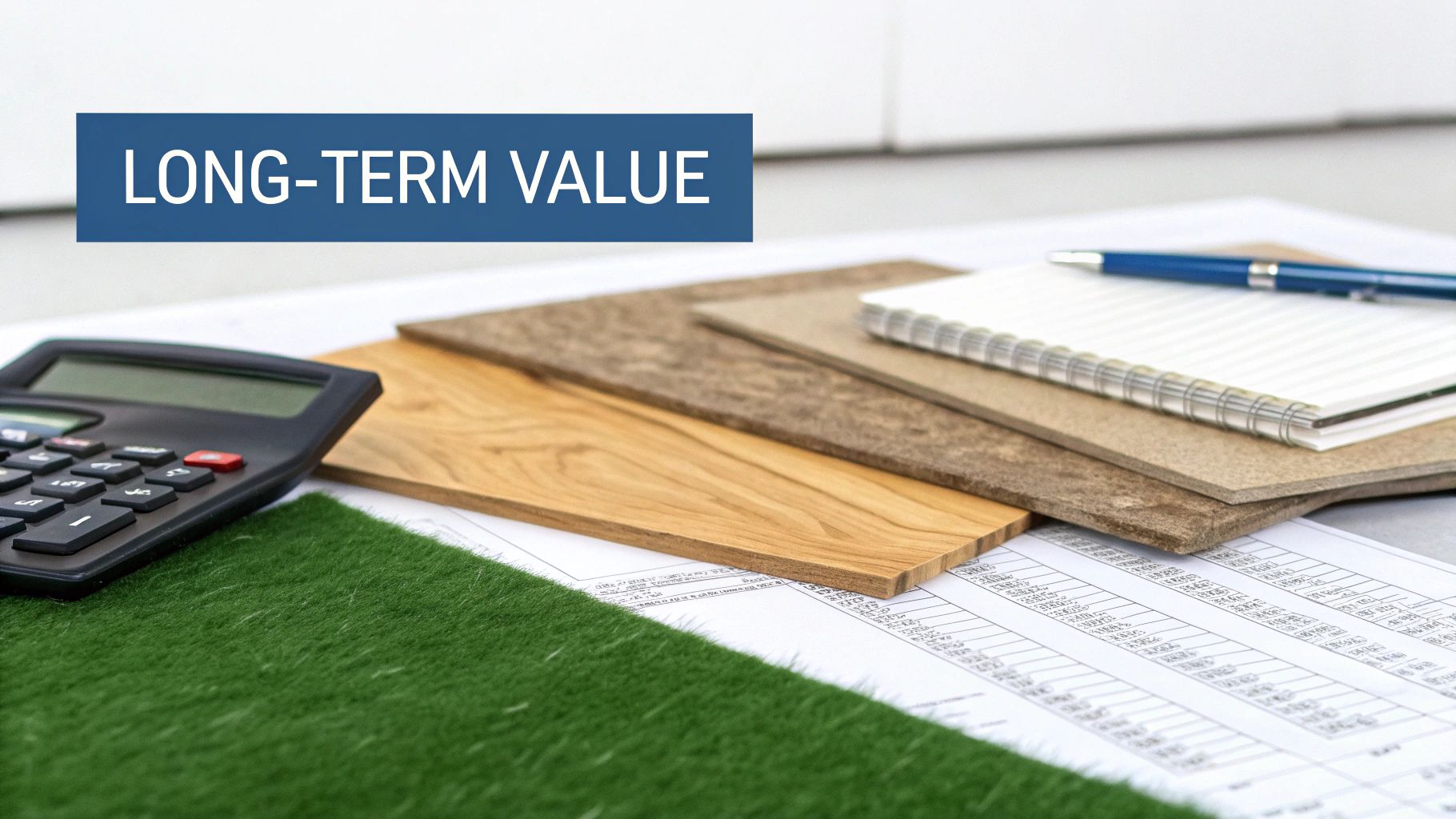
The price tag on a material is just the beginning of the story. For developers and property owners who know their stuff, the conversation quickly moves from the initial sticker shock to long-term value. This is where a life-cycle cost analysis (LCCA) becomes your best friend, giving you the full financial picture of a material over its entire life in your building.
Think of it this way: an LCCA goes way beyond the purchase price. It factors in everything—installation, ongoing maintenance, repairs, and even the eventual replacement cost. It’s the classic printer analogy: you can buy a cheap printer that guzzles expensive ink, or invest in a better model with affordable, high-yield cartridges. The first one feels like a win at the checkout, but the second one almost always saves you money in the long run.
A Practical Flooring Example
Let’s put this into practice with a decision every building owner faces: flooring for a high-traffic commercial lobby.
- Option A (Low Upfront Cost): You go with a budget-friendly commercial carpet tile. It looks great on day one, but it demands frequent deep cleaning, shows wear and tear fast, and will likely need to be completely ripped out and replaced in about seven years.
- Option B (Higher Upfront Cost): You opt for a durable porcelain tile. Yes, the initial investment is much higher. But its maintenance is a breeze—just routine cleaning—and it can easily last for over 30 years without needing a second thought.
Do the math over a 30-year timeframe. You might end up replacing that "cheap" carpet four separate times, paying for new materials and installation with every cycle. Meanwhile, the porcelain tile just keeps performing. When you add it all up, the "expensive" tile is revealed as the smarter, more economical choice by a long shot.
The most expensive material in interior design is often the one you have to replace. Focusing on life-cycle cost rather than the initial purchase price is a core strategy for maximizing asset value and minimizing operational drag.
This kind of forward-thinking is more critical than ever. Remodeling is now outpacing new construction, and with global spending in the sector hitting USD 4.9 trillion in 2023, every choice matters. You can dig into the numbers yourself by reviewing the latest interior design market outlook.
Ultimately, choosing durable, long-lasting materials is one of the most direct ways to protect and grow your property's Net Operating Income (NOI). It turns a simple design choice into a powerful financial lever.
Navigating Sustainability and Building Codes
For developers and owners, "sustainability" isn't just a buzzword anymore—it's a critical piece of a smart business plan. Choosing the right materials for your interior isn't just about ethics; it's a strategic move that directly boosts your asset's financial performance.
When you specify materials with high recycled content or insist on FSC-certified wood from well-managed forests, you're doing more than making an eco-conscious choice. You're building a more resilient, more marketable property that attracts the kind of tenants who will pay a premium for healthier, high-performance spaces.
The Financial Upside of Green Materials
The market is clearly rewarding this approach. Sustainable materials are no longer a niche product; they’re seeing a 12.5% compound annual growth rate from 2021-2024. This isn’t just a trend. It's driven by real demand from tenants looking for green certifications like LEED and the practical need for budget predictability when conventional material prices are all over the map. You can dig deeper into this in a market analysis of interior design trends.
These decisions ripple directly to your operational budget in a few key ways:
- Lower Utility Bills: Think about high-performance insulation, low-emissivity (low-E) window coatings, or even something as simple as light-colored roofing. These choices actively reduce heating and cooling loads, which means lower energy bills month after month.
- Tax Incentives and Rebates: Many government programs at the local and federal levels will literally pay you to use energy-efficient materials and systems. It’s direct cash back for making the right call.
- Enhanced Marketability: A LEED certification isn't just a plaque for the lobby. It's a clear signal to potential tenants that your building is a high-quality, low-cost place to operate. That often translates directly to higher rents and lower vacancy rates.
Meeting and Exceeding Building Codes
Building and energy codes get stricter with every cycle. If you see them as just another hurdle to clear, you're missing the point. The smart way to think about codes is as a baseline for quality, not the finish line.
When you select materials with performance in mind from the start, code compliance becomes a natural result of good design, not a frantic scramble before an inspection.
Choosing sustainable materials is a proactive strategy for compliance. It ensures your building not only meets today's standards but is also prepared for the more stringent regulations of tomorrow, protecting its long-term value.
One of the most important areas to get right is indoor air quality. Specifying low-VOC (Volatile Organic Compound) paints, adhesives, and flooring is non-negotiable. These materials don't off-gas harmful chemicals, creating a much healthier environment for the people inside.
For designers and contractors, this means that verifying a material's safety is crucial. This is where professional indoor air quality VOC testing becomes essential to ensure the space isn't just code-compliant, but genuinely healthy. In a competitive commercial market, that commitment to wellness is a powerful differentiator.
Material Strategies for Adaptive Reuse and Historic Preservation
Stepping into an existing building project is a world away from starting with a clean slate. You’re not just building; you’re entering a conversation with the past. Instead of a blank canvas, you have a structure with a story, complete with all its character, quirks, and hidden potential. When we talk about materials for these projects, it's less about picking from a catalog and more about strategically weaving the old with the new.
This is the heart of adaptive reuse—taking a building designed for one purpose and giving it a new life. Think of an old textile mill being reborn as modern loft apartments. The first, most critical step is an honest, hands-on evaluation of what’s already there. Can that original heart pine flooring be salvaged? Is the exposed brick strong enough to be a feature wall, not just a facade?
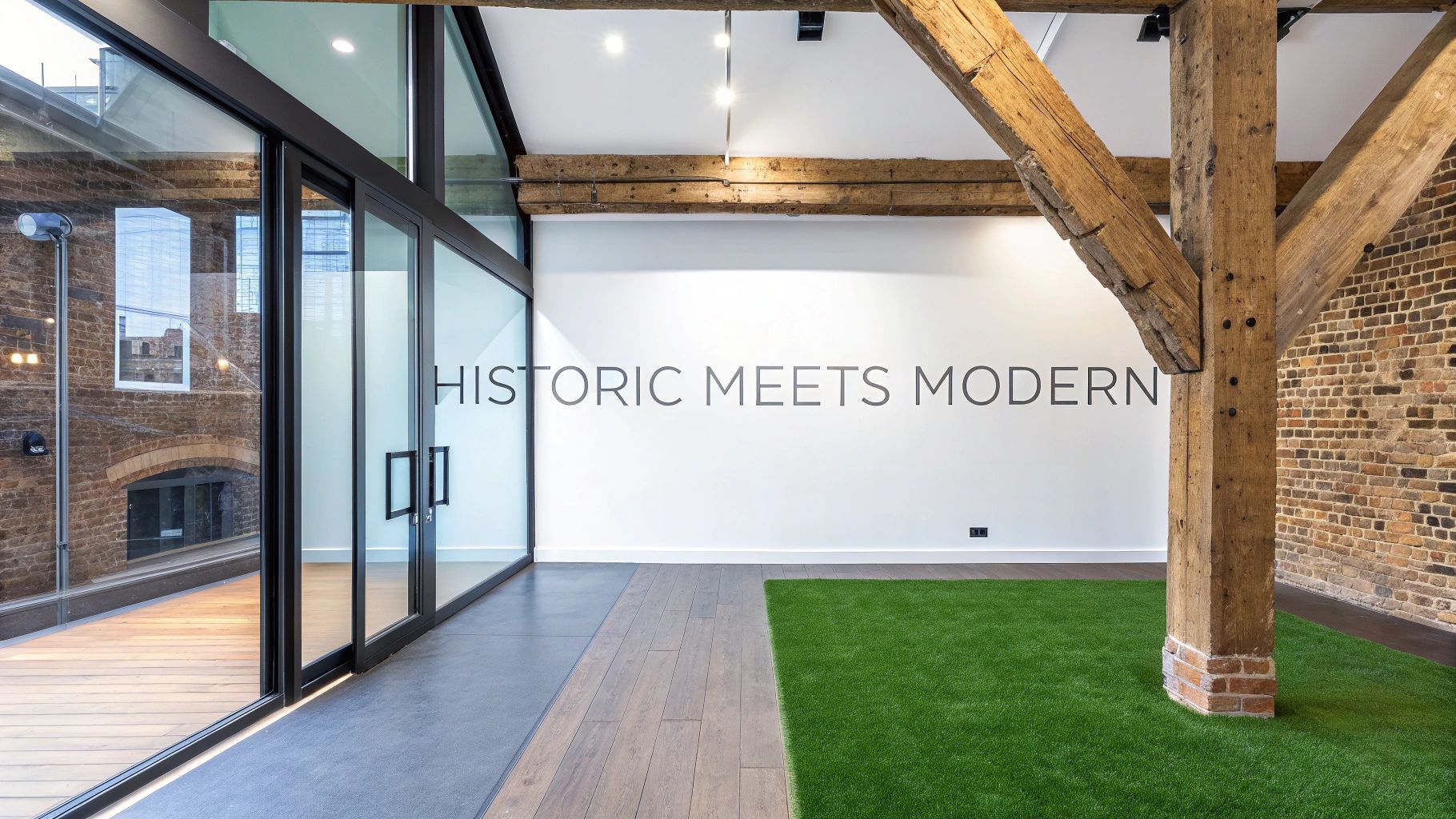
The real artistry is in the blend. It's about letting those beautiful, old-growth timber beams tell their story while seamlessly integrating a modern, energy-efficient HVAC system. It’s about pairing a historic masonry wall with high-R-value insulation, bringing a century-old structure up to today’s demanding energy codes without losing its soul.
Honoring The Past In Historic Preservation
Historic preservation projects take this philosophy even deeper. Here, the number one goal is to maintain the building’s historical integrity with painstaking accuracy. This work is part architectural forensics, part detective story, requiring deep dives into archives to identify the original materials and construction techniques.
But this isn’t just about being sentimental; it’s a savvy business strategy. The ability to carefully preserve a building’s character while artfully meeting modern code requirements is often the key to unlocking significant financial incentives.
For developers, historic preservation is a specialized field. Meticulous material choices can directly unlock substantial returns through state and federal historic tax credits, grants, and other programs designed to encourage the thoughtful stewardship of our built environment.
The Financial And Sustainable Case
Simply choosing to work with an existing building is a profoundly sustainable act. An adaptive reuse project can extend a building's functional life by 50 years or more, preventing the enormous carbon emissions and landfill waste that come with demolition and new construction.
The numbers often make a compelling case, too. While these projects certainly have their unique challenges, they can be far more cost-effective than building from the ground up. By leveraging the embodied energy and irreplaceable character of the original structure, developers can deliver a truly one-of-a-kind property that commands attention in a crowded market.
This specialized approach demands a team that knows how to:
- Assess Existing Conditions: Perform a thorough analysis of all original materials to figure out what can be salvaged, what needs to be restored, and what must be replaced.
- Specify Compatible New Materials: Choose modern products that work with—not against—historic elements. A great example is using breathable insulation on old brick to prevent trapping moisture that could cause serious damage over time.
- Navigate Regulatory Approvals: Skillfully work with historic commissions and preservation boards to ensure every material choice satisfies their strict guidelines.
In the end, both adaptive reuse and historic preservation are about creating immense value from what already exists. It’s powerful proof that sometimes the most compelling material in interior design is the one that’s been there all along.
A Practical Framework for Your Next Project
So, how do we pull all of this together into a process you can actually use? The goal here is to stop guessing and start making confident, strategic decisions about the materials that define your space.
Picking the right material shouldn't be an overwhelming, last-minute choice. Think of it as a structured process that gets your entire team—from the architect to the contractor to the building manager—speaking the same language and working toward the same business goals. This isn't just about design; it's about building a common ground based on long-term value and smart operations.
Your Essential Material Selection Checklist
Before you sign off on any material specification, put it through this five-point filter. It’s a simple but powerful tool to spark the right conversations and ensure your choices will pay off for years to come.
-
Function and Program Alignment: Does this material actually work for what people will be doing in this space? Think hard about foot traffic, acoustics, and the real-world activities of your tenants. A beautiful floor that can't handle a rolling chair is a failure.
-
Durability and Maintenance: What’s the reality of wear and tear here? Even more critically, what will it cost in labor and specialized cleaning products to keep this material looking good year after year?
-
Life-Cycle Cost Analysis: Have you looked past the initial price tag? Do the math on the total cost of ownership over a 15 to 20-year period. That includes installation, regular upkeep, and eventual replacement.
-
Sustainability and Compliance: Does this material help you meet modern energy codes and green building standards like LEED? Is it a low-VOC product that contributes to a healthy indoor environment for the people inside?
This structured approach takes the mystery out of material selection. It shifts the focus from aesthetics alone to a balanced evaluation of performance, cost, and long-term asset value, empowering you to build with greater confidence and strategic foresight.
Answering Your Key Questions
When it comes to commercial real estate, developers and owners often have pointed questions about how design choices play out in the real world. Let's tackle some of the most common ones we hear about selecting materials for interior design.
How Does Material Selection Impact My Project Timeline and Budget?
Material selection is one of the biggest factors controlling your project's schedule and bottom line. If you specify custom or imported materials, be prepared for long lead times that can easily stall construction for weeks, if not months. On the flip side, choosing readily available, standard materials is a great way to keep a project humming along without those costly delays.
Financially, it’s all about balancing the upfront price tag with the total cost of ownership. A cheaper material might look great on the initial bid, but if it needs constant maintenance or has to be replaced in just a few years, it's going to cost you a lot more in the long run. A good architect helps you find that sweet spot—materials with reliable supply chains that offer the best life-cycle value for your investment.
Choosing a material isn't just an expense; it's a strategic decision that dictates future operational costs and capital expenditures. The goal is to minimize both timeline risk and long-term financial drain.
What’s the Most Important Factor for an Adaptive Reuse Project?
For any adaptive reuse project, the most critical element is the thoughtful integration of old and new. You want to honor the building's original character while making sure it meets modern standards for safety, comfort, and energy efficiency.
This always starts with a deep dive into the existing materials—think exposed brick, original heart pine floors, or heavy structural timbers. From there, the real work begins: selecting new materials that are both visually harmonious and functionally compatible. For example, pairing a historic masonry wall with modern insulation that still allows the wall to breathe is absolutely vital to prevent moisture damage down the line. It's a delicate and crucial balance between preservation and performance.
Can Sustainable Materials Be As Durable As Traditional Ones?
Absolutely. The old idea that "green" means "weak" is simply outdated. Many of today’s sustainable materials have been specifically engineered to withstand the punishing demands of a commercial environment.
Just look at these high-performance examples:
- Commercial-grade bamboo flooring offers incredible hardness and durability, often outperforming traditional hardwoods.
- Recycled-content carpet tiles are built from the ground up for high-traffic areas and allow for easy replacement of individual sections, which is a huge maintenance win.
- Low-VOC paints now provide excellent longevity and washability without off-gassing chemicals that can harm your building's indoor air quality.
The key is simply proper specification. When you work with a firm that really understands the technical properties of these materials, you can be confident you're getting a solution that is both eco-friendly and built to last.
At Sherer Architects, LLC, we solve complex puzzles by aligning every material choice with your project's long-term business goals. See how our expertise in commercial design, adaptive reuse, and historic preservation can maximize the value of your next project by visiting our website.