

When an architect chooses the materials for an interior design project, they're doing more than just picking finishes. They are writing a story, solving practical problems, and building value from the ground up. For developers and business owners, these decisions go way past looks—they directly shape a building's durability, its day-to-day running costs, and how it’s perceived in the market.
The Architect's Palette: Understanding Interior Design Materials
Think of an architect's material library as their palette. A painter uses pigments to create a mood; an architect uses materials to craft an experience. A sleek, polished concrete floor instantly signals modern durability. On the other hand, reclaimed heart pine in an old warehouse conversion tells a story of history and warmth. Every single choice is a deliberate move, balancing creative vision with real-world practicality.
This guide is all about the thinking behind smart material selection, especially for commercial spaces, adaptive reuse projects, and historic restorations. Getting these choices right from the start means your investment won't just look great—it will be financially sound and built to endure. It's about setting up a framework for making informed decisions that line up with your business goals.
The Foundation of Strategic Material Selection
Before we get into specific materials, it’s critical to understand the "why" behind each selection. This isn’t about flipping through a catalog and picking what looks nice. It's a careful evaluation of performance, long-term cost, and compliance. Great material selection is a discipline where art and science meet, making sure every surface and fixture works toward the project's success.
Here's what's always on the checklist:
- Function and Performance: How is the space actually going to be used? A busy corporate lobby needs flooring that can take a beating, while a focused office environment requires acoustic ceiling tiles to keep noise levels down.
- Lifecycle and Maintenance: What will this cost over time? A cheaper initial material might end up costing a fortune in frequent replacements or specialized cleaning, wiping out any upfront savings.
- Sustainability and Occupant Health: Is this a healthy choice for the people inside? Using low-VOC (Volatile Organic Compound) paints and responsibly sourced wood isn't a bonus anymore—it's an expectation.
- Code Compliance: Does the material meet all fire, safety, and accessibility codes? A wrong choice here can trigger expensive rework and frustrating project delays.
Material selection is where design intent meets real-world constraints. The most successful projects are those where materials are chosen not just for how they look, but for how they perform under pressure, contribute to the building's narrative, and support the owner's financial objectives.
To see how this plays out in a highly specialized setting, a guide to lab workstation materials offers a great example of how performance needs dictate every choice, from countertops to finishes. Once you master these foundational principles, you can approach any design challenge with clarity and confidence.
Core Material Categories in Commercial Design
Diving into the world of commercial interior design materials can feel like trying to navigate a massive warehouse without a map. But there’s a simple way to make sense of it all: think in terms of functional categories. You wouldn't organize a library by the color of the book covers; you'd use sections like fiction, history, and science. We do the same with materials, grouping them by how they're used in a building.
This simple shift in thinking provides a clear roadmap. It helps you make smarter decisions, weigh your options, and see how every single choice—from the floor under your feet to the handle on a door—shapes the final space. It moves the conversation beyond "How does it look?" and into the real question: "What does this space need to do?"
To give you a high-level overview, here's a quick breakdown of the major material families and where they fit in.
Key Commercial Material Categories and Common Options
This table summarizes the main categories of materials you'll be working with, their primary role in a commercial project, and some of the most common options designers specify today.
| Material Category | Primary Function | Common Material Examples |
|---|---|---|
| Flooring | Withstanding traffic, defining zones, acoustics | Luxury Vinyl Tile (LVT), Polished Concrete, Carpet Tile, Terrazzo, Engineered Wood |
| Wall & Ceiling Finishes | Enclosing space, sound control, light reflection, brand identity | Commercial-Grade Paint, Acoustic Panels, Type II Vinyl Wallcovering, Specialty Plasters |
| Millwork | Custom-built functional elements, storage, feature pieces | Plastic Laminate, Solid Surface, Wood Veneer, Engineered Quartz, Metal |
| Textiles | Upholstery, drapery, acoustic absorption, softness & texture | High-Performance Fabrics, Commercial-Grade Leather/Faux Leather, Acoustical Felts |
| Fixtures & Hardware | Functional touchpoints, lighting, plumbing, accessibility | Architectural Hardware, Commercial Lighting Fixtures, Plumbing Fittings, Signage |
Each of these categories has its own set of performance requirements, aesthetic possibilities, and budget implications. Let's dig a little deeper into the big three.
The Groundwork: Flooring Materials
Flooring is easily the hardest-working surface in any commercial space. It's the literal foundation of the design, taking a constant beating from foot traffic, rolling carts, and inevitable spills, all while shaping the room's sound and look.
Your choice here has a massive impact on maintenance routines and long-term operational costs. What works for a high-traffic corporate lobby is completely different from what you'd put in a quiet hotel room.
Here are a few of the go-to options on the commercial side:
- Luxury Vinyl Tile (LVT): LVT has become a dominant force for a reason. It's tough, water-resistant, and comes in an endless array of designs that convincingly mimic wood, stone, or abstract patterns. Because it’s modular, you can pop out a damaged tile without replacing the whole floor.
- Polished Concrete: If you need something nearly indestructible with a modern, industrial vibe, this is it. Once sealed, polished concrete is a breeze to clean, making it perfect for busy retail stores, art galleries, and lobbies.
- Carpet Tile: The standard for most office spaces. Carpet tile is fantastic for soaking up sound, it's comfortable to walk on, and offers huge design flexibility. The best part? If someone spills coffee, you just replace one tile. This can lead to a 20-30% maintenance saving over the carpet's life compared to traditional broadloom.
- Engineered Hardwood: While you rarely see solid hardwood in busy commercial zones, engineered wood is a great compromise. It gives you the authentic warmth of real wood but with better stability, making it a solid choice for boardrooms, private offices, or high-end retail spots.
Vertical Surfaces: Wall and Ceiling Finishes
Walls and ceilings are much more than just the "box" that contains a room. They're active surfaces that bounce light, control sound, and set the entire mood of the interior. The right finish can make a cramped space feel open or a loud restaurant feel intimate.
In commercial design, wall and ceiling finishes are active participants in the building's performance. They manage sound, contribute to fire safety, and endure daily wear and tear far beyond what's expected in a residential setting.
Some of the key players here include:
- Commercial-Grade Paint: This isn't the stuff you buy at the local hardware store. Commercial formulas are built to be scrubbed, resist stains, and hold up to abuse. Low-VOC and zero-VOC paints are now the industry standard to protect indoor air quality.
- Acoustic Panels: Absolutely essential for open offices, conference rooms, and anywhere else noise is a problem. These panels absorb sound waves, cutting down on echo and making it easier to hear conversations. They come in countless decorative forms, so they can be a design feature, not an afterthought.
- Wallcoverings (Vinyl and Textiles): Heavy-duty vinyl wallcovering is a workhorse in hotels and hospitals because it's tough as nails and easy to clean. For a more upscale feel, textile wallcoverings can add incredible texture, warmth, and a touch of luxury.
- Specialty Finishes: This is where things get really creative. Think hand-troweled plaster, Venetian stucco, rich wood paneling, or even metal sheets. These are often reserved for feature walls to create a strong focal point that speaks to a company's brand.
The Finer Details: Millwork, Textiles, and Fixtures
This final group covers all the custom-built pieces and specified items that give a space its personality and make it work. Millwork is all the custom woodwork—reception desks, cabinetry, shelving. Textiles bring in color and softness. Fixtures are the functional workhorses of the space.
Getting these details right is what elevates a project from good to great. When exploring material options, for example, understanding what you can do with specialized glass products like Mirrors and Specialty Glass Styles can open up new possibilities for unique partitions, backsplashes, or eye-catching decorative elements.
Here’s a quick look at what’s involved:
- Millwork Materials: The spectrum runs from budget-friendly and durable plastic laminates to premium wood veneers, solid surfaces, and engineered quartz for countertops. The final choice always comes down to a balance of look, budget, and performance needs.
- Commercial Textiles: These are the fabrics for chairs, sofas, curtains, and wall panels. They are rigorously tested and rated for abrasion (look for Wyzenbeek or Martindale test results), fading, and fire resistance to meet strict building codes.
- Fixtures and Hardware: This covers everything you touch—door handles, cabinet pulls, light switches—as well as light fixtures and plumbing. Every piece has to be tough enough for constant public use and comply with accessibility laws like the ADA (Americans with Disabilities Act).
Evaluating the Performance of Interior Materials
Picking the right materials of interior design goes way beyond aesthetics. It's a strategic move, an investment in how a property will perform and hold its value over the long haul.
Think of it like outfitting a delivery fleet. You could go with budget tires to save a few bucks upfront, but you know that premium all-season tires will give you better grip, last longer, and even improve fuel efficiency. In the end, they save you money. The same logic applies to design materials—the sticker price is just the beginning of the story.
To make smart choices, we have to evaluate materials against a core set of performance metrics. These criteria are our filter, helping us see past the surface and focus on how a material will actually hold up in a real-world commercial space. When you get this framework, you can translate technical jargon into practical business decisions, ensuring every selection boosts durability and operational efficiency.
Durability and Abrasion Resistance
First thing's first: can it take a beating? The most fundamental test for any commercial material is its ability to withstand daily abuse. Durability isn't some fuzzy concept; it's a measurable quality that tells you how well a surface will resist scratches, scuffs, impacts, and general wear and tear. A material that looks amazing on day one but falls apart in six months is just a future maintenance headache.
Take flooring in a busy hotel lobby or office hallway. It needs a high abrasion resistance rating, no question. We measure this with standardized tests like the Wyzenbeek method for fabrics or the Taber test for hard surfaces, which essentially simulate years of friction in a very short time. A fabric rated for 100,000 double rubs is built for public life, while a standard residential fabric might give out after just 15,000. Specifying the right durability rating from the start is your best defense against having to replace things prematurely.
The most expensive material is the one you have to replace. Investing in durability upfront is one of the most reliable ways to lower the total cost of ownership for a building's interior.
This decision tree shows that initial filtering process. Before you even think about specific products, you're sorting your needs into major categories based on how and where they’ll be used.
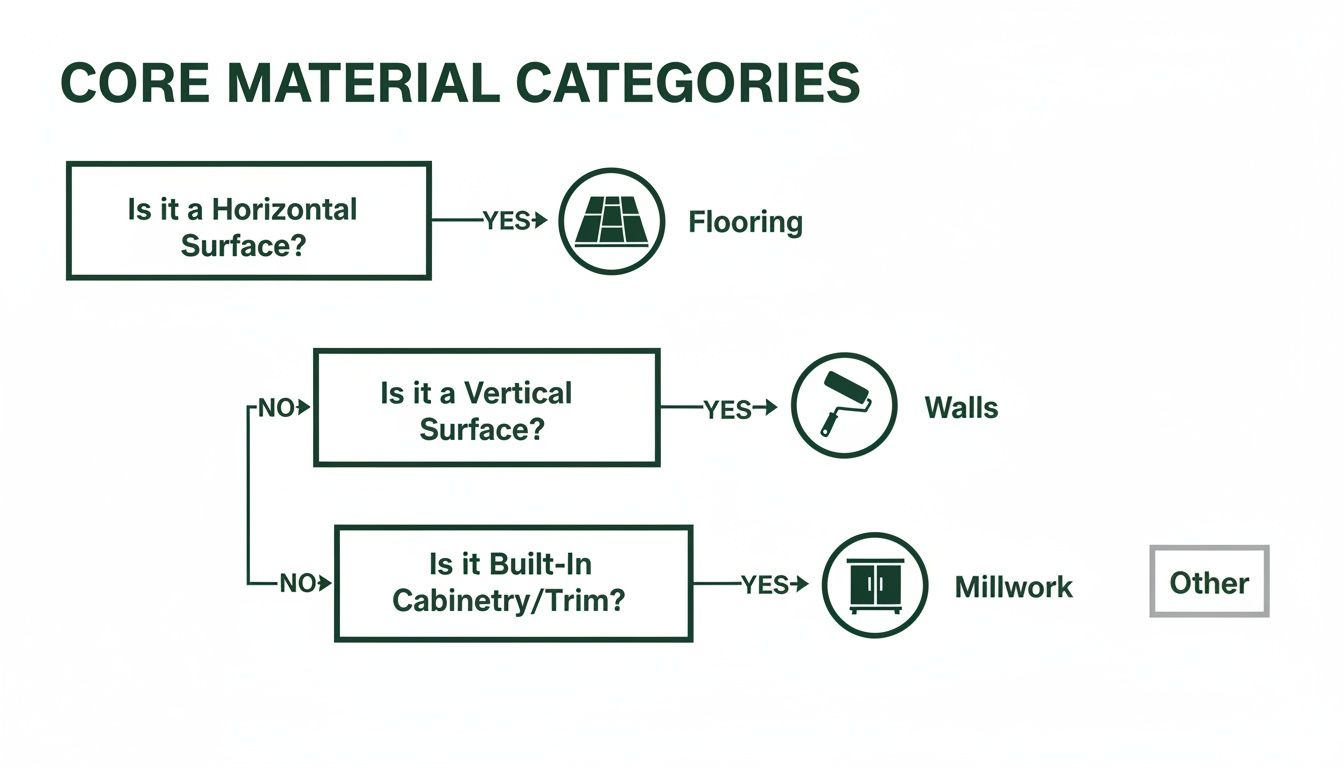
By starting here, you immediately narrow down the universe of options, which makes the whole specification process much more manageable.
Fire and Life Safety Ratings
After durability, nothing is more important than how a material behaves in a fire. Building codes are, for very good reason, incredibly strict. They demand specific fire ratings for materials in commercial spaces to keep people safe and to slow the spread of fire and smoke.
Materials are tested and given a class rating based on two key things:
- Flame Spread Index: How quickly do flames move across the material's surface?
- Smoke Developed Index: How much smoke does it produce when it burns? This is crucial for keeping evacuation routes visible.
These tests result in a classification, usually Class A, B, or C. Class A materials—things like gypsum board or specially treated wood—have the lowest flame spread and produce the least smoke. They are mandatory for exit corridors, stairwells, and other critical escape paths. Choosing a non-compliant material isn't just a design mistake; it's a huge liability that will bring a project to a screeching halt during inspection, forcing costly tear-outs and delays.
Acoustic and Moisture Performance
Finally, let's talk about two environmental factors that have a massive impact on a building's success: sound and water. How a material handles these can be the difference between a comfortable, productive space and one filled with complaints and expensive repairs.
Acoustic performance is a huge deal in modern offices, healthcare, and hospitality settings. The name of the game is controlling noise transfer and echo. Materials are rated with a few key metrics:
- Noise Reduction Coefficient (NRC): Measures how much sound a material absorbs. An NRC of 0.75 means it absorbs 75% of the sound that hits it.
- Sound Transmission Class (STC): Rates how well a partition, like a wall, blocks sound from passing through to the other side.
Specifying acoustic ceiling tiles with a high NRC in an open office or building walls with the right STC rating between hotel rooms isn't a luxury—it directly improves the occupant experience.
Likewise, moisture resistance is non-negotiable in places like commercial kitchens, bathrooms, or basements in adaptive reuse projects. Materials have to stand up to humidity, water, and constant cleaning without warping, swelling, or growing mold. We specify products like porcelain tile, epoxy flooring, and water-resistant drywall not just because they look good, but because they prevent the kind of expensive water damage that causes buildings to decay from the inside out.
By consistently evaluating these performance criteria, you ensure the materials of interior design are truly working for you, protecting your investment for years to come.
The Business Case for Sustainable Materials
Choosing sustainable materials of interior design isn't just an ethical box to check anymore—it’s a powerful business strategy. What used to be a niche interest is now a core requirement for high-value commercial and adaptive-reuse projects. It’s about making decisions that are both financially sharp and environmentally sound, creating spaces that are healthier, more efficient, and far more marketable.
For developers and property owners, this means looking past the initial price tag on a material and thinking about its entire lifecycle. It’s a shift in perspective, one that allows you to build properties that not only lower their environmental footprint but also pull in premium tenants and deliver real, long-term value.
Demystifying Core Sustainability Concepts
To make truly smart decisions, you need to speak the language. These aren't just buzzwords; they are measurable frameworks that we as designers use to weigh the real-world impact of one material against another.
Here are the three big ideas you’ll run into:
- Embodied Carbon: Think of this as the "carbon footprint" a material has before it even gets to your site. It’s all the CO2 emitted during its extraction, manufacturing, and shipping. A material like reclaimed wood has incredibly low embodied carbon, while something like new aluminum has a massive carbon bill attached.
- Lifecycle Assessment (LCA): This is the full story of a material’s environmental impact, from cradle to grave. An LCA digs into everything—where the raw materials came from, the energy used to make it, how long it will last in the building, and what happens to it when it's eventually torn out.
- The Circular Economy: The old model was "take, make, waste." A circular economy flips that script, aiming to keep materials in use for as long as humanly possible. This means designing with products that can be repaired, reused, or recycled back into something new, which radically cuts down on waste.
Choosing sustainable materials is fundamentally an act of future-proofing your investment. It reduces operational risks, enhances brand reputation, and creates healthier environments that people want to work and live in, all of which directly contributes to a stronger bottom line.
Tangible Benefits of Going Green
So, what does this actually do for your project’s performance? The advantages are clear and measurable, impacting everything from the air people breathe to your property's appeal in the market.
In our world, sustainable materials are a must-have, especially for firms focused on adaptive reuse projects that can extend a building's lifespan by 50-75 years. The global interior design market, valued at USD 145.3 billion, is set to climb to USD 222.2 billion by 2032, and a huge part of that growth is driven by client demand for green certifications. This has pushed materials like bamboo, reclaimed wood, and low-VOC paints from the fringe to the mainstream. You can discover more about these market trends and their financial implications.
Connecting Sustainability to Business Outcomes
Every sustainable choice you make can be tied directly to a positive business outcome. The logic is simple: better materials create better buildings, which attract better tenants and command higher value.
Here’s how these choices translate into real-world gains:
- Improved Indoor Air Quality (IAQ): Specifying materials with low or zero Volatile Organic Compounds (VOCs) immediately improves the health of anyone using the space. Better IAQ is directly linked to higher productivity and fewer sick days—a huge selling point for corporate tenants.
- Enhanced Marketability and Brand Value: Certifications like LEED or WELL are more than just plaques on the wall; they are powerful marketing tools. They broadcast a commitment to quality and responsibility that attracts top-tier tenants who will often pay a premium for a space that aligns with their values.
- Operational Efficiency and Reduced Costs: Good material choices often lead to long-term savings. Using locally sourced materials cuts down on transportation costs, while specifying durable, recycled products means spending less on maintenance and replacement over the building's life.
Choosing Materials for Adaptive Reuse and Historic Preservation
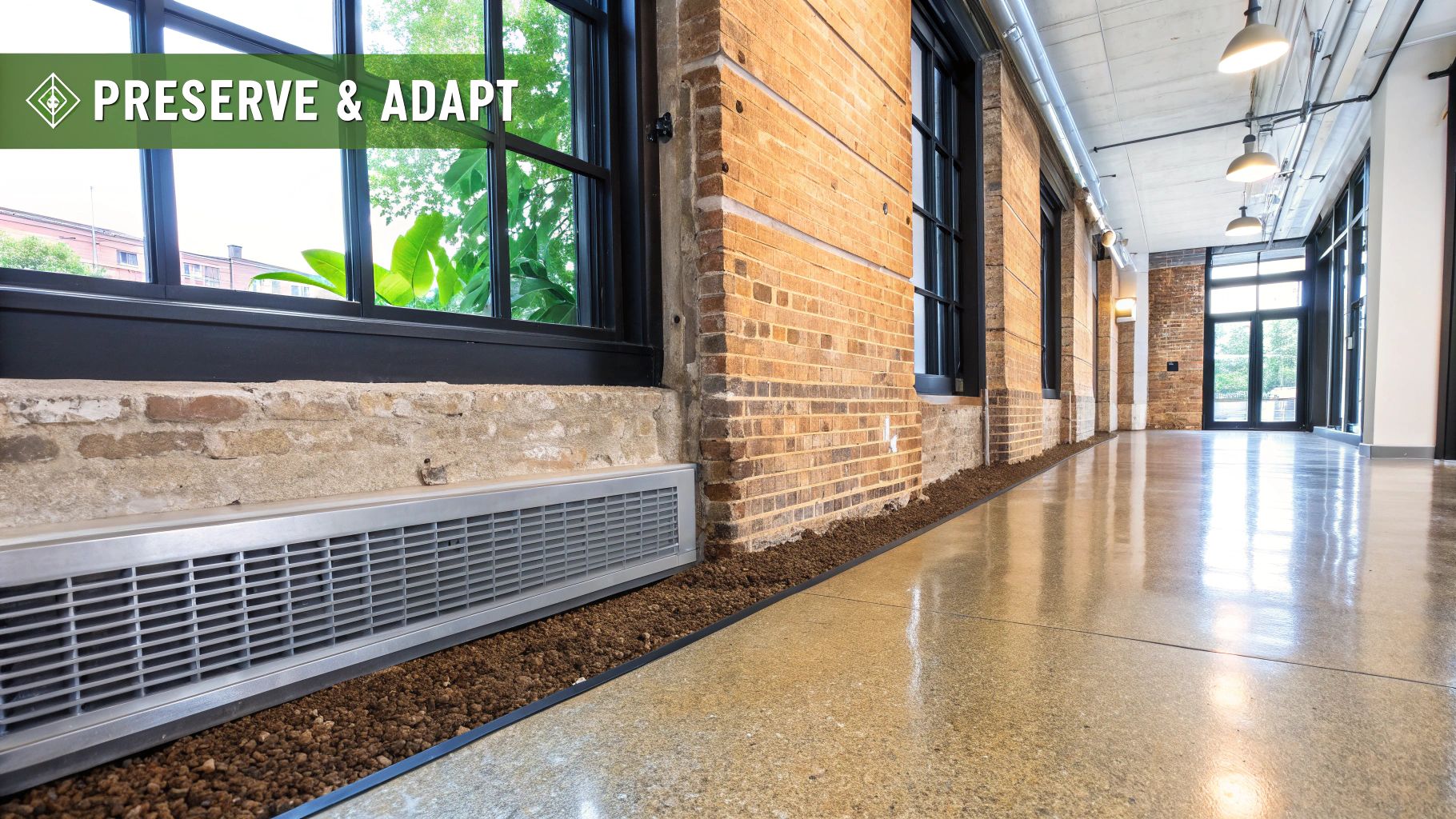
Adaptive reuse and historic preservation projects are where the real art of material selection comes into play. You’re not starting with a blank canvas; you’re entering into a conversation with a building that already has a story. These projects challenge us to honor the past while designing a functional, profitable future—turning what looks like a set of constraints into a powerful design narrative.
Picking the right materials of interior design in this setting is like solving a complex puzzle. The goal is to gracefully integrate new, high-performance systems with the building's original character, creating a space that feels both authentic and current. This requires a deep dive into what’s already there and a clear vision for what the building is about to become.
Assessing a Building’s Material DNA
Before a single new material is specified, the first step is a thorough investigation of what you’re working with. Think of it as architectural archaeology. We aren't just looking at surfaces; we’re analyzing the building's very DNA to understand its history, its strengths, and its hidden vulnerabilities.
This detailed assessment means identifying the original materials—everything from the species of wood in the floorboards to the exact composition of the mortar. Getting this right is critical for two reasons: it tells us what we can save, and it guides how we can introduce new materials without accidentally causing long-term damage.
In adaptive reuse, the most valuable material is often the one you don't have to add. Preserving and showcasing a building's original fabric not only saves on costs and reduces embodied carbon but also creates a unique market identity that new construction can't replicate.
This deep dive into the building’s history is what allows us to make smart decisions that respect the structure's soul while preparing it for another century of life.
The Art of Blending Old and New
Once you have a handle on the existing materials, the real design challenge begins. You have to decide what to restore, what to replicate, and where to introduce modern elements. This isn't about creating a museum piece; it’s about weaving a coherent story where old and new can coexist and even elevate each other.
The key is to establish a clear visual language. Sometimes, this means making new interventions intentionally distinct—using sleek steel and glass, for instance, to contrast beautifully with historic brick and timber. Other times, the job requires meticulously replicating historic details to maintain a seamless look, especially when you're dealing with protected facades or significant interior features.
This strategic blend is especially obvious when it comes to modern building systems:
- Mechanical Systems: HVAC ductwork can be artfully exposed to create an industrial vibe or cleverly concealed within custom millwork designed to match the historical period.
- Lighting: You could integrate modern, energy-efficient LED fixtures into historic chandeliers, or use track lighting to highlight original architectural details like exposed beams or ornate plasterwork.
- Accessibility: Adding ramps or elevators demands careful material choices to ensure they are functional and code-compliant without clashing with the historical flow of the space.
Sourcing and Financial Incentives
Finding historically appropriate materials is a specialized skill. It often means sourcing from salvage yards, working with specialty suppliers who can mill period-correct moldings, or even commissioning artisans to replicate unique tile patterns or plaster details. These choices aren't just for aesthetics—they’re crucial for projects seeking historic tax credits.
Government programs at both the federal and state level offer significant financial incentives for preserving historic buildings. Correctly restoring or replicating key architectural elements with the right materials is often a prerequisite for qualifying, turning a commitment to historical accuracy into a real financial benefit for the property owner.
This focus on revitalizing existing structures is a major force in the design world. Remodeling projects now drive a huge portion of material choices, with the global interior design market hitting USD 137,930.0 million thanks largely to this trend. As global remodeling spending surpasses USD 4.9 trillion, the demand for woods, metals, and textiles that can bridge the gap between old and new will only continue to grow. You can learn more about how remodeling is shaping the global interior design market and see the numbers for yourself.
Keeping a Lid on Material Costs and Market Swings
For any developer, the success of a project really boils down to the bottom line. But managing the cost of interior design materials isn't just about grabbing the cheapest option available. It’s a delicate balancing act—a strategic game of weighing upfront costs against long-term value to bring a vision to life without torpedoing the budget.
You have to look past the initial price tag and think about the material's entire lifecycle. That cheaper flooring might look great on the initial invoice, but it could end up costing you a small fortune in repairs and early replacement. On the flip side, investing in a higher-quality, more durable material often pays for itself through lower maintenance and a better return over the building's lifespan.
Riding Out Supply Chain and Price Waves
Beyond the long-term view, we’re all dealing with the very real headaches of price volatility and supply chain snags. These issues can completely derail project timelines and budgets if you aren't prepared for them. Imagine a sudden price hike on a specified material forcing you to make tough choices mid-stream—that’s how design integrity gets compromised.
Material costs have been all over the map, but smart choices in sustainable and engineered products can provide some much-needed stability. To give you an idea, recent market shifts saw steel jump by about $75 per ton and lumber by $120 per thousand board feet. Those aren't small numbers; they’re the kind of budget-busters that put projects on hold. For a deeper dive into these trends, you can read a full analysis of the interior design market. This is where seasoned architects earn their keep, building flexibility right into the project specs from day one.
It’s all about protecting the investment through proactive planning.
Smart Moves for Controlling Costs
To keep a project on track financially without cutting corners on quality, the pros have a few tricks up their sleeves. These aren't secrets, just smart strategies that build a financial cushion into the project, ensuring market surprises don't derail the final product.
Here are a few of the most reliable tactics:
- Specify Viable Alternates: A good architect will almost always list a primary material and then one or two pre-approved alternatives. This gives the contractor the wiggle room they need to find the most cost-effective option when it's time to buy, all without a time-consuming redesign.
- Buy Early and Store It: For materials known for wild price swings, purchasing them early and warehousing them on-site can lock in a good price before it has a chance to climb.
- Think Local: Sourcing materials from local or regional manufacturers can slash shipping costs and lead times. It’s also a great way to sidestep the drama of international supply chain bottlenecks.
Protecting a project's budget isn't about being cheap; it's about being smart. When you anticipate market volatility and plan for it, you ensure the design's integrity and the quality of the materials never have to be sacrificed.
At the end of the day, skillful cost management is what separates a successful project from a stressful one. It’s how you safeguard both the financial goals and the aesthetic vision of the entire development.
Got Questions About Interior Design Materials? We've Got Answers.
When it comes to commercial interior design, the materials you choose can make or break your project—and your budget. Here are some straightforward answers to the questions we hear most often from developers, investors, and business owners.
What's the Single Biggest Mistake People Make When Choosing Materials?
Hands down, the most common and expensive mistake is chasing the lowest upfront price instead of thinking about lifecycle value.
It's tempting to go with a cheaper option, but if it can't handle the real-world wear and tear of your space—like putting light residential carpet in a busy office hallway—you're just setting yourself up for failure. Those initial savings get completely wiped out by the cost of repairs, replacements, and the operational headaches that come with it all.
How Much of My Budget Should Go to Interior Finishes?
This is a tough one because there's no magic number; it really depends on the project.
For a high-end space like a corporate headquarters or a boutique hotel, you could see finishes making up 20-30% of the total construction cost. In a more standard, functional commercial space, it might be closer to 10-15%. A good architect can give you a solid estimate tailored to your project's specific needs and goals.
Think of your finishes budget less as a "cost" and more as an investment. The right materials are workhorses that boost your property's performance, appeal, and long-term value, directly contributing to your bottom line.
Can I Save Money If I Source Materials Myself?
It seems like a smart way to cut costs, but this approach almost always backfires.
Architects and contractors have long-standing relationships with suppliers, which gives them access to trade pricing you simply can't get on your own. More importantly, they handle the entire logistical nightmare of ordering, coordinating deliveries, and checking materials for damage—all of which are critical for keeping your project on schedule and avoiding expensive delays.
At Sherer Architects, LLC, our job is to make the material selection process clear and strategic, making sure every choice supports your budget, brand, and financial goals. To see how our expertise in commercial, adaptive reuse, and historic preservation can add serious value to your next project, visit us at https://shererarch.com.