
Senior living design is much more than just architecture; it’s about crafting entire communities that support the health, safety, and social lives of older adults. It's a move away from the sterile, institutional models of the past and a full embrace of vibrant, hospitality-driven environments where residents can thrive. The best new communities feel more like a high-end resort than a traditional care facility, focusing on wellness, connection, and an active lifestyle.
Why Thoughtful Design Is the New Market Reality
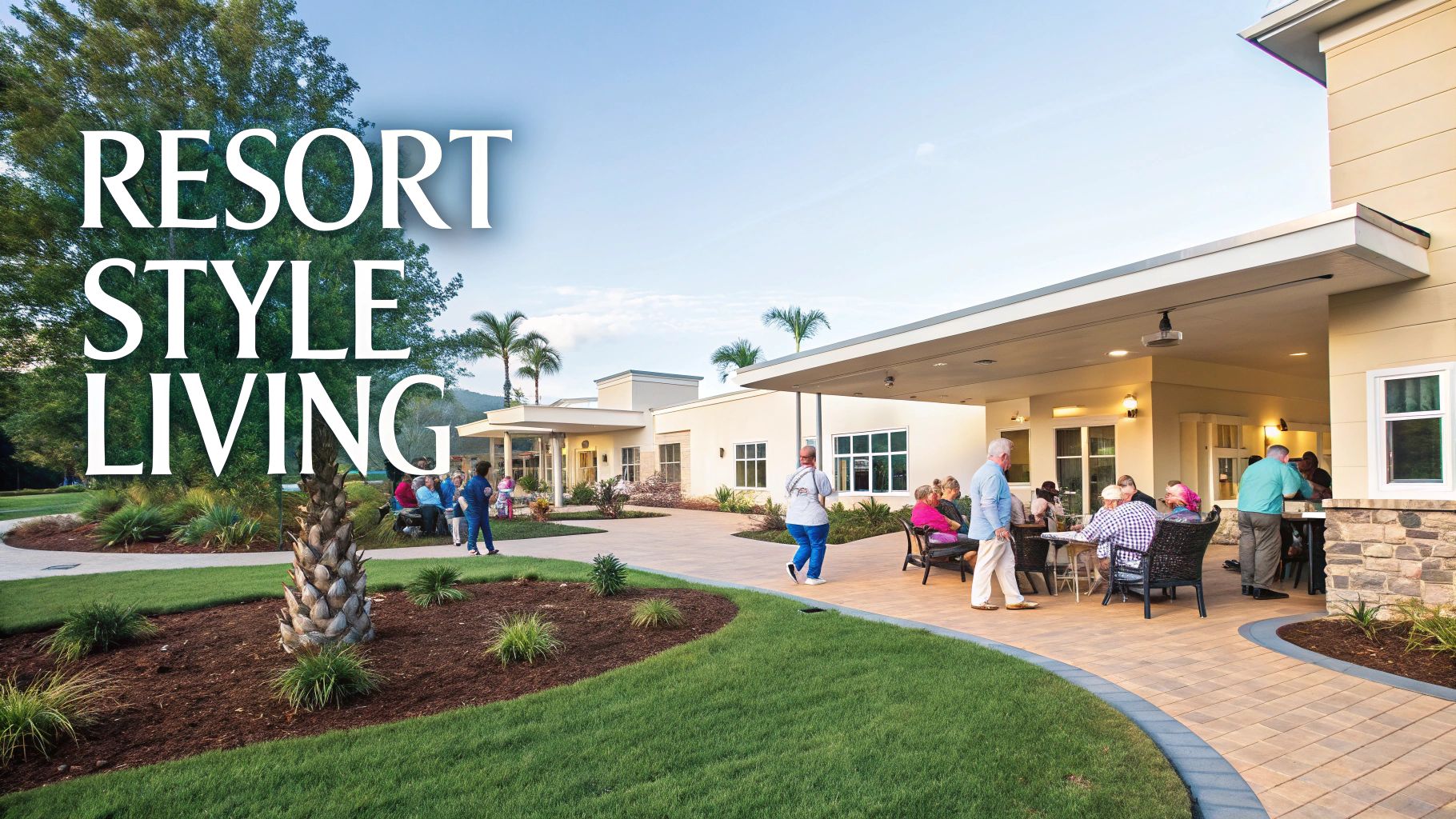
The world of senior housing has completely changed. We've left behind the era of cookie-cutter facilities. Today’s market is all about creating dynamic, engaging communities for a generation of older adults who are more active and have higher expectations than ever before. This isn't just a fleeting trend—it's a massive shift driven by powerful demographic and economic realities.
The global senior living market is booming. Valued at USD 260.12 billion in a recent year, it's on track to hit USD 388.55 billion by 2032. This incredible growth is a direct result of an aging global population seeking specialized living options that expertly blend independence with just the right amount of support. You can learn more about the senior living market's impressive growth and see firsthand what it means for developers and owners.
Connecting Architecture to Profitability
In such a competitive field, architecture has become the primary engine for profitability and what makes a community stand out. It’s no longer just about providing shelter. A well-designed community is a powerful strategic investment that directly impacts your bottom line.
Think about it like this: a generic, uninspired building is just a commodity, forced to compete almost entirely on price. A thoughtfully designed community, on the other hand, becomes a destination—a place people genuinely want to live. This kind of desirability creates tangible business advantages:
- Higher Occupancy Rates: Premium, beautifully designed spaces attract residents faster and keep them happier, reducing turnover.
- Increased Revenue Streams: Hospitality-style amenities like bistros, wellness centers, and theaters add value and create new income opportunities.
- Stronger Brand Identity: Unique architecture tells a compelling story, making your property memorable and much easier to market.
- Enhanced Resident Satisfaction: When you focus on wellness and social connection, you get happier residents and powerful, positive word-of-mouth.
The core concept is simple: great senior living design creates a product so compelling that it sells itself. It transforms a real estate asset into a thriving community, delivering a strong return on investment by meeting the sophisticated demands of today’s seniors.
Understanding the Spectrum of Care
To create a successful senior living community, you first have to understand the different needs of residents across the continuum of care. Each model, or typology, serves a distinct purpose and demands its own unique architectural strategy. Many of the most successful projects cleverly blend these models on a single campus, giving residents the peace of mind that they can age in place as their needs evolve.
This table breaks down the main senior living typologies to give you a clearer picture of how they differ.
Key Senior Living Typologies at a Glance
| Typology | Target Resident Profile | Level of Care | Primary Design Focus |
|---|---|---|---|
| Independent Living (IL) | Active, self-sufficient older adults (55+) seeking a maintenance-free lifestyle. | None to minimal. Primarily hospitality and social services. | High-end amenities, social spaces, upscale apartment/condo-style units, walkability. |
| Assisted Living (AL) | Seniors needing help with Activities of Daily Living (ADLs) like bathing, dressing, and medication. | Daily support. Non-medical assistance from on-site staff. | Balance of private residential units with easily accessible common areas, dining, and caregiver support stations. |
| Memory Care (MC) | Residents with Alzheimer's, dementia, or other forms of cognitive impairment. | 24/7 specialized care. Staff trained in dementia care. | Secure environment, circular pathways to prevent confusion, clear sightlines, sensory gardens, and familiar visual cues. |
| Skilled Nursing (SNF) | Individuals requiring 24/7 medical supervision and post-acute rehabilitative care. | Intensive medical care. Licensed nurses and therapists on staff. | Clinical efficiency, therapy spaces, accessible rooms designed for medical equipment, comfortable but functional environment. |
By really digging into these typologies, developers and architects can design purpose-built environments that do more than just meet code. They can create places that foster dignity, independence, and a genuinely high quality of life. This is the strategic thinking that separates a struggling facility from a community that leads the market.
Designing for Resident Wellbeing and Dignity
Great design in senior living isn't about how a space looks; it’s about how it feels and how it works for the people who call it home. We're crafting environments that champion dignity, foster independence, and provide genuine comfort. It's a move away from simply providing shelter and toward creating a premium living experience that supports every aspect of a resident's health—physical, cognitive, and emotional.
To get this right, you have to layer several key design philosophies. It’s a lot like a master chef building a complex flavor profile; each ingredient is distinct but essential to the final result. Principles like universal design, biophilic design, and evidence-based strategies all come together to create a community that feels safe, empowering, and truly desirable to residents and their families.
Blending Autonomy with Safety Through Universal Design
At its core, universal design is about making spaces usable for everyone, no matter their age, mobility, or ability. The real magic of it is when you don’t even notice it’s there. Instead of tacking on accessibility features as an afterthought, we integrate them seamlessly so the environment is just naturally intuitive and easy to navigate. This is absolutely fundamental to preserving a resident’s sense of independence.
A perfect example is the bathroom grab bar. Instead of a sterile, clinical-looking bar, a universal design approach might specify a beautifully crafted towel rack that is also structurally rated for support. It’s a simple switch, but it maintains the high-end residential feel of the space while delivering the safety that’s needed.
Other practical applications we see every day include:
- Zero-Threshold Showers: These not only look sleek and modern, but they completely eliminate a major tripping hazard and allow for easy roll-in access.
- Lever-Style Door Handles: A small detail that makes a world of difference for someone with arthritis or limited grip strength compared to a traditional knob.
- Wider Corridors and Doorways: This isn’t just about accommodating wheelchairs. It makes the entire community feel more open, gracious, and less institutional.
Bringing Nature Indoors with Biophilic Principles
There's a reason we feel better when we're connected to nature—it’s baked into our DNA. Biophilic design taps into this innate human need. By weaving natural elements into the built environment, we can see real, measurable health benefits, like reduced stress, better cognitive function, and an improved mood. In a senior living context, this isn’t a luxury; it’s a necessity.
This is a much bigger idea than just putting a few potted plants in the lobby. It’s a holistic strategy for blurring the lines between the indoors and the outdoors.
A well-executed biophilic design strategy can transform a building from a simple structure into a restorative sanctuary. Studies have shown that even views of nature can speed up recovery times and lower blood pressure, making this a powerful tool for promoting resident wellness.
Here are some key biophilic elements to consider:
- Maximizing Natural Light: Think huge windows, skylights, and spaces designed to catch the sun as it moves through the day.
- Natural Materials and Textures: Using real wood, stone, and other natural finishes creates a tactile, calming environment that feels authentic.
- Views of Nature: Every room should have a purpose. We strategically orient spaces to look out onto gardens, courtyards, or whatever natural landscape is available.
- Indoor Gardens and Living Walls: Bringing vibrant, living plants directly into the building creates focal points and improves air quality.
Using Evidence-Based Design for Cognitive Health
Evidence-based design (EBD) is about taking the guesswork out of the equation. It means using credible research and hard data to make decisions about the physical environment to get the best possible outcomes for residents. In senior living, and especially in memory care, EBD is our most powerful tool for supporting cognitive health and physical safety.
Take lighting, for instance. Research has proven that the right lighting strategy can dramatically reduce fall risks. Beyond that, tunable LED systems that mimic the natural cycle of daylight can help regulate residents' circadian rhythms, which leads to better sleep and can even reduce "sundowning" behaviors in those with dementia.
Acoustics are another critical piece of the puzzle. The constant hum of an HVAC system or chatter from a busy hallway can be incredibly stressful and agitating. EBD guides us to use sound-absorbing materials and design layouts that create a peaceful, serene atmosphere. We also use color and texture with intention, providing subtle visual cues that help residents find their way, which fosters a sense of control and reduces confusion.
Mastering Community Flow and Amenity Planning
Beyond the four walls of an apartment, the real heart of a senior living community beats in its master plan. This is where we get into programming—the art and science of placing spaces to generate social energy, pull residents into activities, and make life easier for staff. Think of it like designing a great little town; you want the streets and public squares to have a clear purpose, guiding people and creating natural opportunities for them to connect.
Smart adjacencies are the secret sauce here. Imagine placing a lively bistro right near the main entrance. Suddenly, the lobby isn't just a pass-through space; it's a dynamic social hub, filled with the hum of conversation. Or picture connecting therapy rooms directly to an outdoor rehab garden. This creates a seamless wellness journey, making it feel natural for a resident to move from an indoor session to gentle activity in the fresh air.
The Evolution of Senior Living Amenities
Today’s seniors aren't just looking for a place to live; they're shopping for a lifestyle. The amenities on offer have become a massive differentiator in a crowded market. The days of the lonely, stuffy multipurpose room are long gone. The modern approach to senior living design is all about creating dedicated, high-quality venues that support a huge range of interests and wellness goals.
The best new communities feature amenities that feel more like a boutique hotel or a high-end club:
- Dedicated Fitness and Wellness Centers with everything from low-impact cardio machines to group classes like chair yoga and tai chi.
- Creative Art Studios fully equipped for painting, pottery, or other crafts, giving residents a real sense of purpose and a chance to learn new skills.
- Modern Cinemas with truly comfortable seating and top-notch A/V for movie nights and special events.
- Tech Lounges where residents can get help with their devices, learn new digital skills, or video chat with family.
This all comes down to a central focus on resident wellbeing, where every design choice is interconnected.
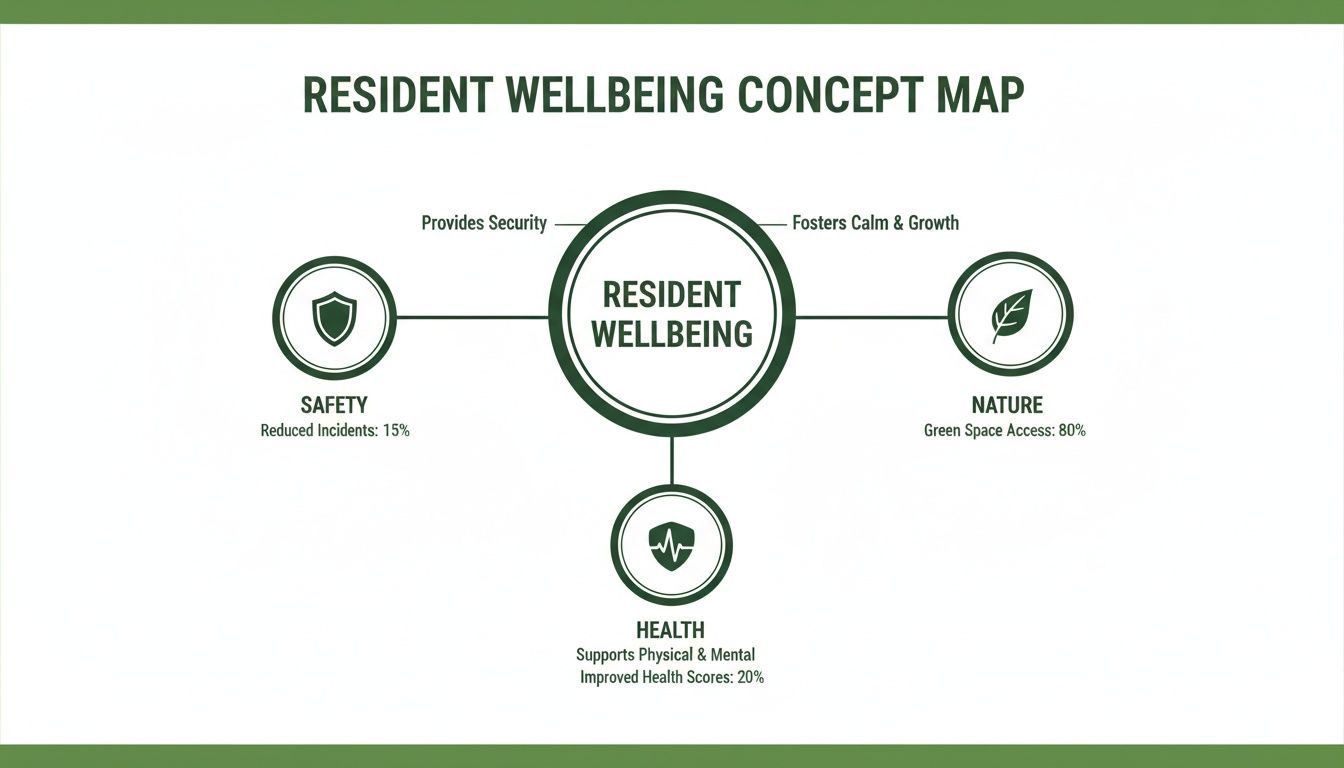
As you can see, a holistic design marries safety, nature, and health to build an environment where people don't just live—they thrive.
The market data backs this up completely. Senior housing occupancy in primary U.S. markets recently hit 87.4%, with demand outpacing new construction. It's telling that independent living led the pack with 89.0% occupancy, sending a clear signal that today's residents want an active, wellness-driven lifestyle that high-quality amenities make possible. You can discover more insights about the latest senior housing trends to see where the industry is heading.
Designing for Flexibility and Maximum ROI
A wide variety of amenities is critical, but smart developers know every square foot has to earn its keep. The key is designing flexible, multi-use spaces that can pivot to meet different needs and maximize their use throughout the day. A room with only one purpose is an operational liability. A room that can serve three is a powerful asset.
Think of a well-designed common area not as a fixed room, but as a flexible stage. In the morning, it's a bustling coffee social. In the afternoon, it can be reconfigured for a bridge tournament or a guest lecture. At night, it could be the setting for a resident wine-tasting event.
This chameleon-like approach delivers a much higher return on investment than building separate, single-purpose rooms that sit empty for hours. It also gives the community the agility to evolve its programming over time to match the unique interests of whoever is living there.
In the end, mastering community flow is about creating a layout that is functional, beautiful, and profitable. It’s an exercise in choreography, where the architecture itself guides movement, encourages interaction, and organically builds a sense of community. When you get the harmony right between social spaces, wellness amenities, and operational pathways, you create a senior living design that not only attracts new residents but also works seamlessly for your staff, ensuring success for the long haul.
Navigating Building Codes and Accessibility
For developers and owners, this is where the ambitious vision for a senior living community meets the hard reality of regulation. It's tempting to see building codes as just another frustrating checklist—a series of hoops to jump through that add cost and complexity.
But the most successful projects flip that script. They don't treat codes as a burden. They see compliance as a strategic advantage, the essential foundation for creating environments that are safer, more comfortable, and ultimately, far more marketable.
The web of regulations governing senior living design is dense, weaving together federal mandates, state laws, and local ordinances. Getting this right from day one isn't just about passing inspections; it's about smart risk management. A single misstep can trigger costly rework, frustrating delays, and even legal challenges down the road.
This is exactly why bringing an architect with deep sector experience on board early is non-negotiable. They are your guide, translating the dense language of codes into practical, elegant design solutions that actually boost your property's value.
Key Regulations in Senior Living Design
While codes vary by location, a few core regulations form the bedrock of compliant senior living design across the country. Think of them as overlapping layers of safety and accessibility, each with a different focus.
- Americans with Disabilities Act (ADA): This is the federal civil rights law that sets the baseline for accessibility. In senior living, it primarily dictates the design of common areas—think lobbies, dining rooms, and amenity spaces that are open to the public.
- Fair Housing Act (FHA): The FHA hones in on the residential units themselves. It requires specific accessibility features within multifamily housing, directly shaping the layout and function of resident apartments.
- NFPA 101 Life Safety Code®: You could argue this is the most critical code of all for senior living. It's laser-focused on fire safety and emergency egress, dictating everything from smoke detection and sprinkler systems to the fire-resistance ratings of walls and doors.
The real goal isn't just to meet the letter of the law, but to embrace its spirit. A truly exceptional design goes beyond the bare minimum, creating spaces that feel generous and intuitive, not just compliant. This approach turns a regulatory hurdle into a powerful marketing tool.
From Compliance to Competitive Advantage
The true artistry is in weaving these requirements into the design so seamlessly that residents never even notice them. The space should feel intentional and upscale, not like a place that was grudgingly retrofitted for accessibility. This is where clever, thoughtful solutions make all the difference.
For example, a code might mandate a minimum corridor width for wheelchair access. An average design meets that number exactly. A superior design, however, makes the corridor a bit wider, transforming a simple hallway into a gracious gallery with curated lighting and finishes.
When it comes to the details, accessible bathroom remodeling for the elderly offers a great real-world example of this principle in action. It’s about installing zero-threshold showers that look sleek and modern while completely eliminating a major trip hazard. It’s about integrating grab bars that double as stylish towel racks, blending safety with sophisticated decor.
Ultimately, mastering building codes is about more than just avoiding fines. It’s a fundamental commitment to the safety and dignity of your residents. When you approach regulations with a design-forward mindset, you create a community that isn’t just safe and accessible—it's beautiful and desirable, giving you a powerful edge in a competitive market.
The Power of Adaptive Reuse in Senior Living
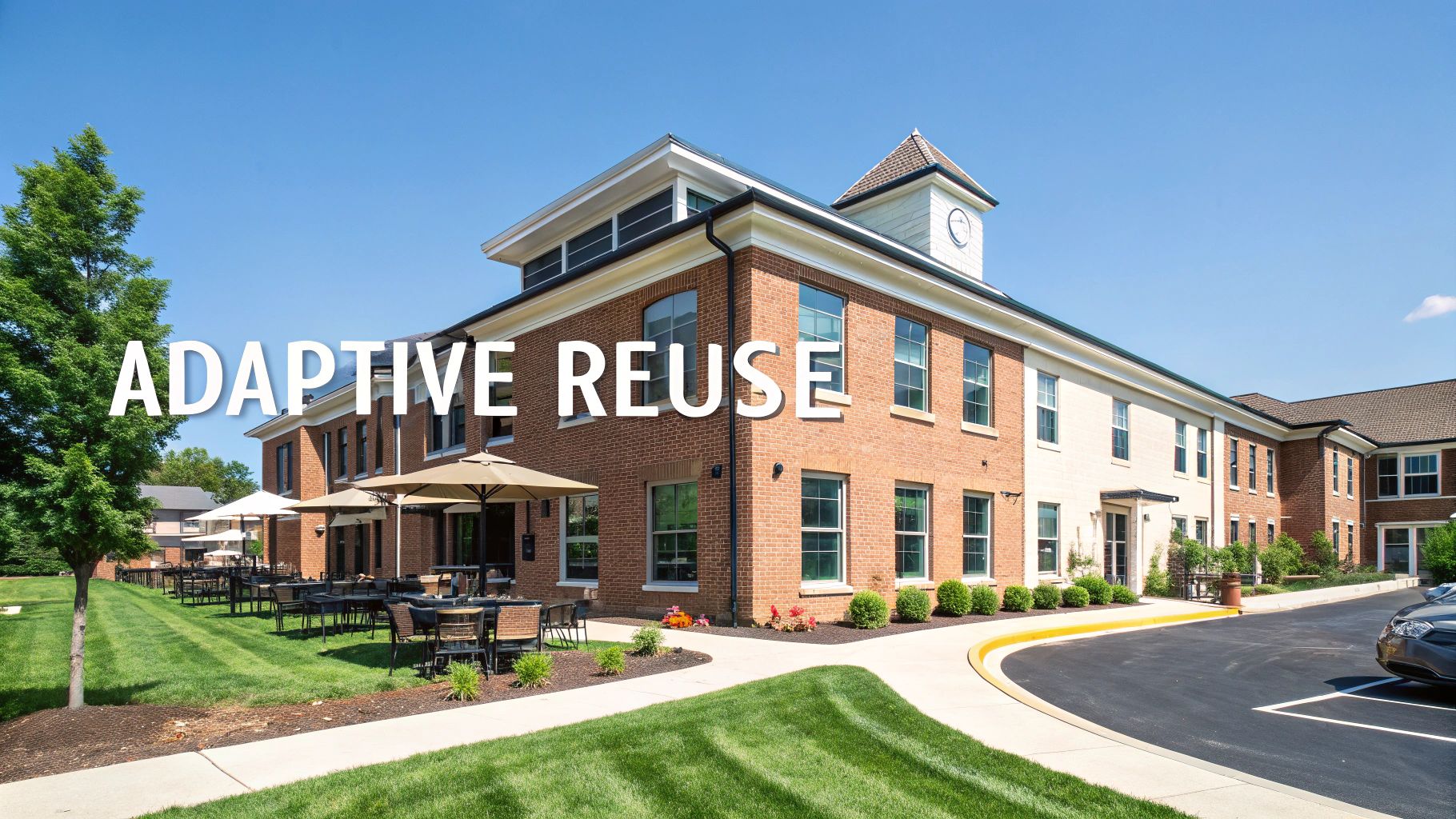
With construction costs on the rise and prime land becoming harder to find, the best site for your next senior living project might just be the one that’s already built. Instead of starting from a patch of dirt, adaptive reuse—the art of renovating and repurposing existing buildings—is proving to be a smarter, more sustainable, and often more profitable path than new construction.
This is all about seeing the potential in structures others have overlooked. It’s about breathing new life into a historic school, a vacant hotel, or an old industrial mill and transforming it into a vibrant, modern senior living community. This strategy does more than just save a piece of local history; it delivers some serious business advantages that go straight to the bottom line.
Why Adaptive Reuse Makes Financial Sense
It’s no surprise that more and more developers are looking at adaptive reuse for its compelling financial upside. A new build is a long, expensive journey filled with uncertainties, from land acquisition and zoning fights to unpredictable supply chains. Retrofitting an existing building helps you sidestep many of those headaches, creating a much cleaner, and often faster, path to opening your doors.
Think about the project timeline. An adaptive reuse project can get to market significantly faster because the building’s skeleton—the foundation, walls, and roof—is already standing. That accelerated schedule means you start generating revenue sooner, which can make a huge difference to your project's internal rate of return (IRR).
On top of that, the cost savings can be massive. While every project has its own quirks, renovating an existing shell is almost always more cost-effective than building the same square footage from the ground up.
Adaptive reuse isn't just a sustainable choice; it's a strategic business decision. By leveraging the bones of an existing building, developers can reduce construction timelines, mitigate financial risks, and create a final product with unmatched character and market appeal.
The current market makes this strategy even more compelling. The U.S. senior living market is on track to grow from USD 97.85 billion to a staggering USD 154.55 billion by 2033. But with new construction slowing down and inventory tightening in key markets, smart renovations are becoming one of the most effective ways to meet this skyrocketing demand. You can discover more insights about the expanding U.S. senior living market to see how adaptive reuse fits into the big picture.
The Uniqueness of Repurposed Spaces
One of the biggest wins for adaptive reuse is something a new build can never manufacture: genuine character. A converted 1920s hotel or a repurposed textile mill comes with a built-in story and architectural soul that really connects with prospective residents and their families.
This built-in uniqueness is a powerful marketing tool. You aren't just selling another new apartment; you’re offering a home with history. These one-of-a-kind features often include:
- Soaring Ceilings: Old industrial or institutional buildings frequently boast high ceilings, creating a sense of light and airiness that’s hard to justify in a new build budget.
- Large, Historic Windows: The kind of oversized, character-filled windows from a bygone era can drench units in natural light and offer incredible views.
- Exposed Brick and Original Wood Beams: These elements bring a warmth, texture, and tangible link to the building's past that residents love.
- Unique Floor Plans: Working within the constraints of an existing structure forces creativity, often leading to far more interesting and varied unit layouts than the cookie-cutter plans of many new developments.
This distinct character forges a strong sense of place, turning the property into a local landmark and a truly desirable community to call home.
Unlocking Value with Historic Tax Credits
If the building you’re eyeing has historical significance, adaptive reuse opens up an incredibly powerful financial tool: historic tax credits. These federal and state programs are designed to encourage the preservation of historic properties by giving developers a dollar-for-dollar reduction in their tax liability.
Now, securing these credits is a detailed process that demands careful documentation and following strict preservation standards. But the reward is well worth the effort. The Federal Historic Preservation Tax Incentives program, for example, offers a 20% tax credit for the certified rehabilitation of historic buildings. Many states have their own programs that can be "stacked" on top, which can dramatically lower your total project cost.
This is where working with an architectural firm that specializes in historic preservation is absolutely essential. They know how to navigate the complex approval process with State Historic Preservation Offices (SHPOs) and the National Park Service. Their expertise ensures your design both honors the building's past and meets all the needs of a modern senior living community. This transforms a building’s history from a nice story into a real financial asset, maximizing your return and setting the project up for long-term success.
Straight Talk on Senior Living Design: Answering the Big Questions
When you're developing a senior living community, the questions come thick and fast. Developers and owners need clear, practical answers to make smart decisions about planning, budgeting, and ultimately, creating a place that will thrive. Let's tackle some of the most common questions we hear from our clients.
What Is the Biggest Design Mistake We Can Make?
Hands down, the single most expensive mistake is designing for an outdated idea of what it means to be old. This thinking leads to sterile, institutional-feeling buildings with a cookie-cutter approach, boring amenities, and no real sense of energy. You end up with a property that feels more like a clinic than a home.
That model is dead. Today’s seniors are savvy consumers who expect a hospitality experience, not just a place to receive care. They're looking for a vibrant community where they can truly live, not just a place to move into when they have to. A design that misses this point will struggle from day one to attract residents and keep occupancy high.
The goal should always be to prioritize choice, community, and well-being. That means creating multiple dining options, offering top-notch fitness and social programs, and weaving in technology that actually helps. It's about designing a place people genuinely want to live.
How Can Good Design Help with Operations and Staffing?
Smart design is one of the most effective, yet often overlooked, tools for making daily operations run smoothly and keeping your staff happy. It’s all about creating a physical space where workflows just make sense, which saves time, reduces frustration, and lessens the physical toll on your team. This has a massive ripple effect on everything from the quality of care to your bottom line.
Think about it this way: strategically placing laundry rooms, supply closets, and nurse's stations can shave miles off the distance your staff walks every day. Designing logical service corridors that keep back-of-house hustle and bustle away from resident areas creates a more peaceful, pleasant environment for everyone.
Well-designed staff spaces aren't a frill; they are a critical investment in your most valuable asset. A nice break room with natural light and comfortable chairs sends a powerful message: "we value you." In an industry plagued by high turnover, that simple act can do wonders for morale and retention.
A supported, efficient staff provides better care. Better care leads to happier residents and glowing reviews from families. Good design creates a positive cycle that benefits the entire community.
Is It Really Cheaper to Repurpose an Old Building?
While every project is different, adapting an existing building can often be more cost-effective and get you to profitability faster than starting from scratch. When you renovate, you typically save a huge chunk of capital on big-ticket items like site work, foundations, and the basic building shell.
The timeline is another huge advantage. With the main structure already standing, the journey from purchase to opening day is often much shorter. That accelerated schedule means you start bringing in revenue sooner, which is a game-changer for your financial projections.
And it’s not just about the upfront costs. If you’re working with a historic building, you may be able to tap into valuable federal and state historic tax credits. These credits can cover a significant portion of your renovation costs, turning the building's past into a real financial advantage. Plus, these projects have a built-in character and story that new construction just can't match, giving you a powerful marketing edge.
What Future Trends Should We Be Paying Attention To?
The world of senior living is changing fast, and design is evolving with it. Looking ahead, three things are really shaping the future: technology, a broader definition of wellness, and a much bigger emphasis on flexibility. Developers who get ahead of these trends will be setting themselves up for success for years to come.
Technology is moving beyond being a simple convenience and becoming deeply woven into the fabric of daily life.
- Smart-Home Features: Things like voice-activated lights and thermostats will become standard, making life much easier for residents with mobility issues.
- Safety and Health Monitoring: We'll see more passive sensors for things like fall detection and wearable tech that tracks vitals, giving residents and their families incredible peace of mind.
- Seamless Connectivity: Rock-solid Wi-Fi and easy-to-access tech support are already non-negotiable.
The concept of wellness is also getting a major upgrade. It's no longer just about a small gym in the basement. The new focus is on a holistic approach that nurtures mental, social, and spiritual health. That means designing dedicated spaces for yoga, meditation gardens, art studios, and classrooms for lifelong learning.
Finally, flexibility is everything. Tomorrow's successful communities will be designed to adapt. Think multi-purpose spaces that can host a fitness class in the morning, a lecture in the afternoon, and a concert at night. This adaptability extends to the units themselves, with layouts that can be modified as a resident's care needs change, allowing them to age in place gracefully.
At Sherer Architects, LLC, we specialize in turning complex challenges into enduring, profitable results. Whether you're looking to unlock the value of an old building with historic tax credits or planning a new commercial development from the ground up, our team knows how to navigate the process. Let's talk about how our expertise in historic preservation and thoughtful design can make your next project a success. Visit us at shererarch.com to start the conversation.