

Finding the right South Carolina architects for your project is more than just flipping through portfolios. You’re looking for a partner who gets the local landscape—someone who can navigate the demanding Design Review Boards in Charleston just as easily as they can meet Greenville's specific energy codes.
This decision is about finding a team with a proven track record of delivering profitable, lasting results, especially for complex commercial, adaptive reuse, and historic preservation work.
Finding the Right Architectural Partner in South Carolina

The success of your project really comes down to this one choice: picking an architect who not only understands your vision but also has deep roots in the local community. Here in South Carolina, that means finding a firm that is well-versed in the unique challenges and opportunities our region presents. A great local architect isn't just a vendor; they're your strategic guide from the first sketch to the final punch list.
This partnership is everything. An architect with a strong network can connect you with trusted contractors, steer you through byzantine zoning laws, and see potential roadblocks long before they become expensive problems. They know the climate, the materials, and what it takes to build something that isn't just visually striking but also durable and efficient.
Beyond the Blueprint: Why Local Expertise Matters
Let’s put this into a real-world context. Imagine you’re a developer planning to convert an old warehouse in Columbia's historic district into a boutique hotel. A firm without specific South Carolina experience might give you a decent design. But a team that specializes in local historic preservation? They bring a whole different level of value.
They’ll know precisely how to:
- Secure Historic Tax Credits: They’ve been through the application process with the South Carolina Department of Archives and History (SCDAH) countless times.
- Navigate Local Approvals: They have working relationships with the folks on local review boards, which can make all the difference in a smooth approval process.
- Source Appropriate Materials: They know where to find materials that honor the building's history while still meeting today's building codes and performance standards.
This kind of specialized insight is what turns a decent project into a landmark investment. It’s the gap between just getting by and creating real, long-term value.
Your architect should be your advocate, using their local expertise to protect your interests, streamline approvals, and maximize your return on investment. A deep understanding of the Palmetto State’s regulatory and cultural environment is non-negotiable.
A Thriving Professional Landscape
Fortunately, South Carolina's architectural community is strong and growing. While national figures show a slight recent dip in the total number of licensed architects, the pipeline for new talent is actually expanding—the number of candidates working toward licensure has increased by 5%.
This creates a competitive, skilled pool of professionals for your project. You can learn more about these national trends from industry reports, but the bottom line is that developers have excellent options here when searching for a firm that’s the perfect fit for their project’s unique demands.
Turning Your Big Idea into a Clear Blueprint
Before you even pick up the phone to call a South Carolina architect, you need to get your own thoughts in order. The single most important tool you'll create is a project brief. This isn't just a simple wish list; it's the foundational document that can make the difference between a project that runs smoothly and one that spirals into a mess of delays and budget blowouts.
Think of it as the business plan for your building. It’s where you translate that brilliant vision in your head into a concrete set of requirements an architect can actually build from. A great brief tells the story of your project—its purpose, who it’s for, and the role you want it to play in the community.
Getting to the Heart of Your Project
Let's imagine you're an investor eyeing a historic warehouse on Charleston's Upper King Street for an adaptive reuse project. A vague brief might just say, "Convert this warehouse into a mixed-use space." That's not helpful. A strong brief digs much, much deeper.
You need to answer the questions that will truly drive the design. Start here:
- What’s the Real Goal? Are you trying to maximize rental income? Create a landmark community hub? Or is the main objective to capitalize on historic tax credits for a specific ROI? Get specific about the business objective.
- Who Is This For? Picture the people who will be in this space every day. Are they tech startups, high-end retail customers, or residents? Define their needs and what they expect from the environment.
- What Are the Must-Haves? List the non-negotiables. This means things like the number of units, essential connections between spaces (like a kitchen needing to be next to a dining area), and any critical infrastructure.
- What’s the Vibe? How should the space feel? Use descriptive words—industrial, sleek, traditional, welcoming. Go find images that capture the mood you're after. While many tools are for residential projects, even looking at things like exterior home design visualizer tools can help you gather ideas and visual language to share with your architect.
This deep dive is where the magic happens. It forces you to clarify your priorities, ensuring that every decision made down the line—from the floor plan to the faucet handles—supports your original strategic goals.
Talking Money and Time
Your brief is useless without a realistic budget and timeline. Be completely transparent about your numbers. This includes your "hard costs" for the actual construction and your "soft costs"—all the other things like architect fees, permits, engineering, and furniture.
A good architect can look at your vision and your budget and tell you immediately if they're in the same ballpark. If not, they can suggest smart ways to get more for your money without sacrificing the core idea.
A detailed project brief doesn’t just inform architects—it protects you. By clearly defining the scope from day one, you drastically reduce the risk of "scope creep" and ensure everyone is on the same page about what you're trying to achieve.
Finally, lay out your ideal schedule. Do you have a hard deadline, like a grand opening for the tourist season or an expiring lease? Being clear about this lets an architect honestly assess if they have the bandwidth to meet your needs.
With this comprehensive brief in your hands, you’re no longer just a dreamer. You’re a serious developer, ready to find the right firm to bring your vision to life.
How to Evaluate an Architect's Portfolio

An architect’s portfolio is much more than a collection of glossy photos. Think of it as a series of case studies. You’re looking for evidence of how they solve problems, not just how they design beautiful buildings. As you review work from potential South Carolina architects, your job is to look past the aesthetics and see if they’ve tackled challenges similar to yours.
Did they wrestle a functional commercial space out of a tight urban lot? Have they threaded modern HVAC and electrical systems through a historic structure without destroying its soul? The project descriptions are where you’ll find these stories. Don't just skim the pictures; read the narrative. A great portfolio explains the why behind the design, showing how the final building helped the client achieve their business goals.
Look for Relevant Local Experience
Your project's success hinges on finding an architect who gets South Carolina. This isn’t just about style; it’s about understanding the local regulations, climate, and culture. As you dig into their portfolio, keep an eye out for direct experience in three critical areas:
- Commercial Expertise: Search for new builds or significant renovations of offices, retail storefronts, or mixed-use developments. Notice how they handled practicalities like customer flow, site access, and energy performance.
- Adaptive Reuse Projects: Has the firm brought an old mill, warehouse, or downtown building back to life? This shows they can navigate the complexities of modernizing outdated infrastructure and meeting current building codes.
- Historic Preservation: This is non-negotiable in cities like Charleston and Columbia. Look for specific examples where an architect successfully balanced strict preservation guidelines with the commercial realities of a project, earning approvals from tough local review boards.
The architectural fabric of South Carolina is woven from its colonial and antebellum history. This isn't just a quaint backdrop; it actively influences modern development. The Carnegie Survey documented many of our state's key architectural sites way back in the 1930s, and many of those landmarks inform the preservation standards we follow today. A good architect understands this lineage.
Analyze the Technical Details
Once you've confirmed they have the right kind of experience, it's time to look at how they do their work. The way a firm presents its technical drawings and visualizations tells you a lot about their process and attention to detail.
Pay attention to their use of tools like 3D architectural visualization. These renderings are more than just marketing fluff; they are critical for helping you and your stakeholders see the final product and make key decisions before a single shovel hits the ground.
Look for evidence of tangible results. Did their design help a client secure state and federal historic tax credits? Did they navigate a complex zoning variance that unlocked a property's true potential? These are the real-world wins that separate a great architect from a good one.
Finally, think about project scale and budget. A firm that exclusively designs massive corporate headquarters might not be the right fit for your boutique retail upfit, but their experience could still be relevant. The goal is to find a portfolio that shows you both a compelling creative vision and the practical, boots-on-the-ground expertise needed to bring your South Carolina project across the finish line.
To help you stay organized during your review, I've put together a simple checklist. Use it to compare firms side-by-side and make a more objective decision.
Architect Evaluation Checklist
| Evaluation Criteria | What to Look For | Notes/Firm Rating |
|---|---|---|
| Local Commercial Experience | Projects of similar type (office, retail, mixed-use) in South Carolina. | |
| Adaptive Reuse/Historic Work | Examples of successfully repurposing older buildings and navigating historic review boards. | |
| Project Scale & Budget | Past projects are in a similar financial and size range to yours. | |
| Design Philosophy | Does their aesthetic and problem-solving approach align with your vision? | |
| Technical Documentation | Clear, detailed drawings, plans, and visualizations. | |
| Problem Solving | "Before and after" examples, case studies showing how they overcame zoning, site, or budget challenges. | |
| Client Goals | Does the portfolio explain how the design met the client's business objectives? |
This checklist isn't about finding a "perfect" score. It's about finding the firm that checks the most important boxes for your specific project.
Asking the Right Questions: How to Interview a South Carolina Architect
You’ve reviewed the portfolios and have a solid shortlist of architects. Now comes the real test: the interview. This isn’t just a chat about their design philosophy; it’s your chance to see if they have the grit, local savvy, and collaborative mindset to be a true partner on your project.
Forget the generic questions. They get you generic, rehearsed answers. To really understand how a firm operates, you need to dig deeper. Your goal is to hear how they’ve solved real-world problems, not just listen to them rattle off a list of past successes. You’re looking for a team that has navigated the trenches of South Carolina's unique building environment and come out the other side with successful, profitable projects for clients just like you.
Can They Handle the Local Red Tape?
This is where many projects get bogged down. An architect’s experience with local boards and commissions is often the difference between a smooth process and a costly delay. Don't be afraid to press them for specific examples that prove they know the landscape.
Here are a few questions I’ve found get right to the heart of their local expertise:
- Zoning & Permitting: "Tell me about a time you had to get a complex zoning variance for a client in a tough jurisdiction like Charleston or Greenville. What was the sticking point, and what specific steps did you take to get it approved?"
- Design Review Boards: "Walk me through your most challenging experience with a local Design Review Board. What was the issue, and how did you negotiate a solution that worked for both the board and your client's vision?"
- Historic Tax Credits: "Let's talk about your process for securing state and federal historic tax credits. Can you describe the key documentation you prepared for a recent successful application?"
What you're listening for are detailed stories, not vague assurances. A seasoned pro will be able to recall the specific ordinances, the key players on the board, and the exact strategy they used to move the project forward.
How Do They Handle a Crisis?
Every single project hits a snag. It could be a contractor dispute, an unforeseen site condition, or a budget that suddenly tightens. How your architect responds in these moments is everything. You need a proactive problem-solver, not just a messenger of bad news.
The best architects don't just design beautiful buildings; they manage chaos. Your questions should force them to show you how they perform under pressure and protect your investment when things go sideways.
Try these to get a sense of their real-world approach:
- Budget Management: "Let's imagine our material costs suddenly spike by 15% because of a supply chain disruption. What are the first three things you do?"
- Contractor Issues: "Describe a situation where the general contractor was falling behind schedule or wasn't meeting quality standards. How did you step in to fix it?"
- Client Communication: "What's your system for keeping me in the loop on progress and, more importantly, on potential problems? What's the frequency and format of your updates?"
Their answers here open a window into their communication style and their ability to think on their feet. A great architect will almost always talk in terms of "we" and "us," signaling they see your project's success as their own. That's the kind of partner you want.
Getting the Paperwork Right: Architectural Fees and Contracts
Once you’ve found the right South Carolina architect, the next big step is getting the contract finalized. This isn’t just a formality—it’s the single most important document that will guide your project. It lays out the scope, the schedule, and, of course, the cost. A solid contract is your best tool for keeping everyone on the same page and protecting your investment.
One of the first things you'll need to figure out is the project delivery method. In the commercial world, two models are most common: Design-Bid-Build and Design-Build.
With the traditional Design-Bid-Build approach, your architect designs the entire project first. You get a complete set of plans, which you then put out to bid with several general contractors. It’s a very linear process that clearly separates design from construction, which many owners appreciate for its transparency.
The other route is Design-Build. Here, you hire one firm—a team made up of the architect and contractor working together from day one. This unified approach can seriously speed things up and often saves money because the builder can provide cost feedback during the design phase. Which one is right for you? It really comes down to your project's complexity, your timeline, and how you prefer to manage the process.
How Architects Get Paid: Breaking Down the Fee Structures
With the delivery method sorted, you’ll dive into the architect's fee structure. There’s no single way architects charge for their work, so you’ll probably see a few different options. Knowing the pros and cons of each will help you negotiate a fair agreement.
You'll most likely encounter one of these common fee models:
- Percentage of Construction Cost: This is a classic. The architect’s fee is simply a percentage of the total construction budget. It's easy to understand, but it's worth noting that if the project cost goes up, so does their fee.
- Fixed Fee (Stipulated Sum): Everyone agrees on a single, fixed price for the architectural services. This is a great option when the project scope is crystal clear from the start because it gives you total cost certainty.
- Hourly Rate (Time and Materials): You pay for the time spent on your project. This is perfect for initial planning phases, small-scale work, or when the full scope is still a big question mark. It offers flexibility but doesn’t have the budget predictability of a fixed fee.
Think of it this way: for a complicated historic renovation in Charleston where surprises are almost guaranteed, a fixed fee might give you the budget control you need. But for a straightforward new office building in a Greenville business park, a percentage-based fee could be a perfect fit. Talk through the options with your architect.
This flowchart lays out some of the crucial questions to ask during your interviews, which will naturally lead to a discussion about which contract and fee structure makes the most sense.
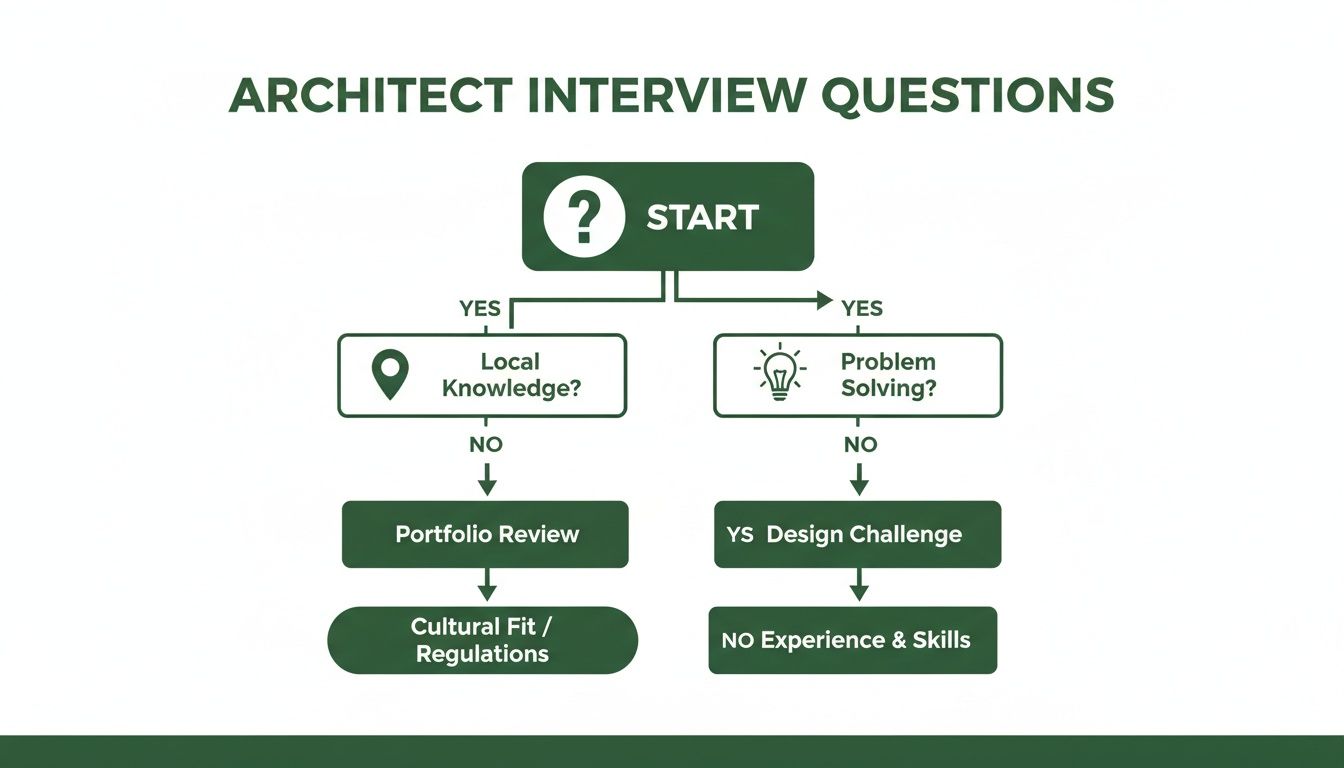
As you can see, understanding an architect's local expertise and how they tackle problems is key to figuring out if they can deliver your project on time and on budget. These conversations are foundational to building a contract that sets everyone up for success.
Navigating Historic Tax Credits and Local Regulations

South Carolina’s historic properties are more than just beautiful old buildings—they’re serious investment opportunities. But transforming a piece of history into a profitable, modern asset means navigating a tangled web of local regulations and financial incentives. This is precisely where an architect with deep preservation experience becomes your most critical partner.
Let's be honest: the process of getting approvals and funding for a historic project can feel like a bureaucratic nightmare. An architect who’s been down this road before knows the shortcuts and the pitfalls. They aren’t just designing a building; they’re your guide, strategist, and advocate, helping you cut through the red tape.
Unlocking Value with Historic Tax Credits
For any developer looking at an adaptive reuse or preservation project, federal and state historic tax credits are the magic ingredient. These programs can fundamentally change your pro forma, turning a financially challenging renovation into a smart, lucrative venture. The trick is knowing how to qualify and what the demanding application process actually involves.
A seasoned architect doesn't just know about these programs—they know how to make them work for you.
- Figuring Out Eligibility: They’ll quickly assess if your property can qualify for incentives like the Federal Historic Preservation Tax Incentives Program or the South Carolina Historic Rehabilitation Tax Credit.
- Managing the Paperwork: They can handle the mountain of documentation required by the South Carolina Department of Archives and History (SCDAH) and the National Park Service, including the detailed architectural plans that prove you’re respecting the building’s past.
- Designing for Compliance: Most importantly, they will craft a renovation plan that meets the Secretary of the Interior's Standards for Rehabilitation. This isn't optional; it's a non-negotiable requirement for getting the tax credits.
Their expertise ensures your design doesn’t just meet your business goals but also ticks all the boxes needed to unlock these powerful financial tools.
The Role of the SCDAH and Local Expertise
Think of the SCDAH as the gatekeeper for historic preservation in the state. They manage the tax credit programs and oversee the South Carolina Statewide Survey of Historic Properties, a massive and invaluable resource for anyone working on these projects.
With a legacy as rich as South Carolina’s, that’s no small task. The Statewide Survey tracks over 82,000 buildings, structures, and sites across all 46 counties. A great architect uses this database to build a rock-solid case for your renovation plans, grounding your proposal in historical fact.
Choosing a South Carolina architect with a strong, established relationship with the SCDAH and local review boards is a strategic move. Their familiarity with the people and processes can dramatically smooth the path to project approval, saving you both time and money.
At the end of the day, bringing a preservation expert onto your team is about more than just compliance. It’s about using their specialized knowledge to turn a piece of South Carolina’s history into a thriving modern asset—all while maximizing your return on investment.
Getting Your Questions Answered About South Carolina Architects
If you're gearing up for a commercial project for the first time, it's natural to have a lot of questions. For developers and property owners, getting a handle on costs, timelines, and the legal side of things is the foundation of a successful venture. Let's tackle some of the most common questions we hear from clients looking to hire an architect in South Carolina.
How Much Does an Architect Actually Cost?
Architectural fees in South Carolina usually land somewhere between 5% and 15% of the total construction cost. Where your project falls on that spectrum really comes down to complexity. A straightforward new build will be on the lower end of that scale.
On the other hand, a complex historic renovation or an adaptive reuse project will naturally command a higher fee. This is because of the sheer amount of detailed research, documentation, and coordination with preservation boards and consultants that these projects demand.
Some firms might offer a fixed fee if the scope is crystal clear from the start, which is great for budget predictability. Others might work on an hourly rate, especially for initial consultations or feasibility studies. No matter the structure, make sure the contract spells out exactly what services are included for that fee.
What Kind of Timeline Should I Expect?
Project timelines can be all over the map, depending on the scale of your project and which municipality you’re working in.
- A small commercial upfit? You could be looking at 3-6 months from initial design to grand opening.
- A new, mid-sized commercial building? That’s a bigger lift, often requiring 12-24 months.
The process breaks down into phases: schematic design (1-2 months), design development (2-4 months), and then the creation of construction documents (3-6 months). Don't forget permitting—that alone can tack on another 1-3 months, and that window can vary wildly between places like Charleston, Greenville, and Columbia. A local architect who knows the ropes with the local review boards can give you the most realistic schedule.
Here's the bottom line: in South Carolina, a licensed architect's stamp is required for most commercial building permits. If your project involves structural changes, fire safety systems, or ADA compliance, it's not a suggestion—it's the law.
Do I Really Need an Architect for a Small Renovation?
The short answer is yes, almost certainly. It goes way beyond just the legal requirement for a permit stamp. An architect’s real value is in their ability to see potential you might miss.
They’ll optimize your space for the best possible flow and efficiency, maximizing your return on investment. They also navigate the labyrinth of building codes and help you manage contractors to sidestep expensive errors. Think of hiring an architect not as a cost, but as a critical investment in your property's future.
At Sherer Architects, LLC, we guide commercial property owners through every stage of design and construction, turning complex challenges into profitable, enduring results. If you're ready to bring your vision to life, visit us at https://shererarch.com.