
The world of architecture is in constant flux, with new ideas, materials, and technologies shaping the buildings we inhabit every day. Understanding the key styles of contemporary architecture is no longer just an academic exercise; it's a practical necessity for anyone involved in commercial development, historic preservation, or adaptive reuse projects. Each style offers a unique toolkit of solutions, addressing everything from environmental sustainability and site context to user experience and brand identity.
This comprehensive roundup unpacks ten of the most influential contemporary styles, moving beyond simple aesthetics to explore their practical applications. For developers, investors, and business owners, knowing the difference between Biophilic design and Neo-Brutalism can mean the difference between a project that resonates with its community and one that feels out of place. This guide is designed to provide actionable insights, examining the core principles, material palettes, and structural logic that define each architectural approach.
We will provide a clear, structured overview of each style's defining characteristics, its pros and cons for commercial applications, and specific considerations for code compliance and energy efficiency. You will learn not just what these styles look like, but how they function and what they can achieve. Whether you are planning a new commercial headquarters in South Carolina, breathing new life into a historic structure, or simply seeking to make an informed design choice, this guide will help you navigate the complex and exciting landscape of modern design with confidence.
1. Minimalist Architecture
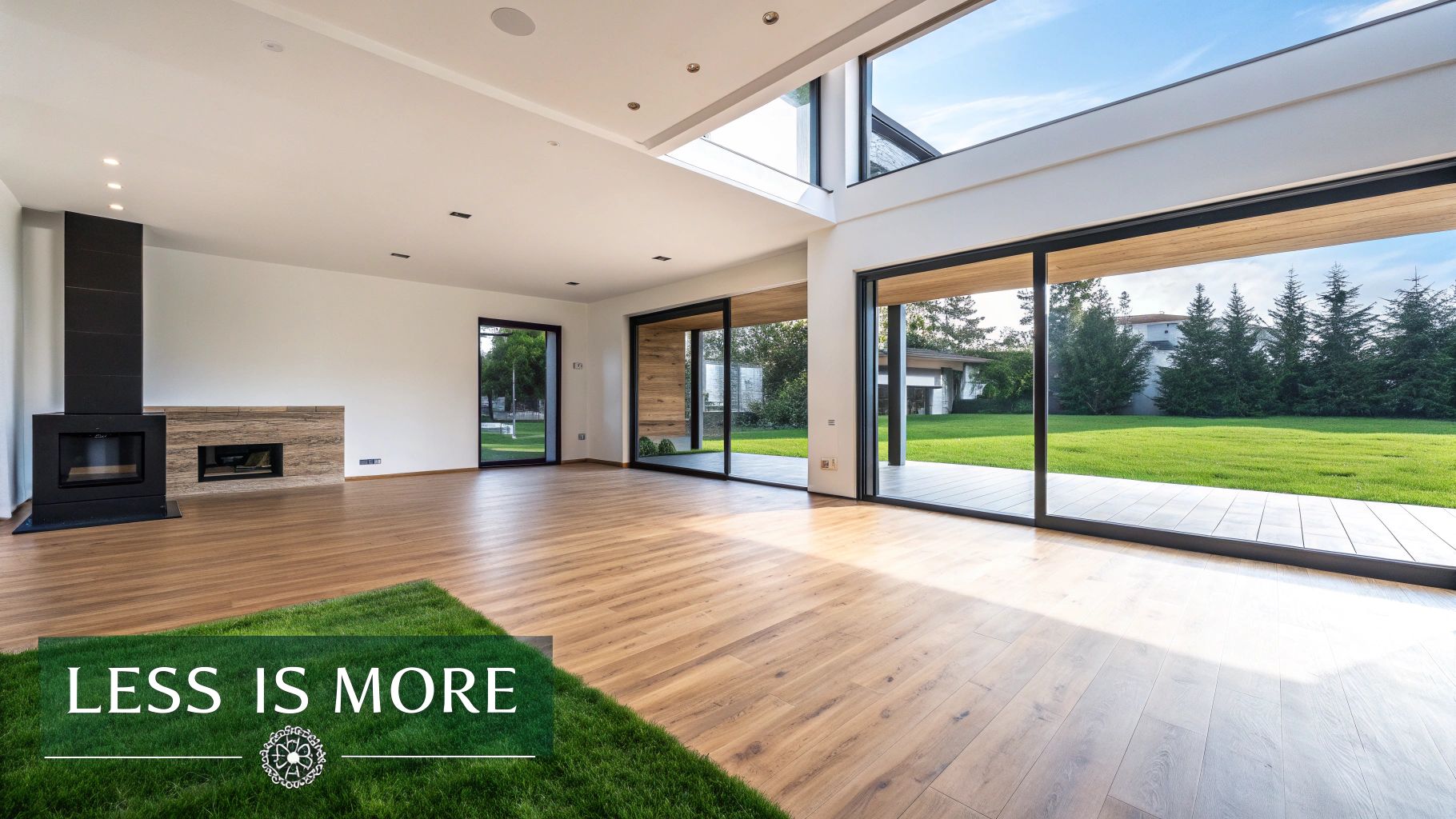
Minimalist architecture is a design philosophy that champions simplicity by reducing a building to its necessary elements. Emerging as a reaction against the decorative excesses of earlier styles, it adheres to the principle of "less is more." This approach, one of the most enduring styles of contemporary architecture, focuses on creating serene and functional spaces through clean lines, unadorned surfaces, and an emphasis on form and material. The absence of ornamentation directs attention to the structure's spatial qualities, light, and the inherent beauty of the materials used.
Key Characteristics and Implementation
The core of minimalism lies in its visual and material clarity. Key features include open-plan layouts, a monochromatic or neutral color palette, and a focus on simple geometric forms. Light is a critical element, used to sculpt spaces and create a sense of openness.
Implementation Tips for Commercial Projects:
- Invest in Quality: With no ornamentation to hide behind, the quality of materials like concrete, steel, glass, and wood is paramount. The precision of joinery and finishes defines the aesthetic.
- Prioritize Functionality: Every design element must have a purpose. Integrate storage seamlessly and design layouts that optimize workflow and circulation, making it ideal for efficient office or retail environments.
- Strategic Lighting: Combine abundant natural light with carefully planned artificial lighting to highlight architectural forms and create ambiance. Recessed and hidden light sources maintain clean lines.
Applications and Considerations
Minimalism is highly versatile, suiting high-end retail spaces, modern offices, art galleries, and boutique hotels where a sophisticated and uncluttered environment is desired. Its timeless appeal can elevate a brand's image and provide a flexible backdrop for various uses.
For adaptive reuse, stripping a historic structure back to its essential frame can reveal its inherent character, creating a powerful dialogue between old and new. However, achieving high performance is crucial; without traditional cavities for insulation, careful detailing is required to meet modern energy codes and ensure thermal comfort. The simplicity of the design demands meticulous execution, as any imperfection becomes highly visible.
2. Parametric Architecture
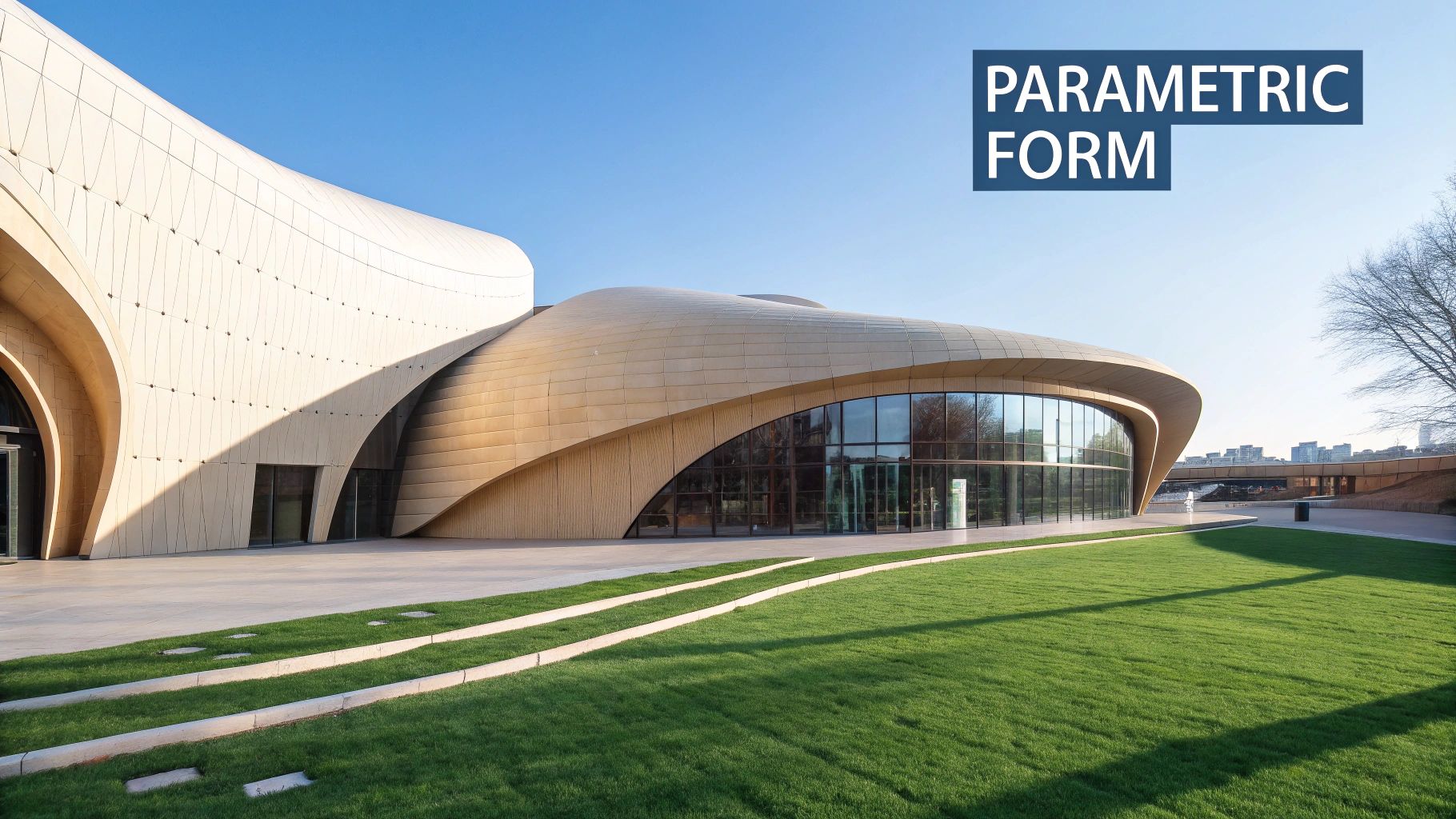
Parametric architecture is a design process that utilizes algorithms and computational logic to generate complex geometric forms. Instead of designing static objects, architects establish a set of rules and parameters that define relationships between design elements. This data-driven approach allows for the creation of highly optimized, fluid, and responsive structures that can adapt to environmental factors, material constraints, and programmatic requirements. As one of the most innovative styles of contemporary architecture, it relies heavily on advanced software to explore design possibilities beyond human intuition.
Key Characteristics and Implementation
The hallmark of parametric design is its dynamic, non-standard geometry, often resulting in flowing curves and intricate patterns reminiscent of natural systems. Popularized by pioneers like Zaha Hadid, this style produces visually striking buildings such as the Heydar Aliyev Center. The final form is a direct output of the input parameters, which can include everything from sunlight exposure to pedestrian flow.
Implementation Tips for Commercial Projects:
- Define Clear Objectives: Begin by clearly defining the project constraints and performance goals (e.g., maximizing natural light, minimizing wind load). These will form the core parameters for the design algorithm.
- Leverage Computational Tools: Utilize specialized software like Grasshopper for Rhino or Dynamo for Revit. These tools are essential for creating and manipulating the parametric models that drive the design.
- Focus on Constructability: Early collaboration with structural engineers and digital fabricators is critical. The complex forms generated must be buildable, requiring innovative construction techniques and materials.
Applications and Considerations
Parametricism is ideal for large-scale, iconic projects like stadiums, cultural centers, and high-rise towers where performance optimization and a landmark aesthetic are primary goals. Its ability to analyze and respond to complex data makes it perfect for designing efficient building envelopes and unique interior spaces that enhance user experience.
In adaptive reuse, parametric tools can be used to design a modern, high-performance "skin" or addition that complements an existing historic structure. This creates a visually compelling dialogue between algorithmic precision and historical craft. However, the reliance on digital fabrication can increase initial costs and requires a highly skilled construction team. The non-standard components often demand custom manufacturing, making close coordination between the design and construction phases absolutely essential for project success.
3. Sustainable/Green Architecture
Sustainable or green architecture is a design approach that seeks to minimize the negative environmental impact of buildings through efficiency and moderation in the use of materials, energy, and development space. More than just a style, it is an ethical framework that prioritizes ecological harmony and long-term responsibility. This philosophy integrates renewable energy, recycled or sustainably harvested materials, and intelligent design strategies to create buildings that are not only energy-efficient but also healthier for their occupants and the planet. As one of the most critical styles of contemporary architecture, it directly addresses pressing global issues like climate change and resource depletion.
Key Characteristics and Implementation
The core of sustainable design lies in its holistic, systems-based thinking. Key features include passive design strategies (e.g., building orientation for optimal solar gain), integration of renewable energy sources like solar panels, use of green roofs and living walls, and advanced water conservation systems such as rainwater harvesting. The goal is to create a building that functions as a self-sufficient ecosystem.
Implementation Tips for Commercial Projects:
- Embrace Passive Design: Conduct thorough site analysis to leverage natural light, ventilation, and solar orientation. This significantly reduces reliance on mechanical heating, cooling, and lighting systems.
- Specify Sustainable Materials: Prioritize locally sourced, recycled, and rapidly renewable materials. Consider the entire lifecycle of a product, from extraction to disposal, to minimize its carbon footprint.
- Integrate Performance Monitoring: Install smart building systems to track energy and water consumption in real-time. This data allows for continuous optimization and helps engage occupants in sustainability efforts.
Applications and Considerations
Sustainable architecture is applicable across all commercial sectors, from corporate headquarters like The Bullitt Center in Seattle to entire carbon-neutral communities like BedZED in London. It enhances brand reputation, lowers long-term operational costs, and improves employee well-being and productivity. To achieve a truly integrated green design, considering how these principles extend to the surrounding environment is key; explore some eco-friendly landscape design ideas for inspiration.
In adaptive reuse, retrofitting historic buildings with modern green technologies can dramatically improve their performance while preserving their cultural value. However, achieving certifications like LEED requires rigorous documentation and integrated design from the project's inception. Balancing historic preservation guidelines with the installation of new systems, such as high-performance windows or solar arrays, demands creative and sensitive design solutions.
4. Deconstructivism
Deconstructivism is an architectural movement that emerged in the late 1980s, challenging conventional notions of harmony, continuity, and structural stability. It is characterized by fragmentation, non-linear design processes, and an interest in manipulating a structure's surface. This provocative style, one of the more radical styles of contemporary architecture, aims to create a sense of controlled chaos, questioning established architectural rules by distorting and dislocating elements to create visually unpredictable and dynamic forms.
Key Characteristics and Implementation
Deconstructivism’s aesthetic is defined by its apparent lack of symmetry and its use of disjointed, angular, and warped forms. Buildings often appear as if they have been exploded and reassembled, featuring clashing planes and an absence of traditional right angles. The works of architects like Frank Gehry and Zaha Hadid, such as the Guggenheim Museum Bilbao, exemplify this approach.
Implementation Tips for Commercial Projects:
- Balance Form with Function: While the exterior may be chaotic, the interior layout must still be functional. Ensure that the dramatic forms do not compromise circulation, usability, or occupant comfort.
- Leverage Advanced Modeling: Complex geometries require sophisticated 3D modeling and Building Information Modeling (BIM) tools. These are essential for visualizing the design, coordinating systems, and developing accurate construction documents.
- Engage Experienced Fabricators: The non-standard components often require specialized fabrication. Collaborate early with contractors and fabricators who have proven experience with complex, non-rectilinear construction.
Applications and Considerations
Deconstructivism is best suited for landmark projects like museums, concert halls, and corporate headquarters where making a bold, artistic statement is a primary goal. Its dramatic appearance can create an iconic identity for a brand or institution. Frank Gehry's Dancing House in Prague is a prime example of how this style can invigorate an urban context.
In an adaptive reuse context, a deconstructivist addition can create a striking contrast with a historic structure, highlighting both the old and new. However, the complex forms can be expensive to build and maintain. Structural engineering is highly complex, and achieving energy efficiency requires meticulous detailing to insulate and seal unconventional junctions. The success of a deconstructivist project relies heavily on precise execution and a budget that can accommodate its inherent complexity.
5. Biophilic Architecture
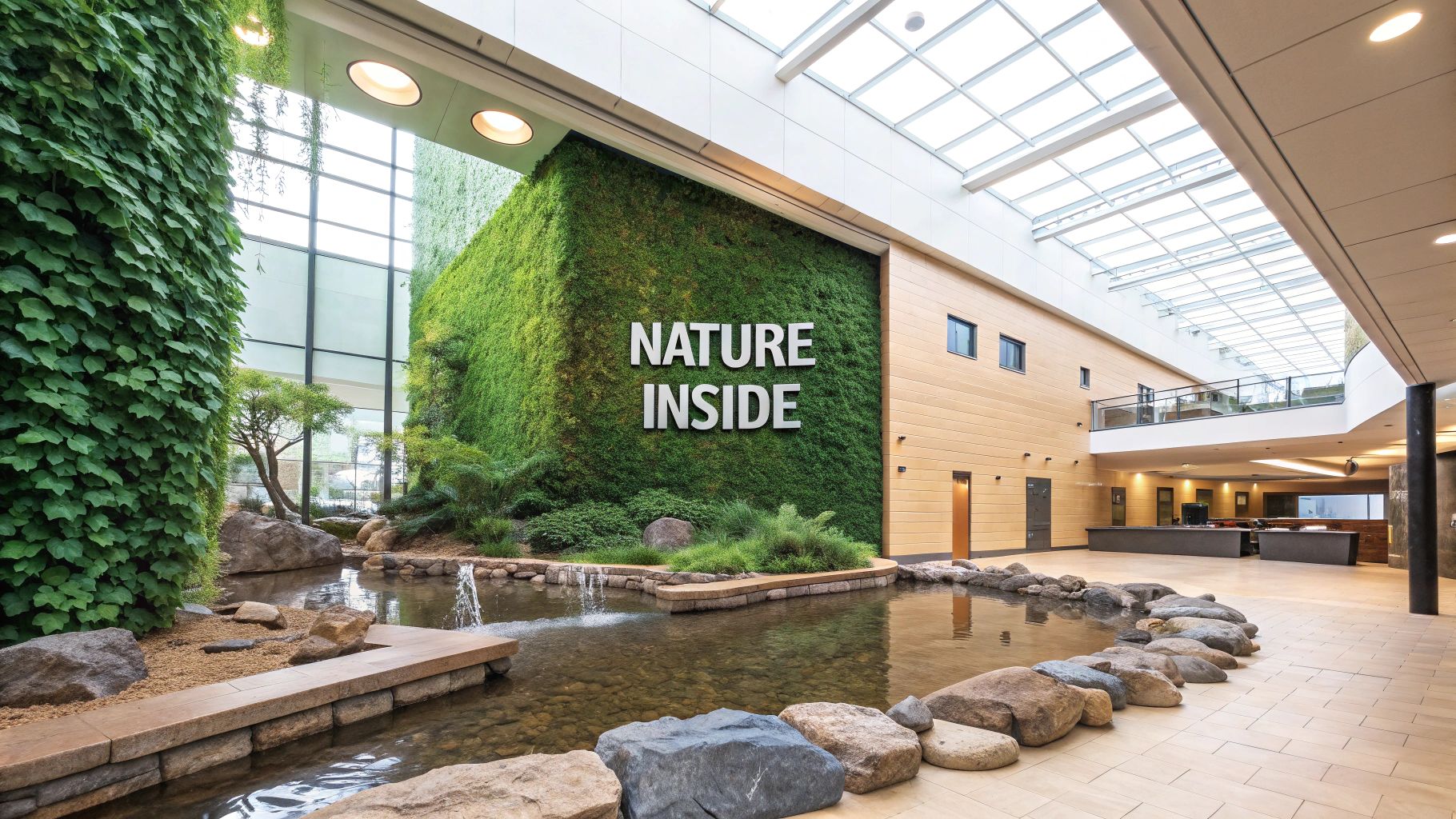
Biophilic architecture is a design philosophy that seeks to connect building occupants more closely to nature by integrating natural elements, materials, and forms into the built environment. This approach is rooted in the concept of biophilia, the idea that humans possess an innate tendency to seek connections with nature. Far from being merely decorative, this is one of the styles of contemporary architecture that prioritizes creating healthier, more productive, and psychologically restorative spaces through the deliberate use of living plants, natural light, water features, and organic patterns.
Key Characteristics and Implementation
The essence of biophilic design is creating a multi-sensory connection to the natural world. Key features include extensive living green walls, indoor gardens, natural materials like wood and stone, maximized daylight, and views of nature. Organic forms and patterns that mimic those found in the wild are also central to this style.
Implementation Tips for Commercial Projects:
- Assess Local Ecology: Start by analyzing the local climate and native flora. Using indigenous plants reduces maintenance and water needs while creating an authentic sense of place.
- Layer Natural Connections: Go beyond a single green wall. Incorporate multiple layers of nature, such as direct access to gardens, natural ventilation, water features for auditory appeal, and materials with natural textures.
- Integrate Maintenance Systems: Plan for irrigation, drainage, and plant care from the project's inception. Automated systems are crucial for the long-term health and viability of large-scale plantings like those in Milan's Bosco Verticale.
Applications and Considerations
Biophilic design is exceptionally well-suited for workspaces, healthcare facilities, and hospitality venues where occupant well-being directly impacts outcomes. Corporate headquarters like Amazon's Spheres in Seattle use it to boost creativity and reduce stress. In adaptive reuse projects, biophilic elements can revitalize industrial or dated structures, creating a stark, appealing contrast between the building's original shell and a lush interior.
However, the approach demands significant upfront investment in specialized systems for irrigation and horticulture, along with ongoing maintenance budgets. Structural engineering must account for the added weight of soil, water, and plants. Building codes for fire safety and waterproofing require careful navigation, especially when integrating extensive interior plant life and water features.
6. Neo-Brutalism
Neo-Brutalism revives the monumental spirit of its mid-century predecessor, celebrating raw materials, bold geometric forms, and an unapologetic display of structure. It moves beyond the often-criticized coldness of original Brutalism by integrating contemporary technology, a greater emphasis on natural light, and refined detailing. This modern interpretation champions material honesty, particularly with exposed concrete, creating powerful, sculptural buildings that feel both permanent and dynamic. It stands as one of the more assertive styles of contemporary architecture, valuing structural expression over ornamentation.
Key Characteristics and Implementation
The essence of Neo-Brutalism is its focus on mass, texture, and form. Key features include large-scale cast-in-place concrete elements, a monolithic appearance, and deep-set windows that create dramatic shadow play. While concrete is the star, it is often paired with contrasting materials like glass, steel, or warm wood to soften interiors and enhance the user experience.
Implementation Tips for Commercial Projects:
- Specify High-Quality Concrete: The final aesthetic depends entirely on the concrete mix and formwork. Use high-performance concrete and meticulously crafted molds to achieve a smooth, consistent finish.
- Integrate Modern Systems: Thoughtfully conceal modern MEP (mechanical, electrical, plumbing) systems within the concrete structure to maintain clean lines without sacrificing functionality, a key improvement over its historical counterpart.
- Balance Form with Comfort: Use the building's significant thermal mass to your advantage for passive heating and cooling. Counterbalance the hard surfaces with softer interior finishes, greenery, and strategic lighting to create inviting spaces for employees or customers.
Applications and Considerations
Neo-Brutalism is exceptionally well-suited for cultural institutions like museums and theaters, as well as civic buildings and high-end commercial headquarters that aim to project an image of strength, permanence, and artistic gravity. The style's dramatic and photogenic nature also makes it popular for boutique hotels and unique retail experiences.
In adaptive reuse, this approach can add a bold, contemporary wing to a historic building, creating a clear distinction between old and new. However, the weight and complexity of concrete construction demand significant structural planning and skilled labor. Detailing for water management is critical; proper drainage and sealing are essential to prevent staining and long-term degradation of the concrete facade, ensuring the building ages gracefully.
7. High-Tech Architecture
High-Tech architecture is an assertive style that celebrates the building's engineering and technological systems by making them visible aesthetic features. Emerging in the 1970s, it turns buildings "inside-out," moving structural frameworks and mechanical services to the exterior. This approach showcases the logic and process of construction, transforming functional components like steel skeletons, pipes, and elevators into the primary ornamentation. As one of the more expressive styles of contemporary architecture, it emphasizes transparency, industrial materials, and a commitment to technological innovation as the core design driver.
Key Characteristics and Implementation
The essence of High-Tech architecture is the glorification of technology and industrial aesthetics. Key features include exposed steel or aluminum structures, extensive use of glass, and clearly articulated mechanical systems. Designs often feature a lightweight, prefabricated, or modular quality, reflecting an adaptable and forward-looking philosophy seen in iconic works like the Pompidou Centre in Paris and the Lloyd's Building in London.
Implementation Tips for Commercial Projects:
- Integrate Systems Early: The visual expression of mechanical, electrical, and plumbing (MEP) systems is central to the design. Involve engineering teams from the very beginning to ensure these elements are thoughtfully integrated, not just attached.
- Detail for Durability: Exposed systems and structures are subject to weathering. Specify robust, high-performance coatings and materials like stainless steel or galvanized metal to ensure longevity and minimize maintenance.
- Plan for Maintenance: Making systems visible also means making them accessible. Design with future maintenance in mind, providing clear access points and pathways for technicians without disrupting building operations.
Applications and Considerations
This style is particularly well-suited for projects that benefit from large, column-free interior spaces, such as exhibition halls, transportation hubs like Madrid-Barajas Airport's Terminal 4, and innovative corporate headquarters. The modularity and prefabrication inherent in the style can also accelerate construction schedules for projects like data centers or research facilities.
In adaptive reuse, applying a High-Tech approach can create a striking contrast by adding an exposed, modern structural or mechanical system to a historic building, highlighting both the old and the new. However, the complexity of coordinating and detailing exposed systems demands meticulous project management. Furthermore, achieving high levels of energy efficiency can be a challenge, requiring advanced glazing solutions and careful thermal-break detailing to counteract the potential for heat loss through extensive metal frameworks.
8. Contextual/Vernacular Contemporary
Contextual contemporary architecture, often called modern vernacular, creates a dialogue between past and present. It respects and adapts local building traditions, materials, and climate-responsive strategies while integrating modern design principles and technology. This approach rejects a one-size-fits-all globalized aesthetic, instead creating buildings deeply rooted in their specific place and culture. It is one of the most socially and environmentally conscious styles of contemporary architecture, valuing regional identity and wisdom.
Key Characteristics and Implementation
The essence of this style is its responsiveness to site, climate, and culture. It often features locally sourced materials like earth, stone, or timber, and incorporates passive design strategies borrowed from traditional buildings, such as natural ventilation and strategic shading. The form may evoke historical archetypes while being executed with modern precision.
Implementation Tips for Commercial Projects:
- Thorough Research: Begin by studying the region's architectural history, climate patterns, and available materials. Engage with local communities to understand cultural practices and spatial needs.
- Local Sourcing and Labor: Prioritize materials sourced from the region to reduce the carbon footprint and support local economies. Train and employ a local workforce, transferring valuable skills.
- Adapt Traditional Techniques: Modernize traditional climate-control methods. For example, adapt the principles of a shaded courtyard or a ventilated roof for a modern office or retail complex to reduce reliance on mechanical HVAC.
Applications and Considerations
This approach is ideal for projects where cultural identity and sustainability are paramount, including community centers, schools, eco-lodges, and public buildings. It creates structures that resonate with the local population and offer a unique sense of place, which can be a powerful differentiator for a commercial brand. A prime example is the work of Diébédo Francis Kéré, whose schools in Burkina Faso use local clay and community labor to create innovative, climate-appropriate designs.
For adaptive reuse, this style provides a framework for respectfully integrating new functions into historic settings, using contemporary forms that complement rather than mimic the old. However, it requires a deep commitment to research and community engagement, and may involve adapting modern building codes to accommodate traditional materials or methods. The outcome is a building that is not just functional, but meaningful.
9. Adaptive Reuse/Heritage Contemporary
Adaptive Reuse is a design approach that breathes new life into existing buildings, repurposing them for functions different from their original intent. This sustainable practice celebrates architectural heritage by preserving the structure's soul while integrating contemporary elements for modern use. Instead of demolishing and rebuilding, this style of contemporary architecture creates a rich dialogue between past and present, resulting in unique, character-filled spaces that reduce embodied carbon and honor historical context. Prominent examples include London's Tate Modern, a former power station, and Cape Town's Zeitz MOCAA, ingeniously converted from a grain silo.
Key Characteristics and Implementation
The success of adaptive reuse hinges on a sensitive balance between preservation and intervention. Key features include the juxtaposition of old and new materials, the celebration of original structural elements like exposed brick or timber beams, and the clever insertion of modern systems and amenities. The goal is to make the building's history legible while ensuring it meets contemporary performance and accessibility standards.
Implementation Tips for Commercial Projects:
- Conduct Thorough Assessments: Before design begins, a comprehensive structural and hazardous materials survey is non-negotiable. Efficiently assessing existing structures is key, and modern drone operations for infrastructure inspections are revolutionizing this critical preliminary stage, providing detailed data safely.
- Balance Preservation and Modern Needs: Work with heritage consultants to identify key character-defining features. Plan for modern necessities like accessibility, thermal comfort, and high-performance MEP systems without compromising the building's historic integrity.
- Strategic Material Contrast: Use contemporary materials like steel, glass, and polished concrete to clearly distinguish new interventions from the original fabric. This contrast highlights both old and new, creating a dynamic aesthetic.
Applications and Considerations
This approach is ideal for revitalizing urban cores, transforming vacant warehouses, factories, schools, and churches into vibrant offices, hotels, retail centers, or residential lofts. It offers significant marketing advantages by providing a unique story and a memorable sense of place that new construction often lacks.
However, adaptive reuse presents unique challenges. Unforeseen conditions can lead to budget and schedule overruns, and navigating historic preservation regulations can be complex. Integrating modern mechanical, electrical, and plumbing systems into a structure not designed for them requires creative engineering solutions. The payoff, however, is a culturally significant and environmentally responsible project that stands apart in the marketplace.
10. Kinetic/Interactive Architecture
Kinetic and interactive architecture represents the cutting edge of design, creating buildings that are dynamic, responsive, and engaging. This innovative approach integrates movement and technology, allowing structures to adapt to environmental conditions, user needs, or programmed events. Moving beyond static forms, these designs incorporate transformable spaces, responsive facades, and digital interactivity, treating the building as an evolving system rather than a fixed object. It is one of the most forward-thinking styles of contemporary architecture, blurring the lines between structure, machine, and user experience.
Key Characteristics and Implementation
The core of kinetic architecture is its ability to physically change. This is achieved through mechanical systems, smart materials, sensors, and automation. Key examples include the light-sensitive diaphragms of the Institut du Monde Arabe in Paris and the responsive, sun-tracking shades of Abu Dhabi's Al Bahar Towers, both of which optimize energy performance and occupant comfort.
Implementation Tips for Commercial Projects:
- Define a Clear Purpose: Kinetic elements must serve a clear functional goal, such as energy management, spatial flexibility, or user engagement. Avoid movement for its own sake.
- Plan for Longevity: Mechanical systems require maintenance and can fail. Prioritize robust, reliable engineering and design for easy access to components for repair or replacement.
- Balance Innovation and Practicality: While technologically advanced, the systems must be intuitive and functional for everyday use. Extensive testing before implementation is critical to work out any operational issues.
Applications and Considerations
This style is ideal for landmark corporate headquarters, cultural institutions, and high-tech R&D facilities where a building’s design can communicate a brand’s commitment to innovation. It offers unparalleled flexibility, allowing a single space to be reconfigured for different uses, from an open-plan office to a partitioned event venue. The interactive potential can create immersive retail or museum experiences that captivate visitors.
However, the initial investment and long-term lifecycle costs are significant considerations. The complexity of mechanical and control systems demands specialized expertise in design, engineering, and construction. For adaptive reuse projects, integrating kinetic elements into historic structures is highly complex and often impractical, though interactive digital overlays can add a dynamic layer without altering the original fabric.
Comparison of 10 Contemporary Architecture Styles
| Style | 🔄 Implementation complexity | ⚡ Resource requirements | 📊 Expected outcomes | ⭐ Key advantages | 💡 Ideal use cases |
|---|---|---|---|---|---|
| Minimalist Architecture | 🔄 Low — simple forms, disciplined detailing | ⚡ Moderate — modest quantities, high-quality finishes | 📊 Calm, spacious, low-maintenance interiors | ⭐ Timeless aesthetic; cost-effective operation | 💡 Residential, galleries, small commercial — invest in materials & lighting |
| Parametric Architecture | 🔄 High — algorithmic workflows and iteration | ⚡ High — specialized software, computational team, digital fabrication | 📊 Complex, optimized forms; possible constructability trade-offs | ⭐ Optimization, novel forms, material efficiency | 💡 Signature projects, performance-driven facades — coordinate engineers early |
| Sustainable / Green Architecture | 🔄 Moderate — integrated environmental systems | ⚡ Moderate–High upfront — renewables, insulation, certifications | 📊 Lower operating costs, reduced carbon footprint, healthier occupants | ⭐ Long-term savings; marketability; environmental benefits | 💡 Offices, housing, institutional projects — do site/climate analysis |
| Deconstructivism | 🔄 High — fragmented geometry and detailed engineering | ⚡ High — bespoke fabrication, skilled contractors | 📊 Striking, iconic forms; potential functional compromises | ⭐ Strong visual impact and cultural provocation | 💡 Museums, cultural landmarks — ensure buildability and detailed docs |
| Biophilic Architecture | 🔄 Moderate — integrates living systems and daylight strategies | ⚡ Moderate — plants, irrigation, specialist maintenance | 📊 Improved well‑being, productivity, urban biodiversity | ⭐ Health and comfort benefits; restorative environments | 💡 Workplaces, healthcare, residential — plan maintenance & native planting |
| Neo‑Brutalism | 🔄 Moderate — heavy structural work, precise concrete detailing | ⚡ Moderate — concrete-intensive, robust workmanship | 📊 Monumental, durable presence with strong material expression | ⭐ Durability; structural honesty; long lifespan | 💡 Institutional or cultural buildings — use quality formwork and weather detailing |
| High‑Tech Architecture | 🔄 High — exposed systems require tight coordination | ⚡ High — advanced M&E, materials, specialist contractors | 📊 Highly functional, adaptable buildings highlighting engineering | ⭐ Systems integration; adaptability; performance transparency | 💡 Airports, labs, tech hubs — document systems and plan maintenance access |
| Contextual / Vernacular Contemporary | 🔄 Low–Moderate — adapts traditional methods to modern needs | ⚡ Low–Moderate — local materials, community resources | 📊 Strong cultural fit, climate-appropriate performance | ⭐ Sense of place; lower embodied impact via local sourcing | 💡 Regional housing, community buildings — engage local crafts and materials |
| Adaptive Reuse / Heritage Contemporary | 🔄 High — surveys, code/heritage constraints, complex coordination | ⚡ Moderate — renovation costs, heritage consultants, contingencies | 📊 Preserved heritage, reduced embodied carbon, unique interiors | ⭐ Environmental and cultural value; urban revitalization | 💡 Conversions (warehouses, industrial) — thorough assessments and phased work |
| Kinetic / Interactive Architecture | 🔄 Very High — moving systems, controls, realtime responsiveness | ⚡ Very High — mechanical systems, sensors, ongoing maintenance | 📊 Dynamic user experiences; responsive performance with reliability risk | ⭐ Engagement, flexibility, optimized environmental control when reliable | 💡 Pavilions, responsive facades, experimental buildings — define purpose and ensure robust maintenance |
Building the Future: Choosing the Right Architectural Style
Navigating the diverse landscape of contemporary architecture can feel like learning a new language. As we've explored, each style, from the stark honesty of Neo-Brutalism to the flowing, nature-inspired forms of Biophilic design, offers a unique vocabulary to solve complex design problems. The journey through these distinct approaches reveals a powerful truth: style is never just about aesthetics. It is a strategic tool that directly influences a project's functionality, its relationship with its environment, and its ultimate financial performance.
The decision is not merely a choice between curved glass and exposed concrete. It's about selecting a framework that best aligns with your project's core objectives. The styles of contemporary architecture we've examined are responses to modern challenges-sustainability, urban density, technological integration, and a renewed desire for human-centric spaces.
From Theory to Tangible Assets
Understanding these styles is the first step; applying them effectively is what creates lasting value. For developers and property owners, especially in dynamic markets like South Carolina, this knowledge translates into tangible benefits.
- Financial Performance: A project designed with Sustainable principles can significantly lower long-term operational costs, while a thoughtfully executed Adaptive Reuse can unlock immense value in an underutilized historic property, often leveraging tax incentives.
- Market Positioning: A bold Deconstructivist or Parametric design can become a local landmark, attracting premium tenants and media attention. Conversely, a Contextual design can foster community goodwill and ease the approvals process in sensitive historic districts.
- Future-Proofing: Embracing High-Tech or Kinetic Architecture isn't just about current trends. It's about building flexible, responsive structures that can adapt to the technological and social shifts of tomorrow, ensuring your asset remains relevant for decades.
The most critical takeaway is that these styles are not mutually exclusive. The most innovative projects often blend elements from different movements. Imagine a High-Tech office tower that integrates Biophilic principles to improve employee well-being, or an Adaptive Reuse project that uses Minimalist interiors to highlight historic textures. This synthesis is where true architectural excellence lies.
Actionable Next Steps: Aligning Vision with Execution
Selecting the right architectural direction is a foundational decision that impacts every subsequent phase of your project, from site planning and structural engineering to interior fit-outs and landscape design. It requires a partner who not only understands the visual language of these styles but also grasps their practical implications regarding building codes, material sourcing, energy performance, and constructability.
The styles of contemporary architecture provide a rich palette for creating buildings that are not only beautiful but also intelligent, efficient, and deeply connected to their purpose and place. Choosing the right approach is the first step toward building a legacy-one that respects its context, serves its occupants, and delivers a powerful return on investment. The future of our built environment is being shaped by these ideas, and by making informed choices today, you are actively participating in building a more inspiring and resilient tomorrow.
Ready to translate these architectural concepts into a successful project? The team at Sherer Architects, LLC specializes in navigating the complexities of contemporary design, from adaptive reuse in historic contexts to innovative new construction. We transform your vision into a built reality that is both strategic and inspiring. Visit us at Sherer Architects, LLC to see how we can bring our expertise to your next venture.