Bringing an architectural vision to life is a journey, one that methodically turns an initial idea into a physical, inhabitable space. This isn't a chaotic, artistic frenzy; it's a structured process broken down into six core stages. Following this path ensures every decision, from the big picture down to the smallest detail, is made thoughtfully and in the right order.
Your Blueprint for the Design Journey
Think of the architectural design process as a carefully planned expedition rather than a leap of faith. Much like a chef perfecting a recipe step-by-step, an architect navigates a project through a series of logical phases. Each stage builds on the one before it, creating a clear roadmap that helps manage costs, avoid surprises, and unlock the project's full potential.
At Sherer Architects, we treat this process as a true partnership. It's a constant conversation between your aspirations and our expertise, making sure the final building is a perfect fit for your needs, budget, and the land it sits on. Before starting, it’s helpful to get clear on who does what, beginning with understanding the distinction between an architect and a building designer.
The Core Phases of Design
The entire architectural journey can be organized into six distinct phases. Each one has a clear purpose and a set of outcomes that move the project forward, preventing costly mistakes and ensuring a smooth progression from one step to the next.
For a quick overview, here's how the entire process breaks down.
The Six Phases of Architectural Design
| Phase | Primary Goal | Key Deliverables |
|---|---|---|
| 1. Programming | Define the project's core needs, goals, and constraints. | A detailed program document, site analysis, initial budget. |
| 2. Schematic Design | Translate the program into broad design concepts. | Sketches, basic floor plans, initial 3D models. |
| 3. Design Development | Refine the chosen design and make key decisions. | Detailed floor plans, material selections, systems outlines. |
| 4. Construction Documents | Create the technical "instruction manual" for the builder. | Comprehensive drawing set, technical specifications. |
| 5. Bidding & Negotiation | Select the right contractor for the job. | Bid analysis, contractor proposals, signed contract. |
| 6. Construction Administration | Oversee construction to ensure it matches the design intent. | Site visit reports, payment certifications, project closeout. |
Each phase serves as a crucial checkpoint, allowing us to confirm we're on the right track before committing to the next level of detail.
The six main stages are:
-
Phase 1: Pre-Design (Programming): This is where we dig deep to define the "why" behind your project. We'll establish clear goals, figure out exactly what spaces you need, and align on a realistic budget. It’s all about research and discovery.
-
Phase 2: Schematic Design: With a solid program in hand, we start translating those words and numbers into big-picture ideas. This is where we explore initial floor plans, test out different building shapes, and see how it all fits on the site.
-
Phase 3: Design Development: Here, we take the approved schematic design and flesh it out. We get serious about materials, lock in the building’s systems (like HVAC and plumbing), and refine the overall look and feel.
-
Phase 4: Construction Documents: This is the most technically intensive phase. We create the highly detailed drawings and specifications that the builder will use as their guide. Think of it as the complete instruction manual for your building.
-
Phase 5: Bidding or Negotiation: With the "manual" complete, we help you find the right builder. This involves getting competitive bids or negotiating with a preferred contractor to ensure you get a fair price for quality work.
-
Phase 6: Construction Administration: During the build, we act as your expert eyes and ears on the job site. We make sure the contractor is following the plans, answer questions as they come up, and advocate for your interests from groundbreaking to final walkthrough.
This phased approach is the industry standard for a reason: it imposes order on an incredibly complex undertaking. It ensures that critical decisions are made at the right time, preventing the need for expensive backtracking and redesigns later in the process.
By understanding this roadmap, you'll know exactly what to expect at every turn. It demystifies the path from a simple idea to moving-in day, creating a framework for a successful collaboration and, ultimately, a building that truly brings your vision to life.
Defining the Vision in Pre-Design
Every great building starts with a conversation, not a sketch. Before we even think about drawing a single line, we dive into the first crucial stage of the architectural design process: Pre-Design, which we often call programming. This is the diagnostic work—the deep thinking that ensures the entire project is built on a rock-solid foundation of purpose and clarity.
Think of us as a doctor consulting with a patient before ever writing a prescription. We work closely with you to get to the heart of the project's "why." What are its core goals? How will people really use this space day-to-day? What does success look like five or ten years from now? These are the kinds of probing questions we ask to uncover the true soul of the project.
This initial journey is all about turning an abstract vision into a concrete plan, as you can see below.
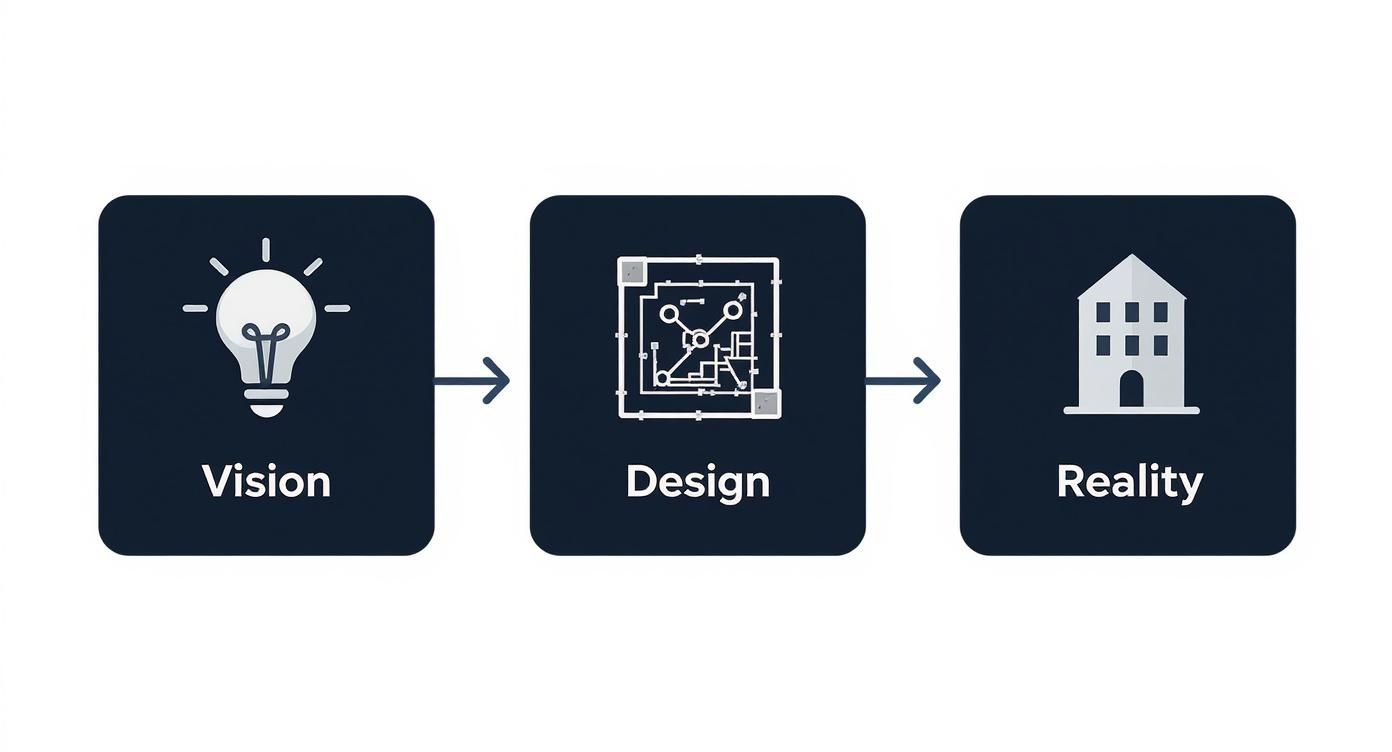
This simple flow really drives home how a clear vision is the essential starting point for the entire design and construction journey. Without it, even the best projects can lose their way.
Gathering the Essential Data
To build this shared vision, we go on a fact-finding mission. This isn't just about passively collecting information; it's an active investigation into the project's DNA, and it informs every single decision that follows.
Here’s what that looks like in practice:
- Site Analysis: We get to know the property intimately. We'll study everything from sun paths and prevailing winds to the site's topography and existing trees. This isn't just academic—it tells us exactly how to orient the building for the best natural light, views, and energy performance.
- Zoning and Code Review: Our team digs into the local zoning ordinances, building codes, and any special Design Review Board requirements. Nailing down these legal constraints from the get-go helps us avoid incredibly costly redesigns and delays down the road.
- Feasibility Studies: We ask the tough questions to make sure the project is truly viable from a financial, legal, and technical perspective. This is where we define a realistic preliminary budget and a workable project timeline.
The ultimate deliverable from this phase is a comprehensive document we call the 'program.' Think of it as the project's constitution—a detailed guide outlining every single requirement, goal, and constraint. It becomes the touchstone we refer back to throughout the entire process.
Setting Sustainability Goals
Defining the project's vision also means defining its values. Today, sustainability isn't just a nice-to-have feature; it’s a core objective we weave into the project from day one. This often means looking at frameworks like the Top Sustainable Building Certifications, which give us clear, measurable targets for energy performance, material choices, and the well-being of the people who will use the space.
By investing so much effort in the Pre-Design phase, we make sure the project starts off on the right foot. It’s the step where we transform abstract ideas into a defined set of instructions, aligning your vision with the practical realities of the site, the budget, and the regulations. This meticulous groundwork is the secret to a successful architectural design process, paving the way for a design that isn’t just beautiful, but perfectly suited to its purpose.
Bringing Ideas to Life with Schematic Design
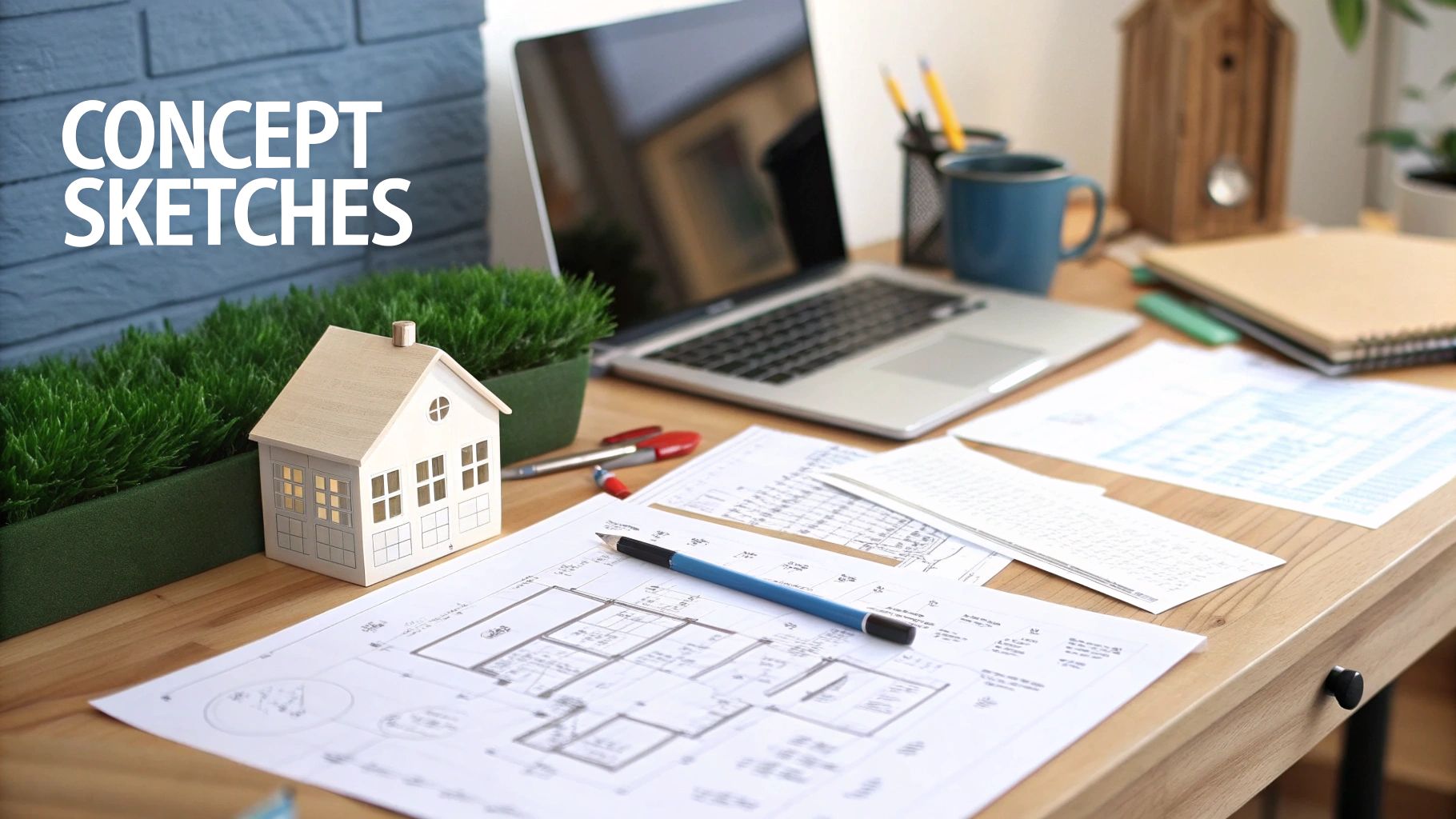
Once we've nailed down the project's 'what' and 'why' in the programming phase, it's time to start exploring the 'how.' This is where we enter Schematic Design, the part of the architect design process where abstract goals finally start to look like a building. It's the fun, big-picture stage where the first real ideas take shape.
Think of it as the initial sketch for a masterpiece. We're not worried about the fine details just yet—our focus is on the broad strokes. We're exploring the fundamental questions of form, flow, and feeling that will define the entire project.
This is a deeply collaborative part of the journey. It's a constant dialogue between our team and you, a dynamic period of tossing ideas around, asking "what if," and honing the project's core identity until we all agree on a clear, compelling direction forward.
From Words to Shapes
The main job here is to translate the written program into a physical, spatial strategy. We'll sketch out several different design options to see how different arrangements might solve the unique puzzle your project presents. It’s not about finding the one "right" answer on the first try, but about discovering the best answer through experimentation.
To get there, we use a whole host of tools, moving from the simple to the more complex:
- Bubble Diagrams: These are incredibly simple drawings that just map out relationships. They help us figure out which rooms need to be next to each other and which should be kept apart, all without getting bogged down by the exact location of walls.
- Hand Sketches: Nothing beats the speed of a pen on paper. Quick, expressive drawings let us test out the building’s overall shape, its presence, and its character from multiple angles.
- Rough Floor Plans: We'll start laying out basic floor plans showing the general size and placement of rooms, how you'll move through the space, and where major elements like windows and doors might go.
- Simple 3D Models: Using digital tools, we build basic massing models. These help us study the building's scale and proportions and, just as importantly, see how it will interact with the site, the landscape, and the path of the sun.
This phase is all about staying fluid and exploratory. By generating and reviewing several distinct concepts, we make sure no stone is left unturned. This process often uncovers unexpected opportunities and gives us all the confidence that we've chosen the strongest path before we commit to more detailed, time-intensive work.
Key Questions We Answer
During Schematic Design, our goal is to get the project's foundation right. It's a critical checkpoint to ensure the design, the program, the site, and the budget are all in sync before we dive any deeper. By the time we're done, we will have clear answers to some essential questions.
Establishing the Fundamentals
- Overall Layout: How is the building organized? Where are the main entrances, and what is the circulation path through the space?
- Scale and Form: What is the building's general size, shape, and height? How does it sit on the land and respond to its surroundings?
- Site Relationship: How does our design work with the views, sun paths, and landscape features we identified back in pre-design?
- Preliminary Budget Check: Is this concept on track with the budget? We do an initial cost analysis here to make sure the project is still financially sound.
This phase wraps up when you give the green light to a single design concept. That approved scheme then becomes the bedrock for the next stage, Design Development, where we’ll start refining all the details, selecting materials, and adding layers of technical precision to the big-picture vision we’ve created together.
Refining the Details in Design Development
If Schematic Design is the confident pencil sketch of your project, Design Development is where we pick up the fine-tipped ink pen. This is where we start adding the layers of detail, color, and texture that bring the building to life. It's a crucial middle phase where broad concepts harden into concrete decisions. We take the approved schematic design as our foundation and begin meticulously, precisely fleshing it out.
The freewheeling creative exploration of the last stage now shifts to a more analytical, technical focus. We’re moving from asking "what if?" to defining "what is." It’s in this stage that the project’s true character begins to emerge, as we make firm choices about the materials, systems, and finishes that will shape the final building.
From Broad Strokes to Specific Solutions
During Design Development, we scrutinize and refine every single aspect of the project. We aren't just drawing a "wall" anymore; we're defining exactly how that wall will be constructed, what it will be made of, and how it will perform. This kicks off an intense period of coordination and decision-making.
Here’s what’s happening on our end:
- Material Selection: We go from general ideas to selecting specific products. This means choosing the exact type of brick for the exterior, the particular flooring for the lobby, and the specific light fixtures for the offices.
- Systems Integration: Our collaboration with engineering consultants kicks into high gear. We work shoulder-to-shoulder with structural, mechanical, electrical, and plumbing (MEP) engineers to weave their systems seamlessly into the architectural design.
- Detailed Drawings: The initial floor plans and elevations get a major upgrade. They become much more specific, showing window and door types, cabinetry layouts, and key construction details that tell a much richer story.
This process ensures that every piece of the puzzle fits together as a cohesive, functional, and beautiful whole before we commit to the highly technical construction documents.
The Power of Digital Precision
This phase is where we really lean on advanced digital tools to manage the growing complexity. It’s a huge shift in how architecture has been practiced for generations. A 2020 survey found that over 85% of architecture firms use computer-aided design (CAD) software daily, a massive jump from less than 20% back in the 1980s. On top of that, Building Information Modeling (BIM) is now used by about 70% of firms on larger projects, allowing us to create intelligent 3D models packed with data. You can explore more about how technology has changed architecture to get a feel for this evolution.
At this point, the 3D model becomes a virtual prototype of the building. It allows us to test material combinations, study how light moves through a space, and—most importantly—identify and resolve potential conflicts between different building systems before they can cause costly delays on the construction site.
This digital approach gives you an incredibly clear and realistic vision of the final outcome. Through detailed renderings and virtual walkthroughs, you can experience the space long before a single shovel hits the dirt, giving you complete confidence in the decisions being made.
Setting the Stage for Construction
By the time we wrap up the Design Development phase, the project is comprehensively defined. We'll have produced a robust set of drawings and outline specifications that describe the scope, quality, and appearance of the entire building. This detailed package gives us a solid basis for updating cost estimates with much greater accuracy.
Think of this phase as the final design checkpoint. Once you approve the Design Development set, you're giving us a clear and detailed mandate to proceed into the final, most technical phase of design: creating the construction documents. This methodical refinement is what transforms a great concept into a well-executed, enduring piece of architecture.
Creating the Builder's Instruction Manual
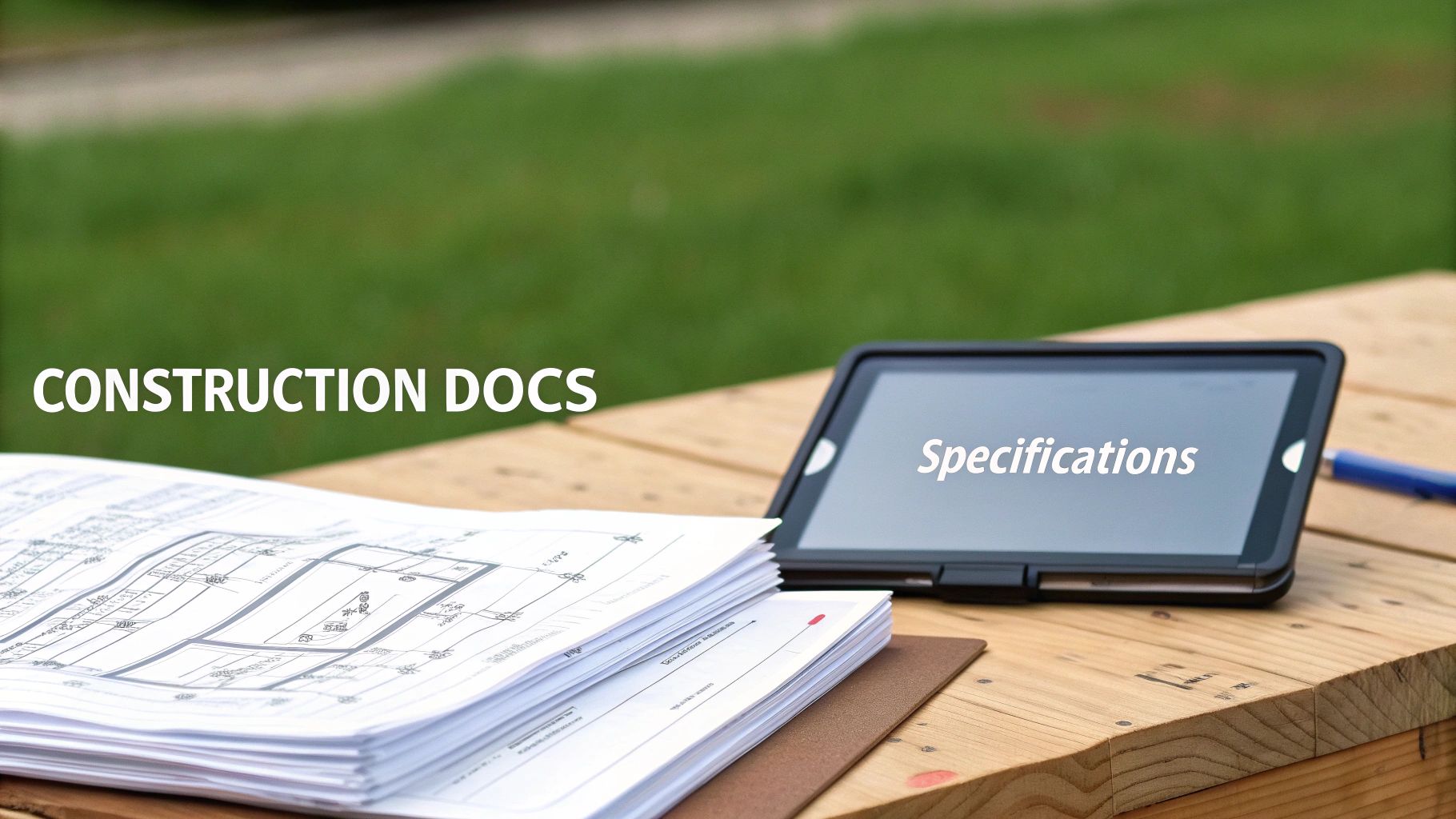
Once we've hammered out the design in the previous stage, we move into what is easily the most technical and exhaustive part of the architect design process: creating the Construction Documents (CDs). This is where the big, creative ideas give way to microscopic precision.
Think of it like this: we’re writing the official, legally binding instruction manual for the builder. These aren't just drawings; they are a complete set of directions that leave absolutely nothing to chance. Every single bolt, board, and light switch is accounted for.
This level of detail is a direct result of how the profession has evolved. Centuries ago, a master builder might have worked from a few simple sketches. But with new technologies and increasingly complex projects, the need for precision grew. The Industrial Revolution brought lithography, which meant architects could suddenly produce large, accurate prints for better coordination. You can learn more about this architectural evolution and see how it led to the highly detailed documents we depend on today.
What Goes Into the Construction Documents
The CD set is a hefty package. It's a combination of highly detailed drawings and comprehensive written specifications that, together, tell the building's entire story. The goal is simple: communicate the design so clearly that a qualified builder can bring it to life exactly as we planned.
This package is made up of a few key parts:
- Architectural Plans: These are the master drawings—floor plans, elevations, sections, and zoomed-in details. They specify every dimension, material, and assembly method from the foundation right up to the roof shingles.
- Structural Engineering Drawings: Developed with our engineering partners, these plans show the building’s skeleton. This includes the foundation, columns, beams, and all the framing needed to make sure the structure is strong and safe.
- MEP System Layouts: This is the roadmap for the building’s nervous system: Mechanical, Electrical, and Plumbing. These drawings map out every duct, wire, outlet, and pipe.
- Written Specifications: Often called the "spec book," this is the written counterpart to the drawings. It spells out the required quality for materials, specific installation techniques, and performance standards.
The level of detail here is almost staggering. We’re specifying the exact model number of a doorknob, the type of screw used to install it, the precise layering of a wall assembly, and the thermal performance rating for the windows. There is no room for error.
Why This Phase Is So Critical
You really can't overstate the importance of getting these Construction Documents right. This "instruction manual" does more than just tell the builder what to do; it serves two other crucial functions.
First, this is what we submit to the local authorities to get a building permit. The city's plan checkers comb through these documents to ensure every part of the project meets building codes, zoning laws, and safety regulations. Any mistake or missing piece of information can cause major delays.
Second, the CDs are the foundation for the bidding process. Contractors use this set to calculate their costs for labor and materials down to the last dollar. A detailed, unambiguous set of documents means all the builders are bidding on the exact same project, which gives you a truly fair and competitive basis for making your choice. This meticulous work is the final gatekeeper before your project breaks ground, protecting both the design's integrity and your investment.
From Blueprint to Built Reality
With a complete set of Construction Documents in hand, the project is finally ready to jump off the page and into the real world. This is the moment we shift from planning a meticulously detailed idea to building a physical structure. It marks the start of the last two phases of the architect design process, where we help you select the right builder and then oversee their work to make sure it’s done right.
During these final steps, our role evolves. We transition from being the primary designer to your trusted advocate and quality controller, making sure the vision captured in the blueprints is executed with precision on the job site. This is where years of careful planning pay off in the exciting reality of construction.
Selecting the Right Construction Partner
The first big step here is Bidding and Negotiation. Using the comprehensive Construction Documents as our guide, we help you find and select the contractor who is the perfect fit to build your project. It's a critical decision that ensures you get a fair price for high-quality craftsmanship.
There are generally two ways we can go about this:
- Competitive Bidding: We can send the project documents out to several qualified general contractors. Each one will prepare a detailed proposal, or "bid," breaking down their costs for labor and materials. Putting the project out to bid like this creates a competitive environment that helps keep pricing honest and in line with the market.
- Negotiation: Alternatively, if you already have a builder you know and trust, we can move straight into negotiations. We’ll sit down with your preferred contractor, using our detailed documents to work toward a fair, mutually agreed-upon price and a solid construction contract.
No matter which path you choose, our job is to be your expert guide. We'll help you analyze the bids, look into the contractors' qualifications, and compare the proposals in a true "apples-to-apples" way so you can make a fully informed decision.
Overseeing Construction Quality
Once a contractor is hired and a contract is signed, we enter the final phase: Construction Administration. An architect's job doesn't stop when the drawings are finished; in many ways, it's just getting started. Throughout construction, we act as your representative on the job site.
Our main responsibility during this phase is to ensure the building is constructed exactly as we designed it, following the construction documents and meeting the highest standards of quality. We become your eyes and ears, protecting your investment and advocating for the integrity of the design.
It's important to know this isn't the same as project management—that's the contractor's job. Our role is all about observation, verification, and creative problem-solving. This involves a handful of key activities that keep the project running smoothly from the day they break ground to the day we hand you the keys.
Key Architect Responsibilities During Construction
- Site Meetings: We're there for regular meetings with you and the contractor to review progress, answer questions as they pop up, and tackle any challenges head-on.
- Quality Review: We make periodic visits to the site to observe the work firsthand and confirm that it matches the plans and specifications. This helps us spot potential issues early, before they become expensive problems to fix.
- Payment Certification: Each month, the contractor submits an application for payment. We review it carefully, verifying that the work they're billing for has actually been completed to the right standard before you release any funds.
- Problem Resolution: Construction is a complex process, and surprises happen. When unexpected conditions arise on-site, we work directly with the contractor to find smart solutions that respect the original design intent and stay within the budget.
This final phase of the architect design process is absolutely essential. It provides the crucial oversight needed to transform a detailed set of drawings into a successfully completed building—one that truly brings your vision to life and is built to last.
Common Questions We Hear From Clients
It's completely normal to have a lot of questions when you're starting a major building project. The architectural process has a lot of moving parts, so we've put together some straightforward answers to the questions we hear most often. We want you to feel confident and ready for the journey ahead.
How Long Will the Design Process Take?
That's the million-dollar question, and the honest answer is: it depends. There’s no standard timeline because every project has its own unique set of challenges and opportunities. A straightforward commercial renovation might move from initial ideas to construction-ready plans in just a few months. On the other hand, a complex, new-from-the-ground-up building could easily spend a year or more in the design phases alone, even before a shovel hits the dirt.
As a general rule of thumb, the first three phases—Programming, Schematic Design, and Design Development—often take somewhere between 3 and 9 months. The next stage, creating the detailed Construction Documents, is usually the most time-intensive part of our work and can take another 4 to 8 months simply because of the sheer level of technical detail required.
What’s the Best Way to Prepare for Our First Meeting?
The more prepared you are, the smoother the entire process will be. The best thing you can do before we even sit down together is to spend some time thinking about your goals and what inspires you.
- Know Your "Why": Get to the heart of what you're trying to achieve. Are you looking to boost employee productivity, create an unforgettable customer experience, or build a model of sustainability?
- Gather Your Inspiration: Start a collection of images. It could be buildings, interior spaces, textures, or even materials that you're drawn to. This creates a visual shortcut that helps us get on the same page with your aesthetic right from the start.
- Be Realistic About the Budget: It's important to have a clear idea of what you're comfortable investing. Remember to think beyond just the construction—the total budget will also need to cover design fees, engineering consultants, and city permits.
Coming to the table with a clear vision and budget doesn’t mean you need to have it all figured out. It just gives us a fantastic starting point for our collaborative discovery process and makes sure we get off on the right foot.
What Happens if We Need to Adjust the Budget?
It’s not uncommon for budgets to shift as a project develops. If costs need to be re-evaluated, we tackle it head-on with complete transparency. We'll lay out clear options for you to consider.
This might involve looking at alternative materials, simplifying a few design elements, or even breaking the construction into logical phases. Our job is to find creative solutions that keep the heart and soul of your project intact while working within the new financial picture.
How Do You Handle Disagreements on the Design?
Good design is born from good dialogue, and a healthy back-and-forth is a natural part of any creative partnership. We actually see those moments of differing opinions as valuable opportunities to make the design even stronger.
If we find ourselves at a crossroads, we always go back to the "program"—the foundational document we built together right at the beginning. By looking at the project’s core goals again, we can assess which design choice truly serves the mission. This ensures every decision we make is strategic, intentional, and moves us closer to the shared vision.
At Sherer Architects, LLC, we know that a well-informed client is the best kind of partner. If you're ready to tackle your next commercial, adaptive reuse, or historic preservation project with a team that puts clear communication and collaboration first, we’d love to talk. Start your project with us today.