The design process of an architect is how we take a client's abstract ideas—their hopes, needs, and dreams—and shape them into a tangible, buildable reality. It’s a journey that moves methodically from deep listening and analysis to creative exploration, detailed refinement, and technical documentation, culminating in the construction of the final building.
Turning a Client Vision Into a Viable Plan
Every great building starts not with a sketch, but with a conversation. The first and most crucial phase is a deep dive into the client's world. Our primary role here isn't to draw, but to listen and interpret.
This discovery goes way beyond a simple checklist of rooms and square footage. It’s about understanding the unspoken needs—the daily rituals that make a house a home, or the critical business objectives that drive a commercial space.
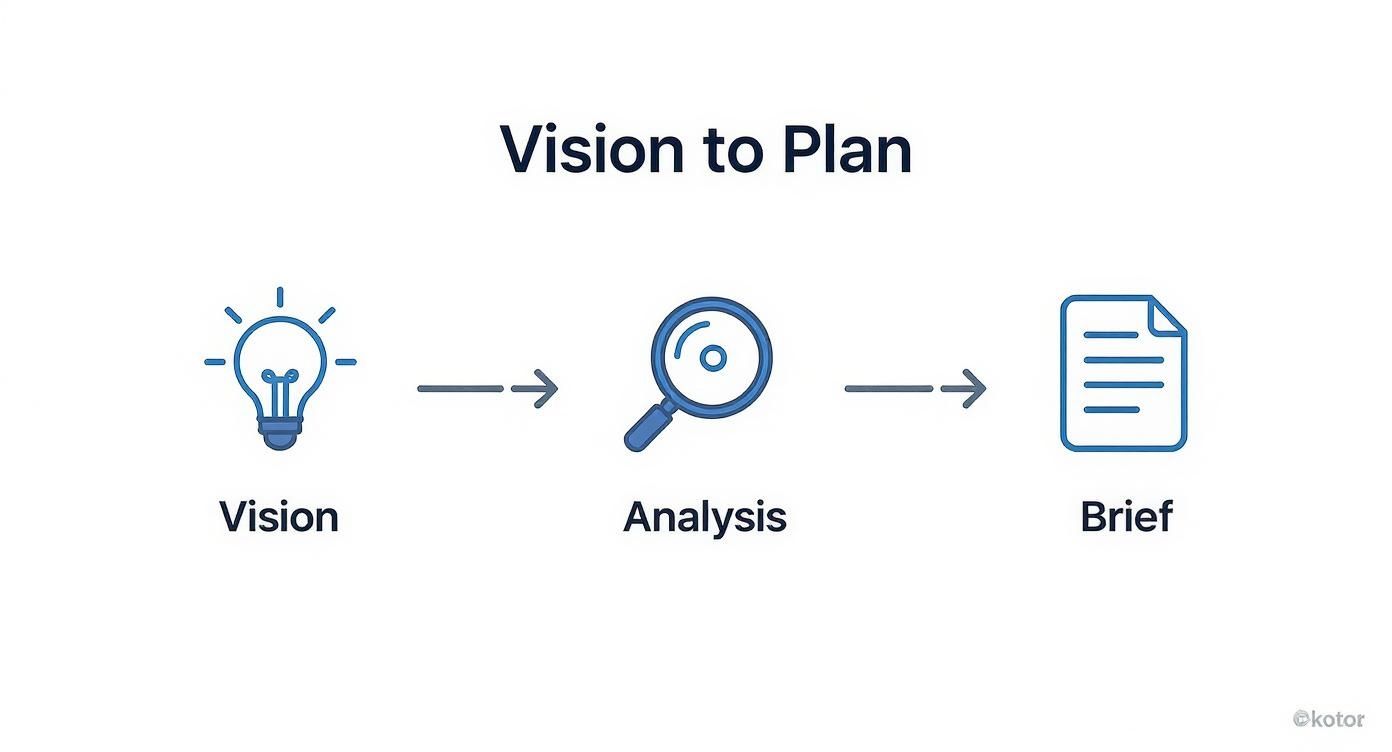
This foundational work results in a clear project brief, a document that becomes our north star for every decision that follows. Without that clarity, a project can easily drift, leading to expensive redesigns and a lot of frustration. A structured approach, like the Design Thinking Process, provides a fantastic framework for navigating these complex early stages.
At Sherer Architects, we treat every commission like a puzzle. Our first task is to find all the pieces—the client’s aspirations, the budget realities, and the site’s unique character—so we can begin to see how they fit together.
Analyzing the Canvas
While we’re talking with the client, we’re also conducting a rigorous site analysis. This isn't just about measuring property lines; it's a full-blown investigation to uncover the opportunities and constraints that will inevitably shape the design. A thorough analysis prevents nasty surprises down the road and ensures the finished building is not just beautiful, but practical and legally sound.
Here’s what we focus on:
- Zoning and Regulations: We dig into local ordinances, building codes, and any historic preservation guidelines. This sets the legal boundaries for the project, dictating things like height restrictions, setbacks, and land-use rules.
- Environmental Factors: We study the sun's path across the site through the day and the seasons. This tells us where to place windows for the best natural light and energy efficiency. We also map prevailing winds, drainage patterns, and existing trees or vegetation.
- Topography and Geotechnical Conditions: The slope of the land and the type of soil underneath it directly impact the foundation design, site access, and, ultimately, the construction budget. A steep site might offer stunning views, but it can also pose serious structural and financial challenges.
This visual helps illustrate the flow from a client’s initial idea to a concrete project brief—the critical first step in an architect’s design process.
By grounding a creative vision in this kind of rigorous analysis, we build a solid, actionable plan from day one.
Exploring Concepts with Schematic Design
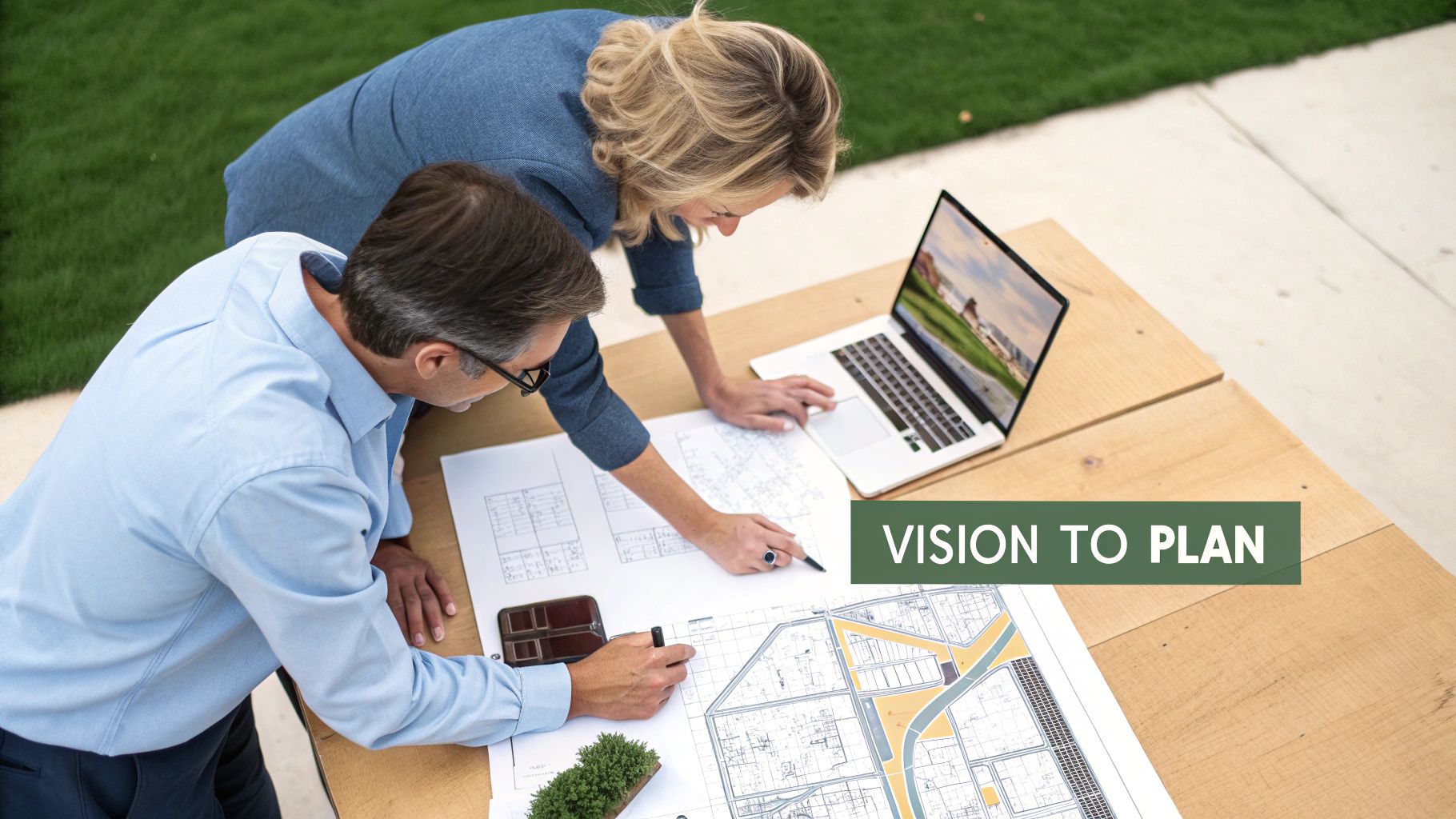
Once we’ve got all the site analysis and client goals nailed down, the real fun begins. This is the schematic design phase, and it’s where we start to give the project a personality. You can think of it as a series of brainstorming sessions, but instead of whiteboards and sticky notes, we use sketches and diagrams.
The focus here is kept intentionally broad. We’re not getting bogged down in the specifics of doorknobs or brick colors just yet. Instead, we’re wrestling with the big, foundational questions. What's the overall shape of the building? How does it feel to move through the spaces?
We rely on simple, effective tools to test ideas fast. Hand-drawn sketches, rough digital models, and bubble diagrams are our go-to instruments. A bubble diagram, for example, isn't a technical floor plan. It's a map of relationships that helps us figure out how the kitchen should connect to the dining room or how public areas should transition into private ones.
Crafting the Initial Options
The goal isn't to find the one "perfect" answer right out of the gate. It's about exploring several different paths. For a recent adaptive reuse project we did in downtown Columbia, we showed the client three completely different concepts for converting an old historic warehouse. Each one offered a unique solution for getting natural light into a very deep building and how to best organize the new commercial spaces.
Presenting a few distinct concepts is crucial because it sparks a real conversation. It gives our clients something tangible to react to, which helps them verbalize what they love and, just as importantly, what isn't working for them. That back-and-forth is what sharpens the project's vision.
The schematic design phase is less about an architect delivering a finished concept and more about co-creating the core idea with the client. It’s a partnership where feedback shapes the path forward, ensuring the final direction truly reflects their goals.
By laying out these initial schemes, we can openly discuss the trade-offs of each one.
- Option A might be the best for maximizing leasable square footage.
- Option B could focus on creating a stunning central atrium that becomes the building’s heart.
- Option C may offer the most straightforward and cost-effective structural plan.
This kind of side-by-side analysis is a cornerstone of the schematic design process. It makes complex architectural decisions much clearer, empowering the client to make an informed choice that aligns with their top priorities.
Locking in the Big Picture
Through this collaborative process, one concept usually emerges as the clear favorite. Sometimes, we even merge the best elements of two different ideas into a stronger, hybrid solution.
The final deliverable from this phase is an approved schematic design. This is a simple set of drawings—a site plan, basic floor plans, and key elevations—that establishes the project's fundamental framework. It confirms we've sorted out the big-picture issues like scale, layout, and overall form before we dive deep into the technical details. Getting this right is the key to keeping the entire project on track and true to the client's vision.
Getting Specific: The Design Development Phase
Once we have a schematic design that everyone loves, it's time to roll up our sleeves and get into the nitty-gritty. This is the Design Development phase, where we transform the broad-stroke concept into a fully detailed, buildable project.
Think of it this way: schematic design was about creating the skeleton. Now, we’re adding the muscle, skin, and nervous system. We move from asking "how will the spaces relate?" to "what will these spaces be made of?" It's a crucial shift from conceptual to concrete.
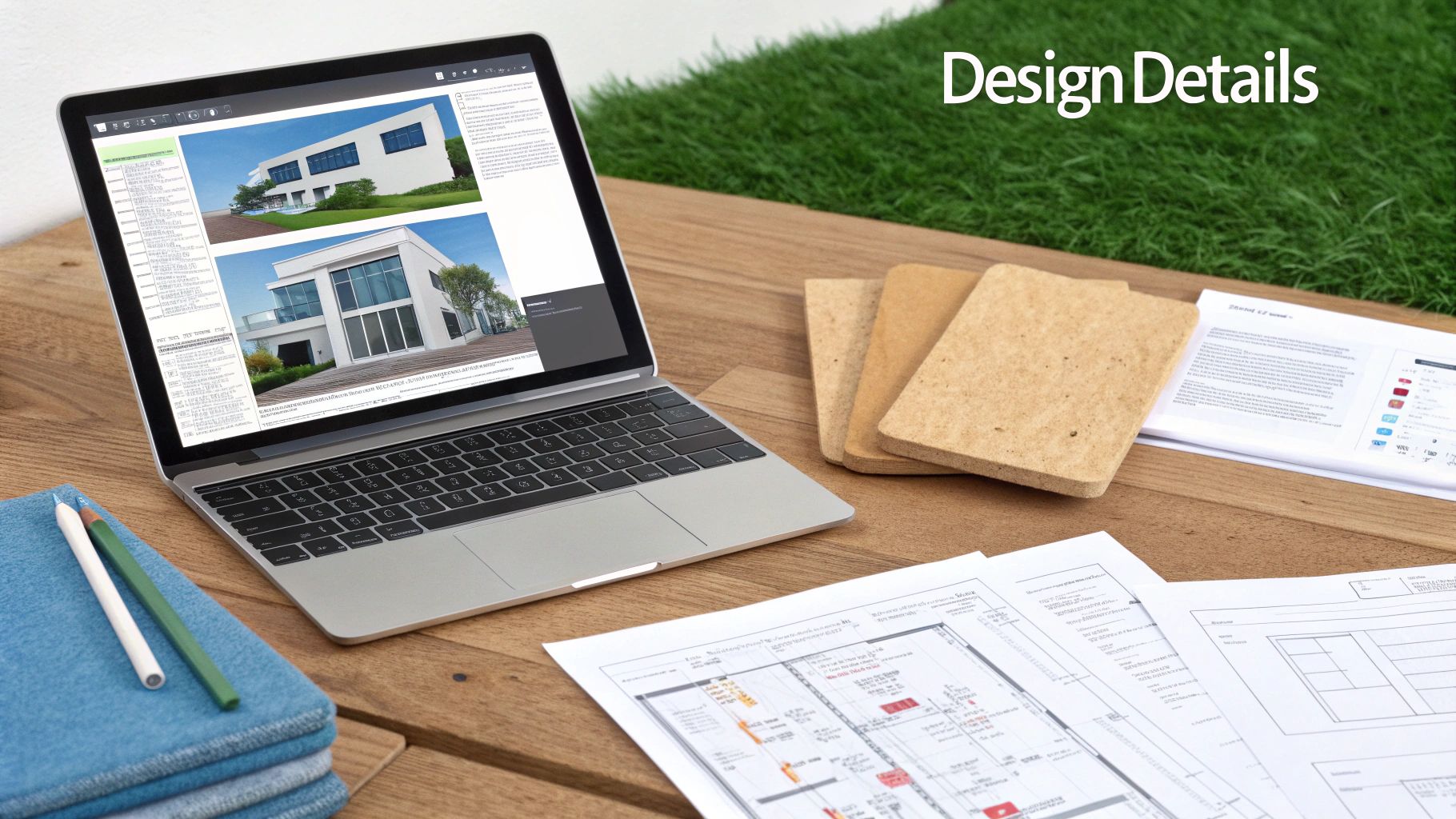
We take the approved floor plans and massing models and start layering in the specifics. This means refining room dimensions down to the inch, precisely locating every door and window, and selecting the core materials that will define the building’s character and performance.
Bringing the Experts Together
This is also where our collaboration with engineering partners kicks into high gear. We bring our structural, mechanical, electrical, and plumbing (MEP) consultants to the table to weave their expertise directly into the architectural drawings. This ensures the building not only looks great but functions flawlessly from day one.
Coordination is everything here. It's a complex dance to make sure a structural beam doesn't end up where an HVAC duct needs to go, or that plumbing lines and electrical conduits have clear, efficient paths.
We work through key integrations like:
- Structural System: We work hand-in-hand with our structural engineers to fine-tune the building’s frame, select appropriate column sizes, and detail the foundation.
- Mechanical Systems (HVAC): Heating, ventilation, and air conditioning systems are carefully routed to ensure optimal comfort and air quality without compromising those beautiful high ceilings we designed.
- Electrical and Plumbing: We map out everything from outlet locations and lighting plans to pipe routes, making sure every system is accessible and efficient.
This highly collaborative stage is where modern tools really shine. The industry's move toward cloud-based architecture design software has completely changed how architects, engineers, and clients work together. In 2023, the global market for this software hit $3.9 billion, a number that's only expected to climb. That growth is all about the flexibility and real-time collaboration these platforms offer. If you're interested in the tech behind the scenes, you can explore the architecture design software market analysis.
At Sherer Architects, we use this phase to digitally build the project before the first shovel ever hits the ground. By finding and fixing system conflicts in our models, we prevent expensive and frustrating problems from ever showing up on the construction site.
Defining the Look and Feel with Materials and Finishes
While the engineers are busy with the building’s inner workings, we’re also making key decisions about the materials and finishes that give the project its soul. This is so much more than just picking paint colors.
We research and specify materials based on a careful balance of durability, budget, sustainability, and the overall aesthetic we’re aiming for.
Will the exterior be classic brick or sleek metal panels? What kind of flooring can stand up to heavy foot traffic in a commercial space? What doorknobs, light fixtures, and faucets align with the client’s vision? Answering these questions now is what makes the final construction documents so clear and powerful.
By the time we wrap up design development, the project has evolved from a great idea into a thoroughly considered, highly detailed design, perfectly tee'd up for the final push into construction blueprints.
Creating the Blueprint for Construction
This is where the rubber really meets the road. It’s the most technically demanding part of the entire journey. Every single decision we’ve made together up to this point—from the overarching structural system right down to the finish on a doorknob—gets translated into a precise, legally binding set of instructions for the builder.
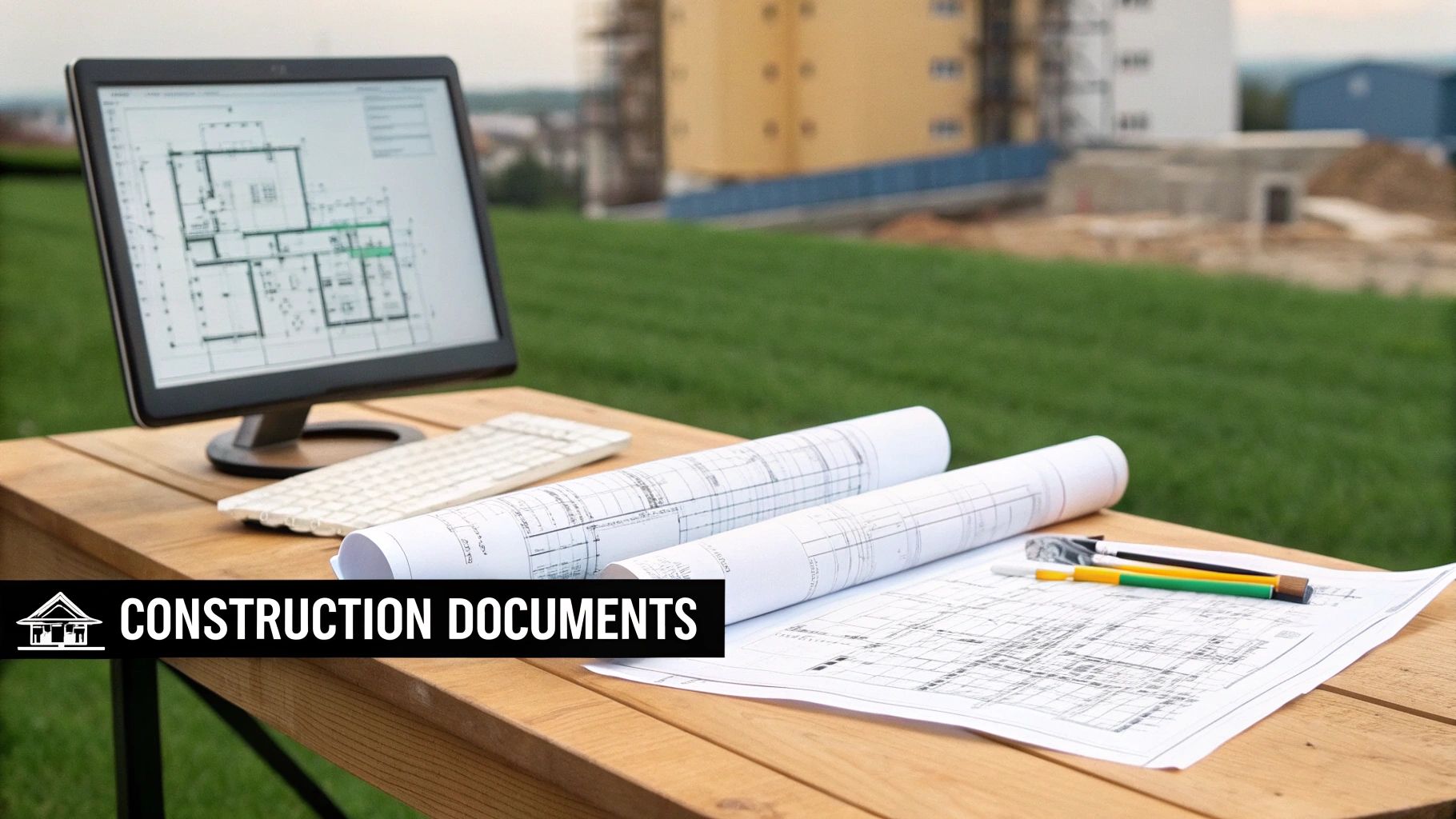
These are the construction documents, and they are the project's official bible. This isn't just a few drawings; it's a comprehensive package of highly detailed plans and technical specifications that leaves absolutely nothing to chance. They tell the contractors exactly what to build, how to build it, and the specific materials to use.
The Power of the Digital Twin
The engine behind this process is Building Information Modeling (BIM). Think of it as far more than just a 3D model. We create a "digital twin" of the building, an intelligent model where every single component—from the steel frame to the light switches—exists as a data-rich object.
This is a game-changer. It allows our team to coordinate every element with surgical precision. Before a single boot hits the ground on-site, we run clash detection analyses to find and fix problems, like a plumbing line trying to occupy the same space as a structural beam. It’s like a full dress rehearsal, and it's essential for preventing expensive mistakes and delays during the actual build.
BIM has become the global standard for a reason. It’s forecasted that 89% of architects will use it on more than half their projects, largely because it can slash project errors by up to 90%. At Sherer Architects, we bring that advantage to every single project.
Assembling the Complete Drawing Set
The final output is a hefty set of documents that guides every single person on the job, from the general contractor to the electrician. A key piece of this is the detailed site plan, which shows exactly how the building relates to the property and its surroundings.
A complete set typically includes:
- Architectural Drawings: The core plans, elevations, sections, and detailed schedules for every door, window, and finish.
- Structural Drawings: The bones of the building—foundation plans, framing layouts, and all the connection details that guarantee stability.
- MEP Drawings: Coordinated layouts for all the systems that make a building work: mechanical (HVAC), electrical, and plumbing.
- Technical Specifications: A detailed manual that outlines the quality standards, installation methods, and performance requirements for every material and product.
This phase is where an architect’s role as the master coordinator truly comes into focus. We’re responsible for bringing the work of all consultants—structural, mechanical, electrical—into one cohesive, crystal-clear set of instructions. A well-executed set of construction documents is the single most important factor in bringing a project in on time, on budget, and to the quality standard you expect.
Once these documents are buttoned up, the project is finally ready to leave the screen and enter the real world. They are the foundation for obtaining building permits and form the legal basis of the construction contract, ensuring your vision is built exactly as we designed it.
Guiding the Project During Construction
Once the blueprints are complete, our role makes a crucial shift from the design studio to the construction site. This phase, often called construction administration, is where the rubber truly meets the road. We become the client’s on-the-ground representative, making sure the vision we all worked so hard to create on paper is executed with precision.
Our primary goal here is to protect the client’s investment. It's our job to ensure the final build is a faithful, high-quality translation of the approved plans.
A set of drawings, no matter how detailed, can never predict every variable on a live job site. That's why being present is non-negotiable. Real-time problem-solving and diligent oversight are what make this phase a success.
The Architect as On-Site Advocate
We make it a priority to be at regular site meetings with the general contractor and the specialized subcontractors. These gatherings are the heartbeat of the construction phase—they keep the project moving, allow for immediate answers to questions, and help us tackle unexpected issues before they snowball into expensive delays.
For instance, on a recent adaptive reuse project, the demolition crew uncovered a serious structural problem hidden behind an old brick wall. Because we were on-site, we collaborated with the structural engineer and contractor right then and there. We sketched out a solution that same day, which kept the project on schedule and preserved the design’s integrity.
A huge part of our job during construction involves reviewing contractor submittals. Before a builder can order windows or install cabinetry, they have to send us product data, shop drawings, or physical samples for approval. We check every detail against our specifications to confirm they hit the mark on:
- Performance: Does this window actually meet the specified thermal rating?
- Aesthetics: Is this the exact brick color and texture we selected months ago?
- Quality: Will this material stand up to the wear and tear we designed it for?
This review process is a critical checkpoint. It prevents incorrect materials from being ordered and installed, protecting both the project's quality and the client's budget.
Construction administration is where an architect’s oversight provides its greatest value. We serve as the central point of communication, translating complex technical issues for the client and ensuring the builder’s work faithfully executes the design down to the smallest detail.
Responding to On-the-Ground Realities
It’s completely normal for contractors to have questions. When they need to clarify a detail in the drawings, they submit a Request for Information (RFI). A prompt, clear response from us is absolutely essential to keep the work flowing without interruption.
An RFI could be anything from asking how two different materials should meet at a corner to confirming the precise mounting height for a custom light fixture.
Our responsibility is to provide the missing detail and remove any ambiguity. This back-and-forth isn't a problem; it's a vital part of the process. It's this proactive communication that ultimately transforms a complex set of documents into a finished building that brings our client’s vision to life.
Common Questions About the Design Process
Stepping into the world of architecture for the first time can feel a little overwhelming. We get it. Over the years, we’ve found that most clients come to the table with a similar set of questions about how everything works, from timelines to costs to their own role in the process.
Getting these questions answered right from the start is the key to building a great partnership. Let’s tackle some of the most common ones we hear.
"How Long Is This All Going to Take?"
This is almost always the first question, and for good reason. While there’s no one-size-fits-all answer, we can give you a pretty solid framework. For a custom home, you can typically expect the design phases to last somewhere between 4 to 6 months. Construction itself usually takes another 12 to 18 months.
Of course, commercial projects are a different animal and can vary wildly depending on the size and complexity of the job.
A well-defined project timeline isn’t just a schedule—it’s a communication tool. It helps everyone, from the client to the contractor, understand key milestones and dependencies, preventing misunderstandings and keeping the project moving forward smoothly.
It's also important to remember that the clock isn't just ticking on design work. Things like city permit reviews and contractor schedules play a huge part in the overall timeline.
"How Much Will I Need to Be Involved?"
The simple answer? A lot, especially at the beginning. Your input is the most critical ingredient during the initial discovery and schematic design stages. We’re essentially building the foundation of the entire project based on your vision, and your feedback is what moves the needle.
As we get into the nitty-gritty of construction documents, your direct day-to-day involvement will naturally taper off. But you're never out of the loop. We'll still need you to weigh in on important decisions like finishes, fixtures, and materials. Think of us as your expert guide—we’ll bring you curated options, explain the pros and cons, and give you the clear information you need to make confident choices.
"What If I Want to Change Something?"
You can absolutely make changes. The real question is when you make them. The architectural process is intentionally designed to get the big, foundational decisions locked in early. Tweaking the layout or moving a few rooms around during schematic design is straightforward and has very little impact on the budget or timeline.
On the other hand, deciding to move a structural wall after the construction documents have been finalized is a whole different story. That kind of change creates a domino effect, forcing us to re-engineer systems and redraw pages of detailed plans. This almost always adds extra fees and can cause significant delays.
To avoid this, we build formal review-and-approval checkpoints into the end of every phase. This gives you a dedicated opportunity to sign off on the design, ensuring you’re 100% on board before we dive into the next level of detail.
- Changes in Schematic Design: Simple, easy, and the best time for big ideas. This is the moment to get it right.
- Changes in Design Development: Getting more complicated now. A change might impact coordinated systems like plumbing, electrical, or HVAC.
- Changes During Construction Documents: This is the most expensive and disruptive time to make a change. It means going back to the drawing board on highly detailed, technical plans.
In the end, it all comes down to clear and constant communication. When you understand the flow of the process, you can provide the right feedback at the right time, helping us bring your vision to life as smoothly and efficiently as possible.
At Sherer Architects, LLC, we guide you through every stage of the design and construction process, ensuring your vision is brought to life with clarity and expertise. Learn more about our collaborative approach at https://shererarch.com.