
SHERER ARCHITECTS

Categories
Uncategorized

Your Guide to an Office Building Layout Plan

An effective office building layout is far more than just a floor plan showing where desks go. It's the strategic DNA of the entire workplace, dictating workflow, shaping company culture, and either boosting or bottlenecking collaboration. The best plans are a thoughtful balance of private nooks for deep focus and open zones for teamwork, all while optimizing how people move through the space. This is the document that makes a building truly work for the people inside it.

The New Era of Office Layouts
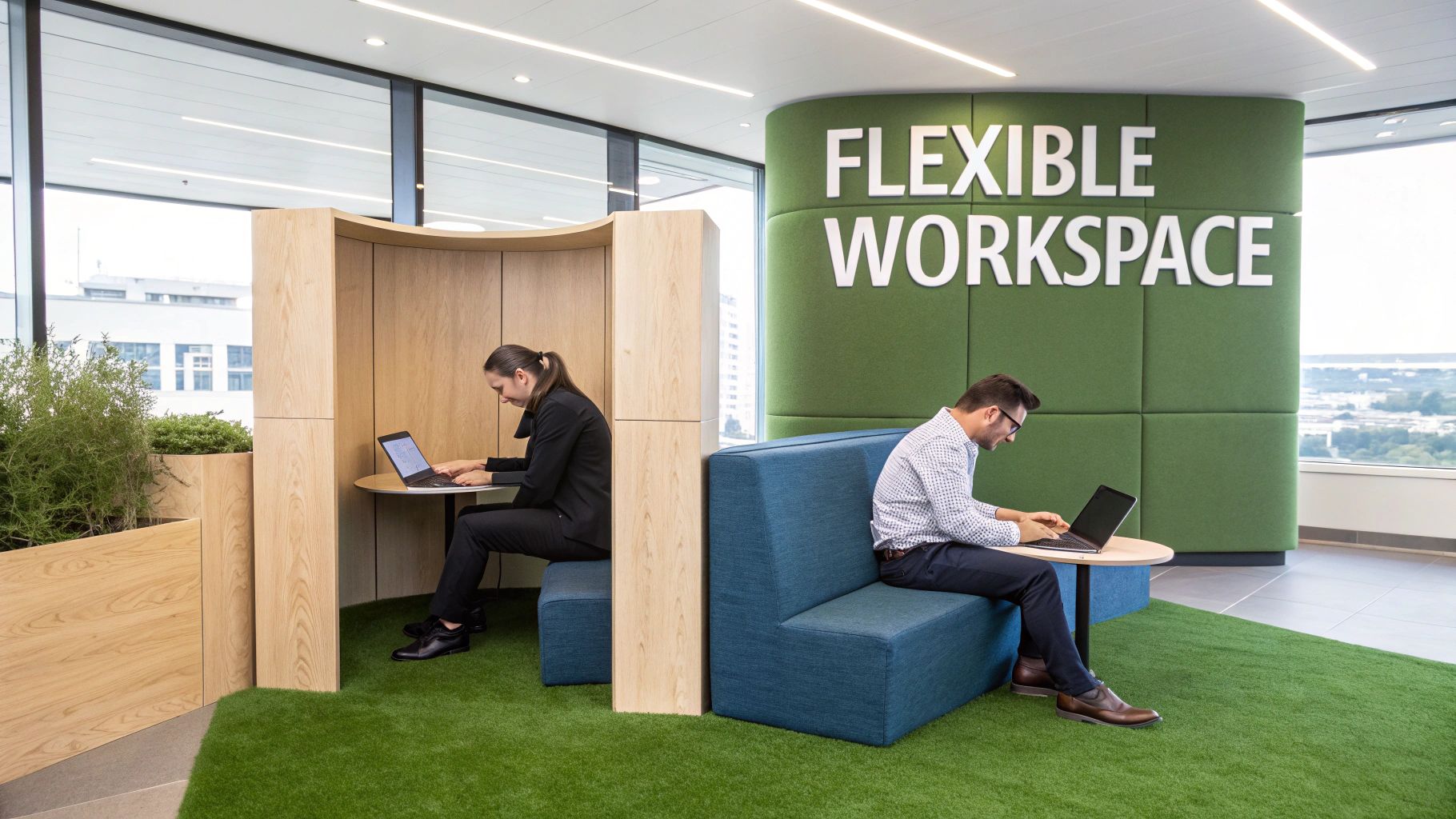
Modern flexible workspace with individual wooden pod and blue sofa seating with laptop users

If you're still picturing a sea of identical cubicles, you're thinking of a bygone era. Today's office is a dynamic, agile ecosystem, and the layout is its foundation. We've moved on from the rigid, top-down floor plans of the past to embrace flexible, human-centric designs that cater to a whole spectrum of work styles. This wasn't a random shift; it was a direct response to some powerful forces reshaping how we work.

Technology is arguably the biggest driver. Teams are now scattered across time zones, relying on cloud tools to get things done. The physical office has to be a place that supports this new reality, making the jump between digital and in-person collaboration feel completely seamless. This has also put a new premium on real estate efficiency, forcing companies to be smarter about using every square foot.

The Rise of the Open Concept

Over the last two decades, this push for efficiency and teamwork gave birth to the open-office trend. The promise was huge: break down silos, spark those "water cooler" moments of genius, and slash real estate costs. It took hold so completely that today, around 70% of U.S. office spaces have some form of an open layout.

At the same time, the personal space bubble shrank dramatically. Companies shifted to an average of 100 to 150 square feet per employee, a steep drop from the 200-plus square feet that used to be the norm. You can find more data-driven insights on this topic over at OfficeSpaceSoftware.com.

The real challenge we face now isn't just about creating open space, but about creating the right kinds of spaces. A successful office layout plan provides a balanced ecosystem of environments, giving people the power to choose the setting that best fits the task at hand.

Balancing Collaboration and Concentration

As great as the open concept was for teamwork, it often came at a cost: deep, focused work became nearly impossible. The constant buzz of noise and visual distractions created a productivity problem, forcing a much-needed course correction. The conversation has thankfully matured beyond the simplistic "private office vs. open plan" debate.

We're now in the era of hybrid and activity-based models that finally strike that crucial balance between community and concentration. These smarter, more nuanced layouts almost always include a mix of the following:

  • Focus Zones: Think quiet "library" spaces where everyone knows it's heads-down time. No interruptions allowed.
  • Collaboration Hubs: These are the lively, informal areas with whiteboards and movable furniture, designed for brainstorming and group problem-solving.
  • Private Enclaves: Small, enclosed rooms or even phone booths are essential for confidential calls, one-on-ones, or just a moment of privacy.
  • Social Spaces: The office kitchen or a café-style lounge isn't just for coffee. It's where community is built and informal connections are made.

This approach recognizes a simple truth: a single person has different needs throughout their day. By providing a diverse palette of work settings, an office layout can create a workplace that’s not just efficient, but profoundly human.

Laying the Strategic Groundwork

Before you even think about sketching a floor plan, the real work begins. A truly effective office layout isn't just about arranging desks; it's born from a deep, strategic foundation. Skipping this critical groundwork is a recipe for a building that looks great on paper but fails in practice, creating daily friction for the people who work there.

This initial phase is all about translating your company's mission and operational needs into a concrete, buildable plan.

Getting to Know Your Site

First things first: you have to understand the canvas you're working on. Whether it's an empty lot or an existing building slated for a gut renovation, a thorough site analysis is absolutely essential. This goes way beyond just looking at the property lines. You're trying to uncover the site's hidden potential and its unavoidable limitations.

For instance, we always start by looking at the sun's path. Can we orient the building to capture southern light for common areas? Doing so can slash lighting bills and genuinely boost employee well-being. At the same time, we'd want to place heads-down, focus-intensive workstations on the northern side to avoid constant glare and overheating. We also meticulously map every existing structural column, utility hookup, and load-bearing wall, as these elements will fundamentally shape the building's flow.

Developing Your Architectural Program

With a solid grasp of the site, it's time to create the architectural program. This is your project's playbook. It’s a detailed document that moves far beyond a simple headcount to define exactly what your teams need to thrive.

A robust program digs into the nitty-gritty details:

  • Who Sits Where (and Why): Which departments feed off each other's energy? Putting sales and marketing side-by-side makes perfect sense for collaboration. Separating the high-energy call center from the quiet focus of the finance team is just as important for everyone's sanity and productivity.
  • Mapping the Workflow: We trace how work actually moves through the organization. A smart layout minimizes backtracking and wasted steps, making daily processes feel effortless.
  • Planning for Tomorrow: A great office is built for the future, not just for today. We always plan for 15-20% growth over a five-year horizon. This means designing flexible zones or "soft spaces" that can easily transform into new workstations as your company scales.
  • The Unseen Essentials: Don't forget the support spaces. Server rooms, storage closets, wellness areas, and printing stations are the lifeblood of an office. Underestimate these, and you’ll end up with clutter and operational chaos.

As you build this foundation, it's also a good time to think about long-term operations. Looking into facility management best practices now can help you design a space that's efficient and sustainable for years to come.

Mastering Codes and Zoning

The last piece of this foundational puzzle is navigating the maze of zoning laws and building codes. These aren't suggestions—they are legal requirements that dictate everything from how many exits you need to how wide your hallways must be. Getting this wrong can lead to devastating project delays, expensive redesigns, and serious legal headaches.

One of the biggest mistakes I see is when teams treat code compliance as a final checkbox. You have to weave it into the design from day one. This ensures your plan is viable from the start and saves you from having to butcher your vision later to fix a compliance issue you missed.

To help you get started, here's a quick checklist of the initial data points we gather during this phase. It's crucial for ensuring your design is both functional and fully compliant right out of the gate.

Core Programming and Code Compliance Checklist

Category Key Considerations Example Metric / Requirement
Site Analysis Sun orientation, prevailing winds, existing utilities Maximize southern exposure for passive solar gain
Zoning Setbacks, height limits, Floor Area Ratio (FAR) 30-foot front setback, max building height of 60 feet
Occupancy Business (Group B) occupancy type, occupant load calculation 1 person per 100 gross sq. ft.
Egress Number of exits, travel distance, corridor widths Max travel distance to an exit: 250 feet (sprinklered)
Accessibility (ADA) Accessible routes, turning radii, restroom compliance Min. 36-inch clear width for all accessible paths
Plumbing Required fixture count based on occupant load 1 water closet per 25 occupants (first 50)
Structural Column grid spacing, live/dead load capacity Typical 30' x 30' column bay
Growth Planning Projected 5-year headcount increase, flexible zones Plan for 15-20% future growth capacity

By meticulously working through these three areas—site analysis, programming, and code compliance—you're not just designing. You're building a resilient strategic foundation that ensures your final office layout is innovative, efficient, and ready for whatever comes next.

Designing for Agility and Future Growth

The one thing we can count on in modern business is change. Companies pivot, teams expand and contract, and the way we work is constantly evolving. A rigid office layout isn't just an inconvenience in this environment—it's a serious business liability that can stall growth and stifle innovation. The goal isn't to design a perfect, permanent space anymore. It's to create an agile one that can be easily reshaped as your organization’s needs shift.

This move toward adaptability is a fundamental change in how we think about the physical workplace. Instead of being locked into permanent walls and fixed functions, we’re now designing with modular components, multi-purpose furniture, and reconfigurable zones to create a fluid, responsive environment.

The Core Principles of Flexible Design

Think of a flexible office layout as a living ecosystem. It has to support all kinds of work modes at the same time, from deep, individual focus to high-energy group collaboration. This approach accepts a simple truth: no single type of space can meet every need.

So what does an agile layout actually look like?

  • Movable Partitions: Glass or acoustical walls on tracks are fantastic. They can transform a large open area into smaller, private meeting rooms in minutes, giving you acoustic control right when you need it.
  • Multi-Purpose Furniture: This is about getting creative. Think tables that raise for standing meetings, modular seating you can rearrange for a town hall, and mobile whiteboards that can follow the conversation wherever it goes.
  • Modular Infrastructure: Raised access flooring is a true game-changer here. It creates a space under the floor for all your power, data, and HVAC systems, which means you can move outlets or even reconfigure entire departments without launching a costly and disruptive rewiring project.

An agile office isn't just about preparing for the unknown; it's about empowering your teams right now. When people can choose the environment that best suits their task—a quiet pod for a report, a lounge for a brainstorm—they are more engaged and far more productive.

This isn't just a trend; the industry has fully embraced this model. A 2025 report shows that 55% of global occupiers are already using flexible office solutions, and that number is only going up. A smart flexible office might only dedicate 60-70% of its floor plate to fixed desks, saving the rest for a dynamic mix of shared spaces that can adapt on the fly. You can dig into the specifics in the complete Cushman & Wakefield flexible office report.

Laying this strategic foundation—from deep analysis to strict code compliance—is the critical first step.

Software development workflow diagram showing three stages: analysis with magnifying glass, program with blueprint, and codes with hammer

This workflow shows how a solid plan is built. It starts with a detailed analysis of the site and your needs, moves into a robust architectural program, and is grounded in strict code adherence. That's the bedrock of a successful and adaptable office layout.

Practical Steps for Implementation

Creating a future-ready office means planning for change from day one. It requires foresight and a strategic investment in the right systems.

A great way to start is by thinking about your space in "zones" instead of permanent rooms. A "collaboration zone" could be kitted out with movable furniture and tech carts, allowing it to serve as a project war room one week and an informal presentation space the next. A "focus zone" might be defined by acoustic panels and high-backed seating rather than permanent walls.

When you're choosing furniture, mobility and modularity should be your top priorities. Look for pieces on casters, lightweight components that one or two people can move easily, and systems designed for simple disassembly. This ensures that adapting the space for a new team is a weekend facilities project, not a major construction effort. For an office that also embraces sustainability, consider integrating passive solar design principles into the plan.

Ultimately, designing for agility is about building an asset that evolves with your business. It transforms the office from a static cost center into a dynamic tool that actively supports your company's journey, no matter what twists and turns lie ahead. This approach ensures your physical space remains a high-performing asset for years to come.

Integrating Wellness and Biophilic Design
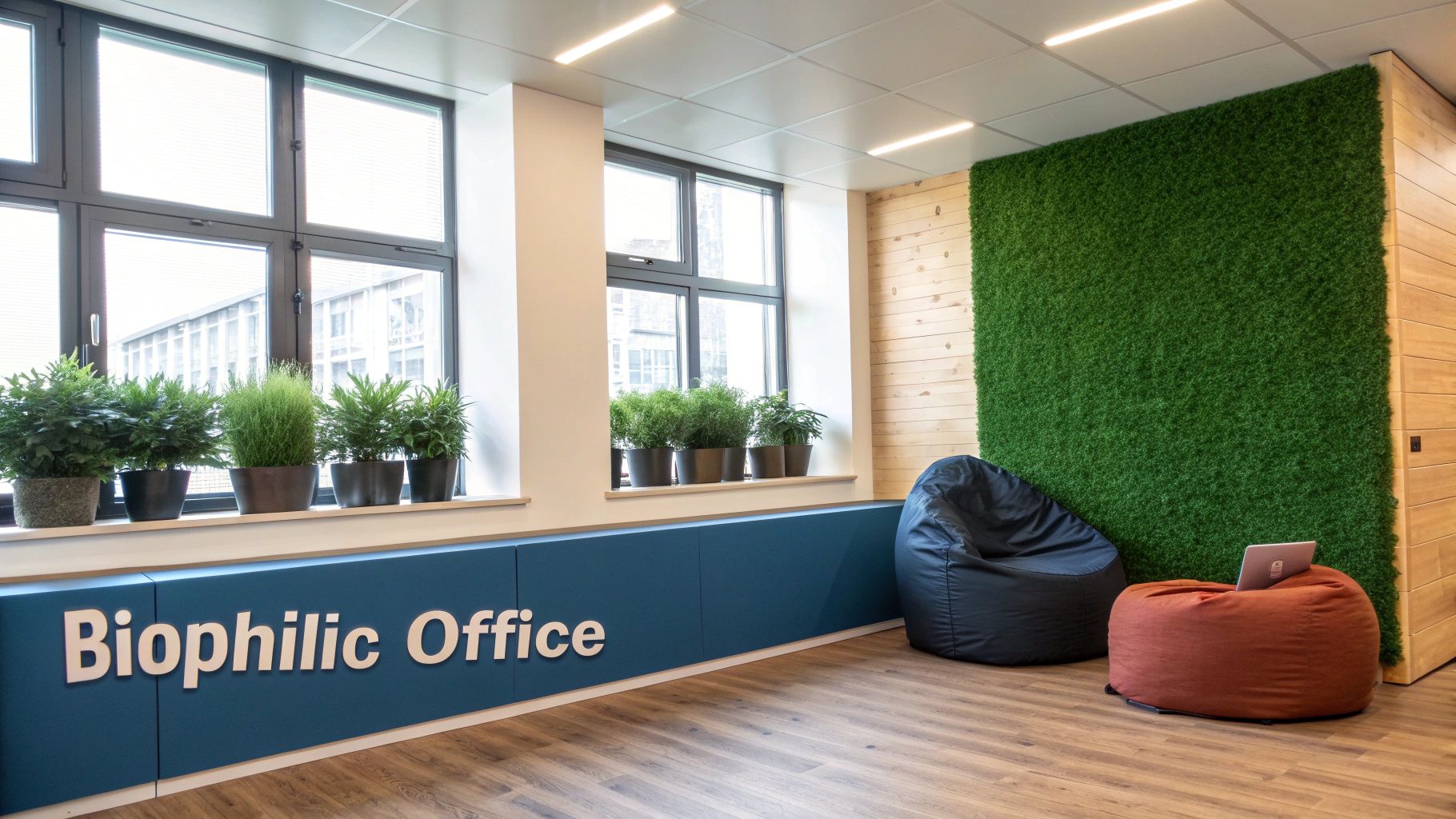
Modern biophilic office space with green wall, plants, bean bags, and natural wood accents

A great office is more than just four walls and a roof; it’s an ecosystem that should actively boost well-being and performance. Forward-thinking companies have caught on. Weaving wellness and biophilic design into an office building layout plan isn't just a trendy perk anymore—it's a critical business strategy for keeping and attracting the best people. The goal is to create spaces where people feel their best, so they can do their best work.

Biophilic design is all about connecting people with nature inside the built environment. It taps into our inherent desire to be around natural elements, and the results are tangible, directly impacting the bottom line through happier, more productive teams.

The Business Case for Biophilic Design

The modern workforce has spoken. Sterile, soulless corporate cubes are out. Spaces that feel alive and restorative are in. This isn't just a fad; it’s a fundamental shift in what employees expect, and it has real financial consequences.

The numbers don't lie. A 2025 Gensler Global Workplace Survey found that a mere 14% of employees actually want a traditional "corporate" office. The overwhelming majority are looking for spaces with natural light, organic elements, and a connection to the outdoors. The same study showed that offices embracing biophilic features saw a 15% jump in employee well-being and a 6% boost in productivity. You can learn more about these workplace findings and see just how these preferences are shaping the future.

When you weave natural elements into the very fabric of the office architecture, you’re creating an environment that doesn't just house your team—it actively supports their health. In a competitive market, that’s a powerful advantage.

Practical Ways to Incorporate Nature

Bringing biophilic design to life doesn’t have to break the bank. You can make a huge impact with small, smart interventions in your office layout. It's all about finding ways to bring the textures, patterns, and feeling of the natural world indoors.

Here are a few actionable ideas I've seen work incredibly well:

  • Follow the Sun: Arrange workstations to maximize views and daylight. Swap out solid walls for glass partitions to let sunlight reach deeper into the building. It’s a simple change that makes a world of difference.
  • Bring in Living Elements: Nothing makes a statement like a living green wall in a reception area. On a smaller scale, thoughtfully placed planters can define different zones, dampen sound, and add visual calm.
  • Lean on Natural Materials: Choose materials like wood, stone, and natural fibers for floors, furniture, and finishes. These tactile elements create a warmer, more grounded feeling than cold, synthetic alternatives.
  • Think in Patterns: Biophilia isn't just about literal plants. You can use carpeting with patterns that mimic flowing water or wallpaper with subtle leaf motifs to forge that subconscious connection to nature.

Beyond Plants: Wellness-Focused Layouts

While greenery is a cornerstone, a truly healthy office layout goes deeper. You have to consider other critical wellness factors right from the start, because trying to fix them later is almost always a painful and expensive process.

Smart Acoustic Design

In any open or hybrid office, noise is the number one focus-killer. A good layout plan tackles this head-on by creating distinct acoustic zones. This is about more than just tacking up a few sound-absorbing panels.

It means intentionally placing quiet, high-focus "library zones" far from buzzing "collaboration hubs." It also means specifying materials with high Noise Reduction Coefficient (NRC) ratings—think acoustic ceiling tiles, fabric-wrapped panels, and even specialized carpeting that muffles the sound of footsteps.

Ergonomics and Movement

Sitting at a desk all day is a massive health drain. Your layout can either feed into this problem or help solve it. Design circulation paths that encourage people to get up and move, and offer different ways to work that don't involve being chained to one chair.

This could include:

  1. A Mix of Postures: Provide a blend of traditional desks, standing-height tables, and comfortable lounge areas for more casual work.
  2. Centralized Hubs: Put printers, coffee stations, and other shared resources in central spots that require a short walk. It gets people moving and interacting naturally.
  3. Active Spaces: If you have the room, a small, dedicated area for stretching or a wellness room offers a place to mentally and physically reset.

By making wellness and biophilic design central to your office building layout plan, you’re making a direct investment in your most valuable asset: your people.

Coordinating Systems for a Flawless Finish

https://www.youtube.com/embed/wSc4QmKBk6I

A great office layout plan is more than just a smart arrangement of rooms and furniture. It's a masterclass in technical coordination. The most sophisticated and functional designs are the ones where the building's core systems—its structural bones and mechanical circulatory network—are so perfectly integrated you don't even know they're there. This is where architectural vision and engineering reality have to meet, and getting it right is the secret to a building that just works.

Think of your building’s mechanical, electrical, and plumbing (MEP) systems as its central nervous system. These ducts, pipes, and wires need clear pathways to run through the entire structure. If you don't account for them from the very beginning, they will come back to bite you later, forcing clumsy, expensive fixes like dropped ceilings or bulky soffits that ruin your clean lines and steal precious ceiling height. A proactive approach is non-negotiable.

Weaving MEP Into Your Layout

The only way to handle MEP integration is to make it a core part of the layout plan from day one. Instead of viewing ductwork and wiring as problems to be hidden, we treat them as design parameters that shape the space.

For example, we might intentionally design wider circulation corridors or slightly thicker partition walls in strategic locations to act as dedicated utility chases. This tactic neatly contains the building's guts, leaving the primary work areas open, clean, and uncluttered.

Another go-to strategy, especially for clients who need flexibility, is a raised access floor system. This creates a cavity under the finished floor that can house all your power, data, and even some HVAC components. It's a fantastic solution for agility; you can reconfigure entire departments without the headache of trenching concrete or rewiring from the ceiling.

A classic mistake is when architects finalize a layout and then just toss it over the fence to the engineers to "make it work." The truly seamless results come from a collaborative process where architects and engineers are at the same table, solving these spatial puzzles together from the initial concept. This avoids painful compromises that hurt both aesthetics and performance.

Working with Structural Realities

Every building has a skeleton—columns, shear walls, and other load-bearing elements you can't just ignore. In new construction, you have the luxury of defining the structural grid to support your ideal layout. We find a 30' x 30' column bay is often the sweet spot, offering tremendous flexibility for a mix of open-plan spaces and enclosed rooms without awkward interruptions.

Adaptive reuse projects are a different beast. You inherit the building's existing structure, quirks and all. The key is to stop seeing these elements as obstacles and start treating them as design opportunities.

  • Make Columns a Feature: Don't just hide a column, celebrate it. Wrap it in a unique material, build a bench seat around its base, or use it to anchor a collaborative high-top table.
  • Define Natural Zones: A line of existing columns can become a soft boundary between a high-energy collaborative zone and a quieter, heads-down work area. It creates a psychological separation without putting up a solid wall.
  • Integrate Smart Storage: That otherwise awkward space between structural columns is perfect for built-in shelving or custom storage units. It’s an incredibly efficient use of what would otherwise be dead space.

Designing Intuitive Circulation and Safe Egress

The way people move through a building is absolutely critical. Poor circulation creates bottlenecks, disruptive foot traffic through work areas, and a general sense of friction that wears people down over time. The goal is to design clear, intuitive pathways that guide people effortlessly from the front door to wherever they're going.

These same circulation paths form the backbone of your emergency egress plan, and this is where building codes get very strict. The rules are non-negotiable, dictating everything from the minimum width of corridors (usually 36-44 inches) to the maximum distance anyone can be from a fire exit—typically around 250 feet in a sprinklered building.

We design these routes to be logical and safe for everyday use, which naturally makes them reliable in an emergency. This means ensuring clear lines of sight, avoiding dead-end corridors, and even using different flooring materials or lighting to subtly guide people along main pathways. When you plan for circulation and safety at the same time, you create a space that’s not just efficient, but fundamentally secure for everyone inside.

Common Questions We Hear About Office Layouts

When you get down to the brass tacks of designing an office, the same crucial questions always seem to surface. Over the years, I've found that having clear, experience-based answers to these common challenges is what separates a floor plan that just works from one that truly elevates a company's culture and productivity.

Let's dive into some of the questions we tackle every day.

What’s the Real Number for Square Footage Per Employee?

Forget the old rule of thumb that gave everyone a massive 200-250 square foot personal bubble. That’s a relic from a different era. Today, the sweet spot is typically between 125-175 square feet per person.

But this isn't about cramming people in. It's a strategic shift. By being more efficient with individual desk space, we free up valuable real estate for the things that really matter now: collaborative lounges, private phone booths for focused calls, and flexible project rooms. The goal is to create a dynamic work environment with a variety of settings, not just a sea of identical desks.

Some of the most successful layouts we've designed actually have fewer desks than employees. This "activity-based" model trusts that on any given day, people will be in meetings, working remotely, or collaborating away from their desks. The key is to honestly analyze how your teams operate and provide a palette of spaces that supports their actual workflow.

How Do I Keep My Office From Becoming Obsolete in 5 Years?

You future-proof an office by building in flexibility from day one. You have to assume that your needs will change—because they will. The goal is to create a space that can evolve with your business, not one that locks you into a rigid configuration.

Here are the three strategies we always recommend for baked-in adaptability:

  • Modular Infrastructure is a Game-Changer: Think raised access flooring. It’s a brilliant system that hides all your power and data cabling under the floor panels. Need to move a whole department? You just lift the panels and re-route the connections. No expensive and messy concrete core drilling required.
  • Use Demountable Partitions: Instead of building permanent drywall for every office and meeting room, opt for movable or demountable wall systems. This lets you resize, relocate, or even remove enclosed spaces with minimal disruption and cost down the road.
  • Furniture Should Be Agile: Invest in furniture that moves. Desks on casters, modular seating that can be reconfigured in minutes, and mobile whiteboards give teams the power to shape their own environment for different tasks. It’s amazing how this fosters a sense of ownership and creativity.

We also design what we call "soft zones"—unassigned areas like open lounges or casual meeting nooks. These multi-purpose spaces are incredibly easy to adapt as your company’s structure and priorities shift.

What Are the Biggest Mistakes People Make?

Even with the best intentions, a few common mistakes can derail an otherwise great office layout. One of the most frequent and frustrating is poor circulation planning. Nothing kills productivity faster than having constant foot traffic cutting through a quiet work zone because the path to the coffee machine is poorly thought out.

Another classic error, especially in open plans, is completely ignoring acoustics. Without carefully placed sound-absorbing materials and designated quiet zones, the office noise can become unbearable, and focus goes right out the window. We also see plans that just don't account for the nitty-gritty support spaces—IT closets, print stations, and actual storage—which leads to clutter and operational chaos almost immediately.

But if I had to name the single most critical error, it's designing in a vacuum. When you skip the step of getting honest, detailed input from the people who will live in the space every day, you risk creating a layout that is technically perfect but fails in its most basic human function.

How Can We Get the Best of Both Worlds: An Open Office With Real Privacy?

This is the million-dollar question in modern office design. The answer isn't to pick one or the other, but to create a "zoned" or "neighborhood" environment. Instead of one massive, noisy open floor, you intelligently divide the space into distinct areas for different kinds of work.

You can designate a "library" zone where everyone understands that quiet, focused work is the rule. Right alongside that, you provide a rich mix of enclosed spaces, from single-person phone booths for confidential calls to small "huddle rooms" for a couple of people to collaborate without disturbing others.

We also use non-structural elements like tall shelving, planters, or freestanding acoustic screens to create a sense of visual and psychological separation without the finality of building walls. This layered approach empowers people to choose the right setting for the task at hand, giving them both the collaborative energy of an open space and the quiet focus they need.


Answering these questions thoughtfully is the first step. The next is partnering with a team that can turn those answers into a built reality. Sherer Architects, LLC has decades of experience creating commercial spaces that are as functional as they are beautiful. Learn how we can bring your vision to life.
Categories
news

Complete Guide: Floor Plan of a Commercial Building Explained

A commercial building's floor plan isn't just a technical drawing; it’s the strategic business plan for the physical space. This blueprint is the foundation for everything that follows, dictating customer flow, employee workflow, operational efficiency, and even long-term profitability. Getting this right from the start is arguably the single most critical step in any commercial project.

Your Blueprint for Success

Think of a commercial floor plan as the building's operational DNA. It’s far more than just deciding where to put walls and doors. It's about choreographing movement, inspiring productivity, and crafting an experience. A clumsy layout creates bottlenecks, frustrates staff, and can even turn customers away—all of which hit your bottom line. On the flip side, a thoughtfully designed plan turns raw square footage into a high-performing asset that actively supports your business goals.

Every single line on that plan has a real-world consequence. A corridor's width dictates the ease of foot traffic. An office's placement can either encourage or stifle collaboration. The location of a stockroom impacts how quickly your team can operate. It's a complex puzzle where every piece must fit perfectly to create a property that's functional, compliant, and ultimately, valuable.

Connecting Layout to Business Goals

A truly great floor plan is a physical extension of the business model it serves. A retail store, for example, will be all about guiding the customer journey and maximizing product visibility. An industrial warehouse, however, will prioritize logistics, workflow efficiency, and safety above all else. The layout has to be a direct reflection of the business's core purpose.

"Keeping up with accurate floor plans can be challenging… Manual updates contribute to the difficulty. Updating changes in floor plans, such as modifications or area information, can be time-consuming and error-prone when done manually." – Miguel Flores Ugarte, Building Engines

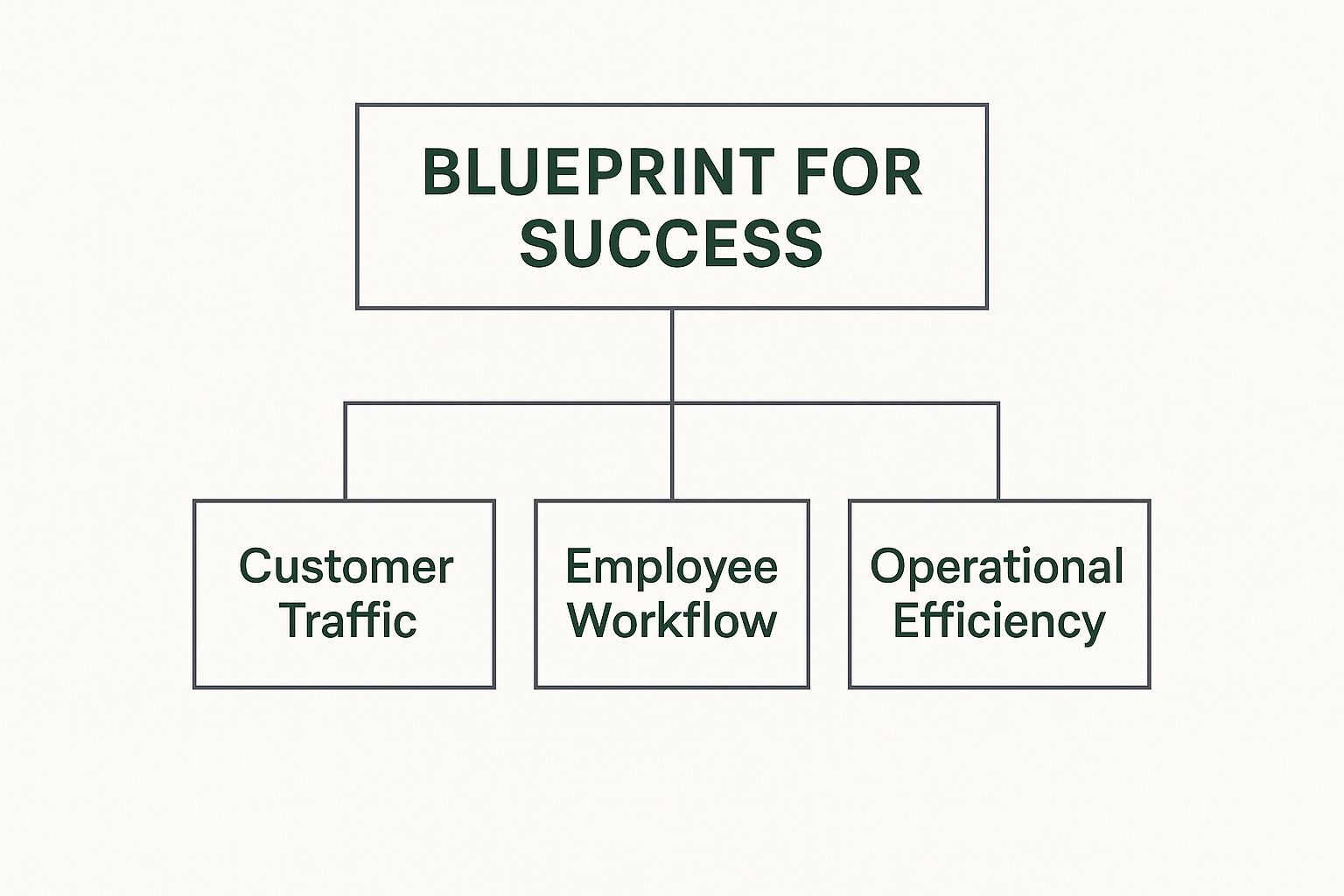
This infographic breaks down how a strategic floor plan weaves together three core pillars of a successful operation.

Infographic about floor plan of a commercial building

As you can see, optimizing customer traffic, employee workflow, and operational efficiency aren't siloed objectives. They are deeply interconnected results that all stem from a solid foundational layout.

The Cost of Poor Planning

Underestimating the strategic importance of a floor plan is a recipe for expensive mistakes. These problems can be as subtle as minor daily inefficiencies that bleed money over time or as catastrophic as major code violations that bring a project to a screeching halt.

Some of the most common consequences of poor planning include:

  • Wasted Space: Awkward, inefficient layouts create dead zones and underused areas. This directly cuts into your rentable square footage and lowers the property's revenue potential.
  • Operational Bottlenecks: A design that ignores how people actually work will inevitably cause friction, slow down processes, and kill productivity.
  • Compliance Issues: Failing to account for ADA standards, fire codes, or local zoning ordinances can trigger hefty fines, force expensive redesigns, and cause crippling project delays.

Ultimately, investing the necessary time and expertise into developing a thoughtful floor plan of a commercial building is the surest way to guarantee the space works as intended, meets every legal requirement, and delivers a strong return on investment for years to come.

A Look Inside a Commercial Floor Plan

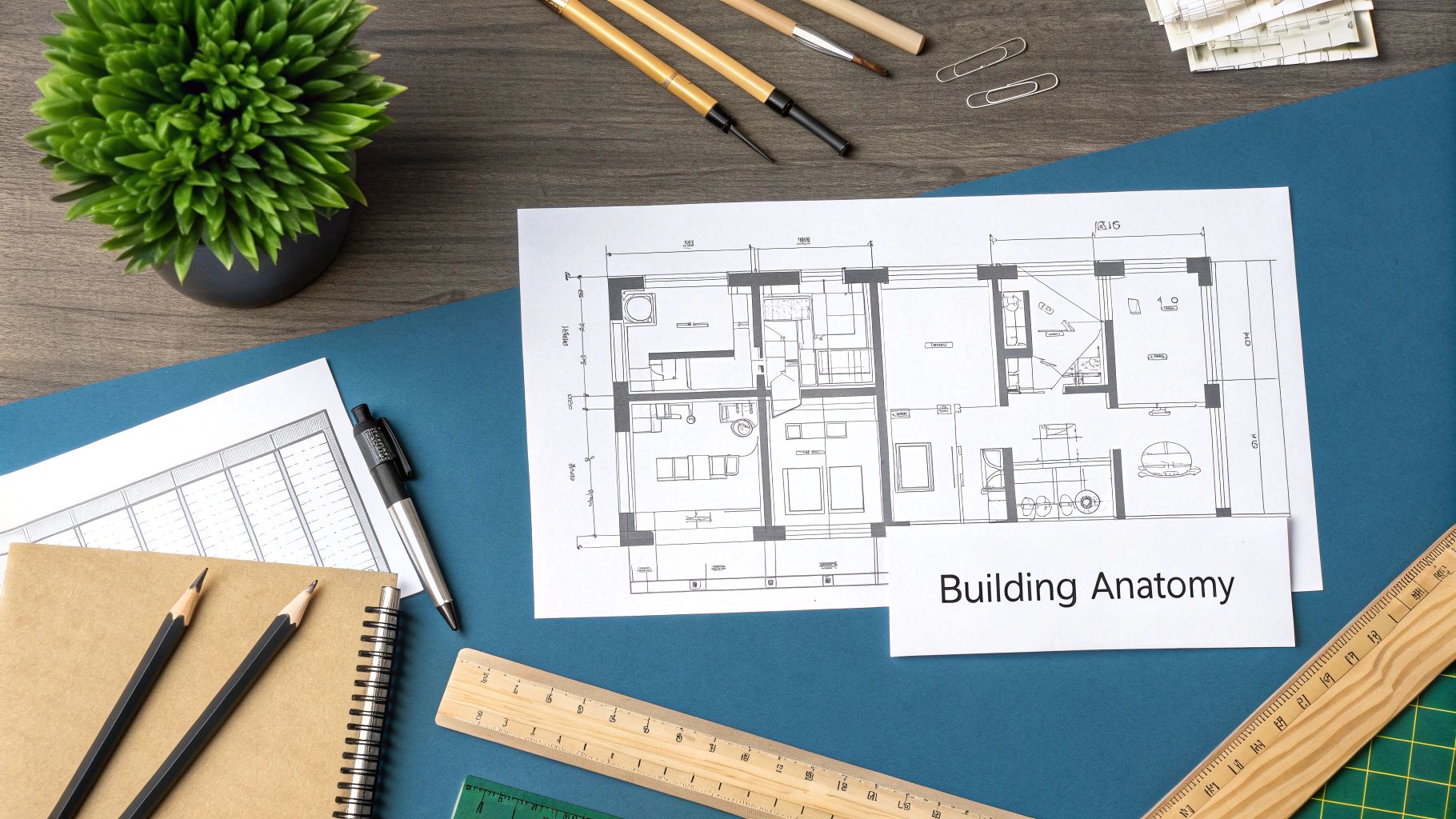
Think of a commercial floor plan as more than just a blueprint of walls and doors. It's the building's DNA, a detailed guide to every system that brings the structure to life and makes it a functional, livable space. A great way to understand it is to compare a building to the human body—a complex network where every system has to work in perfect harmony.

Just like our bodies rely on a skeleton, a circulatory system, and a nervous system, a commercial building has its own anatomy. This includes the structural core and shell, the pathways for movement, and the vital mechanical, electrical, and plumbing (MEP) systems. If any one of these is off, the health of the entire building is at risk.

The Core and Shell: A Building’s Skeleton

The core and shell are the absolute fundamentals of the building's structure. The "shell" is what you see from the outside—the roof, exterior walls, and foundations that form a protective envelope. The "core" is the shared infrastructure that serves everyone inside.

You can think of the core as the building's spine. It's where you'll typically find:

  • Vertical Circulation: Stairwells and elevator shafts that connect the floors.
  • Restrooms: Centralized facilities for tenants and visitors.
  • Mechanical Risers: The vertical shafts hiding the plumbing, electrical conduits, and HVAC ductwork.

The design of the core and shell is one of the first and most critical decisions in creating a floor plan of a commercial building. Its placement directly impacts how much usable—and leasable—space is available to tenants, which in turn affects the property's bottom line. A clunky, poorly placed core can leave tenants with awkward layouts that are tough to rent out.

Circulation Pathways: The Arteries of Movement

If the core is the spine, then circulation pathways are the arteries and veins. These are the routes people follow to move into, out of, and all around the space. This covers everything from grand lobbies and primary corridors to smaller hallways and, crucially, emergency exits.

Good circulation is about so much more than just getting from A to B. It’s about creating a flow that feels intuitive and natural. In a store, circulation guides shoppers past key products. In an office, it allows people to move seamlessly between their desks, meeting rooms, and break areas without causing traffic jams.

A well-designed circulation plan just works. You don't even notice it. It anticipates how people will move, manages busy times, and ensures everyone can get to an exit quickly and safely in an emergency. It's a huge part of both the user experience and basic life safety.

MEP Systems: The Building's Nervous System

Finally, we get to the Mechanical, Electrical, and Plumbing (MEP) systems. These are the intricate networks running behind the walls, above the ceilings, and below the floors—the building's central nervous system. They manage the climate, power everything up, and handle the water supply and waste.

These systems are absolutely essential. Without them, you just have a shell.

  • Mechanical: This is your Heating, Ventilation, and Air Conditioning (HVAC). It’s all about keeping people comfortable and ensuring good air quality.
  • Electrical: This covers everything from the main power feed to the last light switch and outlet.
  • Plumbing: This system brings in clean water and takes away wastewater and sewage.

Image

Fitting these systems into the floor plan is like solving a massive 3D puzzle. Architects and engineers have to work hand-in-hand to find space for bulky ductwork, pipes, and wiring without dropping ceiling heights or eating into valuable floor space. Getting this coordination right is the key to a comfortable, safe, and efficient building.

To better visualize these interconnected components, we've summarized the key elements of a commercial floor plan in the table below.

Key Elements in a Commercial Floor Plan

Component Purpose Key Considerations
Core & Shell Provides the basic structural integrity and envelope of the building. Location of the core, window placement, structural grid, and material selection.
Circulation Facilitates movement into, out of, and through the building for occupants. Aisle widths, corridor layout, lobby design, and accessibility for all users.
Zoning Divides the space into functional areas (e.g., public, private, service). Proximity of related functions, noise control, and security requirements.
Egress Ensures a safe and rapid exit for all occupants during an emergency. Number of exits, travel distance to exits, and clear, unobstructed paths.
ADA Compliance Guarantees accessibility for individuals with disabilities. Ramp slopes, door widths, restroom layouts, and accessible routes.
MEP Systems Delivers essential services like power, climate control, and water. Space for equipment, coordination with structure, and energy efficiency.

Each of these elements plays a vital role in creating a cohesive and successful commercial space.

As building designs grow more complex, being able to clearly visualize the final product is a game-changer. This is why 3D floor plan services are becoming standard practice in commercial design. In fact, forecasts show the market for these services will expand significantly through 2031, because they help developers, tenants, and builders get on the same page long before construction begins. To see the data behind this trend, you can read the full research about the 3D floor plan service market.

Navigating Codes and Compliance Without Costly Mistakes

Crafting a brilliant, functional floor plan is only half the job. The other half is a minefield of non-negotiable rules and legal standards that can halt a project in its tracks if you're not careful. Think of it like this: building codes are the guardrails on a mountain road, zoning ordinances are the traffic laws, and ADA standards are the minimum vehicle height for overpasses. Trying to ignore them won't end well.

These rules aren't just suggestions. They’re legally binding requirements put in place to ensure public safety, universal access, and a cohesive community. Missing a single detail—from the width of a hallway to the placement of an exit sign—can set off a chain reaction of problems. We're talking steep fines, failed inspections, and the dreaded order to tear it all down and start over. These are expensive, frustrating mistakes, but they are entirely avoidable with a bit of foresight.

Understanding Building Codes and Zoning

At the top of the hierarchy, you have building codes. These are the baseline standards for safe construction, covering everything from the building's structural bones and fire resistance to its electrical and plumbing systems. A deep understanding of current building regulations isn't just helpful; it's fundamental to preventing costly errors and ensuring the building is safe for occupancy.

Running alongside these are local zoning ordinances. While building codes dictate how you build, zoning laws control what you can build and where. Every town or city carves up its land into different districts—commercial, residential, industrial—and sets specific rules for each one.

Common zoning rules you'll run into include:

  • Setbacks: The minimum distance your building must be from the property lines.
  • Building Height: The absolute maximum height your structure can reach in that zone.
  • Parking Requirements: The specific number of parking spaces you need based on your building's size and purpose.
  • Permitted Use: A list of business types allowed to operate in that location.

Ignoring zoning is a fast pass to failure. Imagine designing the perfect three-story retail space, only to find out the local ordinance caps all buildings at two stories. That’s not just a minor hiccup; it’s a complete do-over.

The Critical Role of ADA and Egress

Beyond the big-picture rules, two areas demand absolute precision in every floor plan of a commercial building: accessibility and emergency egress. One is about ensuring dignity and equal access for everyone; the other is about saving lives.

The Americans with Disabilities Act (ADA) is a federal civil rights law, and in the world of architecture, it sets strict standards to make commercial spaces accessible to people with disabilities.

ADA compliance isn't a final checklist you run through before opening. It's a core design principle that must be woven into the floor plan from the very first line you draw.

Key ADA elements you can't ignore:

  • Accessible Routes: A clear, unobstructed path must connect all public areas.
  • Doorway Clearances: Doors must be wide enough for easy wheelchair access.
  • Restroom Design: Layouts must meet rigid specs for turning space, grab bars, and fixture heights.
  • Ramp Slopes: Any ramps must adhere to specific slope ratios to be safely navigable.

Just as critical is egress—the plan for getting everyone out of the building safely during an emergency like a fire. Fire codes are notoriously strict, and for good reason. Your floor plan has to show clear, unobstructed escape routes, properly sized exit doors, and calculated travel distances to make sure every single person can get out fast. A common mistake is creating a beautiful layout with long, winding hallways that accidentally violate the maximum travel distance rules, forcing a costly and disruptive redesign late in the game.

Your Strategy for Proactive Compliance

The best way to sidestep these issues is to treat compliance as a design partner, not a final hurdle. The old "ask for forgiveness, not permission" mindset is a recipe for financial disaster in construction.

Build your strategy around early and frequent communication. The smartest money you'll ever spend is on bringing an experienced architect and even local code officials into the loop during the conceptual stage. They can spot red flags in a preliminary floor plan of a commercial building long before they become poured concrete and a massive headache. This proactive approach turns the tangled web of regulations from a barrier into a clear roadmap for success.

Turning Space Into a Strategic Asset

Once you’ve navigated the maze of codes, zoning laws, and accessibility rules, the real work begins. This is the point where a floor plan of a commercial building stops being a mere document for compliance and starts becoming a powerful business tool. The focus shifts from what's legally required to what's truly possible, transforming a collection of rooms into a high-performance environment that actively fuels the business inside.

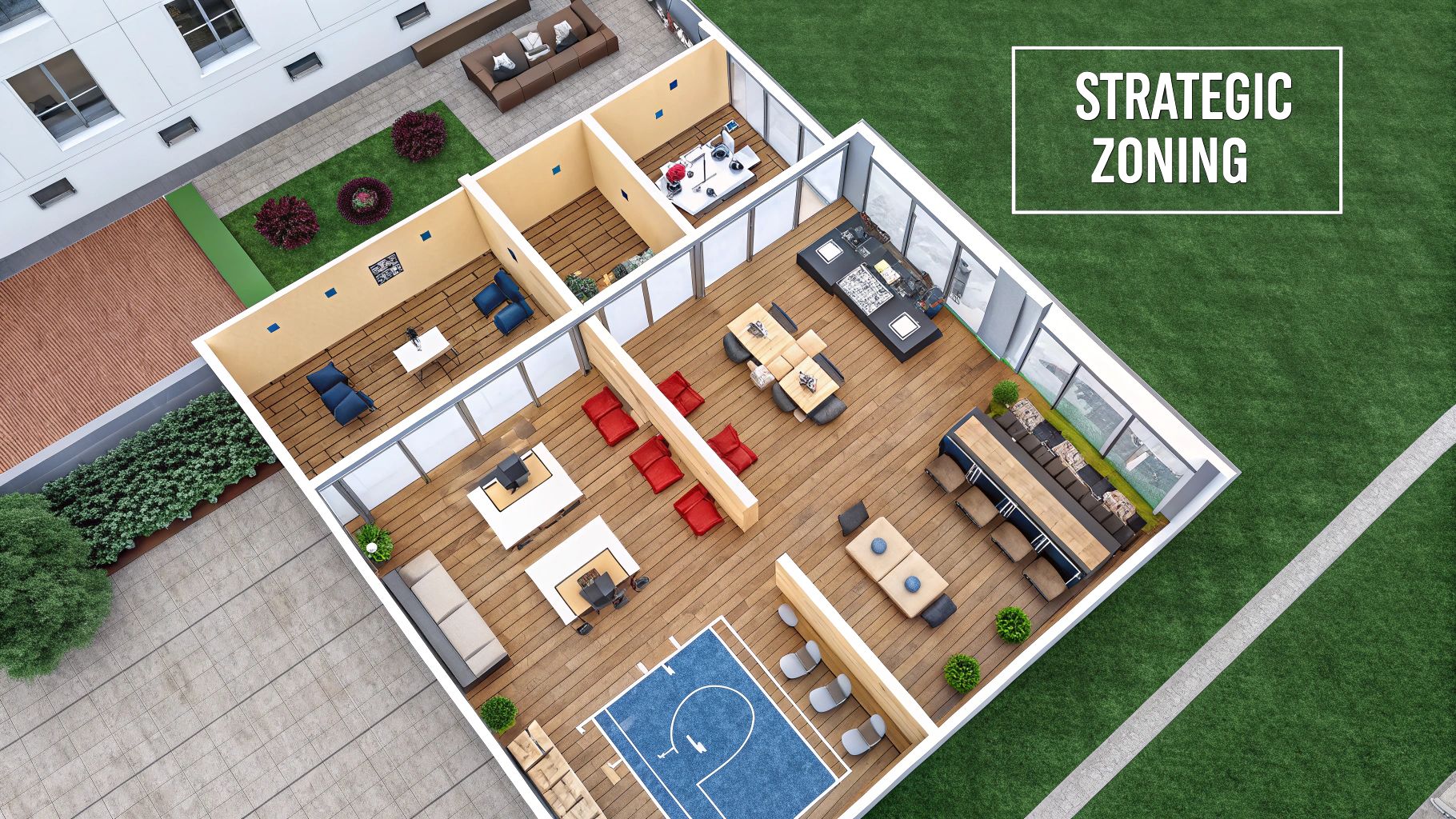
The key to this transformation is a concept called functional zoning. Think of it as giving every single square foot a specific job to do. It’s a deliberate process of carving up your building into distinct zones based on activity, noise levels, and workflow. When done right, the layout feels less like a random assortment of spaces and more like a cohesive, productive ecosystem.

People collaborating in a modern office space with a well-designed floor plan

The Logic of Functional Zoning

At its heart, functional zoning is just common sense—organizing space to prevent operational chaos. We’ve all seen what happens when it’s ignored. Imagine a fancy restaurant where the clatter of the kitchen spills directly into the quiet dining area, or a corporate office where clients have to parade through a loud sales floor to reach a private meeting room. These are classic zoning failures, and they create friction that wears down employees and customers alike.

An effective plan typically breaks a space down into a few logical areas:

  • Public Zones: The first impression. These are your lobbies, reception desks, and showrooms. They need to be welcoming, easy to navigate, and set the right tone.
  • Private Zones: The "heads-down" spaces. Think individual offices, confidential meeting rooms, and other areas where focus or privacy is essential.
  • Collaborative Zones: Where the magic happens. These are the dynamic hubs like open-plan work areas, breakout lounges, and project rooms designed to spark interaction.
  • Service Zones: The engine room. This is the "back-of-house" stuff—storage, loading docks, IT closets, and mechanical rooms. They’re absolutely vital but should be kept out of sight and out of the way.

By thoughtfully separating these functions, you create a layout that just works. The flow of people, information, and even inventory becomes smoother because the physical space is finally in sync with how the business actually operates.

Tailoring Layouts to Industry Needs

While the principles of zoning are universal, how you apply them changes dramatically from one industry to another. A great floor plan of a commercial building is never a one-size-fits-all template; it has to be meticulously tailored to the business it serves.

Take a retail store. Its floor plan is a carefully choreographed journey designed to guide shoppers from a wide, inviting entrance past high-margin impulse buys, toward the main departments in the back, and finally to a seamless checkout. Every aisle width and fixture placement is a strategic decision aimed at maximizing sales per square foot.

Now, contrast that with an industrial warehouse. Here, the layout is a masterclass in logistics. The plan prioritizes a logical flow from receiving and inventory to picking, packing, and shipping. Safety is king, with wide, clear pathways for forklifts, designated zones for hazardous materials, and unobstructed access to loading docks. Every second shaved off the workflow goes straight to the bottom line.

How Space Planning Drives Business Outcomes

When you get it right, smart space planning turns your building from a line-item expense into an asset that delivers real business results. For an office, that might mean designing a space that boosts both productivity and well-being. In fact, studies show that a well-designed workplace can improve employee retention by 14%, simply because the layout has a direct impact on job satisfaction and the ability to focus.

The broader commercial real estate market also plays a huge role in these decisions. Leasing and construction trends are pushing floor plans to be more adaptable than ever. For example, the explosive demand for data centers means their layouts must prioritize cooling and power infrastructure above all else, with 100% of new builds in some major markets being pre-leased before they’re even finished.

At the same time, the return-to-office movement is driving designs that support hybrid work and employee wellness, reflecting a major shift in what tenants are looking for. These market dynamics are constantly reshaping design, and you can get a better sense of them by exploring the latest insights on commercial real estate trends from Deloitte.

Designing for People and Planet

Beyond the hard lines of building codes and the practicalities of business operations, a truly great floor plan of a commercial building serves a higher purpose. It acknowledges that buildings are fundamentally for people. How a space is designed has a massive impact on not just the well-being of its occupants, but on the environment as well.

This is the point where a floor plan shifts from a simple diagram to a blueprint for a healthier, more sustainable, and genuinely engaging commercial space.

This kind of forward-thinking design isn’t about flashy, expensive features. It’s about being smart. When you make conscious decisions about how a building interacts with its natural surroundings, you create spaces that are cheaper to run, more pleasant to be in, and ultimately, more valuable long-term assets. Simple choices—where to place windows, what materials to use, how people move through the interior—can make all the difference.

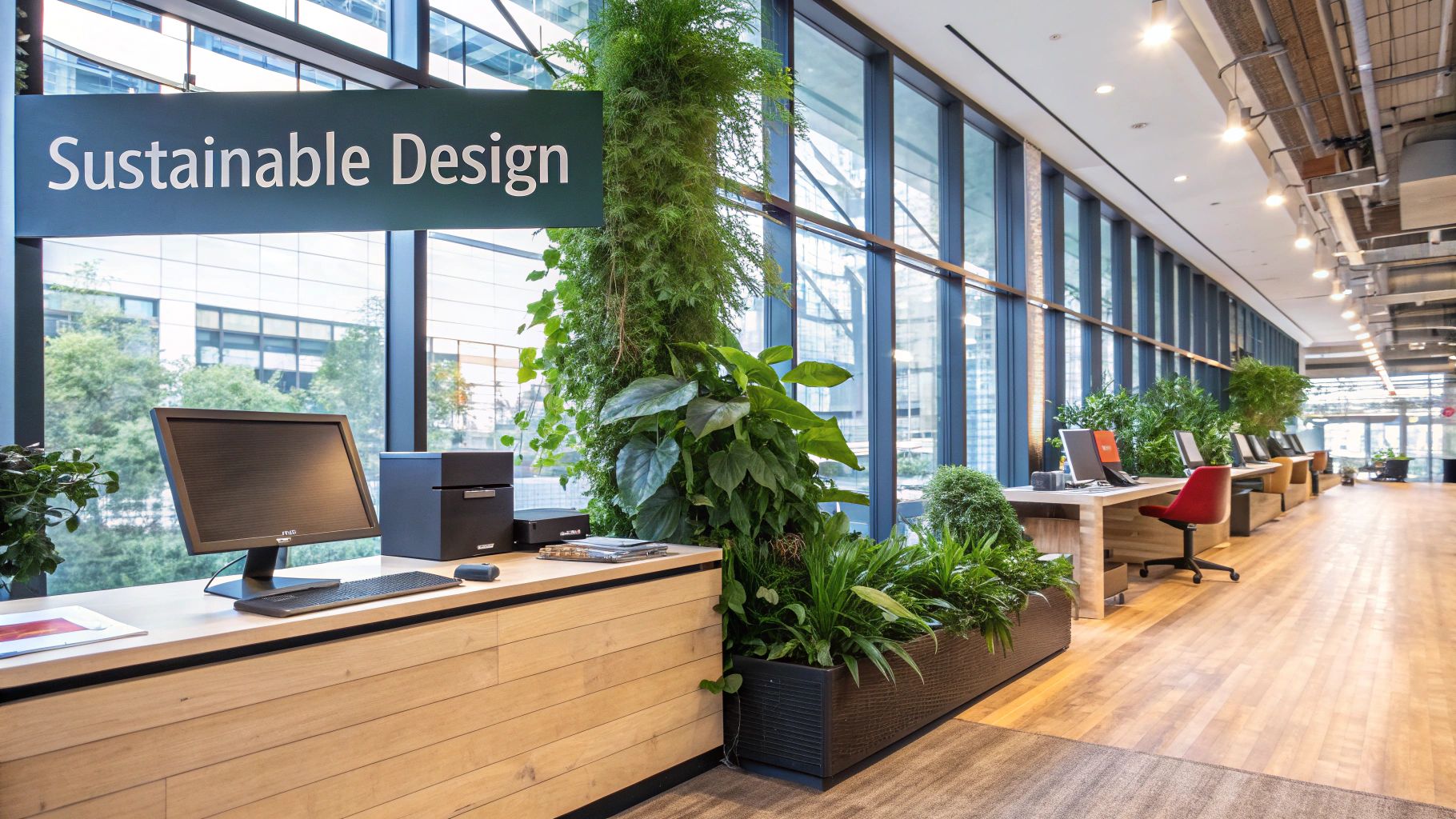
A bright, modern office interior with large windows and plants, demonstrating daylighting and biophilic design.

Working with Natural Light

One of the most powerful tools in sustainable design is daylighting. This is the art of orienting a building and shaping its floor plan to make the most of natural sunlight. It’s much more than just putting in big windows; it involves a whole strategy of placing glazing, light shelves, and even interior partitions to draw sunlight deep into the building’s core.

The payoff comes in two forms. First, it drastically cuts the need for artificial lighting, which can eat up 25% to 40% of a commercial building's electricity. Second, studies have consistently shown that exposure to natural light boosts employee mood, focus, and productivity. A well-lit space just feels better and helps people do their best work.

Bringing the Outdoors In with Biophilic Design

Working hand-in-hand with daylighting is the concept of biophilic design—the practice of weaving natural elements into the built environment. This is about more than sticking a few potted plants in the lobby. It's a comprehensive approach that uses natural materials, patterns, and living features to forge a real connection to the outdoors.

A floor plan rooted in biophilic principles taps into our innate human need to connect with nature. When we design spaces with abundant natural light, living green walls, indoor gardens, and clear views of the outdoors, we create environments that lower stress, improve cognitive function, and spark creativity.

This philosophy can show up in a floor plan in a few key ways:

  • Central Atriums: These multi-story open spaces act as light wells and are perfect spots for indoor gardens.
  • Green Walls: Vertical gardens built into interior walls not only look incredible but also improve air quality.
  • Natural Materials: Choosing wood, stone, and other natural finishes over synthetic ones creates a warmer, more grounded feel.
  • Views to Nature: Purposely orienting workstations and common areas to give people clear lines of sight to outdoor green spaces.

Creating Energy-Efficient and Healthy Layouts

Finally, the floor plan itself is a critical tool for energy efficiency. A smart layout can improve natural ventilation, minimize heat gain in the summer, and hold onto warmth in the winter. For example, placing heat-generating areas like server rooms or kitchens along an exterior wall makes them easier to cool, while clustering workstations in zones with the best natural light cuts down on the electrical load.

A healthy building plan also puts a huge emphasis on indoor air quality. This means choosing low-VOC (volatile organic compound) materials for paints, flooring, and furniture, and designing an HVAC system that constantly circulates fresh air. These details create a healthier indoor environment, which often translates to fewer sick days and a more focused workforce.

In the end, designing for people and the planet isn't a compromise—it's a synergy. The result is a more resilient, desirable, and profitable commercial building.

The Future of Commercial Building Design

https://www.youtube.com/embed/wqjJU4V6bGM

The days of static, paper-based floor plans are numbered. We're in the middle of a massive shift in how commercial spaces are conceived, designed, and built, driven by powerful new technologies. This isn't just about drawing plans faster; it's about creating buildings that are smarter, more efficient, and truly built around the people who use them.

From 2D Drawings to Digital Twins

The real game-changer here is Building Information Modeling (BIM). Think of it as far more than just a 3D model. BIM creates a living digital twin of the entire building, where every single component—from a massive steel beam down to a single light switch—is packed with data. This allows architects and engineers to run simulations, spot potential clashes between plumbing and electrical systems, and make critical decisions long before a shovel ever hits the ground.

Virtual reality (VR) takes this a step further. Now, clients and stakeholders can put on a headset and literally walk through a building that doesn't exist yet. This immersive experience is invaluable for catching subtle flaws in a layout's flow or feel that are nearly impossible to spot on a flat, 2D drawing.

Smarter, More Adaptable Spaces

The tools aren't the only thing evolving; the very idea of what a commercial space is is also changing. Rigid, single-purpose layouts are giving way to dynamic, flexible environments. We're seeing more movable walls, modular furniture, and integrated tech hubs that allow a space to be reconfigured at a moment's notice.

This push for intelligent design extends into the building's daily operations. The future of commercial design is tied directly to smart systems, like Internet of Things building automation, which can manage everything from lighting and climate to security with incredible precision.

The next generation of commercial floor plans won't just be blueprints; they'll be dynamic operating systems for the building itself. They are being designed not just for a single purpose, but for their ability to adapt to future needs we can't even predict yet.

This technological wave is also creating a huge market. The global demand for floor plan software is surging across architecture, real estate, and interior design. North America currently holds the largest slice of this market at 35%, but the Asia Pacific region is catching up fast. With a projected annual growth rate of around 13.5%, its rapid urbanization and new construction projects are fueling incredible innovation.

Got Questions? We’ve Got Answers.

Even after walking through all the details, you probably still have a few practical questions kicking around. That's completely normal. Let's tackle some of the most common ones we hear from clients about commercial floor plans.

What Does the Design Process Actually Look Like?

Think of it as starting with a wide-angle lens and slowly zooming in. We begin with the big picture—what are your goals, what are the constraints? That’s called programming and feasibility.

From there, we move into schematic design, which is basically sketching out the foundational layout and flow. Once we have a solid direction, we enter design development, where we start layering in the specifics like materials and building systems. The final step is creating the construction documents—the highly detailed blueprints that contractors and city officials need to get the job done right.

How Much Should I Budget for a Commercial Floor Plan?

This is the big question, and the honest answer is: it depends. The cost can swing dramatically based on the project's size, how complex it is, and where it's located.

A few key things drive the final price tag:

  • Architectural Fees: These are usually a percentage of the total construction cost, often falling somewhere between 5% and 15%.
  • Engineering Consultants: You'll need experts for the structure, mechanical, electrical, and plumbing (MEP) systems, and they have their own professional fees.
  • Permitting Fees: The local authorities will charge for reviewing and approving the plans.

Outfitting an existing retail space is a whole different ballgame than designing a brand-new, multi-story office building from the ground up.

Is a 2D or 3D Floor Plan Better?

This is a classic "apples and oranges" situation. They don't compete; they complement each other.

2D floor plans are the non-negotiable, technical workhorses. They are the official language of construction, filled with the precise measurements and specs that builders and code officials rely on.

On the other hand, 3D floor plans are all about vision. They're invaluable for helping clients, investors, or future tenants truly feel the space—its volume, its flow, its potential—in a way a flat drawing just can't convey. In modern practice, you really need both.

What’s the Real Difference Between Commercial and Residential Plans?

The core difference comes down to three things: scale, codes, and intent. A commercial plan is designed for the public. It has to solve for complex challenges like fire egress for hundreds of people, full ADA accessibility, and heavy-duty mechanical systems.

Residential plans are built for private life. The code requirements are simpler, and the design is centered on personal comfort and family function, not public safety and operational efficiency.


At Sherer Architects, LLC, our job is to translate complex needs into spaces that are clear, functional, and inspiring. If you’re ready to develop a floor plan that works as a strategic asset for your business, contact us to see how our expertise can bring your vision to life. Learn more at https://shererarch.com.