
Integrating nature into interior design—a practice known as biophilic design—goes far beyond a simple aesthetic choice. It's a strategic business move that can significantly enhance a building's financial performance. For commercial properties, this means creating spaces that aren't just beautiful but are measurably more profitable.
The core idea is to foster a connection to the natural world, which in turn boosts employee productivity, drives tenant demand, and ultimately, strengthens your bottom line.
Why Nature in Design Is a Smart Investment
Let's get one thing straight: weaving nature into a building's design isn't just about a "nice-to-have" upgrade. For smart developers and property owners, it’s a calculated investment with a clear and measurable return. Thoughtful biophilic design creates environments where people genuinely want to be, and that has serious financial upside in the world of commercial real estate.
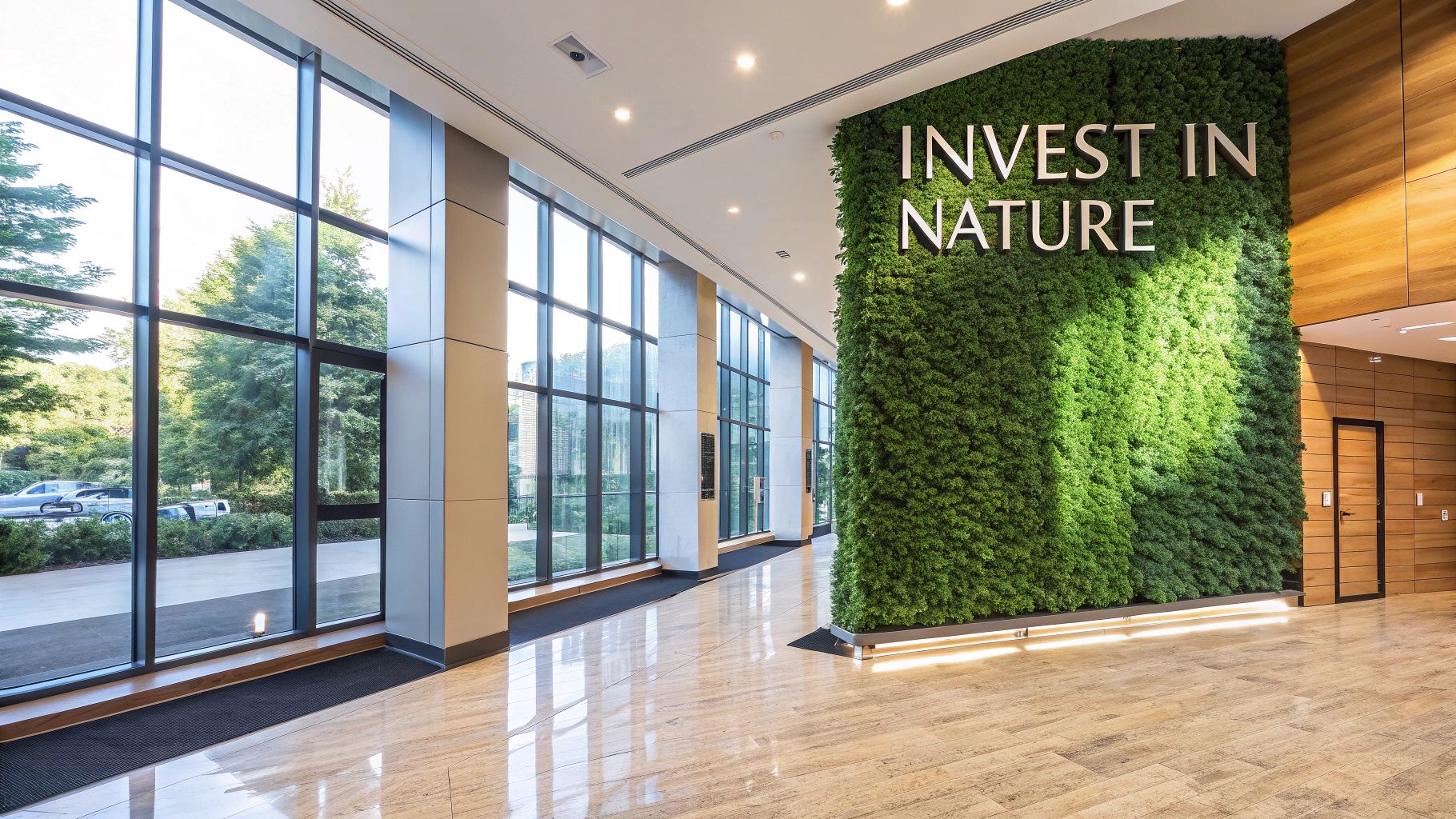
This investment pays dividends in very real ways, turning what might seem like simple design features into powerful assets that attract and keep high-value tenants and their employees.
Boosting Tenant Demand and Lease Rates
In a crowded market, biophilic elements are a huge differentiator. Properties that offer a connection to nature—whether through a stunning living wall, abundant natural light, or accessible outdoor terraces—are immediately perceived as premium spaces. This isn't just a feeling; it translates directly into higher occupancy and better rental income.
I saw this play out on a project recently. A client was weighing a standard cosmetic refresh against a full biophilic renovation for their aging office building. They went with the biophilic route, adding a central atrium with live trees and reconfiguring layouts to maximize daylight. The result? The building was fully leased months ahead of our projections, commanding lease rates 10% above the local market average.
Improving Occupant Productivity and Wellbeing
The link between nature and human performance is undeniable. When people have access to natural light, views of greenery, and good air quality, their focus and creativity improve. This connection to the natural world is proven to reduce stress and mental fatigue, which means fewer sick days and higher overall productivity.
For any business leasing your space, that's a massive operational advantage. A productive workforce is a profitable one, making biophilic offices a hot commodity for corporate tenants. By incorporating these elements, you significantly increase property value, making it a truly smart investment for long-term growth.
One study I often point to found that offices with plants and natural light see a 15% increase in workplace productivity. That number represents a direct financial benefit to the businesses in your building, making the rent you charge an easier pill to swallow.
The table below breaks down how specific biophilic features translate into tangible financial returns.
Biophilic Features and Their Commercial ROI
| Biophilic Element | Example Application | Direct Financial Impact |
|---|---|---|
| Living Green Walls | Lobby or common area feature wall. | Attracts premium tenants, boosts brand image, and can justify higher lease rates. |
| Abundant Natural Light | Large windows, skylights, open floor plans. | Reduces energy costs by 10-40%, improves occupant mood and productivity. |
| Natural Materials | Wood finishes, stone accents, natural textiles. | Creates a high-end feel that can increase perceived property value and appeal to luxury tenants. |
| Indoor Plants & Trees | Planters in offices, atrium gardens. | Improves air quality, reduces stress, and is linked to a 12% increase in productivity. |
| Views of Nature | Orienting desks toward windows, creating green roof terraces. | Shown to reduce employee absenteeism and increase job satisfaction, a key selling point. |
Each of these elements contributes to an environment that not only looks and feels better but actively performs better as a commercial asset.
The Growing Market for Biophilic Design
The demand for nature-centric spaces isn't a fad; it's a market that's rapidly expanding. The global biophilic design market is projected to hit $12.94 billion by 2032, which tells you everything you need to know about its importance in commercial development.
We're seeing real data to back this up. Tenants in major urban markets have shown they are willing to pay a 14% rent premium for floors with access to terraces and green spaces. That's proof of a direct ROI right there.
Applying Biophilic Principles to Your Project
Moving biophilic design from a high-level concept to a buildable plan requires a clear framework. For commercial and adaptive reuse projects, we've found it’s best to break it down into three core, actionable categories. This isn't just about scattering a few potted plants around; it’s about weaving nature into the very fabric of the building to create spaces that are both functional and genuinely restorative.
Each category offers a different path to fostering that connection to the natural world. By understanding these approaches, you can pick and choose the strategies that actually make sense for your project’s goals, budget, and physical constraints—whether you're starting from scratch or breathing new life into an old structure.
Direct Experience of Nature
This is the most literal application of biophilic design, and it’s exactly what it sounds like: bringing real, living nature indoors. It’s all about creating immediate, tangible connections to the living world. While a massive living wall in a lobby is a definite showstopper, direct nature can be brought in through countless other accessible ways.
For instance, on a recent adaptive reuse project, we took a dark, forgotten corridor and turned it into a vibrant common area. By installing a series of large skylights directly above a cluster of tall, low-light indoor trees, we didn't just add life—we created a dynamic play of light and shadow that moves and changes all day long.
Common ways to achieve this include:
- Living Green Walls: These are fantastic for making a powerful first impression in lobbies or amenity spaces, and they do double duty by helping improve indoor air quality.
- Water Features: The sound of moving water is a proven stress-reducer. Small fountains or water walls are perfect for quiet zones, wellness rooms, or waiting areas.
- Indoor Planters and Atriums: Strategically placed plants can do so much—they can define different zones, guide foot traffic, and soften hard architectural lines. For smaller nooks or individual offices, you can even create a terrarium to add a self-contained touch of green.
Indirect Experience of Nature
Indirect experiences are all about representation. This approach uses materials, colors, textures, and patterns that feel like nature without being literal copies. It’s an incredibly powerful tool, especially in historic preservation or on projects where a tight budget makes complex living systems impractical.
Think about specifying reclaimed timber for the exposed beams in an old warehouse conversion. The wood’s natural grain, its imperfections, and its warm tones immediately create a sense of organic comfort and history. That single material choice connects people to both a natural process and the building’s own past.
An indirect approach is really about sensory engagement. The cool, smooth feel of a natural stone countertop or the visual texture of a grasscloth wall covering can trigger the same positive psychological responses as direct contact with nature.
Other examples of this principle in action are:
- Natural Materials: Prioritizing wood, stone, bamboo, and cork for flooring, walls, and furnishings.
- Biomorphic Forms: Choosing furniture, light fixtures, or architectural details with the kind of curved, organic shapes you’d find in nature.
- Natural Color Palettes: Drawing inspiration from earthy tones, deep greens, and sky blues to create an atmosphere that feels calming and grounded.
Experience of Space and Place
This third principle is more subtle but just as important. It’s less about what you put in the space and more about how you shape the space itself to mirror our experiences out in the natural world.
A perfect example comes from a new build where we oriented the entire building to maximize views of a nearby wooded area. The floor plan was specifically designed so that the most-used spaces, like collaborative work zones and break rooms, had direct lines of sight to the trees. That strategic move didn't just boost wellbeing; it also slashed the need for artificial lighting, cutting projected energy costs by over 20%.
Key strategies for this approach include:
- Prospect and Refuge: This is about creating spaces that offer broad, open views (prospect) from a safe, enclosed position (refuge). Think of a comfortable seating nook that overlooks a bustling, open atrium.
- Dynamic and Diffuse Light: Designing for natural light that changes throughout the day is critical. Using elements like light shelves or fritted glass can help soften and diffuse direct sunlight, preventing harsh glare.
- Organized Complexity: Nature is full of rich, detailed patterns. We can mimic this by introducing fractal patterns—like those in leaves or snowflakes—through textiles, screens, or architectural details to create visual interest that engages the mind without being overwhelming.
Choosing Natural Materials for Lasting Appeal
This is where your design concept gets real. Selecting materials is the moment your vision for a nature-infused space becomes something tangible—something you can see, touch, and experience. For any new build or adaptive reuse project, this is a critical stage. You're constantly balancing aesthetics with commercial-grade durability, ongoing maintenance needs, and, of course, the budget.
The goal isn't just to pick materials that look good on day one. It's about choosing finishes that perform reliably in high-traffic commercial environments for years to come. Your decisions here directly impact the project's longevity and, ultimately, the property's value. Things like reclaimed wood, natural stone, cork, and bamboo all have their place, but each comes with its own set of practicalities, from sourcing and installation to meeting demanding commercial fire codes.
This decision-making process helps you figure out the best path forward for your specific project.
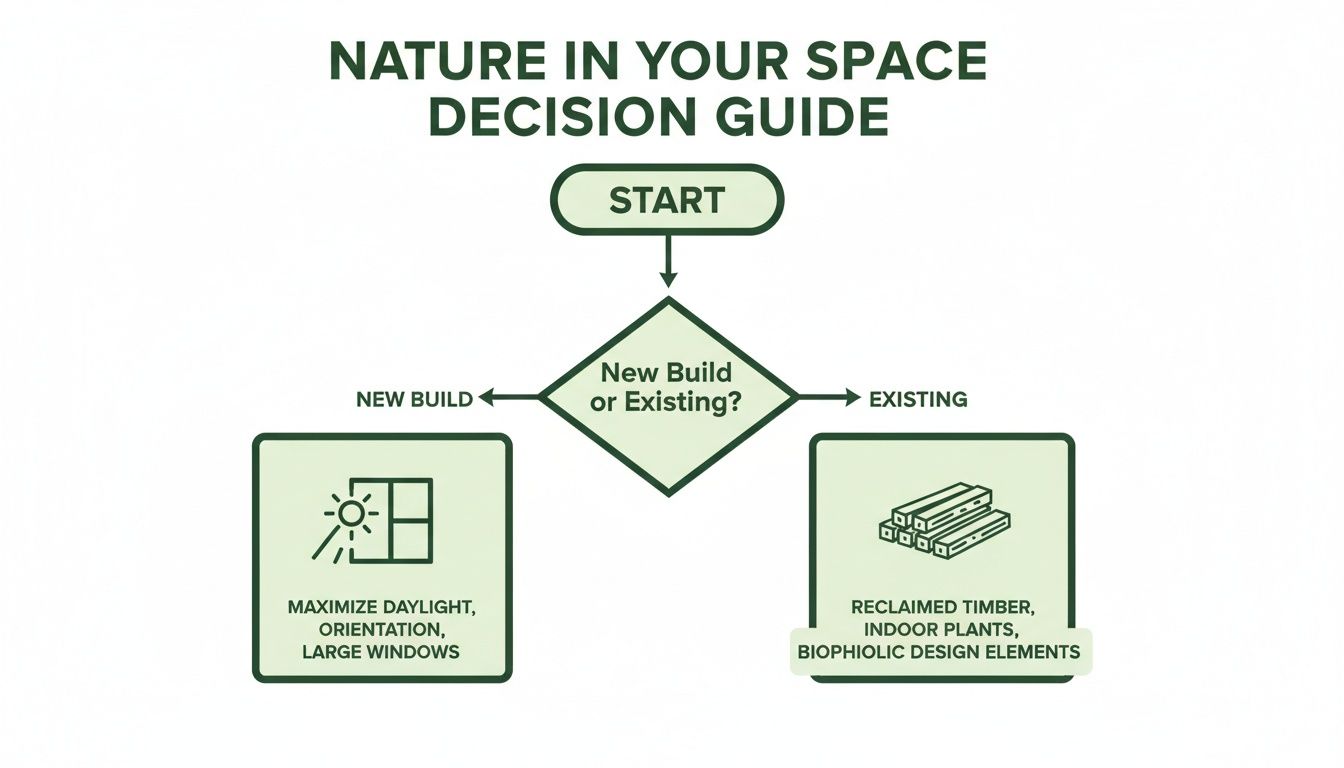
This decision tree shows how the project type—a fresh new build versus an existing structure—shapes your initial focus. For new construction, you might prioritize maximizing daylight, while a renovation often means celebrating the original materials already there.
Wood and Bamboo Applications
When people think of bringing warmth into a space, wood is usually the first thing that comes to mind. Reclaimed wood, salvaged from old barns or industrial buildings, is a fantastic choice for adaptive reuse projects. Its character is built-in—the saw marks, nail holes, and aged patina all tell a story, adding a layer of authenticity that new materials just can't replicate.
But let's be realistic. For a busy commercial floor, that beautiful old wood might not hold up. This is where engineered hardwood or even a high-quality luxury vinyl tile (LVT) with a photorealistic wood grain can be a more practical call for durability and maintenance. Bamboo, which is technically a grass, is another brilliant sustainable option. It's incredibly fast-growing and, in its strand-woven form, is harder than many traditional hardwoods.
A few ideas for where to use them:
- Reclaimed Wood: Perfect for feature walls, ceiling beams, or custom furniture where it can be admired without being subjected to constant wear and tear.
- Bamboo Flooring: A great, durable choice for common areas, offices, and retail spaces. Always opt for strand-woven bamboo for maximum hardness in commercial settings.
- Engineered Hardwood: Gives you the classic look of solid wood but with much better stability, making it a solid pick for spaces with fluctuating humidity.
Stone, Cork, and Other Natural Surfaces
There's a reason natural stone like granite, marble, and slate has been used for centuries; it brings an unmatched sense of permanence and elegance. A polished granite floor in a corporate lobby makes a powerful first impression. For something more subtle and tactile, a honed slate reception desk provides a grounded, earthy feel.
Cork is one of my favorite unsung heroes in sustainable materials. It's harvested from the bark of cork oak trees without ever harming them, making it wonderfully renewable. It’s also naturally antimicrobial, a fantastic sound absorber, and feels great underfoot. This makes it an ideal choice for places where acoustics and employee comfort are priorities, like open-plan offices or wellness rooms.
The demand for these materials is part of a much bigger trend. The global sustainable home decor market, which absolutely includes commercial projects, is projected to hit $415.7 billion by 2028. The largest slice of that pie? Floor coverings. This just underscores how critical your flooring decisions are during tenant buildouts and renovations. For a deeper dive, you can explore more data on this expanding market and see its trajectory.
For adaptive reuse projects, we always look for opportunities to expose and celebrate original materials. Uncovering an old brick wall or a concrete floor can provide a powerful, authentic backdrop that connects the new design to the building's history.
Sourcing and Certifications
When you're specifying natural materials for a commercial project, it’s not enough for them to just look good. They have to work hard and be safe. Always get the product spec sheets and testing data from your suppliers to ensure they meet strict durability standards and local fire codes.
Beyond compliance, making thoughtful material choices can help your project earn valuable certifications, which can be a huge boost to its marketability and value.
- LEED (Leadership in Energy and Environmental Design): Using materials with high recycled content, that are sourced regionally, or are rapidly renewable (like bamboo or cork) can all contribute points toward a LEED certification.
- Historic Preservation Guidelines: In designated historic buildings, your choices must respect the original character. We often find ourselves researching original construction techniques to select modern materials that are compatible in both performance and appearance.
By carefully weighing all these factors, you move beyond just picking finishes. You make smart, informed decisions that result in a space that is beautiful, sustainable, durable, and compliant—an investment that will endure for decades to come.
Navigating Building Codes and Systems
So, you're ready to bring a stunning, living piece of nature into your building. That's the exciting part. Now comes the part where vision meets reality—the nitty-gritty of building systems and local regulations. Getting this right from the start is what separates a successful, thriving installation from a maintenance nightmare.
Think of a multi-story living wall not as a decoration, but as an active, biological system. It breathes, it drinks, and it fundamentally alters the interior environment. This means we have to be proactive and strategic with our engineering, ensuring the building can handle its new living component without breaking a sweat.
HVAC Integration for Interior Green Spaces
The first thing we always tackle with large-scale interior plantings is humidity. Plants release a lot of moisture into the air through transpiration. It’s fantastic for them, but it can absolutely overwhelm an HVAC system that isn't ready for it. This extra load can lead to mold, mildew, and a general feeling of dampness for occupants.
Your typical commercial HVAC system is sized for people and sunlight, not for a wall that's constantly adding moisture to the air. You can't just plug a green wall in and hope for the best. The solution is to either specify a system with enhanced dehumidification capabilities from the outset or, more commonly, install a separate, dedicated dehumidifier just for the zone with the plants. This keeps the building's overall climate perfectly balanced.
Air circulation is another big one. You need gentle, consistent airflow around living walls and large planters to prevent stagnant pockets of air where plant diseases can fester. We often work with mechanical engineers to strategically place HVAC registers and returns, creating a subtle current of air that keeps both the plants and the people in the space healthy.
Lighting That Works for Plants and People
In a biophilic space, your lighting design has two very different clients: the people who work there and the plants that live there. The real art is finding an energy-efficient sweet spot that serves both beautifully.
We almost always rely on full-spectrum LED grow lights to keep plants thriving indoors, but just sticking a few bulbs overhead won't cut it. It’s all about creating a layered lighting strategy.
- Task Lighting: This is your focused, functional light for workstations.
- Ambient Lighting: This sets the overall mood, often with warmer, more comfortable tones.
- Horticultural Lighting: This is the specialized, plant-focused light that delivers the spectrum needed for photosynthesis. Crucially, it's often on a completely different schedule than the general lighting.
This approach prevents the powerful plant lighting from creating harsh glare or an unnatural, sterile feel for employees. We also love specifying fixtures that shift in color temperature throughout the day, mimicking natural circadian rhythms. It's a small touch that has a big impact on well-being.
We once worked on an adaptive reuse project where we integrated grow lights directly into architectural coves and ceiling details. The light source became an invisible, supportive element rather than an ugly, obtrusive fixture. It’s a perfect example of how nature and interior design can be seamlessly blended with the building’s core systems.
Code Compliance and Accessibility
Every single biophilic element has to play by the rules of building codes and accessibility. A gorgeous planter can turn into a serious liability if it blocks an emergency exit or creates a tripping hazard.
Here are the compliance issues we're constantly navigating on these projects:
- ADA Requirements: Circulation paths have to remain clear. We meticulously plan the placement of planters and water features to ensure they are well outside the minimum clearance zones for wheelchair access and general foot traffic.
- Fire Codes: This is non-negotiable. The materials used in large installations, especially the backing panels and irrigation components for living walls, must meet strict fire-resistance standards.
- Zoning Ordinances: Some features, especially if they're visible from the outside or on a rooftop, might require a trip to the local Design Review Board. Having detailed drawings ready is key to a smooth approval process.
By tackling these technical details head-on during the initial design phase, we sidestep costly delays and ensure the final result isn't just beautiful, but completely safe, compliant, and built for the long haul.
The Value of Sustainable Furnishings
Once you’ve got the structural bones and core systems in place, the real character of a space comes from its furniture, fixtures, and equipment (FF&E). This is the stuff people interact with every single day, and it's where your design vision truly comes to life. In today's commercial market, the conversation has moved decisively toward furnishings that are sustainable, non-toxic, and thoughtfully sourced.
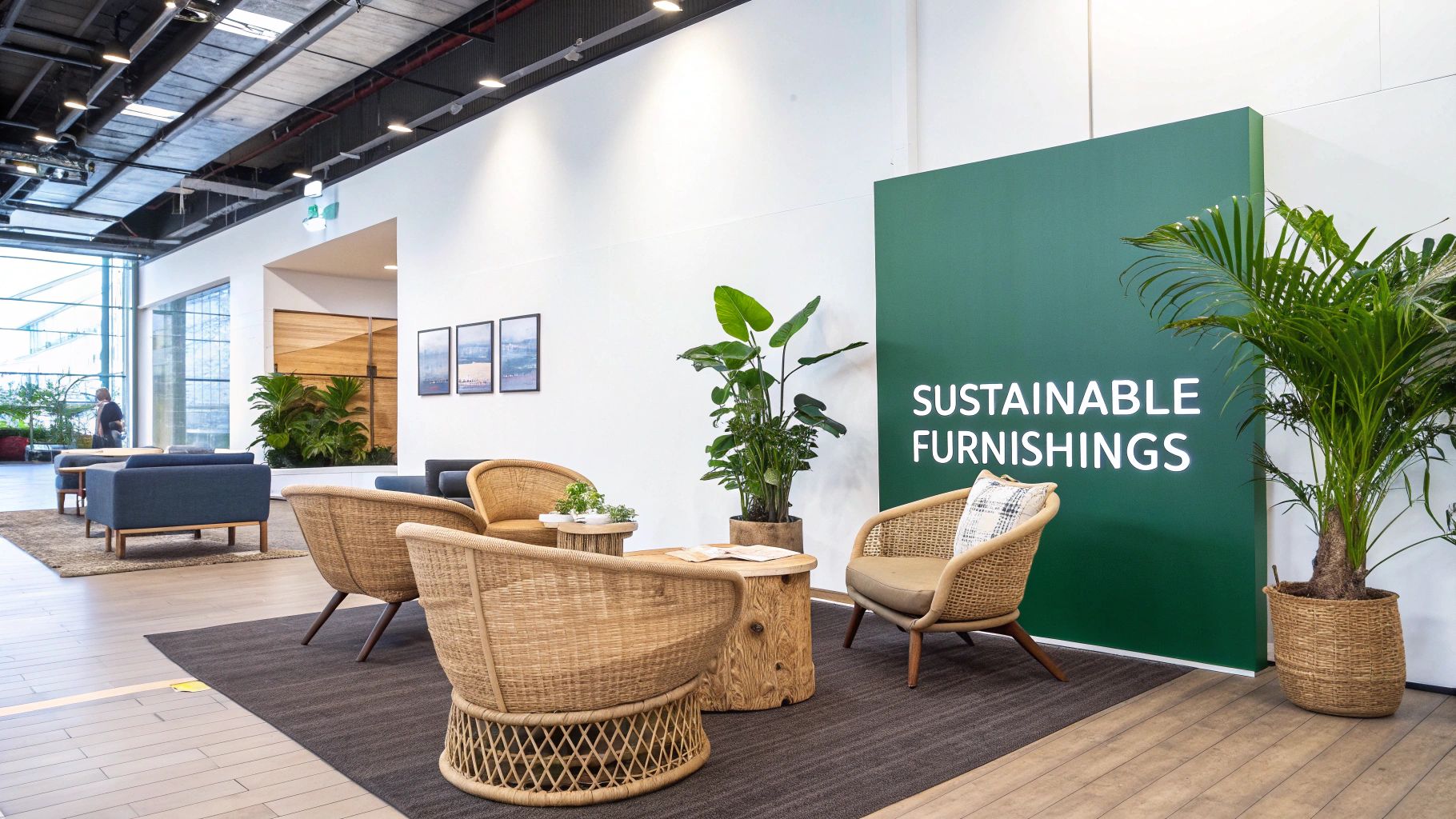
This isn't just about looking good or being eco-friendly anymore. It’s a smart business move that has a real impact on tenant attraction, occupant health, and the long-term value of your property.
Prioritizing Healthier Indoor Environments
For years, commercial interiors were packed with furniture and materials quietly releasing volatile organic compounds (VOCs) from glues, plastics, and synthetic fabrics. That’s all changing. Tenants are now acutely aware of how indoor air quality affects their teams' well-being and productivity, and they’re demanding healthier spaces.
One of the most direct ways to deliver that is by selecting FF&E made from natural, non-toxic materials. We're talking about solid wood desks with low-VOC finishes, seating upholstered in natural fibers like wool or linen, and systems furniture built without formaldehyde-based adhesives.
We recently worked with a corporate client who made indoor air quality a non-negotiable in their lease. They explicitly required that all new furniture for their upfit meet stringent low-VOC standards. This isn't a niche request anymore; it's quickly becoming the baseline for premium commercial tenants.
Connecting Furnishings to Financial Outcomes
When you choose high-quality, eco-friendly FF&E, you’re sending a clear message: this is a forward-thinking, premium property. This commitment to quality and sustainability resonates with the high-value tenants you want to attract. And the market data backs this up in a big way.
The eco-friendly furniture market hit $43.26 billion in 2022 and is still climbing, signaling a permanent shift in what both consumers and businesses want. Properties that feature sustainable design and furnishings are simply more appealing, and developers are catching on that this is a reliable way to boost a property's worth. You can learn more about the growth of sustainable interior design and see the numbers for yourself.
This investment pays dividends across the board:
- Tenant Attraction and Retention: A sustainably furnished space is a huge selling point. It proves you’ve invested in a healthy, high-quality environment, which is a powerful tool for attracting and keeping great tenants.
- Increased Asset Value: Properties with green credentials and superior finishes are often appraised higher and command a stronger position in the market compared to conventional buildings.
- Durability and Lower Lifecycle Costs: Let’s be practical. Sustainably sourced materials like solid wood are typically much more durable than cheap composites. They last longer and don’t need to be replaced as often, which saves you money in the long run.
Making Smart FF&E Choices
As you're selecting furnishings, the key is to find pieces that weave into your overall nature and interior design strategy. You're looking for items that not only tick the sustainability box but also enhance the biophilic experience you're trying to create.
Think about tables made from reclaimed wood that bring history and texture into a room. Or consider chairs with organic, curved forms that subtly echo shapes found in the natural world. By curating your FF&E with this level of intention, you complete the story, creating a cohesive, healthy, and high-performing commercial space that will genuinely stand out.
Finding the Right Partner to Bring Your Project to Life
We've walked through the tangible ROI of biophilic design, dug into material choices, and untangled the complexities of building systems. But taking a project from a rough concept to a thriving, profitable property is where the real work begins. Pulling all these threads together isn't just about a great idea—it's about having a clear strategy and an experienced guide to navigate the process.
This is exactly where a dedicated architectural partner proves invaluable. I often think of these projects as intricate puzzles. Our job is to see how every single piece, from maximizing natural light in an old warehouse to satisfying historic preservation boards, clicks together seamlessly. We thrive on managing those complexities so you can stay focused on your vision.
From a Napkin Sketch to a Finished Building
An architect who lives and breathes commercial and adaptive reuse projects does a lot more than just draft blueprints. We become your chief strategist and advocate, making sure every single decision aligns with your long-term financial objectives.
Here’s what that partnership looks like in practice:
- Connecting Design to Your Bottom Line: We’re experts at translating your vision for a high-demand, profitable property into a design that's actually buildable and sails through permitting.
- Smoothing Out the Approval Process: Having spent years in front of zoning boards and code officials, we know how to anticipate the hurdles that can derail a project, keeping you on schedule and on budget.
- Creative Problem-Solving on the Fly: When the inevitable surprises pop up—and they always do—we’re the ones at the table with practical, creative solutions that protect your investment.
A truly successful project feels cohesive and intentional from the first conversation to the final walk-through. The right partnership ensures the end result isn’t just a beautiful building, but an enduring, profitable asset that elevates your entire portfolio.
At the end of the day, weaving nature and interior design together is one of the most powerful moves you can make to boost a property's value and market appeal. It’s a direct investment in creating healthier, more productive, and deeply desirable spaces that modern tenants are actively seeking.
If you’re ready to see how these principles could work for your next commercial, adaptive reuse, or historic preservation project, I’d love to start a conversation. Contact Sherer Architects today and let’s discuss how we can bring your vision to life.
Answering Your Questions About Nature in Commercial Design
As biophilic design moves from a buzzword to a project reality, the conversation naturally shifts. Developers, investors, and business owners want to get down to brass tacks. It's no longer just about the why; it's all about the how. Let's tackle the practical questions we hear most often when we're mapping out these projects.
Getting these details sorted out early demystifies the whole process. It’s how we turn an exciting vision into a building that not only looks incredible but also works financially.
What’s the Real Cost of Biophilic Design?
There's a common misconception that bringing nature indoors automatically inflates the budget. That’s not necessarily true. Sure, a dramatic multi-story living wall is a significant line item, but many of the most effective biophilic strategies are either cost-neutral or can actually save you money down the line.
Think about it: orienting a building to maximize natural daylight or choosing locally sourced, natural materials are decisions made early in the planning stage, often without a major budget impact. The real story is in the return on investment. When you factor in a potential 15% boost in productivity, lower energy bills, and the ability to command higher rents, the initial spend often pales in comparison. A good architect knows how to prioritize the high-impact moves that fit the budget you have.
The trick is to stop thinking of biophilic design as an add-on. When it’s baked into the design strategy from the very beginning, you can weave in these elements efficiently, making it a smart, accessible approach for almost any project.
How Much Upkeep Do Living Features Really Need?
This is a big one. No one wants a wilting, high-maintenance headache. For something like a large green wall, an automated irrigation and lighting system is a non-negotiable. It handles the daily grind, but you’ll still need to budget for periodic professional servicing to check nutrient levels and prune everything back. It’s a planned operational cost, not an unexpected problem.
For simpler designs, like strategically placed large planters, bringing in a local horticultural service is usually the easiest path for a commercial property. Part of our job during the design phase is to match the plants and systems to your team’s ability to care for them. The goal is to make sure these natural elements stay a beautiful asset for years to come, not a burden.
Can This Actually Work in an Old Building?
Absolutely. In fact, adaptive reuse and historic preservation projects are fantastic settings for biophilic design. We often get to work with incredible original materials like exposed brick, stone, and old-growth timber—these are powerful, indirect connections to nature right there in the building's bones.
Introducing modern biophilic elements, like cutting in a new skylight or adding a sleek interior garden, creates a stunning dialogue between old and new. You end up honoring the building's history while giving it new life and meeting the wellness demands of modern tenants. Of course, with any historic project, every single move is carefully planned to respect the building's original character and navigate preservation guidelines.
At Sherer Architects, LLC, we specialize in solving these kinds of puzzles. If you're ready to see how biophilic design can elevate your next commercial, adaptive reuse, or historic preservation project, let's start a conversation.