SHERER ARCHITECTS

Categories
news

Design process of an architect: from concept to build

The design process of an architect is how we take a client's abstract ideas—their hopes, needs, and dreams—and shape them into a tangible, buildable reality. It’s a journey that moves methodically from deep listening and analysis to creative exploration, detailed refinement, and technical documentation, culminating in the construction of the final building.

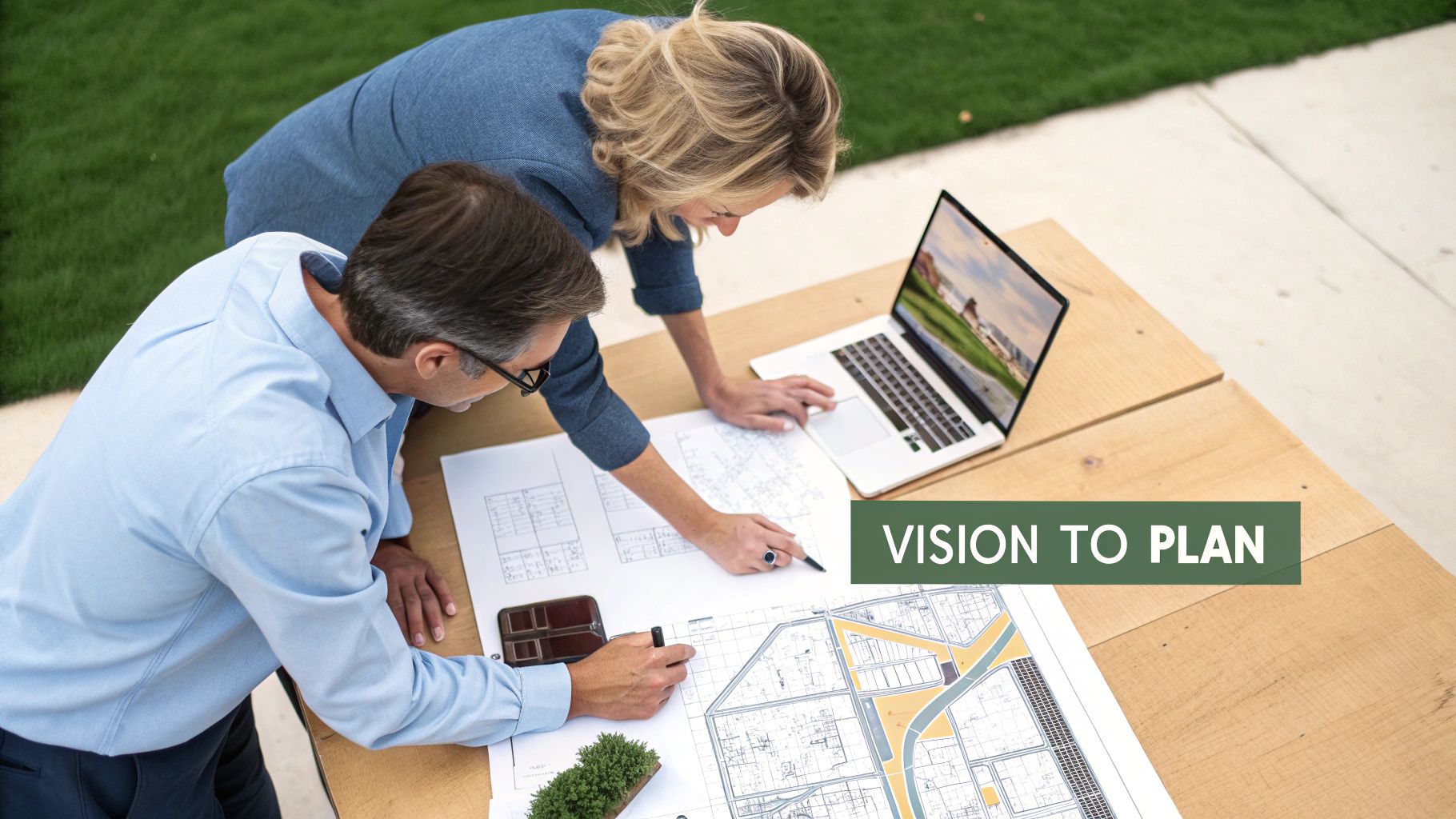
Turning a Client Vision Into a Viable Plan

Every great building starts not with a sketch, but with a conversation. The first and most crucial phase is a deep dive into the client's world. Our primary role here isn't to draw, but to listen and interpret.

This discovery goes way beyond a simple checklist of rooms and square footage. It’s about understanding the unspoken needs—the daily rituals that make a house a home, or the critical business objectives that drive a commercial space.

This foundational work results in a clear project brief, a document that becomes our north star for every decision that follows. Without that clarity, a project can easily drift, leading to expensive redesigns and a lot of frustration. A structured approach, like the Design Thinking Process, provides a fantastic framework for navigating these complex early stages.

At Sherer Architects, we treat every commission like a puzzle. Our first task is to find all the pieces—the client’s aspirations, the budget realities, and the site’s unique character—so we can begin to see how they fit together.

Analyzing the Canvas

While we’re talking with the client, we’re also conducting a rigorous site analysis. This isn't just about measuring property lines; it's a full-blown investigation to uncover the opportunities and constraints that will inevitably shape the design. A thorough analysis prevents nasty surprises down the road and ensures the finished building is not just beautiful, but practical and legally sound.

Here’s what we focus on:

  • Zoning and Regulations: We dig into local ordinances, building codes, and any historic preservation guidelines. This sets the legal boundaries for the project, dictating things like height restrictions, setbacks, and land-use rules.
  • Environmental Factors: We study the sun's path across the site through the day and the seasons. This tells us where to place windows for the best natural light and energy efficiency. We also map prevailing winds, drainage patterns, and existing trees or vegetation.
  • Topography and Geotechnical Conditions: The slope of the land and the type of soil underneath it directly impact the foundation design, site access, and, ultimately, the construction budget. A steep site might offer stunning views, but it can also pose serious structural and financial challenges.

This visual helps illustrate the flow from a client’s initial idea to a concrete project brief—the critical first step in an architect’s design process.
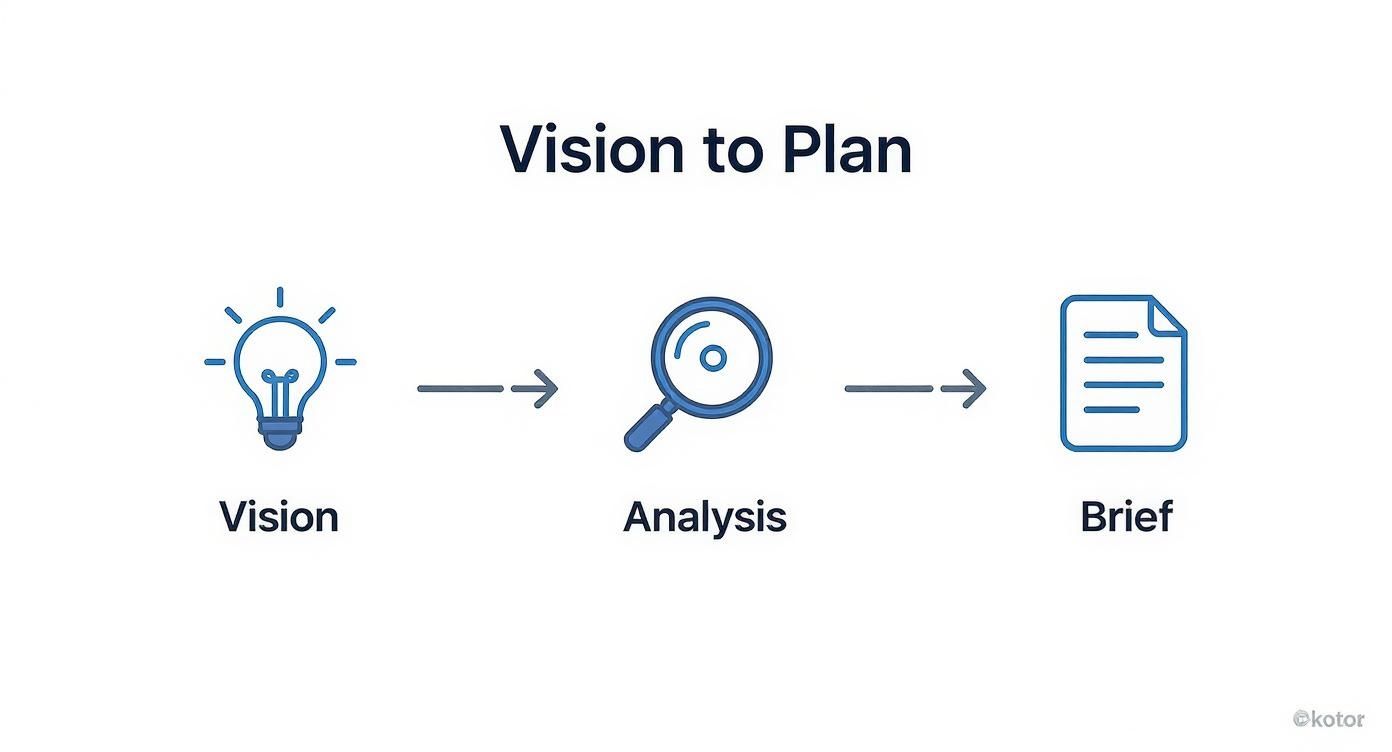
Infographic about design process of an architect

By grounding a creative vision in this kind of rigorous analysis, we build a solid, actionable plan from day one.

Exploring Concepts with Schematic Design
Architectural sketches and diagrams for a building design

Once we’ve got all the site analysis and client goals nailed down, the real fun begins. This is the schematic design phase, and it’s where we start to give the project a personality. You can think of it as a series of brainstorming sessions, but instead of whiteboards and sticky notes, we use sketches and diagrams.

The focus here is kept intentionally broad. We’re not getting bogged down in the specifics of doorknobs or brick colors just yet. Instead, we’re wrestling with the big, foundational questions. What's the overall shape of the building? How does it feel to move through the spaces?

We rely on simple, effective tools to test ideas fast. Hand-drawn sketches, rough digital models, and bubble diagrams are our go-to instruments. A bubble diagram, for example, isn't a technical floor plan. It's a map of relationships that helps us figure out how the kitchen should connect to the dining room or how public areas should transition into private ones.

Crafting the Initial Options

The goal isn't to find the one "perfect" answer right out of the gate. It's about exploring several different paths. For a recent adaptive reuse project we did in downtown Columbia, we showed the client three completely different concepts for converting an old historic warehouse. Each one offered a unique solution for getting natural light into a very deep building and how to best organize the new commercial spaces.

Presenting a few distinct concepts is crucial because it sparks a real conversation. It gives our clients something tangible to react to, which helps them verbalize what they love and, just as importantly, what isn't working for them. That back-and-forth is what sharpens the project's vision.

The schematic design phase is less about an architect delivering a finished concept and more about co-creating the core idea with the client. It’s a partnership where feedback shapes the path forward, ensuring the final direction truly reflects their goals.

By laying out these initial schemes, we can openly discuss the trade-offs of each one.

  • Option A might be the best for maximizing leasable square footage.
  • Option B could focus on creating a stunning central atrium that becomes the building’s heart.
  • Option C may offer the most straightforward and cost-effective structural plan.

This kind of side-by-side analysis is a cornerstone of the schematic design process. It makes complex architectural decisions much clearer, empowering the client to make an informed choice that aligns with their top priorities.

Locking in the Big Picture

Through this collaborative process, one concept usually emerges as the clear favorite. Sometimes, we even merge the best elements of two different ideas into a stronger, hybrid solution.

The final deliverable from this phase is an approved schematic design. This is a simple set of drawings—a site plan, basic floor plans, and key elevations—that establishes the project's fundamental framework. It confirms we've sorted out the big-picture issues like scale, layout, and overall form before we dive deep into the technical details. Getting this right is the key to keeping the entire project on track and true to the client's vision.

Getting Specific: The Design Development Phase

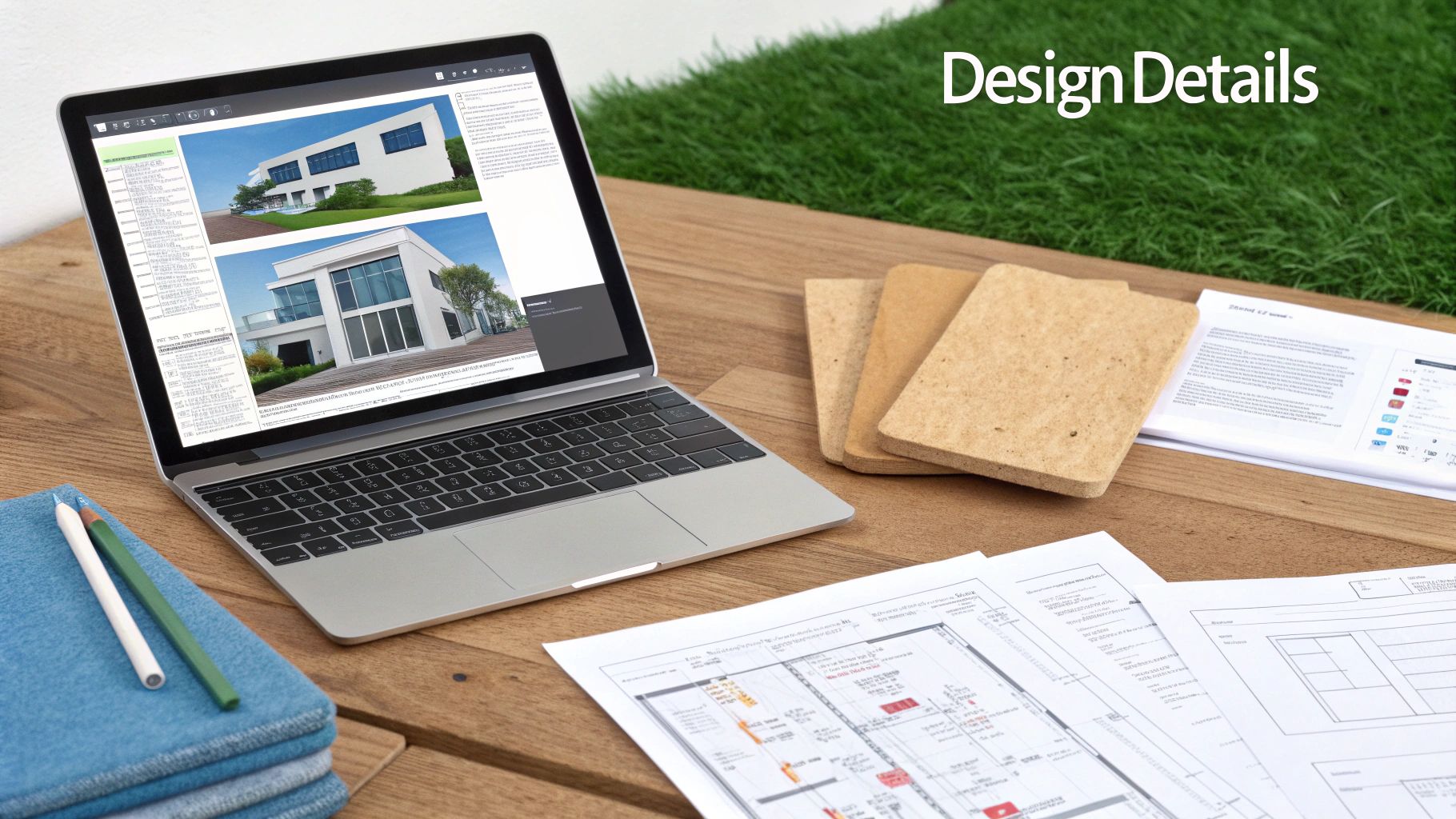
Once we have a schematic design that everyone loves, it's time to roll up our sleeves and get into the nitty-gritty. This is the Design Development phase, where we transform the broad-stroke concept into a fully detailed, buildable project.

Think of it this way: schematic design was about creating the skeleton. Now, we’re adding the muscle, skin, and nervous system. We move from asking "how will the spaces relate?" to "what will these spaces be made of?" It's a crucial shift from conceptual to concrete.

We take the approved floor plans and massing models and start layering in the specifics. This means refining room dimensions down to the inch, precisely locating every door and window, and selecting the core materials that will define the building’s character and performance.

Bringing the Experts Together

This is also where our collaboration with engineering partners kicks into high gear. We bring our structural, mechanical, electrical, and plumbing (MEP) consultants to the table to weave their expertise directly into the architectural drawings. This ensures the building not only looks great but functions flawlessly from day one.

Coordination is everything here. It's a complex dance to make sure a structural beam doesn't end up where an HVAC duct needs to go, or that plumbing lines and electrical conduits have clear, efficient paths.

We work through key integrations like:

  • Structural System: We work hand-in-hand with our structural engineers to fine-tune the building’s frame, select appropriate column sizes, and detail the foundation.
  • Mechanical Systems (HVAC): Heating, ventilation, and air conditioning systems are carefully routed to ensure optimal comfort and air quality without compromising those beautiful high ceilings we designed.
  • Electrical and Plumbing: We map out everything from outlet locations and lighting plans to pipe routes, making sure every system is accessible and efficient.

This highly collaborative stage is where modern tools really shine. The industry's move toward cloud-based architecture design software has completely changed how architects, engineers, and clients work together. In 2023, the global market for this software hit $3.9 billion, a number that's only expected to climb. That growth is all about the flexibility and real-time collaboration these platforms offer. If you're interested in the tech behind the scenes, you can explore the architecture design software market analysis.

At Sherer Architects, we use this phase to digitally build the project before the first shovel ever hits the ground. By finding and fixing system conflicts in our models, we prevent expensive and frustrating problems from ever showing up on the construction site.

Defining the Look and Feel with Materials and Finishes

While the engineers are busy with the building’s inner workings, we’re also making key decisions about the materials and finishes that give the project its soul. This is so much more than just picking paint colors.

We research and specify materials based on a careful balance of durability, budget, sustainability, and the overall aesthetic we’re aiming for.

Will the exterior be classic brick or sleek metal panels? What kind of flooring can stand up to heavy foot traffic in a commercial space? What doorknobs, light fixtures, and faucets align with the client’s vision? Answering these questions now is what makes the final construction documents so clear and powerful.

By the time we wrap up design development, the project has evolved from a great idea into a thoroughly considered, highly detailed design, perfectly tee'd up for the final push into construction blueprints.

Creating the Blueprint for Construction
Detailed architectural blueprint with digital renderings

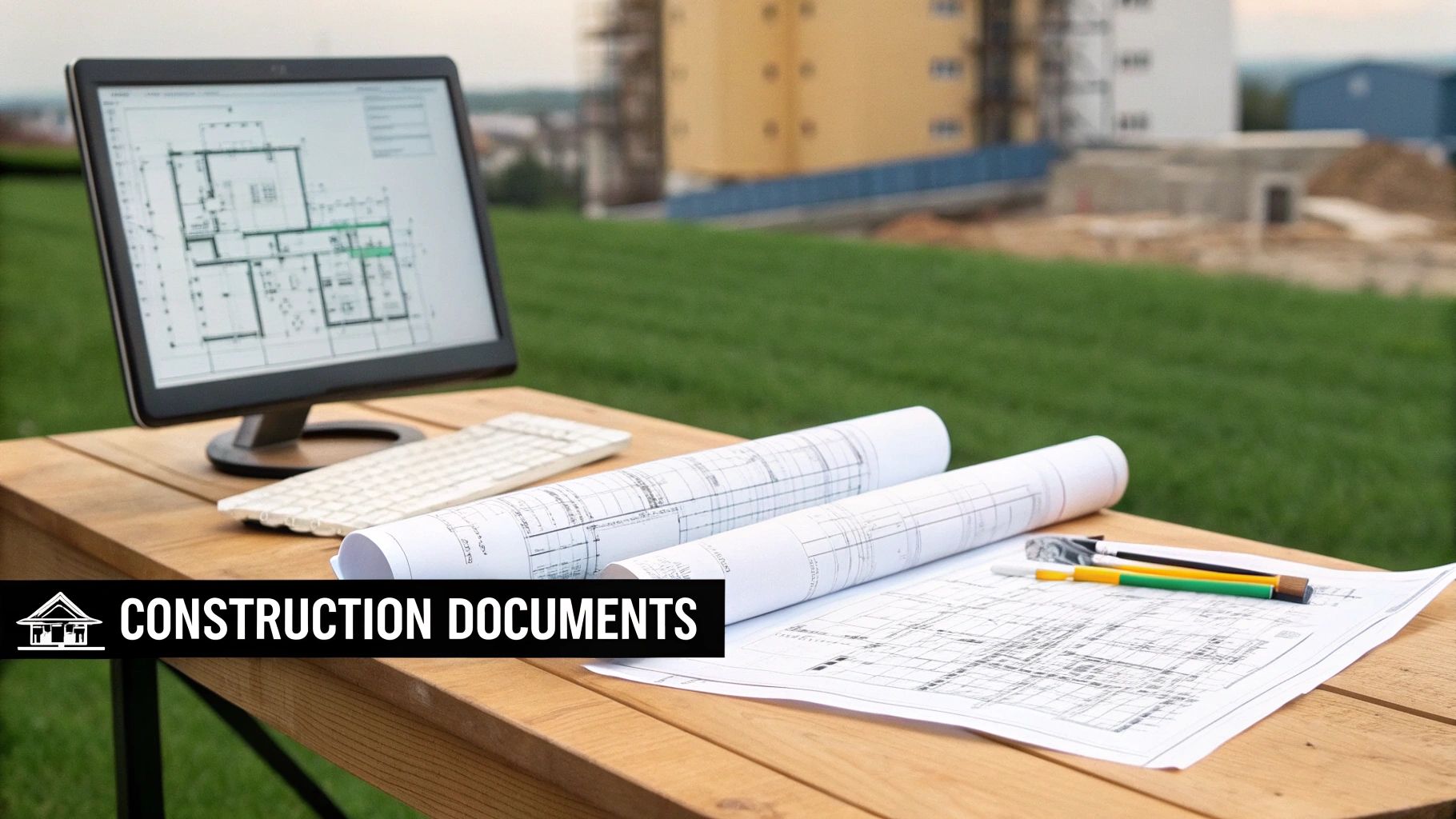
This is where the rubber really meets the road. It’s the most technically demanding part of the entire journey. Every single decision we’ve made together up to this point—from the overarching structural system right down to the finish on a doorknob—gets translated into a precise, legally binding set of instructions for the builder.

These are the construction documents, and they are the project's official bible. This isn't just a few drawings; it's a comprehensive package of highly detailed plans and technical specifications that leaves absolutely nothing to chance. They tell the contractors exactly what to build, how to build it, and the specific materials to use.

The Power of the Digital Twin

The engine behind this process is Building Information Modeling (BIM). Think of it as far more than just a 3D model. We create a "digital twin" of the building, an intelligent model where every single component—from the steel frame to the light switches—exists as a data-rich object.

This is a game-changer. It allows our team to coordinate every element with surgical precision. Before a single boot hits the ground on-site, we run clash detection analyses to find and fix problems, like a plumbing line trying to occupy the same space as a structural beam. It’s like a full dress rehearsal, and it's essential for preventing expensive mistakes and delays during the actual build.

BIM has become the global standard for a reason. It’s forecasted that 89% of architects will use it on more than half their projects, largely because it can slash project errors by up to 90%. At Sherer Architects, we bring that advantage to every single project.

Assembling the Complete Drawing Set

The final output is a hefty set of documents that guides every single person on the job, from the general contractor to the electrician. A key piece of this is the detailed site plan, which shows exactly how the building relates to the property and its surroundings.

A complete set typically includes:

  • Architectural Drawings: The core plans, elevations, sections, and detailed schedules for every door, window, and finish.
  • Structural Drawings: The bones of the building—foundation plans, framing layouts, and all the connection details that guarantee stability.
  • MEP Drawings: Coordinated layouts for all the systems that make a building work: mechanical (HVAC), electrical, and plumbing.
  • Technical Specifications: A detailed manual that outlines the quality standards, installation methods, and performance requirements for every material and product.

This phase is where an architect’s role as the master coordinator truly comes into focus. We’re responsible for bringing the work of all consultants—structural, mechanical, electrical—into one cohesive, crystal-clear set of instructions. A well-executed set of construction documents is the single most important factor in bringing a project in on time, on budget, and to the quality standard you expect.

Once these documents are buttoned up, the project is finally ready to leave the screen and enter the real world. They are the foundation for obtaining building permits and form the legal basis of the construction contract, ensuring your vision is built exactly as we designed it.

Guiding the Project During Construction
An architect on a construction site reviewing plans with a builder.

Once the blueprints are complete, our role makes a crucial shift from the design studio to the construction site. This phase, often called construction administration, is where the rubber truly meets the road. We become the client’s on-the-ground representative, making sure the vision we all worked so hard to create on paper is executed with precision.

Our primary goal here is to protect the client’s investment. It's our job to ensure the final build is a faithful, high-quality translation of the approved plans.

A set of drawings, no matter how detailed, can never predict every variable on a live job site. That's why being present is non-negotiable. Real-time problem-solving and diligent oversight are what make this phase a success.

The Architect as On-Site Advocate

We make it a priority to be at regular site meetings with the general contractor and the specialized subcontractors. These gatherings are the heartbeat of the construction phase—they keep the project moving, allow for immediate answers to questions, and help us tackle unexpected issues before they snowball into expensive delays.

For instance, on a recent adaptive reuse project, the demolition crew uncovered a serious structural problem hidden behind an old brick wall. Because we were on-site, we collaborated with the structural engineer and contractor right then and there. We sketched out a solution that same day, which kept the project on schedule and preserved the design’s integrity.

A huge part of our job during construction involves reviewing contractor submittals. Before a builder can order windows or install cabinetry, they have to send us product data, shop drawings, or physical samples for approval. We check every detail against our specifications to confirm they hit the mark on:

  • Performance: Does this window actually meet the specified thermal rating?
  • Aesthetics: Is this the exact brick color and texture we selected months ago?
  • Quality: Will this material stand up to the wear and tear we designed it for?

This review process is a critical checkpoint. It prevents incorrect materials from being ordered and installed, protecting both the project's quality and the client's budget.

Construction administration is where an architect’s oversight provides its greatest value. We serve as the central point of communication, translating complex technical issues for the client and ensuring the builder’s work faithfully executes the design down to the smallest detail.

Responding to On-the-Ground Realities

It’s completely normal for contractors to have questions. When they need to clarify a detail in the drawings, they submit a Request for Information (RFI). A prompt, clear response from us is absolutely essential to keep the work flowing without interruption.

An RFI could be anything from asking how two different materials should meet at a corner to confirming the precise mounting height for a custom light fixture.

Our responsibility is to provide the missing detail and remove any ambiguity. This back-and-forth isn't a problem; it's a vital part of the process. It's this proactive communication that ultimately transforms a complex set of documents into a finished building that brings our client’s vision to life.

Common Questions About the Design Process

Stepping into the world of architecture for the first time can feel a little overwhelming. We get it. Over the years, we’ve found that most clients come to the table with a similar set of questions about how everything works, from timelines to costs to their own role in the process.

Getting these questions answered right from the start is the key to building a great partnership. Let’s tackle some of the most common ones we hear.

"How Long Is This All Going to Take?"

This is almost always the first question, and for good reason. While there’s no one-size-fits-all answer, we can give you a pretty solid framework. For a custom home, you can typically expect the design phases to last somewhere between 4 to 6 months. Construction itself usually takes another 12 to 18 months.

Of course, commercial projects are a different animal and can vary wildly depending on the size and complexity of the job.

A well-defined project timeline isn’t just a schedule—it’s a communication tool. It helps everyone, from the client to the contractor, understand key milestones and dependencies, preventing misunderstandings and keeping the project moving forward smoothly.

It's also important to remember that the clock isn't just ticking on design work. Things like city permit reviews and contractor schedules play a huge part in the overall timeline.

"How Much Will I Need to Be Involved?"

The simple answer? A lot, especially at the beginning. Your input is the most critical ingredient during the initial discovery and schematic design stages. We’re essentially building the foundation of the entire project based on your vision, and your feedback is what moves the needle.

As we get into the nitty-gritty of construction documents, your direct day-to-day involvement will naturally taper off. But you're never out of the loop. We'll still need you to weigh in on important decisions like finishes, fixtures, and materials. Think of us as your expert guide—we’ll bring you curated options, explain the pros and cons, and give you the clear information you need to make confident choices.

"What If I Want to Change Something?"

You can absolutely make changes. The real question is when you make them. The architectural process is intentionally designed to get the big, foundational decisions locked in early. Tweaking the layout or moving a few rooms around during schematic design is straightforward and has very little impact on the budget or timeline.

On the other hand, deciding to move a structural wall after the construction documents have been finalized is a whole different story. That kind of change creates a domino effect, forcing us to re-engineer systems and redraw pages of detailed plans. This almost always adds extra fees and can cause significant delays.

To avoid this, we build formal review-and-approval checkpoints into the end of every phase. This gives you a dedicated opportunity to sign off on the design, ensuring you’re 100% on board before we dive into the next level of detail.

  • Changes in Schematic Design: Simple, easy, and the best time for big ideas. This is the moment to get it right.
  • Changes in Design Development: Getting more complicated now. A change might impact coordinated systems like plumbing, electrical, or HVAC.
  • Changes During Construction Documents: This is the most expensive and disruptive time to make a change. It means going back to the drawing board on highly detailed, technical plans.

In the end, it all comes down to clear and constant communication. When you understand the flow of the process, you can provide the right feedback at the right time, helping us bring your vision to life as smoothly and efficiently as possible.


At Sherer Architects, LLC, we guide you through every stage of the design and construction process, ensuring your vision is brought to life with clarity and expertise. Learn more about our collaborative approach at https://shererarch.com.

Categories
news

What is commercial architecture? A quick guide

At its core, commercial architecture is the art and science behind designing the buildings where business gets done. We're talking about everything from the high-rise office tower that defines a city's skyline to the cozy local coffee shop on the corner. Unlike a private home, these spaces are built from the ground up to support commerce, welcome the public, and drive economic activity.

Designing the Spaces Where Business Thrives

To really get what commercial architecture is all about, you have to think beyond just the building materials. It's about crafting a strategic environment. A good commercial architect isn't just drawing up a floor plan; they’re creating a functional ecosystem designed to solve a business problem. That might mean designing a retail store layout that naturally guides customers toward key products to boost sales, or it could be an office that encourages spontaneous collaboration.

These buildings are active participants in our economy. They're purpose-built for specific business functions, but they also have a huge responsibility to the public. This dual focus—serving both the business and the people—adds a whole layer of complexity you don't see in other types of architecture. A commercial architect's checklist is long and varied, covering critical points like:

  • Public Safety and Accessibility: This is non-negotiable. It means rigorously following building codes, fire regulations, and accessibility laws like the Americans with Disabilities Act (ADA).
  • Brand Expression: The building itself becomes a physical extension of a company's identity and what it stands for.
  • Economic Viability: It's a constant balancing act between the client's upfront budget, the building's long-term running costs, and the potential for a solid return on investment.

A Tale of Three Architectures

Putting commercial architecture into context helps clarify what makes it so unique. It’s useful to see how it stands apart from its two main counterparts: residential and industrial architecture. While all three involve designing structures, their end goals and the problems they solve are worlds apart. Residential architecture is all about creating personal, private living spaces. Industrial architecture, on the other hand, is driven by process, heavy machinery, and the demands of large-scale production.

Commercial architecture sits squarely in the middle, blending the human-centric focus of residential design with the functional efficiency required by industrial operations. It's a unique discipline that must serve both the business operating within its walls and the public interacting with it.

For a deeper dive into the field, including various applications and considerations, you can explore further resources on commercial design.

The table below breaks down these key differences, showing exactly what makes each field tick.

Commercial vs Residential vs Industrial Architecture At a Glance

Here’s a quick comparison of the three main branches of architecture, looking at their primary purpose, key design considerations, and typical scale.

Attribute Commercial Architecture Residential Architecture Industrial Architecture
Primary Purpose To facilitate commerce, public services, and business operations. To provide private living spaces for individuals and families. To support manufacturing, storage, and industrial processes.
Key Considerations Public accessibility, brand identity, customer flow, building codes, and ROI. Comfort, privacy, aesthetics, personal lifestyle, and family needs. Workflow efficiency, equipment layout, logistics, and durability.
Typical Scale Varies widely, from small storefronts to large mixed-use developments. Typically smaller-scale projects like single-family homes or apartments. Often involves large-scale facilities like warehouses or factories.

As you can see, each discipline operates in its own world, solving for very different human and operational needs.

The Four Pillars of Commercial Design

Every great commercial building, from a massive corporate headquarters to your favorite corner coffee shop, stands on four fundamental principles. I like to think of them as the legs of a table—if one is shaky or missing, the whole thing comes crashing down. These pillars are what architects use to navigate the complex world of balancing a client's dream with the hard realities of construction, public use, and ultimately, the bottom line.

These principles ensure a building is more than just a pretty face. It has to work. It has to do its job, represent the brand behind it, keep everyone inside safe, and make good business sense. Let's break down these four essential pillars that every thoughtful commercial design is built upon.

Functionality and Flow

At its absolute core, a commercial building is a tool for business. Its main purpose is to function flawlessly for the people who use it, whether they're employees, customers, or patients. This is the pillar of functionality and flow, and it's all about how people move and operate within the space.

An architect obsesses over the path people will take through a building. In a retail store, for instance, the layout isn't accidental; it’s carefully crafted to guide you past key products and encourage you to buy. In a modern office, the flow might be designed to spark collaboration, with pathways that naturally lead to common areas and impromptu meeting spots. The goal is to create an experience so intuitive that it feels effortless.

A well-designed space is almost invisible because everything is just where you expect it to be. You know a functional design is a success when people can move through it and get things done without ever feeling lost, confused, or held back by the building itself.

Brand Identity and Aesthetics

A commercial building is one of the most visible, permanent statements a company can make. This second pillar, brand identity and aesthetics, is what turns a generic box into a physical extension of a company’s personality and values. It’s storytelling through architecture.

This is so much more than just slapping a logo on the door. The materials, the colors, the way light fills a room, and the architectural style all work together to send a message. A young tech company might choose an open, industrial look with raw concrete and exposed steel to project a feeling of innovation and transparency. A luxury hotel, on the other hand, will use rich materials and classic forms to communicate elegance and comfort. The building itself becomes a powerful marketing tool, reinforcing the brand for everyone who walks inside.

Safety and Compliance

This third pillar is the one you can't compromise on. It's the absolute foundation of public trust: safety and compliance. Commercial buildings are for the public, and architects have a serious responsibility to protect the health and well-being of every single person who steps inside. This means sticking to a whole host of complex rules and regulations.

This pillar is less about creative flair and more about technical mastery. Key elements include:

  • Building Codes: These are the local and national rulebooks that govern everything from how strong the structure must be to fire safety, proper ventilation, and electrical systems.
  • The Americans with Disabilities Act (ADA): This is a federal law ensuring that public spaces are accessible to everyone. It dictates the design of ramps, doorways, bathrooms, and much more.
  • Public Safety Measures: This covers things like clearly marked fire exits, emergency lighting, and setting limits on how many people can be in a space at one time.

Getting this right requires a deep well of technical knowledge. The architect is the client’s guide through this maze of regulations, making sure the finished building is not only beautiful and functional but, most importantly, legal and safe.

Economic Viability

At the end of the day, commercial architecture has to make financial sense. The pillar of economic viability is what keeps a project grounded, ensuring the design fits the budget, delivers a solid return on investment (ROI), and accounts for long-term running costs. A stunning design that bankrupts the owner is, quite simply, a failure.

Architects work hand-in-hand with clients to find the sweet spot between their vision and their budget. This means making smart choices about materials, construction techniques, and building systems to manage those initial costs. But a good design also has an eye on the future. It incorporates energy-efficient systems and durable materials that will cut down on utility bills and maintenance for years to come. By focusing on economic viability, the architect ensures the project isn’t just a creative achievement but a profitable, long-lasting asset.

Exploring the Diverse World of Commercial Buildings

Commercial architecture isn't one-size-fits-all. It's a collection of specialties, much like how a doctor might focus on cardiology or pediatrics. Architects, too, often develop a deep expertise in specific types of commercial buildings.

Think about it: the design challenges for a bustling shopping mall are worlds apart from those of a sterile hospital. Yet, both are commercial architecture. This variety is what keeps the field so interesting. Let’s dive into a few of the major categories you see every day.

Office Buildings: From Corporate Campuses to Coworking Hubs

Offices are probably the first thing that comes to mind when you hear "commercial building." But the modern office has come a long way from the sea of cubicles we all picture. Today, architects are designing everything from sprawling corporate headquarters for tech giants to flexible coworking spaces for freelancers and startups.

The real puzzle is creating a space that actually supports how a company works. An open floor plan can be great for collaboration, but you also need quiet zones for focused tasks. Things like great natural light, good air quality, and access to amenities aren't just perks anymore—they're essential for attracting and keeping great people.

Retail Spaces: Crafting the Customer Journey

Retail architecture is all about the experience. The goal? To encourage people to buy. Whether it's a massive mall, a tiny boutique, or a big-box store, the design is meant to guide a customer on a carefully planned journey.

Architects who specialize in retail are part psychologist, part merchandiser. They use layout, lighting, and materials to highlight products and build a powerful brand atmosphere.

  • Boutiques: These aim for an immersive, brand-focused vibe that feels exclusive and special.
  • Shopping Malls: They're designed like mini-communities, with traffic flows that ensure shoppers see as many storefronts as possible.
  • Big-Box Stores: Here, it’s all about efficiency. Think wide aisles and clear sightlines to make finding things—and restocking shelves—as easy as possible.

Ultimately, the architecture is there to turn a visitor into a customer by making their shopping trip smooth and enjoyable.

Hospitality and Healthcare: Designing for People

At first glance, hotels and hospitals seem completely different. But they share one critical mission: they are designed entirely around the human experience, often during very important moments in people's lives.

In a hotel or restaurant, the building itself is part of the product. The architecture creates a sense of welcome, comfort, or even luxury. From the grand lobby entrance to the mood of the dining room, every detail is considered to make a guest's stay memorable.

In healthcare, the design priorities shift to patient well-being, safety, and efficiency for the medical staff. A well-designed hospital might use clear signage to reduce stress, place nursing stations for the best patient visibility, and use materials that are both tough and easy to keep sterile. Good architecture can genuinely contribute to healing.

The Rise of Mixed-Use Developments

One of the most powerful trends in commercial architecture right now is the mixed-use development. These projects are like self-contained mini-neighborhoods, blending retail, housing, offices, and entertainment into one seamless complex.

They create vibrant, walkable communities where you can live, work, and play without ever getting in your car. For an architect, this is a fascinating challenge: how do you make these different functions flow into one another to create a lively, energetic urban space?

This growing demand for specialized and diverse commercial spaces is driving a lot of activity. The architectural services market was valued at around $184.1 billion in 2025 and is expected to jump to nearly $330.1 billion by 2033. This boom shows just how vital architects are in shaping how we live and work together. You can read more about the trends driving this architectural services market growth.

The Journey from Concept to Concrete

Turning a great idea for a commercial space into a real, standing building is a marathon, not a sprint. It's a journey with a clear roadmap, moving step-by-step from a rough concept to a fully-realized structure. Think of it less like a single flash of inspiration and more like a carefully orchestrated expedition.

Every stage builds directly on the one before it, ensuring that from the moment you pick a site to the day the final coat of paint dries, every decision serves the project's ultimate purpose. This process is a massive collaborative effort, bringing together clients, architects, engineers, and builders. The architect is like the conductor of an orchestra, making sure everyone is playing in harmony to create a building that works, meets all the rules, and actually delivers on that initial vision.

Let's walk through the five key phases of how it all comes together.

Image

Pre-Design and Feasibility

This is where it all begins—the "is this even possible?" stage. Before a single line is drawn, the architect sits down with the client to hash out the absolute fundamentals: the project's goals, its size and scope, and, of course, the budget. It’s all about asking the tough questions right from the start.

Key activities here are all about due diligence:

  • Goal Setting: Nailing down precisely what this building needs to do for the business. Is it about attracting customers, boosting employee productivity, or streamlining logistics?
  • Site Analysis: Scrutinizing potential locations. This means digging into zoning laws, checking for environmental issues, and making sure there's proper access to utilities and roads.
  • Budgeting: Creating a realistic financial plan that will guide the entire project.

This deep dive ensures the project is built on solid ground—both figuratively and literally. This is also when you start thinking about the physical groundwork, which often means bringing in experienced commercial excavation contractors to prepare the site for construction.

Schematic Design

With the groundwork laid, the creative part really kicks into gear. In Schematic Design, the architect starts translating all those goals and requirements into actual drawings. These aren’t hyper-detailed blueprints yet; they’re more like conceptual sketches, rough floor plans, and basic 3D models that explore the overall look, feel, and flow of the building.

This is the big-picture phase. The architect will often present a few different approaches to see what resonates most. Client feedback is everything here, as the initial sketches are tweaked and refined until they perfectly capture the project’s spirit.

Design Development

Once everyone agrees on the schematic design, it’s time to add the meat to the bones. During Design Development, the architect fleshes out the approved concept with a much deeper layer of detail. This is when decisions are made on major materials, the structural system is locked in, and all the mechanical, electrical, and plumbing (MEP) systems are mapped out.

Think of it like this: Schematic Design is the pencil sketch of a portrait. Design Development is when the artist starts laying down the base colors, defining the shadows, and bringing the subject to life with texture and depth. The basic form is there, but now it’s getting the character and substance that will define it.

Construction Documents

Here's where things get incredibly technical. The architect and the team of engineers produce a massive, highly detailed set of drawings and specifications known as construction documents. These are the official, legally binding instructions for the construction crew. Nothing is left to chance.

These documents spell out everything—from the precise thickness of a wall and the type of bolts to use in the steel frame, to the model number of the light fixtures in the lobby. These blueprints are what the builder will use to price the job, pull permits, and actually build the structure.

Construction Administration

With the plans finalized, the dirt starts to move. But the architect's job is far from over. Their role now pivots from designer to quality control manager. During Construction Administration, the architect is on-site regularly, making sure the builder is following the plans to the letter.

They act as the client’s eyes and ears, answering contractors' questions, reviewing the quality of the work, and signing off on payments. This final, hands-on phase is what guarantees the integrity of the design is carried all the way to the finish line, turning a well-laid plan into a concrete reality.

Future-Proofing Commercial Spaces

Commercial architecture isn’t about building for today; it’s about designing for the next several decades. A great building has to anticipate the twists and turns of technology, culture, and the economy to stay relevant and valuable. This is what we call future-proofing—creating spaces that are resilient and flexible enough to meet tomorrow's needs.

The most successful commercial projects are designed with change baked right into their DNA. They can evolve without needing a gut renovation every few years. This foresight really comes down to mastering three key areas: sustainability, technology integration, and adapting to how people actually live and work. When an architect gets these right, the result isn't just a structure, but a dynamic asset ready for whatever comes next.

Embracing Sustainability and Green Building

Sustainability has moved from a "nice-to-have" feature to a core requirement in modern commercial design. It's what clients and tenants expect. They want spaces that are good for the planet and, just as importantly, healthier for the people inside them. This shift means architects are weaving green building principles into the fabric of a project from the very first sketch.

This isn't just about sticking solar panels on the roof. It’s a comprehensive approach that considers a building’s entire lifecycle, from where the materials come from to how much energy it uses every day. Some of the key strategies include:

  • LEED Certification: Leadership in Energy and Environmental Design (LEED) provides a proven framework for creating buildings that are healthy, efficient, and save money on operations.
  • Net-Zero Energy Goals: The ambition to design buildings that generate as much renewable energy as they consume is no longer a distant dream. It's a tangible goal for many projects.
  • Passive Design: This is just smart design. It means orienting the building to capture natural light and airflow, which drastically cuts down on the need for artificial lighting and HVAC systems.

Integrating Smart Building Technology

Technology is completely rewiring how commercial buildings function. Smart buildings use an interconnected network of sensors and systems—the Internet of Things (IoT)—to gather data and automate everything from lighting to security. The payoff is a massive boost in efficiency and a much better experience for everyone inside.

An architect's job now involves planning the digital backbone that makes this all work. We have to design spaces with integrated sensors that can automatically dim the lights or adjust the temperature when a room is empty, saving a ton of energy. These systems can also monitor air quality, tighten up security, and ensure flawless connectivity for tenants. The end game is to create an environment that’s not just smart, but truly responsive to its occupants.

Adapting to New Lifestyles and Market Realities

The way we work, shop, and live is always changing, and architecture has to keep up. Just look at the rise of hybrid work. It has completely upended traditional office design. Architects are now creating flexible workspaces that blend private offices for focused work with open collaborative zones and comfortable social areas, all to support a workforce that isn't chained to one desk.

This need for flexibility isn't limited to new builds. Adaptive reuse—the art of repurposing old, often historic, buildings for new uses—is a powerful tool for sustainable urban growth. It breathes new life into existing structures, preserving a city's character while serving modern needs.

Market pressures also steer the architectural ship. Global trends in supply and demand are causing huge shifts in what's being built. For example, soaring costs are projected to trigger a 73% decrease in new office completions in the U.S. in 2025. This forces the industry to pivot, with architects focusing more on renovating existing buildings and creating mixed-use developments instead of building new offices from the ground up. It’s a perfect example of how the field evolves with the economic landscape. You can explore more about these global construction trends on HospitalityNet.org.

Choosing the Right Architect for Your Vision

Picking an architect might be the single most important decision you make for your entire commercial project. This isn't just about hiring someone to draw up plans; it's about finding a partner who can take your business goals and turn them into a real, functional, and profitable building. The right firm will be your guide, your advocate, and your creative problem-solver from that first sketch on a napkin all the way to the final punch list.

A flashy portfolio is a nice starting point, but it's just that—a start. You need to dig deeper. You’re looking for a team that gets the nitty-gritty of commercial work, from wrestling with dense zoning codes to keeping a sharp eye on your return on investment.

Evaluating Potential Partners

First things first, look for a portfolio that actually matches what you're trying to do. If you're building a new restaurant, you want a firm that has hospitality design in its DNA. Their past projects are proof they understand the unique headaches of that world, like optimizing kitchen workflow, creating a great customer experience, and satisfying the health inspector.

When you're looking at their past work, try to see beyond the pretty pictures. Ask yourself how their designs solved a business problem. Is there a clear sense of branding? Does the layout make sense for customers and staff? This is where a great commercial architect really earns their fee.

Next up: check their references. This is non-negotiable. Talking to past clients gives you the unvarnished truth about what it’s really like to work with the firm day-to-day.

An architect's talent for design is only half the equation. Their ability to stick to a budget, meet deadlines, and communicate clearly is just as critical. Ask former clients how the architect handled unexpected problems and whether they truly felt heard throughout the project.

Asking the Right Questions

Once you've narrowed it down to a shortlist, it's time for interviews. This is your chance to see if you click and if your visions are truly in sync. Come prepared with questions that get to the heart of how they operate as a business, not just as designers.

Here are a few essential questions to get the conversation started:

  • Budget Management: How do you put together a project budget? More importantly, what's your game plan for keeping us on track financially when surprises pop up?
  • Local Regulations: What's your track record with the local zoning boards, building codes, and permitting offices in this specific area?
  • Collaborative Process: What happens when we disagree on a design choice? Walk me through how you typically communicate with clients and contractors.
  • Fee Structure: Can you break down your fees for me? I want to know exactly what's included and what might end up costing extra down the line.

Finding the right architect is about finding a shared vision. When you connect with a partner who not only gets your goals but also has the street-smart expertise to make them happen, you’re not just building a building—you’re setting your business up for long-term success.

Got Questions About Commercial Architecture? We've Got Answers.

Diving into a commercial building project can feel like you're learning a whole new language, filled with unfamiliar terms and processes. It’s completely normal to have questions. To clear up some of the initial confusion, I've put together some straightforward answers to the questions we hear most often.

Architect vs. Commercial Interior Designer: What's the Difference?

This one comes up all the time. While an architect and a commercial interior designer often work hand-in-hand, their roles are fundamentally different.

Think of the architect as the creator of the building's "bones" and "skin." They're responsible for the core structure, the exterior look, the overall layout, and all the essential systems—plumbing, electrical, HVAC. Their job is to make sure the building is safe, functional, and up to code. They create the foundational canvas.

The commercial interior designer then brings the experience within those walls to life. They focus on everything you touch and see inside: the finishes, furniture, lighting, and how the space flows. Their goal is to support the business's operations, reflect the brand's identity, and create a specific mood for everyone who walks through the door.

In a nutshell: The architect builds the sturdy, functional shell. The interior designer transforms that shell into a living, breathing, branded environment.

How Long Does a Commercial Project Usually Take?

Ah, the million-dollar question. The honest, expert answer is: it really depends on the scale and complexity of your project. There's no single timeline that fits all.

A simple interior renovation for a small coffee shop might be wrapped up in a few months. But if you're talking about designing and building a new multi-story office building from the ground up, you could easily be looking at a timeline that spans several years.

Here are the big factors that always influence the schedule:

  • The Permitting Maze: Getting the green light from local authorities can take anywhere from a few weeks to many, many months.
  • Design Intricacy: A highly custom design with unique technical challenges will naturally take longer than a standard, straightforward one.
  • Surprises on Site: You never truly know what's underground until you start digging. Unexpected soil conditions or other site issues can cause delays.
  • Decision Speed: The project moves at the speed of decisions. Quick, clear feedback from you, the client, is crucial for keeping things on track.

How Are Architectural Design Fees Calculated?

The cost of architectural design isn't a simple, off-the-shelf price. Fees are usually structured in one of two ways: either as a percentage of the total construction cost or as a fixed, flat fee that's agreed upon before work begins.

For percentage-based fees, the rate typically falls somewhere between 5% and 15% of the final construction budget. What determines that percentage? It comes down to a few key things: the project's overall size, the difficulty of the design, and exactly how many services the architect is providing. A large, complex hospital with tons of regulations will, of course, have a higher design fee than a simple, open-plan warehouse.


At Sherer Architects, LLC, our job is to be your guide through every phase, making sure you have total clarity on timelines, costs, and design choices. If you're ready to turn your vision into a real, tangible space, stop by https://shererarch.com to see how our team can help you build something lasting and successful.

Categories
news

Architectural Details Drawings: Essential Design Insights

Architectural detail drawings are the zoom-ins, the close-up shots of a building's construction plans. While the main blueprints give you the wide-angle view, detail drawings show exactly how the critical pieces fit together. We're talking about everything from window installations to roof junctions—the spots where getting it right means the building will last for decades.

From Big Picture to Fine Print

Think of it this way: the main architectural plans are like a road map showing cities and highways. It gives you the general layout, enough to get from point A to point B. Architectural detail drawings, on the other hand, are the turn-by-turn GPS directions. They zoom right into the tricky intersections, showing you exactly which lane to be in and how the different roads connect.

These drawings are what bridge the gap between an idea on paper and a structure standing in the real world. They deliver the non-negotiable instructions that guide a builder through the most technically challenging parts of a project. Without them, contractors are left to guess, and that’s a recipe for costly mistakes, structural problems, and frustrating delays.

The Anatomy of a Detail Drawing

Every detail drawing is a super-concentrated packet of information. It strips away all the surrounding noise to focus on one specific construction assembly. You'll often see them drawn at a much larger scale than floor plans—sometimes 1:10, 1:5, or even full-size (1:1) —so that every tiny component and connection is crystal clear. This level of magnification is what allows architects to specify the exact materials and assembly order.

An architectural detail drawing is a promise. It’s a promise to the client that the building will perform as designed, and it's a promise to the builder that the design is achievable, logical, and thoroughly considered.

At the end of the day, these documents are less about artistry and more about clarity. They answer the nitty-gritty questions that general plans can't touch, like:

  • How is this window frame sealed to keep water out?

  • What are the exact layers in this wall assembly to hit the right insulation value?

  • How does the roof flashing meet the parapet to form a perfect, watertight seal?

By getting this specific, architectural detail drawings become the ultimate quality control tool on a construction site. They ensure the architect's vision for performance, durability, and aesthetics is built precisely as intended, turning a good design into a great building.

A good detail drawing packs a lot of information into a small space. Here’s a quick look at the essential information found in every effective architectural detail drawing.

Core Elements of a Detail Drawing

Component

What It Tells the Builder

Dimensions & Scale

Provides the exact size of each component and its relationship to others.

Material Symbols

Uses standardized patterns (hatching) to identify materials like concrete, wood, or insulation.

Annotations & Notes

Specifies materials, fasteners, sealants, and the sequence of assembly.

Reference Tags

Links the detail back to its specific location on the main floor plans or elevations.

With these elements in place, a builder has everything they need to execute the design flawlessly, leaving no room for interpretation or error.

Why Detail Drawings Are Non-Negotiable

Picture a construction team trying to assemble a state-of-the-art engine with nothing but a rough sketch. The odds of it actually working are slim to none. That’s exactly the kind of chaos architectural detail drawings prevent on a job site. They are the ultimate tool for turning ambiguity into actionable, crystal-clear instructions.

On any active construction site, guesswork is the enemy. It leads to mistakes, delays, and safety risks. Without a detail drawing, a contractor might install a window using a standard technique that’s completely wrong for a building in a high-wind zone, setting the stage for leaks or catastrophic failure down the road.

A proper detail drawing cuts through all that by specifying the exact flashing, sealants, and fasteners needed for a durable, weatherproof installation. This isn't just about avoiding errors; it's the very bedrock of quality control.

From Legal Safeguard to Quality Assurance

Think of architectural details as a crucial part of the legal contract between the client and the builder. They create a visual, indisputable record of what’s expected, protecting everyone involved. If a dispute pops up over the materials used or how something was assembled, these drawings are the final word. There's no room for debate.

This level of precision ensures the specified high-performance insulation actually gets installed, not a cheaper substitute. It guarantees that complex junctions where different materials meet are built to perform and last.

And creating these documents is getting easier and more integrated, thanks to modern tools. The rise of Building Information Modeling (BIM) has been a game-changer. By 2025, it's projected that 68% of professionals in the architecture, engineering, and construction space will be using BIM. A full 65% of them already say it delivers the highest ROI for their firms by enabling precise 3D models that boost accuracy from the get-go. You can learn more about future architecture trends and the impact of BIM on the industry.

A project without detail drawings is a project left to chance. It relies on assumptions, habits, and interpretations, which can lead to costly rework, project delays, and compromised structural integrity.

The True Cost of Ambiguity

Let’s talk about what this means in the real world. A project backed by a solid set of detail drawings moves forward with confidence and efficiency. The builder knows exactly how to construct a tricky roof eave to manage water runoff because every layer, material, and connection is clearly spelled out.

Now, flip that scenario. A project missing those details often grinds to a halt. The builder has to stop work to ask for clarification, a process that burns both time and money. Even worse, they might make an educated guess that turns out to be dead wrong, leading to demolition and reconstruction.

In the end, detail drawings aren't just another line item on the budget. They are a smart investment that saves an incredible amount of time, prevents expensive rework, and protects reputations by ensuring the final building performs exactly as it was designed to.

How to Read an Architectural Detail Drawing

At first glance, an architectural detail drawing can look pretty intimidating—almost like trying to read a new language. But once you get the hang of it, you'll see it’s really just a zoomed-in map that tells a very specific story about how a small part of the building fits together. Getting comfortable with these drawings is the key to turning an architect's vision into a well-built reality.

The first thing you’ll notice is the scale. Your main floor plans might be at a small scale like 1:100, where you see the whole picture. Detail drawings, on the other hand, are blown up to a much larger scale, often 1:10 or even 1:5. Think of it like this: the floor plan shows you the car, but the detail drawing pops the hood and shows you exactly how the engine is assembled. This close-up view is where the magic happens, revealing how different materials and components connect.

Understanding the Visual Language

Every single line, pattern, and symbol on a detail drawing means something. It's a visual shorthand that everyone on the job site—from the contractor to the tradesperson—can understand without needing a lengthy explanation. Keep an eye out for these key elements:

  • Material Hatching: These are standardized patterns that instantly tell you what material you're looking at. A series of diagonal lines might signify wood, while a speckled pattern with little triangles usually means concrete. This lets you see the makeup of an assembly at a glance.

  • Annotations and Dimensions: This is where the explicit instructions live. Annotations are text callouts pointing to specific materials, fasteners, or sealants. Dimensions give you the exact measurements down to the millimeter, removing all the guesswork from fabrication and installation.

  • Reference Tags: You'll see little bubbles or tags that act like a GPS, connecting the detail back to the main floor plans or elevations. This cross-referencing system shows you exactly where this magnified junction is located within the overall building design.

By combining scale, dimensions, symbols, and notes, a detail drawing tells a complete story of assembly. It’s a step-by-step guide that ensures the architect’s intent for performance and durability is perfectly executed on-site.

Learning to interpret these drawings is a fundamental skill for anyone in the construction world. If you want to dive deeper, this guide on how to read construction blueprints is a fantastic resource. Once you master this visual language, you’ll be able to spot potential issues, ensure top-notch quality, and play your part in a successful project.

Exploring Common Types of Detail Drawings

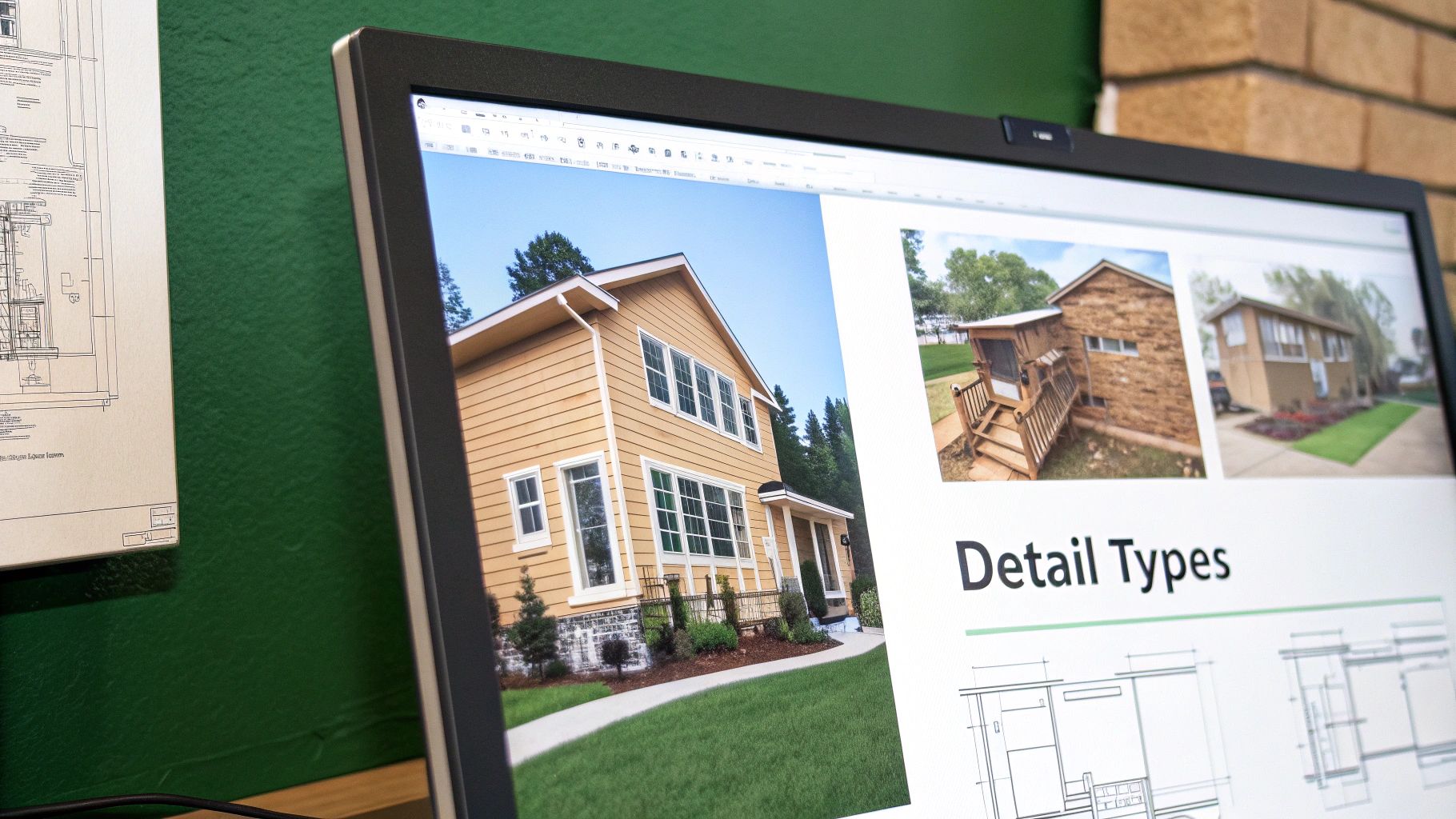
Close-up of a detailed architectural drawing for a window installation

While every architectural detail drawing aims for clarity, they aren't one-size-fits-all. Think of them as specialized tools in an architect's toolkit, each designed to solve a very specific construction puzzle. They focus on the areas where things can go wrong—the complex joints and vulnerable transitions that define a building's performance.

Just like a surgeon wouldn't use the same instrument for every procedure, architects draft different types of details to tackle unique assembly challenges. Each one is a crucial piece of the puzzle, ensuring the building stands strong and performs well for decades to come.

Foundation and Wall Details

It all starts at the ground. Foundation details are the master plans for how a building connects with the earth. These drawings show precisely how concrete should be reinforced, the exact dimensions of the footings, and how waterproofing layers are applied. They are the building's first line of defense against moisture from the ground and are critical for preventing structural settling.

Moving up, wall section details give us a see-through slice of the wall, from the foundation right up to the roofline. They map out the entire assembly layer by layer: structural framing, insulation, vapor barriers, exterior siding, and interior finishes. Getting this right is what guarantees the building will be warm, dry, and energy-efficient. Even elements like built-in lighting are planned here; for instance, an expert recessed lighting layout guide helps integrate fixtures seamlessly into the wall and ceiling structure from the start.

Envelope and Junction Details

Every window and door is a hole in the building’s protective skin. That makes them potential hotspots for air and water leaks. Window and door details provide the step-by-step instructions for getting these installations perfect. They call out the specific flashing, sealants, and air-sealing tapes required to create a completely weatherproof connection between the window unit and the surrounding wall.

And what about keeping the building dry from above? That’s the job of roof details. These drawings zoom in on the tricky spots: where different roof slopes meet, where a roof joins a wall, or where vents and skylights pop through. They create a clear roadmap for installing flashing and underlayment to prevent water intrusion—one of the most common and costly problems a building can face.

To really understand how these drawings function, it helps to see their distinct roles side-by-side.

Comparing Key Architectural Detail Types

Detail Type

Main Purpose

Critical Information Provided

Foundation Details

Ensure structural stability and moisture control at the building’s base.

Footing sizes, rebar placement, anchor bolt locations, and waterproofing methods.

Wall Sections

Define the thermal and weather-resistant performance of the exterior envelope.

Material layers, insulation type and thickness, and air/vapor barrier locations.

Window & Door Details

Prevent air and water leakage at openings in the building envelope.

Flashing sequences, sealant specifications, and integration with the weather barrier.

Roof Details

Guarantee a watertight and durable roofing system.

Flashing at parapets and penetrations, material overlaps, and drainage slopes.

As you can see, each detail type is a focused problem-solver. It anticipates a specific construction challenge—be it water, air, or structural load—and provides a clear, buildable solution before it ever becomes an issue on site.

Principles for Creating Effective Details

Crafting a great architectural detail drawing isn't about knowing every last feature in your drafting software. It’s about a mindset, one grounded in a handful of core principles that prioritize clarity above all else. The real goal is to create a drawing so clear it leaves no room for doubt. Shove too much information onto the page, and it becomes just as useless as a detail with too little—both lead to head-scratching and costly mistakes on site.

Think of yourself as writing the perfect set of instructions for a complex piece of furniture. Simplicity is your best friend. Every single line, note, and symbol has to earn its place. If it isn't essential for explaining how things go together, it's just noise. This keeps the builder focused on the design intent, not on solving a puzzle.

This idea of clarity has to be consistent across the entire set of drawings, too. The hatch pattern you use for concrete or the symbol for rigid insulation needs to be the same on every single sheet, no exceptions.

Prioritizing Buildability and Consistency

The most beautiful detail ever drawn is completely worthless if it can't be built efficiently in the real world. We call this concept buildability, and frankly, it's the most important principle of all. It forces you to step out of the architect's shoes and think like a builder. How will this be sequenced? Are these materials readily available? Does this align with how the trades actually work? A truly successful detail is one a contractor can glance at and immediately say, "Yep, I know how to build that."

Consistency is what holds a professional drawing set together. This isn't just a matter of preference; it's about making the entire document package easy to navigate.

  • Lineweights: Use different line thicknesses to create a visual hierarchy. Heavier lines for cut profiles and lighter lines for objects in the background make the drawing pop and guide the eye.

  • Notation Style: Keep your callouts and notes consistent. Use the same font, size, and phrasing everywhere to build a familiar language for the reader.

  • Symbol Libraries: A standardized set of symbols for materials and components is non-negotiable. Don't reinvent the wheel on every project.

When you maintain this kind of uniformity, you lower the mental effort required from the construction team. They can work faster, more confidently, and with far fewer calls back to your office.

The best architectural details drawings are a dialogue between the architect and the builder. They anticipate questions, provide clear answers, and demonstrate a deep respect for the craft of construction by being both logical and buildable.

Of course, technology is changing the game. AI-powered drafting tools are now handling some of the more repetitive work, allowing architects to explore dozens of layout options in the time it used to take to draw one. With cloud collaboration and green building now becoming standard practice, these tools are helping us create smarter, more sustainable projects. It’s worth exploring these top trends in architectural drafting to see just how quickly the field is moving forward.

At the end of the day, it's this commitment to clarity, consistency, and buildability that elevates a detail from a simple drawing to a powerful instrument for quality construction.

The Future of Architectural Detailing

For centuries, architectural detailing was about drawing static lines on a page. Today, it’s undergoing a radical shift, becoming a dynamic, data-rich discipline. The driving force behind this evolution is the industry's move away from traditional CAD and into the world of 3D Building Information Modeling, or BIM.

Within a BIM workflow, an architectural details drawing is no longer just an isolated sketch. It's a living piece of a comprehensive digital twin of the entire building. Think about it this way: a detail for a window installation now carries embedded data about the specific window model, its thermal performance, and even its material makeup. If you change one element in the model, every related detail and schedule updates automatically. This is a game-changer for reducing errors and ensuring consistency. We've gone from drawing objects to modeling intelligent systems.

This digital shift is a huge factor in the growth of the global Architectural Services Market. Valued at USD 184.1 billion in 2025, the market is on track to hit USD 330.1 billion by 2033. This boom is largely thanks to the integration of digital tools like AI and 3D visualization, which empower us to create far more complex and sustainable designs. For a deeper dive into these trends, check out the market growth analysis on Globenewswire.com.

AI and Immersive Technologies

Artificial intelligence and generative design are pushing the boundaries even further. AI algorithms can now sift through thousands of design options for a single connection, optimizing it for things like material efficiency, structural integrity, or ease of construction. This gives architects the ability to craft high-performance details that would be practically impossible to figure out through manual trial and error.

The future of detailing is not about replacing the architect but augmenting their abilities. It’s about using technology to make smarter, faster, and more informed decisions at a micro-level, leading to better-performing buildings.

Immersive technologies are also completely changing how these details are interpreted and built on-site.

  • Augmented Reality (AR): Construction crews can now use a tablet or smart glasses to overlay a 3D model of a detail directly onto the physical work area. This helps them visualize exactly how a complex assembly should come together in real-time.

  • Virtual Reality (VR): Before a single piece of material is ordered, teams can "walk through" a virtual mock-up of a critical junction. This allows them to spot potential clashes or constructability problems when it's still cheap and easy to fix them.

These tools are transforming detailing from a reactive process—where builders interpret drawings—to a proactive one of troubleshooting in a digital space. The time and money saved are enormous.

Common Questions About Detail Drawings

Getting into the weeds of architectural documents can definitely spark a few questions. Let's clear up some of the most common ones about architectural detail drawings and what makes them so crucial.

What Scale Are Detail Drawings Usually?

If you've ever looked at a floor plan, you've probably seen a scale like 1:100 (or 1/8”=1’-0”), which is great for seeing the big picture. Architectural detail drawings, however, are zoomed way in. Think scales like 1:10, 1:5, or even 1:2 (or in imperial units, 1”=1’-0”, 1 ½”=1’-0”, 3”=1’-0”).

Why the magnification? It’s all about clarity. This close-up view is the only way to show every single layer, fastener, and connection precisely. It removes the guesswork for the builder, ensuring they can assemble the component exactly as designed.

What Software Do Architects Use to Create Details?

The go-to tool in the industry today is Building Information Modeling (BIM) software. You'll hear names like Autodesk Revit thrown around a lot, and for good reason. These programs build an intelligent 3D model of the entire project, not just a collection of 2D lines.

When an architect pulls a detail from a BIM model, it's not a separate drawing—it's a live view of the actual building model. This connection ensures everything stays consistent and accurate across all the documents, which is a massive improvement over older 2D CAD programs like AutoCAD.

Architectural detail drawings are fundamentally different from general plans. General plans show what and where; detail drawings explain how. They are the assembly instructions for the most critical parts of a building.

The real difference is the level of information they provide. A floor plan tells you where a window goes. The detail drawing shows you exactly how to flash that window, seal it, and connect it to the wall system to make sure it never leaks. It's the difference between pointing to a spot on a map and providing turn-by-turn directions.


At Sherer Architects, LLC, we know from experience that exceptional buildings are born from meticulous detailing. Whether it's a modern commercial space or a sensitive historic preservation, we ensure every connection is designed for lasting performance. Let us help bring structure to your vision. Learn more at Sherer Architects, LLC.

Article created using Outrank