SHERER ARCHITECTS

Categories
news

Adaptive Reuse Architects Reshaping Our Cities

You've probably seen them without even realizing it. An old warehouse now buzzing with co-working spaces. A forgotten church transformed into a stunning event venue. A historic bank now serving craft cocktails. These incredible transformations are the work of adaptive reuse architects.

Think of them as architectural storytellers. Instead of starting with a blank canvas, they take an existing building—with all its history, quirks, and character—and give it a brand new chapter. It's a creative field that's becoming absolutely essential for building smarter, more sustainable cities.

Why Adaptive Reuse Is Redefining Architecture
A modern interior of a revitalized historic building, showcasing exposed brick and new fixtures.

Imagine a tired, old textile mill. Instead of a wrecking ball, picture it alive again as a vibrant hub of loft apartments, studios, and shops. That’s the magic of adaptive reuse. It’s a field where architects don't just build; they see the immense potential locked inside our existing buildings and find clever ways to unlock it.

This whole approach marks a huge shift in how we view urban development. It challenges the old tear-down-and-rebuild model, arguing for a more thoughtful path. It’s about seeing value where others might see decay and preserving the unique fabric of our communities.

A New Era of Architectural Problem Solving

The job of an adaptive reuse architect is far more complex than just sketching out new floor plans. They have to wear multiple hats: part historian, part structural detective, and part creative visionary. It's a constant balancing act.

Their work requires them to:

  • Respect Historical Integrity: They dive deep into a building's past to honor its original character, preserving the details that give it a soul.
  • Introduce Modern Performance: At the same time, they have to weave in everything a modern building needs—from energy-efficient systems and accessibility ramps to up-to-date safety codes.
  • Solve Complex Puzzles: Figuring out how to fit a new, modern function inside an old, often quirky, structure is like solving a giant 3D puzzle. It demands some seriously ingenious design and engineering.

The core idea is simple but powerful: the most sustainable building is the one that already exists. Adaptive reuse architects are on the front lines, making our cities more resilient, interesting, and environmentally sound, one project at a time.

This isn't just a niche practice for historical landmarks anymore; it's a mainstream global strategy. With construction and demolition waste accounting for nearly 40% of total solid waste, the push to reduce this impact is massive. By keeping an existing structure, you're not just saving a building—you're avoiding the huge carbon footprint that comes with producing new concrete, steel, and other materials.

A perfect example is the growing trend of transforming commercial property into residential spaces. This movement highlights how architects are creating lively, sustainable communities by simply reimagining the buildings we already have.

The Guiding Principles of a Reuse Architect
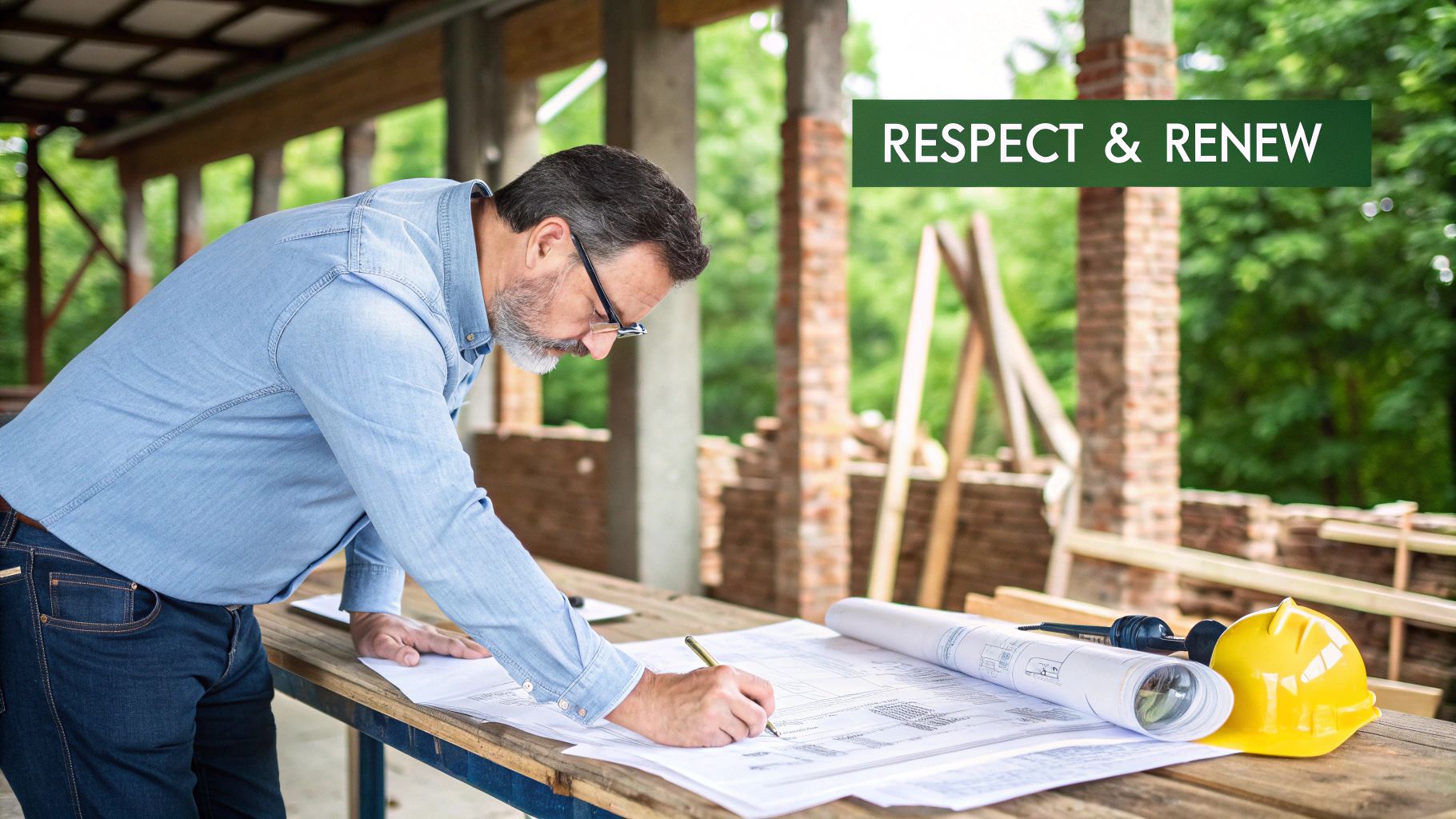
An architect reviewing blueprints inside a historic building undergoing renovation.

So, what really makes an adaptive reuse architect tick? It's more than just technical skill; it's a unique mindset. They have a way of seeing immense potential where most people would only see decay or a lost cause. Think of them as translators, meticulously decoding a building’s past to write its next, vibrant chapter.

This entire process starts with a profound respect for the building itself. Before sketching a single new line, they listen to what the structure has to say. This philosophy is built on a few core principles that ensure the final space honors its history while being perfectly suited for today.

Reading the Building's Bones

The first, and arguably most important, principle is what we in the field call "reading the building's bones." This is less of a casual walkthrough and more of a forensic investigation into the structure's soul. An architect doesn’t just see bricks and beams; they see a story revealed through materials, forgotten construction methods, and the natural patina of time.

They carefully analyze the structural grid, the flow of the original layout, and any unique architectural details that give the place its personality. Are there massive timber trusses that could become a breathtaking centerpiece? Do those tall, arched windows present a golden opportunity for flooding the space with natural light? This deep dive uncovers the building's character—and its limitations—which then become the creative guardrails for the entire project.

By figuring out the why behind the original design, adaptive reuse architects can make smarter, more empathetic decisions. It helps them separate the elements that are essential to the building's identity from those that can be thoughtfully updated or removed.

An adaptive reuse architect acts as a building whisperer. They listen to the echoes of the past within the walls to understand the structure's soul, ensuring the new design feels like a natural evolution, not a forced reinvention.

Balancing Preservation with Performance

Once the building's history is fully understood, the real puzzle begins: weaving modern needs into a historic framework. This is the delicate tightrope walk of balancing preservation with performance. After all, a beautifully restored building is nothing but a museum piece if it’s drafty, unsafe, or costs a fortune to heat and cool.

This balancing act means integrating contemporary systems without stripping the building of its charm. It’s a constant negotiation between the old and the new.

  • Modern Systems Integration: This is where the real creativity comes in. The challenge is to snake new HVAC, electrical, and plumbing through a building that was never meant to hold them, all while trying to leave historic finishes untouched.
  • Energy Efficiency Upgrades: Bringing a vintage structure up to modern standards means introducing high-performance insulation, new windows that replicate historic profiles, and energy-efficient lighting. This dramatically lowers the building’s ongoing carbon footprint and operational costs.
  • Code Compliance and Safety: The building must meet today's strict codes for fire safety, accessibility (like ADA requirements), and structural stability. This often requires clever, sensitive solutions that don't scream "modern retrofit."

The ultimate goal is to create a seamless conversation between the original structure and the new interventions. A successful project feels timeless. The modern comforts are so well-integrated that they simply enhance the historic character, never competing with it. That’s the true signature of a masterfully executed adaptive reuse.

The Tangible Benefits of Revitalizing Old Buildings

Choosing to give an old building a new life instead of tearing it down is more than just a sentimental decision. It’s a smart, strategic move with powerful, real-world advantages. Adaptive reuse architects create value that ripples out far beyond the property line, benefiting the environment, the budget, and the entire community. These aren't just abstract ideas; they're measurable outcomes that build a rock-solid case for breathing new life into existing structures.

When you break it down, the advantages fall into three main buckets: environmental, economic, and cultural. Looking at them together reveals just how impactful this approach can be.

Environmental Wins

The most immediate and dramatic benefit is environmental. Think of it this way: every building has embodied carbon. That’s all the greenhouse gas emissions tied to its original construction—from making the steel to pouring the concrete. When you demolish a building, you're not just creating a pile of rubble; you're throwing away all that invested carbon, and then you start the high-emission process all over again.

By preserving a building's primary structure and foundation, adaptive reuse can slash embodied carbon emissions by 50% to 75% compared to new construction. That's a massive win for sustainability before a single new tenant even walks through the door.

This approach also tackles the huge problem of construction and demolition debris, which chokes our landfills. It's a direct way to conserve natural resources by cutting down on the demand for new steel, concrete, and timber.

Beyond the big picture, adaptive reuse projects also offer a chance to significantly upgrade a building's performance. Architects can weave in modern, sustainable systems, like weighing different energy-efficient roofing options, which helps lower operational costs for decades to come.

Economic Advantages

While every project has its complexities, adaptive reuse often makes more financial sense than starting from scratch. The most obvious savings come from skipping demolition costs and using the existing foundation and structural frame—two of the most expensive parts of any new build.

This initial advantage often leads to a cascade of other financial perks:

  • Faster Project Timelines: With the bones of the building already in place, the construction schedule can be significantly shorter. This means lower carrying costs and a faster path to getting tenants in and generating revenue.
  • Tax Incentives: Many older buildings, especially historic ones, qualify for a range of federal, state, and local preservation tax credits. These can offset a huge chunk of the rehabilitation costs.
  • Increased Marketability: Let's face it, character sells. Restored buildings with unique architectural details are magnets for tenants and buyers, often commanding premium rents and filling up faster than their generic, new-build counterparts.

Community and Cultural Gains

Perhaps the most inspiring benefit of all is the one you can feel on the street. Old buildings hold a city's stories. They give a place its identity. When an adaptive reuse architect successfully transforms a forgotten factory or an empty school, they’re doing more than just creating a new space—they’re saving a piece of local history for the next generation.

These projects often become the spark that ignites neighborhood-wide revitalization. They can act as anchors, drawing in new businesses, residents, and foot traffic, breathing life back into areas that were once overlooked. By turning a dormant liability into a vibrant community asset—whether it’s a boutique hotel, a bustling public market, or creative office space—these projects craft memorable, meaningful places that strengthen the very soul of a city.

A quick comparison really brings the differences into focus.

New Construction vs. Adaptive Reuse: A Comparative Overview

This table compares key factors between building from scratch and repurposing an existing structure, highlighting the distinct advantages of adaptive reuse.

Factor New Construction Adaptive Reuse
Environmental Impact High embodied carbon, significant waste, resource-intensive. 50-75% less embodied carbon, minimal waste, conserves resources.
Project Timeline Longer due to groundwork, foundation, and structural phases. Often shorter, as the primary structure is already in place.
Initial Costs High costs for demolition, excavation, and new structure. Avoids major demolition and structural costs; potential for tax credits.
Character & Marketability Can be generic; relies on new design for appeal. Inherent character, unique history, and authentic details create a strong market draw.
Community Integration Creates a new presence; may disrupt existing neighborhood fabric. Preserves local identity, revitalizes existing areas, and strengthens community ties.

Ultimately, while new construction certainly has its place, the compelling blend of sustainability, financial viability, and cultural preservation makes adaptive reuse a powerful and intelligent choice for the future of our cities.

An Inside Look at the Adaptive Reuse Process

Breathing new life into an old building isn’t magic; it’s a carefully choreographed process. An adaptive reuse architect guides a project through a series of distinct phases, turning what seems like a complex puzzle into a clear roadmap. Each step builds on the one before it, ensuring the final space is not only beautiful but also safe, functional, and financially sound.

This journey starts long before a single hammer swings. It begins with a deep dive into the building’s past and present, almost like a detective piecing together a case.

Discovery and Feasibility

This first phase is all about doing the homework. Before anyone commits to a massive investment, the architect has to figure out if the dream is even possible. They meticulously inspect the building's "bones" to get a read on its structural health, hunting for hidden issues that could throw a wrench in the works down the line.

This deep investigation covers a few key areas:

  • Structural Assessment: Engineers come in to test the strength of the foundation, support beams, and roof. Is it solid, or are there underlying weaknesses?
  • Hazardous Materials Survey: The team searches for old-school hazards like asbestos and lead paint that need to be handled with extreme care.
  • Historical Significance Review: The architect digs into the building's story, identifying the unique, character-defining elements worth preserving.
  • Zoning and Code Analysis: They check local regulations to make sure the new use is allowed and figure out what it will take to bring everything up to modern safety standards.

This phase wraps up with a detailed feasibility report. Think of it as a brutally honest assessment of the project's risks, potential rewards, and a rough budget, giving the owner the clarity they need to move forward.

Creative Design and Re-Engineering

Once everyone understands the building's limits and possibilities, the real creative work can begin. This is where the adaptive reuse architect truly shines, blending artistry with engineering to design a space that honors the past while looking squarely toward the future.

The trick is to fit a new purpose—like apartments, offices, or a boutique hotel—into an old structure so it feels completely natural. It's a delicate balancing act. An architect might place a minimalist, modern kitchen against a beautifully weathered, century-old brick wall, creating a stunning conversation between old and new. They’ll also find ingenious ways to thread modern HVAC, plumbing, and electrical systems through a building that was never meant for them, sometimes hiding them in plain sight or even making them part of the industrial-chic aesthetic.

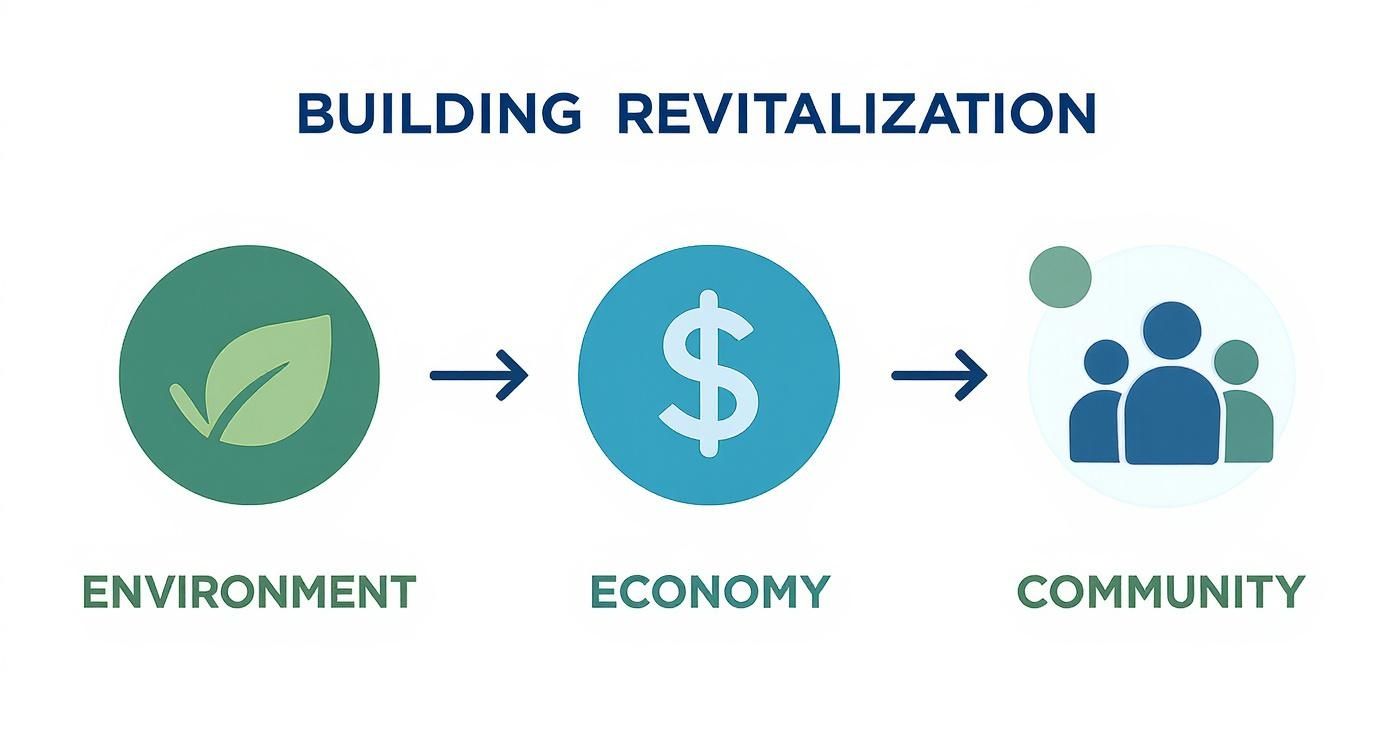
The infographic below shows how this process connects environmental, economic, and community goals.
Infographic about adaptive reuse architects

As you can see, a successful project isn't just about one thing; it's a balanced ecosystem where sustainability, profitability, and social value all support each other.

Navigating Regulations

A brilliant design is just a drawing until it’s approved. This phase is all about navigating the maze of city agencies, historic preservation boards, and sometimes, community groups. The architect becomes the project's chief advocate, presenting the plans, explaining the vision, and negotiating any changes needed to get the green light.

Getting permits for an adaptive reuse project is often far more complicated than for new construction. The architect has to prove the design not only meets today's strict life-safety codes but also respects the building’s historical soul.

Construction and Transformation

Finally, the vision starts becoming a reality. During construction, the architect's role shifts to that of a quarterback and problem-solver. They work side-by-side with the contractors, making sure the design is being followed precisely and tackling the inevitable surprises that pop up when you open up old walls.

This hands-on oversight keeps the project on schedule, on budget, and true to the original concept. The result? A revitalized landmark, ready to begin its next chapter.

The Future of Adaptive Reuse Architecture

The world of adaptive reuse is anything but static; it’s constantly evolving. Looking ahead, adaptive reuse architects are leaning into new technologies, fresh mindsets, and forward-thinking policies that redefine what’s possible. The practice is graduating from just saving old buildings to pioneering a genuinely circular and intelligent way of thinking about our built environment.

This future-focused strategy isn't just about giving a building a second life today. It's about preparing it for infinite cycles of use tomorrow. We're witnessing a massive shift away from the old linear "build, use, demolish" model and toward a circular one, where buildings are designed for disassembly from day one.

Designing for a Circular Future

The next big leap for adaptive reuse is achieving true circularity. While most projects today are about extending a single building's life, this new way of thinking is about designing materials and structures for endless reuse. The biggest headaches in current projects often come from permanently bonded materials—think flooring glued to a subfloor or coatings that can’t be removed—which just end up as waste.

The innovation lies in creating fully detachable, reconfigurable building elements that can be used again and again without losing their quality. For more on this, check out these insights on designing for true circularity.

This whole concept is known as design for disassembly. It means architects are now specifying mechanical fasteners instead of permanent glues and designing modular components that can be easily swapped out or moved. Imagine walls, facade panels, and even entire rooms that can be unbolted and reinstalled somewhere else. The building itself becomes a bank of high-quality materials ready for the next project.

"The future of sustainable architecture isn't just about reusing what we have; it's about creating new things with their next life already in mind. Every component becomes a temporary resident, not a permanent fixture."

The Role of Advanced Technology

Technology is a huge part of this evolution, giving architects tools with incredible precision. Take 3D laser scanning. It allows them to create hyper-accurate digital models of existing buildings in a tiny fraction of the time it used to take. These scans capture every little detail, from a slight shift in the foundation to the exact dimensions of historic trim.

This data feeds directly into Building Information Modeling (BIM) software, creating a detailed "digital twin" of the structure. With this model in hand, architects can:

  • Simulate Renovations: They can test out different design ideas virtually, figuring out the most efficient and least disruptive path forward before a single wall is touched.
  • Analyze Performance: It’s possible to model energy use, daylighting, and structural loads to ensure the updated building meets modern performance standards.
  • Streamline Construction: Contractors get precise, clash-free plans, which dramatically cuts down on errors and waste during the actual build.

These tools empower adaptive reuse architects to make smarter, more informed decisions. They help de-risk complex projects and uncover hidden opportunities that would have been completely invisible with old-school, two-dimensional methods. This tech-driven approach, combined with a focus on circularity and supportive city policies, is what will keep adaptive reuse at the heart of building the resilient, character-rich cities of tomorrow.

Your Top Questions About Adaptive Reuse, Answered

As more people recognize the incredible potential locked inside our older buildings, adaptive reuse is moving from a niche specialty to a go-to strategy for smart development. But for clients, developers, and even community members new to the idea, it often comes with a lot of questions.

Let's clear things up. Answering these common questions will help demystify the process and show you exactly where an experienced adaptive reuse architect makes all the difference.

Is It Really Cheaper Than Building New?

This is the big one, and the honest answer is: usually, but it's not a simple yes or no. The biggest savings, right off the bat, come from what you don't have to build. The foundation and structural frame are already there, and that alone can account for a huge chunk of a new construction budget.

Of course, the building's current condition is the real wild card. The budget can get complicated if you run into unexpected issues, such as:

  • Hazardous Material Abatement: Discovering asbestos or lead paint means bringing in specialists, which is a necessary but costly step.
  • Major Structural Surprises: If the "bones" of the building aren't as strong as they look, you'll need to invest in reinforcement.
  • Tricky Systems Integration: Fitting modern mechanical, electrical, and plumbing (MEP) systems into a structure from a different era is often more complex than a standard installation.

This is why a seasoned adaptive reuse architect insists on a thorough feasibility study upfront. That initial deep dive is what separates a reliable budget from a hopeful guess. When you factor in potential tax credits for historic preservation and often faster project timelines, reuse frequently comes out on top financially.

What Kinds of Buildings Are Best for Reuse Projects?

While just about any structurally sound building can be a candidate, some types are clear favorites for a reason. Old industrial buildings—think warehouses and factories—are the classic example. Their high ceilings, tough-as-nails construction, and massive open floor plans are a dream to work with, easily transforming into lofts, creative offices, or buzzing retail hubs.

Beyond industrial shells, look for buildings with great character and generous space. Former schools, churches, and old department stores all have solid structures and unique architectural details just waiting to become the centerpiece of a new design.

The ideal candidates for adaptive reuse are buildings that have a story to tell and a solid frame to back it up. A good architect’s first look goes past any current decay to see the building’s potential as a distinctive, functional, and truly memorable place.

How Do You Balance Historic Character with Modern Needs?

This is where the real artistry comes in. It’s less of a battle and more of a conversation between the past and the present. The first step is to identify the building's character-defining features—the original brickwork, the soaring timber trusses, the unique window patterns—and make them the heroes of the new design.

From there, modern elements are woven in to complement the old, not overpower it.

  • Contrast Creates Beauty: A sleek, minimalist kitchen against a rough, centuries-old stone wall makes both elements stand out even more.
  • Honest Interventions: New additions are often designed to be clearly different from the original structure, honoring the building's timeline instead of trying to fake it.
  • Guided by Standards: Architects rely on proven guidelines, like The Secretary of the Interior's Standards for Rehabilitation, to ensure the building's story isn't just preserved but enriched with a new chapter.

What Are the Biggest Headaches in a Reuse Project?

Without a doubt, the biggest challenges are the ones you can't see. It's the surprises lurking behind the walls that cause the most stress, delays, and budget creep. Uncovering hidden structural decay, undocumented modifications from past owners, or hazardous materials can throw a wrench in the most detailed plans.

Another common hurdle is bringing a historic structure up to modern code. Satisfying today’s requirements for accessibility, fire safety, and energy efficiency in a building from the 1920s requires some serious creativity. The same goes for integrating complex MEP systems. It takes ingenuity and smart problem-solving—skills a dedicated adaptive reuse architect has honed over many projects, turning potential roadblocks into unexpected design opportunities.


At Sherer Architects, LLC, we see the hidden potential in existing buildings. With over 30 years of experience in adaptive reuse and historic preservation, we’ve learned how to navigate every challenge and seize every opportunity, turning overlooked structures into valuable, sustainable community assets. Learn how we can bring your vision to life at shererarch.com.
Categories
news

How to Hire an Adaptive Reuse Architect

At its heart, an adaptive reuse architect is a special kind of professional who sees a vibrant future where others might only see a forgotten past. Think of them as part historian, part visionary, and part sustainability champion, all rolled into one. Their unique talent lies in transforming old, disused structures into dynamic, modern spaces that can serve communities for generations to come.

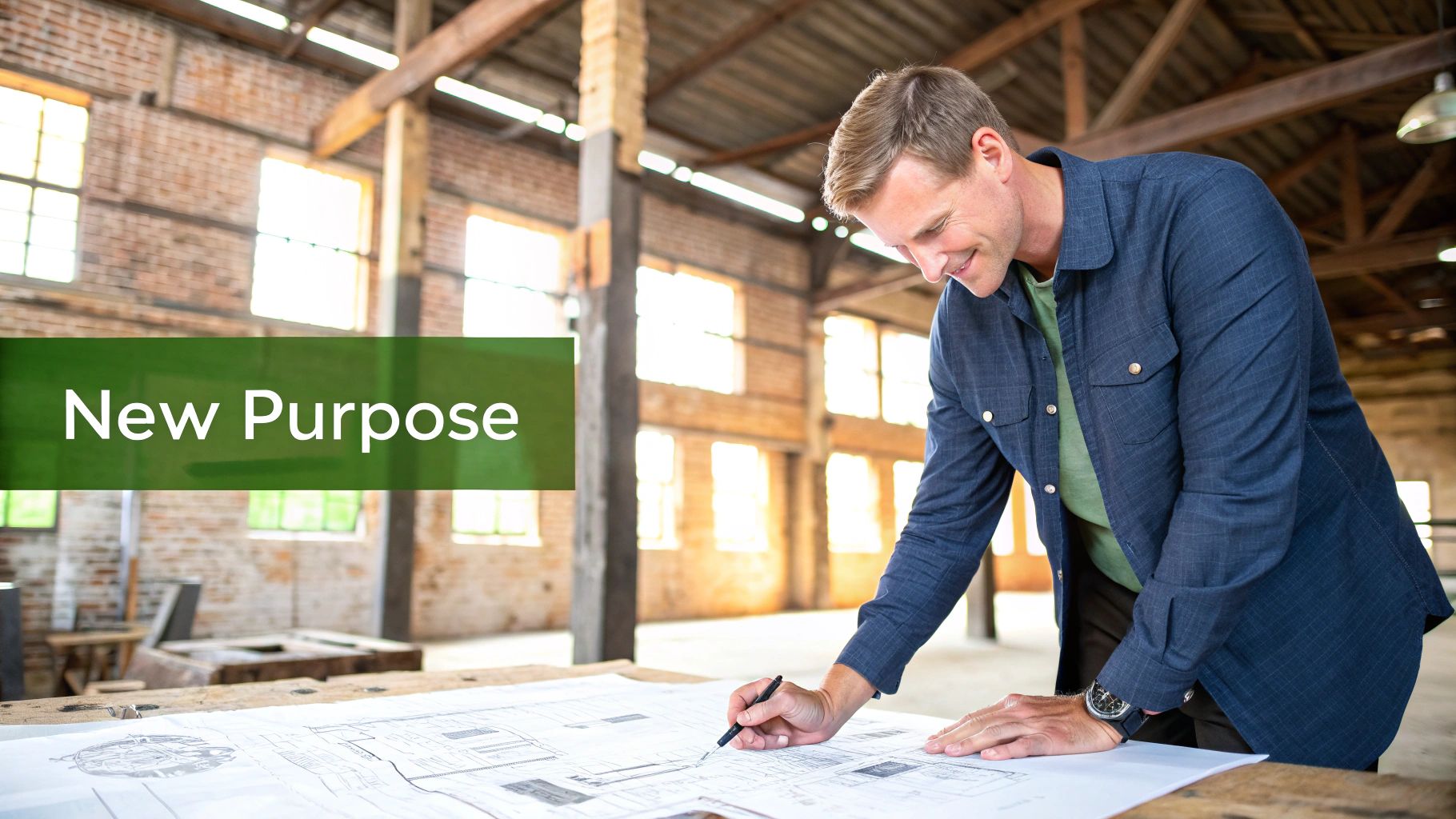
Giving Old Buildings a New Purpose

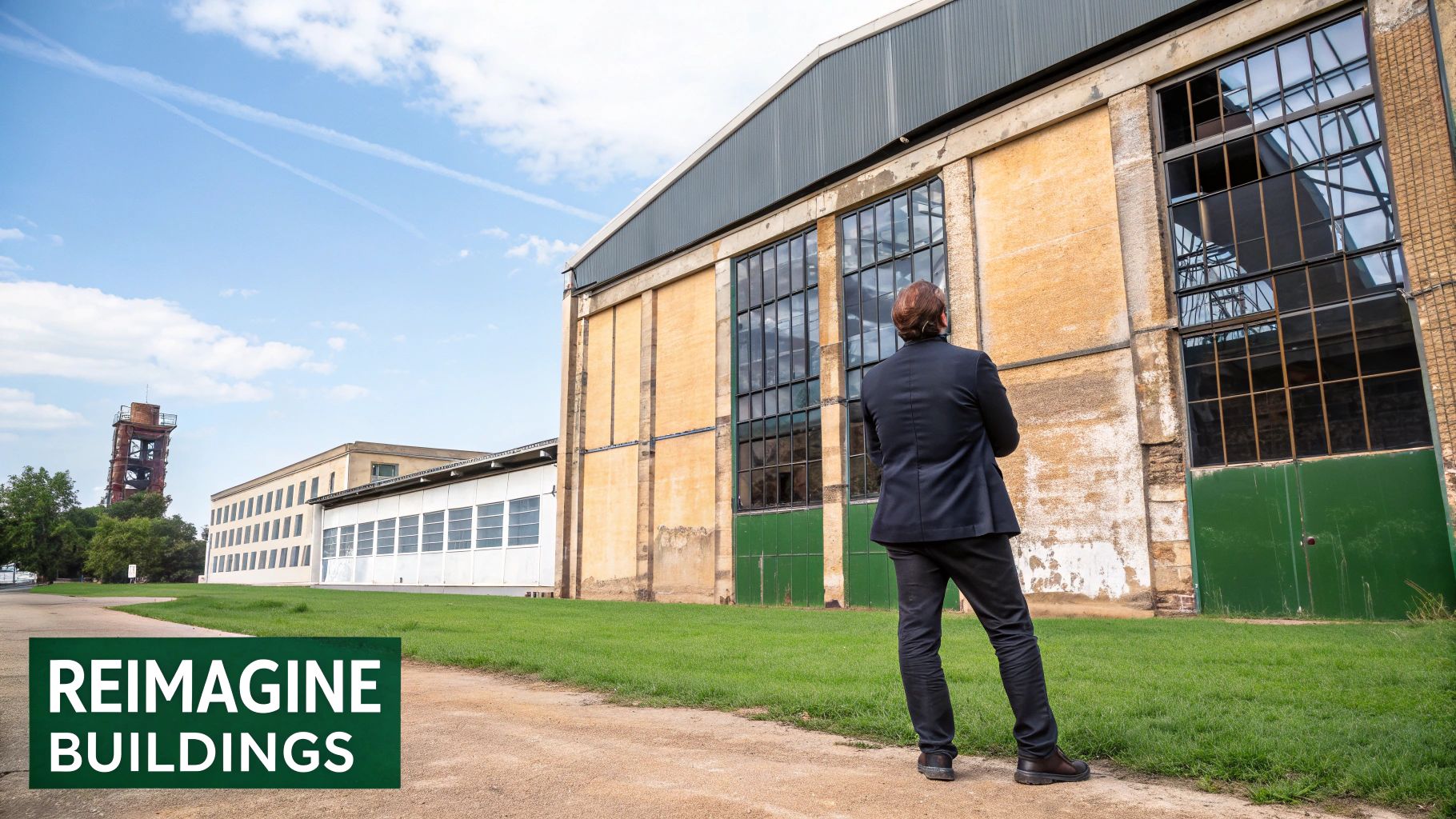
A modern, renovated industrial building with large windows and a clean facade, showcasing adaptive reuse.

Picture a cavernous old warehouse with soaring ceilings and timeworn brick walls, or maybe a decommissioned schoolhouse, its long hallways still echoing with memories. Where a wrecking ball sees an obstacle, an adaptive reuse architect sees a once-in-a-lifetime opportunity. They don't start with a blank canvas; instead, they listen to the story the building has to tell, reading its history to imagine its next chapter.

This specialized field is so much more than a simple renovation. It’s a creative and highly technical practice focused on repurposing a building for a function it was never originally intended for. This approach is absolutely critical for building sustainable cities and saving our irreplaceable cultural heritage.

The Value of a Second Life

So, why is this idea catching on everywhere? The appeal goes way beyond just looking cool. The benefits are real, touching everything from the environment to the economy and the community's spirit. By choosing to adapt an old structure instead of tearing it down, property owners and developers unlock a surprising number of advantages.

The key benefits of adaptive reuse really stack up:

  • Environmental Sustainability: Keeping the building's core structure intact dramatically cuts down on landfill waste from demolition. It also saves the massive amount of embodied carbon required for new construction. It’s one of the greenest ways to build.
  • Cultural Preservation: Old buildings are the storybooks of our communities. An adaptive reuse architect helps keep that narrative alive, preserving the unique character and soul of a neighborhood.
  • Economic Viability: These projects can often be more cost-effective and completed on a faster timeline than building from scratch. You get to skip the high costs of demolition, major excavation, and pouring a new foundation.
  • Unique Character: You just can't fake history. Repurposed buildings boast one-of-a-kind features—exposed brick, original timber beams, massive industrial windows—that new constructions can't replicate, creating spaces people are excited to be in.

Adaptive reuse is about more than just bringing lights back to empty offices. It is about creating something that supports community and drives value for developers, for families, and for the city.

More Than Just a Renovation

The work of an adaptive reuse architect is a masterful blend of artistry and intricate problem-solving. They need a deep knowledge of historic materials and construction methods, a knack for navigating modern building codes as they apply to old structures, and the ingenuity to weave in new systems—like HVAC and electrical—without destroying the building’s historic integrity.

To get a real sense of this magic, it helps to see the results. Looking at some inspiring before and after house flips can show how this transformative power works, even on a residential scale.

This guide will walk you through what it really means to take on an adaptive reuse project, from understanding the core philosophy to finding the right expert to bring your vision to life.

The Philosophy of Adaptive Reuse Architecture

Adaptive reuse is so much more than a simple facelift for an old building or a clever way to cut costs. It’s a completely different way of looking at our cities and towns. At its heart, this philosophy is about sustainability, honoring our history, and being smart about how our urban spaces grow. The core question shifts from "What can we build here?" to "What can we preserve and reimagine?"

Think about the difference between a new, flat-pack piece of furniture and a beautifully restored family heirloom. The new piece gets the job done, sure, but the heirloom tells a story. It has character, a certain patina, and a quality that simply can't be replicated because it comes from its past. An adaptive reuse architect sees buildings as those treasured heirlooms, recognizing the immense value in their structure, their materials, and their soul.

This whole approach is built on a simple but powerful idea: the most sustainable building is the one that's already standing. Tearing down a structure is incredibly wasteful. It floods landfills with debris and demands a massive amount of energy and new materials to build something from scratch. Adaptive reuse neatly sidesteps this entire cycle.

Valuing What Already Exists

The guiding principle here is appreciating the tremendous value locked away inside existing buildings. This isn't just about feeling nostalgic; it's about tangible, measurable benefits that span environmental, economic, and cultural spheres.

  • Environmental Value: Every building contains what we call embodied carbon. This is the sum of all the greenhouse gas emissions created from making the materials, shipping them to the site, and the construction process itself. When a building is demolished, all that carbon is essentially thrown away. By keeping the main structure, we keep that carbon locked in.
  • Economic Value: The "bones" of a building—its foundation, structural frame, and outer shell—are almost always the most expensive and time-consuming parts of any new construction project. When you reuse them, you're getting a huge head start, which often means faster timelines and lower upfront costs.
  • Cultural Value: Buildings are the physical storybooks of a community. An old brick factory tells a tale of industry, while a historic schoolhouse holds the memories of generations of learning. An adaptive reuse architect’s job is to be a guardian of these stories, making sure they aren't erased but are instead woven into the city’s next chapter.

This mindset has become a vital part of sustainable urban development. By saving the core structure of existing buildings, adaptive reuse projects can slash embodied carbon by up to 50% compared to starting new. In the United States alone, this approach has rescued more than 1,000 historic buildings from the wrecking ball since 2010, with project owners seeing average cost savings of 10-15% over building new. You can find more insights on the rise of adaptive reuse in urban development and why it’s become such an important strategy.

More Than a Trend—A Movement

The philosophy of adaptive reuse isn't just a passing fad; it’s a necessary answer to the challenges we face today. It champions a circular economy, where we stop seeing buildings as disposable assets and start treating them as valuable resources to be continually refreshed and repurposed.

"We’re embracing a philosophy where 'the new is old, and the old is new.' Instead of starting from scratch, we’re finding new purposes for existing materials… This approach celebrates creativity in working with what we have and reflects a broader commitment to sustainability."

Pulling this off requires a special mix of creativity and down-to-earth pragmatism. An architect in this field has to find the perfect balance between honoring the past and meeting the needs of today. They need to be just as comfortable with historic construction methods as they are with modern building science, able to integrate high-performance new systems without stripping a building of its essential character.

At the end of the day, the philosophy of adaptive reuse is about profound respect—for our history, for our resources, and for the world we’re building for the future.

Financial and Community Returns of Repurposing Buildings

While saving an old building’s soul is a beautiful idea, let's be honest—the numbers have to work. The good news is that adaptive reuse isn't just an altruistic choice; it's often a brilliant financial and community-building strategy. When you choose to repurpose a structure, you're making a savvy business decision that can deliver impressive returns while sparking a genuine neighborhood revival. A skilled adaptive reuse architect is the key to unlocking both sides of this equation.

The most obvious financial win comes from what you don't have to build. By keeping the building's "bones"—its foundation, structural frame, and exterior—you get to skip some of the most expensive and unpredictable stages of a new build. This means less money poured into demolition, excavation, and brand-new structural materials, which can translate into major upfront savings.

This head start also shaves precious time off the project schedule. With the heavy lifting of the core structure already done, you can get the property up and running—and generating revenue—much faster than if you started with a vacant lot.

Boosting the Bottom Line

The financial perks go far beyond just saving on concrete and steel. Many adaptive reuse projects, especially those involving historic buildings, are eligible for some very attractive tax credits and grants.

  • Historic Tax Credits: Federal and state governments often offer substantial tax incentives to offset the cost of rehabilitating old buildings. This can dramatically improve a project's profitability right from the start.
  • Faster ROI: A shorter construction timeline means you can start leasing or selling units sooner. That shortens the gap between spending money and making it back, which is a huge win for any investor.
  • Increased Property Value: There's just something about a repurposed building. The unique character, story, and history often allow them to command higher rents and sale prices, building long-term value in a way cookie-cutter new builds can't.

The data backs this up. A 2023 report revealed that adaptive reuse projects in major cities worldwide saw an average return on investment of 18-22%, consistently outperforming new construction. Here in the U.S., New York City completed over 1,200 of these projects between 2015 and 2022, injecting more than $12 billion into the local economy. You can dive deeper into how adaptive reuse is revitalizing cities with this great analysis.

Catalysts for Community Revitalization

The magic of a great adaptive reuse project spills out well beyond its own four walls. These projects are often the spark that ignites a whole new chapter for a neighborhood, creating a positive cycle of growth and investment.

Picture that abandoned warehouse on the edge of town. For years, it’s been a magnet for graffiti and a source of blight. But in the right hands, it can be reborn as a vibrant hub with apartments, artist lofts, a craft brewery, and cool little shops.

This single project doesn't just save a building; it creates a destination. It draws in new residents, generates local jobs during and after construction, and provides new amenities for the existing community.

Suddenly, property values in the surrounding blocks start to creep up. New cafes and businesses open to cater to the influx of people. The increased foot traffic makes the whole area feel safer and more alive. This renewal strengthens the local tax base, which means more funding for things like parks and schools, and builds a powerful sense of pride among residents.

Financial Comparison: New Construction vs. Adaptive Reuse

To put some real numbers to this, let's look at a simplified comparison for a hypothetical commercial building. Of course, every project has its own unique quirks, but this gives you a good sense of where the savings typically come from.

Financial Metric New Construction (Estimate) Adaptive Reuse (Estimate)
Demolition & Site Prep $500,000 $50,000
Foundation & Structure $3,000,000 $750,000 (Repairs/Reinforcement)
Exterior Shell $1,500,000 $400,000 (Restoration/Updates)
Interior & Systems $4,000,000 $5,000,000 (Complex Integration)
Total Project Cost $9,000,000 $6,200,000

As you can see, even though you might spend more on the interior to skillfully integrate modern systems into an old frame, the massive savings on the building's core and shell lead to a much lower total cost. An experienced adaptive reuse architect knows how to navigate this balance, turning an old building into a financially successful project that becomes a true community asset.

Navigating the Adaptive Reuse Design Process

Breathing new life into an old building isn't just a renovation; it's a careful dance between past and present. The entire process is a journey, and an adaptive reuse architect is your guide—part detective, part visionary. They have to uncover the building's secrets while meticulously planning its future, ensuring every decision respects the structure's history while serving its new modern purpose.

There’s no cookie-cutter approach here. Every building is its own unique puzzle, with a distinct history, structural quirks, and untapped potential. To make this tangible, let's walk through the key phases of a project, imagining we're converting a beautiful old, decommissioned church into a community performance venue.

Phase 1: Initial Feasibility and Discovery

Before a single line is drawn, the architect's first job is to play investigator. This discovery phase is all about figuring out if the project is even possible. Think of it like a doctor giving a new patient a full physical exam—the goal is to understand the building’s health, its history, and any pre-existing conditions.

This stage involves a few crucial assessments:

  • Structural Assessment: An engineer is brought in to examine the "bones" of the church. Are the foundational supports still solid? Can the old roof trusses handle the weight of new stage lighting and sound equipment? You have to know the building's physical limits before you can dream.
  • Hazardous Materials Survey: Older buildings often hide nasty surprises like asbestos in the insulation or lead in the paint. Identifying these hazards and planning for their safe removal is a non-negotiable first step for safety and budget.
  • Zoning and Code Review: The architect has to become an expert in local regulations. Is a performance venue even allowed in this specific zone? What are the modern rules for accessibility, fire safety, and emergency exits, and how can they be integrated into a historic structure without destroying its character?

For our church-to-venue project, the architect would confirm the grand, open nave is structurally sound for large audiences and that the local zoning board is on board with the idea of a public assembly space in that neighborhood.

"We’re moving towards sustainable, purpose-driven design where there’s often a clear ‘right’ answer beyond aesthetics. Our challenge is to work within the existing fabric, evolving and adapting structures to find new relevance for the future rather than erasing their history."

Phase 2: Conceptual Design and Visioning

Once the feasibility study gives a green light, the real creative work begins. This is where the architect translates the project's goals into an actual vision. It's a collaborative dance, figuring out how to preserve the building's soul while designing for its new life. Today's tech can be a huge help here; for instance, you can revolutionize renovation projects with Scan to BIM services to create hyper-accurate digital models of the existing building to work from.

In our church example, the architect and client would start asking the big questions:

  • How can we integrate a state-of-the-art sound system without damaging the original plasterwork or the stunning stained-glass windows?
  • Where can we tuck in new restrooms and a box office without disrupting the building's historic flow?
  • Could the old choir loft be repurposed as a cool VIP seating area or a tech booth?

This phase results in the first sketches, 3D renderings, and floor plans that show how the old and new will coexist. It's all about finding that sweet spot between honoring the past and equipping the building for a vibrant future.

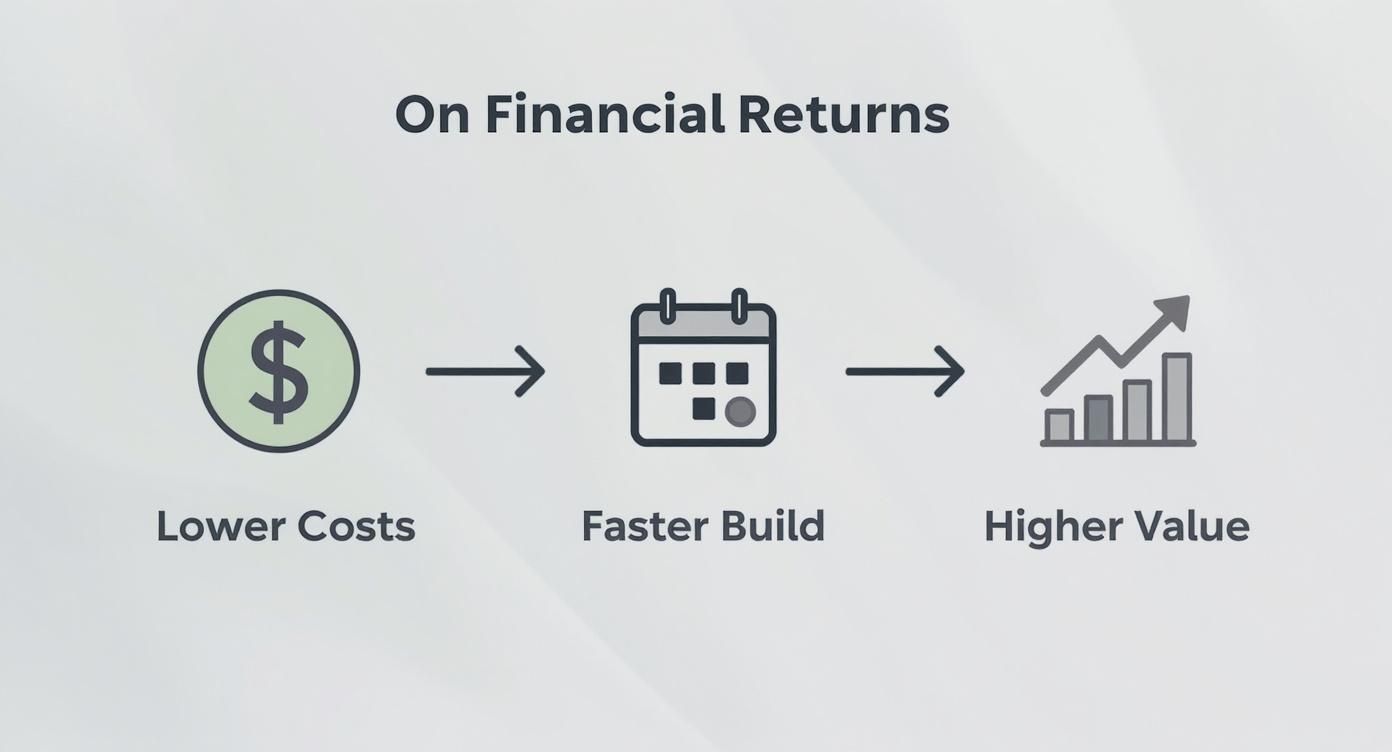
This infographic lays out the core financial benefits that make adaptive reuse so compelling, from initial cost savings to long-term value.

Infographic about adaptive reuse architect

The visual flow shows how starting with an existing structure can lead to a more efficient build and a more valuable asset in the end.

Phase 3: Detailed Design and Construction Documents

With the concept approved, the architect switches gears and gets technical. This is where they create the detailed blueprints that contractors will actually use to build the project. Every single detail gets specified, from the type of mortar needed for brick repair to the exact model of the HVAC units.

This set of documents is incredibly thorough and includes:

  1. Architectural Plans: Highly detailed drawings of every floor, elevation, and cross-section.
  2. Structural Drawings: The engineer’s plans showing any necessary repairs, reinforcements, or new structural components.
  3. MEP Schematics: Complete layouts for all the new Mechanical, Electrical, and Plumbing systems.
  4. Material Specifications: A comprehensive list of every approved material, fixture, and finish.

For our performance venue, these documents would show precisely how to route new electrical conduits behind historic wood paneling or how to properly reinforce the floor to support tiered seating. These plans are the bible for the construction team, leaving nothing to chance.

Phase 4: Construction and Project Realization

During construction, the architect’s role evolves from designer to project guardian. They are on-site regularly, making sure the contractor is following the plans and helping solve the inevitable problems that pop up when you work with old buildings.

You can pretty much guarantee there will be surprises. Workers might uncover a hidden structural issue or find that a wall they thought was simple plaster is actually solid masonry. An experienced adaptive reuse architect knows how to think on their feet, work with the construction team, and devise creative solutions that keep the project on track and on budget. Their deep understanding of the vision ensures the final result is true to the original design, successfully bridging the gap between past and present.

Must-Have Skills for Your Adaptive Reuse Architect

Architectural blueprint of a historic building being adapted for modern use.

Picking the right architect for your project is more than just hiring a designer. It’s about finding a partner who is part historian, part engineer, and part visionary—all rolled into one. An adaptive reuse architect needs a unique blend of skills that go far beyond what’s required for new construction. They have to be able to read a building’s past to design a functional, beautiful, and viable future for it.

Frankly, not all architects are equipped for this specialized work. The professional you choose needs a specific toolkit to navigate the complex challenges of transforming an existing structure. These skills aren't just nice-to-haves; they are non-negotiable for ensuring your project is a success.

Deep Knowledge of Historic Materials

An old building is like a library of forgotten construction techniques. The architect you hire must be fluent in the language of historic materials, whether it’s horsehair plaster, hand-forged steel, heart pine timbers, or lime-based mortar. This knowledge is absolutely crucial for a few key reasons.

  • Authentic Restoration: Understanding the original materials ensures repairs and additions are actually compatible. Slapping modern cement on old brick, for instance, can cause irreversible damage. The right approach preserves the building's historic character and prevents long-term problems.
  • Structural Integrity: An experienced architect will know the load-bearing capacities and potential failure points of older materials, allowing them to make sound engineering decisions.
  • Cost-Effective Solutions: Someone familiar with historic methods can often find clever, less expensive ways to repair rather than replace, saving you money while keeping the building's authentic character intact.

When you're interviewing a candidate, ask them to describe a time they had to work with a challenging historic material. Their answer will tell you everything you need to know about their real-world experience.

"Future architectural leaders will balance creativity with carbon-conscious design, ensuring that every choice reflects a commitment to sustainability."

Mastery of Building Codes for Existing Structures

Navigating modern building codes is a headache on a good day. But trying to apply them to a century-old structure? That's an art form. An expert adaptive reuse architect knows how to meet today’s stringent requirements for safety, accessibility, and energy efficiency without completely gutting the building's soul.

This skill is all about creative interpretation and, often, negotiation. They need to know which parts of the code are inflexible and where there's room to propose alternative solutions that achieve the same level of safety while respecting the historic fabric.

The growing popularity of adaptive reuse reflects a major industry shift. According to a 2025 survey from the American Institute of Architects, 68% of firms in the U.S. now incorporate these principles into their work—a huge jump from just 32% in 2015. This trend highlights the demand for architects who are comfortable with both old and new techniques. You can learn more by checking out the latest architecture trends on metalcon.com.

A Portfolio of Creative Problem-Solving

Every adaptive reuse project is a puzzle, and you’re almost guaranteed to find some pieces are missing. This is why the most critical skill for your architect is the ability to solve problems that no one saw coming. In an old building, surprises are the only guarantee.

Look for a portfolio that showcases more than just pretty pictures. It should tell stories of ingenuity:

  1. Integrating Modern Systems: How did they cleverly route new HVAC ducts, plumbing, and electrical wiring through a building with solid masonry walls and no convenient empty spaces?
  2. Overcoming Structural Hurdles: Ask them to walk you through a time they discovered a major structural flaw mid-project. How did they adapt the design to fix it without derailing the budget or timeline?
  3. Balancing Vision and Practicality: Can they show you a project where they successfully balanced the client’s ambitious vision with the building’s physical limitations and a real-world budget?

An exceptional adaptive reuse architect doesn't just design buildings; they solve complex, three-dimensional problems. They thrive on the challenge of fitting a modern program into a historic shell, turning constraints into the very features that make the project unique. Their portfolio is the best evidence of their ability to deliver on that promise.

Finding and Partnering With the Right Architect

Finding a true adaptive reuse architect isn't as simple as a Google search. This is a specialized field that demands a rare mix of historical appreciation, creative vision, and serious technical chops. You’re not just looking for a designer; you’re looking for a building whisperer.

So, where do you find these experts? Start by looking at who’s winning local and national preservation awards. Organizations like the National Trust for Historic Preservation or your city’s own historical society are constantly celebrating the best in the business. The architects behind these projects are the ones you want to talk to. Another great resource is your local landmark commission—they can often recommend professionals they’ve seen do incredible work firsthand.

Vetting Potential Candidates

Once you’ve got a shortlist, it's time to dig in. An architect’s portfolio is everything, but for an adaptive reuse project, you need to look past the glossy "after" photos and understand the journey.

Look for a portfolio that showcases:

  • Experience with similar building types: If you’re converting an old factory, you want someone who knows their way around industrial structures, not just single-family homes.
  • Creative problem-solving: Look for case studies that explain how they solved a tricky problem, like weaving modern plumbing through a 150-year-old building without destroying its character.
  • Clear before-and-after photos: This is the ultimate proof. It shows they can see the hidden potential in a derelict space and have the skills to bring that vision to life.

When you sit down to talk, ask them specific questions. How do they approach assessing a building's "bones"? Are they comfortable with the paperwork for historic tax credits? Their answers will quickly separate the true specialists from the generalists.

The goal is to find a partner who sees a building's constraints not as roadblocks, but as creative opportunities that will define the project's unique character and success.

Forging a Successful Partnership

Finding the right architect is the first step, but building a solid partnership is what truly makes a project succeed. This isn’t a hand-off process; it's a deep collaboration built on a shared vision and open, honest communication.

Set yourself up for a smooth process from the get-go:

  1. Define Clear Goals: Be upfront and crystal clear about your budget, your non-negotiables for the new space, and your timeline.
  2. Establish a Communication Rhythm: Decide how you’ll stay in touch. Will you have weekly check-ins? How will changes be approved? Getting this sorted out early prevents headaches later.
  3. Trust Their Expertise: Remember why you hired a specialist. Lean on their experience, especially when navigating tricky building codes or making decisions about what historical elements to preserve.

When you work together this way, every decision pushes the project forward. It transforms a complex, often challenging renovation into an incredibly rewarding—and ultimately successful—venture.

Frequently Asked Questions

When you're thinking about breathing new life into an old building, a lot of questions pop up. It’s a unique process that blends old-world character with modern-day demands. Here are some straightforward answers to the questions we hear most often.

Is Adaptive Reuse Always Cheaper Than New Construction?

Not necessarily, but it can definitely offer significant savings. You get to sidestep huge expenses like demolition and pouring a new foundation, which is a major plus. However, old buildings can hold a few surprises. You might run into costs for removing hazardous materials like asbestos, tackling unexpected structural repairs, or the intricate work of updating the building to meet today's strict fire and safety codes.

The only way to get a clear picture is with a detailed feasibility study from an adaptive reuse architect. On average, you can expect to see cost savings in the ballpark of 10-15%, but this figure really depends on the building's current state.

What Types of Buildings Are Best for Adaptive Reuse?

The best candidates are typically buildings with solid structural integrity, wide-open floor plans, and a unique story to tell. We're talking about old warehouses, industrial lofts, retired schools, or even churches. Architects often say these buildings have "good bones," meaning their fundamental framework is strong and flexible enough for a new vision.

Of course, the building's location and local zoning rules play a huge part. A skilled architect can look at a structure and quickly gauge its potential, figuring out if the existing layout can be cleverly adapted for a new use without breaking the bank on massive alterations.

The real magic happens when a building's original form can support a new function. The most memorable projects don't hide the old structure—they celebrate it, turning its quirks and constraints into the most compelling parts of the new design.

How Long Does an Adaptive Reuse Project Typically Take?

Often, the timeline is shorter than building from scratch simply because the main structure already exists. You save a massive amount of time on things like excavation, foundation work, and framing. This can really fast-track the project toward the finish line.

On the flip side, the initial design and permitting phase can sometimes be a bit longer. This is because you're often dealing with historic preservation boards and navigating building codes that have specific rules for renovations. Working with an architect who specializes in adaptive reuse is key here; they know how to make this process much smoother. Ultimately, the total time depends on the building's condition and the scale of the renovation.


At Sherer Architects, LLC, we see the incredible potential hiding within existing buildings. Our team has the specialized expertise to guide you through every step of your adaptive reuse project—from the first feasibility study to the final nail—ensuring the result is beautiful, sustainable, and a smart investment.

Find out more about how we work at https://shererarch.com.