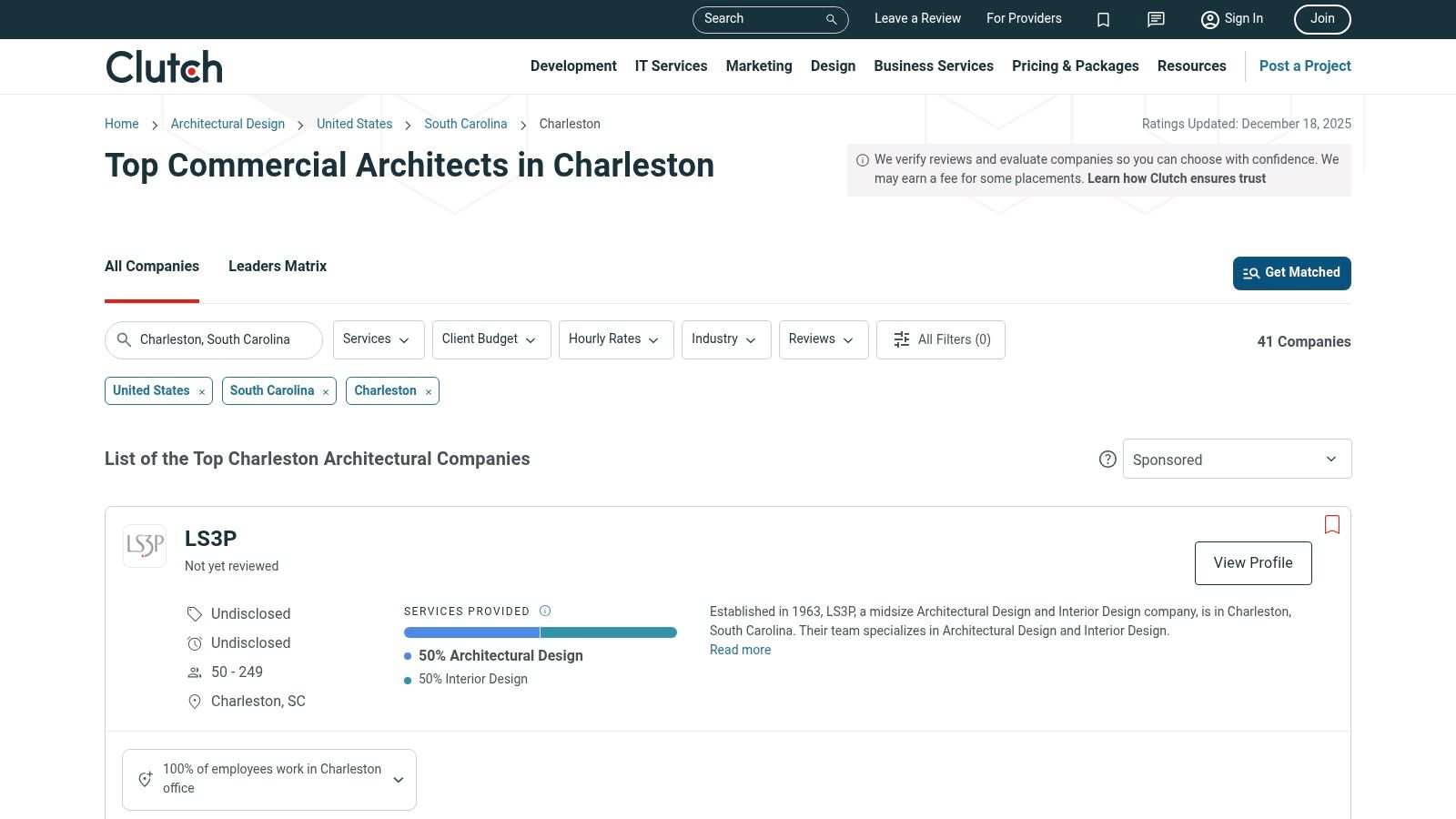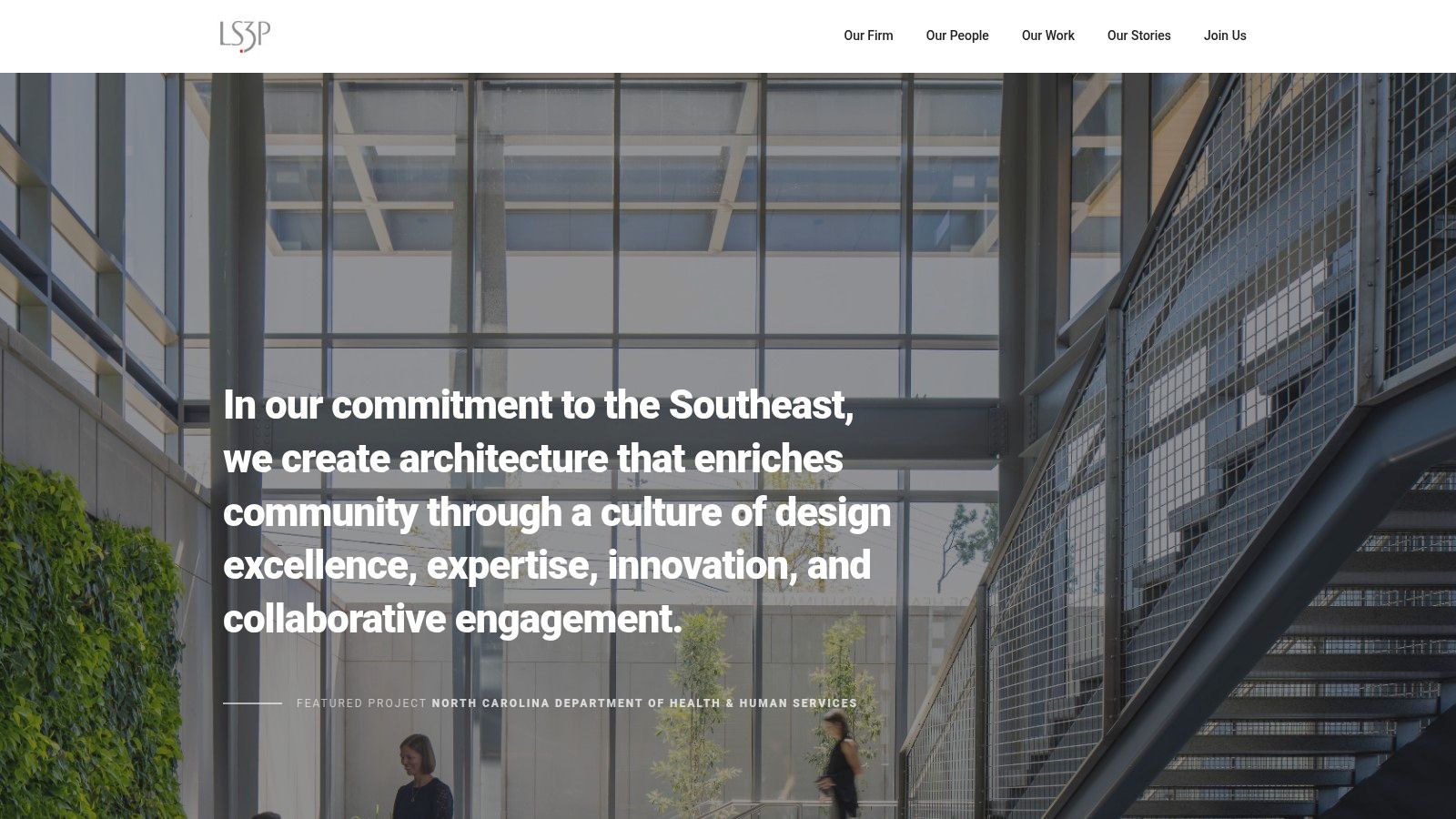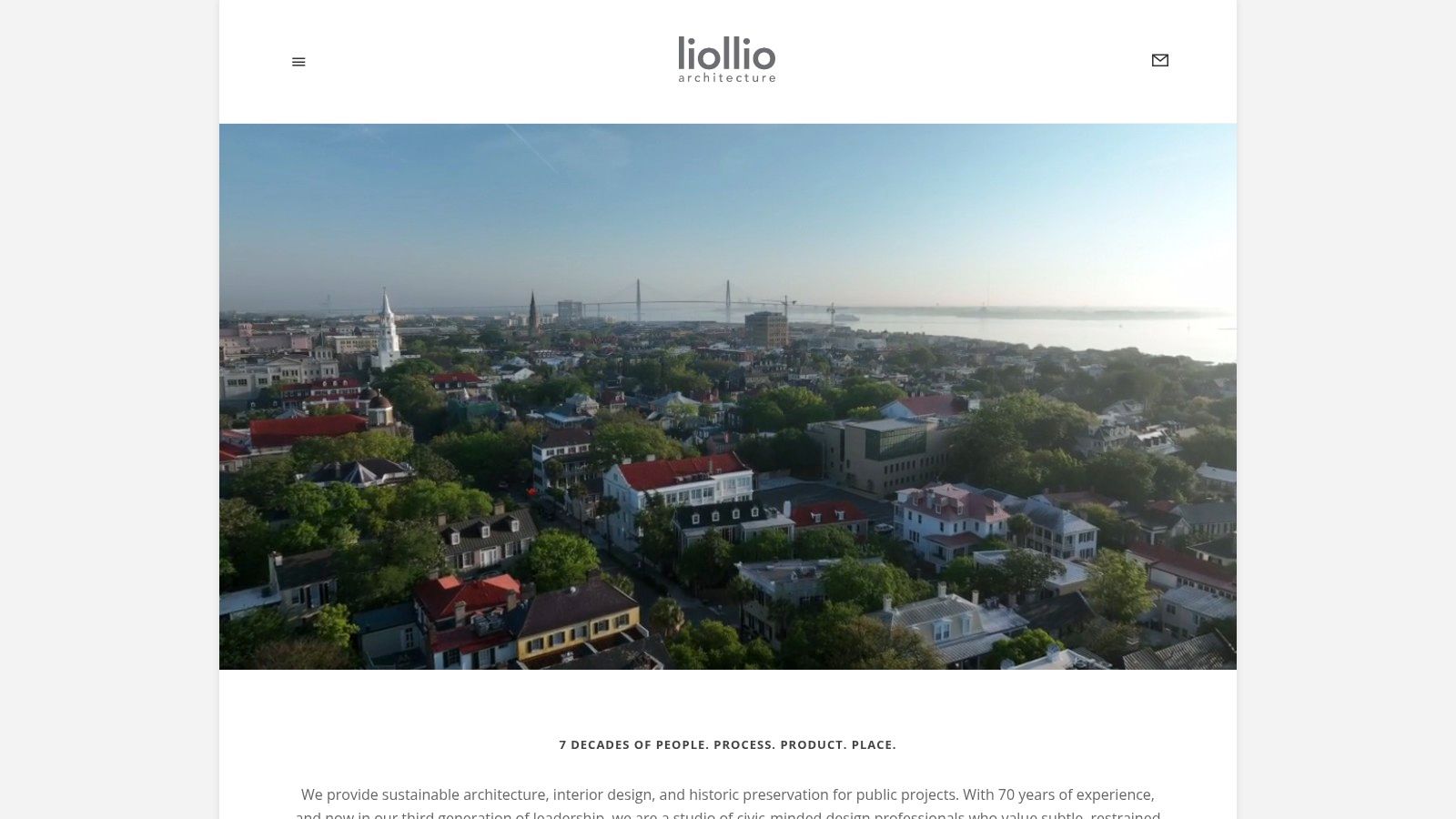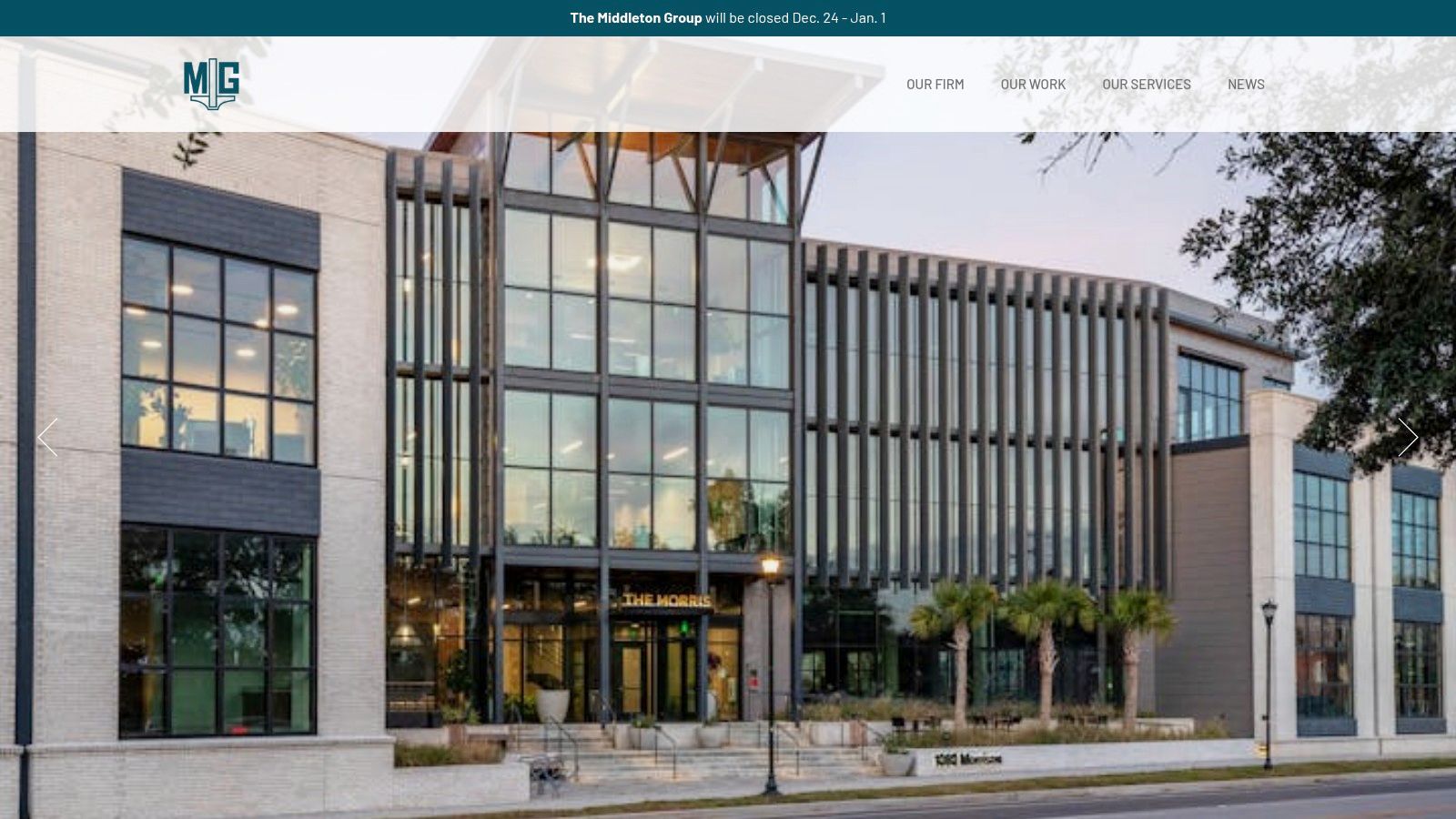

Charleston's unique blend of historic charm and modern growth presents a complex landscape for commercial developers and business owners. Choosing the right architectural partner isn't just about design; it's about navigating the city's rigorous historic preservation standards, complex zoning ordinances, and demanding Design Review Boards. The success of a commercial, adaptive reuse, or historic preservation project hinges on finding a firm with deep local expertise and a proven process. This guide moves beyond simple lists to provide a strategic overview of the top resources for identifying and vetting Charleston SC architecture firms, ensuring your project starts with the strongest possible foundation.
We've compiled and analyzed the best online directories and platforms where you can discover, compare, and connect with design professionals suited for your specific commercial needs. Each entry provides a clear overview of the resource, its primary strengths, and practical advice on how to use it effectively to create a shortlist of qualified candidates. You'll find direct links and screenshots to streamline your research.
When evaluating potential firms, consider their expertise in specific material specifications. For instance, their ability to select durable and appropriate finishes is critical for project longevity. Consulting a comprehensive reference like a detailed specifier's guide to high traffic commercial flooring can be an excellent benchmark for assessing a firm's technical knowledge and attention to detail. This roundup is designed to equip you with the tools and insights needed to make a confident, informed decision for your next Charleston-based project.
1. AIA Charleston – Firm Directory
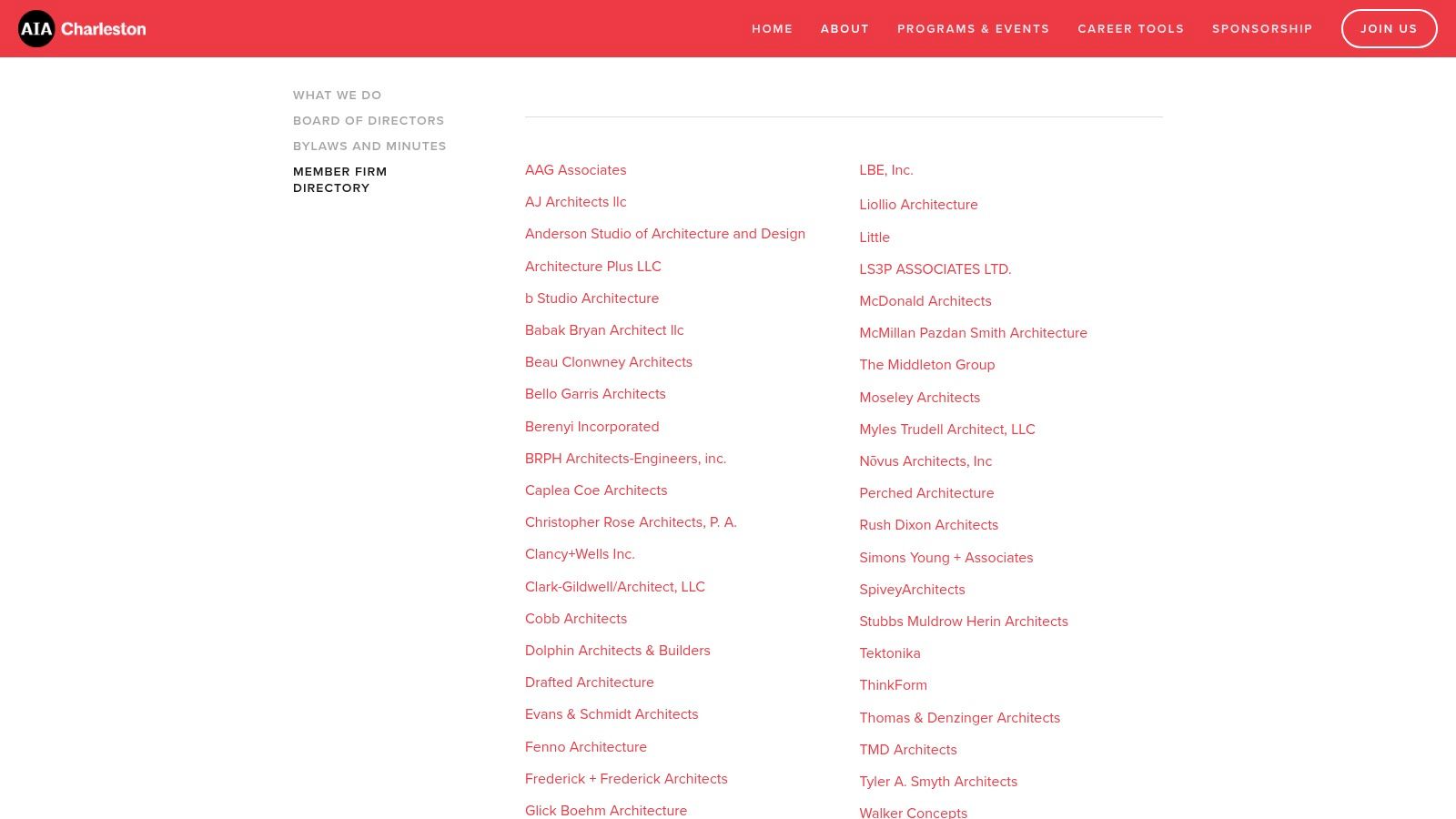
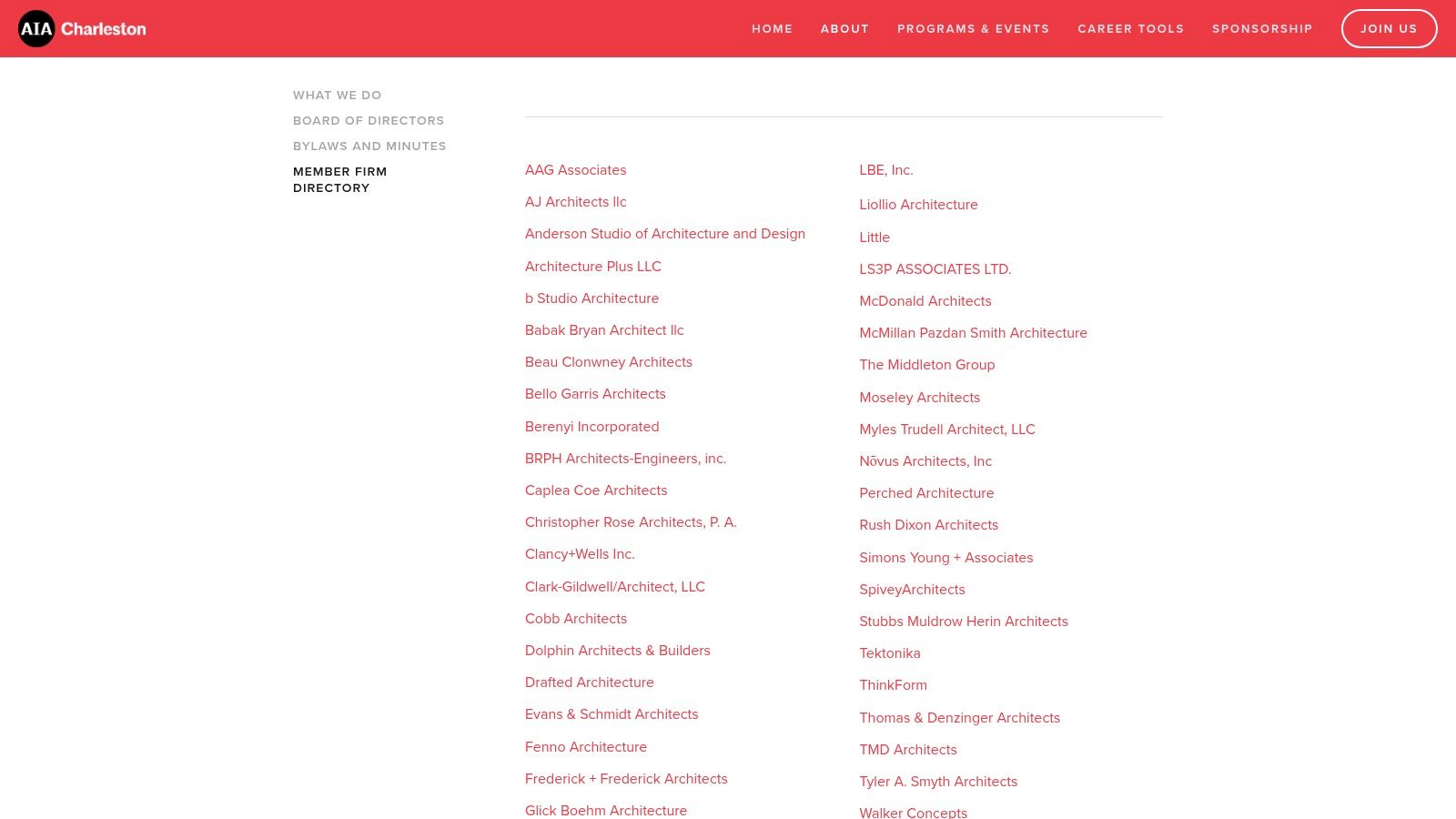
The AIA Charleston Firm Directory is the official, locally curated list from the American Institute of Architects' Charleston chapter. For commercial developers, property owners, and investors, this platform serves as a direct line to established, credentialed Charleston SC architecture firms. Its primary value lies in its gatekeeper role; every firm listed is an AIA member, signifying adherence to a high standard of professional ethics and practice.
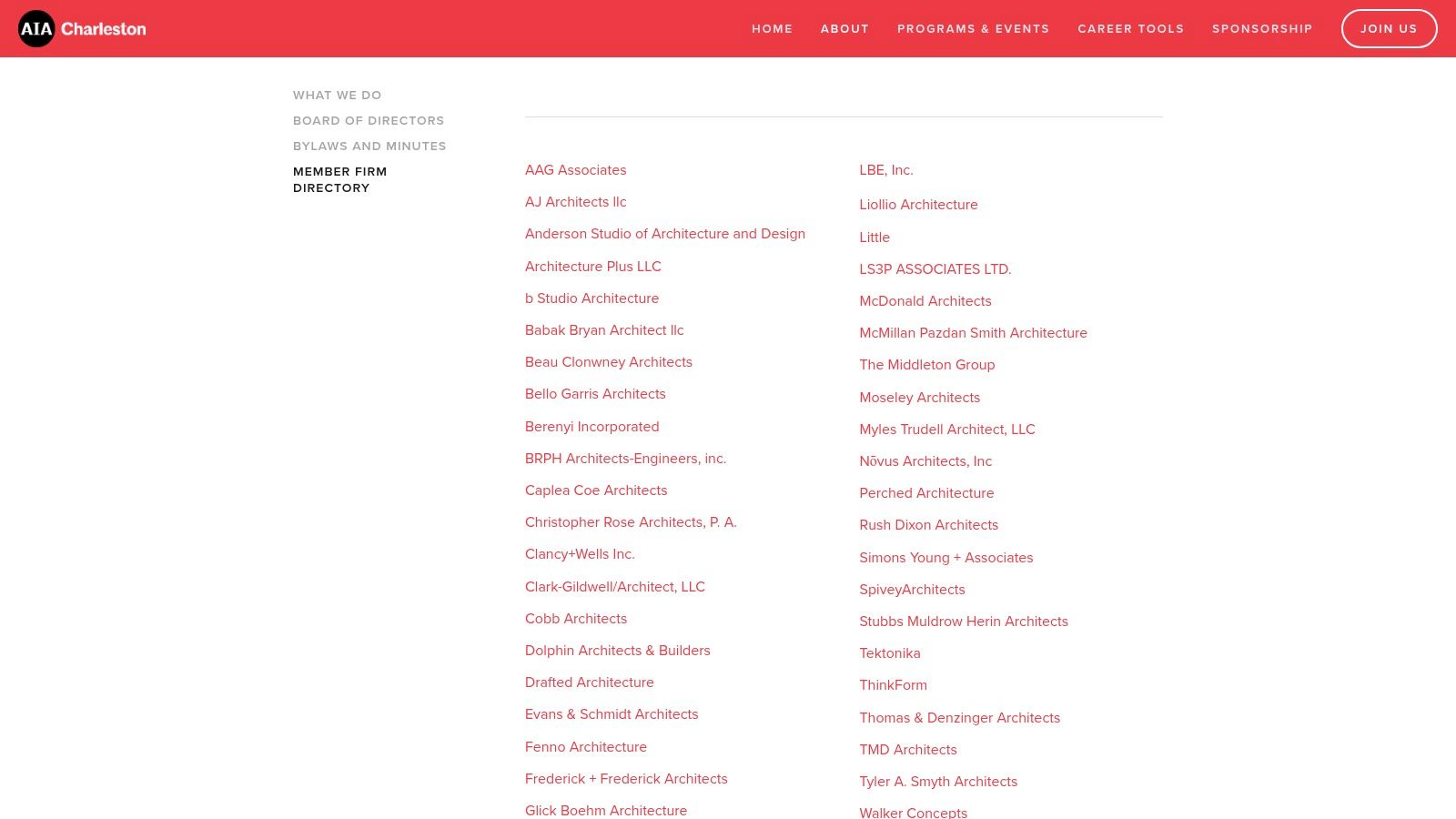
Unlike broad national databases, this directory is hyper-focused on the Lowcountry. The listed firms possess deep, practical knowledge of navigating local regulations, including the Board of Architectural Review (BAR), and are experienced with the unique challenges of coastal construction and historic preservation. This isn’t just a list; it’s a reflection of the active, engaged architectural community in Charleston.
How to Use the AIA Charleston Directory Effectively
The platform is a free, public resource with a straightforward user interface. While it lacks advanced filtering options, its simplicity is a strength for targeted searches. The directory presents firms alphabetically, providing direct links to their websites and contact information.
Here’s a practical approach for developers:
- Initial Vetting: Use the directory to build a primary longlist of potential partners. Cross-reference firms that appear in the directory with local project news or awards to gauge their current activity and reputation.
- Portfolio Deep Dive: Click through to each firm’s website. Look for a portfolio that aligns with your project type, whether it’s adaptive reuse of a historic warehouse on the peninsula or a new commercial build in a surrounding suburb.
- Check for Local Engagement: Note which firms have principals or staff who are active in AIA Charleston leadership or events. This often indicates a strong local network and a deep commitment to the region’s architectural fabric.
Key Insight: This directory's core strength is not advanced searchability, but validated local authority. You are starting your search with a pre-vetted pool of professionals who are invested in the Charleston community and understand its complex design and regulatory landscape.
Platform Overview:
| Feature | Details |
|---|---|
| Access & Cost | Free to access, no registration required. |
| Primary Audience | Commercial developers, property owners, and clients seeking credentialed architects in the Greater Charleston area. |
| Unique Offering | A curated list of AIA-member firms, ensuring a baseline of professional standards and local expertise. |
| Pros | High professional credibility; strong local relevance; direct access to firms familiar with Charleston's unique codes. |
| Cons | Limited filtering options; only lists AIA members, so it's not a comprehensive market list. |
Website: AIA Charleston – Firm Directory
2. AIA South Carolina – Firm Directory
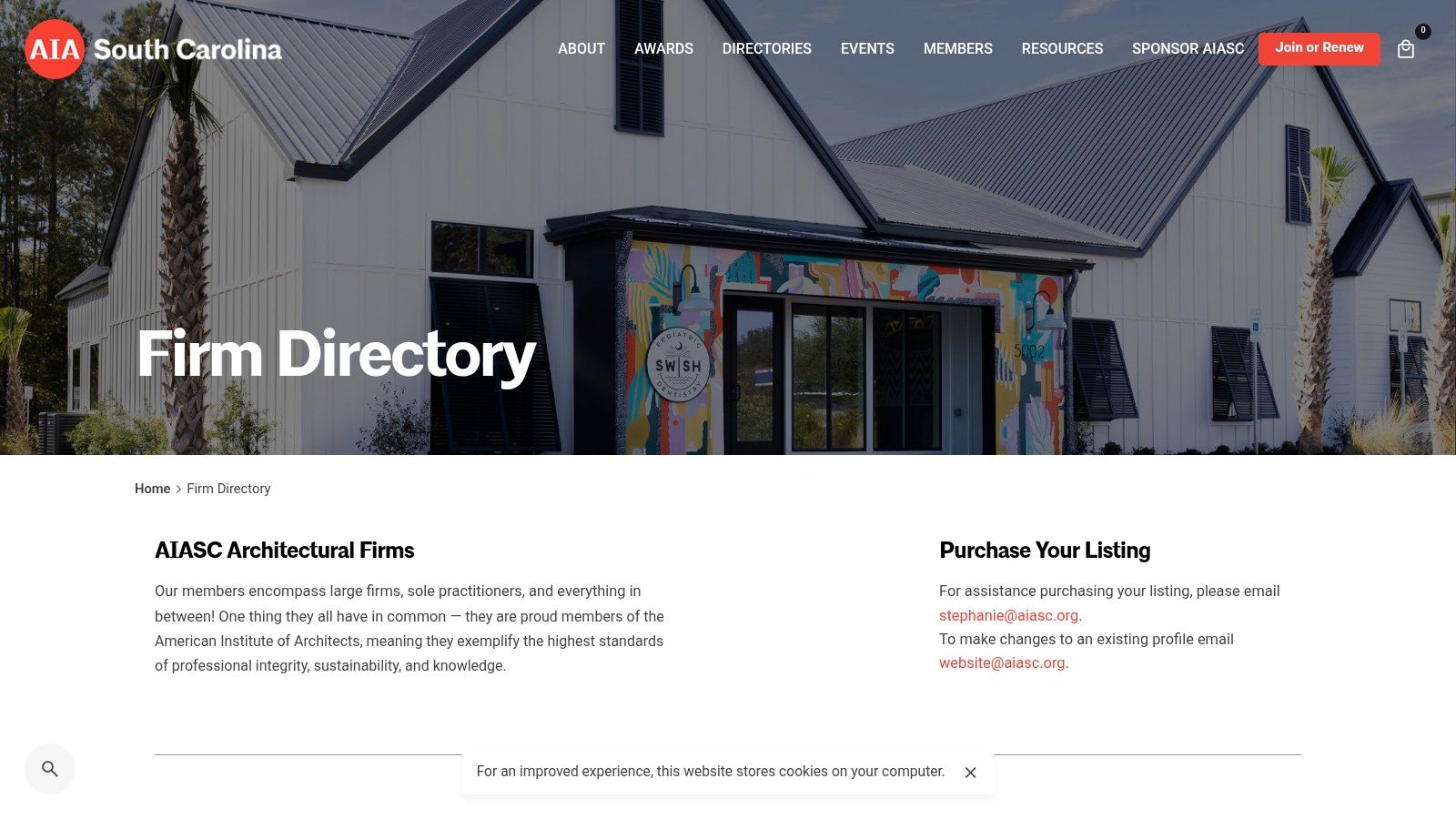
Expanding the search to the state level, the AIA South Carolina Firm Directory provides a broader lens for developers whose projects may span multiple markets or require specialized expertise found beyond Charleston's immediate metro area. This platform is the official directory from the statewide chapter of the American Institute of Architects, offering a wider, yet still credentialed, pool of Charleston SC architecture firms and their regional counterparts. Its primary value is its functional filtering system, allowing for searches by practice area.
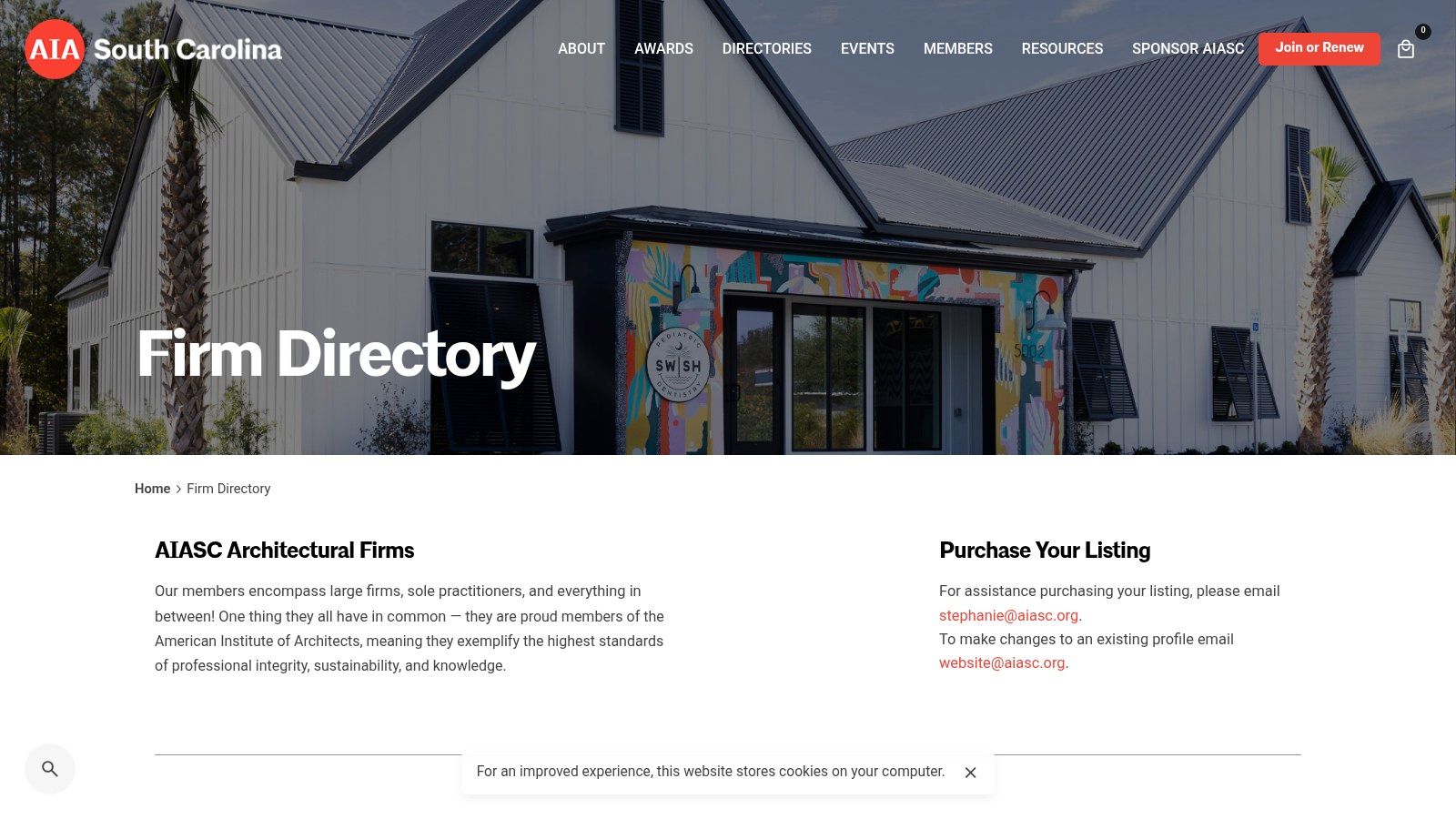
While the local AIA Charleston directory is hyper-focused, this statewide version helps developers identify firms that have a presence in Charleston but also operate in other key South Carolina markets like Columbia or Greenville. This is particularly useful for portfolio-wide projects or for finding architects with specific, niche experience in sectors like large-scale hospitality or advanced manufacturing that may be concentrated elsewhere in the state. Every firm listed is an AIA member, ensuring a consistent standard of licensure and professional ethics.
How to Use the AIA South Carolina Directory Effectively
The platform's key advantage is its category-based filtering, which allows for a more targeted initial search than a simple alphabetical list. The interface provides firm profiles with summaries and direct contact links, making the transition from search to outreach seamless.
Here’s a practical approach for developers:
- Filter by Specialization: Start by using the filters for your specific project sector, such as "Commercial," "Hospitality," or "Historic Preservation." This immediately narrows the field to firms that self-identify with that expertise.
- Identify Multi-Regional Players: Look for firms that list a Charleston office but also have headquarters or significant projects in other parts of the state. This can indicate a larger operational capacity and broader experience with different municipal approval processes.
- Cross-Reference for Charleston Experience: After identifying a potential firm, visit its website to confirm the depth of its Charleston-specific portfolio. A firm may be based in another city but have extensive, successful experience navigating the Charleston BAR.
Key Insight: This directory's strength is its filtered breadth. It allows you to quickly identify AIA-vetted firms with specific commercial expertise that either are based in Charleston or have proven experience working within its demanding regulatory environment.
Platform Overview:
| Feature | Details |
|---|---|
| Access & Cost | Free to access, public directory with no login required. |
| Primary Audience | Developers with multi-site portfolios, clients seeking specialized sector expertise, and those looking for regional firms. |
| Unique Offering | A statewide, filterable directory of AIA member firms, enabling sector-specific searches across South Carolina. |
| Pros | Broader firm selection; useful filters for project type; all firms meet AIA professional standards. |
| Cons | Simpler interface with no map or review tools; some firm profiles may be brief, requiring a click-through to their site. |
Website: AIA South Carolina – Firm Directory
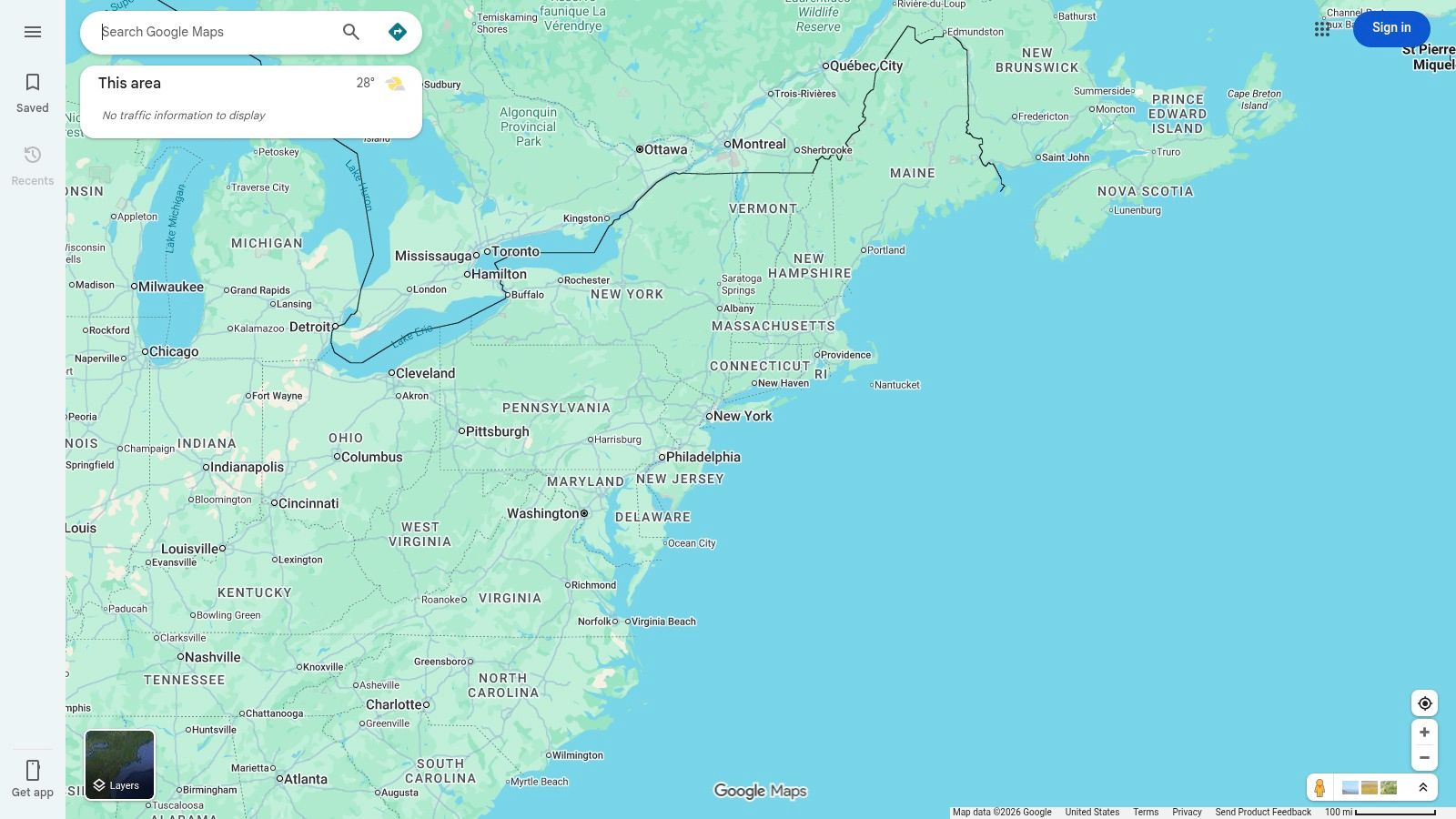
3. Google Maps – Local Business Listings
While not a specialized architectural directory, Google Maps is an indispensable first-pass tool for identifying and initially vetting Charleston SC architecture firms. Its primary strength is its sheer comprehensiveness and intuitive, map-based interface. For developers and investors, it provides immediate geographic context, allowing you to locate firms near a potential project site, a specific municipality, or a target submarket like Mount Pleasant or the Upper Peninsula.
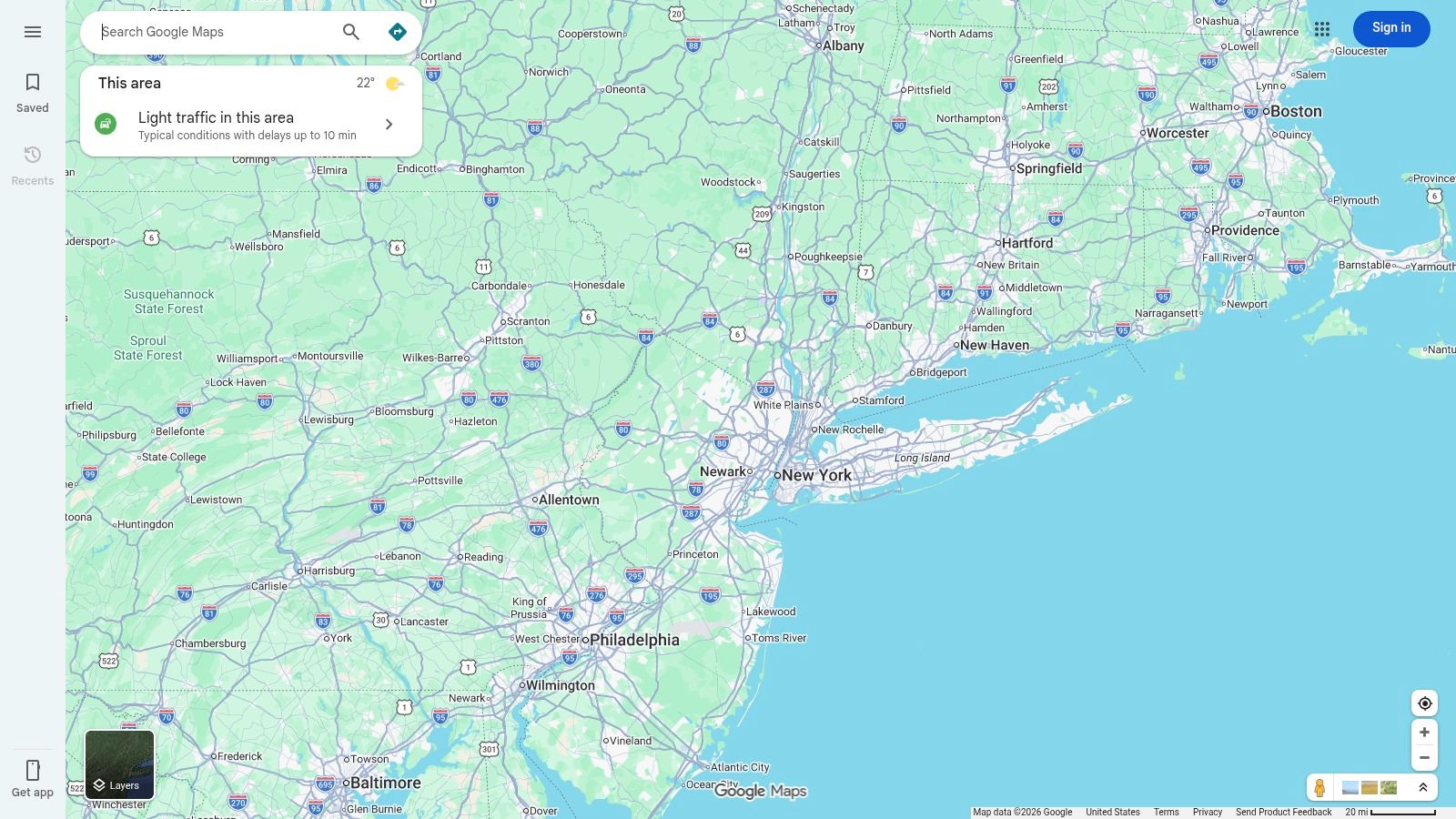
Unlike industry-specific platforms, Google Maps offers a raw, unfiltered view of the market, including both large, established firms and smaller, emerging studios. The integrated Google Business Profiles serve as mini-dashboards for each firm, providing one-click access to their website, phone number, office hours, and a photo gallery that often functions as an informal portfolio. User reviews, while needing careful interpretation, can offer anecdotal insights into a firm's client communication and professionalism.
How to Use Google Maps Effectively
The platform is a free, universally accessible tool that excels at initial discovery and logistical planning. Its value lies in quickly generating a broad list of candidates based on location and basic service categories.
Here’s a practical approach for developers:
- Geographic Shortlisting: Search "architecture firms" and pan the map to your project's location. This instantly reveals which firms are physically closest, which can be a logistical advantage for site visits and meetings.
- Visual Portfolio Scan: Use the "Photos" tab on a firm’s profile to get a quick visual sense of their work. Look for images of completed commercial projects, construction sites, and renderings that align with your project scope.
- Review Analysis: While a single negative review isn't a deal-breaker, look for patterns. Do multiple reviews mention missed deadlines or poor communication? Conversely, do positive reviews consistently praise a firm's creativity or problem-solving skills?
Key Insight: Google Maps excels at providing geographic intelligence and initial contact efficiency. It's the fastest way to build a geographically relevant longlist and perform a quick visual and reputational check before committing to deeper research.
Platform Overview:
| Feature | Details |
|---|---|
| Access & Cost | Free to access, no account required. |
| Primary Audience | Anyone seeking local services, including developers and investors conducting initial market-wide discovery. |
| Unique Offering | Map-centric search that visually connects firms to project locations and provides instant access to contact info. |
| Pros | Extremely comprehensive market coverage; user reviews provide social proof; map interface is ideal for site-based searches. |
| Cons | Review quality is highly variable; lacks filters for architectural specialties (e.g., historic, commercial). |
Website: Google Maps
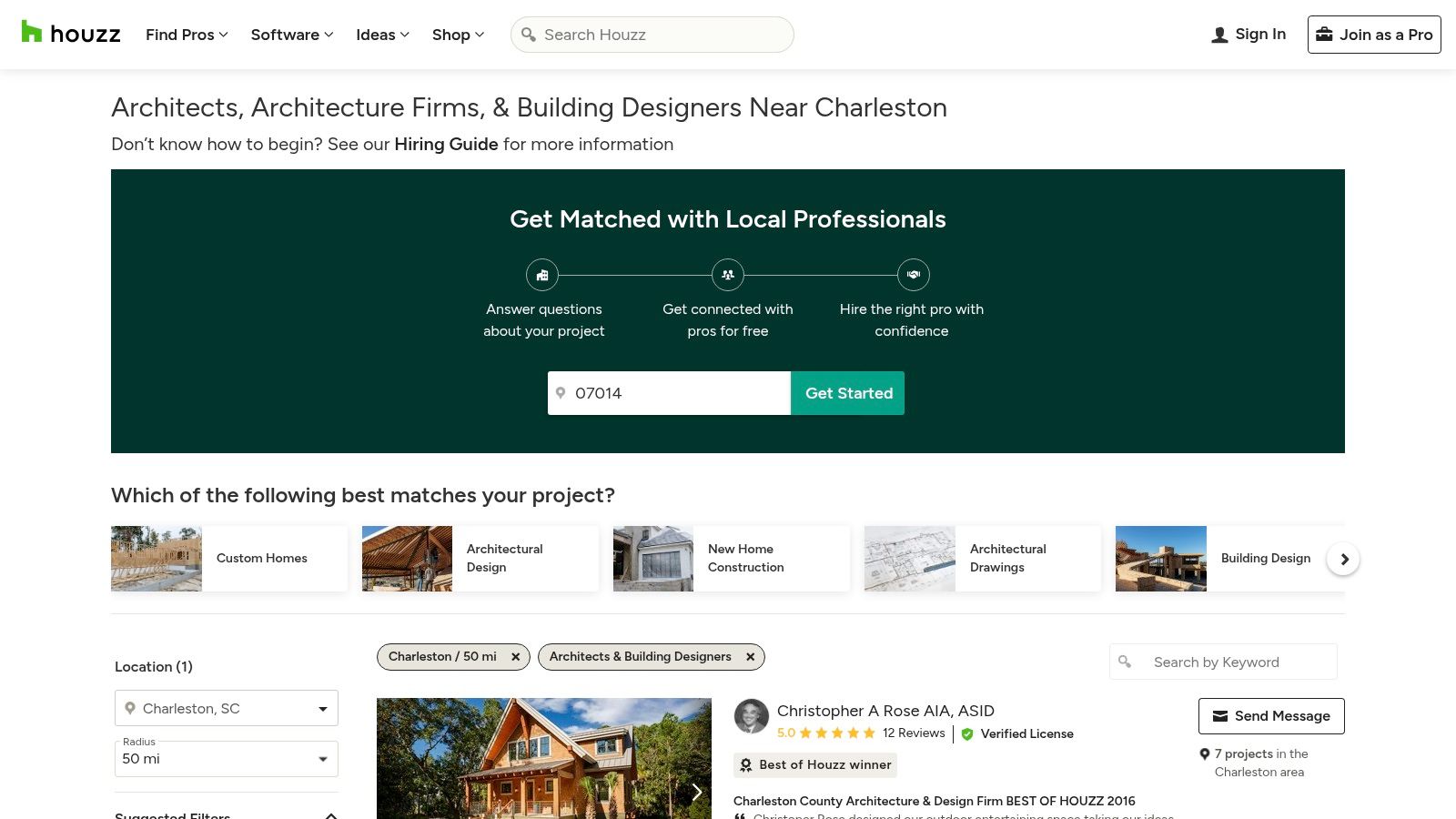
4. Houzz – Charleston Architects Category
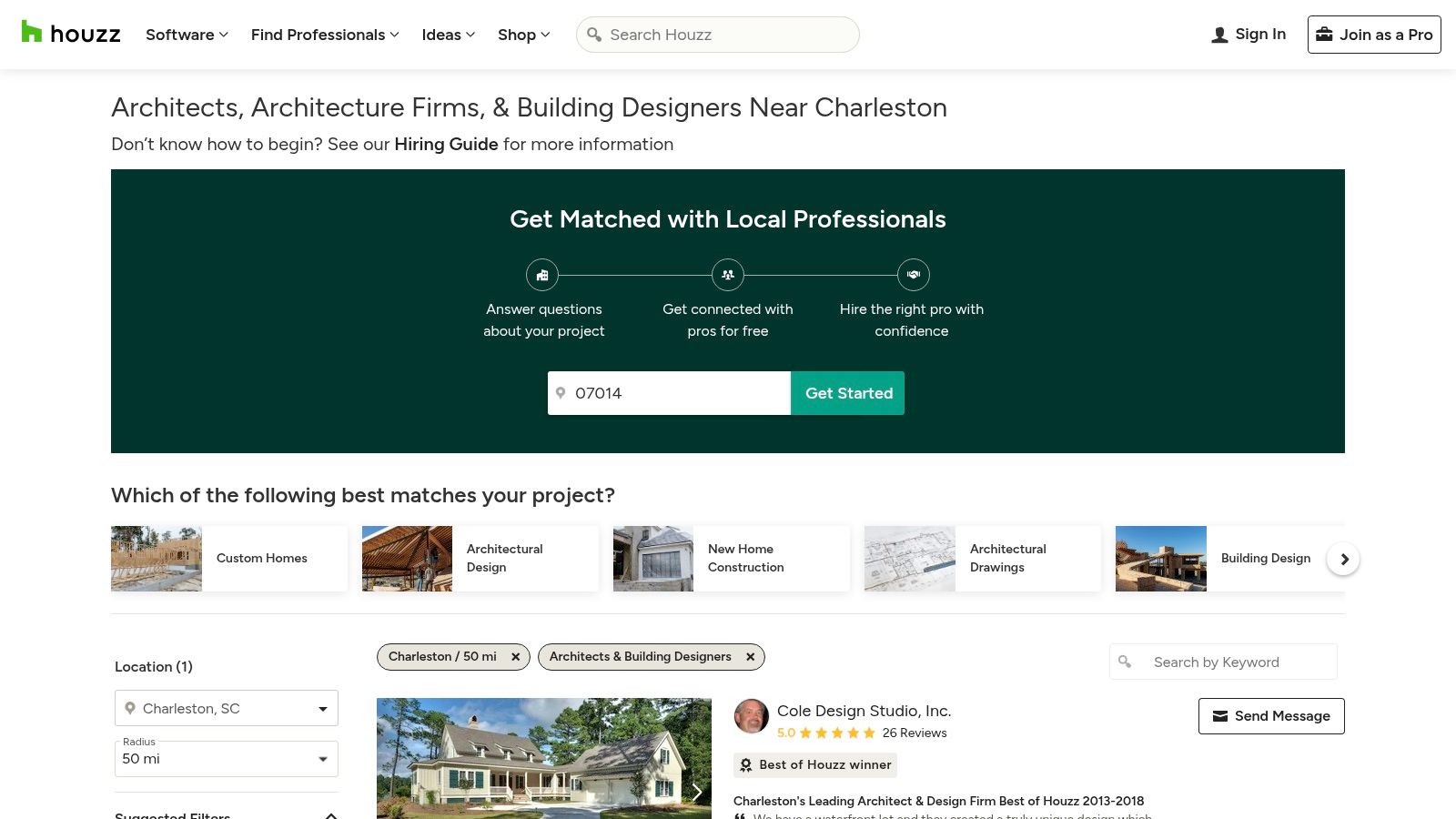
Houzz serves as a highly visual, portfolio-driven marketplace that connects clients with design professionals. For developers and commercial property owners scouting Charleston SC architecture firms, its primary strength is in visual discovery and vetting a firm's aesthetic sensibilities through extensive project galleries and client reviews. It offers one of the largest aggregations of local design talent in a single, searchable platform.
While the platform has a strong residential focus, many listed firms have robust commercial, hospitality, or adaptive reuse portfolios. Its value for commercial stakeholders lies in its powerful filtering tools and the sheer volume of visual data. You can quickly assess a firm's experience with specific materials, historic details, or site constraints common in the Lowcountry, all backed by social proof from past clients.
How to Use Houzz Effectively
Houzz is free to use for search and discovery. Its interface is designed for filtering and browsing, making it an excellent tool for creating a visual shortlist of potential architectural partners.
Here’s a practical approach for developers:
- Filter with Intent: Use the "Find Professionals" tool and filter by "Architects & Building Designers" in Charleston, SC. Go deeper by using project-type filters like "site planning" or "historic building conservation" to narrow the field.
- Analyze Photo Keywords: Pay close attention to the keywords and descriptions firms use on their project photos. Search for terms like "commercial upfit," "restaurant design," or "adaptive reuse" within their portfolios to find relevant non-residential work.
- Read Between the Lines of Reviews: Look for reviews that speak to process, budget management, and communication, not just the final aesthetic. Reviews from contractors or other project partners can be particularly insightful for a commercial project.
Key Insight: Houzz excels at design language discovery. Use it to identify firms whose visual style and documented project experience align with your commercial vision before you even make the first call.
Platform Overview:
| Feature | Details |
|---|---|
| Access & Cost | Free to browse portfolios and contact firms; no registration required for searching. |
| Primary Audience | Homeowners, but widely used by commercial clients for initial visual discovery and vetting of architects and designers. |
| Unique Offering | An extensive, image-heavy database with rich client reviews and robust filtering options for style and project type. |
| Pros | Excellent for visual assessment of a firm's work; client reviews provide social proof; powerful filtering by project scope and style. |
| Cons | Skews heavily residential, requiring verification of commercial experience; sponsored placements can influence search results. |
Website: Houzz – Charleston Architects Category
5. The Blue Book Building & Construction Network (Dodge Construction Network)
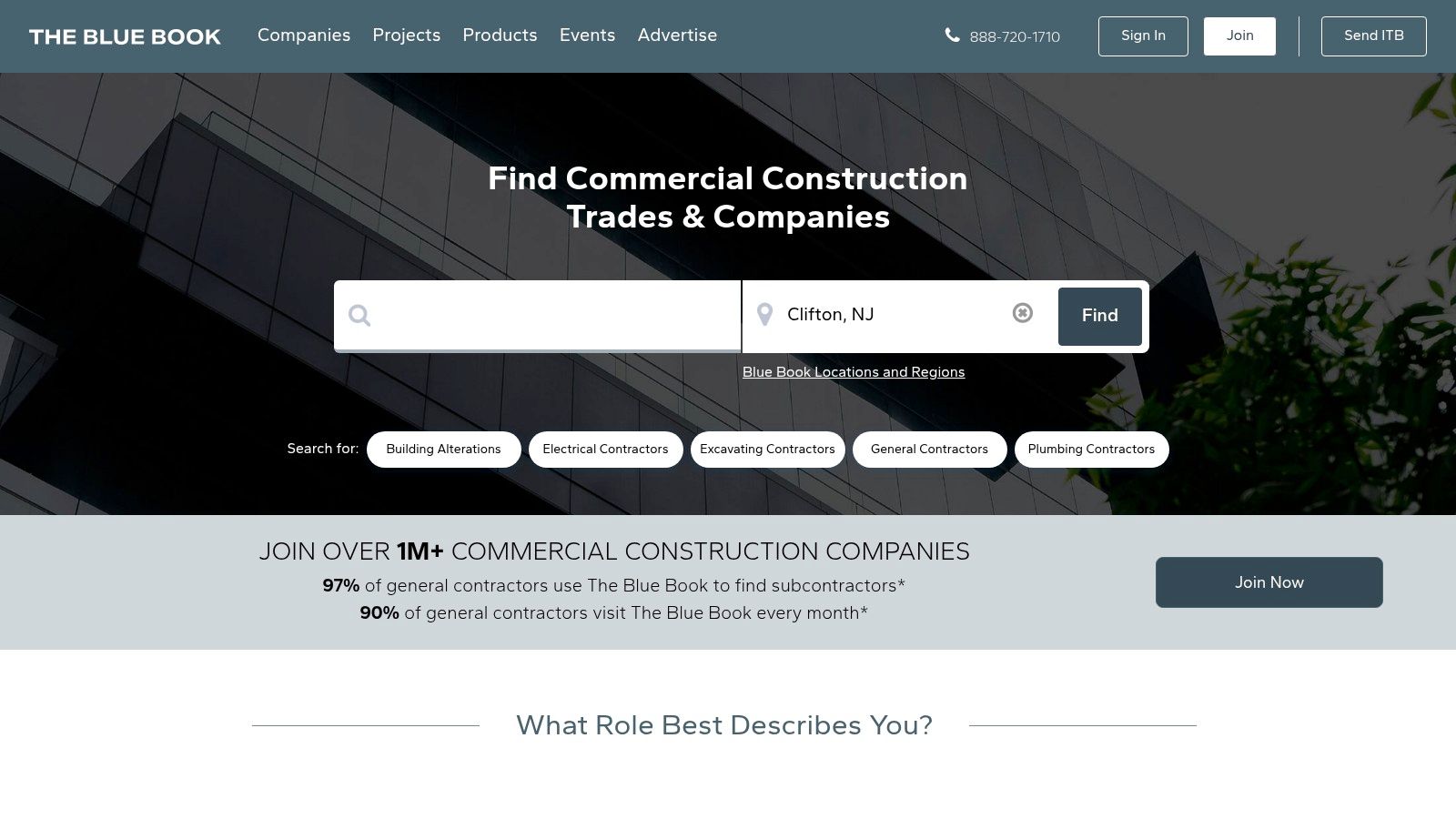
The Blue Book Building & Construction Network is a national, commercial-focused database where general contractors, developers, and property owners find and qualify project partners. For those seeking Charleston SC architecture firms with a strong commercial or institutional track record, it serves as a business-to-business vetting tool. Its value is rooted in its deep industry integration; this is where GCs look for architects to team up with on bids and where owners can see a firm’s stated qualifications and project history.
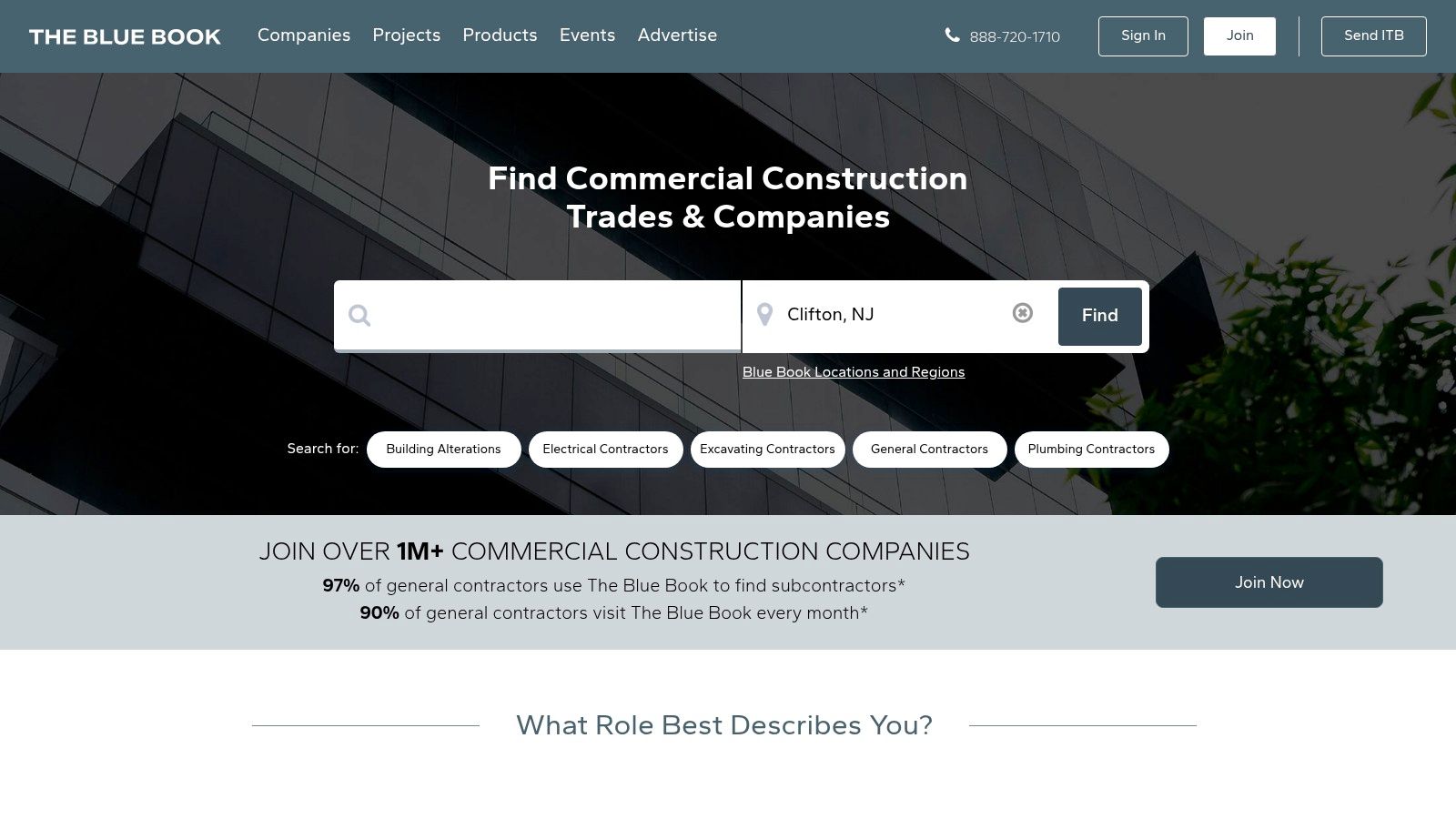
Unlike portfolio-centric platforms, The Blue Book is built for the business side of construction. It provides "ProView" pages that act like a digital resume, detailing a firm’s service areas, key contacts, and project specialties. This network is less about visual discovery and more about identifying firms with specific commercial, industrial, or institutional experience and verifying their credentials for potential collaboration.
How to Use The Blue Book Effectively
The platform is free to search, but its interface is designed for industry professionals, which can involve a slight learning curve. The real power comes from using its detailed profiles to assess a firm's business readiness and specific market experience.
Here’s a practical approach for developers:
- Targeted Search: Use the search function to look for architects specifically in the Charleston area. Filter by project types like "Retail," "Medical Facilities," or "Office Buildings" to narrow the results to relevant specialists.
- Evaluate ProView Profiles: Once you find potential firms, examine their ProView pages. Look for detailed project lists, client references, and clear descriptions of their core services. The depth of a profile often reflects how active a firm is in the commercial bidding space.
- Identify Teaming Partners: General contractors frequently use this platform to build their teams for design-build bids. Developers can gain insight by seeing which architects are commonly listed on project announcements or are actively seeking commercial partnerships.
Key Insight: The Blue Book is not for browsing beautiful designs; it's a B2B qualification tool. Use it to verify a firm's commercial focus and identify potential partners who are already integrated into the regional construction supply chain.
Platform Overview:
| Feature | Details |
|---|---|
| Access & Cost | Free to search and view company profiles. Advanced features like BidScope require a subscription. |
| Primary Audience | General contractors, commercial developers, building owners, and subcontractors seeking project partners. |
| Unique Offering | Detailed "ProView" company profiles focused on commercial qualifications, project history, and key business contacts. |
| Pros | Strongly oriented toward commercial, industrial, and institutional projects; excellent for B2B vetting and finding teaming partners. |
| Cons | The user interface can feel dated and is geared toward trade professionals; profile information varies in depth by firm. |
Website: The Blue Book Building & Construction Network
6. Yelp – Architects in Charleston, SC
While Yelp is primarily known for consumer-facing reviews, it serves a valuable, specific role for commercial developers conducting due diligence on Charleston SC architecture firms. Its main utility is not for deep portfolio analysis but for gauging public sentiment and client service responsiveness. It provides a ground-level view of a firm's reputation, often capturing feedback from smaller business owners, residential clients, or even subcontractors.
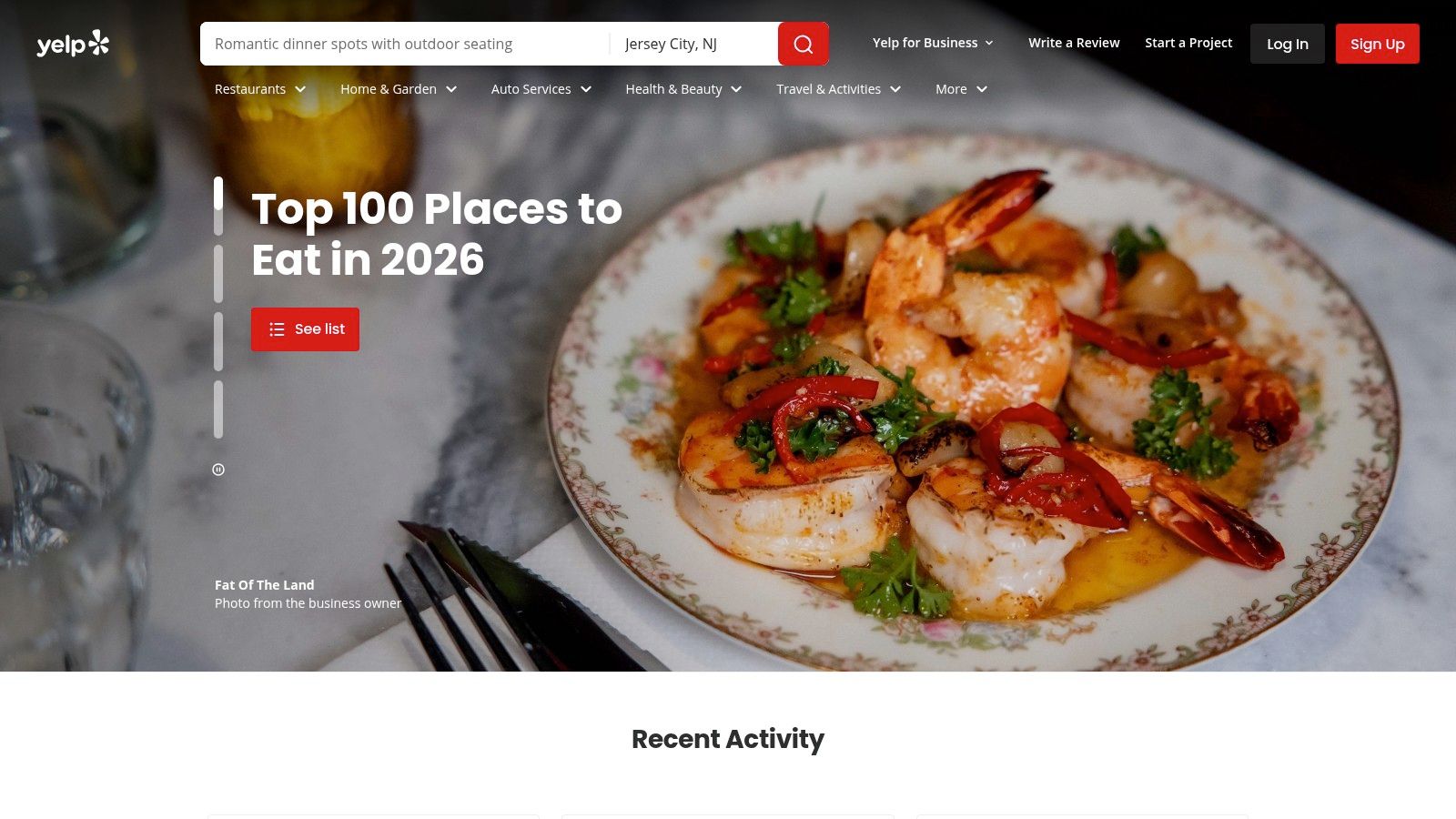
Unlike industry-specific directories, Yelp aggregates candid, user-generated content. For developers, this offers a unique data point: how does a firm interact with the general public and smaller-scale clients? A pattern of positive reviews highlighting communication, timeliness, and problem-solving can be a strong indicator of a firm's operational professionalism, regardless of project size.
How to Use Yelp Effectively
Yelp’s strength is in cross-referencing and sentiment analysis, not as a primary discovery tool. The platform is free to use, with features like "Request a Quote" that can be useful for initial, low-stakes outreach to multiple firms simultaneously.
Here’s a strategic approach for developers:
- Reputation Check: After building a shortlist from sources like AIA Charleston or Houzz, search for those specific firms on Yelp. Look for recurring themes in reviews, both positive and negative.
- Evaluate Responsiveness: Pay attention to whether the firm responds to reviews. A professional and timely response to a negative comment can be more revealing than a dozen positive ones.
- Filter with Caution: Be aware that Yelp's search algorithm and sponsored placements can influence which firms appear first. Use it to research known entities rather than for open-ended discovery.
Key Insight: Use Yelp not to find a firm, but to validate a firm's client service reputation. It's a powerful tool for triangulating professional credibility with public-facing customer satisfaction before you engage in a high-value commercial partnership.
Platform Overview:
| Feature | Details |
|---|---|
| Access & Cost | Free to browse and contact businesses; no registration required for viewing. |
| Primary Audience | Consumers and small business owners seeking local services; developers use it for secondary research. |
| Unique Offering | User-generated reviews and photos that provide a glimpse into client satisfaction and service quality. |
| Pros | Useful for triangulating client satisfaction; simple mobile app experience for quick outreach and contact. |
| Cons | Coverage and review depth can vary for commercial-only firms; advertising may influence search result order. |
Website: Yelp
7. Architizer – Firm and Project Directory
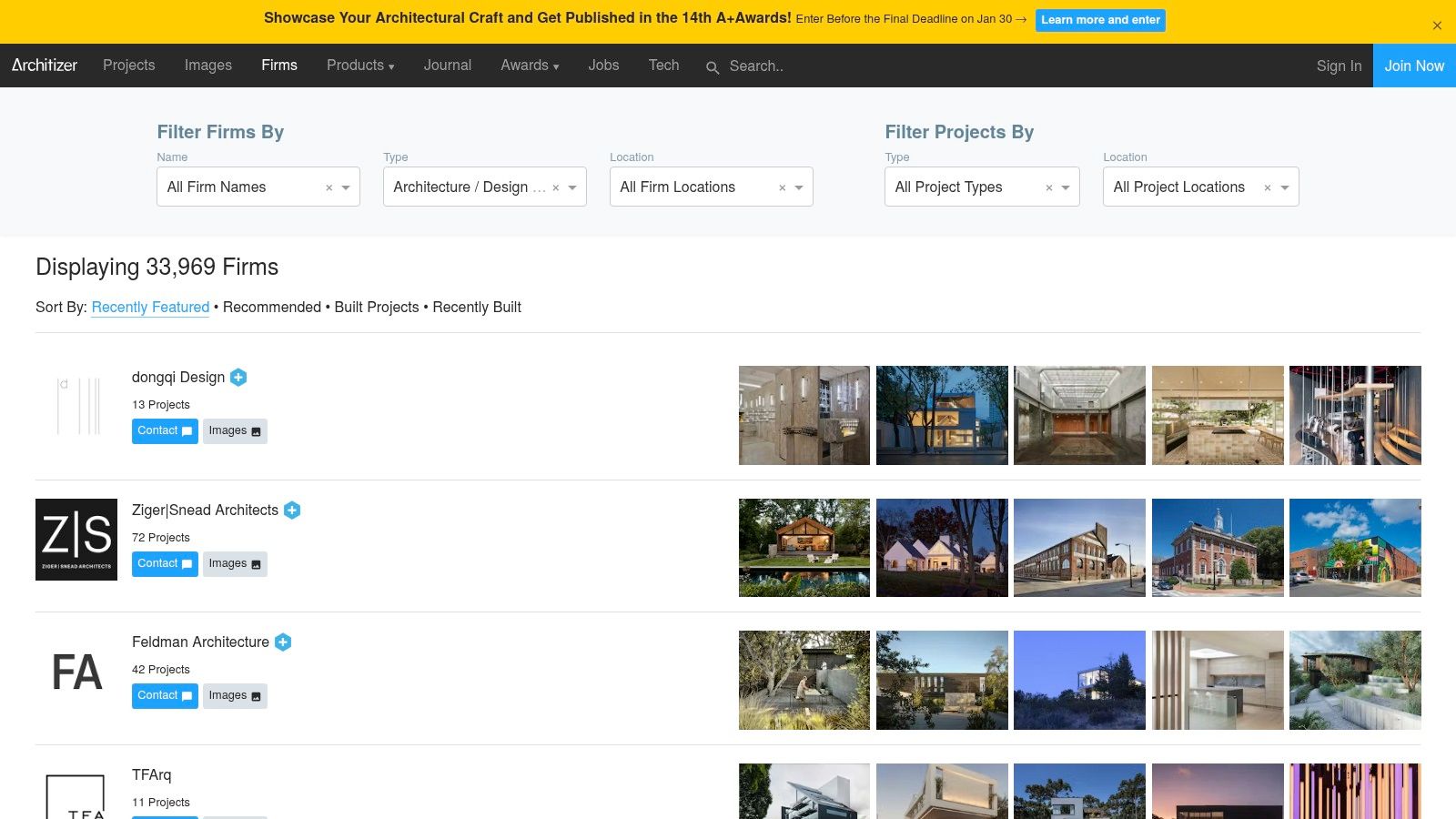
Architizer is a global architecture platform that serves as a massive project library and firm directory. For commercial developers focused on the Lowcountry, it offers a different lens for research: precedent and technical capability. Instead of just listing names, it showcases the actual work, often with high-quality imagery and detailed project descriptions, making it a powerful tool for discovering Charleston SC architecture firms based on their demonstrated expertise.
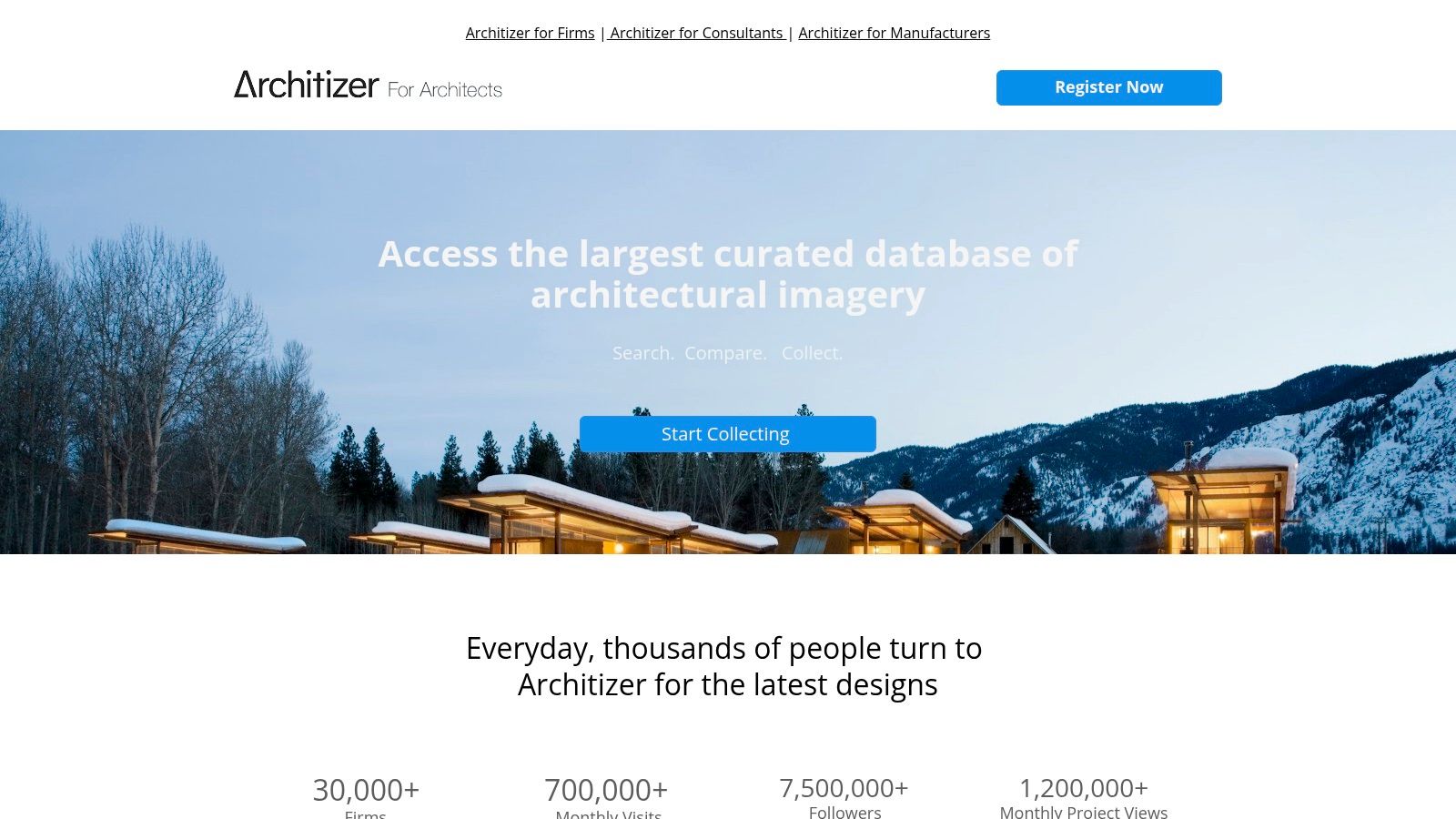
Unlike hyper-local directories, Architizer's strength is its visual and project-based search functionality. Developers can explore specific project types, such as "adaptive reuse" or "commercial office," to see which local firms are actively publishing work in those categories. This approach allows you to evaluate a firm's design sensibility and technical execution before you even make initial contact. It’s an ideal resource for gathering design inspiration and identifying firms with a portfolio that matches your project's vision.
How to Use Architizer Effectively
The platform is free for browsing firms and projects. Its robust search and filtering tools are its main advantage over simpler directories. You can search by location, building type, product, or firm name.
Here’s a practical approach for developers:
- Search by Project Type First: Instead of searching for Charleston firms directly, start by searching for your project category (e.g., "Boutique Hotel" or "Mixed-Use Development") and then filter by location. This surfaces firms with proven, relevant experience.
- Analyze the Imagery: Look beyond the "hero" shots. Many firms upload floor plans, sections, and construction detail photos. This provides deeper insight into their technical capabilities and problem-solving skills.
- Identify Emerging Talent: Architizer is often used by modern, design-forward firms to gain visibility. You may discover talented, up-and-coming Charleston firms here that are not as prominent on more traditional lists.
Key Insight: Use Architizer not just to find firms, but to vet their design and technical proficiency. The platform's emphasis on high-quality project documentation allows for a more thorough initial screening based on tangible results.
Platform Overview:
| Feature | Details |
|---|---|
| Access & Cost | Free to browse firms and projects. |
| Primary Audience | Developers, architects, and clients looking for design inspiration and technically proficient firms on a global scale. |
| Unique Offering | A vast, visually-driven database of projects that can be filtered by location, typology, and technical details. |
| Pros | High-quality imagery and technical drawings; great for evaluating capability; broad coverage for commercial precedents. |
| Cons | Not every local firm maintains an active profile; location filtering may require several clicks to narrow to Charleston. |
Website: Architizer – Firm and Project Directory
Charleston Architecture Firm Directory Comparison
| Directory / Platform | Implementation Complexity 🔄 | Resource Requirements ⚡ | Expected Outcomes ⭐ | Ideal Use Cases 💡 | Key Advantages 📊 |
|---|---|---|---|---|---|
| AIA Charleston – Firm Directory | Low — browseable local list | Low — web access, manual review | ⭐⭐⭐ — AIA-vetted local expertise | Local preservation, coastal approvals, municipal boards | Direct contacts; strong local engagement signals |
| AIA South Carolina – Firm Directory | Low — statewide filters | Low — web browsing, comparative review | ⭐⭐⭐ — broader pool with licensure signaling | Multi-site projects, finding nearby specialists | Statewide coverage; sector filters; AIA standards |
| Google Maps – Local Business Listings | Very low — search & map use | Low — instant access; review reading | ⭐⭐ — comprehensive coverage; variable quality | Shortlisting by proximity; rapid outreach | Map discovery; contact links; user reviews |
| Houzz – Charleston Architects Category | Low — visual browsing & filters | Moderate — portfolio review time | ⭐⭐⭐ — excellent visual match (residential) | Design-led residential or adaptive reuse projects | Photo-rich portfolios; style filters; client reviews |
| The Blue Book / Dodge Construction Network | Moderate — trade-oriented tools | Moderate — account/use familiarity | ⭐⭐⭐ — strong for commercial qualifications | Commercial, institutional, GC/developer sourcing | Commercial focus; project qualifications; bidding tools |
| Yelp – Architects in Charleston, SC | Very low — search & reviews | Low — quick mobile/desktop checks | ⭐⭐ — consumer sentiment signal; inconsistent depth | Triangulating client satisfaction; quick outreach | Client reviews; mobile UX; request-a-quote |
| Architizer – Firm and Project Directory | Low–Moderate — project search | Moderate — deep precedent review | ⭐⭐⭐ — strong for precedent & technical imagery | Precedent research; firms with published work | High-quality imagery; project-level details; global reach |
From Shortlist to Partnership: Your Next Steps
Navigating the landscape of Charleston SC architecture firms can feel daunting, but the tools we've explored provide a powerful and structured starting point. From the official directories of AIA Charleston and AIA South Carolina to the visual-centric platforms like Houzz and Architizer, you now have a comprehensive toolkit to build an initial list of qualified candidates for your commercial project. Combining these resources with practical search tools like Google Maps and industry networks like The Blue Book gives you a 360-degree view of the market.
The primary goal of this initial research phase is to move beyond a long list of names and create a focused shortlist of two or three firms that truly align with your project's specific needs. Your selection process should filter firms based on their portfolio, expertise in commercial, adaptive reuse, or historic preservation, and their demonstrated understanding of Charleston's unique architectural heritage and regulatory environment.
Transitioning from Research to Relationship
Once your shortlist is solidified, the focus must shift from digital discovery to direct dialogue. A firm's website and portfolio reveal their past accomplishments, but your future success depends on their process, communication style, and problem-solving capabilities. This is where your due diligence becomes crucial.
A successful project in Charleston demands more than just a beautiful design; it requires a strategic partnership. The right firm acts as your advocate, navigating complex zoning laws, securing approvals from the Board of Architectural Review (BAR), and translating your commercial objectives into a tangible, profitable asset.
Key Questions to Guide Your Final Decision
To make the most of your initial consultations, come prepared with questions that probe beyond their design philosophy. Your goal is to understand their operational effectiveness and how they handle the practical challenges of building in a historic city.
Consider asking the following:
- Navigating Regulations: "Can you walk me through your process for securing approvals from local boards like the BAR? Please provide an example from a recent commercial project."
- Historic Expertise: "What is your experience with leveraging state and federal historic tax credits? How do you help clients maximize these incentives?"
- Project Management: "How do you manage communication between the client, contractor, and engineering consultants to keep the project on schedule and on budget?"
- Value and Vision: "How do you balance preserving Charleston's historic character with the need to deliver modern functionality and long-term value for a commercial property?"
The responses to these questions will reveal a firm's true capabilities. A partner who can provide clear, confident, and example-driven answers is one who has successfully guided clients through these challenges before. This diligence is the final, essential step in transforming your search for one of the top Charleston SC architecture firms from simply hiring a vendor to building a lasting, successful partnership.
Ready to partner with a firm that combines visionary design with meticulous project management? The team at Sherer Architects, LLC specializes in delivering enduring, sustainable, and profitable results for commercial, adaptive reuse, and historic preservation projects across Charleston. Visit Sherer Architects, LLC to see how our proven process can bring your vision to life.