
An interior architecture firm does more than just decorate; it fundamentally reworks a building's structure and flow to reshape how the space actually functions. It's the difference between a stylist choosing an outfit and a surgeon reshaping the body underneath.
These firms are strategic partners. They focus on making your commercial property safe, efficient, and profitable by redesigning its "bones."
Thinking Beyond Decor: What Is an Interior Architecture Firm?
People often use "interior design" and "interior architecture" interchangeably, but they are worlds apart. While an interior designer is brilliant at aesthetics—choosing furniture, fabrics, and paint to make a space beautiful—an interior architecture firm starts much, much deeper. Their work begins long before anyone even thinks about a swatch of fabric.
These are licensed professionals who analyze and redesign the very structure of a building's interior. Their real expertise is in understanding how people move through and interact with their physical environment—a field often called environmental psychology. They solve complex spatial puzzles to make sure a building isn't just attractive, but is fundamentally sound and perfectly tuned for its purpose.
The Architect vs. The Decorator: An Analogy
Think of a building as a human body. An interior decorator is like a personal stylist. They pick the clothes (finishes), the accessories (furniture), and the makeup (color palette) to create an incredible final look. Their role is absolutely vital for appearance and expressing a specific style.
The interior architect, on the other hand, is like a surgeon and a kinesiologist rolled into one. They examine the skeleton (structural walls), the circulatory system (HVAC and plumbing), and the nervous system (electrical wiring). They can perform "surgery" by moving walls, rerouting systems, and completely changing the layout to improve the body's overall health and efficiency. They make sure the body can perform at its peak, not just look the part.
Core Responsibilities of an Interior Architecture Firm
An interior architecture firm's work goes far beyond aesthetics, covering critical technical and strategic ground. The main goal is to make the physical space support the business's objectives, which is especially important in commercial, adaptive reuse, and historic preservation projects.
Here’s a look at what they actually do:
- Spatial Planning and Reconfiguration: This is all about analyzing and redesigning floor plans. They work to improve traffic flow, maximize every usable square foot, and make the experience better for everyone inside.
- Structural Modifications: They have the expertise to legally and safely change a building’s interior structure. This includes complex tasks like removing or adding walls and integrating brand-new mechanical systems.
- Code Compliance and Permitting: This is a big one. They navigate the maze of building codes, zoning laws, and accessibility standards (like the ADA) to ensure the project is fully compliant and can get all the necessary permits.
- Project Management: They see the project through from the first sketch to the final construction walkthrough. This means coordinating with contractors, engineers, and vendors to make sure the vision becomes a reality, on time and on budget.
The Blueprint for Success: Core Architectural Services
Bringing a vision to life—turning an idea into a functional, beautiful space—isn't a single action. It’s a carefully managed journey. A seasoned interior architecture firm is your guide through a series of distinct phases, with each step building on the one before it to make sure the final result is exactly what you set out to achieve. This process is the blueprint that transforms abstract goals into tangible, valuable assets.
It all kicks off with a critical discovery phase we call Programming. This is so much more than a simple Q&A. Think of it as a deep-dive investigation into how your business operates, what your goals are, and what your space truly needs to accomplish. We ask the tough questions to understand not just what the space should look like, but how it needs to work for you, your staff, and your customers.
The architectural team gathers crucial data on workflow patterns, occupancy needs, brand identity, and even your plans for future growth. All of this information is distilled into a detailed project brief. This document becomes the north star for every single decision that follows.
From Concept to Concrete Plans
With the "what" and "why" sorted out during Programming, we move into the creative phases where the vision starts taking physical form. This is where ideas get explored, sharpened, and ultimately translated into the kind of technical specifications a construction team can build from.
This creative journey unfolds in three main stages:
- Schematic Design: This is the big-picture, brainstorming part of the process. We develop broad-stroke concepts using tools like bubble diagrams, rough floor plans, and mood boards to pin down the overall look, feel, and flow of the space. The goal here is to explore the possibilities and agree on a clear direction before diving into the details.
- Design Development (DD): Once a schematic concept gets the green light, the team starts refining it with a much greater level of detail. Specific materials are chosen, lighting plans are created, and interior elevations are drawn up. This phase adds a critical layer of precision, defining the project with enough clarity to start getting realistic cost estimates.
- Construction Documents (CDs): This is where it all gets real. As the most technical and intensive phase, we produce a comprehensive set of drawings and specifications that become the legal instructions for the contractor. These documents detail everything from how walls are built and where outlets go to the exact paint colors and fixture models. Nothing is left to chance.
This methodical progression from a high-level idea to meticulously detailed plans is what keeps projects on track and on budget, eliminating costly surprises during construction.
The table below outlines this journey, showing how each phase serves a distinct purpose in bringing a project from an initial idea to a completed space.
| The Interior Architecture Project Lifecycle |
| :— | :— | :— |
| Project Phase | Primary Goal | Key Deliverables for the Client |
| Programming | Define project needs, goals, and constraints. | A detailed project brief, space requirements, and budget analysis. |
| Schematic Design | Explore broad concepts and establish the overall design direction. | Conceptual floor plans, mood boards, and initial 3D sketches. |
| Design Development | Refine the chosen concept with specific details and materials. | Detailed floor plans, interior elevations, and preliminary material selections. |
| Construction Documents | Create a complete set of technical drawings for bidding and permits. | A full set of architectural drawings, technical specs, and finish schedules. |
| Bidding & Permitting | Select a qualified contractor and obtain all necessary approvals. | Bid analysis, contractor recommendations, and approved building permits. |
| Construction Admin | Oversee construction to ensure it aligns with the design documents. | Site visit reports, change order management, and final punch list. |
This lifecycle ensures a smooth, predictable process where the client is informed and empowered at every step.
Navigating Regulations and Securing Bids
With a complete set of construction documents in hand, the project shifts from design to the practicalities of getting it built. The interior architecture firm’s role here is absolutely vital, acting as your advocate to navigate complex logistical and regulatory hurdles. This includes managing the Bidding and Negotiation process. We send the construction documents out to qualified general contractors, who then submit bids to build the project. We help you analyze these bids to ensure they are complete and competitive, then assist in negotiating the final contract.
At the same time, we're handling the intricate process of securing permits from local authorities. We submit the construction documents to city and county officials for their review, fielding any questions related to zoning laws, building codes, and safety regulations. This expert navigation is a huge risk-reducer for developers, preventing expensive delays and guaranteeing full compliance.
A skilled interior architecture firm doesn't just design a building; they pilot it through the administrative maze of design review boards, energy codes, and local ordinances, ensuring the project is both buildable and legally sound.
The following graphic helps visualize the different but complementary roles an interior architect and an interior decorator play over the course of a project.
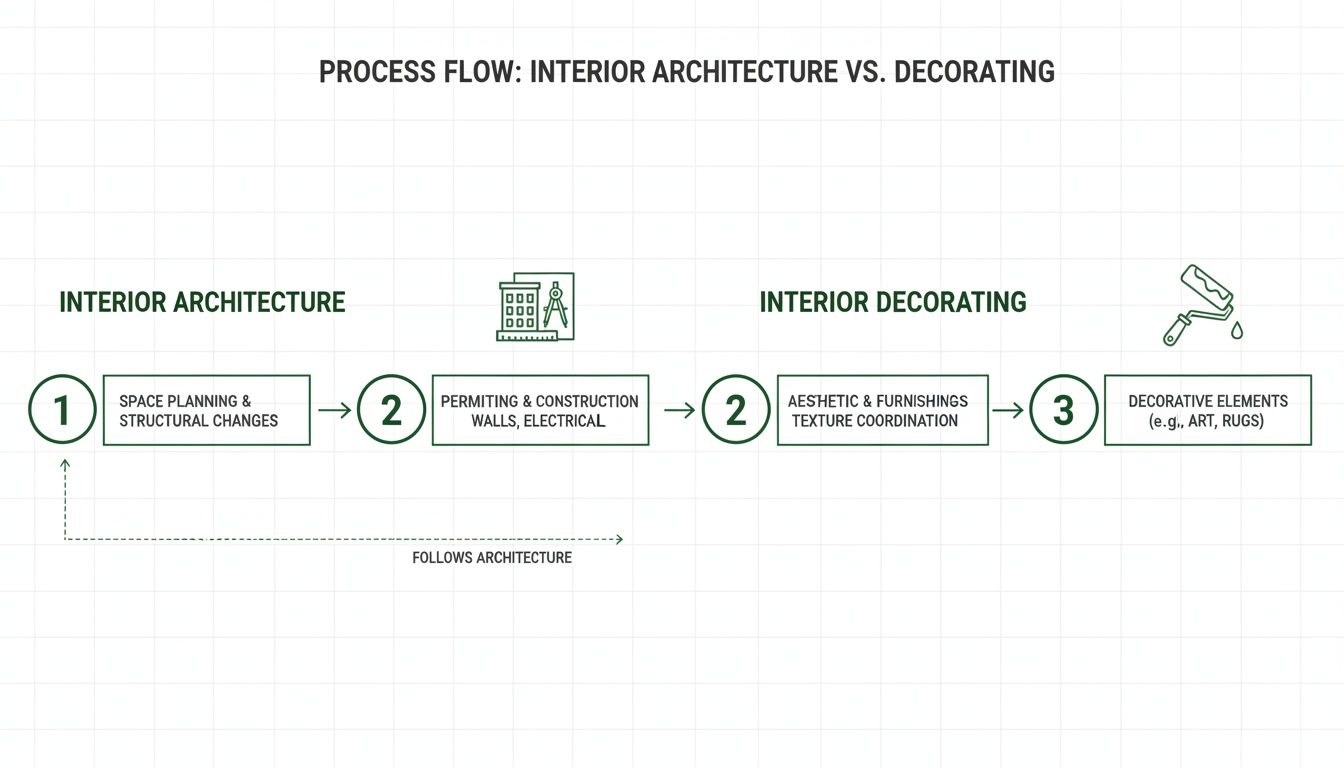
As you can see, the architect’s work is foundational—it’s about the structure, systems, and very bones of the space. The decorator’s work then comes in to enhance and complete that environment.
Ensuring Vision Becomes Reality
The final stretch is Construction Administration, and this is where the architect becomes your eyes and ears on the job site. We conduct regular site visits, answer questions from the contractor, review the quality of the work being done, and approve payment applications. This oversight is what protects your investment and ensures the project is built exactly as specified in the documents.
This hands-on management holds the construction team accountable for delivering the quality you paid for. The architect's involvement doesn't stop until the final punch list is complete and you're ready to move into your new, fully realized space. It’s this end-to-end service that showcases the true value of an interior architecture firm, creating a seamless bridge from the first spark of an idea to the day you open your doors.
The U.S. interior design market hit USD 35,010.3 million in revenue in 2024, with remodeling being the fastest-growing segment. This trend perfectly aligns with the adaptive reuse projects we specialize in, which breathe new life into existing structures. You can learn more about the interior design market's growth and how it’s shaping development strategies today.
Unlocking Value with Adaptive Reuse and Preservation
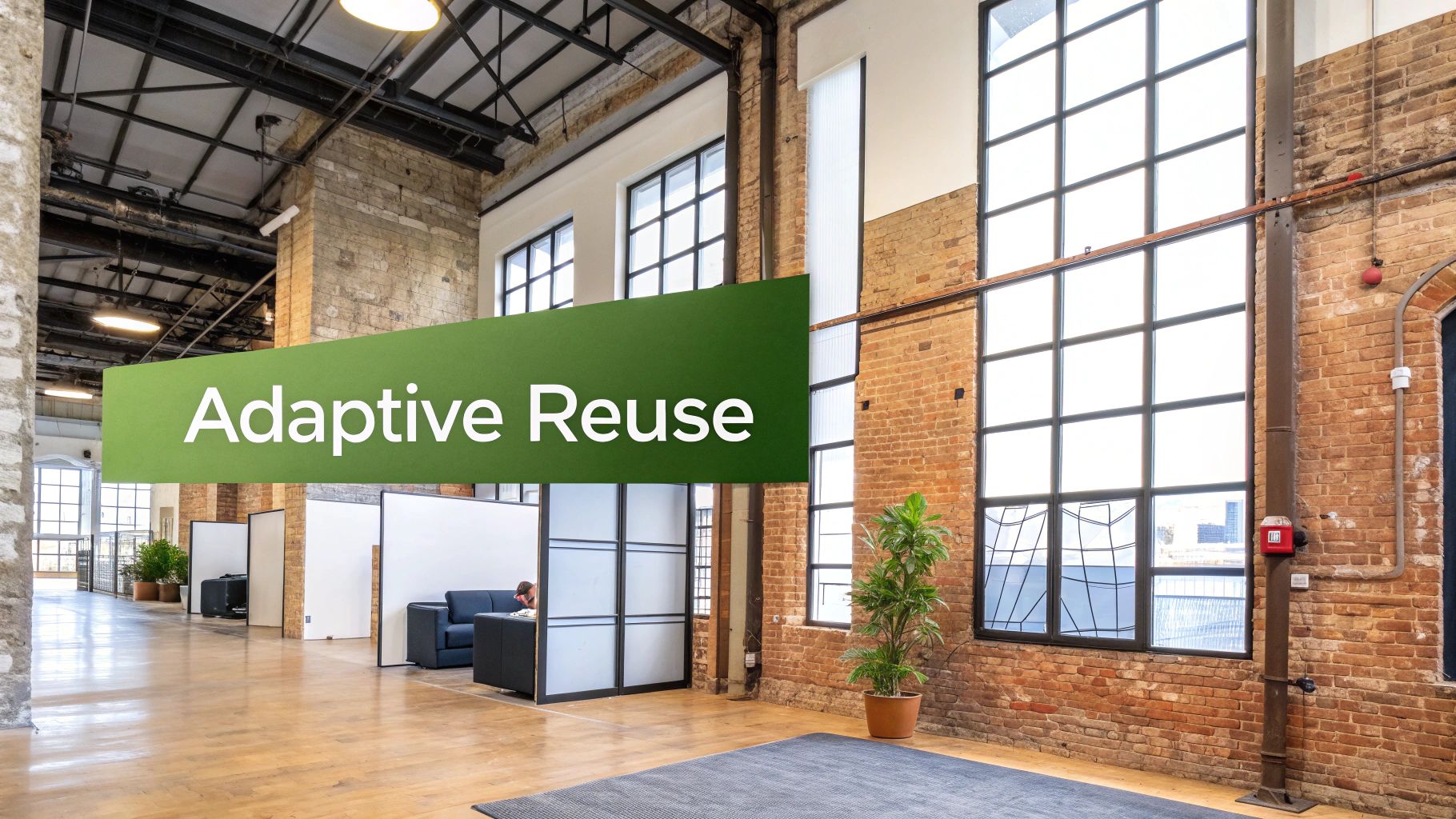
When many developers look at an old, tired building, they see a liability—something to be torn down. But a different kind of vision sees immense, untapped potential. This is the world of adaptive reuse, a smart strategy that breathes new life into aging structures, turning them into valuable, high-performing assets for today's market.
Adaptive reuse goes way beyond a simple renovation. It’s about strategically repurposing a building for an entirely new function while celebrating its original character. Think of an old textile mill buzzing with activity as a modern office hub, a forgotten warehouse finding new purpose as luxury lofts, or a grand old bank becoming a chic boutique hotel.
An interior architecture firm that specializes in this work is like a master puzzle-solver. They have the unique expertise to reconfigure outdated layouts for modern needs, weave in new mechanical and electrical systems without disrupting the building's soul, and navigate the intricate maze of historic preservation rules. The goal is always the same: create a space that feels contemporary and works beautifully, but is also rich with history and authenticity.
The Financial Case for Reimagining Old Buildings
The most powerful argument for adaptive reuse often comes down to the bottom line. For developers and property owners, choosing to repurpose an existing building instead of starting from scratch can offer a whole host of financial perks that are simply too good to ignore.
Demolition and new construction are expensive undertakings, both in time and money. Adaptive reuse projects, on the other hand, can be significantly more cost-effective. By keeping the building's "bones"—its core and shell—developers can see huge savings on materials and labor, often slashing project costs considerably.
Globally, the interior design market is projected to reach USD 214.35 billion by 2034, with commercial projects making up a huge piece of that pie. Adaptive reuse projects are frequently 40% cheaper than demolition and new construction, all while preserving historic character and opening doors to valuable tax incentives. Find out more about how market trends are favoring adaptive reuse projects.
These aren't just abstract savings. They directly translate into a healthier pro forma, a faster path to profitability, and a much higher return on investment for the developers who see the potential.
Beyond Cost Savings: The Strategic Advantages
The benefits of adaptive reuse don't stop with the budget. These projects have a built-in competitive edge that brand-new construction often struggles to match.
- Accelerated Timelines: You get to skip the long demolition and site prep phases, meaning adaptive reuse projects often get to market much faster. This speed is a critical advantage, allowing you to start generating revenue sooner.
- Unique Market Appeal: Today’s tenants and customers are looking for character. Exposed brick walls, original timber beams, and historic details create a unique sense of place that makes a property stand out from the cookie-cutter new builds, commanding higher rents and attracting top-tier tenants.
- Environmental Sustainability: Reusing an entire building is one of the greenest things you can do in development. It drastically cuts down on landfill waste, preserves the embodied carbon locked into the original structure, and reduces the environmental toll of producing new materials.
Leveraging Historic Tax Credits for Maximum ROI
If the property has historical significance, the financial picture gets even brighter. A knowledgeable interior architecture firm becomes an essential partner in unlocking valuable historic tax credits. These government programs are specifically designed to encourage the preservation of landmark buildings by offering serious financial rewards.
Navigating the application process for these credits is a specialized skill. It requires a deep understanding of preservation standards, meticulous documentation, and careful negotiation with historical review boards. An experienced firm can guide you through every step, ensuring the design not only honors the building's past but also ticks every box required by the program.
These tax credits can offset 20-30% of qualified renovation costs, which can fundamentally change the financial viability of a project. What might have seemed like a daunting preservation challenge can quickly become a highly profitable venture, turning a community landmark into a cornerstone of your portfolio.
Why This Matters for Your Bottom Line
Choosing to work with an interior architecture firm isn't just about making a space look good; it's a hard-nosed business decision that directly impacts your financial success. Every single design choice, whether it's moving a wall or picking a countertop, is an investment. The right firm makes sure that investment pays off, turning your physical space from a cost center into a high-performing asset.
We're talking about shifting the focus from creating a beautiful space to building a profitable one. It’s the difference between a building that just sits there and one that actively works to boost your revenue, strengthen your brand, and secure your place in the market for years to come.
Enhancing ROI Through Smarter Space Utilization
At the end of the day, commercial real estate is a game of inches—or rather, square feet. The goal is to squeeze maximum value out of every single one. This is where an interior architecture firm really shines, using strategic spatial planning to find revenue potential you didn't even know existed.
Think of them as a master chess player who sees moves on the board that others miss. They might reconfigure a floor plan to create more leasable area, improve the flow of foot traffic, or simply make the space function better for its intended purpose.
For instance, a clever office redesign can fit more employees comfortably, meaning you don't have to lease more space. In a retail shop, rethinking the customer journey can lead to a 10-15% increase in sales just by guiding shoppers past high-margin products. This kind of optimization doesn't just make your property more functional; it makes it far more attractive to top-tier tenants and future buyers, directly boosting occupancy rates and resale value.
A well-designed commercial space is a powerful magnet for tenants and customers. It’s not just about what the space looks like; it’s about how it performs for the businesses operating within it.
There's a reason the U.S. interior design services sector employs around 140,128 professionals. With 38% of global demand coming from offices and retail spaces seeking wellness-focused layouts, developers who get this right can see occupancy jump by 15-20%. You can dive deeper into how strategic design is driving commercial real estate trends on InteriorDesign.net.
Saving Time and Money Through Expert Navigation
The road from a design sketch to a finished building is littered with potential landmines: tangled zoning laws, constantly changing building codes, and bureaucratic permitting processes. Each one is a risk that can lead to expensive delays and budget blowouts.
An experienced interior architecture firm is your guide through this regulatory maze. Their in-depth knowledge of local ordinances and established relationships with review boards mean they can spot trouble long before it becomes a real problem.
This proactive approach takes a huge amount of risk off your plate and keeps the project on a smoother, more predictable timeline. Shaving even a few months off a project schedule by avoiding permitting headaches means you start generating revenue that much sooner—and that's a massive win for any developer's bottom line.
Future-Proofing Your Asset with Flexible Design
The only constant in business is change. The explosion of hybrid work, new patterns in consumer behavior, and emerging technologies all demand that commercial spaces be able to adapt. A forward-thinking interior architecture firm doesn't just design for today; they design for tomorrow.
This foresight is built directly into the space through elements like:
- Modular Walls: Allowing office layouts to be reconfigured on the fly for different team sizes or project needs.
- Multi-Use Common Areas: Designing lobbies, cafes, or break rooms that can easily transform into event spaces or collaboration hubs.
- Scalable Infrastructure: Planning ahead for future tech needs, making upgrades simple and affordable instead of a major renovation.
This kind of thinking protects your investment from becoming outdated. A building designed for flexibility today will stay valuable and relevant for decades, saving you from costly overhauls down the line. It ensures your property can pivot to meet new market opportunities, maintaining its competitive edge and long-term profitability.
How to Choose the Right Firm for Your Project

Picking an interior architecture firm is easily one of the most important decisions you'll make for your entire project. This isn't just about flipping through a portfolio of pretty pictures. You’re selecting a long-term partner who will be responsible for guiding you through complex regulations, managing a significant budget, and turning your business goals into a tangible, profitable space.
The "best" firm isn't necessarily the one with the trendiest designs. It's the one whose specific experience and problem-solving skills align directly with the challenges of your project. A great design is the bare minimum; a successful project that meets its goals on time and on budget is the real test of a firm’s value.
Look Beyond the Portfolio
A slick portfolio is a good start, but it really only shows you the final, polished product. To get a real sense of a firm's ability, you have to dig into their process and see how they've handled real-world challenges. Every project looks perfect in a professional photograph, but the true value of a firm emerges in how they navigate the inevitable bumps in the road during design and construction.
Look for a history that matches your project's DNA. If you’re tackling an adaptive reuse project, for example, you need a firm that lives and breathes historic preservation and knows how to bring old buildings into the modern era. Their firsthand experience with the unique structural quirks and regulatory mazes of these projects is absolutely essential.
The right interior architecture firm acts as a translator—they convert your vision into a buildable plan, your budget into a realistic scope, and your business goals into a functional, revenue-generating space. Their role is to de-risk the entire venture for you.
The same logic applies to new commercial construction. A firm with deep roots in South Carolina, strong relationships with local planning departments, and an intimate knowledge of zoning codes is a massive advantage. That kind of local expertise can save you months of delays and thousands in unexpected costs, paving a much smoother road from blueprint to grand opening.
Questions That Reveal True Expertise
When you sit down to interview potential firms, it's time to get past the surface-level questions about their design "style." What you really need to understand is how they think. Their answers to specific, scenario-based questions will tell you far more about their capabilities than any curated gallery of images.
Don't be afraid to come prepared with a list of tough questions that test their practical knowledge and collaborative approach. This is your chance to get a feel for their communication style and determine if they're a good cultural fit for your team.
Here are a few questions that cut to the chase:
- Problem-Solving: "Tell me about a past project that hit a major zoning or permitting snag. How did you get it back on track, and what was the final result for the client?"
- Budget Management: "What's your process for keeping the design aligned with our budget from start to finish? How do you approach value engineering if we see costs start to climb?"
- Collaboration and Communication: "Walk me through how you work with clients, general contractors, and engineers. How do you manage differing opinions or priorities to keep everyone moving forward?"
- Local Knowledge: "What's your experience with the design review boards and building codes right here in this municipality? Are there any specific local challenges we should be prepared for?"
- Project Management: "What tools and systems do you use to manage the project schedule and budget? How often will we get updates, and what will they look like?"
The way they answer these questions will paint a very clear picture of their competence, their transparency, and ultimately, whether they are the right strategic partner to bring your vision to life.
Your Partner in Building Lasting Value
Choosing an interior architecture firm isn't like picking a vendor; it's about bringing on a strategic partner who’s fully invested in your commercial success. Think of them as the conductor of a complex orchestra, expertly weaving together your vision, budget, regulations, and market demands to create a space that truly works. They’re the ones who turn abstract business goals into a tangible, high-performing physical asset.
The real value here goes far beyond beautiful finishes or trendy furniture. It’s found in a floor plan that actively maximizes your revenue, a design that sails through the permitting process without costly delays, and a building that will stay relevant and valuable for decades to come. A skilled interior architecture firm makes sure every single choice directly contributes to your bottom line.
The most successful projects begin with a shift in mindset—viewing architectural services not as an expense, but as the foundational investment in building enduring value. Your partner in this process is key to unlocking your property's full potential.
So, as you approach your next commercial or adaptive reuse project, think about the strategic advantage that expert guidance brings to the table. The right architectural partner doesn't just design a space for you. They help build your future, ensuring your investment delivers returns long after the dust has settled. It’s the smartest first step you can take.
Frequently Asked Questions
When you're dealing with commercial real estate and development, questions are bound to come up. Here are some of the most common ones we hear from clients thinking about working with an interior architecture firm.
What's the Difference Between an Interior Architect and an Interior Designer?
It's a common point of confusion, but the distinction is crucial. While both want to create great spaces, their roles are fundamentally different.
An interior architecture firm is run by licensed professionals who are legally qualified to change the structure of a building's interior. Think of them as dealing with the "bones" of the space—moving walls, integrating new plumbing and electrical systems, ensuring everything is up to code, and handling any structural work.
An interior designer, on the other hand, usually works on the surface level. Their expertise is in the finishing touches: furniture, paint colors, fabrics, and accessories that define the aesthetic. If your project involves a gut renovation, adaptive reuse, or major new construction, you need an interior architect to lead the charge.
How Much Does It Cost to Hire an Interior Architecture Firm?
There's no single answer here, as the cost really depends on your project's size, scope, and how complex it is. Generally, fees are handled in one of three ways:
- A percentage of the total construction cost, typically landing between 8% and 15%.
- A fixed, flat fee that's agreed upon before any work begins.
- An hourly rate for design work and consultations.
It might feel like a big line item on the budget, but a good firm provides value that far exceeds its cost. They catch expensive mistakes before they happen, navigate the permitting maze to save you from costly delays, and design your space to get the most out of every square foot. It’s less of a cost and more of an investment in your property's future.
Hiring an expert firm is about risk mitigation. Their fee is a strategic investment to ensure your multi-million dollar project is executed correctly, compliantly, and profitably, preventing far costlier mistakes down the line.
How Long Does a Typical Commercial Project Take?
The timeline is completely tied to the scale of the job. A simple commercial upfit could be wrapped up in a few months. But a major adaptive reuse project or a brand-new building can easily stretch to a year or more.
The whole process breaks down into distinct phases: design (which includes schematics and detailed construction documents), bidding and permitting, and finally, construction itself. A seasoned firm will give you a realistic timeline from the get-go and has the project management chops to keep things moving forward.
Can a Firm Help with Historic Tax Credits?
Absolutely. In fact, this is one of the most valuable services a firm can offer if you're working on a historic property. Finding a local firm that has successfully navigated the state and federal historic tax credit programs is a game-changer. This isn't something you can just wing; it’s a specialized skill that can make or break the financial success of a project.
Firms with this expertise will walk you through the entire application, from documenting the building's historic importance to making sure every single detail of the renovation follows the strict Secretary of the Interior’s Standards. Their guidance is essential for maximizing your tax credits and transforming a piece of history into a profitable, modern asset.
Ready to transform your vision into a valuable, enduring property? At Sherer Architects, LLC, we specialize in guiding clients through every stage of design and construction, from innovative commercial spaces to complex historic preservation projects. Let's discuss how our strategic approach can bring structure, beauty, and profitability to your next venture.