
A commercial architecture firm does more than just design buildings for businesses. They are the specialists who translate your business plan into a physical space—be it an office, a retail hub, or a sprawling mixed-use development. They're your guide through the labyrinth of zoning laws and building codes, ensuring the final structure is functional, safe, and actually looks good. Getting this partnership right is the difference between a real estate investment and a genuinely profitable asset.
Matching Your Vision with the Right Architectural Partner
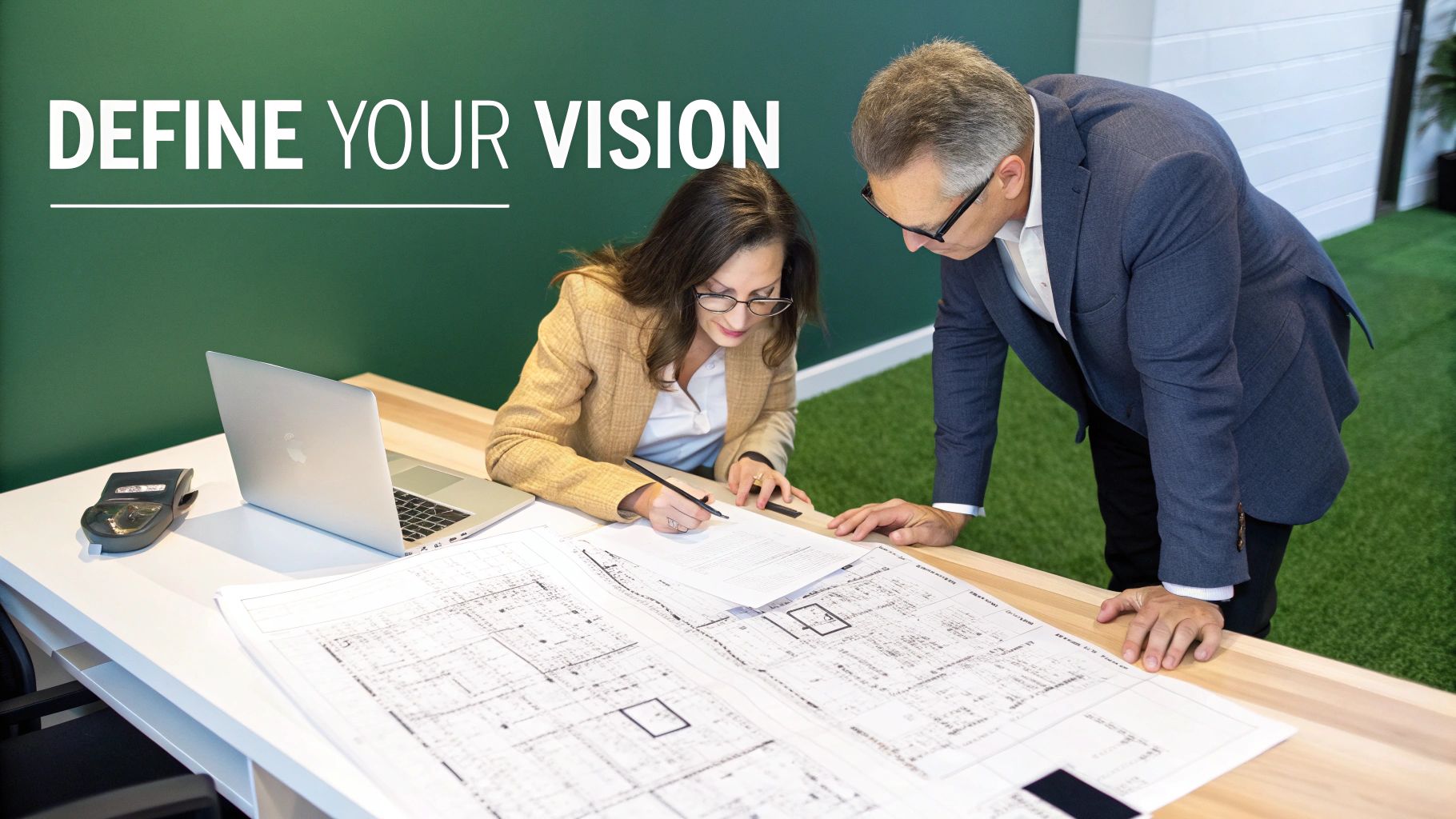
Before you even think about picking up the phone to call an architect, the most critical work needs to happen in-house. A fuzzy concept like "a new office building" isn't a starting point; it's a recipe for confusion. To find a firm that can nail your vision, you have to define that vision with absolute clarity first.
This isn't about picking out paint colors. It's about nailing down your business objectives, getting real about the budget, and listing out every functional need.
Think of it as creating a detailed project brief. This document becomes your project's constitution, the single source of truth that keeps everyone—you and your future architect—on the same page from day one. Skipping this step is asking for trouble: miscommunication, scope creep, and a final building that doesn't do what you needed it to do. You're the expert on the problem you're trying to solve; a successful project starts there.
Defining Your Project Scope and Goals
First things first, you need to pin down the "what" and the "why" of your project. Are you building a new headquarters to become a talent magnet? Breathing new life into a historic property to launch a boutique hotel? Or are you developing a mixed-use space to kickstart a neighborhood's revival? Each of these goals demands a completely different design approach.
For example, a retail developer trying to boost foot traffic is going to obsess over visibility, easy access, and a storefront that practically pulls people in off the street. On the other hand, a company building a logistics center will be all about operational flow, truck circulation, and materials that can take a beating. Your business goals are the compass for the entire architectural process.
To get this on paper, it's helpful to answer a few key questions:
- Primary Business Objective: What’s the number one thing this project must achieve? Maybe it's increasing production capacity, fostering better team collaboration, or simply maximizing rental income.
- Target Audience: Who is this space for? Get specific. Think about the customers, employees, tenants, and even the local community who will interact with it.
- Functional Needs: What are the absolute non-negotiables? This could be specific square footage for different teams, hookups for specialized equipment, or ensuring certain departments are right next to each other.
- Future Growth: Where do you see the business in five or ten years? A smart design doesn't just solve today's problems; it leaves room for future expansion or changes.
A project’s success isn’t just measured by its size or the materials used. It's measured by its ability to solve a real business problem. A great commercial architect doesn’t just design buildings; they design solutions that drive revenue, improve efficiency, and build your brand.
Understanding Your Financial Realities
Once your goals are set, it’s time for a reality check. A clear, honest budget is one of the most important things you can give a potential architect. And it’s not just about the construction cost. You need to account for the total project cost.
This includes all the "soft costs"—things like permit fees, engineering studies, legal help, and land surveys. These can easily add a huge chunk to the overall budget. And please, don't forget a contingency fund. Plan for 5-10% of the construction cost to cover the unexpected hiccups that always pop up.
Being upfront about your budget from the get-go allows an architecture firm to give you real, actionable feedback. They can tell you what’s possible, suggest different materials or strategies, or even propose a phased approach to help you hit your goals without breaking the bank. That early financial honesty saves everyone a ton of time and builds a partnership on a foundation of trust.
Before you start interviewing firms, take the time to answer the key questions below. Having this information organized will make your initial conversations far more productive.
Project Clarity Checklist Before You Hire
Use this checklist to define essential project details before starting your search for a commercial architecture firm.
| Checklist Item | Key Questions to Answer | Why It's Critical |
|---|---|---|
| Business Goals | What is the primary business problem this project solves? What does success look like in 2-5 years? | Aligns design with business outcomes, not just aesthetics. |
| User Profile | Who will use this space daily (employees, customers, tenants)? What are their specific needs and workflows? | Ensures the design is functional and user-centric from the start. |
| Site Information | Do you own the land/building? What are the address, zoning restrictions, and known site constraints? | Provides immediate context for feasibility, code navigation, and initial design concepts. |
| Total Project Budget | What is the all-in budget, including construction, soft costs (fees, permits), and contingency? | Sets realistic financial guardrails and helps firms propose viable solutions. |
| Project Timeline | What is your ideal start date and desired completion/occupancy date? Are there hard deadlines? | Helps assess a firm's availability and capacity to meet your schedule. |
| Key Stakeholders | Who are the decision-makers on your team? Who will be the primary point of contact for the architect? | Clarifies communication channels and prevents delays from internal indecision. |
Having clear answers to these questions transforms your first meeting from a vague introductory chat into a focused, problem-solving session. You’ll immediately see which firms grasp your vision and are ready to be a true partner in bringing it to life.
Evaluating a Firm's Portfolio and Proven Expertise
A beautiful website and a slick brochure are just the beginning. To really know if a commercial architecture firm can deliver on your investment, you have to dig much deeper than their marketing materials and take a hard look at their portfolio. This isn't just about looking at pretty pictures; it's about finding real proof that they've solved business problems similar to yours.
You’re looking for a firm with a proven track record, not just in design, but in actually getting things built and solving the inevitable problems that pop up along the way. Look for projects that mirror yours in scale, complexity, and type. If you’re planning a large-scale adaptive reuse project, a portfolio full of small, new-construction retail spaces isn't the right fit, no matter how stylish they look.
Looking Beyond Aesthetics for Relevant Experience
When you’re looking through a firm's past work, try to see past the polished final photos and focus on the challenges they had to overcome. Did they successfully navigate a thorny rezoning process for a mixed-use development? Have they managed to secure historic tax credits for a preservation project? These are the skills that ultimately protect your budget and timeline.
A strong portfolio shows you both their range and their specific expertise. You should be able to find clear examples that line up with what you need:
- Project Type: Do they have a lot of experience in your specific sector, whether that’s healthcare facilities, industrial warehouses, or multi-family housing? Each one has its own unique codes, user needs, and operational headaches.
- Scale and Complexity: Has the firm managed projects with budgets and square footage similar to yours? A team that’s used to handling $50 million projects thinks and operates very differently from one that typically handles smaller commercial upfits.
- Specialized Skills: Look for proof of expertise in the areas that matter most to your project. This could be anything from sustainable design certifications to approvals from historic preservation boards or figuring out tricky site logistics in a dense downtown area.
Getting a real feel for a firm's capabilities means reviewing a wide range of their work. A great way to do this is to view examples of architectural works to see how they’ve tackled different challenges with creative, yet practical, solutions. This kind of deep dive helps you understand how they think and solve problems.
Asking the Right Questions About Past Projects
Once you've looked through their portfolio, it's time to ask targeted questions that get to the story behind the images. A good firm won't hesitate to be transparent about their successes and the challenges they had to work through. If you get vague answers, that’s a major red flag.
Don’t just ask what they built. Ask how they built it and what the results were. This is how you find a true partner, not just someone you hire to draw up plans.
A firm’s portfolio should do more than just show off finished buildings. It should tell a story of partnership, problem-solving, and real, measurable success. Look for the narrative behind the architecture—how did their design actually impact the client’s bottom line, the user experience, or the community?
To get the full picture, you have to drill down with specific questions. Use these as a starting point during your interviews to get a sense of their real-world capabilities and how they work with clients.
Questions That Uncover True Expertise
- "Can you walk me through a project similar to ours, from the initial idea to the day it opened? What were the biggest hurdles you ran into?" This question gets right to their process and shows how honest they are about the tough stuff.
- "What was the original budget for that project, and what was the final cost? Can you explain why they were different, if they were?" This is a direct, no-nonsense way to see how well they manage money and control costs.
- "For [specific project], how did your design decisions directly help the client achieve their main business goals?" This tells you if they think like business partners or just as designers.
- "Could you put me in touch with two or three clients from projects of a similar scope?" Talking directly with past clients is the best verification you can get. Ask those references about communication, how responsive the firm was, and the ultimate question: would they hire them again?
By digging into the details of their past work, you get past subjective feelings and start gathering hard evidence of their ability to deliver. A commercial architecture firm with a portfolio of relevant, successfully completed projects—and happy clients to back it up—is one that can confidently guide your investment to a profitable outcome.
Understanding the Commercial Project Development Process
Bringing a commercial building from an idea to a tangible asset is a seriously complex journey. You’re not just hiring a designer; you’re bringing on a strategic partner to guide you through every phase, making sure your vision becomes a functional and, most importantly, profitable reality. A great commercial architecture firm anticipates challenges and solves problems long before they have a chance to blow up your budget or timeline.
Think of it as a marathon, not a sprint. Every stage, from initial sketches to the final walkthrough, builds on the last. One misstep early on can create a domino effect of costly problems. A proactive architect is your first line of defense, managing all the intricate details right from the get-go.
This kind of expert management is more critical than ever. The global architecture, engineering, and construction (AEC) market is projected to hit an incredible $16.3 trillion by 2025. We're also seeing nonresidential construction starts jump by 6% year-to-date. This boom, especially in hot sectors like data centers, means the development landscape is only getting more complicated.
Site Analysis and Feasibility Studies
Before a single line is ever drawn, the success of your project is often decided by its location. The very first thing your architect will do is a deep dive into site analysis and feasibility. This is way more than just glancing at a property map.
They'll dig into zoning laws, land-use restrictions, and any potential environmental red flags. Is the site in a floodplain? Are there easements or utility right-of-ways that will dictate where you can build? Answering these questions upfront saves you from massive headaches later. For instance, a firm might discover that a seemingly perfect parcel has terrible soil conditions, requiring an expensive and complex foundation—making a different site a much smarter investment.
Navigating Zoning and Regulatory Hurdles
Every city and county has its own tangled web of zoning ordinances, building codes, and review boards. This is where an architecture firm with deep local roots becomes invaluable. They know the people at the planning department and can anticipate what review boards, like a Historic Preservation Commission, will be looking for.
Imagine you want to build a sleek, modern retail space right in the middle of a historic downtown district. A good architect knows exactly how to design a building that meets your commercial needs while also respecting the strict aesthetic guidelines of the preservation board. They handle the mountain of paperwork, show up to the public hearings, and advocate on your behalf, which dramatically smooths out the approval process.
An experienced architect doesn't just react to code requirements; they design with them in mind from the start. This integrated approach ensures the final building is not only compliant but also efficient, safe, and aligned with your long-term goals.
The evaluation process below shows how to spot a firm that can really handle these complexities.
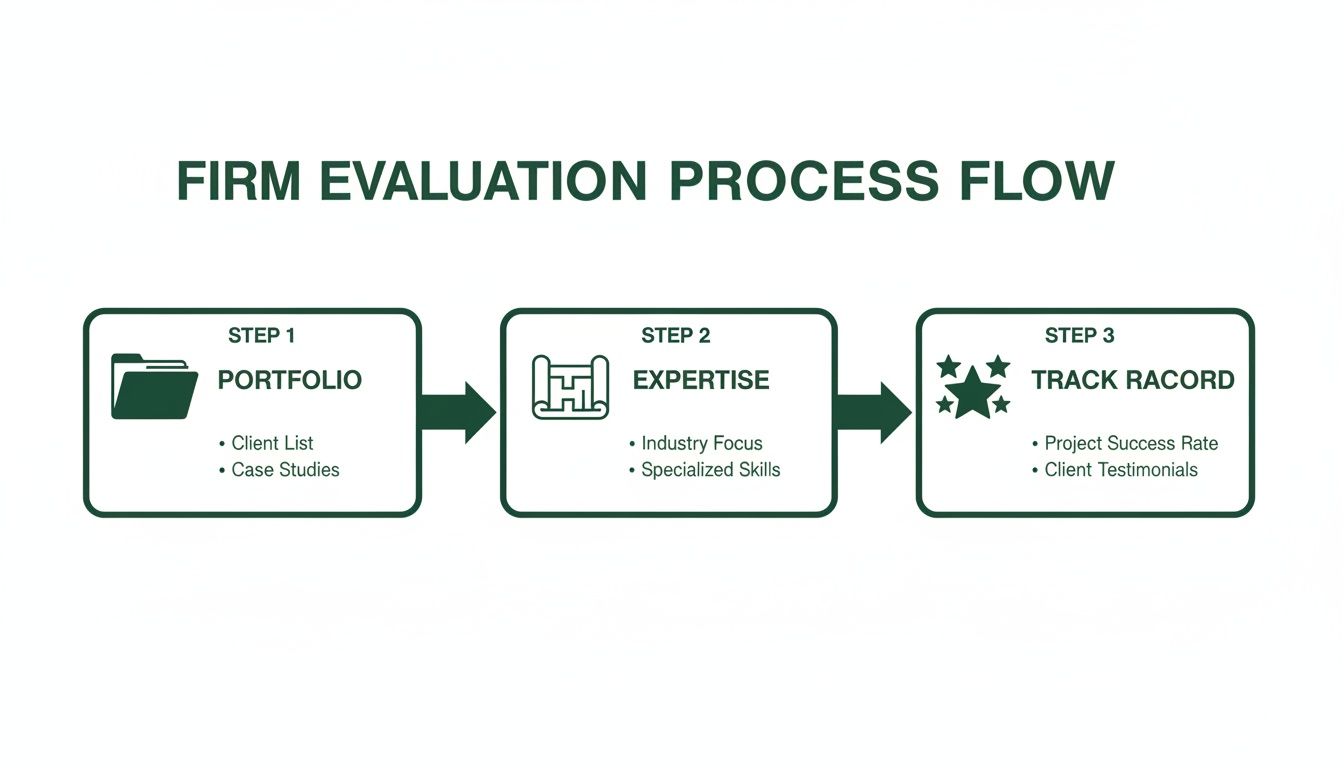
This highlights how a firm's past work, specific expertise, and proven track record all connect to create a successful project outcome.
From Design Development to Construction Administration
Once you've cleared those early hurdles, you get to the fun part: the design phases. This is where your architect collaborates with you to translate your vision into a highly detailed set of construction documents—the blueprints the contractor will use to bring your project to life.
These documents are incredibly specific and cover everything imaginable:
- Structural Systems: The building's entire skeleton, from the foundation to the roof beams.
- Mechanical and Electrical Plans: The full layout for HVAC, plumbing, and electrical systems, which is critical for operational efficiency and meeting modern energy codes.
- Material Specifications: Detailed callouts for every single finish, from the type of brick on the outside to the brand of flooring inside.
But the architect’s job isn’t over when the shovels hit the ground. During the construction administration phase, they become your eyes and ears on-site. They make regular visits to check on progress, answer the contractor’s questions, review payment applications, and make sure the work is being done exactly as planned.
This oversight is your best insurance policy against construction errors or cut corners. For a deeper look into the many facets of bringing a commercial project to life, you can Explore insights on commercial project development from the Timbercloud blog. This constant involvement is what protects the quality and integrity of your investment, all the way from groundbreaking to grand opening.
Creating Value Through Adaptive Reuse and Preservation
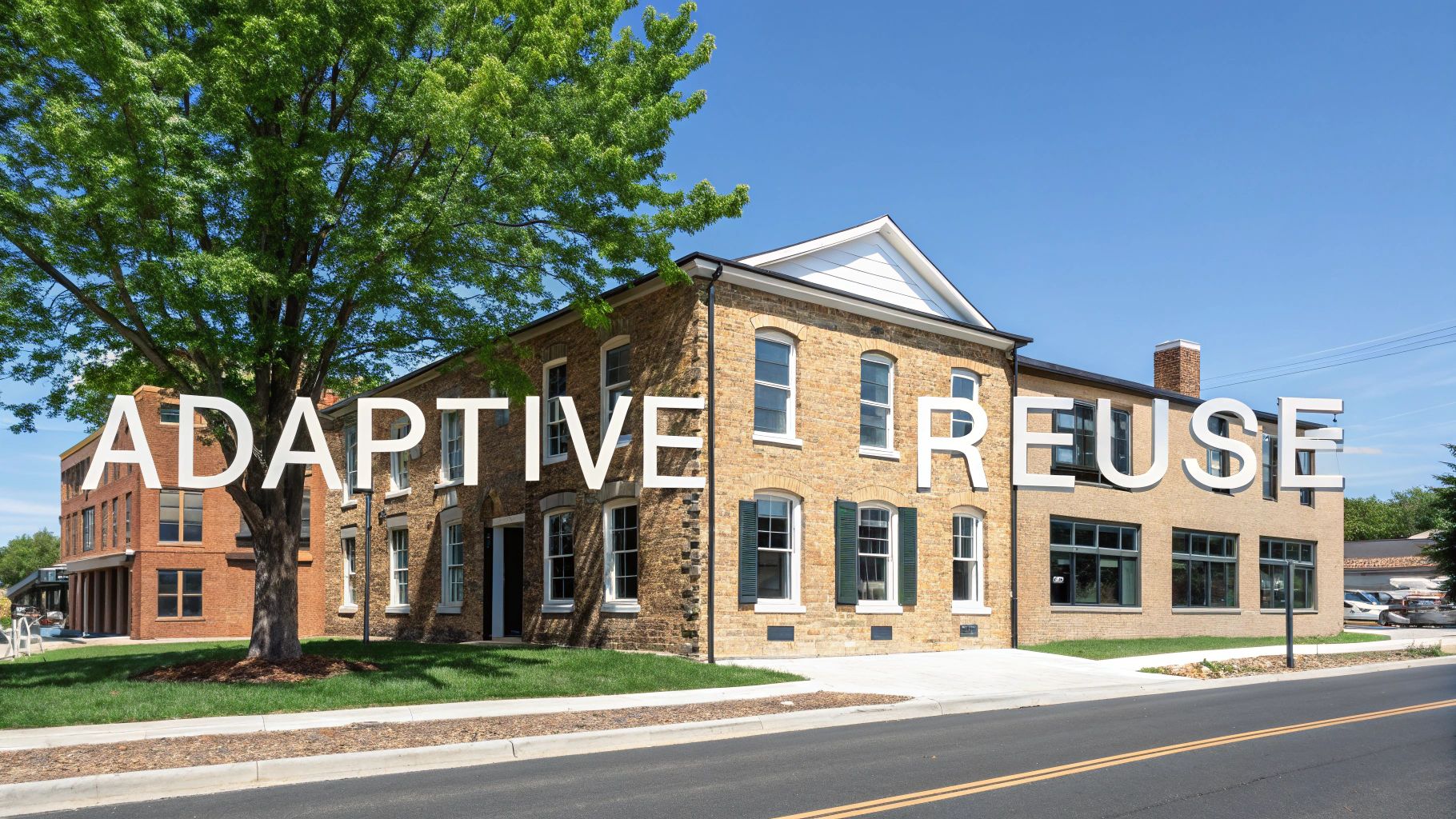
It's easy to assume that the best path forward is a clean slate. But in commercial development, starting from scratch isn't always the smartest or most profitable move. There’s a massive amount of untapped value sitting in our existing building stock.
This is where adaptive reuse comes in. It’s the art of taking an old building and giving it a completely new purpose. Imagine that old, forgotten factory on the edge of town. A skilled architecture firm can see its potential, transforming it into modern lofts, a boutique hotel, or a bustling retail hub.
This isn't just about saving a piece of local history; it's a strategic move. You’re preserving the unique character that new construction struggles to replicate, and you're doing it in a way that makes financial sense. Giving an old building a new life can extend its usefulness by another 50 to 75 years, often for less than the cost of demolition and a new build.
The Financial and Community Benefits
When you choose to repurpose a building, you're making a decision that pays off on multiple fronts. The existing structure—the foundation, the frame, the exterior shell—represents a huge head start in both materials and labor costs. In many cases, the project timeline can be significantly shorter than building from the ground up.
But the real magic happens when the project is finished. Consumers and tenants are hungry for spaces with a story. That authenticity and character translate directly into tangible returns:
- Higher Lease Rates and Property Values: Those unique, historic spaces almost always command premium rents and sale prices.
- Faster Lease-Up Times: A distinctive building generates buzz and attracts tenants far more quickly than a generic new box.
- Positive Community Perception: Saving a local landmark wins you a lot of goodwill, which can make getting approvals much smoother.
Adaptive reuse projects aren't just renovations; they're economic engines. By turning underutilized properties into valuable assets, they create jobs, boost the local tax base, and can breathe new life into entire neighborhoods, turning forgotten corners into destinations.
This approach is becoming more and more central to the industry. Sustainability is a major driver, and as the global commercial building market is projected to grow from USD 215.13 billion in 2025 to USD 273.97 billion by 2029, repurposing existing structures just makes sense. Firms that specialize in adaptive reuse are set to lead the way. If you want to dig deeper into these numbers, you can explore the architecture industry outlook.
Honoring Heritage While Modernizing for the Future
Pulling off an adaptive reuse project takes a very specific blend of skills. A commercial architecture firm with this expertise is part historian, part innovator. Their first step is always a deep dive into the building’s past—researching its original materials, construction methods, and historical significance.
This understanding allows them to respect the building’s soul while carefully weaving in modern necessities. They know how to integrate new HVAC, electrical, and plumbing systems without destroying the historic fabric that makes the building special. They are also masters at navigating the complex web of approvals from historic review boards and preservation commissions.
Unlocking Financial Incentives Through Preservation Expertise
Here’s one of the biggest reasons to bring in an expert: money. A preservation-focused architect knows how to unlock significant financial incentives that can completely change a project's pro forma. Many local, state, and federal programs offer grants and tax credits to encourage the preservation of historic buildings.
An experienced firm is your guide through this often-confusing landscape. They can help you secure funding that dramatically lowers your initial investment and boosts your overall ROI. Their expertise covers:
- Identifying eligible tax credit programs and managing the entire application process.
- Preparing all the documentation needed to prove historical significance.
- Ensuring the design and construction follow the strict standards required to qualify.
With this specialized knowledge, your architect can transform what looks like a challenging historic property into a profitable landmark asset. They don't just save a building—they unlock its full economic potential.
Asking the Right Questions (And Spotting the Red Flags)
Once you’ve narrowed down your list, the interview is where the rubber meets the road. This is your chance to get a feel for the people behind the portfolio. Are they a cultural fit? Do they get your business? A great commercial architecture firm becomes an extension of your team, not just another vendor you have to manage.
You’re looking for a true partner here. The conversation should go way beyond just fees and schedules. You need a team that listens, understands what success looks like for you commercially, and can clearly articulate how they’ll protect your investment from start to finish.
Questions That Get to the Heart of Their Process
The best firms aren't just creative; they're systematic. They have a well-oiled machine for communication, problem-solving, and everything in between. Their answers should feel concrete and reassuring, not fluffy.
- How do you keep your clients in the loop? What’s your typical response time? Don't settle for a vague "we'll keep in touch." A solid answer will mention specific tools, like project management software, and a regular meeting cadence, like a standing weekly call.
- Give me an example of a time a project went sideways—a surprise zoning issue or a major contractor mistake. How did you handle it? This is where you see their real-world problem-solving chops. A confident, experienced team will have a story ready to go, showing you how they navigate chaos under pressure.
- Who will be my day-to-day contact? And who is the final decision-maker on your end? You need to know you won’t be handed off to a junior staffer after the ink is dry on the contract. Make sure you have a clear line to the people who can actually make things happen.
These kinds of questions help you picture exactly what it will be like working with them when things inevitably get complicated.
Talking Money and Stability
A firm's design vision means nothing if they can't stick to a budget or are on shaky financial ground themselves. In the current economic climate, you have to be extra vigilant here.
Let’s be honest, the market has seen some turbulence. The AIA/Deltek Architecture Billings Index, a key indicator for commercial construction, clocked in at 43.2 in April 2025, showing a continued slowdown in billings. That said, it’s not all doom and gloom. Regional performance varies wildly, with some areas, like the South, showing much more resilience. You can dig into the specifics by checking out the latest ABI report from AIA Chicago.
Key Takeaway: A firm that gets defensive about your budget questions or can't explain their cost-control process is a massive risk. You want a team that treats your money like it’s their own.
Learning to Spot the Warning Signs
Listening for the wrong answers is just as important as asking the right questions. Some responses (or lack thereof) should set off alarm bells immediately.
Here are a few classic red flags I've learned to watch for over the years:
- Vague, Canned Answers: If you ask for a specific example and they give you a generic, textbook response, it often means they don't have the hands-on experience you need.
- All Art, No Commerce: Is the team only jazzed about the building's aesthetics? If they aren't asking you sharp questions about your revenue model, operational flow, or customer experience, they aren't a true commercial partner.
- "We'll Get You Those References…": A top-tier firm is proud of its work and will have a list of happy clients ready to go. Any hemming and hawing here is a major warning.
- The Overly Agreeable Architect: Be wary of the "yes-man." A good architect should push back, challenge your assumptions, and bring new ideas to the table. You're hiring them for their expertise, not just to draft up your every command.
Picking your commercial architecture firm is one of the most critical decisions you'll make. By digging deep with insightful questions and keeping an eye out for these red flags, you can find a partner who is transparent, capable, and genuinely invested in seeing your project succeed.
A Few Common Questions Before You Sign the Dotted Line
Once you've narrowed down your list to a top contender, a few practical questions almost always pop up. It's smart to get these answered before you sign any contracts. Clearing the air on these points early on prevents a lot of headaches and makes for a much smoother partnership down the road.
Here’s a look at the questions we hear most often from developers and property owners.
How Do You Structure Your Fees?
This is the big one, and there’s no single answer. Commercial architecture fees usually fall into one of three buckets, and the best fit really depends on your project's size and complexity.
- Percentage of Construction Cost: This is pretty common. The fee is a set percentage—often in the 5-15% range—of the total construction budget. It’s straightforward, but if your construction costs go up, so does the architect's fee.
- Fixed Fee (Stipulated Sum): Here, you agree on a flat fee for a very specific scope of work. I find this works best when the project is clearly defined from the get-go. It gives you cost certainty, which is a huge plus.
- Hourly Rate: This is your classic "time and materials" setup. It's great for smaller jobs or when the full scope is still a bit fuzzy. You get flexibility, but it’s harder to predict the final number.
No matter the structure, always ask for a detailed proposal. It should spell out exactly what's included in their base fee—things like initial designs, construction documents, and help with permitting. The most important part? Get them to clarify what counts as an "additional service." That's where surprise bills come from.
A good proposal is a road map, not a puzzle. Your architect should be able to give you a crystal-clear breakdown of their fees and services. If it feels vague, press for more detail until you know exactly what you’re paying for.
What’s Your Role Once Construction Starts?
An architect’s work is far from over when the drawings are done. Once the shovels hit the ground, they move into a crucial phase called construction administration.
Think of them as your eyes and ears on the job site—your quality control expert.
Their job is to make sure what's being built actually matches the plans you approved. This means they’ll be on-site observing progress, answering technical questions from the contractor, and making sure the build quality is up to snuff. They also review the contractor’s payment requests, so you're only paying for work that’s been completed correctly. If changes are needed, they manage that process to protect the design and your budget. This oversight is absolutely essential.
What Else Do I Need to Budget For?
The architect's fee and the contractor's bid are the heavy hitters, but they're not the whole story. You also have a list of "soft costs" that can add up fast if you’re not prepared for them.
I've seen projects get into financial trouble because these were overlooked. Make sure your budget includes line items for:
- Land surveys and soil testing (geotechnical reports)
- City permit and review fees
- Structural, mechanical, and civil engineering consultants
- Legal and financing expenses
- Specialty inspections or material testing
And here’s a pro tip: always, always have a contingency fund of at least 5-10% of your total construction cost. This isn't "extra" money; it's your safety net for the inevitable surprises that pop up during any project.
Ready to build a partnership based on clarity and expertise? At Sherer Architects, LLC, we guide our clients through every question and decision, ensuring your project is built on a foundation of trust. Let's start the conversation about your next commercial, adaptive reuse, or historic preservation project.