
Before you even think about shortlisting commercial architecture firms, the most important work you'll do is internal. It all starts with building a rock-solid project brief. This document is your roadmap, turning a back-of-the-napkin idea into a detailed, actionable plan. Get this right, and you'll get accurate proposals from firms that truly understand what you're trying to achieve.
First, Define Your Vision—Then Hire an Architect

Walking into meetings with architects without a clear, documented vision is a classic mistake. It leads to miscommunication, wasted hours, and proposals that miss the mark. The best commercial architecture firms don't just want your business; they want to solve your problem. A thorough brief gives them the details they need to offer realistic feedback, accurate fee structures, and creative solutions.
Think of it this way: your brief is the first filter. It immediately weeds out firms that aren't a good match, saving everyone a lot of headaches. This early planning phase is all about translating your abstract goals into concrete parameters—setting the rules of the game before you invite anyone to play.
From Vague Ideas to Concrete Plans
It’s time to get specific. Vague descriptions won't cut it. "A modern office space" is a start, but it's not a plan.
A better approach is to quantify everything: "An open-plan office for 75 employees, three private executive offices, two conference rooms, and a 500-square-foot collaborative lounge." That’s a description an architect can actually work with.
Your project brief should dig into the details on several fronts:
- Functional Needs: How does the space need to work? Map out the critical workflows. For a restaurant, that means tracking the path from kitchen to table. For a warehouse, it's all about loading dock access and inventory movement.
- Spatial Program: Get down to the numbers. Define the square footage for every single area, and don’t forget the less glamorous spaces like restrooms, storage closets, and mechanical rooms. They all count.
- Aesthetic & Brand: What should the building feel like? Are you going for industrial grit, sleek minimalism, or something more traditional? More importantly, how does the design reinforce your company’s brand and culture?
A well-defined brief is your best defense against scope creep and budget overruns. It aligns everyone from day one and ensures the final design is a perfect match for your financial and operational goals.
Establishing Your All-In Budget
Your budget isn’t just a number; it’s a critical design constraint. A realistic, detailed financial plan gives commercial architecture firms the clear boundaries they need to design a project that’s both beautiful and buildable. Your "all-in" budget has to cover much more than just construction.
Be sure to break it all down:
- Hard Costs: The bricks and mortar—physical construction, materials, and labor.
- Soft Costs: All the professional services, like architectural and engineering fees, permits, legal reviews, and insurance.
- FF&E: The costs for all furniture, fixtures, and equipment.
- Contingency: This is non-negotiable. Set aside a buffer of 10-15% of your total project cost for the inevitable surprises.
Just as important is knowing the difference between your absolute must-haves and your nice-to-haves. This simple act of prioritization is a lifesaver. It empowers an architect to make smart trade-offs if the budget gets tight, protecting the core goals of the project without derailing the whole thing.
How to Find and Vet the Right Architectural Partner

Once you have a solid project brief in hand, the real work begins: finding the right team to execute your vision. Choosing between commercial architecture firms isn't just about a quick online search. It’s more like an investigation, a strategic hunt for a partner whose expertise aligns perfectly with what your project demands.
The global architectural services market is massive—it's projected to hit $249.2 billion by 2025. This isn't just a big number; it signifies a highly competitive field where specialization is everything. It's why firms like Sherer Architects can carve out a niche, developing deep, practical expertise in areas like sustainable commercial design and tricky adaptive reuse projects. You can get a clearer picture of the industry landscape by checking out the latest market data on IBISWorld.
Building Your Initial Longlist
Your first step is to cast a wide, but smart, net. A "commercial architects near me" search will get you started, but the real gems are often found a layer or two deeper. You want to look in places where quality and relevance have already been filtered.
Here are a few proven methods for uncovering top-tier candidates:
- Industry Awards & Publications: Keep an eye on recent award winners from groups like the American Institute of Architects (AIA). If a firm is getting recognized for a project that mirrors your own in scale, function, or market, they should absolutely be on your list.
- Local Business Journals: These publications are a goldmine. They're constantly covering new developments, groundbreakings, and project profiles. Make a note of the architects and design teams behind the projects that catch your eye.
- Drive the Market: This is old-school, but it works. Take a drive around your city and look at the commercial buildings you genuinely admire. A quick property search online or even a call to the building manager can usually tell you which firm designed it.
Building a strong shortlist is about finding proof, not just promises. Look for firms that have already solved the types of challenges your project presents, from navigating local design review boards to executing a flawless historic preservation.
From Longlist to Shortlist
Now it’s time to get critical. The goal is to whittle your list down to three to five top contenders. This is where you move past the polished portfolio photos and start analyzing the substance and strategy behind their work.
When you're digging into their portfolios, ask these tough questions:
- Does the complexity match? Look for evidence that they’ve handled projects with similar moving parts—tricky zoning negotiations, mixed-use components, or challenging site constraints.
- Is their specialty relevant? If you’re planning an adaptive reuse project, how many have they actually completed? A firm that’s done one simple renovation isn’t the same as an expert in historic tax credits and complex structural retrofitting.
- Do they have local wins? A firm’s track record with local planning departments, historic commissions, and review boards is invaluable. Proof that they’ve successfully navigated the very same regulatory hurdles you’ll be facing is a huge advantage.
Selecting the right architect requires a methodical approach. The following table provides a checklist to help you systematically evaluate and compare potential partners, ensuring you cover all the critical bases.
Key Criteria for Vetting Commercial Architecture Firms
| Evaluation Criterion | What to Look For | Red Flags to Watch For |
|---|---|---|
| Relevant Portfolio | Projects of similar scale, budget, and type (e.g., adaptive reuse, new build). | A portfolio filled with residential projects or commercial work in a completely different sector. |
| Local Regulatory Experience | A proven track record of successful approvals with your city's planning, zoning, and historic commissions. | Vague answers about their experience with local codes or unfamiliarity with key city officials. |
| Team Expertise & Chemistry | A dedicated principal, clear project manager, and a team that communicates well and understands your vision. | High team turnover or difficulty getting a straight answer on who will actually be working on your project. |
| Client References | Glowing reviews from past clients with similar projects who praise communication, budget adherence, and problem-solving. | Reluctance to provide references or providing contacts for projects completed many years ago. |
| Design Philosophy | An approach that aligns with your goals—whether it’s sustainability, historic integrity, or cutting-edge modernism. | A rigid, "one-size-fits-all" design style that they try to apply to every project. |
| Technical Proficiency | Expertise in relevant software (BIM, CAD) and an understanding of modern building materials and systems. | Outdated software or a lack of experience with the specific construction methods your project requires. |
Using a structured checklist like this helps you move beyond a gut feeling and make a data-driven decision, setting your project up for success from the very beginning.
The Power of Reputation and Real-World Feedback
Finally, you need to look beyond the firm’s own marketing materials. What do their past clients and industry colleagues really think? Candid feedback is one of the most powerful indicators of how they’ll perform.
Ask for a list of recent clients and actually make the calls. Get specific: How was their communication? Did they stick to the budget? What happened when an unexpected problem came up?
Don't stop there. A firm's reputation among general contractors and engineers is incredibly telling. These are the people in the trenches who know which commercial architecture firms deliver clear, buildable plans and which ones create chaos on the job site. This behind-the-scenes insight is often the most reliable predictor of a smooth and successful partnership.
Mastering the Interview and Proposal Review
You've got your shortlist of firms, and their portfolios look solid. Now for the real test: the interview. This is far more than just a formality. It’s your opportunity to get a feel for how these commercial architecture firms truly operate—how they think on their feet, communicate under pressure, and solve the kinds of messy, real-world problems that never show up in a glossy brochure.
Think of it this way: you’re not just hiring a vendor. You're bringing on a strategic partner for a complex, high-stakes, and often long-term journey. You need to find the team you can trust to have your back when things don't go according to plan, because at some point, they won't.
Questions That Go Beyond the Portfolio
Any firm can walk you through their greatest hits. Your job is to peel back the curtain and understand the process, not just the polished final product. Generic questions will get you generic, rehearsed answers. You have to dig deeper.
Here are a few questions I've found that really reveal how a team works:
- "Tell me about a time a project went sideways because of an unforeseen issue. What was the problem, how did you break the news to the client, and what did you do to fix it?"
- "What does your ideal client relationship look like? How much involvement and what kind of communication do you expect from our team from schematic design through construction?"
- "How do you handle value engineering? Give me a specific example of how you cut costs for a client without gutting the design or sacrificing quality."
- "What's your track record with the local design review board and zoning department? Walk me through your typical process for getting a project through those approvals."
Pay attention to how they answer. Are they speaking in vague hypotheticals or do they have specific stories? A team with real experience will have concrete examples ready to go. That’s the sign of a firm that has been in the trenches and knows how to communicate.
Decoding the Proposal and Fee Structure
After the interviews, the proposals will start rolling in. This is where you put on your analyst hat. A proposal is much more than a price tag; it's a detailed roadmap of what the firm will deliver, and when. If you see vague language or ill-defined scopes, that's a major red flag.
You’ll likely see a few different ways that commercial architecture firms structure their fees. It's important to understand the pros and cons of each.
The most common models are:
- Fixed Fee: A single, all-in price for a very specific scope of work. This gives you budget certainty, which is great, but it can get complicated if the scope needs to change mid-project.
- Percentage of Construction Cost: The fee is tied to a percentage of the final build cost, often in the 5-15% range. This model scales with the project's size, but some owners worry it creates an incentive for the project to cost more.
- Hourly Rates: You're billed for the actual time the architectural team spends on your project. This is perfect for initial feasibility studies, consulting, or smaller projects where the full scope isn't yet known.
When you're comparing proposals, look carefully for what's not included. Are things like 3D renderings, structural engineering fees, or a certain number of design revisions considered "additional services" with a separate price tag? A good, transparent proposal will spell all of this out clearly.
In the end, this decision shouldn't come down to just the lowest number. A slightly higher fee from a firm with a comprehensive scope and a proven ability to solve problems is almost always the smarter long-term investment. This is your chance to find a partner who fits your goals, your budget, and your communication style.
Untangling Contracts and Cutting Through Red Tape
You’ve found your firm. It feels like the hard part is over, but in many ways, the real work is just getting started. Now it's time to formalize the relationship and get ready to navigate the maze of local bureaucracy. This is where your architectural services agreement becomes the single most important document for the project.
Think of it as the blueprint for your professional relationship. It’s not just about the money; it’s about setting crystal-clear expectations to protect everyone involved. A good contract meticulously defines the scope of work, breaking down every phase from initial concepts to overseeing construction. It should also spell out exactly what you’re getting—like drawing sets, 3D renderings, or material specifications—and link those deliverables to a payment schedule. And whatever you do, don't just gloss over the liability clauses. Have your attorney review them with you so you understand exactly what the insurance requirements are.
Reading Between the Lines of the Agreement
When that contract lands on your desk, it’s time to put on your detail-oriented hat. Any ambiguity in the scope is a direct invitation for scope creep, surprise bills, and headaches down the road. You need absolute clarity on what's included in the base fee versus what counts as an "additional service."
Here are a few key areas I always tell clients to scrutinize:
- Reimbursable Expenses: Get a clear list of what costs will be passed on to you. This could be anything from printing large-format drawings to travel or city permit application fees.
- Ownership of Documents: This one surprises people. The architect almost always retains the copyright to their designs. The contract gives you a license to use them for this specific project, but you don't own the drawings themselves.
- Termination Clause: Life happens. Make sure you understand the process and financial penalties if, for whatever reason, you or the firm need to part ways before the project is complete.
A thoughtfully negotiated contract is your best defense against future disputes. It aligns expectations on deliverables, timelines, and payment, setting the stage for a partnership built on trust, not misunderstandings.
From Your Signature to a Building Permit
With the contract signed, a truly experienced firm starts to show its real value by navigating the often-frustrating world of municipal approvals. This process can easily derail a project timeline, and a firm with deep local roots and relationships is worth its weight in gold. They become your advocate, your guide, and your translator in front of zoning boards, planning commissions, and historic review committees.
It’s one thing to design a beautiful building; it’s another to get it approved. A sharp architect knows precisely how to frame a request for a zoning variance, using solid design principles to build a compelling case. They can anticipate the kind of pushback a design review board might have and will prepare a presentation that proactively addresses those concerns. This is particularly crucial when you're working with the best in the business. In the US, the field is led by giants like Gensler, Perkins&Will, and HKS, who are consistently ranked among the top 300 architecture firms. You can see more about the leading US architecture firms of 2025 on Architectural Record. Their teams have the regulatory savvy to not only get projects approved but also to secure things like preservation grants or tax credits.
That kind of on-the-ground expertise is what prevents months of costly delays and keeps your project on track.
Ensuring a Successful Project From Design to Completion
Signing the contract isn't the finish line—it’s the starting gun for a deep, collaborative partnership. A successful project truly hinges on how well your team and your chosen commercial architecture firms work together, from the initial napkin sketches all the way to the final punch list.
This journey is built on a foundation of clear communication and a shared understanding of the process.
It all starts with schematic design, where your architect translates your vision into broad-stroke concepts, site plans, and initial floor layouts. From there, we move into design development, where those big ideas are refined with specific materials, building systems, and structural details. Finally, this all evolves into a comprehensive set of construction documents—the detailed blueprints and specifications your contractor will use to bring everything to life. Each phase needs your input and decisive action to keep the momentum going.
Fostering a Productive Partnership
To keep things running smoothly, you need to establish clear rules of engagement right from day one. Set up a predictable communication rhythm, whether it’s a standing weekly call or a shared project management portal. Transparent decision-making is just as important. Figure out who has the final say on changes and, crucially, how those decisions will be documented to prevent costly missteps down the road.
Your architect’s role during the construction phase is to be your advocate on-site. They conduct regular site visits to ensure the work conforms to the design documents, answer contractor questions, and help solve the inevitable field issues that arise, protecting the integrity of your original vision.
This workflow gives you a clear picture of the key stages leading up to construction, from getting the contract signed to final approval.
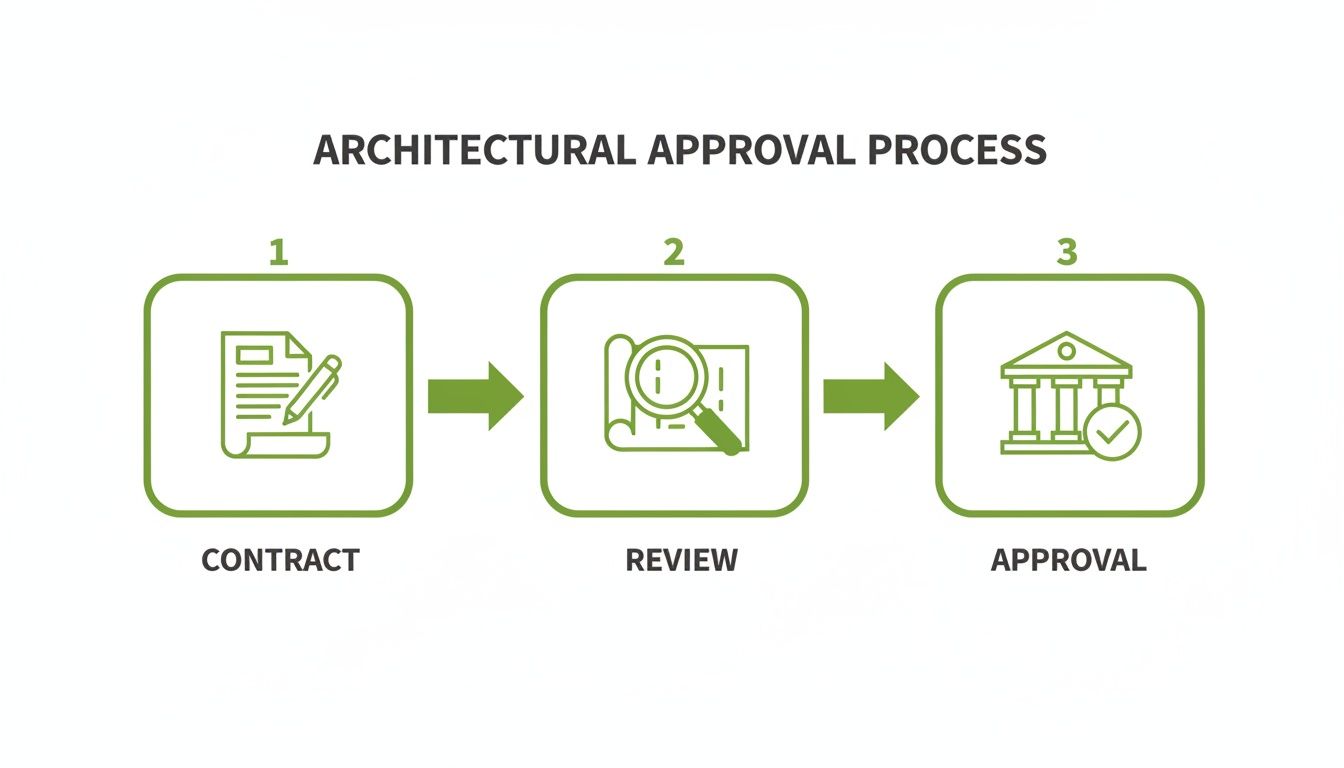
This streamlined process really highlights how a structured approach keeps everyone aligned before you even break ground.
Avoiding Common Project Derailers
Even the best-laid plans can go sideways without proactive management. Here’s a quick guide to identifying common challenges in commercial architectural projects and implementing strategies to prevent them from becoming major headaches.
| Common Pitfall | Potential Impact | Preventative Strategy |
|---|---|---|
| Scope Creep | Uncontrolled additions lead to budget overruns and timeline delays. | Document the original scope meticulously. Evaluate every change request against the initial budget and goals before approval. |
| Budget Overruns | Financial strain, project stalls, or compromises on quality. | Establish a detailed budget with a contingency fund. Your architect should provide regular cost updates and suggest value-engineered alternatives. |
| Communication Gaps | Misunderstandings cause rework, missed deadlines, and friction between teams. | Set up a regular meeting schedule and use a central platform for all project communications. Always confirm key decisions in writing. |
By anticipating these issues, your team can stay ahead of problems instead of just reacting to them. A good firm will help you navigate these challenges from the very beginning.
As your project nears completion, don’t forget the details that make a building truly functional and appealing. For instance, a comprehensive guide to signage for commercial buildings can be an invaluable resource for an element that is often an afterthought. A detail-oriented commercial architecture firm will integrate this into the design from the start.
This kind of comprehensive planning is why the industry continues to expand. The architectural services market is projected to grow from $214.19 billion in 2025 to $275.16 billion by 2029, a trend fueled by urbanization and infrastructure investment. By understanding the architect's role throughout construction, you can ensure the final building is a faithful execution of your investment.
Common Questions About Hiring Commercial Architecture Firms
Even for seasoned developers, bringing an architectural partner on board can kick up a lot of questions. Getting clear, honest answers from the get-go is the best way to move forward with confidence and sidestep the kind of misunderstandings that can derail a project timeline.
Here are a few of the most common questions we get from business owners and investors just starting the process.
Architect vs. Design-Build Firm: What’s the Difference?
This is one of the first hurdles. It's easy to get the two confused, but their roles are fundamentally different.
When you hire an architect, you're hiring an independent, licensed professional whose sole job is to design your project and represent your best interests. They are your advocate. A design-build company, on the other hand, is a single business that handles both the design and the construction. It's a one-stop-shop.
With a dedicated architect, you get an expert who is loyal only to you and the quality of the final product. A design-build firm can simplify communication by giving you one point of contact, but be aware that since the designer and builder are on the same team, it can create a potential conflict of interest if problems pop up during construction.
How Fees and Involvement Work
Money is always a big question. How do architecture firms actually charge for their work? It almost always comes down to one of three common models:
- Percentage of Construction Cost: This is a classic model, where the fee is a percentage of the final build cost, typically ranging from 5-15%.
- Fixed Stipulated Sum: A flat fee. This works best when the scope of the project is crystal clear from the beginning.
- Hourly Rate: You'll see this most often for smaller consultations or for projects where the full scope is still a bit fuzzy.
No matter the model, your contract needs to spell out the fee structure in black and white, detailing exactly what services are included. As you research firms, you’ll find many are structured as Limited Liability Companies (LLCs). If you're unfamiliar with what that means for their operations, it’s worth a quick read on understanding the meaning of an LLC.
Your involvement is absolutely crucial in the early stages—what we call programming and schematic design. This is where we're downloading your vision, your budget, and how you need the space to function. A great firm won't just disappear; they'll establish a clear communication plan to pull you in at key milestones without burying you in daily details.
What About Historic Tax Credits?
For clients with older buildings, this question is a big one. An architect with deep experience in historic preservation is non-negotiable for these projects.
They are the experts who know how to navigate the notoriously strict approval processes with State Historic Preservation Offices (SHPOs) and the National Park Service. It's their specific knowledge of documentation, material science, and design standards that successfully secures the tax credits that can make or break the financial viability of your project.
Navigating a commercial build, adaptive reuse, or historic preservation project demands a partner who has been there before and operates with total transparency. At Sherer Architects, LLC, we make it our business to align every piece of the puzzle to deliver results that are not just beautiful, but also enduring and sustainable. Learn how our dedicated approach can bring structure to your vision and maximize your investment.