
A commercial building architect is much more than someone who just draws up blueprints. Think of them as the master strategist who turns your business vision into a real-world, functional, and profitable asset. Their job is a unique blend of creative design and technical discipline, making sure your project successfully clears every hurdle—from complex zoning laws to construction challenges—all while staying on budget.
Your Architect Is More Than Just a Designer
It’s a common mistake for developers and business owners to see an architect's role as being just about aesthetics and floor plans. And while great design is absolutely part of the equation, a truly skilled commercial architect acts more like a business strategist who happens to be an expert in building design. They are your primary advocate and the master coordinator who brings all the complicated pieces of the development puzzle together.
Here’s an analogy: building a commercial property is like launching a major new product. You'd never do that without a product manager who understands the market, manages the budget, and ensures the final product works for its users. Your architect plays that exact role for your physical investment.
The Strategic Partnership Model
When you start seeing your architect as a strategic partner, the whole dynamic changes. They’re no longer just a vendor you hire to deliver drawings. They become a core part of your team, laser-focused on maximizing the long-term value of your property. This partnership is all about making sure every decision supports your fundamental business goals.
This strategic role involves:
- Aligning with Financial Goals: Making sure the design supports your ROI, whether that’s through maximizing leasable space, creating operational efficiencies, or elevating your brand.
- Mitigating Risk: Spotting and solving potential problems—like site restrictions, tricky building codes, or contractor issues—before they turn into expensive headaches.
- Future-Proofing Your Asset: Designing a building that can adapt to changing market demands, new technologies, and future tenant needs, which extends its lifespan and value.
A great commercial building architect doesn’t just ask, "What do you want to build?" They ask, "What does this building need to achieve for your business?" That single shift in perspective is what separates a decent building from a high-performing investment.
Blending Vision with Practical Execution
The real magic of an experienced commercial architect is their ability to connect an abstract idea to a concrete reality. They are the conductor of a complex orchestra, making sure engineers, contractors, city officials, and investors are all playing from the same sheet of music.
It’s a delicate balancing act between creative vision and disciplined execution. The architect has to protect the project's aesthetic and functional goals while being relentlessly practical about the hard realities of physics, regulations, and budgets. They take your big-picture vision and translate it into a precise set of instructions that a construction team can build perfectly.
Without that expert guidance, even the most brilliant concept can get bogged down by logistical nightmares and regulatory red tape, turning a promising venture into a project full of costly delays and frustration.
How Architects Turn Vision Into Reality
A commercial building architect is the essential bridge between a great idea and a real-world, high-performing asset. They guide a project through a structured journey that turns complexity into clarity, taking it from a rough vision to a physical reality. This isn't just about drawing plans; it's a disciplined approach to managing risk, creating value, and ensuring the finished building is compliant, efficient, and perfectly suited for its purpose.
The work starts long before anyone breaks ground. It begins with a deep dive into the project's core elements to build a solid strategy that informs every single decision down the line.
The diagram below shows how an experienced commercial building architect moves a project from an initial idea, through strategic planning, to the creation of a valuable physical asset.
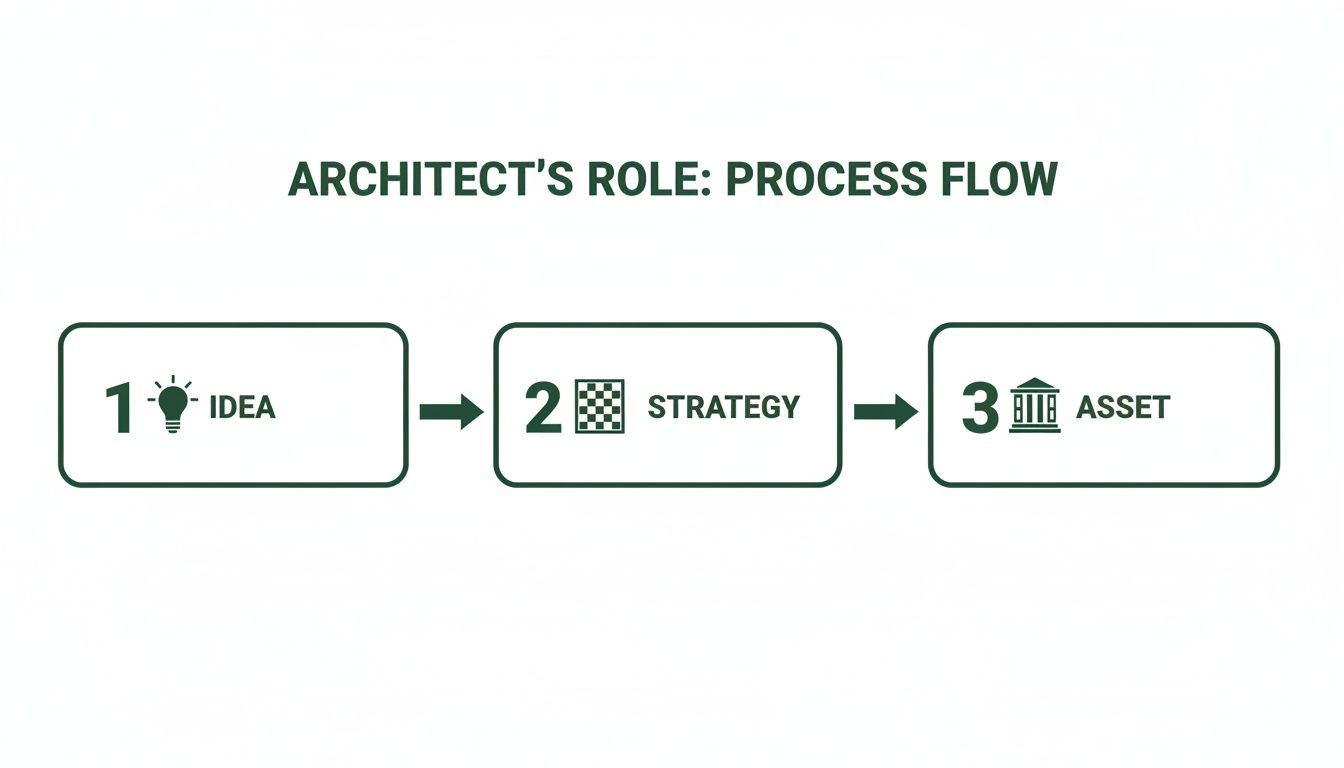
As you can see, an architect’s main job isn't just design—it's the strategic translation of a concept into a profitable, functional structure.
Mastering Site Analysis And Optimization
The very first step is a thorough site analysis. Here, the architect acts like a detective, uncovering all the hidden potential and limitations of a piece of land. They study everything from sun angles and prevailing winds to soil conditions and traffic patterns.
This isn't about just plopping a box on a lot. It’s about orienting the building to maximize natural light, minimize energy costs, and create the best possible experience for everyone who uses it. For example, simply positioning windows to capture morning sun can slash heating bills, while a well-planned entrance can streamline how cars and people move. This careful upfront work prevents expensive mistakes later and makes sure the building and its environment work together.
Navigating The Regulatory Maze
One of the most valuable things a commercial architect does is navigate the maze of zoning laws, building codes, and local rules. Every town has its own, often confusing, set of regulations about what you can build, where you can build it, and how it must be done. Trying to handle this without an expert is a classic recipe for delays and budget blowouts.
An experienced architect understands the local regulatory landscape inside and out. They anticipate potential hurdles with Design Review Boards or historical commissions, preparing thorough documentation and advocating on the client's behalf to secure necessary approvals efficiently.
This proactive approach keeps the project on track, saving you time, money, and a ton of frustration. It’s the difference between a smooth permitting process and getting stuck in bureaucratic limbo for months.
From Schematic Design To Construction Documents
Once they have a handle on the site and regulations, the architect moves into the design phases. This is where your vision gets tested and refined against the real world in a highly collaborative process.
- Schematic Design: The architect starts with initial concepts, creating rough sketches, floor plans, and 3D models to explore different options and establish the project's overall look and feel.
- Design Development: These concepts are then polished into a much more detailed set of drawings. The architect works with engineers to weave in the structural, mechanical, and electrical systems, making sure everything fits together.
- Construction Documents: This is the final, most detailed phase. The architect creates the complete set of blueprints and specifications that contractors will use for construction. These documents are legally binding and leave no room for guesswork.
A huge part of how architects transform ideas into functional spaces involves meticulous planning, such as expert strategic office design space planning.
Throughout these stages, the architect constantly juggles three critical elements: your vision, your budget, and your schedule. This hands-on management ensures the final design is not just inspiring but also practical and achievable.
The table below breaks down these core project stages, showing what the architect does and how it directly benefits you.
Key Stages in a Commercial Architecture Project
| Project Stage | Architect's Core Responsibilities | Client Outcome |
|---|---|---|
| Pre-Design & Feasibility | Analyze site potential, research zoning codes, and help define project scope and budget. | A clear, data-backed understanding of project viability and a solid strategic foundation. |
| Schematic Design | Develop initial design concepts, floor plans, and 3D visualizations to explore possibilities. | A tangible visual representation of the project's direction, allowing for early feedback and alignment. |
| Design Development | Refine the design, coordinate with engineers (structural, MEP), and select key materials and systems. | A detailed, integrated design that balances aesthetics, function, and technical requirements. |
| Construction Documents | Create the comprehensive set of technical drawings and specifications for bidding and construction. | A complete and legally sound set of "instructions" for contractors, minimizing ambiguity and risk. |
| Bidding & Permitting | Assist in contractor selection, submit documents to authorities, and navigate the approval process. | A qualified construction team and all necessary legal approvals to begin building. |
| Construction Administration | Act as the owner's representative on-site, observing construction to ensure it matches the design intent. | Quality control and assurance that the final building is constructed to specification and vision. |
By following this progressive path, a commercial building architect methodically turns an initial idea into a fully realized, compliant, and valuable property.
Finding the Hidden ROI in Your Building Design
It's easy to look at architectural fees on a project's balance sheet and just see a big expense. But a savvy developer or business owner knows better—they see it as one of the most powerful drivers of return on investment. The decisions made in the design phase ripple out financially for the entire life of the building, creating value that goes way beyond the initial price tag.
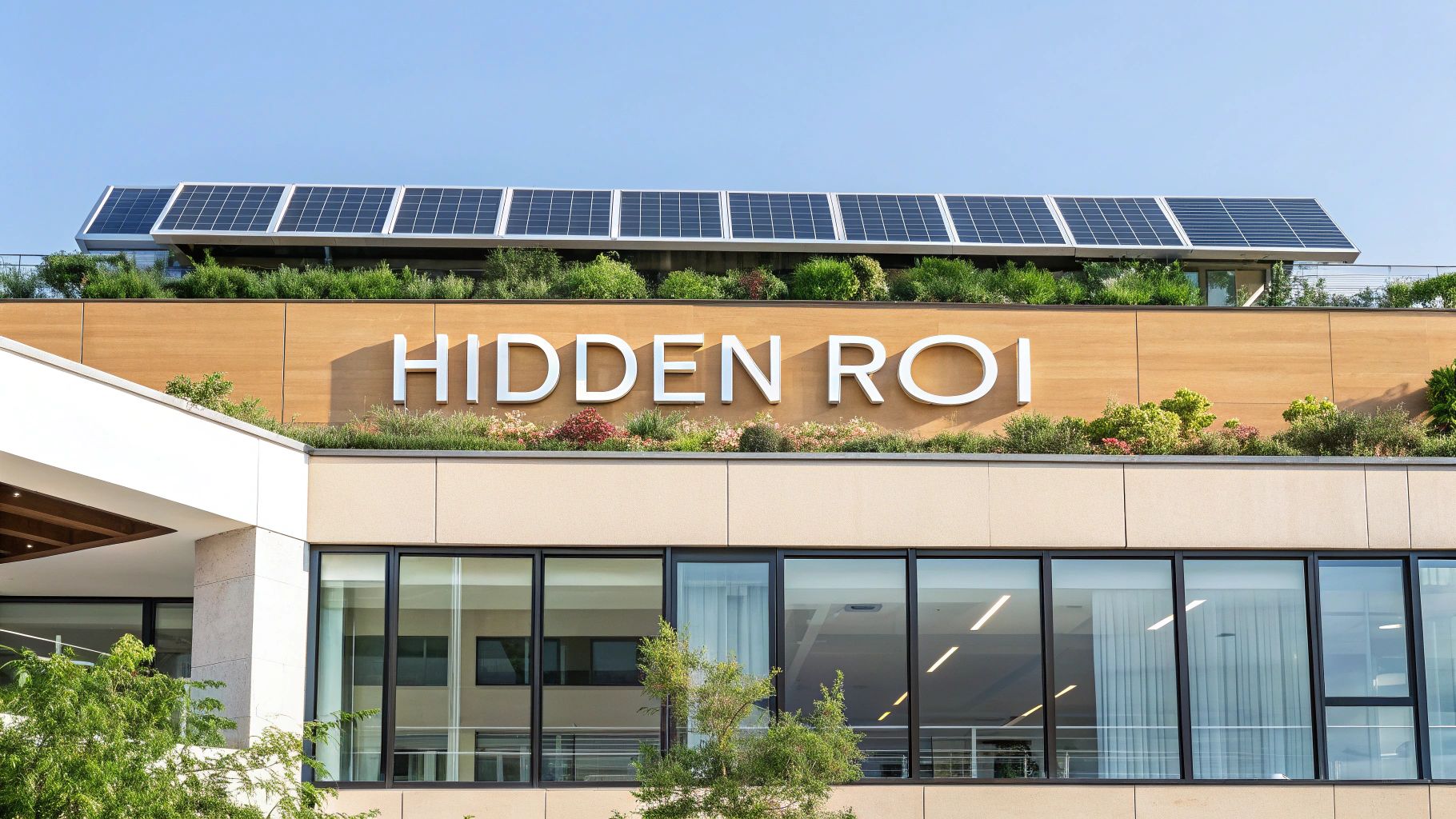
This is where a skilled commercial building architect really earns their keep. They turn a simple structure into a high-performing financial asset by finding hidden ROI in places most people never look—from which way a building faces the sun to the exact materials chosen for its exterior. These choices have a direct line to long-term operating costs and the property's future worth.
Driving Long-Term Savings Through Smart Design
The real ROI in commercial architecture isn't just about what it costs to build. It’s about the Total Cost of Ownership (TCO). An experienced firm like Sherer Architects designs for the long haul, zeroing in on details that slash your operational expenses year after year.
This strategic thinking shows up in a few key areas:
- Energy Efficiency: A well-designed building is a lean machine. Simple moves, like orienting windows to maximize natural daylight or specifying high-performance insulation, can chop a huge chunk off your monthly utility bills.
- Maintenance Reduction: Architects can specify durable, high-quality materials that don't need constant repair or replacement. Choosing the right roofing system or cladding from the get-go can prevent a world of hurt from costly water damage down the line.
- System Optimization: A commercial architect works hand-in-glove with engineers to ensure the HVAC and electrical systems are perfectly sized for the building. This avoids the common—and costly—mistake of installing oversized equipment that guzzles energy.
When you add it all up, a building that’s cheaper to run is simply more profitable. It’s also far more attractive to tenants, creating a positive feedback loop of value.
Future-Proofing Your Commercial Asset
A great commercial building isn't just built for today; it's designed with the next 50 years in mind. This idea of future-proofing is central to an architect's value. They create flexible, durable structures ready to adapt to new technologies, shifting tenant needs, and whatever the market throws at them.
A well-designed commercial building is a resilient asset. Its value isn't just in its current use, but in its ability to adapt and remain relevant for decades, ensuring it continues to generate returns long after it's paid for.
For instance, an architect might design an office with modular interior walls that can be reconfigured over a weekend as a tenant's business evolves. Or they might engineer the structure to support future additions like solar panels or EV charging stations. This adaptability is your best defense against your investment becoming obsolete.
The demand for these thoughtfully designed properties is only growing. Globally, the architecture services market is projected to expand from about $215.1 billion in 2025 to $273.9 billion by 2029. In a market this competitive, buildings optimized for their site, for daylight, and for the people inside are the ones that will capture the most value. You can dig deeper into the architecture industry’s growth on Startus Insights.
Connecting Design Choices to Your Bottom Line
Every single line an architect draws has a financial consequence. The trick is making sure those consequences are positive ones that beef up your bottom line. A commercial architect is essentially a translator between design ideas and financial outcomes.
They help you weigh the upfront cost of a feature against its long-term payback. For example:
- Higher-quality windows might have a bigger price tag initially, but they can easily pay for themselves in energy savings within just a few years.
- A green roof is a significant investment, but it can lower cooling costs, double the roof’s lifespan, and boost tenant satisfaction.
By guiding you through these strategic trade-offs, your architect ensures every dollar you spend is working to maximize your return. When you look at it that way, great architecture isn't an expense—it's one of the smartest business decisions you can make.
Why Modern Commercial Buildings Demand a Specialist
The landscape of commercial real estate is changing, and it's changing fast. We're seeing a major shift away from the traditional office buildings that once defined our skylines. In their place, highly complex, technology-driven facilities are rising—think massive data centers, advanced manufacturing plants, and sprawling logistics hubs.
These aren't just bigger versions of old buildings; they're a whole different animal. A commercial architect designing one of these mission-critical facilities needs a completely different skillset. They have to think in terms of operational resilience and long-term performance because these buildings are the very engines of modern industry. They’re built to run 24/7 and last for 50 to 75 years, so the stakes couldn't be higher.
The Rise of Mission-Critical Facilities
The numbers tell the story. While the overall Architecture, Engineering, and Construction (AEC) market is growing, the real action is in these complex, tech-focused projects. Data centers, for instance, have become one of the hottest segments in U.S. construction, with projections showing the market will blast past $150 billion by 2030. Meanwhile, spending on conventional office buildings is actually expected to shrink. You can dig deeper into the latest AEC industry trends and market shifts on OpenAsset.
This pivot from offices to operational hubs means architects must bring deep expertise to the table in several critical areas:
- High-Performance Building Envelopes: The "skin" of the building isn't just for looks. It's a precisely engineered system that has to control temperature and humidity to protect millions of dollars worth of sensitive equipment inside.
- Complex MEP Coordination: The Mechanical, Electrical, and Plumbing (MEP) systems in these facilities are incredibly sophisticated and intertwined. The architect's job is to act as the conductor, ensuring all these vital systems are perfectly integrated and don't clash.
- Long-Life Structural Strategies: These buildings are built for the long haul. Their structural "skeletons" must be designed for incredible durability while also being adaptable enough to accommodate decades of technological evolution and operational demands.
Navigating Intricate Systems and Unforgiving Tolerances
Picture a modern data center. It’s less of a building and more of a living, breathing machine. The cooling systems have to hold a specific temperature with pinpoint accuracy to keep servers from frying, and the electrical infrastructure needs layers upon layers of backup power to guarantee 100% uptime. There is absolutely no room for error.
A specialist commercial architect gets this. They know that a one-degree temperature swing or a split-second power flicker could trigger a catastrophic failure, costing a client millions. Their role is to orchestrate the seamless integration of all these complex systems, making sure every component works in perfect concert. It’s a level of technical choreography that’s a universe away from designing a standard office.
In mission-critical facilities, the architecture serves the technology, not the other way around. The building itself is an integral part of the operational hardware, and its design must prioritize resilience, efficiency, and security above all else.
Beyond the high-tech systems, modern commercial buildings also demand expertise in protecting the physical structure itself. Understanding and preventing common environmental problems is key. For example, knowing the risks and signs of mold in commercial buildings allows an architect to design ventilation and moisture control systems that safeguard the asset from day one. It’s about foreseeing these potential issues and designing solutions to make sure they never happen.
Unlocking Value in Existing Buildings
Sometimes, the best commercial real estate opportunity isn’t an empty lot—it’s a building with a story. This is where a sharp commercial building architect truly proves their worth, transforming an overlooked or aging property into a high-performing asset through adaptive reuse and historic preservation. It's more than just a sustainable choice; it's a savvy financial strategy that can unlock incredible potential.
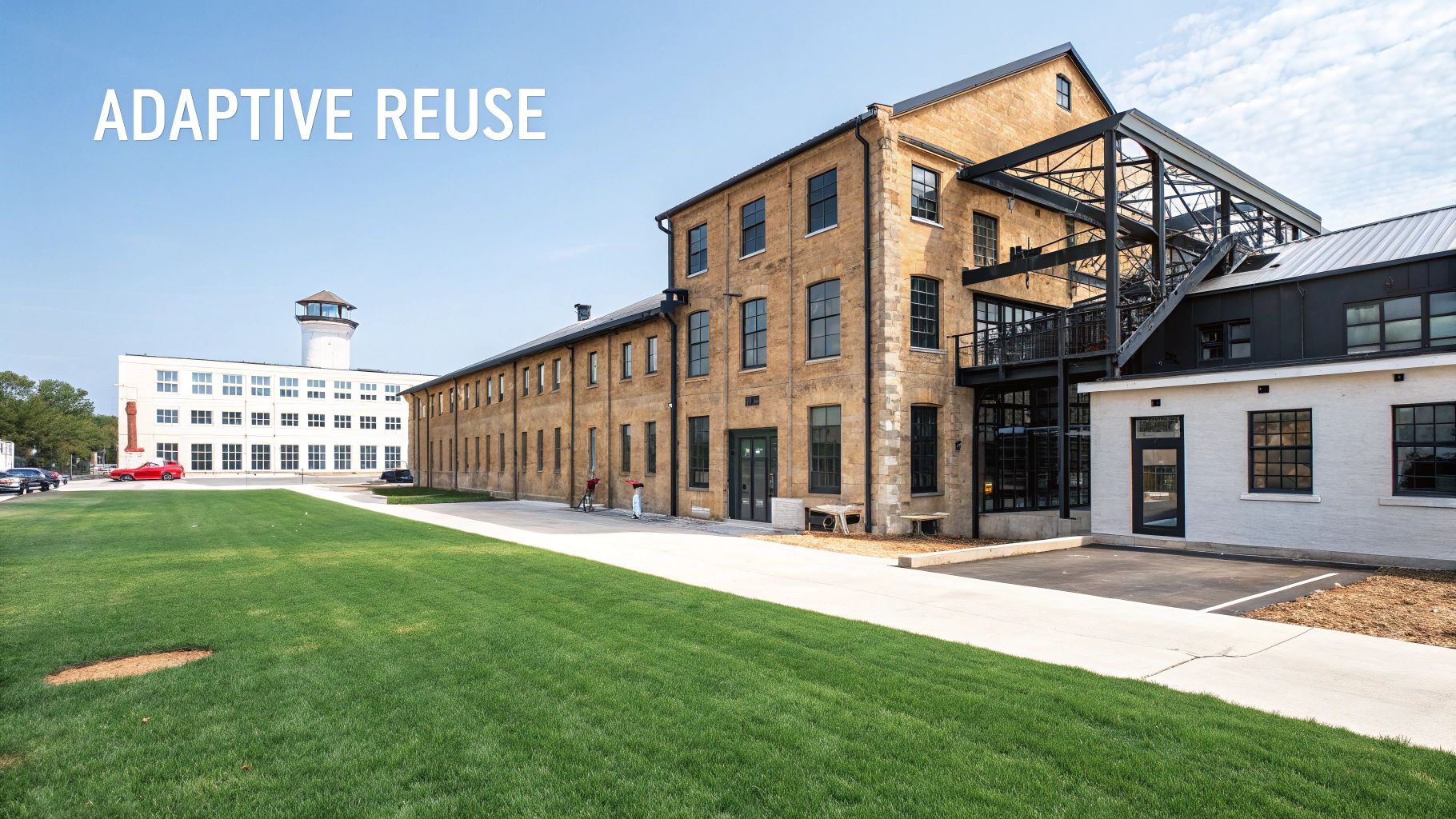
Think of an old building’s core structure as its "good bones." Instead of pouring a fortune into a brand-new foundation and frame, adaptive reuse works with what’s already there. This approach can seriously shorten project timelines and slash costs, giving the building a second life with modern systems and extending its usefulness for decades.
The Financial Case for Adaptive Reuse
Adaptive reuse is a smart pivot away from the high costs of demolition and new construction. By preserving a building's foundations and structural frame, developers can often sidestep 15–30% of the costs associated with extensive sitework and new structural systems. The strategy also dramatically cuts down on embodied carbon, making it a win for your bottom line and the planet.
With public-sector and civic modernization projects poised to pump around $29.7 billion into the architecture market this year, it’s clear that renovating existing buildings is a huge driver of work for experienced firms. You can dive deeper into the construction forecast at AIA.org.
An architect specializing in this area sees the possibilities others miss, reimagining an old warehouse as a buzzing mixed-use community hub or a forgotten factory as sleek, modern loft offices. They turn a potential liability into a unique and profitable asset.
Navigating Historic Preservation with an Expert
Historic preservation takes this a step further, focusing on buildings with true architectural or cultural significance. This work is part architecture, part history lesson, and part regulatory puzzle-solving. You absolutely need a commercial building architect with preservation expertise to succeed.
These projects play by a different set of rules. The architect is responsible for:
- Researching Original Materials: They dig into the original construction techniques and materials to ensure renovations are authentic and respect the building’s heritage.
- Securing Specialized Approvals: They work hand-in-glove with local historic preservation commissions, providing the meticulous documentation needed to get the project approved.
- Integrating Modern Systems: The real art is skillfully weaving modern HVAC, electrical, and data infrastructure into the historic fabric without disrupting its character.
It’s a delicate balance that demands a deep understanding of both old-world craftsmanship and modern building science. The goal is a building that feels true to its past but functions perfectly for today's world.
When you preserve a historic building, you're not just saving bricks and mortar; you're preserving the story and soul of a place. An architect’s job is to make that story a tangible, profitable part of the building's future.
Turning History into a Financial Advantage
Beyond the charm and cultural value, historic preservation opens the door to some powerful financial incentives. An experienced commercial architect acts as your guide to leveraging these programs and making your project pencil out.
Key financial tools include:
- Federal Historic Tax Credits: This is the big one. It can provide a tax credit of up to 20% of qualified rehabilitation expenses, directly knocking down the project's overall cost.
- State and Local Incentives: Many states and cities sweeten the pot with their own tax credits, grants, or low-interest loans to encourage preservation.
- Facade Easements: Donating the development rights of a historic facade to a preservation group can result in significant tax deductions.
An architect who knows these programs inside and out can structure the renovation to meet the specific requirements, ensuring you capture every available dollar. They turn the building's history from a potential roadblock into a real financial advantage, proving that our built heritage is full of opportunities just waiting to be rediscovered.
How to Choose the Right Architectural Partner
Choosing a commercial building architect is one of the most important decisions you'll make for your project. You're not just hiring someone to draw up blueprints; you're bringing on a strategic partner who will guide your investment from an idea to a fully realized, profitable asset. It’s tempting to be wowed by a slick portfolio, but finding a firm that truly understands your business goals is what really counts.
The right partner listens. They get your financial targets and have the technical chops to navigate the entire journey, from site selection to the final walkthrough. You need an advocate, someone who ensures every decision adds real, measurable value. That means your vetting process has to go deeper than just looking at pretty pictures.
Vetting Potential Firms Beyond the Portfolio
A beautiful portfolio is table stakes—it’s the bare minimum. While it shows what a firm can do aesthetically, it tells you nothing about how they handle a budget crisis, surprise soil conditions, or a tough zoning board. To really know who you're hiring, you have to look at the process behind the final product.
Focus your evaluation on three key areas:
- Design Philosophy Alignment: Does their design approach actually line up with what you want to achieve? Some firms chase trends, while others, like us at Sherer Architects, concentrate on creating beautiful, practical, and sustainable buildings that honor the client's vision and the surrounding context.
- Communication and Collaboration Style: How do they talk to people? A project’s success hinges on clear, proactive communication between you, the architect, the contractors, and the city officials.
- Relevant Project Experience: Have they actually done this before? Look for experience with projects similar to yours in size, complexity, and type. Deep knowledge of local codes and building environments is a huge plus.
Asking the Right Questions in Your First Meeting
Those first meetings are your chance to see if there’s a real fit. Come prepared with questions that get to the heart of how they operate. This is where you find out how they think, solve problems, and manage the messy reality of a major construction project.
Finding the right architect is like casting the lead role in a movie. You need someone with the right skills and vision, but more importantly, you need a partner you can trust to see the project through when the cameras aren't rolling.
Here are the kinds of questions that will tell you what you really need to know:
- Budget and Schedule Management: "Tell me about a time a project went over budget or off schedule. What happened, how did you handle it, and what was the final result for the client?"
- Navigating Regulators: "What’s your relationship like with the local Design Review Board and permitting office? How do you get ahead of potential issues to keep the project from getting bogged down?"
- Handling Construction Challenges: "What’s your process when there's a disagreement with a contractor on site? Describe your role during the construction administration phase."
- Understanding Business Goals: "How will your design help us achieve our specific business goals, whether that’s maximizing leasable space, cutting long-term operating costs, or making our brand look great?"
By focusing on these practical, real-world situations, you’ll find a commercial building architect with more than just a good eye. You'll find a partner with the project management discipline and collaborative spirit to make your venture a genuine success. This kind of thorough vetting is what lays the groundwork for a smooth, predictable, and profitable project.
Got Questions? We've Got Answers
Stepping into a major commercial building project, whether it's a ground-up build or a complex renovation, always brings up some big questions. It’s a huge investment. Here are some straightforward answers to the things we get asked most often, designed to give you clarity on the process, the costs, and the real value an architect brings to the table.
How Much Does a Commercial Building Architect Cost?
There's no single price tag for architectural services because every project is unique. Fees are usually based on the project's specific needs and complexity and can be structured in a few different ways:
- As a percentage of the total construction cost, which can range from 5% to 15%.
- As a lump sum or fixed fee that's agreed upon before work begins.
- Billed at an hourly rate for the time spent on your project.
It’s easy to see that number as just another expense, but that’s missing the forest for the trees. A good architect doesn't just cost money; they save you money. They do this by designing a building that runs more efficiently, making the most of every square foot for your business, and sidestepping costly mistakes during construction. The long-term value they create often far outweighs their fee.
Why Not Just Use a Design-Build Contractor?
Think of a commercial architect as your dedicated expert on the ground, whose only job is to look out for your best interests. While a design-build firm offers a single point of contact, that streamlined approach can remove the essential checks and balances that protect your investment.
Your architect is an independent advocate. Their focus is purely on quality, your vision, and your budget. They hold the contractor accountable to ensure you get exactly what you paid for, without any competing loyalties.
What’s the Difference Between Commercial and Residential Architects?
While both design buildings, a commercial architect operates in a completely different world from a residential one. Their expertise is honed for the unique challenges of buildings meant for business and public use.
They are masters of:
- Complex Building Codes: They live and breathe the intricate rules for public safety, like the Americans with Disabilities Act (ADA) and fire codes.
- Commercial Zoning Laws: They know the specific local rules that dictate what you can build and where.
- Heavy-Duty Materials: They choose materials and systems built to last under the constant stress of public use.
This is a highly specialized skill set that's absolutely critical for creating a commercial space that is safe, legal, and profitable.
How Long Does the Design Process Take?
The timeline for design really depends on the size and scope of the job. A simple interior fit-out might move from concept to permitting in a few months. A brand-new, multi-story building, on the other hand, could easily spend a year or more in the design, documentation, and approval stages before a shovel ever hits the ground.
A reliable architect will give you a realistic schedule from day one, clearly mapping out each milestone so you always know what’s happening and what’s next.
At Sherer Architects, LLC, we're not just designing buildings; we're building value. With decades of proven expertise, we guide you through every step to turn your vision into a high-performing asset. Learn how we can bring structure to your vision and maximize your project's value.