A modern fire station is a finely tuned machine, a complex blend of operational grit, firefighter well-being, and community trust—all wrapped up in a single, resilient structure. We've moved far beyond just building a garage for fire trucks. Today, it's about creating a facility that enables lightning-fast response times, actively protects responders from long-term health risks, and stands as a durable public asset for generations.
The Evolution of Fire Station Architecture
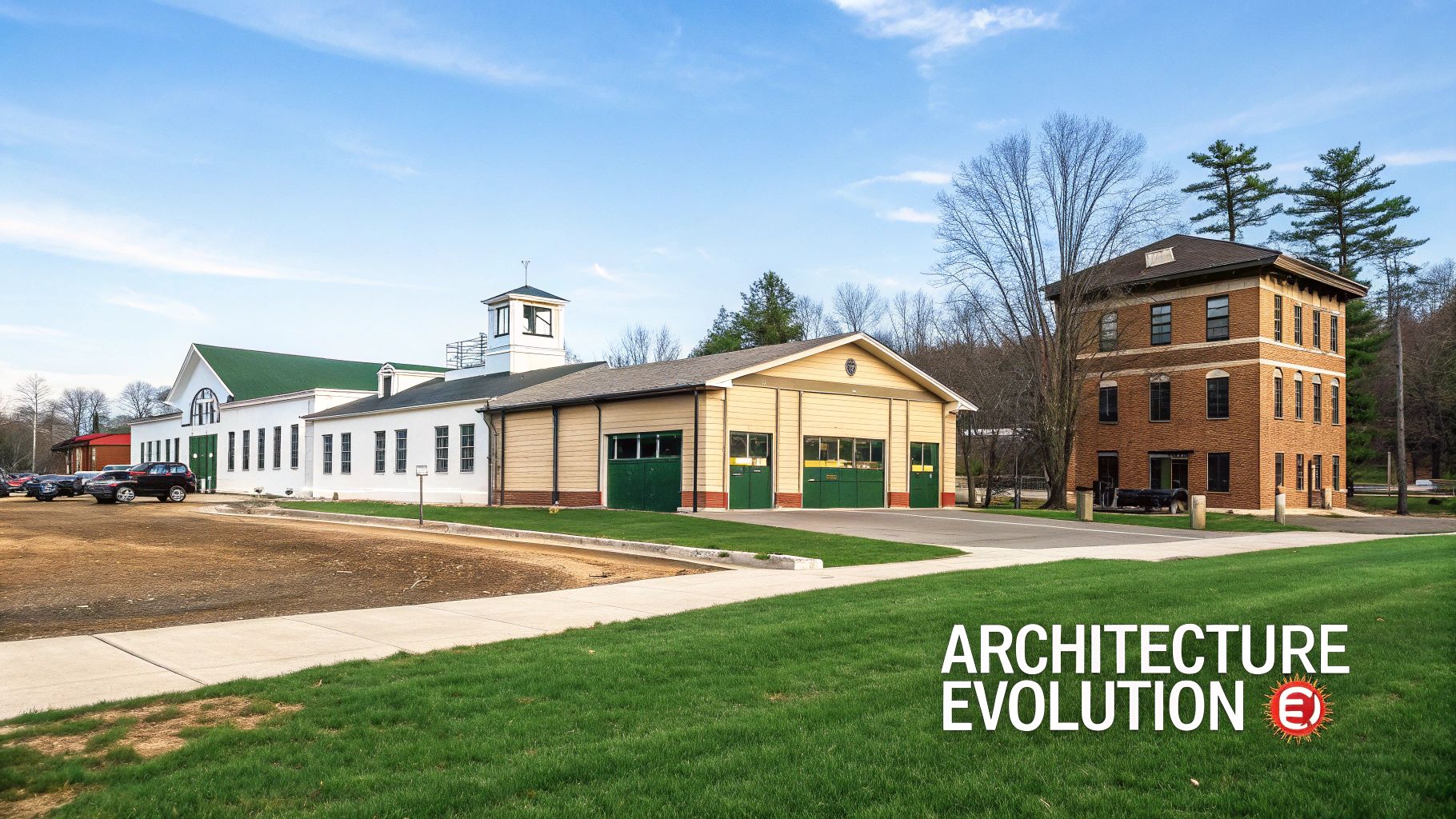
Before we get into the nuts and bolts of today’s designs, it helps to look back. Fire stations have always been a direct reflection of the technology of their time, the needs of their communities, and our ever-growing understanding of what it takes to keep firefighters safe and healthy.
The first "firehouses" were really just sheds or repurposed carriage houses. They held the basics—buckets, ladders, maybe a hand-pumper—and were staffed by volunteers. The only real design consideration was finding a central spot to get to the fire quickly. For centuries, that was about it.
From Horse-Drawn to High-Tech
The first major shake-up came when horse-drawn steam pumpers gave way to motorized engines in the late 19th and early 20th centuries. This wasn't just a simple equipment swap; it completely rewired the DNA of the fire station.
Suddenly, fire station design had to account for vehicles that were bigger, heavier, and needed much wider, taller bay doors. Out went the haylofts and stables; in came maintenance shops and fuel tanks. This is also when we saw the birth of iconic features like the fire pole, a simple but brilliant solution for getting firefighters from the living quarters to the apparatus floor in a heartbeat.
That leap forward set the stage for everything that followed. As fire apparatus continued to grow, the bays had to keep pace with reinforced concrete floors, soaring ceilings, and complex support systems.
Adapting to Modern Demands
But the evolution didn't stop at the garage doors. The firefighter's job description has expanded dramatically, and the station had to expand right along with it. What started as a simple garage has become a dynamic, multi-purpose hub.
Today's fire stations are complex environments that must function as a high-performance workplace, a temporary home, a training facility, and a community safe haven, often all at once.
This shift has totally changed the architectural blueprint. It's now standard to see modern stations include:
- Dedicated Training Spaces: Think training towers for practicing high-rise rescues or classrooms for EMT certification.
- Health and Wellness Areas: Fitness rooms are a given, but we're also seeing dedicated quiet zones for mental decompression—a critical tool for fighting the cumulative stress of the job.
- Community-Facing Elements: Many new stations feature public meeting rooms or designated safe-haven lobbies, strengthening the bond between the department and the people they protect.
The journey from a simple shed to these multi-functional centers is pretty incredible. With nearly 30,000 fire stations across the U.S. serving over a million firefighters, the design process is constantly evolving to incorporate new strategies for health, sustainability, and operational readiness. You can discover more insights about the history of firefighting and its architectural impact. This historical backdrop is exactly why a forward-thinking, holistic approach to fire station design is more critical than ever.
Choosing the Right Site and Layout
So much of a fire station's success is decided long before a single shovel hits the dirt. Picking the right location isn't a guessing game; it's a science, driven by hard data. Think of it as placing a vital organ in the body of a community—its placement determines the health and safety of the whole system. The goal is simple: ensure the fastest possible response when every second counts.
It all starts with a deep dive into community data. We rely heavily on tools like Geographic Information System (GIS) mapping, which lets us layer critical information onto a single, dynamic map. This helps us see the patterns and pressures that tell us exactly where a new station will do the most good.
Pinpointing the Perfect Location with Data
To find that ideal spot, we work with municipal leaders to model how a new station will perform. We're looking for the sweet spot, the location that provides maximum coverage and the quickest response times for the largest number of people and properties.
We zero in on a few key datasets:
- Historical 911 Call Data: By mapping where calls come from, we can identify "hot spots." The new station needs to be placed strategically to relieve pressure on other stations and cover those high-demand zones.
- Traffic Patterns and Road Networks: A site might look great on paper, but if it’s on a road that's constantly gridlocked or doesn't have a straight shot to a major artery, response times are dead on arrival. We analyze traffic flow to make sure fire trucks can get out and get moving, fast.
- Population Density and Future Growth: We're not just planning for today. We have to look at projections for future development to make sure this station will still be in the right place 50 to 75 years from now.
A fire station is a long-term community investment. Siting it based on future growth projections, not just current needs, prevents it from becoming obsolete as the community expands.
When you layer all this information together, a clear picture emerges, pointing to the most strategic zones for the new facility. This data-first approach takes the guesswork out of the equation and ensures public funds are invested in a location that truly enhances safety.
To break it down, here’s a look at the essential criteria we evaluate when vetting potential sites.
Key Factors in Fire Station Site Selection
| Factor | Description | Data Sources |
|---|---|---|
| Response Time Coverage | The ability of the station to meet established response time goals (e.g., 4-6 minutes) for its designated service area. | GIS analysis, 911 call volume maps, population density studies. |
| Access to Major Roads | Direct, unimpeded access to arterial roads and highways is critical for rapid deployment. We avoid sites with traffic congestion or complex intersections. | Traffic flow data, municipal road network maps, peak-hour congestion studies. |
| Site Topography & Size | The land must be large and stable enough to accommodate the building, apparatus aprons, parking, and training areas without extensive grading. | Topographical surveys, geotechnical reports, zoning regulations. |
| Future Community Growth | The site should be positioned to serve not only the current population but also anticipated future residential and commercial developments. | Municipal master plans, economic development forecasts, demographic projections. |
| Zoning & Land Use | The property must be properly zoned for a public safety facility, or the potential for rezoning must be high. | Local zoning ordinances, community development plans. |
Ultimately, a thorough analysis of these factors ensures the final site selection is based on objective, life-saving criteria, not just availability or cost.
From Site Selection to Building Orientation
Once we've got the land, the focus shifts to how the station will actually sit on the property. This is just as critical as its location on the city map. The building’s orientation and layout will dictate everything from daily workflow and firefighter safety to its long-term energy costs.
Getting the orientation right is crucial. For instance, we always want the apparatus bay doors facing the primary direction of travel. This simple move eliminates awkward turns and shaves precious seconds off every call. It’s a foundational principle in fire station design.
It's not just about speed, either. Smart orientation can make a building much more sustainable. By positioning living quarters and offices with southern exposure, we can capture passive solar heat in the winter and use architectural overhangs to provide shade in the summer. These aren't just feel-good features; they translate into real, long-term savings on utility bills and create a healthier environment for the crew.
Even the landscaping has a job to do. We have to account for zoning setbacks, manage stormwater runoff, and create secure, separate access points for the public and for staff. Every detail, from the turning radius of the driveway to the placement of a security fence, is part of a unified design that makes the station fast, safe, and a good neighbor to the surrounding community.
Designing for Firefighter Health and Well-Being
A fire station is so much more than a garage for big red trucks. For first responders, it’s a second home—the place they eat, sleep, and try to decompress between incredibly stressful calls. The best modern fire station design puts this reality front and center, making the physical and mental health of firefighters a non-negotiable part of the architectural plan. Creating a truly safe and supportive environment isn't an afterthought anymore; it’s the entire point.
One of the biggest leaps forward in this area has been the focus on contamination control. Think of it like a hospital's cleanroom protocol. The mission is simple but critical: stop dangerous carcinogens and other toxic gunk from being tracked from a fire scene into the station's living quarters. The way we do this is by creating very clear, distinct zones inside the building.
Implementing Hot, Warm, and Cold Zones
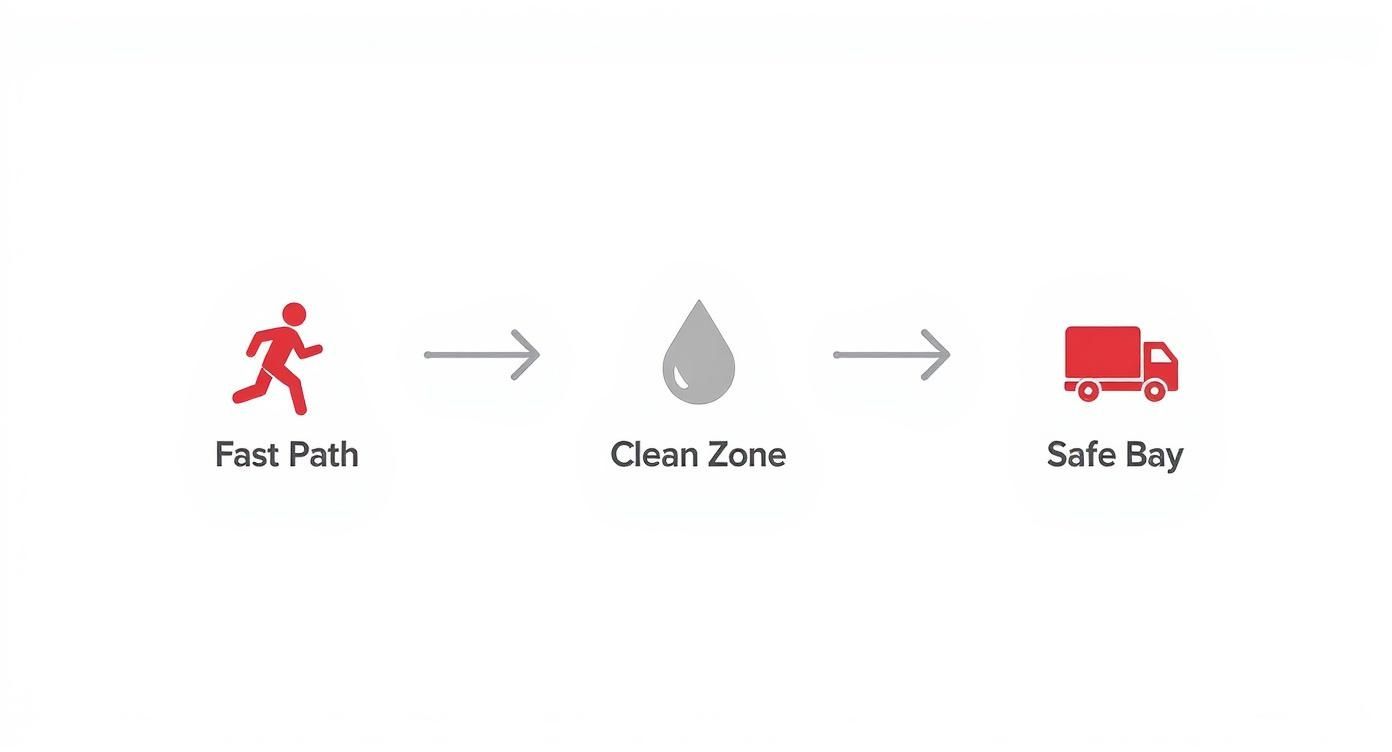
This zoning strategy is all about creating a deliberate, one-way path for firefighters and their gear when they get back from a call. It’s a workflow designed to systematically strip away contaminants at each stage, protecting their long-term health.
- Hot Zone: This is the first stop. It's usually the apparatus bay and a dedicated decontamination room. Here, firefighters get the worst of the grime off themselves and their equipment. All turnout gear, helmets, and tools stay in this zone. Period.
- Warm Zone: This is the transition area. It’s where you’ll find locker rooms—often with separate lockers for dirty gear and personal items—as well as showers and special laundry facilities built to extract contaminants. Firefighters move through this zone after the Hot Zone but before they can enter the clean living spaces.
- Cold Zone: This is the "clean" side of the station. It includes the kitchen, dayroom, bunk rooms, and offices. Absolutely no contaminated gear or clothing is allowed to cross this threshold. This is what keeps the space safe for rest and recovery.
This whole process—from figuring out where a station should even be built to how its internal zones are laid out—is driven by careful planning and data.
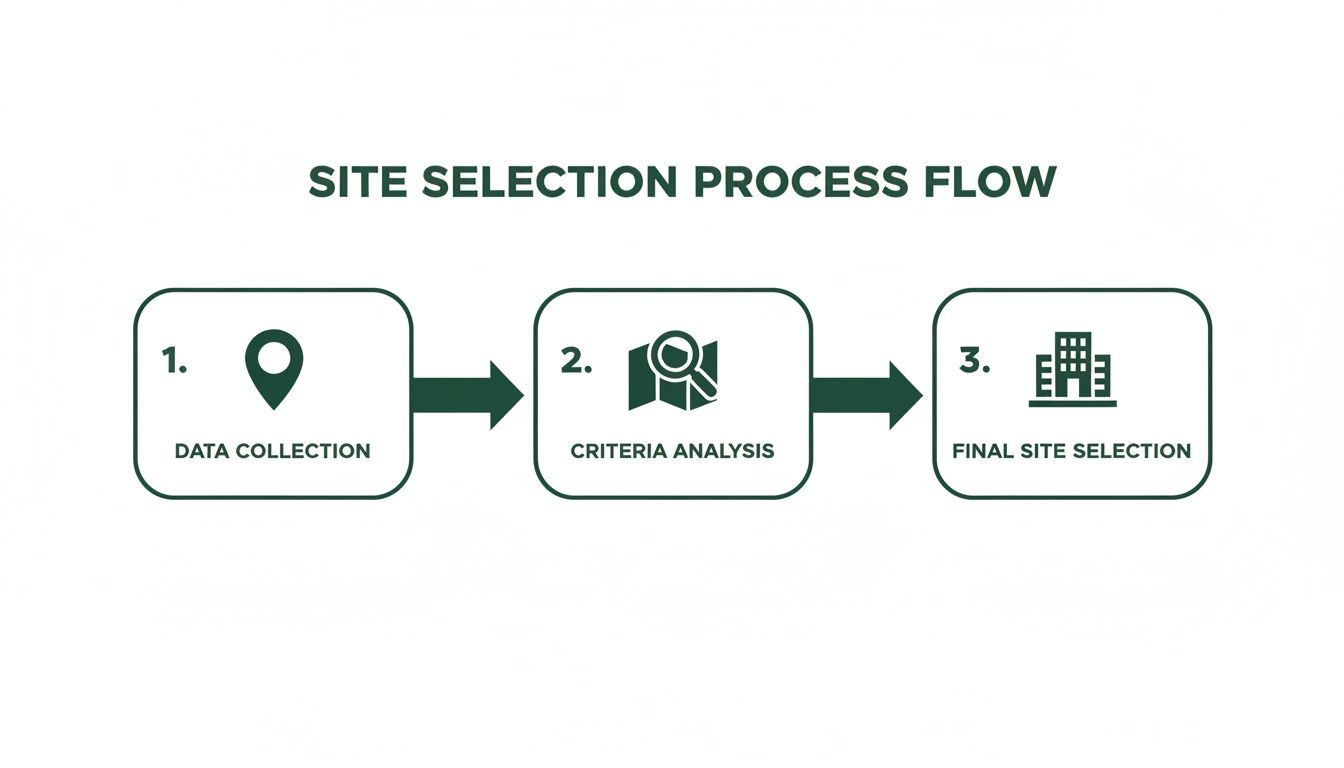
As you can see, good design starts with solid analysis. That data doesn't just influence the station's location; it directly shapes the internal layout needed to keep firefighters healthy.
Beyond Decontamination: Fostering Well-Being
While cancer prevention is a huge priority, a truly holistic approach to firefighter well-being has to tackle both physical and mental health. The design of the living spaces themselves plays an enormous part in lowering stress and building camaraderie.
Layouts that use "hot, warm, and cold zones" are becoming the standard for combating carcinogen exposure, a leading cause of cancer among the 1.1 million U.S. firefighters. With more than 40% of America's 30,000 fire stations being over 40 years old, the need to update these facilities with modern air quality systems and decontamination areas is more urgent than ever.
A well-designed living space is an active tool for mental health support. It provides opportunities for both social connection and private reflection, helping firefighters manage the cumulative stress of their profession.
Here are a few design elements that really move the needle:
- Acoustic Separation: Getting quality sleep is essential. Using sound-dampening materials and smart layouts to keep quiet bunk rooms isolated from noisy areas like the apparatus bay or kitchen makes all the difference.
- Natural Light and Views: It's amazing what a little sunlight can do. Maximizing daylight and providing views of nature in dayrooms and offices has been proven to lower stress and lift moods.
- Ergonomic Kitchen and Dining Areas: The firehouse kitchen is the heart of the station. Designing a space that allows multiple people to cook and eat together helps build that "family" dynamic, which is vital for a cohesive team.
- Dedicated Fitness Spaces: Staying in shape is not optional in this line of work. A well-equipped and easily accessible fitness area is crucial for maintaining physical readiness and serves as a fantastic outlet for stress. The principles are similar whether you build a home gym or an industrial-grade station facility; the space needs to be functional and inviting.
When we focus on these human-centric design principles, we create fire stations that do more than just enable peak performance. We build facilities that actively protect and support the long-term health of the people who dedicate their lives to serving our communities.
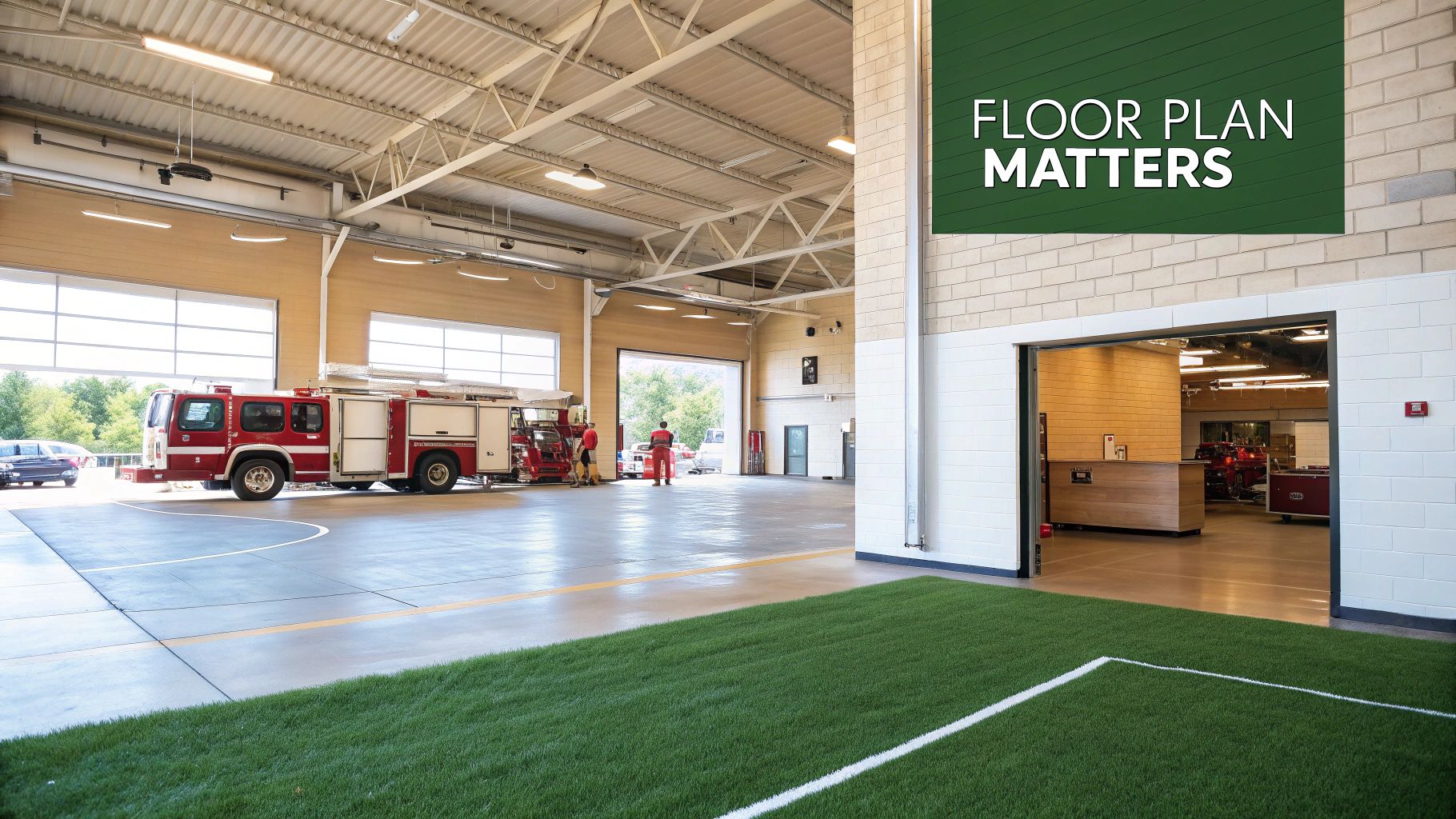
If you think of a fire station as a living entity, the apparatus bay is its powerful, beating heart. It's not just a big garage; it's the launchpad for every single emergency response. This is where the action begins and ends, making its design a masterclass in efficiency, durability, and most importantly, safety.
Every single decision here, from the type of floor drain to the speed of the bay doors, has a direct impact on response times and the well-being of the firefighters. Getting this space right isn't just important—it's everything. And that process starts with a fundamental question: how do the trucks get in and out?
Drive-Through vs. Back-In Configurations
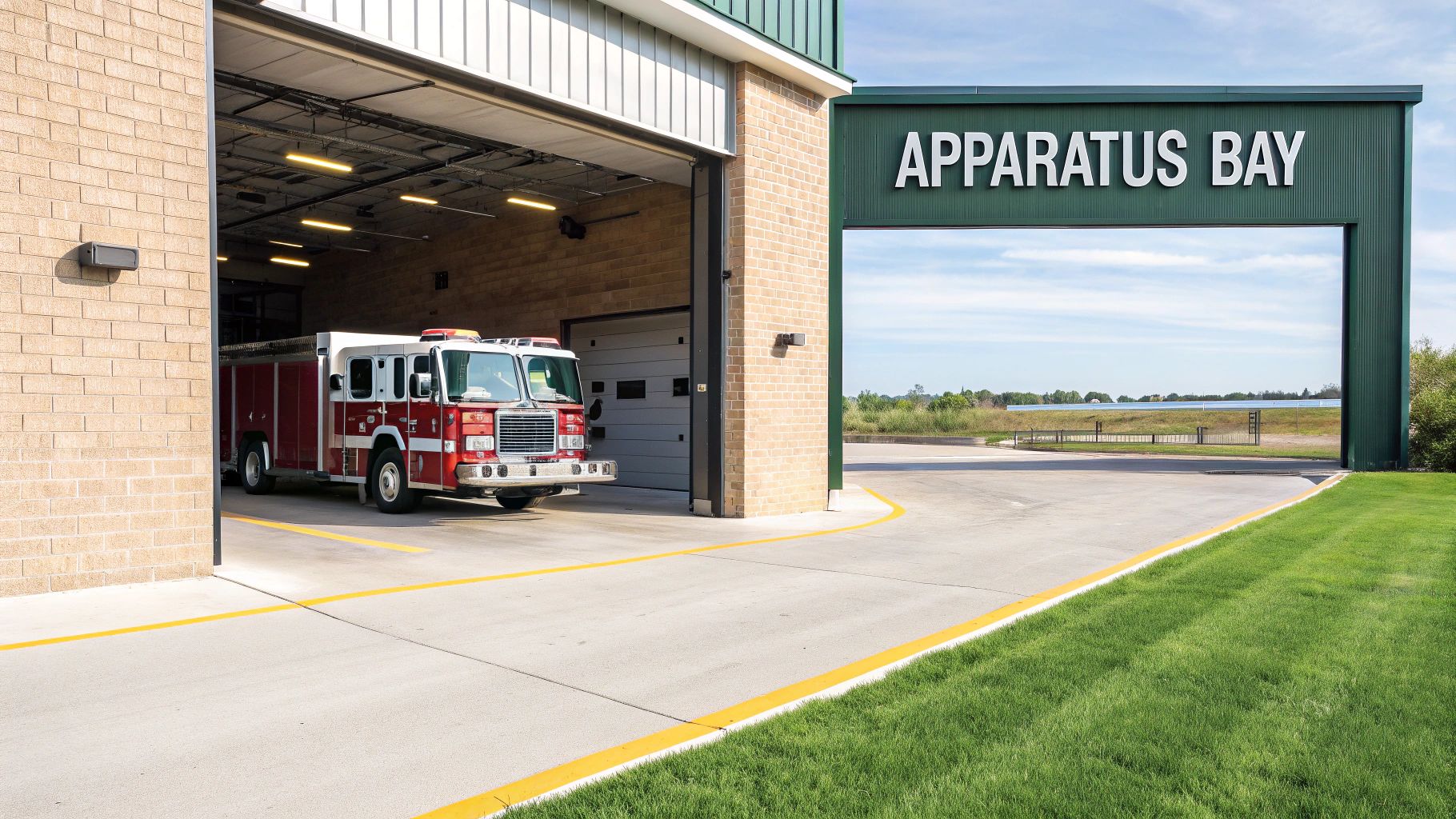
The entire flow of the apparatus bay comes down to one big choice: a drive-through layout or a traditional back-in setup. There's no single right answer; the best solution is dictated by the site itself—its size, its shape, and how it connects to the surrounding streets.
Drive-Through Bays: This is the gold standard for a reason. It's faster and safer. By allowing fire trucks to simply pull straight in one side and out the other, you eliminate the tricky, time-consuming process of backing a massive vehicle into a tight space. If a site has enough depth or fronts two different streets, this is the way to go.
Back-In Bays: Sometimes, you just don't have the space for a drive-through design. Narrow lots or sites with single-street access make a back-in configuration a necessity. While this is common in older stations, modern fire station design makes it much safer with advanced backup cameras, warning sensors, and carefully painted visual guides on the floor.
A drive-through apparatus bay can shave critical seconds off response times by removing the need to back in vehicles. This seemingly small detail is a significant operational advantage that enhances both speed and on-site safety.
Ultimately, whether it's a drive-through or a back-in, the objective is the same: create the straightest, most direct path for an apparatus to leave the station and hit the road.
Building a Foundation for Performance
The floor of an apparatus bay is an unsung hero of structural engineering. It has to be tough enough to handle immense stress day in and day out. We're talking about vehicles that can weigh over 40 tons. This isn't your standard concrete slab. It’s a heavily reinforced foundation, often built thicker and with a higher psi rating to withstand the constant weight and movement.
Drainage is just as critical. The floors are meticulously sloped—usually between 1-2%—to channel water toward robust trench drains. This ensures that water from washing the trucks, snowmelt, or equipment runoff is whisked away quickly. A dry floor is a safe floor, preventing the slips and falls that are a constant risk in this environment.
Essential Systems for a Safe Environment
Beyond the heavy-duty structure, a series of integrated systems turns the bay from a simple storage area into a safe and highly functional workspace.
A non-negotiable feature in any modern station is the vehicle exhaust capture system. These systems hook directly to the apparatus exhaust pipes, pulling toxic diesel fumes out of the building before they can contaminate the air. This isn't a luxury; it’s a critical health and safety measure to protect firefighters from long-term exposure to carcinogens.
Several other design details are just as important:
- Ceiling Heights and Clearances: You need a lot of vertical space. Ceilings are often 16 to 18 feet high, sometimes more, to accommodate the newest ladder trucks. Just as crucial is leaving plenty of clearance on all sides of the parked vehicles for maintenance access, gear storage, and safe movement.
- Apparatus Bay Doors: Every second counts, and that includes the time it takes for doors to open. Fast-acting bifold or four-fold doors are a huge upgrade over traditional overhead rolling doors. They open significantly faster and are built to withstand high winds and heavy use without failing.
- Strategic Storage: An organized bay is an efficient bay. Well-designed, durable cabinetry and clearly marked storage zones for tools, rescue equipment, and medical gear are essential. Keeping everything in its place means it can be grabbed in an instant when the tones drop.
When you meticulously plan every detail—from the slope of the floor to the speed of the doors—the apparatus bay becomes more than just a place to park trucks. It becomes a high-performance machine, engineered to make every response as fast and safe as possible.
Building for Sustainability and Resilience
A modern fire station has to be more than just a garage for fire trucks. It needs to be a rock-solid pillar of the community, the one place that’s guaranteed to be running when everything else fails. This is where resilience becomes a non-negotiable part of the design conversation.
When a hurricane, flood, or massive power outage hits, the fire station can't go down with it. It has to become the command center, a beacon of stability when all other infrastructure is compromised.
This kind of toughness starts with the building envelope itself. We're talking about choosing materials and construction methods that laugh in the face of extreme weather—from high-wind-rated roofing and impact-resistant windows to a reinforced structural frame. Using advanced materials like charred accoya cladding, for example, not only gives the station a distinctive look but also provides an incredibly durable exterior that resists rot, pests, and punishing conditions for the long haul.
Fortifying for Uninterrupted Operation
A tough shell is just the beginning. True resilience comes from having redundant, independent systems that ensure the lights stay on and the water keeps flowing, no matter what’s happening outside. These are the station's lifelines during a crisis.
Some key strategies we always build into the plan include:
- Backup Power Generation: An on-site generator is absolutely essential, typically running on natural gas or diesel. It needs to be beefy enough to power the entire station—apparatus bay doors, comms, HVAC, everything—for days, not hours.
- Redundant Utilities: We look for ways to eliminate single points of failure. This might mean installing large on-site water storage tanks or even tapping into two different water mains if possible.
- Storm-Hardened Infrastructure: Every piece of equipment on the outside of the building, from HVAC units to radio antennas, has to be secured and shielded from high winds and flying debris.
Resilience isn't just about surviving a storm; it's about maintaining full operational capability throughout the event and its aftermath. The fire station must be the one building everyone can count on when disaster strikes.
Thinking this way about robust, self-sufficient infrastructure dovetails perfectly with the larger movement toward sustainability. After all, a resilient station is an efficient one, designed from the ground up to do more with less.
The Financial Case for Green Design
Sustainable design isn't just a feel-good add-on anymore; it's a core component of smart financial planning for any public facility. While green features like a geothermal system or a roof full of solar panels might have a higher price tag initially, they pay for themselves over and over again in long-term operational savings.
That's real money freed up for a municipality to use on other vital services.
High-performance insulation, energy-efficient windows, and smart LED lighting all work together to slash daily energy use. Technologies that once seemed exotic are now proving their worth in demanding 24/7 environments. Geothermal HVAC, for instance, uses the earth’s constant underground temperature to heat and cool the building with incredible efficiency and lower maintenance needs. Solar panels can knock out a huge chunk of a station’s electricity bill and, in some areas, even generate revenue by selling power back to the grid.
A fantastic real-world example is the 25,000-square-foot Kaukauna Fire Station, which opened in 2017. By integrating geothermal, solar panels, and LEDs, they cut their annual energy costs by more than $37,000. That’s a powerful return on investment.
When we design for both resilience and sustainability, we're not just building a fire station. We're creating a public safety asset that is stronger, more reliable, and fiscally responsible for decades to come.
Balancing Budgets with Adaptive Reuse
Let's be honest: building a new fire station is a massive public investment. With costs for a modern facility easily hitting anywhere from $9 million to $14 million, municipal budgets are often pushed to their limits. This financial reality puts a huge premium on smart, cost-conscious planning from day one.
To get a new build across the finish line, project leaders often lean on strategies like value engineering—a formal process for getting the most function for the lowest cost without cutting corners on quality. Another go-to tactic is project phasing, which maps out the construction over several years. This lets a community build what's most critical now, like the apparatus bay, and add things like a new training tower later when more funds are available.
But building from the ground up isn't the only path forward. For communities with older, architecturally significant stations, adaptive reuse offers a compelling alternative that can be both budget-friendly and sustainable.
Breathing New Life into Historic Stations
Instead of tearing down a community landmark, adaptive reuse is all about modernizing it from the inside out. This approach keeps the historic soul of the building and its place in the town’s heart, while completely updating it to handle the intense demands of modern firefighting. It’s a brilliant way to honor the past while equipping heroes for the future.
This process is like solving a complex puzzle—fitting modern systems into a historic shell. It almost always involves:
- Structural Reinforcements: Old floors weren't designed to hold the immense weight of today's fire engines and ladder trucks.
- Complete MEP Overhauls: This means ripping out and replacing ancient electrical, mechanical, and plumbing systems with efficient, code-compliant modern ones.
- Interior Reconfigurations: The challenge is to carve out logical spaces for decontamination zones, contemporary living quarters, and administrative offices within the original footprint.
Turning Heritage into a Financial Asset
One of the biggest wins for this approach is the bottom line. For developers and owners, this trend favors adaptive reuse over demolition. Specialized architecture firms can upgrade systems cost-effectively, preserving historic character while securing tax credits and grants—extending a building’s useful life by 50 to 75 years sustainably. This flips a potential liability into a celebrated community asset. You can discover more insights into modern fire station trends that highlight these financial and community benefits.
By leveraging historic tax credits and preservation grants, municipalities can significantly offset renovation costs. Suddenly, modernizing a legacy station becomes a much more palatable financial choice than starting from scratch.
This strategy doesn't just save taxpayer money and divert materials from the landfill; it preserves the deep sense of civic pride tied to a historic public building. It's proof that with creative design, a station built for horse-drawn steam engines can be reimagined to serve its community for another hundred years.
Frequently Asked Questions About Fire Station Design
When you're tasked with building a new fire station, you're juggling a lot: the crew's safety, the community's expectations, and the city's bottom line. It's a huge responsibility, and naturally, a lot of practical questions come up right away. Let's tackle some of the most common ones I hear from project leaders.
How Long Does a Fire Station Project Take?
Let's be realistic: a new fire station is a long-term commitment. From the first conversations to the day the firefighters move in, you're looking at a multi-year timeline. While every project has its own quirks, they all follow a similar path.
Here’s a general breakdown of what to expect:
- Design Phase (12-18 months): This is where the vision takes shape. It’s a busy period filled with site evaluations, community meetings, and hammering out the detailed architectural plans and construction documents.
- Bidding and Permitting (2-3 months): With the blueprints finalized, the project is put out to bid to find the right construction partner. At the same time, the team works to get all the necessary permits lined up with local authorities.
- Construction Phase (18-24 months): The longest stretch. This covers everything from the groundbreaking ceremony and pouring the foundation to raising the steel, finishing the interiors, and installing all the complex systems a modern station needs.
All told, you can realistically expect the entire process to take three to four years from start to finish. For a real-world example, the planned relocation of Raleigh Fire Station 15 is scheduled to start design in summer 2024 and wrap up construction in spring 2028.
What Is a Realistic Budget for a New Station?
There's no single price tag for a new fire station—the final cost is tied to everything from land prices and local labor to the station's size and special features like a training tower or public meeting space. That said, we can look at recent projects to get a solid baseline.
Right now, construction costs for a new, full-service fire station are generally landing somewhere between $9 million and $14 million. For instance, a proposed station in Huntington, Indiana, saw construction estimates that ranged from $9.54 million to $13.79 million. Keep in mind, these figures are for the building itself. Things like buying the land, architectural fees, and all the equipment are separate costs.
A critical mistake is confusing construction costs with the total project budget. You have to account for "soft costs"—design fees, permits, furniture, fixtures, and specialized equipment—which can easily add another 20-30% to the construction total.
How Can the Community Get Involved?
Bringing the community into the process isn't just a box to check; it’s fundamental to a successful project. When you build an inclusive process, you foster public trust and end up with a building that truly serves its neighborhood.
Here are a few proven ways to make community engagement meaningful:
- Public Meetings and Workshops: Host open forums early in the design process. This gives residents a chance to see the initial concepts, ask questions directly, and weigh in on how the station will look and function.
- Advisory Committees: Create a small, dedicated group of community leaders, direct neighbors, and local business owners. They can serve as a sounding board and a direct line of communication throughout the entire project.
- Surveys and Online Feedback: Digital tools are great for reaching a wider audience. An online survey allows people who can't make a meeting to share their priorities and concerns on their own schedule.
By actively listening to feedback, your team can get ahead of potential issues like traffic flow, noise, or building aesthetics, turning the new station into a point of pride for everyone.
At Sherer Architects, LLC, we specialize in guiding clients through every stage of complex design and construction projects, from new commercial builds to historic preservation. We transform puzzles into beautiful, enduring, and sustainable results. Learn how our expertise can bring your next project to life.