
Think of your restaurant's exterior as your most powerful marketing tool. It's the very first handshake with a potential customer, and in that split second, it tells a story about the experience waiting inside. A great facade isn't just about looking good; it's a strategic move that can make someone walk in or keep on walking, directly impacting your revenue.
Why Your Restaurant Exterior Is a Revenue Engine
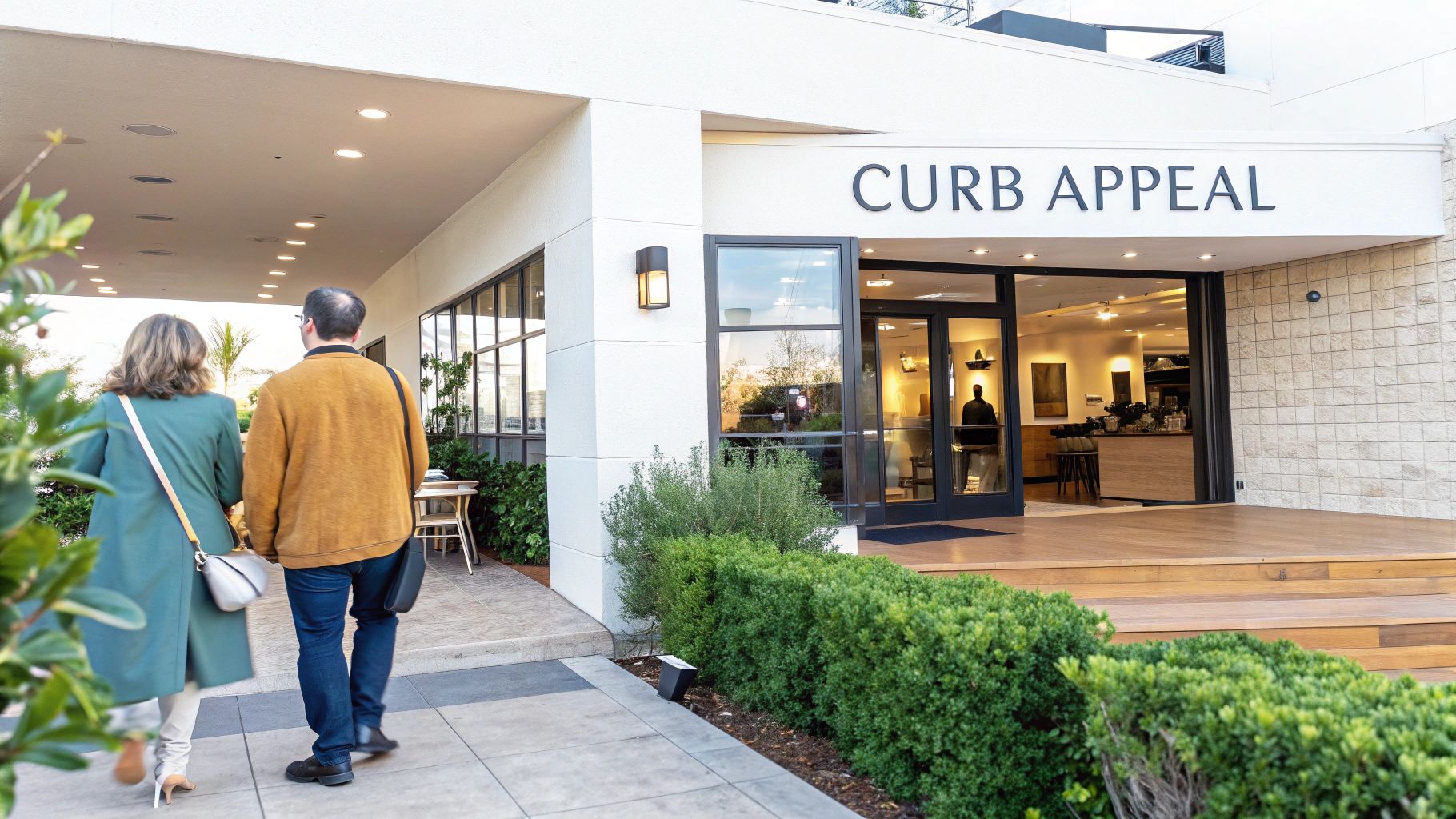
Your restaurant's exterior is far more than a simple shell. It’s a 24/7 billboard, a silent host, and often, your most effective salesperson. Long before anyone tastes your food or meets your staff, they've already formed an impression based on what they see from the street. That first judgment call is what drives foot traffic—or doesn't.
A compelling exterior instantly telegraphs your brand identity. It answers the questions running through a potential diner's mind: Is this a cozy, rustic bistro? A sleek, modern fine-dining spot? The materials, colors, lighting, and even the font on your sign all work together to build a narrative that attracts your ideal customer.
Turning Space Into Profit
One of the most obvious ways exterior designs of restaurants generate revenue is through outdoor dining. What started as a necessity in 2020 has become a permanent—and profitable—fixture. A 2023 survey found that 54% of diners are more likely to pick a restaurant if it has outdoor seating. Even more telling, 70% would wait longer for an outdoor table, which shows just how much value they place on it. This isn't a fleeting trend; investing in a well-designed patio or sidewalk cafe is a direct investment in your bottom line.
More Than Just a Pretty Face
Beyond outdoor tables, a smart exterior design improves everything from brand visibility to operational flow. It helps guide guests, makes your establishment a memorable landmark in a busy neighborhood, and sets the tone for a premium experience from the moment someone arrives.
A few key elements can make a world of difference:
- An Inviting Entryway: A clear, well-lit, and accessible entrance makes people feel welcome and safe, removing any hesitation to step inside.
- Effective Signage: This is non-negotiable. Your sign needs to be clear, visible, and on-brand. Modern digital outdoor signage solutions can even turn your storefront into a dynamic display for daily specials or upcoming events.
- Strategic Lighting: Ambiance begins outside. The right exterior lighting can highlight unique architectural features, improve safety, and cast a warm, inviting glow that pulls people in off the street.
The exterior is not an expense; it is a carefully calculated investment in customer acquisition. Every design choice, from the type of awning to the placement of planters, should be viewed through the lens of its potential return.
When you shift your perspective, you stop seeing the exterior as a static structure and start seeing it as a dynamic tool for building your brand and boosting revenue. A thoughtful, well-executed design promises a quality experience and convinces passersby that your restaurant is the right choice—before they even open the door.
Navigating Site Constraints and Regulatory Hurdles
Before you even think about sketching a facade or breaking ground, the real work of designing a restaurant exterior begins. This is where you have to get intimate with the canvas you've been given—the site itself, with all its quirks, rules, and hidden potential. Think of it like a puzzle: if you don't get the foundational pieces right from the start, the whole picture will be off.
Trying to ignore these early constraints is a surefire way to burn through your budget with redesigns, get stuck in permit limbo, and fight endless battles with the city. The most successful projects don't fight the site's limitations; they embrace them. This early homework is what transforms potential headaches into the very features that will make your restaurant stand out.
Decoding the Local Playbook
Every town and city has its own rulebook for building, and you've got to know it inside and out. These regulations dictate everything from how far your building has to sit from the curb to what kind of trees you're allowed to plant. Your architect is your guide through this maze.
Here are the big ones you need to tackle right away:
- Zoning Laws: These are the bedrock rules. They tell you if you can even build a restaurant there in the first place, and then they get into the nitty-gritty of building height, density, and how many parking spots you need. A "commercial" zone will have a totally different set of demands than a "mixed-use" one.
- Landscape Ordinances: More and more cities are getting strict about green space, tree preservation, and how you manage rainwater. Overlook these, and you could be looking at hefty fines and a project that's dead in the water.
- Building and Energy Codes: These are the technical specs that keep your building safe, accessible, and efficient. They'll influence your choices for everything from the glass in your windows to the slope of your entryway ramp.
The real trick isn't just to check the boxes on these rules. It's about weaving them into the design itself. A required green space can become a gorgeous rain garden, and a mandatory setback might just create the perfect space for a money-making patio.
The Power of Design Review Boards
If your project is in a historic district or a special design zone, get ready to meet the Design Review Board (DRB). These committees often have the final say on what your building looks like from the outside, and their job is to protect the neighborhood's character.
Going before a DRB is more than a show-and-tell with pretty renderings; you have to sell them a story. A good architect knows how to build a convincing case for your design. They can show the board how a modern material choice actually complements the old brick building next door, or how your new signage respects the feel of the street. It’s a game of communication and collaboration, convincing them that your restaurant will be a true asset to the community.
Turning Constraints into Creative Opportunities
A tiny urban lot might seem like a major disadvantage, but maybe it forces you into a brilliant vertical design with a destination rooftop bar. Those rigid historic preservation codes? They're a challenge, sure, but they can also give you a one-of-a-kind space with character that you could never replicate with new construction. It's all about your approach.
A deep-dive site analysis will always consider:
- Solar Orientation: Where does the sun hit and when? You can position the building to flood the dining room with warm, natural light in the winter while shielding it from the harsh afternoon sun in the summer. This isn't just about guest comfort; it’s a smart way to slash energy bills.
- Key Views: What do you want people to see from inside? A well-placed window can connect your diners to the energy of the street or offer a peaceful view of a park, making the meal an experience.
- Site Circulation: How will people and vehicles actually move through the space? You need a clear plan for how guests get from their car to the front door, how staff move efficiently, and where delivery trucks can go without creating a bottleneck.
When you treat these initial hurdles as creative prompts instead of problems, you lay a rock-solid foundation. You end up with an exterior that isn’t just compliant and good-looking, but truly intelligent. This is the foresight that prevents major headaches down the road and sets your restaurant up for success from day one.
2. Choosing Materials That Define and Endure
Think of your restaurant's exterior materials as its wardrobe. They're not just a protective shell; they're the very first thing that tells your story to the world. A sleek metal facade whispers "modern and minimalist," while a wall of reclaimed timber might suggest a cozy, farm-to-table experience. This is your handshake with every potential guest, setting the stage long before they see a menu.
Picking the right materials is all about balancing that immediate "wow" factor with long-term reality. You need a palette that looks fantastic on day one but also stands up to sun, rain, and time without becoming a maintenance nightmare. This choice has a direct line to your future repair budgets and the building's overall cost of ownership.
Traditional Materials, Modern Applications
Some materials have been go-to choices for centuries, and for good reason. They're durable, they're beautiful, and they have a timeless appeal. But that doesn't mean they have to be boring.
- Brick and Stone: Nothing says permanence and quality quite like brick and stone. Classic red brick can give off a historic pub vibe, while clean-cut limestone can signal high-end elegance. You can bring these classics into the 21st century by using thin brick veneers for a lighter touch or creating unique, eye-catching patterns in the brickwork.
- Wood: If you're going for a natural, rustic, or warm atmosphere, wood is your best friend. Sourcing reclaimed timber can give your building instant character and a great sustainability story. For a more practical approach, thermally modified or engineered wood products give you that same look but with way better resistance to rot and pests.
Contemporary Facades: Performance and Personality
Modern materials let you get really creative, opening the door to unique shapes, colors, and textures that can turn your restaurant into a local landmark. Plus, they're often designed for efficiency and low upkeep.
- Metal Panels: Clean, tough, and sophisticated. Aluminum, steel, or zinc panels can be painted any color to match your brand, perforated to add texture, or even bent into dynamic, futuristic shapes. It's a fantastic option if you're aiming for an industrial or sharp, minimalist look.
- Innovative Composites: Materials like fiber cement and high-pressure laminates are the chameleons of the building world. They can convincingly mimic wood, stone, or metal at a lower cost and with almost no maintenance. These composites are built to fight fading, cracking, and moisture, making them a savvy long-term investment.
Before you can settle on materials, though, you have to work your way down from the big picture. The decision-making process always starts with the rules and the reality of your specific location.
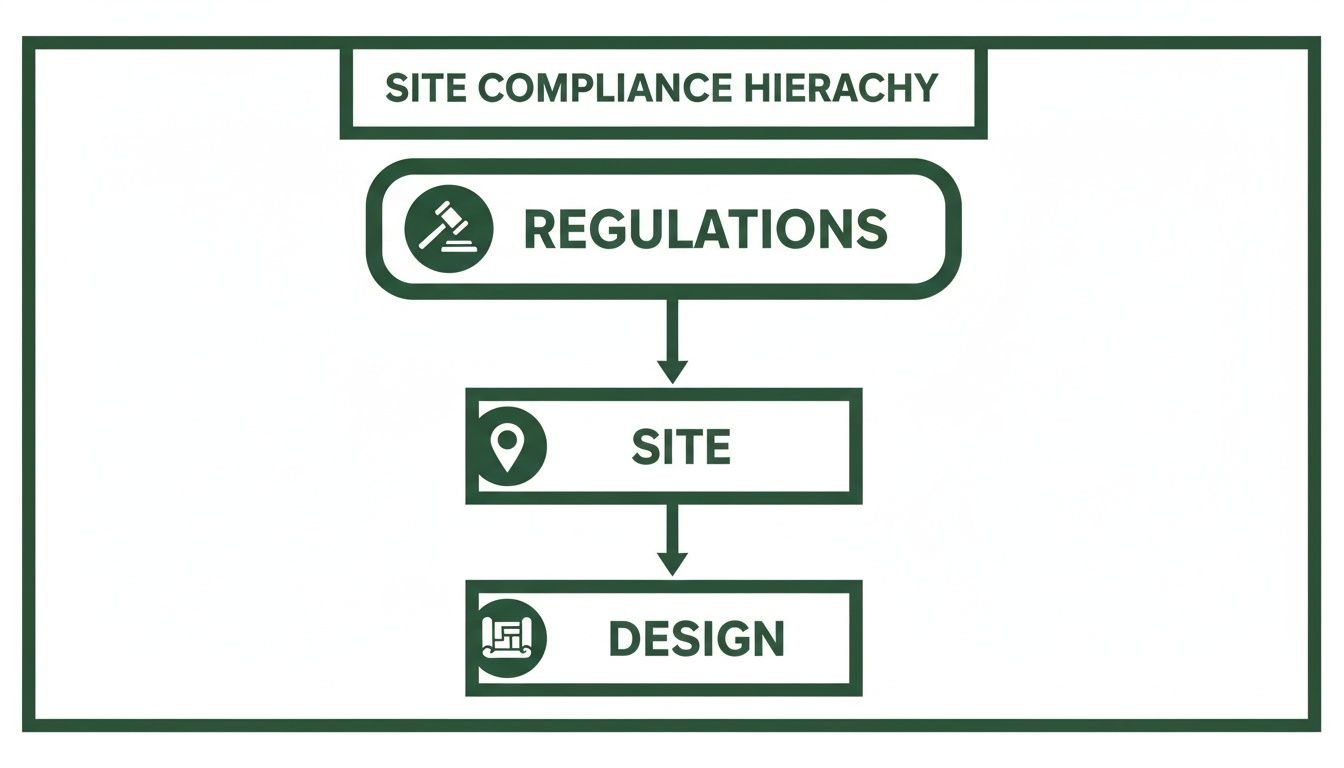
As you can see, regulations lay the foundation. They tell you what's even possible on your site, and only then can you start making smart design choices based on those constraints.
Windows, Walls, and Walkways
Beyond the main facade, the windows—what we call fenestration—are incredibly important. Big glass storefronts put the energy of your dining room on display, basically inviting people in from the street. Even better, installing operable windows or accordion-style glass walls can completely erase the line between your indoor and outdoor spaces, perfect for a patio connection.
The right combination of materials does more than create curb appeal; it builds a brand identity that is both memorable and resilient. It’s an investment in your restaurant’s physical and financial future.
When it comes to the surfaces people walk on, durability is everything. For outdoor dining areas, you need something that can handle heavy foot traffic and wild weather while still looking great. This is where options like concrete pavers or natural stone shine, as a proper expert patio paver installation can provide a surface that’s both beautiful and built to last.
In the end, every single material, from the cladding to the pavers, should be a deliberate choice that reinforces the story you want to tell.
Designing Profitable Outdoor Dining Spaces
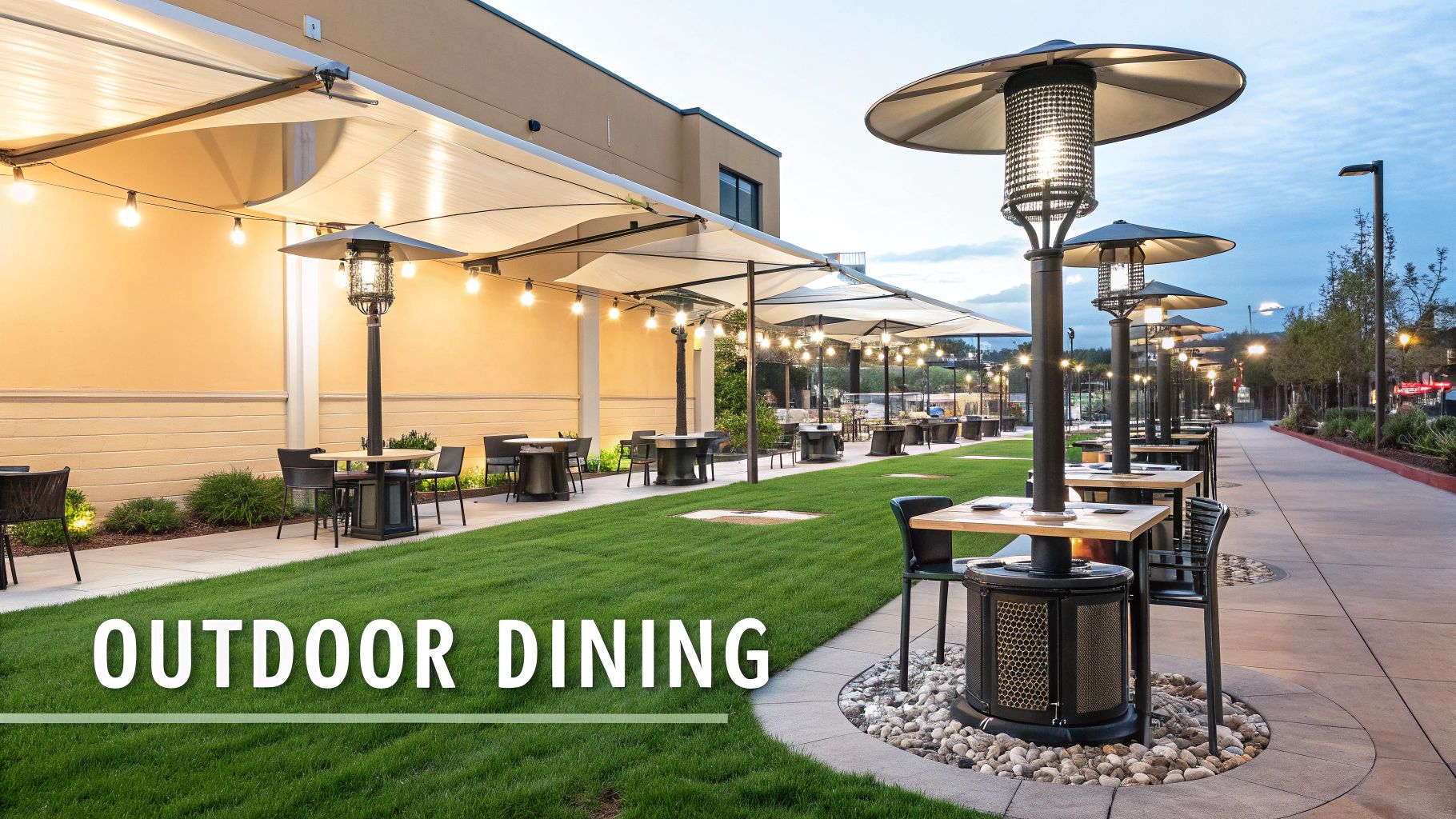
Turning an empty sidewalk strip or a forgotten courtyard into a buzzing outdoor dining area is one of the fastest ways a restaurant's exterior design can directly boost the bottom line. A well-designed patio isn't just about adding more seats; it’s about creating a destination, an experience that pulls people in off the street. It breathes life and energy into the restaurant, extending its presence far beyond the four walls.
Getting this right comes down to a careful balance of three key ingredients: strategic lighting that sets the perfect mood, clear signage that both guides and reinforces the brand, and comfortable, efficient seating that keeps guests lingering and staff moving freely. When these elements click, you create a profitable and magnetic extension of your indoor dining room.
Crafting Ambiance With Strategic Lighting
Exterior lighting is so much more than just a safety requirement. It's your number one tool for crafting ambiance, for making a patio feel intimate and almost magical as the sun goes down. Think of it as painting with light—you can spotlight stunning architectural details, wash tables in a warm, inviting glow, and cleverly draw the eye away from less appealing views, like a busy street.
An effective lighting plan always involves layering different types of light to create depth and visual texture:
- Ambient Lighting: This is your base layer, providing the soft, overall illumination. String lights, overhead pendants, and wall sconces are perfect for this, creating a welcoming atmosphere without any harsh glares.
- Task Lighting: This is your focused, functional light, aimed precisely where it's needed most. Think pathways, host stands, and directly over tables so guests can actually read their menus.
- Accent Lighting: This is where the drama comes in. Use uplights to showcase a gorgeous old tree, a beautifully textured brick wall, or a unique water feature. It's the finishing touch that adds a layer of real sophistication.
Integrating Signage As a Brand Landmark
In an outdoor dining context, your signage has two jobs. Functionally, it needs to point people in the right direction, mark entrances, and display key information. But just as importantly, it acts as a critical brand touchpoint, constantly reinforcing the restaurant's identity.
A flimsy, cheap-looking sign can instantly make a beautifully designed patio feel like an afterthought. Your signage should feel like it grew right out of the building's architecture. The materials should echo the main facade—maybe it’s rustic carved wood for a cozy bistro or sleek, backlit metal for a contemporary hotspot. Don't forget the smaller cues, either; well-placed signs guiding guests from the host stand to their table ensure the journey feels seamless.
A well-designed outdoor space is not a separate entity but a fluid continuation of the indoor experience. The transition should be so natural that guests feel the restaurant's character and comfort extend effortlessly into the open air.
The Blueprint For Irresistible Outdoor Seating
The heart and soul of any al fresco dining area is, of course, the seating. This is where guest comfort, operational flow, and sheer durability all have to meet. A successful layout is a strategic one, designed to anticipate challenges like weather while getting the absolute most out of the available space.
A smart seating plan tackles several things at once. First, the layout must be a clear path for servers, not an obstacle course. At the same time, it needs to give diners a sense of personal space, ensuring they don't feel like they're sitting on top of the next table.
Here's a look at the essential components for a functional and appealing seating area:
- Weather-Proofing: Weather is the ultimate wild card. Retractable awnings, large umbrellas, and permanent pergolas are non-negotiable for providing shade and shelter from a sudden downpour. For cooler climates, well-placed patio heaters or a central fire pit can easily extend your outdoor dining season by weeks, if not months.
- Durable Furnishings: Outdoor furniture has to be tough. Stick to materials like treated wood, powder-coated aluminum, or high-quality synthetics that can take a beating from sun and rain. But don't sacrifice comfort for durability—nobody wants to sit on a rock-hard chair through a two-hour meal.
- Smart Layouts: Don't just line up tables in a grid. Create different zones to accommodate various group sizes with a mix of two-tops, four-tops, and maybe a larger communal table. Use planters, low walls, or decorative screens to break up the space and create pockets of intimacy.
A thoughtful approach to planning an outdoor space is an investment that pays for itself. The following checklist is a practical tool for developers and owners to ensure all key considerations are addressed from concept to completion.
Outdoor Seating Design Checklist
| Planning Stage | Key Consideration | Pro Tip |
|---|---|---|
| Concept & Zoning | Local Codes & Permitting | Engage with the city planning department early. Understand sidewalk cafe regulations, ADA accessibility, and fire code requirements before you design anything. |
| Concept & Zoning | Flow & Circulation | Map out clear pathways for both guests and staff. A server carrying a loaded tray should never have to squeeze between chairs. |
| Design & Layout | Furniture Selection | Choose durable, weather-resistant materials. Test chairs for comfort and ensure tables are stable and appropriately sized for your menu. |
| Design & Layout | Weather Mitigation | Plan for sun, rain, and cold. Invest in high-quality umbrellas, awnings, or heaters. This maximizes the number of days the space is usable. |
| Ambiance & Branding | Lighting Scheme | Layer ambient, task, and accent lighting. Ensure tables are softly lit but pathways are clear. String lights add instant charm. |
| Ambiance & Branding | Landscaping & Greenery | Use planters and vegetation to define the space, add natural beauty, and create privacy from the street. |
| Operations | POS & Service Stations | Set up a dedicated outdoor service station with a POS terminal if possible. This saves servers countless steps and speeds up service. |
| Operations | Storage | Where will cushions, umbrellas, and furniture be stored in the off-season or during severe weather? Plan for this to avoid clutter and damage. |
By meticulously working through each of these points, you can avoid common pitfalls and transform a simple patio into a highly sought-after dining experience, turning your exterior into a consistent and powerful revenue stream.
Weaving in Sustainability and Biophilic Design
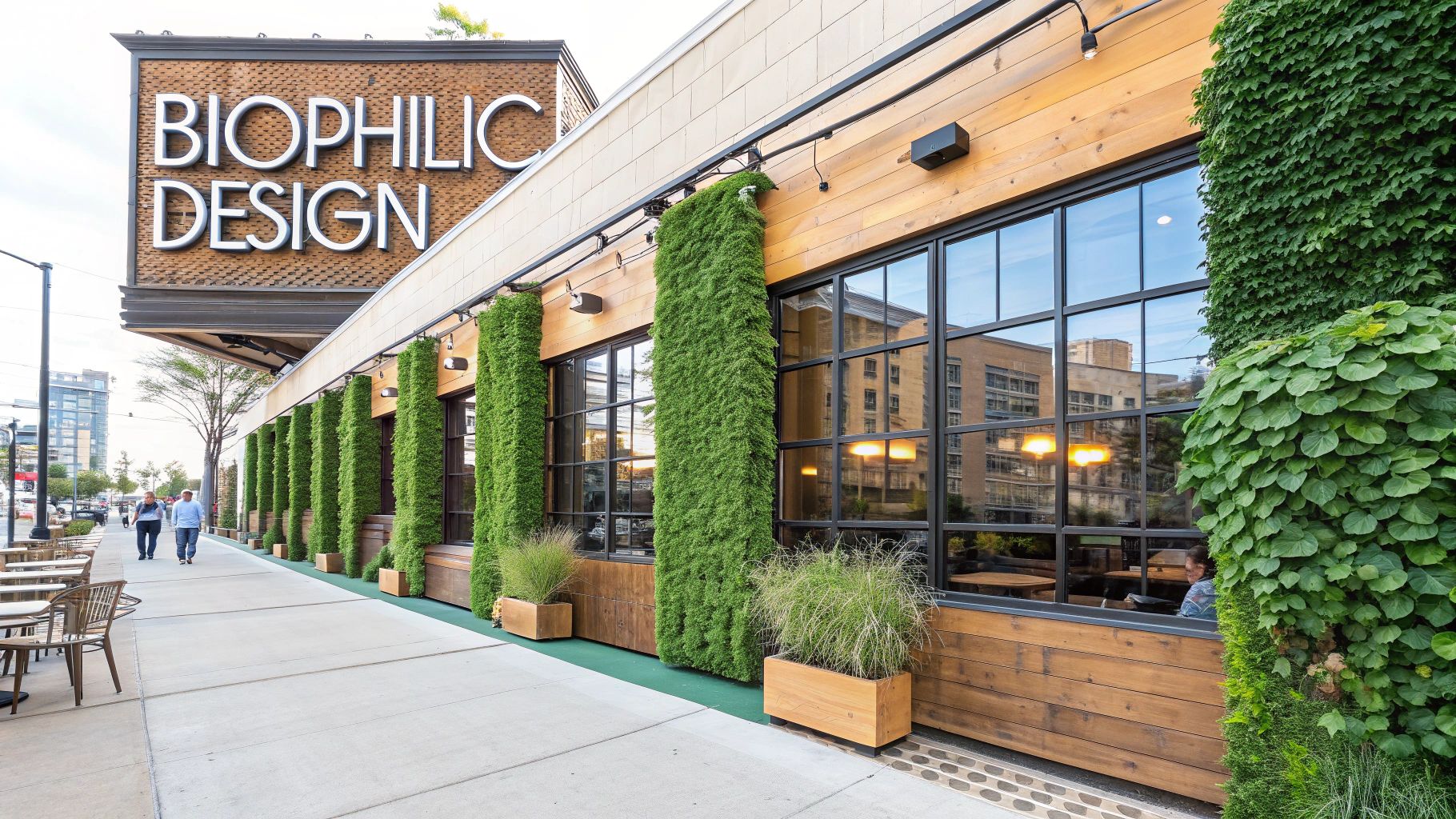
Diners today aren’t just looking for a good meal; they’re seeking an experience. This fundamental shift has pushed sustainability and biophilic design—the concept of connecting people with nature in built environments—from the fringes right into the mainstream of restaurant exterior design.
Adopting these principles isn't about just looking green. It's a savvy business move that can slash operating costs, elevate the guest experience, and forge a much stronger brand identity.
Bringing Nature into the Business Model
At its core, biophilic design operates on a simple premise: people are hardwired to connect with nature. When you apply this to exterior designs of restaurants, you're strategically incorporating natural light, plants, water, and organic materials to craft an atmosphere that feels healthier and more welcoming.
This goes way beyond sticking a few potted plants by the entrance. Real biophilic design embeds nature into the building’s very DNA.
Here’s how it comes to life:
- Living Green Walls: These vertical gardens do more than just look good. They turn a plain facade into a lush, air-purifying landmark that grabs attention and sends a clear message about wellness.
- Native Landscaping: Why fight the local climate? Using plants native to your area cuts down on water usage and maintenance while creating a landscape that feels authentic and deeply connected to its surroundings.
- Water Features: The gentle sound of a fountain or a sleek, modern cascade can work wonders. It creates a pocket of tranquility, masks urban noise, and gives guests a moment of calm before they even step inside.
An exterior that breathes life isn't just a design choice; it's a market differentiator. It communicates a brand that is fresh, healthy, and modern, attracting customers who actively seek out spaces that make them feel good.
By creating an environment that engages the senses, you encourage guests to linger longer, spend more, and rave about their experience. Your building’s exterior suddenly becomes an active player in driving customer satisfaction.
Smart Design for a Greener Bottom Line
Beyond the natural aesthetics, practical sustainable strategies offer a huge long-term payoff by shrinking a building's environmental impact and its operational costs. Think of these choices as smart investments that keep giving back.
Building orientation and material choices are mission-critical. A cleverly oriented building can take advantage of passive solar gain, using large south-facing windows for warmth in the winter and deep overhangs for shade in the summer. It’s a simple design decision made upfront that can dramatically reduce heating and cooling bills for decades.
Blurring the line between indoors and outdoors is a measurable trend. Architects are increasingly designing with larger glazed openings, durable low-maintenance materials, and the right infrastructure for outdoor HVAC systems to support year-round patio dining. For adaptive reuse and historic preservation projects, these modern strategies must be carefully balanced with local codes, Design Review Board expectations, and historic tax credit rules.
Choosing Eco-Friendly Materials and Systems
The materials you select for the exterior provide another chance to walk the talk on sustainability—without compromising on style or durability.
Here are a few key material strategies to consider:
- Locally Sourced Materials: Using stone, wood, or brick from regional suppliers cuts down on carbon emissions from transportation and pumps money back into the local economy.
- Recycled and Reclaimed Content: Materials like reclaimed wood, recycled steel, or composite decking give a building unique character and a great story, all while keeping waste out of landfills.
- High-Performance Windows: Upgrading to double- or triple-paned windows with low-emissivity coatings is a no-brainer. They minimize heat loss in winter and heat gain in summer, which you'll see reflected directly in your energy bills.
By making sustainability and biophilic design a core part of the plan from day one, you can create a restaurant exterior that isn't just beautiful but is also efficient to run and good for the planet. It's a forward-thinking approach that builds lasting value for the business, its patrons, and the community.
Unlocking Value with Adaptive Reuse
For developers looking to create truly memorable restaurant destinations, the best opportunities aren't always found on empty lots. Sometimes, they’re waiting inside the walls of existing buildings. Adaptive reuse—the art of repurposing old structures for new life—is a smart, sustainable, and often more cost-effective alternative to building from scratch. It’s about seeing the potential in a forgotten factory or the soul in a historic downtown bank.
These old buildings come with a built-in story, a history that a new build simply can't manufacture. Think of it as inheriting a narrative. Your restaurant doesn't just fill a space; it becomes the next chapter for a building that has seen generations come and go. That kind of authenticity is a powerful magnet for diners craving unique experiences.
The process of turning a historic structure into a bustling modern restaurant is a delicate dance. It’s all about preserving the irreplaceable character—the original brickwork, exposed timbers, or ornate metalwork—while weaving in the complex systems a contemporary restaurant needs to function.
Navigating the Preservation Puzzle
Pulling off a successful adaptive reuse project is a specialized skill. This is far more than a cosmetic makeover; it demands a deep understanding of how the building was originally put together and a thoughtful plan for bringing it into the 21st century. The real magic happens when the old and new coexist, where modern updates respect and even highlight the historic fabric.
This journey involves a few critical steps:
- Detailed Building Forensics: Before a single line is drawn, architects need to become building detectives. They dig into the original construction methods and materials to get a clear picture of the structure's strengths and weaknesses.
- Sensitive Systems Integration: The trickiest part is often threading modern HVAC, electrical, and plumbing through a building never designed for them—all without destroying the very features you’re trying to save.
- Code Compliance: Getting an old building up to today's safety, accessibility, and energy codes requires some seriously creative problem-solving to meet modern standards while honoring the past.
Historic preservation isn't a constraint; it's a specialized discipline that unlocks immense value. It turns forgotten buildings into one-of-a-kind landmarks with stories that connect with guests and the entire community.
The Financial and Brand Payoff
Beyond creating a stunning space, adaptive reuse can be a savvy financial move. Many of these projects are eligible for federal and state historic tax credits, which can take a significant bite out of development costs and seriously boost the project's overall ROI. While the approval process for these credits can be intricate, the financial rewards are often well worth the effort.
Ultimately, choosing adaptive reuse for a restaurant is a strategic decision that pays off in both character and cash flow. You’re not just building a restaurant; you’re creating a destination with a real competitive edge. The result is a space that feels grounded, authentic, and completely unforgettable—a powerful foundation for any restaurant business to build on.
We hear a lot of the same questions from developers and restaurant owners when they start thinking about exterior design. Let's tackle some of the most common ones head-on.
How Much Should I Budget for My Restaurant Exterior?
This is the big one, and the honest answer is: it varies wildly. As a general rule of thumb, you can expect the exterior to account for anywhere from 10% to 25% of your total construction budget.
Where you land in that range depends entirely on the scope of your project. A simple facelift—fresh paint, a new sign, and a stylish awning—will keep you on the lower end. But if you’re planning major structural work like adding a patio, installing large-scale windows, or using high-end materials like custom stone or metalwork, you'll naturally trend toward the higher end of that budget. Think of it less as a cost and more as an investment in your restaurant's curb appeal and, ultimately, its revenue.
What Is the Biggest Mistake to Avoid with Outdoor Seating?
By far, the most common mistake we see is treating the patio or outdoor seating area as an afterthought. It's so much more than just throwing a few tables and chairs out on the sidewalk.
When outdoor space isn't planned from the very beginning, you end up with all sorts of problems: awkward pathways for servers, no real protection from the sun or a sudden rain shower, and furniture that just doesn't fit the vibe. A great patio feels like a natural extension of the restaurant, seamlessly connected to the interior flow, the kitchen, and your overall brand.
The key to modernizing a historic building is to respect its original character while making sensitive, contemporary interventions. The goal is to create a dialogue between old and new, not a competition.
This kind of thoughtful approach not only looks better but is also more likely to win over Design Review Boards and can even open the door to historic tax credits. It's about turning preservation into a smart business decision.
Ready to transform your vision into a landmark destination? The team at Sherer Architects, LLC specializes in commercial architecture, adaptive reuse, and historic preservation, delivering beautiful and enduring results. Explore our portfolio and start your project today.