When we talk about environmentally conscious architecture, we're looking at something much deeper than just slapping on a few solar panels or planting a green roof. It’s a design philosophy that fundamentally rethinks how a building interacts with the world around it. The goal is to minimize—or even reverse—the negative environmental footprint of our buildings.
This means focusing on energy efficiency, choosing sustainable materials, and creating healthier indoor spaces. It’s about moving beyond simple aesthetics to design buildings that actively benefit both people and the planet.
Defining Environmentally Conscious Architecture
Think of traditional construction like a one-way street: we take resources from the earth, use them to build, and eventually create waste. Environmentally conscious architecture, on the other hand, operates more like a regenerative loop. It's a thoughtful approach that works with nature, not against it, to create structures that are efficient, healthy, and resilient for the long haul.
This isn't just a fleeting trend; it's a fundamental shift in how we approach the built environment. At its core, the goal is to create spaces that reduce environmental harm while simultaneously enhancing the well-being of the people inside and delivering long-term economic value. This is achieved by focusing on a few key pillars.
Core Pillars of Sustainable Design
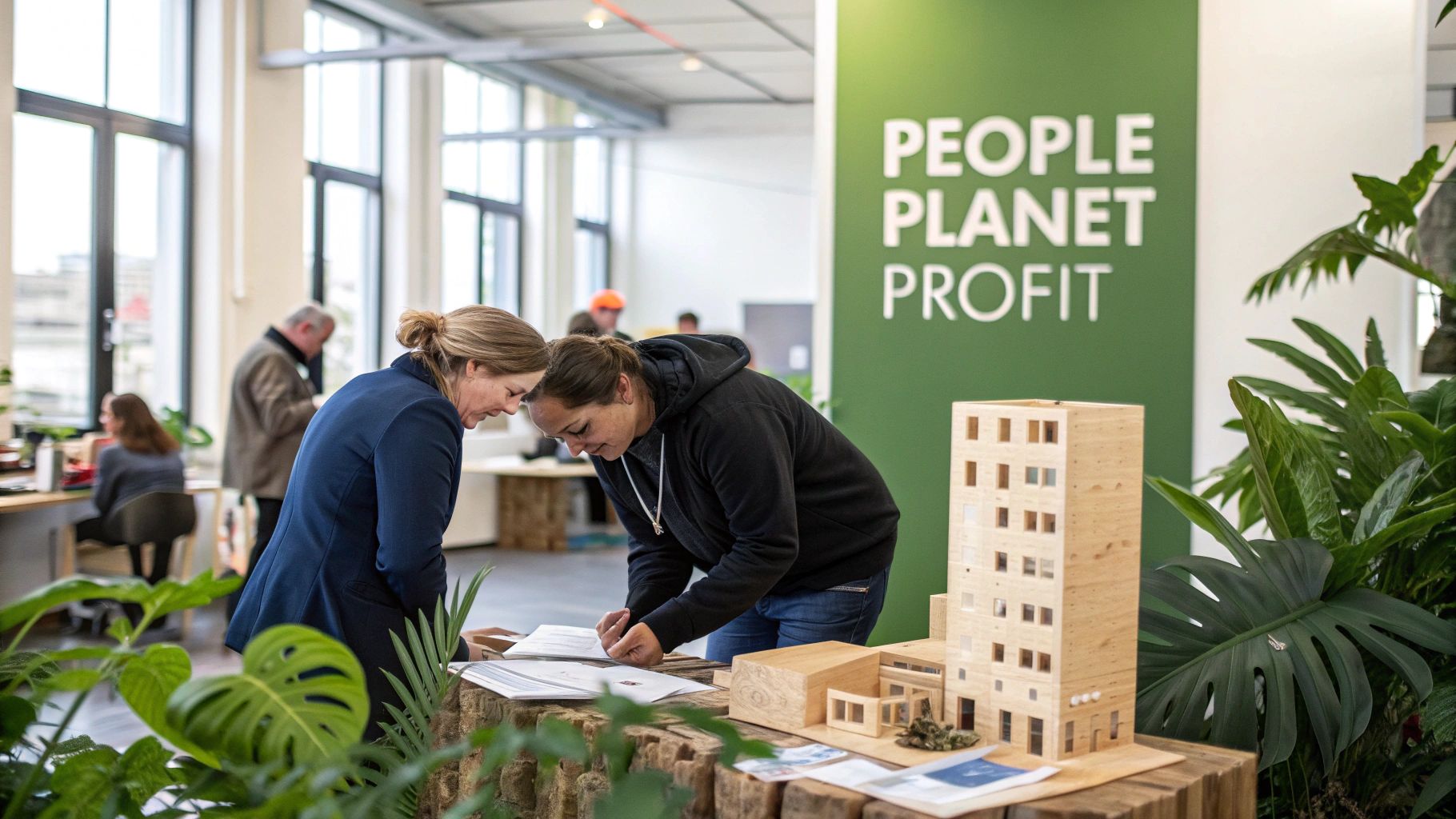
At its heart, this architectural approach balances three critical elements to achieve its ambitious goals:
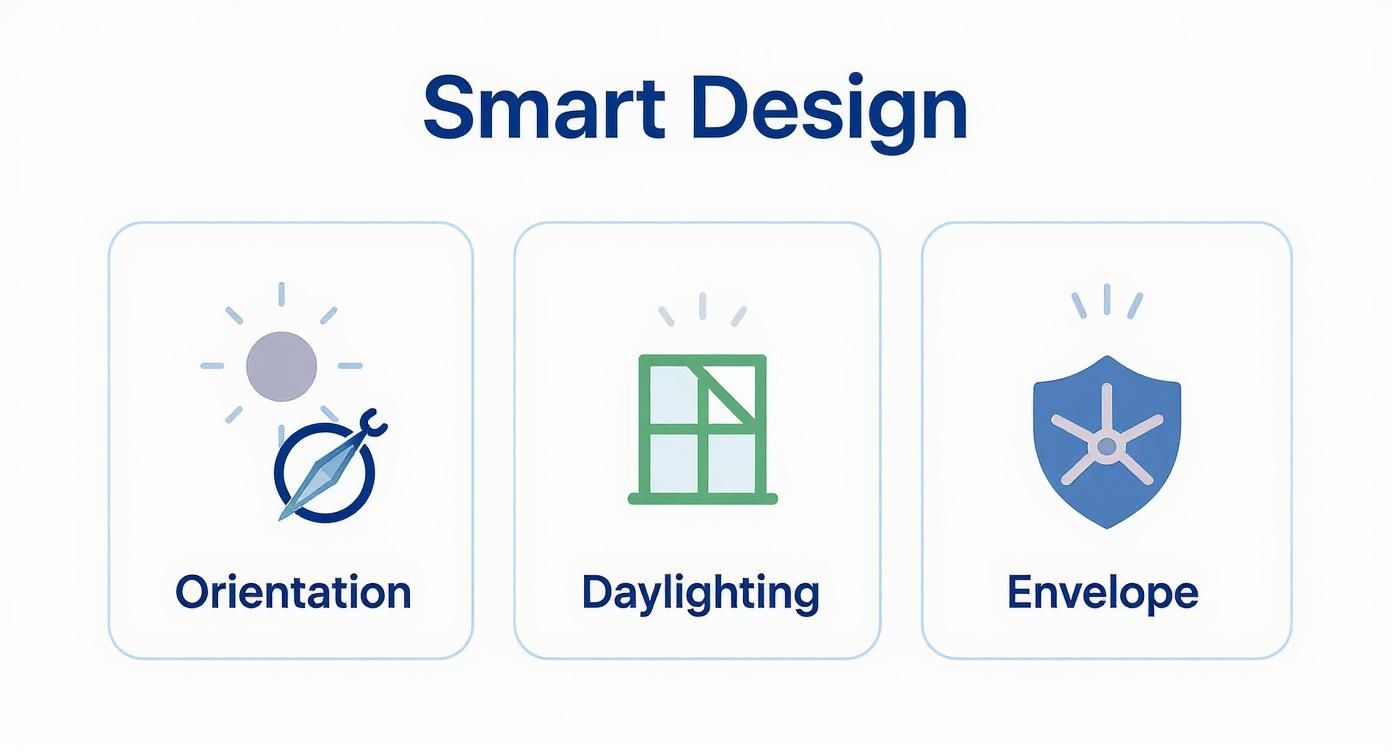
- Smart Design: This is all about leveraging the natural environment. A simple example is orienting a building to maximize sunlight for warmth in the winter and minimize it in the summer, which dramatically cuts down on heating and cooling needs.
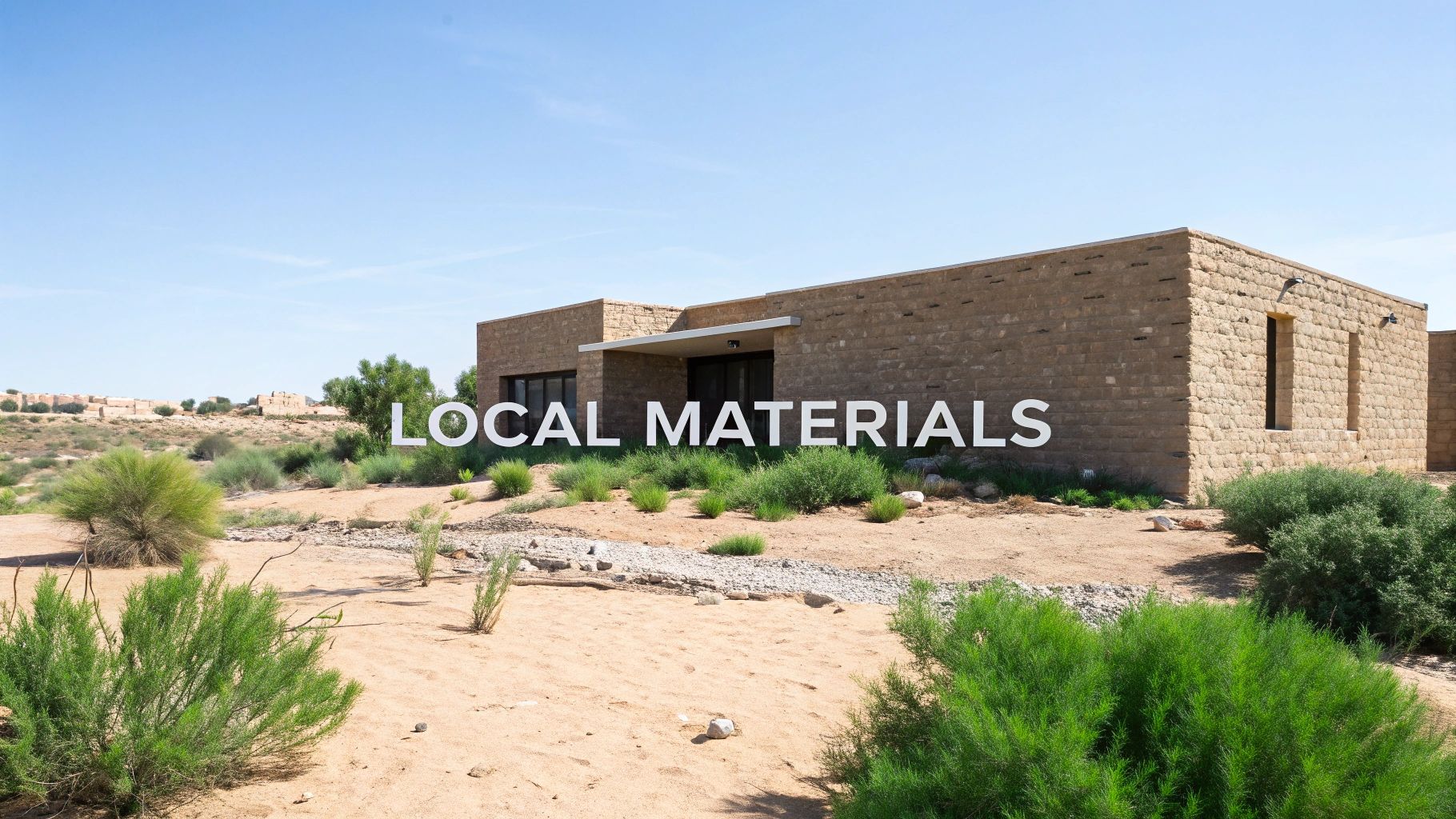
- Material Selection: Making a conscious choice to use materials that are recycled, renewable, or locally sourced reduces a building's environmental footprint right from the start.
- Energy Efficiency: Integrating high-performance systems for heating, cooling, and lighting ensures the building uses as little energy as possible throughout its entire life.
A key part of this is tackling two distinct types of carbon emissions: operational carbon (the energy a building uses day-to-day) and embodied carbon (the emissions generated from manufacturing materials and the construction process itself).
The Growing Demand for Green Buildings
The momentum behind this shift is undeniable. The global green construction market, valued at USD 711.0 million in 2025, is projected to more than double, reaching an estimated USD 1,508.6 million by 2032.
This explosive growth is a direct response to a hard reality: the building sector consumes over 34% of global energy and is responsible for nearly 10 gigatons of CO₂ emissions every year. As regulations tighten—for instance, the EU now mandates all new buildings be zero-emission by 2030—environmentally conscious architecture is quickly moving from a "nice-to-have" to a market necessity. As you can find in more market growth insights on Coherent Market Insights, this ensures that design promises translate into real-world performance.
By weaving these principles into the design process, environmentally conscious architecture creates buildings that are not only better for our planet but also more economical to operate and healthier for the people who live and work in them every single day.
The Financial Case for Building Green
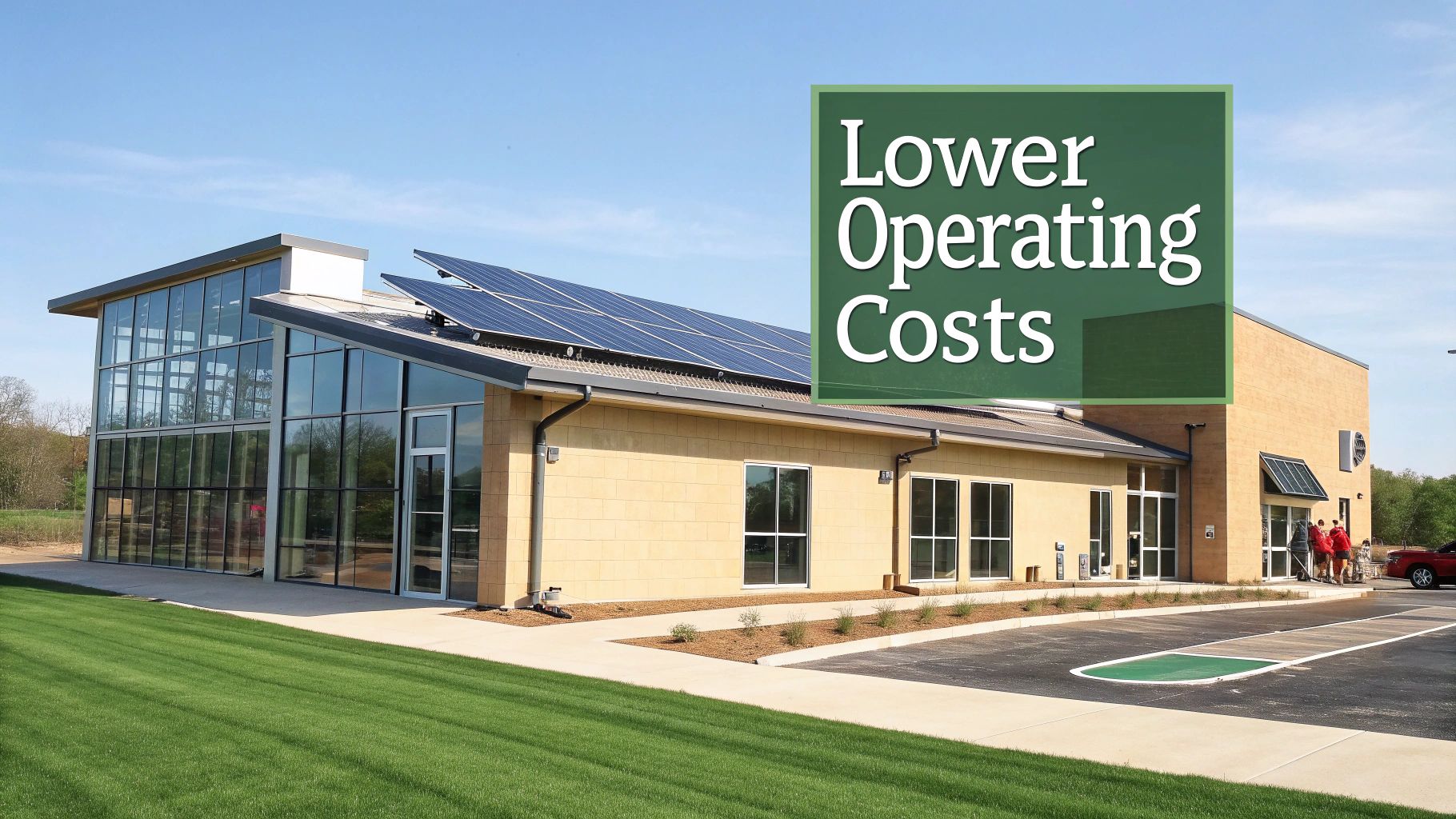
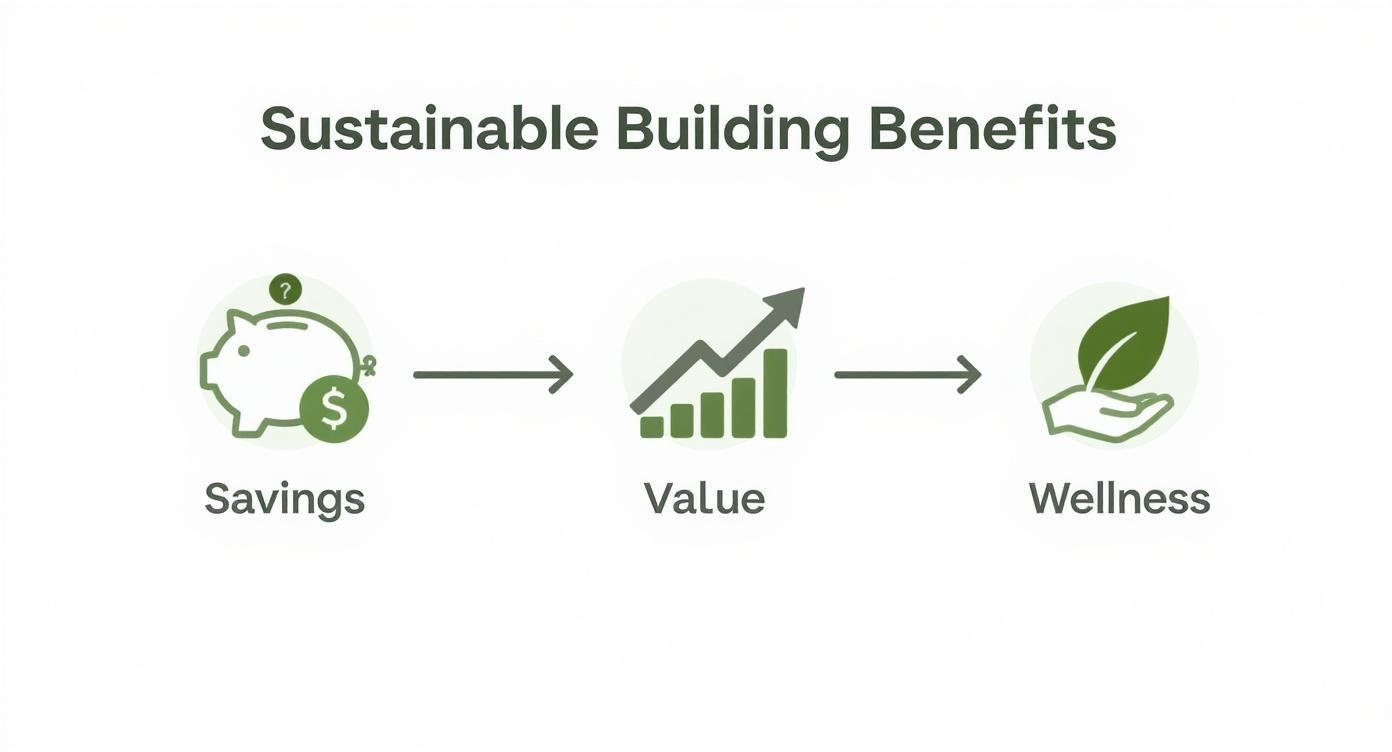
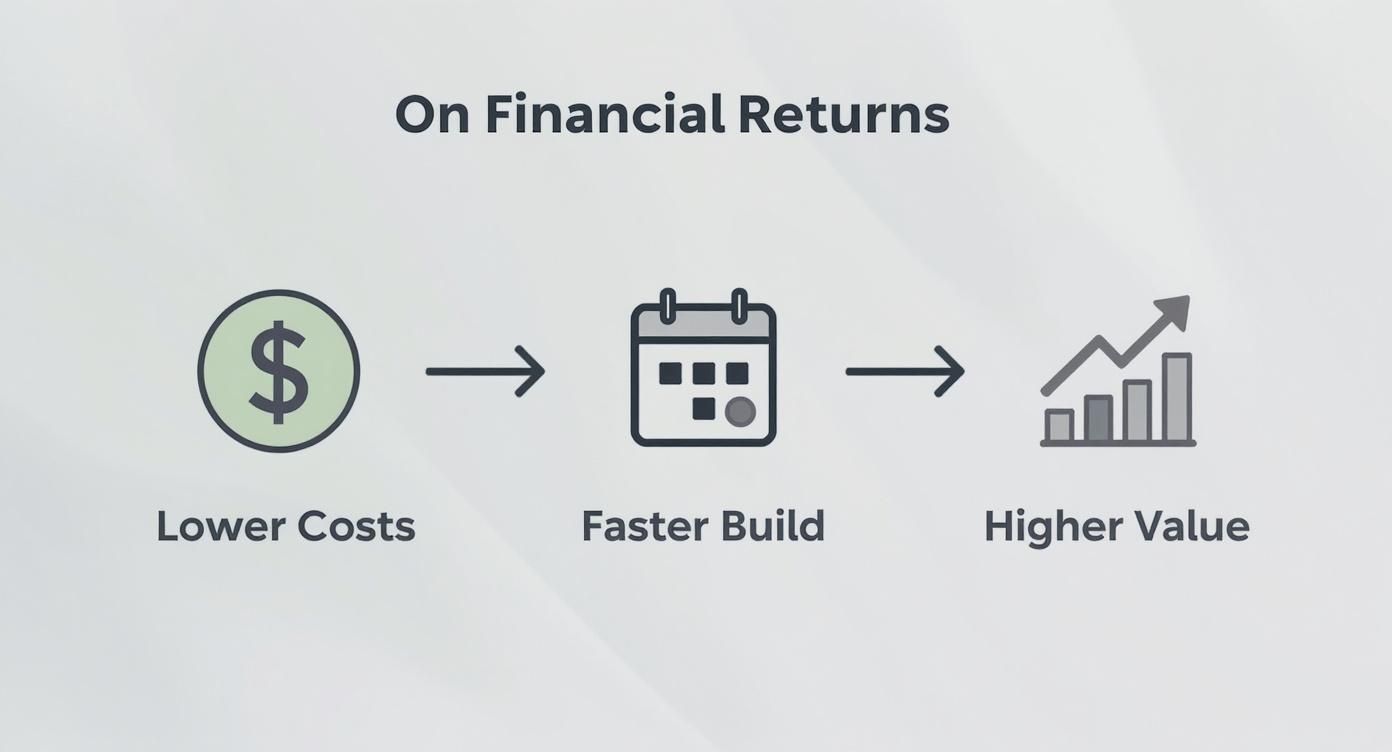
While the environmental and ethical reasons for building sustainably are compelling, the business case is what truly moves the needle. It's time to put the old myth that "green" equals "expensive" to rest. Environmentally conscious architecture isn't just about doing the right thing; it’s a smart financial strategy that pays real dividends over the life of a building.
The key is to shift your perspective from short-term construction costs to the building's entire life-cycle value. When you factor in everything—from day-to-day operations to future resale value—sustainable buildings consistently come out on top as more profitable, more resilient investments.
Slashing Operational Costs Year After Year
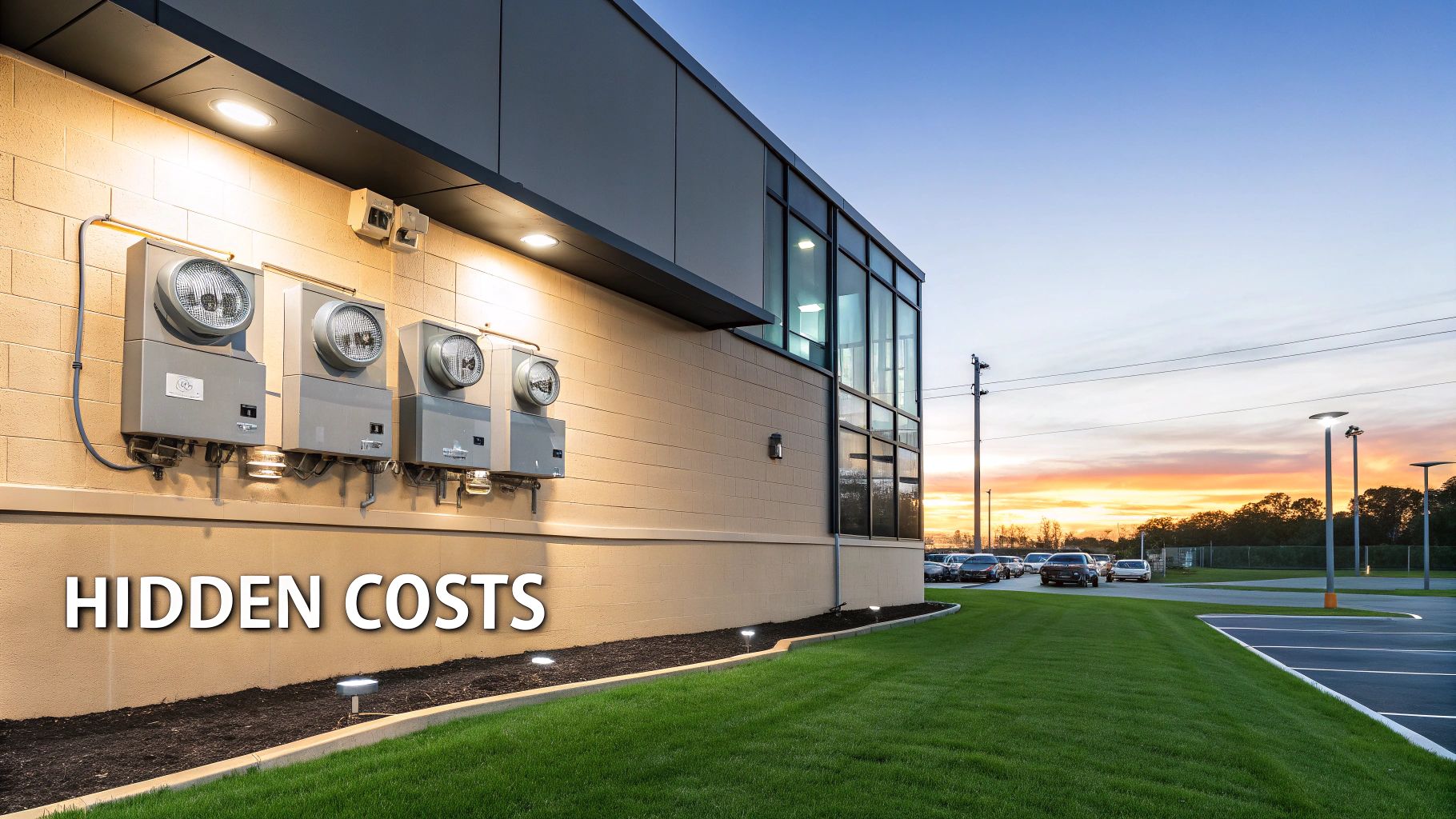
The most immediate and obvious financial win comes from lower operating expenses. Think of a well-designed green building as a finely tuned machine, engineered to perform at its peak using minimal resources. By integrating smart energy systems and a high-performance building envelope, these properties simply sip energy instead of guzzling it.
This efficiency shows up right where it counts: on your monthly utility bills. High-performance HVAC systems, smart LED lighting, and water-saving fixtures all work together to drive down costs. For example, in a sunny climate like South Carolina's, you can reduce cooling costs significantly with advanced window films that reject solar heat without sacrificing natural daylight.
Green buildings are not just cost-cutters; they are high-performance assets. Data shows that investing in green building retrofits can cut everyday operating expenses by up to 10% annually, while new green constructions can reduce maintenance costs by 20% compared to traditional structures.
This consistent drop in overhead creates a reliable financial buffer and shortens the payback period on your initial investment, making the property more profitable from the get-go.
Boosting Asset Value and Attracting Tenants
Beyond the monthly savings, environmentally conscious architecture makes your building a more valuable asset in the marketplace. In today's economy, sustainability is a powerful feature that attracts top-tier tenants and commands higher sale prices.
Corporations are increasingly guided by Environmental, Social, and Governance (ESG) goals, and they actively seek out certified green buildings. These tenants are often willing to pay more for spaces that reflect their values and provide a healthier environment for their employees. This creates a clear competitive advantage for property owners:
- Higher Rental Rates: Green-certified buildings consistently lease for more than their conventional counterparts.
- Increased Occupancy: Demand for sustainable spaces means lower vacancy rates and quicker lease-up times.
- Greater Resale Value: As the market continues to prioritize sustainability, these properties appreciate faster and are easier to sell.
The following table breaks down how these advantages stack up against traditional properties.
Financial And Performance Gains Of Green Buildings
| Metric | Conventional Building | Green Certified Building |
|---|---|---|
| Operating Costs | Standard utility and maintenance bills. | Up to 10-20% lower annually. |
| Rental Rates | Baseline market rates. | Often command a 5-11% rental premium. |
| Occupancy Rates | Standard market vacancy rates. | Typically higher due to strong demand. |
| Resale Value | Standard appreciation. | Increased asset value and market appeal. |
| Tenant Appeal | Broad appeal. | High appeal to ESG-focused corporations. |
| Resilience | Dependent on grid and infrastructure. | More self-sufficient and resilient. |
Ultimately, these metrics confirm that green buildings aren't just an ethical choice—they are a superior financial asset designed for long-term performance.
Building Resilience for a Changing World
Finally, sustainable buildings are just plain tougher. They are designed from the ground up to adapt to a future where climate-related risks and volatile energy prices are the new normal.
This built-in resilience is a critical financial advantage. A building that can keep the lights on during an extreme weather event or stay comfortable during a power outage protects business continuity. Features like natural ventilation, superior insulation, and on-site renewables make these structures less dependent on fragile utility grids. This durability safeguards the asset against future shocks, making environmentally conscious architecture a truly forward-thinking and secure investment.
Core Strategies for Sustainable Building Design
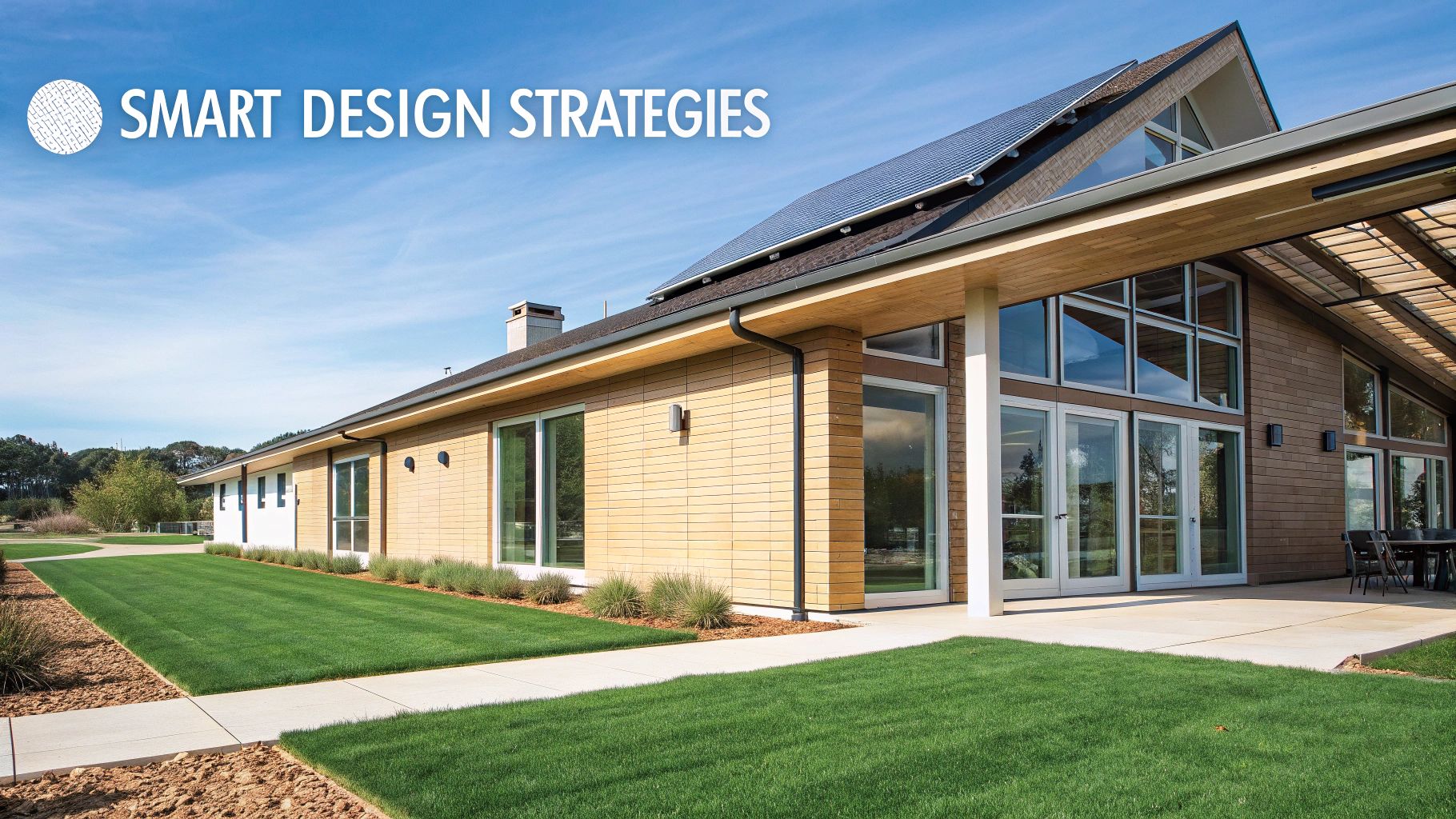
Now that we've covered the financial upsides, let's get into the nuts and bolts of how environmentally conscious architecture actually works. These aren't just abstract ideas; they're practical, proven design principles that work together to create buildings that perform exceptionally well.
By weaving these four key strategies into a project from the very start, we can dramatically cut a building's environmental footprint while making it a better, more valuable place to be. Think of it as a layered approach to smart design, where each strategy supports the others, creating a building that is efficient, comfortable, and resilient from the ground up.
Embracing Passive Design First
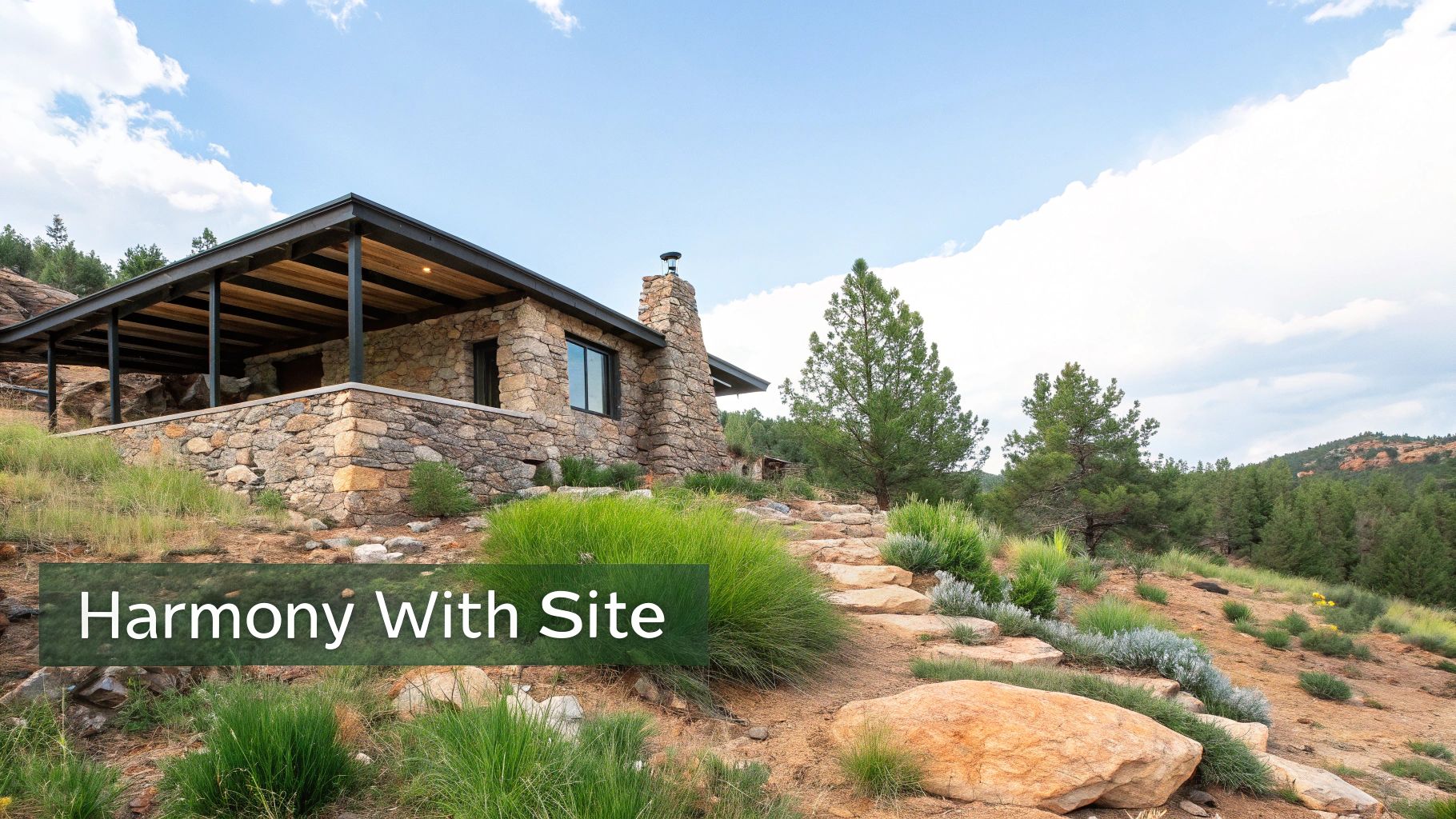
Before you even think about solar panels or high-tech HVAC systems, the most intelligent move is to let nature do the work for you. That's the whole idea behind passive design: using the building’s location, climate, and position to slash energy needs. It’s like a plant instinctively turning its leaves to catch the sun—a building can be designed to do the exact same thing for energy.
By simply paying attention to the sun's path and local wind patterns, an architect can design a building that stays comfortable year-round with very little help from mechanical heating and cooling. This is, without a doubt, the most powerful and cost-effective first step.
- Strategic Orientation: We position the building to welcome the low winter sun for natural warmth while shielding it from the harsh, high-angle summer sun to keep things cool.
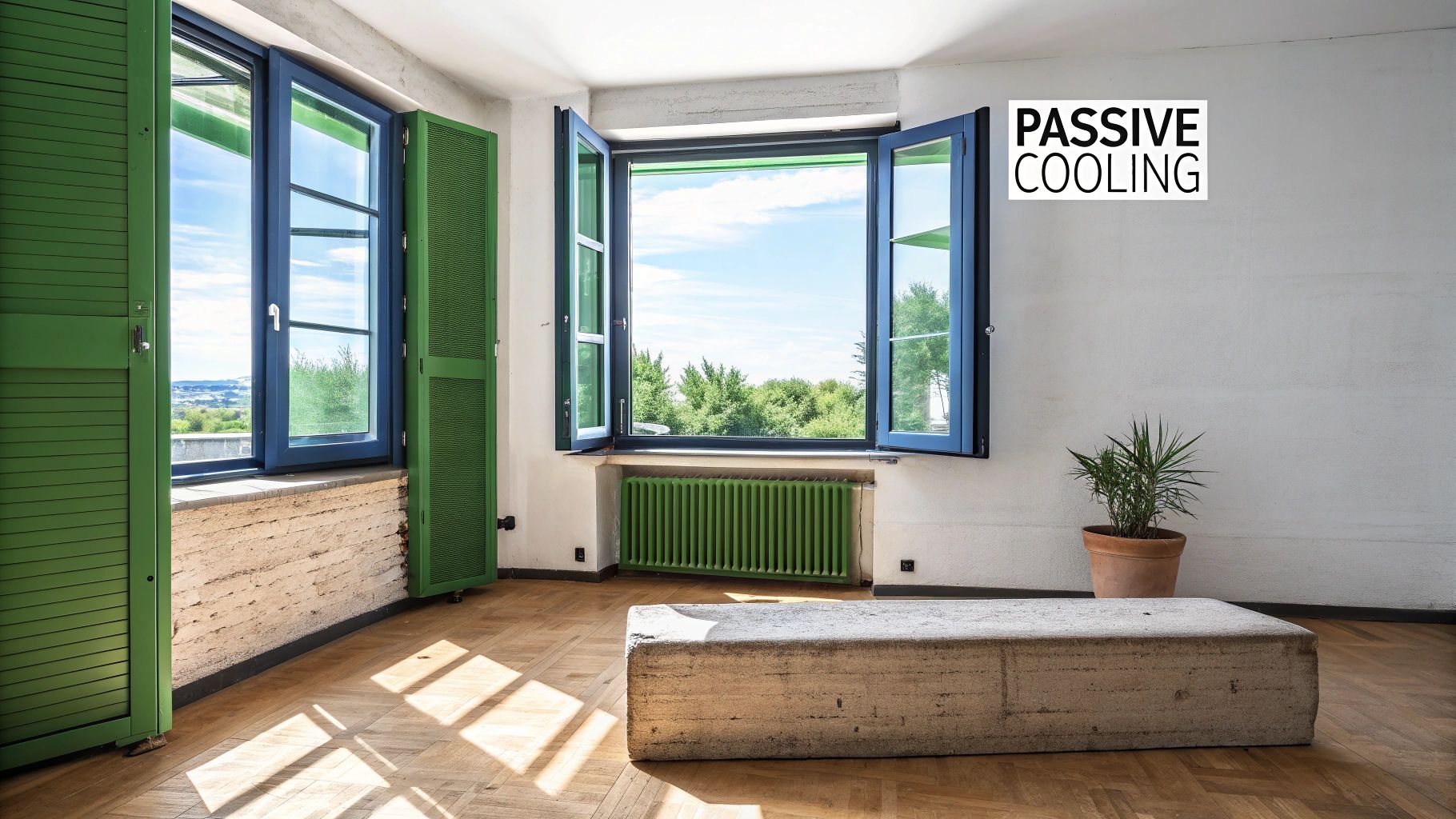
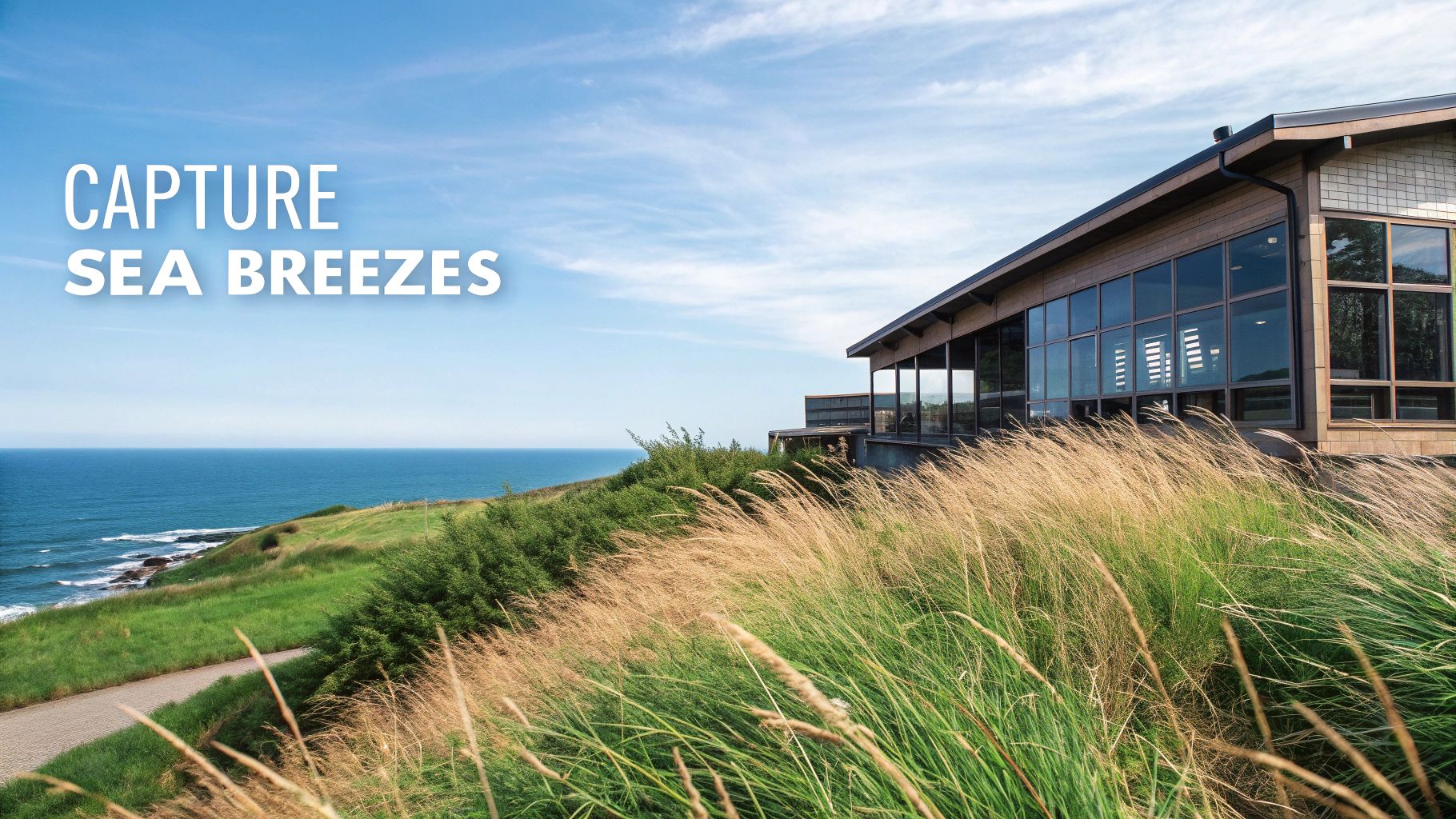
- Natural Ventilation: Windows and openings are designed to catch prevailing breezes, creating natural airflow that cools the interior without flipping a switch.
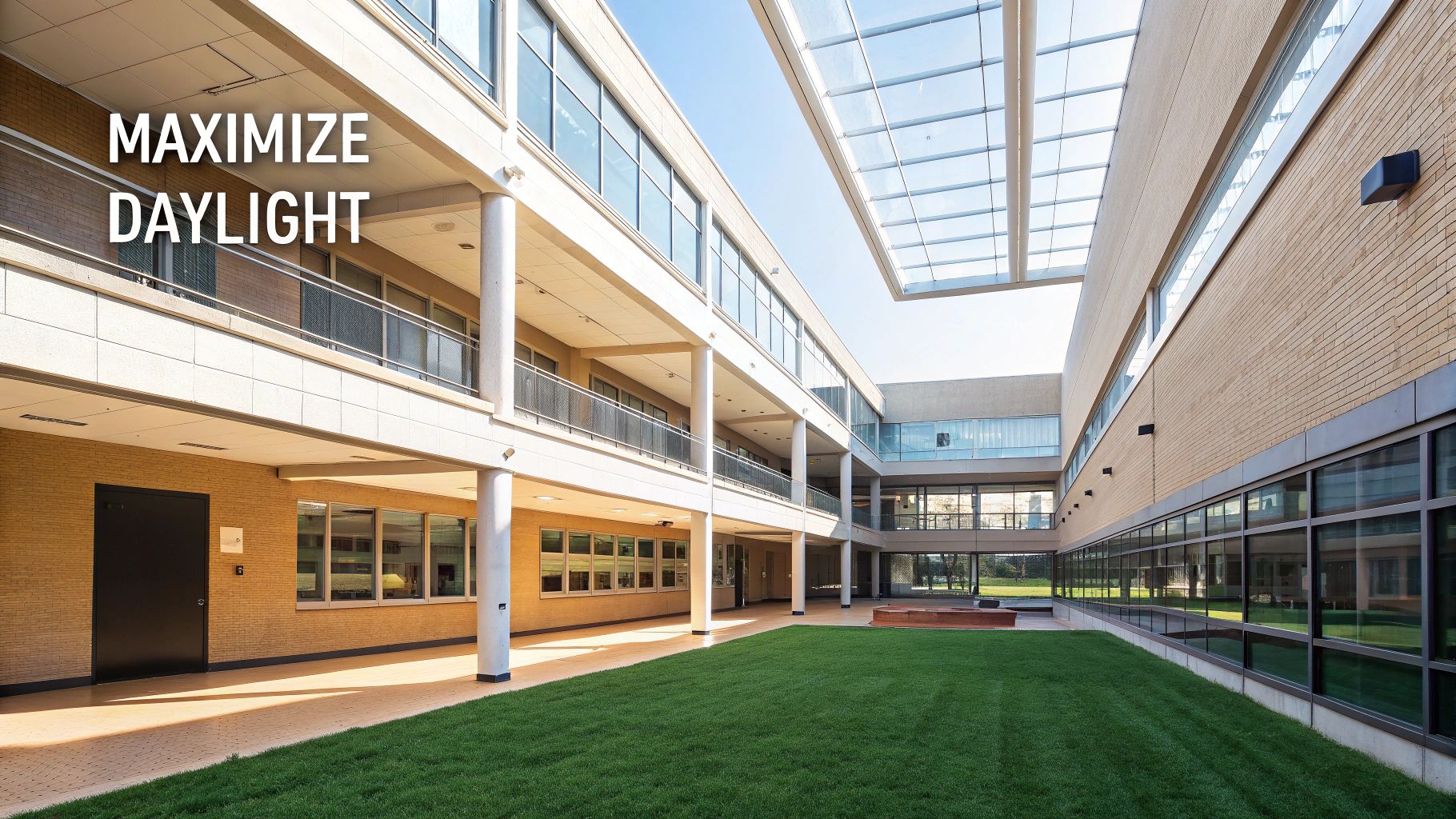
- Daylighting: Large, thoughtfully placed windows, light shelves, and skylights flood the space with natural light, cutting down the need for artificial lighting during the day.
Fortifying the Building Envelope
With a smart passive design in place, the next job is to wrap the building in a high-performance building envelope. Think of the envelope as the building’s technical shell—its skin. Its main purpose is to create a solid barrier, keeping the comfortable conditioned air inside and the outside weather where it belongs.
A leaky, poorly insulated envelope is like wearing a mesh jacket in a blizzard; you're just bleeding energy. A robust envelope is the bedrock of energy efficiency, drastically reducing how hard the heating and cooling systems have to work and delivering huge energy savings over the long haul.
A well-sealed and insulated building envelope is the single most important factor in reducing a building's heating and cooling costs. It's the foundation upon which all other energy efficiency measures are built.
This is achieved with a combination of elements, like advanced insulation, high-performance windows with special low-emissivity (Low-E) coatings, and meticulous air sealing to stop costly drafts and leaks in their tracks.
Optimizing Mechanical Systems
Because passive design and a tight envelope have already done so much to reduce the building's energy demand, the mechanical systems—the HVAC, lighting, and plumbing—can be much smaller, more efficient, and less expensive. Systems optimization is all about choosing the right equipment for the job and making sure it all works together seamlessly.
Instead of just installing oversized, energy-guzzling equipment "just in case," we can right-size the systems to match the building's actual, reduced needs. This could mean smart lighting with occupancy sensors that turn off when a room is empty or high-efficiency HVAC units that use a fraction of the power of older models. It also includes things like low-flow toilets and faucets to cut down on water use.
Selecting Sustainable Materials
The final piece of the puzzle is the careful choice of building materials. Everything that goes into a building, from its concrete foundation to its interior paint, has an environmental history. Sustainable material selection is the practice of choosing products that have a lighter impact across their entire life cycle—from how they're sourced and made to how they're used and eventually disposed of.
This means prioritizing materials that are recycled, renewable, locally sourced, and non-toxic. Using reclaimed wood, for example, not only saves trees but also adds incredible character. Opting for low-VOC (volatile organic compound) paints and finishes dramatically improves indoor air quality, making the building healthier for everyone inside. When implementing core strategies for sustainable design, it's crucial to explore the top eco-friendly building materials available on the market to make informed decisions that align with project goals.
By putting these four strategies together—passive design, a tight envelope, optimized systems, and smart materials—we create buildings that are far more than just the sum of their parts. They become elegantly integrated systems designed from the start to be efficient, healthy, and built to last.
Making Sense of Green Building Certifications
So, a building claims to be “green.” How do you really know? In the world of sustainable architecture, you can’t just take someone’s word for it—you need proof. That's where green building certifications come into play.
Think of them like a nutritional label for a building. They offer a clear, standardized, and independently verified report card on a building’s environmental performance. These aren’t just participation trophies; they are rigorous, data-driven frameworks that score a project across dozens of metrics. For a developer or owner, earning a certification is far more than a plaque for the lobby. It's a powerful statement about the project's quality, efficiency, and long-term value.
LEED: The Industry Benchmark
When people talk about green buildings in North America, they’re often talking about LEED. Developed by the U.S. Green Building Council (USGBC), LEED (Leadership in Energy and Environmental Design) is a globally recognized symbol of sustainability achievement.
It’s built on a straightforward points system. Projects earn points by meeting specific criteria across a range of categories. Add up the points, and you land one of four certification levels: Certified, Silver, Gold, or the highly coveted Platinum.
The system looks at the whole picture:
- Sustainable Sites: Did you build on a site that minimizes environmental harm? Did you protect natural habitats and manage stormwater effectively?
- Water Efficiency: How smart is the building with water? This covers everything from low-flow fixtures to water-wise landscaping.
- Energy and Atmosphere: This is the big one. It’s all about minimizing energy consumption through good design, efficient systems, and renewable energy sources.
- Materials and Resources: What is the building made of? This category rewards the use of sustainable, recycled, and regional materials, and it pushes teams to reduce construction waste.
- Indoor Environmental Quality: A green building should be a healthy building. This focuses on clean air, natural light, and creating a comfortable space for the people inside.
A LEED-certified building sends a clear signal to the market: this is a high-performance asset built to last.
Beyond LEED: Other Key Players
While LEED is the heavyweight champion, it's not the only game in town. Other excellent certification systems offer different philosophies and levels of ambition, allowing teams to find the perfect fit for their project.
BREEAM (Building Research Establishment Environmental Assessment Method) is the UK's answer to LEED and is used all over the world. It’s a similarly comprehensive, science-based system but places a particularly strong emphasis on a building’s entire life-cycle performance—from the drawing board all the way through its operational years.
For those who want to push the boundaries of what's possible, there's the Living Building Challenge. This isn't so much a checklist as it is a profound design philosophy. The goal is to create buildings that are truly regenerative, meaning they actually give more back to the environment than they take. To succeed, a project must generate all its own clean energy, capture and treat all its own water, and be built from non-toxic, responsibly sourced materials. It's an incredibly high bar, but it shows what’s achievable.
These certifications are all about accountability. The global construction industry is a massive contributor to carbon emissions. While sustainable design is gaining traction, the pace of change is still too slow. Verifiable standards like these are essential for closing the gap between what we say we’ll build and how a building actually performs.
The Power of Predictive Energy Modeling
How can you be sure a design will hit its energy targets before you even break ground? The secret weapon is energy modeling. This is basically a digital twin of your building, created with sophisticated computer simulation software.
Architects and engineers feed the model all the crucial data: the building’s orientation, the type of windows, the R-value of the insulation, the specs for the HVAC system, and more. The software then runs a year-long simulation using local weather data to predict exactly how the building will consume energy, month by month.
This powerful tool lets the design team test-drive different ideas. What’s the long-term payback on triple-pane windows versus double-pane? How much energy would we save by shifting the building’s orientation by 15 degrees? Energy modeling provides the data to answer these questions, turning aspirational green design into a measurable, predictable reality.
Breathing New Life into Existing Buildings
While shiny new towers often steal the spotlight, one of the most impactful sustainable design strategies doesn’t involve a single shovel of new dirt. It’s built on a simple but powerful idea you'll hear from preservationists and green architects alike: the greenest building is the one already standing.
This isn't just a sentimental thought. It's about a crucial concept called embodied carbon—all the CO2 released just to manufacture the steel, concrete, and glass, and then to haul it all to a site and put it together. When we decide to renovate instead of demolish, we honor that massive upfront carbon investment and sidestep the environmental cost of starting all over.
The Power of Adaptive Reuse
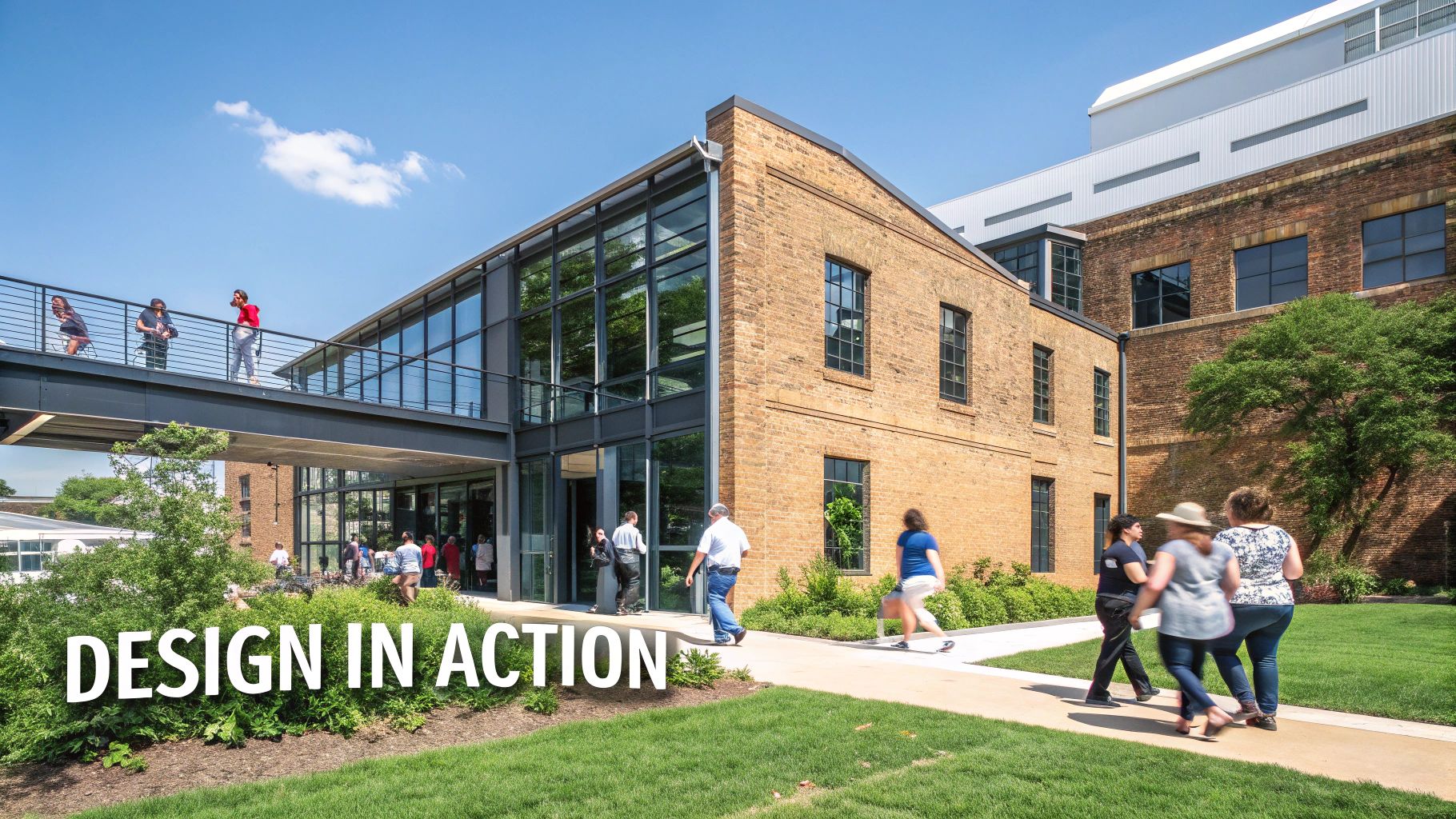
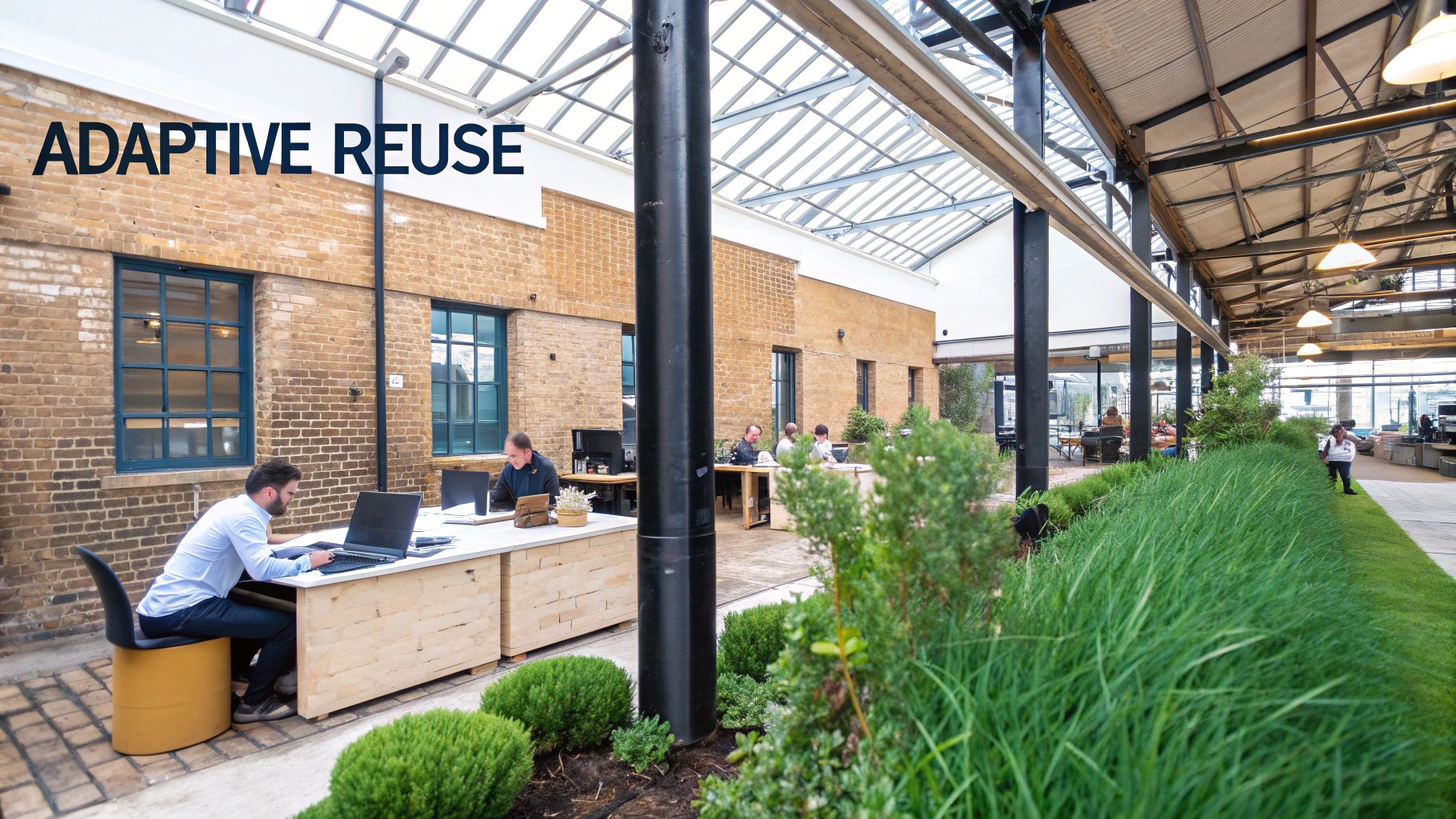
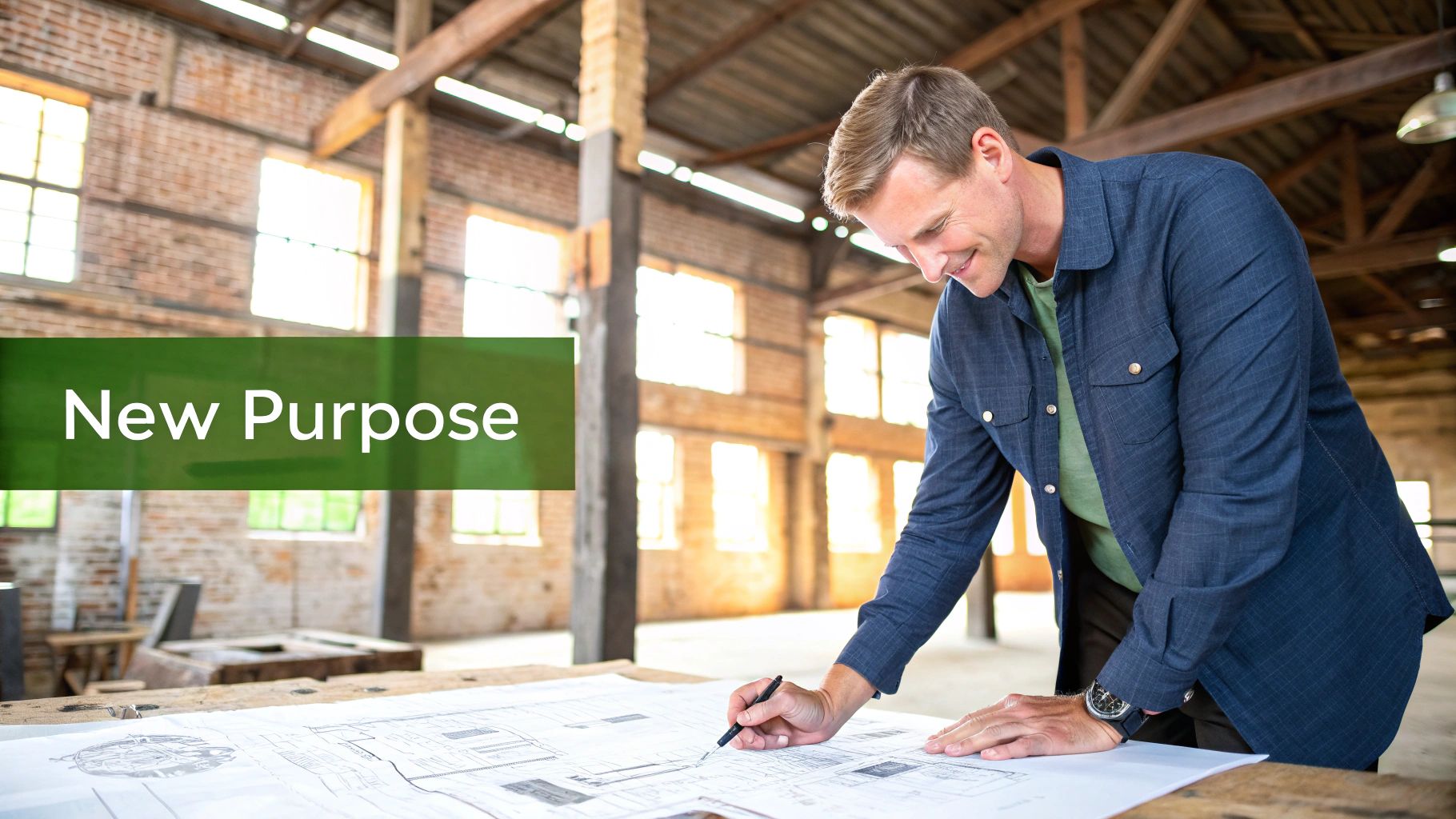
Adaptive reuse is the art of giving an old building a new job. Imagine a historic textile mill in Greenville finding a second life as modern loft apartments, or a forgotten warehouse on the Charleston peninsula being reborn as a bustling food hall. This is more than just recycling; it's a strategic move that saves resources, injects energy into established neighborhoods, and protects our architectural heritage.
The beauty of this approach is twofold. First, you're saving the embodied energy locked into the original structure's bones. Second, you’re often working within existing, walkable communities, which cuts down on the demand for new roads and sprawling infrastructure.
Think of it this way: by adapting an existing structure, you're essentially recycling an entire building. This single choice can slash 50% to 75% of the embodied carbon emissions that would have been generated by new construction.
Historic Preservation Meets Modern Performance
Though a close cousin to adaptive reuse, historic preservation has a slightly different mission. The goal here isn't just to repurpose the space, but to painstakingly protect its historical and architectural soul while making it perform for the 21st century. It's a delicate dance: how do you thread modern, energy-efficient systems into a building without erasing the character that makes it so special?
It's a genuine challenge, but the payoff is huge. Getting it right takes a creative team that knows how to weave the new seamlessly into the old.
A few common strategies include:
- Window Restoration: Instead of ripping out original wood or steel windows, experts can restore them and add modern weatherstripping or low-profile interior storm panels. This boosts thermal performance without sacrificing the historic look of the facade.
- Strategic Insulation: Carefully blowing high-performance insulation into attics and basements, or even wall cavities when possible, in a way that works with the original construction and avoids creating moisture problems down the road.
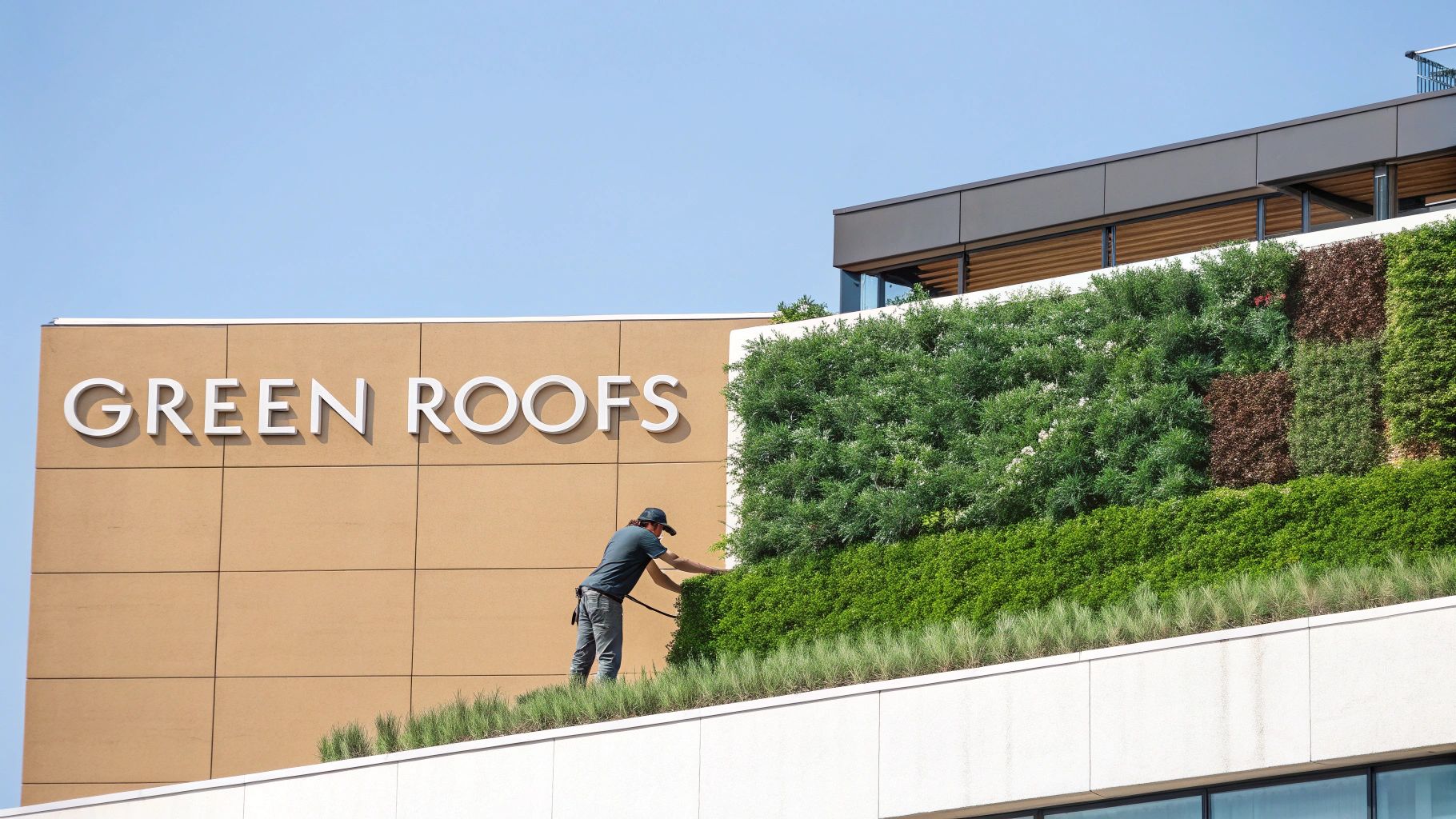
- Discreet Modernization: Integrating high-efficiency HVAC systems and even solar panels where they won't be seen, like on flat roofs or less prominent building faces.
Financial Incentives for Sustainable Renovation
Choosing to save an old building isn't just good for the planet—it’s also a savvy financial move, thanks to some powerful incentives. Programs like the Federal Historic Tax Credit can offer a substantial credit, often 20% of the total qualified rehabilitation costs, which directly reduces a developer's federal income tax bill.
On top of that, many states, including South Carolina, have their own historic tax credit programs that can be "stacked" with the federal incentive. These financial tools can take a huge bite out of the upfront costs of a renovation, making it a real competitor to new construction. When you combine those credits with the long-term savings from a more efficient, updated building, the business case is hard to argue with.
Your Guide to Local Incentives and Resources
Turning the ideas of environmentally conscious architecture into a real, standing building takes a solid plan. For developers and property owners here in South Carolina, this means getting practical and tapping into local opportunities from day one. Real success is baked in long before the first shovel hits the dirt.
The early planning phase is where you truly set yourself up for both financial and sustainable wins. It’s about more than just finding an open lot; it's about picking a site that plays nicely with our climate and making sure your project goals align with the financial incentives on the table. Getting an experienced architect involved early is the key to making this all click.
Strategic Planning and Design
Every great project starts with clear goals. Are you aiming for a specific LEED certification? Do you plan to capitalize on historic tax credits? Figuring this out upfront guides every single decision that follows and lets your design team craft plans that hit those targets perfectly.
It’s a huge advantage to work with architects who know South Carolina’s specific building codes, energy standards, and green certification programs inside and out. They can help you navigate the maze of local rules and pinpoint the best sustainable strategies for our region, whether that’s designing for optimal sun exposure or managing stormwater like a pro.
A common mistake is treating sustainability as an add-on. For the best ROI, green building goals must be integrated into the project’s DNA from the initial concept, influencing site selection, massing, and material choices.
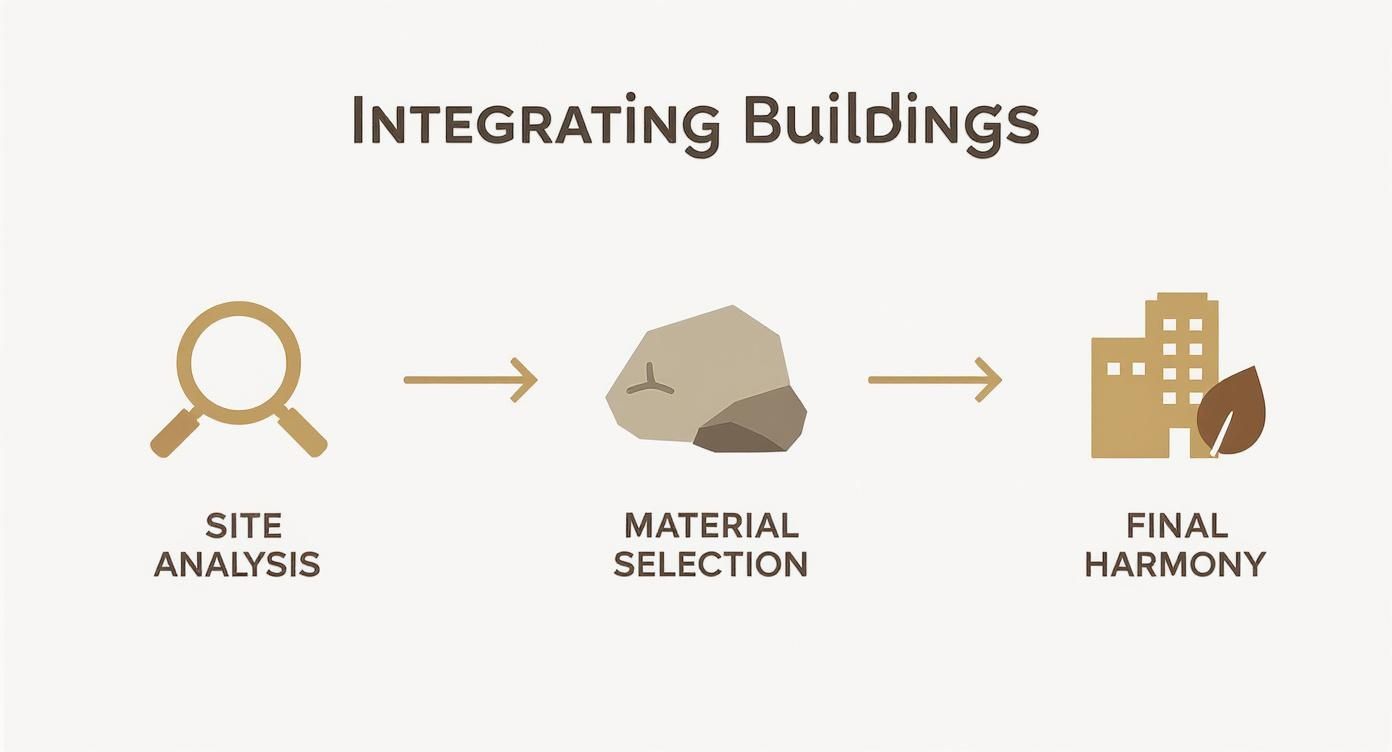
This flow chart shows how you can take an existing building and transform it into a high-performance, sustainable asset.
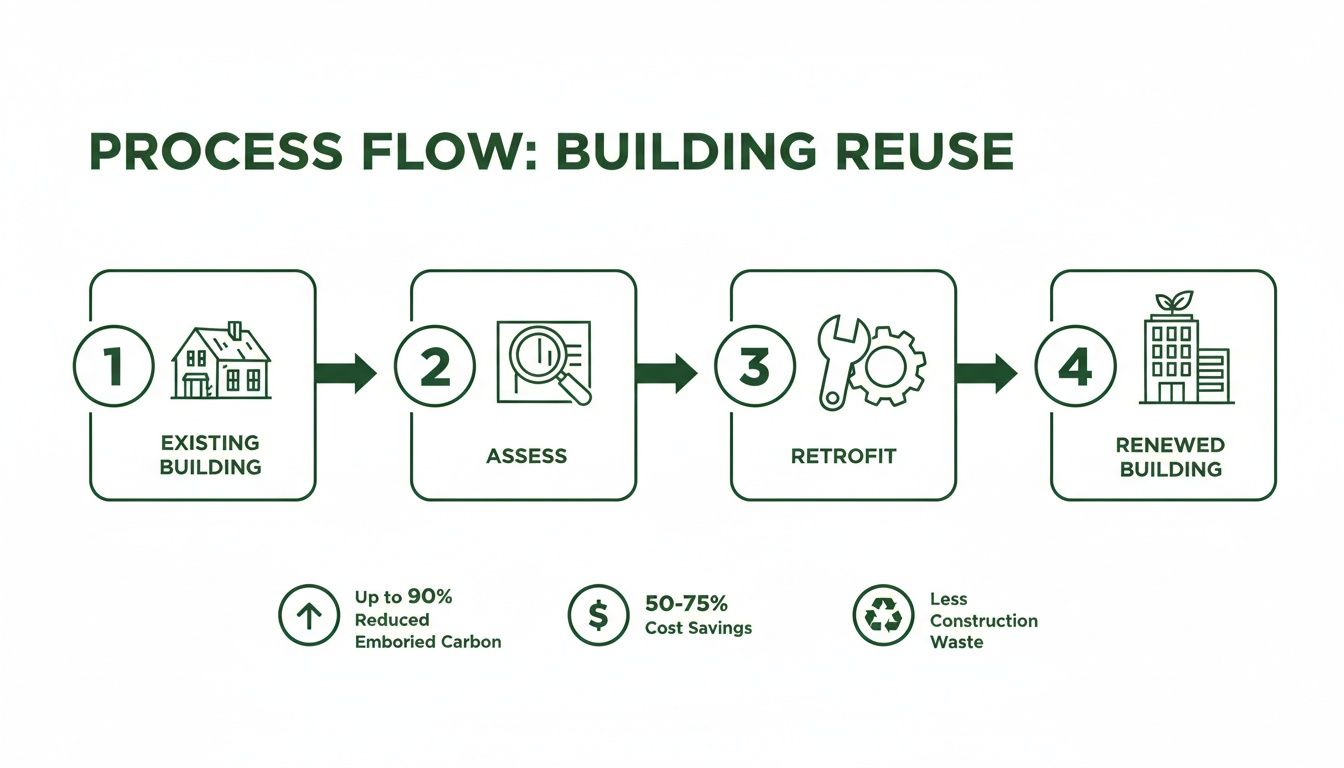
Moving from assessment to renewal isn’t just about a facelift; it’s about preserving the building’s embodied carbon while giving it a new lease on life with better efficiency and longevity.
Navigating South Carolina Incentives
Getting a handle on the financial side of things is absolutely critical to making your project pencil out. Thankfully, South Carolina has a number of programs meant to encourage sustainable development and historic preservation, which can seriously lighten the load of your initial investment.
Here are a few key resources you should definitely look into:
- State-Specific Programs: South Carolina offers its own historic preservation tax credits that you can often stack with federal incentives for a major financial advantage.
- Utility Rebates: Major utility providers like Duke Energy and Dominion Energy frequently provide big rebates for installing energy-efficient HVAC systems, modern lighting, and other high-performance gear.
- Federal Grants: Don't forget to check for various federal programs that support energy efficiency and renewable energy, as they can add another valuable layer of funding to your project.
When you actively find and weave these incentives into your project’s financial strategy, you can make the vision of environmentally conscious architecture a profitable reality.
Common Questions About Sustainable Architecture
Even with all the clear benefits, it's natural to have questions when you're considering an environmentally conscious approach for the first time. Let's tackle a few of the most common ones we hear from clients to demystify the process and the real-world value of building green.
Does It Cost More Than Traditional Construction?
This is probably the number one question, and the answer isn't a simple yes or no. While some high-performance materials might have a higher price tag upfront, the real conversation is about long-term value and life-cycle savings. The smartest strategies, particularly passive design, often add very little to the initial budget but pay you back for decades.
Think about it: the savings on energy and water bills alone often mean the initial investment pays for itself in just a few years. After that, those savings go straight to your bottom line, year after year. Better yet, powerful incentives like historic tax credits and local utility rebates can dramatically cut the initial cost, making it a smart financial move right out of the gate.
We encourage clients to shift their thinking from "What does it cost to build?" to "What will it cost to own and operate this building for the next 50 years?" Sustainable design is all about maximizing long-term profitability and asset value.
Can an Old Building Really Become Environmentally Friendly?
Absolutely. In fact, giving an existing building a new life is one of the most powerful sustainable moves you can make. This approach, often called adaptive reuse, preserves the massive amount of embodied carbon locked into the original structure—that’s all the energy that was spent manufacturing and transporting every brick, beam, and window.
Modernizing an older building for high performance is a well-established practice. The key is to blend thoughtful upgrades with the building’s original character. Common strategies include:
- Adding modern, high-performance insulation to the walls and roof.
- Replacing old, drafty windows with energy-efficient ones that respect the original aesthetic.
- Swapping out oversized, outdated HVAC equipment with new, efficient systems properly sized for the space.
- Integrating renewable energy, like discreetly placed solar panels that don't compromise the building's look.
Historic preservation projects are a perfect example of this balance, proving you don't have to choose between character and efficiency. You can have both.
What Is the First Step for a New Green Building Project?
The single most important first step is committing to an integrated design process. This isn't just a buzzword; it's a fundamental shift in how projects are managed. It means getting the owner, architect, engineers, and contractor in the same room from day one, before any lines are drawn.
When everyone is at the table from the beginning, sustainability becomes a core goal of the project, not an expensive feature you try to add later. This early collaboration is where the magic happens. The team can set clear goals (like targeting a specific LEED certification), analyze the site to take full advantage of sun and shade, and use energy modeling to test ideas and make informed decisions.
Starting with this unified vision is the best way to deliver a high-performance building that meets your goals, on time and on budget.
At Sherer Architects, LLC, we specialize in guiding clients through every stage of design and construction, turning complex challenges into beautiful, enduring, and sustainable results. Learn how our expertise in commercial architecture, adaptive reuse, and historic preservation can maximize the value of your next project.