
For today's real estate developers, the Heyward House Historic Center is more than just a charming relic; it's a powerful case study in turning historic properties into profitable, community-building assets. Its evolution from a private home into a public institution offers a masterclass in adaptive reuse and generating long-term ROI.
The Heyward House: A Blueprint For Modern Developers
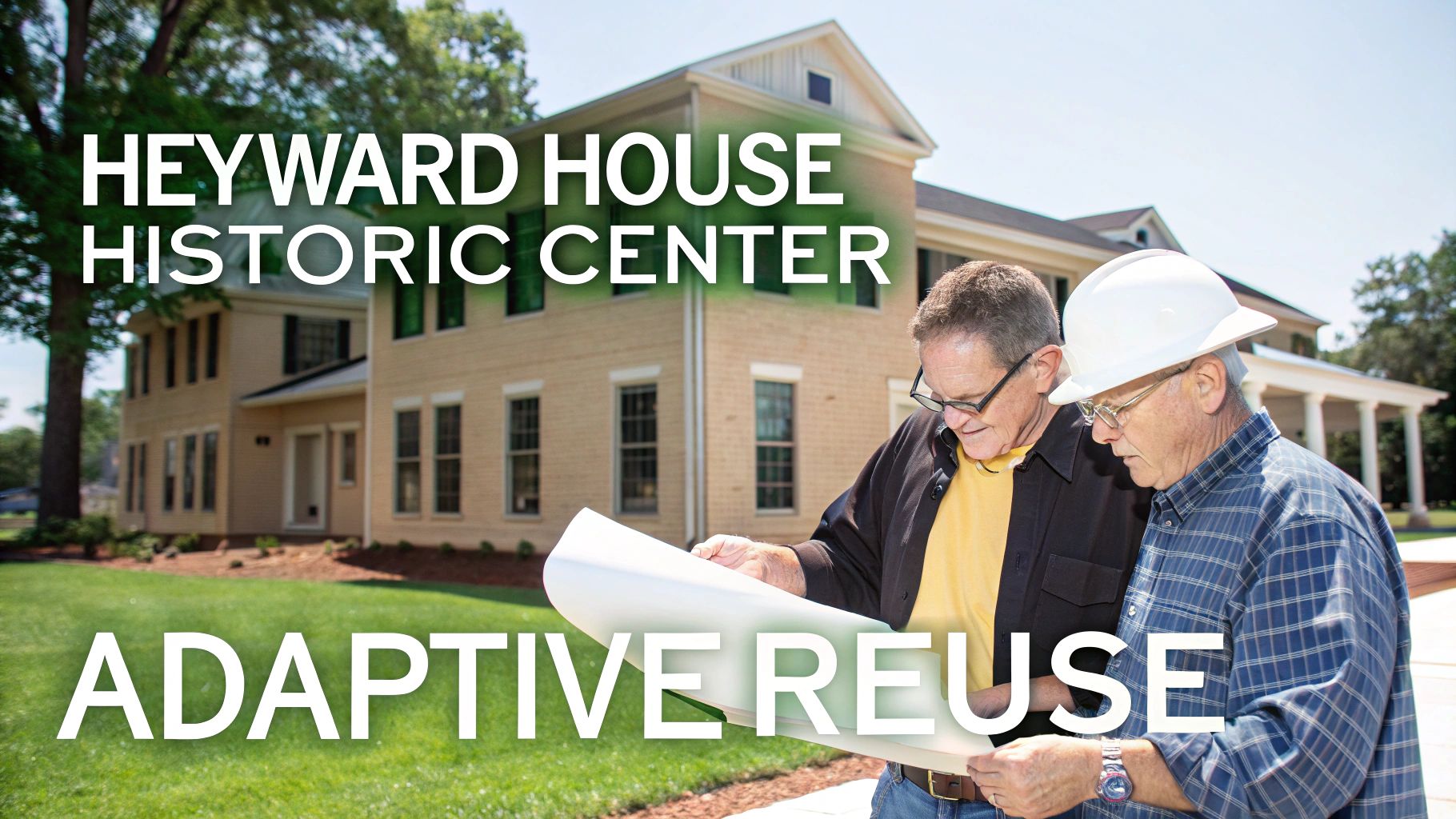
Too often, developers see historic buildings as liabilities—riddled with constraints, hidden costs, and regulatory nightmares. But that mindset misses the bigger picture. An old structure isn't just a pile of aging materials; it’s a vessel of stories, character, and deep-seated community value just waiting to be tapped. The Heyward House proves that heritage can be a serious competitive advantage.
Its story is one of incredible resilience. Nestled in the heart of Bluffton's historic district, the Heyward House is a remarkable survivor. On June 4, 1863, Union troops shelled the town, starting fires that wiped out an astonishing 75% of Bluffton. Only eight homes and two churches from the antebellum era were left standing. The Heyward House is one of those precious few. You can learn more about its story as one of the few Civil War survivors directly from the Heyward House Historic Center.
This dramatic history of survival is the bedrock of its modern success. By leaning into its past, the property was reborn not as a stuffy, static museum, but as Bluffton’s official welcome center—a living, breathing part of the local economy.
The table below offers a quick snapshot of the building's key details.
Heyward House Historic Center At-a-Glance
| Attribute | Details |
|---|---|
| Built | Circa 1841 |
| Architecture | Carolina Farmhouse (Carpenter Gothic) |
| Location | 70 Boundary Street, Bluffton, SC |
| Historical Note | One of only eight homes to survive the 1863 Burning of Bluffton. |
| Current Use | Official Welcome Center for the Town of Bluffton. |
This blend of history and modern function is what makes the property so compelling today.
From Private Home To Public Institution
The journey of the Heyward House provides a clear, practical roadmap for any developer considering an adaptive reuse project. The secret wasn't to erase its history but to build on it. This strategy delivers tangible benefits for modern developments:
- Built-in Marketability: A property with a one-of-a-kind story and unique architecture already has a marketing narrative that new construction could never hope to match.
- Community Buy-In: When you restore a beloved local landmark, you often get a groundswell of public goodwill and support. This can smooth the path for approvals and help build a loyal base of customers or tenants from day one.
- Sustainable Development: Reusing an existing structure is simply a smarter, more environmentally responsible choice that dramatically reduces waste and conserves resources.
The journey of the Heyward House demonstrates a core principle we champion at Sherer Architects: thoughtful preservation isn't about freezing a building in time. It's about adapting it for the future to create lasting financial and cultural value.
Why the Carolina Farmhouse Design Endures
The Heyward House is far more than just an old building; it's a living lesson in architectural intelligence, perfectly adapted to its surroundings. Its design, what we know as the Carolina Farmhouse style, wasn't created to follow a trend. It was a deeply practical and brilliant solution to the unique challenges of living in the South Carolina Lowcountry.
For anyone looking at a historic property, understanding this connection between form and function is absolutely crucial. The building's original design isn't some dusty relic—it’s a roadmap to its inherent value. I often compare it to a classic car; the original engineering is what makes it a timeless, high-performance machine. If you start swapping out parts without understanding why they were chosen in the first place, you risk destroying the very thing that makes it special.
When you look at the Heyward House Historic Center, every architectural detail tells a story of survival and clever design. These features weren't just for looks; they were essential tools for living comfortably in a place that’s hot, humid, and prone to flooding.
Built for the Lowcountry Climate
The real genius of the Carolina Farmhouse is how it works with nature, not against it. Long before we had modern air conditioning, several key features allowed these homes to breathe and keep their inhabitants comfortable. It’s a masterclass in understanding local materials and the environment.
- Expansive Porches: These weren't just for sipping sweet tea. They were the building's first line of defense against the relentless sun, creating a wide shade buffer that kept the interior walls cool and drastically reduced the heat beating down on the house.
- Raised Foundations: Lifting the main living area off the ground on brick piers served two critical purposes. First, it protected the wooden structure from damp ground and potential floodwaters. Second, it created a pocket for air to circulate underneath the house, acting as a natural cooling system.
- Timber Framing: The home’s skeleton was built with a robust timber frame, often using dense, resilient heart pine that could stand up to hurricane-force winds. The simple, open floor plans weren't just a style choice; they were designed to encourage cross-ventilation, letting breezes flow freely from room to room.
These elements prove that the original builders were master problem-solvers. This is precisely why our first step in any preservation project at Sherer Architects is deep architectural research.
By studying the original materials and building methods, we uncover the "architectural DNA" of a structure. This knowledge allows us to make informed decisions that honor the building's history while adapting it for a profitable, modern future.
Jumping into a project without this foundational knowledge is a recipe for expensive mistakes. A developer who doesn't grasp why the foundation was raised might accidentally introduce moisture problems. Someone who removes a porch for a more modern look could see their future energy costs skyrocket. The original design holds the keys not just to the building’s past, but to unlocking its future potential in a way that is both authentic and economically sound.
How the Heyward House Found Its New Purpose
For most of its life, the Heyward House was simply a private home. Its architectural importance and deep connection to the community were treasures known mainly to the people of Bluffton. But by the late 20th century, the house, like so many historic buildings, was facing a very uncertain future. A building’s story can easily end with a wrecking ball if no one steps in with a vision to carry it forward.
That critical moment came in 1998. The Bluffton Historical Preservation Society saw the building for what it was—irreplaceable—and acquired the property. This wasn't just a real estate transaction; it was a deliberate investment in the town's future. The plan wasn't just to save an old house, but to give it a new mission as Bluffton's official welcome center and a public museum.
From Private Residence to Public Asset
This journey from a quiet family home to a bustling public landmark is a perfect case study in adaptive reuse. Making it happen took a lot more than a fresh coat of paint. It required a meticulous restoration that honored the building's history while outfitting it for a new, public-facing role. The Preservation Society’s work guaranteed the structure would once again be at the heart of Bluffton's daily life.
The careful work became a masterclass in breathing new purpose into an old frame. Understanding the potential locked inside a distressed property is the first step in giving historic sites a second chance, just as the Heyward House found its calling.
This timeline illustrates how some of the key design elements of the Carolina Farmhouse style have evolved over the years.
You can see how enduring features like timber frames, wide porches, and raised foundations were fundamental to the building’s original, climate-smart design.
By turning the Heyward House into a welcome center, the community created a powerful hub for tourism and local pride. It became the first stop for visitors, instantly connecting them to the town's story. This strategy gets to the heart of what we believe at Sherer Architects.
Extending a building's useful life by 50-75 years through thoughtful adaptation is almost always a smarter, more sustainable, and more profitable investment than demolition and new construction. The Heyward House is proof that preservation pays dividends.
The project’s success isn't just measured in the historic materials saved, but in the real economic and cultural value it brings to the Town of Bluffton every single day. It shows how one building, repurposed with foresight, can energize a community and generate a return on investment that far outweighs the initial costs. It stands today as a living monument to strategic preservation.
Unlocking the Financial Value of Historic Properties
Preserving a landmark like the Heyward House Historic Center obviously pays off in cultural and historical rewards. But for savvy developers and investors, the real question is: does it make financial sense?
Too often, historic properties are seen as risky ventures, tangled in red tape and hidden costs. But here's the thing—with the right expert guidance, these buildings represent a fantastic opportunity to generate serious returns.
This is where a seasoned preservation architect becomes the most valuable player on your team. It's not just about restoring old features. It's a strategic puzzle that involves digging into materials research, navigating complex approval bodies like Design Review Boards, and, most importantly, unlocking a deep well of financial incentives. Your architect is your guide, turning potential headaches into profitable assets.
Think of it like restoring a classic car. Anyone can give it a new coat of paint, but a master mechanic—or in our case, a specialized architect—knows how to rebuild the engine for peak performance, ensuring every detail is authentic and adds to its long-term value.
Tapping into Powerful Financial Incentives
The financial landscape for historic preservation is surprisingly rich with opportunity, but you have to know where to look. Getting your hands on these benefits takes deep institutional knowledge and a proven process for documentation and applications. This is precisely where a firm like Sherer Architects can create immense value for clients.
Here are a few of the key financial tools available:
- Federal Historic Tax Credits: This is the big one. It offers a 20% income tax credit for the qualified rehabilitation of historic, income-producing buildings. This isn't just a deduction; it's a direct, dollar-for-dollar reduction in what you owe in taxes, which can dramatically improve a project's bottom line.
- State Historic Tax Credits: Many states, including South Carolina, have their own tax credit programs. The best part? They can often be stacked on top of federal incentives, making the financial picture even more attractive for developers.
- Preservation Grants and Specialized Loans: Beyond tax credits, numerous foundations and government programs offer grants specifically for historic preservation. There are also specialized loan programs out there that can provide more favorable terms for projects that save historic structures.
For anyone looking at South Carolina's Lowcountry market, the Heyward House is a perfect example of this strategy in action. Honoring the building's historic character through detailed research—while securing tax credits and grants—delivers lasting value. It also builds community goodwill, which is a huge advantage in a major tourism-driven market. You can learn more about how the Heyward House serves its community.
De-Risking the Investment with Expert Guidance
Trying to navigate this complex world on your own is a huge risk. An architect specializing in historic preservation does more than just design; they build a financial and regulatory strategy from the ground up.
They do the legwork to prove a building's historical significance, prepare the mountains of documentation required for tax credit applications, and represent your project with credibility in front of review boards.
By partnering with an expert who knows how to unlock these financial tools, a developer can transform a historic property from a high-risk gamble into a predictable, high-return investment. The incentives are designed to make preservation the smart financial choice.
This kind of partnership effectively de-risks the entire project. It ensures that your renovation not only meets all historical standards but is also set up for maximum financial success right from the start, turning a community treasure into a profitable, legacy-building asset.
What Today's Developers Can Learn From This Project

The story of the Heyward House Historic Center isn't just a fascinating piece of local history; it’s a practical playbook for developers aiming to build projects with both profit and legacy in mind. It teaches a powerful lesson: a building’s past isn't a liability to be managed, but its single greatest asset.
At the end of the day, successful development is about creating places people genuinely want to be. The Heyward House nails this by embracing its incredible story of survival and resilience. That narrative is more than just a historical footnote—it’s a powerful marketing tool that a brand-new building simply can't buy. Developers can learn from this by digging into the history of their own properties and using that story to build a real, authentic connection with the community.
Turning Character into Commerce
The Heyward House is living proof that preserving a building’s character pays real dividends, both financially and in terms of reputation. Its role as Bluffton's official welcome center shows how weaving a project into the fabric of the community drives foot traffic and creates lasting value.
The numbers back this up. Today, the Heyward House Historic Center is a major draw, earning a stellar 4.5/5 rating from 111 TripAdvisor reviews, with 71 of those visitors rating their experience as 'excellent.' This kind of public enthusiasm isn't an accident. It’s the direct result of a smart decision to make the building an essential part of the town’s modern identity, as highlighted in its heritage site overview.
The lesson for developers is crystal clear: adaptive reuse isn't just a sustainable choice; it's a smart business move. When you give a historic building a new life that serves the surrounding community, you create an asset with deep roots and a built-in audience.
Strategies for Your Next Project
Putting these ideas into practice means shifting your mindset. Stop seeing old buildings as problems to be solved and start seeing them as puzzles with incredible potential waiting to be unlocked.
Here are a few core strategies to take from the Heyward House model:
- Lead with the Story: Don’t hide the building’s history in a dusty plaque. Make it the star of your design and marketing. This is what gives your property an identity that no one else can copy.
- Find a Community Fit: The building’s new purpose should fill a real need, whether that’s retail, housing, or a public gathering place. A project that serves the community is a project that will last.
- Bring in the Experts Early: Working with architects who live and breathe historic preservation, like Sherer Architects, isn't just another line item on the budget. It's an investment in getting the details right and maximizing the property's financial and cultural worth.
We Help Developers Build a Lasting Legacy
Historic properties are so much more than just old buildings; they're opportunities waiting to be rediscovered. Think of a place like the Heyward House Historic Center—each one is a unique puzzle. Cracking the code requires a deep dive into its history, meticulous research, and a clear vision for how to marry its heritage with the demands of today. It’s about seeing a vibrant future waiting within a structure's storied past.
Turning a potential headache into a profitable, legacy-building asset is no accident. It’s a deliberate process that hinges on a partnership built on genuine experience and a shared passion for preservation. For developers looking to make a real mark in South Carolina, the first step is always choosing the right guide.
Turning History into Opportunity
At Sherer Architects, we specialize in bringing these complex projects to life in a way that’s beautiful, sustainable, and built to last. We have a knack for looking past the immediate hurdles—the peeling paint, the outdated systems—to see the immense financial and cultural value locked within those historic walls.
Our approach is straightforward but thorough:
- We start with a deep dive. Our team investigates every detail, from the original building materials to the construction techniques used, ensuring any restoration feels authentic.
- We design for the future. Our plans don't just restore; they adapt. We thoughtfully extend a building's life, making sure it meets modern needs and building codes without sacrificing its character.
- We navigate the financial side. We guide our clients through the process of securing historic tax credits and other incentives, helping them make the project financially successful.
For any developer serious about creating lasting value, the single most important decision you'll make is choosing an architect who lives and breathes preservation. It's the move that turns a piece of history into your next great opportunity. Let's build your legacy together.
Common Questions About Historic Preservation
For developers and property owners, taking on a historic preservation project can feel like stepping into a whole new world. It’s only natural to have questions about costs, regulations, and whether it’s a sound investment. Let’s tackle some of the most common concerns to clear things up.
Isn't Historic Preservation Just More Expensive Than Building New?
This is probably the number one question we get, and the answer might surprise you. While every project is different, adapting an existing historic building is often more cost-effective in the long run.
Think about it: the building’s core structure—its "good bones"—is already in place. That represents a massive amount of material and labor that's already been paid for. When you add powerful financial tools like federal and state historic tax credits into the mix, the final investment can be significantly lower. It's often the smarter financial move.
The goal isn't just about saving an old building; it's about creating a financially successful asset. A great preservation project strikes a perfect balance between historical character and modern needs, resulting in a one-of-a-kind property that new construction simply can't match.
How Can You Possibly Meet Modern Building Codes in a Centuries-Old Structure?
This is where the real expertise comes in. Bringing a historic building up to today's standards for safety, accessibility, and energy efficiency is a central part of any preservation project. The trick isn't to force modern systems into an old frame but to integrate them with skill and creativity.
This could mean:
- Cleverly routing new electrical and plumbing to keep them out of sight.
- Restoring and upgrading original windows for modern thermal performance instead of tearing them out.
- Designing innovative accessibility features that feel like they belong, rather than being tacked on as an afterthought.
A seasoned preservation architect knows how to work with building officials to find solutions that satisfy the spirit of the code without sacrificing the building's historic soul. Beyond a landmark like the Heyward House, countless properties need this kind of thoughtful care. For anyone tasked with this responsibility, understanding what is property preservation is fundamental to protecting the investment for the long haul. It’s all about respecting the past while building a safe, functional, and valuable asset for the future.
At Sherer Architects, LLC, we live for these kinds of complex challenges. We help developers navigate every single step of a historic preservation project, turning what seem like obstacles into unique, profitable opportunities. Contact us today to see how we can help bring your vision to life.