The Warehouse Theatre is one of those places in Greenville that’s more than just a building; it’s a landmark and a perfect example of what adaptive reuse can achieve. It shows how you can take an old, historic structure and turn it into a modern, lively venue that becomes a real anchor for the community. For developers, this theater is an inspiring model for blending preservation with profitability.
A Blueprint for Adaptive Reuse in Greenville
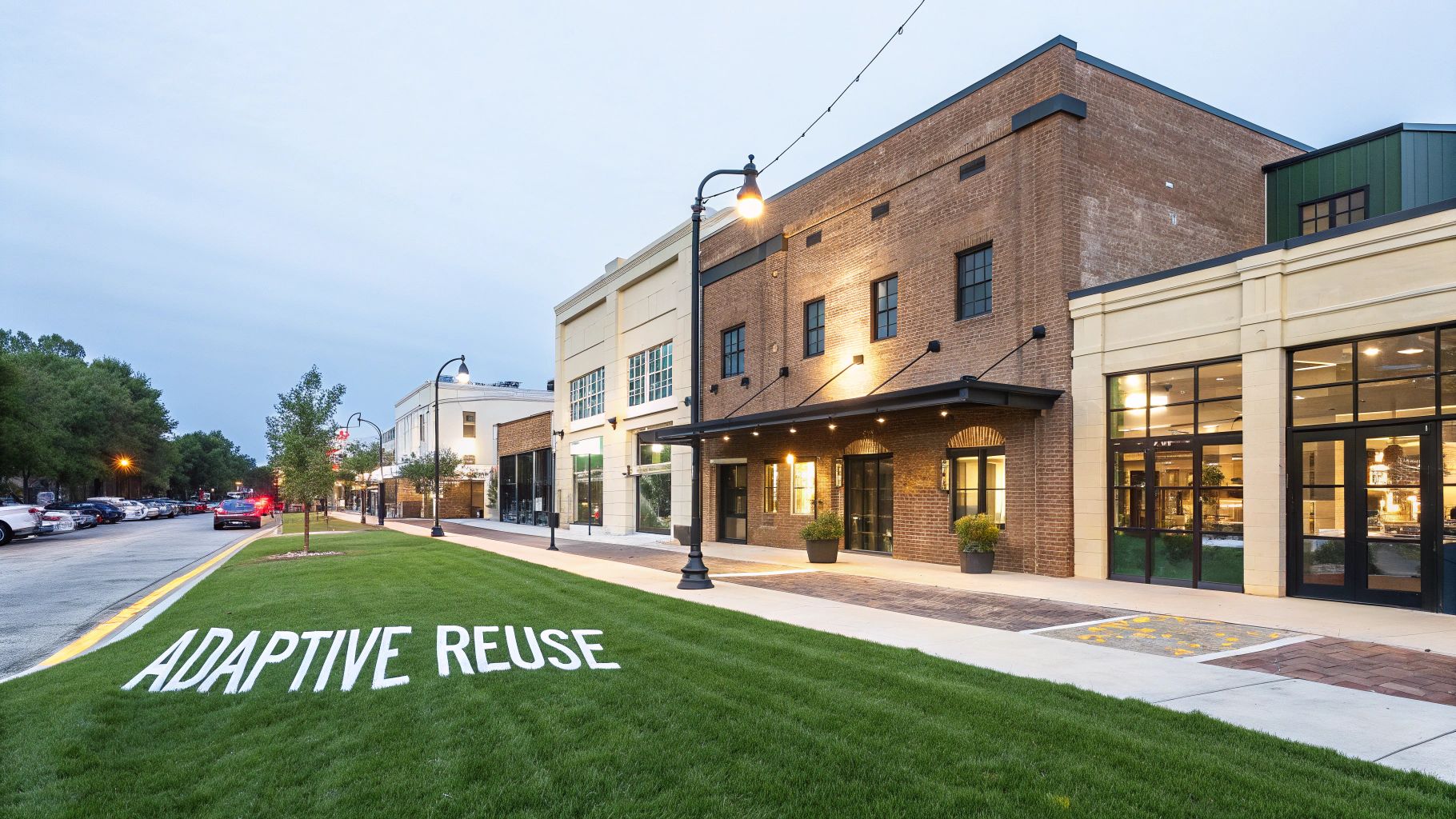
The Warehouse Theatre in Greenville, SC isn't just a place to see a show; it's a living, breathing case study in the power of giving old buildings new life. If you're a developer or investor, its story is a practical guide for turning forgotten structures into valuable community assets that deliver both cultural and financial returns.
The project—transforming historic storefronts into a bustling arts venue—really drives home a key principle we believe in: visionary development, guided by expert architectural insight, can unlock incredible potential. Instead of tearing down our history, we can breathe new life into it. The result is a space with a kind of character and soul that brand-new construction struggles to match.
The Theatre's Foundational Success
This project is a perfect example of what's possible in Greenville's revitalized West End. Back in the mid-1990s, three old storefronts were masterfully converted into the vibrant 150-seat performance venue we know today.
The renovation was a delicate balance of preserving the historic feel while integrating modern needs, a success recognized with an AIA Greenville Merit Award in 1999. It’s been an architectural benchmark ever since. You can see more details about this award-winning project on the McMillan Pazdan Smith project page.
Adaptive reuse isn’t just a fancy term for renovation. It’s about completely reimagining a building’s purpose. You honor the history etched into the walls while outfitting the structure for a new, productive future. It’s a sustainable approach, sure, but it also creates a deep connection with the community.
To provide a clear overview, here's a quick look at the project's key aspects and what they mean for a potential developer.
Warehouse Theatre Project Snapshot
| Project Aspect | Description | Relevance for Developers |
|---|---|---|
| Original Structure | Three historic storefronts in Greenville's West End, dating back to the textile mill era. | Shows the potential of combining smaller, adjacent properties into a single, cohesive project. |
| New Use | A modern 150-seat "black box" theatre for professional stage productions. | Demonstrates the viability of cultural venues as anchors for neighborhood revitalization. |
| Key Challenge | Integrating modern HVAC, lighting, and accessibility into a historic shell without losing character. | Highlights the need for specialized architectural expertise in navigating code and preservation rules. |
| Financial Tools | The project leveraged community support and was eligible for preservation incentives. | Provides a precedent for using historic tax credits and other financing mechanisms in SC. |
| Community Impact | Became a cultural cornerstone that spurred further investment and foot traffic in the West End. | Proves that a single project can act as a catalyst, increasing the value of surrounding properties. |
This table illustrates that the Warehouse Theatre wasn't just an architectural success; it was a smart, strategic development that paid off for everyone involved.
Why This Matters for Developers
For anyone looking at a historic preservation or commercial renovation project in South Carolina, the Warehouse Theatre offers a clear roadmap. Its journey shows how to:
- Create Unique Market Value: Repurposed buildings have a story and a character that people are drawn to, attracting tenants and customers who appreciate authenticity.
- Strengthen Community Ties: When you save a local landmark, you build immense goodwill. These projects become points of pride for the whole neighborhood.
- Leverage Existing Assets: Working with a building’s existing "bones" is often more cost-effective and environmentally friendly than building new from the ground up.
By looking closely at this project, we can pull out real, actionable strategies for handling the complexities of adaptive reuse—from the first sketch to the final walkthrough. That's exactly what this guide will do: break down the process and show you how to achieve similar success.
From Storage Room to Center Stage: The Theatre's Journey
Every great adaptive reuse project has a story, and the Warehouse Theatre in Greenville, SC has one of the best. It’s a textbook case of how a forgotten space can be transformed into a cultural anchor. For developers, this story isn't just local history; it's a blueprint for turning a building's past into a profitable, identity-defining asset for an entire community.
The theatre didn't start in some grand hall or purpose-built venue. It began in the most unlikely of places, born from a simple need for something different in Greenville’s arts scene.
The Gritty Beginnings
Back in 1973, Dr. Peter Smith, a professor at Furman University, teamed up with Jim Boivin from the Arts Council to bring a new kind of theatre to Greenville. Their first stage? A converted storage room annex at the Greenville Memorial Auditorium—a space that had previously held circus and rodeo animals. Talk about humble beginnings.
That summer, with the slogan 'From the Classics to the Contemporary,' they put on plays that immediately got people talking. The productions felt intimate and raw, a stark contrast to more commercial offerings. They even landed a grant from the South Carolina Arts Commission and formed a board. You can read more about their early days and artistic mission in this piece from American Theatre magazine.
This origin story is more than just a fun fact; it holds a powerful lesson. A great idea doesn't need a perfect starting point. It just needs a functional space and the vision to make something meaningful happen. For a developer, this is critical: a property's potential isn't just what it is today, but what it could become. The theatre’s early success proved the demand was there, setting the stage for a more permanent future.
Milestones in Growth and Adaptation
The journey from a makeshift stage to a professional venue was a series of smart, strategic moves. As the theatre's reputation grew, it outgrew its space. The need for a home that could match its artistic ambitions became obvious, which led to the game-changing move to its current location in the West End.
A few key milestones really defined this transformation:
- Finding a Permanent Home: Moving from the auditorium annex to the historic storefronts on Augusta Street was the turning point. It anchored the theatre in a neighborhood that was just beginning its own revitalization.
- Going Pro: The Warehouse Theatre became a professional Actors' Equity Association theatre. This wasn't just a title—it raised the bar for everything, demanding a facility that could support professional-grade productions.
- The Big Renovation: In the mid-1990s, the building underwent a massive adaptive reuse project. This wasn't just a facelift. It was a complete reimagining of the building's purpose, turning it into a modern performance venue.
The theatre’s growth perfectly mirrors the adaptive reuse process. It began with a solid foundation (the artistic vision), found a new purpose (a professional theatre), and then physically transformed to fulfill that purpose.
Each step was a calculated risk that paid off, proving out a sustainable growth model. The theatre didn't just find a new building; it grew into it, letting its physical space evolve right alongside its artistic and business needs. That kind of organic growth is a fantastic model for any long-term project.
Today, the theatre's success is inseparable from the character of its building. The space isn't just a box to put on plays; it's part of the experience, offering an authenticity that you just can't get with new construction. This story shows developers exactly how investing in a building’s history can forge a deep connection with the community, creating a truly invaluable local landmark.
Architectural Strategies for Blending Old and New
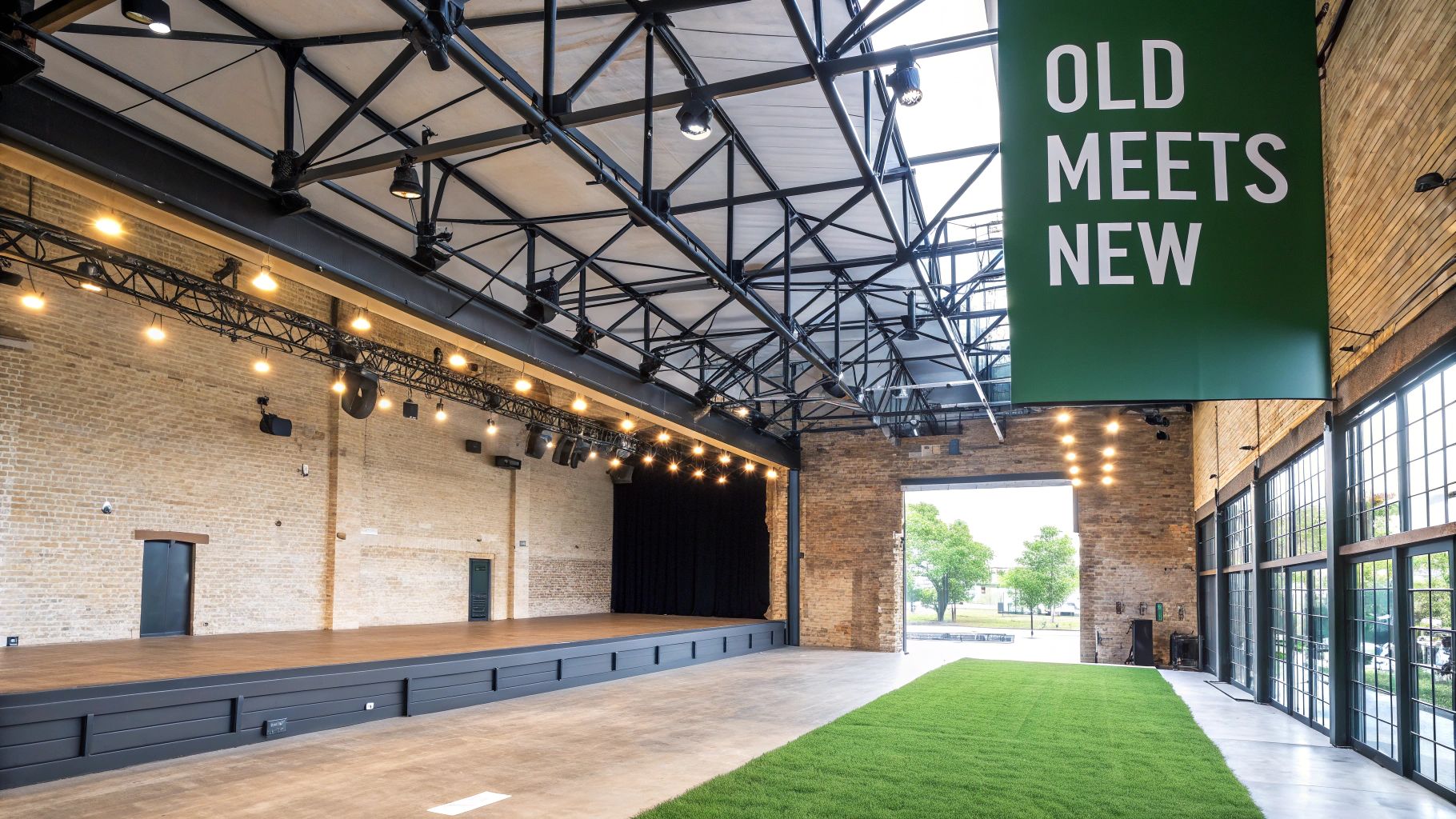
When you pull off a great adaptive reuse project, it feels less like a renovation and more like a conversation between the past and the present. You're not trying to let one voice shout over the other. The magic happens when you create a dialogue where both the building's history and its new purpose are heard and respected. The Warehouse Theatre Greenville SC is a fantastic example of how to pull this off with smart, deliberate architectural choices.
What makes this project so successful is how it honors the building's industrial bones while weaving in all the functionality of a modern performance space. It doesn't try to hide its past behind fresh drywall or a drop ceiling. Instead, it puts the raw, authentic character of the original structure front and center, making those historic elements a key part of the experience.
For any developer looking at an old building, there's a powerful lesson here: authenticity has real value. When you preserve and showcase a building’s history, you create a unique sense of place that new construction just can't replicate. It's that character and story that draws people in.
Honoring the Industrial Exterior
A building’s first impression is its facade, and from the street, the Warehouse Theatre makes a strong one. The team made the crucial decision to meticulously restore the exterior to its original look, which immediately anchors the building in its historical context.
They did this by carefully selecting materials and techniques that felt true to the area's industrial roots. The project brought back the original facades using traditional masonry and exposed steel trusses, a direct nod to the warehouse heritage of Greenville's West End. This commitment to historical accuracy is about more than just aesthetics; it shows a deep respect for the community's story. You can dig into the specific design choices over at the project’s architectural overview.
The decision to restore the facade wasn't just about preservation; it was a strategic move. A building that respects its surroundings becomes a welcome neighbor, fostering goodwill and strengthening its place within the community's identity.
To bridge the gap between the restored exterior and the vibrant life inside, they added large gallery windows. It’s a modern touch with a twofold purpose: flooding the lobby with natural light while also giving people on the street a glimpse of the energy inside. This creates a transparent, inviting link between the theatre and the city.
Weaving Modern Function into Historic Interiors
Step inside the Warehouse Theatre Greenville SC, and that conversation between old and new really comes to life. The design is a masterclass in balancing historic textures with the practical needs of today, creating a space that feels both inspiring and completely functional.
The lobby immediately sets the tone. You're greeted by ornamental tin ceilings, warm wood floors, and skylights that wash the space in light. These restored historic features are then paired with a striking patterned concrete stage entrance—a contemporary element that signals you’re moving into the performance space itself.
This thoughtful mix of materials is a brilliant strategy for any adaptive reuse project. The tactile quality of old brick, the warmth of aged wood, and the gleam of industrial steel can live beautifully alongside modern elements like polished concrete, glass, and sophisticated lighting.
Here are a few key interior strategies they used:
- Exposing the Structure: Instead of covering them up, the architects left the steel trusses and brick walls exposed. The building's "bones" became a primary design feature.
- Contrasting Materials: Pairing historic textures like ornamental tin and wood with modern finishes like patterned concrete creates fantastic visual interest and makes you appreciate the unique quality of each.
- Integrating Advanced Systems: The project seamlessly incorporated advanced theatrical lighting controlled by dimmer panels, ensuring the venue meets professional standards without compromising its historic shell.
Of course, when you’re turning an old building into a public venue, architecture also has to account for safety and operations. This means integrating modern cinema and theatre security systems to keep everything running smoothly. Things like access control and surveillance have to be woven discreetly into the historic framework. The end result is a venue that feels both timeless and perfectly equipped for today.
The Financial Case for Adaptive Reuse
Beautiful architecture and community pride are great, but let's be honest—a development project has to make financial sense. For any developer looking at an old building, the real question is: why save it when I can just demolish it and start fresh?
The story of the Warehouse Theatre Greenville SC gives us a powerful, numbers-driven answer. It shows that adaptive reuse isn't just a feel-good decision; it's a strategic move with a serious return on investment. It's about looking past the initial construction budget to see the long-term value you're creating. By working with a building's bones and character, developers can often unlock greater profitability than new construction, especially when you factor in the financial tools available.
Turning Culture Into Commerce
A place like the Warehouse Theatre is more than just a stage; it's an economic engine for the entire neighborhood. Its success isn't just measured by ticket sales. You can see it in the bustling sidewalks and packed restaurants all around Greenville's West End. That ripple effect makes the whole district more valuable.
For a developer, this creates real, tangible benefits:
- Higher Property Values: An anchor like the theatre makes the entire area a destination, directly pushing up the value of surrounding properties.
- Stronger Tenant Demand: The unique vibe of a historic district attracts top-tier commercial and residential tenants who are willing to pay a premium for character.
- A Magnet for Tourism: Venues like this draw people from all over, bringing fresh spending into the local economy.
The theatre's impact is growing. In 2025, it saw a huge 32% jump in patrons, with its programs hitting all-time highs for revenue and attendance. Add to that its educational outreach, which historically serves over 10,000 students a year across the Carolinas, and you have a true economic and cultural pillar. You can read more about its record-setting year in this Greenville Journal arts recap.
Maximizing Your Return on Investment
Beyond the neighborhood buzz, adaptive reuse offers some very direct financial wins. Think about it: you're starting with a foundation, walls, and a roof already in place. The cost savings compared to building from the ground up can be massive. That frees up capital to invest in the high-impact finishes and modern systems that really drive up rent or resale value.
Of course, a key part of the equation is carefully calculating the risk-adjusted return to make sure the numbers work. But by preserving a building, developers often find a smoother path through zoning and approvals, which means a faster timeline to completion. Less time spent on carrying costs means you get to profitability sooner.
The best projects are always the ones that blend creative vision with financial pragmatism. Adaptive reuse is the sweet spot—it creates a one-of-a-kind building with a story that the market loves, all while using financial tools to de-risk the investment.
The Power of Historic Tax Credits
This is where the financial case gets really compelling. For projects in South Carolina, historic tax credits are one of the most powerful tools in the developer's toolbox. These aren't just deductions; they are direct, dollar-for-dollar reductions in what you owe in taxes.
Here's a quick look at the big ones:
- Federal Historic Preservation Tax Credit: This offers a 20% credit on your qualified renovation costs for certified historic buildings.
- South Carolina Historic Preservation Tax Credit: The state offers its own credit, which can often be stacked on top of the federal one, sweetening the deal even more.
Now, navigating the application process for these credits requires a steady hand. It's a world of meticulous documentation and strict preservation standards. But with an experienced architectural partner guiding you, these incentives can slash the net investment needed to get the project done.
The bottom line is clear. Saving a building like the Warehouse Theatre in Greenville SC isn't just about preserving history—it's about making a smart, profitable, and lasting investment.
Your Roadmap for a Successful Adaptive Reuse Project
So, you’ve seen what’s possible with the Warehouse Theatre in Greenville, SC, and now you’re looking at an old building with a new sense of potential. It’s an exciting moment. But how do you get from that initial spark of an idea to a finished, profitable reality?
An adaptive reuse project is a different kind of beast. It’s part architecture, part archaeology, and part financial puzzle. Every piece has to fit just right. This isn't about simply tearing down walls; it's a careful dance between honoring a building's history and designing for its future. A clear, structured process guided by an experienced partner is what separates a landmark success from a costly mistake.
Here’s a roadmap we use to break down the journey, making it manageable and setting you up for success.
Phase 1: Kicking the Tires with Feasibility and Due Diligence
Before a single sketch is drawn or dollar is spent on design, you have to answer one critical question: does this project actually make sense? This first phase is all about investigation and risk assessment. It’s the "look before you leap" moment.
The first order of business is a feasibility study. We dig deep into the building’s current state—is the structure sound? Are there hazardous materials lurking? What condition are the core mechanical, electrical, and plumbing (MEP) systems in? At the same time, we'll look at the market to get a realistic picture of potential rental income and rough construction costs to see if the numbers work.
During this stage, we also tackle the biggest regulatory questions upfront:
- Zoning and Land Use: Does the city's current zoning even permit your idea? If not, we'll need to map out a strategy for a rezoning application or variance, which can be a major hurdle.
- Historic Designation: Is the building on a historic register? This can be a huge advantage, opening the door to valuable tax credits, but it also means we have to play by a specific set of preservation rules.
- Preliminary Code Review: We'll do an initial sweep to flag any major red flags related to modern building codes, ADA accessibility, and fire safety requirements that will need to be solved in the design.
Phase 2: From Concept to Approvals
Once we've confirmed the project is viable, it's time to bring the vision to life and get the official green light. This is where your architectural partner really shines, translating your goals into a design that’s functional, beautiful, and, most importantly, approvable.
In a place like Greenville, a key step is navigating the Design Review Board (DRB). The DRB's job is to make sure your project, especially the exterior, fits thoughtfully into the neighborhood's character. An architect with local experience knows what the board is looking for and can build a compelling case for your design from day one.
An adaptive reuse project isn't just construction; it's a negotiation. You're negotiating with a building's past, the city's rules, and the community's vision. A great architect is your chief negotiator, finding the solution that works for everyone.
This phase is also when we formally apply for historic tax credits if the building is eligible. It's a notoriously complex process filled with paperwork, and every detail has to align with the Secretary of the Interior's Standards for Rehabilitation. Getting this part right can make or break the project's finances.
This flowchart shows how these pieces fit together, moving from the initial idea all the way to long-term value creation.
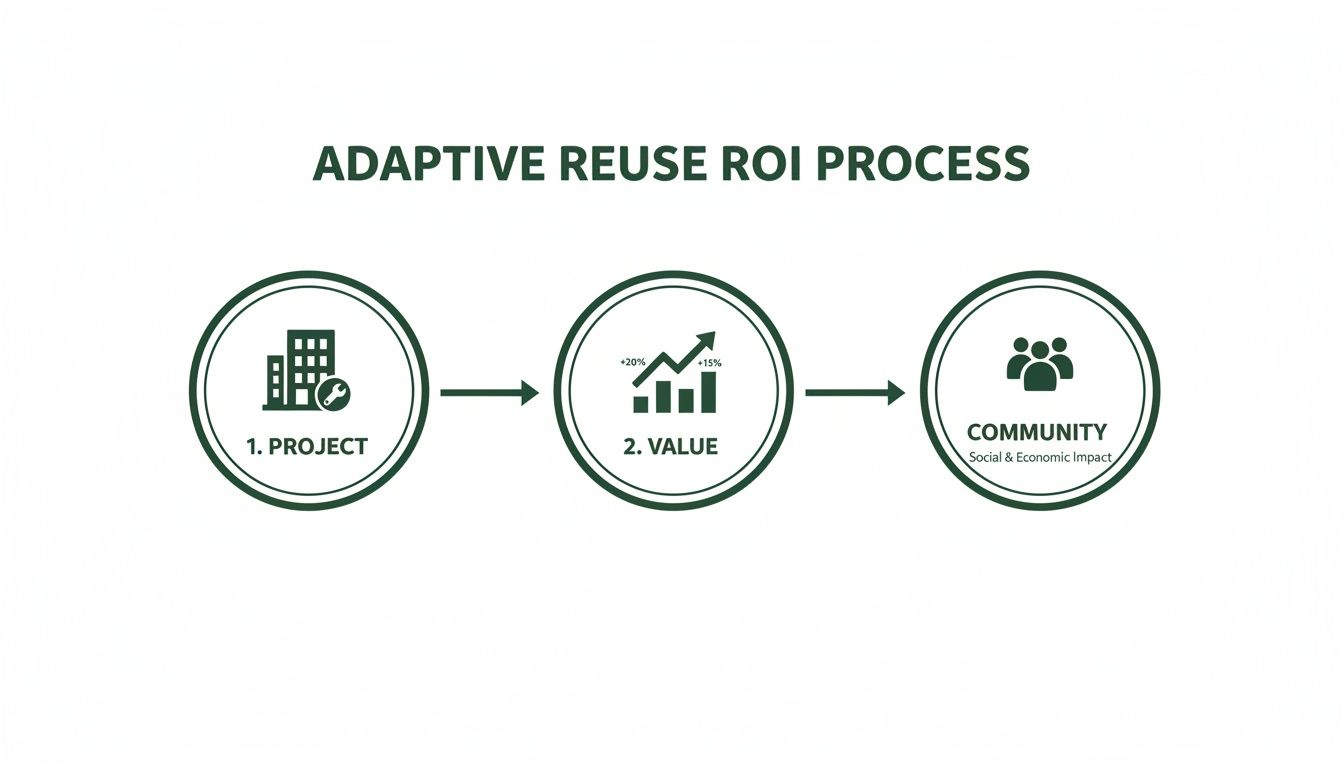
As you can see, a well-run project delivers more than just financial returns—it creates real, lasting community benefits.
Phase 3: Making It Real with Construction and Management
With approved designs and permits in hand, the tools come out. Managing construction on an old building is nothing like building from scratch. I can guarantee you one thing: there will be surprises. You’ll find hidden structural quirks, materials that don’t want to cooperate, and plenty of mysteries behind old plaster walls.
Good project management in this context is all about anticipating those surprises and solving problems on the fly. It demands a tight-knit team of architects, engineers, and contractors who have been through this before. Together, we create incredibly detailed construction documents to map out the work and head off challenges before they become expensive delays.
Throughout the build, your architect should be on-site regularly, making sure the work on the ground matches the vision on paper. We act as your eyes and ears, your advocate with the contractor, and your chief problem-solver. It’s this hands-on oversight that ensures an old building like the Warehouse Theatre in Greenville, SC is reborn as a modern, safe, and successful place for decades to come.
Finding the Right Partner for Your Vision
Turning an old building like the Warehouse Theatre in Greenville, SC into something new and profitable is a tough but incredibly rewarding process. It's more than just drawing up a blueprint; you need a partner who can walk the tightrope between honoring the past, building for the future, and making it all financially viable. The entire success of an adaptive reuse project really comes down to finding that perfect expert who can turn your vision into a real, lasting place.
This is where a great architect becomes your most important hire. They act as your guide, your advocate, and your lead problem-solver, untangling the web of regulations, design puzzles, and construction headaches to create a clear, doable plan. The Warehouse Theatre itself shows us what's possible: with the right team, you can blend old with new, weave a building into the community fabric, and create a financially successful venture.
What to Look for in an Architectural Partner
Choosing an architect isn't about finding someone to draw a pretty picture. For a project as intricate as adaptive reuse, you need a specialist—someone with a proven history of transforming historic structures into modern, high-performing properties.
Your ideal partner should have a very specific set of skills:
- Deep Experience in Adaptive Reuse: Their portfolio should be full of projects where they’ve successfully brought old buildings back to life.
- Historic Preservation Know-How: This means they know everything from how to research original building materials to navigating the complex demands of the State Historic Preservation Office (SHPO).
- Local Regulatory Fluency: They have to know Greenville's zoning, Design Review Boards, and building codes like the back of their hand.
- Financial Acumen: A true partner helps you find the money. They should be experts at identifying and securing historic tax credits and other incentives that make the project work.
The right architect doesn't just design a building; they design a viable business. They see the project through a developer's eyes, aligning every design decision with your ultimate financial goals and long-term vision.
Firms like Sherer Architects, LLC are a great example of this. With over 30 years of experience and more than 200 renovations under their belt, they’ve made a name for themselves in infill and adaptive reuse. They specialize in upgrading old infrastructure to add another 50-75 years of life to a building. This kind of deep expertise means they can move projects smoothly through codes and boards while maximizing value with tax credits, a model you can see in other successful local architectural projects.
Your Actionable Next Steps
Feeling inspired by the Warehouse Theatre Greenville SC and ready to think about your own project? Getting started with a clear plan is the best way to build confidence.
Here are the practical first steps to take:
- Initiate a Consultation: Set up a meeting with an architect who specializes in this kind of work. It’s your chance to talk through your vision, get a feel for their process, and see if you click.
- Assess Property Potential: Your potential partner can help you run a preliminary feasibility study. This initial look will help you understand the building's bones, its eligibility for tax credits, and whether your idea makes financial sense from the get-go.
- Define Your Goals: Get crystal clear on what success looks like for you. Is it maximizing rental income? Creating a community landmark? Achieving a LEED certification? Knowing your destination upfront makes every decision along the way much easier.
Taking on an adaptive reuse project is a major commitment, but with the right partner in your corner, you can turn a piece of local history into a profitable and celebrated part of its future.
Your Adaptive Reuse Questions, Answered
Taking on an adaptive reuse project, especially one involving a piece of local history, naturally comes with a lot of questions. Let's use a place like the Warehouse Theatre in Greenville, SC as our backdrop to tackle some of the most common things developers ask. Getting a handle on these key areas is the first big step toward a successful transformation.
How Do Historic Tax Credits Actually Work in SC?
Think of historic tax credits as a powerful financial partner, not just a simple line-item deduction. For a property with the history of the Warehouse Theatre, you can often tap into both federal and state credits, which can dramatically lower the real cost of the project.
The path to securing them has two major milestones:
- First, the building has to be officially certified as historic.
- Second, all the renovation work must follow the strict Secretary of the Interior's Standards for Rehabilitation.
This isn't something you want to navigate alone. An architecture firm with deep experience in this area is your guide, steering your application through the State Historic Preservation Office (SHPO) to make sure you check every box and get the full financial benefit you're entitled to.
Is It Really Cheaper to Adapt an Old Building Than to Build New?
While the initial price tag isn't always lower, adaptive reuse often wins the long game when it comes to value and ROI. Projects can sometimes move faster, you’re using infrastructure that's already in place, and you unlock access to those valuable financial incentives we just talked about.
Beyond the numbers, the one-of-a-kind character of a preserved building is an asset in itself. It’s a story people want to be a part of, which often translates into higher lease rates and stronger property values down the road.
A detailed feasibility study right at the beginning is the only way to truly compare the costs and potential returns against starting from scratch.
What Are the Biggest Headaches When Converting an Old Building?
The main challenges usually boil down to one thing: bringing a vintage structure into the 21st century. This means getting everything up to modern code, from ADA accessibility and fire safety to today's energy efficiency standards.
Weaving new mechanical, electrical, and plumbing systems into the building's historic fabric without destroying its soul is a delicate art. And of course, there’s always the chance of uncovering structural surprises once you start opening up walls. Having a team that's seen it all before is what turns these potential nightmares into celebrated design features, keeping the project on time and on budget.
Ready to see what's possible with your own adaptive reuse project? The team at Sherer Architects, LLC has the expertise to guide you from the first sketch to the final walkthrough. Contact us today to schedule a consultation and let's start the conversation.