SHERER ARCHITECTS

Categories
Uncategorized

Discover warehouse theater greenville sc: A Guide to Adaptive Reuse

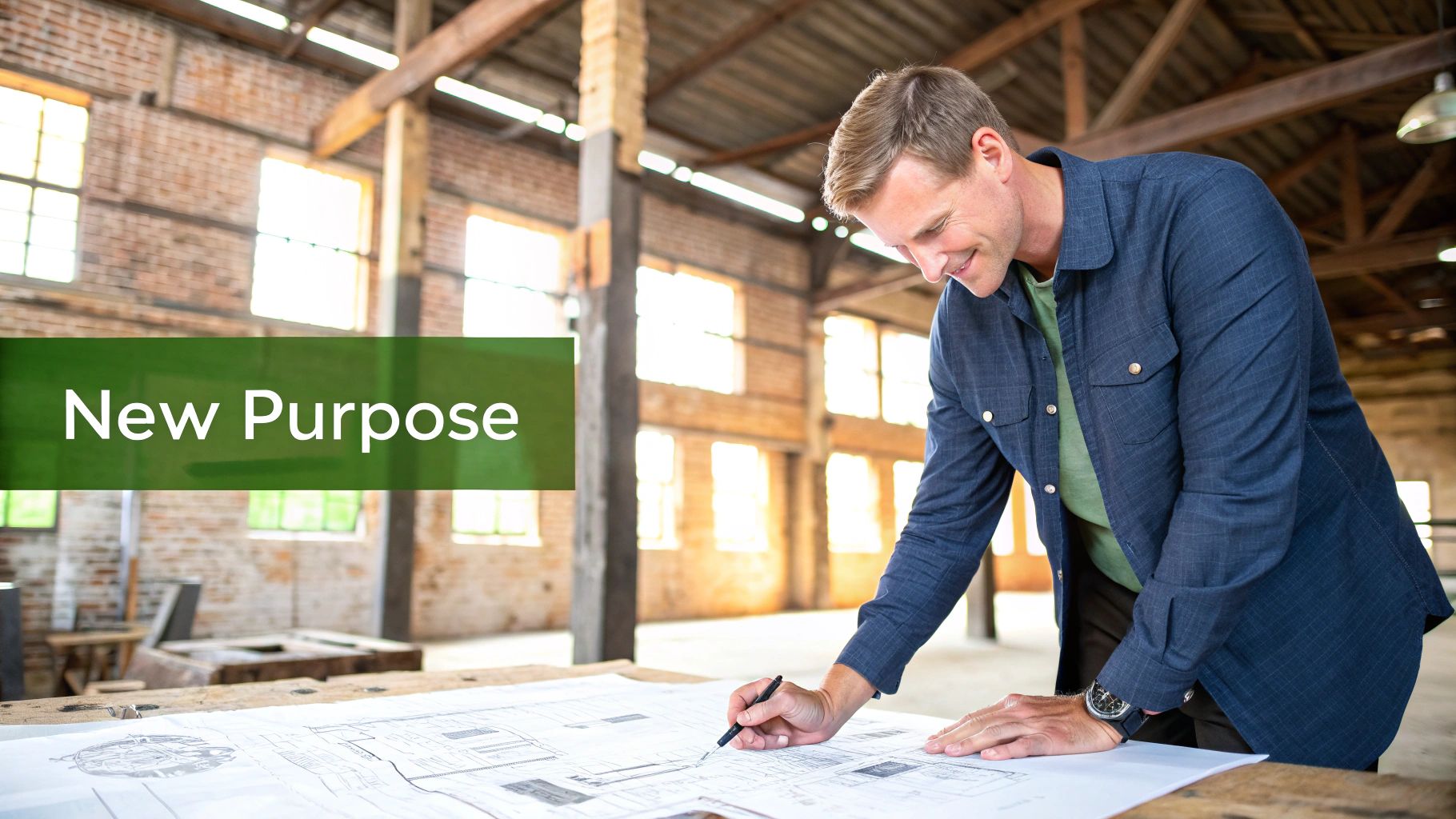
Greenville, South Carolina's Warehouse Theatre is a masterclass in adaptive reuse. It stands as a brilliant example of how you can breathe new life into a historic textile warehouse, transforming it into a buzzing cultural hub.

For developers and property owners, this project isn't just a success story; it's a practical blueprint. It shows how to perfectly blend historic preservation with a smart, profitable investment. This is a story of vision, community, and some really sharp design.
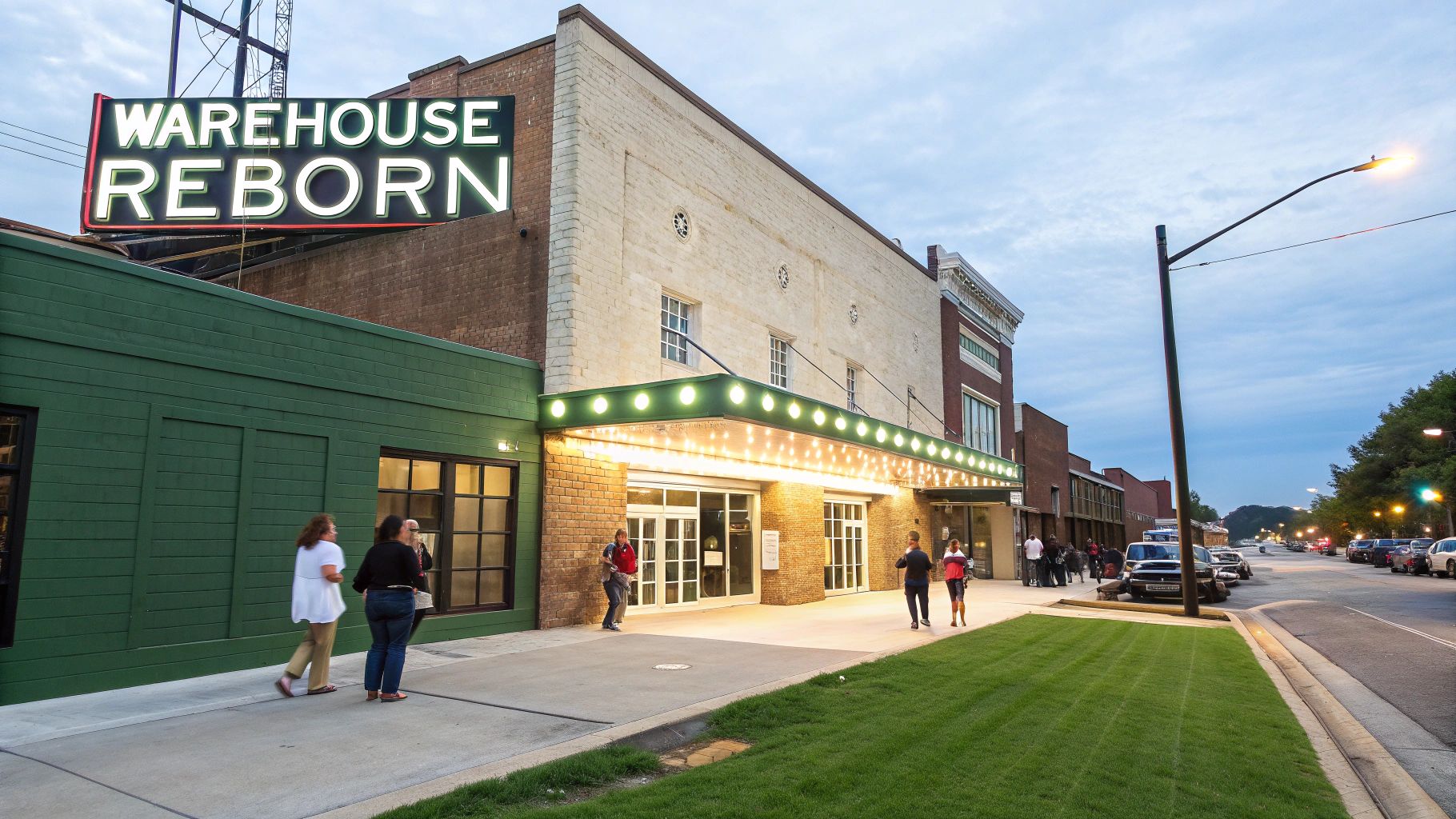
A brightly lit "WAREHOUSE REBORN" sign on a theater building at dusk with people walking outside.

Unpacking the Warehouse Theater Blueprint

We’re going to use the Warehouse Theatre as our core case study. Think of it as a detailed roadmap for anyone looking to turn an old industrial building into a thriving community asset. Its journey—from a basic textile storage space to a cultural and economic linchpin for Greenville’s West End—offers some incredibly valuable lessons.

We'll walk through the entire lifecycle of this project, from the first spark of an idea to its current status as a local landmark. This is about more than just saving an old building; it’s about unlocking the massive potential trapped inside its walls.

From Humble Beginnings to Cultural Anchor

The Warehouse Theatre's story is all about ambition. It was started back in 1973 by a handful of local artists and a Furman University professor who found a rent-free black box space to get going. Fast forward to 1998, and they made the move to their current home in the West End, taking on the challenge of converting historic mill buildings into a modern performance venue.

This project did more than just save a piece of Greenville’s textile heritage. It gave the building a new purpose and extended its life for decades to come.

Why This Model Works for Developers

The Warehouse Theatre’s success offers a compelling argument for developers and investors for a few key reasons:

  • Economic Viability: It proves that cultural venues can be profitable ventures, attracting patrons and driving real dollars into the local economy.
  • Community Integration: Creating a space that people genuinely love generates immense goodwill. It becomes a landmark, not just a building.
  • Sustainable Practice: Adaptive reuse is, at its heart, a sustainable choice. You sidestep demolition costs and drastically reduce the project's environmental footprint.

Of course, before you dive headfirst into a project like this, you have to do your homework. It’s absolutely essential to assess the project’s viability and understand the potential hurdles. The first step is to conduct a feasibility study. This is the foundation for a solid financial and operational plan, making sure every move you make is backed by solid data.

The Financial Case for Adaptive Reuse Theaters

Beyond the cool architecture and the good feelings, converting a warehouse into a theater has to make financial sense. Developers and investors need to see hard numbers that show a clear path to a solid, lasting return. At the end of the day, the data has to tell a story of real growth and profitability.

For a project like a warehouse theater in Greenville SC, success is measured by more than just ticket sales. You have to look at audience growth, how deeply the community is involved, and whether the venue can pull in money from different sources. A smart conversion becomes an economic driver for the neighborhood, not just a place to see a show.

The Warehouse Theatre's recent track record gives us a fantastic real-world example of this in action. It’s a perfect case study of how a strategic adaptive reuse project can meet market demand and deliver impressive financial results, making a strong argument for similar investments.

Measuring Success in Greenville

Greenville’s vibrant arts scene is the perfect backdrop for a project like this. In a standout year, the Warehouse Theatre saw its audience jump by a massive 32%. That’s a powerful sign of its growing appeal and importance to the community.

This wasn't just a fluke in one area. The growth was across the board—from main stage shows to educational programs and community events. In fact, their education initiatives hit their highest-ever revenues and attendance numbers.

This isn't happening in a vacuum. Other local arts venues have also been reporting record-breaking years and seeing a big uptick in donations from individuals. This all points to a healthy, supportive market for the performing arts in Greenville. It’s tangible proof that putting money into cultural venues pays off. You can get more details on these impacts directly from the Warehouse Theatre's success story.

A thriving arts venue does more than sell tickets; it becomes a destination. The increased foot traffic benefits surrounding businesses, boosts property values, and contributes to the overall economic vitality of a district, creating a halo effect for investors.

Key Performance Indicators for a Cultural Adaptive Reuse Project

For developers and investors, looking beyond a simple profit and loss statement is crucial. The following table highlights the tangible growth metrics from the Warehouse Theatre, providing a benchmark for what a successful cultural adaptive reuse project can deliver.

Metric Warehouse Theatre Performance Implication for Developers
Audience Growth Rate 32% increase in patrons served in a single year. Demonstrates strong market penetration and growing brand loyalty. A clear sign of a sustainable customer base.
Revenue Diversification Highest-ever revenues from educational programming and community events. Multiple income streams reduce risk and create financial stability beyond the box office.
Community & Donor Support Significant jumps in individual giving across the local arts scene. Strong community buy-in and philanthropic support validate the project's cultural value and reduce financial risk.
Local Economic Impact Increased foot traffic and evening commerce in the surrounding district. Creates a "halo effect," boosting neighboring property values and making the entire area more attractive for future investment.

These KPIs show a project that's not just culturally significant but is also a sound, data-backed investment. They paint a clear picture of how a well-executed adaptive reuse theater can become a cornerstone of both community and commerce.

Tackling the Core Design Puzzles of Conversion
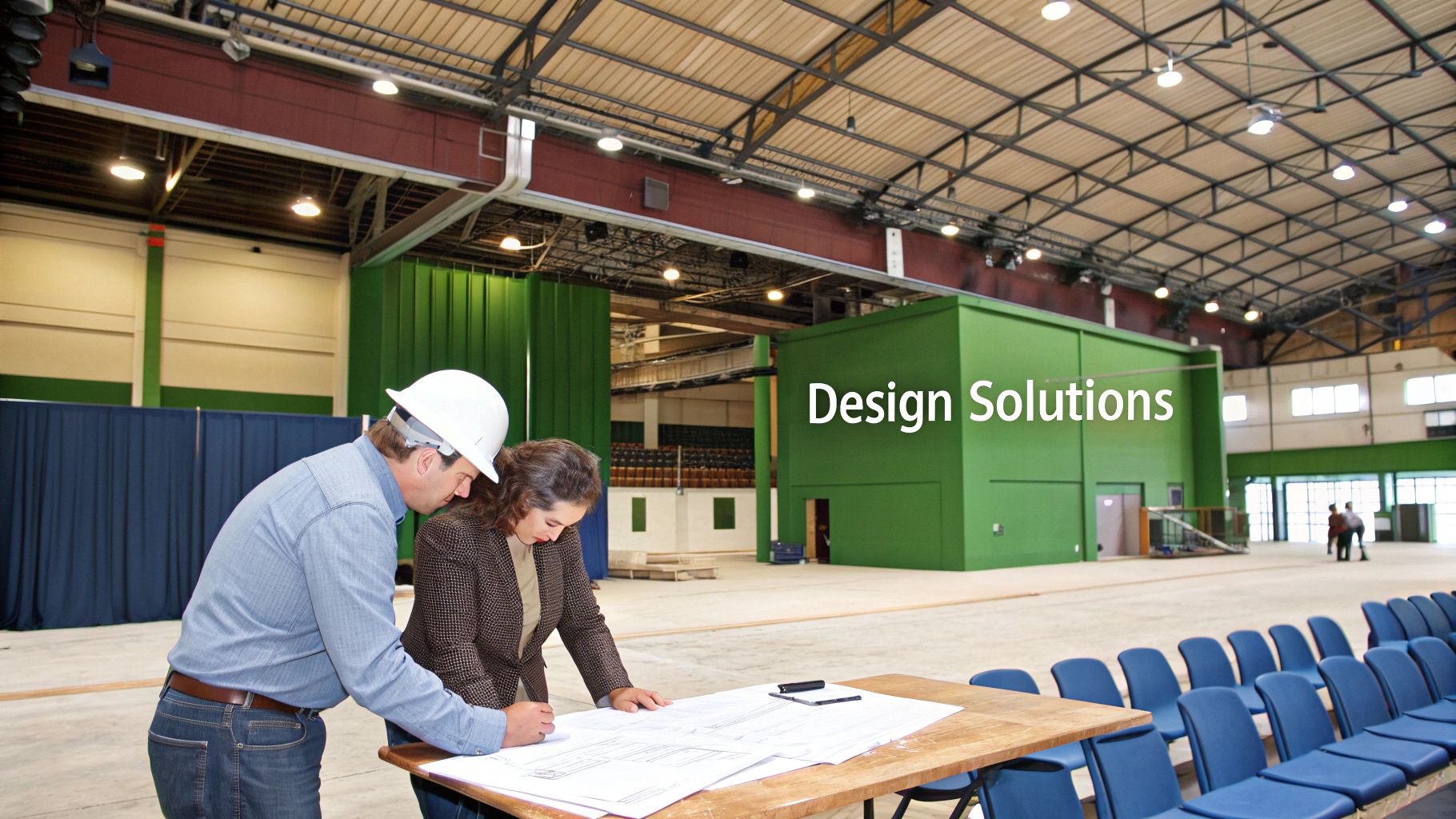
Architects or engineers review design blueprints in a large event space or warehouse.

Turning an industrial shell into a place of performance isn't just a renovation; it's like solving a giant, three-dimensional puzzle. Every piece, from the steel beams overhead to the way sound travels through the room, has to fit together perfectly. For any warehouse theater in Greenville SC, getting these foundational, technical details right from the start is what separates a successful venue from a failed experiment.

The first, and arguably most important, challenge is the building's skeleton. Warehouses are built for the simple, static weight of goods, not the dynamic loads of lighting rigs, catwalks, and hundreds of people. A deep-dive structural analysis is always step one, figuring out exactly where we need to add muscle to the original frame to carry the weight of a modern theater safely.

From Echo Chamber to Acoustic Sanctuary

Let's be honest: the very things that give a warehouse its character—soaring ceilings, concrete floors, and hard, flat walls—are an acoustic disaster. They create a massive echo chamber where sound just bounces around endlessly. For a theater, where the clarity of every line and note is paramount, this is a non-starter.

Taming that chaotic sound requires a layered approach, not just a single fix. We have to bring in a combination of strategies to absorb and scatter sound waves.

  • Acoustic Paneling: You'll see these installed strategically on walls and ceilings. Their job is to act like sponges, soaking up stray sound before it can reflect back into the room.
  • Irregular Surfaces: We intentionally break up those big, flat planes by adding varied textures and angles. This scatters the sound, preventing harsh echoes and creating a much warmer, more intimate feel.
  • Smart Layout: Even the way we arrange seating and interior walls can help. A good design directs sound right where you want it—to the audience's ears. When planning a new warehouse theater, it’s vital to consider every element, including carefully choosing the right stage that complements the unique acoustic fingerprint of the space.

Weaving in the Modern Essentials

Beyond sound, a performance venue needs a whole network of complex systems that do their job without anyone noticing. HVAC (heating, ventilation, and air conditioning) is a perfect example. You need a system that keeps a full house comfortable but remains completely silent. That’s a world away from the loud, clunky industrial units you usually find bolted to the roof of an old warehouse.

A great adaptive reuse project respects the soul of the original building while making it ready for today. The real artistry is in weaving in modern life-safety systems—like fire suppression and accessible exits—without erasing the historic industrial character that drew you to the space in the first place.

This means designing custom ductwork, often lined with sound-dampening material, and picking air handlers that are whisper-quiet. At the same time, we have to meet all current codes for fire safety and accessibility. This involves integrating ramps, accessible restrooms, and clear emergency egress routes in a way that feels like it was always part of the building's design, not just tacked on.

It’s a delicate dance between preservation and modernization. The best projects make these critical upgrades feel so natural that you'd never guess they weren't part of the original plan, resulting in a venue that’s safe, welcoming, and full of history.

Navigating Approvals and Maximizing Incentives

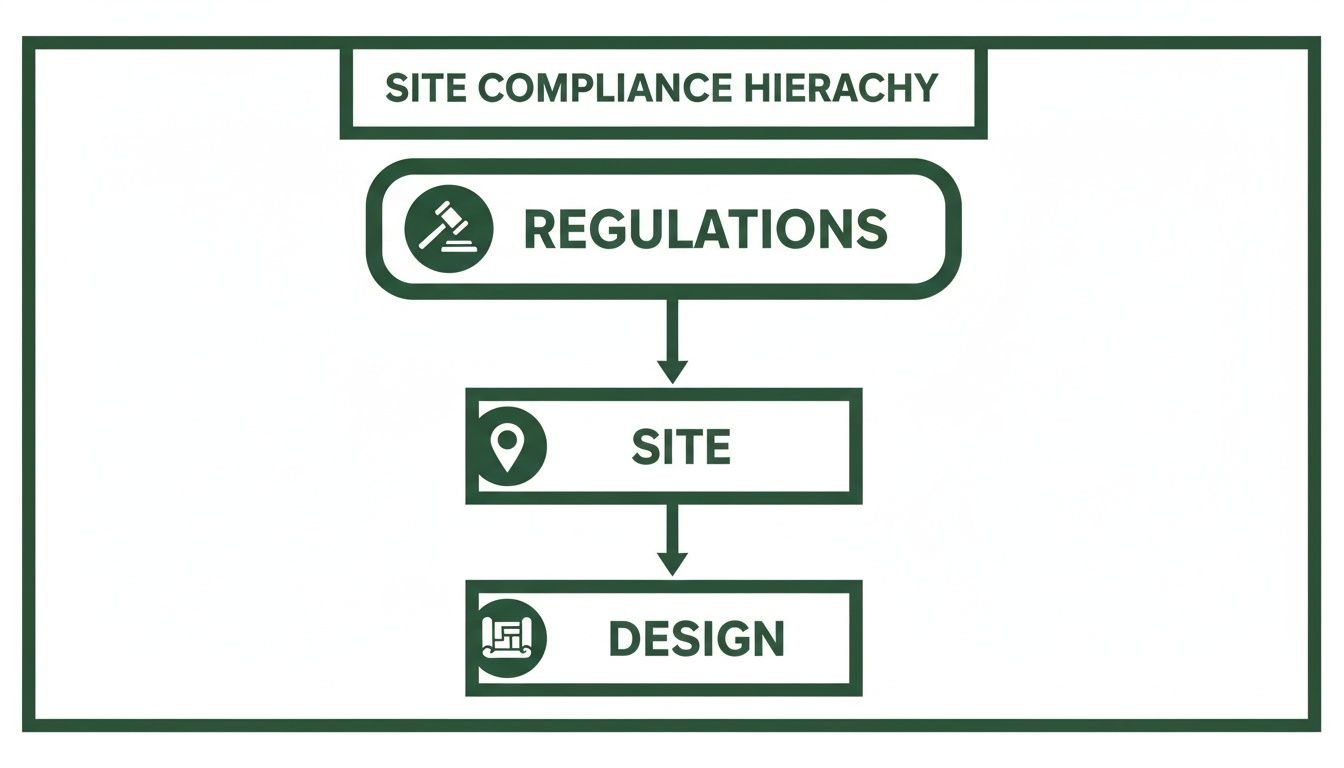
Taking an old building and giving it new life as a modern venue means you're stepping into a world of regulations and financial strategy. For anyone looking at a project like a warehouse theater in Greenville SC, this part of the process can feel daunting. But with the right team, what looks like a mountain of bureaucratic hurdles can actually become your biggest financial advantage.

The trick is to see zoning ordinances, Design Review Board presentations, and historic preservation rules not as roadblocks, but as a roadmap. When you know how to navigate it, this process can actively lower your project costs and significantly improve your return on investment. It's less about fighting red tape and more about lining up your project's goals with what the city and preservation groups want to see. You just have to learn how to make the system work for you.

Turning Regulations into ROI

Let's be clear: the regulatory maze isn't there to kill projects. It's designed to make sure development is safe, sustainable, and genuinely adds value to the community—and in a historic area like Greenville's West End, that's doubly true. Think of the approvals process as your first, best chance to prove that your project respects the neighborhood's character while breathing new economic life into an old building.

For example, when you stand in front of a Design Review Board, you’re not just checking a box. A well-researched presentation showing how you'll save the original brickwork or restore those iconic old windows builds incredible goodwill. That proactive approach signals you're a partner in preservation, not just another developer, and can make every subsequent step a whole lot smoother.

And that partnership mentality is precisely what unlocks the real financial wins.

A project that nails the balance between modern needs and historic preservation doesn't just get a green light. It gets a key to a powerful set of financial incentives that can completely change the numbers on your pro forma. These aren't handouts; they're rewards for doing it right.

Unlocking Historic Tax Credits and Grants

This is where the financial picture gets really interesting. Programs like the Federal Historic Preservation Tax Incentives program and South Carolina's own state-level credits are game-changers. They can be incredibly lucrative, but they don't mess around—you need precision and real expertise to qualify.

Getting these benefits isn't a simple form-fill. It involves a few critical steps:

  • Deep-Dive Documentation: First, you have to meticulously research and document the building's original bones—how it was built and what materials were used. This research becomes the foundation of your entire preservation plan.
  • Smart, Sensitive Design: Your architectural plans have to be clever. They need to show exactly how you'll integrate modern systems like HVAC and electrical with the least possible impact on the historic fabric of the building.
  • Airtight Application: The application process is rigorous. You need to provide clear, undeniable proof that your renovation follows the Secretary of the Interior's Standards for Rehabilitation to the letter.

The story of The Warehouse Theatre is a perfect real-world example. It's set to celebrate 52 years in 2025, and its journey from a scrappy black box experiment in 1973 to a top-tier professional theater shows what’s possible when vision and preservation come together. The theater got its start with a grant from the South Carolina Arts Commission, proving how smart financing and a commitment to preservation build lasting value.

This history shows that knowing how to navigate design reviews and tap into historic tax credits can reduce costs by 50-75% compared to just tearing the building down. You can dig into their foundational story to see how those early grants and community buy-in laid the groundwork for decades of success.

5. Budgeting and Timeline: The Bottom Line on Your Warehouse Conversion

When you're looking at a project like this, it really boils down to two things: how much is it going to cost, and how long is it going to take? For a developer, getting these answers right is everything. A predictable budget for a warehouse-to-theater conversion isn't about guesswork; it's about building a detailed financial roadmap from the very beginning.

Think of it less as a single price tag and more as a series of building blocks. You have your big-ticket items, like buying the property and paying for the architectural design. But then you start layering in the unique challenges of adaptive reuse—things like beefing up the structure for theatrical loads, installing specialized acoustic treatments, and wiring up the sophisticated lighting and sound systems that make a performance space come alive. A solid budget for a warehouse theater in Greenville, SC, has to account for all of it.

Breaking Down the Major Cost Centers

One of the easiest traps to fall into is underestimating the "soft costs" and forgetting to build in a healthy contingency fund. A well-planned budget expects the unexpected. Old buildings always have secrets, so you need to be prepared.

Here's how we typically break it down:

  • Hard Costs: This is the steel, the concrete, the drywall. It covers all the physical construction—structural work, HVAC, electrical, plumbing, interior finishes, and all the specialized theater gear like rigging and seating.
  • Soft Costs: These are the professional services that get the project off the ground and keep it on track. Think architectural and engineering fees, permits, legal reviews, and insurance.
  • Contingency Fund: This is your safety net. We recommend setting aside 10-15% of the total construction cost for those inevitable surprises, like discovering hidden structural damage or dealing with unforeseen site conditions.

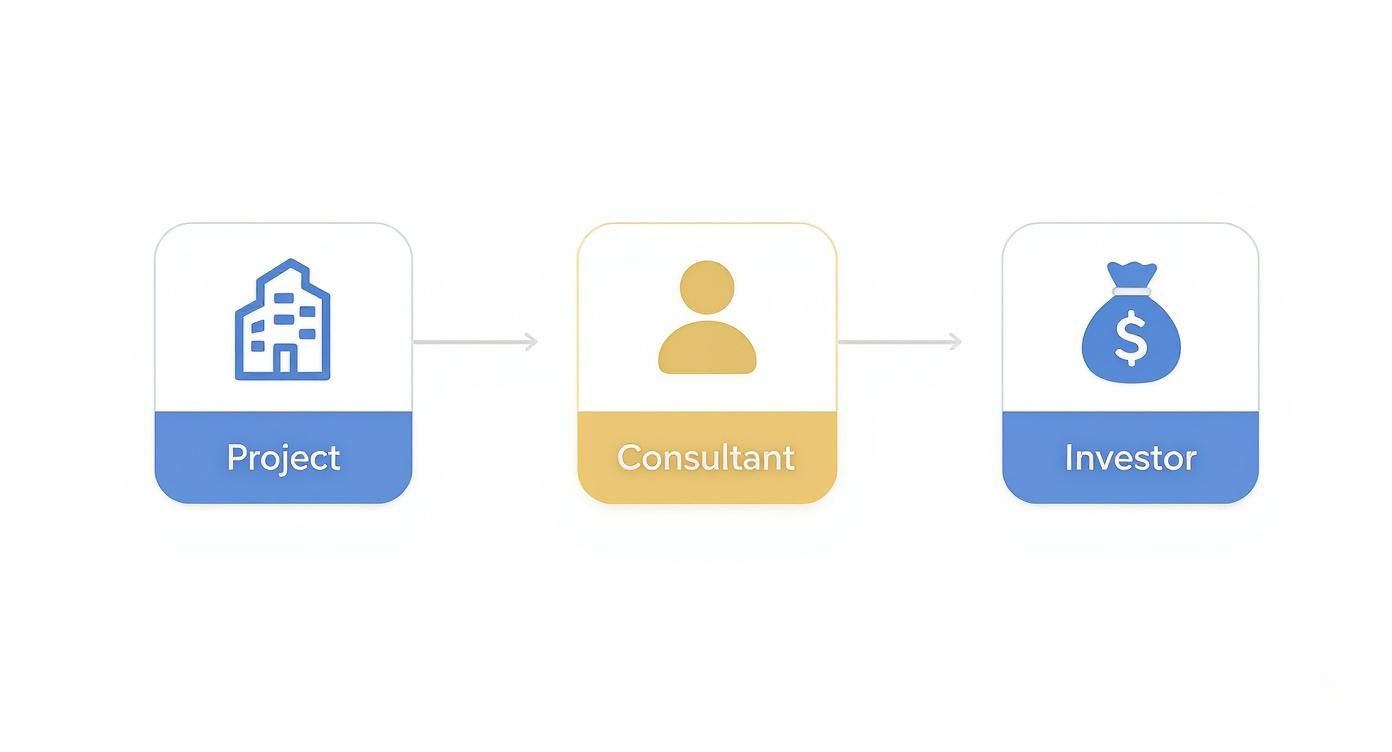
The process of securing approvals and incentives plays a huge role in your financial planning. As the flowchart below shows, these steps aren't just bureaucratic hurdles; they're gateways to unlocking real money for your project.
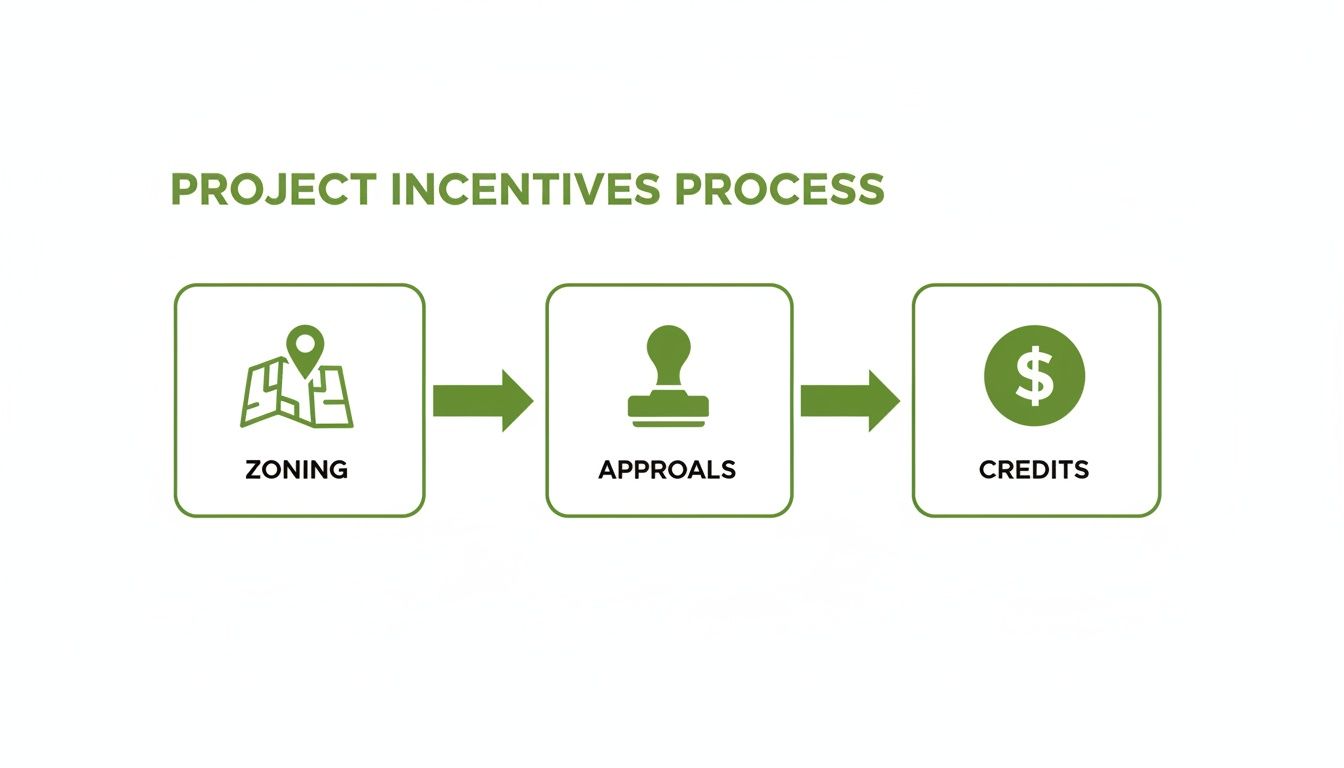
A flowchart illustrates the Project Incentives Process with steps: Zoning, Approvals, and Credits.

As you can see, getting your zoning and historic designations locked in early is the key. Those foundational steps are what allow you to tap into financial credits, turning what feels like red tape into a real benefit for your budget.

Adaptive Reuse vs. New Construction: A Cost and Timeline Overview

To really understand the trade-offs, it helps to see how a warehouse conversion stacks up against starting from scratch. Here’s a high-level comparison to help you weigh the financial and scheduling implications.

Factor Adaptive Reuse (Warehouse) New Construction (Theater)
Upfront Costs Acquisition + major retrofitting. Can be variable based on building condition. Land acquisition + ground-up build. Often higher initial capital outlay.
Design & Approval More complex upfront; involves historic reviews, structural analysis, and creative problem-solving. More straightforward design process but can face lengthy zoning and site plan approvals.
Construction Time Generally faster once permits are secured, as the primary structure already exists. Longer construction phase from foundation to finishing.
Incentives High potential for historic tax credits, grants, and other revitalization funds. Limited to standard development incentives; no historic benefits.
Contingency Needs Higher (10-15%) due to the potential for unforeseen conditions in an existing structure. Lower (5-10%) as conditions are more controlled and predictable.
Marketability Strong narrative appeal; unique character and historic charm can be a major draw. A blank slate; appeal is based entirely on new design and amenities.

While the numbers can vary wildly from one project to the next, this table gives you a framework for thinking about the decision. Adaptive reuse often presents a compelling case, especially when you factor in the speed to market and the financial perks.

Phasing Your Project for a Predictable Path

A realistic project timeline is just as crucial as the budget. We always advocate for a phased approach, starting with feasibility studies and design development before ever breaking ground. This methodical process helps prevent the kinds of costly delays that can sink a project.

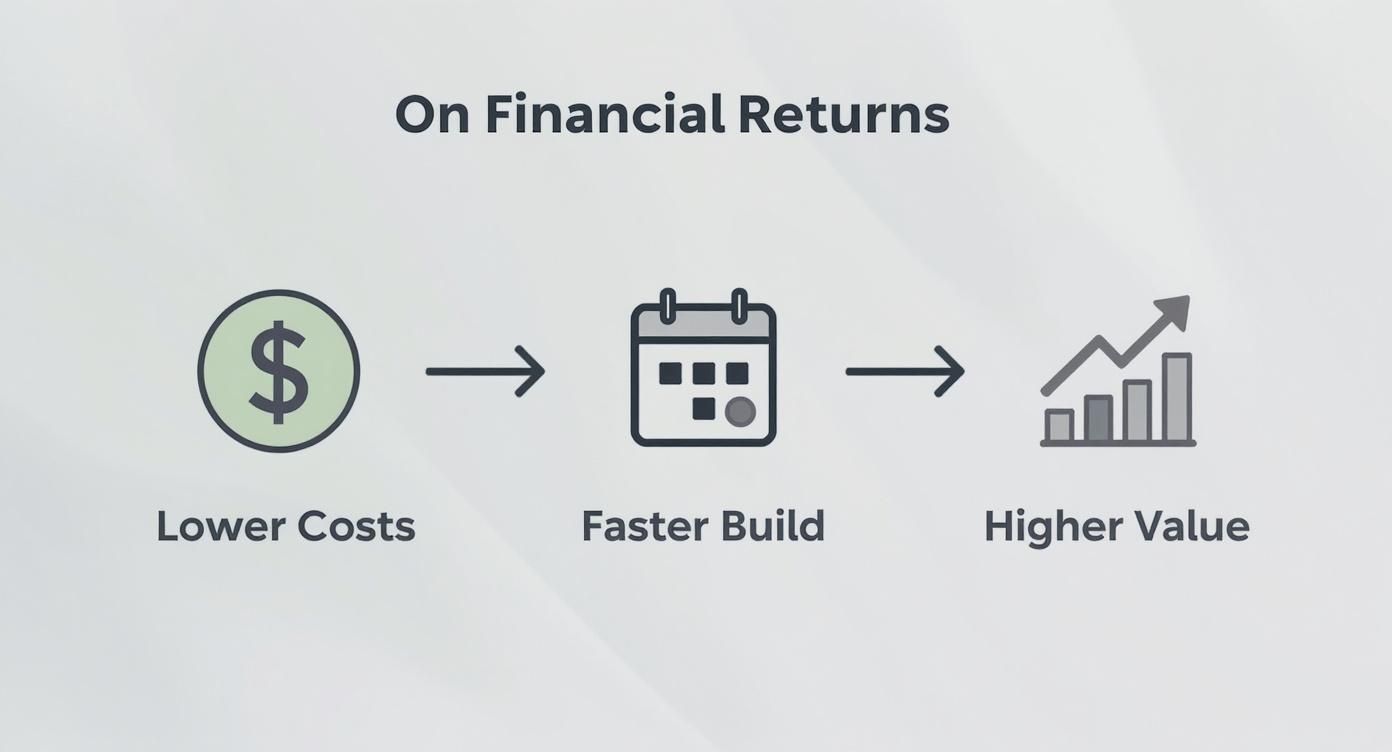
The real value of adaptive reuse shines when you compare it to new construction. While initial costs can sometimes be similar, the accelerated timeline, potential for tax credits, and the built-in character of a historic space often deliver a superior long-term ROI.

This is where having an experienced architectural partner becomes invaluable. By performing thorough due diligence at the outset and drawing on a deep well of experience with local regulations and incentive programs, a good firm can cut through the uncertainty. They help mitigate risks and keep the project on a steady, financially sound path—from that first concept sketch all the way to opening night.

Lessons Learned: Your Blueprint for a Successful Theater Project

Taking an old, forgotten building and turning it into a cultural cornerstone is an ambitious journey. But as the story of the Warehouse Theatre in Greenville, SC, shows, it’s a journey that can be incredibly successful when you blend a great vision with a smart financial plan. Here are the key takeaways from that project that can guide your own.

If there's one thing to take away from our experience, it's this: do your homework upfront. A deep-dive feasibility study before you even think about design is absolutely critical. This is where you uncover the hidden structural gremlins, the regulatory roadblocks, and the real financial picture.

Getting this right from the start is the difference between building on solid rock and building on quicksand. It saves you from those heart-stopping, budget-blowing surprises down the line.

You Can't Do It Alone: Building Your A-Team

Adaptive reuse projects are team sports, and the Warehouse Theatre is a perfect example of what happens when you get the right players on the field early. Your project's success truly depends on the specialists you bring to the table from day one.

Your core team should absolutely include:

  • A Preservation-Savvy Architect: You need someone who not only has a great design eye but also knows how to navigate the complex world of historic tax credits and respect the soul of the original building.
  • An Acoustician: Old industrial spaces are notorious echo chambers. An acoustician is the magician who turns that cavernous space into an intimate venue where every word from the stage is crystal clear.
  • A Creative Structural Engineer: This is the person who figures out how to make a century-old frame support modern lighting grids and seating without gutting its historic character.

The most successful projects are the ones that become part of the community's fabric. Think beyond the four walls. The goal is to create a destination that pulls people in, drives foot traffic, and becomes a place the neighborhood can't imagine living without.

Ultimately, your architectural partner is your quarterback through this entire game. They’re the ones who see the whole field—coordinating the design, wrangling the permits, managing the budget, and overseeing construction. With a solid team and a clear vision, your own warehouse theater in Greenville SC can be more than just a beautifully restored building. It can become a thriving, profitable hub for your community for years to come.

Got Questions? We've Got Answers

If you're looking at an old warehouse in Greenville and thinking "theater," you're not alone. It's an exciting idea, but it also comes with a lot of questions. We've been through this process many times, and a few key concerns always come up.

Let's walk through some of the most common questions developers and property owners ask when they're on the fence about turning an industrial shell into a cultural landmark.

What's Going to Surprise Me on the Budget?

The biggest budget-busters are almost always the things you can't see. When you peel back the layers of an old building, you might find structural issues that need serious reinforcement, old wiring that can't handle a modern theatrical load, or even hazardous materials like asbestos that have to be professionally removed.

These aren't just about meeting today's building codes; they're about supporting the intense demands of a performance space. The best money you can spend upfront is on a deep, thorough assessment with an architect who knows what to look for. It’s how you turn "unforeseen costs" into a predictable line item.

Here's a hard-won piece of advice: don't treat the theater-specific systems as an add-on. Things like theatrical lighting, rigging, and especially acoustic treatments, are core infrastructure, not just finishes. If you budget for them like an afterthought, you risk blowing your budget and compromising the entire reason you're building the theater in the first place.

How Can I Actually Use Historic Tax Credits in South Carolina?

South Carolina offers some fantastic incentives for bringing historic buildings back to life, but you have to play by the rules. The big ones are the state and federal historic tax credits. To get them, your building first needs to be on the National Register of Historic Places.

Then comes the critical part: every single piece of renovation work has to follow the Secretary of the Interior's Standards for Rehabilitation. This isn't a suggestion—it's a strict requirement. You absolutely need an architect who has been through the wringer with the State Historic Preservation Office (SHPO). They'll know how to design a project that meets the standards and helps you get the most out of these powerful financial tools.

Is My Smaller Warehouse Big Enough?

You bet. In fact, some of the most compelling performance spaces are created in smaller warehouses. A building in the 5,000 to 10,000 square foot range can be the perfect candidate for an intimate, flexible black box theater.

When looking at a smaller space, here’s what really matters:

  • Look Up: Do you have enough ceiling height for a lighting grid? This is non-negotiable for a real theater experience.
  • Look Around: Is the main space a wide-open, clear span? The fewer columns, the more freedom you have to arrange seating and staging.
  • Look Next Door: Is there enough room for the essentials? You'll need a lobby, restrooms, and at least a small dressing room area.

A smaller project can be a smart, cost-effective way to get into the adaptive reuse game and create something truly special for the community.


Tackling an adaptive reuse project takes more than just a blueprint; it requires a partner who understands the soul of old buildings and the demands of new ones. At Sherer Architects, LLC, we've spent decades helping developers navigate this exact journey, from the first feasibility sketch to the final curtain call. We make sure your vision becomes a building that's beautiful, functional, and built to last. Find out how we do it at https://shererarch.com.

Categories
Uncategorized

How to Choose a Commercial Architecture Firm for Your Project

A commercial architecture firm does more than just design buildings for businesses. They are the specialists who translate your business plan into a physical space—be it an office, a retail hub, or a sprawling mixed-use development. They're your guide through the labyrinth of zoning laws and building codes, ensuring the final structure is functional, safe, and actually looks good. Getting this partnership right is the difference between a real estate investment and a genuinely profitable asset.

Matching Your Vision with the Right Architectural Partner

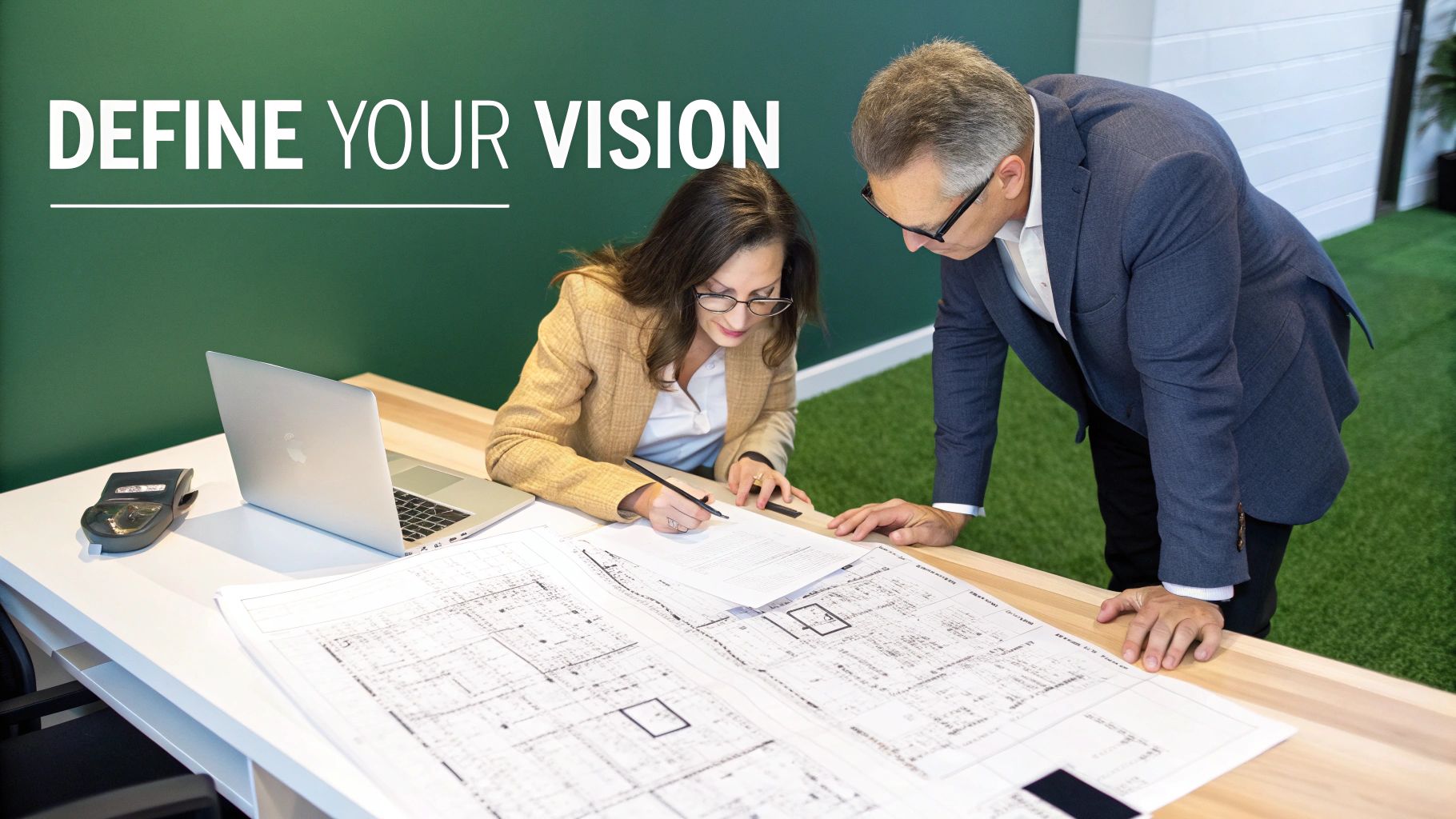
Two architects collaboratively review blueprints and documents on a desk, defining their vision.

Before you even think about picking up the phone to call an architect, the most critical work needs to happen in-house. A fuzzy concept like "a new office building" isn't a starting point; it's a recipe for confusion. To find a firm that can nail your vision, you have to define that vision with absolute clarity first.

This isn't about picking out paint colors. It's about nailing down your business objectives, getting real about the budget, and listing out every functional need.

Think of it as creating a detailed project brief. This document becomes your project's constitution, the single source of truth that keeps everyone—you and your future architect—on the same page from day one. Skipping this step is asking for trouble: miscommunication, scope creep, and a final building that doesn't do what you needed it to do. You're the expert on the problem you're trying to solve; a successful project starts there.

Defining Your Project Scope and Goals

First things first, you need to pin down the "what" and the "why" of your project. Are you building a new headquarters to become a talent magnet? Breathing new life into a historic property to launch a boutique hotel? Or are you developing a mixed-use space to kickstart a neighborhood's revival? Each of these goals demands a completely different design approach.

For example, a retail developer trying to boost foot traffic is going to obsess over visibility, easy access, and a storefront that practically pulls people in off the street. On the other hand, a company building a logistics center will be all about operational flow, truck circulation, and materials that can take a beating. Your business goals are the compass for the entire architectural process.

To get this on paper, it's helpful to answer a few key questions:

  • Primary Business Objective: What’s the number one thing this project must achieve? Maybe it's increasing production capacity, fostering better team collaboration, or simply maximizing rental income.
  • Target Audience: Who is this space for? Get specific. Think about the customers, employees, tenants, and even the local community who will interact with it.
  • Functional Needs: What are the absolute non-negotiables? This could be specific square footage for different teams, hookups for specialized equipment, or ensuring certain departments are right next to each other.
  • Future Growth: Where do you see the business in five or ten years? A smart design doesn't just solve today's problems; it leaves room for future expansion or changes.

A project’s success isn’t just measured by its size or the materials used. It's measured by its ability to solve a real business problem. A great commercial architect doesn’t just design buildings; they design solutions that drive revenue, improve efficiency, and build your brand.

Understanding Your Financial Realities

Once your goals are set, it’s time for a reality check. A clear, honest budget is one of the most important things you can give a potential architect. And it’s not just about the construction cost. You need to account for the total project cost.

This includes all the "soft costs"—things like permit fees, engineering studies, legal help, and land surveys. These can easily add a huge chunk to the overall budget. And please, don't forget a contingency fund. Plan for 5-10% of the construction cost to cover the unexpected hiccups that always pop up.

Being upfront about your budget from the get-go allows an architecture firm to give you real, actionable feedback. They can tell you what’s possible, suggest different materials or strategies, or even propose a phased approach to help you hit your goals without breaking the bank. That early financial honesty saves everyone a ton of time and builds a partnership on a foundation of trust.

Before you start interviewing firms, take the time to answer the key questions below. Having this information organized will make your initial conversations far more productive.

Project Clarity Checklist Before You Hire

Use this checklist to define essential project details before starting your search for a commercial architecture firm.

Checklist Item Key Questions to Answer Why It's Critical
Business Goals What is the primary business problem this project solves? What does success look like in 2-5 years? Aligns design with business outcomes, not just aesthetics.
User Profile Who will use this space daily (employees, customers, tenants)? What are their specific needs and workflows? Ensures the design is functional and user-centric from the start.
Site Information Do you own the land/building? What are the address, zoning restrictions, and known site constraints? Provides immediate context for feasibility, code navigation, and initial design concepts.
Total Project Budget What is the all-in budget, including construction, soft costs (fees, permits), and contingency? Sets realistic financial guardrails and helps firms propose viable solutions.
Project Timeline What is your ideal start date and desired completion/occupancy date? Are there hard deadlines? Helps assess a firm's availability and capacity to meet your schedule.
Key Stakeholders Who are the decision-makers on your team? Who will be the primary point of contact for the architect? Clarifies communication channels and prevents delays from internal indecision.

Having clear answers to these questions transforms your first meeting from a vague introductory chat into a focused, problem-solving session. You’ll immediately see which firms grasp your vision and are ready to be a true partner in bringing it to life.

Evaluating a Firm's Portfolio and Proven Expertise

A beautiful website and a slick brochure are just the beginning. To really know if a commercial architecture firm can deliver on your investment, you have to dig much deeper than their marketing materials and take a hard look at their portfolio. This isn't just about looking at pretty pictures; it's about finding real proof that they've solved business problems similar to yours.

You’re looking for a firm with a proven track record, not just in design, but in actually getting things built and solving the inevitable problems that pop up along the way. Look for projects that mirror yours in scale, complexity, and type. If you’re planning a large-scale adaptive reuse project, a portfolio full of small, new-construction retail spaces isn't the right fit, no matter how stylish they look.

Looking Beyond Aesthetics for Relevant Experience

When you’re looking through a firm's past work, try to see past the polished final photos and focus on the challenges they had to overcome. Did they successfully navigate a thorny rezoning process for a mixed-use development? Have they managed to secure historic tax credits for a preservation project? These are the skills that ultimately protect your budget and timeline.

A strong portfolio shows you both their range and their specific expertise. You should be able to find clear examples that line up with what you need:

  • Project Type: Do they have a lot of experience in your specific sector, whether that’s healthcare facilities, industrial warehouses, or multi-family housing? Each one has its own unique codes, user needs, and operational headaches.
  • Scale and Complexity: Has the firm managed projects with budgets and square footage similar to yours? A team that’s used to handling $50 million projects thinks and operates very differently from one that typically handles smaller commercial upfits.
  • Specialized Skills: Look for proof of expertise in the areas that matter most to your project. This could be anything from sustainable design certifications to approvals from historic preservation boards or figuring out tricky site logistics in a dense downtown area.

Getting a real feel for a firm's capabilities means reviewing a wide range of their work. A great way to do this is to view examples of architectural works to see how they’ve tackled different challenges with creative, yet practical, solutions. This kind of deep dive helps you understand how they think and solve problems.

Asking the Right Questions About Past Projects

Once you've looked through their portfolio, it's time to ask targeted questions that get to the story behind the images. A good firm won't hesitate to be transparent about their successes and the challenges they had to work through. If you get vague answers, that’s a major red flag.

Don’t just ask what they built. Ask how they built it and what the results were. This is how you find a true partner, not just someone you hire to draw up plans.

A firm’s portfolio should do more than just show off finished buildings. It should tell a story of partnership, problem-solving, and real, measurable success. Look for the narrative behind the architecture—how did their design actually impact the client’s bottom line, the user experience, or the community?

To get the full picture, you have to drill down with specific questions. Use these as a starting point during your interviews to get a sense of their real-world capabilities and how they work with clients.

Questions That Uncover True Expertise

  1. "Can you walk me through a project similar to ours, from the initial idea to the day it opened? What were the biggest hurdles you ran into?" This question gets right to their process and shows how honest they are about the tough stuff.
  2. "What was the original budget for that project, and what was the final cost? Can you explain why they were different, if they were?" This is a direct, no-nonsense way to see how well they manage money and control costs.
  3. "For [specific project], how did your design decisions directly help the client achieve their main business goals?" This tells you if they think like business partners or just as designers.
  4. "Could you put me in touch with two or three clients from projects of a similar scope?" Talking directly with past clients is the best verification you can get. Ask those references about communication, how responsive the firm was, and the ultimate question: would they hire them again?

By digging into the details of their past work, you get past subjective feelings and start gathering hard evidence of their ability to deliver. A commercial architecture firm with a portfolio of relevant, successfully completed projects—and happy clients to back it up—is one that can confidently guide your investment to a profitable outcome.

Understanding the Commercial Project Development Process

Bringing a commercial building from an idea to a tangible asset is a seriously complex journey. You’re not just hiring a designer; you’re bringing on a strategic partner to guide you through every phase, making sure your vision becomes a functional and, most importantly, profitable reality. A great commercial architecture firm anticipates challenges and solves problems long before they have a chance to blow up your budget or timeline.

Think of it as a marathon, not a sprint. Every stage, from initial sketches to the final walkthrough, builds on the last. One misstep early on can create a domino effect of costly problems. A proactive architect is your first line of defense, managing all the intricate details right from the get-go.

This kind of expert management is more critical than ever. The global architecture, engineering, and construction (AEC) market is projected to hit an incredible $16.3 trillion by 2025. We're also seeing nonresidential construction starts jump by 6% year-to-date. This boom, especially in hot sectors like data centers, means the development landscape is only getting more complicated.

Site Analysis and Feasibility Studies

Before a single line is ever drawn, the success of your project is often decided by its location. The very first thing your architect will do is a deep dive into site analysis and feasibility. This is way more than just glancing at a property map.

They'll dig into zoning laws, land-use restrictions, and any potential environmental red flags. Is the site in a floodplain? Are there easements or utility right-of-ways that will dictate where you can build? Answering these questions upfront saves you from massive headaches later. For instance, a firm might discover that a seemingly perfect parcel has terrible soil conditions, requiring an expensive and complex foundation—making a different site a much smarter investment.

Navigating Zoning and Regulatory Hurdles

Every city and county has its own tangled web of zoning ordinances, building codes, and review boards. This is where an architecture firm with deep local roots becomes invaluable. They know the people at the planning department and can anticipate what review boards, like a Historic Preservation Commission, will be looking for.

Imagine you want to build a sleek, modern retail space right in the middle of a historic downtown district. A good architect knows exactly how to design a building that meets your commercial needs while also respecting the strict aesthetic guidelines of the preservation board. They handle the mountain of paperwork, show up to the public hearings, and advocate on your behalf, which dramatically smooths out the approval process.

An experienced architect doesn't just react to code requirements; they design with them in mind from the start. This integrated approach ensures the final building is not only compliant but also efficient, safe, and aligned with your long-term goals.

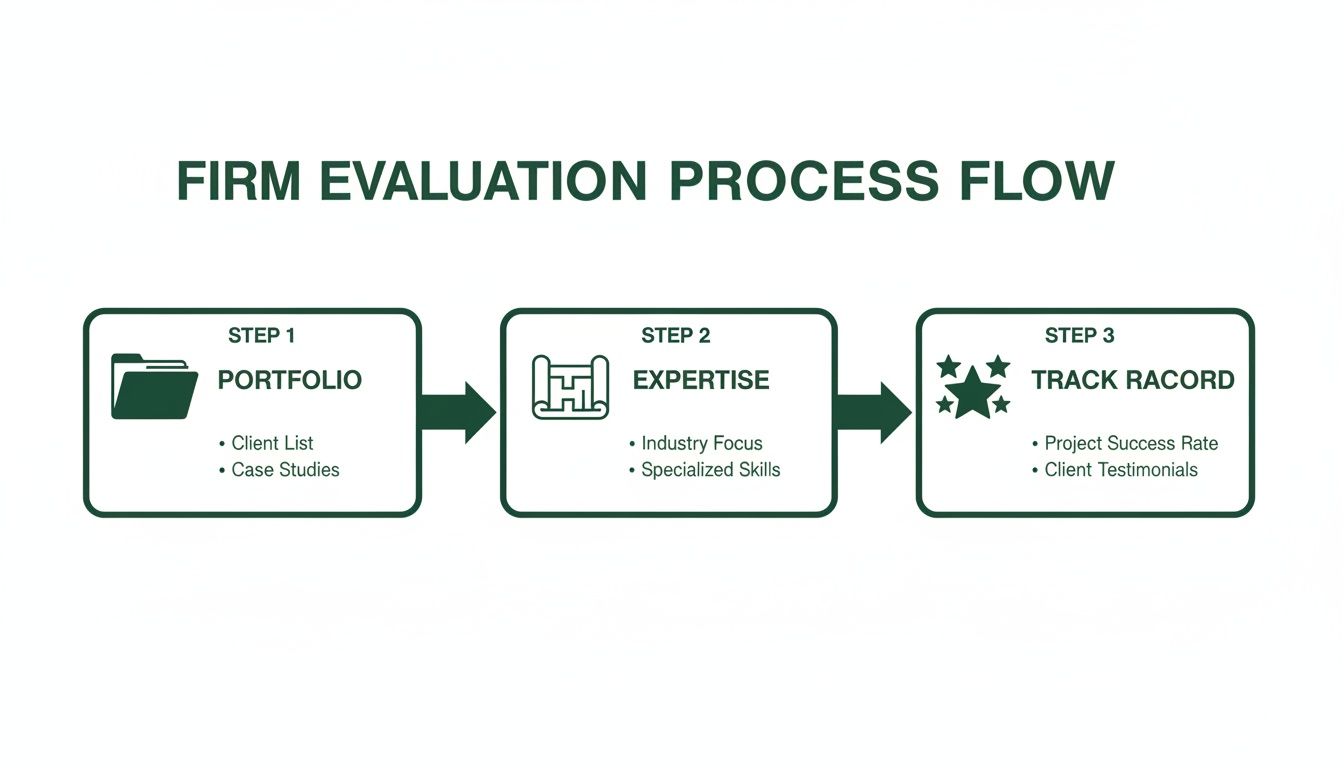
The evaluation process below shows how to spot a firm that can really handle these complexities.

A firm evaluation process flow diagram outlining three steps: Portfolio, Expertise, and Track Record.

This highlights how a firm's past work, specific expertise, and proven track record all connect to create a successful project outcome.

From Design Development to Construction Administration

Once you've cleared those early hurdles, you get to the fun part: the design phases. This is where your architect collaborates with you to translate your vision into a highly detailed set of construction documents—the blueprints the contractor will use to bring your project to life.

These documents are incredibly specific and cover everything imaginable:

  • Structural Systems: The building's entire skeleton, from the foundation to the roof beams.
  • Mechanical and Electrical Plans: The full layout for HVAC, plumbing, and electrical systems, which is critical for operational efficiency and meeting modern energy codes.
  • Material Specifications: Detailed callouts for every single finish, from the type of brick on the outside to the brand of flooring inside.

But the architect’s job isn’t over when the shovels hit the ground. During the construction administration phase, they become your eyes and ears on-site. They make regular visits to check on progress, answer the contractor’s questions, review payment applications, and make sure the work is being done exactly as planned.

This oversight is your best insurance policy against construction errors or cut corners. For a deeper look into the many facets of bringing a commercial project to life, you can Explore insights on commercial project development from the Timbercloud blog. This constant involvement is what protects the quality and integrity of your investment, all the way from groundbreaking to grand opening.

Creating Value Through Adaptive Reuse and Preservation

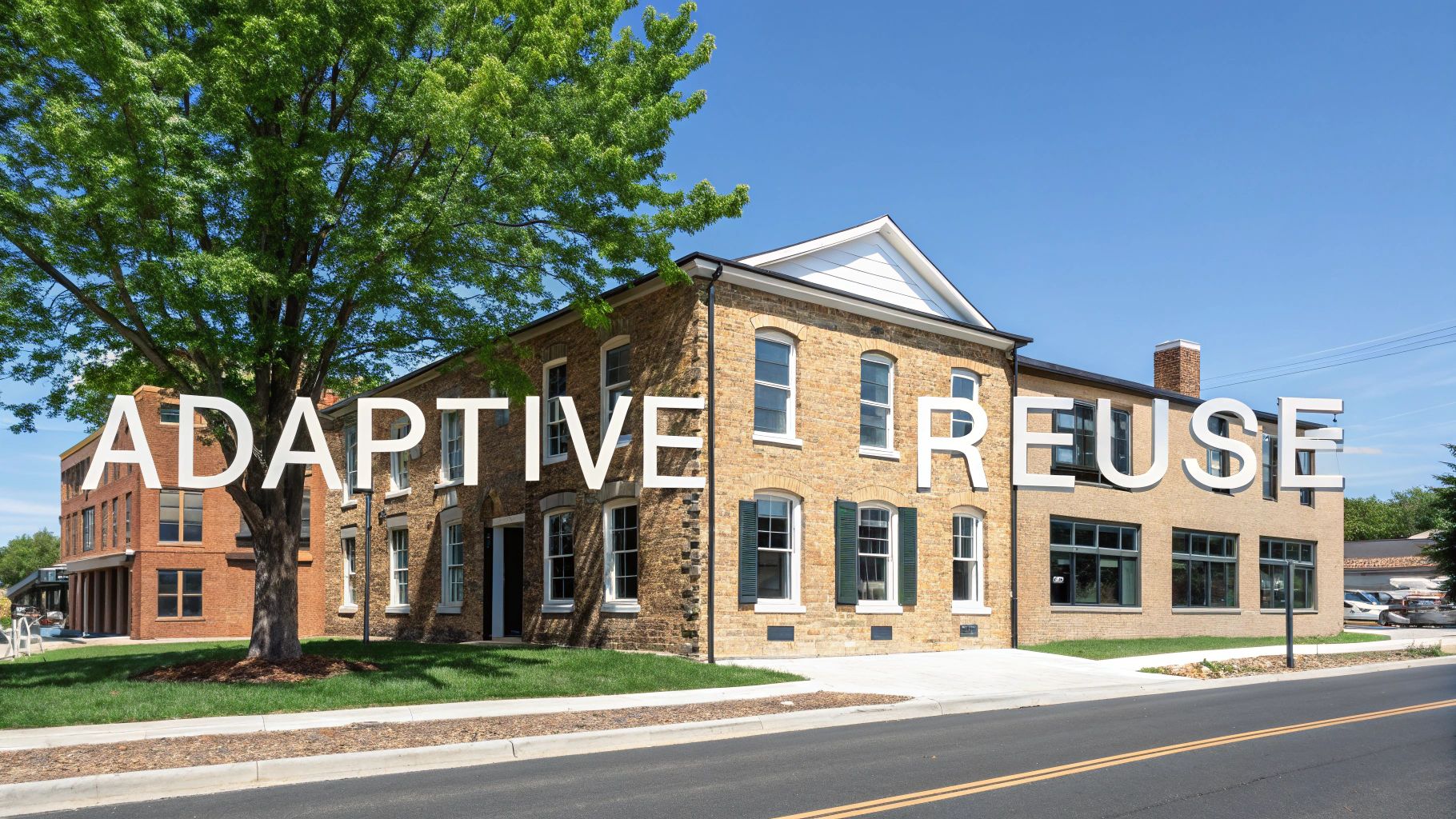
A historic brick building with 'ADAPTIVE REUSE' text on its facade, a large tree, and a street.

It's easy to assume that the best path forward is a clean slate. But in commercial development, starting from scratch isn't always the smartest or most profitable move. There’s a massive amount of untapped value sitting in our existing building stock.

This is where adaptive reuse comes in. It’s the art of taking an old building and giving it a completely new purpose. Imagine that old, forgotten factory on the edge of town. A skilled architecture firm can see its potential, transforming it into modern lofts, a boutique hotel, or a bustling retail hub.

This isn't just about saving a piece of local history; it's a strategic move. You’re preserving the unique character that new construction struggles to replicate, and you're doing it in a way that makes financial sense. Giving an old building a new life can extend its usefulness by another 50 to 75 years, often for less than the cost of demolition and a new build.

The Financial and Community Benefits

When you choose to repurpose a building, you're making a decision that pays off on multiple fronts. The existing structure—the foundation, the frame, the exterior shell—represents a huge head start in both materials and labor costs. In many cases, the project timeline can be significantly shorter than building from the ground up.

But the real magic happens when the project is finished. Consumers and tenants are hungry for spaces with a story. That authenticity and character translate directly into tangible returns:

  • Higher Lease Rates and Property Values: Those unique, historic spaces almost always command premium rents and sale prices.
  • Faster Lease-Up Times: A distinctive building generates buzz and attracts tenants far more quickly than a generic new box.
  • Positive Community Perception: Saving a local landmark wins you a lot of goodwill, which can make getting approvals much smoother.

Adaptive reuse projects aren't just renovations; they're economic engines. By turning underutilized properties into valuable assets, they create jobs, boost the local tax base, and can breathe new life into entire neighborhoods, turning forgotten corners into destinations.

This approach is becoming more and more central to the industry. Sustainability is a major driver, and as the global commercial building market is projected to grow from USD 215.13 billion in 2025 to USD 273.97 billion by 2029, repurposing existing structures just makes sense. Firms that specialize in adaptive reuse are set to lead the way. If you want to dig deeper into these numbers, you can explore the architecture industry outlook.

Honoring Heritage While Modernizing for the Future

Pulling off an adaptive reuse project takes a very specific blend of skills. A commercial architecture firm with this expertise is part historian, part innovator. Their first step is always a deep dive into the building’s past—researching its original materials, construction methods, and historical significance.

This understanding allows them to respect the building’s soul while carefully weaving in modern necessities. They know how to integrate new HVAC, electrical, and plumbing systems without destroying the historic fabric that makes the building special. They are also masters at navigating the complex web of approvals from historic review boards and preservation commissions.

Unlocking Financial Incentives Through Preservation Expertise

Here’s one of the biggest reasons to bring in an expert: money. A preservation-focused architect knows how to unlock significant financial incentives that can completely change a project's pro forma. Many local, state, and federal programs offer grants and tax credits to encourage the preservation of historic buildings.

An experienced firm is your guide through this often-confusing landscape. They can help you secure funding that dramatically lowers your initial investment and boosts your overall ROI. Their expertise covers:

  • Identifying eligible tax credit programs and managing the entire application process.
  • Preparing all the documentation needed to prove historical significance.
  • Ensuring the design and construction follow the strict standards required to qualify.

With this specialized knowledge, your architect can transform what looks like a challenging historic property into a profitable landmark asset. They don't just save a building—they unlock its full economic potential.

Asking the Right Questions (And Spotting the Red Flags)

Once you’ve narrowed down your list, the interview is where the rubber meets the road. This is your chance to get a feel for the people behind the portfolio. Are they a cultural fit? Do they get your business? A great commercial architecture firm becomes an extension of your team, not just another vendor you have to manage.

You’re looking for a true partner here. The conversation should go way beyond just fees and schedules. You need a team that listens, understands what success looks like for you commercially, and can clearly articulate how they’ll protect your investment from start to finish.

Questions That Get to the Heart of Their Process

The best firms aren't just creative; they're systematic. They have a well-oiled machine for communication, problem-solving, and everything in between. Their answers should feel concrete and reassuring, not fluffy.

  • How do you keep your clients in the loop? What’s your typical response time? Don't settle for a vague "we'll keep in touch." A solid answer will mention specific tools, like project management software, and a regular meeting cadence, like a standing weekly call.
  • Give me an example of a time a project went sideways—a surprise zoning issue or a major contractor mistake. How did you handle it? This is where you see their real-world problem-solving chops. A confident, experienced team will have a story ready to go, showing you how they navigate chaos under pressure.
  • Who will be my day-to-day contact? And who is the final decision-maker on your end? You need to know you won’t be handed off to a junior staffer after the ink is dry on the contract. Make sure you have a clear line to the people who can actually make things happen.

These kinds of questions help you picture exactly what it will be like working with them when things inevitably get complicated.

Talking Money and Stability

A firm's design vision means nothing if they can't stick to a budget or are on shaky financial ground themselves. In the current economic climate, you have to be extra vigilant here.

Let’s be honest, the market has seen some turbulence. The AIA/Deltek Architecture Billings Index, a key indicator for commercial construction, clocked in at 43.2 in April 2025, showing a continued slowdown in billings. That said, it’s not all doom and gloom. Regional performance varies wildly, with some areas, like the South, showing much more resilience. You can dig into the specifics by checking out the latest ABI report from AIA Chicago.

Key Takeaway: A firm that gets defensive about your budget questions or can't explain their cost-control process is a massive risk. You want a team that treats your money like it’s their own.

Learning to Spot the Warning Signs

Listening for the wrong answers is just as important as asking the right questions. Some responses (or lack thereof) should set off alarm bells immediately.

Here are a few classic red flags I've learned to watch for over the years:

  • Vague, Canned Answers: If you ask for a specific example and they give you a generic, textbook response, it often means they don't have the hands-on experience you need.
  • All Art, No Commerce: Is the team only jazzed about the building's aesthetics? If they aren't asking you sharp questions about your revenue model, operational flow, or customer experience, they aren't a true commercial partner.
  • "We'll Get You Those References…": A top-tier firm is proud of its work and will have a list of happy clients ready to go. Any hemming and hawing here is a major warning.
  • The Overly Agreeable Architect: Be wary of the "yes-man." A good architect should push back, challenge your assumptions, and bring new ideas to the table. You're hiring them for their expertise, not just to draft up your every command.

Picking your commercial architecture firm is one of the most critical decisions you'll make. By digging deep with insightful questions and keeping an eye out for these red flags, you can find a partner who is transparent, capable, and genuinely invested in seeing your project succeed.

A Few Common Questions Before You Sign the Dotted Line

Once you've narrowed down your list to a top contender, a few practical questions almost always pop up. It's smart to get these answered before you sign any contracts. Clearing the air on these points early on prevents a lot of headaches and makes for a much smoother partnership down the road.

Here’s a look at the questions we hear most often from developers and property owners.

How Do You Structure Your Fees?

This is the big one, and there’s no single answer. Commercial architecture fees usually fall into one of three buckets, and the best fit really depends on your project's size and complexity.

  • Percentage of Construction Cost: This is pretty common. The fee is a set percentage—often in the 5-15% range—of the total construction budget. It’s straightforward, but if your construction costs go up, so does the architect's fee.
  • Fixed Fee (Stipulated Sum): Here, you agree on a flat fee for a very specific scope of work. I find this works best when the project is clearly defined from the get-go. It gives you cost certainty, which is a huge plus.
  • Hourly Rate: This is your classic "time and materials" setup. It's great for smaller jobs or when the full scope is still a bit fuzzy. You get flexibility, but it’s harder to predict the final number.

No matter the structure, always ask for a detailed proposal. It should spell out exactly what's included in their base fee—things like initial designs, construction documents, and help with permitting. The most important part? Get them to clarify what counts as an "additional service." That's where surprise bills come from.

A good proposal is a road map, not a puzzle. Your architect should be able to give you a crystal-clear breakdown of their fees and services. If it feels vague, press for more detail until you know exactly what you’re paying for.

What’s Your Role Once Construction Starts?

An architect’s work is far from over when the drawings are done. Once the shovels hit the ground, they move into a crucial phase called construction administration.

Think of them as your eyes and ears on the job site—your quality control expert.

Their job is to make sure what's being built actually matches the plans you approved. This means they’ll be on-site observing progress, answering technical questions from the contractor, and making sure the build quality is up to snuff. They also review the contractor’s payment requests, so you're only paying for work that’s been completed correctly. If changes are needed, they manage that process to protect the design and your budget. This oversight is absolutely essential.

What Else Do I Need to Budget For?

The architect's fee and the contractor's bid are the heavy hitters, but they're not the whole story. You also have a list of "soft costs" that can add up fast if you’re not prepared for them.

I've seen projects get into financial trouble because these were overlooked. Make sure your budget includes line items for:

  • Land surveys and soil testing (geotechnical reports)
  • City permit and review fees
  • Structural, mechanical, and civil engineering consultants
  • Legal and financing expenses
  • Specialty inspections or material testing

And here’s a pro tip: always, always have a contingency fund of at least 5-10% of your total construction cost. This isn't "extra" money; it's your safety net for the inevitable surprises that pop up during any project.


Ready to build a partnership based on clarity and expertise? At Sherer Architects, LLC, we guide our clients through every question and decision, ensuring your project is built on a foundation of trust. Let's start the conversation about your next commercial, adaptive reuse, or historic preservation project.

Categories
Uncategorized

Unlocking Value with Principles of Design in Architecture

You can’t design a great building by accident. The most successful, memorable, and valuable properties are always the product of deliberate choices, guided by a set of foundational design principles.

Think of these principles not as rigid rules, but as the architect's essential toolkit. They're the proven concepts used to arrange space, shape form, and select materials in a way that creates value far beyond what’s on the blueprint. For developers, owners, and investors, grasping these ideas is the first step in turning a good project into a great one.

Unlocking Value Beyond the Blueprint

These principles are the invisible forces that dictate how we feel and function within a space. They govern everything from the intuitive flow of people through a hotel lobby to the sense of calm in a well-lit office. When handled with skill, they produce buildings that aren’t just beautiful, but are also efficient, profitable, and enduring assets.

The Business Case for Architectural Principles

Why should a developer care about abstract ideas like rhythm or proportion? Because they have a direct and measurable impact on your project's financial success. Learning to speak this language helps you have more productive conversations with your design team and make smarter, more informed decisions from the very beginning.

Let's translate these core ideas into tangible business outcomes:

  • Enhanced Marketability: A building with a strong sense of balance and unity simply has more curb appeal. It stands out, attracts higher-quality tenants, and can often command premium lease rates.
  • Improved User Experience: Smart application of circulation and daylighting creates environments where people genuinely want to spend time. This can boost employee productivity in an office or encourage customers to linger longer in a retail space.
  • Increased Longevity and Value: Incorporating principles like sustainability and context lowers operating costs over the building's life and ensures it remains a relevant, valued part of its community for decades to come.

A building is more than just shelter; it's an investment in the community and a reflection of its owner's vision. The principles of architectural design are the tools we use to ensure that investment pays dividends in functionality, beauty, and financial return.

This guide is designed to pull these concepts out of the textbook and show you how they work in the real world. We’ll explore how architects use balance, scale, hierarchy, and other key principles to solve real-world challenges in commercial new builds, adaptive reuse projects, and historic preservation.

By the end, you'll have a practical framework for understanding how thoughtful design is one of the most critical drivers of your return on investment. It’s time to stop seeing architecture as a line-item expense and start seeing it as your most powerful tool for creating lasting value.

The Eleven Core Principles of Architectural Design

To turn a set of blueprints into a high-performing, valuable asset, architects work with a foundational set of concepts. These eleven core principles of design in architecture aren’t abstract academic rules; they are the practical, hands-on tools we use to shape how a building feels, how it works, and ultimately, how it succeeds as an investment. Getting a handle on this vocabulary is the first step toward a more effective and profitable collaboration.

Think of these principles as the underlying grammar of a building. Just as sentence structure gives meaning to words, these principles give purpose and clarity to steel, glass, and concrete. They’re the invisible forces that guide a visitor intuitively through a space, create a sense of belonging, and ensure a building works in harmony with its surroundings.

This map illustrates how these principles connect the three pillars of any successful project: appeal, function, and profit.

A concept map illustrates design principles, connecting appeal, function, and profit, showing their relationships.

As you can see, every design choice has a ripple effect. A building’s aesthetic appeal is directly tied to its functional efficiency and, by extension, its financial viability.

Balance and Proportion

Balance in architecture is all about creating visual equilibrium. It's how we distribute the visual weight of different elements—like windows, columns, and materials—to create a feeling of stability and restfulness. A balanced design just feels right. It feels intentional and solid, much like a well-structured business plan. This can be achieved in two main ways:

  • Symmetrical Balance: This is the classic, formal approach where elements are mirrored on either side of a central line. Think of government buildings or historic estates—they convey a sense of order and tradition.
  • Asymmetrical Balance: Here, we achieve equilibrium using different elements that have equal visual heft, resulting in a more dynamic and modern composition.

Closely tied to this is proportion and scale, which focuses on the size of different elements relative to each other and, most importantly, to the human body. Good proportion is what makes a grand hotel lobby feel welcoming rather than overwhelming, or an office feel comfortable instead of cramped. It’s the principle that makes a space just feel right.

Hierarchy and Rhythm

Hierarchy is the art of telling people what to look at first. It’s about creating visual importance to guide attention to the most critical elements, like the main entrance of a commercial building or the central atrium of a hotel. We use size, color, and placement to establish a clear visual path, making navigation completely intuitive.

From hierarchy flows rhythm, which is the organized repetition of elements throughout a design. You can think of it as the building's pulse. Rhythm is created by repeating windows, columns, or structural bays, establishing a pattern that guides the eye and creates a powerful sense of order and coherence. It’s what turns a collection of separate parts into a unified whole.

Good architecture is like a good story—it has a clear beginning (hierarchy), a consistent pace (rhythm), and a satisfying sense of completeness (unity). Every element serves the larger narrative of the building.

Contrast and Unity

Contrast is a powerful tool for creating visual interest and highlighting important features. We can achieve it by placing different materials, colors, or forms next to each other—a classic example is pairing the rough, historic brick of an old warehouse with sleek, modern glass in an adaptive reuse project. Contrast keeps a design from becoming monotonous and helps define distinct zones within a building.

The ultimate goal, however, is always unity. This principle ensures that all the individual parts of the design work together to form a cohesive, harmonious whole. You know you’ve achieved unity when balance, rhythm, and contrast are all working in concert, creating a building that feels complete and resolved.

Circulation and Context

Circulation is simply how people move through, and around, a space. It’s the building’s circulatory system, dictating the flow from the entrance to lobbies, down hallways, and into individual rooms. Getting this right is absolutely critical for functionality. Efficient circulation prevents bottlenecks in a busy office and ensures an intuitive, pleasant journey for customers in a retail store.

Of course, a building never exists in a vacuum, which is where context comes in. This principle involves designing in response to the building’s unique surroundings—the climate, the landscape, the local culture, and the neighboring structures. A design that respects its context feels like it truly belongs, enhancing the character of the entire streetscape rather than disrupting it.

Sustainability and Materiality

Sustainability is no longer a nice-to-have; it's a core principle guiding all responsible modern architecture. It’s about designing buildings that are energy-efficient, use ethically sourced materials, and minimize their environmental footprint. From orienting a building to maximize natural light to incorporating green roofs, sustainable choices reduce long-term operational costs and significantly increase asset value.

This is directly tied to materiality—the thoughtful selection and application of materials. It’s about choosing materials not just for their aesthetic qualities but also for their durability, performance, and environmental impact. The principle of honest material expression, a key tenet of Modernist architecture, rejected superficial decoration in favor of showcasing the raw truth of materials like concrete and steel. After World War II, this philosophy fueled a construction boom where Modernist designs made up 60% of new builds, using materials that slashed costs by 40%. You can learn more about how these modernist principles were developed on ModernSanDiego.com.

Finally, daylighting is the specific practice of designing spaces to take full advantage of natural light. It’s so much more than just placing windows; it involves shaping rooms, choosing the right kind of glass, and adding features like light shelves to draw sunlight deep into the building’s core. Buildings with ample daylight are proven to improve occupant well-being and productivity while dramatically cutting electricity costs.

How Core Architectural Principles Drive Project Value

Understanding these principles isn't just an academic exercise. For developers and building owners, each one translates directly into tangible, bottom-line benefits that enhance a property's marketability, efficiency, and long-term value.

Design Principle Core Concept Analogy Impact on Commercial Value
Balance A well-structured business plan Creates a sense of stability and quality, boosting perceived value and tenant confidence.
Proportion/Scale A perfectly tailored suit Ensures spaces feel comfortable and usable, improving tenant satisfaction and reducing vacancy rates.
Hierarchy A clear website navigation menu Makes a building intuitive to navigate, enhancing user experience and drawing focus to high-value areas like main entrances.
Rhythm The steady beat in a piece of music Creates a cohesive and orderly look, which makes the property feel more premium and well-managed.
Contrast A spotlight on a stage actor Generates visual interest and can highlight unique features or amenities, making the property more memorable and marketable.
Unity A high-performing team Ensures all design elements work together, resulting in a stronger brand identity and a more resolved, valuable asset.
Circulation A city's traffic grid Optimizes flow and prevents congestion, directly improving operational efficiency, especially in retail or office settings.
Context A good neighbor Creates a building that "fits in," often speeding up approvals and increasing community goodwill and long-term property value.
Sustainability A high-yield, low-risk investment Reduces operational costs (energy, water), attracts eco-conscious tenants, and future-proofs the asset against regulations.
Materiality The quality of ingredients in a gourmet meal Influences durability, maintenance costs, and aesthetic appeal. High-quality materials signal a premium, long-lasting investment.
Daylighting A natural productivity tool Lowers electricity bills and is proven to boost employee productivity and well-being, a key selling point for office tenants.

Ultimately, these principles are the bridge between a good idea and a great investment. When applied with skill and experience, they transform a structure from a simple collection of spaces into a thriving, valuable, and successful place.

Designing Commercial Spaces That Perform

When we talk about commercial architecture, design principles aren't just about making a building look good—they're powerful business tools. A building that truly performs is one where every choice, from the window placement to the hallway width, is a direct investment in its long-term financial health. The gap between an average commercial property and a high-value asset is often bridged by the strategic use of these core concepts.

At the heart of it all is a deep understanding of how people move, work, and interact within a space. A developer's vision for a profitable, desirable property only comes to life when an architect skillfully manipulates light, flow, and form. This is where theory turns into a tangible return on investment.

Circulation: The Unsung Hero of Tenant Satisfaction

Think of circulation as the building's central nervous system. It dictates how efficiently and pleasantly every single person moves through the space, from the front door to their desk to the breakroom. In an office, poor circulation creates constant, low-grade friction—cramped hallways, confusing layouts, or long, winding paths to meeting rooms. These small daily frustrations add up, dragging down productivity and employee morale.

On the flip side, a design with intuitive circulation creates a seamless, almost invisible experience. Clear pathways, logical groupings of departments, and well-placed common areas don't just ease foot traffic; they actively encourage collaboration and make the workplace a more enjoyable place to be. For a developer, this translates directly to happier tenants, which means higher retention rates—a critical metric for any stable real estate investment.

In commercial architecture, a great design solves problems before tenants even know they exist. Efficient circulation isn't a luxury; it's a fundamental component of a building's performance and profitability.

Daylighting: A Tangible Asset

More than just a buzzword, daylighting is one of the single most impactful ways to boost a commercial building's value. Study after study confirms that ample natural light dramatically improves employee well-being, focus, and productivity. For companies competing to attract and retain the best people, an office flooded with daylight is a serious competitive edge.

From an owner's perspective, the benefits are two-fold. First, maximizing daylight slashes operational costs. A building intelligently designed to capture sunlight can see a huge reduction in its electricity bills for lighting and even heating. Over the life of a building, those savings are massive. Second, properties known for their bright, airy interiors can command premium lease rates. This is why a comprehensive guide to office space planning and design is so essential; it merges these aesthetic and functional principles into a profitable whole.

A Practical Scenario: New Office Construction

Let's walk through how these ideas come together in the development of a new suburban office building. Applying the principles of design in architecture from the very beginning is what separates a successful project from a struggling one.

  • Context and Site Orientation: Before a single line is drawn, the architect analyzes the site. The building gets oriented to maximize southern exposure for passive winter heating, while features like overhangs are used to block the harsh summer sun. This one decision, made at zero cost, sets the stage for decades of energy savings.

  • Hierarchy and Circulation Planning: The main entrance is given a clear hierarchy with a prominent canopy and a welcoming lobby, immediately making a strong first impression. Internally, the layout is built around a central "spine" for clear circulation, with departmental "neighborhoods" branching off to create a mix of collaborative zones and quiet heads-down workspaces.

  • Unity and Materiality: A cohesive palette of durable, sustainable materials is chosen. The exterior might combine locally sourced brick with high-performance glass, creating a design that respects its context while signaling modern efficiency. This unified materiality also simplifies long-term maintenance, saving money down the road.

  • Flexibility and Scale: The interior floor plates are designed with a human scale in mind, avoiding those vast, impersonal open-plan deserts. Critically, they are also planned for flexibility. The structural grid is set up to allow future tenants to easily reconfigure layouts, which future-proofs the building and broadens its appeal to a much wider market.

By weaving these principles together, the finished product is far more than just a structure. It’s an efficient, desirable, and profitable asset engineered for long-term performance.

Breathing New Life into Old Buildings with Adaptive Reuse

Adaptive reuse is where a building’s past and future collide—in the best possible way. Instead of sending a wrecking ball into a structure that’s outlived its original job, we find a new purpose for it. This isn't just a facelift; it's about turning an old warehouse, factory, or school into a modern hub of activity, all while keeping its soul intact.

This kind of work is a masterclass in applying the principles of design in architecture to start a conversation between what a building was and what it’s about to become.

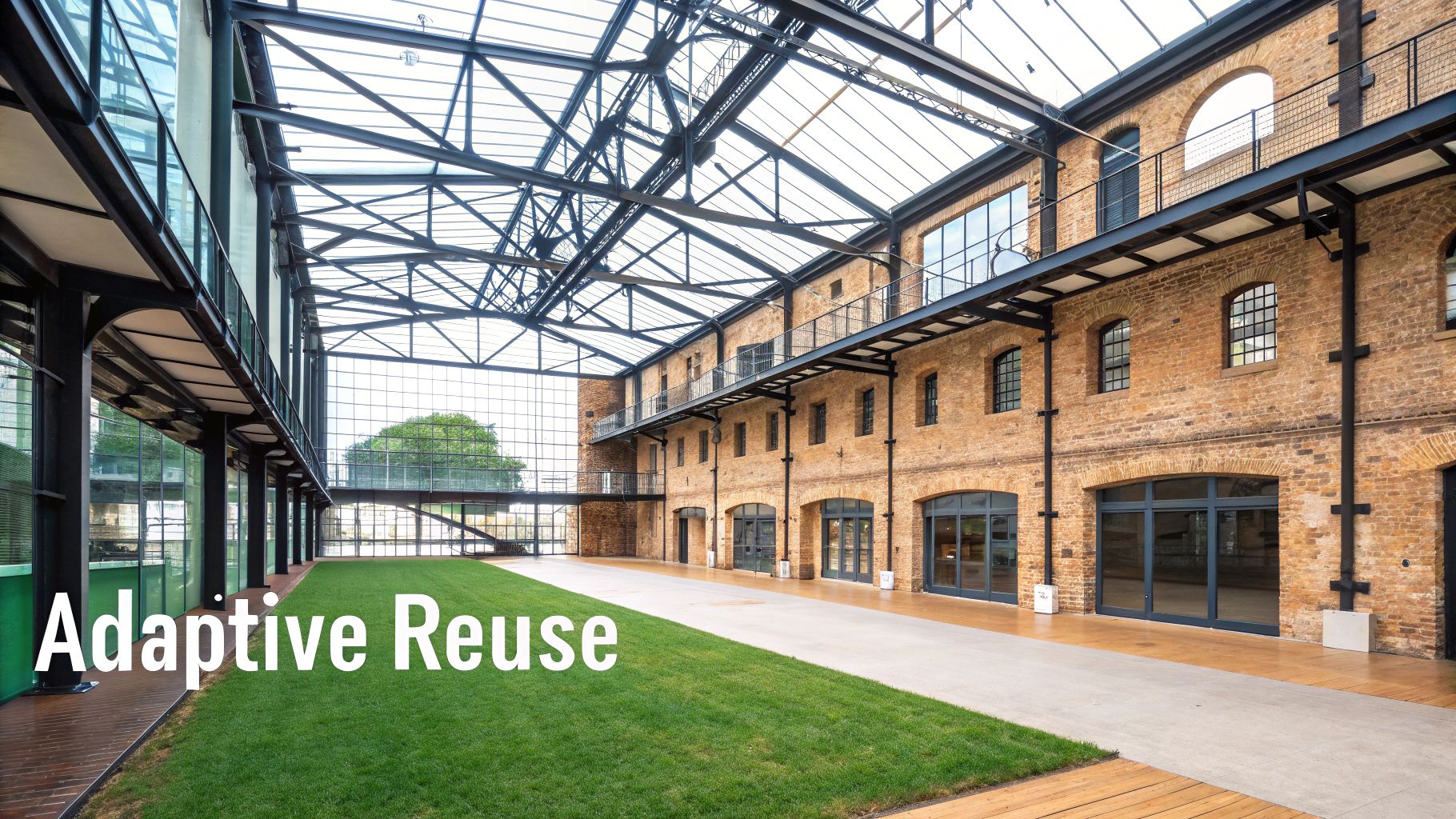
Grand hall showcasing adaptive reuse principles with a glass ceiling, brick walls, indoor lawn, and balconies.

It requires a delicate touch. The idea isn’t to erase a building’s history but to weave it into a fresh, functional story. To get this balance right, we rely heavily on principles like contrast, context, and materiality.

Blending Old and New with Contrast and Materiality

One of the most effective tools in our belt is contrast. Think about the rugged, time-worn brick of an old factory set against sleek, minimalist glass and steel. This isn’t a clash; it’s a dialogue. The modern elements actually make you appreciate the beauty and authenticity of the old, and the historic shell gives the new additions a sense of place.

This brings us right to materiality. A great project respects the building’s original palette—the aged wood beams, the exposed concrete floors, the unique patina on old metal. An architect’s job is to choose new materials that complement this history without trying to fake it.

Take the conversion of a historic textile mill into residential lofts:

  • Original Materials Honored: The massive timber columns and sprawling brick walls aren't covered up; they become the main event. Their texture and story are put on full display.
  • New Materials Introduced: Modern kitchens with polished quartz countertops and stainless steel appliances are slid in like clean, functional "pods" inside the historic frame. The contrast makes both the old and new shine.

The soul of an adaptive reuse project lies in its honesty. It’s about clearly distinguishing between the building's original story and the new chapter being written, allowing both to coexist beautifully.

Respecting the Building’s Rhythm and Context

Every old building has its own natural rhythm, a pattern set by its structural columns, its window openings, its roofline. A huge part of successful adaptive reuse is listening to that rhythm and designing with it, not against it. If you fight it, the new design will always feel awkward and out of place.

For instance, when carving up an old warehouse, new interior walls should align with the existing column grid. New windows should follow the size and spacing of the originals. It’s this kind of respect for the building’s bones that creates a seamless sense of unity.

The principle of context also gets a bigger spotlight here. The project has to respect not just its own history, but its place in the neighborhood. A thoughtful adaptive reuse project can be the spark that revitalizes an entire district, preserving architectural character while injecting new energy. It becomes an anchor connecting a community's past to its future.

The Financial and Sustainable Case for Reuse

Beyond the history and aesthetics, adaptive reuse is just plain smart. It’s an economically and environmentally sound alternative to the incredible waste of demolition and new construction.

Done right, these projects can extend a building's useful life by 50–75 years and often cost 30-50% less than building new. The green credentials are just as impressive, with studies showing they can produce up to 70% lower embodied carbon than a new build. To dig deeper into the data, you can find great information on the principles of modernism and sustainability.

By thoughtfully applying the core principles of design in architecture, we can unlock the enormous potential sitting in our existing buildings, creating spaces that are rich with character, financially viable, and good for the planet.

Navigating Historic Preservation with Purposeful Design

Historic preservation puts architectural principles to their toughest test. You aren't starting with a blank slate; you're entering into a conversation with the past. Every decision becomes a delicate balancing act, weighing a deep respect for a building's story against the real-world needs of today. The goal is to turn these historic structures into protected, valuable assets for generations to come.

This work is so much more than patching up old walls. It’s about using the core principles of design in architecture as a guide for making interventions that are both sensitive and, ideally, reversible.

Man on scaffolding inspecting an ornate historic building facade with a camera for preservation.

Here, principles like proportion, scale, and unity aren't just about making things look good. They’re about preserving the building's soul—its fundamental character and historical integrity. The aim is to ensure any new work feels like it truly belongs, without ever resorting to a cheap copy.

Maintaining Integrity Through Proportion and Scale

In preservation, proportion is the golden rule. It’s about getting inside the head of the original designer to understand their intent, from the height of a window to the span of a doorway. The ancient Greeks were masters of this. Their classical structures, like the Parthenon, were built with mathematical precision, using a modular 'foot-unit.' In fact, over 70% of their temples followed strict geometric ratios, often with deviations of less than 1%.

When we introduce something new—a modern staircase, an accessible entrance—it has to respect this established visual language. If a new addition is out of scale, it can completely overwhelm the historic features and shatter the building's harmony. A skilled architect will design new elements to be subservient to the original structure, making sure the building's story always remains the main event.

The Role of Materiality and Unity

Materiality in historic preservation is part detective work, part artistry. It starts with digging in and researching the original materials and construction techniques. This is crucial for a few big reasons:

  • Authenticity: Using historically appropriate materials—or modern equivalents chosen with extreme care—is essential for maintaining the building’s authentic feel.
  • Compatibility: Old buildings settle and breathe in ways modern ones don't. Slapping a rigid modern mortar on soft, historic brick, for example, is a recipe for long-term damage.
  • Reversibility: One of the core tenets of modern preservation is that any new work should be removable in the future without harming the original fabric. This gives future generations the chance to make their own informed choices.

This careful selection of materials is what ultimately creates unity. It’s what ensures the entire building, old and new, reads as a single, cohesive story. Every design choice gets filtered through one question: what best serves the building’s history? The result is a project that feels resolved and whole.

In historic preservation, the architect's ego takes a back seat. The building itself is the primary client, and our job is to listen to its story and ensure it can be told for centuries to come.

Connecting Design to Financial Incentives

Thoughtful design in preservation isn't just about being a good steward of history; it’s a smart business strategy. Getting your project through the complex maze of approvals from Design Review Boards and State Historic Preservation Offices depends entirely on proving you understand and respect these principles. For anyone navigating the specific rules for historic sites, a practical guide to listed building renovation can offer invaluable insight.

A well-researched, sensitive design is what unlocks significant financial incentives. Programs like Federal and State Historic Tax Credits can offset a huge chunk of rehabilitation costs, turning what looks like a challenging project into a financially sound investment. In the end, expert guidance is what transforms historic properties from potential liabilities into cherished, high-value assets.

Got Questions? Let's Talk Design.

Even when you've got a handle on the concepts, turning architectural principles into a real-world project brings up a lot of practical questions. As a developer, investor, or property owner, you're rightfully focused on the bottom line. Here are some of the most common questions we hear, with straight answers that connect design theory to project outcomes.

How Do Architectural Design Principles Actually Affect My ROI?

This is the big one, and the answer comes down to one word: value. Good design isn't just about aesthetics; it's a core driver of a building's financial performance. For example, smart daylighting and sustainability strategies can slash a building's annual energy costs by 25-35%. That's a direct, measurable return.

Beyond that, think about user experience. Principles like circulation and hierarchy aren't abstract ideas—they're what make an office building a place people want to work in or a retail space that keeps customers coming back. Better experience means higher tenant satisfaction, which leads to lower vacancy and better retention rates.

A well-designed building isn't just an expense; it's a high-performing asset. It commands higher rents, holds its value longer, and stands out in a crowded market. These principles are a direct investment in your project’s long-term health.

The financial case gets even clearer with specialized projects. In adaptive reuse and historic preservation, a skillful application of context and proportion is often the key to unlocking historic tax credits—a powerful tool that can cover a huge chunk of your renovation costs.

Which Principle Matters Most for an Adaptive Reuse Project?

While they all work together, context and materiality really take center stage in adaptive reuse. You have to get these two right.

Context is all about respecting the building’s past and its place in the neighborhood. Getting this right is critical for winning over historic review boards and the local community. It shows you understand the building's story.

Materiality is about the tactile blend of old and new. It’s about celebrating the original brick, timber, or steel while weaving in modern systems so they feel like they belong. This is what gives adaptive reuse projects their unique character and market value—something brand-new construction struggles to replicate. You're not erasing history; you're adding the next chapter.

Can Good Design Really Make It Easier to Get Through Review Boards?

Absolutely. In fact, it's one of your best tools. Zoning commissions and design review boards are there to make sure new projects are a net positive for the community. When you present a plan that clearly uses principles like scale, proportion, and context, you're showing them you've done your homework.

Your design is proactively answering their biggest questions. It demonstrates how the building will fit in, manage traffic flow, and improve the streetscape. This approach speaks a language of quality and community respect that streamlines approvals and saves you an incredible amount of time, money, and headaches.

Isn't Implementing Strong Design Principles Just More Expensive?

That’s a common myth. The real expense comes from poor design—things like inefficient layouts that waste square footage, high long-term operating costs, and a building that just doesn't attract tenants.

Strong design is about making smart decisions upfront, not just throwing money at fancy finishes.

  • Simple decisions, big impact: Orienting a building to maximize natural light costs nothing extra in the planning stage but can save thousands in energy bills down the road.
  • Skill over spending: Creating a sense of good proportion and scale is about the masterful arrangement of elements, not necessarily about using the most expensive materials.
  • Thinking long-term: While some sustainable materials might have a higher initial price tag, their durability and energy efficiency deliver a lower total cost of ownership, generating savings year after year.

Investing in thoughtful architecture from the get-go is one of the most cost-effective moves you can make. It prevents expensive missteps and builds lasting value right into the bones of the property.


At Sherer Architects, LLC, our job is to turn these principles into tangible value for our clients. Whether you're planning a new commercial building, breathing new life into a historic structure, or exploring the potential of adaptive reuse, our team has the experience to guide you through every stage. We turn complex design puzzles into beautiful, enduring, and profitable realities.

Ready to build with purpose? Visit us at https://shererarch.com to see how our expertise can maximize your return on investment.

Categories
Uncategorized

A Developer’s Guide to Material in Interior Design

When you’re developing a commercial property, the materials you choose are doing a lot more than just looking good. They’re a core part of your business strategy. The right choices can directly boost a building's profitability and long-term value, while the wrong ones can become a financial drain.

Why Material Selection Is a Critical Business Decision

For developers and property owners, materials aren't just finishes; they're working assets. Shifting your perspective from "what looks good" to "what performs best" is the key. Every single choice—from the flooring in a bustling lobby to the insulation you can't even see—carries serious financial weight.

Think of it like you're building a team. Each material has a job to do. One might need to withstand a constant stream of foot traffic, another's job is to slash energy bills, and a third has to meet strict fire codes. If you "hire" the wrong material for the job, you're setting yourself up for constant maintenance headaches, early replacement costs, and unhappy tenants. All of that eats away at your bottom line.

Balancing Aesthetics with Business Goals

The real trick is finding that sweet spot where great design meets smart business. It’s a puzzle with a few key pieces that all need to fit together perfectly.

  • Durability and Maintenance: How tough is this material, really? What’s it going to cost us in time and money to keep it looking good year after year?
  • Life-Cycle Cost: Don't just look at the purchase price. What's the total cost of ownership when you factor in installation, upkeep, and eventual replacement?
  • Regulatory Compliance: Is this material up to code? Does it meet all the building, safety, and energy requirements for where and how we’re using it?
  • Sustainability and Marketability: Does this choice resonate with today’s tenants? Does it align with green building standards that are becoming less of an option and more of an expectation?

For a developer, the spec sheet is a direct reflection of the asset's quality. Choosing materials wisely isn't just an operational decision; it's a strategic move that pays dividends for years to come.

This mindset is more important than ever. The global interior design market was valued at a staggering USD 145.3 billion in 2024, and it's still growing. Within that market, sustainable and durable materials are becoming the cornerstone of smart investment, especially in adaptive reuse projects that can give a building another 50 years of life. You can dive deeper into these financial trends in this PR Newswire report on the interior design market.

Understanding Materials for High-Traffic Environments

Choosing the right materials for a commercial space is a lot like casting for a movie. You need the right actor for the right role. You wouldn't cast a delicate, dramatic actor for a high-action stunt scene, and you certainly wouldn't put elegant hardwood flooring in a hospital emergency room. Each material has its own set of skills, and success comes from matching those skills to the demands of the environment.

Porcelain tile, for instance, is your rugged action hero. It’s tough, stands up to immense pressure, and resists scratches and stains, making it the go-to choice for punishing environments like lobbies and corridors. Luxury Vinyl Tile (LVT) is the versatile character actor; it can convincingly mimic stone, wood, or even abstract designs, giving you aesthetic flexibility without sacrificing performance in tenant spaces or retail shops.

This decision-making process isn't just about looks—it's about the money. Every choice ties directly back to the asset's profitability.

Flowchart illustrating material selection criteria: profitability, durability, maintenance, and compliance.

As you can see, durability, maintenance needs, and code compliance are all fundamental building blocks that support the financial performance of the property.

Core Properties for Commercial Success

To make smart choices, you have to look past the sample chip and understand the properties that dictate long-term value. These are the non-negotiables for any commercial project.

  • Durability: This isn't just about being "hard." True durability is a material's power to withstand constant foot traffic, resist scuffs from rolling carts, and shrug off daily impacts without showing its age. When you're dealing with a busy entryway or a bustling corridor, finding the best flooring for high-traffic areas is mission-critical to avoid constant, costly repairs.

  • Maintenance: What will it really cost to keep this surface looking good? Some materials look fantastic on day one but demand expensive, specialized cleaning crews and chemicals. Opting for low-maintenance finishes like sealed concrete or quartz directly reduces your operating expenses and boosts the property's Net Operating Income (NOI). It's that simple.

  • Acoustics: This is the one everyone forgets until it's too late. Hard surfaces bounce sound waves all over the place, creating an echo chamber that feels chaotic and kills productivity. Materials with good sound absorption—think acoustic ceiling tiles, commercial-grade carpet, or even fabric wall panels—can transform a noisy, stressful environment into a calm and focused one.

Comparing Core Commercial Flooring Materials

With so many options on the market, a side-by-side comparison can help clarify which material fits your specific needs. This table breaks down the essentials for some of the most common commercial flooring choices.

Material Type Durability Rating (1-5) Maintenance Level Typical Lifespan Best For
Luxury Vinyl Tile (LVT) 4 Low 15-25 years Retail, Healthcare, Corporate Offices
Porcelain Tile 5 Low 50+ years Lobbies, Restrooms, High-Traffic Corridors
Commercial Carpet Tile 3 Medium 10-15 years Offices, Conference Rooms, Hospitality
Sealed Concrete 5 Low 50+ years Industrial, Retail, Modern Lobbies
Sheet Vinyl 3 Low 10-20 years Healthcare, Labs, Educational Facilities

Ultimately, this table shows there's no single "best" material, only the best material for the job at hand. The goal is to align the performance characteristics with the demands of the space and your long-term budget.

Getting a handle on these core concepts allows you to have more productive conversations with your design and construction teams. It’s about ensuring the material palette doesn't just look great for the grand opening but continues to perform for years, protecting your investment and keeping tenants happy.

Calculating the True Cost and ROI of Materials

The price tag on a material is just the beginning of the story. For developers and property owners who know their stuff, the conversation quickly moves from the initial sticker shock to long-term value. This is where a life-cycle cost analysis (LCCA) becomes your best friend, giving you the full financial picture of a material over its entire life in your building.

Think of it this way: an LCCA goes way beyond the purchase price. It factors in everything—installation, ongoing maintenance, repairs, and even the eventual replacement cost. It’s the classic printer analogy: you can buy a cheap printer that guzzles expensive ink, or invest in a better model with affordable, high-yield cartridges. The first one feels like a win at the checkout, but the second one almost always saves you money in the long run.

Various material samples (wood, grass), a calculator, and financial documents with 'LONG-TERM VALUE' banner.

A Practical Flooring Example

Let’s put this into practice with a decision every building owner faces: flooring for a high-traffic commercial lobby.

  • Option A (Low Upfront Cost): You go with a budget-friendly commercial carpet tile. It looks great on day one, but it demands frequent deep cleaning, shows wear and tear fast, and will likely need to be completely ripped out and replaced in about seven years.
  • Option B (Higher Upfront Cost): You opt for a durable porcelain tile. Yes, the initial investment is much higher. But its maintenance is a breeze—just routine cleaning—and it can easily last for over 30 years without needing a second thought.

Do the math over a 30-year timeframe. You might end up replacing that "cheap" carpet four separate times, paying for new materials and installation with every cycle. Meanwhile, the porcelain tile just keeps performing. When you add it all up, the "expensive" tile is revealed as the smarter, more economical choice by a long shot.

The most expensive material in interior design is often the one you have to replace. Focusing on life-cycle cost rather than the initial purchase price is a core strategy for maximizing asset value and minimizing operational drag.

This kind of forward-thinking is more critical than ever. Remodeling is now outpacing new construction, and with global spending in the sector hitting USD 4.9 trillion in 2023, every choice matters. You can dig into the numbers yourself by reviewing the latest interior design market outlook.

Ultimately, choosing durable, long-lasting materials is one of the most direct ways to protect and grow your property's Net Operating Income (NOI). It turns a simple design choice into a powerful financial lever.

Navigating Sustainability and Building Codes

For developers and owners, "sustainability" isn't just a buzzword anymore—it's a critical piece of a smart business plan. Choosing the right materials for your interior isn't just about ethics; it's a strategic move that directly boosts your asset's financial performance.

When you specify materials with high recycled content or insist on FSC-certified wood from well-managed forests, you're doing more than making an eco-conscious choice. You're building a more resilient, more marketable property that attracts the kind of tenants who will pay a premium for healthier, high-performance spaces.

The Financial Upside of Green Materials

The market is clearly rewarding this approach. Sustainable materials are no longer a niche product; they’re seeing a 12.5% compound annual growth rate from 2021-2024. This isn’t just a trend. It's driven by real demand from tenants looking for green certifications like LEED and the practical need for budget predictability when conventional material prices are all over the map. You can dig deeper into this in a market analysis of interior design trends.

These decisions ripple directly to your operational budget in a few key ways:

  • Lower Utility Bills: Think about high-performance insulation, low-emissivity (low-E) window coatings, or even something as simple as light-colored roofing. These choices actively reduce heating and cooling loads, which means lower energy bills month after month.
  • Tax Incentives and Rebates: Many government programs at the local and federal levels will literally pay you to use energy-efficient materials and systems. It’s direct cash back for making the right call.
  • Enhanced Marketability: A LEED certification isn't just a plaque for the lobby. It's a clear signal to potential tenants that your building is a high-quality, low-cost place to operate. That often translates directly to higher rents and lower vacancy rates.

Meeting and Exceeding Building Codes

Building and energy codes get stricter with every cycle. If you see them as just another hurdle to clear, you're missing the point. The smart way to think about codes is as a baseline for quality, not the finish line.

When you select materials with performance in mind from the start, code compliance becomes a natural result of good design, not a frantic scramble before an inspection.

Choosing sustainable materials is a proactive strategy for compliance. It ensures your building not only meets today's standards but is also prepared for the more stringent regulations of tomorrow, protecting its long-term value.

One of the most important areas to get right is indoor air quality. Specifying low-VOC (Volatile Organic Compound) paints, adhesives, and flooring is non-negotiable. These materials don't off-gas harmful chemicals, creating a much healthier environment for the people inside.

For designers and contractors, this means that verifying a material's safety is crucial. This is where professional indoor air quality VOC testing becomes essential to ensure the space isn't just code-compliant, but genuinely healthy. In a competitive commercial market, that commitment to wellness is a powerful differentiator.

Material Strategies for Adaptive Reuse and Historic Preservation

Stepping into an existing building project is a world away from starting with a clean slate. You’re not just building; you’re entering a conversation with the past. Instead of a blank canvas, you have a structure with a story, complete with all its character, quirks, and hidden potential. When we talk about materials for these projects, it's less about picking from a catalog and more about strategically weaving the old with the new.

This is the heart of adaptive reuse—taking a building designed for one purpose and giving it a new life. Think of an old textile mill being reborn as modern loft apartments. The first, most critical step is an honest, hands-on evaluation of what’s already there. Can that original heart pine flooring be salvaged? Is the exposed brick strong enough to be a feature wall, not just a facade?

Modern interior with glass partitions, old wooden beams, brick, and a "HISTORIC MEETS MODERN" wall.

The real artistry is in the blend. It's about letting those beautiful, old-growth timber beams tell their story while seamlessly integrating a modern, energy-efficient HVAC system. It’s about pairing a historic masonry wall with high-R-value insulation, bringing a century-old structure up to today’s demanding energy codes without losing its soul.

Honoring The Past In Historic Preservation

Historic preservation projects take this philosophy even deeper. Here, the number one goal is to maintain the building’s historical integrity with painstaking accuracy. This work is part architectural forensics, part detective story, requiring deep dives into archives to identify the original materials and construction techniques.

But this isn’t just about being sentimental; it’s a savvy business strategy. The ability to carefully preserve a building’s character while artfully meeting modern code requirements is often the key to unlocking significant financial incentives.

For developers, historic preservation is a specialized field. Meticulous material choices can directly unlock substantial returns through state and federal historic tax credits, grants, and other programs designed to encourage the thoughtful stewardship of our built environment.

The Financial And Sustainable Case

Simply choosing to work with an existing building is a profoundly sustainable act. An adaptive reuse project can extend a building's functional life by 50 years or more, preventing the enormous carbon emissions and landfill waste that come with demolition and new construction.

The numbers often make a compelling case, too. While these projects certainly have their unique challenges, they can be far more cost-effective than building from the ground up. By leveraging the embodied energy and irreplaceable character of the original structure, developers can deliver a truly one-of-a-kind property that commands attention in a crowded market.

This specialized approach demands a team that knows how to:

  • Assess Existing Conditions: Perform a thorough analysis of all original materials to figure out what can be salvaged, what needs to be restored, and what must be replaced.
  • Specify Compatible New Materials: Choose modern products that work with—not against—historic elements. A great example is using breathable insulation on old brick to prevent trapping moisture that could cause serious damage over time.
  • Navigate Regulatory Approvals: Skillfully work with historic commissions and preservation boards to ensure every material choice satisfies their strict guidelines.

In the end, both adaptive reuse and historic preservation are about creating immense value from what already exists. It’s powerful proof that sometimes the most compelling material in interior design is the one that’s been there all along.

A Practical Framework for Your Next Project

So, how do we pull all of this together into a process you can actually use? The goal here is to stop guessing and start making confident, strategic decisions about the materials that define your space.

Picking the right material shouldn't be an overwhelming, last-minute choice. Think of it as a structured process that gets your entire team—from the architect to the contractor to the building manager—speaking the same language and working toward the same business goals. This isn't just about design; it's about building a common ground based on long-term value and smart operations.

Your Essential Material Selection Checklist

Before you sign off on any material specification, put it through this five-point filter. It’s a simple but powerful tool to spark the right conversations and ensure your choices will pay off for years to come.

  • Function and Program Alignment: Does this material actually work for what people will be doing in this space? Think hard about foot traffic, acoustics, and the real-world activities of your tenants. A beautiful floor that can't handle a rolling chair is a failure.

  • Durability and Maintenance: What’s the reality of wear and tear here? Even more critically, what will it cost in labor and specialized cleaning products to keep this material looking good year after year?

  • Life-Cycle Cost Analysis: Have you looked past the initial price tag? Do the math on the total cost of ownership over a 15 to 20-year period. That includes installation, regular upkeep, and eventual replacement.

  • Sustainability and Compliance: Does this material help you meet modern energy codes and green building standards like LEED? Is it a low-VOC product that contributes to a healthy indoor environment for the people inside?

This structured approach takes the mystery out of material selection. It shifts the focus from aesthetics alone to a balanced evaluation of performance, cost, and long-term asset value, empowering you to build with greater confidence and strategic foresight.

Answering Your Key Questions

When it comes to commercial real estate, developers and owners often have pointed questions about how design choices play out in the real world. Let's tackle some of the most common ones we hear about selecting materials for interior design.

How Does Material Selection Impact My Project Timeline and Budget?

Material selection is one of the biggest factors controlling your project's schedule and bottom line. If you specify custom or imported materials, be prepared for long lead times that can easily stall construction for weeks, if not months. On the flip side, choosing readily available, standard materials is a great way to keep a project humming along without those costly delays.

Financially, it’s all about balancing the upfront price tag with the total cost of ownership. A cheaper material might look great on the initial bid, but if it needs constant maintenance or has to be replaced in just a few years, it's going to cost you a lot more in the long run. A good architect helps you find that sweet spot—materials with reliable supply chains that offer the best life-cycle value for your investment.

Choosing a material isn't just an expense; it's a strategic decision that dictates future operational costs and capital expenditures. The goal is to minimize both timeline risk and long-term financial drain.

What’s the Most Important Factor for an Adaptive Reuse Project?

For any adaptive reuse project, the most critical element is the thoughtful integration of old and new. You want to honor the building's original character while making sure it meets modern standards for safety, comfort, and energy efficiency.

This always starts with a deep dive into the existing materials—think exposed brick, original heart pine floors, or heavy structural timbers. From there, the real work begins: selecting new materials that are both visually harmonious and functionally compatible. For example, pairing a historic masonry wall with modern insulation that still allows the wall to breathe is absolutely vital to prevent moisture damage down the line. It's a delicate and crucial balance between preservation and performance.

Can Sustainable Materials Be As Durable As Traditional Ones?

Absolutely. The old idea that "green" means "weak" is simply outdated. Many of today’s sustainable materials have been specifically engineered to withstand the punishing demands of a commercial environment.

Just look at these high-performance examples:

  • Commercial-grade bamboo flooring offers incredible hardness and durability, often outperforming traditional hardwoods.
  • Recycled-content carpet tiles are built from the ground up for high-traffic areas and allow for easy replacement of individual sections, which is a huge maintenance win.
  • Low-VOC paints now provide excellent longevity and washability without off-gassing chemicals that can harm your building's indoor air quality.

The key is simply proper specification. When you work with a firm that really understands the technical properties of these materials, you can be confident you're getting a solution that is both eco-friendly and built to last.


At Sherer Architects, LLC, we solve complex puzzles by aligning every material choice with your project's long-term business goals. See how our expertise in commercial design, adaptive reuse, and historic preservation can maximize the value of your next project by visiting our website.

Categories
Uncategorized

Mastering Exterior Designs of Restaurants A Developer’s Guide

Think of your restaurant's exterior as your most powerful marketing tool. It's the very first handshake with a potential customer, and in that split second, it tells a story about the experience waiting inside. A great facade isn't just about looking good; it's a strategic move that can make someone walk in or keep on walking, directly impacting your revenue.

Why Your Restaurant Exterior Is a Revenue Engine

Two people approach the modern, stylish entrance of "CURB APPEAL" building with large windows.

Your restaurant's exterior is far more than a simple shell. It’s a 24/7 billboard, a silent host, and often, your most effective salesperson. Long before anyone tastes your food or meets your staff, they've already formed an impression based on what they see from the street. That first judgment call is what drives foot traffic—or doesn't.

A compelling exterior instantly telegraphs your brand identity. It answers the questions running through a potential diner's mind: Is this a cozy, rustic bistro? A sleek, modern fine-dining spot? The materials, colors, lighting, and even the font on your sign all work together to build a narrative that attracts your ideal customer.

Turning Space Into Profit

One of the most obvious ways exterior designs of restaurants generate revenue is through outdoor dining. What started as a necessity in 2020 has become a permanent—and profitable—fixture. A 2023 survey found that 54% of diners are more likely to pick a restaurant if it has outdoor seating. Even more telling, 70% would wait longer for an outdoor table, which shows just how much value they place on it. This isn't a fleeting trend; investing in a well-designed patio or sidewalk cafe is a direct investment in your bottom line.

More Than Just a Pretty Face

Beyond outdoor tables, a smart exterior design improves everything from brand visibility to operational flow. It helps guide guests, makes your establishment a memorable landmark in a busy neighborhood, and sets the tone for a premium experience from the moment someone arrives.

A few key elements can make a world of difference:

  • An Inviting Entryway: A clear, well-lit, and accessible entrance makes people feel welcome and safe, removing any hesitation to step inside.
  • Effective Signage: This is non-negotiable. Your sign needs to be clear, visible, and on-brand. Modern digital outdoor signage solutions can even turn your storefront into a dynamic display for daily specials or upcoming events.
  • Strategic Lighting: Ambiance begins outside. The right exterior lighting can highlight unique architectural features, improve safety, and cast a warm, inviting glow that pulls people in off the street.

The exterior is not an expense; it is a carefully calculated investment in customer acquisition. Every design choice, from the type of awning to the placement of planters, should be viewed through the lens of its potential return.

When you shift your perspective, you stop seeing the exterior as a static structure and start seeing it as a dynamic tool for building your brand and boosting revenue. A thoughtful, well-executed design promises a quality experience and convinces passersby that your restaurant is the right choice—before they even open the door.

Navigating Site Constraints and Regulatory Hurdles

Before you even think about sketching a facade or breaking ground, the real work of designing a restaurant exterior begins. This is where you have to get intimate with the canvas you've been given—the site itself, with all its quirks, rules, and hidden potential. Think of it like a puzzle: if you don't get the foundational pieces right from the start, the whole picture will be off.

Trying to ignore these early constraints is a surefire way to burn through your budget with redesigns, get stuck in permit limbo, and fight endless battles with the city. The most successful projects don't fight the site's limitations; they embrace them. This early homework is what transforms potential headaches into the very features that will make your restaurant stand out.

Decoding the Local Playbook

Every town and city has its own rulebook for building, and you've got to know it inside and out. These regulations dictate everything from how far your building has to sit from the curb to what kind of trees you're allowed to plant. Your architect is your guide through this maze.

Here are the big ones you need to tackle right away:

  • Zoning Laws: These are the bedrock rules. They tell you if you can even build a restaurant there in the first place, and then they get into the nitty-gritty of building height, density, and how many parking spots you need. A "commercial" zone will have a totally different set of demands than a "mixed-use" one.
  • Landscape Ordinances: More and more cities are getting strict about green space, tree preservation, and how you manage rainwater. Overlook these, and you could be looking at hefty fines and a project that's dead in the water.
  • Building and Energy Codes: These are the technical specs that keep your building safe, accessible, and efficient. They'll influence your choices for everything from the glass in your windows to the slope of your entryway ramp.

The real trick isn't just to check the boxes on these rules. It's about weaving them into the design itself. A required green space can become a gorgeous rain garden, and a mandatory setback might just create the perfect space for a money-making patio.

The Power of Design Review Boards

If your project is in a historic district or a special design zone, get ready to meet the Design Review Board (DRB). These committees often have the final say on what your building looks like from the outside, and their job is to protect the neighborhood's character.

Going before a DRB is more than a show-and-tell with pretty renderings; you have to sell them a story. A good architect knows how to build a convincing case for your design. They can show the board how a modern material choice actually complements the old brick building next door, or how your new signage respects the feel of the street. It’s a game of communication and collaboration, convincing them that your restaurant will be a true asset to the community.

Turning Constraints into Creative Opportunities

A tiny urban lot might seem like a major disadvantage, but maybe it forces you into a brilliant vertical design with a destination rooftop bar. Those rigid historic preservation codes? They're a challenge, sure, but they can also give you a one-of-a-kind space with character that you could never replicate with new construction. It's all about your approach.

A deep-dive site analysis will always consider:

  1. Solar Orientation: Where does the sun hit and when? You can position the building to flood the dining room with warm, natural light in the winter while shielding it from the harsh afternoon sun in the summer. This isn't just about guest comfort; it’s a smart way to slash energy bills.
  2. Key Views: What do you want people to see from inside? A well-placed window can connect your diners to the energy of the street or offer a peaceful view of a park, making the meal an experience.
  3. Site Circulation: How will people and vehicles actually move through the space? You need a clear plan for how guests get from their car to the front door, how staff move efficiently, and where delivery trucks can go without creating a bottleneck.

When you treat these initial hurdles as creative prompts instead of problems, you lay a rock-solid foundation. You end up with an exterior that isn’t just compliant and good-looking, but truly intelligent. This is the foresight that prevents major headaches down the road and sets your restaurant up for success from day one.

2. Choosing Materials That Define and Endure

Think of your restaurant's exterior materials as its wardrobe. They're not just a protective shell; they're the very first thing that tells your story to the world. A sleek metal facade whispers "modern and minimalist," while a wall of reclaimed timber might suggest a cozy, farm-to-table experience. This is your handshake with every potential guest, setting the stage long before they see a menu.

Picking the right materials is all about balancing that immediate "wow" factor with long-term reality. You need a palette that looks fantastic on day one but also stands up to sun, rain, and time without becoming a maintenance nightmare. This choice has a direct line to your future repair budgets and the building's overall cost of ownership.

Traditional Materials, Modern Applications

Some materials have been go-to choices for centuries, and for good reason. They're durable, they're beautiful, and they have a timeless appeal. But that doesn't mean they have to be boring.

  • Brick and Stone: Nothing says permanence and quality quite like brick and stone. Classic red brick can give off a historic pub vibe, while clean-cut limestone can signal high-end elegance. You can bring these classics into the 21st century by using thin brick veneers for a lighter touch or creating unique, eye-catching patterns in the brickwork.
  • Wood: If you're going for a natural, rustic, or warm atmosphere, wood is your best friend. Sourcing reclaimed timber can give your building instant character and a great sustainability story. For a more practical approach, thermally modified or engineered wood products give you that same look but with way better resistance to rot and pests.

Contemporary Facades: Performance and Personality

Modern materials let you get really creative, opening the door to unique shapes, colors, and textures that can turn your restaurant into a local landmark. Plus, they're often designed for efficiency and low upkeep.

  • Metal Panels: Clean, tough, and sophisticated. Aluminum, steel, or zinc panels can be painted any color to match your brand, perforated to add texture, or even bent into dynamic, futuristic shapes. It's a fantastic option if you're aiming for an industrial or sharp, minimalist look.
  • Innovative Composites: Materials like fiber cement and high-pressure laminates are the chameleons of the building world. They can convincingly mimic wood, stone, or metal at a lower cost and with almost no maintenance. These composites are built to fight fading, cracking, and moisture, making them a savvy long-term investment.

Before you can settle on materials, though, you have to work your way down from the big picture. The decision-making process always starts with the rules and the reality of your specific location.

A flowchart illustrating the Site Compliance Hierarchy: Regulations flow down to Site, then to Design.

As you can see, regulations lay the foundation. They tell you what's even possible on your site, and only then can you start making smart design choices based on those constraints.

Windows, Walls, and Walkways

Beyond the main facade, the windows—what we call fenestration—are incredibly important. Big glass storefronts put the energy of your dining room on display, basically inviting people in from the street. Even better, installing operable windows or accordion-style glass walls can completely erase the line between your indoor and outdoor spaces, perfect for a patio connection.

The right combination of materials does more than create curb appeal; it builds a brand identity that is both memorable and resilient. It’s an investment in your restaurant’s physical and financial future.

When it comes to the surfaces people walk on, durability is everything. For outdoor dining areas, you need something that can handle heavy foot traffic and wild weather while still looking great. This is where options like concrete pavers or natural stone shine, as a proper expert patio paver installation can provide a surface that’s both beautiful and built to last.

In the end, every single material, from the cladding to the pavers, should be a deliberate choice that reinforces the story you want to tell.

Designing Profitable Outdoor Dining Spaces

An inviting outdoor restaurant dining area with string lights, patio heaters, awnings, tables, and chairs on a lawn.

Turning an empty sidewalk strip or a forgotten courtyard into a buzzing outdoor dining area is one of the fastest ways a restaurant's exterior design can directly boost the bottom line. A well-designed patio isn't just about adding more seats; it’s about creating a destination, an experience that pulls people in off the street. It breathes life and energy into the restaurant, extending its presence far beyond the four walls.

Getting this right comes down to a careful balance of three key ingredients: strategic lighting that sets the perfect mood, clear signage that both guides and reinforces the brand, and comfortable, efficient seating that keeps guests lingering and staff moving freely. When these elements click, you create a profitable and magnetic extension of your indoor dining room.

Crafting Ambiance With Strategic Lighting

Exterior lighting is so much more than just a safety requirement. It's your number one tool for crafting ambiance, for making a patio feel intimate and almost magical as the sun goes down. Think of it as painting with light—you can spotlight stunning architectural details, wash tables in a warm, inviting glow, and cleverly draw the eye away from less appealing views, like a busy street.

An effective lighting plan always involves layering different types of light to create depth and visual texture:

  • Ambient Lighting: This is your base layer, providing the soft, overall illumination. String lights, overhead pendants, and wall sconces are perfect for this, creating a welcoming atmosphere without any harsh glares.
  • Task Lighting: This is your focused, functional light, aimed precisely where it's needed most. Think pathways, host stands, and directly over tables so guests can actually read their menus.
  • Accent Lighting: This is where the drama comes in. Use uplights to showcase a gorgeous old tree, a beautifully textured brick wall, or a unique water feature. It's the finishing touch that adds a layer of real sophistication.

Integrating Signage As a Brand Landmark

In an outdoor dining context, your signage has two jobs. Functionally, it needs to point people in the right direction, mark entrances, and display key information. But just as importantly, it acts as a critical brand touchpoint, constantly reinforcing the restaurant's identity.

A flimsy, cheap-looking sign can instantly make a beautifully designed patio feel like an afterthought. Your signage should feel like it grew right out of the building's architecture. The materials should echo the main facade—maybe it’s rustic carved wood for a cozy bistro or sleek, backlit metal for a contemporary hotspot. Don't forget the smaller cues, either; well-placed signs guiding guests from the host stand to their table ensure the journey feels seamless.

A well-designed outdoor space is not a separate entity but a fluid continuation of the indoor experience. The transition should be so natural that guests feel the restaurant's character and comfort extend effortlessly into the open air.

The Blueprint For Irresistible Outdoor Seating

The heart and soul of any al fresco dining area is, of course, the seating. This is where guest comfort, operational flow, and sheer durability all have to meet. A successful layout is a strategic one, designed to anticipate challenges like weather while getting the absolute most out of the available space.

A smart seating plan tackles several things at once. First, the layout must be a clear path for servers, not an obstacle course. At the same time, it needs to give diners a sense of personal space, ensuring they don't feel like they're sitting on top of the next table.

Here's a look at the essential components for a functional and appealing seating area:

  • Weather-Proofing: Weather is the ultimate wild card. Retractable awnings, large umbrellas, and permanent pergolas are non-negotiable for providing shade and shelter from a sudden downpour. For cooler climates, well-placed patio heaters or a central fire pit can easily extend your outdoor dining season by weeks, if not months.
  • Durable Furnishings: Outdoor furniture has to be tough. Stick to materials like treated wood, powder-coated aluminum, or high-quality synthetics that can take a beating from sun and rain. But don't sacrifice comfort for durability—nobody wants to sit on a rock-hard chair through a two-hour meal.
  • Smart Layouts: Don't just line up tables in a grid. Create different zones to accommodate various group sizes with a mix of two-tops, four-tops, and maybe a larger communal table. Use planters, low walls, or decorative screens to break up the space and create pockets of intimacy.

A thoughtful approach to planning an outdoor space is an investment that pays for itself. The following checklist is a practical tool for developers and owners to ensure all key considerations are addressed from concept to completion.

Outdoor Seating Design Checklist

Planning Stage Key Consideration Pro Tip
Concept & Zoning Local Codes & Permitting Engage with the city planning department early. Understand sidewalk cafe regulations, ADA accessibility, and fire code requirements before you design anything.
Concept & Zoning Flow & Circulation Map out clear pathways for both guests and staff. A server carrying a loaded tray should never have to squeeze between chairs.
Design & Layout Furniture Selection Choose durable, weather-resistant materials. Test chairs for comfort and ensure tables are stable and appropriately sized for your menu.
Design & Layout Weather Mitigation Plan for sun, rain, and cold. Invest in high-quality umbrellas, awnings, or heaters. This maximizes the number of days the space is usable.
Ambiance & Branding Lighting Scheme Layer ambient, task, and accent lighting. Ensure tables are softly lit but pathways are clear. String lights add instant charm.
Ambiance & Branding Landscaping & Greenery Use planters and vegetation to define the space, add natural beauty, and create privacy from the street.
Operations POS & Service Stations Set up a dedicated outdoor service station with a POS terminal if possible. This saves servers countless steps and speeds up service.
Operations Storage Where will cushions, umbrellas, and furniture be stored in the off-season or during severe weather? Plan for this to avoid clutter and damage.

By meticulously working through each of these points, you can avoid common pitfalls and transform a simple patio into a highly sought-after dining experience, turning your exterior into a consistent and powerful revenue stream.

Weaving in Sustainability and Biophilic Design

The exterior of a modern building featuring "Biophilic Design" signage, vertical green walls, and large windows, with a sidewalk.

Diners today aren’t just looking for a good meal; they’re seeking an experience. This fundamental shift has pushed sustainability and biophilic design—the concept of connecting people with nature in built environments—from the fringes right into the mainstream of restaurant exterior design.

Adopting these principles isn't about just looking green. It's a savvy business move that can slash operating costs, elevate the guest experience, and forge a much stronger brand identity.

Bringing Nature into the Business Model

At its core, biophilic design operates on a simple premise: people are hardwired to connect with nature. When you apply this to exterior designs of restaurants, you're strategically incorporating natural light, plants, water, and organic materials to craft an atmosphere that feels healthier and more welcoming.

This goes way beyond sticking a few potted plants by the entrance. Real biophilic design embeds nature into the building’s very DNA.

Here’s how it comes to life:

  • Living Green Walls: These vertical gardens do more than just look good. They turn a plain facade into a lush, air-purifying landmark that grabs attention and sends a clear message about wellness.
  • Native Landscaping: Why fight the local climate? Using plants native to your area cuts down on water usage and maintenance while creating a landscape that feels authentic and deeply connected to its surroundings.
  • Water Features: The gentle sound of a fountain or a sleek, modern cascade can work wonders. It creates a pocket of tranquility, masks urban noise, and gives guests a moment of calm before they even step inside.

An exterior that breathes life isn't just a design choice; it's a market differentiator. It communicates a brand that is fresh, healthy, and modern, attracting customers who actively seek out spaces that make them feel good.

By creating an environment that engages the senses, you encourage guests to linger longer, spend more, and rave about their experience. Your building’s exterior suddenly becomes an active player in driving customer satisfaction.

Smart Design for a Greener Bottom Line

Beyond the natural aesthetics, practical sustainable strategies offer a huge long-term payoff by shrinking a building's environmental impact and its operational costs. Think of these choices as smart investments that keep giving back.

Building orientation and material choices are mission-critical. A cleverly oriented building can take advantage of passive solar gain, using large south-facing windows for warmth in the winter and deep overhangs for shade in the summer. It’s a simple design decision made upfront that can dramatically reduce heating and cooling bills for decades.

Blurring the line between indoors and outdoors is a measurable trend. Architects are increasingly designing with larger glazed openings, durable low-maintenance materials, and the right infrastructure for outdoor HVAC systems to support year-round patio dining. For adaptive reuse and historic preservation projects, these modern strategies must be carefully balanced with local codes, Design Review Board expectations, and historic tax credit rules.

Choosing Eco-Friendly Materials and Systems

The materials you select for the exterior provide another chance to walk the talk on sustainability—without compromising on style or durability.

Here are a few key material strategies to consider:

  • Locally Sourced Materials: Using stone, wood, or brick from regional suppliers cuts down on carbon emissions from transportation and pumps money back into the local economy.
  • Recycled and Reclaimed Content: Materials like reclaimed wood, recycled steel, or composite decking give a building unique character and a great story, all while keeping waste out of landfills.
  • High-Performance Windows: Upgrading to double- or triple-paned windows with low-emissivity coatings is a no-brainer. They minimize heat loss in winter and heat gain in summer, which you'll see reflected directly in your energy bills.

By making sustainability and biophilic design a core part of the plan from day one, you can create a restaurant exterior that isn't just beautiful but is also efficient to run and good for the planet. It's a forward-thinking approach that builds lasting value for the business, its patrons, and the community.

Unlocking Value with Adaptive Reuse

For developers looking to create truly memorable restaurant destinations, the best opportunities aren't always found on empty lots. Sometimes, they’re waiting inside the walls of existing buildings. Adaptive reuse—the art of repurposing old structures for new life—is a smart, sustainable, and often more cost-effective alternative to building from scratch. It’s about seeing the potential in a forgotten factory or the soul in a historic downtown bank.

These old buildings come with a built-in story, a history that a new build simply can't manufacture. Think of it as inheriting a narrative. Your restaurant doesn't just fill a space; it becomes the next chapter for a building that has seen generations come and go. That kind of authenticity is a powerful magnet for diners craving unique experiences.

The process of turning a historic structure into a bustling modern restaurant is a delicate dance. It’s all about preserving the irreplaceable character—the original brickwork, exposed timbers, or ornate metalwork—while weaving in the complex systems a contemporary restaurant needs to function.

Navigating the Preservation Puzzle

Pulling off a successful adaptive reuse project is a specialized skill. This is far more than a cosmetic makeover; it demands a deep understanding of how the building was originally put together and a thoughtful plan for bringing it into the 21st century. The real magic happens when the old and new coexist, where modern updates respect and even highlight the historic fabric.

This journey involves a few critical steps:

  • Detailed Building Forensics: Before a single line is drawn, architects need to become building detectives. They dig into the original construction methods and materials to get a clear picture of the structure's strengths and weaknesses.
  • Sensitive Systems Integration: The trickiest part is often threading modern HVAC, electrical, and plumbing through a building never designed for them—all without destroying the very features you’re trying to save.
  • Code Compliance: Getting an old building up to today's safety, accessibility, and energy codes requires some seriously creative problem-solving to meet modern standards while honoring the past.

Historic preservation isn't a constraint; it's a specialized discipline that unlocks immense value. It turns forgotten buildings into one-of-a-kind landmarks with stories that connect with guests and the entire community.

The Financial and Brand Payoff

Beyond creating a stunning space, adaptive reuse can be a savvy financial move. Many of these projects are eligible for federal and state historic tax credits, which can take a significant bite out of development costs and seriously boost the project's overall ROI. While the approval process for these credits can be intricate, the financial rewards are often well worth the effort.

Ultimately, choosing adaptive reuse for a restaurant is a strategic decision that pays off in both character and cash flow. You’re not just building a restaurant; you’re creating a destination with a real competitive edge. The result is a space that feels grounded, authentic, and completely unforgettable—a powerful foundation for any restaurant business to build on.

We hear a lot of the same questions from developers and restaurant owners when they start thinking about exterior design. Let's tackle some of the most common ones head-on.

How Much Should I Budget for My Restaurant Exterior?

This is the big one, and the honest answer is: it varies wildly. As a general rule of thumb, you can expect the exterior to account for anywhere from 10% to 25% of your total construction budget.

Where you land in that range depends entirely on the scope of your project. A simple facelift—fresh paint, a new sign, and a stylish awning—will keep you on the lower end. But if you’re planning major structural work like adding a patio, installing large-scale windows, or using high-end materials like custom stone or metalwork, you'll naturally trend toward the higher end of that budget. Think of it less as a cost and more as an investment in your restaurant's curb appeal and, ultimately, its revenue.

What Is the Biggest Mistake to Avoid with Outdoor Seating?

By far, the most common mistake we see is treating the patio or outdoor seating area as an afterthought. It's so much more than just throwing a few tables and chairs out on the sidewalk.

When outdoor space isn't planned from the very beginning, you end up with all sorts of problems: awkward pathways for servers, no real protection from the sun or a sudden rain shower, and furniture that just doesn't fit the vibe. A great patio feels like a natural extension of the restaurant, seamlessly connected to the interior flow, the kitchen, and your overall brand.

The key to modernizing a historic building is to respect its original character while making sensitive, contemporary interventions. The goal is to create a dialogue between old and new, not a competition.

This kind of thoughtful approach not only looks better but is also more likely to win over Design Review Boards and can even open the door to historic tax credits. It's about turning preservation into a smart business decision.


Ready to transform your vision into a landmark destination? The team at Sherer Architects, LLC specializes in commercial architecture, adaptive reuse, and historic preservation, delivering beautiful and enduring results. Explore our portfolio and start your project today.

Categories
Uncategorized

Top 7 Architecture Firms Charleston SC to Elevate Your Projects in 2025

Exploring Charleston’s Dynamic Architecture Landscape

Charleston’s built environment blends deep history with modern innovation. Finding the right architecture firms charleston sc often means sifting through scattered directories and outdated portfolios. This roundup speeds your search by spotlighting seven top websites and platforms tailored for: commercial real estate developers, adaptive reuse investors, general contractors, and property owners.

You’ll learn how to:

  • Compare firm listings across AIA Charleston’s Member Directory, Houzz, Clutch, LS3P, Liollio Architecture, The Middleton Group, and Goff D’Antonio Associates
  • Navigate interface features with screenshots and direct links for each resource
  • Analyze specialty filters for commercial projects, historic preservation, and adaptive reuse
  • Access pricing insights and best practices for initial consultations

Each entry includes a brief platform overview, key interface highlights, and practical tips to streamline outreach. Whether you need gallery-driven inspiration or B2B ratings, this listicle helps you pinpoint the most efficient route from research to hire.

By focusing on actionable insights and real-world examples, you’ll bypass generic advice and go straight to tools that solve your specific problem: connecting with top Charleston architecture talent without wasted time. Scroll down to explore the platforms that bring your next project to life.

Each profile includes a comparison table of filter options, screenshot previews, direct links, and consult fee ranges where available. Use these insights to match project scale and budget with the ideal design partner. No more guesswork or endless searching – hiring Charleston firms becomes a streamlined process.

1. AIA Charleston – Member Firm Directory

AIA Charleston’s Member Firm Directory is the go-to resource for finding licensed, locally active architecture firms in Charleston SC. Managed by the local American Institute of Architects section, it offers a professionally curated listing of residential, commercial, civic, and specialty practitioners.

AIA Charleston – Member Firm Directory

H3 Key Features

  • Curated Listings
    All firms are vetted members of AIA Charleston, ensuring up-to-date licensing and local expertise.
  • Direct Links
    One-click access to firm websites, email addresses, and phone numbers.
  • Comprehensive Coverage
    Includes firms specializing in historic preservation, adaptive reuse, commercial design, and residential projects.
  • Professional Credibility
    Association-run directory boosts confidence for developers, owners, and contractors.

H3 How to Search and Filter

  1. Use the alphabetical index to jump to firm names starting with A–Z.
  2. Browse by specialty (historic, commercial, residential) via dropdown menus.
  3. Click “View Details” on any firm to see project galleries and contact forms.
  4. Bookmark individual listings for quick reference in your project RFP process.

H3 Feature Overview

Feature Details
Firm Count Over 100 member firms in the Charleston metro area
Specialties Covered Preservation, adaptive reuse, new construction
Sorting Options Alphabetical, specialty filter, location proximity
Pricing Transparency Firms set their own rates – contact required for quotes

H3 Pros and Cons

Pros

  • High credibility from AIA vetting
  • Simple, uncluttered interface
  • Direct access to each firm’s portfolio and contact details

Cons

  • No price comparisons or standard rate cards
  • Limited advanced filtering compared with large marketplaces
  • Requires direct outreach for availability and proposals

H3 Practical Tips for Developers

  • Create a shortlist of 5–7 firms and request scope-specific proposals.
  • Use the “Project Type” dropdown to narrow results to adaptive reuse or historic work.
  • Note peak seasons (spring/fall) to schedule consultations early.

H3 Access & Pricing

  • Availability: Publicly accessible at no cost
  • Registration: Not required for basic search, optional for newsletter
  • Proposals: Firms set rates individually; prepare a concise RFP to expedite quotes

H3 Why It Stands Out

  • Association-backed credibility assures licensed, local expertise
  • Focused on Charleston SC market — ideal for region-specific code knowledge
  • Quick jump-off links reduce admin time when vetting multiple architecture firms

Visit the directory here: https://aiacharleston.org/firm-directory

2. Houzz – Charleston, SC Architects & Residential Architecture Firms

Houzz is a visual-centric marketplace connecting homeowners and commercial clients with hundreds of Charleston-area architecture firms. Its focus on portfolio-driven browsing, verified client reviews, and built-in messaging tools makes it a top choice for comparing residential and mixed-use designers. Whether you need modern infill, historic renovation, or upscale custom homes, Houzz simplifies outreach and inspiration gathering for architecture firms Charleston SC.

Houzz – Charleston, SC Architects & Residential Architecture Firms

H3 Key Features

  • Extensive Project Galleries
    High-resolution photos showcase residential, adaptive reuse, and commercial portfolios.
  • Star Ratings & Reviews
    Verified client feedback and badges for response rate, project cost brackets, and tenure.
  • Direct Quote Requests
    “Request a Quote” button lets you message multiple firms with project details instantly.
  • Advanced Filtering
    Narrow by service offered (architecture, interior design), project size, style, and proximity in Charleston SC.

H3 How to Search and Filter

  1. Enter “Charleston, SC” in location field and select “Architect.”
  2. Apply filters: project type (new build, remodel), average build cost, minimum review rating.
  3. Sort listings by Most Reviewed or Highest Rated to vet top firms.
  4. Click “Contact” on each profile to send project specs and timeline in one message thread.

H3 Feature Overview

Feature Details
Portfolio Size Over 250 Charleston SC firm profiles
User Reviews 4.5-star average, with project cost and timeline tags
Messaging Tools Free built-in request form, direct email forwarding
Mobile App iOS and Android apps for browsing and chat on the go

H3 Pros and Cons

Pros

  • Exceptional visual inspiration for new construction and historic preservation
  • Social proof via verified reviews and firm badges
  • Streamlined quoting to multiple firms at once

Cons

  • Emphasis on residential may underrepresent large-scale commercial firms
  • Interface includes sponsored listings and ads
  • Some firm profiles lack full project details

H3 Practical Tips for Developers

  • Compile a list of 8–10 firms and compare sample budgets listed in reviews.
  • Use the “Past Projects” filter to isolate adaptive reuse and preservation specialists.
  • Save favorite profiles to your Houzz project folder for side-by-side portfolio comparison.

H3 Access & Pricing

  • Availability: Publicly accessible with free browsing
  • Registration: Required to send quote requests and save projects
  • Costs: No subscription fees; architecture firms set their own rates upon contact

H3 Why It Stands Out

  • Combines rich visual galleries with real client feedback for confident selection
  • Instant multi-firm quoting accelerates RFP timelines
  • Localized filter options ensure you find top architecture firms Charleston SC with exact expertise

Visit Houzz here: https://www.houzz.com/professionals/architect/charleston-sc-us-probr0-bo~t_11784~r_4574324

3. Clutch – Top Charleston Architectural Companies (B2B)

Clutch is a leading B2B resource that ranks top architecture firms in Charleston SC based on verified client feedback, project portfolios, and market presence. Commercial real estate developers, property owners, and general contractors can filter by firm size, specialties, and industry focus. The interface highlights key metrics such as average hourly rates and client satisfaction scores for informed shortlist building.

Clutch – Top Charleston Architectural Companies (B2B)

H3 Key Features

  • Ranked firm profiles with verified client reviews and star ratings
  • Service breakdowns by commercial, civic, mixed-use, hospitality, retail
  • Business-focused filters for industry sector, project budget, and team size
  • Portfolio snapshots showcasing representative photos, budgets, and timelines
  • Direct outreach buttons for quick contact, quote requests, and RFP submission

H3 How to Search and Filter

  1. Select “Design” > “Architectural” > “Charleston” at the top navigation.
  2. Apply filters for industry (hospitality, healthcare, retail) and project size.
  3. Sort by “Most Reviewed,” “Highest Rated,” or “Alphabetical” to refine results.
  4. Click on a firm card to view client case studies, service focus, and contact links.

H3 Feature Overview

Feature Details
Company Count Over 50 Charleston-area architecture firms
Specialties Covered Commercial, adaptive reuse, historic preservation, mixed-use
Sorting Options Ratings, reviews count, alphabetic, newest profiles
Average Client Rating 4.8 out of 5 stars
Pricing Transparency Hourly rate ranges and project fees disclosed by firms

H3 Pros and Cons

Pros

  • Fast comparison of credentials for commercial/civic clients
  • Extensive client references and project summaries
  • Business-oriented design filters and sorting

Cons

  • Limited coverage of pure custom-residential studios
  • Some firms have sparse public reviews or incomplete profiles

H3 Practical Tips for Developers

  • Narrow search to firms with adaptive reuse experience by applying that filter first.
  • Bookmark top five firms and download their PDF profiles for side-by-side review.
  • Use the “Get a Quote” button to submit a concise scope document and budget range.

H3 Access & Pricing

  • Availability: Publicly accessible directory at no cost
  • Registration: Optional account for saving favorites and writing reviews
  • Contacting Firms: Instant “Contact” buttons link to email or Clutch messaging

H3 Why It Stands Out

  • Deep B2B focus gives commercial and mixed-use developers the credentials they need
  • Verified feedback adds marketplace credibility and reduces vetting time
  • Unified platform for ratings, portfolio details, and direct outreach speeds RFP cycles

Visit the directory here: https://clutch.co/agencies/design/architectural/charleston

4. LS3P (Charleston Office)

LS3P’s Charleston office provides a regional hub for architecture, interiors, and planning solutions adapted for medium-to-large complexity. Among architecture firms charleston sc, LS3P’s website stands out by showcasing a diverse portfolio spanning education, healthcare, civic, commercial, and mixed-use sectors.

LS3P (Charleston Office)

H3 Key Features

  • Broad sector coverage including education, healthcare, civic, commercial, and mixed-use
  • Integrated service lines for architecture, interior design, and urban planning
  • Named local leadership with direct Charleston office contact details
  • Extensive project portfolio with industry awards and case studies
  • Multi-office resources to support large program scopes

H3 How to Explore Services

  1. Navigate to the “Services” menu and select a sector such as healthcare or education.
  2. Use project filters on the portfolio page to narrow by size, budget, or typology.
  3. Click individual case studies for images, client metrics, and technical details.
  4. Access “Contact” then choose Charleston office for direct inquiries or RFP submission.

H3 Feature Overview

Feature Details
Sector Coverage Education, healthcare, civic, commercial, mixed-use
Service Lines Architecture, interiors, planning
Contact Access Direct Charleston office email and phone
Project Archive 150+ case studies with images and performance data
Awards & Recognition Regional AIA awards, design honors from national publications

H3 Pros and Cons

Pros

  • Deep bench for complex, multi-phase developments
  • Strong local leadership with large firm backing
  • Seamless integration of planning, architecture, and interiors

Cons

  • Designed for medium-to-large budgets and scopes
  • No published pricing; requires formal RFP or proposal
  • May appear overbuilt for small-scale renovations

H3 Practical Tips for Developers

  • Prepare a concise project brief highlighting performance targets and budget.
  • Request sector-specific case study PDFs to evaluate comparable metrics.
  • Leverage joint charrettes to align planning and design teams early.
  • Use the “Team” page to identify key contacts and streamline approvals.

H3 Access & Pricing

  • Availability: Fully public website with open browsing
  • Registration: Not required for portfolio review
  • Pricing: Fee proposals provided post-RFP, tailored to project scope
  • Turnaround: Initial response within 48 hours for RFP inquiries

H3 Why It Stands Out

  • Offers a one-stop solution across architecture, interiors, and planning
  • Deep regional expertise backed by a multi-office network
  • Award-winning project library provides proven performance insights
  • Direct Charleston office access ensures local code and context knowledge

Visit LS3P Charleston office website: https://www.ls3p.com/

5. Liollio Architecture (Charleston)

Liollio Architecture is an award-winning Charleston-based studio focusing on civic, cultural, healthcare, educational and preservation work. The website showcases high-resolution project galleries, case studies and local news updates that highlight their context-driven, community-oriented approach for architecture firms charleston sc.

Liollio Architecture (Charleston)

H3 Key Features

  • Context-Driven Design
    Detailed project narratives explain how local history and environment shape each design.
  • Preservation Expertise
    Dedicated sections for adaptive reuse and historic preservation projects.
  • Public-Sector Focus
    Clear filters for civic, cultural, educational and healthcare portfolios.
  • Award Showcase
    Highlights national and regional awards with press mentions and images.
  • Local AIA Involvement
    Links to AIA Charleston events and ongoing community initiatives.

H3 How to Explore and Engage

  1. Visit the Projects menu and filter by sector (Civic, Cultural, Healthcare).
  2. Click any thumbnail to view high-resolution images and downloadable case studies.
  3. Use the Preservation filter to compare restored vs new construction work.
  4. Navigate to Contact to request a consultation or submit an RFP via form.

H3 Feature Overview

Feature Details
Specialties Covered Civic, cultural, healthcare, educational, historic preservation
Project Gallery High-res images, project briefs, material palettes
Awards & Recognition Design awards from AIA, RIBA and local preservation societies
Location Charleston SC studio; local code and community expertise
Contact Options Email, phone, online RFP form; AIA network referrals

H3 Pros and Cons

Pros

  • Deep Lowcountry and public-sector experience with preservation sensibility
  • Right-sized studio ideal for community and mission-driven clients
  • Local presence and AIA recognitions boost credibility

Cons

  • Limited custom-residential portfolio compared with boutique residential firms
  • No public fee schedules; pricing provided by RFP or consultation
  • Focused primarily on non-residential sectors, limited commercial interiors

H3 Practical Tips for Developers

  • Create a shortlist of 3–5 projects from similar sectors before outreach.
  • Download PDF case studies to review scope, budget ranges and materials.
  • Schedule an on-site meeting to assess team familiarity with local codes.

H3 Access & Pricing

  • Availability: Publicly accessible portfolio and news at no cost
  • Registration: No login required; optional newsletter signup for updates
  • Proposals: Custom fee proposals via online RFP submission

H3 Why It Stands Out

  • Emphasis on community and context drives designs that resonate locally
  • Award-winning civic architecture confirms proven expertise in public-sector projects
  • Direct AIA Charleston connections simplify collaboration for developers

Visit Liollio Architecture here: https://www.liollio.com/

6. The Middleton Group (North Charleston)

The Middleton Group is a woman-owned architecture and interior design firm based in North Charleston’s Park Circle. With expertise in adaptive reuse, commercial, hospitality, medical, education, and residential projects, they blend context-sensitive solutions with modern aesthetics. Verified by AIA South Carolina and the North Charleston Chamber of Commerce, this platform showcases their complete portfolio and service offerings.

The Middleton Group (North Charleston)

H3 Key Features

  • Adaptive Reuse Expertise
    Transforming historic warehouses and mills into modern offices or residential lofts.
  • Full-Service Interiors
    In-house interior design team provides finish selection, FF&E, and space planning.
  • Woman-Owned Certification
    Certified SBE/WBE status for public and private sector projects in South Carolina.
  • Local Engagement
    Active in Park Circle community events and commercial revitalization efforts.
  • Verified Credentials
    Profiles on AIA SC and local chamber sites confirm licensing and project history.

H3 How to Explore Projects and Services

  1. Visit the “Projects” gallery to filter by sector: commercial, residential, hospitality.
  2. Click any thumbnail to view high-resolution images and scope summaries.
  3. Navigate to “Services” to compare architecture-only vs architecture + interior design packages.
  4. Use the contact form for initial consultations or to request a detailed RFP.

H3 Feature Overview

Feature Details
Service Range Architecture, interior design, master planning
Project Types Adaptive reuse, hospitality, medical, education, residential
Firm Size Small-to-midscale teams for personalized client attention
Certification Woman-owned business, AIA SC membership

H3 Pros and Cons

Pros

  • Contemporary, context-sensitive design reflecting Charleston heritage
  • Accessible team size ideal for midscale commercial or residential work
  • Strong local network ensures smooth permitting and contractor coordination

Cons

  • No published standard rates; proposals require consultation
  • Inconsistent web domains (.net vs .com) may confuse new clients
  • Limited advanced filtering on the website for quick service comparison

H3 Practical Tips for Developers

  • Ask for past project budgets to benchmark your RFP scope.
  • Schedule initial meetings in Park Circle to tour local case studies.
  • Leverage their interior design add-on for cohesive finish deliverables.

H3 Access & Pricing

  • Availability: Public website with full project galleries and service descriptions
  • Registration: No sign-up required; contact form initiates proposal process
  • Pricing: Custom quotes based on project type, size, and interior design scope

H3 Why It Stands Out

  • Woman-owned certification appeals to diversity goals in public contracts
  • In-house interior design ensures a one-stop solution for architecture and finishes
  • Deep Park Circle roots facilitate community buy-in and local permitting speed

Visit the website here: https://themiddletongroup.net

7. Goff D’Antonio Associates (Charleston)

Goff D’Antonio Associates is a longstanding Charleston architecture firm specializing in office, hospitality, civic and renovation projects. The website showcases detailed project pages with awards history and Board of Architectural Review approvals. Clients benefit from direct contact details and a clear demonstration of context-sensitive design rooted in Charleston’s regulatory environment.

Goff D’Antonio Associates (Charleston)

H3 Key Features

  • Local Project Portfolio
    Office, hospitality, public sector and historic renovation examples.
  • Award & BAR Approval Details
    Each project page lists design awards and municipal review outcomes.
  • Direct Contact Options
    Phone number and inquiry form prominently displayed for RFPs.
  • Context-Sensitive Expertise
    Proven track record navigating Charleston design guidelines and preservation codes.

H3 How to Search and Filter

  1. Open the main menu and click “Projects.”
  2. Select categories: Office, Hospitality, Civic or Renovations.
  3. Scan project thumbnails for award icons and BAR approval badges.
  4. Click any project to view scope, images and regulatory notes.
  5. Use the “Contact” button or listed phone to initiate a proposal request.

H3 Feature Overview

Feature Details
Project Count 40+ completed projects across four key sectors
Award Recognition Local design awards, AIA citations, BAR approvals
Contact Methods Direct phone line, email form, office address
Regulatory Experience In-depth knowledge of Charleston Historic Preservation standards

H3 Pros and Cons

Pros

  • Deep familiarity with Charleston’s historic context and review process
  • Award-winning portfolio builds trust among developers
  • Straightforward contact flow reduces lead time

Cons

  • Website is relatively minimal with fewer case studies than larger firms
  • No published pricing; proposals follow a scoping conversation
  • Limited interactive filtering compared to larger platforms

H3 Practical Tips for Developers

  • Prepare a concise project brief highlighting budget and timeline.
  • Reference similar award-winning projects during inquiry to align expectations.
  • Ask for an estimated BAR review timeline to coordinate your permitting schedule.

H3 Access & Pricing

  • Availability: Publicly accessible at no cost
  • Registration: Not required
  • Proposals: Custom quotes provided after initial scoping call

H3 Why It Stands Out

  • Focused on Charleston SC market with deep municipal expertise
  • Transparent display of awards and review outcomes on each project page
  • Direct link to key staff accelerates RFP and pre-design conversations

Visit the website here: https://www.goffdantonio.com/

7-Point Comparison: Charleston, SC Architecture Firms

Source Implementation Complexity 🔄 Resource Requirements ⚡ Expected Outcomes ⭐📊 Ideal Use Cases 💡 Key Advantages ⭐
AIA Charleston – Member Firm Directory Low 🔄 — browse vetted listings and contact firms Low ⚡ — minimal time to search; follow-up required for proposals High credibility; licensed local matches ⭐📊 Finding licensed, locally active practitioners AIA‑curated, vetted listings with direct firm links ⭐
Houzz – Charleston, SC Architects & Residential Architecture Firms Medium 🔄 — browse galleries, filter, message multiple firms Moderate ⚡ — time for portfolio review and messaging Strong visual inspiration; variable firm fit ⭐📊 Homeowner/residential design selection and quote requests Large photo galleries, client reviews, built‑in quote tools ⭐
Clutch – Top Charleston Architectural Companies (B2B) Medium 🔄 — review ranked profiles and references Moderate ⚡ — good for credential vetting and shortlist building High for commercial credentialing and vendor selection ⭐📊 Commercial, civic, and mixed‑use procurements Rankings, client references, business‑oriented filters ⭐
LS3P (Charleston Office) High 🔄 — formal RFPs and multi‑discipline coordination High ⚡ — suited to large budgets and complex program management High-quality delivery for large, complex projects; award history ⭐📊 Medium‑to‑large commercial, healthcare, education, civic projects Scale, multi‑office resources, architecture + interiors + planning ⭐
Liollio Architecture (Charleston) Medium 🔄 — stakeholder coordination for context‑driven work Moderate ⚡ — specialist skills in preservation and public projects Strong context‑sensitive public and preservation outcomes ⭐📊 Preservation, civic, cultural, healthcare, educational projects Deep local preservation expertise; award‑winning studio ⭐
The Middleton Group (North Charleston) Medium 🔄 — consultative process for small‑to‑mid projects Moderate ⚡ — accessible team with interior design capability Good contemporary, context‑sensitive local design outcomes ⭐📊 Adaptive reuse, hospitality, small‑mid commercial, residential Woman‑owned, locally engaged, interior + architecture services ⭐
Goff D’Antonio Associates (Charleston) Low–Medium 🔄 — direct contact and scoped proposals Moderate ⚡ — experienced with municipal review processes Reliable results for historic/contextual renovations and hospitality ⭐📊 Historic renovations, hospitality, public‑sector projects needing BAR approvals Deep familiarity with Charleston review processes; award track record ⭐

Bringing It All Together: Choosing Your Ideal Charleston Architect

As you conclude this roundup of leading architecture firms charleston sc, you have an arsenal of research tools, firm profiles, and hiring tips at your fingertips. This final section crystallizes the most important takeaways, offers clear next steps, and lays out practical factors to weigh when making your selection.

Key Takeaways from Our Firm Profiles

  • AIA Charleston Directory gives you access to certified professionals and member benefits.
  • Houzz reviews showcase homeowner feedback and visual portfolios for residential and smaller commercial projects.
  • Clutch highlights B2B ratings, making it easier to gauge firm performance on larger developments.
  • LS3P, Liollio, The Middleton Group, and Goff D’Antonio each bring local expertise in commercial design and adaptive reuse.
  • Consistent in every profile: strong portfolios, transparent pricing models, and client-centric communication.

Factors to Consider When Evaluating Firms

  1. Project Scope and Specialty
    • Commercial builds vs adaptive reuse projects require different technical skill sets
    • Historic preservation demands local codes knowledge and sensitive restoration practices
  2. Budget and Fee Structure
    • Hourly vs fixed-fee pricing models can affect total project cost
    • Ask for detailed fee breakdowns before signing an agreement
  3. Timeline and Capacity
    • Confirm a firm’s current workload to avoid scheduling delays
    • Look for clear milestone-based schedules in the proposal
  4. Local Knowledge and Network
    • Past Charleston projects indicate familiarity with zoning, historic boards, and subcontractor rates
    • Strong relationships with local craftsmen can streamline approvals and build quality

Actionable Next Steps

  • Narrow your list to two or three firms based on specialty and available budget
  • Request a detailed scope of work and project timeline from each shortlisted firm
  • Review past project case studies for similarities to your scope
  • Conduct in-person or virtual interviews to assess communication styles and team fit

Practical Implementation Tips

  • Use AIA Charleston’s member directory to verify licensure and confirmed project scales
  • Leverage Houzz’s project galleries for real-world before-and-after photos
  • Check Clutch’s client interviews and star ratings for large-scale commercial assignments
  • Ask LS3P or The Middleton Group about their adaptive reuse workflow, from feasibility studies to construction documents
  • Inquire with Liollio or Goff D’Antonio on how they address historic preservation challenges, including material sourcing and regulatory compliance

Blockquote for key insight
“Align your firm choice with project complexity, local codes experience, and proven process documentation.”

Solidify Your Decision with Confidence

By combining directory listings, review platforms, and in-depth firm profiles, you can make an informed decision that aligns with your vision, timeline, and budget. Whether you are a developer planning a new office tower, a landlord upfitting a heritage warehouse, or an investor expanding your portfolio, these steps will streamline your architect selection process.

An Inspiring Final Thought

The right architecture partner does more than draft plans—they shape how your project interacts with Charleston’s rich cultural tapestry. Choose a firm that not only meets your technical requirements but also shares your passion for creating spaces that resonate with people and place.


Ready to bring your Charleston project from concept to completion with an expert on your side? Contact Sherer Architects, LLC today and benefit from over 30 years of regional design leadership. Visit Sherer Architects, LLC to get started.

Categories
Uncategorized

commercial building renovation checklist: Your 2025 guide

Embarking on a commercial building renovation is a significant investment of time, capital, and vision. Whether you're revitalizing a historic landmark, adapting a warehouse for a new purpose, or modernizing an office tower, a successful outcome hinges on meticulous planning and foresight. Without a structured approach, projects can quickly derail due to unforeseen structural issues, regulatory hurdles, or budget overruns. This definitive commercial building renovation checklist is designed to guide property owners, developers, and facility managers through every critical phase, transforming a complex endeavor into a manageable process.

This guide provides more than just a simple to-do list; it offers a strategic framework. We will break down the entire renovation journey into actionable steps, organized by project phase: from initial due diligence and design to procurement, construction, and final closeout. You will gain a clear understanding of the essential inspections, compliance checks, and planning tasks required to mitigate risk and maximize your return on investment. The checklist covers crucial areas such as structural assessments, environmental testing, MEP (Mechanical, Electrical, and Plumbing) system upgrades, and ADA compliance, ensuring no critical detail is overlooked.

For specialized projects, such as adaptive reuse or historic preservation, this level of detailed planning is not just beneficial, it is absolutely essential. By following this comprehensive blueprint, you can navigate the intricacies of your project with confidence, ensuring the final result not only meets but exceeds expectations. This checklist is your tool for turning a building's potential into a profitable, sustainable, and enduring asset.

1. Structural Assessment and Engineering Inspection

Before a single wall is moved or a new floor plan is drafted, a comprehensive structural assessment is the non-negotiable first step in any commercial building renovation checklist. This process involves a meticulous evaluation by licensed professional engineers to determine the integrity of the building’s core components, including its foundation, load-bearing walls, columns, beams, and roof system. The assessment identifies existing weaknesses, potential safety hazards, and determines if the structure can safely support proposed changes, such as adding a floor, removing walls, or installing heavy new equipment.

Structural Assessment and Engineering Inspection

This foundational step dictates the entire scope, timeline, and budget of a renovation. Ignoring it can lead to catastrophic failures, costly project delays, and significant unforeseen expenses. The primary goal is to establish a baseline of structural health, ensuring the building is safe, code-compliant, and capable of handling its intended future use.

Why This Step Is Critical

A structural inspection isn't just a formality; it's a critical risk management tool. For example, a developer renovating a historic downtown Chicago building discovered significant foundation settling during their initial assessment, requiring a $2 million stabilization project before any aesthetic work could begin. In another case, an inspection of a San Francisco commercial property revealed that its seismic bracing was dangerously outdated, necessitating a full-scale retrofit to meet current safety standards. These findings, while expensive, prevented potential disasters and ensured the long-term viability of the assets.

Actionable Implementation Tips

To ensure a thorough and effective assessment, follow these specific steps:

  • Engage a Specialist: Hire a licensed structural engineer with documented experience in commercial renovations, especially with buildings of a similar age and construction type as your project.
  • Document Everything: Insist on a detailed report that includes photographic evidence, floor plan markups, and clear descriptions of any identified issues, from minor cracks to significant deficiencies.
  • Plan Proactively: Schedule the structural work to be completed before any other major renovation tasks. Addressing foundational or framing issues after interior work has started can lead to rework and exponentially higher costs.
  • Seek a Second Opinion: If the initial inspection reveals major structural concerns with high-cost remedies, consider getting a second assessment from another qualified engineering firm to verify the findings and explore alternative solutions.

2. Environmental and Hazardous Materials Testing

Parallel to the structural assessment, identifying and evaluating hazardous materials is a critical due diligence step in any commercial building renovation checklist. This process involves certified environmental professionals conducting thorough inspections to detect substances like asbestos, lead paint, mold, PCBs in older electrical equipment, and other toxic materials. These hidden dangers, common in buildings constructed before modern regulations, pose significant health risks to workers and future occupants if disturbed during renovation. The assessment ensures regulatory compliance and protects all stakeholders from exposure.

Neglecting this phase can lead to immediate work stoppages, steep fines from agencies like the EPA and OSHA, and costly remediation projects that derail budgets and timelines. The primary objective is to identify, quantify, and plan for the safe removal or encapsulation of all hazardous substances before demolition or construction begins, ensuring a safe environment and a predictable project path.

Why This Step Is Critical

Environmental testing is a crucial risk mitigation strategy that prevents health crises and financial disasters. For instance, a firm renovating a Manhattan office tower discovered widespread asbestos-containing insulation during its assessment, triggering a complex $1.2 million abatement plan that had to be completed before interior fit-out could start. Similarly, a developer converting a Boston warehouse found legacy PCBs in old electrical transformers, requiring specialized, high-cost removal and disposal. Before any demolition or intrusive work, professional asbestos testing is an absolute necessity, especially in older commercial buildings, to ensure safety and compliance.

Actionable Implementation Tips

To manage environmental risks effectively, incorporate these steps into your pre-renovation process:

  • Hire Certified Assessors: Engage a qualified environmental consulting firm to perform a Phase I Environmental Site Assessment (ESA) and, if necessary, a more intrusive Phase II ESA for material sampling and testing.
  • Budget a Contingency: Allocate a contingency of 10-15% of the total construction budget specifically for the discovery and remediation of unknown hazardous materials. This foresight prevents budget overruns.
  • Use Licensed Contractors: If hazardous materials are found, only work with licensed and insured abatement contractors who follow strict safety protocols and provide documentation of proper disposal.
  • Document All Certificates: Maintain a comprehensive file of all testing results, remediation plans, and clearance certificates. These documents are essential for regulatory compliance and future property transactions.

3. Permits, Zoning, and Code Compliance Review

Navigating the labyrinth of municipal regulations is a fundamental component of any commercial building renovation checklist. This step involves a comprehensive review to ensure the project strictly adheres to all local building codes, zoning ordinances, and planning requirements. It’s a meticulous process of securing the necessary permits, understanding land-use restrictions, and confirming that all proposed designs meet current standards for safety, accessibility (ADA), and energy efficiency. Failure to manage this stage proactively can result in significant financial penalties, stop-work orders, or even mandated demolition of non-compliant work.

This regulatory due diligence is not a box to be checked at the end but an integral part of the initial planning phase. It defines the legal boundaries of what can be built, influencing everything from the building’s layout and materials to its intended use. Properly managing permits and compliance from the outset protects the project from costly surprises and ensures a smooth path from design to occupancy.

Why This Step Is Critical

Regulatory compliance is a critical gatekeeper for project viability. For instance, a Denver office tower renovation faced an 18-month review process simply to ensure its exterior modifications complied with strict historic district guidelines. In another scenario, a Seattle retail space renovation required the unexpected installation of a new ADA-compliant elevator, adding nearly $500,000 to the budget to meet modern accessibility codes. These examples highlight how early engagement with regulatory bodies can uncover mandatory requirements that profoundly impact project timelines and costs.

Actionable Implementation Tips

To effectively navigate the complex regulatory landscape, implement the following strategies:

  • Engage a Local Expert: Hire an experienced permitting consultant or architect who has a deep understanding of and strong relationships within the local jurisdiction's building and planning departments.
  • Start the Process Early: Begin permit applications and code reviews long before final construction documents are complete. This proactive approach allows time for feedback and revisions without delaying the project start.
  • Maintain Meticulous Records: Keep organized digital and physical copies of all submissions, correspondence, and approvals from regulatory agencies. This documentation is crucial for tracking progress and resolving any disputes.
  • Plan for Multiple Reviews: Budget time and resources for potential inspector comments and multiple submission rounds. It is rare for a complex commercial project to be approved on the first submission without requests for clarification or changes.

4. HVAC System Evaluation and Upgrade Planning

A building's heating, ventilation, and air conditioning (HVAC) system is its respiratory system, directly impacting occupant comfort, operational costs, and indoor air quality. As part of a comprehensive commercial building renovation checklist, a thorough HVAC evaluation is essential to determine if existing equipment can meet the demands of the renovated space. This process assesses the system's capacity, efficiency, and compliance with modern standards, such as those set by ASHRAE, to decide whether a retrofit, upgrade, or complete replacement is necessary.

This evaluation goes beyond a simple check-up; it aligns the building’s climate control with its future use, occupancy levels, and energy goals. An outdated or improperly sized system can lead to exorbitant utility bills, poor air circulation, and tenant dissatisfaction, undermining the entire value proposition of a renovation project.

Why This Step Is Critical

Neglecting the HVAC system during a renovation is a recipe for long-term financial and operational headaches. For instance, a Los Angeles corporate headquarters that upgraded to a modern Variable Refrigerant Flow (VRF) system during its renovation saw a 35% reduction in energy consumption and significantly improved zoned temperature control. In another case, a Chicago medical office building upgraded to a high-efficiency system with demand-controlled ventilation, ensuring it met stringent healthcare air quality standards while lowering operating costs. These upgrades are not just about comfort; they are strategic investments in the building's performance and marketability.

Actionable Implementation Tips

To ensure your HVAC strategy aligns with your renovation goals, follow these targeted steps:

  • Conduct a Detailed Energy Audit: Before committing to any new equipment, perform a professional energy audit to identify inefficiencies in the current system and building envelope. This data provides a crucial baseline for planning effective upgrades.
  • Consider Modern Technologies: Evaluate advanced options like Variable Refrigerant Flow (VRF) systems for their superior zoning flexibility and energy efficiency, especially in buildings with diverse occupancy needs.
  • Integrate Building Automation: Plan for the integration of a Building Automation System (BAS) to provide centralized, intelligent control over the HVAC system, optimizing performance and simplifying management.
  • Research Financial Incentives: Proactively investigate available utility rebates, federal tax credits, and local green building incentives for installing high-efficiency systems. These can significantly offset the initial capital investment.

5. Electrical System Upgrade and Panel Capacity Assessment

Modern commercial operations place immense power demands on buildings, often far exceeding what their original electrical systems were designed for. An electrical system upgrade and panel capacity assessment is a critical evaluation of the existing infrastructure, including service panels, wiring, circuits, and overall capacity. This process determines if the system can safely and efficiently power modern equipment, technology loads, and future operational needs while complying with current safety codes.

This assessment is a cornerstone of any effective commercial building renovation checklist because it prevents power-related failures, ensures tenant safety, and future-proofs the property. Neglecting this step can result in overloaded circuits, frequent outages, fire hazards, and the inability to support essential business technology, from high-density server rooms to electric vehicle (EV) charging stations.

Why This Step Is Critical

An insufficient electrical system can cripple a modern business. For instance, a San Francisco tech office undergoing a renovation discovered its existing panels could not handle the projected server load, requiring a complete electrical overhaul before tenant fit-out could begin. Similarly, an Austin retail center invested in upgrading its service panels and distribution specifically to accommodate 40 new EV charging spaces, a move that significantly increased its marketability and tenant appeal. These upgrades are not just about maintenance; they are strategic investments in the building’s functionality and value.

Actionable Implementation Tips

To ensure your building’s electrical system is robust and ready for the future, follow these implementation steps:

  • Conduct a Professional Load Study: Hire a licensed commercial electrician to perform a detailed load calculation. This study analyzes your current and projected power needs to accurately determine the required panel and service capacity.
  • Plan for a Surplus: Don't just build for today's needs. Size your new electrical service and panels to handle at least a 20-30% surplus capacity to accommodate future growth, new technologies, or changes in tenancy.
  • Coordinate with Utilities Early: If a service upgrade is needed, contact the local utility company at the very beginning of your project. Lead times for new transformers or service drops can be several months long and can significantly impact your renovation timeline.
  • Consider Smart Technology: Install smart panels that offer real-time energy monitoring and management. This technology can help optimize consumption, identify potential issues proactively, and provide valuable data for sustainability reporting.

6. Plumbing, Water, and Sewage System Inspection

Often hidden behind walls and beneath floors, a building’s plumbing and sewage systems are critical infrastructure that can harbor expensive, project-derailing problems. A thorough inspection evaluates the entire network, including water supply lines, drain-waste-vent (DWV) systems, fixtures, water heaters, and the building's connection to municipal services. This assessment is essential for identifying leaks, corrosion, blockages, inadequate capacity, and serious code compliance issues that must be addressed in any commercial building renovation checklist.

This evaluation goes beyond simply checking for drips; it safeguards against catastrophic water damage, ensures occupant health and safety, and identifies opportunities for significant long-term operational savings. Ignoring the condition of aged plumbing is a high-stakes gamble that can lead to slab leaks, sewage backups, and the costly destruction of newly finished interiors.

Why This Step Is Critical

A comprehensive plumbing inspection is a crucial risk mitigation step. For instance, the renovators of a historic Philadelphia building discovered severe corrosion in its underground cast iron drain lines only after a video inspection, a finding that prompted a full replacement to prevent an inevitable system failure. In a different project, a Miami commercial building proactively upgraded to low-flow fixtures during its renovation, a move that reduced its overall water consumption by an impressive 45% and generated substantial utility savings. These examples highlight how a detailed assessment can prevent disaster and unlock value.

Actionable Implementation Tips

To ensure a comprehensive and effective plumbing system evaluation, follow these specific steps:

  • Utilize Modern Diagnostics: Insist on a video camera inspection (CCTV) to assess the internal condition of main sewer and drain lines, which is the only way to identify hidden cracks, root intrusion, or significant corrosion.
  • Prioritize Modern Materials: When replacing old galvanized or cast-iron pipes, plan the transition to modern, durable materials like PEX for supply lines and PVC for drain lines to improve longevity and performance.
  • Install Water-Efficient Fixtures: Mandate the installation of WaterSense-labeled low-flow fixtures, such as 1.28 gallons per flush (GPF) toilets and 1.5 gallons per minute (GPM) faucets, to reduce operational costs.
  • Research Local Rebates: Investigate municipal or utility-sponsored rebate programs for installing water-efficient fixtures or systems, which can help offset the initial investment costs.

7. Roof Condition Assessment and Replacement Planning

An often-overlooked yet vital component of any commercial building renovation checklist is a thorough roof condition assessment. This process involves a detailed inspection of the entire roofing system, including its structure, membrane, drainage, flashings, and penetrations. Conducted by certified professionals, this evaluation determines the roof's remaining useful life, identifies existing or potential failure points, and assesses its capacity to support new elements like HVAC units or solar panels. The integrity of the roof is directly tied to the building's overall health, energy efficiency, and operational continuity.

Roof Condition Assessment and Replacement Planning

A proactive assessment prevents minor issues from escalating into catastrophic failures. A failing roof can lead to extensive interior water damage, structural rot, mold proliferation, and business interruption, turning a manageable repair into a multi-million-dollar remediation project. Therefore, this step is essential for protecting the building asset, managing long-term capital expenditures, and ensuring a watertight, energy-efficient building envelope.

Why This Step Is Critical

The roof is a building's first line of defense against the elements, and its condition has significant financial implications. For instance, a Boston office tower invested in a reflective "cool roof" and subsequently reduced its annual cooling costs by over $80,000. In Denver, a routine inspection of a commercial property uncovered severe substrate rot hidden beneath the membrane, a critical finding that necessitated a complete replacement but averted a potential roof collapse. These examples highlight how a professional assessment can reveal opportunities for massive energy savings or prevent disastrous structural failures.

Actionable Implementation Tips

To execute a comprehensive and effective roof assessment, consider the following actions:

  • Hire Certified Inspectors: Engage roofing professionals who follow established standards, such as those from the National Roofing Contractors Association (NRCA) or ASTM International, to perform the inspection.
  • Budget for Longevity: When planning a replacement, budget for a high-performance system with a 20-year or longer lifespan rather than opting for short-term, less durable patches that will require frequent attention.
  • Evaluate Energy-Efficient Options: Consider modern solutions like reflective TPO/PVC membranes or green roofs. These can significantly lower HVAC energy consumption and help with stormwater management, offering a strong return on investment.
  • Plan for Future Loads: If you anticipate adding solar panels or new rooftop mechanical units in the future, ensure the assessment and any subsequent replacement plan account for the additional structural load requirements.

8. Interior Layout and Space Planning Optimization

Strategic redesign of interior spaces is a critical component of any modern commercial building renovation checklist, moving beyond simple aesthetics to maximize efficiency, functionality, and tenant appeal. This process involves a thoughtful reconfiguration of offices, common areas, restrooms, and circulation patterns to align with contemporary workplace standards. It focuses on creating environments that support open floor plans, foster collaboration, and offer the flexibility to adapt to future business needs.

Interior Layout and Space Planning Optimization

Effective space planning directly impacts operational efficiency, employee productivity, and the building's overall rental value. Today's most successful designs often incorporate wellness features, diverse work settings, and multi-purpose spaces that cater to a dynamic workforce. This step transforms an outdated building into a competitive asset that attracts and retains high-value tenants.

Why This Step Is Critical

Poor layout can stifle productivity and create a negative perception of a commercial space, regardless of its location or other amenities. For example, a Seattle tech company reconfigured its office layout to introduce "neighborhoods" of varied workspaces, resulting in a 40% increase in collaborative seating and improved cross-departmental innovation. Similarly, a New York professional services firm that redesigned its floor plan to include dedicated wellness rooms and quiet focus zones saw a measurable increase in employee satisfaction and retention. These case studies prove that investing in intelligent space planning yields tangible business returns.

Actionable Implementation Tips

To ensure your space planning efforts deliver maximum value, follow these specific strategies:

  • Conduct User Surveys: Before designing, engage with current or potential tenants to understand their specific needs, pain points, and desires for the space. This data is invaluable for creating a user-centric design.
  • Leverage 3D Visualization: Work with commercial interior designers who use 3D modeling and virtual tours. These tools help stakeholders visualize the final layout, make informed decisions, and approve designs with confidence before construction begins.
  • Plan for Future Flexibility: Incorporate adaptable systems like modular walls, mobile furniture, and integrated technology infrastructure. This allows tenants to easily reconfigure the space as their teams and operational needs evolve.
  • Prioritize Diverse Work Settings: Design a variety of environments to support different tasks, including private "focus pods" for deep work, open collaborative zones for teamwork, and social areas that encourage community.

9. Accessibility and ADA Compliance Retrofitting

Ensuring full compliance with the Americans with Disabilities Act (ADA) is a legal necessity and a fundamental component of any modern commercial building renovation checklist. This process involves a comprehensive audit and subsequent retrofitting to guarantee that individuals with disabilities can access and use the facility safely and comfortably. Modifications often include adding accessible parking, installing ramps or elevators, reconfiguring restrooms, updating signage with tactile and Braille characters, and ensuring clear, unobstructed paths of travel.

Beyond mere legal obligation, prioritizing accessibility enhances the building's value by expanding its appeal to a broader market of tenants and customers. Inclusive design is not an afterthought but a core principle that demonstrates social responsibility and improves the overall user experience, making the property more competitive and desirable.

Why This Step Is Critical

Failing to address ADA compliance can result in significant legal and financial consequences, including federal lawsuits, steep fines, and mandated, costly retrofits under tight deadlines. For instance, a historic San Francisco building successfully integrated a modern accessible elevator that met ADA guidelines while preserving the property's unique architectural character. In another project, a Chicago office tower had to add 15 fully compliant accessible parking spaces, complete with proper signage and surface treatments, to avoid ongoing litigation. These proactive retrofits not only ensure legal safety but also create a welcoming environment for all.

Actionable Implementation Tips

To effectively integrate accessibility and ensure full compliance, follow these specific steps:

  • Engage an ADA Consultant: Hire a specialist consultant to conduct a detailed accessibility audit of the entire property before design work begins. Their expertise is invaluable in identifying non-compliant elements.
  • Plan Holistically: Instead of addressing issues in a piecemeal fashion, develop a comprehensive accessibility plan that ensures a consistent and seamless accessible route throughout the building.
  • Prioritize Key Areas: Focus first on primary entrances, parking, and accessible routes to essential services like restrooms and main tenant spaces. First impressions of accessibility are crucial.
  • Document Meticulously: Keep detailed records of all compliance efforts, including audit reports, design modifications, permits, and final inspection certifications. This documentation is vital for demonstrating due diligence.

10. Budget Allocation, Contingency Planning, and Cost Management

Effective financial management is the backbone of any successful commercial building renovation checklist, moving beyond a simple cost estimate to a dynamic strategy for control and foresight. This process involves creating a comprehensive budget that meticulously separates hard costs (labor, materials, construction) from soft costs (design fees, permits, legal counsel). Crucially, it incorporates a robust contingency fund and implements rigorous cost control mechanisms from start to finish. This financial framework ensures that every dollar is accounted for, preventing the common budget overruns that can derail a project.

The goal is not just to set a budget but to actively manage it. This proactive approach anticipates unforeseen issues, provides a financial cushion for surprises common in renovations, and uses tools like value engineering to optimize spending. According to the Project Management Institute (PMI), failing to manage costs is one of the primary reasons projects fail, making this step indispensable for protecting your investment.

Why This Step Is Critical

Without disciplined budgeting and contingency planning, a renovation is vulnerable to financial instability. For instance, a Portland mixed-use building developer allocated a 15% contingency fund, which proved essential when asbestos was discovered behind drywall, requiring a $300,000 remediation that was not in the original scope. Similarly, a Denver office building renovation kept its $50 million total budget on track by successfully phasing the project, allowing tenant operations to continue and generate revenue during construction. These examples highlight how strategic financial planning directly mitigates risk and ensures project viability.

Actionable Implementation Tips

To establish a resilient financial plan for your renovation, implement these strategies:

  • Secure Professional Estimates: Hire a quantity surveyor or professional cost estimator to develop a detailed, data-driven budget early in the design phase.
  • Fund a Realistic Contingency: Allocate a contingency reserve of 15-25% of total hard costs, especially for older buildings where unknown conditions are more likely.
  • Implement Cost Tracking: Use project management software to track all expenses in real-time. Conduct regular "budget vs. actual" analyses to identify and address variances immediately.
  • Establish a Change Order Protocol: Institute a formal approval process for all change orders. No additional work or cost should be incurred without written sign-off from key stakeholders, preventing scope creep and unauthorized spending.

10-Point Commercial Renovation Checklist Comparison

Service Implementation Complexity 🔄 Resource & Speed ⚡ Expected Outcomes 📊 Ideal Use Cases 💡 Key Advantages ⭐
Structural Assessment and Engineering Inspection High – detailed analysis, possible invasive tests 🔄🔄🔄 Licensed structural engineers, testing equipment; moderate–high time/cost ⚡ Clear scope, safety verification, repair prioritization 📊 Major renovations, historic buildings, suspected settlement/seismic issues 💡 Prevents major failures; ensures code compliance; accurate budgeting ⭐⭐⭐⭐
Environmental and Hazardous Materials Testing Moderate–High – staged sampling and lab analysis 🔄🔄🔄 Certified environmental consultants, lab fees, possible remediation; can delay schedule ⚡ Identification of hazards, regulatory compliance, disposal plan 📊 Older buildings, prior industrial use, pre-demolition surveys 💡 Protects health & liability; avoids regulatory fines; informs remediation scope ⭐⭐⭐⭐
Permits, Zoning, and Code Compliance Review High – iterative approvals and design revisions 🔄🔄🔄 Permit expediting, legal/planning consultants; time‑intensive bureaucracy ⚡ Legal compliance, permit acquisition, reduced stop-work risk 📊 Projects with zoning changes, historic districts, ADA/energy updates 💡 Prevents work stoppage/fines; ensures long‑term marketability ⭐⭐⭐
HVAC System Evaluation and Upgrade Planning Moderate – technical assessment + retrofit planning 🔄🔄 Mechanical engineers, contractors, possible phased installs; moderate–high cost ⚡ Improved IAQ, energy savings, automation readiness 📊 Energy retrofits, increased occupancy, pandemic-era IAQ upgrades 💡 Lowers operating costs; enhances comfort; rebate eligibility ⭐⭐⭐⭐
Electrical System Upgrade and Panel Capacity Assessment Moderate–High – code-driven upgrades and coordination 🔄🔄🔄 Licensed electricians, utility coordination, new equipment; potential outages ⚡ Adequate power capacity, safety improvements, future-proofing 📊 Tech-heavy tenants, EV infrastructure, increased load demands 💡 Reduces fire risk; enables expansion; supports renewables ⭐⭐⭐⭐
Plumbing, Water, and Sewage System Inspection Moderate – camera inspections and possible excavations 🔄🔄 Plumbers, video inspection tools, potential disruptive replacements; variable cost ⚡ Leak detection, improved water efficiency, reduced damage risk 📊 Older piping systems, high water use facilities, slab concerns 💡 Prevents major water damage; reduces utilities; improves health/safety ⭐⭐⭐
Roof Condition Assessment and Replacement Planning Moderate – seasonal constraints and structural checks 🔄🔄 Roofing inspectors, material costs, weather-dependent scheduling; can be high cost ⚡ Extended envelope life, energy savings (cool/green roofs), leak prevention 📊 Buildings with aging membranes, solar installation plans, drainage issues 💡 Prevents water damage; enables solar/green solutions; improves efficiency ⭐⭐⭐⭐
Interior Layout and Space Planning Optimization Moderate – design coordination and phased implementation 🔄🔄 Interior designers, FF&E, possible structural work; moderate disruption ⚡ Increased usable space, tenant satisfaction, higher rentability 📊 Tenant relocations, flexible workspace needs, coworking conversions 💡 Boosts productivity and revenue; adaptable layouts; improves tenant retention ⭐⭐⭐
Accessibility and ADA Compliance Retrofitting High – may require structural changes and detailed specs 🔄🔄🔄 ADA consultants, construction (ramps/elevators), possible high capital cost ⚡ Legal compliance, broader market access, improved inclusivity 📊 Public buildings, medical offices, jurisdictions enforcing ADA upgrades 💡 Reduces legal risk; expands tenant pool; social responsibility benefits ⭐⭐⭐
Budget Allocation, Contingency Planning, and Cost Management Moderate – ongoing oversight and change control 🔄🔄 Cost estimators, PM software, contingency funds; time for monitoring ⚡ Predictable finances, minimized overruns, phased affordability 📊 Complex renovations, older buildings with unknowns, multi‑phase projects 💡 Controls costs; enables phased delivery; improves stakeholder transparency ⭐⭐⭐⭐

Bringing Your Vision to Life with an Expert Partner

Navigating the complexities of a commercial building renovation requires more than just a list of tasks. It demands a strategic, integrated approach where every decision, from the initial due diligence to the final post-occupancy review, builds upon the last. Throughout this comprehensive commercial building renovation checklist, we have explored the critical pillars that underpin a successful project. We’ve seen that a thorough structural assessment is not just about safety, but about unlocking a building’s potential. We’ve detailed how proactive code compliance and ADA retrofitting are not burdens, but opportunities to create inclusive, future-proofed spaces.

The true takeaway is that these elements are not isolated silos. An HVAC upgrade plan directly impacts your electrical capacity assessment. Your interior space planning is fundamentally constrained or enabled by the initial structural and MEP evaluations. Overlooking the interconnectedness of these domains is the single most common source of budget overruns, schedule delays, and compromised final outcomes. A checklist provides the "what," but a seasoned expert provides the "how" and "why," ensuring each piece fits together seamlessly.

The Power of Integrated Project Management

The most significant value of this commercial building renovation checklist lies in its ability to highlight the sheer scope and technical expertise required. It underscores the critical need for a central, guiding partner who can oversee and integrate these disparate disciplines.

  • Financial Foresight: Effective budget allocation and contingency planning are not static activities. They must be dynamically managed as new information from environmental testing or engineering inspections comes to light. An expert partner anticipates these shifts and helps you make informed financial decisions.
  • Regulatory Navigation: Zoning laws, historic preservation guidelines, and building codes are a complex, ever-changing web. An architect specializing in commercial renovations acts as your advocate and navigator, securing approvals and ensuring every aspect of the design meets or exceeds legal requirements.
  • Specialized Execution: While an architect orchestrates the overall vision, specialized tasks require dedicated experts. For intricate electrical system upgrades, for example, it is crucial to find a reliable commercial electrical contractor who can execute the design plan safely and efficiently. An experienced lead partner will have a network of these trusted specialists to bring onto the project.

Ultimately, a successful renovation is a story of transformation. It’s about taking a structure with history, limitations, and potential and reimagining it for a new purpose. It’s about creating value where none was apparent, revitalizing a community asset, and building a physical space that powers your business or investment goals for decades. Mastering the items on this checklist is the first step, but partnering with a team that has lived and breathed these projects is what turns a good plan into an exceptional reality. The right partner transforms a daunting list of requirements into a clear, manageable roadmap to success.


Ready to turn your renovation plans into a tangible, high-value asset? The team at Sherer Architects, LLC specializes in guiding property owners and developers through every phase of the commercial renovation process. Contact us today to discuss how our expertise can bring clarity and confidence to your next project. Sherer Architects, LLC

Categories
news

Adaptive Reuse Architects Reshaping Our Cities

You've probably seen them without even realizing it. An old warehouse now buzzing with co-working spaces. A forgotten church transformed into a stunning event venue. A historic bank now serving craft cocktails. These incredible transformations are the work of adaptive reuse architects.

Think of them as architectural storytellers. Instead of starting with a blank canvas, they take an existing building—with all its history, quirks, and character—and give it a brand new chapter. It's a creative field that's becoming absolutely essential for building smarter, more sustainable cities.

Why Adaptive Reuse Is Redefining Architecture

A modern interior of a revitalized historic building, showcasing exposed brick and new fixtures.

Imagine a tired, old textile mill. Instead of a wrecking ball, picture it alive again as a vibrant hub of loft apartments, studios, and shops. That’s the magic of adaptive reuse. It’s a field where architects don't just build; they see the immense potential locked inside our existing buildings and find clever ways to unlock it.

This whole approach marks a huge shift in how we view urban development. It challenges the old tear-down-and-rebuild model, arguing for a more thoughtful path. It’s about seeing value where others might see decay and preserving the unique fabric of our communities.

A New Era of Architectural Problem Solving

The job of an adaptive reuse architect is far more complex than just sketching out new floor plans. They have to wear multiple hats: part historian, part structural detective, and part creative visionary. It's a constant balancing act.

Their work requires them to:

  • Respect Historical Integrity: They dive deep into a building's past to honor its original character, preserving the details that give it a soul.
  • Introduce Modern Performance: At the same time, they have to weave in everything a modern building needs—from energy-efficient systems and accessibility ramps to up-to-date safety codes.
  • Solve Complex Puzzles: Figuring out how to fit a new, modern function inside an old, often quirky, structure is like solving a giant 3D puzzle. It demands some seriously ingenious design and engineering.

The core idea is simple but powerful: the most sustainable building is the one that already exists. Adaptive reuse architects are on the front lines, making our cities more resilient, interesting, and environmentally sound, one project at a time.

This isn't just a niche practice for historical landmarks anymore; it's a mainstream global strategy. With construction and demolition waste accounting for nearly 40% of total solid waste, the push to reduce this impact is massive. By keeping an existing structure, you're not just saving a building—you're avoiding the huge carbon footprint that comes with producing new concrete, steel, and other materials.

A perfect example is the growing trend of transforming commercial property into residential spaces. This movement highlights how architects are creating lively, sustainable communities by simply reimagining the buildings we already have.

The Guiding Principles of a Reuse Architect

An architect reviewing blueprints inside a historic building undergoing renovation.

So, what really makes an adaptive reuse architect tick? It's more than just technical skill; it's a unique mindset. They have a way of seeing immense potential where most people would only see decay or a lost cause. Think of them as translators, meticulously decoding a building’s past to write its next, vibrant chapter.

This entire process starts with a profound respect for the building itself. Before sketching a single new line, they listen to what the structure has to say. This philosophy is built on a few core principles that ensure the final space honors its history while being perfectly suited for today.

Reading the Building's Bones

The first, and arguably most important, principle is what we in the field call "reading the building's bones." This is less of a casual walkthrough and more of a forensic investigation into the structure's soul. An architect doesn’t just see bricks and beams; they see a story revealed through materials, forgotten construction methods, and the natural patina of time.

They carefully analyze the structural grid, the flow of the original layout, and any unique architectural details that give the place its personality. Are there massive timber trusses that could become a breathtaking centerpiece? Do those tall, arched windows present a golden opportunity for flooding the space with natural light? This deep dive uncovers the building's character—and its limitations—which then become the creative guardrails for the entire project.

By figuring out the why behind the original design, adaptive reuse architects can make smarter, more empathetic decisions. It helps them separate the elements that are essential to the building's identity from those that can be thoughtfully updated or removed.

An adaptive reuse architect acts as a building whisperer. They listen to the echoes of the past within the walls to understand the structure's soul, ensuring the new design feels like a natural evolution, not a forced reinvention.

Balancing Preservation with Performance

Once the building's history is fully understood, the real puzzle begins: weaving modern needs into a historic framework. This is the delicate tightrope walk of balancing preservation with performance. After all, a beautifully restored building is nothing but a museum piece if it’s drafty, unsafe, or costs a fortune to heat and cool.

This balancing act means integrating contemporary systems without stripping the building of its charm. It’s a constant negotiation between the old and the new.

  • Modern Systems Integration: This is where the real creativity comes in. The challenge is to snake new HVAC, electrical, and plumbing through a building that was never meant to hold them, all while trying to leave historic finishes untouched.
  • Energy Efficiency Upgrades: Bringing a vintage structure up to modern standards means introducing high-performance insulation, new windows that replicate historic profiles, and energy-efficient lighting. This dramatically lowers the building’s ongoing carbon footprint and operational costs.
  • Code Compliance and Safety: The building must meet today's strict codes for fire safety, accessibility (like ADA requirements), and structural stability. This often requires clever, sensitive solutions that don't scream "modern retrofit."

The ultimate goal is to create a seamless conversation between the original structure and the new interventions. A successful project feels timeless. The modern comforts are so well-integrated that they simply enhance the historic character, never competing with it. That’s the true signature of a masterfully executed adaptive reuse.

The Tangible Benefits of Revitalizing Old Buildings

Choosing to give an old building a new life instead of tearing it down is more than just a sentimental decision. It’s a smart, strategic move with powerful, real-world advantages. Adaptive reuse architects create value that ripples out far beyond the property line, benefiting the environment, the budget, and the entire community. These aren't just abstract ideas; they're measurable outcomes that build a rock-solid case for breathing new life into existing structures.

When you break it down, the advantages fall into three main buckets: environmental, economic, and cultural. Looking at them together reveals just how impactful this approach can be.

Environmental Wins

The most immediate and dramatic benefit is environmental. Think of it this way: every building has embodied carbon. That’s all the greenhouse gas emissions tied to its original construction—from making the steel to pouring the concrete. When you demolish a building, you're not just creating a pile of rubble; you're throwing away all that invested carbon, and then you start the high-emission process all over again.

By preserving a building's primary structure and foundation, adaptive reuse can slash embodied carbon emissions by 50% to 75% compared to new construction. That's a massive win for sustainability before a single new tenant even walks through the door.

This approach also tackles the huge problem of construction and demolition debris, which chokes our landfills. It's a direct way to conserve natural resources by cutting down on the demand for new steel, concrete, and timber.

Beyond the big picture, adaptive reuse projects also offer a chance to significantly upgrade a building's performance. Architects can weave in modern, sustainable systems, like weighing different energy-efficient roofing options, which helps lower operational costs for decades to come.

Economic Advantages

While every project has its complexities, adaptive reuse often makes more financial sense than starting from scratch. The most obvious savings come from skipping demolition costs and using the existing foundation and structural frame—two of the most expensive parts of any new build.

This initial advantage often leads to a cascade of other financial perks:

  • Faster Project Timelines: With the bones of the building already in place, the construction schedule can be significantly shorter. This means lower carrying costs and a faster path to getting tenants in and generating revenue.
  • Tax Incentives: Many older buildings, especially historic ones, qualify for a range of federal, state, and local preservation tax credits. These can offset a huge chunk of the rehabilitation costs.
  • Increased Marketability: Let's face it, character sells. Restored buildings with unique architectural details are magnets for tenants and buyers, often commanding premium rents and filling up faster than their generic, new-build counterparts.

Community and Cultural Gains

Perhaps the most inspiring benefit of all is the one you can feel on the street. Old buildings hold a city's stories. They give a place its identity. When an adaptive reuse architect successfully transforms a forgotten factory or an empty school, they’re doing more than just creating a new space—they’re saving a piece of local history for the next generation.

These projects often become the spark that ignites neighborhood-wide revitalization. They can act as anchors, drawing in new businesses, residents, and foot traffic, breathing life back into areas that were once overlooked. By turning a dormant liability into a vibrant community asset—whether it’s a boutique hotel, a bustling public market, or creative office space—these projects craft memorable, meaningful places that strengthen the very soul of a city.

A quick comparison really brings the differences into focus.

New Construction vs. Adaptive Reuse: A Comparative Overview

This table compares key factors between building from scratch and repurposing an existing structure, highlighting the distinct advantages of adaptive reuse.

Factor New Construction Adaptive Reuse
Environmental Impact High embodied carbon, significant waste, resource-intensive. 50-75% less embodied carbon, minimal waste, conserves resources.
Project Timeline Longer due to groundwork, foundation, and structural phases. Often shorter, as the primary structure is already in place.
Initial Costs High costs for demolition, excavation, and new structure. Avoids major demolition and structural costs; potential for tax credits.
Character & Marketability Can be generic; relies on new design for appeal. Inherent character, unique history, and authentic details create a strong market draw.
Community Integration Creates a new presence; may disrupt existing neighborhood fabric. Preserves local identity, revitalizes existing areas, and strengthens community ties.

Ultimately, while new construction certainly has its place, the compelling blend of sustainability, financial viability, and cultural preservation makes adaptive reuse a powerful and intelligent choice for the future of our cities.

An Inside Look at the Adaptive Reuse Process

Breathing new life into an old building isn’t magic; it’s a carefully choreographed process. An adaptive reuse architect guides a project through a series of distinct phases, turning what seems like a complex puzzle into a clear roadmap. Each step builds on the one before it, ensuring the final space is not only beautiful but also safe, functional, and financially sound.

This journey starts long before a single hammer swings. It begins with a deep dive into the building’s past and present, almost like a detective piecing together a case.

Discovery and Feasibility

This first phase is all about doing the homework. Before anyone commits to a massive investment, the architect has to figure out if the dream is even possible. They meticulously inspect the building's "bones" to get a read on its structural health, hunting for hidden issues that could throw a wrench in the works down the line.

This deep investigation covers a few key areas:

  • Structural Assessment: Engineers come in to test the strength of the foundation, support beams, and roof. Is it solid, or are there underlying weaknesses?
  • Hazardous Materials Survey: The team searches for old-school hazards like asbestos and lead paint that need to be handled with extreme care.
  • Historical Significance Review: The architect digs into the building's story, identifying the unique, character-defining elements worth preserving.
  • Zoning and Code Analysis: They check local regulations to make sure the new use is allowed and figure out what it will take to bring everything up to modern safety standards.

This phase wraps up with a detailed feasibility report. Think of it as a brutally honest assessment of the project's risks, potential rewards, and a rough budget, giving the owner the clarity they need to move forward.

Creative Design and Re-Engineering

Once everyone understands the building's limits and possibilities, the real creative work can begin. This is where the adaptive reuse architect truly shines, blending artistry with engineering to design a space that honors the past while looking squarely toward the future.

The trick is to fit a new purpose—like apartments, offices, or a boutique hotel—into an old structure so it feels completely natural. It's a delicate balancing act. An architect might place a minimalist, modern kitchen against a beautifully weathered, century-old brick wall, creating a stunning conversation between old and new. They’ll also find ingenious ways to thread modern HVAC, plumbing, and electrical systems through a building that was never meant for them, sometimes hiding them in plain sight or even making them part of the industrial-chic aesthetic.

The infographic below shows how this process connects environmental, economic, and community goals.

Infographic about adaptive reuse architects

As you can see, a successful project isn't just about one thing; it's a balanced ecosystem where sustainability, profitability, and social value all support each other.

Navigating Regulations

A brilliant design is just a drawing until it’s approved. This phase is all about navigating the maze of city agencies, historic preservation boards, and sometimes, community groups. The architect becomes the project's chief advocate, presenting the plans, explaining the vision, and negotiating any changes needed to get the green light.

Getting permits for an adaptive reuse project is often far more complicated than for new construction. The architect has to prove the design not only meets today's strict life-safety codes but also respects the building’s historical soul.

Construction and Transformation

Finally, the vision starts becoming a reality. During construction, the architect's role shifts to that of a quarterback and problem-solver. They work side-by-side with the contractors, making sure the design is being followed precisely and tackling the inevitable surprises that pop up when you open up old walls.

This hands-on oversight keeps the project on schedule, on budget, and true to the original concept. The result? A revitalized landmark, ready to begin its next chapter.

The Future of Adaptive Reuse Architecture

The world of adaptive reuse is anything but static; it’s constantly evolving. Looking ahead, adaptive reuse architects are leaning into new technologies, fresh mindsets, and forward-thinking policies that redefine what’s possible. The practice is graduating from just saving old buildings to pioneering a genuinely circular and intelligent way of thinking about our built environment.

This future-focused strategy isn't just about giving a building a second life today. It's about preparing it for infinite cycles of use tomorrow. We're witnessing a massive shift away from the old linear "build, use, demolish" model and toward a circular one, where buildings are designed for disassembly from day one.

Designing for a Circular Future

The next big leap for adaptive reuse is achieving true circularity. While most projects today are about extending a single building's life, this new way of thinking is about designing materials and structures for endless reuse. The biggest headaches in current projects often come from permanently bonded materials—think flooring glued to a subfloor or coatings that can’t be removed—which just end up as waste.

The innovation lies in creating fully detachable, reconfigurable building elements that can be used again and again without losing their quality. For more on this, check out these insights on designing for true circularity.

This whole concept is known as design for disassembly. It means architects are now specifying mechanical fasteners instead of permanent glues and designing modular components that can be easily swapped out or moved. Imagine walls, facade panels, and even entire rooms that can be unbolted and reinstalled somewhere else. The building itself becomes a bank of high-quality materials ready for the next project.

"The future of sustainable architecture isn't just about reusing what we have; it's about creating new things with their next life already in mind. Every component becomes a temporary resident, not a permanent fixture."

The Role of Advanced Technology

Technology is a huge part of this evolution, giving architects tools with incredible precision. Take 3D laser scanning. It allows them to create hyper-accurate digital models of existing buildings in a tiny fraction of the time it used to take. These scans capture every little detail, from a slight shift in the foundation to the exact dimensions of historic trim.

This data feeds directly into Building Information Modeling (BIM) software, creating a detailed "digital twin" of the structure. With this model in hand, architects can:

  • Simulate Renovations: They can test out different design ideas virtually, figuring out the most efficient and least disruptive path forward before a single wall is touched.
  • Analyze Performance: It’s possible to model energy use, daylighting, and structural loads to ensure the updated building meets modern performance standards.
  • Streamline Construction: Contractors get precise, clash-free plans, which dramatically cuts down on errors and waste during the actual build.

These tools empower adaptive reuse architects to make smarter, more informed decisions. They help de-risk complex projects and uncover hidden opportunities that would have been completely invisible with old-school, two-dimensional methods. This tech-driven approach, combined with a focus on circularity and supportive city policies, is what will keep adaptive reuse at the heart of building the resilient, character-rich cities of tomorrow.

Your Top Questions About Adaptive Reuse, Answered

As more people recognize the incredible potential locked inside our older buildings, adaptive reuse is moving from a niche specialty to a go-to strategy for smart development. But for clients, developers, and even community members new to the idea, it often comes with a lot of questions.

Let's clear things up. Answering these common questions will help demystify the process and show you exactly where an experienced adaptive reuse architect makes all the difference.

Is It Really Cheaper Than Building New?

This is the big one, and the honest answer is: usually, but it's not a simple yes or no. The biggest savings, right off the bat, come from what you don't have to build. The foundation and structural frame are already there, and that alone can account for a huge chunk of a new construction budget.

Of course, the building's current condition is the real wild card. The budget can get complicated if you run into unexpected issues, such as:

  • Hazardous Material Abatement: Discovering asbestos or lead paint means bringing in specialists, which is a necessary but costly step.
  • Major Structural Surprises: If the "bones" of the building aren't as strong as they look, you'll need to invest in reinforcement.
  • Tricky Systems Integration: Fitting modern mechanical, electrical, and plumbing (MEP) systems into a structure from a different era is often more complex than a standard installation.

This is why a seasoned adaptive reuse architect insists on a thorough feasibility study upfront. That initial deep dive is what separates a reliable budget from a hopeful guess. When you factor in potential tax credits for historic preservation and often faster project timelines, reuse frequently comes out on top financially.

What Kinds of Buildings Are Best for Reuse Projects?

While just about any structurally sound building can be a candidate, some types are clear favorites for a reason. Old industrial buildings—think warehouses and factories—are the classic example. Their high ceilings, tough-as-nails construction, and massive open floor plans are a dream to work with, easily transforming into lofts, creative offices, or buzzing retail hubs.

Beyond industrial shells, look for buildings with great character and generous space. Former schools, churches, and old department stores all have solid structures and unique architectural details just waiting to become the centerpiece of a new design.

The ideal candidates for adaptive reuse are buildings that have a story to tell and a solid frame to back it up. A good architect’s first look goes past any current decay to see the building’s potential as a distinctive, functional, and truly memorable place.

How Do You Balance Historic Character with Modern Needs?

This is where the real artistry comes in. It’s less of a battle and more of a conversation between the past and the present. The first step is to identify the building's character-defining features—the original brickwork, the soaring timber trusses, the unique window patterns—and make them the heroes of the new design.

From there, modern elements are woven in to complement the old, not overpower it.

  • Contrast Creates Beauty: A sleek, minimalist kitchen against a rough, centuries-old stone wall makes both elements stand out even more.
  • Honest Interventions: New additions are often designed to be clearly different from the original structure, honoring the building's timeline instead of trying to fake it.
  • Guided by Standards: Architects rely on proven guidelines, like The Secretary of the Interior's Standards for Rehabilitation, to ensure the building's story isn't just preserved but enriched with a new chapter.

What Are the Biggest Headaches in a Reuse Project?

Without a doubt, the biggest challenges are the ones you can't see. It's the surprises lurking behind the walls that cause the most stress, delays, and budget creep. Uncovering hidden structural decay, undocumented modifications from past owners, or hazardous materials can throw a wrench in the most detailed plans.

Another common hurdle is bringing a historic structure up to modern code. Satisfying today’s requirements for accessibility, fire safety, and energy efficiency in a building from the 1920s requires some serious creativity. The same goes for integrating complex MEP systems. It takes ingenuity and smart problem-solving—skills a dedicated adaptive reuse architect has honed over many projects, turning potential roadblocks into unexpected design opportunities.


At Sherer Architects, LLC, we see the hidden potential in existing buildings. With over 30 years of experience in adaptive reuse and historic preservation, we’ve learned how to navigate every challenge and seize every opportunity, turning overlooked structures into valuable, sustainable community assets. Learn how we can bring your vision to life at shererarch.com.

Categories
news

How to Hire an Adaptive Reuse Architect

At its heart, an adaptive reuse architect is a special kind of professional who sees a vibrant future where others might only see a forgotten past. Think of them as part historian, part visionary, and part sustainability champion, all rolled into one. Their unique talent lies in transforming old, disused structures into dynamic, modern spaces that can serve communities for generations to come.

Giving Old Buildings a New Purpose

A modern, renovated industrial building with large windows and a clean facade, showcasing adaptive reuse.

Picture a cavernous old warehouse with soaring ceilings and timeworn brick walls, or maybe a decommissioned schoolhouse, its long hallways still echoing with memories. Where a wrecking ball sees an obstacle, an adaptive reuse architect sees a once-in-a-lifetime opportunity. They don't start with a blank canvas; instead, they listen to the story the building has to tell, reading its history to imagine its next chapter.

This specialized field is so much more than a simple renovation. It’s a creative and highly technical practice focused on repurposing a building for a function it was never originally intended for. This approach is absolutely critical for building sustainable cities and saving our irreplaceable cultural heritage.

The Value of a Second Life

So, why is this idea catching on everywhere? The appeal goes way beyond just looking cool. The benefits are real, touching everything from the environment to the economy and the community's spirit. By choosing to adapt an old structure instead of tearing it down, property owners and developers unlock a surprising number of advantages.

The key benefits of adaptive reuse really stack up:

  • Environmental Sustainability: Keeping the building's core structure intact dramatically cuts down on landfill waste from demolition. It also saves the massive amount of embodied carbon required for new construction. It’s one of the greenest ways to build.
  • Cultural Preservation: Old buildings are the storybooks of our communities. An adaptive reuse architect helps keep that narrative alive, preserving the unique character and soul of a neighborhood.
  • Economic Viability: These projects can often be more cost-effective and completed on a faster timeline than building from scratch. You get to skip the high costs of demolition, major excavation, and pouring a new foundation.
  • Unique Character: You just can't fake history. Repurposed buildings boast one-of-a-kind features—exposed brick, original timber beams, massive industrial windows—that new constructions can't replicate, creating spaces people are excited to be in.

Adaptive reuse is about more than just bringing lights back to empty offices. It is about creating something that supports community and drives value for developers, for families, and for the city.

More Than Just a Renovation

The work of an adaptive reuse architect is a masterful blend of artistry and intricate problem-solving. They need a deep knowledge of historic materials and construction methods, a knack for navigating modern building codes as they apply to old structures, and the ingenuity to weave in new systems—like HVAC and electrical—without destroying the building’s historic integrity.

To get a real sense of this magic, it helps to see the results. Looking at some inspiring before and after house flips can show how this transformative power works, even on a residential scale.

This guide will walk you through what it really means to take on an adaptive reuse project, from understanding the core philosophy to finding the right expert to bring your vision to life.

The Philosophy of Adaptive Reuse Architecture

Adaptive reuse is so much more than a simple facelift for an old building or a clever way to cut costs. It’s a completely different way of looking at our cities and towns. At its heart, this philosophy is about sustainability, honoring our history, and being smart about how our urban spaces grow. The core question shifts from "What can we build here?" to "What can we preserve and reimagine?"

Think about the difference between a new, flat-pack piece of furniture and a beautifully restored family heirloom. The new piece gets the job done, sure, but the heirloom tells a story. It has character, a certain patina, and a quality that simply can't be replicated because it comes from its past. An adaptive reuse architect sees buildings as those treasured heirlooms, recognizing the immense value in their structure, their materials, and their soul.

This whole approach is built on a simple but powerful idea: the most sustainable building is the one that's already standing. Tearing down a structure is incredibly wasteful. It floods landfills with debris and demands a massive amount of energy and new materials to build something from scratch. Adaptive reuse neatly sidesteps this entire cycle.

Valuing What Already Exists

The guiding principle here is appreciating the tremendous value locked away inside existing buildings. This isn't just about feeling nostalgic; it's about tangible, measurable benefits that span environmental, economic, and cultural spheres.

  • Environmental Value: Every building contains what we call embodied carbon. This is the sum of all the greenhouse gas emissions created from making the materials, shipping them to the site, and the construction process itself. When a building is demolished, all that carbon is essentially thrown away. By keeping the main structure, we keep that carbon locked in.
  • Economic Value: The "bones" of a building—its foundation, structural frame, and outer shell—are almost always the most expensive and time-consuming parts of any new construction project. When you reuse them, you're getting a huge head start, which often means faster timelines and lower upfront costs.
  • Cultural Value: Buildings are the physical storybooks of a community. An old brick factory tells a tale of industry, while a historic schoolhouse holds the memories of generations of learning. An adaptive reuse architect’s job is to be a guardian of these stories, making sure they aren't erased but are instead woven into the city’s next chapter.

This mindset has become a vital part of sustainable urban development. By saving the core structure of existing buildings, adaptive reuse projects can slash embodied carbon by up to 50% compared to starting new. In the United States alone, this approach has rescued more than 1,000 historic buildings from the wrecking ball since 2010, with project owners seeing average cost savings of 10-15% over building new. You can find more insights on the rise of adaptive reuse in urban development and why it’s become such an important strategy.

More Than a Trend—A Movement

The philosophy of adaptive reuse isn't just a passing fad; it’s a necessary answer to the challenges we face today. It champions a circular economy, where we stop seeing buildings as disposable assets and start treating them as valuable resources to be continually refreshed and repurposed.

"We’re embracing a philosophy where 'the new is old, and the old is new.' Instead of starting from scratch, we’re finding new purposes for existing materials… This approach celebrates creativity in working with what we have and reflects a broader commitment to sustainability."

Pulling this off requires a special mix of creativity and down-to-earth pragmatism. An architect in this field has to find the perfect balance between honoring the past and meeting the needs of today. They need to be just as comfortable with historic construction methods as they are with modern building science, able to integrate high-performance new systems without stripping a building of its essential character.

At the end of the day, the philosophy of adaptive reuse is about profound respect—for our history, for our resources, and for the world we’re building for the future.

Financial and Community Returns of Repurposing Buildings

While saving an old building’s soul is a beautiful idea, let's be honest—the numbers have to work. The good news is that adaptive reuse isn't just an altruistic choice; it's often a brilliant financial and community-building strategy. When you choose to repurpose a structure, you're making a savvy business decision that can deliver impressive returns while sparking a genuine neighborhood revival. A skilled adaptive reuse architect is the key to unlocking both sides of this equation.

The most obvious financial win comes from what you don't have to build. By keeping the building's "bones"—its foundation, structural frame, and exterior—you get to skip some of the most expensive and unpredictable stages of a new build. This means less money poured into demolition, excavation, and brand-new structural materials, which can translate into major upfront savings.

This head start also shaves precious time off the project schedule. With the heavy lifting of the core structure already done, you can get the property up and running—and generating revenue—much faster than if you started with a vacant lot.

Boosting the Bottom Line

The financial perks go far beyond just saving on concrete and steel. Many adaptive reuse projects, especially those involving historic buildings, are eligible for some very attractive tax credits and grants.

  • Historic Tax Credits: Federal and state governments often offer substantial tax incentives to offset the cost of rehabilitating old buildings. This can dramatically improve a project's profitability right from the start.
  • Faster ROI: A shorter construction timeline means you can start leasing or selling units sooner. That shortens the gap between spending money and making it back, which is a huge win for any investor.
  • Increased Property Value: There's just something about a repurposed building. The unique character, story, and history often allow them to command higher rents and sale prices, building long-term value in a way cookie-cutter new builds can't.

The data backs this up. A 2023 report revealed that adaptive reuse projects in major cities worldwide saw an average return on investment of 18-22%, consistently outperforming new construction. Here in the U.S., New York City completed over 1,200 of these projects between 2015 and 2022, injecting more than $12 billion into the local economy. You can dive deeper into how adaptive reuse is revitalizing cities with this great analysis.

Catalysts for Community Revitalization

The magic of a great adaptive reuse project spills out well beyond its own four walls. These projects are often the spark that ignites a whole new chapter for a neighborhood, creating a positive cycle of growth and investment.

Picture that abandoned warehouse on the edge of town. For years, it’s been a magnet for graffiti and a source of blight. But in the right hands, it can be reborn as a vibrant hub with apartments, artist lofts, a craft brewery, and cool little shops.

This single project doesn't just save a building; it creates a destination. It draws in new residents, generates local jobs during and after construction, and provides new amenities for the existing community.

Suddenly, property values in the surrounding blocks start to creep up. New cafes and businesses open to cater to the influx of people. The increased foot traffic makes the whole area feel safer and more alive. This renewal strengthens the local tax base, which means more funding for things like parks and schools, and builds a powerful sense of pride among residents.

Financial Comparison: New Construction vs. Adaptive Reuse

To put some real numbers to this, let's look at a simplified comparison for a hypothetical commercial building. Of course, every project has its own unique quirks, but this gives you a good sense of where the savings typically come from.

Financial Metric New Construction (Estimate) Adaptive Reuse (Estimate)
Demolition & Site Prep $500,000 $50,000
Foundation & Structure $3,000,000 $750,000 (Repairs/Reinforcement)
Exterior Shell $1,500,000 $400,000 (Restoration/Updates)
Interior & Systems $4,000,000 $5,000,000 (Complex Integration)
Total Project Cost $9,000,000 $6,200,000

As you can see, even though you might spend more on the interior to skillfully integrate modern systems into an old frame, the massive savings on the building's core and shell lead to a much lower total cost. An experienced adaptive reuse architect knows how to navigate this balance, turning an old building into a financially successful project that becomes a true community asset.

Navigating the Adaptive Reuse Design Process

Breathing new life into an old building isn't just a renovation; it's a careful dance between past and present. The entire process is a journey, and an adaptive reuse architect is your guide—part detective, part visionary. They have to uncover the building's secrets while meticulously planning its future, ensuring every decision respects the structure's history while serving its new modern purpose.

There’s no cookie-cutter approach here. Every building is its own unique puzzle, with a distinct history, structural quirks, and untapped potential. To make this tangible, let's walk through the key phases of a project, imagining we're converting a beautiful old, decommissioned church into a community performance venue.

Phase 1: Initial Feasibility and Discovery

Before a single line is drawn, the architect's first job is to play investigator. This discovery phase is all about figuring out if the project is even possible. Think of it like a doctor giving a new patient a full physical exam—the goal is to understand the building’s health, its history, and any pre-existing conditions.

This stage involves a few crucial assessments:

  • Structural Assessment: An engineer is brought in to examine the "bones" of the church. Are the foundational supports still solid? Can the old roof trusses handle the weight of new stage lighting and sound equipment? You have to know the building's physical limits before you can dream.
  • Hazardous Materials Survey: Older buildings often hide nasty surprises like asbestos in the insulation or lead in the paint. Identifying these hazards and planning for their safe removal is a non-negotiable first step for safety and budget.
  • Zoning and Code Review: The architect has to become an expert in local regulations. Is a performance venue even allowed in this specific zone? What are the modern rules for accessibility, fire safety, and emergency exits, and how can they be integrated into a historic structure without destroying its character?

For our church-to-venue project, the architect would confirm the grand, open nave is structurally sound for large audiences and that the local zoning board is on board with the idea of a public assembly space in that neighborhood.

"We’re moving towards sustainable, purpose-driven design where there’s often a clear ‘right’ answer beyond aesthetics. Our challenge is to work within the existing fabric, evolving and adapting structures to find new relevance for the future rather than erasing their history."

Phase 2: Conceptual Design and Visioning

Once the feasibility study gives a green light, the real creative work begins. This is where the architect translates the project's goals into an actual vision. It's a collaborative dance, figuring out how to preserve the building's soul while designing for its new life. Today's tech can be a huge help here; for instance, you can revolutionize renovation projects with Scan to BIM services to create hyper-accurate digital models of the existing building to work from.

In our church example, the architect and client would start asking the big questions:

  • How can we integrate a state-of-the-art sound system without damaging the original plasterwork or the stunning stained-glass windows?
  • Where can we tuck in new restrooms and a box office without disrupting the building's historic flow?
  • Could the old choir loft be repurposed as a cool VIP seating area or a tech booth?

This phase results in the first sketches, 3D renderings, and floor plans that show how the old and new will coexist. It's all about finding that sweet spot between honoring the past and equipping the building for a vibrant future.

This infographic lays out the core financial benefits that make adaptive reuse so compelling, from initial cost savings to long-term value.

Infographic about adaptive reuse architect

The visual flow shows how starting with an existing structure can lead to a more efficient build and a more valuable asset in the end.

Phase 3: Detailed Design and Construction Documents

With the concept approved, the architect switches gears and gets technical. This is where they create the detailed blueprints that contractors will actually use to build the project. Every single detail gets specified, from the type of mortar needed for brick repair to the exact model of the HVAC units.

This set of documents is incredibly thorough and includes:

  1. Architectural Plans: Highly detailed drawings of every floor, elevation, and cross-section.
  2. Structural Drawings: The engineer’s plans showing any necessary repairs, reinforcements, or new structural components.
  3. MEP Schematics: Complete layouts for all the new Mechanical, Electrical, and Plumbing systems.
  4. Material Specifications: A comprehensive list of every approved material, fixture, and finish.

For our performance venue, these documents would show precisely how to route new electrical conduits behind historic wood paneling or how to properly reinforce the floor to support tiered seating. These plans are the bible for the construction team, leaving nothing to chance.

Phase 4: Construction and Project Realization

During construction, the architect’s role evolves from designer to project guardian. They are on-site regularly, making sure the contractor is following the plans and helping solve the inevitable problems that pop up when you work with old buildings.

You can pretty much guarantee there will be surprises. Workers might uncover a hidden structural issue or find that a wall they thought was simple plaster is actually solid masonry. An experienced adaptive reuse architect knows how to think on their feet, work with the construction team, and devise creative solutions that keep the project on track and on budget. Their deep understanding of the vision ensures the final result is true to the original design, successfully bridging the gap between past and present.

Must-Have Skills for Your Adaptive Reuse Architect

Architectural blueprint of a historic building being adapted for modern use.

Picking the right architect for your project is more than just hiring a designer. It’s about finding a partner who is part historian, part engineer, and part visionary—all rolled into one. An adaptive reuse architect needs a unique blend of skills that go far beyond what’s required for new construction. They have to be able to read a building’s past to design a functional, beautiful, and viable future for it.

Frankly, not all architects are equipped for this specialized work. The professional you choose needs a specific toolkit to navigate the complex challenges of transforming an existing structure. These skills aren't just nice-to-haves; they are non-negotiable for ensuring your project is a success.

Deep Knowledge of Historic Materials

An old building is like a library of forgotten construction techniques. The architect you hire must be fluent in the language of historic materials, whether it’s horsehair plaster, hand-forged steel, heart pine timbers, or lime-based mortar. This knowledge is absolutely crucial for a few key reasons.

  • Authentic Restoration: Understanding the original materials ensures repairs and additions are actually compatible. Slapping modern cement on old brick, for instance, can cause irreversible damage. The right approach preserves the building's historic character and prevents long-term problems.
  • Structural Integrity: An experienced architect will know the load-bearing capacities and potential failure points of older materials, allowing them to make sound engineering decisions.
  • Cost-Effective Solutions: Someone familiar with historic methods can often find clever, less expensive ways to repair rather than replace, saving you money while keeping the building's authentic character intact.

When you're interviewing a candidate, ask them to describe a time they had to work with a challenging historic material. Their answer will tell you everything you need to know about their real-world experience.

"Future architectural leaders will balance creativity with carbon-conscious design, ensuring that every choice reflects a commitment to sustainability."

Mastery of Building Codes for Existing Structures

Navigating modern building codes is a headache on a good day. But trying to apply them to a century-old structure? That's an art form. An expert adaptive reuse architect knows how to meet today’s stringent requirements for safety, accessibility, and energy efficiency without completely gutting the building's soul.

This skill is all about creative interpretation and, often, negotiation. They need to know which parts of the code are inflexible and where there's room to propose alternative solutions that achieve the same level of safety while respecting the historic fabric.

The growing popularity of adaptive reuse reflects a major industry shift. According to a 2025 survey from the American Institute of Architects, 68% of firms in the U.S. now incorporate these principles into their work—a huge jump from just 32% in 2015. This trend highlights the demand for architects who are comfortable with both old and new techniques. You can learn more by checking out the latest architecture trends on metalcon.com.

A Portfolio of Creative Problem-Solving

Every adaptive reuse project is a puzzle, and you’re almost guaranteed to find some pieces are missing. This is why the most critical skill for your architect is the ability to solve problems that no one saw coming. In an old building, surprises are the only guarantee.

Look for a portfolio that showcases more than just pretty pictures. It should tell stories of ingenuity:

  1. Integrating Modern Systems: How did they cleverly route new HVAC ducts, plumbing, and electrical wiring through a building with solid masonry walls and no convenient empty spaces?
  2. Overcoming Structural Hurdles: Ask them to walk you through a time they discovered a major structural flaw mid-project. How did they adapt the design to fix it without derailing the budget or timeline?
  3. Balancing Vision and Practicality: Can they show you a project where they successfully balanced the client’s ambitious vision with the building’s physical limitations and a real-world budget?

An exceptional adaptive reuse architect doesn't just design buildings; they solve complex, three-dimensional problems. They thrive on the challenge of fitting a modern program into a historic shell, turning constraints into the very features that make the project unique. Their portfolio is the best evidence of their ability to deliver on that promise.

Finding and Partnering With the Right Architect

Finding a true adaptive reuse architect isn't as simple as a Google search. This is a specialized field that demands a rare mix of historical appreciation, creative vision, and serious technical chops. You’re not just looking for a designer; you’re looking for a building whisperer.

So, where do you find these experts? Start by looking at who’s winning local and national preservation awards. Organizations like the National Trust for Historic Preservation or your city’s own historical society are constantly celebrating the best in the business. The architects behind these projects are the ones you want to talk to. Another great resource is your local landmark commission—they can often recommend professionals they’ve seen do incredible work firsthand.

Vetting Potential Candidates

Once you’ve got a shortlist, it's time to dig in. An architect’s portfolio is everything, but for an adaptive reuse project, you need to look past the glossy "after" photos and understand the journey.

Look for a portfolio that showcases:

  • Experience with similar building types: If you’re converting an old factory, you want someone who knows their way around industrial structures, not just single-family homes.
  • Creative problem-solving: Look for case studies that explain how they solved a tricky problem, like weaving modern plumbing through a 150-year-old building without destroying its character.
  • Clear before-and-after photos: This is the ultimate proof. It shows they can see the hidden potential in a derelict space and have the skills to bring that vision to life.

When you sit down to talk, ask them specific questions. How do they approach assessing a building's "bones"? Are they comfortable with the paperwork for historic tax credits? Their answers will quickly separate the true specialists from the generalists.

The goal is to find a partner who sees a building's constraints not as roadblocks, but as creative opportunities that will define the project's unique character and success.

Forging a Successful Partnership

Finding the right architect is the first step, but building a solid partnership is what truly makes a project succeed. This isn’t a hand-off process; it's a deep collaboration built on a shared vision and open, honest communication.

Set yourself up for a smooth process from the get-go:

  1. Define Clear Goals: Be upfront and crystal clear about your budget, your non-negotiables for the new space, and your timeline.
  2. Establish a Communication Rhythm: Decide how you’ll stay in touch. Will you have weekly check-ins? How will changes be approved? Getting this sorted out early prevents headaches later.
  3. Trust Their Expertise: Remember why you hired a specialist. Lean on their experience, especially when navigating tricky building codes or making decisions about what historical elements to preserve.

When you work together this way, every decision pushes the project forward. It transforms a complex, often challenging renovation into an incredibly rewarding—and ultimately successful—venture.

Frequently Asked Questions

When you're thinking about breathing new life into an old building, a lot of questions pop up. It’s a unique process that blends old-world character with modern-day demands. Here are some straightforward answers to the questions we hear most often.

Is Adaptive Reuse Always Cheaper Than New Construction?

Not necessarily, but it can definitely offer significant savings. You get to sidestep huge expenses like demolition and pouring a new foundation, which is a major plus. However, old buildings can hold a few surprises. You might run into costs for removing hazardous materials like asbestos, tackling unexpected structural repairs, or the intricate work of updating the building to meet today's strict fire and safety codes.

The only way to get a clear picture is with a detailed feasibility study from an adaptive reuse architect. On average, you can expect to see cost savings in the ballpark of 10-15%, but this figure really depends on the building's current state.

What Types of Buildings Are Best for Adaptive Reuse?

The best candidates are typically buildings with solid structural integrity, wide-open floor plans, and a unique story to tell. We're talking about old warehouses, industrial lofts, retired schools, or even churches. Architects often say these buildings have "good bones," meaning their fundamental framework is strong and flexible enough for a new vision.

Of course, the building's location and local zoning rules play a huge part. A skilled architect can look at a structure and quickly gauge its potential, figuring out if the existing layout can be cleverly adapted for a new use without breaking the bank on massive alterations.

The real magic happens when a building's original form can support a new function. The most memorable projects don't hide the old structure—they celebrate it, turning its quirks and constraints into the most compelling parts of the new design.

How Long Does an Adaptive Reuse Project Typically Take?

Often, the timeline is shorter than building from scratch simply because the main structure already exists. You save a massive amount of time on things like excavation, foundation work, and framing. This can really fast-track the project toward the finish line.

On the flip side, the initial design and permitting phase can sometimes be a bit longer. This is because you're often dealing with historic preservation boards and navigating building codes that have specific rules for renovations. Working with an architect who specializes in adaptive reuse is key here; they know how to make this process much smoother. Ultimately, the total time depends on the building's condition and the scale of the renovation.


At Sherer Architects, LLC, we see the incredible potential hiding within existing buildings. Our team has the specialized expertise to guide you through every step of your adaptive reuse project—from the first feasibility study to the final nail—ensuring the result is beautiful, sustainable, and a smart investment.

Find out more about how we work at https://shererarch.com.

Categories
news

A Guide to Historic Tax Credit Consultants

A historic tax credit consultant is the expert you bring on board to navigate the incredibly complex world of Historic Tax Credits (HTCs). Think of them as part-historian, part-financial wizard, and part-project shepherd, all rolled into one. Their job is to take the confusing maze of government regulations and turn it into a clear, step-by-step plan for bringing a historic building back to life.

What Does a Historic Tax Credit Consultant Do

An architect reviewing blueprints for a historic building restoration

Imagine trying to assemble a high-stakes jigsaw puzzle where the pieces are a mix of federal, state, and local rules. One wrong move, and the whole picture falls apart, potentially costing you millions in funding. This is the reality of historic rehabilitation, and a good consultant is the person who knows exactly how every single piece is supposed to fit.

Their involvement starts long before the first hammer swings. They begin with a crucial feasibility assessment, digging into whether the building itself and the proposed renovation plans can realistically meet the strict standards set by the National Park Service. This upfront analysis is invaluable—it saves developers from pouring money and time into a project that was never going to qualify for the credits.

From Strategy to Execution

Once a project gets the green light, the consultant’s role shifts. They become the architect of the entire application package, and it’s about so much more than just filling out forms. They build a powerful case that checks every regulatory box.

To get a clearer picture, let's look at the key tasks a consultant manages throughout the process.

Core Functions of a Historic Tax Credit Consultant

Project Phase Consultant's Core Responsibility
Initial Assessment Conducts due diligence to confirm the property and project plans are eligible for federal and state HTCs.
Application Strategy Develops a comprehensive application narrative, detailing the building’s historical importance and outlining the rehab scope.
Regulatory Liaison Acts as the primary point of contact with the State Historic Preservation Office (SHPO) and the National Park Service (NPS).
Compliance Oversight Works with the project architect and construction team to ensure all work adheres to the Secretary of the Interior’s Standards.
Financial Structuring Helps structure the deal to attract tax credit investors and secure the necessary project financing.

As you can see, their responsibilities are woven into every stage of the project. A consultant’s guidance is what ensures the developer’s vision aligns perfectly with what the government programs require.

Part of their strategic role often involves helping developers find the right capital stack to get the project off the ground, which can include exploring alternative business financing to work alongside the tax credit equity.

The real value of a consultant isn’t just in managing paperwork. It’s in unlocking the full financial potential of a project. They are the bridge between a great idea and the funding needed to make it happen, turning old, neglected buildings into vibrant, profitable parts of a community.

Why Consultants Are the Key to Unlocking HTC Investment

Historic Tax Credits aren't just a simple tax deduction; they're a powerful tool for attracting serious institutional capital. But here’s the thing: major investors don't just write checks for any project that comes across their desk. This is where an experienced historic tax credit consultant becomes the essential bridge connecting a developer's vision to the funding that makes it real.

Think of it like an investment banker prepping a company for its big IPO. They don't just dump raw data on potential investors. They meticulously package the company, highlighting its strengths, addressing potential risks, and crafting a compelling story that convinces Wall Street to get on board. An HTC consultant does almost the exact same thing for a historic rehabilitation project.

They take a complex construction plan and translate it into a financially sound, compliant, and—most importantly—an attractive investment. This professional packaging is exactly what national banks and Fortune 500 companies need to see before they’ll commit millions of dollars.

De-Risking the Deal for Big-League Investors

Sophisticated investors are all about due diligence and risk management. They need rock-solid certainty that a project will successfully navigate the maze of HTC program requirements from day one to the finish line. Even a single misstep can put the entire tax credit allocation in jeopardy, which could make their investment worthless.

A consultant's most vital role is to de-risk the entire venture for these investors. They achieve this by:

  • Ensuring Flawless Compliance: They manage every single interaction with the State Historic Preservation Office (SHPO) and the National Park Service (NPS). This ensures every blueprint and construction choice adheres to the strict Secretary of the Interior’s Standards.
  • Building Financial Credibility: Consultants develop the detailed financial models and proformas that prove the project is viable, giving investors the confidence they crave.
  • Managing the Five-Year Compliance Period: Their job isn't over when the construction crews pack up. They provide oversight for the entire five-year recapture period, safeguarding the investment long after the building is complete.

This kind of meticulous management is why institutional investors often prefer—and sometimes flat-out require—that an experienced HTC consultant is part of the team. It’s a clear signal that the project is being handled professionally and is set up for success.

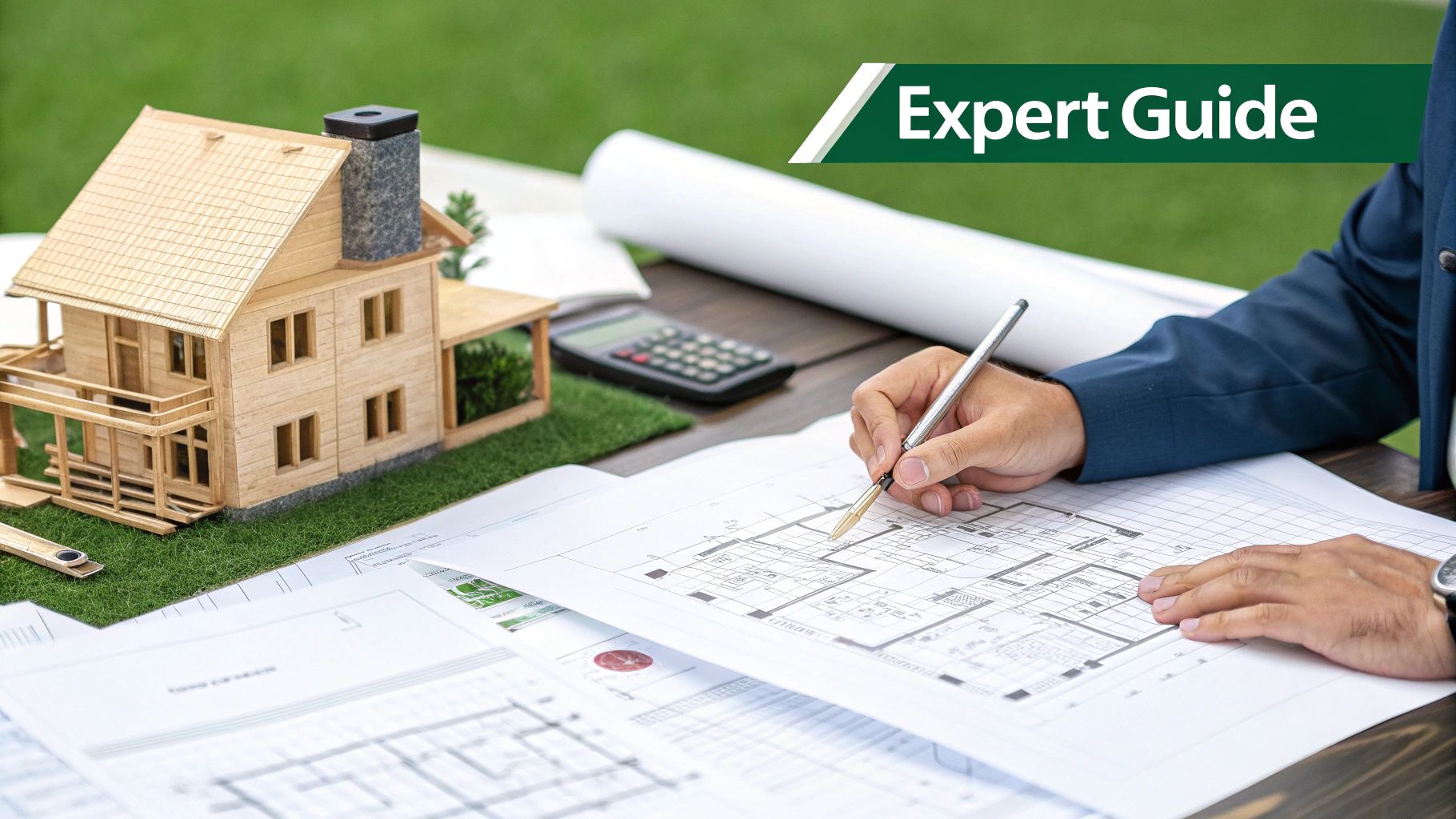
A consultant essentially provides a seal of approval. Their involvement tells large-scale investors that the project has been thoroughly vetted, the compliance risks have been professionally managed, and the financial structure is sound.

The stability that comes with this expert guidance is well-proven. The HTC marketplace is anchored by large institutional investors, many of whom have been in this game for decades. Their deep experience and reliance on expert-led compliance have resulted in an incredibly low recapture rate of less than 0.75% over a 10-year period. This track record speaks volumes about the reliability that consultants bring to the table. For a deeper dive into investor trends and recapture data, check out this detailed survey from Novogradac & Company LLP.

Navigating the Complex HTC Application Process

Applying for Historic Tax Credits isn't like filling out a single form. It's more like a marathon, a multi-stage journey that requires constant, careful coordination between federal and state agencies. I often think of it as a three-act play, and for the final curtain to close successfully, every single act has to be perfect.

Your historic tax credit consultant is the director of this play. They're the ones who know the script—written by the National Park Service (NPS)—inside and out, making sure every detail aligns with the strict requirements. Their job is to turn a daunting bureaucratic maze into a clear, predictable path for your project.

The Three-Part Application Structure

The whole application is built to verify your project's integrity from day one to completion. You start by proving the building's historical importance and finish by certifying that the work you did respected that history.

  • Part 1: Evaluation of Significance: This is where it all begins. Your consultant digs in, pulling together old photos, historical records, and architectural analysis to prove your building is a “certified historic structure.” They’re essentially building a case to convince the State Historic Preservation Office (SHPO) and the NPS that your property is worth preserving and deserves the tax credit investment.

  • Part 2: Description of Rehabilitation: Now, the consultant gets deep in the weeds with your architect. They meticulously detail every planned aspect of the renovation, from window repairs to new HVAC systems. This part of the application needs to show exactly how the proposed work will follow the Secretary of the Interior's Standards for Rehabilitation. It’s all about getting the plan approved before a single hammer swings, saving you from incredibly expensive do-overs later.

  • Part 3: Request for Certification of Completed Work: Once the last coat of paint is dry, it’s time for the finale. This is the "after" to Part 2's "before." The consultant assembles a package of photos and documentation showing the project was completed just as planned and approved. This final certification is the green light that officially unlocks the tax credits for your investors.

This process really highlights the consultant's role as the crucial link between your physical project and the capital that makes it possible.

Infographic about historic tax credit consultants

As you can see, without a consultant's expert hand guiding the process, the connection between the project and the investor just doesn't happen.

When it comes down to it, a consultant's job during the application is all about proactive problem-solving. They know what questions the regulators will ask before they ask them. They spot design conflicts that could turn into costly change orders and keep the lines of communication open with the review agencies. That foresight is what prevents the delays and denials that can completely derail a project.

The Financial Powerhouse Behind the Federal HTC Program

Think of the federal Historic Tax Credit (HTC) program as more than just a government perk. It’s an economic engine that can single-handedly transform a historic preservation project from a financial headache into a smart, profitable investment.

At its heart, the program offers a 20% tax credit on all the eligible costs of restoring a building—what the industry calls Qualified Rehabilitation Expenditures (QREs). But this isn't just some minor adjustment to your tax return; it's a game-changer.

To really get why this is so powerful, you need to understand the difference between tax deductions vs. tax credits. A deduction just chips away at your taxable income. A credit, on the other hand, is a dollar-for-dollar knockout punch to what you actually owe in taxes. This is what makes the HTC so incredibly valuable.

A historic tax credit consultant’s real magic is showing developers how to monetize this credit—turning a future tax benefit into cash in hand right now to get the project off the ground. They engineer deals where large investors, often banks or major corporations, buy the rights to the future credits. In return, they provide an immediate equity injection that can get construction started.

Fueling Revitalization Across the Country

This financial mechanism has sparked a quiet revolution in communities nationwide. Since it began, the HTC program has become the go-to tool for breathing new life into forgotten downtowns and rural main streets, turning crumbling old buildings into vibrant, modern assets.

The sheer scale of its impact is staggering. Since 1976, the federal HTC has driven over $235 billion in private investment into restoring historic properties. It’s also been a massive job creator, generating an average of 70,000 jobs every year and adding hundreds of billions to the national GDP. You can dive deeper into these figures in this detailed report from the National Park Service.

This massive economic footprint is precisely why historic tax credit consultants are indispensable. They’re the expert guides who navigate this complex financial world and connect your individual project to its vast resources.

By mastering the program's financial intricacies, a consultant does more than secure a tax benefit. They unlock the capital needed to close the financing gap, turning projects that would otherwise be impossible into profitable, community-enhancing landmarks. Their role is to ensure your project fully leverages the program's immense financial power.

How Consultants Close the Project Financing Gap

A modern architectural model next to a historic building's facade, symbolizing financial structuring.

Plenty of historic rehabilitation projects hit the same wall: the dreaded "financing gap." This is what happens when the astronomical cost of a proper restoration far outweighs what the building will be worth when it's finished. On paper, the numbers just don't add up, which makes getting a traditional loan next to impossible.

This is where a historic tax credit consultant really earns their keep, shifting from a compliance expert to a financial strategist. Their most critical job is to bridge that gap, turning a project that looks like a money pit into a sound—and often profitable—investment. They become the architects of the deal itself.

Weaving Together a Viable Financial Structure

A consultant rarely relies on a single source of money. Instead, they build a sophisticated financial package by layering multiple streams of capital together. It’s less like getting a simple mortgage and more like assembling a complex machine where every gear has a specific purpose.

This "capital stack" often includes:

  • HTC Equity: The consultant finds an investor to buy the tax credits, bringing in a crucial injection of cash right at the beginning.
  • Traditional Debt: With the tax credit equity secured, it becomes much easier to approach banks for a standard construction loan.
  • Grants and Incentives: A good consultant knows how to hunt down and secure local, state, or federal grants designed to spark community renewal.

By skillfully combining these pieces, the consultant creates a solid financial foundation that finally makes the project pencil out. They build detailed financial models that map out the long-term profitability, giving lenders and investors the confidence they need to sign on. This structuring is what turns a financial problem into a fully funded project, greenlit for construction.

The market for these credits is massive, with big players actively participating. JPMorgan Chase, for example, invested over $1 billion in Historic Tax Credit equity in more than 70 projects between 2014 and 2023. These weren't just random buildings; the investments often targeted properties in neighborhoods ripe for a comeback, proving how smart financing directly fuels revitalization. You can discover more about these community development insights from JPMorgan to see how it works on a large scale.

A skilled consultant doesn’t just find money; they create a compelling financial narrative. They demonstrate how the sum of the parts—credits, loans, and grants—generates a return that makes the whole project an attractive proposition, turning forgotten landmarks into thriving assets.

Choosing the Right Historic Tax Credit Consultant

https://www.youtube.com/embed/W1QYc9HR0LM

Picking a partner for your historic rehabilitation project is one of the most important decisions you'll make. The right firm is a strategic ally, guiding you through the maze of regulations and financial structuring. The wrong one? That can lead to expensive delays, lost tax credits, and a world of frustration.

It's not like hiring a simple vendor. Think of it more like choosing a co-pilot for a long and complicated flight. You need someone who doesn't just know the official rulebook, but also understands how things really get done. The best historic tax credit consultants bring deep technical knowledge, but just as importantly, they have established relationships and a track record you can trust.

Key Evaluation Criteria for Your Consultant

When you start looking, don't just look for a consultant—look for your consultant. You want a firm that can point to specific, relevant experience that mirrors your own project. A team that's great with small, local restorations might not be the right fit for a massive, multi-phase urban redevelopment. Be thorough and ask the tough questions.

To narrow down the field and find the perfect match, focus on these critical areas:

  • Project Portfolio: This is your proof. Ask to see a portfolio of projects that are similar in scale, budget, and complexity to what you're planning. It’s the single best way to gauge if they can handle the unique challenges your development will throw at them.

  • Agency Relationships: How well do they know the people at the State Historic Preservation Office (SHPO) and the National Park Service (NPS)? A consultant with a solid, respected reputation can often smooth out bumps in the road and resolve issues far more quickly.

  • Financial Structuring Expertise: Can they talk the talk? These projects often involve complicated, multi-layered financial deals. Your consultant needs to be completely fluent in structuring these deals to attract equity investors and navigate the various financing streams.

The goal is to find a partner who is genuinely invested in your project's success for the long haul, not just someone checking boxes on an application. Their job doesn't end when the paperwork is filed; they should be your guide through the entire five-year compliance period to protect your investment.

At the end of the day, the best historic tax credit consultants are true partners. They see problems before they happen, keep all the stakeholders on the same page, and stay relentlessly focused on getting you the best possible financial return while bringing a piece of history back to life. Choose carefully—their expertise will be a massive factor in whether your project succeeds or fails.

Common Questions About Historic Tax Credit Consultants

Even after getting the big picture, most developers still have a few practical questions about bringing a historic tax credit consultant onto their team. Let's tackle some of the most common ones we hear from clients.

When Is the Best Time to Hire an HTC Consultant?

The short answer? Yesterday.

Ideally, you should have a consultant on board during the earliest feasibility stages of a project—sometimes even before you’ve officially acquired the property. Getting their eyes on the building and your initial concepts can flag potential compliance headaches right out of the gate.

This early involvement is all about structuring the deal for the biggest financial win from day one. Bringing a consultant in later in the game often means they spend their time putting out fires and trying to reverse costly missteps that could have been easily avoided.

How Are Historic Tax Credit Consultants Paid?

You'll find a few different fee structures out there, but most are designed to tie the consultant's success directly to yours. It’s usually a mix of two components:

  • Fixed Fees: These typically cover the nuts and bolts of the work, like preparing and filing the detailed, multi-part application with state and federal agencies.
  • Success Fees: This is the real motivator. It's almost always a percentage of the total tax credit equity they help you raise for the project.

This blended model gives your consultant serious skin in the game. They’re not just pushing paper; they’re invested in getting you the maximum funding possible and seeing your project all the way to the finish line.

The key thing to remember is that a good consultant’s guidance almost always delivers a return on investment that blows their fees out of the water. They don’t just find you money—they prevent expensive mistakes and help you negotiate better terms with investors.

Can I Manage the HTC Application Myself?

Technically, yes. Realistically, it’s a bad idea unless you have years of specialized experience doing exactly this. Think of it like trying to represent yourself in a complex court case. You can, but the odds are stacked against you.

The application process is a minefield of hyper-specific architectural standards, tricky financial structuring, and rigid government regulations. One wrong move and the whole thing can fall apart.

A seasoned consultant doesn't just fill out forms correctly; they dramatically boost your chances of a smooth approval. They also bring something you can't get on your own: established relationships with agency reviewers and the investment community. Those connections are often the secret sauce to getting a project funded and built.


At Sherer Architects, LLC, we have decades of experience guiding clients through historic preservation, securing tax credits, and maximizing project value. Learn how our expertise can bring your historic building back to life.