

The way we design hospitals has fundamentally changed. It’s no longer about just putting up functional buildings; it's about crafting complex ecosystems designed for healing. The architecture itself has become an active partner in improving patient outcomes, lifting staff morale, and serving the wider community.
Rethinking the Blueprint for Modern Hospitals
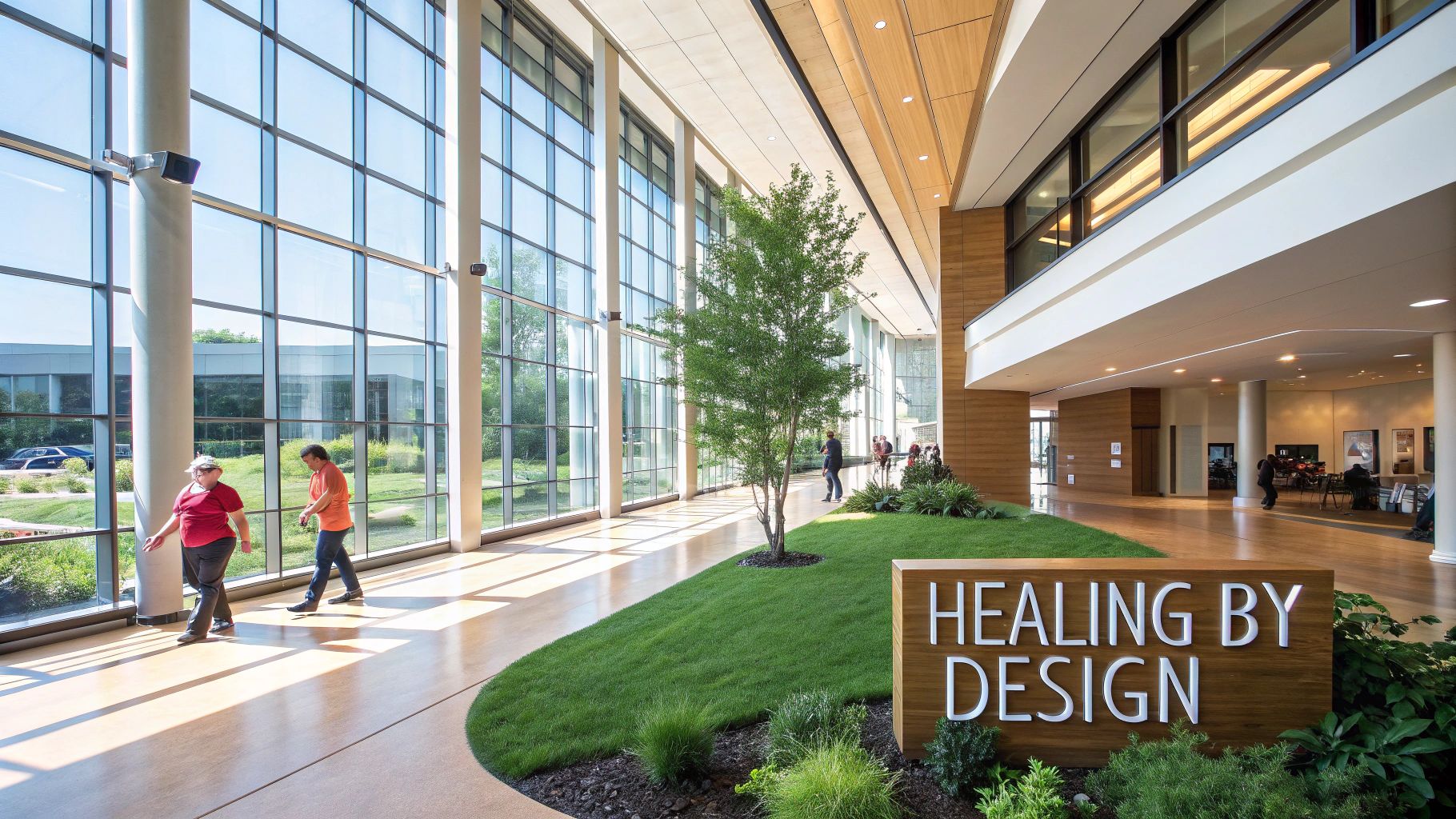
Picture a hospital not as a sterile, intimidating place, but as a space intentionally designed for recovery. Every detail—from the hallways and patient rooms to the waiting areas—is purposefully shaped to lower stress, stop infections from spreading, and support the caregivers doing their critical work. This move away from a purely clinical model to a truly human-centered one is what modern healthcare architecture is all about.
This guide gets into the strategic, layered thinking required to build the healthcare facilities of the future. We're going to look past the concrete and steel to the core principles that strike a balance between complex medical functions and a deeply human experience. One of the main goals here is to proactively boost hospital operational efficiency, which ensures everything runs smoothly and resources are used wisely.
From Clinical Boxes to Healing Spaces
Not long ago, hospitals were designed primarily for the convenience of the medical staff. This often led to a confusing maze of corridors and cold, impersonal rooms that could make a stressful situation even worse for patients. Today, that perspective has been completely flipped. We now have solid evidence showing a direct connection between the physical environment and a patient's well-being.
The modern hospital is designed with the understanding that the building itself is a critical tool in the healing process. Every design choice, from the flow of natural light to the layout of a patient room, is made with recovery in mind.
We've learned that patients who feel calmer and more comfortable tend to have better health outcomes. This patient-first mindset is what drives the big architectural decisions and shapes every single phase of a project, from the initial idea to the day the doors open.
The Pillars of Modern Hospital Design
To bring these sophisticated healing environments to life, architects and hospital leaders have to build on several integrated pillars. Think of these as the essential framework for a facility that’s safe, effective, and ready for whatever comes next.
Key areas of focus include:
- Advanced Infection Control: This means using layouts, materials, and ventilation systems that are actively hostile to pathogens and their transmission.
- Seamless Technology Integration: The building's infrastructure has to support it all—telehealth consultations, electronic health records, robotic surgical assistants, and smart room controls.
- Built-in Flexibility and Adaptability: We need to create spaces that can be reconfigured on the fly to meet new medical demands, like handling a sudden patient surge during a public health crisis.
When you get these elements right, hospital design becomes much more than a construction project. It becomes a strategic investment in community health, staff well-being, and truly superior patient care.
The Core Principles That Shape Modern Hospitals
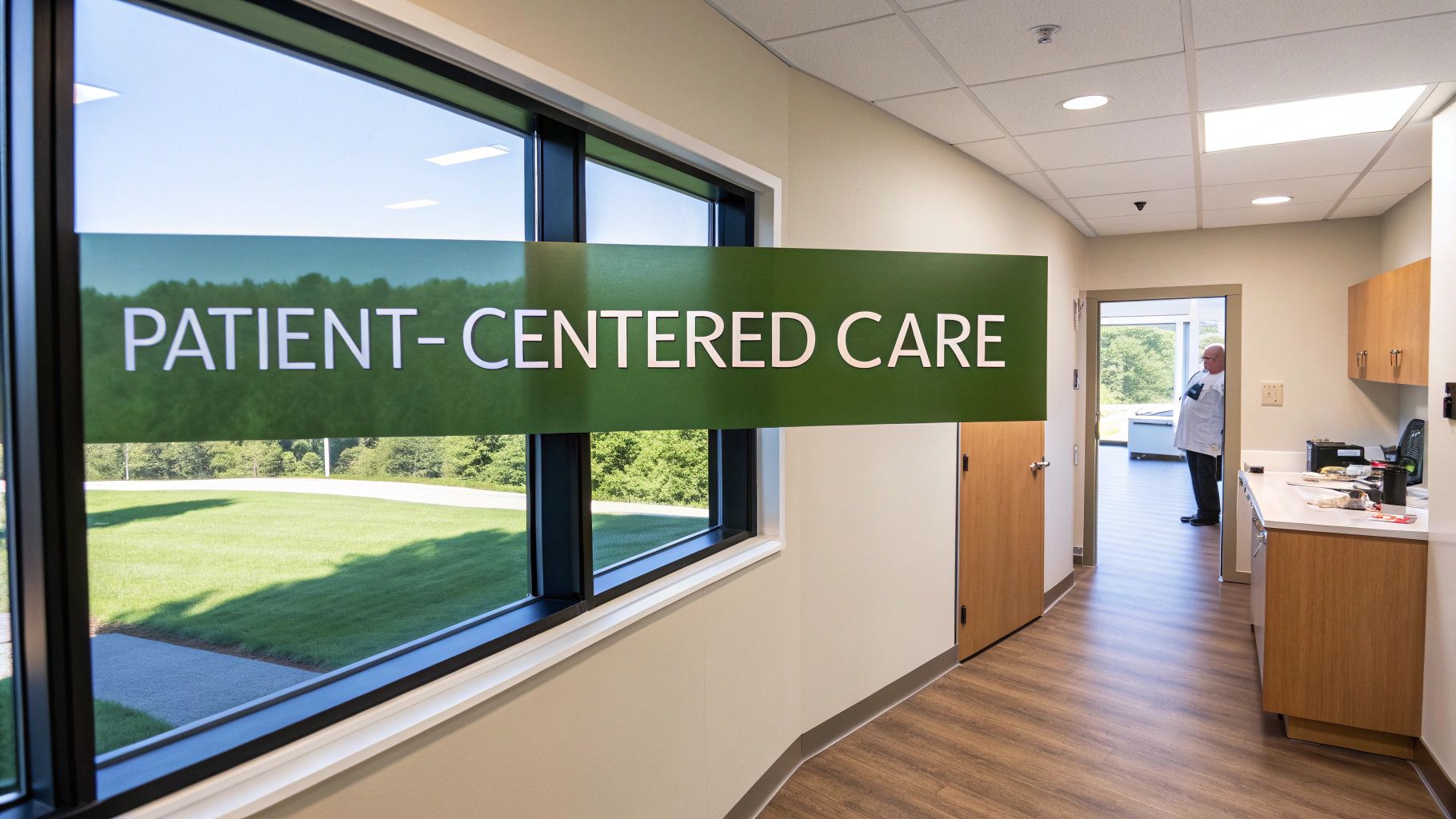
Great hospital design isn't just about aesthetics or building codes. It's a deep, strategic process focused on creating a true healing environment. The best facilities are built on a foundation of core principles that put patients first, empower staff to work efficiently, and ensure the hospital remains viable for decades to come. The building itself must become an active participant in the care process.
This shift in thinking is happening globally. With over 16,500 hospitals worldwide, architects are constantly adapting to new challenges like managing epidemics, caring for aging populations, and treating chronic diseases. It’s no surprise that North America and Europe are leading the charge in hospital architecture, pushing these patient-centric principles to the forefront of every new project. For a deeper dive, check out the global hospital architecture market analysis from Fortune Business Insights.
Let's break down the key ideas that drive modern hospital design.
Key Principles of Modern Hospital Design
The following table summarizes the foundational concepts that turn a building into a high-functioning healthcare environment. Each principle has a clear goal and real-world applications that directly influence patient outcomes and operational success.
| Design Principle | Primary Goal | Practical Example |
|---|---|---|
| Clinical Adjacencies | Minimize travel time for staff and patients, speeding up care delivery. | Placing the Emergency Department next to diagnostic imaging (X-ray, CT) for rapid trauma assessment. |
| Infection Control | Reduce hospital-acquired infections (HAIs) through environmental design. | Using specialized HVAC systems for negative pressure rooms and non-porous, antimicrobial surfaces. |
| Flexibility & Future-Proofing | Design spaces that can adapt to changing technology and healthcare needs. | Building patient rooms with the infrastructure to easily convert to ICU-level care during a surge. |
These principles aren't just abstract ideas; they are practical, deliberate choices that have a massive impact on the day-to-day reality of a hospital.
Mastering Clinical Adjacencies
Think of clinical adjacencies as the art of choreographing a complex dance. It’s about strategically placing departments to make every movement logical and efficient, saving precious time when it matters most. Just like a chef arranges a kitchen so every tool is within reach, a hospital architect places interacting departments side-by-side.
The classic example is positioning the Emergency Department (ED) right next to diagnostic imaging. When a patient arrives with a critical injury, you can't afford to waste minutes wheeling them down long corridors. This tight adjacency means they can get from the ambulance bay to a CT scanner in moments, leading to faster diagnosis and life-saving intervention. The same logic applies to locating surgical suites near the Intensive Care Unit (ICU) to make post-op transfers as smooth and safe as possible.
The success of a hospital's layout is measured in steps saved and seconds gained. Smart adjacencies reduce staff fatigue, minimize patient transport risks, and directly contribute to better clinical outcomes.
Designing for Infection Control and Safety
In a hospital, the building itself must be an ally in the fight against infection. This goes far beyond routine cleaning; it means embedding infection control into the very DNA of the facility to create a shield that protects everyone inside.
Architects use several key strategies to achieve this:
- Airflow Management: This involves sophisticated HVAC systems that create negative pressure rooms, which are essential for containing airborne pathogens and isolating patients with infectious diseases.
- Material Selection: Surfaces matter. Choosing non-porous, antimicrobial, and easy-to-disinfect materials for floors, walls, and counters prevents germs from finding a place to hide and multiply.
- Smart Layouts: Good design creates intentional separation between "clean" areas (like sterile supply rooms) and "soiled" ones (like utility closets). Prioritizing single-patient rooms is also a huge factor in preventing cross-contamination.
This meticulous approach extends to every detail, including the design of hospital sterile storage racks where medical supplies are kept. Proper storage is a critical link in the chain of infection control, ensuring instruments remain sterile until the moment they are needed.
Embracing Flexibility and Future-Proofing
Healthcare changes at a breakneck pace, and a hospital built today must be ready for the medical realities of tomorrow. Flexibility is about designing spaces that can be reconfigured without a full-scale, disruptive renovation. It's an investment in the building's long-term relevance.
This "future-proofing" can take many forms. For instance, a universal room design allows a standard patient room to be quickly adapted for higher-acuity care, like an ICU bed, simply by activating pre-installed medical gas lines and electrical outlets. This kind of planning is invaluable during a public health crisis or a sudden patient surge.
Another approach is using modular walls and open-plan structural designs. This makes it far easier to expand a department or integrate new technology down the road, all with minimal interruption to the hospital's daily operations. This foresight ensures the facility can evolve right alongside medicine itself.
The Journey of Building a Hospital, from Blueprint to Bedside
Building a hospital isn't like putting up an office tower; it's more akin to orchestrating the birth of a small, hyper-specialized city. It's a massive undertaking that follows a clear, deliberate path, each stage built carefully on the one before it. The entire process is designed to transform a community's need for care into a living, breathing facility that saves lives.
It all starts long before a single line is drawn on a blueprint. This first crucial step, Programming and Feasibility, is where the big, foundational questions get answered. Think of it as the strategic DNA of the entire project.
Phase 1: Programming and Feasibility
Imagine you’re opening a new restaurant. Before you even think about the color of the napkins, you have to decide: What kind of food are we serving? Who are our customers? How many tables do we need? That's the essence of hospital programming.
This stage is all about deep-dive research. We're looking at community health data to pinpoint the most pressing needs—is it a larger, more efficient emergency department? An expanded maternity ward? A brand-new cancer center? We bring everyone to the table—doctors, nurses, administrators, and community leaders—to define the project’s goals and what it absolutely must do. A detailed business case is built, spelling out the vision, estimating the costs, and projecting the potential return, ensuring the whole idea is viable before anyone commits serious money.
Phase 2: Schematic Design and Development
Once we've figured out the "what" and "why," the team moves into Schematic Design. This is where architects start turning all those words and data points into the first rough sketches. They’ll create block diagrams and preliminary floor plans that show how different departments will connect—essentially mapping out the hospital's circulatory system.
From there, we get into Design Development, where that initial vision gets a heavy dose of engineering reality. This is an intensely collaborative phase. Architects work shoulder-to-shoulder with structural, mechanical, electrical, and plumbing (MEP) engineers to weave in the hospital's complex backbone—the HVAC systems, medical gas lines, electrical grids, and IT networks. It’s like a massive, high-stakes puzzle, fitting all these critical systems together safely and efficiently.
Phase 3: Regulatory Approvals and Compliance
Hospitals are some of the most heavily regulated buildings on the planet, and for good reason. The Regulatory Approval phase is a gauntlet of codes and standards all aimed at ensuring patient safety, accessibility, and privacy. The design has to successfully navigate a maze of requirements from a whole host of authorities.
Key areas we have to nail down include:
- Americans with Disabilities Act (ADA): Making sure every inch of the facility is accessible to people with disabilities.
- Health Insurance Portability and Accountability Act (HIPAA): Designing spaces that protect patient privacy, from the way a check-in counter is configured to the acoustics of a consultation room.
- Facility Guidelines Institute (FGI): Following the industry-accepted baseline standards for healthcare design and construction.
- Local and State Building Codes: Satisfying all the fire safety, structural, and environmental rules.
Getting all the necessary permits is a critical—and often painfully long—step that requires meticulous documentation and review.
This isn't just a box-ticking exercise. Navigating the web of regulations fundamentally drives the design, influencing everything from room layouts and corridor widths to the materials we choose. Getting compliance wrong early on can lead to eye-watering redesign costs and major project delays down the road.
Phase 4: Construction and Commissioning
Finally, with an approved design locked in, we can start building. The Construction phase demands an incredible level of specialized management to coordinate the dozens of trades working on site. A hospital is worlds more intricate than a typical commercial building, demanding expertise in everything from installing lead-lined walls in imaging suites to calibrating sophisticated air filtration systems in operating rooms.
As the industry grapples with challenges like workforce shortages and tight finances, new ways of getting projects done are taking hold. Approaches like Design-Build and Integrated Project Delivery (IPD) are gaining ground because they bring designers and builders together much earlier in the game. This fosters better communication and efficiency, which is becoming vital for managing the sheer complexity of modern hospital construction. You can discover more about the trends shaping the hospital architecture market and how the field is evolving.
The very last step before the doors swing open is Commissioning. This is an exhaustive testing process where every single system—from the backup generators down to the nurse call buttons—is checked, double-checked, and pushed to its limits to prove it works exactly as intended. Only after this rigorous validation can a hospital be deemed ready and safe to welcome its first patients.
Managing the Complex Costs of Hospital Construction
Hospital construction projects are, without a doubt, some of the most financially intensive builds in any sector. For developers and owners, getting a firm grip on what drives the budget is non-negotiable. The costs go far beyond just bricks and mortar; they’re a tangled web of physical materials, specialized equipment, and essential services, each with a hefty price tag.
The scale of this industry is massive. In the United States alone, hospital construction is on track to become a $34.6 billion industry by 2025. That figure is the result of a steady 2.1% compound annual growth rate over the last five years—a remarkable trend, especially considering the project delays and supply chain chaos kicked off by the pandemic. You can dive deeper into the numbers in this in-depth hospital construction industry analysis from IBISWorld.
Differentiating Hard Costs and Soft Costs
To truly manage a hospital budget, you first have to break it down into its two core parts: hard costs and soft costs.
Think of hard costs as everything you can physically touch when you walk through the finished building. These are the direct, tangible expenses tied to the actual construction.
Examples of hard costs include:
- Structural Materials: The steel skeleton, concrete foundations, and roofing that give the building its form.
- Specialized Medical Equipment: Big-ticket items that are the heart of the hospital, like MRI machines, CT scanners, and linear accelerators.
- MEP Systems: The incredibly complex mechanical, electrical, and plumbing networks, including the high-spec HVAC systems vital for sterile and clinical environments.
On the other hand, soft costs are all the essential but less tangible services needed to get the project off the ground and through to completion. You can't see them in the final structure, but the project would completely fall apart without them. These typically cover architectural and engineering fees, legal permits, insurance, and specialized consultants.
This visual helps illustrate the general flow of a hospital project, moving from initial concept to the final build-out.
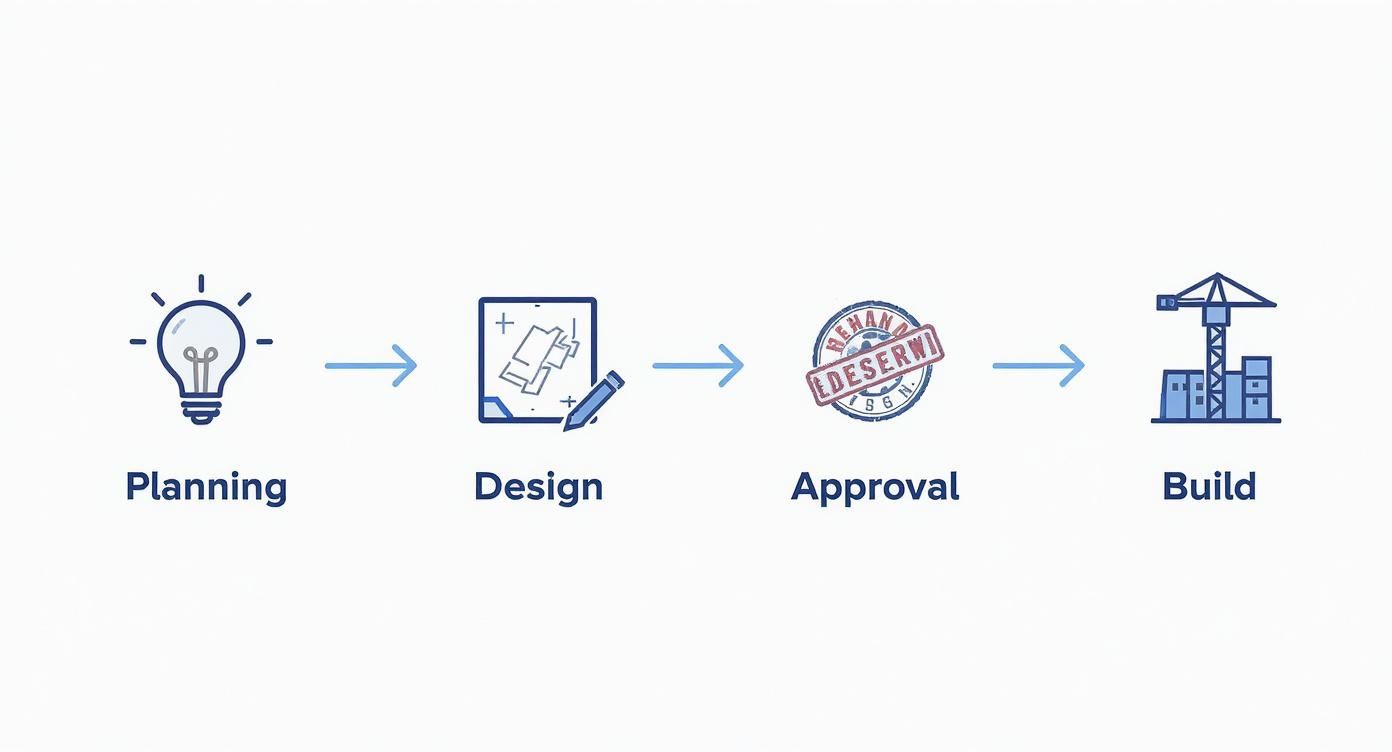
Every single stage in this process carries its own mix of hard and soft costs, all of which need to be tracked and managed with precision.
Key Drivers of Budget and Schedule Overruns
Even the best-laid plans can go sideways. Hospital projects are notoriously susceptible to budget and schedule creep, and knowing where the pitfalls are is the first step to avoiding them.
One of the biggest culprits today is the global supply chain. A single delayed shipment of specialized medical equipment or a shortage of specific building materials can trigger a domino effect, bringing multiple trades to a standstill and pushing the completion date further and further out.
A successful hospital project isn't just about managing the budget on paper; it's about proactively managing risk in the real world. Acknowledging potential disruptions from the start allows teams to build contingencies and response plans into the project timeline.
Another huge factor is the intricate coordination of specialized trades. A hospital construction site is like an orchestra with dozens of highly specialized players—from medical gas installers and shielding experts to low-voltage data technicians. If one team's work gets delayed, it can easily prevent three or four others from even starting their jobs. This is where truly effective project management becomes the linchpin that holds everything together, keeping the complex process moving forward.
Designing Hospitals for Sustainability and Resilience
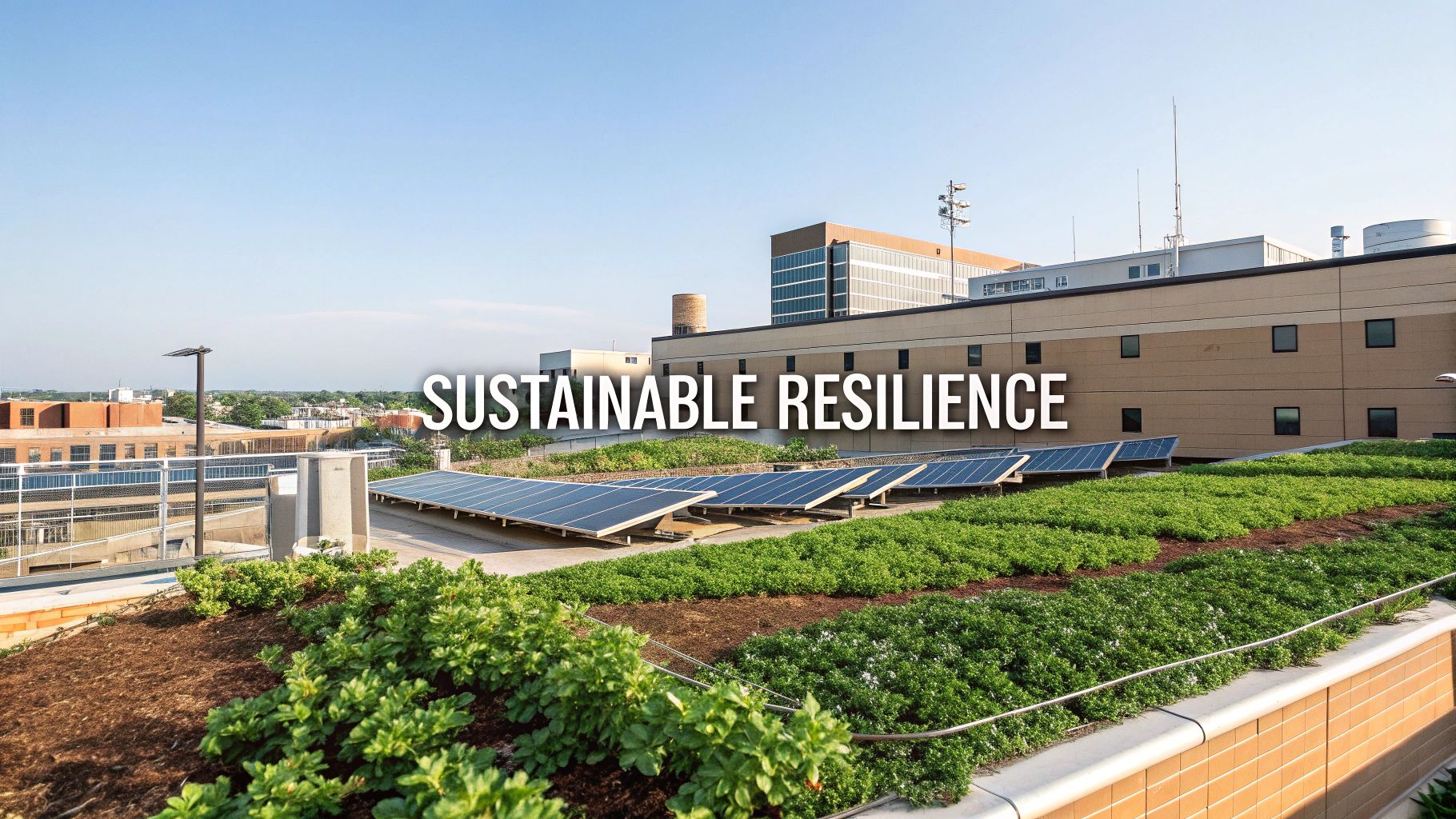
We used to think about hospital design in terms of immediate patient needs. Today, that perspective has broadened to include a much deeper responsibility—the long-term health of the community and the planet. This isn't just about building a place for treatment; it's about creating a core piece of community infrastructure.
The shift is from simply building for today to engineering a facility that’s both environmentally responsible and ready for whatever crises might come its way. This dual focus on sustainability and resilience is no longer a "nice-to-have" feature. It's now a fundamental part of modern healthcare architecture and a strategic investment that pays off in operational savings, better public health, and long-term viability.
Building Green for Healthier Outcomes
In a hospital, sustainable or "green" design goes far beyond just shrinking an environmental footprint. It's about creating a healthier indoor environment for the very people the facility serves—patients and staff. Think of it as a form of preventative care for the building itself.
Key green building practices we see in the field include:
- Energy-Efficient Systems: High-performance HVAC systems, LED lighting, and better insulation can make a huge dent in a hospital's massive energy bill.
- Water Conservation: With a facility running 24/7, low-flow fixtures and systems for harvesting rainwater and recycling greywater are essential for minimizing water consumption.
- Non-Toxic Materials: We carefully select paints, flooring, and furniture with low or zero volatile organic compounds (VOCs). This directly improves indoor air quality, which is absolutely critical for patients with respiratory issues.
These practices are no longer on the fringe; they're essential parts of the design strategy. There's a clear industry-wide push to integrate building systems that not only improve patient care but also reduce environmental impact. You can explore the latest research on healthcare building design to see just how prevalent this trend has become.
Engineering Resilience for Unpredictable Events
If sustainability is about a hospital's day-to-day impact, resilience is about its ability to stand strong and stay fully operational when a crisis hits. A truly resilient hospital becomes a community's ultimate safe harbor during a hurricane, a massive power outage, or the next pandemic.
Resilience isn't just about having a backup generator. It's about designing a self-sufficient ecosystem that can function independently when external support systems are compromised.
This means we have to design for self-sufficiency and durability from the ground up. For example, we now place critical infrastructure like emergency generators and main electrical gear on upper floors to protect them from flooding—a hard lesson learned from past disasters. Integrating on-site power generation with solar panels and battery storage means the hospital can keep the lights on and the ventilators running during a prolonged blackout.
This proactive approach ensures the facility can continue to provide life-saving care when the community needs it most. By planning for the worst-case scenario, designers and owners guarantee the hospital remains a pillar of strength and reliability. It's one of the smartest, most essential investments you can make.
Digging Into the Big Questions in Hospital Design
When you get into the nitty-gritty of designing a hospital, a few key questions always surface. Whether you're a developer, a hospital administrator, or an architect, you need to get your head around the core drivers, the latest trends, and the critical mistakes that can make or break a project. Let's tackle some of the most common questions head-on.
The sheer scale of investment here tells you how high the stakes are. The market for healthcare buildings was sitting around USD 299.57 billion in 2025. It’s expected to climb to USD 340.6 billion by 2029, a clear signal of the relentless demand for better, smarter healthcare spaces. You can discover more insights about healthcare building trends on Research and Markets.
What Is the Single Most Important Factor in Modern Hospital Design?
If you have to boil it all down to one thing, it's the careful balancing act between the patient experience and clinical efficiency. People often treat these as competing priorities, but that’s a huge mistake. The truth is, they're two sides of the same coin.
Think about it. A confusing floor plan isn't just a clinical inefficiency; it creates real stress and anxiety for patients and their families. On the flip side, a design that thoughtfully incorporates natural light and private, quiet rooms doesn't just feel better for the patient—it's been proven to speed up recovery times. That frees up beds faster, which is a direct boost to clinical efficiency. The best designs create a virtuous cycle where one reinforces the other.
How Is Technology Changing Hospital Layouts?
Technology isn't just a bolt-on feature anymore; it's fundamentally rewiring the hospital's physical DNA. The rise of digital health tools means architects have to completely rethink how space, infrastructure, and movement work together.
You can see this playing out in a few key ways:
- Telehealth Integration: Modern hospitals need dedicated, sound-proofed rooms for virtual consultations. These spaces are becoming just as important as traditional exam rooms, linking specialists to patients anywhere.
- AI-Driven Logistics: Automated carts are now delivering everything from medications to linens. This requires a new approach to corridor design and storage, sometimes even creating separate "backstage" pathways for robotic traffic.
- Smart Patient Rooms: Rooms are being built from the ground up as integrated tech hubs. They can monitor vitals, let patients control their own lighting and temperature, and offer communication and entertainment all through a single device.
A modern hospital has to be a digital-first environment. The architecture must be planned to support the flow of data with the same precision it uses to support the flow of people.
What Are the Biggest Mistakes to Avoid?
Every project has its own quirks, but there are a few classic blunders that can send a hospital project off the rails. These mistakes lead to expensive fixes down the road and create operational nightmares that last for years.
Here are three of the biggest ones we see time and again:
- Failing to Involve Clinical Staff Early: When architects and developers don’t get doctors, nurses, and technicians in the room from the very beginning, they end up with spaces that look great in a blueprint but are a nightmare to actually work in.
- Underestimating Regulatory Timelines: Getting through the maze of health codes and city approvals is a marathon, not a sprint. Assuming you’ll get your permits quickly is one of the most common reasons for massive schedule delays.
- Not Planning for Future Expansion: A hospital that’s already at 100% capacity on opening day is a hospital with a very short shelf life. Smart design always includes modular components and sets aside "soft space"—areas that can be easily and inexpensively converted to handle future growth or new medical services.