SHERER ARCHITECTS

Categories
Uncategorized

The Architecture of Hospital Design A Developer’s Blueprint

When you talk about the architecture of a hospital, you’re not just talking about putting up a building. You’re talking about crafting a dynamic, living ecosystem that’s engineered from the ground up to promote healing. It’s a blueprint where clinical precision has to meet human compassion, and every single space, from a corridor to a patient room, plays a role in someone's recovery.

The Blueprint For Healing: Understanding Hospital Architecture

Aerial view of a modern campus with tan buildings, green lawns, and a 'Blueprint for Healing' sign.

The best way to think about a modern hospital is as a "city within a city." This isn't just a clever phrase; it’s the key to understanding the sheer complexity involved. Every department—the emergency room, surgical suites, patient wards, the cafeteria—is like its own distinct neighborhood. Each has a specific function, a unique population, and its own set of needs.

And just like a real city, a hospital needs infrastructure to survive. It relies on a carefully planned network of corridors (the streets), specialized MEP (Mechanical, Electrical, and Plumbing) systems (the utilities), and shared resources. The success of this entire "city" hinges on how well these different neighborhoods connect and support each other.

More Than Just Rooms and Hallways

A poorly designed hospital creates constant, daily friction. It's like a city where the fire station is miles from the main business district, or the grocery stores are nowhere near the residential areas. In a hospital setting, that translates into life-threatening delays in care, staff burning out from walking miles every shift, and an incredibly stressful environment for patients and their families.

The real craft of hospital architecture is in preventing these problems by focusing on a few core principles:

  • Logical Adjacency: This means putting related departments right next to each other. Think imaging right beside the ER. It’s a simple concept that shaves critical minutes off travel time for patients and staff.
  • Clear Circulation: You need separate, intuitive pathways for patients, staff, and supplies. This isn't just for efficiency; it’s a critical measure to prevent cross-contamination and operational gridlock.
  • Patient-Centered Spaces: Designing rooms and waiting areas that actually make people feel better is non-negotiable. We're talking about reducing anxiety, providing comfort, and maximizing natural light, which is proven to speed up recovery.
  • Operational Efficiency: Support services—the labs, pharmacies, and sterilization facilities—need to be centrally located so they can effectively serve every single department without becoming a bottleneck.

The Impact of Thoughtful Design

The architecture of a hospital directly impacts its viability for decades to come. When you’re developing the blueprint for a healing environment, every detail has consequences. For example, a detailed guide on choosing healthcare furniture for modern facilities is an essential piece of the puzzle, influencing everything from patient comfort to staff workflow.

A well-designed hospital is a strategic asset. It not only improves patient outcomes but also enhances staff retention, reduces operational costs, and strengthens the facility's reputation within the community.

Ultimately, the goal is to create a building that actively participates in the healing process. For developers and owners, grasping this is what separates a standard construction project from the creation of a vital community anchor—a place where good design literally saves time, money, and lives.

Choosing The Right Model: Hospital Typologies Explained

When you're at the very beginning of a hospital project, one of the first big decisions on the table is the foundational layout, or what we in the industry call the typology. This isn't just an aesthetic choice; it's a strategic move that sets the stage for everything that follows—from how much land you'll need and how the budget gets allocated to how easily the facility can grow and how smoothly it runs day-to-day.

Think of it like this: are you building a skyscraper, a sprawling suburban subdivision, or a town center? Each has a completely different footprint and serves a unique purpose. The same logic applies to hospitals.

The models we use today really started taking shape in the 1960s. As medicine became more specialized, the design of hospitals had to follow suit. The old, monolithic do-it-all buildings gave way to campuses with distinct, free-standing structures, each dedicated to a specific function. If you're interested, you can learn more about how specialization reshaped healthcare design in the 1960s.

The Vertical Tower Model

The vertical tower is exactly what it sounds like: the high-rise of the hospital world. In this model, we stack departments one on top of the other in a compact, multi-story building. It's the go-to solution for tight urban sites where every square foot of land comes at a premium.

The biggest win here is efficiency on a small footprint. You can pack a full-service medical center onto just a couple of acres by building up, not out. This approach also centralizes the building's guts—elevators and core MEP (Mechanical, Electrical, and Plumbing) systems—which can make logistics feel a lot simpler. But that compactness has its trade-offs. The entire building lives and dies by its elevators, which can easily become bottlenecks for moving patients, staff, and supplies.

The Horizontal Campus Model

On the complete opposite end of the spectrum is the horizontal campus. This model feels more like a small village or a low-rise corporate park, spreading departments out across a large piece of land in a series of interconnected, one or two-story buildings. It’s a natural fit for suburban or rural areas where land is abundant and affordable.

The real beauty of the campus model is its built-in flexibility for phased construction and future growth. Adding a new wing or even an entirely new building is far more straightforward than trying to tack another floor onto a tower. These layouts also tend to feel less institutional and more calming, with plenty of opportunities for green spaces and courtyards. The major drawback? The sheer distances people have to cover. Staff and patients might face long walks between departments, which can affect everything from emergency response times to simple navigation.

A key consideration for developers is that the chosen typology directly impacts long-term flexibility. A horizontal campus offers modular growth, while a vertical tower locks in a more rigid structure, making future adaptation more complex and costly.

The Hybrid Model

The hybrid model is an attempt to get the best of both worlds. It usually involves a central, multi-story tower for acute care services—think surgery and the ICU—which is then connected to lower-rise wings that house outpatient clinics, administrative offices, and diagnostic centers. This blended approach is getting more and more popular because it strikes a great balance between density and flexibility.

With this setup, you can centralize the critical, high-traffic departments vertically for peak efficiency while letting less urgent services spread out horizontally. It creates a natural, logical separation between inpatient and outpatient traffic, which makes the experience better for everyone. By pairing a dense core with expandable outer buildings, the hybrid model gives owners a practical design that can actually adapt as healthcare needs change over time.

Comparing Hospital Architectural Models

To see how these models stack up against one another, it helps to put their core features side-by-side. This table breaks down the key characteristics of each typology to help developers get a clearer picture of what might work best for their specific site and long-term vision.

Model Type Key Characteristic Best For Primary Challenge
Vertical Tower A compact, multi-story high-rise with stacked departments. Dense urban areas with limited land availability. Reliance on elevators and limited options for future expansion.
Horizontal Campus A sprawling, low-rise layout with interconnected buildings. Suburban or rural sites with ample land for growth. Long travel distances between departments and potential wayfinding issues.
Hybrid Model A central tower connected to lower-profile outpatient wings. Sites that need to balance density with future flexibility. Requires careful master planning to ensure seamless integration.

Ultimately, there's no single "right" answer. The best model depends entirely on the project's unique constraints and goals, from the available land and budget to the community it will serve and the vision for its future.

Designing for Seamless Patient and Staff Flow

Once you’ve settled on a hospital's big-picture model, the real work begins inside. We have to design the internal logic—that complex web of hallways, elevators, and rooms that dictates how everyone and everything moves through the space.

It’s a bit like designing a major airport terminal. The path for an international traveler heading through security and customs is completely different from someone being dropped off for a quick domestic flight. In the same way, the architecture of a hospital must create clear, efficient, and separate routes for patients, staff, and the public.

Get this wrong, and you get chaos. You’ll have crowded hallways where a patient on a gurney is trying to get past a food delivery cart while a lost family is looking for the cafeteria. This isn't just an annoyance; it’s a direct risk to patient safety, a huge source of stress for staff, and a major drain on efficiency. The goal is to design a building where movement is so logical it feels effortless.

Mapping the Patient Journey

To get there, architects start by mapping out what we call "patient journeys." Let’s take someone arriving at the emergency department (ED) with chest pain. A well-designed flow gets them from the ambulance bay to a trauma room, then to an adjacent imaging suite for a scan, and finally up to a cardiac cath lab or the intensive care unit (ICU).

Every single step in that journey demands immediate access to the next. This is why clinical adjacencies are one of the most critical rules in hospital design. Putting imaging services right next to the ED means you avoid long, risky trips down public hallways. Similarly, situating surgical suites close to the ICU ensures post-op patients get to critical care without delay.

The guiding principle is simple: shrink the distance and time for the most critical pathways. A layout that saves a nurse 30 steps every time they perform a task can add up to miles of walking over a single shift. That means less fatigue and more time spent on actual patient care.

This evolution in hospital models directly influences how these internal flows are designed.
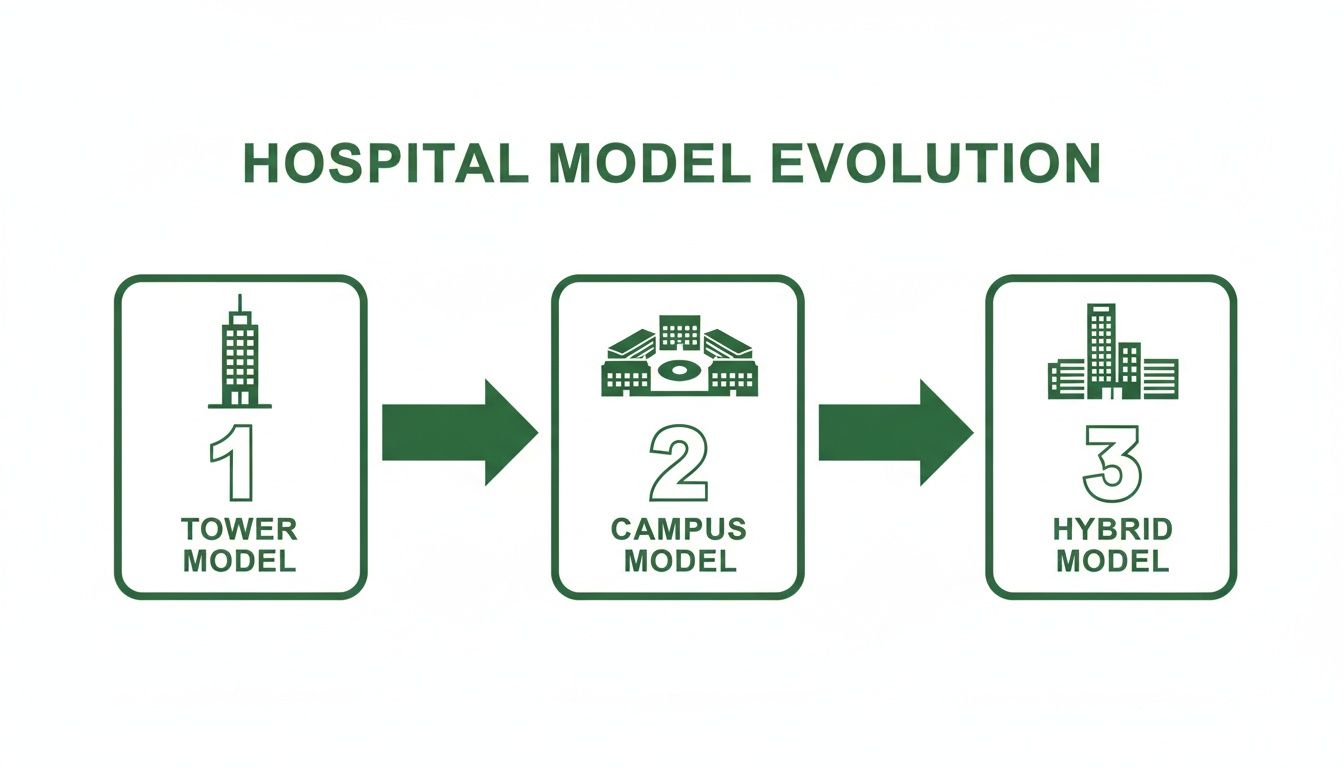
Infographic showing the evolution of hospital models: 1 Tower, 2 Campus, and 3 Hybrid, with building icons.

As you can see, each typology—from a dense vertical Tower to a sprawling Campus and a more balanced Hybrid—creates its own set of challenges and opportunities for laying out these vital patient and staff routes.

Separating "Onstage" and "Offstage" Traffic

Great hospital design also borrows a concept from the theater: separating the "onstage" action from the "offstage" work.

  • Public/Onstage Flow: Think of these as the main arteries—the lobbies, waiting rooms, and public corridors that patients and visitors use. They need to feel welcoming, be easy to navigate with clear signage, and be kept separate from the clinical and service hustle.

  • Staff/Offstage Flow: These are the dedicated, staff-only corridors and elevators. They’re the secret sauce that allows doctors and nurses to move quickly between departments without fighting public crowds. They also provide a clean route for moving sterile supplies and medication.

  • Service Flow: This is the circulation for things like food carts, linen services, and waste removal. These pathways have to be completely isolated from everything else to maintain hygiene and stop cross-contamination.

This onstage/offstage separation is fundamental. It prevents bottlenecks, keeps patient areas quieter, and protects the sterility of clinical zones. In the end, a hospital’s internal layout is the invisible force shaping its daily rhythm. When done right, it creates a calm, safe, and intuitive environment that leads to better patient outcomes, happier staff, and a far more successful healthcare facility.

The Hidden Infrastructure Of A Modern Hospital
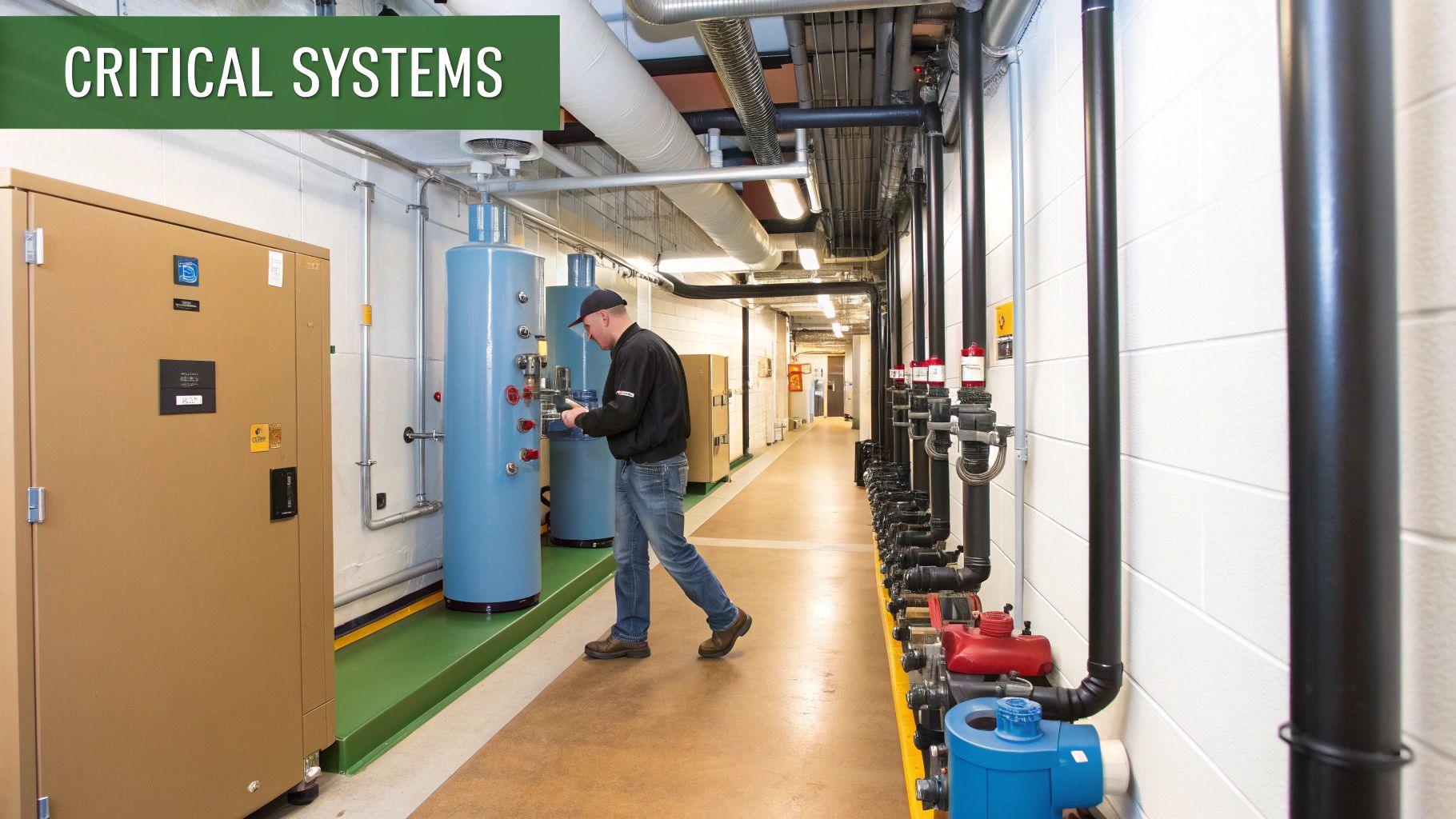
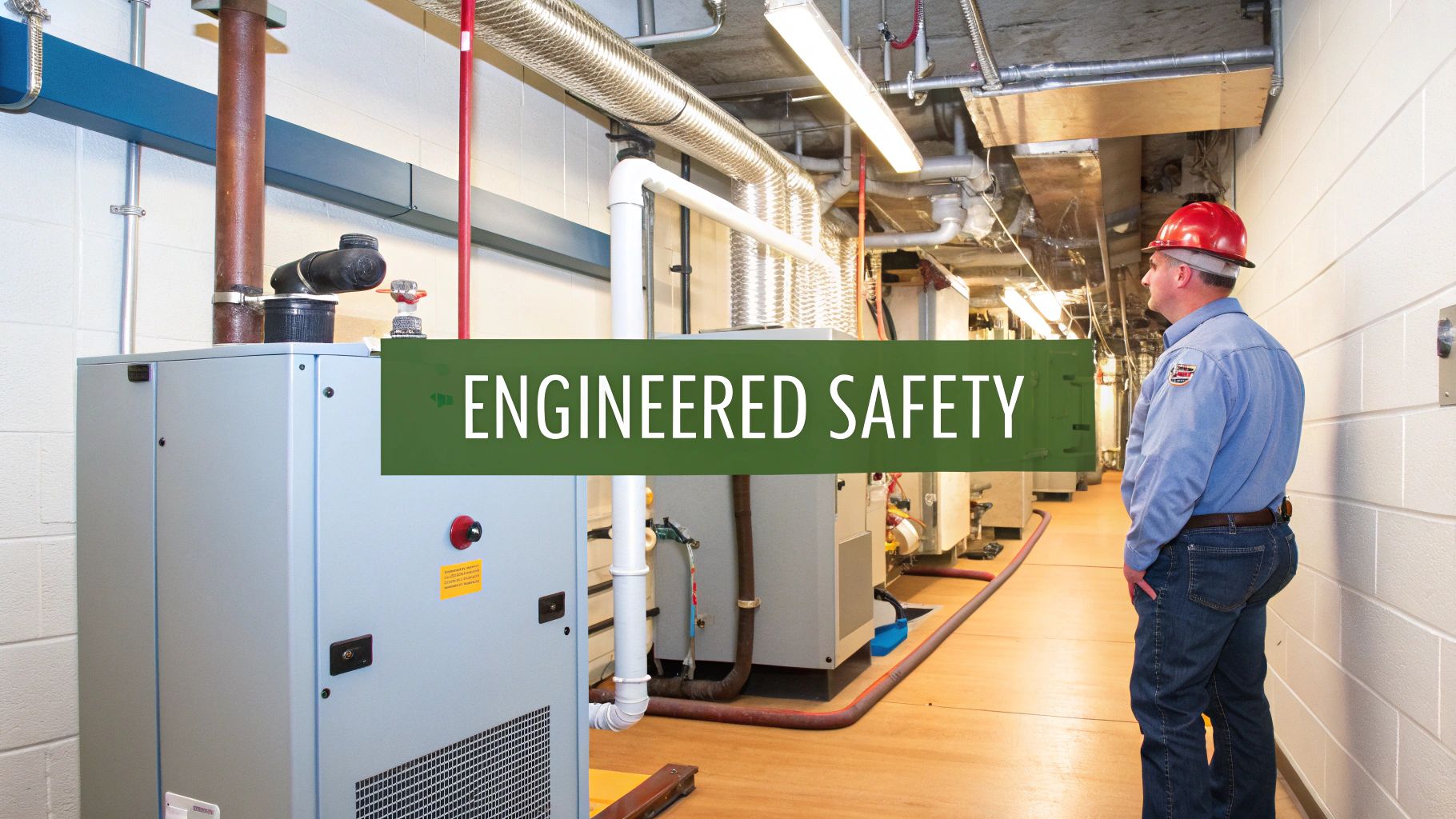
A man inspects critical system tanks and pipes in a modern hospital utility room.

Look past the patient rooms and surgical suites, and you'll find the true heart of a hospital: a massive, unseen network of critical systems. This is the building’s Mechanical, Electrical, and Plumbing (MEP) infrastructure. It's best to think of it as the facility's central nervous and circulatory systems combined—a complex web of pipes, wires, and ducts keeping everything alive and safe, 24/7.

These systems are anything but standard. A hospital's MEP infrastructure is built to support life-critical functions, often under extreme pressure. For any developer or owner, getting a handle on the sheer scale and cost of this hidden world is crucial. It can easily eat up a huge chunk of the construction budget and demands specialized expertise right from the start.

HVAC Systems That Do More Than Control Temperature

In a hospital, the Heating, Ventilation, and Air Conditioning (HVAC) system is a front-line defense in infection control. It's not just about keeping people comfortable. This system is engineered to maintain clinically mandated temperatures, humidity levels, and precise air change rates. Some areas, like isolation wings, may even require 100% fresh air intake with zero recirculation to stop airborne pathogens in their tracks.

These complex environmental controls are a core part of the hospital's infrastructure, and accurately projecting their cost is essential—often done using tools like Exayard HVAC estimating software. The system’s main job is creating specific pressure zones, which are absolutely non-negotiable for keeping patients safe.

Two great examples of this in action are:

  • Negative Pressure Rooms: Built for patients with contagious airborne illnesses, these rooms constantly pull air in and filter it before sending it outside. This simple principle ensures infectious particles can't escape into the hallways.
  • Positive Pressure Rooms: On the flip side, operating theaters and rooms for immunocompromised patients are pressurized to constantly push air out. This creates a sterile bubble, preventing contaminants from the surrounding areas from ever getting in.

The Unseen Lifelines: Medical Gas And Emergency Power

Tucked away inside the walls and ceilings is another lifeline: a dedicated network of pipelines delivering essential medical gases. These systems pipe oxygen, medical air, and vacuum suction directly to the bedside and into operating rooms. The codes governing their design are incredibly strict for one simple reason—failure is not an option.

Just as important is the electrical system’s resilience. A hospital simply has to stay running, even during a city-wide blackout. This demands a bulletproof emergency power setup, complete with massive generators and uninterruptible power supply (UPS) systems.

A hospital's emergency power system isn't just for the lights. It is legally required to support all life-sustaining equipment, from ventilators in the ICU to the surgical equipment in the operating room, without a moment's interruption.

Building in this level of redundancy is a major driver of cost and complexity. The electrical switchgear and generator plants required are massive, expensive, and need a significant amount of physical space planned into the building's footprint from day one.

Water Management And Specialized Plumbing

Finally, a hospital’s plumbing is worlds away from what you’d find in any other commercial building. It has to handle everything from the ultra-pure water required for labs and dialysis to the safe disposal of hazardous medical waste. These systems are designed with extensive backflow prevention to ensure there’s zero chance of cross-contamination between drinking water and waste streams.

Weaving all these intricate MEP systems together is a monumental challenge. It requires tight, constant coordination between architects, engineers, and contractors from the very first sketch. If you fail to plan for the spatial and structural needs of this hidden infrastructure, you’re setting yourself up for catastrophic budget overruns, crippling delays, and a final design that could compromise patient safety.

The Rules of the Game: Mastering Healthcare Codes and Regulations

Hospital architecture is a game played on a field defined by codes and standards. These aren't just bureaucratic red tape; they're the hard-won lessons from decades of medical practice, crystallized into rules that make healthcare facilities fundamentally safe, accessible, and ready for anything. For any owner or developer, getting a handle on this regulatory world isn't just a good idea—it's the only way to deliver a building that works.

Think of these regulations less as a checklist and more as the DNA of a successful hospital. They influence everything, from how wide a hallway needs to be for a gurney to pass a crash cart, to the specific fire-rating of a door separating an operating room from a corridor. Nail this from the beginning, and you avoid the nightmare of costly rework and delays in getting your doors open.

The Must-Know Codes and Standards

While the full library of codes can be intimidating, a few key documents are the foundation of nearly all hospital design in the U.S. The big one is the FGI Guidelines for Design and Construction. This is the go-to resource for minimum standards on everything from planning to building hospitals and clinics. It's so well-regarded that most states adopt it, either in full or with minor tweaks, as their legal standard.

Right alongside it is the Americans with Disabilities Act (ADA). This is non-negotiable. The ADA dictates that every corner of the facility—from the slope of the parking lot ramps to the height of a check-in counter and the layout of a patient bathroom—is usable by everyone. This isn't just about avoiding a lawsuit; it's about a core ethical commitment to providing equal access to care.

A rookie mistake is to treat code compliance like a final inspection item. The pros integrate these requirements into the schematic design from the very first meeting. Weaving FGI and ADA principles into the project from day one saves an incredible amount of time, money, and headaches later on.

Marrying Compliance with Green Building Goals

These days, smart design is all about hitting two targets with one stone: meeting strict regulatory demands while also pursuing ambitious sustainability goals. The good news is that these two objectives often go hand-in-hand. For example, modern energy codes practically demand the same high-performance building envelopes and efficient HVAC systems that are central to green building certifications like LEED.

This overlap creates a compelling financial argument for building green. A hospital designed for energy efficiency doesn't just shrink its carbon footprint; it also slashes its operating expenses for decades to come, which can mean millions in savings over the life of the building.

Here are a few practical examples of how this works:

  • High-Performance Glazing: Installing advanced windows that block summer heat and retain winter warmth helps you meet tough new energy codes. It also makes patients more comfortable and takes a huge load off your HVAC system.
  • LED Lighting and Controls: Shifting to smart lighting with occupancy sensors is a great way to meet energy efficiency requirements. The bonus? It can easily cut your lighting-related electricity costs by 50% or more.
  • Water-Saving Fixtures: Specifying low-flow faucets and toilets is often required by modern plumbing codes, but it also directly cuts your facility's massive water and sewer bills.
  • Durable, Healthy Materials: Choosing materials that are built to last and don't off-gas harmful chemicals (low-VOC) helps satisfy health and safety regulations while also improving indoor air quality—a huge win for both patients and green building credits.

In the end, navigating the web of healthcare regulations is about much more than just ticking boxes to avoid fines. It's a chance to build a smarter facility—one that's safer for patients, more functional for staff, and far cheaper to run. When you bake these requirements into the design from the start, you create a high-performing asset that will deliver value for years to come.

The Business Case For Hospital Development And Reuse

For any developer or property owner eyeing the healthcare space, one thing is clear: a hospital is as much a financial equation as it is a design marvel. You have to look past the blueprints and building codes to see the intricate business case—a delicate balance between massive upfront investment, long-term operational health, and profound community value.

Whether you're breaking ground on a new campus or breathing new life into an old building, the numbers are daunting. Hospitals are among the most expensive commercial projects to get built, largely because of the complex, often invisible infrastructure that makes them work. Specialized MEP (Mechanical, Electrical, and Plumbing) systems—think medical gas lines, redundant emergency power, and hospital-grade HVAC—chew up a huge slice of the budget.

These systems aren't optional extras; they're the lifeblood of the facility. They must be integrated perfectly from day one, which makes getting those estimates right early on absolutely crucial for keeping the project financially on track.

The Phasing Puzzle: Maintaining Operations During Construction

One of the biggest headaches in healthcare projects is trying to renovate or expand a hospital that can't simply close its doors. This is where a sharp project phasing strategy comes in. You have to break the entire construction process down into a series of manageable, carefully sequenced stages.

It’s a lot like performing surgery on the building itself. Every move has to be meticulously planned to cause the least possible disruption to patient care happening just a few feet away.

A typical phasing plan usually involves a few key steps:

  • Decanting: This is the process of temporarily moving a whole department to another part of the hospital or even into a modular unit outside.
  • Containment: We use heavy-duty physical barriers and negative air pressure systems to completely seal off construction zones. This is vital for controlling dust, noise, and vibration.
  • Sequenced Handovers: Once a section is finished, it's fully commissioned and tested. Only then do we move staff and patients in before we even think about starting the next phase.

This approach keeps the hospital running, but there's no sugar-coating it—it adds significant time, complexity, and cost to the project.

The real art of phasing is creating a series of self-contained construction "bubbles" inside a living, breathing hospital. It allows the facility to continue its life-saving work uninterrupted while the building literally evolves around it.

The Value of Adaptive Reuse: A Sustainable Strategy

While starting with a clean slate is tempting, the adaptive reuse of existing buildings presents a really compelling business case. Turning an old office building, a warehouse, or a dated medical facility into a modern hospital can be a smarter, faster, and more sustainable path.

History gives us some great perspective here. Back in Renaissance Florence, a hospital building boom was directly linked to the city's explosive growth. As the population grew, these institutions transformed from simple shelters into wealthy, powerful anchors of the urban landscape. It’s a perfect example of the deep-rooted connection between healthcare infrastructure and a thriving community. You can dig deeper into this fascinating connection and the origins of hospital architecture.

Today, adaptive reuse is the modern version of that story. By giving an old building a new purpose, developers can meet today's medical needs while preserving a piece of the community's character. It's an approach that sidesteps the huge carbon footprint of demolition and new construction and often allows you to tap into existing infrastructure. For a developer, it's a chance to build a forward-thinking healthcare asset that's both a nod to the past and a very shrewd investment in the future.

Common Questions About Hospital Architecture

If you're a developer, investor, or property owner stepping into the world of healthcare projects, you've probably got a few questions. Hospital architecture is its own beast, and this section is here to give you straightforward, practical answers to what we hear most often.

How Long Does It Take to Design a Hospital?

There's no cookie-cutter answer, but for a typical mid-sized hospital, you should plan on 18 to 24 months just for the design phase. That's before a single shovel hits the dirt. This window covers everything from the initial programming and high-level master planning all the way down to the fine-grained construction documents.

Why so long? It's a massive coordination effort. Architects have to work hand-in-glove with specialized MEP engineers, get constant feedback from clinical teams who will actually use the space, and navigate a maze of regulatory approvals. Trying to shortcut this phase is a recipe for expensive change orders and frustrating delays during construction.

What's the Most Expensive Part of Building a Hospital?

While the concrete and steel are significant, the real budget-buster in hospital construction is almost always the Mechanical, Electrical, and Plumbing (MEP) systems. You can expect these complex networks to eat up anywhere from 30% to 50% of your total construction cost—a much bigger slice of the pie than in a standard office or retail building.

Several things drive this high price tag:

  • Sophisticated HVAC: You're not just cooling a building. You're creating meticulously controlled environments, like negative-pressure rooms for infection control, which requires powerful and highly specialized air-handling equipment.
  • Medical Gas Lines: Hospitals need a dedicated plumbing system for life-saving gases like oxygen, medical air, and vacuum. It's an essential, non-negotiable utility.
  • Fail-Safe Power: When the power goes out, critical life-support machines can't. That means redundant generators and uninterruptible power supplies are an absolute must.

When you're putting together a pro forma for a hospital, seriously front-load the MEP budget. Underestimating this line item is one of the quickest ways for a healthcare development project to go off the rails financially.

Is It Better to Renovate an Old Hospital or Build a New One?

This is the million-dollar question, and the answer comes down to a tough cost-benefit analysis. On one hand, renovating an existing building—a form of adaptive reuse—can be cheaper and faster. If the building's structural "bones" are good, you get a huge head start. It's also a big win for sustainability, as you're saving tons of material from the landfill.

The catch is that older buildings often hide a hornet's nest of problems. Their infrastructure might be completely inadequate for today's high-tech medical equipment, or they might be a nightmare to bring up to current building codes. A new build, while more expensive upfront, gives you a blank canvas. You can design for perfect patient flow, seamlessly integrate the latest technology, and plan for future growth without being boxed in by an old layout. The best path forward really depends on the state of the old building, your site, the budget, and what you want the hospital to be in 10 or 20 years.


At Sherer Architects, LLC, we help owners and developers make these kinds of complex decisions every day. With our deep experience in commercial architecture, adaptive reuse, and historic preservation, we know how to transform challenging projects into valuable, lasting assets.

Let us help you put the pieces together.

Discover how our expertise can bring structure to your vision.

Categories
Uncategorized

Design of hospital: Principles for Healing and Patient Care

When we talk about the design of a hospital, we're not just talking about architecture. We're talking about a highly specialized discipline where every wall, window, and workflow has a direct impact on patient healing, staff effectiveness, and the facility's bottom line. The goal is to create a high-performance environment that marries clinical precision with a deeply human touch.

Modern hospital design is no longer about guesswork; it’s about using data to get better health outcomes, slash infection rates, and make the entire experience of giving and receiving care better for everyone involved.

The Blueprint for a Healing Environment

Doctor and designer reviewing blueprints in a modern hospital lobby, emphasizing healing through thoughtful design.

A hospital today is so much more than a building filled with medical gear. It’s a carefully orchestrated ecosystem built for one purpose: healing. The sterile, intimidating hallways of the past are giving way to spaces that feel welcoming, are easy to navigate, and actively contribute to recovery.

This whole shift is powered by a concept called Evidence-Based Design (EBD).

Think of EBD like a clinical trial for architecture. A doctor wouldn't prescribe a medication without solid research proving it works, right? In the same way, architects and developers now use hard data to make design choices proven to improve patient results. Every decision, from the view out a patient's window to the acoustics in a nurse's station, is backed by research showing it makes a real difference.

Key Pillars of Modern Hospital Design

A truly successful hospital design is built on three fundamental pillars. Get these right, and you create a facility that not only serves the community today but is ready for whatever comes next.

  • Patient Experience: This isn't just about comfy beds. It's about designing spaces that actively reduce stress, encourage rest, and empower patients. Things like single-patient rooms, plenty of natural light, and signage that makes sense aren't just nice-to-haves; they lead to higher satisfaction scores and measurably better clinical outcomes.

  • Operational Workflow: In healthcare, efficiency saves lives. A smart design streamlines the movement of staff, patients, and supplies. It’s about logical adjacencies that cut down on footsteps and flexible spaces that can easily adapt to a sudden influx of patients or the arrival of a new piece of medical technology.

  • Future-Proofing and Resilience: A hospital is a massive, long-term investment for a community. Its design must look ahead to anticipate new medical breakthroughs, potential pandemics, and evolving technology. That means building in modularity and robust infrastructure from day one, ensuring the facility remains a vital asset for decades to come.

For commercial developers and owners, putting money into thoughtful hospital design isn't just another line item on a budget—it's a core strategic investment. A well-designed facility directly leads to better patient safety, higher staff retention, and a much stronger financial position in a fiercely competitive healthcare market.

A Quick Look Back: How We Got Here

To really get a handle on what goes into designing a modern hospital, it helps to understand where we've been. The hyper-efficient, sterile facilities we're familiar with today didn't just appear overnight. They are the product of centuries of trial and error, often sparked by crisis and always chasing better outcomes for patients. The story of hospital architecture is really the story of medicine itself.

It all started back in the 19th century. Hospitals then were often scary places—overcrowded, stuffy, and rife with infection. Mortality rates were shockingly high. It was obvious that something drastic had to change, and that change came in the form of the Pavilion Plan. This wasn't just a new building style; it was a philosophy that treated the building itself as part of the cure.

Think of it like a collection of separate, smaller buildings (the "pavilions") connected by open-air walkways. The genius was in its simplicity: isolate infectious diseases and flood the wards with two of nature's best healers—fresh air and sunlight.

From Open-Air Pavilions to Standardized Towers

The Pavilion Plan was a massive leap forward. First appearing in the 1860s, this design literally saved lives by using natural ventilation to stop germs from spreading between wards. The results were dramatic, with mortality rates in some hospitals dropping from a staggering 30% to less than 10% by the turn of the century. The idea caught on fast; by 1875, more than 200 hospitals across the U.S. had adopted it.

Then, the mid-20th century brought a different set of priorities. After World War II, the name of the game was efficiency. In the U.S., the 1946 Hill-Burton Act poured money into building over 4,600 healthcare facilities. The catch? They had to be "modern," which meant centralized nursing stations and cookie-cutter room layouts designed to make staff workflows as smooth as possible. This is when we started moving away from the sprawling pavilion campuses and toward the compact, vertical hospital towers we see everywhere today. You can find more great historical context on this shift over at Healthcare Design Magazine.

This push for efficiency set the stage for the next major revolution in hospital design—one that would swing the focus right back to the patient.

The Shift to the Single-Patient Room

For a long time, putting multiple patients in a single large ward was just how it was done. It seemed cheaper on paper, but the hidden costs were huge: rampant infections, constant noise, and a complete lack of privacy. Eventually, data from Evidence-Based Design confirmed what common sense already told us: a shared room is a terrible place to recover.

The modern push for single-occupancy, or private, rooms is a fundamental change in thinking. It treats the patient room not just as a bed in a building, but as a critical tool in the healing process itself.

A private room is no longer a luxury amenity. It's a strategic investment with a clear ROI, impacting everything from patient safety and staff efficiency to the hospital's bottom line.

This isn't just a gut feeling; the numbers back it up. Switching to single-patient rooms has been shown to:

  • Slash Hospital-Acquired Infections (HAIs). It's simple: fewer people in a room means fewer germs to share, and it makes deep cleaning far more effective.
  • Improve sleep and lower stress. By getting rid of the noise and constant interruptions of a roommate, patients can actually rest and heal.
  • Boost patient privacy and communication. Patients and their families can have sensitive conversations with doctors without being overheard.
  • Increase patient satisfaction scores. In today's value-based care models, happy patients are crucial, as their satisfaction scores are often tied directly to how much a hospital gets reimbursed.

By giving each patient their own space, hospitals create a controlled environment that protects the vulnerable and promotes genuine recovery. This journey from wide-open wards to private rooms tells you everything you need to know about where hospital design is headed: it’s all about building for the individual.

Core Principles of Patient-Centered Design

Patient-centered design isn’t just some feel-good philosophy. It’s a practical, data-backed strategy that treats the physical environment as an active partner in the healing process. The whole idea is to shift away from a purely clinical, process-driven model toward one that puts the comfort, safety, and emotional well-being of patients—and the staff caring for them—first.

Let’s be honest, a hospital can be an intimidating, confusing place. Every single design choice, from the layout of a room to the type of lighting in a hallway, is a chance to lessen that stress.

The thinking here is straightforward: when patients feel safe, respected, and comfortable, their bodies can focus on healing. For developers and owners, this approach creates tangible returns, including shorter hospital stays, fewer medical errors, and better patient satisfaction scores, which are increasingly tied directly to financial reimbursements.

The Power of Single-Occupancy Rooms

If there's one design decision that has a massive impact on modern hospitals, it’s the shift to single-occupancy patient rooms. For decades, multi-bed wards were the norm, but the evidence is now overwhelming—giving patients their own private space is a game-changer. This isn't about luxury; it's a fundamental component of effective infection control and patient recovery.

Moving to private rooms, a trend that really took off after the 2000s, delivers a clear return on investment through improved safety, satisfaction, and day-to-day efficiency.

Let's look at the numbers. When Sutter Health's Eden Medical Center in California was built with 100% private rooms, they saw hospital-acquired infections (HAIs) drop by a staggering 42%. Even more, staff injuries from patient handling fell by 65%, and noise levels dipped by 5-7 decibels, helping patients get much-needed rest.

Across the U.S., hospitals making this switch have seen patient stays shorten by 10-16% and satisfaction scores jump by 20%. These aren't small figures—they translate into millions of dollars in annual reimbursements.

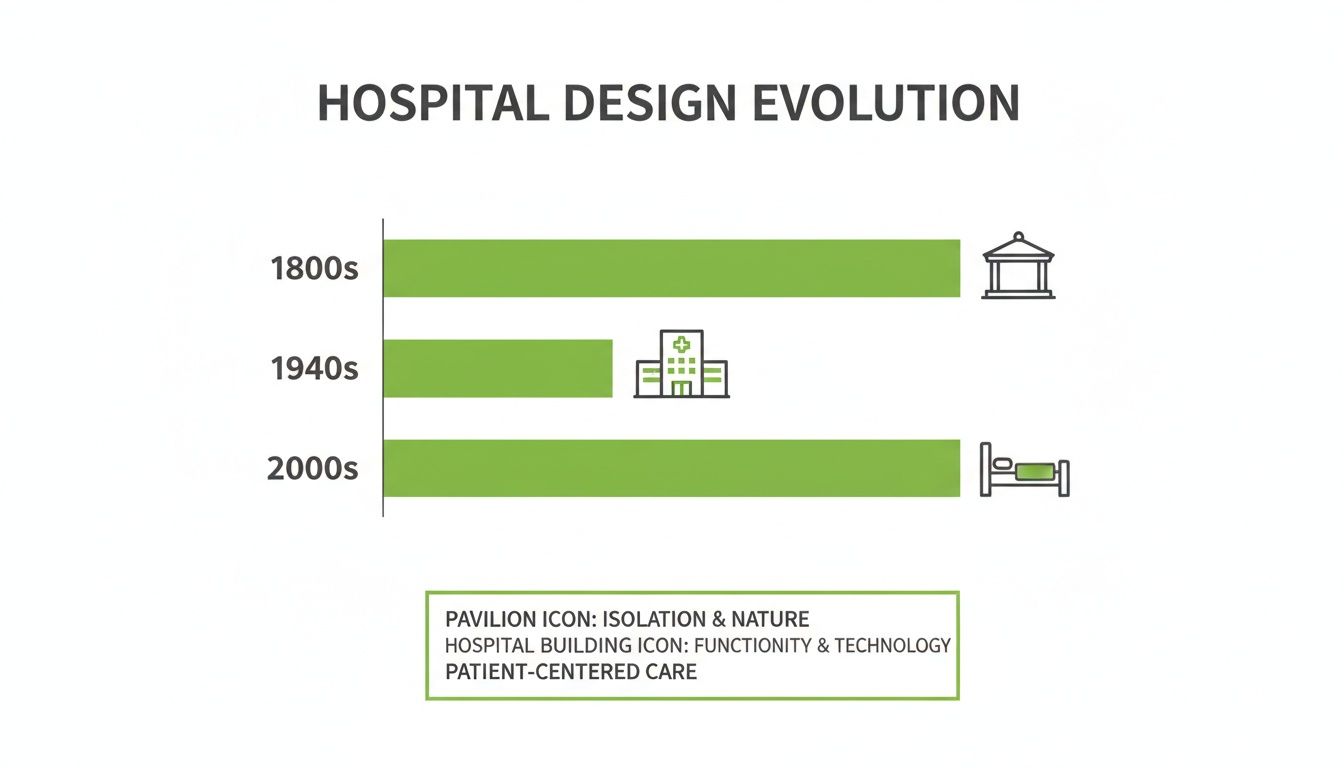
This chart shows just how far hospital design has come, landing on the modern, patient-focused model.

Infographic showing hospital design evolution from pavilions (1800s) to patient-centered care (2000s).

As you can see, the priorities have evolved from just basic sanitation and efficiency to a sophisticated model that puts the individual patient’s experience at the heart of everything.

The contrast between old-school multi-bed wards and modern private rooms is stark, and the data speaks for itself.

Impact of Single-Occupancy vs Multi-Bed Rooms

Metric Multi-Bed Ward (Baseline) Single-Occupancy Room (Improvement)
Hospital-Acquired Infections (HAIs) Higher risk of cross-contamination 40-50% reduction in transmission rates.
Patient Satisfaction Scores Lower due to noise and privacy issues 20% average increase in HCAHPS scores.
Average Length of Stay Longer recovery times 10-16% shorter stays, leading to higher bed turnover.
Staff Injuries Higher rates of handling-related injuries Up to 65% reduction in patient handling injuries.
Medical Errors Increased risk due to distractions Fewer errors from improved communication and fewer interruptions.
Patient Privacy & Dignity Severely compromised Fully supported, leading to better patient-doctor communication.

Ultimately, investing in single-occupancy rooms isn't just a capital expense; it's a strategic investment in better outcomes, lower operational risk, and a stronger financial position for the hospital.

Designing for Staff Efficiency and Safety

A patient-focused design is only half the story. It has to be a staff-focused design, too. A burned-out, stressed, or inefficient clinical team simply can't deliver top-tier care. The hospital's layout can either be a constant source of friction or a powerful tool for boosting workflow and morale.

Think of it like a Formula 1 pit crew, where every tool and every movement is optimized for speed and precision. That’s the kind of thinking we need to apply to hospital design.

By optimizing workflows and reducing physical strain, a well-designed hospital becomes a safer and more efficient workplace. This directly leads to lower staff turnover, fewer errors, and a higher quality of care.

Here are a few key strategies that make a real difference for staff:

  • Decentralized Nursing Stations: Instead of one massive, central hub, smaller substations are placed much closer to patient rooms. This simple change dramatically cuts down on the miles nurses walk each shift, freeing up valuable time for actual patient care.
  • Clear Sightlines: Smart layouts that give nurses a direct line of sight into patient rooms from hallways or workstations enable passive monitoring. This enhances safety without making patients feel like they’re constantly being watched.
  • Ergonomic Design: Every detail matters, from the height of countertops to the strategic placement of patient lifts. These considerations are all about reducing the physical wear-and-tear that leads to costly workplace injuries.
  • Staff Respite Areas: It’s crucial to provide dedicated quiet zones—away from the clinical chaos—where staff can decompress and recharge. These spaces are essential for preventing burnout and keeping the team focused and resilient.

Of course, a core part of any patient-centered design is implementing robust safety measures for everyone. This runs the gamut from slip-resistant flooring to highly specialized fixtures in certain environments. For instance, in behavioral health settings, a key focus is on enhancing patient safety with anti-ligature solutions in NHS hospital wards.

At the end of the day, an investment in a design that supports the staff is a direct investment in patient safety and the hospital’s long-term operational health.

Using Nature to Improve Healing and Efficiency

Hospital room with a patient in bed and a large window overlooking a vibrant green forest, promoting nature-based healing.

Bringing nature into a hospital isn't just about making the place look nice. It's a strategic, evidence-based approach called biophilic design, and it's a powerful tool for improving health outcomes, boosting staff morale, and delivering a real return on investment.

At its core, the idea is simple: people have an innate need to connect with the natural world. When you fulfill that need within a clinical setting, you can actually speed up the healing process.

This isn't some new fad. The core principles of biophilic design have been around for decades, built on a long-standing understanding of nature's therapeutic power. Today, it’s a non-negotiable part of modern hospital design. Natural light, views of greenery, and even natural materials aren't just amenities anymore—they're necessities that create a calmer, more restorative environment for everyone.

The Proven Link Between Nature and Recovery

The credibility behind this approach is built on a mountain of solid research. The real turning point was a landmark 1984 study by Roger Ulrich, which gave us the first hard proof of what many intuitively knew. His research showed that post-op patients who could see trees from their window recovered faster and needed less pain medication than those staring at a brick wall.

That study essentially launched the "Healing by Design" era, and countless analyses since have backed it up. The data is clear: exposure to nature directly correlates with better health outcomes.

By thoughtfully weaving elements of the natural world into the building itself, a hospital becomes an active participant in the healing process—measurably shortening recovery times and reducing patient stress.

For patients, the benefits are tangible and well-documented:

  • Reduced need for pain medication: Exposure to natural light and green views has been shown to lower patients' reliance on analgesics.
  • Shorter hospital stays: Patients in rooms with plenty of daylight and nature views are often discharged sooner.
  • Lower rates of depression: Natural light helps regulate our internal clocks, which can improve mood and combat feelings of depression and anxiety.

These patient benefits have a ripple effect, leading to higher satisfaction scores and bolstering the facility’s reputation in the community.

The Financial Case for Biophilic Design

For developers, contractors, and hospital administrators, here’s the bottom line: biophilic design pays for itself. The upfront investment in larger windows, healing gardens, or interior green spaces generates substantial, long-term financial returns. It’s a smart business decision, not just an aesthetic one.

This connection between nature and operational efficiency is well-documented. Natural light is now foundational to modern layouts because it delivers proven gains, making it highly attractive to developers focused on hitting energy codes and sustainability goals.

The numbers tell the story. Ulrich's 1984 study found patients with garden views recovered 8.5% faster and needed 22% fewer analgesics. Fast forward to 2023, and 85% of new U.S. hospitals are being built with 20-30% more glazing, leading to measurable drops in infections and stress. Facilities that adopt standards like the WELL Building Standard, which mandate daylight, can see huge energy savings; some have cut costs by $500,000 per year in a single tower just by optimizing window designs. You can explore more global medical trends on WTW's insights page.

The financial upside doesn't stop with energy savings. A work environment filled with natural light and views is proven to reduce staff stress and burnout. In an industry with notoriously high turnover, that translates directly to better employee retention and massive cost savings. A happier, more focused staff also makes fewer errors, which improves patient safety and lowers the risk of costly litigation. When you look at every design choice through a financial lens, biophilic design stands out as a high-impact, high-value strategy.

Designing for Compliance and Future Demands

Once you get past the patient-focused layouts and welcoming lobbies, you run headlong into the non-negotiable world of technical compliance. A modern hospital is one of the most intensely regulated buildings you can possibly build, wrapped in a thick web of codes that dictate everything from safety to patient privacy.

For anyone on the development or construction side, getting this part right isn’t just important—it’s everything. This regulatory framework is the building’s DNA, spelling out the rules for corridor widths, operating room air pressure, and thousands of other details. It's not about checking boxes; it's about building a facility that’s safe, legal, and functional from the moment the doors open.

Navigating the Regulatory Maze

In the United States, the conversation starts with the FGI Guidelines for Design and Construction of Hospitals. Think of these as the industry bible. They aren't just suggestions; most states adopt them directly into law, making them the baseline for the entire physical environment.

But FGI is just one piece of the puzzle. Several other major regulations are just as critical:

  • HIPAA (Health Insurance Portability and Accountability Act): Most people think of HIPAA in terms of digital records, but its privacy rules deeply influence physical design. How do you stop sensitive conversations from being overheard in a busy waiting area? You design for acoustic privacy, ensuring exam rooms are properly soundproofed and reception desks are positioned thoughtfully.
  • ADA (Americans with Disabilities Act): This federal law demands complete accessibility, which in a hospital setting goes way beyond just adding ramps. It means specifying patient lifts, guaranteeing clear floor space in every bathroom, and making sure counters and equipment can be used by everyone, regardless of their physical abilities.

Don't look at these codes as restrictions. See them as a blueprint for excellence. They give us a standardized, peer-reviewed playbook that ensures every new hospital is built to an incredibly high standard, protecting patients, staff, and the owner’s investment.

The Beating Heart of the Hospital: MEP Systems

If the building’s structure is its skeleton, then the Mechanical, Electrical, and Plumbing (MEP) systems are its vital organs. These incredibly complex networks are the hospital's beating heart, running 24/7 to support life-sustaining functions. It's no surprise they represent a huge chunk of the budget—often 30-40%—and getting them right is paramount.

The HVAC system alone is a perfect example. Understanding the different commercial HVAC system types is fundamental because in a hospital, it’s a primary weapon against infection. These aren’t your typical office building systems. They create negative pressure rooms to contain airborne pathogens and positive pressure suites to shield vulnerable patients in operating rooms.

Then there's the electrical grid, which needs to be designed for 100% redundancy. A power outage isn't an inconvenience; it can be a life-or-death event. This means robust emergency generators and uninterruptible power supply (UPS) systems must be ready to kick in instantly, keeping ventilators, surgical lights, and other critical gear running without a flicker.

Finally, the plumbing network includes a whole separate infrastructure for medical gases. This intricate system of pipes delivers oxygen, medical air, and suction directly to the patient’s bedside, making it as vital as the water supply itself.

Building for Tomorrow: Flexible and Resilient Design

A hospital built today needs to be ready to serve its community for the next 50 years. That’s a long time, and it demands a design that can adapt to new technologies and withstand the unexpected.

Future-proofing is all about designing for change. Instead of building rigid, single-use spaces, the smart move is to use modular components and universal room layouts. A room might be a standard patient room today but could be easily converted into a higher-acuity unit tomorrow with minimal disruption. This is achieved by planning for "soft spaces" (like offices) next to clinical areas for easy expansion and running oversized utility chases to accommodate future wiring and tech.

At the same time, resilient design focuses on keeping the hospital running during a crisis. Think of a natural disaster or a regional blackout. A resilient hospital can essentially become a self-sufficient island, with its own on-site water storage, robust backup power, and a structure built to handle extreme weather. It doesn’t just survive the event—it stays fully operational to care for the community when it’s needed most. This isn't a "nice-to-have" anymore; it's a core expectation.

The Strategic Value of Adaptive Reuse in Healthcare

When we talk about building hospitals, the conversation usually defaults to new, ground-up construction. But there’s a powerful, often-overlooked strategy that savvy developers are turning to: adaptive reuse. This is the art of transforming an existing building—maybe a struggling office complex, an empty big-box store, or even a warehouse—into a state-of-the-art healthcare facility.

For developers and owners, this is more than just a nod to sustainability; it’s a brilliant financial play. Adaptive reuse can slash project timelines by leapfrogging the often-painful entitlement and site prep stages. Buying an existing building is almost always cheaper than acquiring raw land and building from scratch, and you might even qualify for historic preservation tax credits. It's about seeing the untapped potential in a property and turning it into a vital community asset.

Overcoming Unique Design Hurdles

Of course, retrofitting a building for healthcare isn't a simple paint-and-carpet job. It comes with its own set of puzzles that require some serious expertise to solve. The biggest challenge, time and again, is the MEP (Mechanical, Electrical, and Plumbing) systems. A standard office building’s infrastructure just can’t handle the load of a medical clinic. You need specialized HVAC for infection control, dedicated medical gas lines, and beefy electrical systems with robust emergency backup power.

Then there’s the challenge of making the floor plan actually work for a clinical setting. You have to completely rethink a layout designed for cubicles or retail shelves to create smooth, logical pathways for patients and staff. This means creating smart adjacencies—like putting exam rooms near labs—and ensuring every inch meets strict HIPAA privacy rules and ADA accessibility standards.

The core task in adaptive reuse is to surgically insert the complex systems of a modern healthcare environment into the shell of a building designed for a completely different purpose, all while maintaining structural integrity and meeting rigorous codes.

Real-World Applications and Success

The beauty of adaptive reuse is its flexibility. It opens the door to some really creative solutions that meet specific healthcare needs. We see it working successfully all the time in these kinds of scenarios:

  • Office Building to Outpatient Clinic: A half-empty suburban office park is a prime candidate. The existing offices can be converted into exam rooms with relative ease, while larger conference rooms make perfect waiting areas or physical therapy gyms.
  • Big-Box Retail to Imaging Center: A former "big-box" store offers exactly what you need for an imaging center: vast, open floor plans and high ceilings. This makes it much easier to install bulky equipment like MRI and CT scanners, which have very specific structural and shielding requirements.
  • Warehouse to Ambulatory Surgery Center: Warehouses are fantastic for this. Their wide-open, column-free spaces are ideal for laying out operating rooms and sterile processing departments, and their strong frames can easily support heavy equipment and new MEP infrastructure.

At the end of the day, adaptive reuse is a strategy that perfectly marries financial pragmatism with community need. By reimagining our existing buildings, developers can bring essential healthcare services to a community faster and more affordably, breathing new life into old structures and creating incredible, lasting value.

Common Questions About Hospital Design

When you're staring down the barrel of a hospital project, the questions can feel endless. For developers, owners, and contractors stepping into this highly specialized world, a few key questions always seem to pop up. Let's break down some of the most common ones with practical answers to get you started on the right foot.

What Are the Biggest Cost Drivers in Hospital Construction?

Forget what you know about typical commercial builds. In a hospital, the lion's share of the budget—often 30-40%—gets eaten up by the incredibly complex MEP (Mechanical, Electrical, Plumbing) systems. We're not just talking about standard HVAC; this includes sophisticated air handling for infection control, a web of medical gas lines, and a robust electrical grid with non-negotiable emergency backup power.

Beyond the MEP, a few other big-ticket items will drive up your costs:

  • Heavy-duty medical equipment is a major factor. Things like MRI or CT scanners are not only expensive on their own, but they also demand serious structural reinforcement and sometimes even radiation shielding built right into the walls.
  • Interior finishes have to be tough as nails. Every surface must withstand harsh cleaning protocols and relentless wear while meeting strict infection control standards.
  • The building's structure itself needs to be beefier to handle the weight of all that equipment and designed with future changes in mind.

Getting a handle on these expenses early in the design phase is the single best way to keep the budget from spiraling out of control without cutting corners on safety or long-term function.

How Can Design Help a Hospital Adapt to Future Needs?

The secret is thinking in terms of flexibility and modularity. A well-designed hospital isn't a rigid, static monument; it's more like an adaptable platform built to handle decades of unpredictable change.

The real goal here is to create a building that can grow and change right alongside medical technology and community health demands, all without needing a complete—and completely unaffordable—overhaul every few years. That’s how you ensure the building remains a valuable asset for the long haul.

This means using smart strategies like universal room layouts that can shift purpose with minimal effort—turning a standard patient room into a higher-acuity ICU space, for example. It also involves strategically placing "soft space," like administrative offices, next to clinical departments so they can easily expand when needed. Simple but brilliant tactics like using modular wall systems and designing oversized utility corridors for future tech are also game-changers.

What Is the First Step in Planning a Hospital Project?

Before you even think about breaking ground, the most critical step is deep-dive pre-design planning and programming. This is the foundation upon which everything else is built, and getting it right is the best predictor of a successful project.

This phase is all about assembling your core team—architects, engineers, clinical staff, and facility managers—to hammer out the project's goals, scope, and functional needs in painstaking detail. You'll run feasibility studies, analyze the site or existing structure, forecast patient numbers, and map out how every department needs to connect and flow. A rock-solid programming phase is your best insurance against costly changes down the line, ensuring the final building truly works for the healthcare provider.


At Sherer Architects, LLC, we thrive on turning these complex requirements into healthcare environments that are functional, beautiful, and built to last. Whether you're planning a new facility from the ground up, a strategic renovation, or an adaptive reuse project, our team knows how to navigate every stage. We ensure your investment delivers real value for decades to come.

Learn how we can bring structure to your vision at https://shererarch.com.

Categories
Uncategorized

Designing a Hospital A Practical Guide for Developers

Building a hospital is a monumental task, and the most critical work happens long before the first shovel hits the dirt. This initial strategic planning phase, which includes a deep-dive feasibility study, thorough market analysis, and meticulous space programming, is where the project's success is truly decided.

Get this part right, and you set the stage for a facility that meets clinical demands and financial targets. Skimp on it, and you're paving the way for costly rework and operational headaches down the line.

Building the Foundation Before Breaking Ground

The fate of a hospital project is sealed in its early planning. A rushed pre-design phase is a classic recipe for budget blowouts, inefficient workflows, and a building that just doesn't serve the community it was meant for. I like to think of this stage as mapping the hospital's strategic DNA—every decision made here will ripple through the entire design and construction process.

This foundational work ensures the building is a direct response to hard data, not just gut feelings or assumptions. For any developer or owner, this is your single most powerful tool for mitigating risk.

Getting the Market Analysis Right

Before a single blueprint is sketched, you have to know your market inside and out. A proper market analysis digs into the specific healthcare needs of the community you plan to serve. It's about finding out which service lines are desperately needed and which are already well-covered. This goes way beyond simple demographics; we’re talking about a forensic look at competitor services, local health trends, and even the dominant insurance providers in the area.

For example, your analysis might uncover an aging population with a high rate of heart disease but no dedicated cardiac center for miles. That’s a clear signal to prioritize a top-notch cardiology department, complete with cath labs and a cardiac ICU. On the flip side, it might show the area is saturated with maternity wards, steering you away from that investment.

You need to be evaluating data points like:

  • Demographic Trends: Look at age, income, and population growth projections. This helps you see where the demand will be in 5, 10, or 20 years.
  • Competitor Analysis: Literally map out who is doing what. Where are the gaps in care that you can strategically fill?
  • Community Health Needs Assessment (CHNA): Public health data is a goldmine. It tells you the most prevalent diseases and health issues your future patients are facing.

This data-first approach shifts the project from a speculative venture to a strategic one. It ensures you’re not just building a hospital correctly, but that you’re building the correct hospital for that specific market.

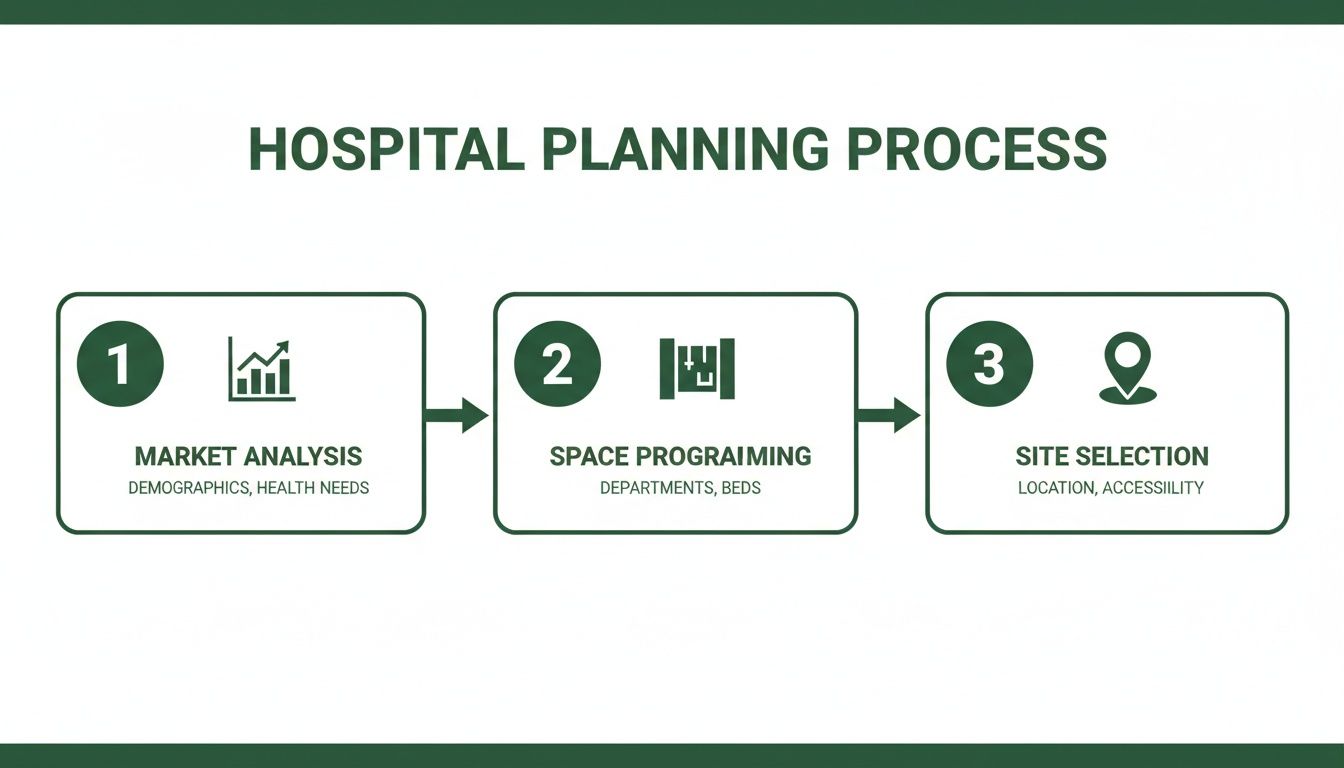
The process flows logically from understanding the market to defining the space, and finally, to picking the right spot.

Infographic showing a three-step hospital planning process: market analysis, space programming, and site selection.

As you can see, each step builds on the last, creating a rock-solid plan for the entire project.

From Services to Square Feet: The Art of Space Programming

Once you know which clinical services you'll offer, the next job is space programming. This is where we translate those services into a highly detailed list of every single room, its required size, and how it needs to relate to adjacent spaces. Think of it as the project's architectural brief—a document that quantifies the entire facility, foot by foot. You simply can't build a functional hospital without it.

A detailed space program is the bridge between your strategic vision and the physical design. It puts numbers to the hospital's operational needs, giving the architect a precise roadmap and preventing the kind of scope creep that kills budgets and timelines.

Let’s take an emergency department. A program won’t just have a line item for "ED." It will break it down into the exact number of trauma bays, triage rooms, and standard exam rooms. It will specify support spaces like nurse stations, medication rooms, and decontamination showers. This painstaking detail is what creates a department that can handle a crisis smoothly, rather than descending into chaos. It's the difference between a building that fights your staff and one that works for them.

Navigating the Labyrinth of Healthcare Codes

Two architects review blueprints and a large building model, collaborating on a design project.

Designing a hospital isn't just about architecture; it's about navigating a thicket of regulations. One wrong turn can lead to brutal delays and redesigns that blow up your budget. This isn't a simple box-ticking exercise. Getting it right means truly understanding the web of codes governing everything from how wide a corridor needs to be to the specifics of air filtration in an operating room.

Think of it as a layered puzzle. You have national standards, state-specific health department rules, and local zoning ordinances all piled on top of each other. They don't always play nicely together, and the real skill is in figuring out how to satisfy all of them from the very start.

The Key Players in Regulation

You’ll be answering to several different governing bodies, and each has its own rulebook and enforcement style. The Facility Guidelines Institute (FGI) is the big one, providing the foundational standards for most healthcare facilities across the U.S. Their guidelines are your starting point for patient room sizes, surgical suite layouts, and more.

But FGI is just the beginning of the story. Your state’s Department of Health will have its own licensing requirements that often add to or tweak the FGI standards. Then, local municipalities layer on their own building, fire, and zoning codes. It's a classic multi-jurisdictional headache.

The single biggest mistake a development team can make is assuming one codebook covers it all. You have to meticulously cross-reference state health mandates, FGI guidelines, and local ordinances to build a single, bulletproof compliance strategy.

For example, FGI might set a minimum for air changes per hour in an OR. Your state could demand a higher standard or specific filtration levels. Then, the local fire marshal will dictate the sprinkler systems and escape routes for that same room. You have to hit all three targets.

Common Hurdles and How to Clear Them

Some areas of hospital design are just magnets for compliance issues. Fire and life safety regulations are notoriously complex because the rules shift based on how a space is used. The requirements for an inpatient wing, an outpatient clinic, and a business office in the same building are all wildly different.

Ventilation is another minefield. Operating rooms, isolation rooms, and labs have incredibly strict rules for air pressure, filtration, and circulation to stop infections from spreading. These systems can't be an afterthought; they have to be baked into the architectural and structural plans from day one.

It’s also critical to get the electrical safety regulations right. For instance, knowing the ins and outs of the NEC tap rule for safe electrical wiring is essential for ensuring your power distribution systems are safe, compliant, and reliable.

Keep a close eye on these common trouble spots:

  • Hazardous Materials: The rules for storing and handling medical gases, chemicals, and radioactive materials are unforgivingly precise.
  • Accessibility: Meeting basic ADA standards is the floor, not the ceiling. Genuinely accessible design anticipates the needs of patients with a wide range of mobility challenges.
  • Medical Equipment: Heavy-duty imaging equipment like MRIs and CT scanners needs serious structural, electrical, and plumbing support that must be planned for well in advance.

Working with the Authorities Having Jurisdiction

The best way to manage all this complexity is to stop thinking of regulators as adversaries. The Authorities Having Jurisdiction (AHJs)—the state and local officials who sign off on your plans—should be your partners.

Get them involved early. Schedule preliminary review meetings during the schematic design phase. Walk them through your approach and ask for their interpretation of any gray areas in the code. This kind of open communication can spot a problem months before it becomes a change order during construction. A good relationship built on transparency is your most valuable asset for a smooth approvals process.

2. Designing Clinical Spaces for Peak Performance

Let's get to the heart of the matter: the clinical core. This is where the life-and-death decisions happen, and the physical design of these spaces has a direct, measurable impact on patient outcomes and staff efficiency. It's not just about aesthetics. A poorly planned clinical area creates constant friction, leading to medical errors and burnout. A thoughtfully designed space, on the other hand, becomes a silent partner in delivering exceptional care.

We're going to walk through four critical zones: the Emergency Department (ED), Operating Rooms (ORs), Imaging Suites, and Inpatient Units. Each has its own rhythm and unique demands, but they all share a fundamental need for clear circulation, smart adjacencies, and layouts that actually support the complex work happening within them.

The Modern Emergency Department

Most people think of the ED as the hospital's "front door," but from a design perspective, it's more like a high-stakes sorting facility running 24/7 under immense pressure. One of the most effective strategies I’ve seen is creating completely separate entrances for walk-in patients and ambulance arrivals. It's a simple move, but it immediately de-escalates chaos, allowing staff to triage less urgent cases without being swamped by critical emergencies rolling in.

Inside, the best EDs are broken down into distinct zones or "pods" based on patient acuity. You'll have dedicated areas for trauma, acute care, and a "fast-track" for minor issues. This model creates parallel workflows, allowing for more focused staffing and preventing a patient with a sprained ankle from tying up a bed needed for someone having a heart attack. It’s all about managing the inherent unpredictability of emergency medicine.

Optimizing the Surgical Suite

When you step into the world of operating rooms, sterility is king. The design absolutely must create an uncompromising barrier between clean and dirty pathways. A time-tested and highly effective layout is the sterile corridor system. It's a one-way street: sterile supplies and surgical teams enter the OR from a clean side, while all soiled materials and post-op patients exit through a separate, non-sterile corridor on the other.

This one-way flow is the bedrock of infection control. It also forces careful planning of all support spaces. For example, the Sterile Processing Department (SPD)—where every instrument is meticulously cleaned and sterilized—needs a direct, secure connection to that sterile core to maintain the integrity of the whole system.

The physical layout of a surgical suite is a direct expression of its infection control philosophy. Designing for a clear separation between sterile and non-sterile zones isn't a recommendation; it's a fundamental requirement for patient safety.

The Rise of Outpatient Services

One of the biggest shifts shaping hospital design right now is the massive migration from inpatient to outpatient care. So many procedures that once required an overnight stay are now done on a same-day basis, and this has profound implications for how we plan and allocate space.

This shift is a dominant force in healthcare architecture. In fact, for many health systems, outpatient revenue now equals or even exceeds inpatient revenue. This reality is forcing a total reconfiguration of facilities to better support same-day surgery, infusion centers, and advanced imaging. We're seeing new hospital projects reduce dedicated inpatient beds by 10–30% compared to older facilities, while dramatically increasing the number of procedure bays and observation areas. For a deeper look into this industry-wide trend, check out SmithGroup's detailed health forecast.

What does this mean for design? Flexibility is everything. A pre-op bay might need to function as a post-anesthesia care unit (PACU) during peak hours. Rooms have to be adaptable, capable of handling different procedures without a major overhaul. That requires building in robust infrastructure from day one—more medical gas outlets, more data ports, and flexible power options are non-negotiable.

Designing Patient-Centered Inpatient Units

After a procedure, the inpatient unit is where recovery begins. Modern design has thankfully moved away from those long, sterile institutional corridors. The focus now is on more manageable, human-scaled layouts. A popular and effective model is the decentralized nurse station, which places smaller work areas directly between small groups of rooms.

This simple change brings nurses physically closer to their patients, cutting down on wasted steps and improving direct observation. It also fosters a much quieter, calmer environment by breaking up the constant hustle of a large, central station.

Other key features we always build into our inpatient unit designs include:

  • Family Zones: Carving out dedicated space in the patient room for family members to sit, work, or rest comfortably. They are part of the care team.
  • Same-Handed Rooms: This is a big one. We design all rooms with the exact same layout—bed on the left, bathroom on the right, for example. This standardization dramatically reduces the risk of medical errors because staff instinctively know where to find everything, especially in a code-blue emergency.
  • Views and Natural Light: It's not a "nice-to-have." Ample windows with views of nature have been clinically shown to speed recovery times and lower stress. Orienting rooms to maximize daylight is a simple but powerful tool in the healing process.

Ultimately, designing a hospital’s clinical core is like solving a massive, three-dimensional puzzle of adjacencies, workflows, and future-proofing. When you get it right, you create an environment where caregivers can perform at their best and patients can heal in safety and comfort.


A critical piece of that puzzle is getting the departmental adjacencies right from the start. Placing departments that work together frequently next to each other saves precious time in transporting patients and equipment, which can be life-saving in an emergency.

Here's a look at some of the most critical adjacency pairings we prioritize in our planning.

Clinical Adjacency Planning Priorities

Primary Department High-Priority Adjacency Rationale for Proximity
Emergency Department (ED) Imaging (CT, X-ray), Lab Services Immediate access to diagnostic tools is crucial for rapid triage and treatment of trauma and acute cases.
Operating Rooms (OR) Sterile Processing (SPD), PACU Ensures a sterile instrument supply chain and facilitates smooth, safe patient transfer before and after surgery.
Intensive Care Unit (ICU) Surgical Suite, ED Allows for quick transfer of critically ill patients from surgery or emergency intake to intensive monitoring and care.
Labor & Delivery Neonatal ICU (NICU), OR Co-locating these services provides immediate access to specialized care for high-risk newborns and emergency C-sections.
Cardiology Catheterization Lab, Imaging (MRI/CT) Streamlines the diagnostic-to-treatment pathway for cardiac patients, reducing transport time during critical events.
Oncology/Infusion Pharmacy, Laboratory Close proximity to the pharmacy is essential for the timely and safe preparation of chemotherapy drugs.

Thinking through these connections early in the schematic design phase prevents major workflow headaches and operational inefficiencies down the road. It’s about designing for movement and logic, not just for static rooms on a floor plan.

Engineering for Safety and Long-Term Value

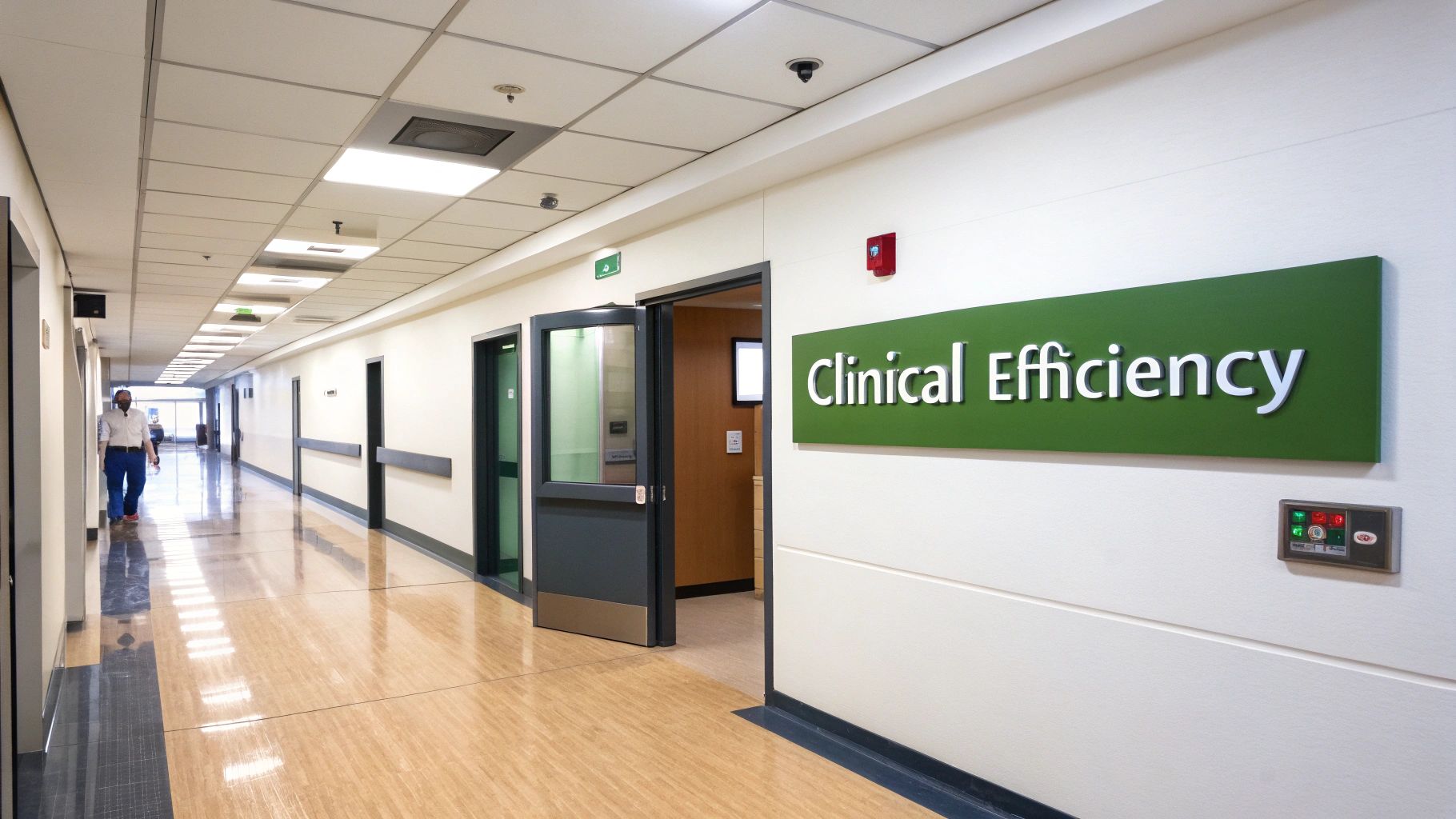
A brightly lit hospital hallway featuring a green 'Clinical Efficiency' sign and a person walking.

Great architecture and smart clinical layouts get a lot of attention, but a hospital’s real guts—its resilience and safety—are engineered deep within the walls. The mechanical, electrical, and plumbing (MEP) systems are the facility's lifeblood. This complex network is what truly dictates everything from patient recovery rates to the long-term operational budget.

For any developer or owner, making the right engineering calls upfront is one of the smartest ways to bake long-term value into the asset. We're not just talking about keeping the lights on. These systems are an active, critical part of the healing environment.

Mastering Air Quality for Infection Control

In a hospital, the air itself is a medical instrument. This is where Indoor Air Quality (IAQ) moves from a "nice-to-have" to a core design principle. Your HVAC system is the first line of defense against healthcare-associated infections (HAIs), which have devastating consequences for patients and providers alike.

The entire game is about precise control over air pressure, filtration, and circulation. For example, sensitive areas like operating rooms or protective units for immunocompromised patients must maintain positive air pressure. This means the pressure inside is slightly higher than outside, so when a door opens, clean, filtered air pushes out, keeping contaminants from drifting in.

On the other hand, airborne infection isolation rooms demand the opposite: negative air pressure. Here, the pressure is lower inside the room. This ensures that when the door is opened, any contaminated air is pulled into the room and safely exhausted, protecting the rest of the hospital. Pulling this off requires a meticulously balanced and sophisticated HVAC system.

The Role of Filtration and Air Changes

Filtration is another non-negotiable. And we’re not talking about the filters you buy at the hardware store. Healthcare facilities depend on High-Efficiency Particulate Air (HEPA) filters, which are engineered to capture 99.97% of airborne particles as small as 0.3 microns. They're absolutely essential in sterile environments for pulling bacteria, viruses, and other pathogens right out of the air.

Just as critical is the concept of Air Changes per Hour (ACH). This metric tells you how many times the entire volume of air in a room is swapped out with fresh, filtered air every hour. The demands vary dramatically by space:

  • Standard Patient Rooms: Typically require a minimum of 6 ACH.
  • Operating Rooms: Need a much higher rate, often 20 ACH or more, to quickly clear any contaminants.
  • Isolation Rooms: Require at least 12 ACH to ensure effective containment and safety.

Thinking about MEP systems solely in terms of upfront cost is a critical mistake. These systems represent a massive portion of a hospital's long-term operational budget. Investing in high-efficiency equipment and smart design from day one is one of the most effective ways to reduce lifecycle costs and boost the asset's overall financial performance.

Building Resilient Infrastructure

Beyond air quality, a hospital's core infrastructure must be designed for absolute, bulletproof reliability. Failure is simply not an option. That means engineering for redundancy in every key system.

Take the medical gas system, for instance—the network that delivers oxygen, medical air, and vacuum to patient bedsides. It must have multiple backups and alarms that instantly alert staff to any pressure drops.

The same goes for emergency power. Hospitals are required to have backup generators powerful enough to run life-support systems, surgical suites, and critical monitoring equipment for an extended time during an outage.

Water is another weak point if not planned for. The design must include a strategy for maintaining a supply of potable water during a municipal service interruption, often through large on-site storage tanks. This is the kind of resilient infrastructure that allows a hospital to keep saving lives when external utilities go down.

Hospitals are notorious energy hogs, but that consumption also creates a huge opportunity. A 300,000-square-foot hospital that manages to cut its energy use by 40% could save anywhere from hundreds of thousands to over a million dollars a year. This makes investing in high-efficiency systems a powerful financial move, not just an environmental one.

Adaptive reuse strategies, like those we champion at Sherer Architects, can push sustainability even further by extending a building's life and cutting embodied carbon by up to 20-40% versus new construction. You can dig deeper into these trends in the 2025 Hospital Construction Survey.

Getting the Project Built: Delivery Models and Financial Planning

An engineer in a hard hat inspects machinery in a facility with 'ENGINEERED SAFETY' text.

This is where the rubber meets the road. All the meticulous planning and brilliant design in the world won't matter if the project stumbles on a shaky financial foundation or gets bogged down by the wrong delivery method. For developers and owners, turning that vision into a physical, functioning hospital boils down to mastering the numbers and the team structure.

An elegant design is just a pretty picture if the budget is a fantasy or the delivery model creates conflict instead of collaboration. This phase is all about managing risk and making smart decisions that safeguard your investment for decades to come.

Building a Bulletproof Hospital Budget

A hospital budget is a different beast entirely from other commercial projects. The complexity is immense, and it’s easy to get fixated on the obvious hard costs—the concrete, steel, and labor—and completely underestimate everything else.

The real budget-busters are often hiding in the soft costs. From my experience, these can easily swell to 25-35% of your total project cost. If you don't account for them accurately from the very beginning, you’re setting yourself up for a world of financial pain down the line.

A truly comprehensive budget has to cover a lot of ground:

  • Professional Fees: This isn't just the architect and primary engineers. Think about the army of specialty consultants you'll need: medical equipment planners, acousticians, IT infrastructure experts, and more.
  • Permitting and Approvals: The fees and time required to navigate state health departments and local jurisdictions are significant. Don't treat this as an afterthought.
  • Medical Equipment (FF&E): Furniture, fixtures, and especially the high-tech medical equipment are a massive capital line item. We're talking about everything from hundreds of patient beds to multi-million-dollar MRI and CT scanners.
  • Contingency Funds: This is non-negotiable. A healthy contingency, typically in the range of 5-10% of total construction costs, is your safety net for the inevitable surprises and changes that pop up during construction.

Choosing the Right Project Delivery Model

How you structure the relationship between the owner, designer, and contractor will fundamentally shape your project's outcome. The old-school Design-Bid-Build approach, where you finish the design completely before hiring a contractor, is often slow and can create an adversarial "us vs. them" dynamic.

In the world of complex healthcare projects, more collaborative models are quickly becoming the standard. They just make more sense. Bringing everyone to the table early aligns goals and fosters a problem-solving mindset from day one.

The delivery model you choose is a strategic decision that shapes the entire project dynamic. For a complex build like a hospital, collaborative models that bring the contractor on board early are almost always superior for managing costs, schedule, and risk.

Let's look at two of the most effective alternatives:

  • Design-Build: Here, you sign a single contract with one entity that handles both design and construction. This single point of responsibility is a game-changer. It streamlines communication, slashes change orders, and can seriously compress the project timeline.
  • Integrated Project Delivery (IPD): This is the ultimate team sport. The owner, architect, and contractor all sign a multi-party agreement, sharing both the risks and the rewards. IPD drives incredible transparency and teamwork, making it perfect for the most complex or fast-tracked hospital projects.

The trend is undeniable. The U.S. hospital construction market, which hit an estimated $34.6 billion in 2025, is heavily shifting toward these collaborative methods. In fact, industry analysis suggests that design-build will account for about 47% of construction spending by 2028, largely because it can accelerate project delivery by 10–25%. If you want to dig deeper into these trends, you can find additional hospital construction insights on ibisworld.com.

The Financial Case for Resilience

A smart financial plan doesn't just stop on opening day. It has to look decades into the future and account for the hospital's long-term resilience. A facility that can’t keep its doors open during a hurricane, power grid failure, or the next pandemic is a fragile and deeply flawed asset.

Investing in resilience means hardening your facility against predictable threats. This could mean elevating critical MEP equipment above the flood plain, engineering the structure for higher wind loads, or building robust on-site power generation and water reserves.

Yes, these measures can add 5–15% to the initial construction cost. But the ROI is crystal clear. You're buying an insurance policy against catastrophic operational downtime and the staggering financial losses that follow. It’s an investment that protects revenue, staff, and the community when disaster strikes, ensuring your hospital can fulfill its core mission no matter what.

Common Questions About Designing a Hospital

Diving into a hospital project for the first time? It's natural to have questions. In my experience, a few key queries always seem to pop up early on. Let's tackle them head-on, so you can move forward with a clearer picture.

How Long Does The Hospital Design Process Typically Take?

You're looking at a design phase of roughly 12 to 24 months from the very first programming meeting until you have a set of construction-ready documents in hand. Of course, that's a wide range, and the final timeline really depends on the hospital's size, complexity, and how many specialty services you plan to include.

This period breaks down into the usual stages: schematic design, design development, and finally, the nitty-gritty construction documents. But it's the external factors that often stretch the schedule. Things like state regulatory reviews or navigating a tricky Certificate of Need (CON) process can easily tack on several extra months.

One way to potentially tighten this up is with a more integrated project delivery method. A design-build approach, for instance, can let design and early construction phases overlap, shaving valuable time off the total project duration.

What Is The Biggest Design Mistake To Avoid?

Hands down, the costliest and most frequent error I see is rushing the pre-design planning.

When a team jumps into schematic design without a solid, rigorously vetted space program and a real understanding of clinical workflows, it's a recipe for disaster. Why? Because every single change order made during construction is exponentially more expensive than a change made on paper.

Another common blind spot is failing to grasp the sheer volume required for all the MEP (mechanical, electrical, plumbing) systems. These aren't just pipes and wires; they are the hospital's lifeblood and can easily eat up 25-30% of the building's total volume. If you don't account for that massive footprint from day one, you’ll find yourself in a constant battle for space, forcing costly architectural compromises down the line.

Insufficient pre-design planning is the single most reliable predictor of budget overruns and operational headaches. The time and resources invested in meticulous upfront programming will pay for themselves many times over throughout the project's life.

How Can We Future-Proof A New Hospital Design?

Future-proofing isn't about predicting the future; it's about designing for flexibility. Healthcare delivery is always evolving, technology gets upgraded, and patient demographics shift. A smart building needs to adapt without requiring a complete teardown and rebuild.

Here are a few strategies we always build into our projects:

  • Embrace Modular and Universal Designs: By creating standardized room layouts, you build in agility. An exam room can be converted into a consultation space, or an office can become a small treatment room with minimal fuss.
  • Plan with "Soft Space": This is a simple but powerful concept. We deliberately place areas with simpler infrastructure—like administrative offices—right next to high-revenue clinical zones. When it's time to expand your OR suite or imaging department, you're knocking down drywall, not relocating major plumbing stacks.
  • Oversize Your Core Infrastructure: It’s far cheaper to build in extra capacity now than to add it later. Designing your MEP, IT, and structural systems to handle future technologies and higher patient loads gives you room to grow without a massive capital expense.

What Role Does Adaptive Reuse Play In Healthcare Development?

Adaptive reuse has become an incredibly important tool for health systems. It's a smart way to expand services quickly and manage costs. We're seeing more and more clients convert existing structures, like old office buildings or even big-box retail centers, into outpatient clinics, ambulatory surgery centers, or specialty care facilities.

The big win here is speed. It's almost always faster than ground-up construction.

But the benefits don't stop there. This approach is also inherently more sustainable. You reduce embodied carbon by keeping the original structure, you minimize demolition waste, and you can significantly lower the initial capital investment. For a healthcare provider, it's a powerful way to establish a footprint in a new community while breathing new life into an existing building.


The journey from an idea to a fully functioning hospital is incredibly complex. But with the right architectural partner, it can be a smooth and profitable one. At Sherer Architects, LLC, we specialize in guiding owners through every stage of commercial design, adaptive reuse, and historic preservation. We're here to help you solve the puzzle, aligning every piece to deliver a beautiful, enduring, and successful project. Learn how we can bring structure to your vision at https://shererarch.com.