
People often use the terms "interior architecture" and "interior design" interchangeably, but they're fundamentally different disciplines. Think of it like this: one professional reshapes the structural bones of a building, while the other perfects its aesthetic skin.
Interior architecture digs deep into structural integrity, building systems, and how the volume of a space works. Interior design, on the other hand, is all about the look, feel, and function within those spaces once they're defined.
Clarifying Core Professional Roles
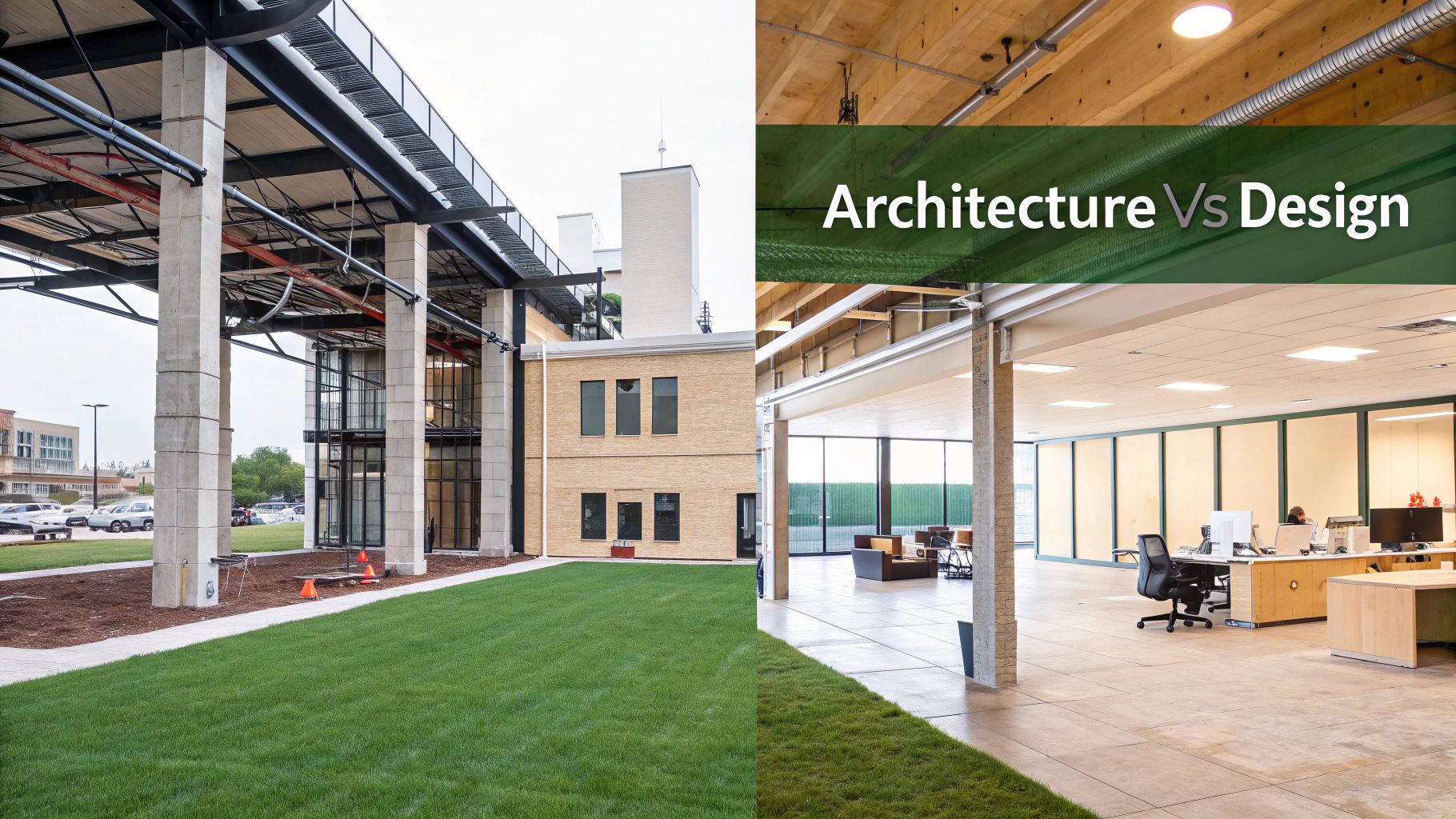
Getting this distinction right is absolutely critical for any commercial project. While these pros often work together, their primary responsibilities, qualifications, and the scope of what they do are worlds apart. Making the right choice from day one ensures your project isn't just beautiful but also structurally sound, legally compliant, and perfectly aligned with your business goals.
The demand for these skills is undeniable. The combined global Architecture and Interior Design market was valued at around USD 1.3 billion in 2023 and is expected to climb to about USD 2.44 billion by 2032. That growth shows just how much businesses rely on experts to create spaces that are both practical and inviting.
At a Glance Interior Architecture vs Interior Design
To really nail down the differences, this table offers a quick breakdown of their core functions. It's a handy cheat sheet for understanding where their expertise lies.
| Aspect | Interior Architecture | Interior Design |
|---|---|---|
| Primary Focus | The structural and technical "bones" of an interior. | The aesthetic and functional "skin" of an interior. |
| Core Skills | Structural engineering, building codes, spatial planning. | Color theory, materials, furniture selection, styling. |
| Typical Changes | Moves walls, alters layouts, integrates building systems. | Selects finishes, arranges furniture, designs lighting. |
| Legal Authority | Can sign off on construction drawings and permits. | Typically cannot approve structural modifications. |
The key takeaway is that interior architects create the space, while interior designers make that space livable and functional. One builds the canvas; the other paints the masterpiece.
This becomes even clearer when you look at their day-to-day duties and the kind of problems they solve. If you're interested in digging deeper into the creative side of the equation, it's worth understanding interior design in more detail. Ultimately, knowing their unique contributions is the first step in building the right team for a successful project.
Comparing Project Scope and Core Responsibilities

The clearest way to tell interior architecture and interior design apart is to look at what they actually do on a project. While their paths definitely cross, their core responsibilities are rooted in different phases of the work. At its simplest, one fundamentally changes the space, while the other curates the human experience within it.
An interior architect’s world revolves around the structural and technical integrity of an interior. You bring them in when the layout itself is the problem. Their job is to redesign the space from a macro level, long before anyone starts thinking about paint colors or furniture.
The Architect's Role in Reshaping Space
Interior architects work on the "bones" of a building, a job that involves a whole host of complex and heavily regulated tasks. They are the ones legally qualified to make changes that affect a building’s safety, usability, and compliance with the law.
Their main responsibilities usually involve:
- Altering Structural Layouts: This is their biggest differentiator. They have the expertise to design plans for moving or even removing walls—both load-bearing and non-load-bearing—to completely transform a floor plan.
- Integrating Building Systems: They work hand-in-glove with engineers to make sure HVAC, electrical, and plumbing systems are woven seamlessly into the new layout. This requires technical drawings and a serious understanding of how these systems work together.
- Ensuring Code Compliance: Every structural change is governed by strict building codes and accessibility standards. The interior architect is the one who steers the project through this legal maze and secures all the necessary permits.
An interior architect is constantly asking, "How can we change the physical container to better serve its purpose?" Their work lays the foundation for everything that comes after.
The Designer's Role in Optimizing Space
By contrast, an interior designer takes the baton once the structural "container" is set. They operate within the existing architectural footprint to make the space functional, efficient, and visually aligned with a client's brand and culture. Their focus is squarely on how people will interact with the space.
An interior architect makes sure a building is safe and structurally sound for people. An interior designer makes sure it’s an effective, comfortable, and inspiring place for them to be.
Key responsibilities for an interior designer include:
- Optimizing Space Plans: They dive into the details, creating layouts for furniture, workstations, and traffic patterns within the given walls to boost efficiency and collaboration.
- Selecting Materials and Finishes: This is the tactile part of the job—everything from flooring and paint to textiles and wallcoverings that create the desired atmosphere.
- Procuring FF&E: They manage the whole process of selecting, sourcing, and installing Furniture, Fixtures, and Equipment (FF&E).
- Designing Lighting Schemes: This is more than just picking pretty fixtures. They plan layered lighting—ambient, task, and accent—to set the mood and make the space work better.
A Commercial Office Renovation Example
Let's say a company wants to renovate an outdated office to make room for new teams.
- They'd hire the interior architect first to knock down walls between small, private offices and create a large, open-plan area. This architect would also handle rerouting electrical wiring for the new workstations and adjusting the HVAC ducts to maintain proper airflow in the reconfigured space.
- Once those structural changes get the green light and are finished, the interior designer steps in. They would be tasked with choosing ergonomic furniture, developing a branded color palette, selecting durable flooring, and crafting a lighting plan that cuts down on screen glare, ultimately making the new space both productive and welcoming for employees.
A Look at Professional Education and Credentials
When you're trying to figure out who to hire, understanding the training behind the titles is a great place to start. The journey to becoming an interior architect is steeped in the demanding, technical world of architecture. It’s a long road.
This path almost always requires a professional degree—either a Bachelor of Architecture (B.Arch) or a Master of Architecture (M.Arch) from an accredited program. The curriculum is a deep dive into structural engineering, complex building systems, and materials science. After graduation, they face a multi-year internship and must pass the grueling Architect Registration Examination (ARE) to get their state license. This isn't optional; it's a legal requirement that gives them the authority to sign off on structural plans and be legally responsible for public safety.
The Designer’s Path to Expertise
An interior designer's education, on the other hand, is all about the human experience inside a space. Many earn a bachelor's degree in interior design, and their studies focus on things like color theory, how people move through a room, the properties of textiles, lighting design, and ergonomics. Their training sharpens their skills in creating spaces that are not only beautiful but also work well and feel right.
While not every state requires a license for interior designers, the best in the field prove their expertise through certification. The gold standard is the National Council for Interior Design Qualification (NCIDQ) certification. Earning it involves a combination of formal education and real-world experience, capped off by a tough exam.
Key takeaway: An architectural license is a legal necessity for anyone changing a building's structure. A design certification like the NCIDQ, however, is a badge of professional excellence, signaling mastery in creating beautiful, functional interiors.
How Credentials Shape Careers
These different training paths naturally lead to different career focuses. A quick look at the numbers from the U.S. Bureau of Labor Statistics tells the story. In 2023, about 14,000 interior designers worked within architectural and engineering firms, collaborating closely with architects on projects.
At the same time, around 6,750 designers were employed directly in the furniture and home furnishings retail sector. This highlights how a large part of the profession is centered on aesthetics and sourcing products, not structural overhauls. You can dig deeper into the employment statistics for interior designers on the BLS website.
Ultimately, the credentials clarify the roles. An interior architect is a licensed architect with a specialty in interiors, fully qualified to knock down walls and reconfigure a building’s bones. An interior designer is a certified expert at elevating the function and feel within that existing structure, mastering the art and science of everything you see, touch, and experience inside.
Choosing The Right Expert For Your Project
Figuring out who to hire really boils down to a single, critical question: does your project involve changing the building's structure, or just what's inside it? It sounds simple, but getting this right from the start is the key to matching your project's needs with the right professional.
To make it tangible, let's walk through two very different commercial projects. Each one presents a unique set of problems that clearly points toward either an interior architect or an interior designer.
Case Study 1: The Warehouse Conversion
Picture this: a rapidly expanding tech startup buys an old, cavernous warehouse. They want to turn this raw, industrial shell into a dynamic, modern headquarters. This isn't just a simple paint-and-carpet job.
The challenges here are foundational and complex:
- Structural Alterations: They need to build out a new second floor for executive suites, which means calculating loads and adding new support columns and beams.
- Systems Integration: The entire building needs brand-new HVAC, electrical wiring, and plumbing to handle the demands of a high-density office.
- Code Compliance: New doorways and stairwells must be created, and the whole space needs to be brought up to current fire safety and accessibility standards. This is a non-negotiable legal requirement.
The Right Hire: This job has interior architect written all over it. Only a licensed professional has the technical expertise to fundamentally redesign the building's interior structure, coordinate with engineers, and successfully navigate the maze of building permits. The result is a space that's not only transformed but also safe and legally sound.
Case Study 2: The Retail Brand Refresh
Now, let's consider a well-known retail brand looking to update its 50 stores across the country. Their goal is to create a fresh, consistent brand look and a more compelling customer experience. Critically, the building's structure won't be touched.
Here, the project's focus is on aesthetics and flow:
- Customer Experience: The plan is to rethink store layouts for better traffic flow, design eye-catching product displays, and create a new, more efficient checkout area.
- Brand Aesthetics: A new color palette, modern lighting, and custom fixtures are needed to communicate the brand's evolving identity.
- Material and Furniture Sourcing: All the new furniture, fixtures, and finishes have to be carefully selected, purchased, and installed consistently across every single location.
The Right Hire: This is a perfect fit for an interior designer. Their expertise in spatial planning, color theory, material selection, and brand identity is exactly what this project needs to succeed. The designer will work within the existing architectural footprint to completely reimagine the customer experience, delivering a cohesive and attractive environment that helps boost sales.
This decision tree gives you a quick visual guide. Does your project go to the bones of the building, or does it focus on the look and feel within the existing walls?
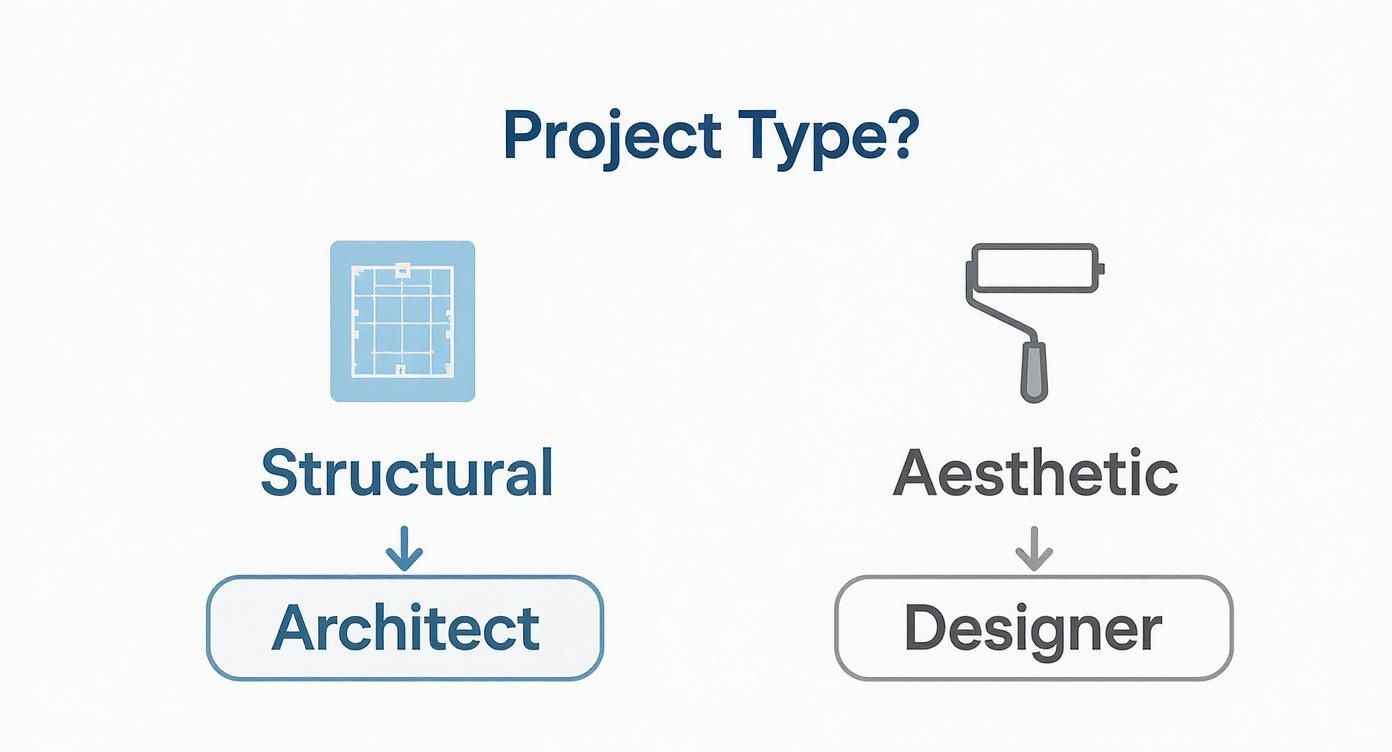
This simple chart helps steer you in the right direction from the get-go. No matter who you hire, always look closely at their portfolio. Professionals who understand architectural photography best practices will be able to clearly showcase the quality and scope of their work.
In short: if you need to move walls, hire an interior architect. If you need to make the space within the walls work beautifully, hire an interior designer.
To help you decide with more clarity, here’s a quick-reference table matching common project tasks to the right expert.
Match Your Project to the Right Professional
| Your Project Involves… | Hire an Interior Architect | Hire an Interior Designer |
|---|---|---|
| Knocking down or adding internal walls | ✅ | |
| Selecting new furniture, art, and décor | ✅ | |
| Changing window or door placements | ✅ | |
| Redesigning the lighting plan | ✅ | ✅ |
| Adding a mezzanine or new floor | ✅ | |
| Developing a new color scheme and material palette | ✅ | |
| Complying with building codes and permits | ✅ | |
| Space planning for better workflow or traffic | ✅ | ✅ |
This table isn't exhaustive, but it covers the most common scenarios. Notice the overlap in areas like lighting and space planning—this is where collaboration often produces the best results. The key is identifying the primary driver of your project: is it structural change or aesthetic enhancement? Your answer points you to your lead professional.
Understanding Project Costs and Budgeting
When you’re weighing interior architecture against interior design, the financial side of things can often feel murky. It’s not just about the final price tag; it's about how that price is calculated. The way these professionals structure their fees is a direct reflection of the work they do and the risks they take on.
An interior architect’s fee is almost always tied to the high-stakes nature of their involvement. Think about it: they’re dealing with structural changes, building codes, and complex technical systems. Because of this, their fee is typically a percentage of the total construction cost. This isn't just an arbitrary number; it mirrors the immense responsibility and comprehensive oversight they provide, ensuring your project is safe, compliant, and built to last.
How Interior Designers Structure Fees
Interior designers, on the other hand, tend to have more flexible fee structures. Their focus is on the aesthetics, furnishings, and flow of a space within its existing shell, so their billing can be adapted to fit the project's unique demands.
You'll commonly see a few different models:
- Hourly Rates: Perfect for consultations, space planning sessions, or ongoing project management.
- Fixed Fees: A flat rate for the entire project, which gives you clear budget predictability from the start.
- Cost-Plus Model: Here, the designer sources furniture and materials at their trade cost and then adds an agreed-upon percentage. It’s a transparent way to handle procurement.
The real story behind the cost difference is liability and scope. An architect’s percentage-based fee is baked into the massive responsibility of changing a building's bones. A designer’s flexible fees reflect their craft in curating the human experience within those walls.
Scope as the Primary Cost Driver
At the end of the day, what truly dictates your budget is the scope of your project. There's a world of difference between knocking down walls and simply refreshing the decor. A renovation that requires moving plumbing, rewiring electrical, and pulling permits will have a much higher cost base than one focused on aesthetics and workflow.
The interior design market, which thrives on these aesthetic and functional enhancements, is a massive industry for a reason. Valued at roughly USD 145.3 billion in 2024, it’s clear that businesses and homeowners invest heavily in refining the spaces they already have. In fact, the residential sector alone accounts for over 60% of that market. You can read more about the growth of the interior design market on grandviewresearch.com.
Knowing this helps you put your budget where it matters most. Are you looking to fundamentally change the structure, or are you aiming to perfect the experience inside it? Your answer will point you to the right professional and the right budget.
Finalizing Your Decision for a Commercial Project
Making the final call between an interior architect and an interior designer really comes down to the bones of your project. Before you even start making calls, a quick self-assessment can point you in the right direction and save you a lot of time.
Think of it as a simple gut check: are you changing the container, or are you changing the contents? That's the core difference.
Key Questions to Define Your Scope
Here are a few practical questions to ask yourself. The answers will make your choice a lot clearer.
-
Do I need a building permit? If you’re moving walls, rerouting plumbing, or touching anything that affects the building's core structure, the answer is a firm yes. That’s interior architect territory.
-
Is my main goal to improve workflow and aesthetics within the existing walls? If you’re focused on making the space work better and look great without demolition, an interior designer is who you need.
-
Does the project need both structural and aesthetic expertise? For a major gut renovation or a complete commercial fit-out, you’ll likely need both. It’s not an either/or situation.
On large-scale commercial jobs, these two roles are partners, not competitors. It's common for an interior architect to handle the heavy lifting of space planning and construction documents, with an interior designer then taking the lead on finishes, furniture, and bringing the brand's personality to life.
The best outcomes on complex renovations come from collaboration. The architect builds the stage, and the designer directs the play. This ensures the final space isn't just structurally sound and legally compliant, but also a place where people truly want to be.
When you get right down to it, defining whether you need structural change or aesthetic refinement is the key. Once you have that answer, you can confidently hire the right expert—or team—to execute your vision safely and effectively.
Frequently Asked Questions
When you're trying to figure out who to hire for your commercial project, the lines between interior architecture and interior design can seem blurry. Let's clear up a few of the most common questions that come up.
Can an Interior Designer Remove a Wall?
The short answer is no. Knocking down a wall—especially if it’s load-bearing—is a structural change. That means it requires a building permit and the trained eye of a licensed professional to ensure everything is safe and up to code.
This kind of work is the bread and butter of an interior architect. They have the technical training and legal sign-off to handle structural modifications. While a designer can certainly suggest new layouts, they can't approve or carry out the actual structural work themselves.
Is an Interior Architect More Expensive Than an Interior Designer?
This is a bit like comparing apples and oranges because their fees are based on completely different types of work. It’s not that one is inherently more expensive than the other.
An interior architect’s fee is often calculated as a percentage of the total construction budget. This makes sense when you consider the high liability and technical oversight involved in structural projects. A designer, on the other hand, might charge by the hour, a flat fee for the project, or a cost-plus model on furnishings and decor.
If your project involves moving walls or altering the building's core, it’s going to be more expensive by nature, which in turn makes the architect's fee seem larger.
The real question isn't about who costs more, but which fee structure fits your project. If you're making structural changes, you need to budget for architectural oversight. If you're focusing on aesthetics and furnishings, your budget will be geared toward design services and procurement.
Do I Need Both for My Commercial Renovation?
For a major overhaul, the answer is often a resounding yes. If you're planning a full commercial fit-out or a gut renovation, bringing both an interior architect and an interior designer to the table is a smart move.
Think of it this way: the architect handles the "bones" of the space—the structural redesign, permitting, and construction documents. The designer then steps in to bring that space to life, focusing on creating an environment that’s functional, on-brand, and beautiful. When they work together, you get a seamless result that’s both technically solid and perfectly aligned with your business goals.
For complex commercial projects involving adaptive reuse, historic preservation, or new construction in South Carolina, the expert team at Sherer Architects, LLC can bring structure to your vision. Learn more about our architectural services and how we can guide your project from concept to completion.