
Choosing the right material for an interior space is about so much more than just looks. It’s a foundational decision that directly shapes the building's performance, how tenants experience the space, and ultimately, its long-term value. Every material you specify is a piece of a larger puzzle, a careful balancing act between durability, cost, sustainability, and code compliance.
Why Your Choice of Interior Material Matters
For anyone developing or owning commercial, adaptive reuse, or historic properties, this isn't a minor detail—it's a critical part of the investment. This guide is designed to take you past the surface-level swatches and into the core of how materials influence everything from day-to-day operational budgets to the building's overall market appeal.
Think about it this way: deciding on something like hardwood flooring for kitchens in a multi-family project isn't just about aesthetics; it's a real-world test of balancing beautiful design with the practical demands of a high-traffic, spill-prone area.
We’ve built this framework to help you make smart, profitable decisions that ensure your project doesn't just look impressive on day one, but thrives for decades.
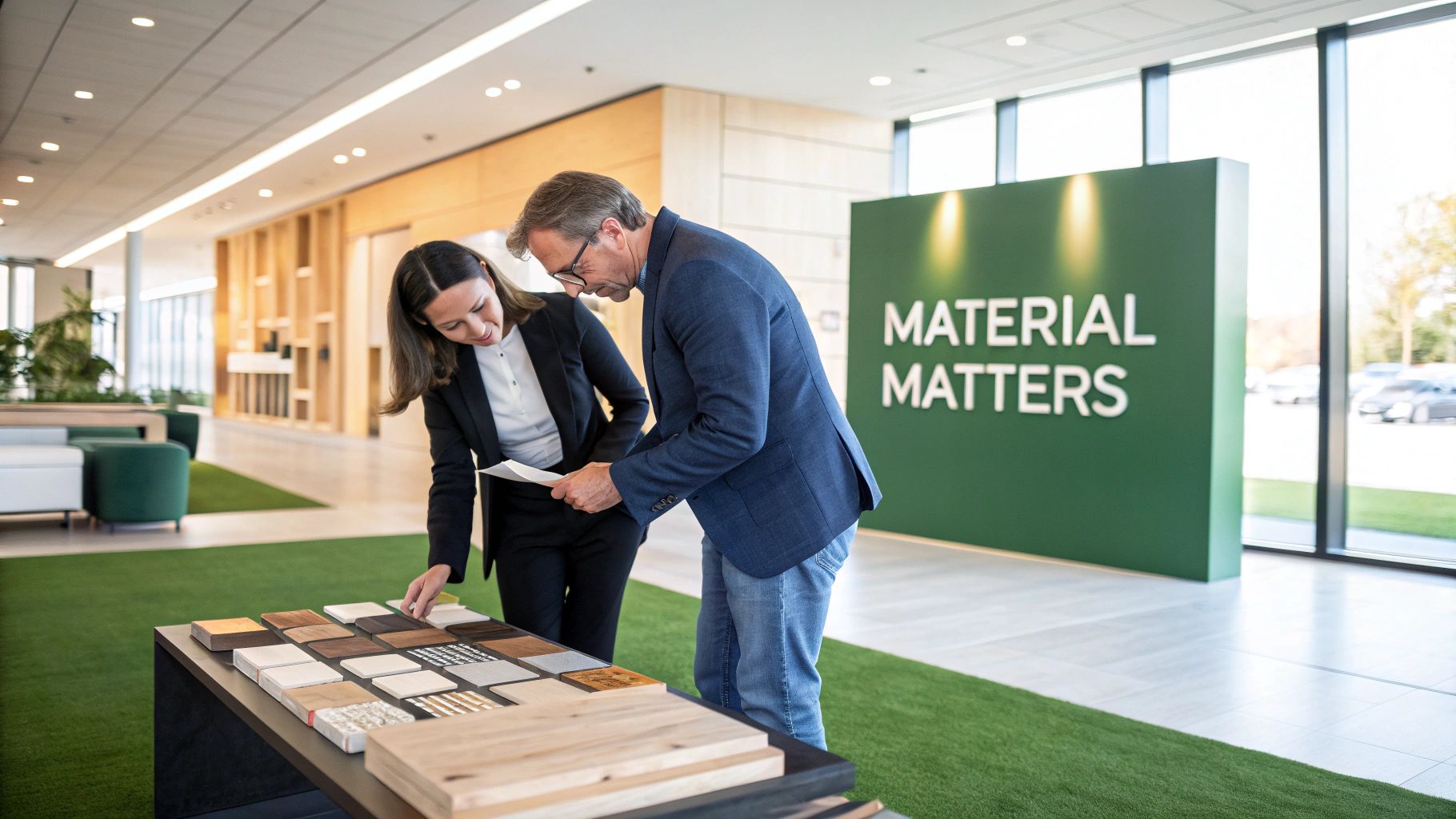
The Three Pillars of Material Performance
Before we even start talking about colors and textures, every single material for interior selection has to pass a tough, three-part exam. Think of it as the non-negotiable foundation: Durability, Fire Safety, and Acoustics. Get these wrong, and you’re looking at materials that wear out too fast, create serious safety risks, or make a space completely unusable for its occupants. It’s a surefire way to see your investment go down the drain.
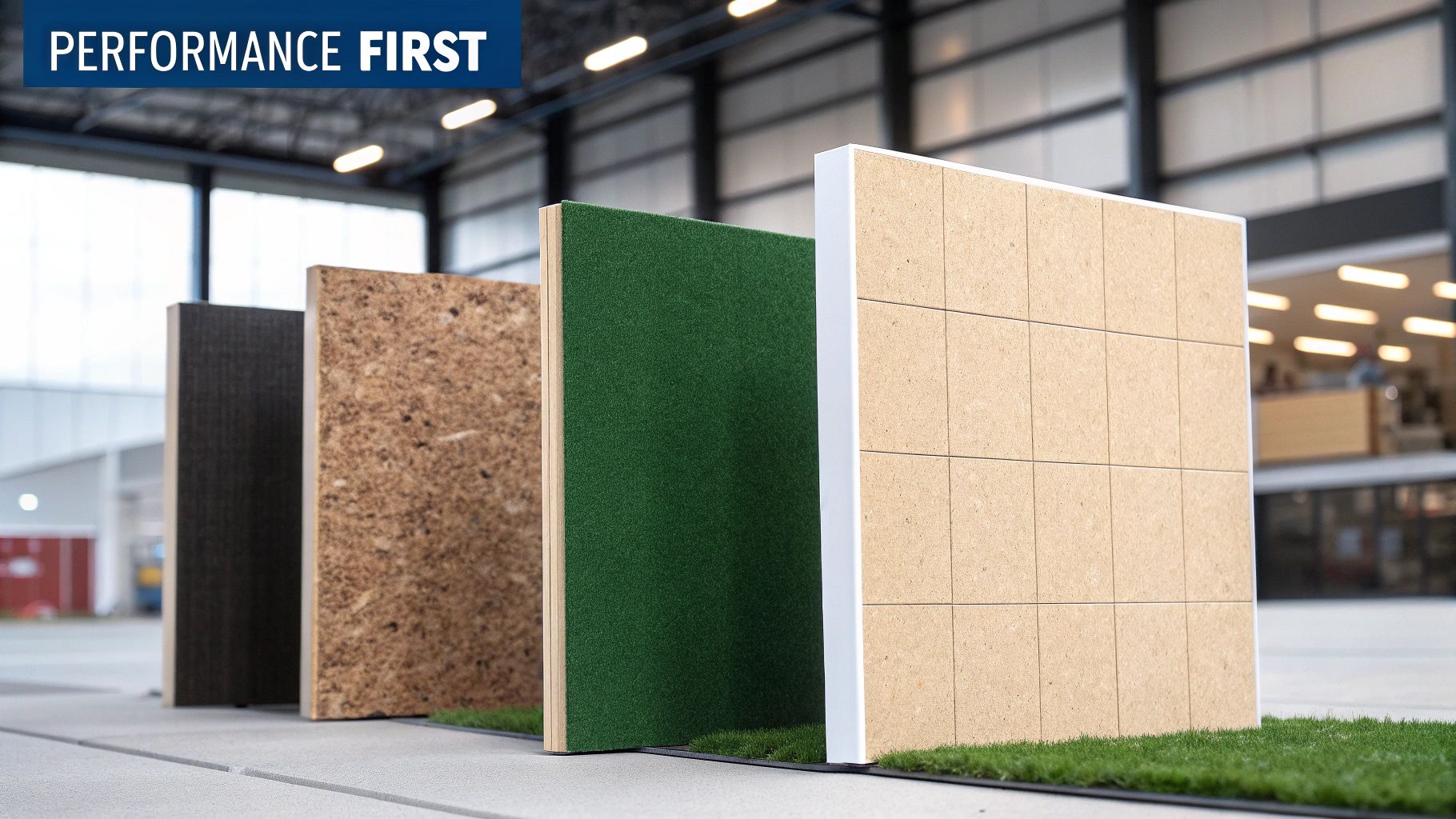
I always think of durability like choosing the right tires for a car. You wouldn't put standard sedan tires on a heavy-duty truck that hauls materials all day, right? A high-traffic hotel lobby needs the architectural equivalent of those truck tires—something built to withstand constant punishment. Evaluating a material’s real-world wear resistance is absolutely critical.
Then there's fire safety. These codes aren't just bureaucratic red tape; they're hard-learned lessons written to save lives. Understanding the flame-spread ratings and classifications for your materials is a fundamental part of protecting not just the building, but everyone inside it.
Finally, you have acoustics—the unsung hero of good design. The right acoustic strategy can transform a space. By digging into metrics like NRC (Noise Reduction Coefficient) and STC (Sound Transmission Class), you can turn a noisy, chaotic open office into a place where people can actually focus and get work done.
Balancing Preservation and Modernization in Historic Buildings
Working on an adaptive reuse project feels like a delicate dance between the past and the present. When you're selecting interior materials for a historic building, you can't just pick what's new and popular; you need a strategy that blends the building's original character with today's performance standards.
The first step is always a deep dive into the building itself—a material audit, if you will. You have to figure out which architectural details define the building's soul and are worth preserving at all costs. At the same time, you need to identify what’s beyond repair and needs a modern, yet compatible, replacement.
This is where the real challenge begins: sourcing materials that look and feel like they belong to the building's original era but also meet all of today's stringent building codes. You're aiming for that sweet spot where your choices feel completely authentic to the space while still functioning for a 21st-century tenant.
Thoughtful material choices do more than just preserve history—they can be instrumental in securing historic tax credits. This turns preservation requirements into a significant financial advantage, boosting both your property's value and its unique story. This approach ensures the building's legacy continues for decades to come.
The True Cost of Interior Materials
When you're looking at a material's price tag, you're only seeing the first chapter of its financial story. The real cost—what we call lifecycle cost—unfolds over decades. It’s a shift in perspective, moving beyond the initial purchase price to consider the long-term expenses of maintenance, repairs, and eventual replacement.
Think about it this way: that cheaper flooring might seem like a win today, but if it needs constant upkeep and wears out in half the time, its lifetime expense can easily dwarf that of a more durable, premium alternative. It's the classic "buy nice or buy twice" scenario, but on a commercial scale.
This long-term view also has to account for sustainability. We're now looking closely at metrics like embodied carbon, which is the total greenhouse gas emissions generated to produce and transport a material. It's the environmental "cost" baked into the product before it ever reaches the job site.
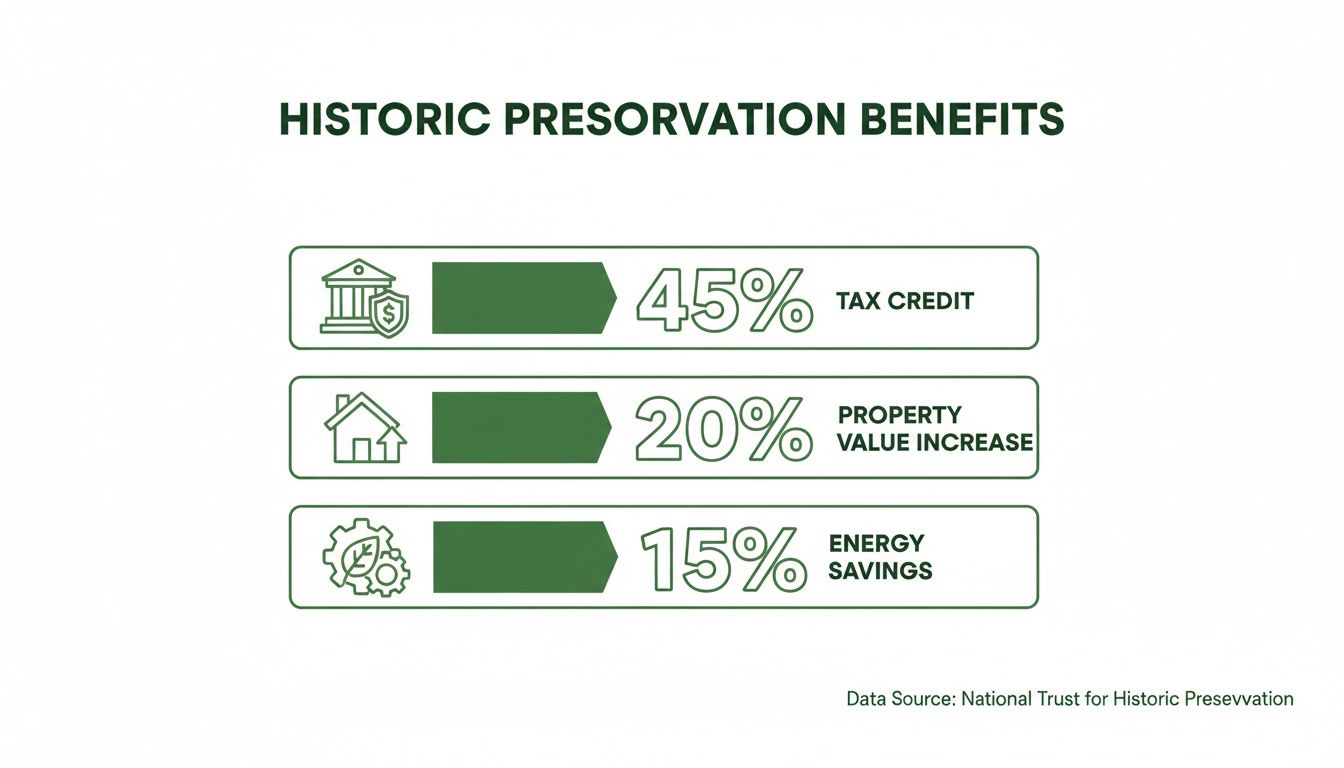
As you can see, making smart, forward-thinking choices isn't just about avoiding headaches; it can yield significant financial returns through incentives like tax credits and ongoing energy savings. Ultimately, selecting a durable, low-impact material for interior spaces isn't just an expense—it's a financially sound strategy for the entire life of the building.
Lifecycle Cost Comparison For Common Flooring Materials
To put this into practice, let's look at how three common commercial flooring options stack up when you consider their full lifecycle. The upfront cost is just one piece of the puzzle.
| Material | Upfront Cost (per sq ft) | Average Lifespan | Annual Maintenance | Embodied Carbon | End-of-Life |
|---|---|---|---|---|---|
| VCT (Vinyl Composite Tile) | $2 – $4 | 15-20 years | High (requires frequent stripping, waxing, buffing) | Moderate to High | Landfill; difficult to recycle |
| LVT (Luxury Vinyl Tile) | $4 – $7 | 20-25 years | Low (simple sweeping and mopping) | Moderate | Recyclable in some programs; often landfilled |
| Polished Concrete | $3 – $8 | 50+ years | Very Low (occasional cleaning and resealing) | Low (utilizes existing slab) | Reusable; can be covered or refinished |
The table makes it clear: while VCT has the lowest initial price, its high maintenance needs and shorter lifespan mean you'll be paying for it over and over again. Polished concrete, on the other hand, might cost more upfront but delivers a much lower total cost of ownership over the long haul. This is the kind of analysis that separates good projects from great ones.
Best Practices for Material Procurement and Specification
You can pick the most brilliant material in the world, but if you don't specify and procure it correctly, that choice means nothing. It’s a classic project pitfall.
Vague specifications are where good intentions go to die. Using lazy terms like "or equal" in your documents is an open invitation for substitutions that might look the part but fail on performance. The key is to write iron-clad specs that leave no room for interpretation—define the exact performance criteria you expect.
Then there's the supply chain. You have to be realistic about what you can actually get. Global market forces have a huge impact on the material for interior finishes, influencing everything from cost to availability.
For example, the Asia-Pacific region dominates up to 58.1% of the automotive interior materials market. As you can imagine, that kind of market share affects lead times and pricing for related materials across the board. Diving into these market trends can give you a real edge in planning.
The secret to navigating all of this? Get everyone in the same room—metaphorically or literally. When architects, contractors, and owners are aligned from day one, you head off budget blow-ups and ensure the finished space actually reflects the original vision. No costly surprises.
Frequently Asked Questions About Interior Materials
When it's time to choose materials for a commercial interior, property owners and developers tend to ask the same handful of questions. It's completely understandable—the stakes are high, and the choices you make have long-term consequences.
For high-traffic areas, the big question is always durability versus budget. It's tempting to go with the cheaper option upfront, but experienced owners know to think in terms of lifecycle cost. A more expensive, hard-wearing material often pays for itself by avoiding replacement and repair costs down the road.
When you're working with a historic building, the first question is different: what has to stay? Before anything else, you need a thorough investigation to identify the character-defining features. This dictates everything that follows.
What about sustainability? The greenest choice is almost always the one you already have. Reusing existing materials is paramount. If that's not possible, look for locally sourced products with clear environmental product declarations (EPDs).
Getting a handle on the basics is key. For example, simply understanding the different cabinets types of material available can give you a solid foundation for making smarter, more informed decisions across the entire project.