
Choosing the right material for interior design is arguably the most critical decision in any commercial or adaptive reuse project. It’s a choice that shapes everything—from the budget and timeline all the way to the building's long-term performance and how people feel inside it. This isn't just about picking pretty finishes; it's a strategic move that hinges on finding the perfect balance between durability, cost, and sustainability.
Why Material Selection Defines Project Success
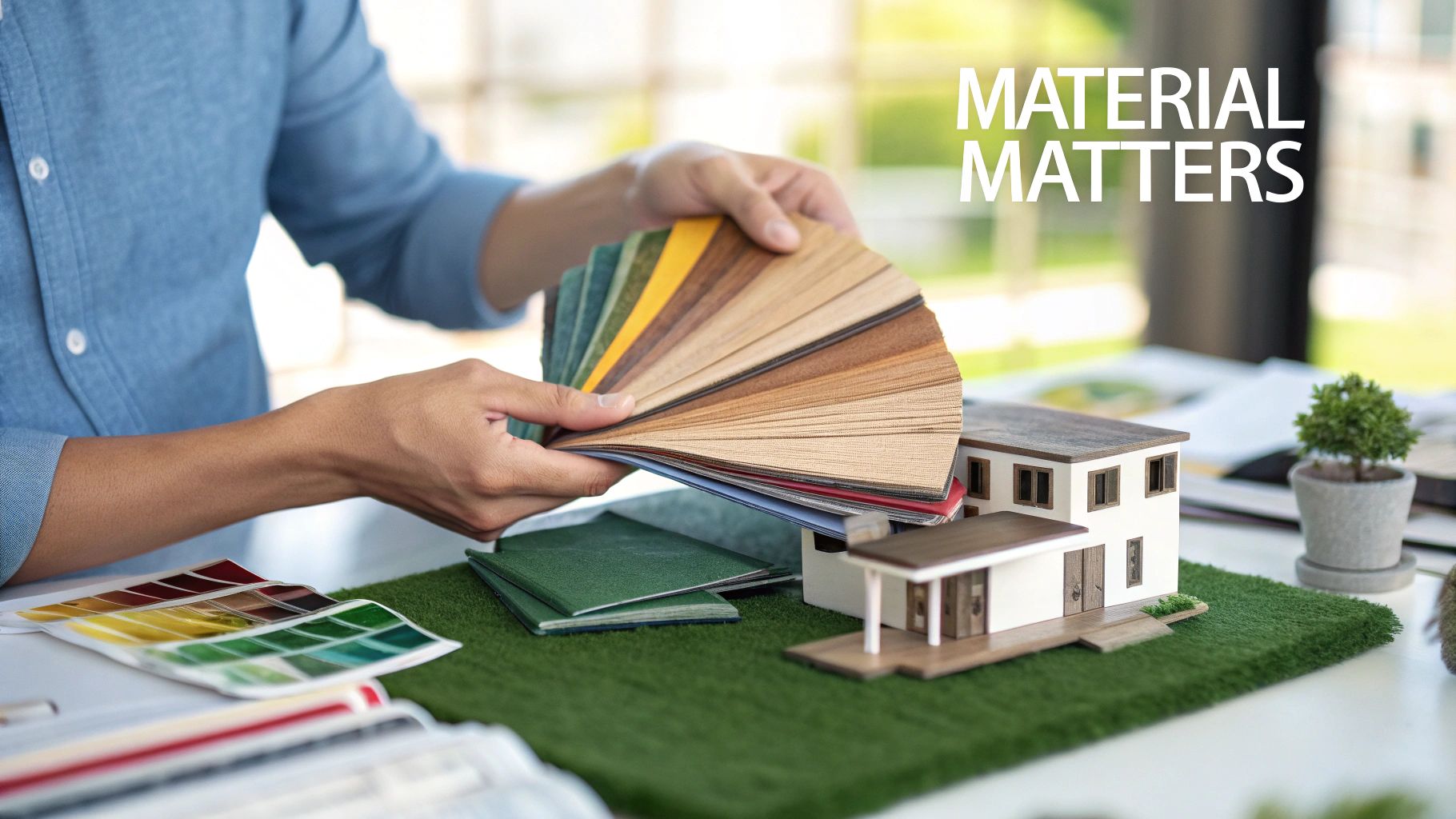
Think of a building's interior materials as its core vocabulary. Long before the first piece of furniture arrives, these materials are already communicating the space's purpose, its level of quality, and even the brand's identity. For developers and contractors, these decisions happen early, but their effects are felt through every single phase of the project, from managing construction logistics to writing the final maintenance manual.
Get a material choice wrong, and you could be looking at budget blowouts, frustrating schedule delays, and finishes that wear out far too soon. It’s a surefire way to chip away at the project's return on investment. But when you get it right, the space doesn't just look incredible on opening day—it's built to handle the real-world demands of its users for years to come.
The Impact of Early Decisions
Every single material choice sends ripples through the project. For example, that stunning custom-milled wood paneling for a feature wall might be the perfect aesthetic touch, but if its long lead time isn't meticulously planned for, it can throw the entire construction schedule into chaos. On the other hand, specifying a durable yet elegant flooring for a high-traffic lobby is a direct investment in lowering future maintenance headaches and costs.
This kind of forward-thinking is what's driving major market trends. The global interior design market hit an impressive USD 138.63 billion in 2024, and a huge part of that growth is from the demand for materials that are both beautiful and built to perform. In fact, sustainable materials were used in 65% of new builds, a massive jump from just 45% back in 2020. This isn't just a fad; it's a fundamental shift toward creating spaces with durability and environmental responsibility at their core.
Core Material Categories at a Glance
To start making sense of the thousands of options out there, it helps to organize materials into a few core categories. Each one serves a distinct purpose, and knowing how they work together is the key to creating a design that feels intentional and cohesive.
Here's a quick look at the main families of materials you'll be working with.
| Material Category | Primary Function | Common Examples |
|---|---|---|
| Flooring | Provides the primary walking surface; sets the foundation for durability, acoustics, and style. | Luxury Vinyl Tile (LVT), Polished Concrete, Carpet Tile, Terrazzo, Hardwood |
| Wall Finishes | Defines the vertical planes of a space; adds texture, color, and protection. | Paint, Wallcoverings (Vinyl, Fabric), Wood Paneling, Tile, Acoustic Panels |
| Ceiling Systems | Hides building systems (HVAC, electrical); controls acoustics and reflects light. | Acoustic Ceiling Tile (ACT), Gypsum Board, Exposed Structure, Metal or Wood Grids |
| Millwork & Casework | Includes custom-built wood or laminate elements for function and aesthetics. | Reception Desks, Cabinetry, Built-in Shelving, Wall Paneling, Trim |
| Fabrics & Textiles | Adds softness, color, acoustic absorption, and comfort to furniture and windows. | Upholstery, Drapery, Cubicle Curtains, Decorative Textiles |
| Specialized Systems | Materials designed to meet specific code requirements or performance needs. | Fire-rated Wall Assemblies, Acoustic Baffles, Moisture-resistant Backers |
As you can see, the success of a design project often comes down to mastering the details within each of these categories. For instance, understanding the nuances of Choosing Upholstery Fabric can be the difference between furniture that lasts for a decade and furniture that looks worn out in a year.
Ultimately, mastering the selection of any material for interior design is about expertly balancing these elements. The goal is always to create a space that is not only beautiful but also functional, safe, and truly built to last.
Getting to Know the Core Material Categories
Choosing the right materials for a commercial interior isn't like picking items off a shelf. It's about understanding how each category works as a tool to solve specific problems within a space. Think about the lobby of a new corporate headquarters: the floor has to stand up to hundreds of people walking through every day, while the walls need to look professional and be a breeze to clean.
Every single material choice pulls its weight, shaping how the environment performs and feels. Let's walk through the essential categories, not as a list of products, but as an integrated toolkit for creating a high-functioning design.
Flooring: The Foundation of Every Space
Flooring is the unsung hero of any commercial interior. It takes a constant beating—from relentless foot traffic to heavy rolling carts—and it's a huge factor in acoustics, safety, and how easy the space is to clean. The choice is never just about looks; it’s about matching the material's performance to how the area will actually be used.
Polished concrete, for example, is incredibly tough and gives off a modern, industrial vibe that’s perfect for a busy art gallery or retail store. The trade-off? It’s terrible with acoustics, bouncing sound all over the place and creating a loud, echo-y room. On the flip side, commercial carpet tile is a fantastic sound absorber, making it the go-to for open-plan offices or conference rooms where you need to keep noise under control.
A few key players in commercial flooring include:
- Luxury Vinyl Tile (LVT): The chameleon of flooring. It's tough, water-resistant, and can convincingly mimic natural wood or stone without the high price tag or demanding upkeep.
- Commercial Carpet Tile: A top choice for office environments. It dampens sound, feels comfortable underfoot, and you can easily swap out a single tile if it gets stained or damaged. That’s a huge long-term maintenance win.
- Polished Concrete: Delivers a minimalist aesthetic and will last forever. You just have to be mindful of the acoustics and make sure it's sealed properly to avoid stains.
- Terrazzo: A classic composite that’s poured in place or precast. It offers incredible design flexibility and is so durable you’ll often find it in high-traffic hubs like airports and government buildings.
Wall Finishes: Setting the Tone and Standing Up to Wear
Wall finishes are what create the visual and tactile feel of a room. They can be simple and practical or intricate and decorative, but in a commercial project, durability and maintenance always come first. A wall in a packed corridor has a much tougher job than one tucked away in a private executive office.
These days, low-VOC (volatile organic compound) paints are the standard for ensuring healthy indoor air quality—a must-have for employee well-being and any project aiming for green building certifications. For areas that get a lot of scuffs and bumps, like hospital corridors or school hallways, you need more than just paint. High-impact wall panels or tough vinyl wallcoverings provide a necessary layer of protection.
A material’s function is dictated by its environment. A delicate fabric wallcovering might be stunning in a low-traffic boardroom, but it would be a maintenance nightmare in a restaurant's main dining area, where cleanability and stain resistance are paramount.
Ceilings: The Unseen Performance Hero
It’s easy to forget about the ceiling, but it’s a critical surface for managing acoustics, integrating lighting, and hiding all the "guts" of the building—the mechanical, electrical, and plumbing (MEP) systems. In a busy open office, a good ceiling system can mean the difference between a productive workspace and a noisy, chaotic one.
Acoustic Ceiling Tiles (ACT) are the common workhorse here. They’re specifically designed to absorb sound and cut down on echo. Plus, their modular grid makes it easy to get to the systems hidden above for maintenance. In other designs, you might see an exposed ceiling structure for an industrial-chic look, but that almost always means you have to add other acoustic elements, like suspended baffles or panels, to make up for the loss of a sound-absorbing surface.
Millwork, Fabrics, and Specialized Systems
Beyond the big three, several other material categories add layers of function and polish to a project.
-
Custom Millwork: This covers all the built-in elements, like reception desks, cabinetry, and striking feature walls. The materials you choose here—from rich wood veneers and durable laminates to sleek solid surfaces—directly shape both the look and the longevity of these high-touch pieces. For a deeper dive into the options, an expert guide on the best materials for kitchen cabinets offers great insights that apply to all types of commercial casework.
-
Performance Fabrics: When it comes to upholstery and drapery in commercial spaces, fabrics are chosen for their report card. We look at durability ratings (like Wyzenbeek double rubs), stain resistance, and fire retardancy to make sure they can handle the demands of public use.
-
Acoustic and Fire-Rated Systems: These are the specialists. They're materials designed to meet specific building codes and solve particular problems. Think of fire-rated drywall assemblies that create safe exit corridors or dedicated acoustic panels placed just right to perfect the sound in an auditorium. Each of these categories gives designers another set of tools to solve the functional puzzles that come with every project.
How to Evaluate Materials with Performance in Mind
Choosing an interior material based only on how it looks is like buying a car for its paint job without ever popping the hood. A beautiful finish that chips, fades, or completely fails within a year isn't just a design mistake; it's a financial drain. To sidestep these costly errors, you need a solid framework for vetting materials where performance is the star of the show.
This means shifting your focus from the initial price tag to the long-term value and resilience of every single surface. It's about asking tougher questions, looking beyond the small sample swatch, and digging into the technical data that predicts how a material will actually behave out in the real world. Think of it as running a thorough background check on every candidate for your project.
This chart shows just how much of a project's material budget is dedicated to the big three categories. As you can see, flooring is a huge piece of the pie.
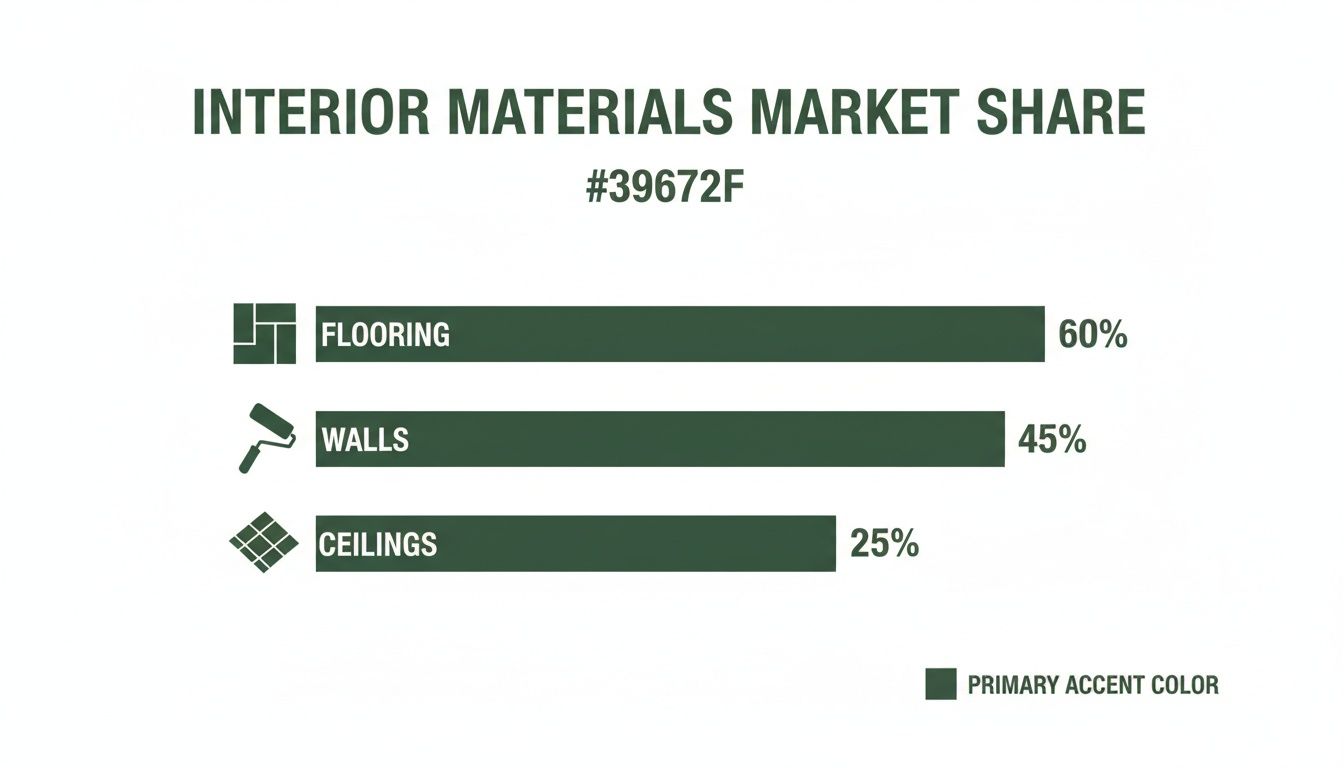
The fact that flooring commands such a large market share—a whopping 60%—tells you everything you need to know. It's a massive investment, making a rigorous performance evaluation absolutely essential for getting it right.
Durability and Life-Cycle Cost
The first two pillars of any solid material evaluation are durability and life-cycle cost. They go hand in hand. Durability is simply a material’s ability to stand up to daily abuse—scratches, impacts, fading, and stains. For a chaotic hotel lobby or a busy school hallway, a flooring material with a high abrasion resistance rating isn't a "nice-to-have"; it's a must.
But durability is only half the equation. The life-cycle cost is what uncovers the true price of a material over its entire lifespan. This isn't just the upfront purchase price; it includes installation, ongoing maintenance, and the eventual cost of removal and replacement.
That cheaper carpet might save you a few bucks today, but what if it needs professional deep cleaning twice as often as a premium option? And what if you have to replace it in five years instead of fifteen? Suddenly, its life-cycle cost balloons, making the "more expensive" option the smarter financial choice.
Smart material selection is an exercise in financial forecasting. By prioritizing life-cycle value over upfront cost, you are making a direct investment in the long-term profitability and operational efficiency of the building.
Decoding Fire and Safety Ratings
Technical standards can feel a bit overwhelming, but they are your best friends when it comes to ensuring occupant safety and meeting building codes. Fire ratings are completely non-negotiable, especially in commercial spaces and multi-family residential projects.
The main standard you'll run into is the ASTM E84 test, which measures a material's surface burning characteristics. This test spits out two numbers you absolutely need to know:
- Flame Spread Index: This measures how quickly fire will race across a material's surface. Lower numbers are always better and safer.
- Smoke Developed Index: This tells you how much smoke a material will pump out when it burns. In a fire, smoke is often more dangerous than the flames, so a lower number here is critical for visibility during an evacuation.
These ratings are sorted into classes, from Class A (the most fire-resistant) to Class C. For places like exit corridors, stairwells, and other critical escape routes, building codes will almost always demand Class A materials. Treat these ratings as a material's official safety report card—and never, ever specify a product without checking it first.
Understanding Acoustic Performance
Noise is one of the biggest—and most overlooked—factors impacting occupant satisfaction and productivity. Whether you're designing an open-plan office, a bustling restaurant, or an apartment building, how you manage sound will make or break the experience.
Two key ratings will guide your choices here:
-
Noise Reduction Coefficient (NRC): This rating, scaled from 0 to 1, tells you how much sound a material absorbs. For example, a material with an NRC of 0.75 will absorb 75% of the sound that hits it. Soft, porous materials like acoustic ceiling tiles and thick carpets have high NRC ratings, which makes them perfect for taming echo and ambient noise.
-
Sound Transmission Class (STC): This rating measures how well a material or an entire wall assembly blocks sound from passing through it. A higher STC rating means better sound insulation between rooms. This is the rating you care about for spaces that demand privacy, like conference rooms, private offices, or adjacent apartments.
For example, you'd use a ceiling tile with a high NRC to quiet the chatter inside an office, but you'd need the wall separating two tenants to have a high STC rating to ensure conversations stay private.
To help visualize how different materials stack up, here’s a quick comparison of common commercial flooring options.
Performance Snapshot for Commercial Flooring
This table gives you a comparative look at popular commercial flooring choices, weighing them against key performance metrics that matter on the ground.
| Flooring Type | Durability Rating | Typical Maintenance | Average Life-Cycle Cost | Acoustic Performance |
|---|---|---|---|---|
| Luxury Vinyl Tile (LVT) | High | Low (Sweep, Mop) | $$ | Moderate |
| Polished Concrete | Very High | Very Low (Sealant) | $$$ | Poor (Echo) |
| Carpet Tile | Moderate to High | Medium (Vacuum, Spot Clean) | $$ | Excellent |
| Epoxy Flooring | Very High | Low (Sweep, Mop) | $$$ | Poor (Echo) |
| Hardwood | Moderate | High (Refinishing) | $$$$ | Moderate |
| Porcelain Tile | Very High | Low (Grout Cleaning) | $$$ | Poor (Echo) |
As you can see, there’s no single "best" option—the right choice always depends on the specific demands of the space. A high-traffic retail store might lean toward polished concrete for its sheer resilience, while a corporate office would benefit immensely from the acoustic comfort of carpet tile.
By understanding these core performance metrics, you can move beyond aesthetics and select materials that create an environment that not only looks great but also functions beautifully for years to come.
Balancing Sustainability with Historic Preservation
When you're choosing a material for interior design these days, you're often juggling two big ideas: sustainability and historic preservation. These aren't just buzzwords. They're a real shift in how we think about the spaces we build, pushing us to create interiors that are both responsible and respectful.
It’s about more than just how a space looks. It’s about building healthy, efficient environments that honor their own history. On one side, we’re pushed to pick materials that are better for the planet and the people in the building. On the other, we have a duty to protect the character and story of an older structure. The real magic happens when you find that sweet spot where both of these goals can live together.
Weaving Sustainability into Your Material Palette
Sustainable design is just another way of saying you’re making smart, intentional choices that pay off down the road. It's about investing in the long-term health and value of a property, not just checking a box.
Think about it this way: specifying low-VOC (volatile organic compound) paints and adhesives isn't just an abstract "green" choice—it's a direct investment in better indoor air quality for the people who will work or live there. Choosing countertops made from recycled glass or insulation from reclaimed denim is a tangible way to shrink a project's carbon footprint. These are the kinds of decisions that help projects earn green building certifications like LEED (Leadership in Energy and Environmental Design) or the WELL Building Standard, which tenants and investors are actively looking for.
The market is definitely listening. The global demand for eco-friendly interior materials has been growing at 8.5% annually since 2020. Today, sustainable options like FSC-certified timber make up 28% of all interior materials used worldwide—a massive jump from just 12% in 2015. With 82% of consumers saying they'd pay more for sustainable interiors, this isn’t a niche trend; it’s reshaping the entire industry. You can dig deeper into this shift in the global forecast for interior design.
Sustainable material selection isn't just an environmental choice; it's a strategic business decision. It enhances occupant well-being, increases a building's marketability, and can lead to significant operational savings over time through improved energy efficiency and durability.
Respecting History in Adaptive Reuse Projects
Adaptive reuse projects throw a unique challenge into the mix: how do you bring in modern, high-performance materials without completely stripping away a building's soul? The goal is to create a conversation between the old and the new. You want modern additions to complement the original architecture, not shout over it.
This takes a delicate touch and a real appreciation for the building's past. The first step is usually a "materials audit"—taking stock of what's already there. Can those incredible exposed brick walls, old timber beams, or terrazzo floors be saved and celebrated? These are irreplaceable features that tell the building’s story.
Strategies for Harmonizing Old and New
When you do need to introduce new materials, the key is to be thoughtful. You don't always have to find a perfect historical replica. In fact, sometimes a crisp, modern material is the perfect thing to make the texture and patina of a historic finish truly pop.
Here are a few strategies that work:
- Source Historically Appropriate Materials: If you're replacing something like wood trim or flooring, do a little digging. Finding out what materials were used originally and sourcing reclaimed wood or a similar species can go a long way in maintaining authenticity.
- Create a Clear Visual Distinction: Instead of a clumsy attempt to mimic an old finish, let the new material be honestly modern. A sleek steel and glass partition, for instance, can look stunning next to a century-old brick wall. The contrast is what makes it work.
- Integrate Systems Thoughtfully: Do your best to hide modern systems like HVAC and electrical conduits. If they have to be exposed, treat them like clean, sculptural elements that contrast with the historic fabric instead of trying to blend in.
By balancing these considerations, you can select a material for interior design that not only performs well but also helps create a richer, more meaningful building. It’s this thoughtful approach that ensures the final space is safe, functional, and deeply connected to its own unique history.
A Practical Guide to Material Specification and Sourcing

A brilliant design concept is only as strong as its execution. Once you've selected the right material for interior design, the next hurdle is turning that vision into reality without costly mistakes. This is where meticulous specification and smart sourcing become the twin pillars of a successful project, making sure what you designed is exactly what gets built.
Think of the specification document as the project's legal rulebook. It’s a precise, highly detailed set of instructions that leaves zero room for a contractor or supplier to make their own judgment calls. A vague spec is an open invitation for things to go wrong.
Crafting a Bulletproof Specification
A weak specification might just say "White Oak Flooring." A strong one, however, provides a complete blueprint that leaves nothing to chance. It spells out every critical attribute to guarantee quality and consistency across the entire job.
A truly effective specification document should always include:
- Manufacturer and Product Name: Pinpoint the exact brand, product line, model number, and color code. For instance, "Interface Carpet Tile, Style: Human Nature Collection, Color: HN840 Stone."
- Performance Criteria: Restate the required fire ratings, acoustic ratings (NRC/STC), and durability metrics. For example, "Must meet ASTM E84 Class A Flame Spread Index."
- Dimensions and Finishes: Specify sizes, thicknesses, finishes, and sheen levels. For wood, this means detailing the cut (like "rift sawn") and the grade.
- Installation Instructions: Always reference the manufacturer’s specific installation guidelines. This is key to ensuring a correct application and keeping the warranty intact.
This level of detail is your best defense against the dreaded "or equal" substitution. If a contractor suggests an alternative, your spec sheet gives you a clear, objective checklist to see if it truly measures up.
Navigating the Sourcing Landscape
With your specifications locked in, it's time to source the materials. This involves deciding where to buy everything—a choice that directly impacts your project's budget and timeline. The two main avenues are buying directly from manufacturers or going through distributors.
Each path has its own trade-offs.
| Sourcing Channel | Pros | Cons |
|---|---|---|
| Manufacturer Direct | Often a lower unit cost, direct line to technical support, and deeper product knowledge. | May have high minimum order quantities; can be slower for smaller projects. |
| Distributor | Can consolidate orders from multiple brands, often holds local stock for faster delivery, more flexible on order size. | Unit cost may be slightly higher; technical support is one step removed from the source. |
Choosing the right partner is about more than just comparing price tags. You have to vet your suppliers. Ask for project references, check their financial stability, and confirm their logistical capabilities. A low-cost supplier who can't deliver on time can end up costing you far more in project delays than you ever saved on materials.
Your supply chain is an extension of your project team. A reliable supplier who communicates clearly about lead times and stock levels is an invaluable asset for keeping a complex construction schedule on track.
The Art of Value Engineering
Finally, let's talk about value engineering. This isn't just code for "finding cheaper stuff." Real value engineering is a systematic process of reducing costs without gutting the design's core performance or aesthetic integrity.
It's about making smart substitutions, not just downgrades. For example, instead of swapping out the high-traffic lobby flooring for something less durable, you might find savings by choosing a more standard—but equally tough—wall base in secondary corridors.
The key is to protect the materials in high-impact areas where quality really matters, while seeking efficiencies in less critical zones. A good supplier can be a fantastic partner here, often suggesting alternative materials with similar performance data at a better price point. This collaborative approach helps bring your project in on budget without compromising its long-term success.
Answering Your Key Questions About Interior Materials
Even when you've got a solid plan, the reality of picking the right material for interior design always brings up a fresh set of questions. Trying to juggle budgets, technical specs, and what happens five years down the road can feel like spinning plates. This is where we get practical and tackle the most common hurdles that developers, contractors, and owners run into.
Think of this as the straight-talk section—clear, direct answers to help you move forward with confidence.
How Do I Balance a Tight Budget with High-Quality Materials?
This is the classic dilemma, isn't it? The secret isn't just about spending less; it's about spending smarter. You have to shift your thinking from the upfront price tag to the long-term life-cycle value. A cheaper material that needs constant repairs or a full replacement in a few years isn't a bargain—it's a liability.
The key is to be strategic. You can’t afford top-tier everything, so focus your budget on the areas that take the most abuse. We're talking about main corridors, lobbies, and reception desks. These high-traffic zones are where durable, resilient materials are absolutely non-negotiable. An investment here will pay for itself over and over.
This is where good old-fashioned value engineering comes in, but not the slash-and-burn kind. It's not about downgrading everything. It's about finding specific spots where a less expensive but equally tough alternative can do the job without wrecking the design. For example, a high-quality luxury vinyl tile (LVT) can beautifully mimic natural stone, giving you a similar look with way better durability and a much friendlier price. Always get multiple quotes and build relationships with suppliers—they can often suggest creative solutions that protect both your wallet and your vision.
What Are the Most Common Mistakes in Material Specification?
After decades in the field, I can tell you the costliest mistakes almost always come down to three things: specs that are too vague, not checking stock and lead times, and skipping the on-site sample review. Any one of these can blow up your budget, throw your schedule off by months, and leave you with a final look that falls flat.
Writing "white oak" on a spec sheet is asking for trouble. Is that rift sawn? What grade? What kind of finish? A professional specification is incredibly detailed because it has to be. Without that precision, you're leaving the final look up to chance.
Vague specifications are the root cause of miscommunication and unmet expectations. A detailed, unambiguous specification document is your single best tool for ensuring the design vision is executed precisely as intended.
Just as critical is confirming availability. That tile you fell in love with might have a six-month backorder, a delay that can bring an entire project to a grinding halt. And finally, never sign off on a material based on how it looks in a showroom. A sample that looks perfect under fluorescent lights can look completely wrong in the actual space. Get physical samples on-site and look at them at different times of day. See how the morning sun or the evening's artificial light changes the color and texture before you commit.
How Do My Material Choices Affect Green Building Certifications?
Your material choices are fundamental to hitting green building targets like LEED (Leadership in Energy and Environmental Design) or the WELL Building Standard. These aren't just feel-good labels; they are rigorous systems that award points for specific attributes that make a building healthier and more sustainable.
For a certification like LEED, what you specify has a direct impact on your score across several categories:
- Recycled Content: Using materials made from post-consumer or post-industrial waste is a straightforward way to earn points.
- Regional Sourcing: Choosing materials extracted and made within a certain radius of your project cuts down on transportation emissions.
- Sustainable Harvesting: For wood products, looking for the FSC-certified label is a must. It guarantees the wood comes from a responsibly managed forest.
- Low-Emitting Materials: This is a big one. Specifying low-VOC (volatile organic compound) paints, adhesives, and flooring is essential for credits in the Indoor Environmental Quality section.
The WELL standard digs even deeper into human health, scrutinizing materials for specific harmful chemicals and encouraging the use of biophilic design—think natural wood, stone, and plants—to boost occupant well-being. Your material specification sheet essentially becomes your scorecard for these programs.
How Do I Ensure Materials Are Maintained Properly After Handover?
A project isn't truly successful until you know it will still look great years from now. The work doesn't stop when the last contractor leaves. The single best practice is to put together a comprehensive handover manual for the client or their facilities team.
Think of it as the building's owner's manual. It needs to be simple, clear, and detailed, giving the facilities crew everything they need to properly care for every single finish you've selected.
Your manual should absolutely include:
- Manufacturer Cleaning Instructions: Don't paraphrase. Include the official spec sheets for everything from the flooring to the wallcoverings.
- Product Recommendations: List the approved cleaners, and just as important, call out what not to use. The wrong chemical can permanently damage a finish.
- Maintenance Schedules: Lay out a simple calendar for routine care (daily, weekly) and deeper maintenance (quarterly, annually).
- Warranty Information: Put all the warranty documents and supplier contacts in one place so they're easy to find when needed.
One last thing: do a final walkthrough with the facilities team. Show them how to care for any particularly unique or sensitive materials. This one-hour investment can prevent thousands of dollars in damage later on, protecting the owner's investment and ensuring your design stands the test of time.
At Sherer Architects, LLC, we believe that thoughtful material selection is the foundation of enduring architecture. Our expertise in commercial projects, adaptive reuse, and historic preservation ensures every choice balances performance, budget, and a deep respect for the building's character. If you're ready to create a space that is beautiful, functional, and built to last, contact Sherer Architects, LLC today to discuss your project.