
When construction costs start to spiral, you can’t just react—you need a solid game plan. The best way to get a handle on your budget is to attack it from three angles: start with meticulous early-stage strategic planning, embrace modern building methods like modular construction, and weave technology into every step of your project management.
This isn't about nickel-and-diming your way through a build. It’s about baking efficiency into your project's DNA from day one.
A Strategic Framework for Lowering Construction Costs
Let's be honest: with material prices swinging wildly and skilled labor getting harder to find, keeping a project on budget feels tougher than ever. But seasoned developers know the secret. The biggest savings aren't found on the job site; they’re locked in long before anyone breaks ground.
It all comes down to making smart, deliberate decisions in the pre-construction phase. This is the point where a simple change on paper costs next to nothing but can save you a fortune down the road.
This guide is designed to give you a clear, actionable roadmap—no fluff, just practical tactics you can use on your next commercial project. Forget chasing small savings during the chaos of construction. We’re going to build a cost-effective foundation from the very beginning.
Key Pillars of Cost Control
To really get a grip on your project's budget, you need to look at it from a few different perspectives at once. Here are the areas where you'll get the most bang for your buck:
-
Value Engineering Reimagined: Most people think of value engineering as just slashing costs. We'll reframe it as a collaborative process to boost project value without compromising on quality or what the building needs to do.
-
Modern Construction Methods: It's time to look beyond traditional stick-built methods. We’ll dig into the real-world cost benefits of alternatives, like understanding Why Steel Building Construction Is The Most Affordable Choice In Today's Economy and leveraging off-site modular fabrication.
-
Intelligent Procurement: This is about more than just getting three bids. A truly smart procurement strategy helps you lock in better prices, secure skilled labor, and reduce your overall risk.
I can't stress this enough: by focusing on the pre-construction phase, project owners can influence up to 70% of a building's total lifecycle cost. A little extra time spent planning here is the single best way to avoid those soul-crushing change orders and rework later on.
To give you a quick overview, this table breaks down the core strategies we'll be covering.
Core Strategies for Immediate Cost Reduction
This table summarizes the primary cost-saving pillars discussed in the article, outlining the key action and its potential impact on a project's budget and timeline.
| Strategy Pillar | Key Action | Potential Impact |
|---|---|---|
| Early-Stage Planning | In-depth site analysis and feasibility studies before design commitment. | Avoids costly surprises, reduces change orders, and aligns budget with reality from the start. |
| Value Engineering | Collaboratively analyze materials and systems for cost vs. lifecycle value. | Lowers initial and long-term operating costs without sacrificing essential functions or quality. |
| Modern Methods | Adopt off-site or modular construction for key components. | Significantly accelerates project timelines, reduces on-site labor needs, and improves quality control. |
| Smart Procurement | Develop strategic partnerships and bulk purchasing agreements. | Secures better pricing on materials and labor, mitigates supply chain risks, and ensures resource availability. |
Ultimately, this guide is here to give you the tools and insights to build smarter. The goal is to show you exactly how to approach your projects so they come in on time and on budget—even when the market is anything but predictable.
Winning the Budget Battle in Pre-Construction
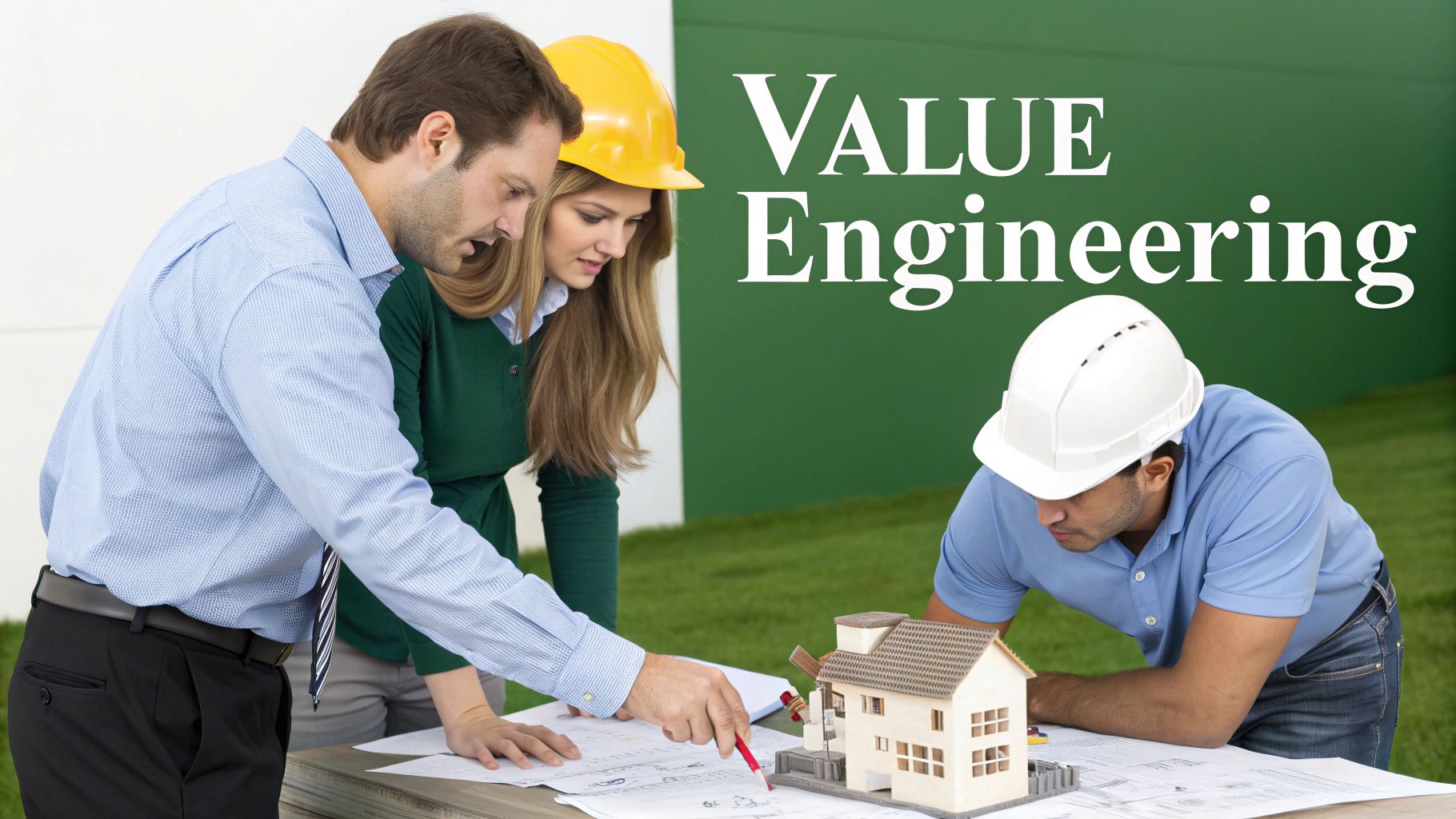
If you want to save real money on a construction project, the time to act is long before the first shovel hits the dirt. The biggest opportunities to control costs happen during pre-construction, where every decision has a massive ripple effect but changes are still cheap to make.
Too many teams rush this critical planning stage, only to get slammed with change orders and delays later on. It’s a classic case of being penny-wise and pound-foolish. Shifting your focus to meticulous upfront planning is the single best way to kill budget-draining problems before they even have a chance to materialize on site.
The secret sauce here is early collaboration. Get your architect, general contractor, and key engineers in the same room from day one. This simple step changes the entire dynamic from a clunky series of handoffs to a truly integrated partnership.
Foster Early Collaboration for Maximum Impact
When your design and construction teams operate in silos, you’re practically inviting trouble. An architect might specify a stunning but needlessly complex feature that the contractor only flags as a budget-buster after bids are already in. That friction always leads to painful redesigns, last-minute compromises, and a budget that's stretched to its breaking point.
Now, imagine an integrated team. The contractor provides real-time cost feedback on design ideas as they happen. The structural engineer suggests a more efficient system that still achieves the architect's vision. This is where innovation thrives.
On a recent mid-rise office project, for example, bringing the contractor in early led to a game-changing suggestion: switch from a traditional steel frame to a mass timber hybrid. Not only did it align with the owner’s sustainability goals, but it also shaved weeks off the schedule and slashed foundation costs because of the lighter structure. That's the kind of win you only get with early teamwork.
The real magic of pre-construction is turning "value engineering" from a last-ditch cost-cutting exercise into an ongoing conversation about maximizing value. It becomes less about what you can remove and more about what you can improve to meet the budget.
Conduct a Rigorous Site and Feasibility Analysis
A brilliant design means nothing if it’s not feasible on your specific piece of land. A thorough site analysis is non-negotiable, and it needs to go way beyond a simple survey. You have to dig into every variable that could blow up your budget down the line.
This deep dive should cover:
- Geotechnical Investigation: You absolutely must know your soil composition, water table, and whether you're sitting on a pile of rock. Finding out you need deep foundations or extensive soil remediation after the design is done is a project-killer.
- Utility and Infrastructure Assessment: Are the existing water, sewer, and power lines sufficient for your new building? The cost to upgrade municipal infrastructure can be staggering, and it's a detail that’s frequently missed in preliminary budgets.
- Zoning and Permitting Research: Navigating local ordinances and design review boards can be a minefield. Uncovering a surprise setback requirement or height restriction late in the game will force you into expensive, time-consuming redesigns.
A critical part of this is accurately estimating renovation costs to ground your plans in financial reality from the start. By front-loading this due diligence, you swap out risky assumptions for hard data, creating a far more resilient and predictable project budget.
Challenge Design Assumptions to Unlock Savings
Even the best designs are built on assumptions that are worth questioning. Challenging these ideas constructively can unlock huge savings without watering down the project's quality or aesthetic. Smart value engineering and sustainable design choices can trim construction costs by 15-25%.
Consider these key areas for a second look:
- Structural Systems: Is a cast-in-place concrete structure truly the only option? Could a precast or steel system be built faster and more affordably?
- Facade Materials: That complex glass curtain wall might look amazing, but could a streamlined window wall or a panelized system deliver a similar aesthetic for a fraction of the price? On a high-rise, a decision like this can save millions.
- MEP Systems: Get granular with the mechanical, electrical, and plumbing specs. Often, a slightly different HVAC configuration or a different manufacturer can provide the same performance with a much lower lifecycle cost.
This isn't about making the building cheaper; it's about interrogating every line item to ensure it delivers maximum value for every single dollar spent. This is the hard work in pre-construction that lays the foundation for a project that hits its financial goals without sacrificing its vision.
Embracing Off-Site and Modular Construction
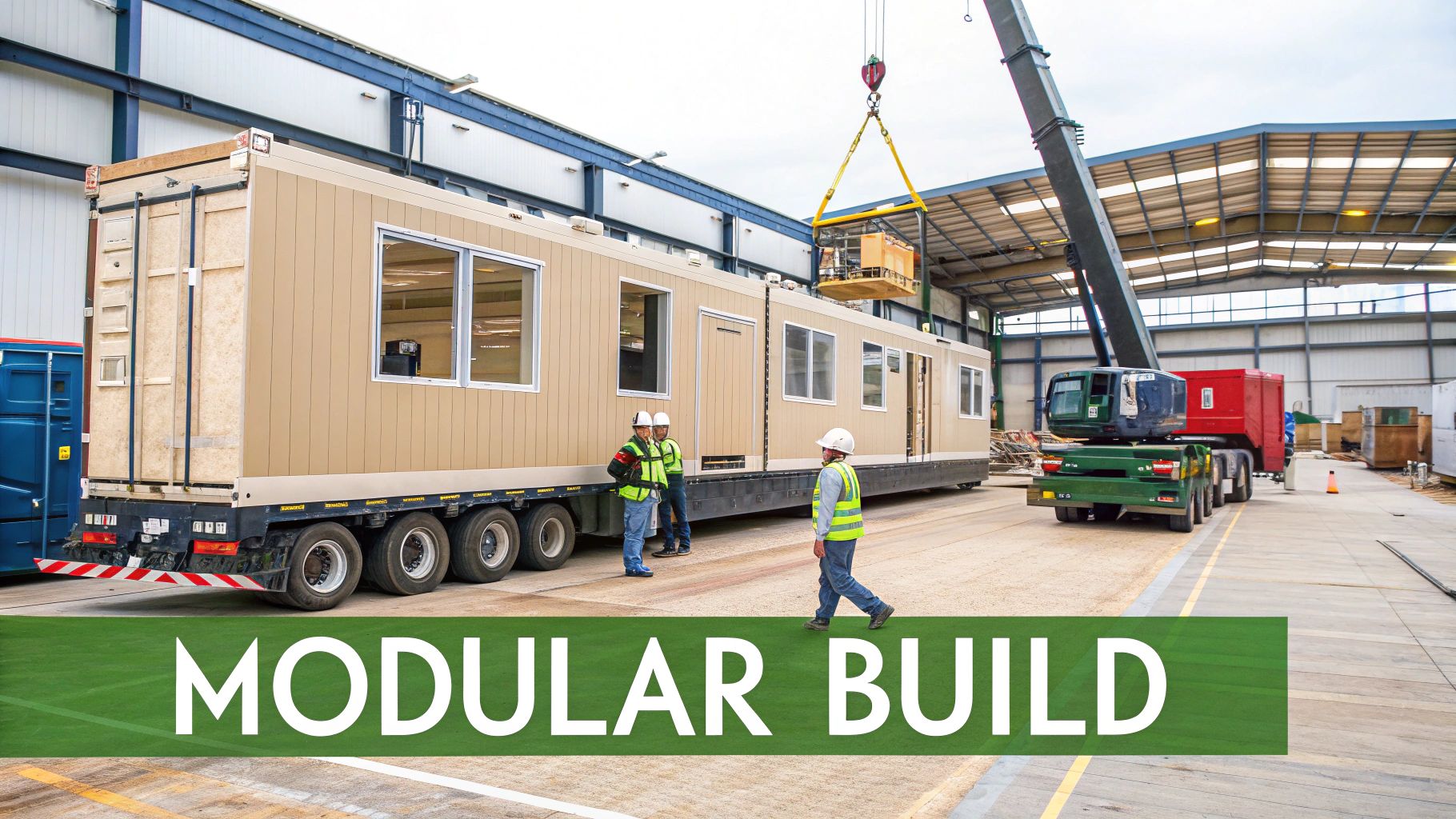
If you really want to move the needle on construction costs, you have to start thinking beyond the traditional job site. Stick-built methods will always have their place, but some of the most dramatic savings I’ve seen come from moving the work into a controlled factory setting. This isn't just a trend—it's a fundamental shift in how we manage risk, schedule, and quality.
Off-site construction is exactly what it sounds like: building major components, from entire wall panels to fully-furnished hotel rooms, in a factory. These completed "modules" are then shipped to the site and craned into place. By doing this, you're taking all the unpredictability of a chaotic job site—weather, labor inefficiencies, site congestion—and replacing it with a predictable, assembly-line process.
That’s where the real power lies. A factory doesn't care if it's raining, snowing, or 100 degrees outside. The work continues, on schedule and with precision.
The Financial Case for Prefabrication
When you look at the numbers, the argument for going modular becomes incredibly strong. It’s one of the surest ways to cut project timelines by up to 50% and knock 20-30% off the total cost. With the skilled labor shortage we're all facing, the fact that contractors report needing 30-50% less on-site labor is a massive advantage. You can dig into more industry data by checking out the latest global construction costs from Arcadis.
But the speed isn't just about finishing faster; it's about making money sooner. If you can open a new hotel or apartment building three or four months ahead of schedule, that’s months of revenue you weren’t expecting. That has a huge impact on the project's overall ROI.
The savings also show up in your materials budget. Factories buy in bulk, getting far better pricing than any single-project contractor ever could. And because everything is cut and assembled with precision machinery, material waste is slashed, often by as much as 90% compared to what gets thrown in the dumpster on a typical job site.
Identifying Ideal Projects for Modular
Now, modular isn't a silver bullet for every single project. It delivers the biggest bang for your buck on buildings that have a lot of repetition. The more you can standardize the units, the more efficient and cost-effective the factory production line becomes.
So, where does it make the most sense? Think about projects like:
- Hotels and Motels: Guest rooms are the classic example—perfectly uniform and ideal for being built as complete pods.
- Multi-Family Housing: Whether it's apartments, student dorms, or senior living, the repeating layouts are a natural fit for off-site manufacturing.
- Healthcare Facilities: We're seeing more patient rooms, exam rooms, and even entire operating theaters built as modules to guarantee quality and accelerate delivery.
- Quick-Service Restaurants: The standardized kitchens and layouts can be assembled with incredible speed and consistency.
If your project has a highly unique, one-of-a-kind architectural form, traditional on-site methods might still be the way to go. The key is to have this conversation early in the design phase to see if the project can be adapted to capitalize on modular's benefits.
A hotel developer client of mine was skeptical about modular until we ran the numbers. By using prefabricated bathroom and guest room pods, they were able to construct a 150-room hotel 40% faster than their previous project. The savings on construction loan interest alone were substantial, and they started generating revenue a full season earlier than planned.
Vetting Your Prefabrication Partner
Let me be clear: choosing the right off-site manufacturer is every bit as important as picking your general contractor. This is not a commodity. A bad modular partner can wipe out every penny of potential savings and turn your project into a logistical nightmare.
When you're vetting potential partners, you need to do your homework.
- Go See Their Shop: A factory tour is non-negotiable. Is it clean? Organized? Do you see clear quality control checks in place?
- Check Their References: Ask for a portfolio of projects just like yours and then actually call their past clients. Ask the hard questions about communication, quality, and on-time delivery.
- Drill Down on Logistics: They need a rock-solid plan for getting those modules from their factory to your site and safely craned into place. This has to be coordinated perfectly with your on-site team.
- Confirm Engineering Integration: Make sure their engineers can work seamlessly with your team to integrate the modules with the site-built foundation and, critically, all the MEP (mechanical, electrical, plumbing) systems.
For the right projects, modular construction can absolutely change the game. It’s a powerful strategy for reining in costs, crushing schedules, and ultimately delivering a better building more predictably.
Technology That Actually Cuts Costs on the Job Site
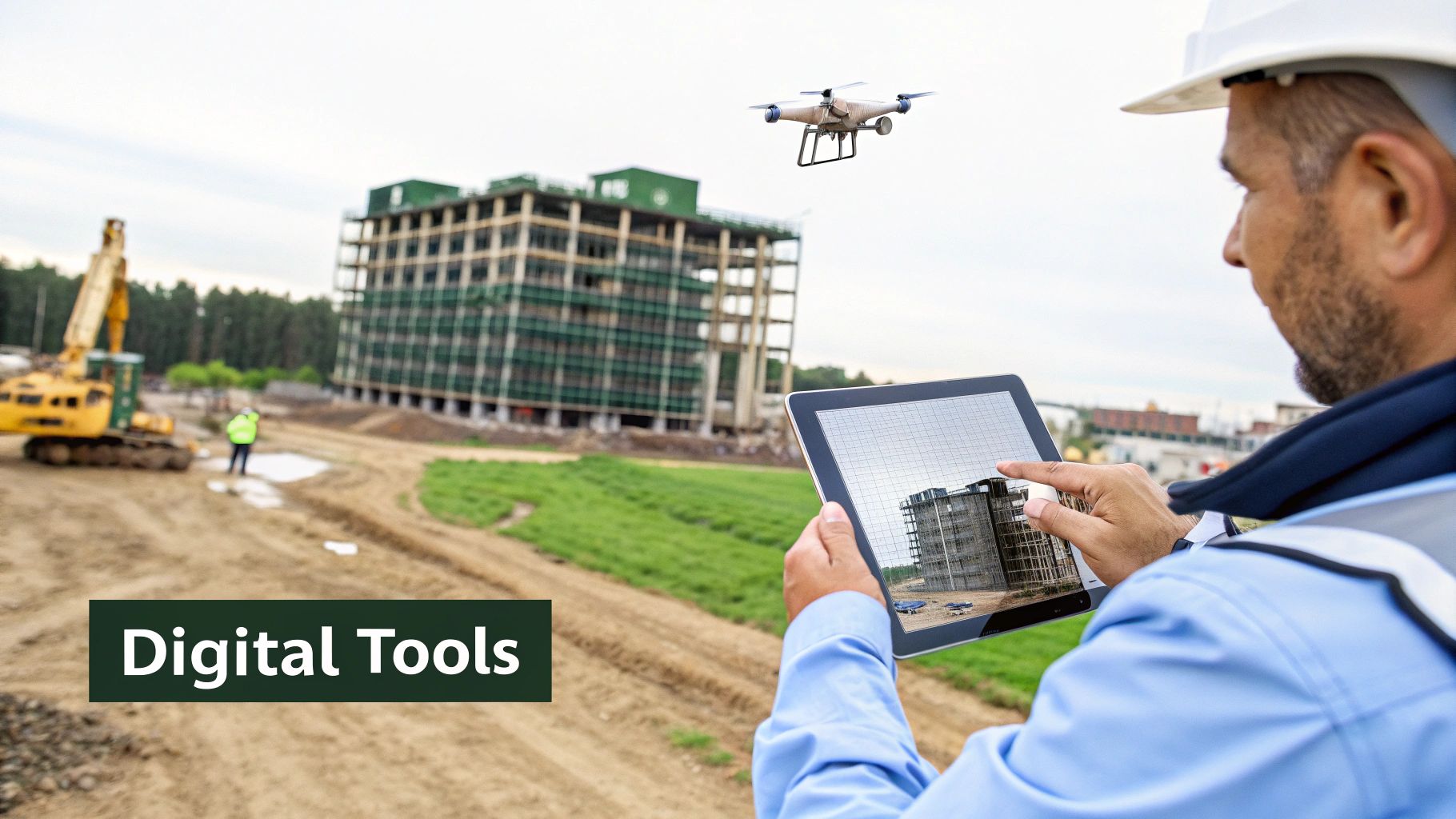
If you're still managing a complex commercial project with spreadsheets and a string of emails, you're leaving money on the table. It's that simple. Modern construction tech isn't about flashy gadgets; it's the core of smart project management, giving you the clarity to spot expensive problems long before they show up on site.
Think of it this way: you wouldn't build a tower without a crane, so why manage a multi-million-dollar budget without the right digital tools? The upfront cost for good software and hardware pays for itself quickly by cutting down on mistakes, improving efficiency, and giving you hard data to back up your decisions.
Beyond 3D Models with Building Information Modeling (BIM)
We’ve all heard about BIM, but its real muscle for cost control is often missed. It’s far more than a fancy 3D rendering. BIM creates a true digital twin of your project where every single component—from the rebar in a foundation to the light fixtures in the ceiling—lives in a shared, intelligent model.
The killer feature here is clash detection. Before a single trade sets foot on site, the BIM model can show you exactly where a massive HVAC duct is about to run straight through a primary structural beam. Or where the plumbing stacks and electrical conduits are trying to occupy the same space.
Fixing that clash on a screen costs a few clicks. Fixing it in the field means stop-work orders, change orders, and a blame game between subs that grinds your schedule to a halt. By resolving these conflicts during pre-construction, BIM directly prevents the kind of rework that absolutely demolishes a budget.
Predicting the Future with Data and AI
While BIM shows you what’s planned, artificial intelligence (AI) and data analytics help you anticipate what could go wrong. These aren’t just buzzwords; they’re powerful tools that chew through historical project data, material price fluctuations, and even weather forecasts to create startlingly accurate cost estimates from day one.
This data-first approach takes estimating from a gut-feel art form to a data-backed science. Instead of just relying on past experience, an AI model can flag hidden risks in a project schedule or optimize material orders with a level of precision a human simply can't match.
Adopting these tools can lead to 10-15% savings just by refining the design and getting ahead of risks. As insights on global construction cost trends show, project variables are only getting more complex, making this predictive power essential.
A robust project management platform is non-negotiable. It pulls all communication into one place, handles routine tasks like RFIs and submittals, and gives everyone a real-time dashboard of the project’s health. This frees up your PMs to solve real problems instead of just pushing paper.
Digital Tools and Their Cost-Saving Applications
Choosing the right technology can feel overwhelming, but focusing on the specific problem you're trying to solve is key. Below is a quick breakdown of some of the most impactful tools and how they directly save you money.
| Technology | Primary Application | Direct Cost-Saving Benefit |
|---|---|---|
| BIM Software | Creating a detailed, data-rich 3D model of the building | Prevents rework by identifying system clashes (e.g., plumbing vs. electrical) before construction starts. |
| Project Management Tools | Centralizing communication, documents, and scheduling | Reduces delays from miscommunication, automates administrative tasks, and provides real-time budget tracking. |
| Drones | Site surveys, progress monitoring, and safety inspections | Drastically cuts surveying time, verifies contractor pay applications against actual work, and reduces safety risks. |
| AI & Data Analytics | Cost estimating, risk forecasting, and resource optimization | Creates more accurate initial budgets, predicts potential schedule overruns, and optimizes material procurement. |
These tools don't just offer marginal gains; they fundamentally change how you manage risk and resources, leading to more predictable and profitable outcomes.
Eyes in the Sky: Drones for Real-Time Site Intel
One of the most practical and high-ROI technologies I’ve seen on job sites lately is drones. A task that once took a survey crew two days to complete can now be done in a couple of hours by a single drone operator.
Here’s how they immediately impact your bottom line:
- Quick & Accurate Surveys: Drones generate incredibly precise topographical maps, which are crucial for accurate earthwork calculations. Getting this right from the start avoids major cost overruns in site prep.
- Progress You Can See: Weekly flights create a time-lapse record of the project. You can overlay the drone imagery on the plans to verify that what you’re being billed for is what’s actually been built. It keeps everyone honest.
- Safer Inspections: Drones can easily inspect dangerous or hard-to-reach places like rooftops, scaffolding, and building exteriors without putting a single person at risk. This lowers your insurance liability and prevents costly accidents.
The data you get from a drone is unbiased, fast, and safe. It’s a perfect example of how a relatively small investment delivers huge returns by improving accuracy and cutting down on expensive site labor.
Rethink Your Procurement and Contractor Game
How you buy your materials and who you hire to build your project can sink your budget before the first shovel even hits the dirt. Your procurement strategy isn't just about chasing the lowest bid—it's a delicate dance of managing risk, guaranteeing quality, and building partnerships that pay you back, project after project.
Every job is different, of course, but the core principle is always the same: stop thinking transactionally. When you treat suppliers and subs like genuine partners, you open the door to better pricing, more reliable schedules, and the kind of flexibility you’ll desperately need when things inevitably go sideways.
Pick the Right Project Delivery Method
The contract you sign sets the tone for everything that follows. It dictates how your team collaborates, who holds the risk, and how everyone gets paid. This decision is one of the most powerful levers you can pull to control costs.
There are a few main ways to structure a project, and each has its own financial DNA:
-
Design-Bid-Build (DBB): This is the old-school, one-step-at-a-time method. You get a full design from an architect, then shop it around to general contractors. While it seems competitive on the surface, it often pits you against your builder, whose main path to profit can become finding change orders in the plans.
-
Design-Build (DB): Here, you put design and construction under one roof with a single contract. The beauty of this is having one point of contact and responsibility. More importantly, the builder is at the table from day one, giving real-time cost feedback that keeps the design grounded in reality and focused on efficiency.
-
Integrated Project Delivery (IPD): This is the most collaborative—and for complex projects, often the smartest—model. The owner, architect, and contractor all sign one multi-party agreement, sharing both the risks and the rewards. This creates a powerful “all for one” dynamic where everyone is incentivized to find savings and solve problems together.
For most commercial developers trying to keep a lid on costs, steering toward a Design-Build or IPD model is a no-brainer. Getting your builder involved early is the single best way to find cost-saving opportunities when they’re still just lines on a drawing, not expensive fixes in the field.
Forge Real Partnerships with Your Subs and Suppliers
Your subcontractors and material suppliers have an incredible amount of influence over your final costs and timeline. Building long-term, trusted relationships with them is one of the most underrated cost-control strategies out there. A sub who knows you and trusts you is far more likely to sharpen their pencil on pricing and make your job a priority when their schedule is jammed.
Stop the madness of just blasting out bid packages to a dozen random companies. Instead, cultivate a short-list of the top three or four pros in each major trade. These are your go-to partners. Bring them into the design process early.
Think about it: a great mechanical contractor can glance at a preliminary HVAC layout and immediately see a simpler, more efficient way to run the ductwork, potentially saving you thousands in labor and materials. That’s the kind of gold you’ll never get from a low-bidder you’ve never met.
Get Strategic About Buying Materials
Material costs can swing wildly and often account for a massive slice of your budget. If you're just passively accepting quotes as they come, you’re practically asking to overpay. It's time to get proactive.
Here are a few tactics I’ve seen work time and again:
- Buy in Bulk: If you’ve got a pipeline of projects, negotiate master pricing agreements for common materials like drywall, light fixtures, or flooring. This volume gives you serious leverage to lock in lower per-unit costs for months or even a year.
- Go Direct: For certain big-ticket or high-volume items, look into cutting out the middleman. Buying directly from the manufacturer can shave off a whole layer of markup.
- Lock in Your Prices: In a volatile market, this is critical. Work with your key suppliers to get firm pricing for materials you won't need for another six months. This protects your budget from nasty surprises and adds some much-needed certainty.
- Embrace Just-in-Time Delivery: Why pay to store and move materials around your site multiple times? Coordinate with suppliers for just-in-time deliveries. This drastically cuts down on-site storage needs, which in turn reduces the risk of theft, damage, and wasted labor.
A smart procurement plan isn't about finding the absolute cheapest price today. It's about building a resilient supply chain with partners who deliver consistent value, quality, and reliability for the long haul.
Your Blueprint for Cost-Effective Construction
Getting a project across the finish line on time and on budget isn't about finding a single magic bullet. If you want to know how to reduce construction costs effectively, the secret is weaving smart strategies together from the very first sketch to the final punch list.
The biggest opportunities for cost control happen long before anyone breaks ground. It all starts with strategic pre-planning, a phase where we look at the design, the budget, and the actual buildability all at once. Getting this right from the jump is what prevents the painful and expensive rework that sinks so many projects down the line.
Once you have a solid plan, it's about using the right methods and tools to keep things moving efficiently.
Weaving It All Together
For some projects, embracing modular construction can be a game-changer, dramatically speeding up the timeline and cutting down on the need for on-site labor. In tandem, using technology like BIM for clash detection or project management software for crisp communication helps you sidestep expensive mistakes and delays before they happen.
A sharp procurement strategy is another key piece of the puzzle. It shifts your supply chain from a series of simple transactions into a set of strategic partnerships, which often leads to better pricing and more reliable delivery.
The diagram below really breaks down how a well-oiled procurement process—from bidding to building and integrating—fits into this bigger picture of cost control.
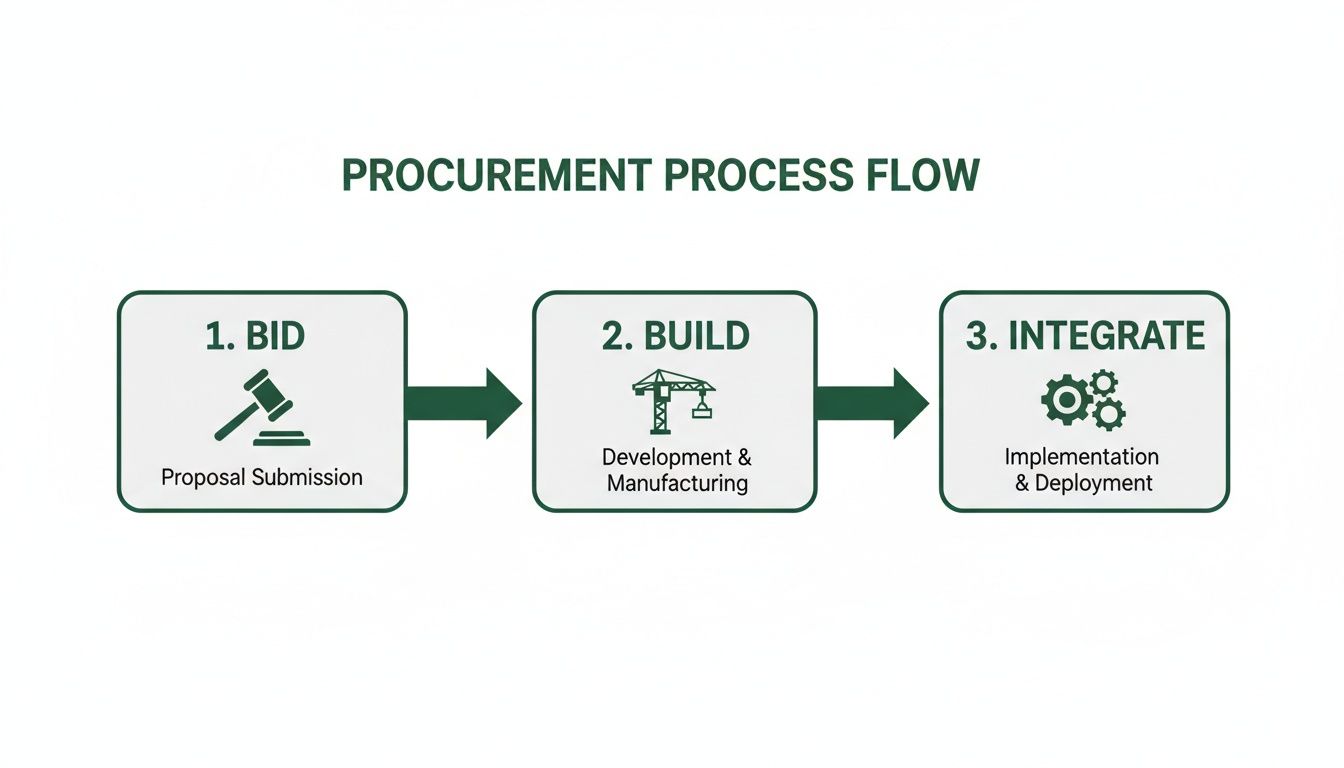
As you can see, each stage logically flows into the next. When this process is smooth, you minimize friction and get the most value out of every dollar spent.
At the end of the day, lowering construction costs isn't about cutting corners. It’s about building smarter, collaborating earlier, and making decisions based on solid data. It’s about giving your team the right processes and tools to build efficiently in a tough market. When you adopt these modern practices, you stop reacting to problems and start controlling the outcome, making sure your projects hit their financial targets every time.
Frequently Asked Questions
Even with the best plans laid out, specific questions always pop up when you're trying to get a handle on construction costs. I've heard these from countless developers and owners over the years, so let's tackle a few of the most common ones.
What Is the Single Most Effective Phase to Reduce Construction Costs?
Hands down, it's the pre-construction and design phase. This is where you have the most leverage.
Every decision made before a shovel hits the dirt—from the building's structural grid to the type of exterior cladding—creates a massive ripple effect on the budget. Bringing your contractor in early for collaborative planning and rigorous value engineering will save you a fortune compared to scrambling to cut costs once construction is underway.
Is Modular Construction Suitable for All Types of Projects?
Modular is a fantastic tool, but it's not the right fit for every single project. It truly shines on projects with a high degree of repetition.
Think about buildings like:
- Hotels and apartment complexes
- Student housing and senior living facilities
- Hospitals or clinics with many identical exam rooms
For one-off, highly customized architectural designs, traditional on-site construction often makes more sense. You really need to run a feasibility study to see if the speed and cost benefits of modular outweigh the design constraints for what you're trying to build.
The secret to making modular work is committing early. You can't just decide to "go modular" halfway through the design process and expect to see those big savings. It has to be part of the strategy from day one.
How Much Can I Realistically Save with New Construction Technology?
The savings can be pretty significant, often in the ballpark of 10-15% of total project costs if you implement the right tools effectively.
For instance, using BIM to spot clashes between plumbing and electrical systems before they're installed can cut rework costs by 5-10% alone. Layer on an AI-powered analytics tool to fine-tune your procurement and schedule, and you could easily find another 5% in savings.
The key is to stop thinking of technology as just another line-item expense. It's an investment that pays for itself many times over through fewer mistakes, better efficiency, and smarter decisions across the board.
At Sherer Architects, LLC, we believe smart design is the bedrock of any cost-effective project. From navigating the complexities of historic tax credits to mastering the art of adaptive reuse, our team is here to guide owners through every stage. We focus on delivering results that are not only beautiful and enduring but also profitable. See how our expertise can maximize the value of your next commercial project at https://shererarch.com.