A fire station architect does more than just draw up plans; they turn a community's vision for safety and readiness into a living, breathing building. These are specialists who get the unique pressures of a 24/7 facility, from the split-second logistics of a turnout to the long-term health of the crew. Honestly, hiring a firm with real-world fire station experience is the most important decision you'll make for the project's success.
Defining Your Vision Before You Build
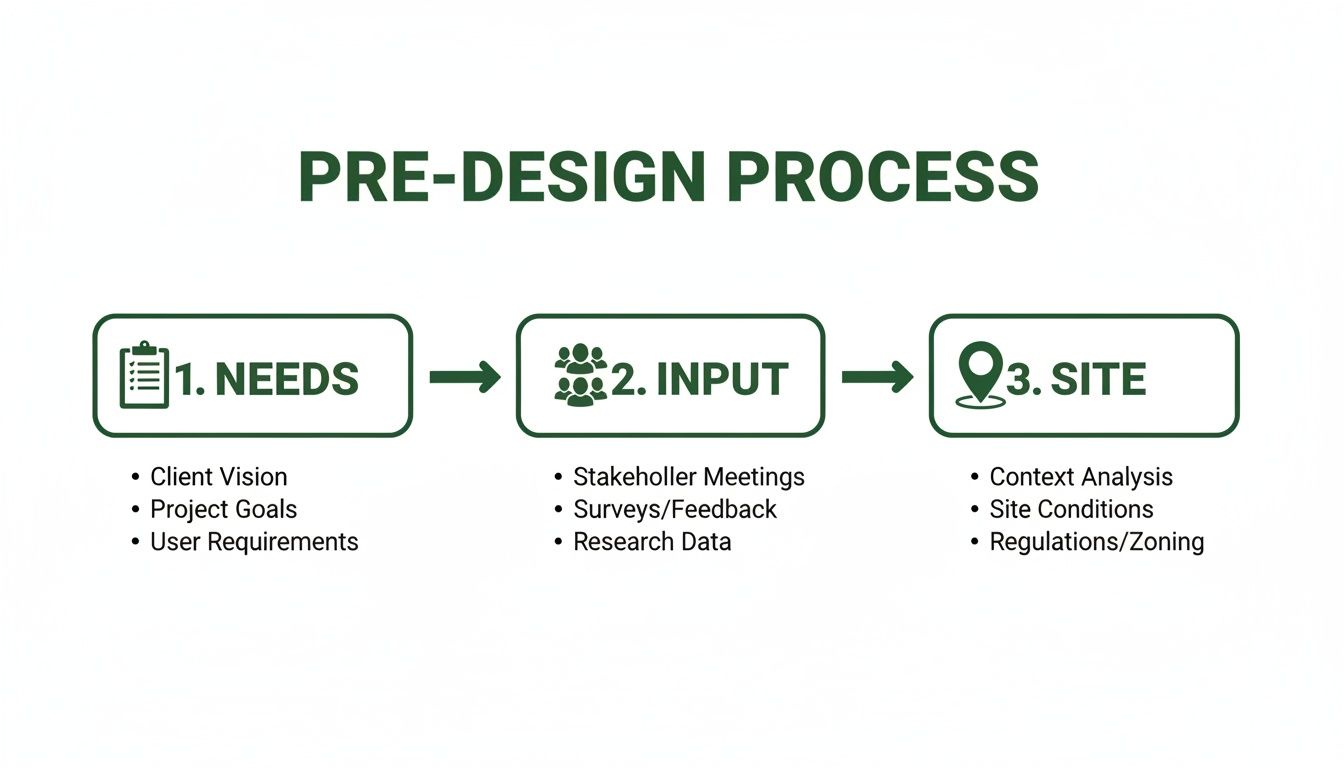
The fate of your new or renovated fire station is sealed long before any dirt is moved. This initial planning stage, which we call programming, is all about creating a bulletproof foundation for everything that follows. It's a collaborative deep dive that turns your department's specific operational needs into a clear, tangible plan.
This "program" becomes the master guide for your architect. It's an incredibly detailed document that maps out every single functional space, making sure the final design is a perfect match for the day-to-day reality your first responders face.
Gathering Input From Key Stakeholders
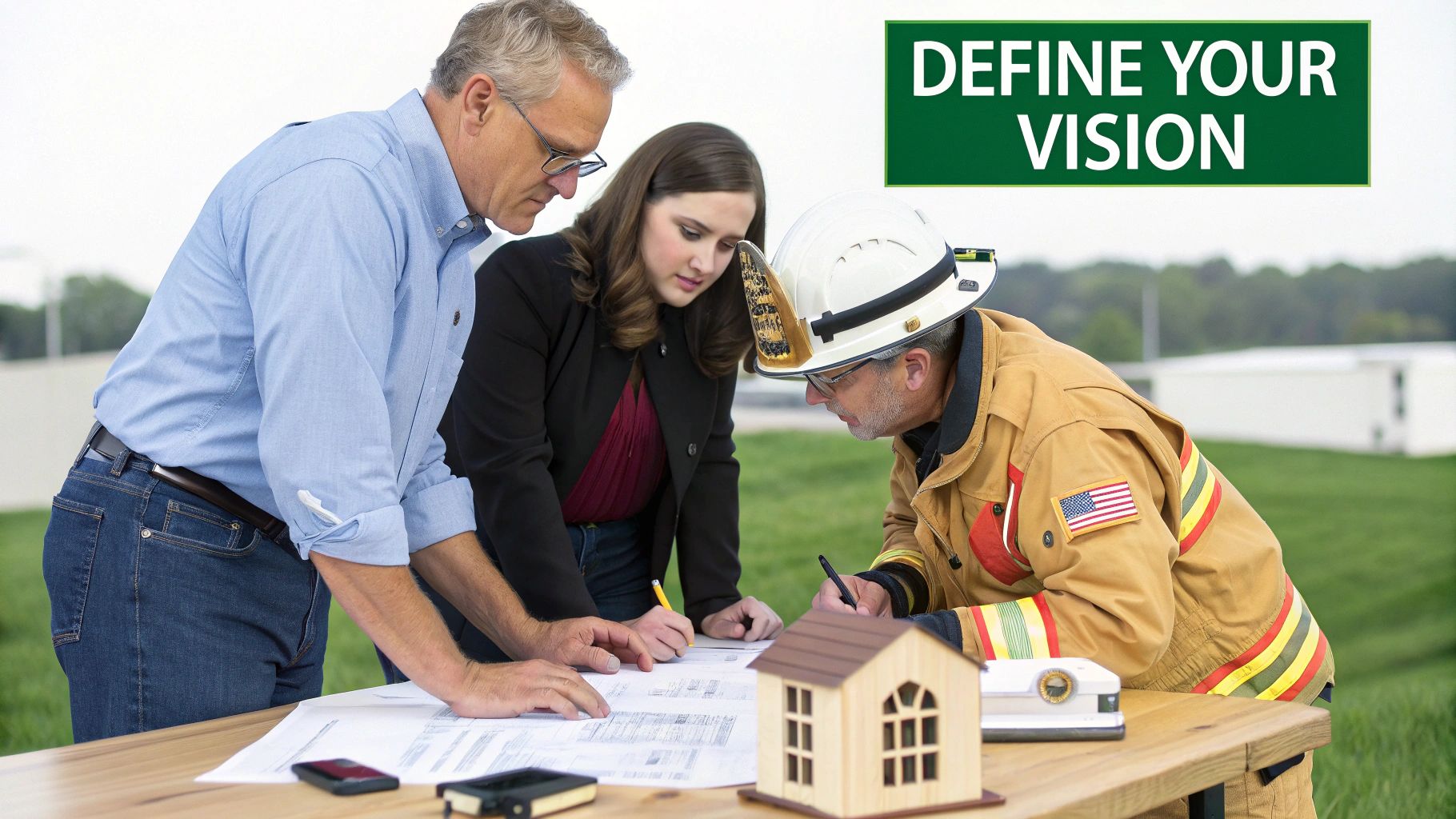
The best programs come from talking to people. A good architect will lead detailed interviews with everyone who has a stake in the station to get the full picture. This isn't just about checking boxes; it’s about understanding the culture and the real workflow of your department.
You’ll want to make sure these groups are at the table:
- Fire Chief and Command Staff: They’ll share the big-picture vision—where the department is heading, what administrative functions are needed, and how this station fits into the city's broader emergency plan.
- Firefighters and Paramedics: These are your end-users, and their feedback is gold. They can point out what’s wrong with the current station, how the flow from the living quarters to the bay needs to work, and exactly what they need for gear storage and decontamination.
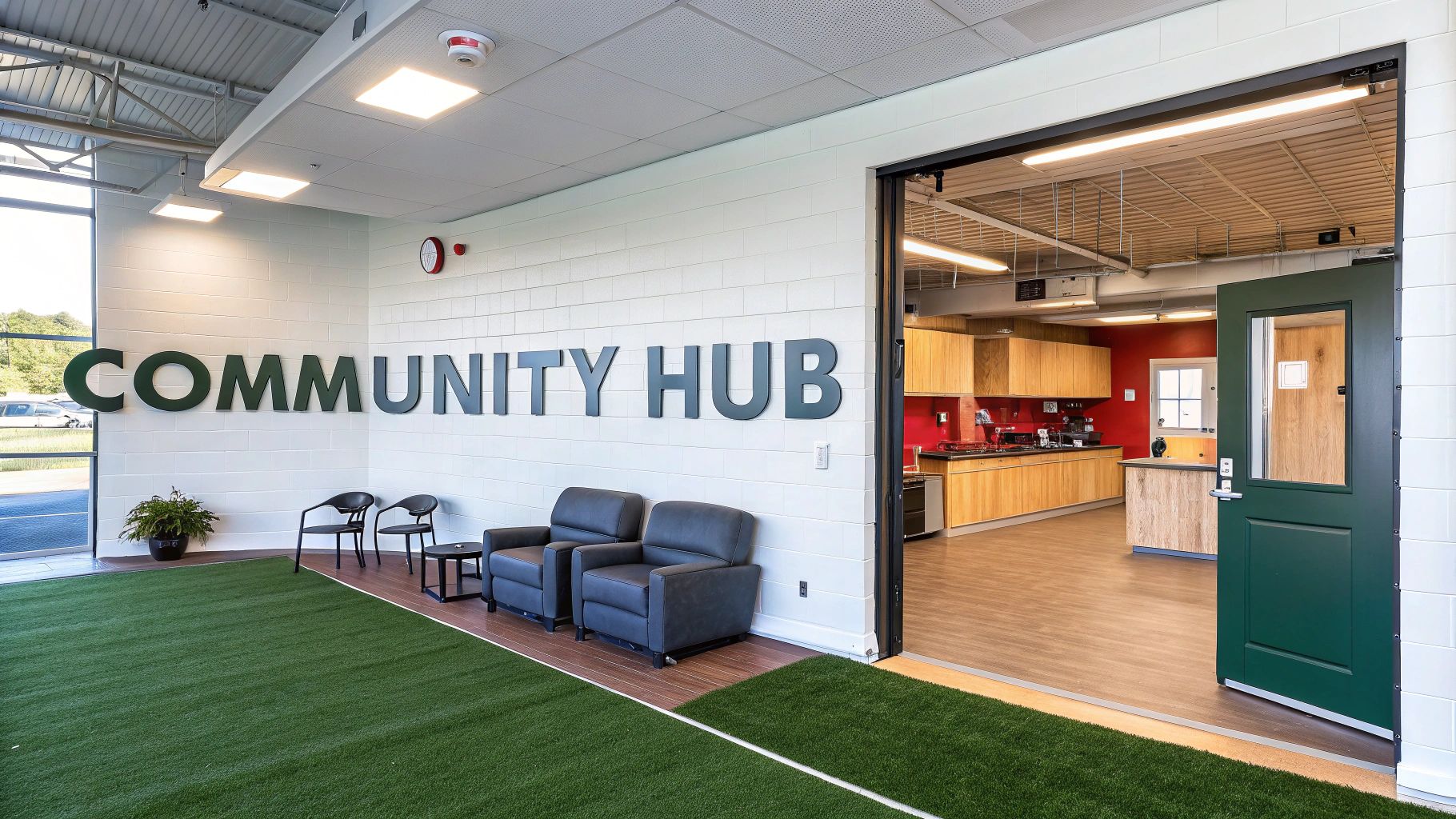
- Community Leaders and Officials: They bring the public perspective. Do you need a community meeting room? Should the station double as a safe haven during a disaster? They also keep everyone grounded in the reality of budgets and municipal approvals.
Translating Needs Into a Detailed Program
With all this feedback in hand, the architect gets to work translating it into the program document. This is way more than a simple list of rooms. It’s a comprehensive guide that defines how every space functions and connects to the others.
For example, it won't just say "Decontamination Room." It will specify that it must be right next to the apparatus bay and map out the exact sequence of movement from the bay, through decon, and into the showers and locker rooms. This is how you design for firefighter health and safety.
This process forces you to think through every detail. A solid program will nail down spatial needs for everything, from sizing the apparatus bays for the bigger trucks you might buy in 10 years, to laying out the kitchen and dayroom in a way that actually helps the crew bond.
A fire station isn't just a building; it's a critical piece of community infrastructure and a 24-hour home for its crew. The programming phase ensures that the design supports the human element of firefighting just as much as the operational one.
By putting in the time and effort during this upfront discovery, you hand your architect a crystal-clear roadmap. This clarity saves a fortune by preventing major design changes down the road, keeps the project from spiraling out of control, and ultimately delivers a facility that’s safe, efficient, and ready to serve your community for decades. This groundwork is what makes the rest of the project run smoothly.
Finding the Right Spot and Nailing the Codes
Where you put a new fire station is every bit as important as how you build it. The perfect location can shave precious seconds off response times, but the wrong one can turn into a daily logistical headache. From an experienced architect’s perspective, finding that right spot isn't just a real estate transaction; it's a deeply technical process.
These days, site selection has become a precise science. Fire departments lean heavily on run-time analyses, digging into historical response data and using GIS mapping to model different scenarios. They’ll often evaluate a handful of potential sites to find the one that mathematically minimizes response times across their entire service area.
Planning the Site for Split-Second Departures
Once you’ve zeroed in on a general area, the specific piece of land brings its own set of puzzles to solve. A good architect’s first move is to analyze the parcel for operational flow, looking far beyond simple square footage.
Here’s what’s immediately on our minds:
- Apparatus Turning Radii: Today's ladder trucks are massive and need a lot of room to maneuver. The site has to accommodate those wide turns without forcing drivers into a clumsy, multi-point turn that wastes time when it matters most.
- Secure Site Access: You need more than just a driveway. The site requires controlled entry and exit points for apparatus, staff, and the public to keep civilian traffic from blocking a rig that's trying to leave on a call.
- Drive-Through vs. Back-In Bays: This is a big one. Whenever humanly possible, drive-through apparatus bays are the gold standard. They completely eliminate the dangerous and slow process of backing a huge rig into the station, which is a massive win for both safety and speed. An architect can quickly tell you if a site’s shape and size make this best-practice layout a reality.
Think about a corner lot that looks perfect on paper because it's so central. An experienced architect might spot that the busy intersection will create a 30-second delay during rush hour, or that the property is too narrow to allow for drive-through bays. That's the kind of insight that saves a city from a multimillion-dollar mistake.
Why Fire Stations Are Built Like Bunkers: Risk Category IV
Beyond the location, the building itself has to be absolutely bomb-proof. A fire station isn't just another commercial building; it’s an essential facility that must be standing and fully functional after the worst has happened. This isn't just a good idea—it's written into the building codes an architect has to follow.
Fire stations today are designed to the Risk Category IV classification under the International Building Code. In simple terms, this means they're engineered to handle much higher structural loads from things like hurricanes, earthquakes, floods, and heavy snow. This beefed-up standard ensures first responders can actually work out of the station during a disaster, right when their community needs them most. You can dive deeper into how these standards create truly resilient community hubs by reading more about safe fire station design on RedstoneArchitects.com.
A Risk Category IV fire station is the community's last line of defense. When a hurricane or earthquake rolls through, the station can't be a casualty—it has to be the command center where the recovery effort begins.
Weaving Through the Codes with an Expert Guide
Building to that level of resilience is about more than just a strong foundation. A fire station architect has to stitch hundreds of code requirements into a cohesive design that makes the building a safe and effective place to work.
This means getting the details right on critical systems and materials, including:
- Emergency Power: The station needs a powerful backup generator that can run everything—bay doors, communication gear, lights, and living quarters—for days on end if the grid goes down.
- Seismic Bracing: In earthquake country, it’s not just the building that has to stay up. Everything inside it, like light fixtures, ductwork, and pipes, must be seismically braced so they don't fall and injure people or damage equipment.
- Impact Resistance: For stations in areas prone to hurricanes or tornadoes, the exterior materials, windows, and especially the large bay doors often need to meet specific ratings to resist impacts from flying debris.
An architect who lives and breathes public safety design knows how to navigate these complex codes without breaking the budget. Their expertise is what turns a book of rules into a functional, resilient building that protects both the firefighters and the people they serve.
Designing for Firefighter Health and Safety
Today's fire station is a world away from the designs of even a generation ago. It has to be more than just a garage for the apparatus; it's a 24/7 home where the long-term health and well-being of the crew are paramount. A fire station architect's most critical job is to design a building that actively protects first responders from the hidden dangers of their work, especially the constant exposure to carcinogens.
The key to this is a design philosophy known as the "Hot Zone" concept. This isn't just about how you arrange rooms on a floor plan. It's a deliberate, strategic approach that creates a one-way path from the contaminated apparatus bay to the clean living quarters, stripping away hazards at every step.
Understanding the Hot Zone Design
This approach divides the entire station into three distinct zones based on contamination risk. The whole point is to establish a non-negotiable flow for firefighters returning from a call, ensuring they decontaminate themselves and their gear before ever setting foot in the administrative or living areas. A skilled architect makes this process feel intuitive.
The zones create a series of essential buffers:
- Red Zone (Hot): This is the apparatus bay and anywhere contaminated gear and vehicles live. It's the highest-risk zone, full of vehicle exhaust, soot, and chemical residue from fire scenes.
- Yellow Zone (Transition): This is the crucial buffer. It houses decontamination showers, turnout gear storage, and dedicated laundry facilities. Firefighters move from the Red Zone into the Yellow to get clean.
- Green Zone (Cold): These are the clean zones—the kitchen, dayroom, dorms, and offices. No contaminated gear, boots, or clothing ever crosses this threshold. Period.
To explain this system more clearly, here’s a breakdown of how the zones function.
Fire Station Hot Zone Design Explained
This table breaks down the three-zone system for fire station design, outlining the purpose and key spaces within each zone to ensure firefighter health and safety.
| Zone | Purpose | Typical Spaces Included |
|---|---|---|
| Red (Hot) Zone | To contain all contaminants brought back from an incident scene. This is the highest-risk area. | Apparatus Bays, Vehicle Maintenance Areas, Support Spaces (e.g., SCBA fill station, tool storage). |
| Yellow (Transition) Zone | To provide a buffer where firefighters can decontaminate themselves and their gear before entering clean areas. | Decontamination Showers, Turnout Gear Storage, Gear Laundry/Extractor Room, PPE Cleaning & Repair. |
| Green (Cold) Zone | To provide a safe, contaminant-free environment for administration, rest, and daily living. | Kitchen, Dayroom/Lounge, Sleeping Quarters (Dorms), Offices, Fitness Room, Public Lobby. |
A seasoned fire station architect will use physical separations, like air locks with positive pressure systems, to make sure contaminated air from the bay can't migrate into the living quarters. It’s about building a fortress against invisible threats.
The Hot Zone layout is the single most important design strategy for cancer prevention in the fire service. It's a proactive architectural solution to a known occupational hazard, directly protecting the long-term health of every firefighter in the building.
Key Spaces in a Health-Focused Station
Putting the Hot Zone concept into practice means creating specific spaces with very specific jobs. These aren't just rooms—they're critical stations in the decontamination workflow.
A dedicated decontamination shower and transition area is the first stop after an incident. It must be located right off the apparatus bay, allowing firefighters to shower immediately after doffing their gear and wash away soot and chemicals before they have a chance to absorb into the skin. This space needs to be built tough with durable, easy-to-clean surfaces.
Proper turnout gear storage is just as vital. Gear can't just be hung on a rack in the bay anymore. It needs a dedicated, well-ventilated room with commercial-grade exhaust systems that pull contaminated air directly outside. This is crucial for preventing the off-gassing of carcinogenic particles that would otherwise get sucked into the station’s HVAC system and circulated right into the Green Zone.
Of course, getting these zones right depends heavily on the site itself.
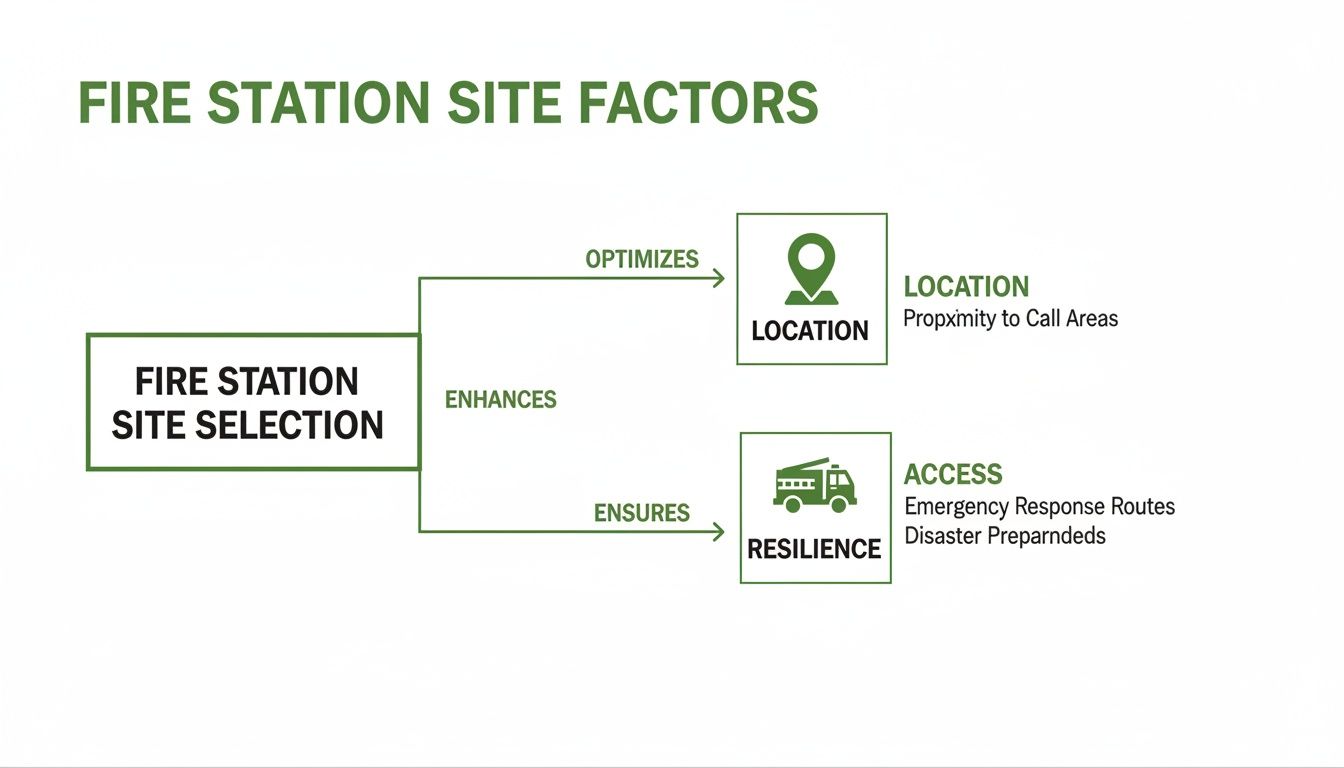
As you can see, the site's location and accessibility are the foundation. They directly influence how an architect can lay out the building to create a station that is not only operationally efficient but fundamentally safe for its crew.
Beyond Decontamination: Physical and Mental Wellness
Firefighter health goes far beyond just avoiding toxins. The immense physical and mental stress of the job demands spaces designed specifically for wellness and recovery. A fire station architect who truly understands the life of a first responder will integrate these areas into the design from day one.
A dedicated fitness area, for example, is non-negotiable. Firefighting is an incredibly demanding job, and providing modern, on-site exercise equipment helps crews maintain the peak physical condition they need to perform safely and effectively. This space needs proper impact-resistant flooring, great ventilation, and enough room for both cardio and strength training.
Finally, the design of the living quarters has a massive impact on mental well-being. This means creating a comfortable dayroom where the crew can decompress after a tough call, a functional kitchen that encourages communal meals and camaraderie, and individual sleeping quarters that offer privacy and quiet for much-needed rest. These "soft" spaces are just as mission-critical as the operational ones when it comes to building a healthy, resilient, and sustainable work environment.
Modernizing Historic and Existing Fire Stations
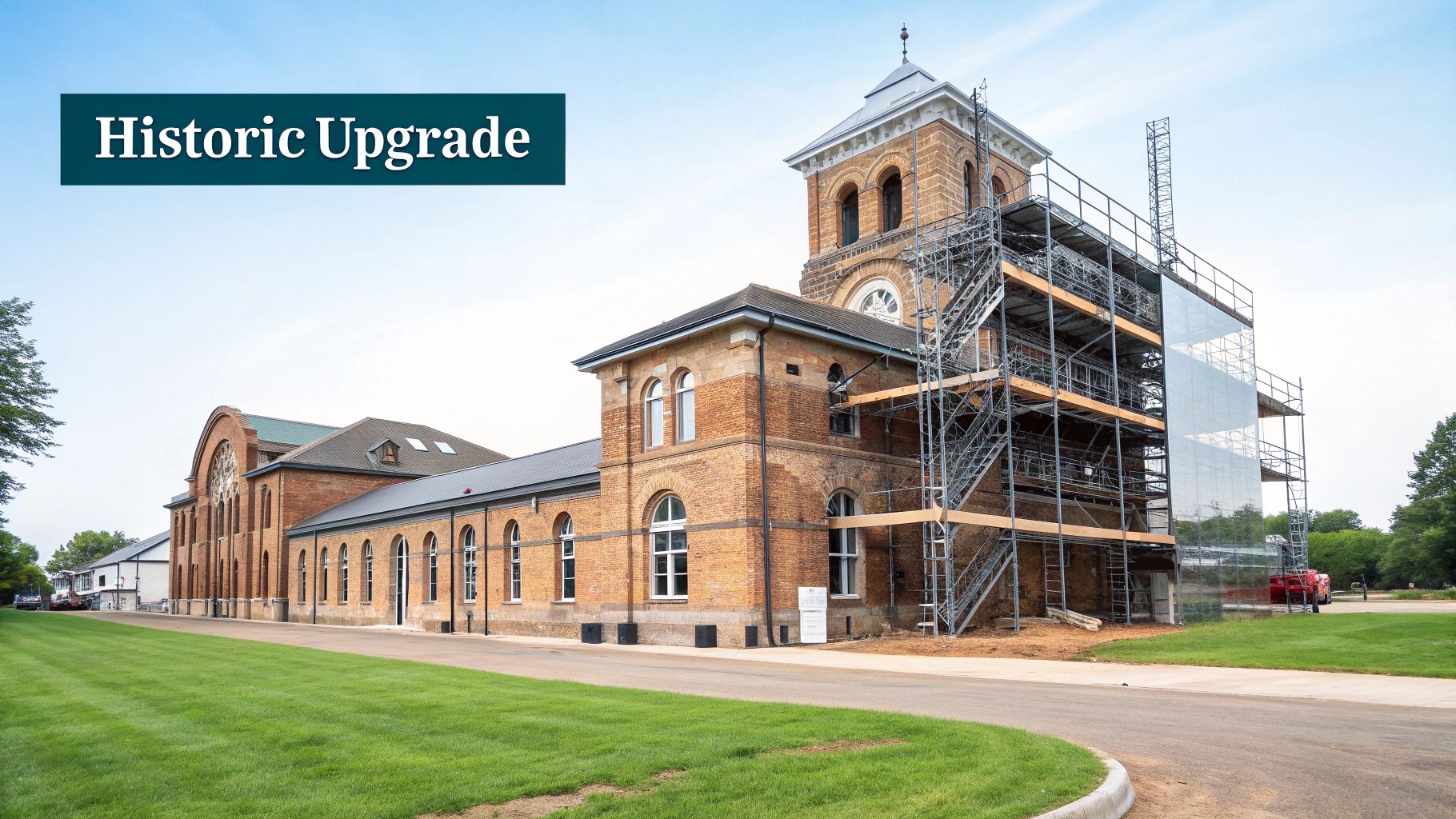
Not every new fire station starts with a blank slate. Many communities have older stations that are woven into the very fabric of the local identity. The problem is, these beautiful, historic structures often fall dangerously short of what’s needed for modern firefighting. This creates a fascinating puzzle: how do you blend historic preservation with the non-negotiable demands of today's fire service?
The first and most obvious hurdle is usually scale. Firefighting apparatus has changed dramatically over the last century, and the buildings that house them simply haven't kept up. Many older stations were built for horse-drawn steamers, meaning their bays are far too short, narrow, or low for a modern ladder truck. A skilled fire station architect has to find creative solutions, like complex structural modifications or thoughtfully designed additions, that expand the bays while respecting the building’s original character. This journey from horse-drawn to motorized apparatus is a constant theme in adaptive reuse. You can actually see more on this in a great piece about the evolution of fire station design on dkillerbuildsnov.mystagingwebsite.com.
Weaving in Modern Health and Safety
Beyond just making the rigs fit, the real heavy lifting comes from retrofitting modern health and safety features into a historic footprint. This is where an architect's specialized expertise is put to the test. The goal is to introduce contemporary concepts like "Hot Zone" design into a building that was never conceived with carcinogen control in mind.
It’s about strategically creating clear separation between contaminated and clean zones. For instance, an architect might:
- Repurpose an old storage room adjacent to the bay, transforming it into a dedicated decontamination shower and transition area.
- Design a small, seamless addition to house turnout gear, complete with the heavy-duty ventilation systems needed to pull contaminants out of the air.
- Install positive pressure air locks at key doorways, creating an invisible barrier that stops contaminated air from migrating from the apparatus bay into the living quarters.
These are surgical interventions. They demand a deep understanding of how to thread new systems—like high-tech HVAC and vehicle exhaust extraction—through an old structure without destroying its integrity.
Renovating a historic fire station isn’t about forcing a modern layout onto an old building. It’s a respectful dialogue between past and present, finding clever ways to meet today's needs while honoring the building's story.
Navigating Regulations and Finding Opportunities
Working with historic buildings adds another layer of complexity: regulations. A fire station architect who specializes in preservation is your guide through the maze of local, state, and even federal historic preservation guidelines. Their experience is absolutely critical for getting the necessary approvals for any significant structural changes.
But this process isn't just about red tape; it can open up some incredible opportunities. Historic status can unlock valuable financial incentives that might make a renovation far more feasible than building new.
Potential Financial Advantages
- Historic Tax Credits: Federal and state programs can offer substantial tax credits for the certified rehabilitation of historic buildings, directly slashing the project's overall cost.
- Grants and Loans: Preservation societies and government agencies often provide grants or low-interest loans specifically for projects that protect community landmarks.
An architect with a background in historic preservation knows how to navigate these programs and can help you prepare the extensive documentation needed to secure that funding. Their expertise can turn what looks like a costly constraint into a major financial asset.
In the end, modernizing an existing station is a powerful act of sustainability. It gives a beloved community building a new lease on life, keeps tons of demolition waste out of landfills, and preserves a tangible piece of local history. While it’s certainly a challenge, the result is a facility that bridges the past and the future—fully equipped to protect both its firefighters and the community for generations to come.
How to Select the Right Architect for Your Project
Choosing your architect is, without a doubt, the single most important decision you'll make for the entire project. This isn't just about hiring a vendor. It's about finding a long-term partner who will turn your department's vision into a functional, safe, and resilient building that will stand for decades.
Let's be clear: a generalist firm won't do. You need a specialized fire station architect who lives and breathes the unique operational rhythms and life-safety demands of a 24/7 emergency facility.
For public projects, the selection process is typically more structured than in the private sector, usually kicking off with a formal Request for Qualifications (RFQ) or Request for Proposal (RFP). This document is your first real chance to signal that you’re serious about finding genuine expertise, not just the lowest price tag.
A well-written RFQ or RFP should be sharp and specific. It needs to clearly map out your project's scope, timeline, and budget, while compelling firms to prove their direct experience with public safety buildings. This is how you attract the right talent from the start and filter out those who simply aren't a good fit.
Drafting an Effective RFQ or RFP
Think of your request document as a strategic tool, not just a formality. Vague requests get you vague, unhelpful responses. You want to ask for specific information that lets you make a true apples-to-apples comparison between firms.
Here’s what your RFQ or RFP absolutely must demand:
- A Detailed Portfolio of Relevant Projects: Don’t settle for a simple list. Require photos, project descriptions, final construction costs, and client references for at least 3-5 completed fire stations or similar public safety projects.
- Team Resumes and Roles: You need to know exactly who will be working on your station. Ask for the resumes of the principal architect, the project manager, and key consultants, making sure they highlight their specific fire station design experience.
- Understanding of Public Bidding: Ask firms to describe their approach to the public bidding process. How do they handle cost estimating and construction administration for municipal projects? Their answer will tell you a lot.
- A Statement of Approach: How will they actually work with your stakeholders? What does their communication and collaboration process look like? This gives you a crucial feel for their working style.
This level of detail ensures that the firms responding have the proven track record you need. It shifts the conversation from a simple fee comparison to a value-based decision focused on experience and qualifications.
Evaluating Potential Architecture Firms
Once the proposals land on your desk, your selection committee has its work cut out for it. It’s time to look past the glossy marketing brochures and dig into the real substance of what they’ve provided. The mission is to find a partner who will champion your vision and guide you confidently through a very complex process.
An architect’s portfolio tells a story. As you review their past fire station work, don't just get caught up in the aesthetics. Look closer. How do their designs tackle modern challenges like Hot Zone layouts, apparatus bay functionality, and the need for long-term durability?
For example, look at how top-tier architects are designing stations in environmentally sensitive areas. A station in Chamonix-Mont-Blanc, France, cleverly embeds its vehicle bay underground to minimize its visual impact on the stunning mountain terrain. In Italy's Trentino-Alto Adige region, Fire Station Fleres was built using locally excavated rocks packed into wire gabion walls, allowing it to blend seamlessly into the Dolomite landscape. These projects show how the best architects see a fire station as an opportunity to demonstrate sustainability and environmental stewardship—a quality you might want for your own community. You can see more examples of how architects blend fire stations with the landscape on Architizer.com.
Your ideal architect is a trusted advisor, not just a drafter. They should be able to challenge assumptions, offer creative solutions, and clearly explain the pros and cons of every major design decision.
Building a Productive Partnership
After you’ve narrowed the field to your top firms—usually 2-3 candidates—it's time for interviews. This is your chance to see if the chemistry is right and confirm that their collaborative style aligns with your team’s culture.
Come prepared with pointed, scenario-based questions that get to the heart of their experience:
- "Describe a time when a fire station project hit an unexpected budget snag. How did you get it back on track?"
- "How do you keep the lines of communication open and clear between the fire department, city officials, and the construction team?"
- "Walk us through your process for engaging our firefighters and command staff during the programming phase."
Their answers will reveal their real-world problem-solving skills and their commitment to a transparent process. You’re looking for a firm that provides clear, confident answers backed by years of hands-on experience.
Getting the architect selection right sets the entire project up for success. By focusing on proven expertise, a collaborative spirit, and a deep understanding of public safety design, you can build a partnership that delivers a facility ready to serve your community for decades to come.
Common Questions About Fire Station Projects
Building a new fire station is a massive undertaking, and it's not something most municipalities or development committees do more than once a generation. It’s only natural to have a lot of questions. Getting clear, honest answers from the start is the key to setting realistic expectations for your timeline, budget, and long-term goals.
Here are some of the first questions we typically hear from clients as they begin the process of working with a fire station architect.
How Long Does It Take to Build a Fire Station?
This is almost always the first thing people want to know. While every project is different, a solid rule of thumb for a new build is 2 to 2.5 years—from the day you hire an architect to the day the firefighters move in.
That timeline breaks down into a few distinct stages:
- Design Phase (9-12 months): This is where the real deep work happens. It covers everything from programming and stakeholder meetings to hashing out the schematic design, developing the details, and ultimately producing a full set of construction documents.
- Bidding and Permitting (2-3 months): With plans in hand, the project is put out to bid for general contractors. At the same time, we're navigating the local permitting process with the authorities.
- Construction (12-18 months): This is the longest stretch, involving everything from breaking ground and pouring foundations to the final interior finishes and commissioning all the building's systems.
Renovations can sometimes move a bit faster, but they often come with their own unique surprises that can affect the schedule.
What Are the Biggest Budget Risks?
Even the most carefully planned projects have financial risks. The biggest headaches usually come from things you simply couldn't know about during the design phase.
Unforeseen site conditions are a classic example. You might hit bad soil that needs expensive over-excavation or discover abandoned utility lines right where the new foundation is supposed to go.
Another huge factor is the volatility in material costs. A sudden spike in the price of steel or lumber after the project has been bid can throw a budget into chaos. Finally, scope changes made after the design is locked in will almost always cost you money and time. A good architect will help you get ahead of these risks with detailed site analysis and, most importantly, by building a healthy 5-10% construction contingency into the budget from day one.
Future-proofing isn't just about preparing for what you know is coming; it's about building in the flexibility to adapt to what you can't yet predict. An adaptable design is a resilient one.
How Can We Future-Proof Our New Station?
A new fire station is a 50-year investment, at a minimum. Designing for tomorrow's needs is absolutely critical. "Future-proofing" isn't about having a crystal ball; it's about making smart, strategic decisions now that give you options later.
An experienced fire station architect will guide you through this, focusing on a few key areas:
- Designing for Expansion: The site layout should anticipate growth. Think about where a future building addition or an extra apparatus bay could go without causing major disruptions down the line.
- Oversizing Apparatus Bays: Always go bigger than you think you need. Bays should be longer, wider, and taller than your largest current vehicle requires because one thing is certain: fire trucks aren't getting any smaller.
- Flexible Interior Spaces: Using non-load-bearing walls for living quarters and administrative areas makes future reconfigurations much simpler and far less expensive.
- Planning for Technology: You can't predict the tech of 2050, but you can prepare for it. That means installing ample conduit, data ports, and robust electrical capacity to handle whatever comes next.
A little forethought today ensures your station remains a functional, valuable community asset for decades.
At Sherer Architects, LLC, we specialize in guiding clients through every phase of complex projects, from historic preservation to new commercial construction. Our collaborative process ensures your vision is realized with enduring quality and a strong return on investment.
Discover how our architectural expertise can bring your next project to life.