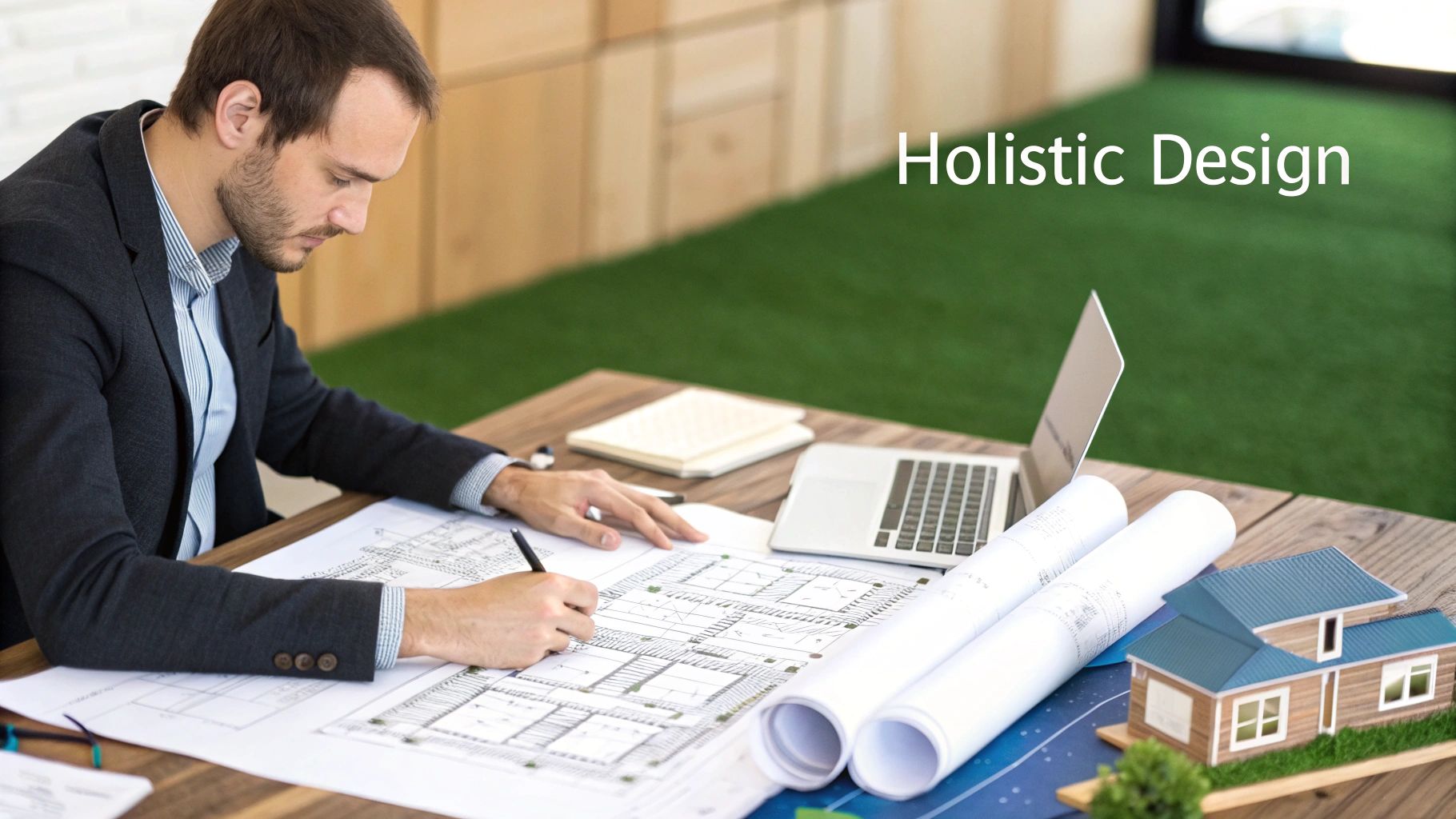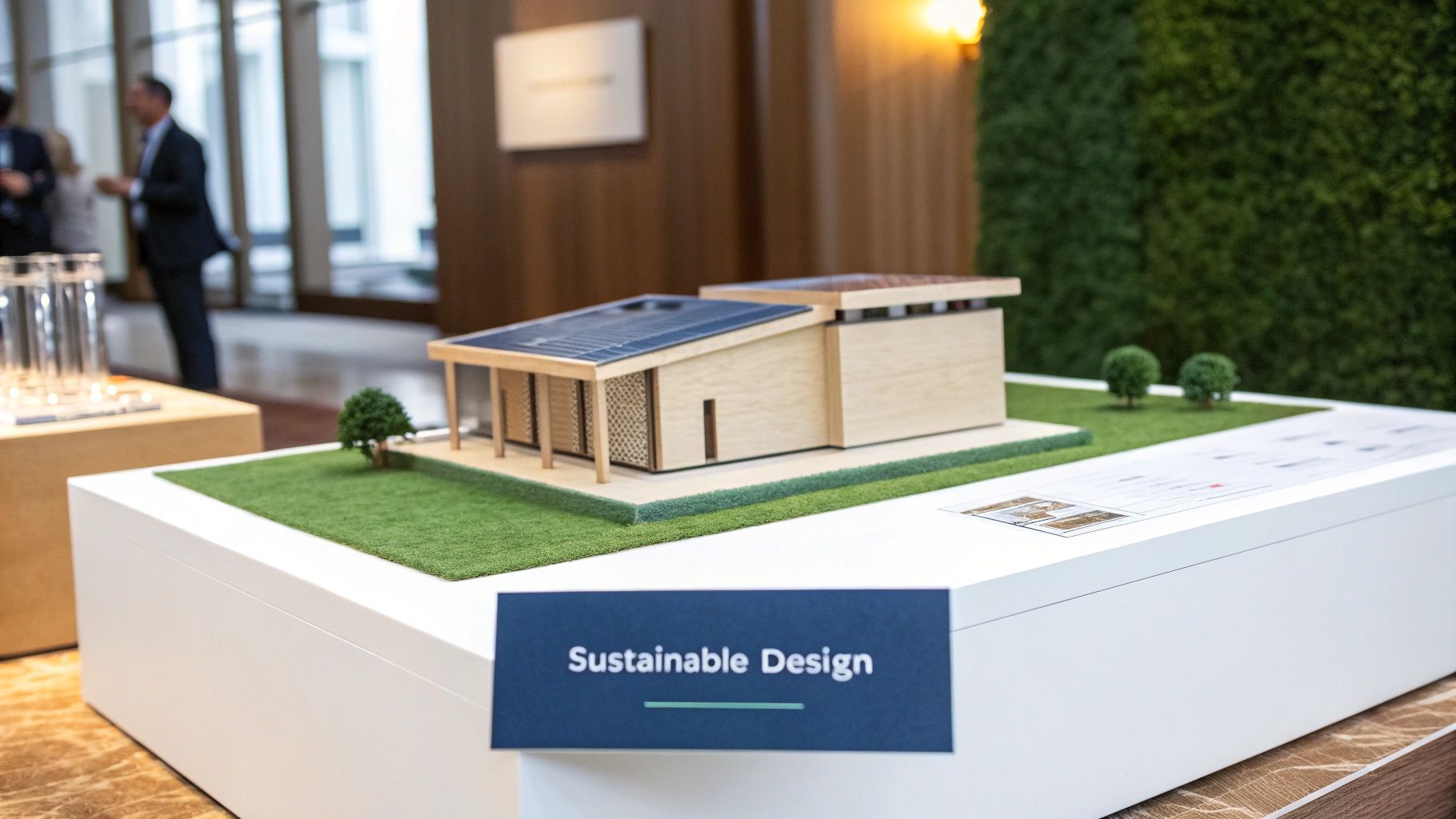
Sustainable design architects are a different breed of professional. They create buildings designed from the ground up to have the smallest possible environmental footprint while being fantastic places for people to live and work. It's a holistic approach that blends energy efficiency, smart material choices, and a deep respect for the natural world. The result? Buildings that are better for the planet, cheaper to run, and healthier for everyone inside.
What a Sustainable Architect Really Does
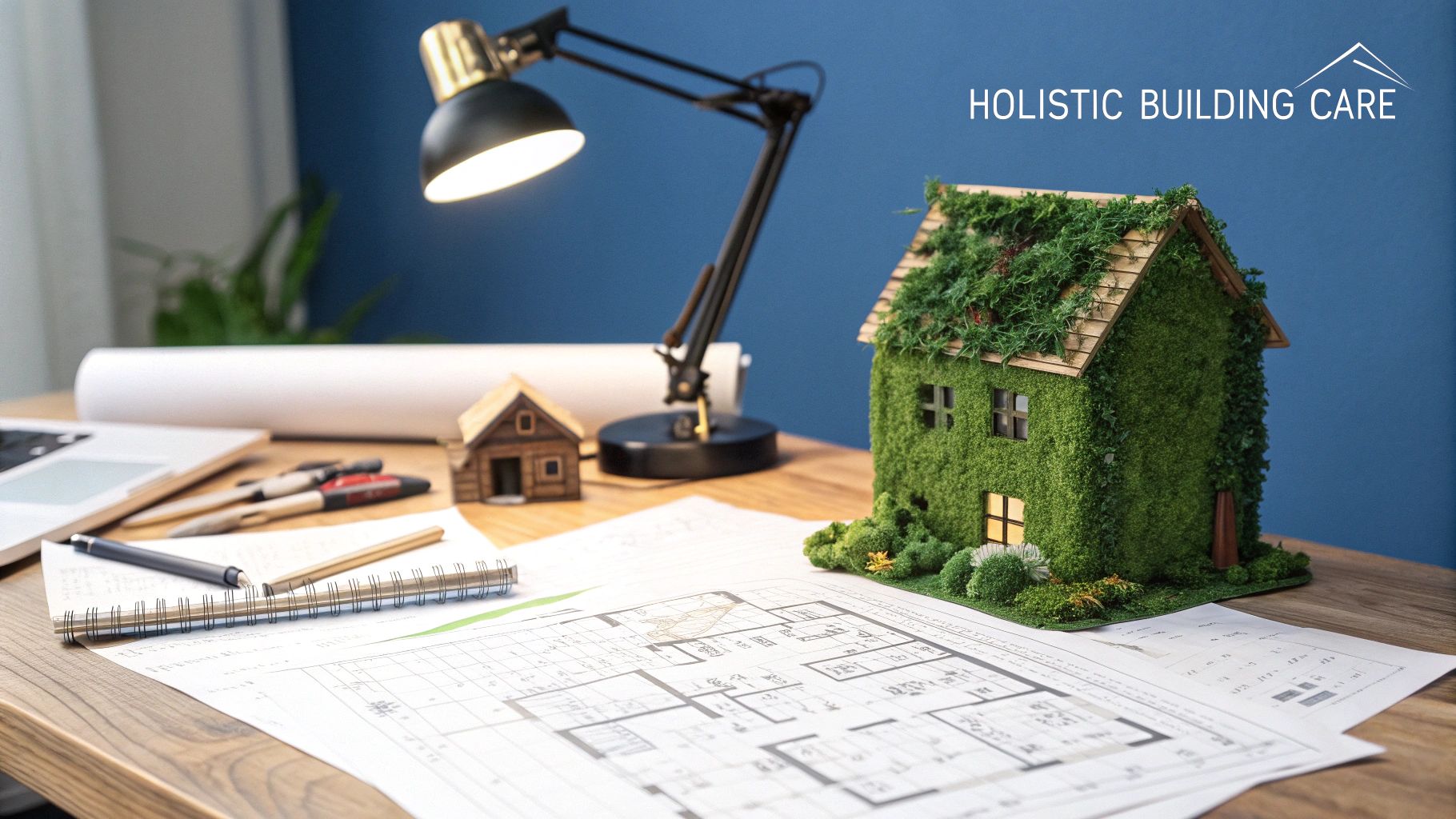
Think of a sustainable architect as a master integrator. A traditional architect might focus on aesthetics, space, and structure, but a sustainable architect brings another crucial perspective to the table: the long-term health of both the building's occupants and the environment itself. This job goes way beyond just drawing up plans.
From the very first conversation, these experts are thinking about a project’s total impact. They'll study the building site, local climate, and existing ecosystems to guide every single decision, from where a window should go to what the walls are made of. It’s all about being proactive to ensure the final building is efficient, resilient, and feels like it truly belongs in its environment.
More Than Just Solar Panels
A common myth is that sustainable architecture just means slapping some solar panels on the roof. While renewable energy is certainly part of the picture, the real philosophy is much more fundamental. True sustainability is baked into the design from day one.
Sustainable architects prioritize passive design strategies. This is the art of making the building do the work for you. Simple, brilliant things like orienting the structure to maximize sunlight and warmth in the winter, or designing for natural cross-ventilation to keep things cool in the summer without cranking the AC. It’s about building with nature, not fighting against it.
"The architectural sector plays a substantial role in global carbon emissions, accounting for approximately 37% of total emissions worldwide. Sustainable architecture is a direct response to this, aiming to create structures that give back more than they take."
This mindset completely changes the design process. Instead of just relying on brute-force mechanical systems to control temperature and light, the building’s own shape and materials are the first tools used to create a comfortable, hyper-efficient space.
Key Responsibilities and Focus Areas
The work of a sustainable architect spans the entire life of a building, from the initial sketch to long after the ribbon-cutting ceremony.
You'll find them focused on a few core areas:
- Energy Optimization: This is about designing buildings that sip, rather than gulp, energy. Every choice is geared toward radically reducing the power needed for heating, cooling, and lighting.
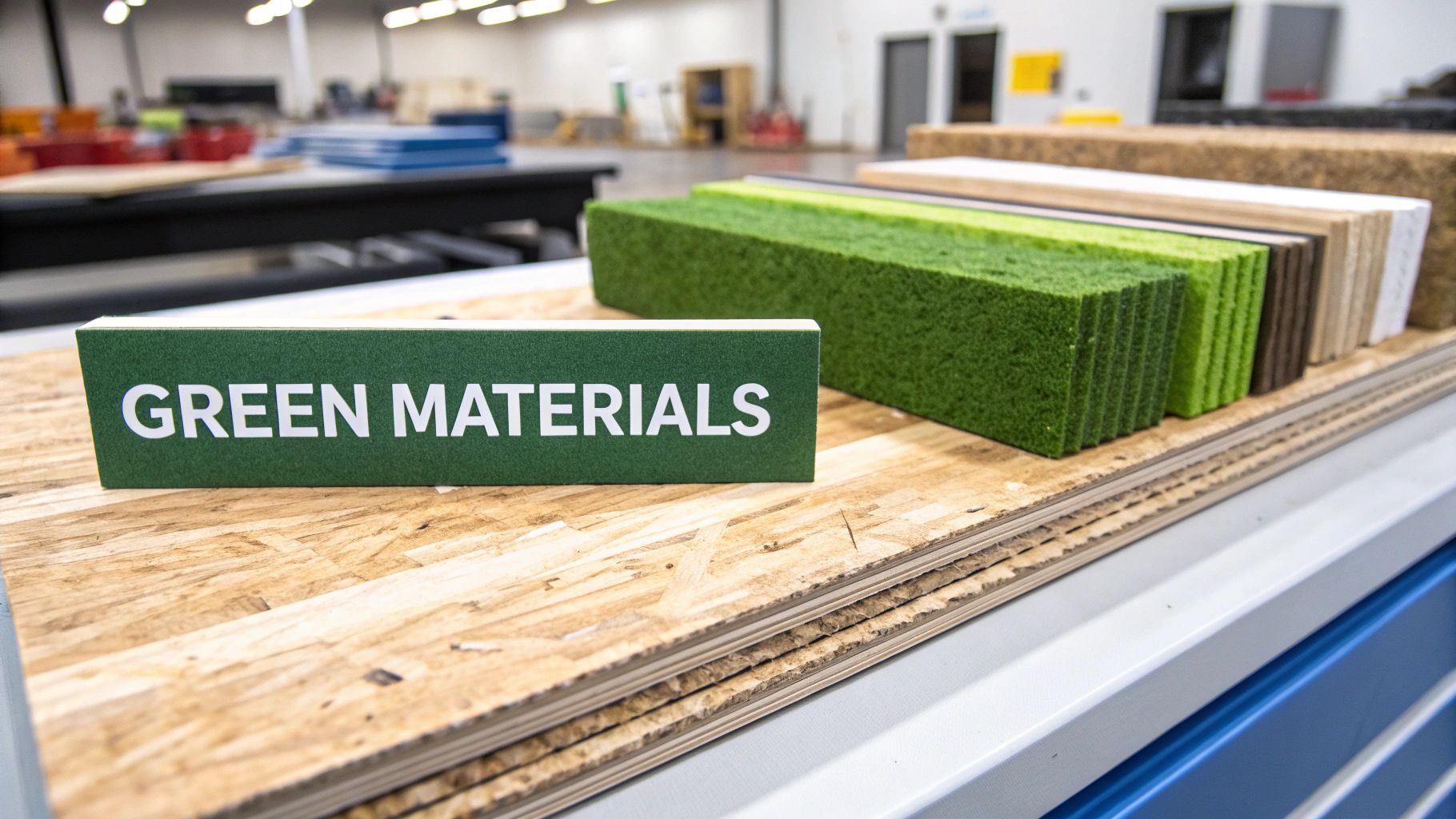
- Responsible Material Sourcing: They obsess over materials, choosing options that are non-toxic, made from recycled content, or sourced locally to minimize their environmental cost.
- Water Conservation: They design clever systems like rainwater harvesting and install high-efficiency fixtures to ensure every drop of water is used wisely.
- Indoor Environmental Quality: This is all about people. They work to create spaces with incredible air quality, abundant natural light, and a strong connection to the outdoors, which has been proven to boost health and productivity.
Ultimately, the goal is to create buildings that aren't just less bad, but are actually good—regenerative, beautiful, and built to last. A sustainable architect’s job is to prove that you don’t have to choose between world-class design and environmental stewardship; you can have both.
The Core Principles of Sustainable Design
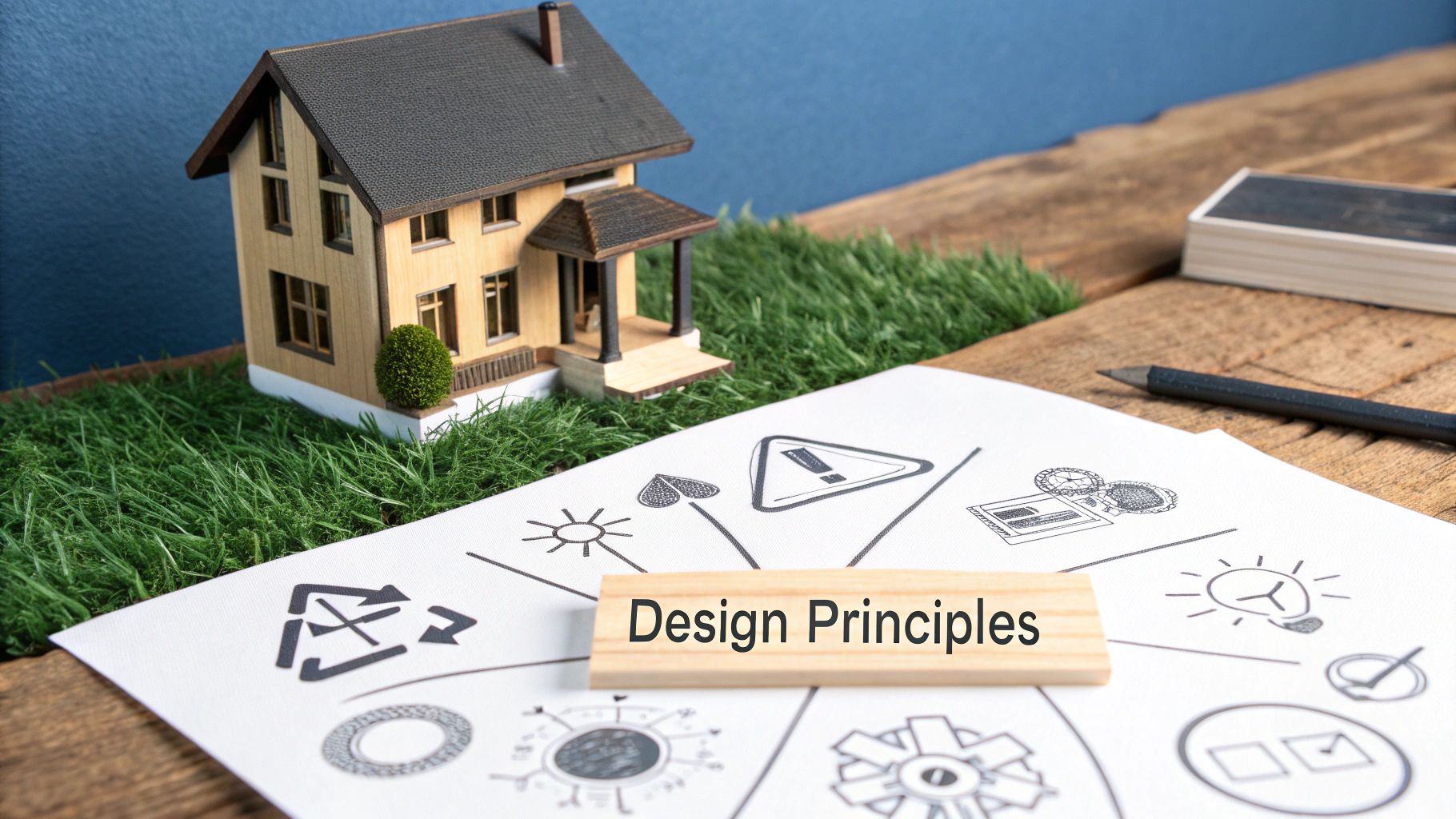
Sustainable design isn't about ticking boxes or adding a few solar panels to a roof. It’s a philosophy. It sees a building not as an isolated box dropped onto a piece of land, but as an integral part of a much larger ecosystem. The principles that guide it are all interconnected, creating a framework that helps architects make smarter, more responsible choices from day one.
To really get what sustainable architects do, you have to understand the "why" behind their methods. These aren't just trendy ideas; they're the foundational pillars that separate a truly high-performing green building from one that just has a few eco-friendly gadgets. It's a completely different way of thinking about how we build and live in our spaces.
H3: Tread Lightly: Minimizing Site Impact
The first rule of sustainable design is simple: respect the land. This thinking starts long before a single shovel hits the dirt. A good sustainable architect walks the site and really studies its natural rhythms—the slope of the land, the existing trees and plants, how water flows, and where the sun travels across the sky.
The goal is to work with the site, not against it. Instead of bulldozing a flat patch and forcing a generic building onto it, the design is carefully shaped to fit the land's unique character. This might mean nestling the structure among mature trees to take advantage of natural shade or designing foundations that barely disturb the soil. You want the building to feel like it belongs there.
H3: A Smarter Approach to Energy Use
This is the principle most people think of, but it’s about so much more than just slapping on some solar panels. The real goal is to slash the building's energy needs from the get-go. This is done through passive design, a clever strategy that uses the building’s own shape and materials to keep people comfortable.
Here’s how it works:
- Strategic Orientation: The building is positioned to catch the winter sun for free warmth and to shield itself from the hot summer sun, cutting down on air conditioning.
- Natural Ventilation: Windows and vents are placed to create natural cross-breezes, letting the building breathe and cool itself down without a machine.
- A High-Performance Envelope: This is like giving the building a high-tech coat. It involves using top-notch insulation, airtight construction, and energy-efficient windows to create a strong thermal barrier that keeps the indoor temperature steady.
Only after these passive strategies have done most of the heavy lifting do we look at active systems like high-efficiency HVAC or renewable energy. It ensures the building is fundamentally efficient, not just propped up by technology. While green solutions are key, it's also helpful to have a grasp of the fundamental architectural design concepts that underpin all great buildings.
H3: Protecting Our Water Resources
Water is precious, and sustainable architecture treats it that way. The approach is twofold: use less and reuse what you can.
Of course, it starts with the basics, like installing low-flow toilets, faucets, and showerheads. But a truly sustainable design goes further. Architects can design systems for harvesting rainwater from the roof to water the landscape. They can also set up graywater recycling, where water from sinks and showers is filtered and used again for things like flushing toilets. It all adds up to a huge reduction in the building’s thirst for city water.
H3: Building with Responsible Materials
Every single material that goes into a building—from the concrete foundation to the paint on the walls—has an environmental footprint. A sustainable architect carefully considers the entire lifecycle of each material: where it came from, how it was made, how far it had to travel, and what happens to it at the end of its life.
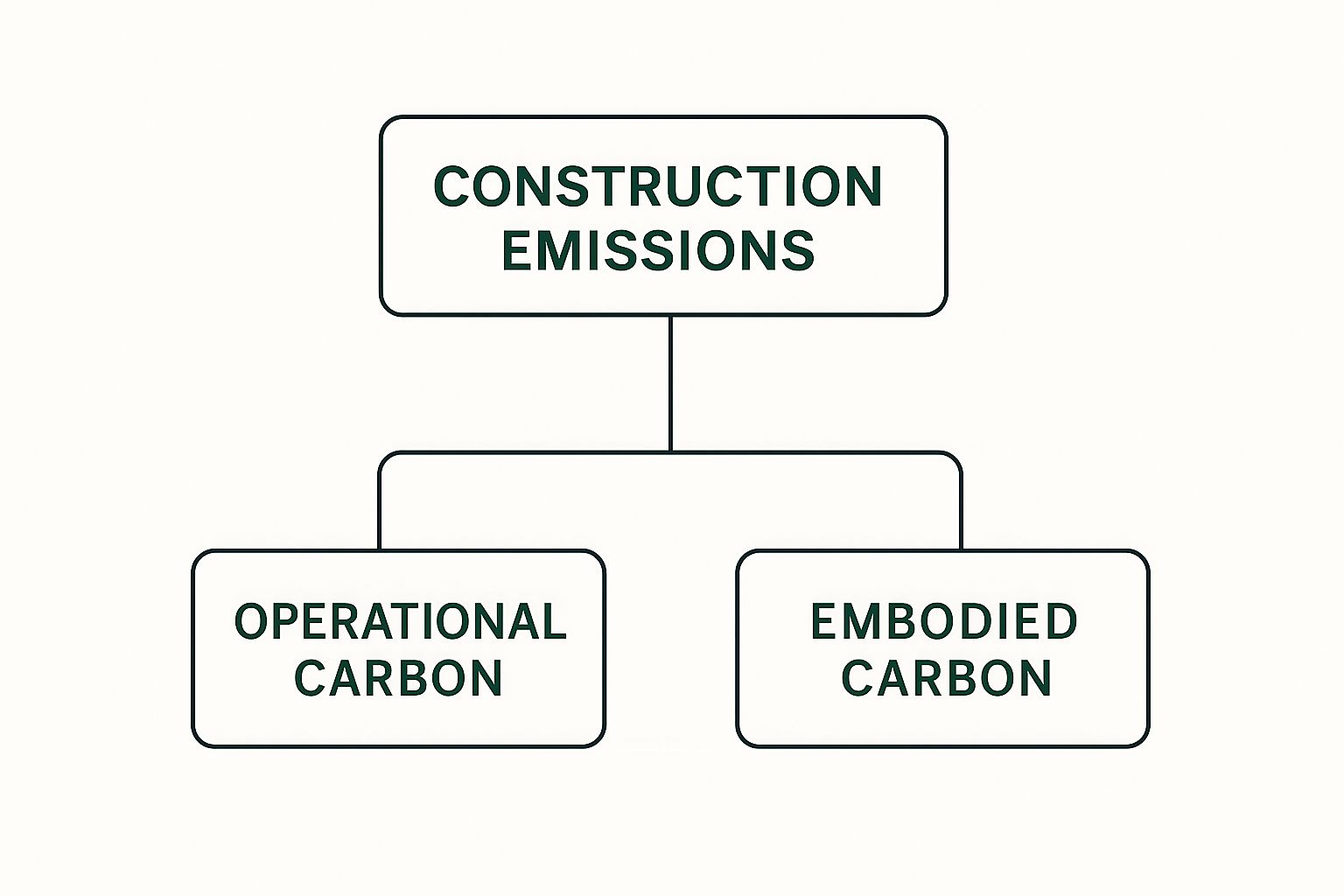
The building sector is a major player in global carbon emissions, responsible for about 37% of the world's total. A big part of this problem is our existing building stock, much of which is old and inefficient.
To combat this, architects look for materials with recycled content, source things locally to cut down on transportation fuel, and choose rapidly renewable resources like bamboo or cork. Just as important is avoiding materials that contain toxic chemicals that can harm both people and the planet.
H3: Creating Healthy Indoor Spaces
This final principle is all about the people inside. A building can save energy and be made from recycled steel, but if it makes people feel sick or uninspired, it’s a failure.
This focus on Indoor Environmental Quality (IEQ) is critical. It involves:
- Flooding spaces with natural light, which has been proven to boost mood, focus, and productivity.
- Ensuring the air is clean by using low-VOC (volatile organic compound) paints, glues, and furniture that don't release harmful chemicals into the air.
- Connecting people with nature through views of the outdoors, indoor plants, and natural materials—a concept called biophilic design.
When you bring all five of these principles together, they create a building that is so much more than the sum of its parts. You get a structure that is not only better for the Earth, but also cheaper to run and a healthier, more enjoyable place for people to be.
The Tangible Benefits of Sustainable Architecture
While the ideals of sustainable design are easy to admire, its real power is in the results you can see and measure. For commercial clients, choosing to work with sustainable design architects isn't just about doing the right thing—it's a smart business decision with a clear return on investment.
These benefits aren't theoretical. They show up on your balance sheet, in your employees' well-being, and in the long-term market value of your property. By looking beyond the initial construction costs to the building's entire lifecycle, this approach reveals advantages that traditional building methods just can't offer.
Let's break down these benefits into three core areas: environmental, economic, and social. Each one builds on the others, creating a powerful argument for building green.
Environmental Gains for a Healthier Planet
The most obvious win is the positive impact on the natural world. Sustainable buildings are designed to be good neighbors in their ecosystem, minimizing their footprint and, in some cases, even helping to restore local environmental health.
This commitment to stewardship isn't just good for the planet; it tells a powerful brand story.
- A Smaller Carbon Footprint: By leaning on passive design strategies, energy efficiency, and renewable power, sustainable buildings slash their greenhouse gas emissions. This is a crucial step, given the building sector's massive contribution to global emissions.
- Smarter Resource Management: Thoughtful material selection, like using recycled steel or reclaimed wood, means we don't have to pull as many new resources from the earth. Water-saving systems like rainwater harvesting also go a long way in protecting precious local water supplies.
- Protecting Local Ecosystems: A key goal is to disturb the site as little as possible. That means preserving mature trees, native plants, and natural drainage patterns, which helps protect local wildlife habitats and prevent soil erosion.
Economic Advantages and Long-Term Savings
This is where sustainable architecture really gets the attention of property owners and developers. While green projects can sometimes have a slightly higher upfront cost, they are engineered to save money month after month, year after year, delivering a strong and lasting return.
Sustainable design isn't an expense; it's an investment in future operational efficiency and asset value. The long-term financial rewards often far outweigh any initial premium, creating a more profitable and resilient property.
Lower utility bills are just the start. The complete financial picture is even more compelling:
- Lower Utility Bills: Seriously lower. High-performance insulation, smart window placement, and efficient HVAC systems can cut energy use by 25% to 50%. On the water side, efficient fixtures and reuse systems can reduce consumption by 40% or more.
- Higher Property Value: Green-certified buildings consistently fetch higher sale prices and rental rates. In fact, studies show that LEED-certified commercial buildings can see their asset value jump by over 10%.
- Incentives and Rebates: Governments at all levels often offer tax credits, grants, and other financial perks for projects that meet specific green standards, which can significantly improve the project's bottom line.
- Reduced Maintenance: When you build with durable, high-quality materials and well-designed systems, things last longer. This means less money spent on maintenance and replacement over the building's life.
When you look at the whole picture, the economic argument becomes clear. The table below breaks down how these financial and environmental benefits accumulate over the building's entire life.
Comparing Conventional vs Sustainable Building Lifecycles
This table illustrates the long-term economic and environmental differences between traditional construction and sustainable design, highlighting operational savings and value appreciation.
| Lifecycle Stage | Conventional Building | Sustainable Building |
|---|---|---|
| Design & Construction | Focuses on minimizing initial cost. Often uses standard, resource-intensive materials. | Higher initial investment in design, high-performance systems, and certified materials. |
| Operation & Maintenance | High, unpredictable energy and water costs. Frequent system maintenance and replacements. | Significantly lower utility bills (25-50% savings). Durable materials reduce maintenance needs. |
| Occupancy | Standard indoor air quality. Can lead to lower productivity and higher absenteeism. | Enhanced indoor environmental quality, boosting occupant health, productivity, and satisfaction. |
| End of Life | Demolition results in significant landfill waste. Materials are rarely repurposed. | Designed for deconstruction. Materials are recycled, reused, or repurposed, minimizing waste. |
| Overall Value | Value depreciates based on age and condition. Vulnerable to rising energy prices. | Higher asset value and rental rates. Resilient to market shifts and regulatory changes. |
As you can see, the initial investment in sustainability pays dividends at every stage, creating a more valuable and future-proof asset.
Social Benefits and Human Well-Being
The impact on the people inside the building is one of the most powerful, yet often overlooked, benefits. A space designed by skilled sustainable architects is simply a healthier, more pleasant place to be. That has a direct impact on business performance.
Focusing on Indoor Environmental Quality (IEQ) creates real, people-focused advantages:
- Healthier Occupants: Using non-toxic materials and ensuring a constant flow of fresh air drastically reduces indoor pollutants. The result? Fewer allergies, fewer respiratory issues, and fewer sick days.
- Better Focus and Productivity: It's been proven time and again: abundant natural light, views of nature, and comfortable indoor temperatures help people concentrate. This can boost employee productivity by as much as 18%.
- A Magnet for Talent: A healthy, beautiful, and sustainable workplace is a powerful tool for attracting and keeping the best employees. It sends a clear signal that a company cares about its people and the planet.
How Sustainable Projects Get Built
Think about a typical construction project. It often feels like a relay race, where the client hands off plans to an architect, who passes them to an engineer, who finally gives them to a builder. Each person works in their own lane, which almost always leads to missed opportunities and expensive rework down the line.
Sustainable projects throw that entire model out the window. From the very beginning, the process is built on collaboration. It’s more like a well-choreographed team performance than a race. This approach, led by an experienced sustainable design architect, makes sure the final structure isn't just a building with a few "green" features tacked on. It's a high-performing system where every single piece works in harmony.
The Integrated Design Process
The secret sauce for a truly successful sustainable project is what we call the Integrated Design Process (IDP). Picture it as a master planning session that happens before anyone even thinks about drawing a blueprint. The architect, engineers, builders, and—most importantly—the client all gather around the same table from day one.
Getting everyone together early is critical. It aligns the entire team on the project’s core goals. Are we aiming for a specific energy target? A certain percentage of recycled materials? A LEED certification? By talking through the challenges and ideas at the start, the team can find smart solutions that would be impossible to add in later.
A project’s greatest potential for cost-effective sustainability improvements is in its earliest stages. Decisions made during the initial design phase have a far greater impact on long-term performance and operational savings than any changes made during construction.
For example, the structural engineer can work directly with the architect to design a frame that uses less steel. At the same time, the mechanical engineer can explain how turning the building just a few degrees will dramatically shrink the size of the HVAC system needed. This upfront teamwork prevents the siloed decisions that create big problems later.
Site Analysis and Passive Design
With the team’s goals set, the next step is to get to know the land itself. A sustainable architect doesn't just glance at the property lines; they study the site’s unique personality. This means doing a deep-dive site analysis to map out the key environmental factors:
- Solar Path: We track the sun's journey across the site through every season. This tells us the perfect orientation to capture winter warmth and block summer heat.
- Prevailing Winds: By identifying wind patterns, we can design for natural cross-ventilation, which cuts down the need for air conditioning.
- Topography and Hydrology: We look at the natural slope and water flow to manage stormwater and prevent erosion.
- Existing Ecology: We take an inventory of mature trees and native plants that can be saved to provide natural shade and habitat.
All this data feeds directly into the schematic design, where passive strategies become the star of the show. The building’s shape, the placement of windows, and the choice of materials are all carefully orchestrated to work with the local climate, not against it. The idea is to let nature do most of the heavy lifting before we have to flip a switch.
Sourcing Materials and Managing Waste
Once the design begins to solidify, our attention turns to the stuff the building is actually made of. A sustainable architect carefully researches and specifies materials based on strict environmental and health standards. This means we look way beyond the price tag to consider the product's entire lifecycle, from how it was sourced to what happens to it at the end of its life.
Transparency is non-negotiable here. We often ask for Environmental Product Declarations (EPDs), which are basically nutrition labels for building materials that detail their environmental footprint. We look for materials that are locally sourced, made with recycled content, rapidly renewable, and free of toxic chemicals. This process ensures the building itself helps create a healthier indoor environment for the people inside.
This infographic breaks down how these key phases—integrated design, passive strategies, and responsible construction—all connect to create a successful project.
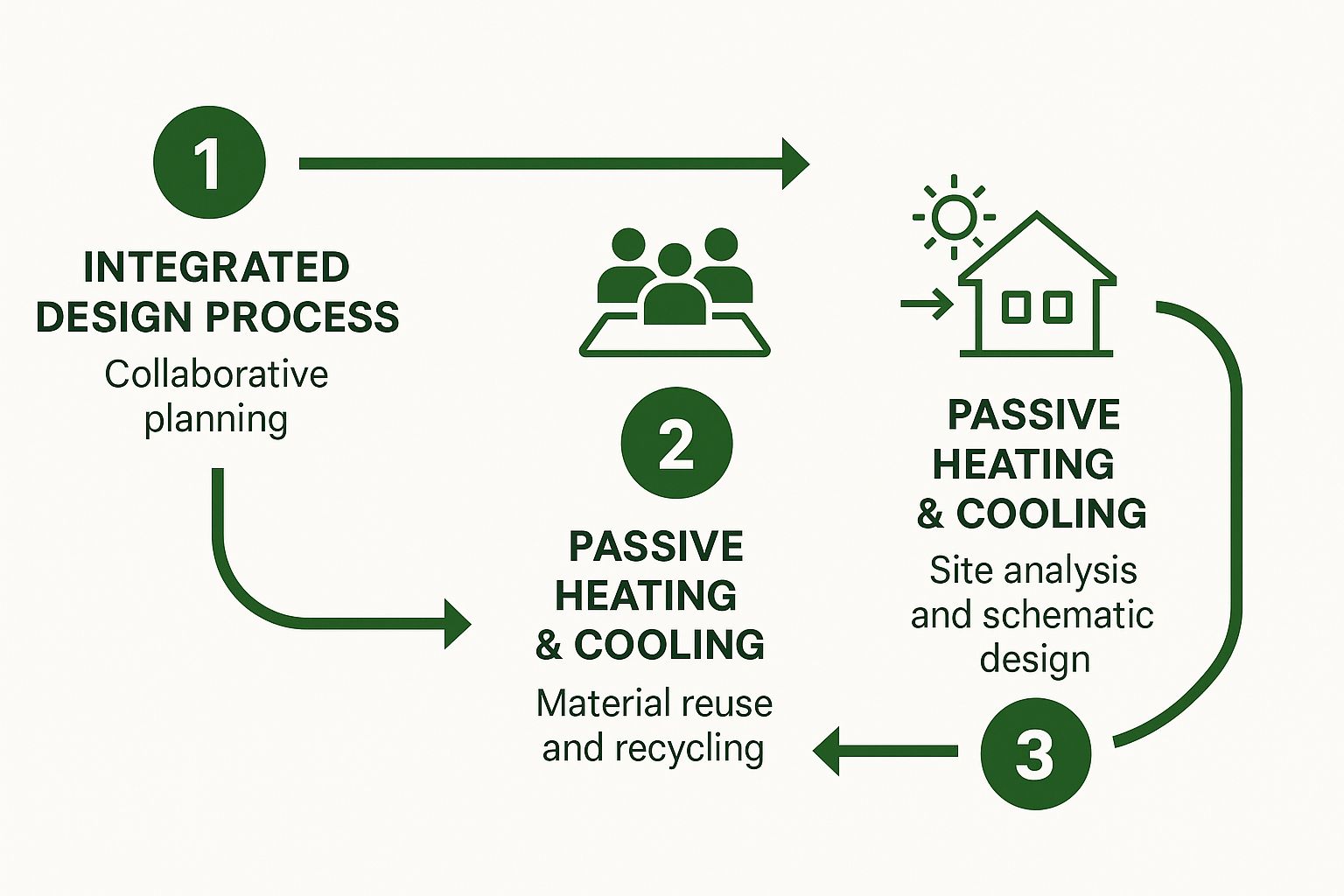
As you can see, that initial collaboration is what enables smarter design, which in turn leads to much more responsible construction practices.
That same commitment continues right through the construction phase with a sharp focus on waste management. Instead of just sending all the scraps to a landfill, we create a waste diversion plan. Wood, metal, drywall, and cardboard are all sorted on-site for recycling. Sometimes, we can even salvage materials for reuse in another part of the project, turning would-be trash into a valuable asset.
Incorporating Technology and Renewable Energy
Smart technology is becoming a huge part of modern sustainable architecture. The demand for architects with these skills is booming—the U.S. alone expects an 8% increase in architectural design jobs by 2032, largely driven by the push for net-zero buildings. Tools like Building Information Modeling (BIM) let teams create a detailed digital twin of a building, allowing us to simulate its energy performance and spot problems long before the first shovel hits the ground.
Renewable energy is often the final piece of the puzzle. After we've used passive design to drastically lower the building's energy demands, we can bring in systems like solar panels to cover the rest. For anyone curious about what that looks like on a smaller scale, a practical solar panel installation guide offers great insight. By taking this step-by-step approach, we make sure renewable energy systems are sized correctly, making them far more effective and maximizing their return on investment.
How to Choose the Right Architect for Your Project

Finding the right architect is probably the single most important decision you'll make for your sustainable building. It's not just about finding someone who can sketch a beautiful facade; it's about partnering with a team that truly understands how to create buildings that perform—efficiently, healthily, and for the long haul.
Your investment's success depends on this choice. True sustainable design architects have a specific mindset and a proven track record. The key is to look past the "green" buzzwords and dig into their actual qualifications, portfolio, and design philosophy. Think of it as hiring a guide who knows the terrain of sustainable construction inside and out.
Look for Specialized Credentials
Certifications are your first objective checkpoint. They're a clear signal that an architect has put in the work to master the technical standards of sustainable design. They act as a third-party seal of approval, telling you this person or firm speaks the language of high-performance buildings fluently.
As you're vetting potential partners, keep an eye out for these key credentials:
- LEED AP (Leadership in Energy and Environmental Design Accredited Professional): This is one of the most recognized certifications in the world. A LEED AP has a deep understanding of the entire LEED rating system, from energy modeling to indoor air quality.
- BREEAM AP (Building Research Establishment Environmental Assessment Method Accredited Professional): A powerhouse in Europe and gaining ground globally, BREEAM signifies expertise in a science-backed approach to sustainability.
- Passive House Certified Consultant (CPHC): This one is for the serious energy nerds. CPHC certification is incredibly rigorous and focuses on creating buildings so efficient they barely need any active heating or cooling. It's a masterclass in building science.
Spotting these on a firm's website shows they’ve invested heavily in their craft.
Scrutinize Their Portfolio
A slick website is nice, but a portfolio of finished, high-performing projects is everything. This is where you separate theory from reality. Don’t just scroll through the pretty pictures—look for the story behind each building.
Ask for case studies that are similar in scope and use to your own project. A team that excels at sustainable homes might not be the right fit for a sprawling commercial complex. And remember, the field is evolving fast. The 2025 Sustainable Construction Barometer noted that 67% of global stakeholders now grasp the concept, with 95% agreeing it's important. You need an architect who's a leader, not a follower. You can learn more about the survey and its insights into sustainable construction.
A portfolio should be more than a gallery of finished buildings. It should be a library of success stories, complete with performance data, client testimonials, and clear explanations of the sustainable strategies that were implemented.
When you're looking through their work, search for specifics. Are they orienting buildings to take advantage of the sun? Are they proudly pointing out their use of reclaimed wood or innovative water-saving tech? This is your chance to see their philosophy in action.
Ask the Right Questions During Interviews
The interview is where you get a feel for their passion and practical know-how. This is your chance to move beyond the resume and understand how they think and work. Come prepared with a handful of targeted questions.
Here are a few essential questions to get the conversation started with potential sustainable design architects:
- Can you show me how you've used climate-responsive design in past projects? This tests their grasp of passive design and their ability to create a building that works with its environment, not against it.
- How do you measure a building's performance after it's built? The best architects stick around. Look for firms that conduct post-occupancy evaluations to prove the building is actually delivering the promised energy savings and keeping occupants happy.
- Walk me through your approach to the Integrated Design Process. Their answer here is crucial. It tells you how they get engineers, builders, and other experts talking from day one to avoid costly mistakes down the line.
- How do you stay on top of new sustainable materials and technologies? This field changes in the blink of an eye. A great partner will be genuinely excited to talk about the latest innovations and how they could benefit your project.
Choosing your architect is a long-term investment. By taking the time to carefully vet their credentials, their work, and their way of thinking, you’ll find a partner who delivers not just a building, but a resilient and valuable environment for years to come.
Your Top Questions About Sustainable Architecture, Answered
Even when the principles and perks of sustainable architecture are clear, clients naturally have practical questions. It often comes down to the real-world stuff: cost, return on investment, and just trying to make sense of all the terminology. These are exactly the conversations we should be having.
An experienced architect’s job is to cut through the noise and address these concerns head-on. By providing clear, data-backed answers, they help clients feel confident in their decisions, making sure everyone is on the same page about the project's true value and long-term vision.
Let's dive into some of the questions we hear most often.
Does Sustainable Architecture Really Cost More Upfront?
This is the big one, and the answer isn't a simple yes or no. Sometimes it can, but the "green premium" you might have heard about is largely a thing of the past. The cost gap is shrinking fast, and a smart architect knows how to make the numbers work.
Think about it this way: investing more in a high-performance building envelope—better insulation, airtight sealing, and high-efficiency windows—might raise the initial budget for materials. But that investment means you can install a much smaller, less expensive heating and cooling system. The costs often end up balancing each other out. An integrated design process is all about finding these smart trade-offs from day one.
A lot of powerful sustainable features don't cost a penny. Things like orienting a building to capture natural light or take advantage of passive heating are purely the result of intelligent design, not expensive gadgets.
Besides, the data shows the cost difference is often negligible. On average, a project aiming for a certification like LEED might see an upfront cost bump of just 0% to 4%. When you start factoring in operational savings and tax incentives that kick in right away, that small initial difference is often recovered in no time. It's a sound financial decision from the get-go.
What's the Difference Between Green Building and Sustainable Design?
People tend to use these terms interchangeably, but there's a subtle and important difference in the way of thinking. Getting this distinction helps clarify the philosophy behind the work of the best architects in this field.
Here’s a simple way to look at it:
- Green Building is often about the product. It focuses on adding specific eco-friendly components to a building, like recycled materials, low-flow toilets, or solar panels. It's a feature-driven approach aimed at doing less harm.
- Sustainable Design is all about the process. It’s a holistic mindset that looks at the building’s entire relationship with its site, its occupants, and the wider environment, starting from the very first sketch. It’s about using smart, passive strategies first, before ever picking out a "green" product.
A green building might have a solar array on the roof. A sustainably designed building is first shaped and positioned so it needs less electricity in the first place. The best sustainable design architects use the philosophy of sustainable design to create truly effective green buildings. One is the mindset; the other is the result.
How Do I Calculate the Payback Period?
For any commercial client, the return on investment (ROI) is everything. The question isn't just if a sustainable building pays for itself, but when. This payback period is a critical number, and it's often much shorter than you'd think.
The fastest ROI comes from slashing your operating costs. It’s not uncommon for energy-efficient buildings to see utility savings between 25% and 50%. For a large commercial building, that’s thousands—or even hundreds of thousands—of dollars back in your pocket every year. Likewise, simple water conservation strategies can cut water and sewer bills by 40% or more.
Let's run a quick example:
- A business invests an extra $100,000 in a high-efficiency HVAC system, LED lighting, and better insulation.
- These upgrades save the company $25,000 a year in energy costs.
- The simple payback period is just four years ($100,000 ÷ $25,000/year).
And that simple math doesn't even account for other financial upsides like tax credits, higher rental income, or proven boosts in employee productivity, all of which can make the payback period even shorter. A good architect will run a detailed lifecycle cost analysis for you, proving that sustainability isn't an expense—it's one of the smartest investments you can make.
At Sherer Architects, LLC, we believe that beautiful, enduring design and sustainable performance go hand in hand. Our team specializes in creating commercial spaces that are not only environmentally responsible but also economically sound, guiding clients through every stage to deliver results that stand the test of time. To discuss how we can bring structure and sustainability to your next project, visit us at https://shererarch.com.