An effective office building layout is far more than just a floor plan showing where desks go. It's the strategic DNA of the entire workplace, dictating workflow, shaping company culture, and either boosting or bottlenecking collaboration. The best plans are a thoughtful balance of private nooks for deep focus and open zones for teamwork, all while optimizing how people move through the space. This is the document that makes a building truly work for the people inside it.
The New Era of Office Layouts
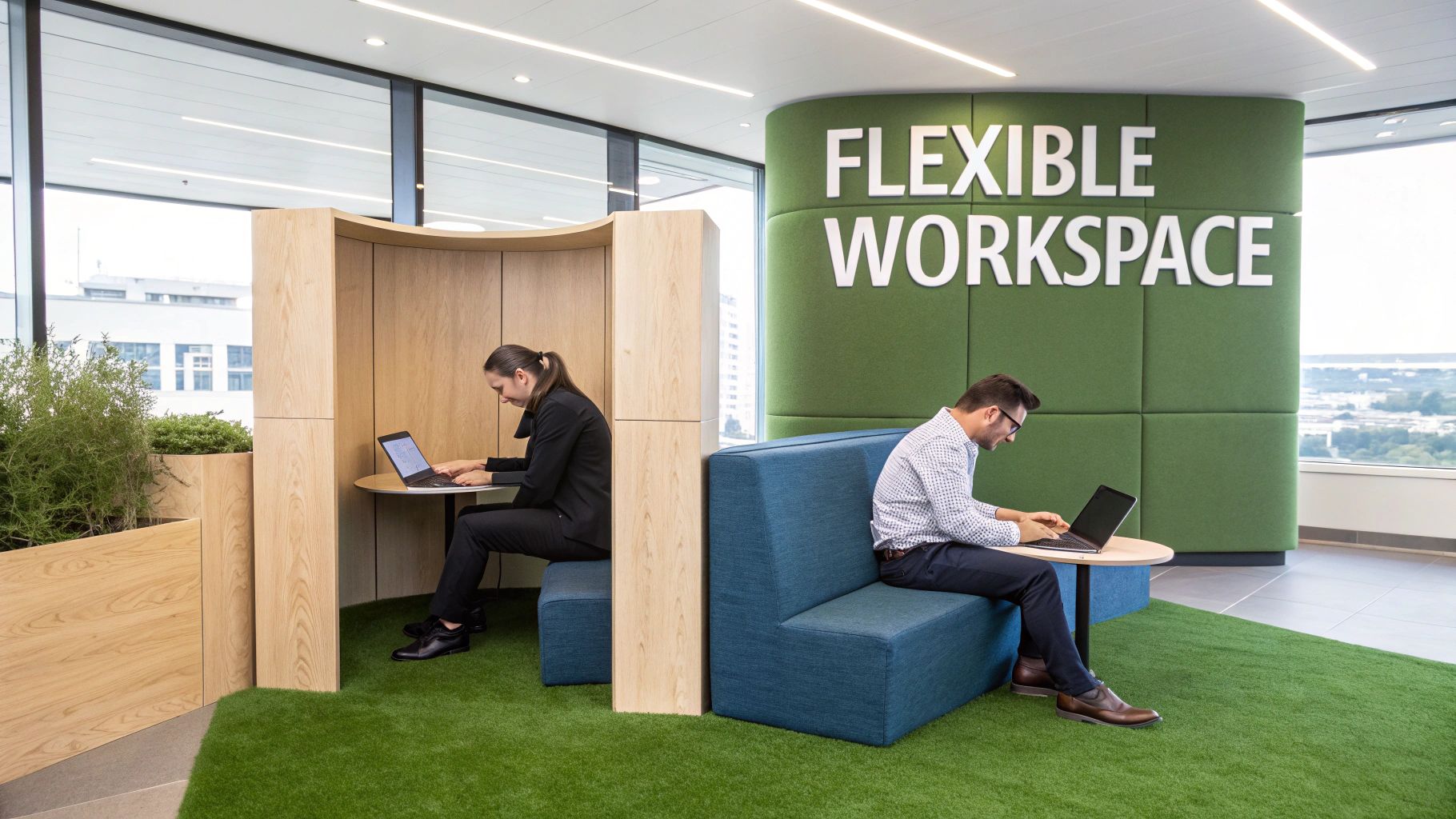
If you're still picturing a sea of identical cubicles, you're thinking of a bygone era. Today's office is a dynamic, agile ecosystem, and the layout is its foundation. We've moved on from the rigid, top-down floor plans of the past to embrace flexible, human-centric designs that cater to a whole spectrum of work styles. This wasn't a random shift; it was a direct response to some powerful forces reshaping how we work.
Technology is arguably the biggest driver. Teams are now scattered across time zones, relying on cloud tools to get things done. The physical office has to be a place that supports this new reality, making the jump between digital and in-person collaboration feel completely seamless. This has also put a new premium on real estate efficiency, forcing companies to be smarter about using every square foot.
The Rise of the Open Concept
Over the last two decades, this push for efficiency and teamwork gave birth to the open-office trend. The promise was huge: break down silos, spark those "water cooler" moments of genius, and slash real estate costs. It took hold so completely that today, around 70% of U.S. office spaces have some form of an open layout.
At the same time, the personal space bubble shrank dramatically. Companies shifted to an average of 100 to 150 square feet per employee, a steep drop from the 200-plus square feet that used to be the norm. You can find more data-driven insights on this topic over at OfficeSpaceSoftware.com.
The real challenge we face now isn't just about creating open space, but about creating the right kinds of spaces. A successful office layout plan provides a balanced ecosystem of environments, giving people the power to choose the setting that best fits the task at hand.
Balancing Collaboration and Concentration
As great as the open concept was for teamwork, it often came at a cost: deep, focused work became nearly impossible. The constant buzz of noise and visual distractions created a productivity problem, forcing a much-needed course correction. The conversation has thankfully matured beyond the simplistic "private office vs. open plan" debate.
We're now in the era of hybrid and activity-based models that finally strike that crucial balance between community and concentration. These smarter, more nuanced layouts almost always include a mix of the following:
- Focus Zones: Think quiet "library" spaces where everyone knows it's heads-down time. No interruptions allowed.
- Collaboration Hubs: These are the lively, informal areas with whiteboards and movable furniture, designed for brainstorming and group problem-solving.
- Private Enclaves: Small, enclosed rooms or even phone booths are essential for confidential calls, one-on-ones, or just a moment of privacy.
- Social Spaces: The office kitchen or a café-style lounge isn't just for coffee. It's where community is built and informal connections are made.
This approach recognizes a simple truth: a single person has different needs throughout their day. By providing a diverse palette of work settings, an office layout can create a workplace that’s not just efficient, but profoundly human.
Laying the Strategic Groundwork
Before you even think about sketching a floor plan, the real work begins. A truly effective office layout isn't just about arranging desks; it's born from a deep, strategic foundation. Skipping this critical groundwork is a recipe for a building that looks great on paper but fails in practice, creating daily friction for the people who work there.
This initial phase is all about translating your company's mission and operational needs into a concrete, buildable plan.
Getting to Know Your Site
First things first: you have to understand the canvas you're working on. Whether it's an empty lot or an existing building slated for a gut renovation, a thorough site analysis is absolutely essential. This goes way beyond just looking at the property lines. You're trying to uncover the site's hidden potential and its unavoidable limitations.
For instance, we always start by looking at the sun's path. Can we orient the building to capture southern light for common areas? Doing so can slash lighting bills and genuinely boost employee well-being. At the same time, we'd want to place heads-down, focus-intensive workstations on the northern side to avoid constant glare and overheating. We also meticulously map every existing structural column, utility hookup, and load-bearing wall, as these elements will fundamentally shape the building's flow.
Developing Your Architectural Program
With a solid grasp of the site, it's time to create the architectural program. This is your project's playbook. It’s a detailed document that moves far beyond a simple headcount to define exactly what your teams need to thrive.
A robust program digs into the nitty-gritty details:
- Who Sits Where (and Why): Which departments feed off each other's energy? Putting sales and marketing side-by-side makes perfect sense for collaboration. Separating the high-energy call center from the quiet focus of the finance team is just as important for everyone's sanity and productivity.
- Mapping the Workflow: We trace how work actually moves through the organization. A smart layout minimizes backtracking and wasted steps, making daily processes feel effortless.
- Planning for Tomorrow: A great office is built for the future, not just for today. We always plan for 15-20% growth over a five-year horizon. This means designing flexible zones or "soft spaces" that can easily transform into new workstations as your company scales.
- The Unseen Essentials: Don't forget the support spaces. Server rooms, storage closets, wellness areas, and printing stations are the lifeblood of an office. Underestimate these, and you’ll end up with clutter and operational chaos.
As you build this foundation, it's also a good time to think about long-term operations. Looking into facility management best practices now can help you design a space that's efficient and sustainable for years to come.
Mastering Codes and Zoning
The last piece of this foundational puzzle is navigating the maze of zoning laws and building codes. These aren't suggestions—they are legal requirements that dictate everything from how many exits you need to how wide your hallways must be. Getting this wrong can lead to devastating project delays, expensive redesigns, and serious legal headaches.
One of the biggest mistakes I see is when teams treat code compliance as a final checkbox. You have to weave it into the design from day one. This ensures your plan is viable from the start and saves you from having to butcher your vision later to fix a compliance issue you missed.
To help you get started, here's a quick checklist of the initial data points we gather during this phase. It's crucial for ensuring your design is both functional and fully compliant right out of the gate.
Core Programming and Code Compliance Checklist
| Category | Key Considerations | Example Metric / Requirement |
|---|---|---|
| Site Analysis | Sun orientation, prevailing winds, existing utilities | Maximize southern exposure for passive solar gain |
| Zoning | Setbacks, height limits, Floor Area Ratio (FAR) | 30-foot front setback, max building height of 60 feet |
| Occupancy | Business (Group B) occupancy type, occupant load calculation | 1 person per 100 gross sq. ft. |
| Egress | Number of exits, travel distance, corridor widths | Max travel distance to an exit: 250 feet (sprinklered) |
| Accessibility (ADA) | Accessible routes, turning radii, restroom compliance | Min. 36-inch clear width for all accessible paths |
| Plumbing | Required fixture count based on occupant load | 1 water closet per 25 occupants (first 50) |
| Structural | Column grid spacing, live/dead load capacity | Typical 30' x 30' column bay |
| Growth Planning | Projected 5-year headcount increase, flexible zones | Plan for 15-20% future growth capacity |
By meticulously working through these three areas—site analysis, programming, and code compliance—you're not just designing. You're building a resilient strategic foundation that ensures your final office layout is innovative, efficient, and ready for whatever comes next.
Designing for Agility and Future Growth
The one thing we can count on in modern business is change. Companies pivot, teams expand and contract, and the way we work is constantly evolving. A rigid office layout isn't just an inconvenience in this environment—it's a serious business liability that can stall growth and stifle innovation. The goal isn't to design a perfect, permanent space anymore. It's to create an agile one that can be easily reshaped as your organization’s needs shift.
This move toward adaptability is a fundamental change in how we think about the physical workplace. Instead of being locked into permanent walls and fixed functions, we’re now designing with modular components, multi-purpose furniture, and reconfigurable zones to create a fluid, responsive environment.
The Core Principles of Flexible Design
Think of a flexible office layout as a living ecosystem. It has to support all kinds of work modes at the same time, from deep, individual focus to high-energy group collaboration. This approach accepts a simple truth: no single type of space can meet every need.
So what does an agile layout actually look like?
- Movable Partitions: Glass or acoustical walls on tracks are fantastic. They can transform a large open area into smaller, private meeting rooms in minutes, giving you acoustic control right when you need it.
- Multi-Purpose Furniture: This is about getting creative. Think tables that raise for standing meetings, modular seating you can rearrange for a town hall, and mobile whiteboards that can follow the conversation wherever it goes.
- Modular Infrastructure: Raised access flooring is a true game-changer here. It creates a space under the floor for all your power, data, and HVAC systems, which means you can move outlets or even reconfigure entire departments without launching a costly and disruptive rewiring project.
An agile office isn't just about preparing for the unknown; it's about empowering your teams right now. When people can choose the environment that best suits their task—a quiet pod for a report, a lounge for a brainstorm—they are more engaged and far more productive.
This isn't just a trend; the industry has fully embraced this model. A 2025 report shows that 55% of global occupiers are already using flexible office solutions, and that number is only going up. A smart flexible office might only dedicate 60-70% of its floor plate to fixed desks, saving the rest for a dynamic mix of shared spaces that can adapt on the fly. You can dig into the specifics in the complete Cushman & Wakefield flexible office report.
Laying this strategic foundation—from deep analysis to strict code compliance—is the critical first step.
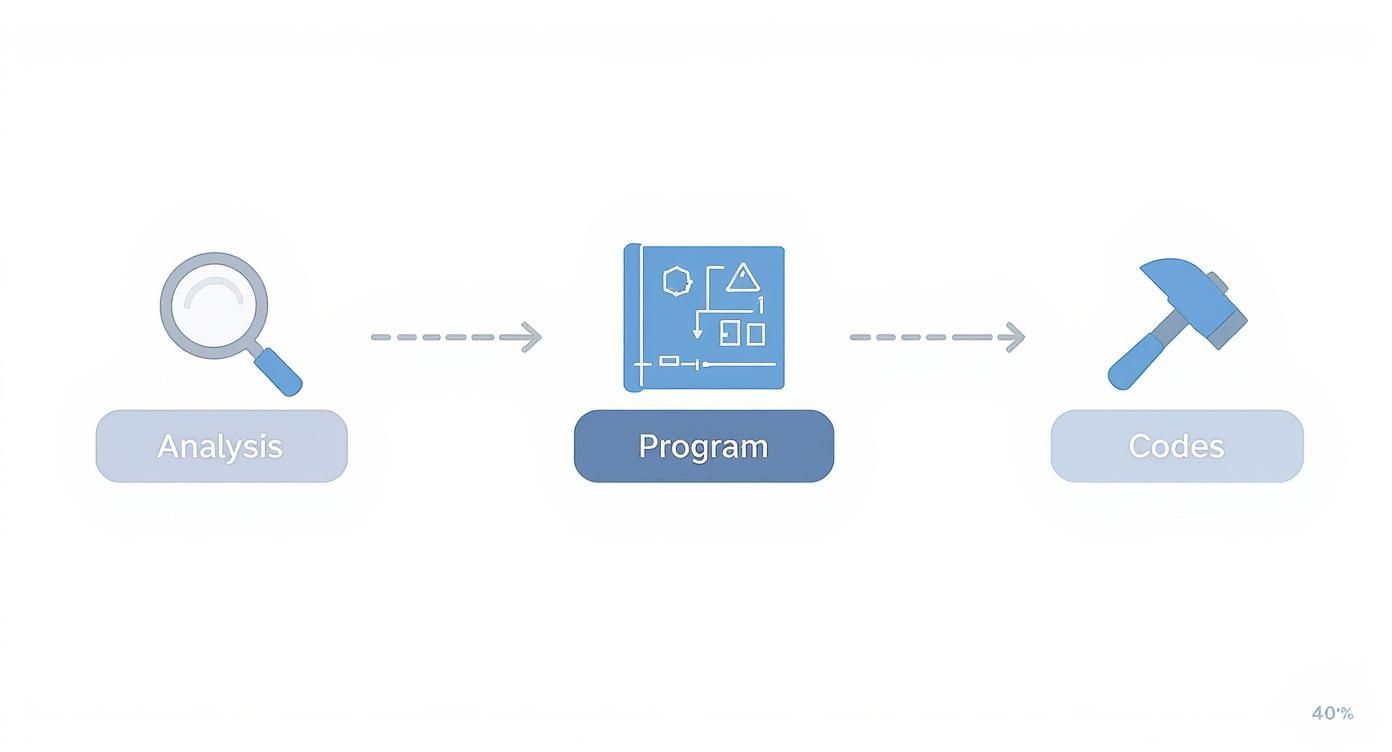
This workflow shows how a solid plan is built. It starts with a detailed analysis of the site and your needs, moves into a robust architectural program, and is grounded in strict code adherence. That's the bedrock of a successful and adaptable office layout.
Practical Steps for Implementation
Creating a future-ready office means planning for change from day one. It requires foresight and a strategic investment in the right systems.
A great way to start is by thinking about your space in "zones" instead of permanent rooms. A "collaboration zone" could be kitted out with movable furniture and tech carts, allowing it to serve as a project war room one week and an informal presentation space the next. A "focus zone" might be defined by acoustic panels and high-backed seating rather than permanent walls.
When you're choosing furniture, mobility and modularity should be your top priorities. Look for pieces on casters, lightweight components that one or two people can move easily, and systems designed for simple disassembly. This ensures that adapting the space for a new team is a weekend facilities project, not a major construction effort. For an office that also embraces sustainability, consider integrating passive solar design principles into the plan.
Ultimately, designing for agility is about building an asset that evolves with your business. It transforms the office from a static cost center into a dynamic tool that actively supports your company's journey, no matter what twists and turns lie ahead. This approach ensures your physical space remains a high-performing asset for years to come.
Integrating Wellness and Biophilic Design
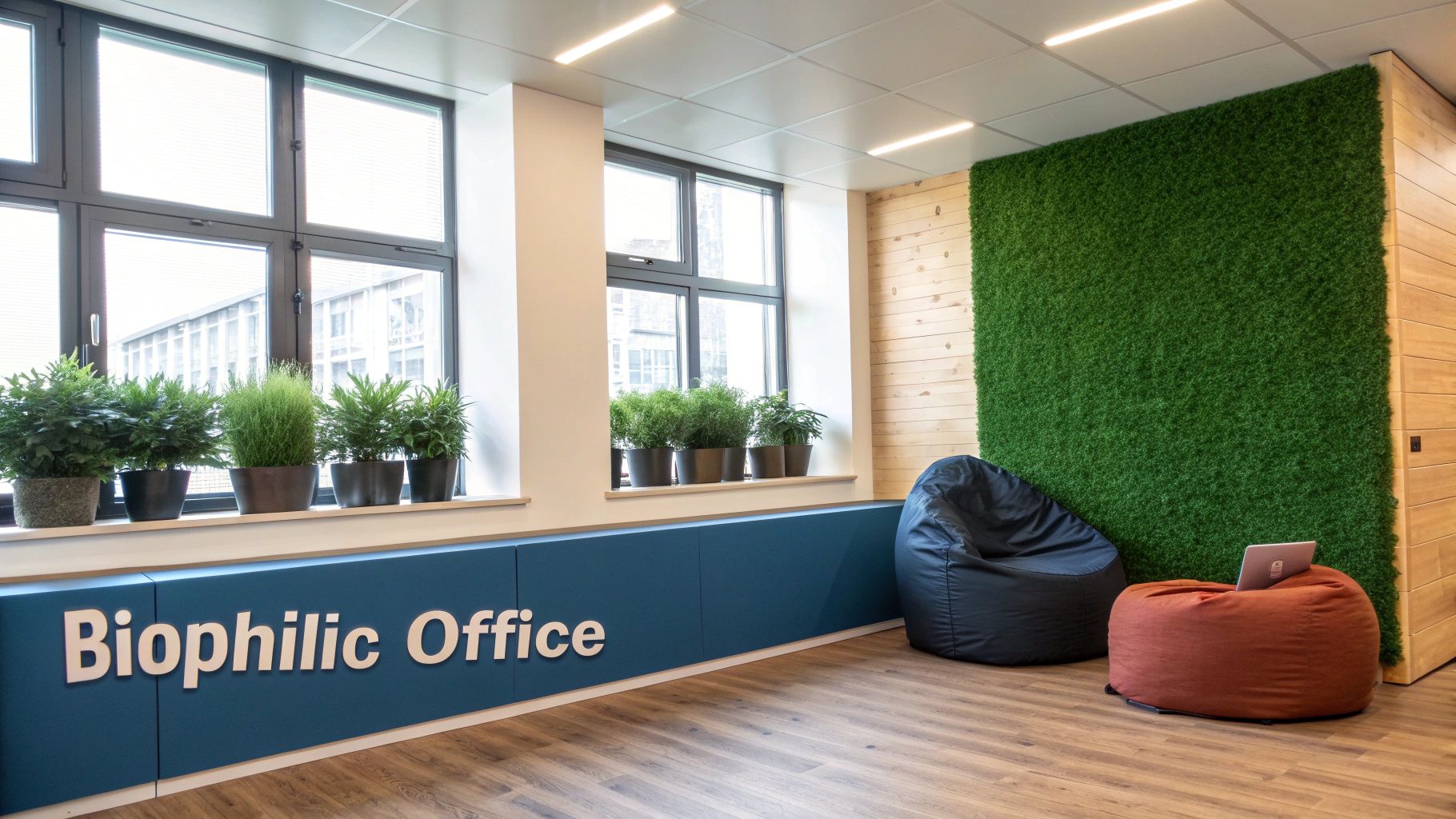
A great office is more than just four walls and a roof; it’s an ecosystem that should actively boost well-being and performance. Forward-thinking companies have caught on. Weaving wellness and biophilic design into an office building layout plan isn't just a trendy perk anymore—it's a critical business strategy for keeping and attracting the best people. The goal is to create spaces where people feel their best, so they can do their best work.
Biophilic design is all about connecting people with nature inside the built environment. It taps into our inherent desire to be around natural elements, and the results are tangible, directly impacting the bottom line through happier, more productive teams.
The Business Case for Biophilic Design
The modern workforce has spoken. Sterile, soulless corporate cubes are out. Spaces that feel alive and restorative are in. This isn't just a fad; it’s a fundamental shift in what employees expect, and it has real financial consequences.
The numbers don't lie. A 2025 Gensler Global Workplace Survey found that a mere 14% of employees actually want a traditional "corporate" office. The overwhelming majority are looking for spaces with natural light, organic elements, and a connection to the outdoors. The same study showed that offices embracing biophilic features saw a 15% jump in employee well-being and a 6% boost in productivity. You can learn more about these workplace findings and see just how these preferences are shaping the future.
When you weave natural elements into the very fabric of the office architecture, you’re creating an environment that doesn't just house your team—it actively supports their health. In a competitive market, that’s a powerful advantage.
Practical Ways to Incorporate Nature
Bringing biophilic design to life doesn’t have to break the bank. You can make a huge impact with small, smart interventions in your office layout. It's all about finding ways to bring the textures, patterns, and feeling of the natural world indoors.
Here are a few actionable ideas I've seen work incredibly well:
- Follow the Sun: Arrange workstations to maximize views and daylight. Swap out solid walls for glass partitions to let sunlight reach deeper into the building. It’s a simple change that makes a world of difference.
- Bring in Living Elements: Nothing makes a statement like a living green wall in a reception area. On a smaller scale, thoughtfully placed planters can define different zones, dampen sound, and add visual calm.
- Lean on Natural Materials: Choose materials like wood, stone, and natural fibers for floors, furniture, and finishes. These tactile elements create a warmer, more grounded feeling than cold, synthetic alternatives.
- Think in Patterns: Biophilia isn't just about literal plants. You can use carpeting with patterns that mimic flowing water or wallpaper with subtle leaf motifs to forge that subconscious connection to nature.
Beyond Plants: Wellness-Focused Layouts
While greenery is a cornerstone, a truly healthy office layout goes deeper. You have to consider other critical wellness factors right from the start, because trying to fix them later is almost always a painful and expensive process.
Smart Acoustic Design
In any open or hybrid office, noise is the number one focus-killer. A good layout plan tackles this head-on by creating distinct acoustic zones. This is about more than just tacking up a few sound-absorbing panels.
It means intentionally placing quiet, high-focus "library zones" far from buzzing "collaboration hubs." It also means specifying materials with high Noise Reduction Coefficient (NRC) ratings—think acoustic ceiling tiles, fabric-wrapped panels, and even specialized carpeting that muffles the sound of footsteps.
Ergonomics and Movement
Sitting at a desk all day is a massive health drain. Your layout can either feed into this problem or help solve it. Design circulation paths that encourage people to get up and move, and offer different ways to work that don't involve being chained to one chair.
This could include:
- A Mix of Postures: Provide a blend of traditional desks, standing-height tables, and comfortable lounge areas for more casual work.
- Centralized Hubs: Put printers, coffee stations, and other shared resources in central spots that require a short walk. It gets people moving and interacting naturally.
- Active Spaces: If you have the room, a small, dedicated area for stretching or a wellness room offers a place to mentally and physically reset.
By making wellness and biophilic design central to your office building layout plan, you’re making a direct investment in your most valuable asset: your people.
Coordinating Systems for a Flawless Finish
https://www.youtube.com/embed/wSc4QmKBk6I
A great office layout plan is more than just a smart arrangement of rooms and furniture. It's a masterclass in technical coordination. The most sophisticated and functional designs are the ones where the building's core systems—its structural bones and mechanical circulatory network—are so perfectly integrated you don't even know they're there. This is where architectural vision and engineering reality have to meet, and getting it right is the secret to a building that just works.
Think of your building’s mechanical, electrical, and plumbing (MEP) systems as its central nervous system. These ducts, pipes, and wires need clear pathways to run through the entire structure. If you don't account for them from the very beginning, they will come back to bite you later, forcing clumsy, expensive fixes like dropped ceilings or bulky soffits that ruin your clean lines and steal precious ceiling height. A proactive approach is non-negotiable.
Weaving MEP Into Your Layout
The only way to handle MEP integration is to make it a core part of the layout plan from day one. Instead of viewing ductwork and wiring as problems to be hidden, we treat them as design parameters that shape the space.
For example, we might intentionally design wider circulation corridors or slightly thicker partition walls in strategic locations to act as dedicated utility chases. This tactic neatly contains the building's guts, leaving the primary work areas open, clean, and uncluttered.
Another go-to strategy, especially for clients who need flexibility, is a raised access floor system. This creates a cavity under the finished floor that can house all your power, data, and even some HVAC components. It's a fantastic solution for agility; you can reconfigure entire departments without the headache of trenching concrete or rewiring from the ceiling.
A classic mistake is when architects finalize a layout and then just toss it over the fence to the engineers to "make it work." The truly seamless results come from a collaborative process where architects and engineers are at the same table, solving these spatial puzzles together from the initial concept. This avoids painful compromises that hurt both aesthetics and performance.
Working with Structural Realities
Every building has a skeleton—columns, shear walls, and other load-bearing elements you can't just ignore. In new construction, you have the luxury of defining the structural grid to support your ideal layout. We find a 30' x 30' column bay is often the sweet spot, offering tremendous flexibility for a mix of open-plan spaces and enclosed rooms without awkward interruptions.
Adaptive reuse projects are a different beast. You inherit the building's existing structure, quirks and all. The key is to stop seeing these elements as obstacles and start treating them as design opportunities.
- Make Columns a Feature: Don't just hide a column, celebrate it. Wrap it in a unique material, build a bench seat around its base, or use it to anchor a collaborative high-top table.
- Define Natural Zones: A line of existing columns can become a soft boundary between a high-energy collaborative zone and a quieter, heads-down work area. It creates a psychological separation without putting up a solid wall.
- Integrate Smart Storage: That otherwise awkward space between structural columns is perfect for built-in shelving or custom storage units. It’s an incredibly efficient use of what would otherwise be dead space.
Designing Intuitive Circulation and Safe Egress
The way people move through a building is absolutely critical. Poor circulation creates bottlenecks, disruptive foot traffic through work areas, and a general sense of friction that wears people down over time. The goal is to design clear, intuitive pathways that guide people effortlessly from the front door to wherever they're going.
These same circulation paths form the backbone of your emergency egress plan, and this is where building codes get very strict. The rules are non-negotiable, dictating everything from the minimum width of corridors (usually 36-44 inches) to the maximum distance anyone can be from a fire exit—typically around 250 feet in a sprinklered building.
We design these routes to be logical and safe for everyday use, which naturally makes them reliable in an emergency. This means ensuring clear lines of sight, avoiding dead-end corridors, and even using different flooring materials or lighting to subtly guide people along main pathways. When you plan for circulation and safety at the same time, you create a space that’s not just efficient, but fundamentally secure for everyone inside.
Common Questions We Hear About Office Layouts
When you get down to the brass tacks of designing an office, the same crucial questions always seem to surface. Over the years, I've found that having clear, experience-based answers to these common challenges is what separates a floor plan that just works from one that truly elevates a company's culture and productivity.
Let's dive into some of the questions we tackle every day.
What’s the Real Number for Square Footage Per Employee?
Forget the old rule of thumb that gave everyone a massive 200-250 square foot personal bubble. That’s a relic from a different era. Today, the sweet spot is typically between 125-175 square feet per person.
But this isn't about cramming people in. It's a strategic shift. By being more efficient with individual desk space, we free up valuable real estate for the things that really matter now: collaborative lounges, private phone booths for focused calls, and flexible project rooms. The goal is to create a dynamic work environment with a variety of settings, not just a sea of identical desks.
Some of the most successful layouts we've designed actually have fewer desks than employees. This "activity-based" model trusts that on any given day, people will be in meetings, working remotely, or collaborating away from their desks. The key is to honestly analyze how your teams operate and provide a palette of spaces that supports their actual workflow.
How Do I Keep My Office From Becoming Obsolete in 5 Years?
You future-proof an office by building in flexibility from day one. You have to assume that your needs will change—because they will. The goal is to create a space that can evolve with your business, not one that locks you into a rigid configuration.
Here are the three strategies we always recommend for baked-in adaptability:
- Modular Infrastructure is a Game-Changer: Think raised access flooring. It’s a brilliant system that hides all your power and data cabling under the floor panels. Need to move a whole department? You just lift the panels and re-route the connections. No expensive and messy concrete core drilling required.
- Use Demountable Partitions: Instead of building permanent drywall for every office and meeting room, opt for movable or demountable wall systems. This lets you resize, relocate, or even remove enclosed spaces with minimal disruption and cost down the road.
- Furniture Should Be Agile: Invest in furniture that moves. Desks on casters, modular seating that can be reconfigured in minutes, and mobile whiteboards give teams the power to shape their own environment for different tasks. It’s amazing how this fosters a sense of ownership and creativity.
We also design what we call "soft zones"—unassigned areas like open lounges or casual meeting nooks. These multi-purpose spaces are incredibly easy to adapt as your company’s structure and priorities shift.
What Are the Biggest Mistakes People Make?
Even with the best intentions, a few common mistakes can derail an otherwise great office layout. One of the most frequent and frustrating is poor circulation planning. Nothing kills productivity faster than having constant foot traffic cutting through a quiet work zone because the path to the coffee machine is poorly thought out.
Another classic error, especially in open plans, is completely ignoring acoustics. Without carefully placed sound-absorbing materials and designated quiet zones, the office noise can become unbearable, and focus goes right out the window. We also see plans that just don't account for the nitty-gritty support spaces—IT closets, print stations, and actual storage—which leads to clutter and operational chaos almost immediately.
But if I had to name the single most critical error, it's designing in a vacuum. When you skip the step of getting honest, detailed input from the people who will live in the space every day, you risk creating a layout that is technically perfect but fails in its most basic human function.
How Can We Get the Best of Both Worlds: An Open Office With Real Privacy?
This is the million-dollar question in modern office design. The answer isn't to pick one or the other, but to create a "zoned" or "neighborhood" environment. Instead of one massive, noisy open floor, you intelligently divide the space into distinct areas for different kinds of work.
You can designate a "library" zone where everyone understands that quiet, focused work is the rule. Right alongside that, you provide a rich mix of enclosed spaces, from single-person phone booths for confidential calls to small "huddle rooms" for a couple of people to collaborate without disturbing others.
We also use non-structural elements like tall shelving, planters, or freestanding acoustic screens to create a sense of visual and psychological separation without the finality of building walls. This layered approach empowers people to choose the right setting for the task at hand, giving them both the collaborative energy of an open space and the quiet focus they need.
Answering these questions thoughtfully is the first step. The next is partnering with a team that can turn those answers into a built reality. Sherer Architects, LLC has decades of experience creating commercial spaces that are as functional as they are beautiful. Learn how we can bring your vision to life.