A new fire station is far more than just a garage for fire trucks. It's the nerve center for community safety, a second home for its crew, and a high-performance building engineered for speed and efficiency. Before a single line is drawn on a blueprint, the success of the entire project hinges on getting the foundational planning right.
This initial phase is all about balancing the immediate operational needs of the fire department with the long-term vision for the community it serves.
Laying the Groundwork for a Modern Fire Station
Before you can even think about floor plans or building materials, you have to answer a fundamental question: What is this station's mission? Is it a small satellite station for a new subdivision, a major headquarters housing administrative staff, or a specialized facility for complex operations like hazmat or technical rescue?
The answer to that question drives everything else. This initial "program development" is a collaborative deep dive where fire chiefs, city planners, architects, and community leaders hash out a detailed list of every single requirement. It’s a meticulous process, but it’s the only way to ensure the final building truly meets its purpose.
Defining the Station's Core Program
Think of this programming phase as translating the department's day-to-day operations into a concrete architectural wish list. It’s all about function over form at this stage. Nailing down these details now prevents expensive and frustrating change orders down the road.
Here are some of the key questions we work through:
- Apparatus Bays: How many bays do you need today, and how many might you need in 10-20 years? The size and height must accommodate the latest, larger fire apparatus—a modern ladder truck needs a lot more clearance than one from the 1990s.
- Administrative and Support Spaces: Is this station just for response crews, or will it also house the fire chief's office, investigators, or the training division? Each of these roles demands unique layouts, from secure evidence storage to conference rooms.
- Living Quarters: We need to know exactly how many bunk rooms are required, how large the kitchen and dining areas need to be, and what the dayroom should look like to comfortably support crews through long 24- or 48-hour shifts.
- Community Engagement: Will the station have a public-facing role? Including a community meeting room or a small historical display is a fantastic way to build local ties, but these spaces must be carefully designed to keep the operational side of the building secure.
A common mistake I see is underestimating future growth. A station built with just enough bays for the current fleet can become obsolete in less than a decade. I always advise clients to plan for one or two "empty" bays. It's a smart, forward-thinking investment that buys you invaluable flexibility.
Strategic Site Selection with Data
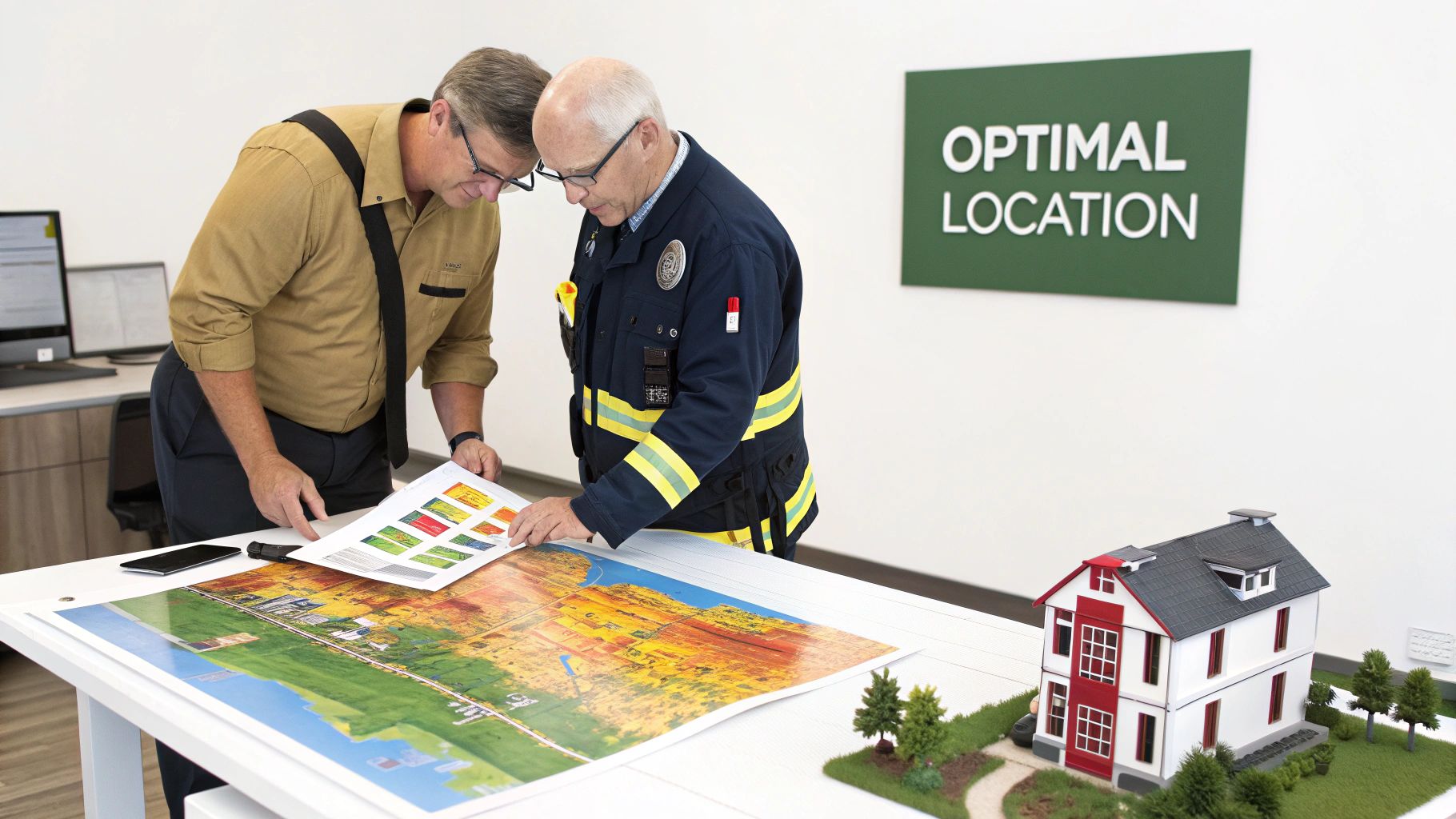
With a solid program in hand, the hunt for the right piece of land begins. These days, choosing a site isn't about finding a convenient, available lot. It’s a data-driven science focused on one thing: minimizing response times to save lives and property.
We use powerful Geographic Information System (GIS) tools to layer critical data onto a map, creating a clear picture of the ideal location. This analysis isn't guesswork; it's based on hard facts.
The analysis almost always includes:
- 911 Call Heat Maps: These maps show us exactly where emergency calls are coming from, highlighting the areas of highest demand.
- Travel Time Analysis: We use mapping software to run simulations, calculating response times from potential sites to every corner of the service area. This accounts for real-world factors like traffic patterns, one-way streets, and road networks.
- Community Growth Projections: We don't just look at the community today. By analyzing zoning maps and new development plans, we can position the new station to serve neighborhoods that don't even exist yet.
A site that looks perfect on paper can be a disaster if it has poor road access or is surrounded by future traffic bottlenecks. When you combine a well-defined program with data-backed site selection, you create an unshakeable foundation for a fire station that will serve its community effectively for decades.
Getting a Handle on Codes and Standards
When you're designing a fire station, you’re creating more than just a building—you’re engineering a critical piece of community infrastructure. The International Building Code (IBC) drives this point home by classifying fire stations as Risk Category IV. This is the highest level of importance, meaning the station absolutely must stay standing and fully functional during and after a major event like a hurricane, tornado, or earthquake.
This single designation sets the tone for the entire project, impacting everything from the structural design to the MEP systems. It's the non-negotiable foundation that guarantees your fire station can protect the community when it’s needed most. Getting familiar with this web of codes early on is the secret to keeping your project on track.
The Bedrock of Fire Station Design: NFPA Standards
The National Fire Protection Association (NFPA) provides the most specific and critical guidelines for fire service facilities. While your local building codes always have the final say, NFPA standards are the industry’s gold standard for firefighter safety and operational best practices. You simply can't ignore them.
Two documents, in particular, should become your design team's best friends:
- NFPA 1500: This is the Standard on Fire Department Occupational Safety, Health, and Wellness Program. It directly influences the station's layout, calling for things like vehicle exhaust removal systems in the apparatus bay and distinct zones for decontaminating gear to keep carcinogens out of the living quarters.
- NFPA 1901: The Standard for Automotive Fire Apparatus might sound like it’s just about the trucks, but its impact on the building is huge. It dictates the size, weight, and turning radius of modern fire apparatus, which in turn determines the dimensions of your bay doors, the strength of your slab, and the layout of the entire site.
A lot of design headaches come from underestimating the sheer scale of modern fire trucks. I’ve seen projects where the apron—the concrete pad just outside the bay doors—was designed with too steep a slope or not enough room to maneuver. That's a costly mistake that can damage million-dollar equipment or, even worse, slow down a crew on their way to an emergency.
Beyond the Bay Doors: Local and Federal Rules
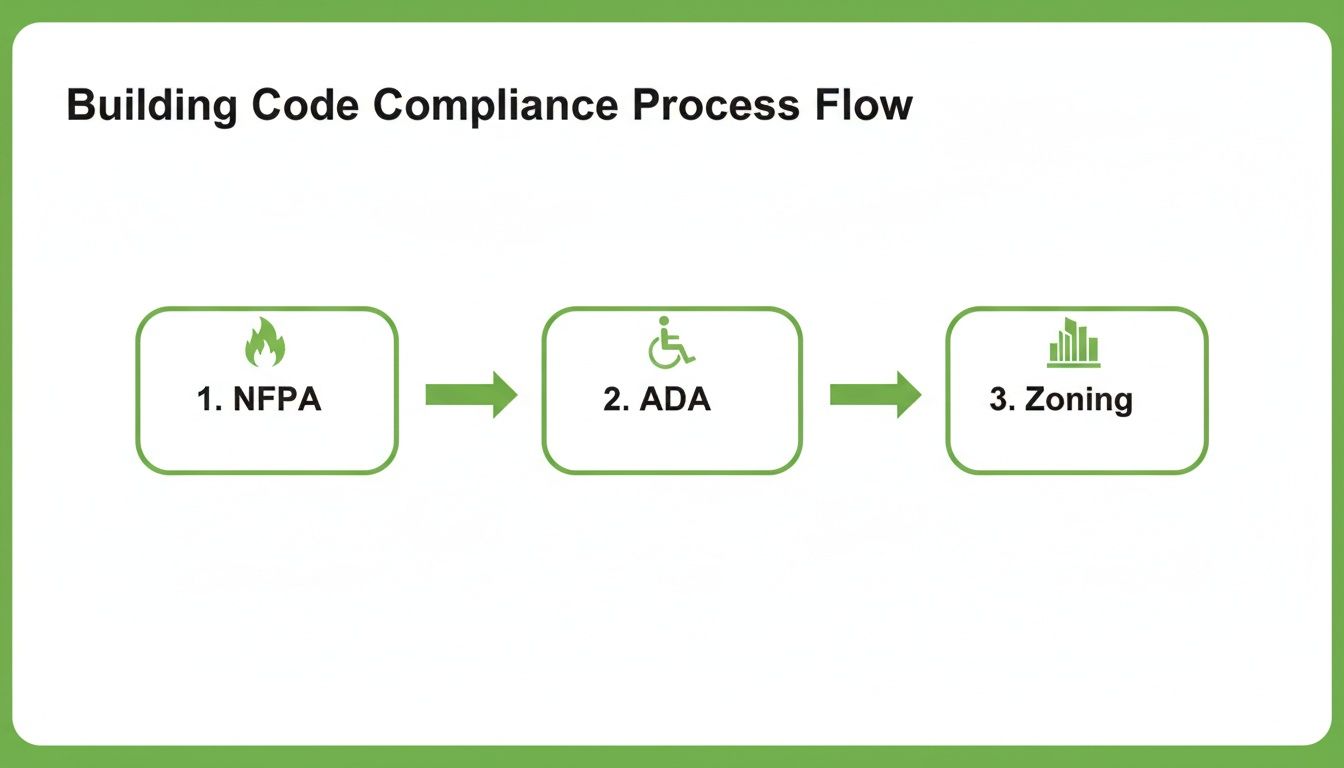
While the NFPA gets you dialed in on the core fire operations, a whole other set of regulations governs the rest of the facility. These rules are just as important and ensure the station is safe for everyone, accessible, and meets broader community standards.
This is where your architect, engineers, and local planning officials really need to be in sync. Local zoning ordinances, for instance, will tell you about building setbacks, height restrictions, and maybe even what materials you can use on the exterior. At the same time, state and local energy codes will shape your choices for insulation, windows, and HVAC systems, which has a direct impact on the station's utility bills for decades to come.
Making the Station Accessible for Everyone
Like any public building, fire stations must be accessible. The Americans with Disabilities Act (ADA) lays out clear requirements to make sure that anyone, regardless of physical ability, can access public-facing areas of the station.
This applies to more than you might think—from the front lobby and community rooms to the public restrooms and parking lot. It’s also important to understand the very specific ADA handicap parking space requirements to ensure your site plan is compliant right from the start.
Proper ADA planning means thinking through things like:
- Clear Paths of Travel: You need unobstructed routes from the parking lot and public sidewalks to every public entrance.
- Interior Room to Move: Hallways, doorways, and restrooms must meet specific width and clearance standards for wheelchair access.
- Adaptable Workstations: Administrative offices and other workspaces should be designed to accommodate employees with disabilities.
Ultimately, a successful fire station design is one that seamlessly integrates all these different codes and standards. It’s a complex puzzle, but solving it transforms a list of regulations into a blueprint for a safe, resilient, and highly functional facility built to serve its community for generations.
Designing For Firefighter Health With Zoned Layouts
A fire station has to be more than just a garage for the trucks and a place for the crew to sleep. It needs to be a sanctuary, a place that actively protects firefighters from the invisible dangers they bring back from a call. We're talking about carcinogens—the toxic soot and smoke particles that cling to their gear and pose a massive, long-term cancer risk.
This isn't a minor concern; it's a driving force behind a complete shift in how we design modern stations. The most effective solution we have is an evidence-based layout known as the Red/Yellow/Green zoning model. Think of it as a life-safety system built right into the station's DNA.
The concept is straightforward: create a non-negotiable, one-way path for anyone and anything returning from an incident. This path moves from the contaminated "dirty" side of the building to the "clean" living side, with a crucial transition zone in the middle. This design makes it physically impossible to track hazardous materials into the kitchen, bunk rooms, or offices.
The Red Zone: First Line of Defense
The decontamination process starts the second a truck pulls back into the station. The apparatus bay itself is the Red Zone, or the "hot zone." Every surface here is considered grossly contaminated.
Your design for the Red Zone is all about containment and immediate decon. This means including:
- Robust Apparatus Bay: The floors must be durable, non-porous, and sloped to trench drains. This is non-negotiable for washing down vehicles and the bay floor, ensuring contaminated water is properly contained and removed.
- Dedicated Decon Area: Within or just off the bay, there should be a clearly marked area for the initial, gross rinse-down of Personal Protective Equipment (PPE). This happens before a firefighter even steps into the next zone.
- Exhaust Capture Systems: Direct-source capture systems that hook right onto the vehicle exhaust are an absolute must. These systems prevent toxic diesel fumes from ever filling the bay and migrating into other areas of the station.
The workflow here is rigid. Nothing—and no one—goes directly from the Red Zone into the living quarters. Personnel must follow a specific path out of this zone to begin their own decontamination process.
This entire process is just one part of a larger safety framework. As you can see below, designing a station involves a complex interplay between various codes and regulations to ensure a safe, functional facility.
The Yellow Zone: The Decontamination Corridor
After leaving the "hot" apparatus bay, firefighters immediately enter the Yellow Zone. This is the transition or "warm zone" where the real work of decontamination happens. Getting the design of this space right is absolutely critical to stopping cross-contamination in its tracks.
This area must function as a one-way corridor, forcing a clear path toward the clean side of the station. Key design elements include:
- Walk-Through Decon Showers: These are completely separate from the showers in the living quarters. Firefighters use these showers to thoroughly remove contaminants from their bodies before proceeding further.
- Specialized Gear Storage: Contaminated turnout gear is doffed and left in a dedicated, heavily ventilated room within this zone. This space must have its own HVAC system with negative air pressure, which is crucial for pulling airborne contaminants out of the building instead of letting them seep into other areas.
- PPE Washers/Extractors: This is where you'll find the commercial-grade washing machines specifically designed to clean turnout gear according to manufacturer and NFPA standards.
The Red/Yellow/Green model isn't just a best practice; it's an urgent response to a health crisis. Endorsed by the NFPA, this design directly addresses the alarming fact that firefighters face a 9% to 14% higher risk of being diagnosed with cancer than the general public. It's about designing to save their lives long after the fire is out.
The table below breaks down how these three zones work together to create a comprehensive decontamination system.
The Three-Zone Decontamination Model
| Zone | Primary Function | Key Areas | Essential Design Features |
|---|---|---|---|
| Red (Hot Zone) | Containment of gross contaminants from incidents. | Apparatus Bays, Exterior Aprons, Initial Gear Rinse-Down Area | Sloped, non-porous flooring with trench drains; direct-source vehicle exhaust capture; designated decon hydrants. |
| Yellow (Warm Zone) | Transition and detailed decontamination of gear and personnel. | Decon Showers, Turnout Gear Storage, SCBA Maintenance, Gear Laundry | One-way circulation path; negative air pressure ventilation; separation from both Red and Green zones; durable, water-resistant finishes. |
| Green (Cold Zone) | Safe, clean living and administrative areas. | Kitchen, Dayroom, Bunk Rooms, Fitness Area, Offices, Training Rooms | No direct access from the Red Zone; positive air pressure relative to Yellow Zone; physically separated by corridors and airlocks. |
This systematic approach ensures that carcinogens and other contaminants are progressively stripped away, protecting the sanctity of the station's clean living areas.
The Green Zone: Clean Living Quarters
Only after moving through both the Red and Yellow zones can a firefighter enter the Green Zone, or the "cold zone." This is the clean half of the station—the kitchen, dayroom, bunk rooms, fitness center, and administrative offices.
The single most important design principle for the Green Zone is total separation. There can be no shortcuts or direct doors from the apparatus bay into any Green Zone space. The layout must make it physically impossible to bypass the decontamination corridor.
Of course, a safe station also depends on clear communication. Ensuring the crew has effective communication devices is vital for maintaining situational awareness and rapid response, especially during high-stress calls. By implementing a strict zoned layout, you are building health and safety into the very foundation of the facility, creating a station that truly protects its protectors.
Optimizing Station Operations and Living Quarters
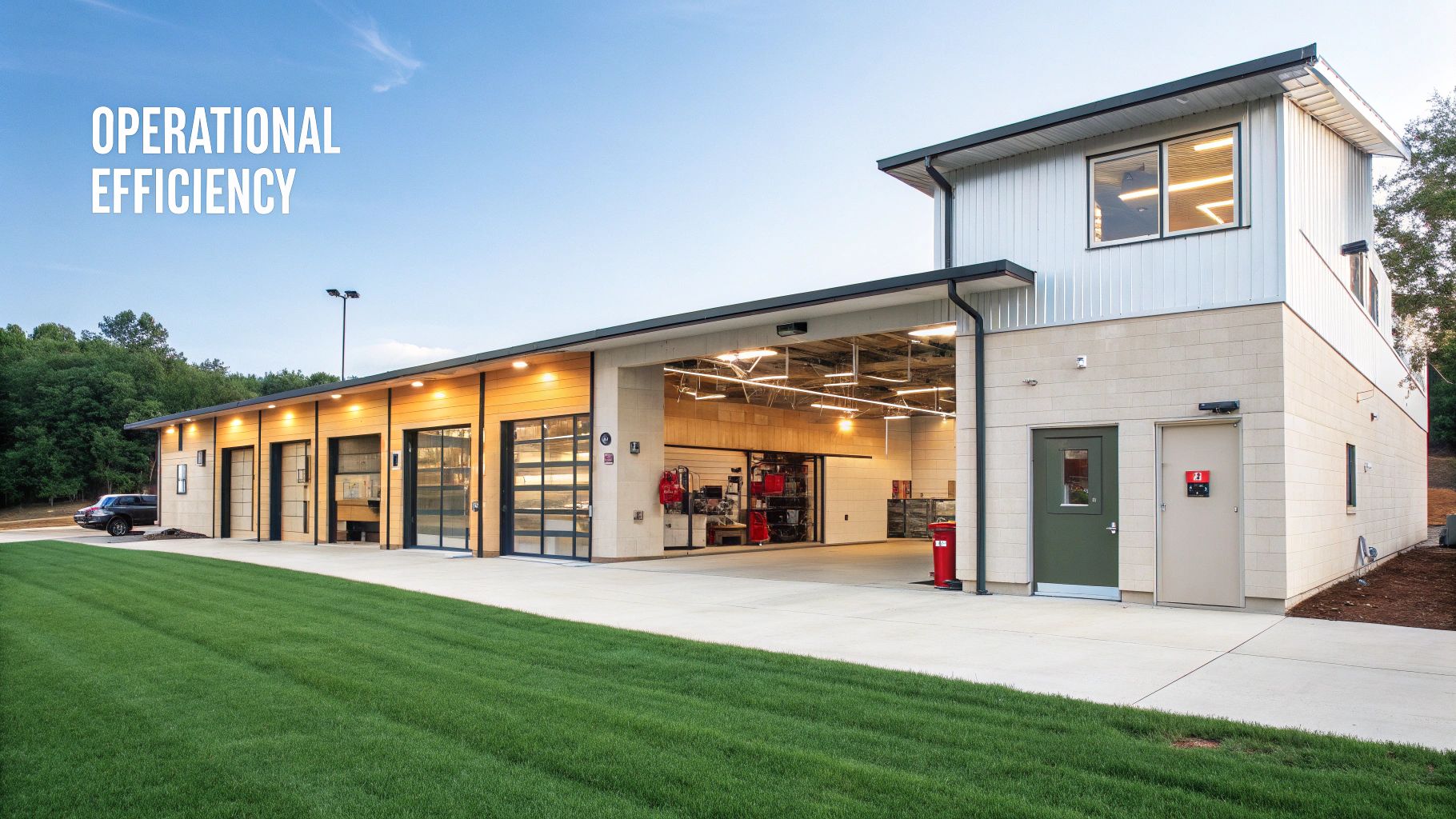
A fire station is really two buildings in one: a high-stakes industrial garage fused with a residential home. The design challenge is to make these two halves work together flawlessly. When an alarm blares, the path from the dayroom to the apparatus bay has to be as direct and safe as humanly possible.
This delicate balance between operational efficiency and firefighter well-being is everything. Every single design choice, from the workflow in the apparatus bay to the comfort of the living quarters, directly impacts response times and crew morale. A well-designed station works with the crew, not against them, creating an environment that supports peak performance under pressure while also offering a genuine space to recover.
The Modern Apparatus Bay and Support Areas
The apparatus bay is the heart of the station, and its design has come a long way. Gone are the days when multi-story stations with iconic fire poles were the standard. The modern trend is a decisive move toward single-story layouts, a shift driven by two critical factors: safety and speed.
Moving to a single level practically eliminates the fall risk from poles and stairs, which have historically been a major source of non-incident injuries. More importantly, it creates a straight shot to the trucks. When we design a fire station this way, we've seen bay access speed up by 15-20%, shaving precious seconds off turnout times. For more on this, it's worth reading about the renovation needs of the U.S. fire service, which details these efficiency gains.
Of course, the bay is more than just a parking garage. The support areas are what keep the operation in a constant state of readiness, and they need to be right next to the apparatus for an efficient workflow.
- SCBA Room: This isn't just a closet. It needs to be a dedicated, well-ventilated space for inspecting, refilling, and maintaining Self-Contained Breathing Apparatus.
- Workshop: A compact workshop for routine tool and equipment maintenance keeps everything ready for the next call.
- Medical Supply Storage: A climate-controlled, organized room is a must for quickly restocking ambulances and engines.
A common mistake I see is tucking these support functions away in a distant corner of the building. Firefighters shouldn't have to cross the entire station to grab fresh medical supplies or work on a tool. Every step you save them is a second gained on a call.
Creating a Home Away From Home
Firefighters don't just work here; they live here, often for 24 to 48 hours straight. This makes the living quarters just as vital as the operational zones. These spaces need to be incredibly durable and low-maintenance, but they also have to be designed to promote both physical and mental well-being. The goal is a comfortable, restorative environment where crews can actually decompress between calls.
This means we have to move beyond purely utilitarian design. Things like maximizing natural light, choosing comfortable furnishings, and thinking about acoustics can make a world of difference in reducing stress and boosting morale.
Key Living and Community Spaces
When you get down to designing the living quarters, you have to think about the crew's daily routines. Each space has a distinct job to do, from providing private rest to encouraging communal interaction.
Bunk Rooms
The old open-dormitory-style sleeping quarters are a thing of the past. Modern stations almost exclusively use individual bunk rooms. This gives firefighters much-needed privacy, dramatically improves sleep quality by cutting down on disturbances, and is simply more accommodating for a diverse workforce.
Kitchen and Dayroom
The kitchen is the social hub of any station. It requires a commercial-grade setup with tough appliances, tons of counter space, and a dining table big enough for the entire on-duty crew to share a meal. Right next to it, the dayroom should have comfortable seating for training, studying, or just relaxing.
Fitness Area
Physical fitness is a non-negotiable part of the job. A dedicated fitness area with professional-grade equipment isn't a luxury; it's a necessity for promoting crew health and reducing injury risks. This space demands proper ventilation and durable, shock-absorbent flooring.
Multi-Functional Training and Community Rooms
Here's a smart way to add tremendous value: design flexible spaces. A station’s training room can easily be designed to double as a community meeting area. This simple strategy builds goodwill with the public and provides a valuable neighborhood resource without a huge impact on cost or square footage. It turns the fire station from just an emergency facility into a true community asset.
Building for Sustainability and Resilience
When you're building a fire station, you’re not just putting up a structure; you’re creating a cornerstone of the community designed to last for 50 years or more. With that kind of lifespan, sustainability and resilience aren't just buzzwords. They are practical, long-term strategies that have a massive impact on your bottom line and the station's ability to perform when it's needed most.
A station built with this foresight will have lower operating costs, a lighter environmental touch, and the ruggedness to stay online through any crisis. It’s all about looking past the initial price tag and thinking about the total cost of ownership over the next half-century. Every decision you make today—from insulation to energy systems—will echo in the municipal budget for decades.
Driving Down Operational Costs with Smart Design
Let’s be honest: energy is one of the biggest line items in the budget for any 24/7 facility. The good news is that we have powerful ways to slash those costs right from the drawing board. It all starts with a high-performance building envelope and highly efficient systems that stop energy waste before it begins.
As we moved into the 21st century, sustainability became a core part of the design conversation. Things like solar panels and LED lighting are no longer niche—they're standard practice. Incorporating these technologies can cut energy costs by 25-40% in a new build.
Take the 25,000 sq ft station in Kaukauna, for example. By integrating geothermal and photovoltaic technology, they’re saving an estimated $37,000 every year. It’s a perfect illustration of how fire station design has evolved to embrace these cost-saving measures.
Here are some of the most effective strategies I’ve seen work in the field:
- Geothermal Heating and Cooling: Tapping into the earth's stable temperature is a game-changer. These systems are incredibly efficient and can dramatically lower utility bills compared to traditional HVAC.
- Solar PV Arrays: A fire station's large, flat roof is prime real estate for photovoltaic panels. Generating your own clean electricity on-site can offset a huge chunk of the building's energy demand.
- High-Performance Building Envelope: This is your first line of defense. Superior insulation, meticulous air sealing, and high-quality windows create a tight building that isn’t constantly fighting the weather outside.
- LED Lighting and Controls: It's a simple switch with a big impact. Combining all-LED fixtures with motion sensors and daylight harvesting can slash your lighting-related energy use by over 50%.
By weaving these systems into the design from day one, you're not just shrinking the station's carbon footprint. You’re building a predictable, manageable operating budget. Those energy savings can free up vital funds for new equipment, better training, or other critical department needs.
Engineering for Uninterrupted Operation
Resilience is the other side of the sustainability coin. A fire station is a Risk Category IV facility, which means it must stay operational during and after a disaster. This isn’t a "nice to have"; it’s a requirement. This means designing systems that can stand on their own when the grid goes down.
The heart of a resilient design is a bulletproof backup power source. A natural gas or diesel generator, properly sized to power the entire station, is non-negotiable. And I mean the whole thing, not just the emergency lights.
This generator has to cover:
- All Apparatus Bay Doors: The top priority is getting trucks out the door.
- HVAC Systems: You need to keep your crew safe and functional, not freezing or sweating through a crisis.
- Communications Equipment: Radios, servers, and dispatch systems must stay online. No exceptions.
- Kitchen and Living Quarters: During an extended event, you’re providing a home base. The crew needs to be able to eat, sleep, and recharge.
Beyond backup power, resilience is also built into the very materials you choose. Things like polished concrete floors, sturdy masonry walls, and durable metal roofing are smart, long-term investments. They stand up to the daily abuse of a firehouse and cut down on maintenance and replacement costs for years to come.
Thinking this way doesn't just future-proof the station—it can also open the door to federal and state grants that are specifically aimed at building more resilient community infrastructure.
Smart Budgeting and The Value of Adaptive Reuse
Let's talk about the bottom line. Designing and building a fire station is one of the most significant investments a community can make, so getting the budget right is every bit as important as nailing the floor plan. With construction costs going through the roof, smart financial planning isn't just a good idea anymore—it's absolutely essential.
The money side of public projects has changed in a big way. Back in the 1980s, you might have built a station for $50-60 per square foot. Today, you're looking at costs closer to $190-250 per square foot. That's a huge jump. You can get a deeper sense of how these rising costs are affecting departments across the country by checking out the latest fire station renovation data on NFPA.org. This new reality means we have to be incredibly careful with every dollar.
Thinking Beyond New Construction
Everyone loves the idea of a shiny new station, but that's not always the most practical or affordable path. Think about this: over 40% of fire stations in the U.S. are now more than 40 years old. Many of these older buildings are structurally solid and represent a huge, untapped opportunity for adaptive reuse.
Giving an existing station a major overhaul can save a ton of money and is a far more sustainable choice than tearing down and starting over. You're not just saving on demolition and new materials; you're also preserving a piece of the community's history. A well-planned renovation can get a station back in service faster and extend its life by another 50 years or more.
Adaptive reuse isn't just about saving a buck; it's a strategic move. I've been on projects where we took a dated, inefficient station and completely transformed it. By gutting the interior, we were able to carve out a modern Red/Yellow/Green zone layout for decontamination, all without ever touching the original building's footprint.
Strategic Upgrades for Older Stations
The first step in any potential reuse project is a serious look at the building’s “bones.” If the foundation is solid and the structure is sound, you can upgrade almost everything else to meet modern standards.
When we tackle a renovation, the focus usually lands on a few key areas:
- Integrating Modern Safety: The number one priority is almost always creating a proper decontamination corridor. This means rethinking the flow of the building to establish clear Red, Yellow, and Green zones to protect firefighters from carcinogens.
- Upgrading MEP Systems: This is the perfect time to rip out old, inefficient HVAC, plumbing, and electrical systems. Swapping them for high-efficiency modern equipment can dramatically slash the station's operating costs for decades to come.
- Enlarging Apparatus Bays: Older stations were built for smaller trucks. One of the biggest hurdles is making sure today's larger apparatus can fit. Often, with some clever structural work, we can raise the roof and widen the bay doors to accommodate modern rigs.
The Power of Phased Construction
Whether you’re building from the ground up or renovating, breaking the project into phases can turn a daunting budget into a series of manageable steps. Phasing allows a community to tackle the project in smaller, more affordable chunks.
For instance, a department might decide to build the essential operational spaces first—the apparatus bays and core support areas. Then, a few years down the line when another round of funding is secured, they can add the administrative wing or expand the living quarters. This approach lets a community solve its most pressing needs right away while spreading the financial load over time, ensuring the final station is everything it needs to be without breaking the bank in a single year.
What We're Asked Most About Fire Station Design
When a community decides it's time to build a new fire station, a few critical questions always come up right at the start. Sorting these out early on is the best way to keep the project on track and avoid major headaches later.
Everyone's first question is, "How long will this take?" For a project of this size and importance, you're looking at a design phase of about 6 to 12 months. After that, construction will typically take another 12 to 24 months. Of course, this timeline can shift based on how complex the design is, what we find at the site, and how smoothly the local approvals process goes.
Avoiding Common Mistakes
Another big concern we hear is about getting the design right from the get-go. What are the major pitfalls?
Without a doubt, the biggest mistake is not planning for the future. A station designed only for today's needs—with apparatus bays that are too small for the next generation of trucks or not enough storage space—can be obsolete in just 10 years. The key is to start with a rock-solid needs assessment and build in flexibility for future expansion.
We also get a lot of questions about blending a modern facility into a town with a distinct historic feel. This is where an architect's experience really pays off. The goal is to respect the local character through materials, scale, and overall massing while ensuring the inside is a high-performance, modern facility. For example, a classic brick facade can fit beautifully into a historic district, while the interior is laid out with clear, efficient zoning for firefighter health and safety.
Having an experienced design partner on board from day one is the single best way to manage the timeline and budget. They've seen the regulatory hurdles before and know how to get all the stakeholders pulling in the same direction.
At Sherer Architects, LLC, we live and breathe complex commercial projects, guiding clients from the first sketch to the final walkthrough. Our deep experience in adaptive reuse and navigating the nuances of historic preservation means your project will be as enduring as it is functional. See how we bring structure to your vision at https://shererarch.com.