
SHERER ARCHITECTS

Categories
Uncategorized

Historic Preservation Tax Credits Your Guide to ROI

So, you're standing in front of a beautiful old building, one with character, history, and incredible potential. But when you start running the numbers on a renovation, the costs can feel overwhelming. This is exactly where historic preservation tax credits come into play, turning what seems like a daunting project into a smart financial move.

Turn Historic Buildings into Profitable Ventures
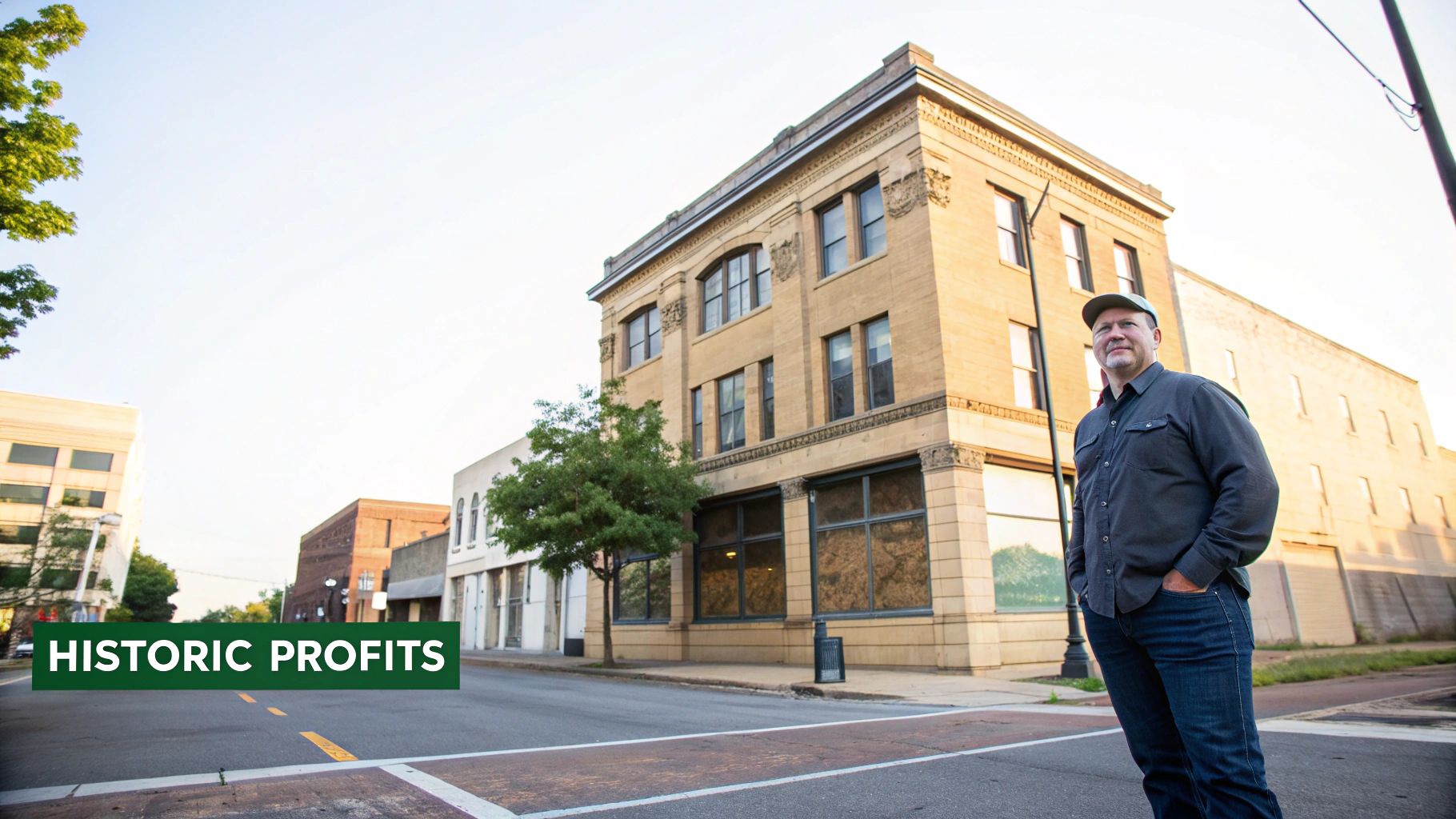
A man in a cap stands on a street with a grand historic building behind him.

These credits aren't just some minor tax break; they are powerful incentives that can dramatically lower your project costs. This guide will walk you through how combining federal and state programs can unlock the full financial potential of a historic property. It’s more than just restoration—it’s a strategic business decision that can seriously boost your return on investment.

Think of it this way: a tax credit isn't a simple deduction that just lowers your taxable income. It’s a direct, dollar-for-dollar reduction of the taxes you actually owe. It’s like having a financial partner in the project, making the restoration of architectural treasures not just possible, but often highly profitable.

A Proven Engine for Economic Growth

The ripple effect of these incentives goes far beyond a single project's bottom line. Since it kicked off in 1976, the Federal Historic Preservation Tax Credit (HTC) program has become a true powerhouse for community revitalization. It has sparked over $235 billion in private investment to bring more than 48,000 historic properties back to life.

For developers working with experienced firms like Sherer Architects, this program is a key tool for turning fading landmarks into thriving, profitable assets.

What’s really compelling is where these projects happen. A staggering 78% are in economically distressed areas, 50% are in low- to moderate-income neighborhoods, and 29% are in small communities. This isn't just about saving buildings; it’s about directly tackling urban decay and breathing new life into rural towns.

More Than Just Preservation

At its heart, this is a program about smart, sustainable development. By using historic preservation tax credits, you’re doing much more than just fixing up an old building. You can:

  • Boost Your ROI: The credits directly lower your project costs, which naturally increases your final return on investment.
  • Enhance Community Value: Revitalized buildings create jobs, bring energy back to neighborhoods, and adapt unique structures for modern commercial use.
  • Access More Capital: When you walk into a bank with approved tax credits, your project instantly looks more financially sound to lenders and investors.

To get the most out of these opportunities, it's wise to weave these credits into a broader set of real estate investment tax strategies. By understanding how to navigate the process, you can transform architectural treasures into profitable, community-enhancing assets.

Combining Federal and State Tax Credits

The real magic in financing a historic renovation isn't just finding one tax credit program; it's learning how to stack them. Think of it as building a financial engine with multiple, powerful parts. You don't just use the federal program or the state one—you combine them to create a much more substantial, profitable outcome for your project.

This strategy is especially potent here in South Carolina. We have a fantastic state-level program that dovetails perfectly with the long-standing federal credits. By understanding how these two systems work together, developers and property owners can dramatically cut their out-of-pocket costs and tax burdens, turning what might seem like a passion project into a truly smart investment.

The Foundation: The Federal Historic Tax Credit

The bedrock of this strategy is the Federal Historic Tax Credit (HTC). This is the big one, but it’s designed specifically for income-producing properties. If you're bringing a commercial building back to life, converting an old warehouse into lofts, or renovating a rental property, this is where you start.

The federal program offers a 20% tax credit on your Qualified Rehabilitation Expenses (QREs). And let’s be clear: this isn’t a deduction. It's a direct, dollar-for-dollar reduction of what you owe in federal income taxes. If your project has $1 million in eligible costs, that’s a $200,000 credit in your pocket. That kind of number can completely change the financial viability of a project right from the get-go.

Of course, this incentive comes with high standards. You have to follow the Secretary of the Interior’s Standards for Rehabilitation, but for those who plan carefully, the financial reward is more than worth the effort.

South Carolina's State-Level Power-Up

While the federal credit is a game-changer on its own, South Carolina’s own incentives are what make stacking so incredibly lucrative here. The state actually offers two different historic tax credits, which opens the door to more than just commercial developers.

  • For Income-Producing Properties: For these projects, South Carolina adds a generous 25% state income tax credit on top of the federal one. This stacks directly with the 20% federal credit, giving you a combined 45% of your costs back in credits. That synergy is powerful enough to make almost any historic project financially compelling.
  • For Owner-Occupied Homes: Here’s where South Carolina really stands out. Unlike the federal program, our state also offers a 25% state income tax credit for homeowners who rehab their personal historic residence. This is a fantastic opportunity for individuals to preserve their own piece of history and get a significant financial benefit for doing so.

This dual-pronged approach makes South Carolina one of the best places in the country for historic preservation. The combined federal and state incentives create a financial package that’s tough to beat.

Imagine you're a developer in Charleston or Columbia looking at a $2 million rehabilitation. Stacking the 20% federal credit ($400,000) with the 25% state credit ($500,000) gives you $900,000 in tax credits. That’s nearly half the project cost covered, which is often the key to getting a "yes" from lenders and investors.

Federal HTC vs South Carolina State Historic Tax Credits at a Glance

To really get a handle on how these programs work together, it helps to see them side-by-side. They’re designed to be partners, but they have their own distinct rules about property use, credit value, and ownership terms that you need to understand for smart project planning.

Feature Federal Historic Tax Credit (HTC) South Carolina State Tax Credit
Credit Percentage 20% of Qualified Rehabilitation Expenses. 25% of Qualified Rehabilitation Expenses.
Eligible Properties Income-producing only (commercial, industrial, rental). Both income-producing and owner-occupied residential properties.
Minimum Investment Rehab cost must exceed the building's adjusted basis (the "Substantial Rehabilitation Test"). A minimum investment threshold applies, which varies by property type.
Recapture Period A 5-year holding period is required to avoid credit recapture. A 5-year holding period is also required for the state credit.

This table really drives home the opportunity we have here in South Carolina. For commercial developers, the ability to combine these credits creates an incredible financial synergy. It maximizes the total return on investment and transforms the preservation of our state's beautiful historic architecture from a noble cause into a sound, profitable business strategy.

Does Your Renovation Project Qualify?

Figuring out if your project qualifies for historic preservation tax credits can seem daunting, but I always tell clients to think of it as a simple, three-part checklist. Before you get lost in the details of floor plans and budgets, we need to make sure your building and your project tick these fundamental boxes.

Think of it like this: there are three main gates you have to pass through to unlock the financial power of these credits. Each one looks at a different piece of the puzzle—the building's official status, the size of your investment, and the quality of the restoration work itself. Nailing these three things from the get-go is the most critical step you can take.

Is Your Building Historically Significant?

First things first, the building has to be officially recognized as historic. It's not enough for a building to just be old or have character; it needs a formal designation. This is the absolute, non-negotiable starting point for both the federal and state tax credit programs.

So, how do you know if your property makes the cut? It needs to meet one of two conditions:

  • It’s individually listed on the National Register of Historic Places. This is the clearest path, meaning the building is considered significant all on its own.
  • It's a contributing structure within a Registered Historic District. This means your building is a key piece of the neighborhood's historic fabric, even if it isn't a standalone landmark.

We can quickly help you verify your property’s status. If it's not yet certified as "contributing," we have experience guiding clients through that process.

Passing the Substantial Rehabilitation Test

Once you've confirmed the building's historic status, the next gate is all about the money. These programs are designed to reward major, transformative investments, not just a quick coat of paint or some minor updates. To qualify, your project has to pass the “Substantial Rehabilitation Test.”

It sounds technical, but the logic is straightforward: you have to spend more on the renovation than the building is currently worth.

The official rule is that your Qualified Rehabilitation Expenses (QREs) must be greater than the "adjusted basis" of the building. In simple terms, the adjusted basis is usually what you paid for the building (minus the land value), minus any depreciation you’ve claimed, plus the cost of any capital improvements you’ve already made.

Meeting this financial bar proves your project is a serious, significant undertaking. It's the government's way of ensuring the tax incentives go to projects that are making a real commitment to bringing these old buildings back to life.

Following the Secretary of the Interior’s Standards

The final gate is about the quality and sensitivity of the renovation itself. All the work you do must adhere to the Secretary of the Interior's Standards for Rehabilitation. A lot of people hear "standards" and think of rigid, stifling rules, but that’s not the case at all.

These ten standards are really just a set of best-practice principles for making smart design choices that honor a building's past while preparing it for a modern future. They guide everything from repairing old brick and windows to designing new additions, always emphasizing repair over replacement and ensuring new work complements the old. This is where an architect's experience is absolutely crucial. A firm like ours, that lives and breathes historic preservation, knows how to design a project that achieves your business goals while effortlessly aligning with these standards.

The ripple effect of these projects is incredible, often breathing new life into areas that need it most. It's no accident that half of all historic tax credit projects are in low-income communities and 78% are in economically distressed areas. These credits are a powerful engine for community growth. Exciting proposals are even on the table to make it easier for nonprofits to get involved, potentially allowing these credits to be combined with Low-Income Housing Tax Credits. You can learn more about how these incentives drive inclusive growth from this fact sheet from Preservation Action.

Navigating the Application Process Step by Step

Chasing historic preservation tax credits can feel like navigating a maze, but it's really just a straightforward, three-part journey. Think of the application as a story with a beginning, a middle, and an end. Each part builds on the last, and you have to complete them in the right order.

It’s a lot like building a house. You can't frame the walls (Part 2) until you've poured the foundation (Part 1). And you certainly can't get the final sign-off (Part 3) until the work is done. An experienced architect acts as your guide, making sure every document is filed correctly and on time, keeping the whole project on track from start to finish.

This timeline breaks down the three main checkpoints you’ll need to clear.
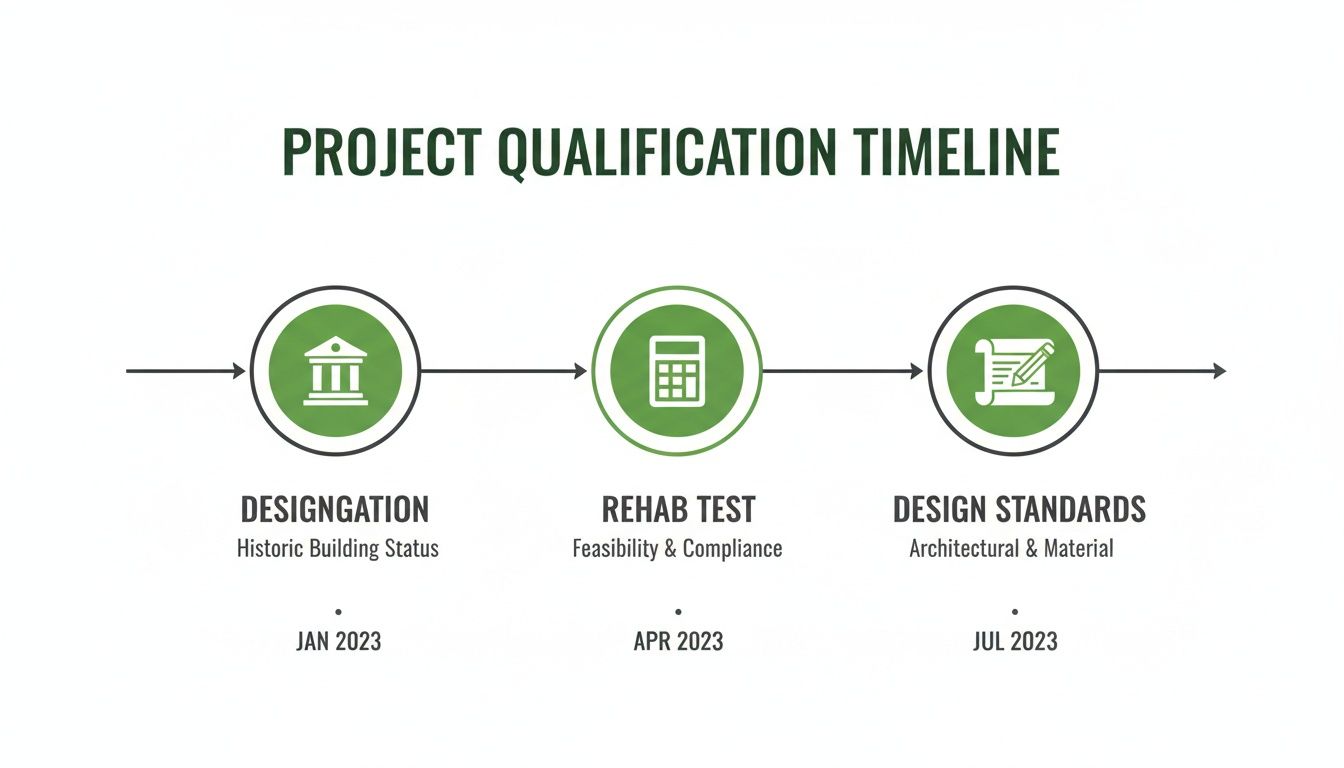
Project qualification timeline for historic buildings showing designation, rehab test, and design standards stages.

Each stage—proving the building's historic Designation, passing the Rehab Test, and following the Design Standards—is a non-negotiable step on the path to securing these credits.

Part 1: Certifying Your Building’s Historic Status

The whole process kicks off with the Historic Preservation Certification Application, Part 1—Evaluation of Significance. This is where you officially prove your building is worth preserving. Even if the property is already listed on the National Register, this step is required to get it formally recognized for your specific tax credit project.

Part 1 is all about documentation. You'll need to pull together:

  • Photographs: Clear, current photos are a must. They need to show the building's overall condition and highlight its important architectural details.
  • Historical Information: You'll write a narrative explaining the building's history and why it matters to the local historic district (if it’s in one).
  • Maps: A simple map showing exactly where the property sits within the historic district.

Your architect will take this information and weave it into a compelling story for the reviewers at the State Historic Preservation Office (SHPO) and the National Park Service (NPS). Getting Part 1 approved is the green light that confirms your building is a deserving candidate.

Part 2: Getting Your Rehabilitation Plan Approved

Once your building's historic status is locked in, you’re ready for Part 2—Description of Rehabilitation. This is the heart of the application and, frankly, the most intensive phase. Here, you submit your full architectural plans and project details for review before you start any major work.

Let me be clear: this is a forward-looking step, not a look back. You're asking for permission, not forgiveness. The goal is to get the SHPO and NPS to sign off on your proposed work, confirming it follows the Secretary of the Interior’s Standards. Nailing Part 2 prevents expensive do-overs and frustrating delays later on.

A rock-solid Part 2 submission is your best insurance policy against project headaches. When it's put together by an architect who knows preservation inside and out, it shows reviewers you have a smart, respectful plan for bringing the building into the 21st century.

Part 3: Certifying the Completed Work

The final step is Part 3—Request for Certification of Completed Work. After the last nail is hammered and the paint is dry, you submit this application to show that the finished project matches the plans approved in Part 2. This is the finish line—where your project gets its final certification and the tax credits are officially unlocked.

This last package includes "after" photos that mirror the "before" shots from Part 1, plus a formal statement confirming everything meets the program's requirements. The NPS issues the final certification, which you then file with your income tax return to claim your credits.

Getting through these three stages takes foresight, an expert understanding of preservation rules, and constant communication with state and federal agencies. It’s a process where having the right professional in your corner isn't just helpful—it’s what protects your investment and turns your vision into a financial success.

How These Credits Impact Your Bottom Line

It’s easy to talk about percentages, but to really understand the power of historic preservation tax credits, you have to see what they do to a project's budget. These aren't just a nice little bonus; they completely reshape the financial DNA of a renovation, often turning a project that’s on the bubble into a fantastic investment. By directly cutting down your tax bill, these credits free up an enormous amount of capital and can seriously boost your return.
A miniature house model on grass with a calculator, financial documents, and a pen for real estate planning.

Let’s walk through a real-world example. The numbers really tell the story of how stacking federal and state credits can be the deciding factor between a project that just breaks even and one that’s a home run.

A Practical Case Study

Let's imagine a developer who has just purchased a historic warehouse in a part of town that's seeing new life. The purchase price was $800,000. The vision is to convert it into a mixed-use commercial space, and the budget for the full rehabilitation is $1,500,000.

First, we need to figure out the Qualified Rehabilitation Expenses (QREs). Think of these as the "hard costs"—the money spent directly on the building itself. This includes things like structural work, restoring original windows, or putting in new HVAC and electrical systems. In our scenario, the entire $1,500,000 budget qualifies.

Now, let's do the math on the credits.

  • Federal Historic Tax Credit: The federal government offers a 20% credit on the QREs. For this project, that’s a $300,000 credit ($1,500,000 x 0.20).
  • South Carolina State Tax Credit: Our state program offers an even more generous 25% credit. That adds another $375,000 to the mix ($1,500,000 x 0.25).

By combining these two programs, the developer gets a staggering $675,000 in total tax credits. And remember, this isn’t a deduction that just lowers your taxable income. It's a true, dollar-for-dollar credit that erases what you owe in future taxes.

Analyzing the Financial Impact

The effect of these credits goes way beyond that initial $675,000 figure. That savings changes the entire financial picture, making the deal far more secure and appealing from every possible angle.

Right off the bat, the project's net cost plummets. That $1.5 million renovation now effectively costs the developer only $825,000 out of pocket once the credits are accounted for. This drastically reduces the capital they need to raise and lowers the overall financial risk.

A project with nearly half of its rehabilitation costs covered by tax credits is fundamentally different from one financed entirely with debt and equity. It allows for a more conservative capital stack, better loan terms, and a faster path to profitability for investors.

This stronger financial footing creates a positive ripple effect. When you walk into a bank with approved tax credits, you're essentially showing them a form of secured equity. It signals that the project is not only financially viable but also has the backing of both federal and state preservation programs. This adds a layer of credibility that lenders love, often leading to better financing terms.

In the end, these historic preservation tax credits turn abstract ideas into tangible cash. They make projects more attractive to banks and investors alike, proving that saving our architectural heritage isn't just a good cause—it's smart business.

Why Your Architect Is Your Most Valuable Partner

When you kick off a project involving historic preservation tax credits, it’s natural to see your architect primarily as the person drawing up plans. But in this very specific arena, they are so much more. Think of them as your strategic partner, the person who safeguards your investment and makes sure your vision actually pays off.

Their job goes way beyond the blueprints. They’re your guide through the red tape, your advocate with review boards, and your quality control expert, all wrapped into one.

An architect who’s been down this road before—like our team at Sherer Architects—knows the process is a delicate dance. It’s about fitting modern needs into a historic shell in a way that checks all the boxes for the tax credit programs and for you. That kind of experience is what stops expensive mistakes before they happen and keeps the whole project on track.

Masters of Meticulous Documentation

The application for historic tax credits is a mountain of paperwork. And I mean a mountain. Every single detail is scrutinized. Your architect is the one responsible for creating the exhaustive documentation that the State Historic Preservation Office (SHPO) and the National Park Service (NPS) demand.

This isn’t just a set of floor plans. It’s a deep dive into the specifics:

  • Detailed Drawings and Specifications: These aren't your average construction plans. They have to outline the exact methods and materials that will be used to repair or bring back historic features, from window glazing to masonry techniques.
  • Comprehensive Photographic Records: A thorough “before” and “after” photo survey is non-negotiable. An experienced architect knows precisely what angles and details to capture to tell a compelling story of rehabilitation for the officials reviewing your file.

Getting this documentation right from the start is your first line of defense. It shows the review boards you’re serious and professional, leaving no room for questions or doubt.

Navigating the Secretary of the Interior’s Standards

The entire historic tax credit world revolves around one thing: The Secretary of the Interior’s 10 Standards for Rehabilitation. These are the commandments of preservation. A good architect doesn't just know them; they know how to interpret them creatively to solve real-world problems.

For instance, how do you install a modern, high-efficiency HVAC system without tearing apart the historic fabric of the building? How do you upgrade the electrical wiring to meet today's code while respecting original plaster walls? This is where an expert's guidance is absolutely essential to getting your historic preservation tax credits.

An architect’s true value is in being a translator. They translate your project goals into a language the government’s preservation requirements can understand, ensuring your design gets approved without killing your vision or your ROI.

This proactive approach to design saves you from soul-crushing (and budget-busting) revisions later.

Finally, your architect acts as your professional go-between. They handle all the communication with the SHPO and NPS, speaking their language and building the kind of rapport that makes the review process go smoothly. This constant advocacy protects your timeline and your bottom line, making sure your project successfully qualifies for every last credit it deserves.

Got Questions About Historic Tax Credits? We've Got Answers.

Jumping into a historic renovation project is exciting, but the financial details—especially tax credits—can feel a little daunting. It's completely normal to have questions as you try to line up your budget and timeline. We hear them all the time from developers and property owners just like you.

Let's clear up some of the most common points of confusion. Think of this as your go-to cheat sheet for navigating the process with confidence.

What Renovation Costs Actually Qualify?

This is the big one, right? It all comes down to what the government calls Qualified Rehabilitation Expenses, or QREs. Generally, this covers the hard costs of bringing the building back to life—things that are integral to its structure and function. We're talking about work on the walls, floors, roof, windows, and major systems like plumbing and electrical.

What's not included? Costs for buying the property itself, building a brand-new addition, or doing site work like paving a parking lot or landscaping. This is where an architect who knows the ropes is invaluable; they can help you meticulously categorize every expense to make sure you're maximizing every dollar of your potential credit.

What if I’ve Already Started the Renovation? Can I Still Get Credits?

Timing is absolutely critical here. Your entire rehabilitation plan needs the green light from both the State Historic Preservation Office (SHPO) and the National Park Service (NPS) before you finish the project. If you start swinging hammers and doing major work before getting that approval, you could lose your eligibility entirely.

It's a hard and fast rule: start the application process at the very beginning of your planning. The system is designed to approve a plan before work happens. Trying to get approval after the fact is a recipe for disappointment and a very expensive mistake.

How Long Do I Have to Own the Property?

Both the federal and state programs want to see long-term investment, not just a quick flip. That's why they have a five-year recapture period. If you sell the property within five years of completing the renovation (also known as "placing it in service"), you may have to pay back some or all of the tax credits.

The good news is that the amount you'd owe is prorated. It decreases by 20% for each full year you hold onto the property. After five years, you're in the clear.

Can I Get These Credits for My Own House?

This is a really common question, and the answer depends on which credit you're talking about. The Federal 20% Historic Tax Credit is designed specifically for income-producing properties. Think office buildings, retail storefronts, or apartment rentals.

But if you live in South Carolina, you're in luck. The state offers a separate 25% state tax credit just for owner-occupied historic homes. It's a fantastic incentive that helps homeowners invest in preserving the character of their own primary residence.


Ready to see how historic tax credits could make your next project's numbers work? The team at Sherer Architects, LLC lives and breathes this stuff. We can guide you through every single step, from figuring out if your building qualifies to getting that final certification. Let's talk about your project—get in touch with us today.
Categories
Uncategorized

How to Increase Property Value with Smart Commercial Upgrades

Before you even think about picking up a hammer or calling a contractor, you need a solid game plan. Trying to boost your property's value without one is like navigating without a map—you'll spend a lot of time and money and likely end up lost. The real secret to smart, profitable upgrades starts with a clear-eyed look at what you have and where it sits in the market.

This foundational work is what separates a successful investment from a costly mistake. It shows you exactly where to put your money for the best and fastest returns.

Your Strategic Foundation for Adding Property Value

Every dollar you spend on a commercial property should be a strategic investment, not just an expense. The most critical phase happens before you allocate any budget for capital improvements. It’s about building a roadmap that ensures every single upgrade directly pushes your property's valuation and strengthens your cash flow. This means thoroughly assessing the physical building, analyzing its financial performance, and then—and only then—planning targeted improvements.

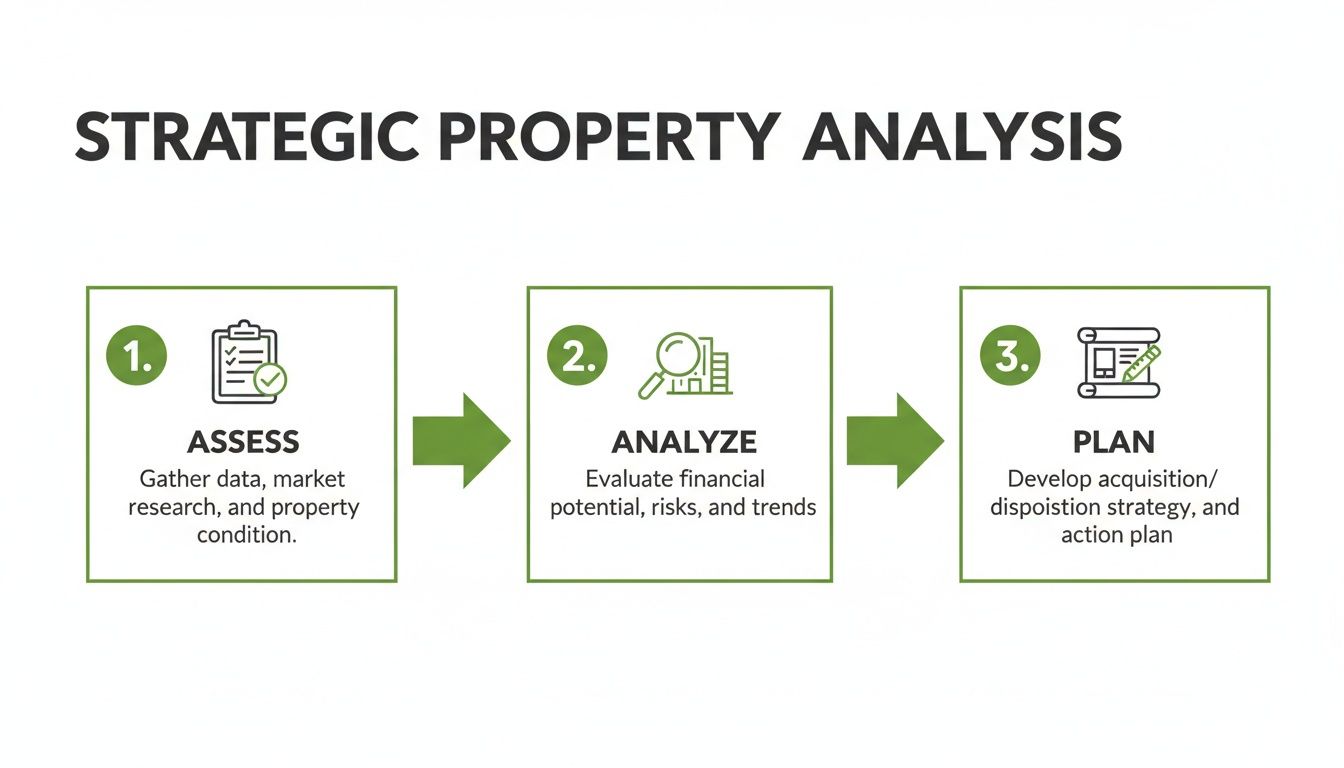
The process is straightforward but essential: assess, analyze, and plan.

Three-step diagram for strategic property analysis, outlining Assess, Analyze, and Plan stages.

As you can see, a winning value-add strategy flows from a deep understanding of the property and its market. Jumping straight to planning without this groundwork leads to reactive, inefficient spending.

To guide this initial phase, a simple checklist can keep your analysis focused and on track.

Initial Property Value Assessment Checklist

This table breaks down the essential areas to evaluate before committing to any capital improvements, ensuring your decisions are backed by solid data.

Assessment Area Key Metrics to Evaluate Goal of Analysis
Physical Condition Age/condition of roof, HVAC, plumbing, electrical; structural integrity; interior/exterior finishes. Identify immediate needs, deferred maintenance, and opportunities for modernization that tenants value.
Financial Health Current rental rates vs. market, lease expiration dates, tenant quality, vacancy rates, Net Operating Income (NOI). Find "low-hanging fruit" like under-market leases and opportunities to boost NOI with minimal capital.
Market Position Competitor rental rates, amenities offered by nearby properties, local occupancy rates, neighborhood development trends. Understand what the local market expects and is willing to pay for, so your upgrades meet real demand.

By systematically working through these areas, you build a comprehensive picture of your property's current state and its potential, setting the stage for a highly effective improvement strategy.

Conduct a Property Condition Assessment

Your first concrete step is a professional Property Condition Assessment (PCA). This isn't just a casual walkthrough. It’s a deep, technical dive into the building’s core systems—from the roof and foundation right down to the HVAC, electrical, and plumbing. A good PCA uncovers both the urgent problems (like a boiler on its last legs) and the hidden gems (like an underused common area perfect for a new amenity).

The report you get is your playbook. It gives you a clear hierarchy of necessary repairs and potential upgrades, letting you prioritize spending based on urgency and potential ROI. For instance, finding an outdated electrical panel isn't just a safety flag; it's an opportunity to upgrade for modern tenant power needs, a feature that absolutely justifies higher rents.

Analyze Your Tenant Mix and Leases

The financial engine of your property is its tenants and their leases. It's time to get surgical with your rent roll. Are your current rates in line with the market, or are they lagging behind? Discovering under-market leases is the easiest way to find untapped revenue without a big capital spend.

Look at the tenant mix, too. Could specific upgrades attract a more desirable class of tenant? A deeper dive into how to increase property value with upgrades tailored to market demand is essential here. You also need to pay close attention to lease expiration dates. This allows you to schedule renovations strategically, minimizing vacancy and disruption as you bring the property up to its full potential.

By truly understanding your lease structures, you can find opportunities to introduce value-add services or adjust Common Area Maintenance (CAM) charges. These moves directly boost your Net Operating Income (NOI)—the number one driver of property valuation.

Perform a Hyper-Local Market Analysis

Finally, you need to zoom out and look at the world immediately around your building. National real estate trends are one thing, but your property lives and dies by its local market. That means analyzing the direct competition in your submarket.

  • What are their rental rates? Don't just glance at the numbers. Compare apples to apples—price per square foot for similar spaces and finishes.
  • What amenities are they offering? If the building next door just added a modern lobby or a tenant fitness center, they could be pulling tenants you want to attract.
  • What are their occupancy rates? High occupancy in neighboring properties is a great sign. It signals strong demand and validates your plan to invest in upgrades to capture a piece of that action.

This hyper-local data takes the guesswork out of the equation. It tells you precisely what your market values and what tenants are willing to pay for, allowing you to build a targeted plan that delivers maximum ROI.

Quick Wins: High-Impact Upgrades for Immediate ROI

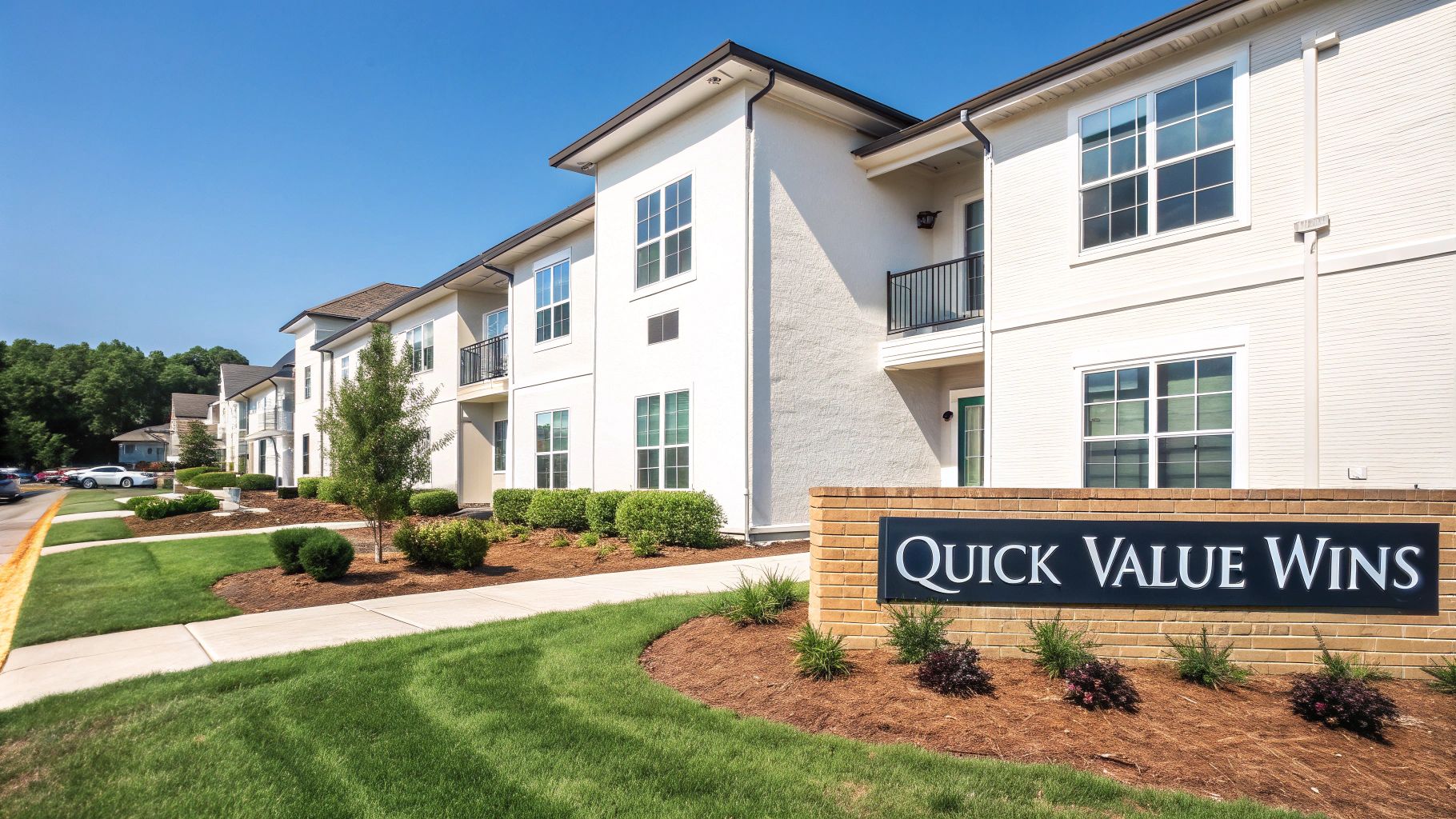
Modern white apartment buildings with well-maintained landscaping and a prominent 'Quick Value Wins' sign.

Not every project needs a massive budget and a year-long timeline to move the needle on your property's value. From my experience, some of the smartest moves are the ones that deliver a swift, noticeable return. These are the quick wins—high-visibility improvements that immediately enhance the tenant experience, sharpen your curb appeal, and justify stronger rental rates.

By zeroing in on aesthetics, safety, and modern comforts, you can make your property far more competitive, almost overnight. These are the practical, efficient upgrades that pack a serious ROI punch without the headache of a major renovation.

Revitalize with Modern Lighting

One of the fastest and most effective upgrades you can make is swapping out every old bulb and fixture for modern LED lighting. It’s a simple change, but the ripple effect is powerful.

Think about it: dim, buzzing fluorescent lights in hallways or poorly lit parking lots don't just look bad; they feel unsafe. Bright, clean LED light instantly makes a space feel more secure, modern, and welcoming.

But the real magic is on your P&L statement. LED systems use a fraction of the energy of their old-school counterparts, which means an immediate and often substantial drop in your utility bills. That savings goes straight to your bottom line, boosting your Net Operating Income (NOI)—the holy grail for property valuation.

A well-lit property is a marketable property. It tells prospective tenants you care about their safety and comfort, and that's a huge differentiator in a competitive market like Columbia, SC.

Transform the Exterior with a Façade Facelift

You never get a second chance to make a first impression. In real estate, that impression happens at the curb. The building's façade is the very first thing a potential tenant or investor sees, and if it looks tired, you’ve already lost ground.

A strategic façade facelift is a relatively low-cost investment with an enormous visual payoff. This doesn't always mean expensive new siding. Often, a professional power washing and a fresh coat of paint in a contemporary color scheme can completely transform a building’s entire vibe.

Look at these high-impact exterior touches:

  • Landscaping Overhaul: Nothing screams "neglected" like overgrown shrubs and patchy grass. Clean lines, fresh mulch, and some seasonal color create a polished, inviting atmosphere that says the property is well-managed.
  • Modern Signage: Is your main sign faded, cracked, or just plain dated? Upgrading to crisp, modern signage is a small detail that speaks volumes about professionalism and quality.
  • Architectural Accents: Adding new awnings over doorways, updating exterior sconces, or even just painting the trim can add character and a touch of sophistication that helps your building stand out from the pack.

These changes work together to create undeniable curb appeal that not only attracts higher-quality tenants but also supports the premium lease rates you're aiming for.

Upgrade Common Areas and Tenant Spaces

While what's inside a tenant’s unit is key, the shared spaces they walk through every single day are just as important for satisfaction and retention. Upgrading lobbies, hallways, and common restrooms can make a bigger difference than you might think.

Put yourself in your tenants' shoes. A dated lobby with worn-out furniture or a dimly lit hallway sends a message of indifference. A simple refresh can change that perception entirely.

Focus on practical, noticeable improvements that tenants will appreciate daily:

  • Lobby Modernization: New LVT flooring, stylish furniture, and updated décor can make your lobby a truly impressive entry point instead of just a pass-through.
  • Restroom Refreshes: You don’t need a full gut job. New fixtures, modern vanities, touchless dispensers, and better lighting can make restrooms feel clean, modern, and high-end.
  • Amenity Enhancements: If you have a shared space, make it count. Adding secure package lockers, a small coffee bar, or even just fresh paint and flooring in a community room adds significant value for tenants.

These upgrades aren’t just cosmetic. They show you’re invested in providing a superior environment, which leads to happier tenants, longer lease terms, and lower turnover costs—all of which directly contribute to a higher, more stable property valuation.

Long-Term Investments for Sustainable Growth

While quick fixes can give you an immediate boost, real, lasting value is built through significant capital investments. These are the big-ticket upgrades that secure your property’s future, turning it from just another asset into a long-term revenue engine.

Moving past the cosmetic touches means getting serious about the core systems and structural integrity that tenants and future buyers really care about. Yes, these projects demand more upfront cash and careful planning, but the payoff comes back for years—sometimes decades—in the form of lower operating costs, better tenant attraction, and a fundamentally more resilient building.

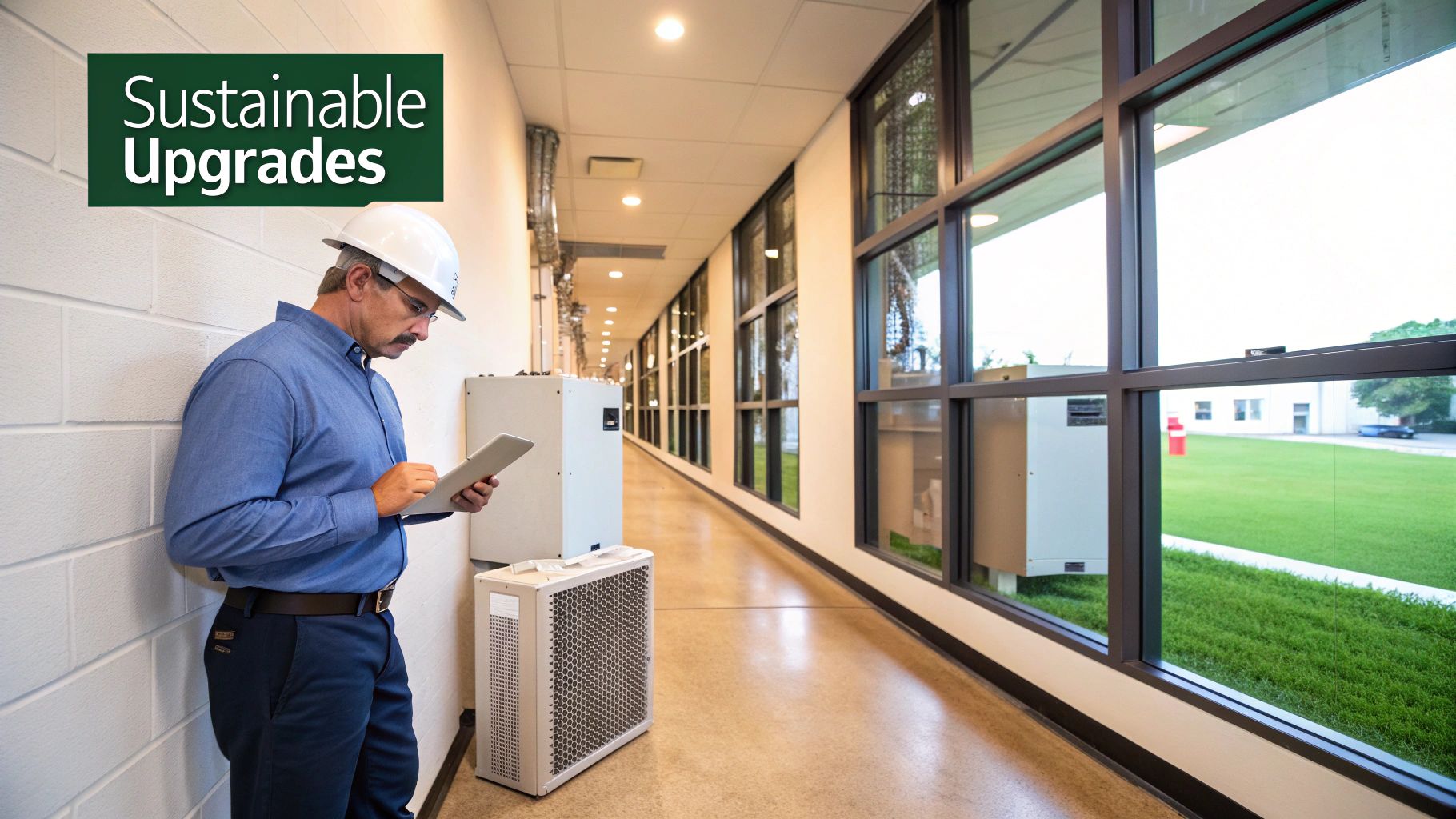
Man in hard hat inspecting sustainable air purification units in a bright, modern building hallway.

Embrace Comprehensive Energy Efficiency

In today’s market, energy efficiency isn’t some optional bonus—it’s a financial imperative. Tenants are sharper than ever, and they know high utility bills carve into their bottom line. A building that actively helps them save money is simply more desirable and can justify higher rents.

This is about more than just swapping out lightbulbs. A true energy retrofit involves looking at the entire building envelope and its mechanical systems. It's a major undertaking, but the ROI is undeniable, mainly by slashing operating expenses, which directly juices your Net Operating Income (NOI).

Here's where to focus your energy investments:

  • HVAC Modernization: Ripping out that old, clunky HVAC and replacing it with a modern, high-efficiency unit is probably the single most impactful upgrade you can make. The energy savings alone often pay for the project in just a few years.
  • High-Performance Windows: Old, single-pane windows are basically holes in your wall bleeding out heated or cooled air. Installing new double- or even triple-pane windows with low-E coatings boosts insulation, kills drafts, and keeps tenants comfortable.
  • Upgraded Insulation: It’s not glamorous, but adding proper insulation in the walls and attic is one of the most cost-effective ways to regulate indoor temperatures. This takes a huge load off your HVAC system and cuts down on energy bills.

The bottom line is, you're not just saving a few bucks on utilities. You're future-proofing your building against rising energy costs and making a powerful statement to the growing number of eco-conscious corporate tenants.

Overhaul Core Building Systems

The systems you can't see—electrical, plumbing, roofing—are the lifeblood of your property. When they go, it’s not just an inconvenience. It’s a full-blown, expensive emergency that can drive tenants away and tank your reputation. Upgrading these systems proactively isn't just spending money; it's a defensive move that prevents disaster.

Think about it: an old electrical panel can’t handle the power demands of a modern, tech-heavy office. A full upgrade means you can confidently support any tenant's needs. The same goes for plumbing. It’s far better to replace old pipes on your own schedule than to wait for one to burst and flood two floors.

And let's not forget the roof. Protecting everything underneath it is fundamental. You can check out the essential benefits of a new roof to see how it improves everything from energy efficiency to structural integrity. It's a foundational capital improvement that pays for itself over and over.

Future-Proof with Technology and Accessibility

To stay competitive, your property has to keep up with the times. That means investing in upgrades that make life easier, safer, and more inclusive for everyone. Two of the most critical areas here are smart building technology and full ADA compliance.

Smart building features are no longer a sci-fi fantasy; they’re a basic expectation. These aren't just cool gadgets, either. They are practical tools that make the building cheaper to run and a better place to work.

Consider these high-impact tech integrations:

  • Smart Access Control: Keycard or mobile-based entry systems are far more secure and manageable than old-school locks and keys.
  • Automated Building Management Systems (BMS): A BMS is like a central brain for your property, intelligently controlling lighting, HVAC, and security to optimize energy use and reduce manual effort.
  • High-Speed Connectivity: Making sure your building is wired for top-tier fiber optic internet is completely non-negotiable for attracting modern businesses.

At the same time, investing in Americans with Disabilities Act (ADA) compliance is more than just a legal box to check—it's a smart business move. An accessible building immediately expands your pool of potential tenants and their clients. Going beyond the bare minimum with things like automatic door openers, modern elevators, and thoughtfully designed common areas shows you care and makes your property more valuable to everyone.

Unlocking Hidden Value with Adaptive Reuse

Sometimes the biggest leap in property value comes not from a fresh coat of paint, but from completely rethinking a building's purpose. This is the heart of adaptive reuse—the art of giving old structures a new life. Instead of tearing down a building that’s solid but outdated, you transform it to meet what the market needs today.

It’s a strategy that requires seeing potential where others might just see an old, obsolete building. That forgotten warehouse on the edge of the industrial park? It could be the next hot creative office hub. An old textile mill, woven into the city’s history, can be reborn as a destination mixed-use development with retail, apartments, and restaurants. These projects don't just get updated; they become one-of-a-kind properties that stand out from the cookie-cutter new builds.

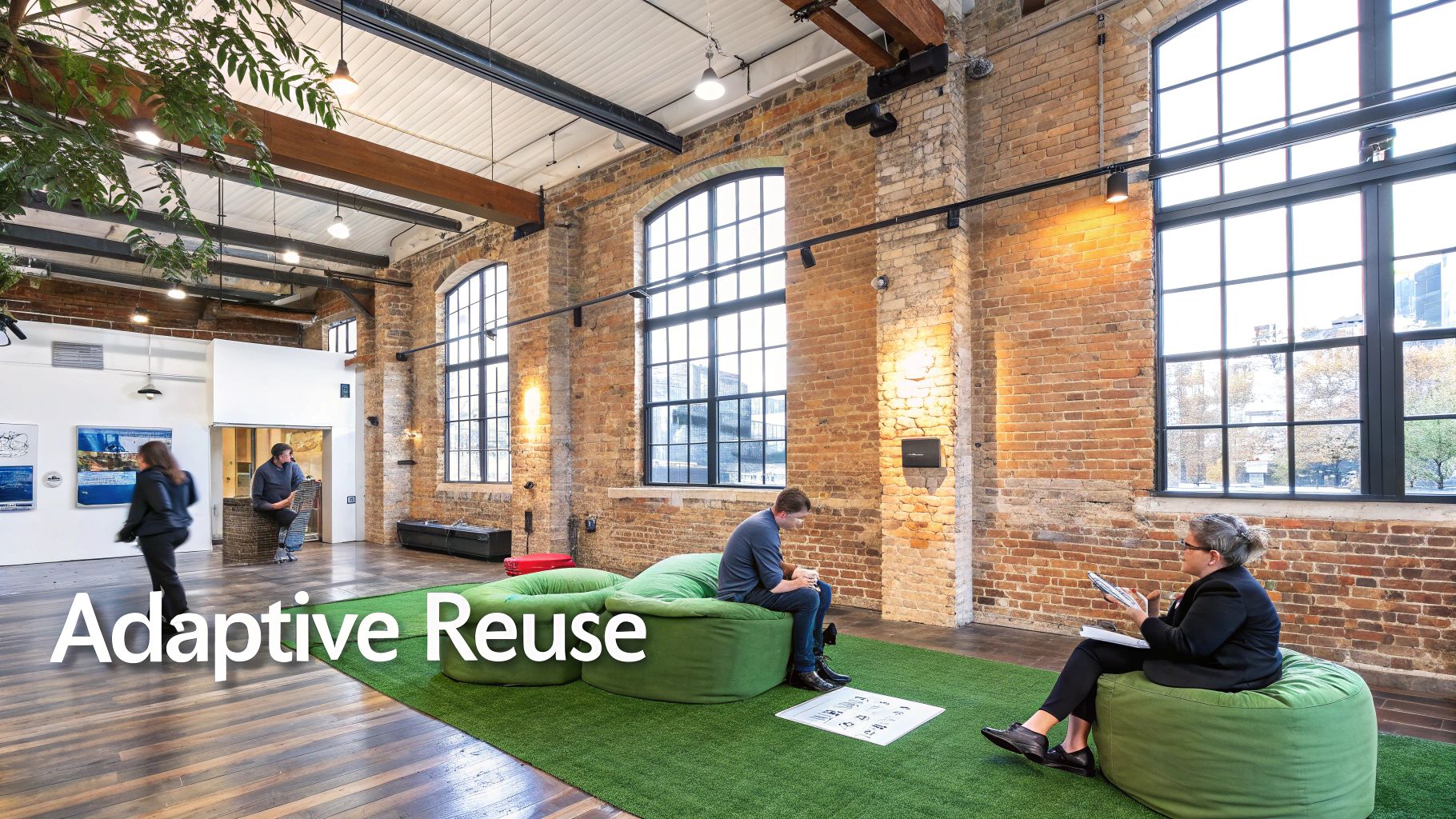
People in a modern adaptive reuse workspace with brick walls and large windows.

The Business Case for Repurposing Buildings

From a purely practical standpoint, adaptive reuse is often smarter, greener, and more cost-effective than starting from scratch. New construction comes with staggering costs for materials, labor, and site prep. When you repurpose an existing structure, you're keeping all that embodied carbon out of the landfill and leveraging the building's original bones, which lets you focus your budget on high-impact systems and interior work.

This isn't just a niche strategy anymore; it's a proven value-add. Renovating older buildings can extend their useful life by 50-75 years while saving a bundle compared to demolition and new construction. The global real estate market is catching on, with investors hunting for assets they can actively reposition, especially as interest rates stabilize. You can find more details on these global real estate trends and how they're shaping investment decisions.

But it goes beyond the numbers. Adaptive reuse creates a story. Tenants and customers are drawn to spaces with character—the exposed brick, original timber beams, and massive industrial windows of a converted factory are features you simply can't fake. This unique vibe often translates directly into higher rents and lower vacancy rates.

Navigating Historic Preservation and Tax Credits

Many of the best candidates for adaptive reuse are historic properties. This might sound like it adds a layer of red tape, and it can, but it also opens the door to a game-changing financial tool: historic preservation tax credits. These aren't just minor deductions. They are powerful credits that can slash your upfront investment and seriously boost your project's ROI.

To get these incentives, you have to be meticulous. The renovation work must respect the building’s historical integrity, following both local and national guidelines. This is where you absolutely need an architectural firm with deep experience in historic preservation on your team. They'll guide you through the maze, ensuring your design modernizes the building for today's tenants while honoring its past.

Expert Insight: An architect experienced in historic preservation does more than just draw up plans. They are your navigator for the entire approval process. They know how to speak the language of the Design Review Board or Historic Preservation Committee, finding that sweet spot between your financial goals and the community’s preservation standards to get your project across the finish line.

The financial upside can be enormous. Federal and state programs offer tax credits covering a significant percentage of qualified rehabilitation expenses. Beyond credits, you'll often find local grants and low-interest loans earmarked for preserving historic structures. These programs are designed to make saving a building the smart financial choice.

Real-World Scenarios Creating Unique Destinations

You can really see the power of adaptive reuse when you look at real-world examples. Think about these kinds of transformations, which are popping up in cities like Columbia and all over the country:

  • From Warehouse to Workspace: A cavernous, single-user warehouse is carved up into flexible office suites for creative tenants. By keeping the high ceilings, massive windows, and open layouts, you attract tech startups and design firms that want anything but a bland corporate office. The old loading dock area? It's now a shared amenity space with a coffee bar and conference rooms.
  • From Mill to Mixed-Use Hub: A historic mill on the river is turned into a true destination. The ground floor becomes a lively mix of boutique shops and local restaurants with patios overlooking the water. The upper floors are converted into high-end lofts that command premium rents because of their unique character, great views, and built-in walkable lifestyle.
  • From Bank to Boutique Hotel: An old, ornate downtown bank building with a soaring lobby gets a new life as a luxury boutique hotel. The grand banking hall becomes a memorable lobby and bar. The former offices are turned into distinctive guest suites. It's an experience no new chain hotel could ever replicate.

In each of these scenarios, you're increasing property value not just by upgrading a building, but by fundamentally changing its role in the community. You aren't just renovating a property; you're creating a landmark.

Getting Your Project Approved: Don't Go It Alone

A brilliant plan to boost your property's value is just a stack of paper until it gets a stamp of approval. Too many owners get excited about the design and the construction numbers, completely underestimating the maze of local regulations waiting for them. It’s a classic mistake, and one that can easily tangle up timelines, bloat budgets, and stop a great project dead in its tracks.

Moving from blueprint to reality means you have to speak the language of zoning laws, building codes, and, most importantly, the local officials who hold the keys. Getting this part wrong isn't just an inconvenience; it’s a costly error that can put your entire investment at risk.

The Real Cost of a Regulatory 'Oops'

Imagine spending months and a small fortune on architectural plans, only to discover you’ve run afoul of an obscure local ordinance or that the Design Review Board simply doesn't like your building's look. It happens. A lot.

Here are a few all-too-common ways projects get stuck in the mud:

  • Zoning Gotchas: You might think your commercial C-2 zoning is straightforward, but did you know about the new overlay district that adds surprise restrictions on building height or business type?
  • Design Review Rejection: Boards, especially in historic districts like we have here in Columbia, SC, often have "unwritten rules" about aesthetics. Walking in with a design that doesn't respect the local vibe is a fast track to a "no."
  • Fumbling with Historic Preservation: If you're seeking historic tax credits, a poorly researched presentation to the preservation committee can get you denied on the spot. They want to see you’ve done your homework.

Each one of these mistakes means you're headed back to the drawing board, burning through cash on redesigns and losing precious time.

Why a Local Architect is Your Secret Weapon

This is exactly where partnering with an experienced, local architecture firm pays for itself ten times over. A good architect is so much more than a designer. They're your guide, your translator, and your advocate through the entire approvals process. They don’t just react to the rules; they build a strategy around them from the very beginning.

Think about it: an architect with deep roots in the community has probably stood in front of the same board members and city planners you're about to face, dozens of times. They know the personalities, the politics, and the arguments that actually work. That's not something you can Google.

An experienced architect translates your financial goals into a language that city planners and review boards understand and respect. They build a compelling case for your project, showing how it enhances the community while meeting all technical requirements.

Turning Red Tape into a Clear Path Forward

A true expert partner doesn’t just fill out the forms. They weave the regulatory strategy into the design DNA from day one.

They Spot Problems Before They Exist: A local firm lives and breathes the area's building, energy, and accessibility codes. They’ll catch a potential ADA violation or an energy code issue in the earliest sketches, saving you from a nightmare of changes later on. This proactive compliance doesn't just avoid fines; it expands your pool of potential tenants.

They Build a Winning Case: When you're up in front of the Design Review Board, your architect is your champion. They'll prepare a polished, persuasive presentation with clear renderings and a story that anticipates the board’s questions before they’re even asked. It changes the dynamic from a tense hearing to a productive conversation.

In the end, learning how to increase property value is as much about navigating city hall as it is about swinging a hammer. Bringing on an expert who knows the local landscape is the single best way to turn this challenge from a huge risk into a clear, manageable process. It’s how you make sure your vision becomes a profitable reality.

Frequently Asked Questions on Increasing Property Value

When it comes to commercial real estate, there’s no shortage of questions. Property owners are always looking for the smartest way to invest their capital, whether it's tackling a first, small upgrade or weighing the pros and cons of a major renovation.

We hear these questions all the time from clients aiming to get the most out of their assets. Here are some of the most common ones, with straight-to-the-point answers to help you move forward with confidence.

What’s the Very First Thing I Should Do to Increase My Property’s Value?

Before you spend a single dime, you need a baseline. The most critical first step is a thorough, honest assessment of where you stand right now. This means looking at your property from three different angles: its physical condition, its place in the current market, and its financial performance.

Start by getting a professional property condition assessment (PCA). This will give you a clear, unbiased look at what needs fixing and where the real opportunities are. At the same time, a solid market analysis will show you how you stack up against the competition and what local tenants are actually paying for. Round it out by reviewing your leases, and you'll have a complete picture to guide every decision you make.

Do I Have to Spend a Fortune on Renovations to Add Real Value?

Not at all. The name of the game is return on investment (ROI), and a bigger price tag doesn't always mean a bigger return. While a huge project like a full HVAC replacement can add significant long-term value, it's a major capital expense that takes time to pay off.

Often, the quicker wins come from smaller, high-impact upgrades that deliver a much faster payback. Think about things like:

  • Upgrading to modern LED lighting: This is a no-brainer. It instantly cuts utility bills and makes the whole property feel safer and more contemporary.
  • Refreshing the façade: Never underestimate curb appeal. A fresh coat of paint, modern signage, or professional landscaping can completely change how a building is perceived and attract better tenants.
  • Updating common areas: Small tweaks to lobbies, hallways, and restrooms go a long way in keeping current tenants happy and can help justify higher lease rates when it's time to renew.

The smartest approach usually involves a mix of these quick, high-impact projects alongside a plan for bigger, long-term investments. It's about building value steadily and strategically.

How Much Does Energy Efficiency Really Matter Anymore?

It's absolutely vital. In today's market, energy efficiency is no longer a "nice-to-have"—it's a core expectation. Tenants, especially larger corporate clients, are laser-focused on sustainability and, more practically, on their total operating costs. A building that costs less to run is simply a more valuable asset.

Upgrades like better insulation, high-performance windows, or a modern HVAC system directly lower your property's operating expenses. That drop in expenses boosts your net operating income (NOI), which is the number one driver of your property's valuation.

Investing in energy efficiency does more than just save on utility bills. It makes your property more resilient, marketable, and competitive for years to come, appealing to a broader and higher-quality tenant base.

Can I Really Get Financial Help to Renovate a Historic Building?

You absolutely can, and you should. Tackling a designated historic property opens up some powerful financial incentives that can make the project far more affordable than you might think. Both federal and state historic tax credit programs exist specifically to offset a huge portion of rehabilitation costs.

On top of the major tax credits, you'll often find local grants and low-interest loans geared toward preservation projects. The secret is to work with an architecture firm that has deep experience in historic preservation. They are indispensable for navigating the complex application maze and ensuring your renovation plans meet the strict government standards needed to qualify. Their expertise can be the difference-maker, dramatically reducing your out-of-pocket costs while you create a truly valuable, one-of-a-kind property.


At Sherer Architects, LLC, our specialty is guiding property owners through every phase of a project, from the initial sketch to the final ribbon-cutting. We turn complex challenges into profitable, successful buildings. Whether you're planning an adaptive reuse project, a historic preservation effort, or a strategic commercial upgrade, our team brings the local knowledge and technical skill to make it happen.

Ready to see what your property is truly capable of? Find out more about our services.

Categories
Uncategorized

Real Estate Development Feasibility Study: A Practical Guide

So, what exactly is a real estate development feasibility study? Think of it as a comprehensive, boots-on-the-ground investigation to see if a proposed project can actually succeed. It’s the ultimate stress test for your idea, designed to answer one crucial question before you sink a single dollar into the ground: “Is this project actually worth building?”

Why a Feasibility Study is Your Project's Bedrock

Two construction professionals in hard hats review blueprints and a tablet at a construction site.

Jumping into a development project without a proper feasibility study is like trying to navigate a ship in a storm without a compass. It's a huge gamble, and every unknown factor dramatically increases the risk of making a catastrophically expensive mistake. This structured analysis is the bedrock of your project, turning a promising concept into a solid, data-backed business plan.

This isn't just about ticking boxes. It’s a strategic deep dive that methodically picks apart every critical piece of your proposed development. By weaving together market trends, financial modeling, and a hard look at regulations, it gives you a clear, unvarnished picture of both the potential rewards and the hidden risks.

The Strategic Value of Early Analysis

The whole point is to give developers, investors, and lenders the confidence to green-light a project—or the critical insight needed to walk away from a bad deal. A thorough study uncovers potential deal-breakers early on, giving you time to pivot or solve problems before they can derail the entire project.

A well-executed feasibility study equips everyone involved with the clarity to make smart decisions, sidestep potential pitfalls, and ultimately transform a real estate vision into a profitable reality.

By identifying and putting a number on risks from day one, you can develop real strategies to manage them. This proactive approach is infinitely cheaper and less stressful than trying to put out fires halfway through construction. In short, the study moves you from guesswork to strategic confidence.

Core Questions a Feasibility Study Answers

At its core, this entire process is about finding clear, defensible answers to the make-or-break questions that will determine a project's fate. For a broader look at getting started, this smart project planning guide for real estate feasibility studies offers a helpful overview.

A solid analysis will always dig into these key areas:

  • Market Viability: Is there a real, sustainable demand for what we want to build, right here, right now? Who are our buyers or tenants, and what do they want?
  • Financial Soundness: Will the money coming in cover all the costs of building and running this thing, and still provide a return that makes the risk worthwhile?
  • Legal & Regulatory Compliance: Does the project fit within the local zoning laws, land use plans, and environmental rules? Are we going to hit a wall of red tape?
  • Site Suitability: What's the deal with the land itself? Are we facing challenges with soil quality, utility access, or the site’s physical layout?

Getting straight answers to these questions provides the proof you need to secure financing, bring on partners, and steer your project from a simple idea to a successful, completed development.

Gauging Market Demand and Economic Viability

Every successful real estate project starts with one simple, gut-check question: “Does anyone actually need this?” Before a single line is drawn or a spreadsheet is built, you have to prove there’s a real, measurable demand for what you want to build. This is the first, and arguably most important, hurdle in any real estate development feasibility study. It’s where a good idea starts to look like a smart investment.

This isn’t about confirming a vague need for “more housing” or “office space.” It’s about getting specific. If you’re planning luxury condos, you need to find a growing pocket of high-income earners who want to live there. If it's a new industrial warehouse, you'd better be able to point to a boom in local logistics or e-commerce that makes that space essential.

Digging into the Data

To make your case, you have to become a bit of a data detective. You’re looking for the hard evidence—the economic and demographic signals—that a community is primed for your project. This is how you move from a hunch to a bankable business plan.

Your investigation should cover:

  • Demographic Trends: Is the local population growing? What's the mix of ages and average household incomes? A surge in young professionals might scream "new rental apartments," while a graying population could signal an opportunity for a senior living community.
  • Employment Growth: A healthy job market is the engine of real estate demand. Are major employers moving in? Are certain industries expanding? Low unemployment and high job growth are powerful indicators that new people—and businesses—are on their way.
  • Local Economic Indicators: Look beyond the big numbers. Are retail sales climbing? Are new business permits being issued? Is the city investing in new roads, parks, or public transit? These are all tell-tale signs of a community on the rise.

This data helps you forecast a critical metric: the absorption rate. That's just a fancy term for how quickly available properties in the area are being snapped up (sold or leased). A high absorption rate tells you that demand is strong and your project likely won't be sitting empty for long.

Sizing Up the Competition

No project is an island. A huge piece of your real estate development feasibility study involves a brutally honest look at who you’re up against. You need to know exactly who else is vying for your target tenants or buyers and figure out how your project is going to be different—and better.

Get ready to ask some pointed questions:

  1. What similar projects are already out there, and how full are they (what are their vacancy rates)?
  2. Is anyone else building something that will compete with you? Are there projects in the pipeline?
  3. What are they offering? Look at their amenities, finishes, and, most importantly, their price points.
  4. Where are they falling short? This is your opportunity. Maybe they lack modern amenities, have poor layouts, or are priced too high. Your project can be designed to fill that gap.

This competitive deep-dive helps you carve out your unique space in the market. It might reveal that nobody is serving the need for smaller, more affordable commercial units, or that there's a desperate shortage of family-sized rentals. That’s not just data; that’s your strategic advantage.

A strong market analysis does more than just list facts and figures. It weaves them into a compelling story that connects the dots between population growth, a booming economy, and the undeniable need for your specific project.

Thinking big is just as important as drilling down into local stats. Globally, the real estate market was valued at roughly USD 10 trillion in 2023 and is on track to hit USD 15 trillion by 2032, driven by massive urbanization and infrastructure investment. You can explore more about these global real estate trends to see the bigger picture. Your local analysis gains power when it's clear you understand how these larger forces are playing out on your home turf. By proving the demand is there, you lay the rock-solid foundation for the entire project.

The Seven Core Components of a Feasibility Study

A proper real estate development feasibility study isn’t just one big step; it’s a series of careful, deliberate investigations. Think of it like a master chef preparing a complex dish. They don't just throw ingredients in a pot. They source, prep, and test each component—the protein, the vegetables, the spices—to ensure the final meal is a success. A misstep with one ingredient can ruin the whole thing.

In the same way, a feasibility study methodically examines seven core components. When pieced together, they give you a complete, 360-degree picture of your project's real potential, turning a hopeful idea into a plan you can bank on.

Let's walk through this essential checklist.

1. Detailed Site Analysis

Before you even think about what you’re going to build, you have to understand the canvas you’re working on: the land itself. A detailed site analysis goes way beyond just looking up the address. It’s a deep dive into the physical reality of the parcel and all its quirks.

This involves digging into:

  • Topography and Soil Conditions: Is the land flat as a pancake, or are you dealing with a steep slope? Are there hidden soil contamination issues or poor drainage that will send your foundation costs through the roof? A geotechnical report isn't optional here; it's critical.
  • Utility Access: How easily can you hook into essential services like water, sewer, electricity, and gas? Having to extend utility lines a long distance can become a massive, unexpected expense if they aren't already at the property line.
  • Accessibility and Infrastructure: We confirm how close the site is to major roads, public transit, and other key infrastructure. This directly impacts the property's value and how attractive it will be to future tenants or buyers.

2. Zoning and Regulatory Review

Imagine designing your dream building, pouring money into the plans, only to find out it's illegal to build it there. The zoning and regulatory review is what prevents that nightmare. This is where your vision crashes into the hard reality of local laws.

You need definitive answers to a few key questions:

  • What, exactly, is this piece of land zoned for? What uses are permitted?
  • Are there strict limits on building height, density (how many units you can build), or setbacks from the property line?
  • What does the local entitlement process look like, and more importantly, how long will it take to get the permits you need?

Here in South Carolina, this phase often means navigating local Design Review Boards or historic preservation committees, which adds another layer of complexity and time. This review spots the bureaucratic hurdles early on, so you can either plan for them or decide they’re just too high to clear.

3. Conceptual Design and Space Planning

Once you have a solid handle on the site and the rules that govern it, you can start to sketch out what’s possible. Conceptual design isn’t about drafting final blueprints. It’s about creatively testing different ideas to figure out the highest and best use of the property.

This is the stage where we translate all the market data and site constraints into a physical form. It’s the bridge between the numbers on a spreadsheet and a real building that solves a specific need in the community.

An architect might whip up several massing studies or layout options. We'd explore how many units can comfortably fit, how to configure parking efficiently, or how to orient the building to maximize views and natural light. This ensures the final design is not just beautiful, but also smart, efficient, and profitable.

4. Construction and Operating Cost Estimation

A project can look brilliant on paper, but it’s dead on arrival if the numbers don't add up. This is the part of the feasibility study where we put a price tag on your vision. It demands a realistic, detailed estimate of every single cost, from the day you break ground to the day-to-day cost of running the building.

Costs generally fall into two buckets:

  • Hard Costs: These are the tangible expenses of actually building the thing—labor, concrete, steel, lumber, and site work.
  • Soft Costs: This covers everything else, like architectural and engineering fees, permits, legal services, insurance, and the cost of financing.

Just as important is projecting the long-term operating expenses: things like property management fees, routine maintenance, property taxes, and insurance. Ignoring these ongoing costs is a surefire way to watch your project's profitability vanish over time.

5. Comprehensive Market Analysis

So, who is actually going to rent, buy, or use this new development? The market analysis answers that fundamental question. It’s an objective look at the supply and demand dynamics in your specific area for your specific product type.

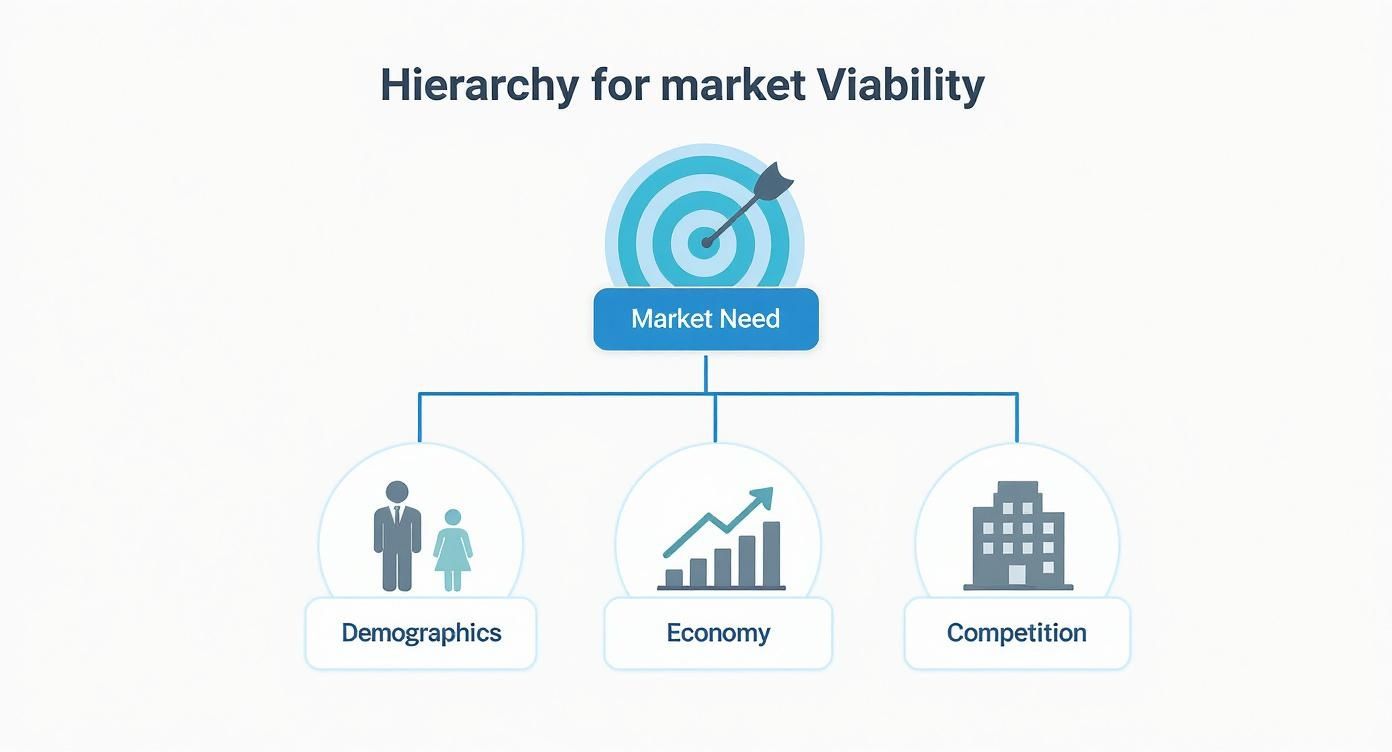
A hierarchical diagram outlining market viability factors: Market Need, Demographics, Economy, and Competition.

As the diagram shows, a project's viability hinges on the interplay of several factors. It's not just about one thing, but about the combined strength of real market demand, a healthy local economy, and a clear edge over the competition. We look at demographic trends, absorption rates for similar properties, and what competitors are charging to make sure your project is positioned to succeed.

6. The Financial Pro Forma

This is where it all comes together. The financial pro forma is the master spreadsheet that tells your project’s financial story. It projects all the potential revenues and expenses over a multi-year period (typically 5-10 years) to model profitability and potential returns.

The pro forma is the ultimate test of financial viability. It translates all the previous research into the language that investors and lenders speak: metrics like Net Operating Income (NOI), Cash-on-Cash Return, and Internal Rate of Return (IRR). It models everything—from rental income and vacancy rates to debt payments and the eventual sale price.

7. Risk and Return Analysis

Finally, no study is complete without an honest look at what could go wrong. The risk and return analysis identifies potential threats and evaluates their impact. What happens if construction is delayed by six months? What if interest rates shoot up? What if the market softens and it takes longer to lease up the building?

This often involves a sensitivity analysis, where we stress-test the financial model to see how the project's returns hold up if our key assumptions change. By identifying and quantifying these risks ahead of time, you can build in contingency plans and make a fully informed decision about whether the potential rewards truly justify the risks involved.


To help tie this all together, here’s a quick summary of what each component is designed to achieve.

Key Components of a Real Estate Feasibility Study

Component Primary Goal Key Questions
1. Site Analysis To understand the physical constraints and opportunities of the land itself. Is the site buildable? What are the hidden costs related to topography, soil, or utilities?
2. Zoning & Regulatory To confirm what can be legally built and navigate the approvals process. What is the property zoned for? What are the height/density limits? How long will permitting take?
3. Conceptual Design To determine the "highest and best use" that is physically and legally possible. What is the most efficient and profitable layout for the site? How many units can we fit?
4. Cost Estimation To develop a realistic budget for both construction and long-term operations. What are the total hard and soft costs? What will it cost to run the building each year?
5. Market Analysis To verify that there is genuine demand for the proposed project. Who are the target tenants/buyers? What is the competition? What rents/prices can we expect?
6. Financial Pro Forma To model the project's financial performance and calculate potential returns. Is the project profitable? What are the key financial metrics (IRR, NOI, Cash-on-Cash)?
7. Risk & Return To identify potential threats and determine if the reward justifies the risk. What could go wrong? How would that impact returns? Do we have a contingency plan?

Each of these components builds upon the last, creating a progressively clearer picture of the project's viability. Skipping a step or relying on guesswork is a recipe for a very expensive mistake.

Building Your Financial Pro Forma Step by Step

If your market analysis is the foundation of your real estate development feasibility study, then the financial pro forma is the steel frame holding everything up. This is where all your research, cost estimates, and revenue projections finally come together to tell a story with numbers.

Think of it as a detailed, multi-year forecast, usually in a spreadsheet, that predicts whether your project will sink or swim financially. It’s the tool that translates your vision into the language investors and lenders care about most: the bottom line. A solid pro forma gives you the clarity to make that final, confident go/no-go decision.

Assembling Your Key Financial Inputs

The old saying "garbage in, garbage out" has never been more true. The accuracy of your pro forma lives and dies by the quality of the numbers you feed it. This isn't the time for wishful thinking or overly optimistic guesses; every figure needs to be backed by the hard research you did during your market analysis and cost estimation.

Here are the essential ingredients you'll need for your financial model:

  • Projected Income: This is your top-line revenue, almost always from rent. You'll base this on current market rates for comparable properties and project modest annual increases (rent growth) based on historical data and economic forecasts.
  • Vacancy Rates: No property stays 100% occupied forever. A realistic vacancy rate, often somewhere in the 5-10% range, accounts for the natural churn of tenants and the time it takes to lease up empty units.
  • Operating Expenses (OpEx): These are the ongoing costs to keep the lights on and the property running smoothly. Think property management fees, routine maintenance, insurance, property taxes, and utilities.
  • Debt Service: This is simply your loan payment. It’s the total amount you'll pay each year on your construction and permanent financing, covering both the principal and the interest.

Beyond just plugging in numbers, a truly professional pro forma also incorporates strategies for managing financial risk to protect the project's long-term profitability.

Interpreting the Critical Metrics

Once all your inputs are in place, the pro forma will spit out several key performance indicators (KPIs) that act as a scorecard for your project's financial health. Knowing what these metrics mean is crucial for actually evaluating the investment.

The goal isn't just to build a spreadsheet; it's to use that spreadsheet to answer the big questions. Does this project actually generate cash? Is the return worth the risk we're taking? How long until we get our initial investment back?

Let's break down the most important ones in plain English:

  1. Net Operating Income (NOI): This is your property's pure, unadulterated profit from operations. It’s the total income left over after you've paid all the operating expenses but before you've made your loan payment or paid income taxes. It's the cleanest measure of a building's ability to generate cash.
  2. Cash-on-Cash Return: This is a straightforward metric that tells you the annual pre-tax cash flow you receive compared to the total cash you initially invested. If you put $1 million of your own money into a deal and get $80,000 back in cash flow that year, your cash-on-cash return is 8%. It’s that simple.
  3. Internal Rate of Return (IRR): A more sophisticated metric, the IRR calculates the project's total annualized return over its entire life, factoring in the final sale price. It's the gold standard for comparing the profitability of your project against other, completely different investment opportunities.

Preparing for Uncertainty with Sensitivity Analysis

A pro forma built on a single, perfect set of assumptions is brittle. Real life is messy—interest rates spike, construction gets delayed, a recession hits. This is where sensitivity analysis proves its worth.

This process is all about stress-testing your model. You intentionally change key variables to see how much it hurts your returns. What happens to my IRR if interest rates climb by 1%? How does a 10% jump in construction costs crush my cash flow?

By running these "what-if" scenarios, you can pinpoint the project's biggest vulnerabilities and start building contingency plans. It shows investors and lenders that you’re not wearing rose-colored glasses—you understand the risks and are prepared for a few curveballs. This is what turns a simple financial forecast into a truly powerful decision-making tool.

Navigating Construction Costs and Supply Chains

A sophisticated financial model is only as good as its weakest assumption. Once you've confirmed there's a market for your project and sketched out potential revenue, the feasibility study has to get real about the tangible, often unpredictable, world of construction costs and supply chain headaches. This is where your spreadsheet meets the hard reality of lumber prices, labor shortages, and logistical nightmares.

Getting this part right is everything. It’s the bridge connecting your financial dreams to the physical act of building. If you underestimate these costs, your project’s profit can vanish before you’ve even poured the concrete. But if you're too conservative, you might kill a perfectly good project, walking away from a fantastic opportunity.

Hard Costs Versus Soft Costs

First things first, you need to split your expenses into two main buckets: hard costs and soft costs. It's a fundamental distinction, and getting it right is key to building a budget that holds up.

  • Hard Costs: These are the tangible expenses—the stuff you can literally see and touch. Think bricks, steel, concrete, and all the labor needed to assemble it. Site prep, landscaping, and hooking up utilities all fall into this category.
  • Soft Costs: These are the less obvious but equally critical expenses that make the project happen. They aren’t part of the physical building but support the whole process. We're talking about architect and engineering fees, permits, legal bills, the cost of financing, and insurance.

A classic rookie mistake is fixating on the hard costs and glossing over the soft costs. Be careful—those soft costs can easily chew up 25-30% of your total project budget.

The Realities of Modern Supply Chains and Labor

Today’s global supply chains are a tangled, volatile mess. A factory shutdown on the other side of the planet can halt your project in its tracks, sending material prices through the roof and causing massive delays. These are the external pressures that can blow a hole in your financial projections.

A project’s budget isn't a static document set in stone. It's a living forecast that must be actively managed to account for real-world variables like inflation, labor shortages, and unexpected material delays.

This volatility means you have to plan for the unexpected. For instance, forecasts for 2025 point to a huge drop in new commercial real estate completions, largely due to high construction costs and not enough skilled workers. U.S. office completions, in particular, are expected to plummet by around 73%. This creates a really weird supply dynamic that can mess with your project's timing and profitability. For a deeper dive, you can explore the 2025 Global Real Estate Outlook and see these trends for yourself.

To handle this, your feasibility study needs a solid contingency plan. A contingency fund—usually 5-10% of the total construction cost—isn't a sign of bad planning. On the contrary, it’s a mark of a pro. It gives you the breathing room to absorb those inevitable surprises without sinking the entire venture. When you account for these variables honestly, your financial model goes from a simple guess to a powerful, resilient tool.

How an Architect Supports Your Feasibility Study

Two male architects review blueprints and a building model on a table with an 'Architect Partner' banner.

Bringing an architect on board early in your real estate development feasibility study is one of the smartest moves you can make. It’s a decision that pays for itself long before a single shovel hits the dirt. They do far more than just sketch final designs; an experienced architect is a crucial partner who grounds your financial projections in the physical world.

Think of them as the bridge connecting your market data to what's actually possible on a piece of land. They translate the site's quirks, the jungle of zoning rules, and the demands of the market into tangible, conceptual designs. This ensures your vision is not just inspiring, but also buildable, efficient, and ultimately, profitable. This kind of collaboration is key to de-risking a project from day one.

Maximizing Value Through Conceptual Design

One of the most valuable things an architect does right away is help figure out a site's "highest and best use." This isn't just about cramming in the maximum number of units. It's about finding the sweet spot—the optimal layout that boosts profitability, grabs the market's attention, and creates long-term value.

During the feasibility phase, an architect can quickly generate practical tools to guide your decisions:

  • Massing Studies: These are essentially simple 3D models. They let us test different building shapes and sizes to see how they fit within the property lines, zoning envelopes, and required setbacks.
  • Test-Fit Plans: Think of these as quick-and-dirty floor plans. We use them to explore different unit mixes and layouts to confirm exactly how many rentable square feet you can realistically get, which feeds directly into your revenue projections.
  • Site Planning Options: Architects are experts at analyzing how cars will move through the property, how to design efficient parking, and where to place amenities to create a site that’s both functional and appealing.

This whole process turns your abstract financial goals into a concrete, spatial strategy.

An architect’s early involvement turns the feasibility study from a purely theoretical exercise into a practical roadmap. They help answer the crucial question "What can we actually and profitably build here?" before you commit significant capital.

By exploring different design concepts from the start, an architect can spot hidden opportunities to boost your project's returns. Maybe it’s a subtle shift in the building's orientation to capture premium views, or a smarter parking layout that frees up land for a money-making amenity. This early strategic input is what makes sure the final design is perfectly aligned with the financial goals of your study.

Got Questions? Let's Talk Feasibility Studies.

Even with a solid plan, it's natural to have questions before diving into a real estate development feasibility study. Think of this section as a conversation where we tackle the practical "what ifs" and "how muches" that developers and investors ask us all the time.

How Much Does a Real Estate Feasibility Study Cost?

There's no one-size-fits-all answer here. The cost is a direct reflection of your project's size and complexity. For a relatively simple commercial infill project, you might be looking at a few thousand dollars. But for a large-scale, multi-phase mixed-use development, the cost can easily climb into the tens of thousands.

What drives that number? A few key things:

  • Project Size and Scope: A bigger, more complicated project simply has more moving parts to analyze.
  • Location and Data Access: Digging up reliable data in a small, out-of-the-way market is often tougher (and more expensive) than in a major city where information is readily available.
  • Specialized Expertise: If we need to bring in experts like environmental engineers or traffic analysts, their fees will be part of the total cost.

It's easy to see it as just another expense, but a good feasibility study is one of the best risk-management tools you can buy. That upfront cost is a tiny fraction of what you could lose by moving forward with a project that's destined to fail.

How Long Does a Feasibility Study Take to Complete?

Just like cost, the timeline is all about complexity. A quick, high-level look might only take a few weeks. However, a truly comprehensive study—the kind that involves deep site analysis, extensive market research, and detailed financial modeling—usually takes somewhere between four to twelve weeks.

The timeline can stretch depending on how quickly we can get accurate data, how responsive the local zoning office is, and how many design options we need to explore to land on the best path forward. It's tempting to rush, but this is one area where patience pays off. Cutting corners here can lead to some very expensive mistakes later.

What Are the Biggest Red Flags in a Feasibility Study?

Think of your feasibility study as a check-up for your project's health. Some findings are minor, but others are serious warning signs you absolutely can't ignore. Pushing past these red flags is a recipe for financial trouble.

Keep a sharp eye out for these deal-breakers:

  • Rose-Colored Projections: If the financial forecast assumes pie-in-the-sky rent growth and impossibly low vacancy rates with no data to back it up, the numbers aren't real.
  • A Skimpy Contingency: A budget with less than a 5-10% contingency for construction costs isn't realistic. It shows a failure to plan for the unexpected delays and cost overruns that happen on almost every project.
  • Major Zoning Headaches: Uncovering a need for a long, contentious rezoning process or finding out there's strong local opposition can stop a project dead in its tracks.

Answering these questions and making sense of the final report is where having an experienced partner makes all the difference. At Sherer Architects, we provide the strategic architectural insight that keeps your feasibility analysis grounded in what’s actually buildable and profitable. We help you make sure every piece of the puzzle fits.

Let's talk about making your vision viable. Visit us at https://shererarch.com.