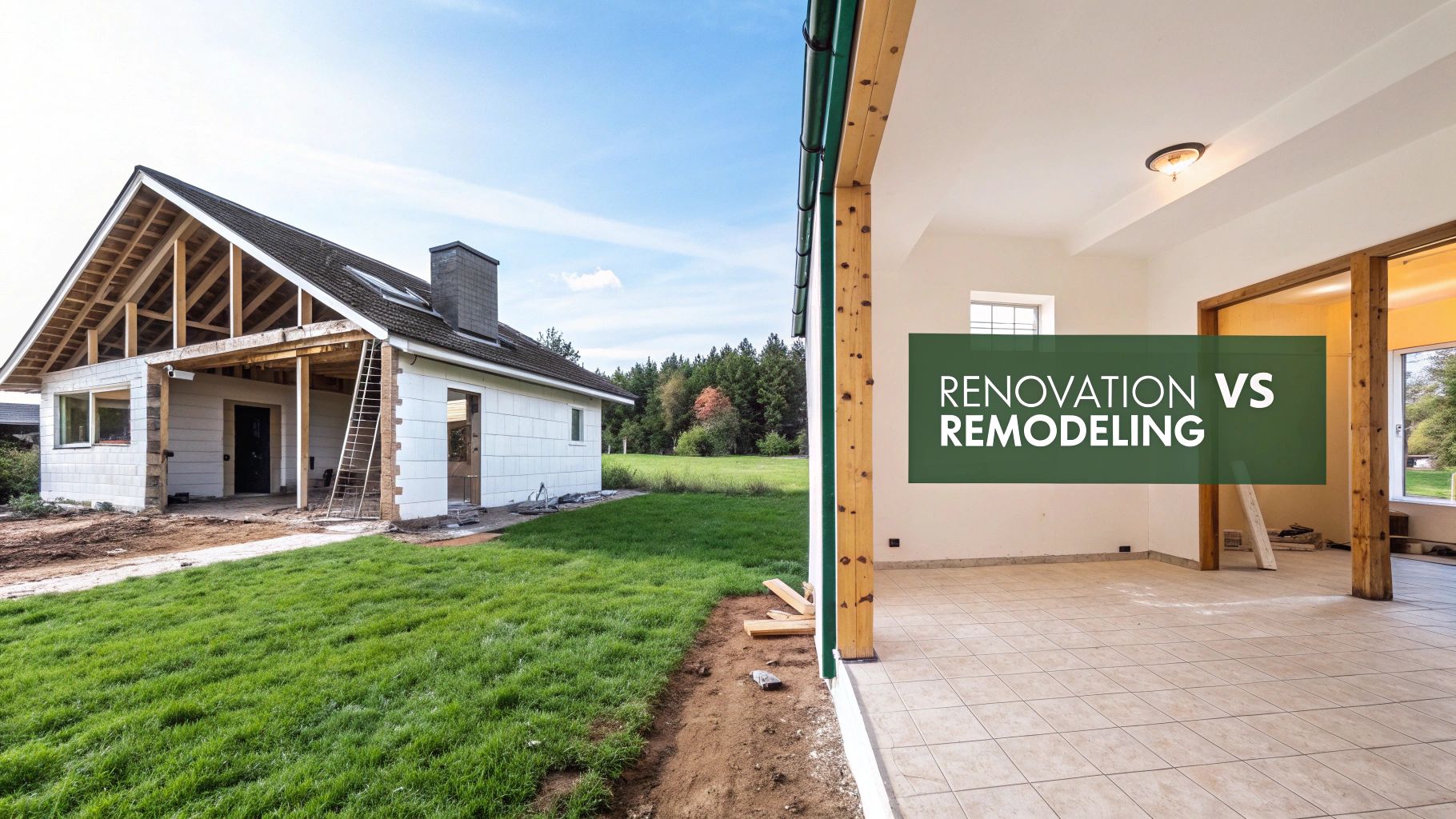

When you get down to it, the real difference between renovation and remodeling comes down to one thing: intent. A renovation is all about restoring or updating a space that’s already there. A remodeling project, on the other hand, transforms it by changing its very structure or function. Knowing which path you’re on from the start is crucial, as it dictates whether you're simply refreshing a property or completely altering its DNA.
Defining Renovation and Remodeling
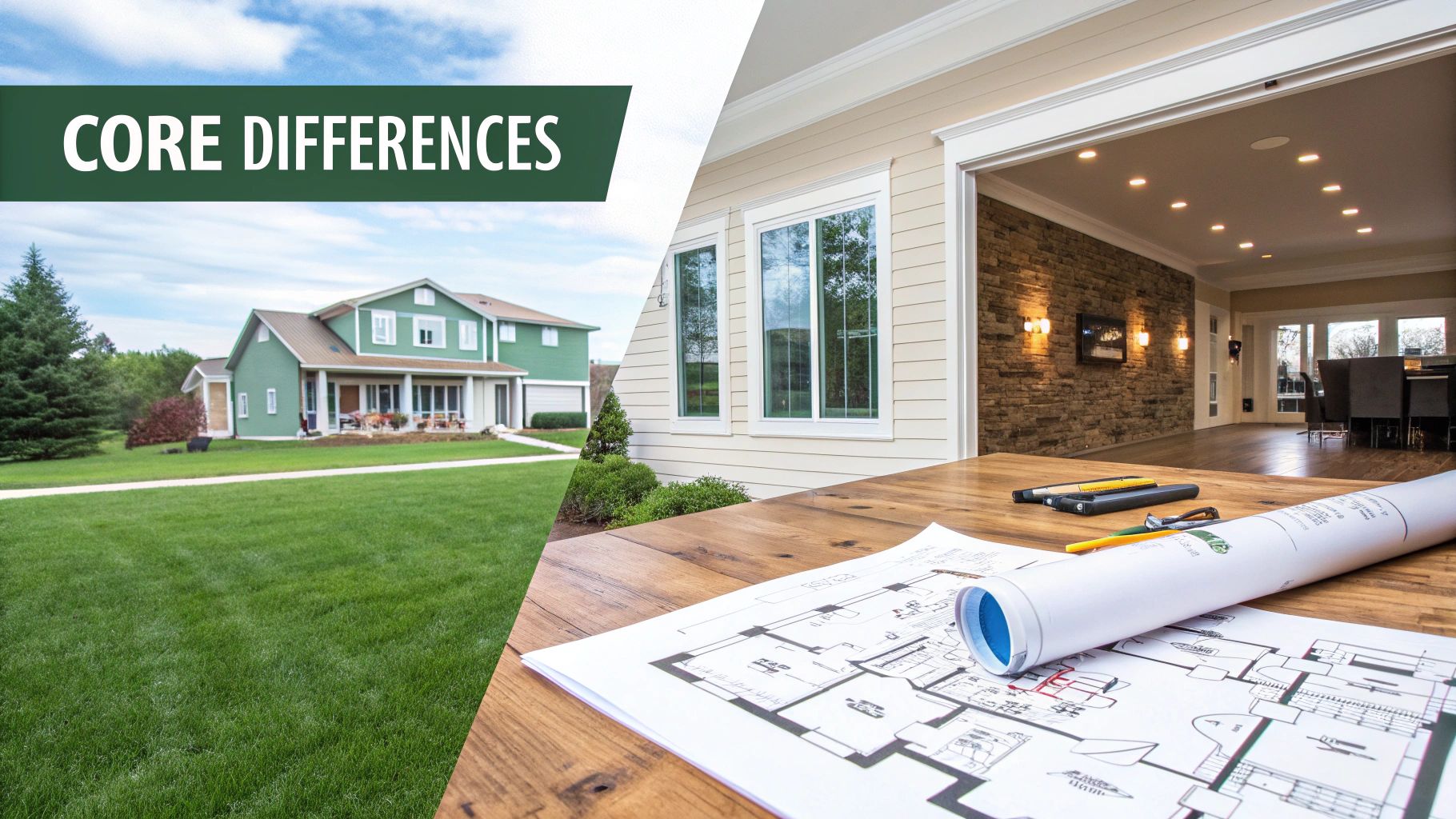
While most people use these terms interchangeably, in the world of commercial development, they carry serious legal and financial weight. Getting this distinction right is the first step toward creating an accurate project scope, building a realistic budget, and successfully navigating the maze of building codes and permits.
Think of a renovation as bringing a space back to a good state of repair. It’s essentially a major cosmetic upgrade—you’re improving the look and feel of a space without messing with its core design. These projects are all about refreshing and restoring what you already have.
Remodeling, however, is about fundamentally changing a building’s character or purpose. This nearly always means altering the structure itself, whether that’s moving walls, combining two offices into one, or even raising a ceiling. You’re not just updating the space; you’re creating something entirely new from the old framework.
At a Glance Comparing Renovation and Remodeling
This "refresh vs. transform" dynamic shows up in smaller-scale projects, too. For example, understanding the distinctions between hardwood floor refinishing and resurfacing is a perfect micro-level illustration. A renovation is like refinishing—you're working with the existing material—while a remodel often requires a much bigger overhaul.
Here’s the simplest way I explain it to clients: Renovation means 'to make new again,' while remodeling means 'to change the model.' One restores the past, and the other redefines the future of the space.
For a quick reference, here's a breakdown of how these concepts stack up in practice. This table helps clarify the key differences developers need to consider when planning their next move.
| Factor | Renovation | Remodeling |
|---|---|---|
| Primary Goal | Restore, repair, or update a space. | Transform the layout, structure, or purpose. |
| Structural Impact | Minimal to none; works within the existing layout. | Significant; often involves moving walls or altering systems. |
| Typical Cost | Lower upfront cost, mostly cosmetic. | Higher upfront cost due to complexity. |
| Project Examples | Painting, installing new fixtures, replacing flooring. | Combining rooms, adding a bathroom, reconfiguring an office. |
Ultimately, this high-level view is a great starting point for weighing your options and aligning your project's scope with its intended outcome.
Understanding the Scope of Each Approach
To really get to the heart of renovation versus remodeling, you have to look past the dictionary definitions and see what they mean on a job site. The difference isn't just about semantics; it dictates everything from the first sketch to the final certificate of occupancy. Getting this right from the start is critical, especially in today's market.
The global home renovation market was valued at an eye-watering USD 1,994.02 billion in 2024 and is expected to climb to USD 2,659.60 billion by 2032. That kind of growth underscores why developers and owners need to be crystal clear on whether their project is a straightforward renovation or a much more involved remodel. You can dig into the numbers and what’s driving them in the full report from Fortune Business Insights. Knowing this landscape helps you make smarter, more strategic decisions.
What Renovation Looks Like in Practice
Renovation is all about bringing something back to good condition. Think restoration, cosmetic fixes, and material upgrades. The building's bones—its structure and its purpose—stay exactly the same. You're focused on refreshing what's already there, giving it a new lease on life without changing its fundamental layout.
Some classic commercial renovation jobs include:
- Restoring a historic facade, which might involve repairing old brickwork and applying a fresh coat of paint to match its original look.
- Swapping out old, drafty windows for new, energy-efficient units that fit into the existing openings.
- Upgrading all the lighting in a building to modern LEDs to cut down on energy bills and improve the atmosphere.
- Refinishing the original hardwood floors or ripping out worn-down carpet in an office lobby.
Notice a pattern? The blueprint doesn't change. These are all surface-level jobs intended to boost a property's appearance, functionality, or efficiency within its existing footprint.
The key distinction for developers is this: Renovation refreshes a space, while remodeling redefines its purpose. One polishes what exists; the other creates something entirely new.
The Transformative Nature of Remodeling
Remodeling, on the other hand, is about fundamentally changing a space’s structure or function. It's a true transformation that redefines how a building is used. You go down this path when the current layout just isn't working anymore for the owner or the market. It’s a far more complex undertaking that demands serious planning, engineering, and construction expertise.
Real-world remodeling projects are where things get interesting. We're talking about major changes like:
- Carving up a single-tenant office floor into a buzzing multi-suite co-working space, which means putting up new walls and running new plumbing and electrical.
- Knocking down load-bearing walls to create a wide-open retail floor, a move that requires a structural engineer to ensure the building stays standing.
- Completely reconfiguring a building's interior, like turning an old warehouse into residential lofts. This is a classic example of adaptive reuse.
- Adding a brand-new bathroom or kitchen to a commercial space that never had one before.
These projects do more than just update the look; they reinvent the property's design and what it can be used for. They aren't just cosmetic fixes—they are strategic moves designed to unlock new value. This inherent complexity is what truly separates a remodel from a simple renovation.
Comparing the Critical Factors for Developers
For any developer, deciding between a renovation and a remodel comes down to a hard-nosed look at a few key factors. While both can boost a property's value, they take you down completely different paths when it comes to scope, cost, schedule, and red tape. Getting these distinctions right is everything if you want to hit your financial and strategic goals.
This isn't just about aesthetics; it's about market reality. The remodeling sector has exploded, now making up over 56% of all residential building construction companies. That's a huge jump from its 38-39% share during the mid-2000s housing boom, showing a massive shift in how property owners are thinking about asset improvement. You can dig into this industry transformation in the full analysis from the National Association of Home Builders.
Scope and Complexity
The most obvious difference between a renovation and a remodel is the sheer scope of the project. A renovation works within the building's existing footprint, focusing on updates and surface-level improvements. It’s a fairly contained process with a predictable outcome.
A remodel, on the other hand, is a whole different beast. It changes a building's structure or function, which almost always creates a domino effect on other systems.
- Renovation Scope: Think of projects like painting, swapping out fixtures, or putting in new floors. These are self-contained jobs. The work is clear, and any surprises are usually minor, like finding some drywall damage behind old cabinets.
- Remodeling Scope: Now, imagine moving a wall. That isn’t just about demolition. You're now rerouting electrical wiring, reconfiguring HVAC ductwork, and patching up the floor. You'll likely need a structural engineer to make sure you're not compromising the building's integrity.
This distinction is crucial. A renovation spruces up a space’s individual parts, while a remodel re-engineers the whole system.
The real difference in scope is this: Renovation is about the what—the materials and finishes. Remodeling is about the where—the layout and structure. It’s this jump from component-level tweaks to system-level changes that defines a remodel's complexity.
Cost and Investment ROI
From a financial perspective, these two approaches serve very different investment strategies. Renovations are known for their lower upfront costs and a faster, though often smaller, return on investment. They're perfect for a quick flip or refreshing a commercial space between tenants.
Remodeling requires a much bigger pile of cash. But that major investment is meant to unlock significant long-term value by fundamentally changing the property’s use, capacity, or position in the market.
| Financial Factor | Renovation | Remodeling |
|---|---|---|
| Upfront Cost | Lower and more predictable. Budgets are mostly for materials and labor. | High and often variable. Costs include demolition, structural work, and system upgrades. |
| Return on Investment | Quick ROI from better aesthetics and immediate rental or sale appeal. | Slower, long-term ROI based on unlocking new revenue streams or a higher valuation. |
| Financing | Often funded from operating budgets or smaller, straightforward loans. | Usually requires substantial construction loans backed by detailed financial models. |
A simple lobby renovation might run $20,000 and help you land a new tenant right away. But a remodel—say, converting that same building's ground floor from offices to retail space—could cost $500,000 while potentially doubling your annual rental income.
Timeline and Disruption
In development, time is money, and the schedules for these two project types are worlds apart. Renovations are generally quick and cause minimal disruption, often allowing other parts of the building to stay open for business.
Remodeling projects, by their very nature, are long and disruptive. The scale of the work often means the entire space—or sometimes the whole building—has to be emptied out for a long time.
- Renovation Timeline: A commercial office refresh (new paint, carpet, lights) might take just 2-4 weeks.
- Remodeling Timeline: A full gut remodel of that same office floor to create an open-plan layout could easily stretch to 4-6 months or more once you factor in design, permitting, and construction.
That extra time on the clock directly impacts your holding costs and lost rental income, which has to be baked into your financial model from day one. The short, low-impact schedule of a renovation is one of its biggest draws for developers looking for a fast turnaround.
Permits and Building Codes
Finally, the regulatory hurdles are a huge differentiator. Dealing with permits and codes is just part of the game, but the level of scrutiny is completely different for a renovation versus a remodel.
Renovations often fly under the permit radar. Since you're not messing with the building's structure or use, many cosmetic jobs need only simple, over-the-counter permits, if any at all. You won't need a permit just to paint or replace flooring.
Remodeling is a whole other story. Any project that touches structural elements, changes how a space is used (like from residential to commercial), or modifies plumbing, electrical, or HVAC systems will trigger a full-blown permitting process. This means submitting architectural plans, engineering reports, and getting through multiple inspections to prove you’re up to code. Mess this up, and you're looking at expensive stop-work orders and fines, which is why having an expert guide you through it is non-negotiable.
A Decision Framework for Your Next Project
Deciding between a renovation and a remodel isn't just a matter of semantics—it's a strategic call that hinges entirely on your goals for the asset. Are you looking for a short-term boost or a long-term transformation? Getting this right from the start is crucial, so let's break down which path aligns with different commercial real estate objectives.
To get a sense of the market, it helps to look at where the money is going. The U.S. remodeling industry is projected to hit $164.5 billion in 2025, and a lot of that is concentrated in specific areas. Kitchens account for 38% of projects and bathrooms 26%, which tells us that the focus is often on high-impact spaces that redefine function and appeal. You can dig deeper into these trends with IBISWorld's comprehensive remodeling industry report.
Choose Renovation When Your Goal Is Preservation or Refreshment
Think of renovation as the right move when you need to maintain or moderately improve a property without changing its fundamental purpose. It’s about working with the existing structure to make it better, more appealing, and ready for its current use—a tactical play focused on quick returns and minimal disruption.
You should lean toward renovation in a few common scenarios:
- Refreshing a property between tenants. When a long-term commercial lease is up, a quick renovation—fresh paint, new flooring, and upgraded lighting—can make the space feel new again and attract prospects with very little downtime.
- Making cosmetic upgrades for a quick sale. If you're prepping a building for the market, targeted updates like modernizing a lobby or improving the landscaping can deliver a huge cosmetic impact for a relatively low cost, seriously boosting curb appeal.
- Complying with historic preservation rules. For designated historic buildings, the name of the game is restoration, not alteration. Renovations let you repair original features and meet preservation guidelines, which can often unlock valuable tax credits.
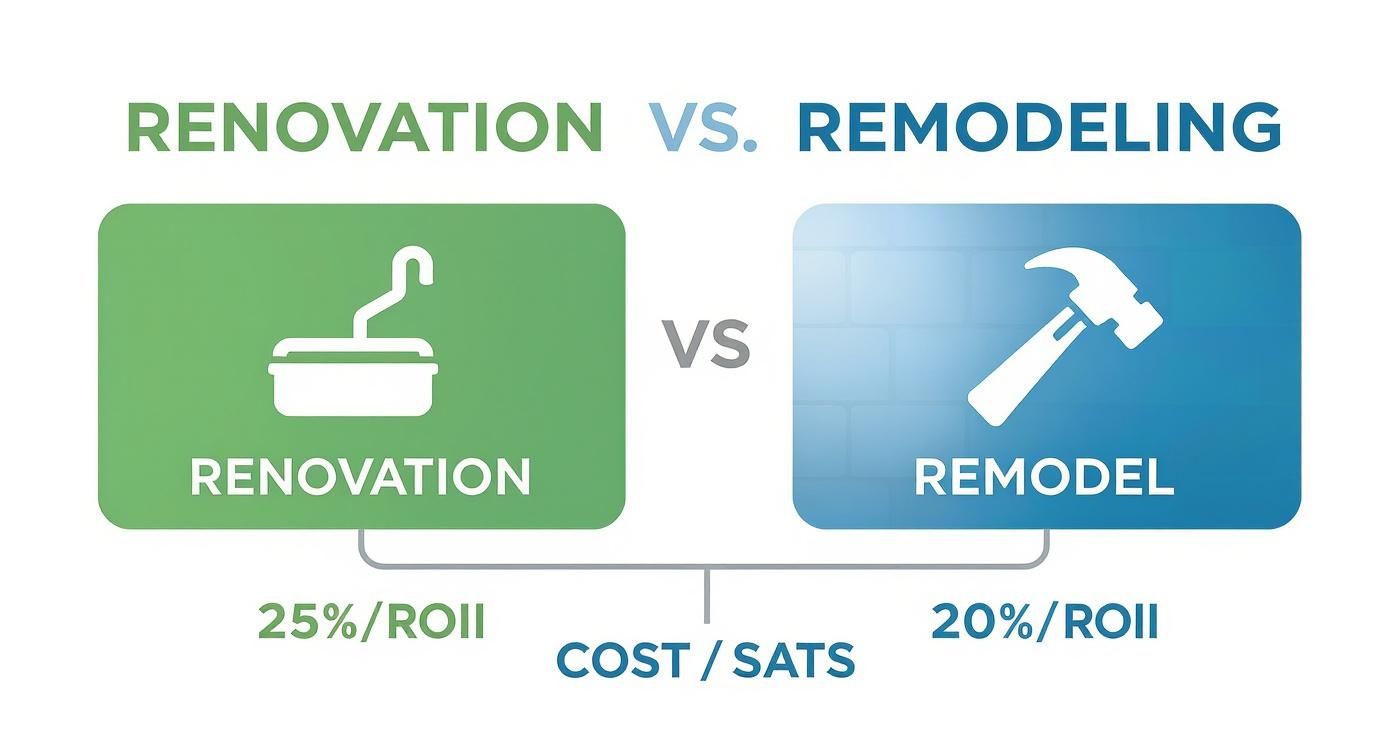
This diagram breaks down the key decision factors—cost, timeline, and permits—that really separate renovation from remodeling.
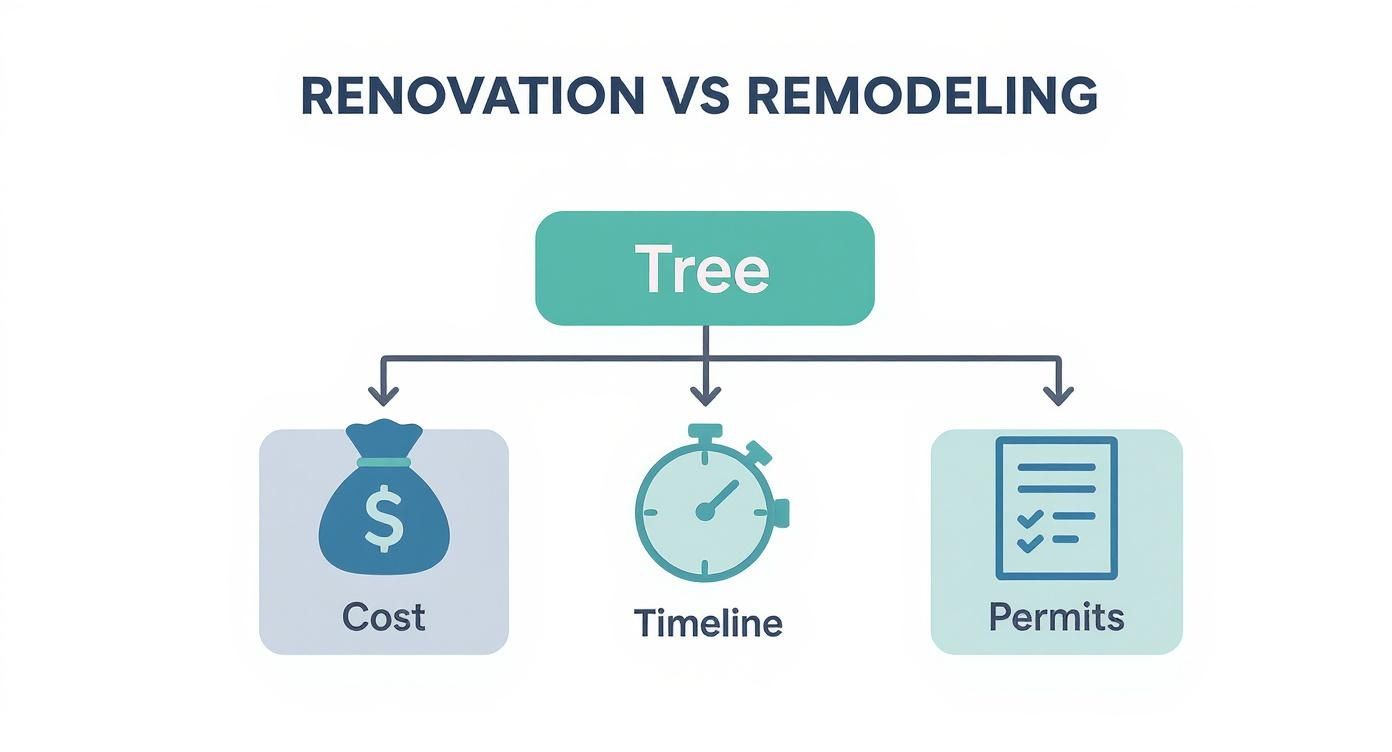
As you can see, renovations typically mean lower costs and faster turnarounds, while remodeling demands a bigger investment and a more involved permitting process.
Choose Remodeling When Your Goal Is Transformation or Repositioning
Remodeling is your answer when the property's current layout or purpose just isn't cutting it anymore. This is a strategic, long-term play to unlock new value by completely changing how the building is used. You aren't just sprucing it up; you're redefining the asset itself.
A remodel makes sense when you need to make a major shift:
- Repositioning an asset in the market. Is that old downtown office building underperforming? Remodeling it into residential lofts (a classic adaptive reuse project) fundamentally changes its market position and opens up entirely new revenue streams.
- Accommodating a long-term tenant's custom needs. A high-value tenant might need you to completely reconfigure a space—think knocking down walls for an open-plan tech office or installing specialized infrastructure. A remodel is what it takes to secure that kind of long-term income.
- Fundamentally increasing net operating income (NOI). When you need to seriously boost a property's financial performance, a remodel can get you there by adding leasable square footage, turning common areas into income-generating spaces, or justifying much higher rental rates.
A developer renovating an old office lobby is making a tactical move to attract tenants for its existing use. In contrast, a developer remodeling that same building into residential lofts is making a strategic play to capture an entirely new market segment.
At the end of the day, the renovation vs. remodeling debate comes down to your investment horizon and your strategic intent. A renovation protects and enhances the value you already have, while a remodel creates entirely new value from the ground up.
Navigating Adaptive Reuse and Historic Properties
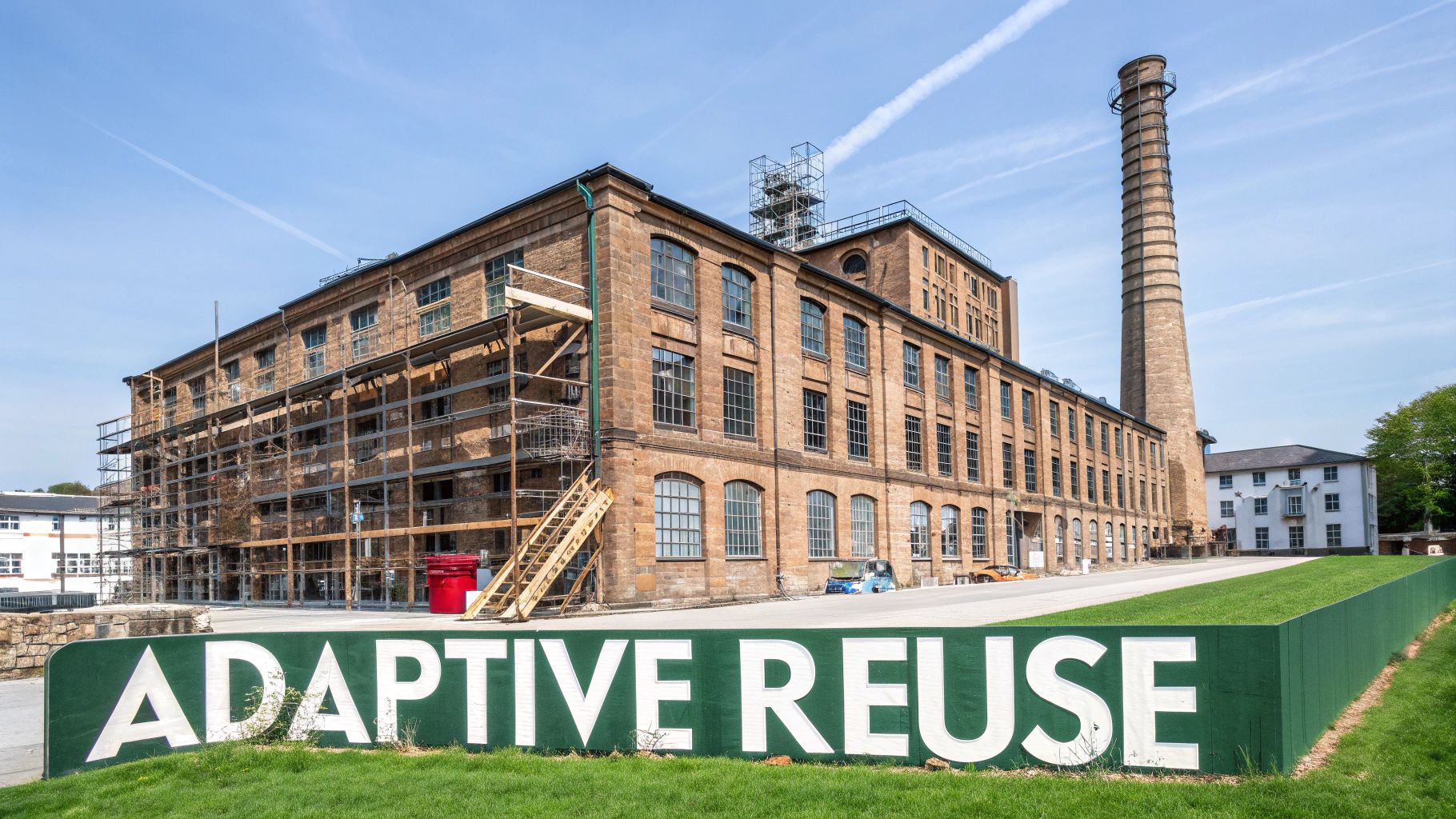
The lines between renovation and remodeling get particularly interesting when you're dealing with special assets like historic buildings or structures being repurposed. These projects come with their own unique set of challenges and opportunities, demanding a crystal-clear understanding of your goals and the regulatory landscape right from the start.
For commercial developers, this is where the renovation vs. remodeling distinction isn't just academic—it's a critical factor that shapes everything from financial viability to historical compliance.
Adaptive Reuse: A Masterclass in Remodeling
Adaptive reuse is really remodeling dialed up to eleven. Think of it as taking a building with an outdated purpose—an old industrial warehouse, a defunct textile mill—and completely transforming it into something new. That warehouse might become creative lofts, or the mill could be reborn as modern apartments.
This process is the ultimate expression of changing a building's purpose. You're not trying to restore what was; you're creating something entirely different to meet today's market needs. This naturally involves a massive overhaul of the building's systems, layout, and sometimes even its core structure to support its new life.
The real trick is striking a balance between the old and the new. Developers have to modernize all the essential systems—HVAC, plumbing, electrical—to meet current codes, all while preserving the architectural character that makes the property so unique in the first place. This often means complex structural work, like reinforcing old timber beams or carving new window openings into thick masonry walls, putting it squarely in the remodeling camp.
Historic Preservation: The Art of Renovation
On the flip side, historic preservation is almost always an exercise in pure renovation. When a property has a historic designation, the main objective is to restore and maintain its original character, not fundamentally change it. All work has to follow strict guidelines set by preservation authorities.
These projects are all about repair, not replacement. The focus is on the meticulous restoration of original features—fixing ornate plasterwork, refinishing original hardwood floors, or tracking down period-accurate materials for any repairs. The building's structure and layout are essentially untouchable to preserve its historical integrity.
For developers, here's the key takeaway: Adaptive reuse is a strategic remodel designed to unlock new economic value by changing a building's purpose. Historic preservation is a highly regulated renovation aimed at protecting cultural value by keeping it as it was.
One of the biggest drivers for taking on these demanding projects is financial. Historically accurate renovations can qualify for significant federal and state tax credits, which can often offset 20% or more of the total project costs. These incentives are directly tied to meeting preservation standards, making renovation the only way to go. If you try to remodel a designated historic property, you're not just facing regulatory headaches—you're likely forfeiting those valuable financial benefits.
When you're dealing with the complexities of older or significant structures, a good practical guide to listed building renovation is an indispensable resource. Knowing the rules is the first step toward a successful project. In the end, the choice comes down to a simple question: does the building's value lie in what it could become, or in what it has always been?
Assembling the Right Professional Team

Any successful project—whether it's a straightforward renovation or a complete remodel—hinges on the quality of the professionals you bring on board. The specific skills you need are directly tied to your project's scope. It's the work that dictates the team, not the other way around.
A simple renovation might just need a solid general contractor and their go-to subcontractors. But once you step into a major remodel, you’re looking at a coordinated team, usually led by an architect who can wrangle structural engineers, MEP (mechanical, electrical, plumbing) specialists, and the construction crew.
A common mistake is hiring a team based on price alone. An experienced architect or contractor who understands local permitting can save you thousands in delays and rework, making their expertise a sound investment from day one.
Building Your Renovation Team
For renovations, the name of the game is craftsmanship and execution. Your team will likely be smaller and more focused on restoring or upgrading what's already there.
- General Contractor: This person is your project manager, responsible for scheduling trades and making sure the work is done right.
- Specialized Artisans: If you're working on a historic property, you may need specialists in things like plaster restoration or period-specific millwork.
- Painters and Finishers: High-quality cosmetic work is key to a successful renovation, so skilled finishers are essential.
Assembling Your Remodeling Team
Remodeling demands a team that gets the big picture—building systems, codes, and structural design. This is a highly collaborative effort right from the start.
- Architect: This is the visionary who creates the new design, draws up the construction documents, and steers the project through the permitting maze.
- Structural Engineer: You absolutely need a structural engineer for any project that involves moving load-bearing walls, building an addition, or altering the building’s frame.
- MEP Engineers: These experts design and integrate the new electrical, plumbing, and HVAC systems needed to support the new layout and its intended use.
- General Contractor: They take the architect’s plans and make them a reality, managing everything from demolition to the final construction phase.
When you're vetting potential partners, their portfolio is your best friend. Look for projects with a similar scope and complexity to yours. A contractor who’s fantastic at cosmetic renovations might not have the chops to manage a full-scale commercial remodel.
Be sure to ask pointed questions about their knowledge of local codes, how they handle surprises on the job, and their communication style. A well-defined contract that clearly outlines the scope, timeline, and payment schedule isn’t just a good idea—it’s non-negotiable for protecting your investment and ensuring a successful outcome.
Frequently Asked Questions
Even with a solid plan, the real-world differences between a renovation and a remodel can bring up some tricky questions. Getting these details right is what separates a smooth project from a costly one. Let's tackle a couple of the most common questions we hear from developers.
How Do Renovation and Remodeling Affect Property Insurance?
The impact on your insurance policy is drastically different for each type of project, and it all comes down to risk.
A renovation usually falls under a standard builder's risk policy or a simple endorsement to your existing property insurance. Because you’re not messing with the building's core structure, the risk is fairly low. The main goal is to protect new materials and cover liability for the cosmetic work being done.
A remodeling project is a whole other beast. Since it involves structural changes—like moving load-bearing walls—it requires a much more robust course of construction insurance. This isn't just about covering the new work; it's about protecting the entire structure from potential damage. Moving one wall can have a ripple effect you didn't see coming.
Key Takeaway: You absolutely must notify your insurance provider before a single hammer swings, especially for a remodel. If you don't, you risk voiding your coverage entirely. That could leave you on the hook for major structural failures or system damages, a financial disaster no developer wants to face.
Does Renovation or Remodeling Offer Better Property Valuation?
Both can boost a property's value, but they play different games. Think of it as a short-term gain versus a long-term transformation.
-
Renovation: This is your path to a quick, reliable bump in valuation. Cosmetic updates—a modern lobby, fresh fixtures, new flooring—have an immediate impact on appraisals and tenant appeal. It makes the property look good now, which is perfect if you're aiming for a quick sale or lease. The ROI is usually pretty predictable.
-
Remodeling: This is the long game. The upfront investment is significantly higher, but so is the potential reward. A well-executed remodel, like turning an outdated office building into sought-after residential lofts, completely changes the property's function and earning power. This can lead to a massive increase in its long-term valuation, though it comes with more risk and a longer timeline to see that return.
A renovation polishes what you have, while a remodel creates something entirely new. In the end, the project that adds the most value is the one that best meets what the market is looking for.
At Sherer Architects, LLC, we help developers navigate the maze of renovation, remodeling, and adaptive reuse every day. Whether you're bringing a historic landmark back to life or giving a commercial building a new purpose, our team has the deep experience needed to create lasting value. Let's start putting the pieces of your next project together. Visit us at https://shererarch.com to learn more.