Hiring a professional for your restaurant's design isn't just about making the place look good. It's a fundamental investment in your business's future, a strategic move to build an experience that drives revenue, smooths out your operations, and carves out a strong brand identity.
Why Strategic Design Is Your Secret Ingredient
Picture two restaurants on the same block. One is always humming with activity, every table taken, with a line stretching out the door. The other? It's often half-empty, fighting to pull in a crowd. The food might be equally good at both, but the difference is often the experience—and that experience is no accident. It’s the result of thoughtful, strategic design.
This is where a professional restaurant design service shifts from being a line-item expense to your most critical investment. It’s easy for new owners to pour all their energy into perfecting the menu, but the physical space is the stage where every meal plays out. Your restaurant's design is the silent partner working around the clock, shaping everything from how comfortable your guests feel to how efficiently your staff can move.
More Than Just a Pretty Space
Expert design is about so much more than choosing paint swatches and light fixtures. It's a calculated, nuts-and-bolts approach to building a high-performing business from the inside out. The process is all about digging into the details to make sure every dollar you spend comes back to you.
Here’s where that strategic thinking really pays off:
- Elevating the Guest Experience: A great design creates a welcoming vibe with comfortable seating, a natural flow, and acoustics that actually let people talk. This is what turns a first-time visitor into a regular.
- Boosting Operational Efficiency: It’s about laying out a kitchen and service station that cuts down on wasted steps for your team, slashes ticket times, and prevents those frustrating bottlenecks during the dinner rush.
- Building Your Brand Identity: Your physical space should tell your story. A cohesive design creates a memorable identity that clicks with the people you want to attract.
- Driving Profitability: Smart design can do everything from increasing table turnover to subtly encouraging guests to spend more. It can even lower your day-to-day operating costs.
"A classic rookie mistake is falling in love with aesthetics while ignoring function. A gorgeous dining room won't save you if the kitchen workflow is a nightmare. True professional design finds that perfect balance between front-of-house atmosphere and back-of-house efficiency."
In an industry this competitive, you need every advantage you can get. With the average cost to open a full-service restaurant falling anywhere between $375,000 to $700,000, making every square foot count isn't just a good idea—it's essential for survival. This is why many of the best new designs focus on adaptable, flexible spaces that can change as your needs do, making your initial investment work that much harder. If you're curious, you can explore more of the latest restaurant interior design trends to see just how much the industry is evolving.
From Concept To Grand Opening: A Step-By-Step Look
Taking a great restaurant idea from a napkin sketch to a packed opening night can feel overwhelming. A seasoned architecture partner is your guide, providing a clear roadmap for what can otherwise be a complex, winding journey. Think of it as a well-planned expedition—each stage is critical and builds directly on the one before it.
This structured process is all about preventing costly mistakes and keeping the project on track. Your architect’s job is to translate that big vision in your head into a functional, beautiful, and profitable reality.
This timeline shows exactly how thoughtful design isn't just an expense; it's the foundation for an unforgettable guest experience and, ultimately, a healthy bottom line.
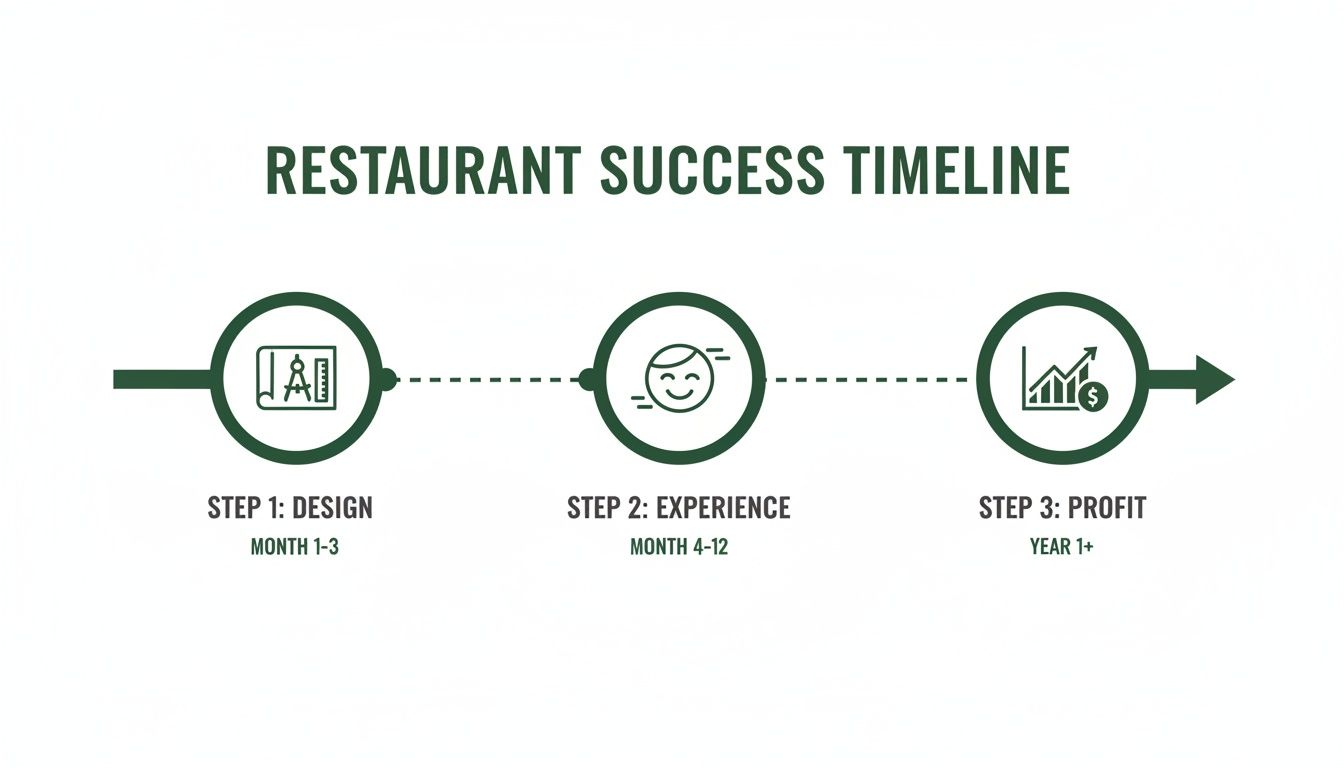
As you can see, strategic design is the first domino to fall, setting in motion everything that leads to long-term success. Let's walk through what the process actually looks like.
Key Phases of a Restaurant Design Project
The design and construction of a restaurant follows a predictable, well-defined path. Understanding these phases helps you know what to expect and how to prepare for each step. The table below breaks down the journey from your initial idea to opening day.
| Phase | Primary Goal | Key Activities | Typical Duration |
|---|---|---|---|
| Programming | Define the project's core identity and functional needs. | Brand discovery, operational analysis, budget talks, site review, creating a detailed project brief. | 2-4 weeks |
| Schematic Design | Explore the "big picture" layout and spatial flow. | Bubble diagrams, rough floor plans, initial 3D massing, exploring multiple layout options. | 3-6 weeks |
| Design Development | Refine the design with specific materials and details. | Selecting finishes, fixtures, and equipment (FF&E); coordinating with engineers (MEP); creating detailed drawings. | 4-8 weeks |
| Construction Docs | Create the final, buildable blueprint for permits and contractors. | Producing a complete set of technical drawings and specifications for construction. | 6-12 weeks |
| Construction Admin | Oversee construction to ensure it matches the design intent. | Site visits, answering contractor questions, reviewing work quality, problem-solving during the build. | Varies (4-12+ months) |
Each phase is a crucial checkpoint, ensuring that the final build is perfectly aligned with the vision established on day one. Now, let's dig into what each of these stages really involves.
Programming: Defining Your Restaurant's DNA
Before a single line is ever drawn, we start with programming. This is the discovery phase, a deep dive where we listen and ask a ton of questions to get to the heart of your project. We're talking about your brand, your ideal customer, your menu, how the kitchen needs to operate, and of course, your budget.
This isn't just making a wish list. It's about nailing down the "why" behind every decision. How many seats do you need to be profitable? What's the perfect flow between the bar and the dining room? What kind of vibe will make your target demographic feel like they've found their new favorite spot?
This foundational phase sets the project's entire direction. A thorough programming stage ensures that the final design isn't just beautiful but is perfectly aligned with your business goals, preventing expensive changes later on.
Answering these questions results in a detailed project roadmap. This document becomes our north star for all future design choices, guaranteeing every element serves a specific, intentional purpose.
Schematic Design: Sketching The Big Idea
Once the program is locked in, we move to schematic design. This is where your vision starts to become tangible through rough sketches, bubble diagrams, and basic floor plans. It’s a highly creative, exploratory phase where we focus on the big picture.
The main goal here is to organize the space and establish flow. We’ll play with different layouts for the kitchen, dining areas, and entryway, figuring out the most intuitive and efficient way for both staff and guests to move through the restaurant. Think of it as arranging the main puzzle pieces until they click into place perfectly.
To help you really see and feel the space, we often create a realistic architectural rendering. These 3D images give you a true sense of the atmosphere, materials, and lighting long before a single wall goes up.
Design Development: Adding Detail and Dimension
After you've approved a schematic design, the project enters design development. Here, we take those initial sketches and start refining them into more detailed, technical drawings. This is where the abstract concept gets fleshed out with specific materials, finishes, and fixtures.
During this phase, we make decisions on everything—from the type of flooring and wall textures to the lighting design and custom millwork. Your architect also brings in the engineers to seamlessly integrate critical systems like plumbing, electrical, and HVAC into the design. The result is a much clearer, more comprehensive picture of the finished restaurant.
Construction Documents: The Final Blueprint
The construction documents phase is the most technical and intensive stage. The detailed design is translated into a complete set of blueprints and specifications that a contractor will use to build your restaurant. This is the final instruction manual.
These documents are incredibly precise, covering everything needed for permitting and construction:
- Architectural Drawings: Exact dimensions for every wall, door, and window.
- Structural Plans: All the details on the building's support systems.
- MEP Plans: The layouts for Mechanical, Electrical, and Plumbing systems.
- Specifications: A written guide detailing every single material, product, and finish to be used.
This comprehensive package is absolutely essential for getting accurate bids from contractors and making sure the project is built exactly as we designed it.
Construction Administration: Building The Vision
Finally, during construction administration, your architect becomes your chief advocate on the job site. We don't swing hammers, but we are there regularly to answer the contractor's questions, review the quality of the work, and ensure the build is following the plans to the letter.
This oversight is crucial for protecting your investment. Your architect helps solve the inevitable unforeseen problems that pop up on-site, reviews payment requests, and confirms that the final product perfectly matches the approved design, guiding you all the way to a successful grand opening.
The Core Services That Drive Restaurant Success
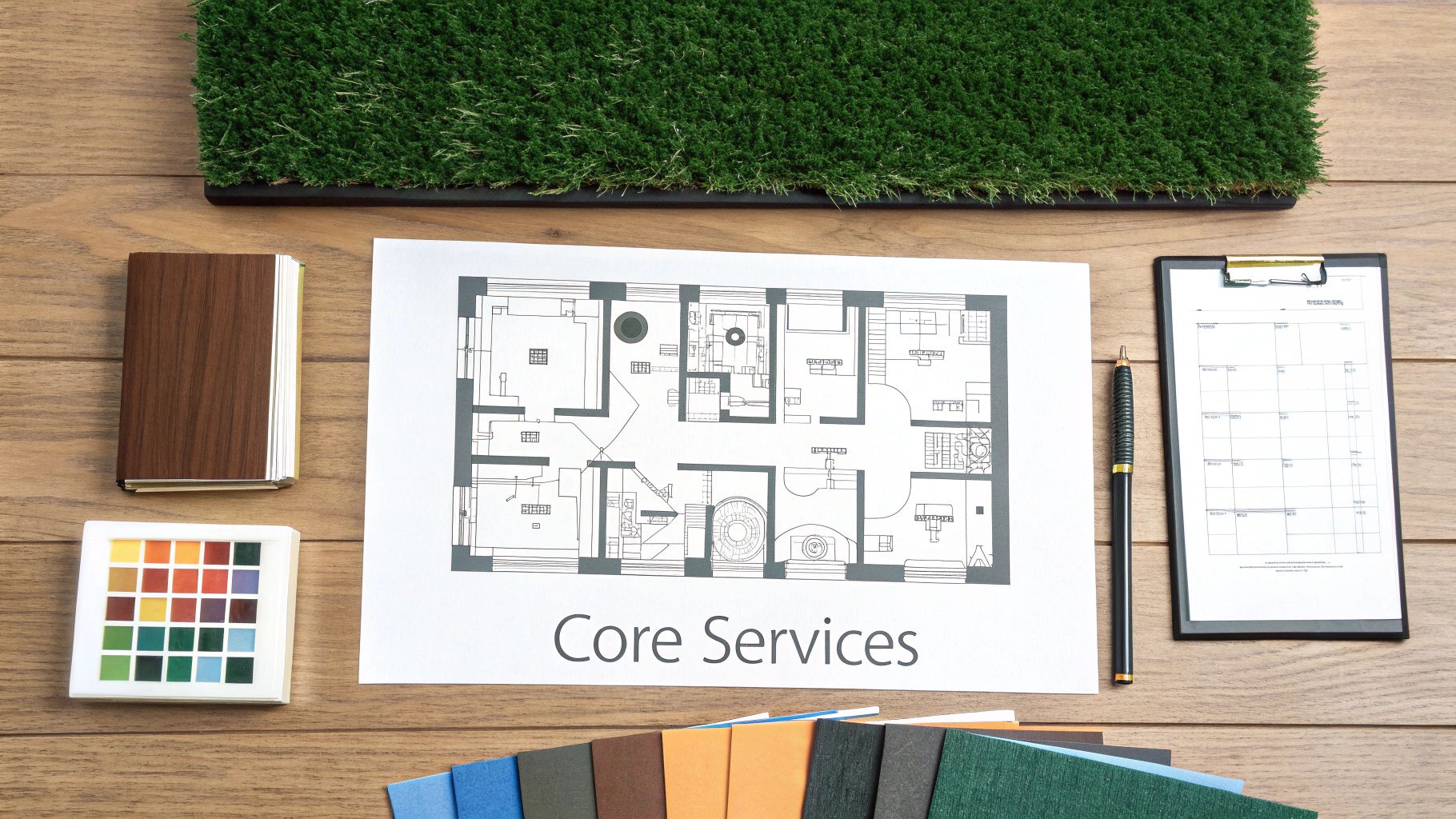
Top-tier restaurant design service is about so much more than picking out cool furniture and a great color palette. It’s the entire strategic playbook for building a business that runs like a well-oiled machine from the day you open. These core services are the invisible systems that ensure your restaurant isn't just beautiful—it's efficient, profitable, and built to last.
Think of your architect as the general manager of the entire project. They aren't just drawing a single floor plan; they're coordinating the guest experience, the kitchen's workflow, and all the complex technical systems into a single, winning strategy. Every service is a critical piece of the puzzle.
This is where design moves beyond pure aesthetics and gets into the fundamental mechanics of what makes a restaurant actually work.
Site Optimization and Programming
Before a single line is drawn, the first job is to squeeze every drop of potential out of your location. Site optimization is all about analyzing the building or lot to take advantage of what's already there. This could mean orienting the dining room to catch the afternoon sun, cutting down on lighting bills, or placing the main entrance where it naturally captures foot traffic.
At the same time, we dive into programming. This is where we define your restaurant's DNA. It's a detailed process that outlines every functional need, from the number of seats required to hit your revenue goals to how the kitchen, storage, and service areas must relate to one another. It's the essential blueprint for your business model.
Strategic Floor Plans and Kitchen Design
The floor plan is your restaurant's central nervous system. A great layout creates a natural flow, establishing distinct zones for dining, waiting, and service that feel both separate and connected. It guides the customer's journey and, just as importantly, helps your staff move efficiently, preventing those dreaded bottlenecks during a weekend rush.
The kitchen, of course, is the engine. A skilled architect works hand-in-glove with you and your chef to create a workspace that’s not only safe but hyper-efficient. A crucial part of the process is learning how to design a restaurant kitchen for peak performance, where every piece of equipment is placed to minimize steps and slash ticket times.
A rookie mistake is to focus all the attention on the front-of-house glamour while neglecting back-of-house function. An expert knows that a calm, efficient kitchen is the secret to a flawless guest experience out front.
MEP and FF&E Coordination
This is where things get technically complex, and where having a pro quarterbacking the project really pays off. Your architect becomes the central hub for all the engineering disciplines.
-
MEP (Mechanical, Electrical, and Plumbing) Coordination: This is the unseen network of HVAC ducts, wiring, and pipes that makes the building hum. Your architect ensures this complex web is integrated seamlessly into the design so it's effective but invisible. It’s what handles everything from kitchen ventilation and fire suppression to the mood lighting and restroom functions.
-
FF&E (Furniture, Fixtures, and Equipment) Selection: This service covers every tangible item your guests will see and touch. The goal isn't just to find things that match your brand, but to source commercial-grade pieces that can withstand the nightly wear and tear. We're talking tables, chairs, bar stools, light fixtures, and service stations that are built for the long haul.
Ensuring Accessibility and Energy Efficiency
Any modern restaurant design has to clear some important hurdles, from regulations to sustainability. A knowledgeable firm doesn’t just meet these requirements; it turns them into features that benefit your business.
Accessibility (ADA Compliance)
An architect’s job is to make sure every single guest feels welcome. This goes way beyond just adding a ramp. It’s about thoughtful planning for:
- Clear Pathways: Ensuring aisles are wide enough for easy wheelchair navigation.
- Accessible Seating: Designing tables that are fully integrated into the main dining area, not tucked away in a corner.
- Restroom Design: Creating ADA-compliant restrooms with the proper clearances and grab bars from the start.
- Service Counters: Making sure bar tops and host stands are at accommodating heights.
Getting this right from day one avoids expensive fixes later and shows your community you’re committed to inclusivity.
Energy Efficiency
Smart, sustainable design choices can make a huge dent in your long-term operating costs. An experienced architect will specify things like energy-efficient windows, high-performance insulation, and smart lighting systems using LEDs and occupancy sensors. These features don't just lower your utility bills; they create a more comfortable environment for everyone and position your restaurant as a forward-thinking, responsible business.
Navigating Zoning, Permits, and Design Review Boards
Let's be honest: zoning laws, building codes, and Design Review Boards can feel like a tangled mess of red tape. It’s easy to see them as bureaucratic roadblocks meant to slow you down. But a better way to think of them is as the official "rules of the game." And to win, you need an expert guide who knows every play in the book.
Every single city and county has its own set of rules dictating what you can build and how. These aren't just gentle suggestions—they're legally binding standards that can completely derail a project if you're not paying attention. For a restaurant, this could be anything from the exact number of parking spots you need to the size and style of your sign out front.
Putting off these details is a classic, and costly, mistake. It almost always leads to painful redesigns, agonizing delays, and in the worst cases, a project that has to be abandoned. This is precisely where a seasoned architect earns their keep.
Your Advocate in the Approvals Game
Think of your architect as your personal translator and diplomat. They fluently speak the technical language of city planners and building inspectors, and they've likely spent years building professional relationships with the very people who will approve your project. That kind of rapport is priceless—it can turn a potentially combative process into a collaborative one.
An architect with deep local roots understands the subtle quirks of your town’s regulations. Here in South Carolina, for example, that might mean navigating the strict guidelines of a historic district in Charleston or satisfying the specific aesthetic demands of a local Design Review Board in Columbia.
This specialized knowledge allows them to see potential roadblocks miles away. They can get ahead of concerns about everything from landscaping ordinances to fire code compliance, making sure your plans are buttoned up and correct the first time they're submitted.
A great local architect doesn't just submit a set of drawings; they shepherd your project through the system. Their grasp of local codes and their relationships with city officials can literally save you months of delays and thousands in revision fees.
Common Hurdles in Restaurant Permitting
The approvals process for a restaurant is notoriously tricky because you're dealing with so many overlapping layers of public health and safety. Your architect’s job is to create a design that makes everyone happy, all at once.
Here are some of the usual suspects that require careful planning:
- Parking Requirements: Cities have rigid formulas for how many parking spaces you need, usually based on your square footage and seating capacity. Miss the mark, and your project could come to a screeching halt.
- Signage Restrictions: Zoning codes often have a lot to say about the size, placement, and even the lighting of your exterior signs.
- Accessibility (ADA): Your design must fully comply with all Americans with Disabilities Act standards for things like ramps, restrooms, and table access. No exceptions.
- Health Department Codes: Kitchen layouts, equipment, and ventilation systems are under a microscope and must meet tough public health regulations.
- Historic District Guidelines: If your restaurant is in a designated historic area, every exterior change—from the paint color to the window frames—will face intense scrutiny to protect the neighborhood's character.
A professional restaurant design service tackles these issues from day one. By baking these requirements into the design from the very beginning, your architect paves a much smoother and more predictable path through the approvals maze. This foresight is what turns a potential nightmare into just another checkbox on the way to your grand opening.
Unlocking Value with Adaptive Reuse and Preservation
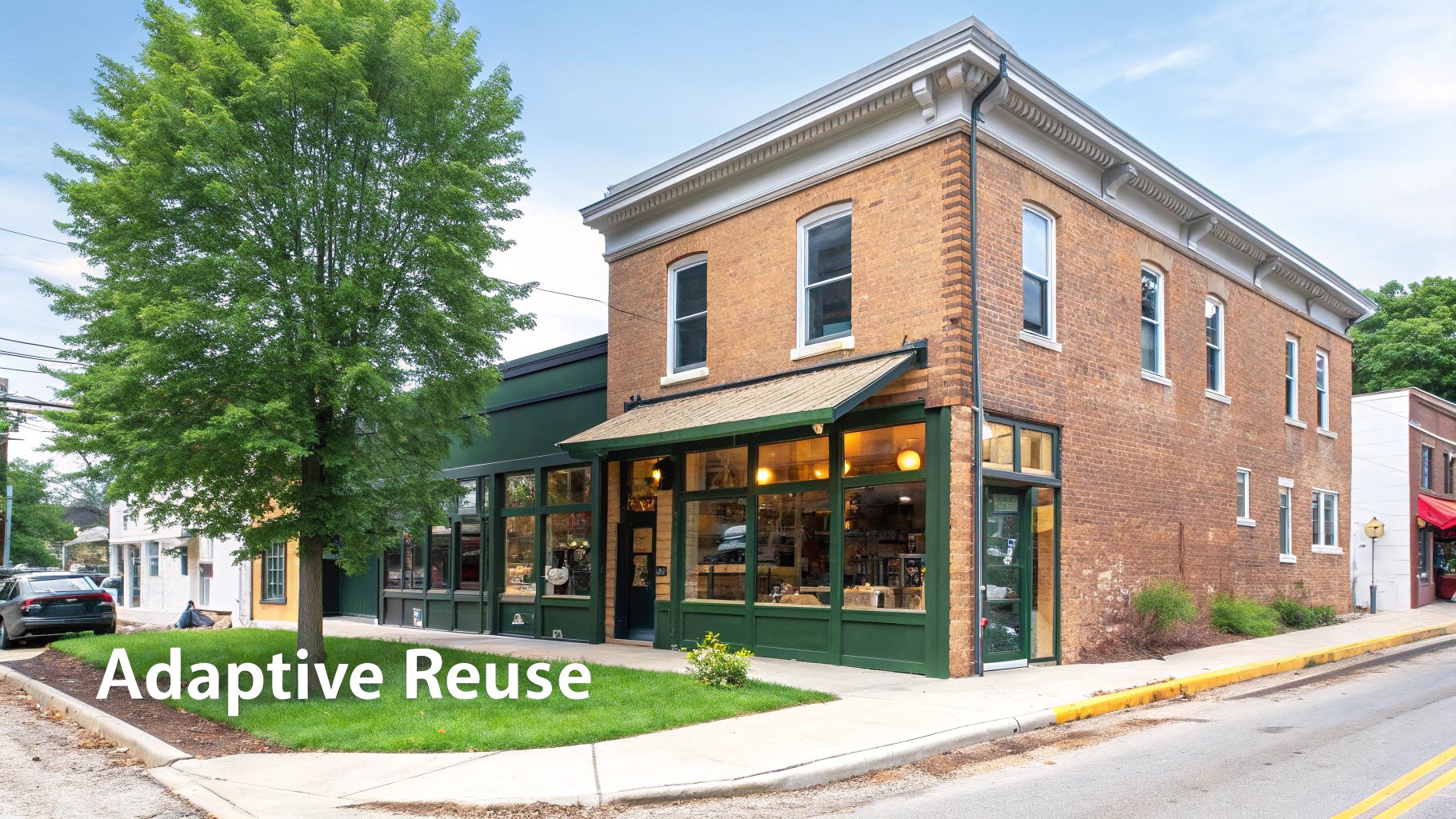
Some of the most compelling restaurant spaces aren't brand new. They’re born from the clever transformation of forgotten buildings—breathing new life into old warehouses, historic storefronts, or neglected industrial sites. This approach is called adaptive reuse, and it’s a powerful way to create a one-of-a-kind destination.
Think about it: your restaurant could be housed in a building that already has a soul and a story. By repurposing an existing structure, you get instant character and a narrative that new construction just can't buy. It's often more sustainable and cost-effective than a full demolition and new build, extending a building’s useful life by 50-75 years.
The Rewards of Historic Preservation
Working with historic buildings has its challenges, but the payoff is huge. The goal of historic preservation is to honor a building's original character while carefully updating it for today's world. This is a delicate balancing act, and it’s where a specialized restaurant design service really shines.
It starts with a deep dive into the building’s past, researching original materials and construction methods to make sure any new additions feel right. It requires a sensitive touch to merge history with the demands of a modern restaurant, like figuring out how to integrate a high-tech kitchen ventilation system into a structure built a century ago.
The result is a space that feels deeply connected to its community. Exposed brick, original timber beams, and antique windows become part of the experience, creating an unforgettable atmosphere for your guests.
Historic preservation is about more than just saving an old building; it’s about curating an experience. When you preserve a structure's history, you give your guests a story to connect with, turning a simple meal into a memorable event.
As diners increasingly seek out unique experiences, these one-of-a-kind spaces are more valuable than ever. Architects excel at unlocking this potential, blending casual gathering spots with intimate nooks that encourage guests to stick around. With 60% of permanent restaurant closures tied to recent economic pressures, creating a distinct and resilient brand is crucial. You can dig deeper into these restaurant industry trends to see how they’re shaping design.
Turning History into a Financial Asset
Beyond the look and feel, historic preservation can offer some serious financial perks. But navigating the world of historic tax credits is a beast. An architecture firm with real experience in this niche is an invaluable partner, guiding you through the process to make the most of your investment.
These incentive programs exist at the federal, state, and local levels to encourage the restoration of historic properties. Getting them isn't easy—it involves a tough application and approval process, requiring meticulous documentation and a design that follows strict preservation rules.
An experienced architect can help you:
- Identify eligible properties and figure out if they’re a good candidate for tax credits.
- Navigate the application process with bodies like the State Historic Preservation Office (SHPO) and the National Park Service.
- Develop a design that meets the Secretary of the Interior's Standards for Rehabilitation.
- Document every single step to ensure you meet all compliance requirements for the credits.
These financial tools can significantly cut the overall cost of your project, turning a challenging renovation into a smart financial move. By using historic tax credits, you're not just creating a fantastic restaurant—you're making a sustainable investment that preserves a piece of your community's heritage.
How to Choose the Right Architecture Partner
Picking the right architect is probably the most critical decision you’ll make for your entire restaurant project. This isn't just about hiring someone to draw up some plans. It's about finding a true partner who gets your vision, protects your investment, and navigates the inevitable bumps in the road.
Think of them as your guide, advocate, and chief problem-solver, from the very first napkin sketch to the day you pass your final inspection.
Getting this choice wrong can be a nightmare. We’re talking about costly design flaws that kill your workflow, budgets that spiral out of control, and maddening delays that push your opening date back. Spending the time to properly vet your options upfront will pay you back tenfold.
Key Evaluation Criteria
How do you sort through the options and find "the one"? It comes down to asking the right questions and looking for specific proof points that separate the experts from the generalists.
Look for Relevant Experience
First things first: you need an architect with specific, hands-on restaurant experience. Sure, any architect can design a building, but a restaurant is a different beast entirely. It’s a highly specialized machine where every square inch matters.
A firm that lives and breathes restaurant design understands the delicate balance between a welcoming front-of-house vibe and a hyper-efficient back-of-house engine. When you're looking at their portfolio, don't just look for pretty pictures. Look for projects that are similar to yours in both size and style. An architect who’s a rockstar at designing fast-casual chains might not be the right fit for your intimate fine-dining concept.
Key Questions for Potential Partners
Once you have a shortlist, it’s time to have some serious conversations. A good interview process helps you get a feel for their working style and whether they’ll mesh with your team.
Here are a few questions you absolutely have to ask:
- How do you approach budget management? You want a partner who designs to your budget, not one who just tells you when you've gone over. They should be proactive about value engineering and cost-conscious decisions from day one.
- What does your communication process look like? You’re going to be in the trenches together for months. Make sure their communication style—who your main contact is, how often you’ll get updates—works for you.
- Can I speak with a few of your past restaurant clients? Talking to other owners is non-negotiable. Ask them the tough questions: How did the architect handle problems? Were they responsive? Did they stick to the timeline?
- How well do you know the local landscape? Deep knowledge of local zoning codes, permitting quirks, and having established relationships with city officials is a huge advantage. It can literally save you months of delays and thousands of dollars.
Choosing an architect is like casting the lead role in a play. You need someone who not only knows the lines but deeply understands the character of your business, ensuring every decision supports the final performance.
Finally, get total clarity on their fee structure right away. Whether they charge a fixed fee, an hourly rate, or a percentage of construction costs, you need to understand exactly what you're paying for. A true professional will provide a detailed proposal outlining the full scope of their restaurant design service. This kind of transparency is the bedrock of a great working relationship.
Architect Evaluation Checklist
To help you compare firms apples-to-apples, we've put together this checklist. Use it during your interviews to make sure you're covering all the essential bases and making an informed decision.
| Evaluation Criteria | What to Look For | Why It Matters |
|---|---|---|
| Restaurant-Specific Portfolio | Projects similar in scale, style, and complexity to yours. Look for a variety of concepts. | Proves they understand the unique operational and aesthetic demands of food service spaces, not just general commercial design. |
| Local Knowledge & Relationships | Experience navigating local zoning, building codes, and health department rules. Established contacts with city planners. | This expertise dramatically speeds up the permitting and approval process, avoiding costly delays and redesigns. |
| Client References | Eager to provide contacts for past restaurant clients. References should speak to problem-solving and communication. | Honest feedback from other owners is the best indicator of how they'll perform under pressure and manage your project. |
| Communication & Process | A clear, defined process for communication, meetings, and decision-making. A designated point of contact. | A structured process prevents misunderstandings and ensures you're always informed, keeping the project on track. |
| Budget Management Approach | Proactive strategies for cost control, value engineering, and transparent reporting. They design to your budget. | Protects your investment by ensuring financial goals are a core part of the design process, not an afterthought. |
| Team & Consultant Network | An established team of engineers (MEP, structural), kitchen designers, and other key consultants. | A well-connected firm brings a vetted, cohesive team to the table, ensuring seamless coordination and expertise. |
Ultimately, choosing your architect is about more than just qualifications; it's also about chemistry. This is a long-term relationship, so find a team you trust, respect, and genuinely enjoy working with.
Your Top Restaurant Design Questions, Answered
Jumping into a partnership with a design firm for your restaurant naturally brings up a lot of questions. You’re thinking about the process, the budget, and what you’re really getting for your money. Let's tackle some of the most common questions we hear from restaurateurs to clear things up. These are the real-world concerns that pop up when you're trying to bring a dining concept to life.
How Much Does a Restaurant Design Service Cost?
Architectural fees are almost always calculated as a percentage of the total construction cost, usually landing somewhere between 8% and 12%. Where your project falls in that range really depends on its complexity and exactly what you need us to do. A brand-new building from the ground up will be on the higher end, while a simpler interior fit-out for an existing space might be on the lower side.
It's easy to see that number as just another expense, but it's much better to think of it as an investment. A smart architect doesn't just cost you money; they save you money. We do this by designing floor plans that squeeze in more paying customers, creating meticulous construction plans that prevent expensive mistakes, and expertly navigating the permitting maze to avoid costly delays.
How Long Does the Entire Process Take?
The timeline for a restaurant project can swing wildly depending on the scope. A straightforward interior refresh? You might be looking at 4-6 months from our first meeting to your grand opening. But if we're talking about a new build from scratch or a tricky historic renovation, it’s not uncommon for the project to take 12-18 months, sometimes even longer.
To break that down, the design phase itself can take anywhere from 3 to 5 months. After that, you've got the permitting process, which can easily add another 1 to 3 months before a single hammer is swung. A seasoned architect will give you a realistic timeline right from the start and then actively manage that schedule to keep things on track.
The biggest mistake we see? People get so caught up in the look and feel that they forget about how the place actually works. A gorgeous dining room is useless if the kitchen is a chaotic mess or customers are constantly bumping into each other. True professional design is about striking that perfect balance between front-of-house vibe and back-of-house operational genius.
Can I Just Hire a Contractor and Skip the Architect?
For any serious restaurant project, trying to skip the architect is a gamble I wouldn't recommend. Think of your architect as your advocate and the person responsible for quality control. They're the ones who create the detailed "instruction manual"—the construction documents—that contractors use to give you accurate, apples-to-apples bids. This alone protects you from overpaying.
Once construction starts, the architect is on-site, making sure the work is being done correctly and that the finished product matches the vision you signed off on. Going it alone with just a contractor leaves you wide open to major risks like critical design flaws, massive budget overruns, code violations, and ending up with a space that just doesn't work for your business.
At Sherer Architects, LLC, we believe great design is the bedrock of a great business. We’re experts at bringing structure to life, guiding owners through every step to create spaces that are not only beautiful but also durable and profitable. See how we do it at shererarch.com.