
In today's commercial real estate landscape, sustainability is no longer a niche interest; it's a core driver of value, resilience, and profitability. For developers and building owners, adopting forward-thinking sustainable architecture strategies is critical for attracting top-tier tenants, reducing long-term operational costs, and future-proofing assets against regulatory shifts and climate-related risks. Integrating these approaches creates buildings that are not only environmentally responsible but also more desirable and economical to operate.
This is especially true for complex projects like commercial new builds, adaptive reuse, and historic preservation, where the right approach can turn challenges into significant opportunities. The financial upside is substantial. By carefully planning for energy efficiency and renewable generation from the outset, owners can drastically lower utility expenditures over the building's lifecycle. To help quantify the financial benefits of integrating renewable energy and contributing to a profitable future, you can understand the return on investment for solar panels and model long-term gains.
This guide moves beyond the abstract to provide a comprehensive roundup of 10 actionable strategies, detailing how to implement them effectively in your next project. From passive design and green roofs to material selection and smart building systems, you will gain practical insights for achieving both environmental and economic success. Each point is designed to be a clear, implementable step toward creating more valuable, efficient, and resilient properties.
1. Passive Design & Natural Ventilation
Passive design is one of the most fundamental sustainable architecture strategies, leveraging a building’s site, climate, and materials to maintain occupant comfort and reduce energy demand. This approach works with the environment, using natural sunlight for heating and daylighting, and airflow for cooling, rather than fighting against it with active mechanical systems. For developers and owners, integrating passive design from the project's inception translates to significant long-term operational savings and enhanced tenant well-being.
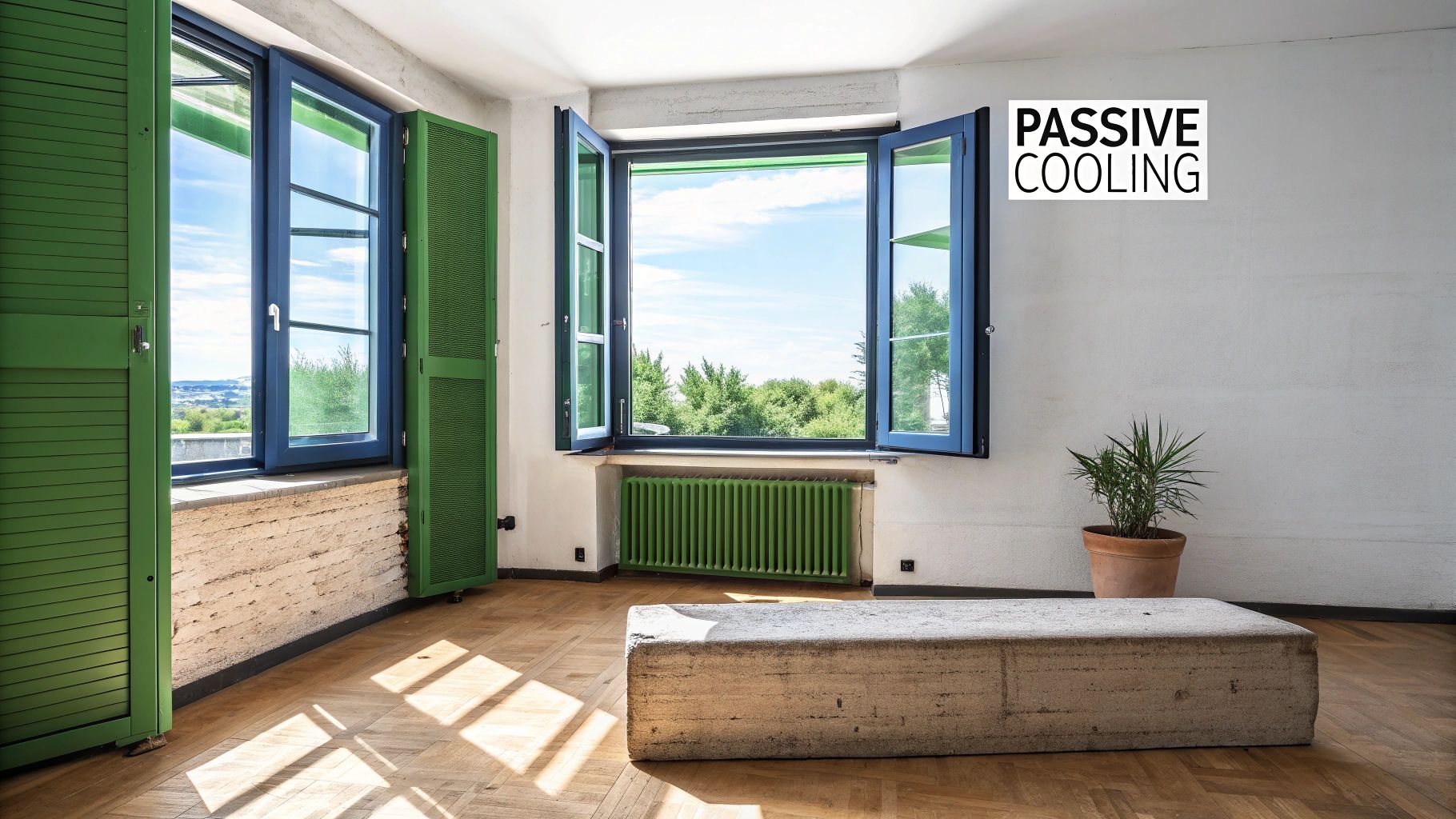
This strategy hinges on smart, site-specific decisions. Building orientation is optimized to control solar gain, using south-facing windows (in the Northern Hemisphere) to capture winter sun while incorporating overhangs or louvers to block high summer sun. Natural ventilation relies on pressure differentials and the "stack effect," where cool air enters through low openings and warm air exits through high ones, creating a natural cooling cycle without air conditioning.
How to Implement Passive Design
Successfully integrating these principles requires a data-driven approach early in the design phase.
- Analyze Climate Data: Begin with a thorough analysis of local climate patterns, including sun paths, prevailing wind directions, and temperature fluctuations. This data informs every subsequent design choice.
- Utilize Building Simulation: Employ energy modeling software (like IES-VE or EnergyPlus) to simulate airflow, solar exposure, and thermal performance. This allows architects to test and refine design elements before construction.
- Design for Cross-Ventilation: Strategically place operable windows and vents on opposite sides of a building to encourage natural airflow, a key component of passive cooling.
- Integrate Thermal Mass: Use materials like concrete, brick, or stone that can absorb and store heat. In a passive solar design, this thermal mass absorbs heat during the day and slowly releases it at night, stabilizing interior temperatures.
The Eastgate Centre in Harare, Zimbabwe, famously mimicked the self-cooling mounds of termites, using less than 10% of the energy of a conventional building its size. By prioritizing passive design, you create a resilient and efficient structure that costs less to operate and provides a healthier indoor environment.
2. Green Roofs & Living Walls
Green roofs and living walls transform inert building surfaces into dynamic, living ecosystems. These vegetated systems, also known as living architecture, involve growing plants on a building’s roof or facades, providing a powerful tool for insulation, stormwater management, and biodiversity. For developers, this strategy not only boosts a building’s environmental performance but also adds significant aesthetic value and usable amenity space, attracting tenants and enhancing property value.

This sustainable architecture strategy works by adding layers of vegetation, growing medium, a root barrier, and a drainage system to a standard roof or wall. This assembly absorbs rainwater, mitigates the urban heat island effect by reducing surface temperatures, and adds a layer of thermal insulation that lowers heating and cooling costs. Furthermore, these systems can double the lifespan of a roof membrane by protecting it from UV radiation and extreme temperature fluctuations.
How to Implement Green Roofs & Living Walls
Successful implementation requires careful planning around structural capacity, plant selection, and long-term maintenance.
- Conduct a Structural Assessment: Before any design work, a structural engineer must confirm the building can support the additional weight of a green roof system (including soil, plants, and saturated water). This is especially critical in adaptive reuse projects.
- Select Appropriate Plant Species: Choose native, drought-tolerant, and low-maintenance plants suited to the local climate and specific rooftop conditions (sun, wind exposure). Extensive systems often use sedums, while intensive systems can support a wider variety of plants.
- Integrate with Stormwater Systems: Design the green roof to capture and slow rainwater runoff. Consider integrating it with a rainwater harvesting system to provide irrigation for the roof itself or for other non-potable uses in the building.
- Plan for Ongoing Maintenance: While many systems are low-maintenance, they are not "no-maintenance." Develop a clear maintenance plan that includes regular inspections, weeding, and irrigation system checks to ensure the system's long-term health and performance.
Iconic projects like Chicago City Hall’s 20,000-square-foot green roof and Stefano Boeri’s Bosco Verticale in Milan showcase how living architecture can radically redefine the urban environment. By integrating these systems, you create resilient, high-performing buildings that actively contribute to ecological health.
3. Daylighting & Façade Optimization
Daylighting is a powerful sustainable architecture strategy that designs building façades and interior layouts to maximize the use of natural light. This approach significantly reduces the need for artificial lighting, which can account for 25-40% of the energy consumed in a commercial building. For developers, optimizing daylight creates more desirable, productive spaces for tenants and directly slashes operational energy costs, boosting the building's net operating income.
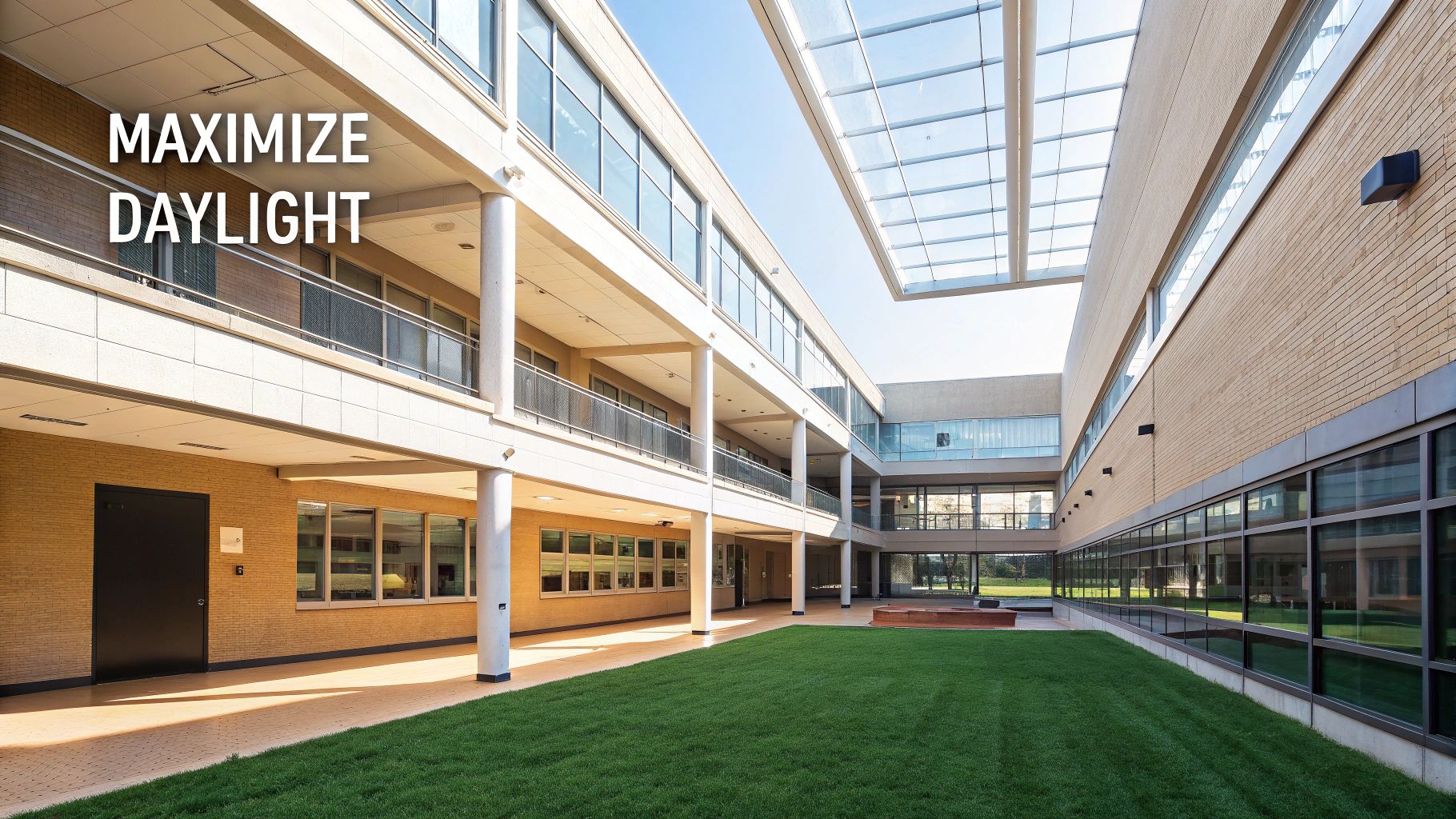
The strategy goes beyond simply adding more windows. It involves a sophisticated optimization of the building envelope, using tools like light shelves, atria, clerestory windows, and advanced glazing technologies to harvest sunlight and distribute it deep into the building’s core. The goal is to create visually comfortable and stimulating environments that enhance occupant well-being while balancing heat gain and glare, ensuring the building remains energy-efficient year-round.
How to Implement Daylighting Strategies
Effective daylighting requires detailed analysis and a holistic design approach from the very beginning of a project.
- Utilize Daylighting Simulation: Employ specialized software like DIVA for Rhino or Radiance to model daylight performance. These tools help predict illuminance levels, identify glare issues, and optimize façade elements like window size and shading devices before construction.
- Integrate Advanced Glazing: Select high-performance glazing with appropriate Solar Heat Gain Coefficients (SHGC) and Visible Transmittance (VT) values based on climate and orientation. Consider dynamic glass that tints automatically to control glare and heat gain.
- Design Reflective Interior Surfaces: Use light-colored finishes on ceilings, walls, and floors to help reflect and propagate natural light deeper into the space, reducing the contrast between perimeter zones and the building core.
- Balance with Automated Controls: Combine daylighting with smart lighting systems that use photosensors to dim or switch off electric lights when sufficient natural light is available, maximizing energy savings automatically.
The Edge in Amsterdam, often called the world's most sustainable office building, uses a daylight-responsive LED lighting system and a carefully oriented glass façade to ensure 70% of its workspaces receive abundant natural light. By prioritizing daylighting, you can deliver a premium, energy-efficient building that actively supports the health and productivity of its occupants.
4. Renewable Energy Integration (Solar & Wind)
Integrating on-site renewable energy systems is a powerful sustainable architecture strategy that directly reduces a building's operational carbon footprint and reliance on the electrical grid. By generating clean electricity with technologies like photovoltaic (PV) panels or wind turbines, developers can transform a building from a passive energy consumer into an active energy producer. For property owners, this strategy offers long-term operational cost stability, protection against rising utility rates, and a highly visible commitment to sustainability that attracts premium tenants.
This approach involves installing systems that capture natural energy sources specific to the site. Solar PV panels convert sunlight directly into electricity, making them ideal for rooftops, parking canopies, or building facades with high solar exposure. In locations with consistent wind patterns, small-scale or building-integrated wind turbines can supplement energy production, further diversifying the on-site generation portfolio and enhancing energy resilience.
How to Implement Renewable Energy Systems
A strategic, phased approach ensures that renewable energy integration is both effective and financially sound. It's crucial to optimize the building first before generating power.
- Prioritize Efficiency First: Before investing in generation, conduct a comprehensive energy audit to identify and implement efficiency upgrades. Reducing the building's overall energy demand is the most cost-effective first step and allows for a smaller, less expensive renewable system.
- Assess Site Viability: Analyze the site's solar and wind resources. This includes evaluating roof orientation, shading from adjacent structures, and local wind speed data to determine the most suitable technology and optimal placement.
- Size the System Strategically: Design the system to meet a significant portion, but not necessarily all, of the building's energy needs. Sizing for 50-75% of demand is often a sweet spot for maximizing return on investment, especially when paired with net metering agreements.
- Integrate Battery Storage: Pair renewable systems with battery storage to capture excess energy generated during peak production times. This stored energy can be used during periods of low generation or high electricity costs, maximizing self-consumption and providing backup power.
Tesla's solar-powered Gigafactories and the Masdar City development in Abu Dhabi are large-scale examples of this strategy in action. To evaluate the economic viability for your specific project, consider using a solar return on investment calculator to project your potential savings and profits.
5. Water Management & Rainwater Harvesting
Effective water management is a cornerstone of sustainable architecture strategies, focusing on reducing potable water consumption and mitigating stormwater runoff. This approach involves capturing, treating, and reusing water on-site through systems like rainwater harvesting and greywater recycling. For developers, integrating these systems reduces reliance on strained municipal water supplies, lowers long-term utility costs, and enhances a property's resilience against drought and water restrictions.
The core principle is to treat water as a valuable, cyclical resource rather than a disposable commodity. Rainwater is collected from rooftops and other surfaces, filtered, and stored in cisterns for non-potable uses like landscape irrigation, toilet flushing, and cooling tower makeup. Similarly, greywater from sinks and showers can be treated and recycled for the same purposes, significantly cutting a building’s demand for fresh water.
How to Implement Water Management Systems
A successful water management strategy requires careful planning and integration from the earliest design stages to maximize efficiency and ROI.
- Calculate Building Water Needs: Conduct a comprehensive water balance analysis to quantify the building's projected potable and non-potable water demands. This data is crucial for sizing collection, storage, and treatment systems appropriately.
- Prioritize High Water-Use Areas: Target systems like toilets, urinals, and landscape irrigation for non-potable water use, as they represent the largest consumption points in most commercial buildings.
- Integrate Greywater & Rainwater Systems: Design a cohesive system where rainwater harvesting provides the primary supply for non-potable needs, supplemented by greywater recycling to ensure a consistent, year-round water source.
- Optimize Water Storage: Plan for water storage tanks (cisterns) in non-prime real estate areas like basements or underground to maximize usable floor space. Ensure easy access for filtration maintenance.
Singapore’s city-wide ABC (Active, Beautiful, Clean) Waters Program masterfully integrates water management into the urban landscape, turning canals and reservoirs into community assets. By adopting a holistic approach to water, you create a more self-sufficient and environmentally responsible property.
6. Biomimicry & Nature-Inspired Design
Biomimicry is a powerful sustainable architecture strategy that looks to nature for time-tested solutions to human design challenges. Instead of inventing new methods, this approach studies and emulates the strategies found in nature's forms, processes, and ecosystems to create efficient and resilient buildings. For developers, biomimicry offers a pathway to innovation, creating high-performance buildings that are inherently optimized, resource-efficient, and attuned to their environment.
This discipline operates on the principle that nature, through 3.8 billion years of evolution, has already solved many of the problems we face: energy management, temperature regulation, material efficiency, and water conservation. By applying these evolved principles, architects can move beyond simple green features to create deeply integrated, systems-based designs that function more like living organisms than static structures.
How to Implement Biomimicry
Integrating nature’s genius into a project requires a shift in perspective, moving from a human-centric to a nature-centric design process.
- Consult Nature's Database: Start by translating your design challenge into a functional question, then explore how nature solves it using resources like AskNature.org. For example, "How does nature cool a structure in an arid climate?"
- Observe Local Ecosystems: Look to local flora and fauna for inspiration. A building in a humid climate might emulate the moisture-wicking properties of a specific plant leaf, creating a culturally relevant and site-specific solution.
- Form Interdisciplinary Teams: Collaborate with biologists and ecologists early in the design phase. Their expertise can help identify relevant natural models and validate the application of biological principles to architectural systems.
- Test and Validate Principles: Abstract a natural strategy and then test its application through digital modeling and physical prototypes. The goal is to understand the underlying principle, not just copy the form.
The aforementioned Eastgate Centre in Zimbabwe, designed by architect Mick Pearce, famously uses a passive cooling system modeled after the self-regulating mounds of African termites. This approach allows the building to use less than 10% of the energy of a conventional building of its size, demonstrating the immense potential of biomimicry.
7. Modular & Prefabrication Construction
Modular and prefabrication construction is a sustainable architecture strategy that shifts a significant portion of the building process from the construction site to a controlled factory environment. This method involves manufacturing standardized components or entire volumetric modules off-site, which are then transported and assembled on location. For developers, this approach dramatically reduces material waste, accelerates project timelines, and enhances quality control, leading to more predictable outcomes and a smaller environmental footprint.
The core benefit lies in efficiency. In a factory setting, materials can be precision-cut and optimized, reducing waste by up to 90% compared to traditional site-built projects. This controlled process also minimizes weather-related delays and improves worker safety. Furthermore, this method supports circular economy principles, as components can be designed for disassembly and reuse (DfMA – Design for Manufacture and Assembly), extending the building's material lifecycle.
How to Implement Modular & Prefabrication
Adopting a modular approach requires a shift in project planning, with detailed design decisions made much earlier in the process.
- Invest in Detailed BIM Modeling: Use Building Information Modeling (BIM) software to create a highly detailed digital twin of the building before any manufacturing begins. This resolves clashes and finalizes specifications, preventing costly changes later.
- Standardize Components: Work with the design team to standardize dimensions and components as much as possible. This leverages the efficiencies of mass production and simplifies the assembly process on-site.
- Plan Logistics Meticulously: Carefully plan the transportation of modules from the factory to the site, considering route limitations, delivery schedules, and crane access. Site logistics and assembly sequencing must be clearly established.
- Choose Local Manufacturing: Whenever possible, partner with a local or regional manufacturer to reduce the carbon footprint associated with transportation and support the local economy.
Companies like Blokable have used this model to deliver hundreds of energy-efficient apartment units, while Skender has applied it to healthcare facilities, showcasing its versatility. By embracing prefabrication, you can build faster, cleaner, and with greater precision, making it a powerful tool for sustainable development.
8. Material Selection & Circular Economy
Moving beyond just operational energy, one of the most impactful sustainable architecture strategies involves the careful selection of building materials. This approach prioritizes resources that are recycled, renewable, non-toxic, and designed for disassembly and reuse. By integrating circular economy principles, developers can shift from the traditional linear "take-make-waste" model to a cyclical system where materials are continuously recaptured, reducing waste and minimizing embodied carbon.
The core idea is to treat building components as valuable assets that can be recovered at the end of a structure's life. This minimizes landfill waste, conserves natural resources, and often reduces the carbon footprint associated with manufacturing and transporting new materials. Pioneered by thinkers like William McDonough through the "Cradle to Cradle" concept, this strategy is now a cornerstone of leading green building certifications and a key focus for forward-thinking property owners.
How to Implement Circular Material Strategies
Effective material selection requires due diligence and clear communication throughout the supply chain.
- Specify Materials with Transparency Labels: Use products with Environmental Product Declarations (EPDs), Health Product Declarations (HPDs), and Declare labels. These documents provide standardized data on a material's life cycle impact, ingredients, and recyclability.
- Prioritize Recycled and Bio-Based Content: Mandate minimum recycled content percentages in project specifications for materials like steel, aluminum, insulation, and concrete. Explore innovative bio-based materials like mass timber, cork, and mycelium.
- Design for Disassembly (DfD): Work with architects and engineers to design connections and assemblies that can be easily taken apart. Using mechanical fasteners like screws and bolts instead of permanent adhesives or welds allows for future material recovery.
- Source Locally and Responsibly: Reduce transportation emissions by sourcing materials from regional suppliers whenever possible. Partner with manufacturers who demonstrate a commitment to sustainable harvesting, ethical labor, and transparent supply chains.
Microsoft's Silicon Valley Campus, for example, utilized CarbonCure concrete, which mineralizes captured CO2, and sourced 90% of its structural wood from a sustainably managed forest. By focusing on material life cycles, you not only create a healthier building but also build long-term asset value and resilience.
9. Smart Building Systems & IoT Integration
Smart building technology moves beyond static design elements, creating a dynamic and responsive structure that actively manages its own performance. By integrating a network of Internet of Things (IoT) sensors, controls, and advanced analytics platforms, these systems optimize energy, water, and occupant comfort in real-time. For developers and owners, this data-driven approach transforms a building from a passive asset into an intelligent, high-performance machine that continuously seeks efficiency.
At its core, this strategy uses real-time data to make automated, intelligent decisions. Sensors monitor everything from room occupancy and CO2 levels to HVAC performance and lighting usage. A central Building Management System (BMS) analyzes this information, adjusting systems to match actual demand rather than operating on a fixed schedule. This not only slashes operational costs but also provides unparalleled insight into how the building is truly being used.
How to Implement Smart Building Systems
Deploying an effective smart building strategy requires careful planning around data, interoperability, and security.
- Prioritize with Sub-Metering: Start by installing sub-meters on the highest energy-consuming systems, like chillers and lighting circuits. This provides granular data to identify the biggest opportunities for savings first.
- Ensure Open Data Standards: Specify systems that use open protocols like BACnet or Modbus. This prevents vendor lock-in and ensures different systems (HVAC, lighting, security) can communicate and work together seamlessly.
- Integrate Occupant Feedback: Use apps or QR codes to allow tenants to provide real-time feedback on comfort levels. This data can be fed into the BMS to fine-tune temperature and lighting, improving satisfaction while optimizing energy use.
- Plan Cybersecurity Architecture: From day one, design a robust cybersecurity plan to protect the building's operational technology (OT) network from potential threats.
The Edge in Amsterdam, often called the world's smartest building, uses over 28,000 sensors to manage its environment, resulting in a 70% reduction in electricity use compared to typical office buildings. This level of integration proves that smart systems are one of the most powerful sustainable architecture strategies for creating truly adaptive and efficient properties.
10. Biophilic Design & Human Connection to Nature
Biophilic design is a sustainable architecture strategy centered on connecting building occupants more closely to nature. This approach integrates natural light, vegetation, natural materials, and other experiences of the natural world into the modern built environment. For developers and owners, it moves beyond simple aesthetics to create spaces that measurably improve cognitive function, reduce stress, and enhance occupant well-being, leading to higher productivity and tenant satisfaction.
Popularized by E.O. Wilson's "biophilia hypothesis," this strategy posits that humans have an innate tendency to seek connections with nature. In architecture, this translates to incorporating living walls, indoor plants, water features, and views of nature. It also involves using natural materials like wood and stone and mimicking natural patterns and forms in the building's design, creating a restorative and engaging indoor environment.
How to Implement Biophilic Design
Successfully integrating biophilic design requires a holistic approach that balances aesthetics, human experience, and practical maintenance.
- Prioritize Natural Views: Design floor plans to maximize views of outdoor green spaces, parks, or water. Studies have shown that even a simple view of nature can speed up patient recovery in hospitals and boost office productivity.
- Incorporate Living Elements: Integrate features like green walls, indoor gardens, or potted plants throughout the building. Plan for their maintenance from the outset, including access to light, water, and care.
- Use Natural Materials and Patterns: Select interior finishes like wood, stone, bamboo, and cork. Incorporate patterns, textures, and forms that mimic those found in nature to create a subtle, subconscious connection to the outdoors.
- Engage Multiple Senses: Add a water feature for soothing ambient sound, ensure ample natural light, and design spaces that provide good airflow. The goal is to create a multisensory experience of nature.
Amazon's Spheres in Seattle serves as a landmark example, housing thousands of plants in a workplace to inspire creativity. By weaving biophilic design into a project, you create a high-value asset that supports human health, boosts morale, and provides a powerful differentiator in the commercial real estate market.
10-Point Comparison: Sustainable Architecture Strategies
| Strategy | Implementation Complexity 🔄 | Resource Requirements & Cost ⚡ | Expected Outcomes ⭐📊 | Ideal Use Cases 💡 | Key Advantages ⭐ |
|---|---|---|---|---|---|
| Passive Design & Natural Ventilation | Moderate–high: requires early-stage climate-driven design and simulations | Low operational cost; modest upfront design investment; minimal mechanical systems | High energy reduction in suitable climates; improved indoor air quality | New builds and retrofits in temperate climates; naturally ventilated buildings | Low operating energy; improved health and reduced HVAC reliance |
| Green Roofs & Living Walls | High: structural, waterproofing and horticultural coordination | High upfront installation; structural reinforcement; recurring maintenance | Strong thermal insulation, stormwater reduction, extended roof life | Urban rooftops, stormwater management, biodiversity and amenity projects | Insulation, stormwater control, urban heat island mitigation |
| Daylighting & Façade Optimization | Moderate–high: façade engineering, controls and simulation needed | Higher upfront for advanced glazing and control systems; design tools required | Large lighting energy savings; better occupant comfort and productivity | Offices, atria, classrooms and high-occupancy zones | Reduces artificial lighting; supports circadian health and productivity |
| Renewable Energy Integration (Solar & Wind) | Moderate: electrical integration, permits, and siting considerations | High capital cost; storage raises cost; dependent on roof/ site orientation | Significant carbon reduction and long-term energy cost savings | Buildings with good solar/wind resource; resilience and net‑zero goals | Energy independence, incentives, increased asset value |
| Water Management & Rainwater Harvesting | High: plumbing, treatment and regulatory coordination | Moderate–high capital; storage space needed; ongoing maintenance | Major potable water savings; reduced runoff and flood risk | Drought-prone sites, large landscapes, campuses and high-use facilities | Lowers water demand, mitigates stormwater, increases resilience |
| Biomimicry & Nature-Inspired Design | High: multidisciplinary research, testing and translation to engineering | Variable costs; R&D and specialist expertise often required | Potentially very efficient, innovative solutions; performance varies by case | Performance-driven or signature projects seeking innovation | Optimized natural strategies, unique designs, regenerative alignment |
| Modular & Prefabrication Construction | High: requires precise up‑front planning, BIM and logistics | Moderate–high capital for factory production; transport and storage needs | Reduced waste, faster schedules, consistent quality | Housing, repeatable units, healthcare modules, fast timelines | Speed of delivery, waste reduction, improved quality control |
| Material Selection & Circular Economy | Moderate: procurement, verification and design-for-disassembly | Potentially higher upfront material costs; supply-chain management | Significant embodied carbon reduction; healthier indoor environments | Projects prioritizing low-carbon and end‑of‑life recovery | Lowers embodied carbon, enables reuse and supply transparency |
| Smart Building Systems & IoT Integration | High: complex integration, cybersecurity and data strategies | Significant tech investment; sensors, platforms and skilled operators | 10–30% operational energy reductions; predictive maintenance and insights | Large commercial portfolios, complex systems seeking optimization | Real-time optimization, analytics-driven efficiency and fault detection |
| Biophilic Design & Human Connection to Nature | Low–moderate: design integration and maintenance planning | Moderate initial cost for materials and planting; ongoing care | Improved well‑being, productivity (+15%+), reduced stress and absenteeism | Offices, healthcare, education and interiors prioritizing occupant health | Psychological and performance benefits; enhanced occupant retention |
From Strategy to Structure: Implementing Your Sustainable Vision
We have journeyed through a comprehensive roundup of sustainable architecture strategies, moving from foundational passive design principles to the high-tech integration of smart building systems. The path forward is clear: sustainable design is no longer a niche specialty but the new benchmark for intelligent, future-proof development. It represents a paradigm shift from viewing buildings as static resource consumers to seeing them as dynamic, high-performance assets that generate value for occupants, owners, and the surrounding community.
The strategies detailed in this article, from daylighting and green roofs to material circularity and modular construction, are not isolated tactics to be cherry-picked. Instead, they are interdependent components of a holistic system. A well-designed building envelope, for instance, reduces the load on HVAC systems, making a smaller renewable energy array more effective. Similarly, biophilic design elements can improve occupant well-being, which in turn enhances the value proposition for tenants in a commercial space.
Synthesizing Strategy into a Cohesive Plan
The true art of sustainable architecture lies in the synthesis. It’s about understanding how these individual strategies can be layered and integrated to create a building that performs better than the sum of its parts. For commercial developers and property owners, especially those tackling the unique challenges of adaptive reuse, this integration is paramount.
An effective implementation plan must address three core pillars:
- Performance: What are the specific energy, water, and carbon reduction targets? Using tools like energy modeling early in the design process provides the data needed to make informed decisions rather than relying on guesswork.
- Profitability: How do these strategies align with the project's financial goals? This involves a long-term view that accounts for lower operating costs, increased tenant attraction and retention, and potential financial incentives like tax credits.
- Practicality: Which strategies are most appropriate for the specific site, climate, and building typology? A rainwater harvesting system that is a game-changer in a wet climate might be less impactful than an advanced solar facade in an arid one.
Key Takeaway: The most impactful sustainable projects are not defined by a single "green" feature but by the thoughtful integration of multiple strategies that work in concert. This synergy creates a resilient, efficient, and valuable asset.
Navigating Complexity and Realizing Value
Mastering these sustainable architecture strategies is not merely an exercise in environmental stewardship; it is a critical business imperative. Buildings designed with these principles are more resilient to fluctuating energy costs, better aligned with evolving regulatory landscapes, and more appealing to a growing market of ESG-conscious tenants and investors. They command higher rents, enjoy lower vacancy rates, and hold their value over the long term.
For historic preservation and adaptive reuse projects, the stakes are even higher. The challenge is to weave modern performance standards into the irreplaceable fabric of a historic structure without compromising its character. This requires a nuanced approach and deep expertise in navigating the specific constraints and opportunities, such as leveraging historic tax credits to fund sustainable upgrades.
Ultimately, the journey from a list of strategies to a fully realized, high-performing building requires a clear vision and an expert guide. The most successful outcomes are born from a collaborative process that balances ambitious goals with the grounded realities of construction, budget, and schedule. By embracing this integrated approach, you can transform your next project from a simple structure into a lasting legacy of innovation, profitability, and positive environmental impact.
Ready to translate these sustainable architecture strategies into a tangible, profitable asset for your portfolio? The team at Sherer Architects, LLC specializes in guiding developers and owners through the complexities of sustainable design, adaptive reuse, and historic preservation. Contact us today to start a conversation about your project's potential.