Sustainable design is a term that gets thrown around a lot these days, but it’s so much more than just a buzzword. At its core, it’s a design philosophy—a way of creating buildings that are in conversation with their environment, rather than in conflict with it.
This approach is all about thinking ahead, focusing on long-term ecological health, smart resource use, and the well-being of the people inside, right from the very first sketch.
Why Sustainable Design Is a Necessity, Not a Trend
To really get a feel for what this means, let's try a simple comparison. Imagine a typical, conventional building is like a gas-guzzling car. It gets you from A to B, but it constantly consumes fuel, spits out exhaust, and requires a ton of maintenance just to keep running.
A sustainably designed building, on the other hand, is more like a well-tended garden. It’s part of a living ecosystem. It gives back, provides shelter, and works with the natural elements around it—the sun, the wind, the rain—to thrive.
This "living garden" approach isn't just a nice idea anymore; it's an urgent necessity. Buildings are one of the world's biggest resource hogs. In 2023 alone, the building sector was responsible for a staggering 32% of global energy demand and 34% of CO₂ emissions. The hard truth is, despite some good intentions, we’re falling behind on our climate goals, which makes this shift in thinking more critical than ever. You can dig into the numbers in the Global Status Report for Buildings and Construction 2024/25.
The Core Philosophy of Sustainable Architecture
When you strip it all down, sustainable architecture is about asking the right questions before you even break ground. How can this building use sunlight to cut down on electricity bills? Can we collect rainwater to irrigate the landscape? What materials can we find nearby that are both beautiful and responsibly sourced, cutting down on the carbon footprint from transportation?
Sustainable design isn't just about bolting solar panels onto a roof. It’s about creating a completely integrated system where the building, its inhabitants, and the natural world can coexist in a healthy, balanced way.
This kind of proactive thinking pays off in some incredibly powerful ways, and the benefits go far beyond just being "green." It's a complete strategy for building better spaces for everyone. The main advantages really boil down to three things:
- Minimizing Environmental Harm: This is the most obvious one. It means a smaller carbon footprint, less strain on natural resources, and better protection for local ecosystems.
- Boosting Human Health: We're talking about better indoor air quality and more natural light, which have been proven time and again to make people feel better, think clearer, and be more productive.
- Delivering Long-Term Financial Value: This is where it really clicks for many owners. Lower utility bills, higher property values, and a building that's better prepared for a future where energy and water are more expensive.
At the end of the day, sustainable design isn't just a passing phase. It's the natural and necessary evolution of architecture, paving the way for a smarter, healthier, and more resilient future.
The Foundational Principles of Green Architecture
To move sustainable design from a lofty concept to a brick-and-mortar reality, architects lean on a set of core principles. These aren't just boxes to tick on a checklist; they're a series of interconnected strategies that create buildings that are better for us and for the planet. Think of them as the pillars holding up the entire structure of a green building.
Each principle tackles a different part of a building's life—from where it sits on the land to how it runs every day. The end game is a holistic system where every choice is made to boost efficiency, improve health, and leave the smallest possible environmental footprint. Let's dig into what these ideas look like in practice.
Optimizing Site Potential
Some of the smartest design decisions are made before a single shovel hits the dirt. True sustainable architecture starts with a profound respect for the land itself. It's about analyzing a site's unique character to work with nature, not against it.
This means studying the sun's path across the sky to capture natural light and warmth in the winter while creating shade in the summer. It also means mapping the prevailing winds to design for natural airflow, cutting down the need for power-hungry air conditioning. By carefully considering the existing landscape, topography, and local ecology, we can place a building to minimize disruption and make the most of what nature already provides.
Minimizing Energy Consumption
A massive goal of any green building is to slash its energy use. We achieve this largely through passive design strategies—clever, low-tech approaches that let the building’s very form and materials do the heavy lifting in maintaining a comfortable temperature.
This includes things like:
- High-Performance Insulation: Essentially wrapping the building in a tight, thermal blanket to keep heat from escaping in winter or creeping in during summer.
- Energy-Efficient Windows: Using double- or even triple-paned glass with special coatings to manage heat transfer.
- Strategic Shading: Designing overhangs, awnings, or even planting trees to block the harsh sun during the hottest parts of the day.
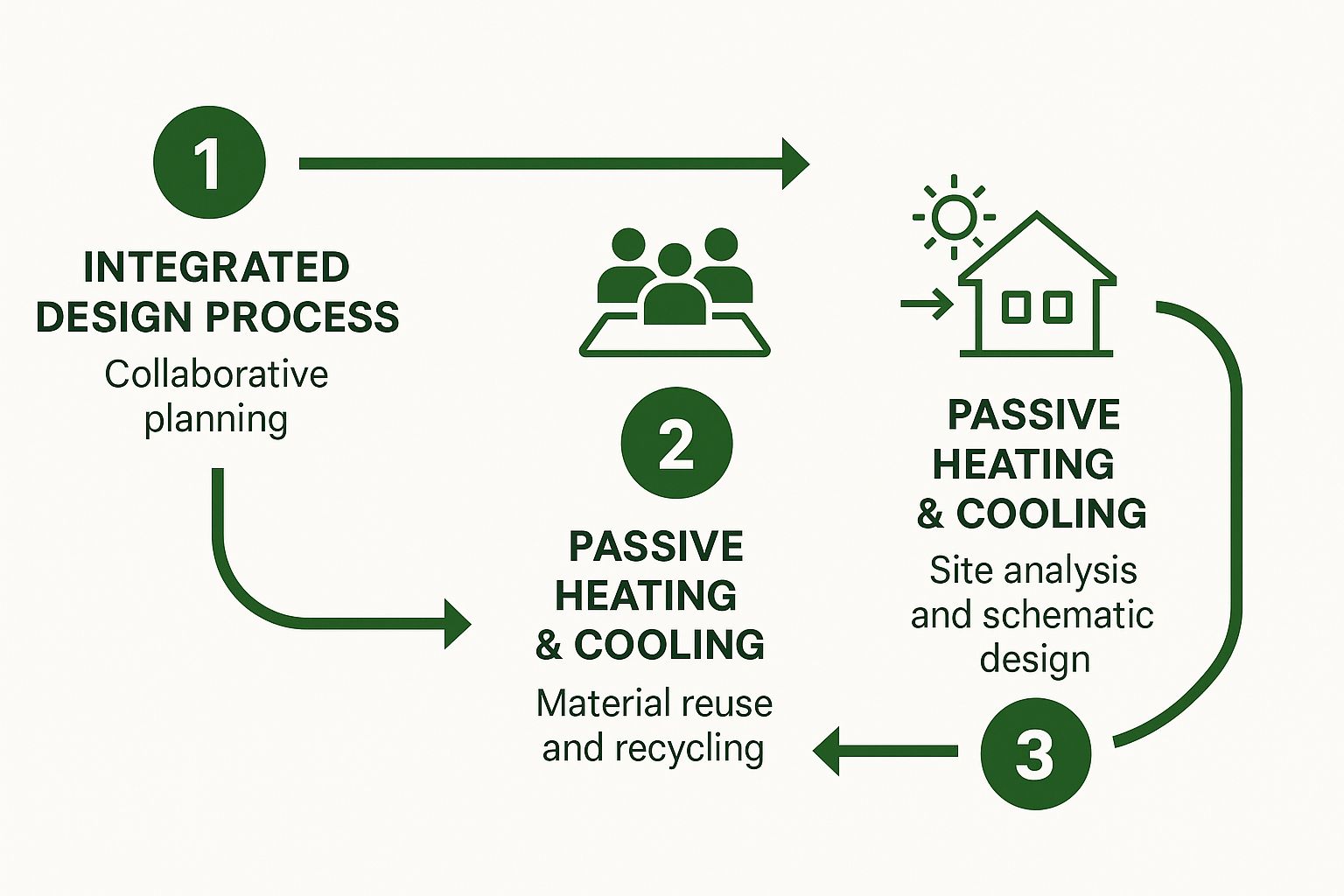
This infographic helps show how the key pillars of sustainable design—Environment, Health, and Economy—all feed into one another.
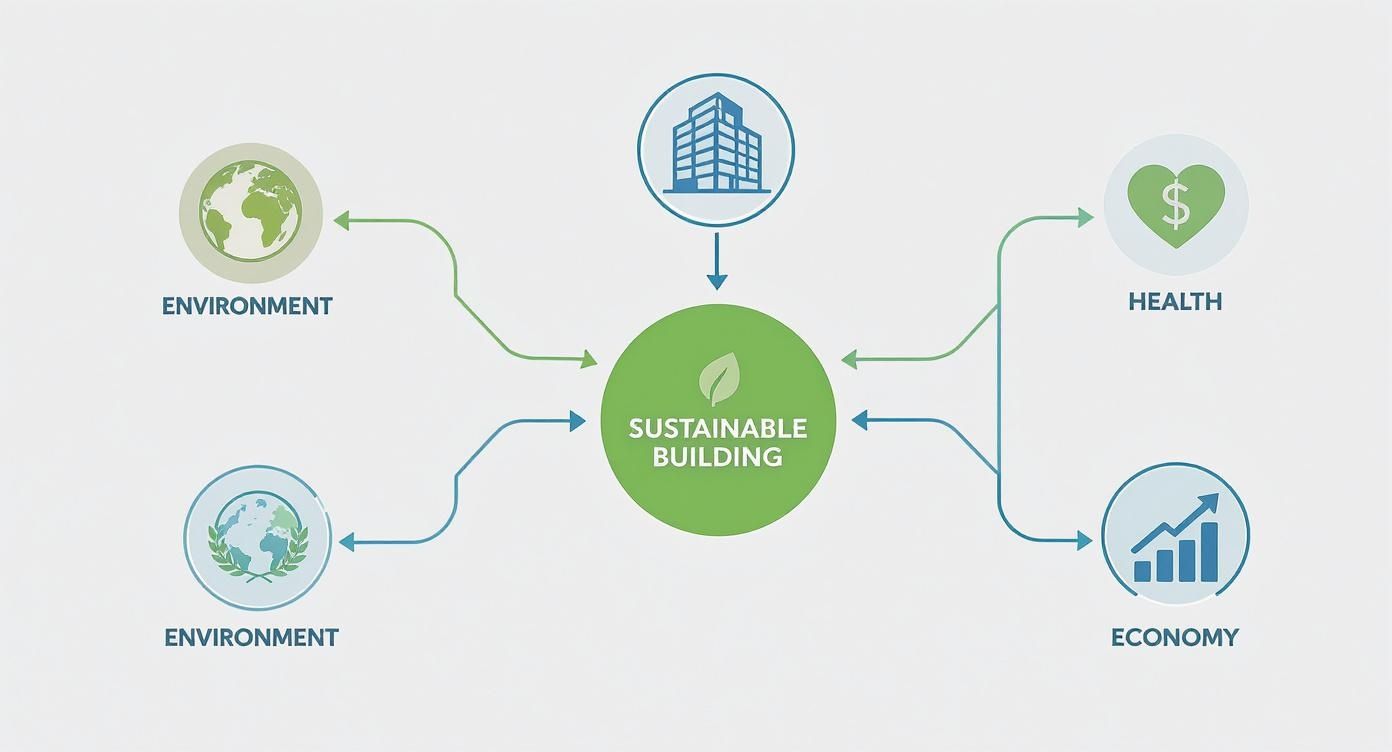
As you can see, a genuinely sustainable building pays dividends in all three areas. It’s about creating structures that are both balanced and built to last.
Conserving Water Resources
Water is a precious and finite resource, and sustainable buildings are designed to treat it that way. This goes far beyond just installing a few low-flow faucets; it means creating smart, integrated systems for managing every drop.
A key strategy is rainwater harvesting, where we collect precipitation from rooftops and store it in cisterns. This water can then be used for things that don't require treated drinking water, like irrigating the landscape or flushing toilets. This simple but incredibly effective technique can cut a building's reliance on municipal water by up to 50% or more.
Using Environmentally Preferable Materials
The materials we choose have a huge say in a building's final environmental toll. A cornerstone of green architecture is the thoughtful selection of sustainable materials for construction. We need to prioritize materials that are:
- Renewable: Think sustainably harvested wood, cork, or fast-growing bamboo.
- Recycled: Incorporating materials like reclaimed steel, recycled-content insulation, or crushed concrete.
- Locally Sourced: This cuts down on the carbon emissions that come from trucking materials across the country.
Enhancing Indoor Environmental Quality
Finally, sustainable design turns its focus inward to create spaces that are genuinely healthy for the people inside them. This principle, known as Indoor Environmental Quality (IEQ), is all about making sure the air we breathe and the light we work in actually contribute to our well-being.
We get there by maximizing natural daylight, ensuring plenty of fresh air circulation, and using non-toxic, low-emission paints, sealants, and furnishings to keep indoor air clean. After all, a building that’s good for the environment should also be good for people.
The Tangible Benefits of Building Sustainably
When we talk about sustainable design, it’s easy to get lost in the ideals. But the truth is, the decision to build green isn't just about ethics—it’s about delivering clear, measurable advantages that you can see and feel.
These aren't abstract concepts. They are real-world gains that show up in your bank account, in the health of your family or employees, and in the resilience of your community. From conserving precious resources to creating spaces that just feel better to be in, the case for sustainable building is incredibly compelling.
And the market agrees. The green building sector is on track to become a $1.37 trillion industry by 2034, and that’s not by accident. This growth is fueled by proven results: buildings with 35% lower emissions and 16.9% reduced operational costs. With 84% of consumers now saying they prefer sustainable homes, it’s clear this is no longer a niche interest but a mainstream expectation. You can explore more of the data behind these green building statistics and market trends.
Environmental and Economic Advantages
The most obvious win for sustainable design is its gentle touch on the environment. When you intentionally design for energy efficiency, water conservation, and responsible material use, you automatically shrink the building’s ecological footprint. That means less pollution, lower carbon emissions, and less strain on local resources.
But here’s where it gets really interesting: those environmental victories translate directly into powerful economic ones. The smart design choices that lower energy and water use also slash your monthly utility bills. Over the life of a building, those savings can be massive.
Green buildings are also just better investments. They often command higher property values and attract discerning tenants willing to pay a premium for a healthier, more efficient space. On top of that, governments frequently offer tax credits and other incentives to encourage green construction, sweetening the deal for developers and owners alike.
Sustainable design turns a building into a high-performing asset. It’s not about spending more; it’s about investing wisely in a structure that costs less to operate, holds its value better, and contributes positively to its environment.
Thinking about the long game is crucial. A conventional building might seem cheaper upfront, but its true cost emerges over decades of high utility bills, maintenance, and lower eventual resale value. A sustainable building, on the other hand, is designed from day one to deliver value throughout its lifespan.
Green Building vs Conventional Building Long-Term Value
| Metric | Conventional Building | Sustainable Building |
|---|---|---|
| Energy Costs | Higher, subject to price volatility. | 25-30% lower on average. |
| Water Usage | High, inefficient fixtures. | Up to 40% less water consumed. |
| Maintenance | Frequent, often costly repairs. | Lower due to durable materials. |
| Occupant Health | Risk of "sick building syndrome." | Improved air quality, better health. |
| Productivity | Standard performance levels. | Up to 11% productivity gains. |
| Resale Value | Standard market appreciation. | 7-10% higher on average. |
| Market Appeal | Decreasing as standards shift. | High and growing demand. |
As the table shows, the initial investment in sustainable design pays dividends again and again, creating a building that is not only better for the planet but also a far superior financial asset.
Social and Health Benefits
Beyond the numbers, green architecture has a profound impact on the people who live and work inside. By insisting on non-toxic materials and high-performance ventilation systems, we create spaces with excellent indoor air quality. This simple change can dramatically reduce the risk of respiratory issues and allergies.
Sustainable design also prioritizes a connection to the natural world. Ample daylight isn't just a nice feature—it’s been proven to boost mood, reduce stress, and improve focus.
For a business, this translates into a real competitive edge. Employees in a well-designed green office are often healthier, more engaged, and more productive. In a home, it means creating a sanctuary that truly supports your family’s well-being. These buildings remind us that what’s good for the planet is also great for people.
Practical Strategies in Sustainable Design
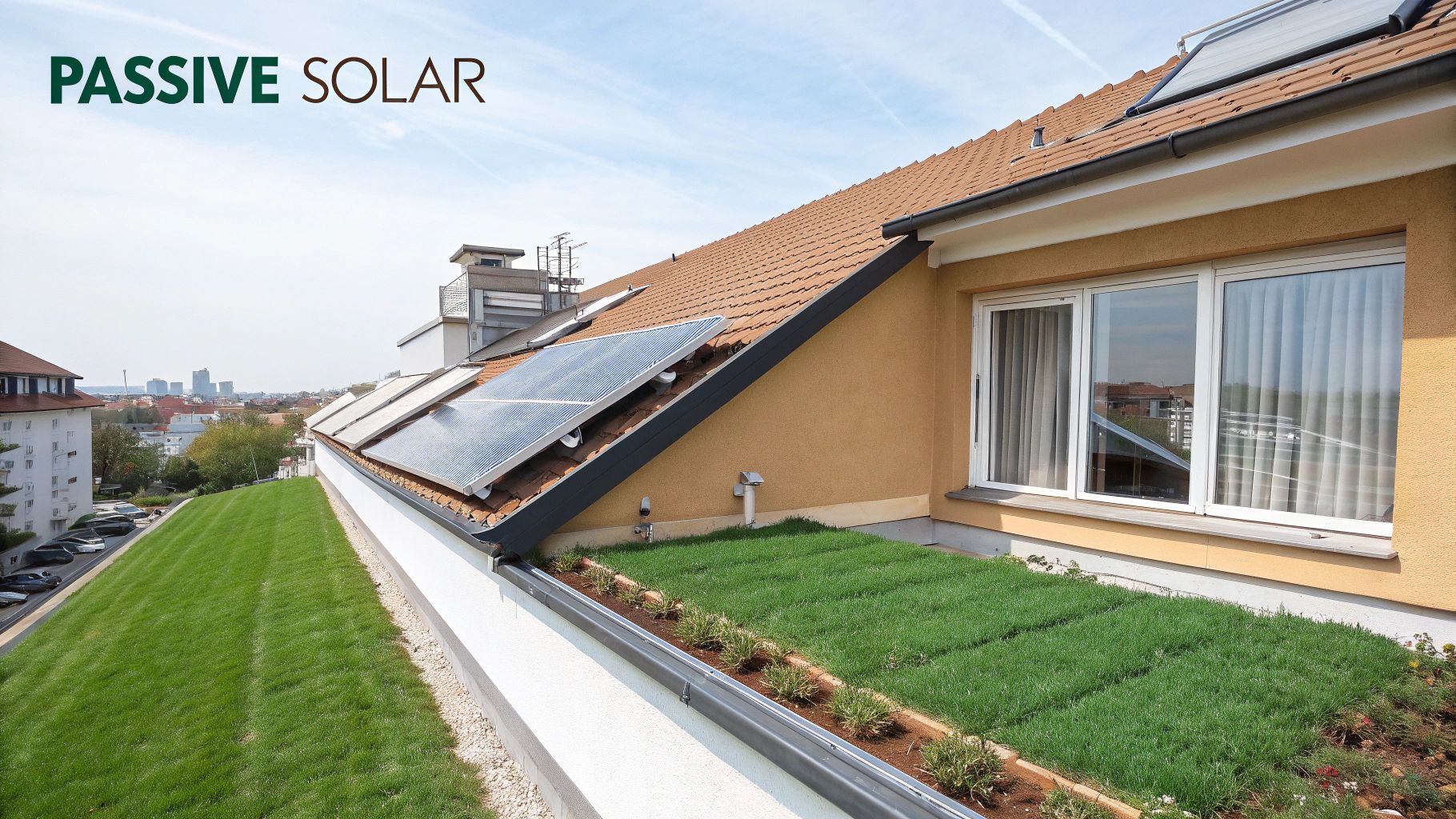
It’s one thing to talk about the principles of sustainable design, but it’s another to see how they come to life. These aren’t just abstract ideas; they are practical, hands-on techniques that architects use every day to create buildings that simply perform better. Let's look at a few of the most impactful strategies that turn green theory into architectural reality.
Think of each strategy as a tool in an architect's toolkit. When used together, they create a building that works with its environment, not against it.
Working with the Sun: Passive Solar Design
One of the most elegant and cost-effective strategies is passive solar design. At its core, this is simply the art of orienting and designing a building to make the most of the sun's free energy—soaking up heat in the winter and deflecting it in the summer. It's an ancient, common-sense approach, now supercharged with modern building science.
Here’s how it works in practice:
- Strategic Window Placement: Large, south-facing windows are a must. They act like solar collectors, capturing maximum sunlight during colder months when the sun hangs low in the sky.
- Smart Overhangs: Roof overhangs, awnings, or brise-soleils are precisely calculated to block the high, intense summer sun, preventing the building from overheating.
- Thermal Mass: This is the building's internal battery. Materials like concrete, stone, or brick are used for floors and walls to absorb the sun's heat during the day and then slowly release it back into the space at night as temperatures drop.
This simple, thoughtful approach can dramatically slash the need for mechanical heating and cooling, which are typically the biggest energy hogs in any building.
The Building Envelope: A High-Performance Shell
Think of a building's envelope—its roof, walls, windows, and foundation—as its skin. A high-performance envelope is like wearing a top-of-the-line technical jacket; it keeps the inside comfortable no matter what the weather is doing outside. It's the building's first and most important line of defense against energy waste.
Creating one involves using advanced insulation to stop heat from moving in or out, and installing high-efficiency windows that insulate just as well as walls while still flooding rooms with natural light. The real goal is to create an airtight seal, eliminating drafts and uncontrolled air leaks. When you achieve that, the building's heating and cooling systems can finally relax.
A well-sealed building envelope is the bedrock of energy efficiency. It ensures the air you've paid to heat or cool actually stays inside, leading to significant and predictable savings on your utility bills, year after year.
Living Architecture: The Power of Green Roofs
A green roof is so much more than a pretty rooftop garden. It's a living, breathing system that delivers a whole host of benefits, both for the building and the environment around it. By covering a roof with vegetation, architects can fundamentally change how a building interacts with its surroundings.
A green roof system can:
- Boost Insulation: The layers of soil and plants act as a natural insulator, cutting down on heating and cooling costs.
- Manage Stormwater: Like a giant sponge, a green roof absorbs huge amounts of rainwater, which reduces runoff and eases the strain on city sewer systems.
- Double a Roof's Lifespan: By shielding the underlying waterproof membrane from harsh UV radiation and extreme temperatures, a green roof can make it last two or even three times longer.
Smart technology is also pushing sustainable design forward. Buildings integrated with IoT and AI can cut energy bills by an incredible 30–50%. At the same time, circular construction methods can reduce on-site waste by up to 90%, leading to cleaner, faster projects. You can learn more about these top trends in sustainable architecture.
When applying these strategies to a home, even the interior details matter. For instance, selecting eco-friendly kitchen cabinets ensures that every part of the design contributes to the home's overall environmental performance.
Let's Talk About the Hurdles in Green Building
It's easy to get excited about the benefits, but let's have an honest conversation. Shifting to sustainable design isn't always a walk in the park. Architects, developers, and building owners run into real-world hurdles that are important to acknowledge.
The good news? These challenges are getting smaller and more manageable every year as the industry catches up.
That Big Question: What About the Upfront Cost?
This is usually the first thing people bring up. It’s true that some specialized materials and high-performance systems can carry a higher price tag than their conventional counterparts. That initial sticker shock can be enough to make anyone think twice and fall back on old, familiar methods.
But focusing only on the initial build cost is like judging a car's value by its down payment alone. You're missing the most important part of the story.
The smart way to look at it is through a life-cycle cost analysis. This just means we zoom out and look at the total cost of a building over its entire life, not just the day it's finished.
Think about it: when you add up decades of lower energy bills, fewer maintenance calls, and even higher property values down the road, that initial investment starts to look incredibly smart. It’s a classic case of spending a little more now to save a whole lot later.
Plus, the market is on our side. The more people demand green products, the more affordable they become. We're seeing the costs of sustainable materials and tech drop year after year. On top of that, there are tons of government incentives, tax credits, and grants out there designed to make the sustainable choice the easy choice.
Finding the Right Materials and People for the Job
Another real-world challenge is just getting your hands on the right stuff. Sourcing truly sustainable materials often takes more homework than just calling up your usual supplier. You have to verify where a product came from, what it’s made of, and make sure you can get it on site when you need it.
It's not just about materials, either. Green building often demands specific skills. Finding a crew that has real experience installing an airtight building envelope or a complex green roof system can be tough, depending on where your project is.
But here too, the tide is turning. These challenges are getting easier to overcome every day.
- Better Supply Chains: The network of suppliers for certified green materials is growing fast. Online databases and improved logistics make it much simpler to find and order exactly what you need.
- A More Skilled Workforce: Professional organizations and trade schools are stepping up with new training and certification programs. This is creating a much deeper pool of skilled green-building professionals.
- Working Together from Day One: Smarter project management approaches, like Integrated Project Delivery (IPD), are becoming more common. This gets the architects, engineers, and builders in the same room from the very beginning, making sure the team has the right expertise to bring a sustainable vision to life.
Getting past these hurdles really comes down to planning ahead and working collaboratively. With the right strategy, these aren't roadblocks—they're just steps on the path to creating better, stronger, and more responsible buildings.
The Future of Sustainable Architecture
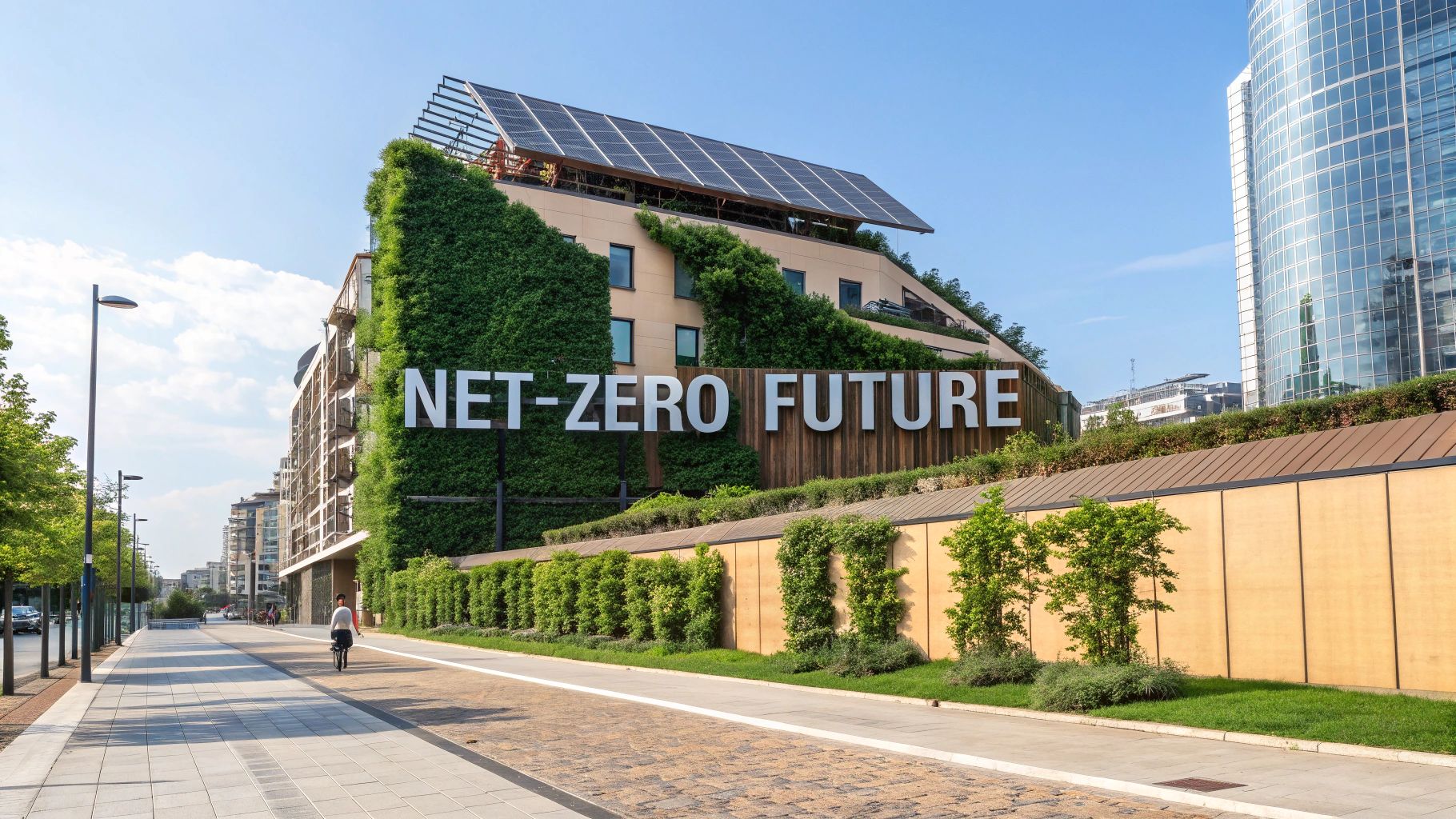
When we look at the horizon for sustainable design, we’re not just talking about fine-tuning what we already do. The real shift is in completely rethinking how our buildings relate to the world around them. The next wave of innovation is pushing past simple efficiency, aiming for structures that actively heal, adapt, and give back to their environment.
This forward-thinking mindset is already producing some game-changing ideas. Each one gives us a peek into a future where buildings act less like static objects and more like living, breathing parts of an ecosystem.
Key Innovations Shaping Tomorrow
Here are a few of the concepts that are truly pointing the way forward:
-
Net-Zero Buildings: Picture this: a building that generates as much energy as it uses over the course of a year. That’s the core idea behind net-zero design. By pairing hyper-efficient systems with on-site renewable energy, like solar panels, we can create structures that are completely self-sufficient.
-
Biophilic Design: This is about more than just scattering a few potted plants around. It’s a deep, meaningful integration of nature into the very fabric of a building. We're talking about living walls that clean the air, light wells that flood spaces with natural sunlight, and organic shapes that instinctively calm us and boost our well-being.
The ultimate goal is to erase the line between indoors and outdoors, fostering a constant, restorative connection to the natural world.
- Circular Economy Principles: The old model was "build, use, demolish." The new way of thinking is to design for disassembly. Materials are no longer seen as disposable but as valuable assets to be recovered, reused, or repurposed. This turns buildings into "material banks" for the future and practically eliminates the idea of construction waste.
Pushing this evolution even faster are breakthroughs like smart materials that can adapt to changing temperatures or light, and AI-driven building management systems that optimize energy use second by second. The future of architecture isn't just green—it's resilient, restorative, and profoundly connected to nature.
Frequently Asked Questions
It’s completely normal to have questions when you first dive into sustainable design. There’s a lot of information out there, and it can be tough to sort through the buzzwords to find what really matters for your project.
We get it. To help clear things up, here are a few straightforward answers to the questions we hear most often.
How Is Sustainable Architecture Different from Regular Architecture?
Think about it like this: traditional architecture has always focused on two main things—how a building looks (aesthetics) and how it works (function). Sustainable architecture doesn't ignore those, but it adds a critical third dimension: long-term impact.
It’s about designing with a much wider lens. Instead of just solving for today, we're looking at the building's entire life, from where the materials come from all the way to how it might one day be repurposed. The goal is to create spaces that are not only beautiful and functional but also healthier for people and lighter on the planet.
Do Green Buildings Always Cost More to Build?
That’s probably the biggest myth we have to bust. While some high-tech green features can add to the upfront budget, smart sustainable design doesn't have to cost more. In fact, clever passive design strategies—like orienting a building to capture natural light and warmth—can actually reduce the need for expensive mechanical systems from day one.
The key is to think about the total cost of ownership, not just the initial price tag.
A sustainably designed building is an asset that pays you back over time. With lower utility bills, fewer maintenance needs, and higher property values, the long-term savings almost always make it the smarter financial choice.
Can Any Building Be Made Sustainable?
Yes, absolutely. While starting from scratch with a new build makes it simpler to integrate sustainable features, existing buildings represent a huge opportunity. We can take an older structure and thoughtfully retrofit it with modern, efficient systems and healthier materials.
This approach, known as adaptive reuse, is incredibly sustainable in its own right. It saves all the energy and carbon—the embodied carbon—that was spent to construct the building in the first place. With the right expertise, even a historic landmark can become a model of modern performance without losing an ounce of its character. It's a brilliant way to breathe new life into our communities while cutting down on waste.
At Sherer Architects, LLC, we're here to help you navigate the complexities of sustainable design, whether it's a new commercial building, an adaptive reuse project, or a historic preservation effort. We blend enduring design with future-focused performance.
Ready to start the conversation? Contact us today to bring your vision to life.