
Designing a theater is a massive undertaking, one where artistic vision has to mesh perfectly with architectural precision and financial reality. The process is all about defining a clear program, digging into potential sites, and making the big calls that will dictate how the venue works—and whether it succeeds—for decades to come.
Defining Your Vision: Program and Site Selection
Every great theater starts not with a blueprint, but with a question: what is this place for? The answer to that question becomes your "program," a document that essentially serves as the North Star for the entire project. If you don't have a solid program, the project will wander, leading to expensive changes and a final building that doesn't really serve anyone well.
This first phase is all about asking the hard questions. You need to figure out more than just what kind of shows you'll host, whether it's touring Broadway productions, intimate black-box plays, or community concerts. You have to map out the entire ecosystem. Who are you building this for? How many seats do they need? Will you be a presenting house, a producing company, or a rental venue?
Solidifying Your Theater's Program
A truly useful program gets down to the nitty-gritty, creating a detailed checklist for the design team. It's a huge mistake to focus only on the main stage. You have to think through the entire journey for every person who walks through the door.
- Audience Experience: How big does the lobby need to be so people aren't crammed together before a show? What do you need for concessions, restrooms, and ticketing?
- Performer Needs: What are the absolute must-haves for dressing rooms, a green room where artists can unwind, and dedicated rehearsal spaces?
- Technical Support: How much room do you need for building sets (workshops), storing costumes, and housing the administrative staff who keep the place running?
Getting these answers right turns your vision into actual spatial requirements. A theater hoping to land large-scale musicals, for instance, is going to need a cavernous backstage area with a fly loft and ample wing space—far more than a venue designed for spoken-word poetry.
The Critical Choice: New Build vs. Adaptive Reuse
With your program in hand, the next major decision is finding a site. This is a classic fork in the road: do you build something new from the ground up, or do you adapt an existing building? Each option comes with its own unique set of pros and cons that will heavily influence your budget, timeline, and the ultimate feel of the venue.
This decision tree lays out the two primary paths you can take when planning your theater.
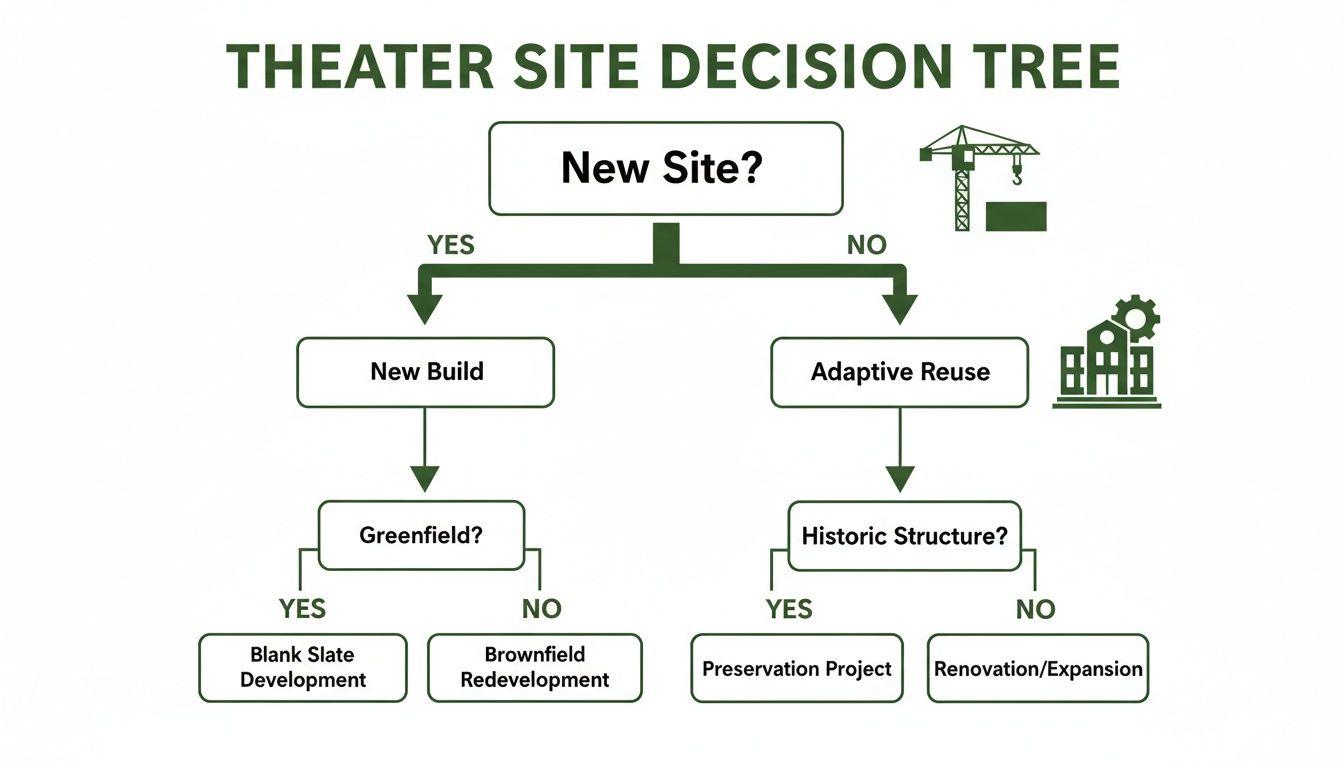
The flowchart makes it clear: a new build offers a blank slate, while adaptive reuse can leverage existing character and sustainability. Neither is inherently better; they just require different strategies.
Let's break down what you're weighing with this decision. The table below compares the key factors you'll need to consider for each approach.
New Build vs Adaptive Reuse Key Considerations
| Consideration | New Build Approach | Adaptive Reuse Approach |
|---|---|---|
| Creative Control | Total freedom. The design is optimized perfectly for your program from day one. | Constrained by the existing structure. You'll need creative solutions to fit your program into the building's bones. |
| Cost | Often higher initial costs for land acquisition and new construction. | Potentially lower acquisition cost, but renovation can uncover expensive surprises (e.g., hazmat, structural issues). |
| Timeline | Can be longer due to zoning, permitting, and the entire construction process from scratch. | May be faster if the building is sound, but unforeseen conditions can cause significant delays. |
| Character & Identity | You create the identity from the ground up. It’s a blank canvas. | Inherits the history and character of the existing building, which can be a huge community asset. |
| Sustainability | An opportunity to incorporate the latest green building technologies and materials. | Inherently sustainable by reusing an existing structure. Less embodied carbon. |
| Funding & Incentives | Standard financing, but fewer unique funding streams. | Eligible for historic preservation tax credits and specific grants, which can be a game-changer. |
Ultimately, the choice between new construction and renovation depends heavily on your specific program, available sites, and, of course, your budget. A new build gives you complete control, but adapting an old building can give you a venue with a soul you just can't replicate.
Navigating Site Analysis and Constraints
Whether you're starting fresh or renovating, a rigorous site analysis is absolutely essential. You have to look at zoning laws, how easily patrons can get there (parking and public transit are huge), and how the building fits into the neighborhood. An urban site, for instance, might offer great visibility and foot traffic but come with headaches like a tight footprint and the need for serious noise control.
Once a site is chosen, one of the first and most critical steps is the foundation work. A detailed guide to footings excavation can give you a solid understanding of this crucial early phase. Getting the groundwork right is vital for the building's structural integrity, whether you're pouring a foundation for a massive new fly tower or reinforcing one that's a century old. The site itself will always shape the design, turning what look like constraints into opportunities for a theater that is truly one-of-a-kind.
The Heart of the House: Seating and Sightlines
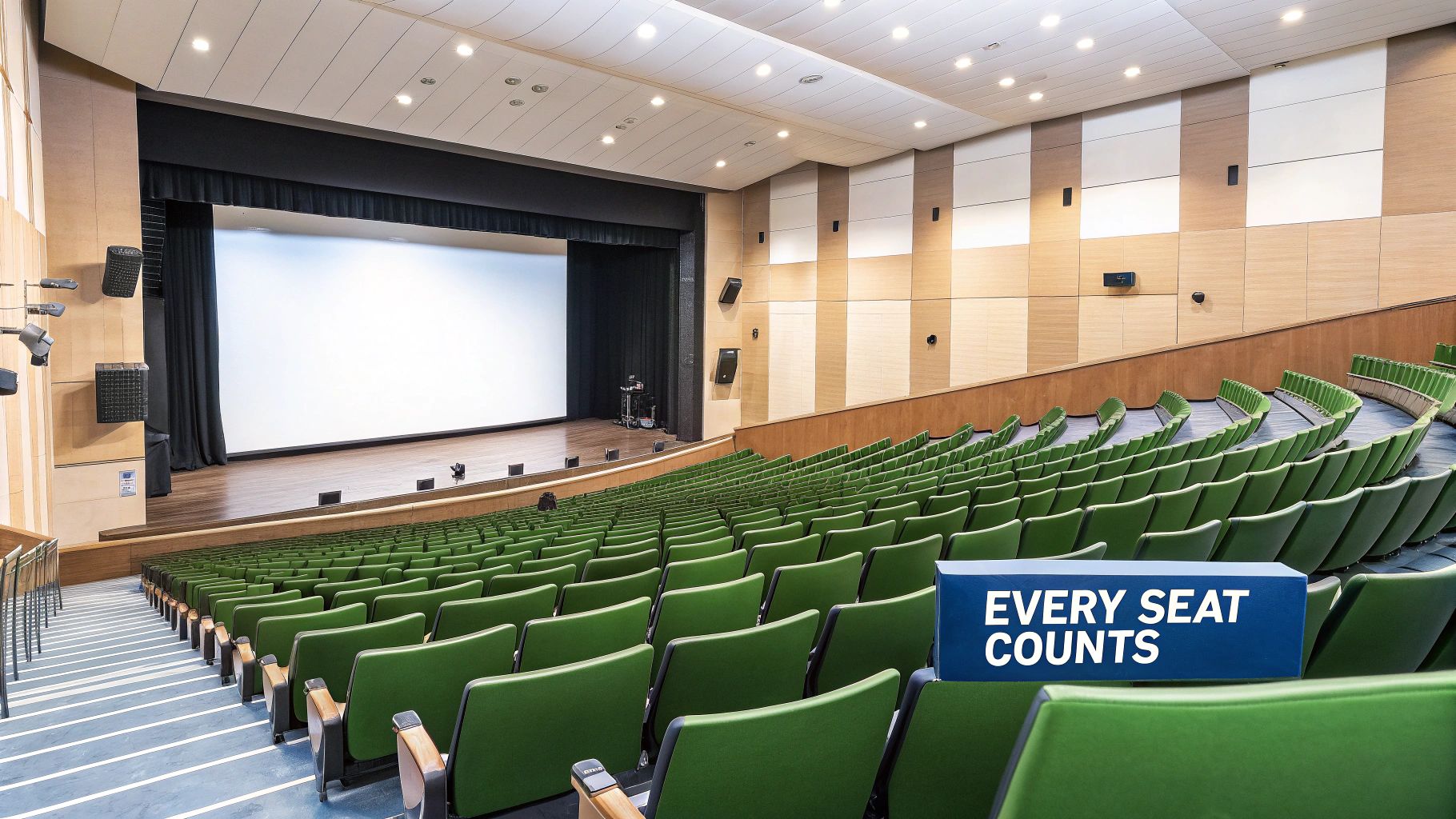
The magic of live theater hinges on the connection between the audience and the stage. It’s that shared, electric moment when the house lights dim. As designers, our job is to foster that connection, and it all starts with the physical layout of the auditorium. Seating and sightlines aren't just technical exercises; they are the very tools we use to shape the audience's experience.
Multi-Aisle vs. Continental: Choosing Your Layout
One of the first big decisions you'll make is how to arrange the seats. This choice comes down to two classic approaches: the traditional multi-aisle layout or the more enveloping continental plan. Each one fundamentally changes the feel of the room and has real-world impacts on everything from ticket sales to how quickly the audience can get to their seats.
-
Multi-Aisle Seating: This is the layout most people know. You've got aisles down the center and along the sides. It's straightforward, making it easy for people to find their seats and for the house to clear out quickly. The downside? Those aisles take up space—space that could be filled with paying customers.
-
Continental Seating: Imagine a single, unbroken bank of seats stretching from one side of the room to the other. That’s continental seating. It pulls everyone closer, creating a more intimate, unified feel, and can boost your seat count by up to 15%. The trade-off is that building codes require wider rows and more exit doors along the walls to ensure everyone can get out safely in an emergency.
The choice really depends on the atmosphere you're trying to create. A multi-aisle setup feels familiar and orderly. A continental layout, on the other hand, can make even a large theater feel surprisingly personal, wrapping the performance around the audience.
The Science of a Perfect View
Once you've settled on a layout, the real work begins: ensuring there isn't a single bad seat in the house. A blocked view is more than just an annoyance for a patron; it’s a failure of the design itself. Our goal is to guarantee a completely clear view—both vertically and horizontally—for every single person.
This is where the "isacoustic curve" comes in. It’s a design principle that dictates the slope, or rake, of the seating floor. The concept is simple: your eyes need to clear the top of the head of the person sitting directly in front of you. For live theater, we typically aim this sightline at the stage floor, often called the "point of arrival."
Modeling these sightlines in design software is absolutely essential. We literally draw a line from an audience member's eye in one row, over the head of the person in the next, to the stage. We repeat this for every single row, which generates the perfect curve for the floor. Skipping this step is a recipe for disaster and can lead to incredibly expensive fixes down the line.
A rookie mistake is to design a floor with a single, straight slope. A properly designed rake is actually a parabola—gently sloped at the front and progressively steeper toward the back. This ensures everyone gets a great view, not just the folks in the premium seats.
Accessibility Is Non-Negotiable
Designing for accessibility isn't about ticking boxes on a checklist. It's about building a space where every single patron feels welcome and can enjoy the show without barriers. This thinking has to be baked into the design from day one—it's not only the law, but it's also fundamental to creating a truly public-facing venue.
This goes far beyond just designating a few spots for wheelchairs. We have to think about the entire journey.
- Integrated Seating: Wheelchair-accessible spots should be distributed throughout the theater at different price points, not just shunted off to one area in the back. And you must have companion seating right next to them.
- Clear Pathways: Every path—from the lobby to the seats, to the restrooms, to the concession stand—needs to be wide, clear, and easy to navigate. Any ramps have to be built at a comfortable, manageable slope.
- Assistive Systems: Plan for assistive listening systems (ALS) from the start. Building in the infrastructure for induction loops or infrared systems makes a world of difference for patrons with hearing impairments.
When you treat accessibility as a core design principle instead of an afterthought, you create a theater where everyone can focus on what matters: the performance on stage. That kind of thoughtful, inclusive design is what separates a good venue from a great one.
Engineering the Performance: Stage, Acoustics, and Technology
While we obsess over the audience's experience, let's not forget what a theater is really for: what happens on stage. Engineering the performance space is a delicate dance, a balancing act between artistic ambition and the hard realities of backstage logistics, acoustics, and tech. Get this part right, and you've built a space where magic can happen. Get it wrong, and you'll hamstring every production that walks through your doors.
One of the first, and most foundational, decisions you'll make is the type of stage. This choice fundamentally defines the relationship between performer and audience, shaping everything from scenic design to the very feel of a show.
Choosing the Right Stage Configuration
There are three classic stage configurations, and each brings its own unique character and operational demands. It's crucial to understand these nuances to make sure the physical space actually supports your artistic goals.
-
Proscenium Stage: This is the iconic "picture frame" stage. The audience looks through a large arch, creating a clear fourth wall between their world and the world of the play. It's the go-to for productions with elaborate scenery, complex backstage mechanics, and a need for tightly controlled sightlines.
-
Thrust Stage: Here, the stage juts out into the house, with the audience wrapping around three sides. This shatters the fourth wall, creating a much more intimate and dynamic experience. The action is right in your lap, which forces a more three-dimensional approach to directing and design.
-
Arena Stage (or Theatre-in-the-Round): With the audience on all four sides, this is the most intimate setup you can get. It creates an incredibly powerful connection, but it's also the most challenging. There's no "backstage" to hide things, so every entrance, exit, and scene change has to be meticulously choreographed.
The proscenium arch itself was a game-changer, born during the Renaissance. When it emerged in 16th-century Italy, it didn't just frame the action; it enabled a whole new scale of theater. By creating a distinct boundary, it allowed for painted backdrops with incredible perspective, making small stages feel vast. It also let venues pack in more people—sometimes increasing capacity by as much as 300%—and turned theater into the commercial powerhouse we know today. You can explore the rich history of stage design to see just how much this innovation shaped performance.
The Unseen World Backstage
The magic on stage is only possible because of a well-oiled machine running behind the scenes. This is the engine room, and treating it as an afterthought is a rookie mistake that can cripple a venue's potential. A flawless show depends entirely on the smooth flow of people and equipment just out of sight.
Think carefully about these key backstage areas:
- Fly Loft and Rigging: In a proscenium house, the fly loft is the massive open space above the stage. It's used to fly scenery, lights, and curtains in and out. This requires serious height and robust structural engineering.
- Wings: These are the offstage areas on either side of the stage. They need to be big enough for performers to wait for their cues and for scenery to be stored and prepped.
- Dressing Rooms and Green Room: Your performers need functional, comfortable spaces. Don't just stuff them in a basement closet. Plan the number and size of dressing rooms based on the scale of shows you intend to host.
- Workshops: If you're a producing house (meaning you build your own shows), then dedicated shops for scenery, props, and costumes are absolutely essential.
I’ve seen it a hundred times: backstage gets whatever space is left over. That’s a recipe for disaster. Design these critical support areas at the same time as the auditorium. The path from the loading dock to the workshop to the stage needs to be a straight, unobstructed shot.
Mastering Acoustics and Sound Isolation
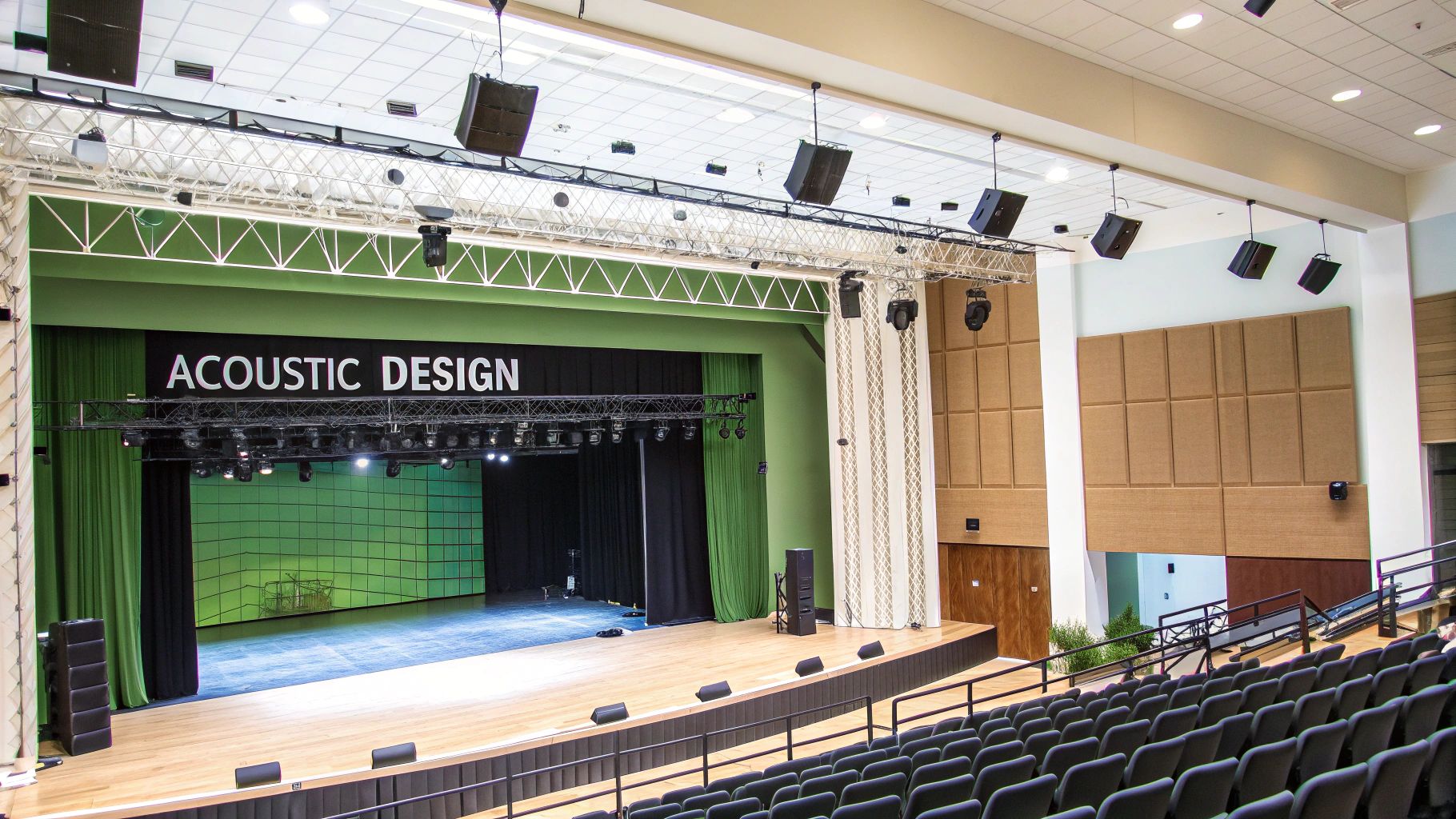
Theater acoustics is where science meets art. The goal is simple but incredibly difficult: make sure every line and every note reaches every single seat with perfect clarity—ideally, without a microphone in sight. Achieving this comes down to the room's shape, the materials you choose, and a relentless focus on keeping unwanted noise out.
The shape of the room is your most powerful tool. Parallel walls are the enemy; they create awful "flutter echoes" that bounce sound back and forth. Angled or curved surfaces are your best friend, as they diffuse sound, spreading it evenly and naturally throughout the space.
Your choice of materials is just as critical. Hard surfaces like wood or plaster give a room "liveness," which can be fantastic for musical performances. But for spoken-word plays, you need to control the echo. That's where soft, absorptive materials like heavy curtains and upholstered seats come in. A great design finds the perfect balance to hit the target reverberation time—the time it takes for a sound to fully decay.
Weaving in Lighting and Audiovisual Systems
Modern theater is inseparable from its technology. Sophisticated lighting and audiovisual (AV) systems aren't just accessories; they are integral to the storytelling. You can't just staple them on at the end—the infrastructure has to be baked into the design from day one.
This means bringing lighting designers and AV consultants into the room early. They'll flag the non-negotiables that architects might miss:
- Serious Power: Stage lighting and professional sound systems are power hogs. You need to plan for a massive electrical load.
- Conduit and Cable Pathways: Trust me, you don't want to be drilling through finished concrete to run miles of cable. Design dedicated, easily accessible pathways from the very beginning.
- Control Booth Location: The sound and lighting operators need a clear, dead-center view of the stage. No exceptions.
- Lighting Positions: You need a flexible grid. That means planning for catwalks, box booms, and lighting bridges that are strategically placed and structurally sound.
By embedding these technical needs right into the architectural plans, you build a versatile, future-proof venue that's ready for whatever creative vision walks in the door.
Integrating Back of House Systems and Safety Codes
A truly great theater runs on systems the audience never even thinks about. While everyone's eyes are on the stage, it's the unseen infrastructure—the back of house machinery and life safety features—that makes a venue comfortable, functional, and safe. Getting these systems right from the very beginning isn't just a good idea; it's non-negotiable.
Taming the Mechanical Dragon: HVAC Design
Heating, ventilation, and air conditioning (HVAC) in a theater is a unique beast. The system has to pull double duty, handling two conflicting jobs at once: it must be powerful enough to manage enormous heat loads, yet operate in near-total silence. A noisy air handler can ruin an intimate monologue just as easily as a stuffy room can make an audience antsy.
Think about the heat generated by hundreds of stage lights, racks of A/V equipment, and a full house of people. It’s immense. Your mechanical engineer has to design for this peak load to keep the temperature comfortable. This often means specifying oversized ductwork, which lets a huge volume of air move at a very low speed, dramatically cutting down on that "whooshing" sound you hear in typical commercial buildings.
We also have to be smart about where the vents go. The last thing you want is a draft blowing across the stage or onto the audience. Every detail matters, from acoustic insulation inside the ducts to vibration-dampening mounts for all the equipment. The goal is a system that is felt but never, ever heard.
Navigating Egress and Life Safety
When you gather hundreds of people into a dark room, making sure they can all get out safely in an emergency is your absolute highest priority. Modern building codes are incredibly strict and complex, dictating everything from the width of the aisles to the type of hardware on the exit doors.
A solid egress plan gives everyone a clear, intuitive path out of the building.
- Exit Capacity: The total width of all your exits is calculated based on the theater’s maximum occupant load. This math directly tells you how many exit doors you need and how big they have to be.
- Travel Distance: Codes put a hard limit on how far someone can walk before they reach an exit. In a big venue, this often means we have to add cross-aisles or vomitories (those exit tunnels from the seating bowl) that lead directly outside or into a protected corridor.
- Emergency Lighting & Signage: Every exit path must be lit by emergency lights tied to a backup power source. You'll also need illuminated exit signs, and their placement is highly regulated.
Beyond just getting people out, the building itself has to be designed to contain a fire. This means using fire-rated construction for the walls separating the stage from the audience (the proscenium wall) and enclosing all the stairwells.
A critical, non-negotiable component is the fire curtain, a heavy, fire-resistant barrier tucked away just behind the proscenium arch. If a fire breaks out on stage, this curtain drops automatically, isolating the blaze from the auditorium and buying precious time for everyone to evacuate.
Demystifying Building Codes and Reviews
Life safety has been at the heart of theater design for centuries, especially after some devastating fires in the 1800s. The Industrial Revolution brought huge technological leaps, like the shift from gas lamps in the 1810s to electric lighting by the 1880s. That change alone slashed fire risks by over 90% and opened the door to stage effects no one had ever dreamed of.
Today, navigating building codes and design review boards is a huge part of the process. My best advice? Engage with your local fire marshal and building officials as early as possible. This will save you from costly redesigns down the road. Show up to these meetings prepared, with clear drawings that show exactly how your design meets or exceeds every code requirement. Be ready to answer their questions about fire suppression, accessibility, and structural integrity.
Looking beyond the physical structure, it's also smart to understand the framework of effective health and safety management systems. This kind of proactive approach helps ensure your venue isn't just compliant on opening day, but remains a safe environment for performers, crew, and audiences for years to come.
Making the Numbers Work with Historic Tax Credits
While the artistic vision is what gets everyone excited, the financial reality is what gets a theater built. As an owner, developer, or community leader, you know this is a major investment. So, let's switch gears from design and acoustics to the financial strategy that makes it all possible, especially when you’re breathing new life into an old building.
Financing a theater successfully is about more than just getting a bank loan. It demands a rock-solid budget, tight cost control, and, often, a phased construction plan that moves in lockstep with your funding. This lets you break the project into manageable chunks, finishing work as capital comes in—a common and highly effective approach for non-profits and community-driven projects.
The Power of Adaptive Reuse
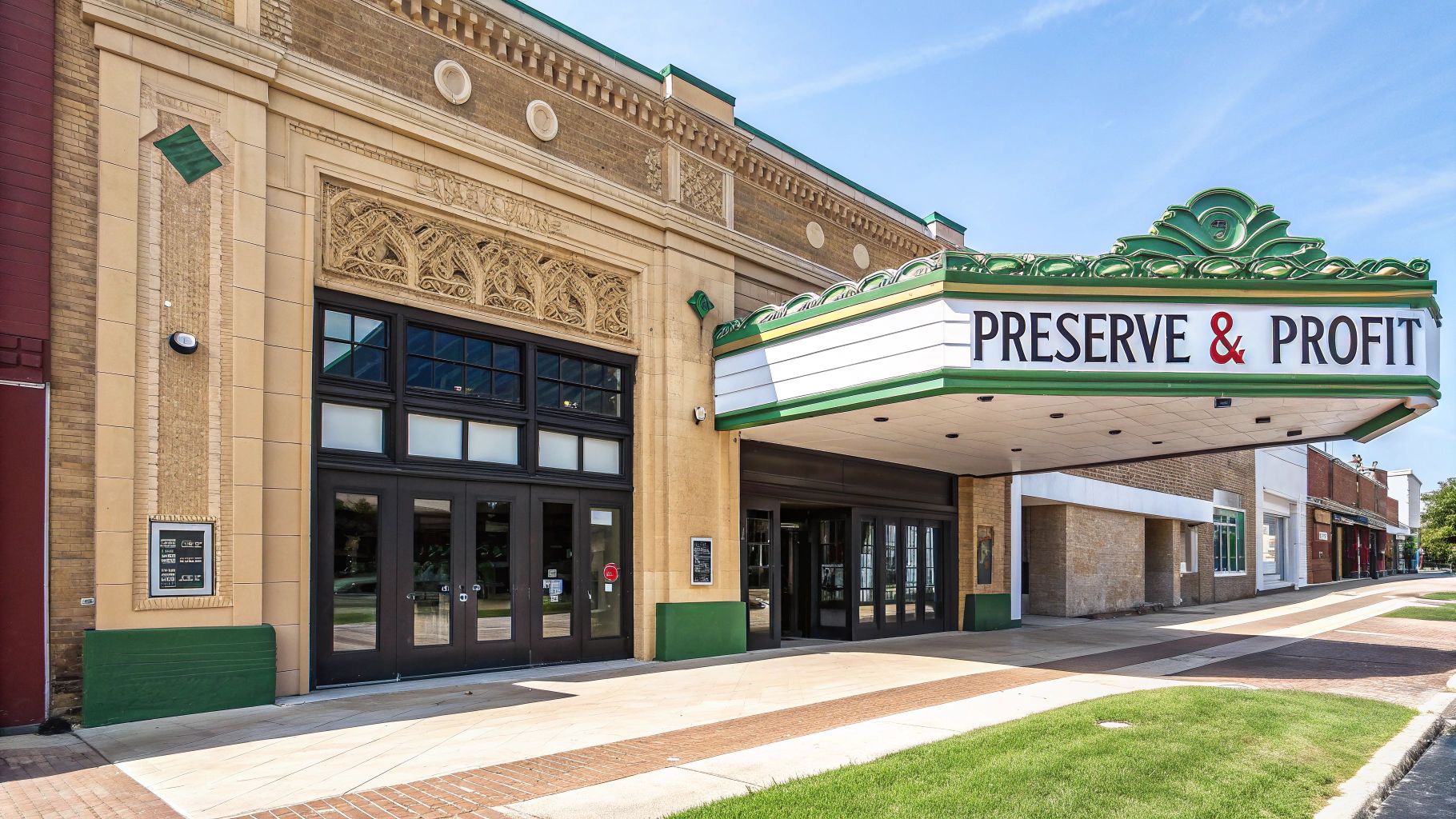
In my experience, the smartest financial move in many theater projects isn't building new; it's adaptive reuse. Taking a forgotten old building—a grand former bank, a classic movie palace, or even a gritty industrial warehouse—and turning it into a cultural hub is more than just a sustainable choice. It's an incredibly savvy one.
Renovating an existing building certainly comes with its own set of design puzzles. But it also unlocks some powerful financial tools that new construction simply can't touch. Chief among them are federal and state historic tax credits. These aren't just deductions; they are direct, dollar-for-dollar credits against what you owe in taxes, and they can slash the real cost of a renovation.
The Federal Historic Preservation Tax Incentives program is one of the most effective tools our country has for sparking private investment in our communities. Since its start, it has spurred over $102.64 billion in private funds to save and revitalize historic buildings.
How to Qualify for Historic Tax Credits
So, how do you get your hands on this funding? First, your building has to be a "certified historic structure." This usually means it's already on the National Register of Historic Places or is a "contributing" building within a registered historic district.
Next, the renovation itself has to follow the Secretary of the Interior's Standards for Rehabilitation. This is to ensure you preserve the building's historic character, not destroy it. It’s a detailed process that requires careful coordination with your State Historic Preservation Office (SHPO) and the National Park Service, but the financial payoff is huge. An architect who has been through this gauntlet before is an absolute must.
How These Credits Supercharge Your ROI
Let's break down how these credits can fundamentally change your project's bottom line:
-
Federal Historic Tax Credit: This credit can cover 20% of your Qualified Rehabilitation Expenditures (QREs). On a multi-million dollar project, that's a massive reduction in your net cost.
-
State Historic Tax Credits: Many states offer their own historic credits, which can often be "piggybacked" right on top of the federal one. These vary, but it's not uncommon to see an additional 20-25% credit, making the numbers look even better.
-
New Markets Tax Credits: If your theater is in a designated low-income community, you might also be able to layer in New Markets Tax Credits, which can attract different investors and close a final funding gap.
This strategy isn't new; it's a modern continuation of what's always made American theater possible. The 'New Stagecraft' movement after 1945, for example, influenced theater design worldwide, but its success was tied to the financial viability of its venues. Historic tax credits play a key role today, often offsetting 25% of investment costs and making it profitable to extend the life of these culturally vital buildings. You can learn more about the evolution of American theater design and its financial underpinnings.
It's More Than Just the Money
Beyond the direct financial boost, a building’s historic character is a powerful marketing tool. An old theater with lovingly restored details has a soul and a story that a brand-new building can never replicate. This unique identity is what attracts audiences, inspires donors, and gets media attention, transforming a challenging renovation into a profitable and beloved community landmark.
Common Questions About Designing a Theater
When you're starting the journey of bringing a new theater to life, the questions can feel overwhelming. Over the years, we've helped countless developers, owners, and community groups navigate this process, and a few key questions always come up. Here are some straightforward answers based on our experience.
How Long Does It Take to Design and Build a Theater?
There's no single, simple answer to this, as the timeline really depends on the project's scale and complexity. A smaller renovation for a community theater might wrap up in 12-18 months from the first sketch to opening night. But if you're looking at a brand-new, large performing arts center, you're realistically talking about a 3- to 5-year commitment, sometimes even longer.
The whole process unfolds in stages, each with its own rhythm:
- Schematic Design: Getting the core concept right usually takes about 3-6 months.
- Construction Documents: This is where we create the detailed blueprints, a process that can take another 6-12 months.
- Construction: The actual build can be anywhere from 12 months for a simpler project to well over 24 months for a complex one.
And don't forget the external factors. Things like fundraising campaigns, navigating public approval processes, and securing historic preservation reviews can add significant time to the schedule.
What Is the Biggest Mistake to Avoid in Theater Design?
By far, the most common and costly mistake we see is under-planning the backstage and support areas. It's completely understandable to get excited about the auditorium and the lobby—the spaces your audience will see and love. But a theater is, at its heart, a factory for creating art, and that factory can't function without the right tools and space.
When you skimp on the "back-of-house," you create an operational bottleneck that can frustrate artists and severely limit the kinds of shows you can stage. A design simply won't work if it doesn't have:
- Proper dressing rooms
- A green room for performers to relax
- Sufficient scenery workshops and storage
- Well-designed, accessible loading docks
The best theater designs strike a perfect balance between an incredible audience experience and the practical, everyday needs of the artists and crew. Nail both, and you've got a venue that will thrive.
Is Converting an Old Movie Palace a Good Idea?
It can be a brilliant idea, but you have to go into it with your eyes wide open. Old movie palaces often have an incredible historic charm and a built-in sense of community that's impossible to replicate. The catch? They were built for movies, not live performances.
The most significant hurdles are almost always a shallow stage, a non-existent fly loft for scenery, and virtually no backstage wing space. Before you do anything else, you need a professional feasibility study. This will tell you if the building's structure can even handle the major modifications needed—like adding a proper stage house—without gutting its historic soul.
The good news is that these kinds of projects are often prime candidates for historic tax credits. These credits can be a game-changer, making the extensive structural work financially feasible and helping you create a truly one-of-a-kind venue that honors the past.
At Sherer Architects, LLC, we turn complex design puzzles into beautiful, functional, and successful venues. Whether you're planning a new build, adapting an existing building, or preserving a local landmark, our team has the expertise to guide you. See how we approach these challenges at https://shererarch.com.