
Experiential design is a philosophy that treats buildings not just as structures, but as stages for human experience. It's the practice of carefully shaping an environment to tell a story, guide a journey, and make people feel something specific. It’s about moving past pure function to choreograph the moments that happen within a space, turning people from passive visitors into active participants.
Beyond Blueprints: Shaping The Human Experience
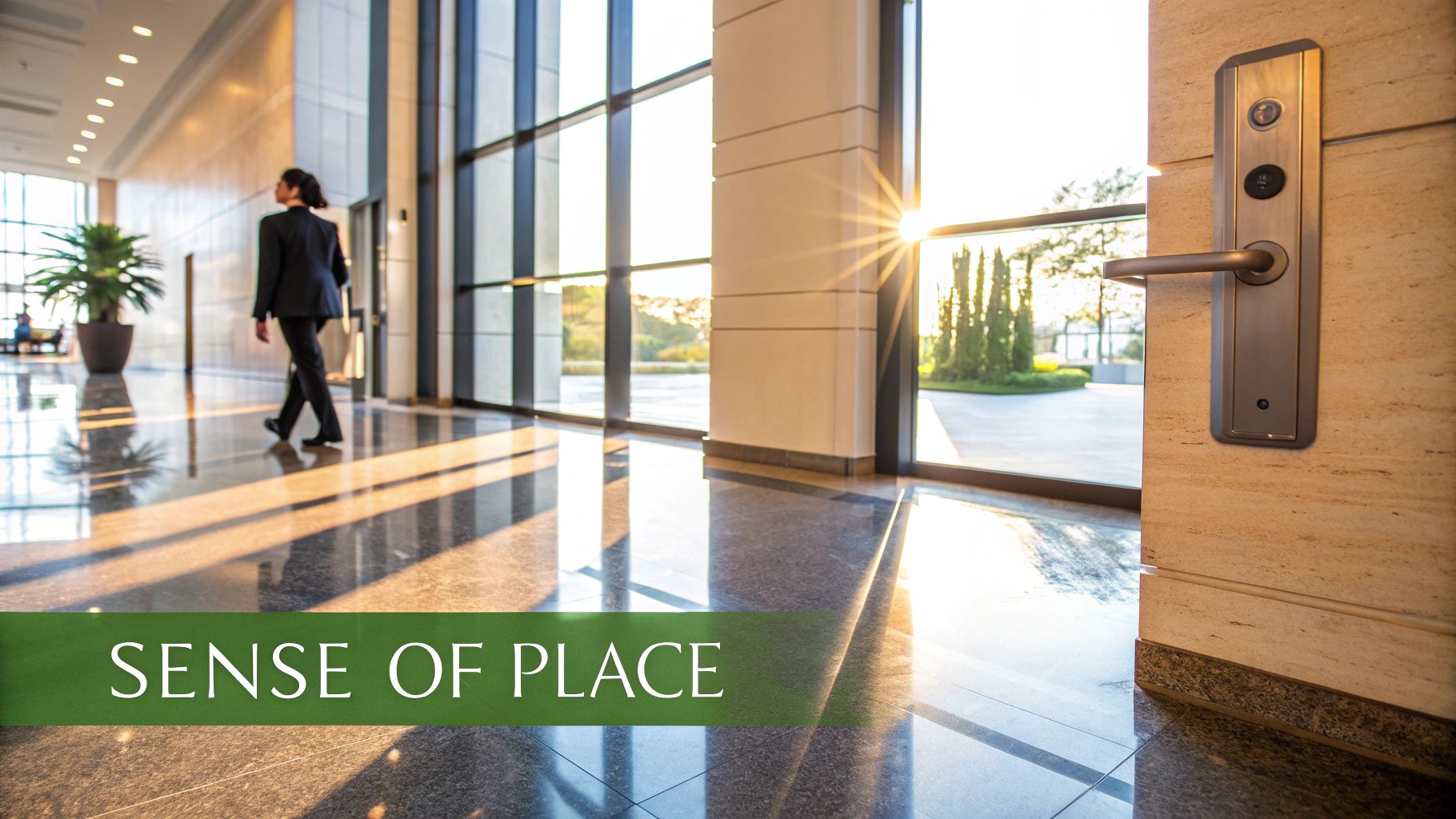
Think of it this way: a standard building is a functional tool. It gets the job done. But a building shaped by experiential design is a finely crafted instrument, one that feels intuitive and resonates with the people inside it. It’s a deliberate approach where every single choice—from the way sunlight moves across a lobby floor to the tactile feel of a door handle—is a calculated part of a larger narrative.
This isn't just about making things look good; it's about starting a multisensory conversation between a person and their environment. The real goal is to make people feel something intentional—be it inspired, calm, productive, or deeply connected. It’s the critical difference between a building that simply exists and one that truly lives.
The Four Pillars Of Experiential Design
So, how does this actually work in practice? We can break experiential design down into four core pillars. These principles are the foundation for creating a space that feels cohesive, impactful, and memorable for everyone who walks through its doors.
The table below gives a quick overview of these foundational concepts.
| Pillar | Core Concept | Application in Architecture |
|---|---|---|
| Narrative/Story | Every building has a purpose or story. This principle embeds that story into the very fabric of the design. | Using historical elements, brand identity, or a guiding theme to inform material choices, layout, and visual motifs. |
| Multi-Sensory Feel | Experience goes beyond sight. This pillar engages touch, sound, and even smell. | Selecting textured materials, managing room acoustics for comfort, and incorporating natural elements like plants or water features. |
| Human-Centric Focus | The design starts and ends with the people who will use the space—their needs, behaviors, and emotions. | Designing for intuitive flow, comfort, and well-being. Asking "How will this make someone feel?" at every stage. |
| Active Engagement | Spaces should invite people to interact, not just observe. | Creating flexible workspaces, installing interactive art, or designing intuitive wayfinding that encourages exploration. |
By weaving these four pillars together, we can design spaces that aren't just occupied, but are truly experienced.
Experiential design is the intentional shaping of how people feel, think, and act during an interaction or event. It goes beyond planning activities; it’s about creating emotional resonance, prompting reflection, and designing moments that leave a lasting impact.
Why It Matters Now More Than Ever
In a world saturated with digital notifications and fleeting online interactions, the hunger for authentic, tangible experiences is stronger than ever. It's a real trend with serious economic backing—the global experiential market is on track to hit USD 1.2 trillion by 2033. This boom signals a massive shift in what people value.
For commercial property owners, this isn't just a buzzword; it's a strategic advantage. Creating emotionally resonant environments is what attracts and keeps great tenants.
When we talk about experiential design in architecture, it often comes down to the thoughtful, almost poetic, use of fundamental elements like light. A well-designed space does more than just provide illumination; a proper architectural lighting design can craft a mood, guide the eye, and completely define a sensory experience. By focusing on the human journey, buildings become more than just structures—they become destinations.
How Experiential Design Evolved from Function to Feeling
Experiential design isn't some passing fad. It's a real shift in how we think about architecture, moving beyond simple utility and into the realm of human psychology. For most of history, a building's job was simple: provide shelter and serve a function. Now, we have a much deeper understanding of how the spaces we inhabit directly shape our moods, our behaviors, and even our decisions.
This evolution is all about moving from designing for function to designing for feeling. It's the difference between a building that just contains activities and one that actively makes those activities better. The whole point is to create environments that aren't just occupied, but are truly lived in.
Mapping the Human Journey
At the core of this shift is something called user journey mapping. The idea originally comes from the world of digital design, where teams map out a user's clicks and swipes. We've adapted that same thinking for architecture. Instead of tracking clicks, we're mapping footsteps, sightlines, and emotional reactions as a person moves through a physical space.
Think about charting a guest's path through a renovated historic hotel. This process lets us pinpoint the exact spots where a design choice can create a specific, intentional moment.
- Awe and Arrival: Where do we place a stunning piece of art or a dramatic light fixture to create that perfect "wow" moment in the lobby?
- Comfort and Pause: Which corner gets the best afternoon light? That’s the perfect spot for a cozy chair where a guest can take a moment to themselves.
- Reflection and Discovery: How can we subtly reveal original architectural details along a hallway to spark a visitor's curiosity about the building's past?
When you choreograph the journey like this, the building stops being a static box and becomes a dynamic story, guiding people from one feeling to the next.
Engaging All the Senses
Another major principle here is multi-sensory engagement. For a long time, architecture was treated as a purely visual art. But experiential design gets that we perceive the world through all our senses, and a truly immersive space has to do more than just look good.
This means we're paying close attention to the details that often get overlooked:
- Tactile Sensations: The cool, smooth feel of a marble countertop, the rough texture of exposed historic brick, or the warmth of a wooden handrail under your palm.
- Acoustic Environments: The intentional hush of a library compared to the energetic buzz of a collaborative office.
- Ambient Scents: The subtle aroma of fresh coffee wafting through a lobby or the clean, earthy smell of plants in a sunlit atrium.
By engaging multiple senses, a design creates a richer, more memorable and emotionally resonant experience. It’s this depth that elevates a good design to a great one, leaving a lasting impression long after a person has left the space.
Designing for Emotion
Ultimately, this entire evolution is driven by emotional design theory. This framework is built on a simple truth: our emotional response to a place is a huge part of our overall experience. Architects who embrace this deliberately craft spaces to evoke specific feelings, whether that’s security, inspiration, collaboration, or peace.
This isn't about manipulation; it’s about alignment. A well-designed office should make people feel productive and valued. A revitalized historic landmark should give visitors a tangible connection to the past. This focus on feeling is what takes a building beyond bricks and mortar and turns it into a powerful tool for connection and well-being. The structure becomes more than just a place to be—it becomes a place to feel.
Putting Experiential Design into Practice
It's one thing to talk about the theory behind experiential design, but it’s something else entirely to see those principles breathe life into a project of concrete and steel. This is where the abstract becomes tangible, solving real-world challenges for developers, property owners, and the people who ultimately use the space.
How we apply these ideas changes dramatically with each project. A brand-new office tower is a blank canvas. An old factory repurposed for modern use comes with a rich, built-in story. A historic landmark demands a delicate dance between past and present. While the starting points are different, the end goal is always the same: create a place that connects with people and delivers measurable results.
New Construction: The Modern Office Tower
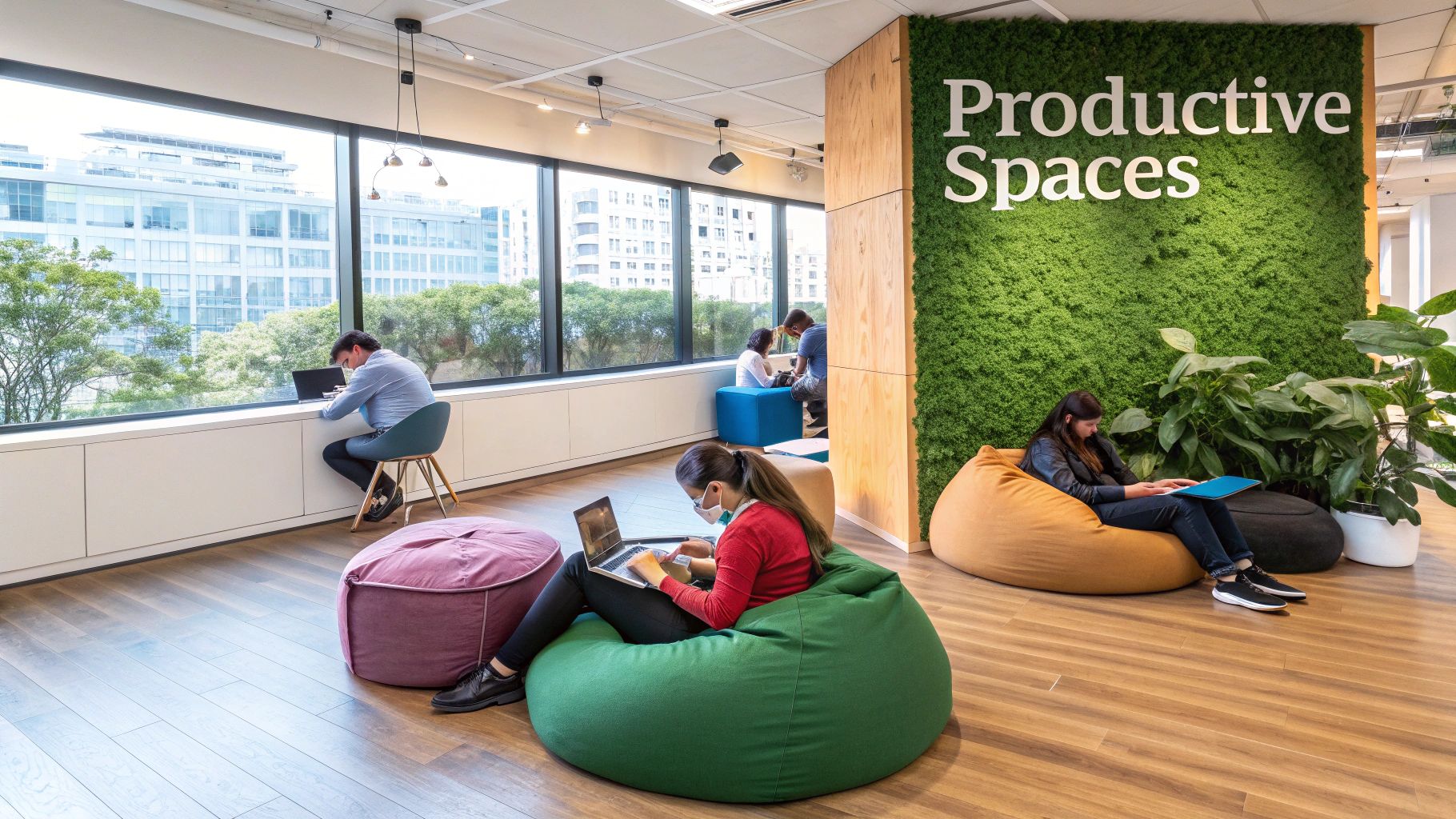
When it comes to a new office tower, experiential design is our answer to the modern workforce's demand for something more than a desk and a Wi-Fi signal. It’s about building a complete ecosystem that supports productivity, well-being, and a genuine sense of community. This runs much deeper than surface-level aesthetics.
We focus on strategic choices that shape the daily experience:
- Daylight Harvesting: We orient the building and size the windows not just for pretty views, but to pull in as much natural light as possible. It’s a proven way to boost mood and slash energy costs.
- Collaborative Zones: We design a mix of spaces—from quiet pods for deep focus to open, buzzing common areas—giving people the freedom to choose the environment that fits their task.
- Biophilic Elements: We bring the outdoors in. Living walls, natural materials, and interior greenery actively reduce stress and improve air quality, making the office a fundamentally healthier place to spend the day.
These elements aren't just perks; they create an environment where people truly want to be. For a business, that’s a powerful tool for attracting and keeping top talent.
Adaptive Reuse: The Soul of an Old Factory
Adaptive reuse projects give us a powerful story to work with from day one. The existing building isn't a limitation—it’s the main character. Our job is to honor its history while weaving in modern functionality that attracts today’s top-tier tenants.
Imagine an old textile mill being reimagined as a mixed-use development. An experiential approach would mean:
- Celebrating the original brickwork, massive industrial windows, and exposed steel beams. These aren't just architectural features; they are authentic, tactile links to the building's heritage.
- Pairing those historic elements with sleek, modern amenities. Think high-speed fiber running alongside century-old timber, contemporary lighting illuminating original masonry, and state-of-the-art HVAC systems.
- Using the building’s unique history to forge a brand identity that connects with businesses and residents who crave character and authenticity.
This strategy doesn’t just renovate a forgotten structure; it turns it into a landmark destination. It creates a powerful narrative that a brand-new building simply can't replicate.
In adaptive reuse, experiential design doesn't just create a new space; it resurrects an old one, giving it a second life. It respects the layers of history and makes them a tangible part of the daily experience for every person who walks through the doors.
Technology is a huge part of this, as we future-proof these historic structures. For instance, the immersive marketing field—a key aspect of the experiential economy—is projected to skyrocket from USD 6.90 billion in 2024 to USD 29.68 billion by 2030. By integrating the right electrical and network infrastructure from the start, we ensure an adaptive reuse project can support future technologies without compromising its soul.
Historic Preservation: A Tactile Link to the Past
With historic preservation, our focus narrows to authenticity and reverence. The design must make history feel immediate and real, creating a tangible connection for every visitor. Here, experiential design works in subtle, respectful ways, using materials and sensory details to pull people back in time.
This isn't guesswork; it's meticulous research and execution. We use historically accurate materials, replicate original construction techniques, and restore period-specific fixtures. The distinct feel of a hand-planed wooden floor underfoot or the way light filters through authentically reproduced wavy glass creates an immersive experience that a simple museum placard never could.
To see how hands-on engagement deepens connection across different fields, you can explore these experiential learning examples. From a new skyscraper to the careful preservation of a landmark, each application shows how experiential design elevates architecture beyond mere shelter. We create spaces that are meaningful, memorable, and ultimately, more valuable.
The Measurable ROI of Designing for Experience
So, how does crafting a better experience actually improve the balance sheet? For any developer, investor, or property owner, that’s the real question. Experiential design is far more than a simple aesthetic upgrade; it's a powerful engine for creating value, delivering concrete, measurable returns by putting the human journey at the heart of the space.
This approach has a direct line to key financial metrics. A building that offers a genuinely superior user experience stands out in a crowded market, which almost always leads to faster lease-up periods and higher occupancy rates. It's simple: when tenants love where they are, they stick around. That dramatically cuts turnover costs and boosts long-term retention.
Beyond just keeping tenants, properties known for their exceptional design and atmosphere can command premium lease rates. People—whether in a commercial or residential setting—are willing to pay more for spaces that enhance well-being, build community, and support what they need to do. This elevates a property from a commodity to a destination, directly increasing its long-term asset value.
Boosting Tenant Success and Brand Value
Think of it this way: an investment in experiential design is an investment in your tenants' success. For retail, design choices like intuitive wayfinding, engaging common areas, and touches of nature can lead to more foot traffic and longer dwell times. You’re creating a more profitable environment for them, which makes your property the place to be.
The same logic applies to an office. A human-centric design has a direct impact on employee wellness and productivity. Things like great natural light, flexible workspaces, and zones for both collaboration and quiet focus can reduce absenteeism and improve job satisfaction. This helps your commercial tenants attract and retain top talent—a huge selling point that adds immense value to your building.
Experiential design transforms a property from a cost center into a strategic asset. By prioritizing the user journey, you create a feedback loop where an enhanced experience leads to tenant success. That success, in turn, drives higher leasing demand, stronger retention, and ultimately, a more profitable and valuable building.
Connecting with Consumers to Drive Revenue
The financial impact doesn't stop with your immediate occupants. Your commercial tenants serve their own customers, and creating an environment that supports engaging brand experiences is critical for them. Thoughtful design can provide the perfect backdrop for events, pop-ups, and interactive displays that build real customer loyalty.
The data backs this up. An incredible 85% of consumers say they are more likely to buy from a brand after participating in an engaging event or experience. This shows how the design of a commercial space directly influences purchasing decisions and builds the kind of brand connection that keeps tenants thriving—and renewing their leases. If you're interested, you can explore more insights on creating unforgettable brand experiences.
At the end of the day, designing for experience isn’t about adding extra costs; it's about making smarter, more strategic investments. By linking every design choice to a measurable business outcome—like higher lease rates, better tenant retention, or increased foot traffic—it becomes clear that this approach is one of the most effective ways to maximize a property’s financial performance and secure its place in the market for years to come.
Integrating Experiential Design Into Your Next Project
Bringing the principles of experiential design to life isn't about guesswork; it's a structured, intentional process. Think of it as a practical roadmap for telling a building’s story, making sure every single choice—from the lobby layout to the doorknobs—serves a clear purpose. This isn't just about adding some nice features at the end. It's a foundational approach that begins long before the first shovel ever hits the ground.
The whole process is built on a simple, powerful idea: a building should respond to the needs, emotions, and aspirations of the people inside it. By following a clear, phased strategy, we can directly connect architectural decisions to a project's core business goals. The result? Spaces that create both a memorable experience and a measurable return.
Phase 1: Discovery and Deep Listening
The journey starts not with sketches, but with questions. This initial discovery phase is easily the most critical step, as it sets the strategic direction for the entire project. Here, we prioritize deep listening to understand the true goals for the space and, just as importantly, the unspoken needs of its future occupants.
We dive in with collaborative workshops and detailed research to figure out the core narrative. What story should this building tell? Who are the people walking its halls every day, and what do they need to feel successful, comfortable, or inspired? Answering these questions gives us a clear filter for every decision that follows.
Experiential design starts with the feelings you want to inspire, and the activities follow. By defining the desired emotional outcome first, the physical design becomes a direct response to a human need, rather than just an assembly of materials.
This first phase ensures the final design is grounded in a strong, authentic identity that actually connects with its intended audience.
Phase 2: Programming and Narrative Development
With a clear vision locked in, we move into programming. This is where we translate the building’s story into a functional spatial plan. We map out the user journey in painstaking detail, choreographing how people will move through, interact with, and feel within the environment from the very moment they arrive.
This involves defining the specific functions and emotional tones for different zones. We outline which areas should spark collaboration, which should offer quiet refuge, and how the transitions between them should feel. The building’s story informs every part of the layout, creating a flow that’s both logical and emotionally cohesive.
The flowchart below shows how this intentional design process directly contributes to user retention and long-term business value.
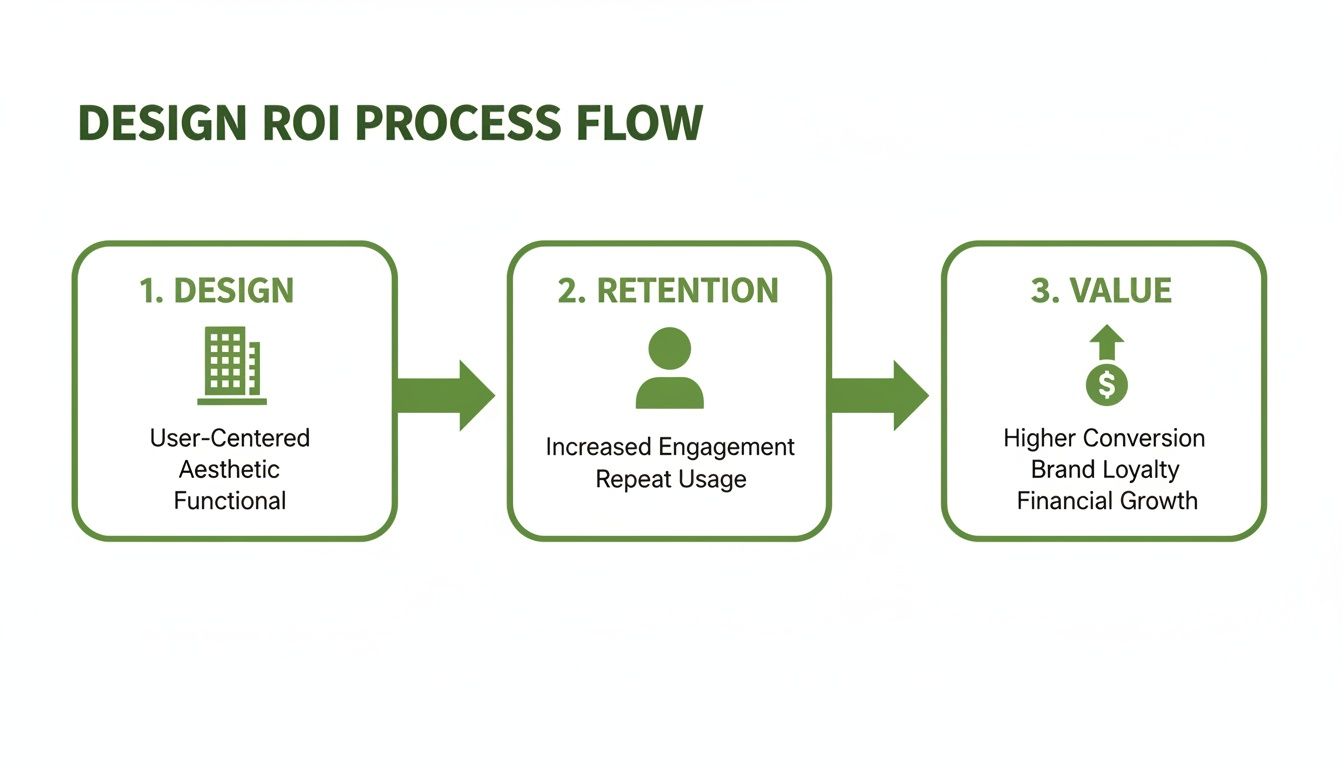
As the visual makes clear, a human-centered design approach is the first domino in a chain reaction that ultimately strengthens a property's financial performance.
Phase 3: Strategic Design and Material Selection
Now, the architectural details come into focus, all guided by the narrative we’ve carefully developed. Every material, lighting fixture, and landscape element is chosen for its unique ability to contribute to the desired experience.
Here are a few key strategies we often put into play:
- Materiality for Tactile Engagement: We select materials not just for how they look but for how they feel. The warmth of reclaimed wood, the coolness of natural stone, or the rugged texture of exposed brick can forge powerful, unspoken sensory connections.
- Lighting to Shape Mood: Light is one of our most potent tools. We use a combination of natural daylighting and meticulously designed artificial light to define spaces, guide attention, and evoke specific emotions—from energetic and bright to calm and focused.
- Landscaping to Blur Boundaries: A building's experience doesn't start at the front door. We integrate landscaping to create a seamless transition from outside to inside, using plant life to improve air quality, reduce stress, and establish a tangible connection to nature.
Phase 4: Post-Occupancy Evaluation
Our work doesn’t stop when the construction crews pack up. The final step is a crucial feedback loop: post-occupancy evaluation. By observing how people actually use the space, we gain invaluable insights that prove the design’s impact and inform every future project we take on.
This evaluation can range from formal surveys to informal observation. Did the new collaborative zones really boost interaction? Are the quiet areas being used for focused work? This data provides tangible proof of the project's success and demonstrates the real-world value of designing for experience.
To help visualize this process from start to finish, here's a simple checklist that outlines the key steps.
Experiential Design Project Checklist
This checklist provides a high-level overview of the key actions and goals at each stage of an experiential design project, ensuring the focus remains on the end-user from conception through completion.
| Phase | Key Action | Desired Outcome |
|---|---|---|
| 1. Discovery | Conduct stakeholder workshops and user research. | A clear, unified project vision and a defined "user story." |
| 2. Programming | Map the user journey and define spatial functions. | A detailed spatial program that aligns with the project narrative and user needs. |
| 3. Strategic Design | Select materials, lighting, and finishes that support the experience. | A cohesive design where every element serves a specific emotional and functional purpose. |
| 4. Post-Occupancy | Gather user feedback and analyze usage data. | Actionable insights that validate design choices and inform future improvements. |
By following this structured approach, we ensure that the final built environment is not just a building, but a place that works better for everyone.
Putting Experiential Design to Work: Real-World Examples
It’s one thing to talk about principles, but it’s another to see them come to life. The true power of experiential design is most obvious when you see how it solves real business problems through thoughtful, human-focused architecture.
Let’s look at a couple of scenarios that show how this works. These aren't just about blueprints; they're about shaping behavior, fostering community, and delivering clear business results.
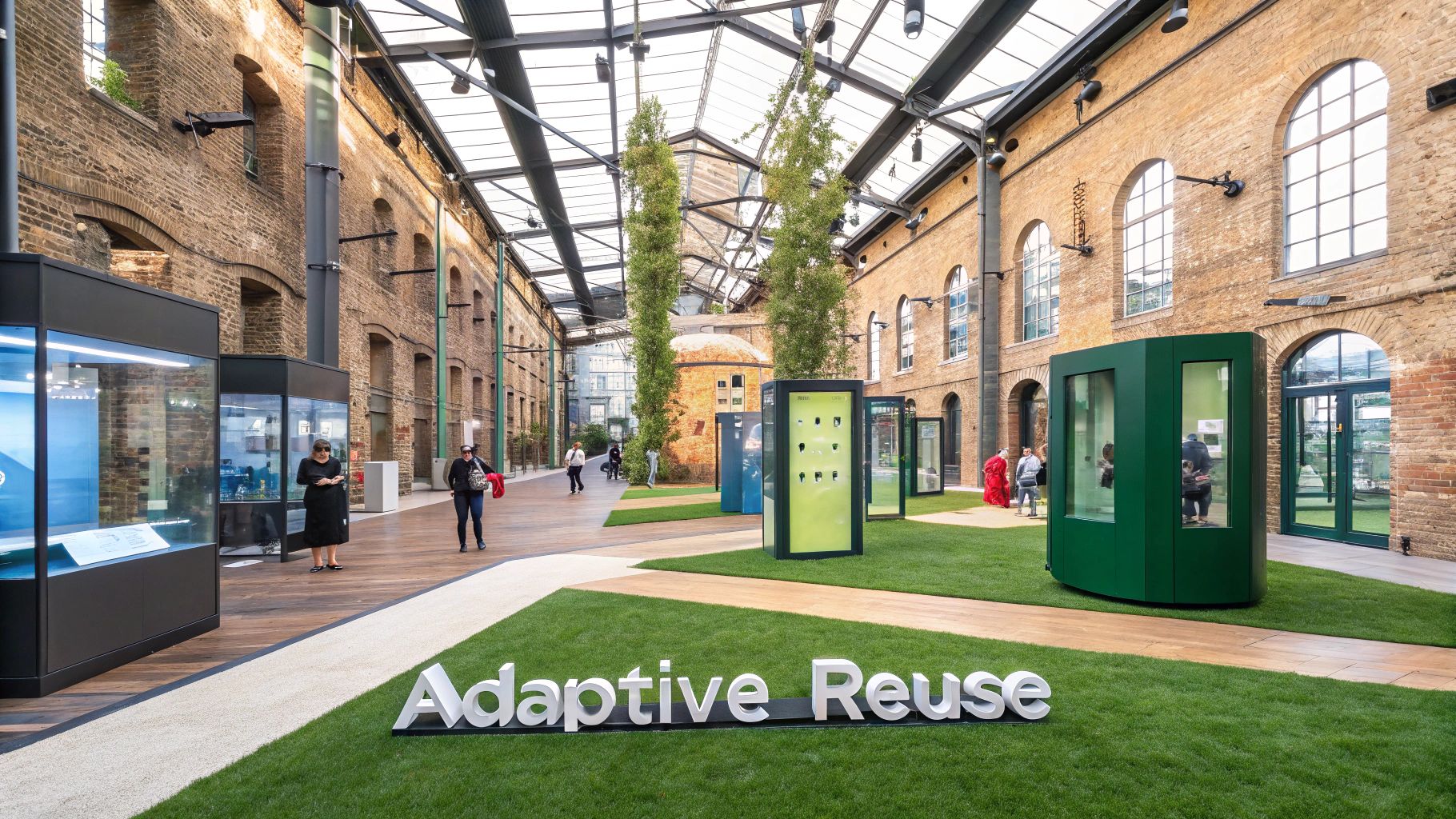
Case Study 1: The Forgotten Warehouse Turned Tech Hub
Picture an old, abandoned brick warehouse sitting downtown. It's a relic from another time—structurally solid, but dark, massive, and totally wrong for today’s workforce. For the property owner, it's a dead asset, unable to attract any tenants in a crowded market.
The Challenge: How do you turn an obsolete industrial building into a vibrant, multi-tenant tech hub that not only attracts top companies but also creates a genuine sense of community?
The Experiential Solution: Instead of gutting the building and erasing its past, we lean into it. The design preserves the soul of the place—the exposed brick, the huge timber beams, the high ceilings—while weaving in modern essentials. We cut massive skylights into the roof to drench the deep interior spaces with natural light. A new central atrium acts as the building’s heart, creating a visual and physical connection between floors with a "living staircase" designed to spark impromptu conversations.
The Measurable Outcome: The repurposed building leases up 40% faster than new construction in the area. Its unique character becomes a major selling point for tenants, who use the authentic, inspiring workspace to recruit top talent. The building itself becomes a local landmark, boosting property values for the entire neighborhood.
Case Study 2: The Underperforming Corporate Campus
Think of a corporate campus from the 1990s—a collection of disconnected buildings surrounded by parking lots. The common areas are sterile and empty, and employees feel siloed in their departments. The company is struggling with employee retention and a lack of the spontaneous collaboration that drives innovation.
The beginning of the experience is your opportunity to set the tone and the rules of engagement. It shows the people you've invited what the experience is going to be all about.
This idea is central to turning an isolating space into a connected one.
The Challenge: To overhaul a dated and isolating campus to improve employee satisfaction, encourage teams to work together, and build a culture that puts people first.
The Experiential Solution: The strategy is to create a central "heart" for the campus. A cavernous, underused lobby is transformed into a buzzing community hub with a great coffee bar, comfortable seating, green walls, and rotating local art. We then add covered walkways to link the separate buildings, making it easy and enjoyable for people to move around and bump into colleagues from other teams.
The Measurable Outcome: After the renovation, post-occupancy surveys reveal a 30% jump in employee satisfaction. The company also sees a clear increase in informal meetings and cross-departmental projects. The campus is no longer just a place to work; it's a destination that strengthens the company's brand and makes it a far more desirable employer.
Answering Your Questions About Experiential Design
Even when the benefits are clear, we find that property owners and developers still have some very practical questions about what experiential design actually looks like for their specific project. Let's tackle a few of the most common ones we hear.
Is This Just for Big-Budget Projects?
Absolutely not. Experiential design is fundamentally about a strategic mindset, not just expensive bells and whistles. It’s an approach that can be scaled to fit any size project or budget.
Something as simple as a thoughtful decision about window placement to maximize natural light, or a carefully planned circulation path that makes a building intuitive to navigate, can dramatically improve the user experience. The real key is prioritizing that human element right from the start, not adding it on at the end.
How Do You Even Measure Something Like "Experience"?
It might seem abstract, but the ROI of a well-executed experiential design is surprisingly concrete. We track its impact through a mix of hard data and real-world feedback.
- The numbers tell a clear story: we look at things like higher lease rates, shorter vacancy periods, increased foot traffic, and better tenant retention.
- The human impact is just as important: we see it in post-occupancy surveys showing higher satisfaction, glowing online reviews, and the kind of positive word-of-mouth that gives a building real buzz.
Together, these factors directly boost a property's long-term value.
Isn't This Just a Fancy Term for Interior Design?
That’s a fair question, but experiential design is much broader. Think of it this way: traditional architecture gives you the building's bones and ensures it meets code. Interior design then comes in to handle the aesthetics and furnishings within that structure.
Experiential design is the overarching strategy that connects everything. It weaves architecture, interiors, branding, psychology, and even landscaping into a single, cohesive journey for the user—from the moment they see the building from the street to the smallest detail they notice inside.
It's the "why" that guides all the other design decisions.
At Sherer Architects, LLC, we believe every building has a story just waiting to be told. Our specialty is turning that story into a tangible, valuable experience for commercial, adaptive reuse, and historic preservation projects. Let us help you align every piece of the puzzle to deliver a result that's not just beautiful, but built to last.
Visit us at https://shererarch.com to see how we bring structure to life.